Category lead
Humanoid · 38%
The route is deepest in Humanoid, with Cleaning as the next strongest follow-through.
86 manufacturers and 189 tracked robots, shaped into a country brief that shows where China is deepest, how much of the route is actually sourceable, and which maker pages deserve the next serious click.
Catalog rank
#1
Listed Available
71/189
Recorded numeric price
88/189
What matters first
Use the top-line signals here to judge whether this country already gives you enough breadth, price visibility, and vendor depth to build a serious shortlist.
Recorded numeric prices
Multiple currencies (CNY, EUR, GBP, USD)
Release window
2018–2026
Source coverage
189/189 official links
Category lead
The route is deepest in Humanoid, with Cleaning as the next strongest follow-through.
Coverage quality
47% with recorded numeric prices and 94% image-backed, which tells you how quickly this route can turn into a shortlist instead of a research backlog.
Maker concentration
Unitree Robotics contributes the biggest slice of tracked models, so this route is broad enough to compare beyond one flagship.
Open next
Peer routes
Start with the deepest categories and the strongest coverage signals before drilling into individual models.
86
Manufacturers
8
Tracked categories
71
Listed Available
88/189
Models with numeric prices
Category counts, availability mix, and price range reworked for a quicker first pass.
China can look dominant in this route simply because it is better represented in the ui44 catalog. Treat the counts as a shortlisting aid, then validate the winners on model pages and vendor material.
189 tracked models, restructured into a shortlist-first flow with featured picks up top and denser rows for the long tail.
Start with the models that are easiest to validate — the ones with live imagery, public pricing, or enough documentation to justify a deeper click. Then use the compact rows below to sweep the rest of the market without turning the page into a wall of oversized cards.
Listed Available
71
Numeric price recorded
88
With imagery
178
Manufacturers
86
How to scan this section
Best first clicks
These models score highest on status order, public detail quality, and image clarity, so they orient the route faster than a purely alphabetical sweep.
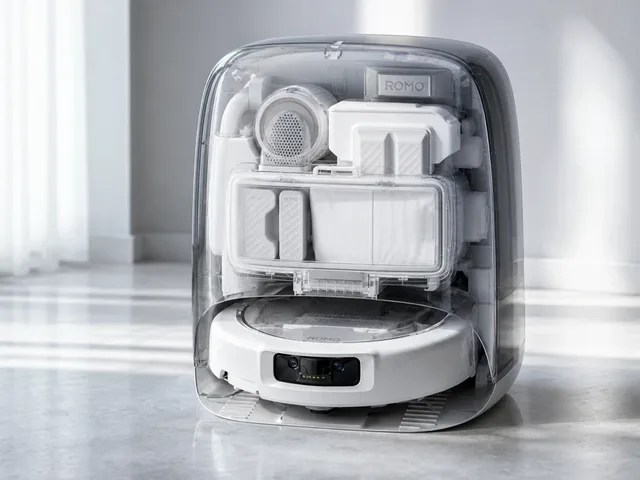
DJI ROMO P2 is the higher-trim model in the second-generation ROMO 2 robot vacuum-and-mop lineup launched in China in May 2026. It builds on the first ROMO series with whole-scene AI cleaning decisions, a new millimeter-level obstacle-avoidance system using area-array speckle LiDAR, binocular fisheye vision and ToF sensing, and transparent-object avoidance. The P2 also adds a 123-degree radar-adaptive swing arm for edge cleaning, 36,000 Pa suction, DualSweep anti-tangle hardware, dynamic mechanical feet for thresholds up to 8.5 cm, 55 W fast charging, dirt heatmaps, remote video calling, voice control, and a high-temperature self-cleaning dock with P2-specific antibacterial/UV maintenance features. Listed as Available with a recorded price; confirm current ordering and delivery terms.
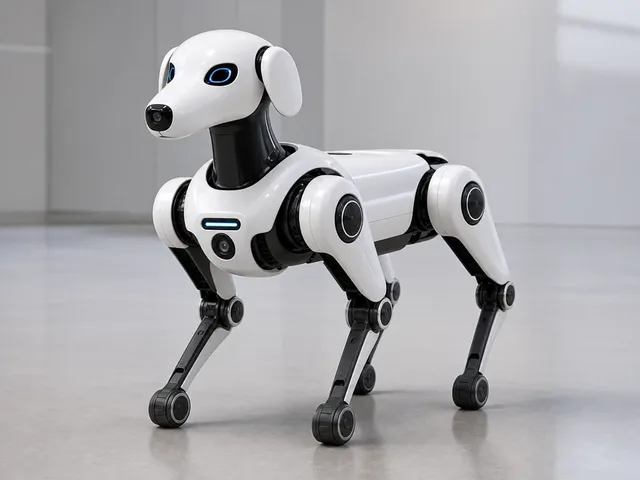
Argos X1 is AiMOGA Robotics' consumer and light-duty patrol quadruped, listed on AiMOGA's official site as AiMOGA Argos and reported in JD.com retail coverage as Argos X1. The robot weighs 13.6 kg, carries up to 5 kg, runs at up to 2.5 m/s, climbs 40-degree slopes, steps over 15 cm obstacles, and uses 12 compact joint motors with robust control for gravel, grass, slopes, and stairs. Official materials describe voice and touch responses within 50 ms, Chinese/English voice-command recognition, a six-microphone ring array, a panoramic HD camera, two ultrasonic radars, high-power LED lighting, preset dances and actions, remote real-time video viewing, and companion or patrol use. Gasgoo coverage corroborates scaled deployment, 13 degrees of freedom, 6.48 km operating range, more than 1,000 Argos robot-dog deliveries in 2025, and use cases including home companionship, community inspection, and factory security. Listed as Available with a recorded price; confirm current ordering and delivery terms.
Full directory
Sorted by status, then currency code and price within each currency; unlisted prices come last within each status.
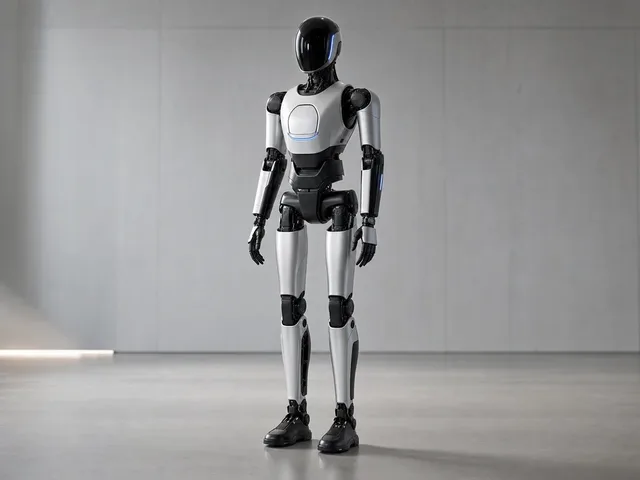
AGIBOT A2 is a full-size interactive service humanoid for marketing, customer service, exhibition guidance, supermarket wayfinding, front-desk reception, and business inquiries. The official product page lists a 169 cm, 69 kg body with 40+ active degrees of freedom, a 700 Wh swappable battery for about 2 hours of runtime, 60 cm turning radius, LiDAR, RGB-D and fisheye cameras, microphones, speakers, force/torque sensing, dexterous hands, and an interactive screen. AGIBOT says the A2 combines LLM/RAG dialogue, full-duplex conversation, facial recognition, lip-reading, ActionGPT motion generation, 3D SLAM, L4-level autonomous mobility, 360° perception, and multi-layer safety monitoring; May 2026 Jakarta coverage showed the A2 hosting, performing calligraphy, dancing, and interacting with event visitors. Listed as Available with a recorded price; confirm current ordering and delivery terms.
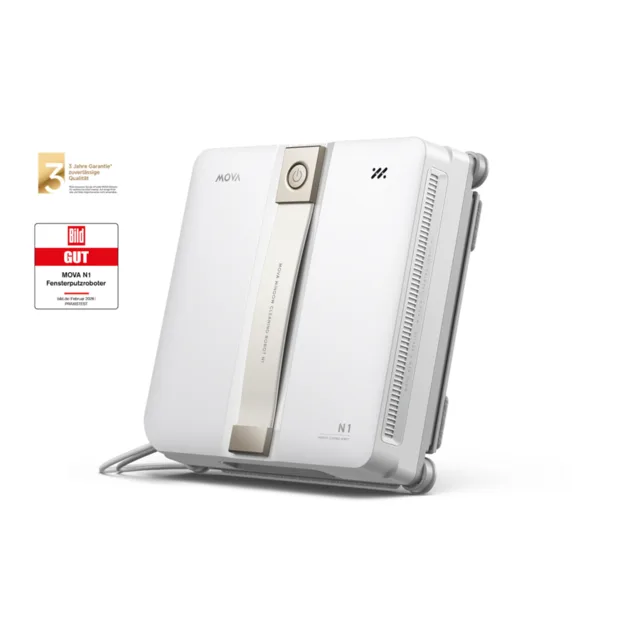
MOVA's N1 is a compact window-cleaning robot that the company introduced as part of its CES 2026 smart outdoor expansion into windows, alongside pool and lawn care. Official MOVA materials say the N1 uses a Dual-Wing Mist-Cleaning system, intelligent path planning, and obstacle-aware rerouting to clean glass and other smooth household surfaces such as mirrors, glazed tile, shower glass, and cabinet doors. The live global product page adds concrete specs including a 215 × 215mm body, 59mm thickness, 1.3kg weight, built-in 120mL water tank, up to 32 m² cleaning per fill, six cleaning modes, 8,000Pa suction, and app, remote, or on-device control. Independent CES coverage from Maison et Domotique broadly matched MOVA's positioning of the N1 as a compact window cleaner built for harder-to-reach areas. Listed as Available with a recorded price; confirm current ordering and delivery terms.
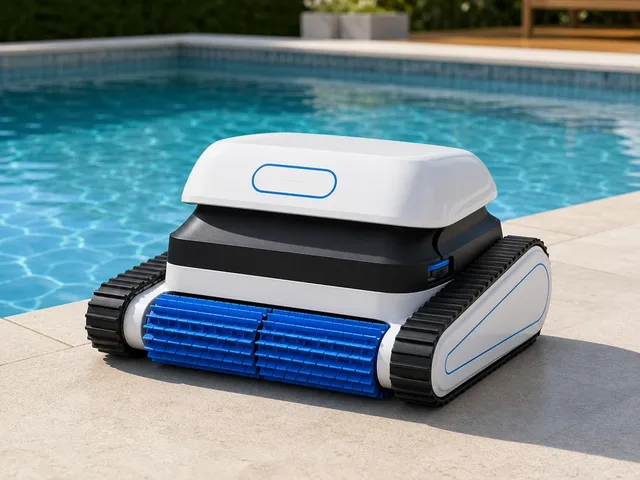
Ecovacs' first robotic pool cleaner, extending the company's home-service robotics lineup into pool maintenance. The Ultramarine P1 is a cordless pool robot for floors and walls with 4,800 GPH (18,200 l/h) UltraPure suction, four synchronized roller brushes, a dual-layer 180 μm + 3 μm filtration system, SmartNavi IMU-based route planning, and app-controlled cleaning schedules. It runs for up to 3 hours in Eco mode, covers pool floors up to 180 m² on one charge, and crosses obstacles up to 5.5 cm. Debuted at CES 2026. Listed as Available with a recorded price; confirm current ordering and delivery terms.
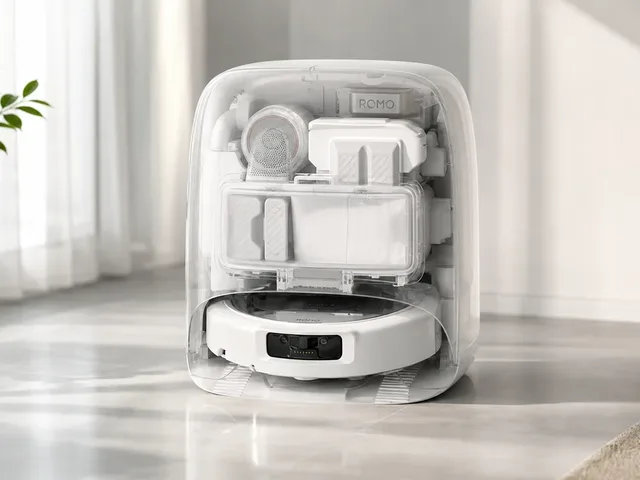
DJI's ROMO is the company's first robot vacuum-and-mop lineup for home cleaning, launched in China in 2025 and rolled out in Europe from October 2025. The ROMO family is sold in S, A, and P variants and brings DJI's drone-derived sensing into floor care with binocular fisheye vision, solid-state LiDAR, dual extendable edge-cleaning arms, up to 25,000 Pa suction, and a self-cleaning dock. Official DJI store and support materials also confirm setup through the DJI Home app, remote video and voice calling, and threshold crossing up to 2.5 cm. Listed as Available with a recorded price; confirm current ordering and delivery terms.
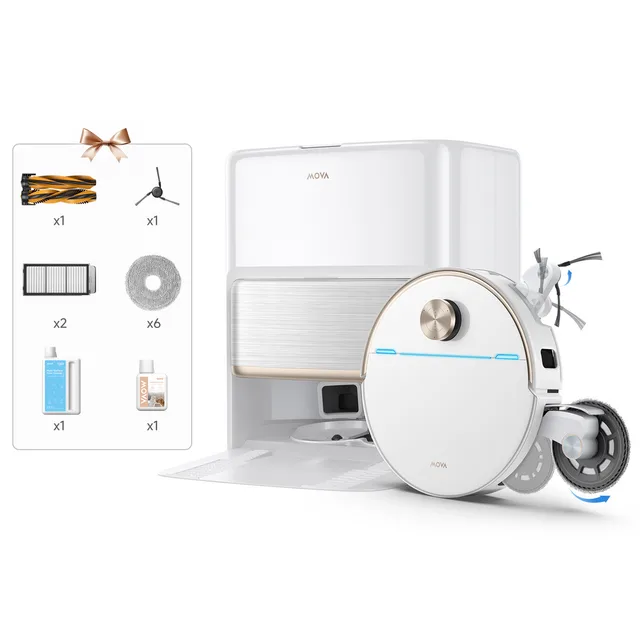
MOVA's V70 Ultra Complete is a premium robot vacuum and mop introduced for selected European markets in May 2026. Its standout feature is the MaxiReachX system: an extendable mop that reaches up to 16cm and an extendable side brush that reaches up to 12cm into gaps as narrow as 3.8cm, aiming at edges, corners, and low-clearance spaces that conventional robot vacuums miss. Official MOVA materials also list 40,000Pa suction, obstacle climbing up to 9cm, a retractable navigation sensor, 300+ object recognition, a 6,400mAh battery with Smart Resume, and an EcoCyclone bagless dock designed for up to 100 days of hands-free dust collection. Independent launch coverage from Notebookcheck and Basic Tutorials corroborated the May 12 Germany launch, €1,399 RRP, and core MaxiReachX/EcoCyclone feature set. Listed as Available with a recorded price; confirm current ordering and delivery terms.
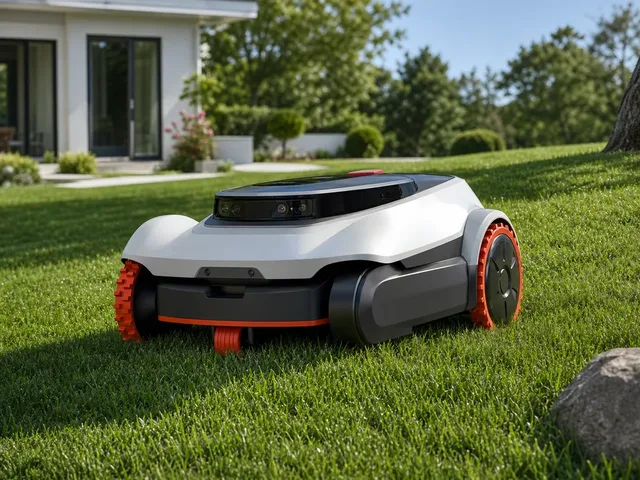
Segway Navimow i2 LiDAR Pro is a wire-free robotic lawn mower featuring solid-state LiDAR — a first in this price segment, adapted from autonomous driving technology. It scans at nearly 200,000 points per second for ultra-dense 3D mapping with no blind spots. The EFLS LiDAR+ triple-fusion navigation combines solid-state LiDAR, Network RTK, and vision AI, switching positioning modes in 20 milliseconds for uninterrupted operation under trees, in narrow passages, and at night. The three-wheel-drive AWD system with Xero-turn technology enables zero-turn manoeuvres without turf damage, conquering slopes up to 55% (29°). GeoSketch provides automatic drop-and-mow mapping with app-based customisation. Includes integrated 4G for GPS tracking, geofenced alarm, and Apple Find My support. Listed as Available with a recorded price; confirm current ordering and delivery terms.
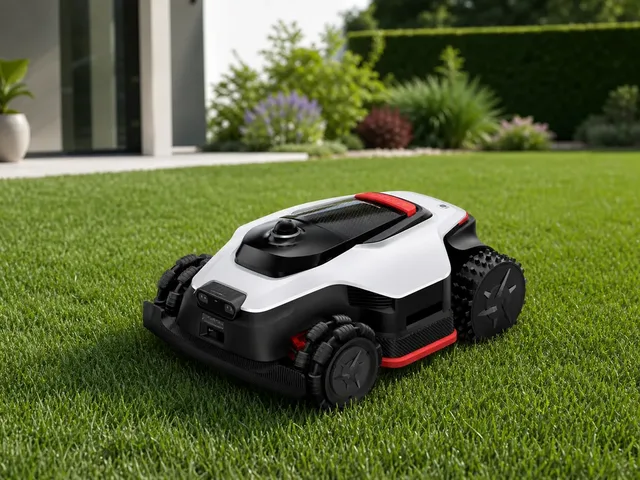
Dreame's first robotic lawn mower series, launched in March 2026. The A3 AWD Pro uses OmniSense 3.0 navigation combining 360° 3D LiDAR and a binocular AI camera — no boundary wires or RTK base station required. Four independent hub motors provide true all-wheel drive capable of climbing slopes up to 80% (38.7°) and clearing obstacles up to 5.5 cm. A dual-blade cutting system offers a 40 cm cutting width with adjustable height from 3 to 10 cm. EdgeMaster 2.0 technology trims lawn edges to within approximately 3 cm, reducing manual touch-up work. The Garden Guardian safety suite includes live video streaming via app, geofencing alerts, a lift-and-carry alarm, pet protection zones, and AirTag-compatible theft tracking. The system recognizes over 300 obstacle types including garden furniture, toys, pets, and people. Dreame's US store lists three capacity variants: A3 AWD Pro 2500 (0.62 acre), A3 AWD Pro 3500 (0.87 acre), and A3 AWD Pro 5000 (1.20 acres); the German store lists 3500 and 5000 variants. Listed as Available with a recorded price; confirm current ordering and delivery terms.
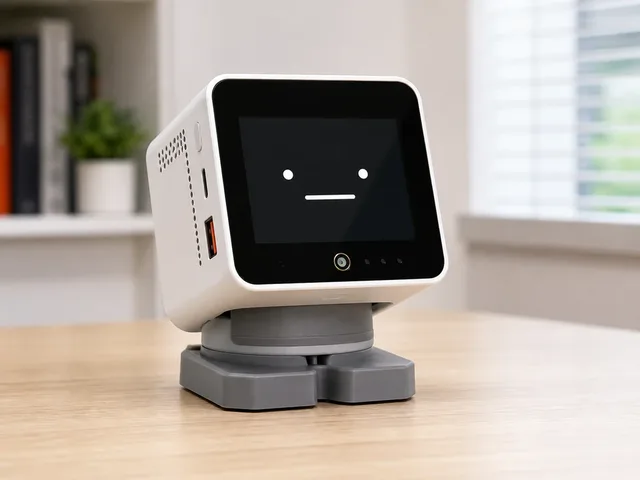
M5Stack's StackChan is a palm-sized open-source AI desktop robot co-created with the maker community around the CoreS3 ESP32-S3 controller. Official M5Stack materials describe a ready-to-play companion and development platform with an animated face, AI voice interaction, app-based video viewing and remote avatar control, smart-home/IoT control use cases, two feedback servos for expressive pan-and-tilt motion, NFC, touch, camera, microphones, IMU, RGB LEDs, and Grove expansion. The official documentation and product page list the K151/K151-R hardware as a shippable M5Stack kit, while independent CNX Software coverage corroborates the Kickstarter launch, open-source positioning, AI voice-assistant angle, smart-home/IoT use case, and April 2026 delivery target. It is best understood as a hackable desktop companion and maker robot, not a mobile household chore robot. Listed as Available with a recorded price; confirm current ordering and delivery terms.
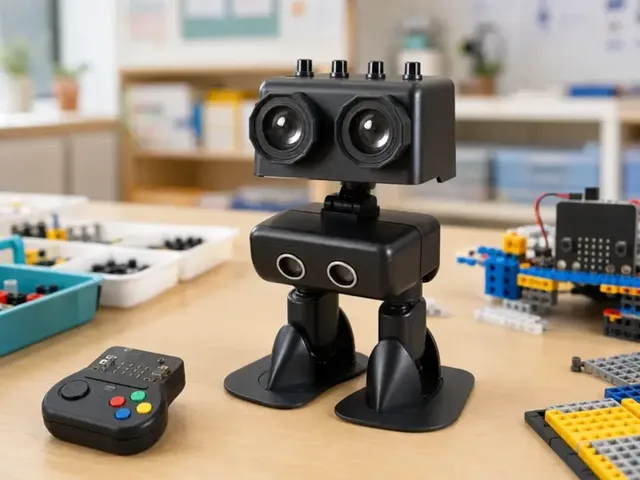
ELECFREAKS' micro:bit PU Robot Kit is a classroom-focused, humanoid-style robotics platform for STEAM education rather than a household chore robot. Official ELECFREAKS materials describe a 6-DOF PU Robot with six all-metal servo joints, a wrapped shell, dedicated remote controller, ultrasonic sensing, gesture sensing, microphone input, LED expression hardware, MakeCode and Python programming, LEGO-compatible expansion, GPIO/IIC sensor expansion, and curriculum projects that cover walking, dancing, kicking, obstacle avoidance, rhythm-following interaction, and maze-style behavior. The kit is best understood as an embodied learning and maker robot: its useful behaviors come from articulated bionic motion, sensor-driven interaction, balance/stability behavior, and programmable expansion instead of simple remote-control movement. Listed as Available with a recorded price; confirm current ordering and delivery terms.
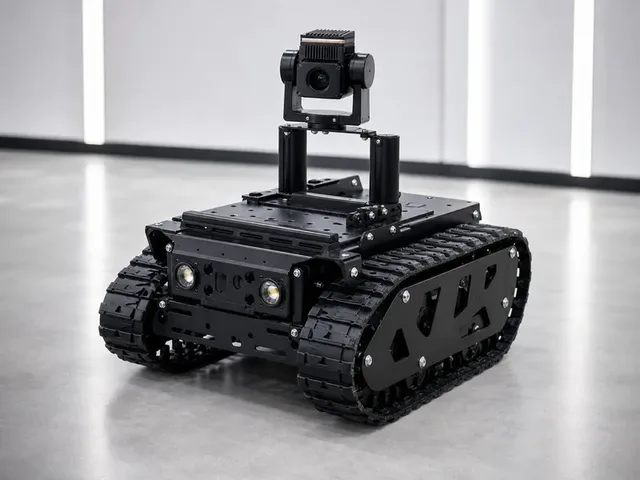
Waveshare's UGV Beast is an open-source off-road tracked AI robot platform for Raspberry Pi 4B or Raspberry Pi 5 developers. The official store page and wiki describe a dual-controller architecture: the Raspberry Pi handles higher-level AI vision, WebRTC browser control, JupyterLab tutorials, and strategy code while an ESP32 sub-controller handles motor PID, IMU data, pan-tilt/LED control, OLED status, battery sensing, and ESP-NOW communication. The tracked aluminum chassis adds independent suspension, zero-radius turning, optional 2-DOF pan-tilt with a 5MP 160-degree camera, OpenCV/MediaPipe demos for face, object, color, gesture, and line tracking, and hardware expansion for LiDAR, 4G/5G, audio, and GPIO peripherals. It is a maker and research platform rather than a consumer home-helper robot, but it clears ui44's bar through its open software stack, dual-controller design, computer-vision demos, and rugged mobile-robot hardware. Listed as Available with a recorded price; confirm current ordering and delivery terms.
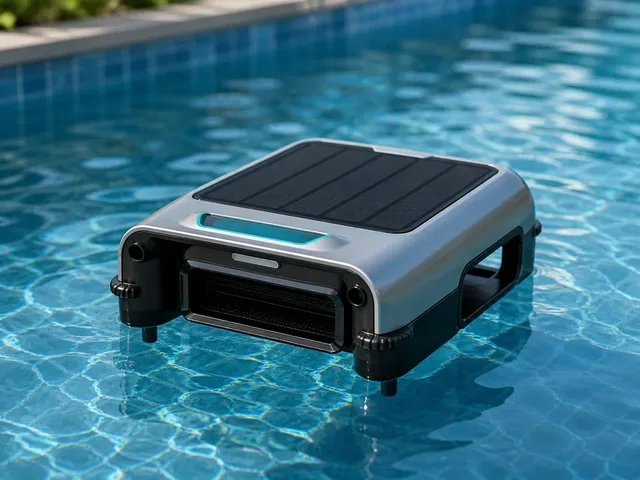
Aiper EcoSurfer S2 is a solar-powered robotic pool skimmer built to clean the water surface continuously while a separate pool robot handles the floor and walls. It floats across the pool collecting leaves, insects, pollen, light dust, and other surface debris before that material sinks. The official Aiper store lists a 4-liter top-loaded debris basket, 150-micron filtration, a built-in adjustable chlorine tablet holder, and an industry-first DebrisGuard baffle intended to keep collected debris from escaping when the robot stops or reverses. SolarSeeker technology lets the robot seek sunlight for short recharging sessions, while DC charging provides backup for cloudy conditions. Dual optical sensors, smart navigation, edge-cleaning behavior, retractable anti-stranding columns, and app-based scheduling, alerts, remote steering, and progress tracking make it more autonomous than a passive skimmer basket. Aiper positions EcoSurfer S2 as the surface-care partner to the Scuba V3 in the Experts Duo system, but it is also sold as a standalone robotic pool skimmer. Listed as Available with a recorded price; confirm current ordering and delivery terms.
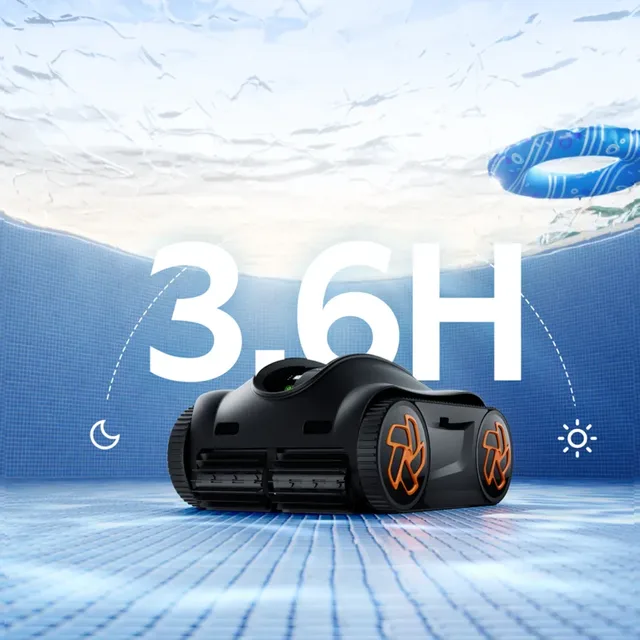
iGarden's K36 is a cordless robotic pool cleaner positioned as the brand's accessible everyday model in the K Series lineup (alongside the K70 and K90). It features a turbine-grade impeller with up to 5,810 GPH (22 m³/h) suction, intelligent path optimization using infrared and IMU-based navigation with AI route learning, and dual scrubbing brushes. The K36 covers floors, walls, and waterline in a single session, with up to 3.6 hours of runtime in floor-only mode and a 4L debris basket with 180 μm filtration. A Turbo 200% mode provides extra power for heavy debris after storms or pool parties. Onboard IPX8 waterproof touchscreen and app control over Bluetooth and 2.4 GHz Wi-Fi allow scheduling via the AI Timer (24/48/72-hour intervals). The robot auto-docks when the battery is low and self-drains in about five seconds for easy retrieval. Rated for pools up to 20 × 39 ft (≈ 28000 gallons). Backed by a 3-year full-machine replacement warranty. Listed as Available with a recorded price; confirm current ordering and delivery terms.
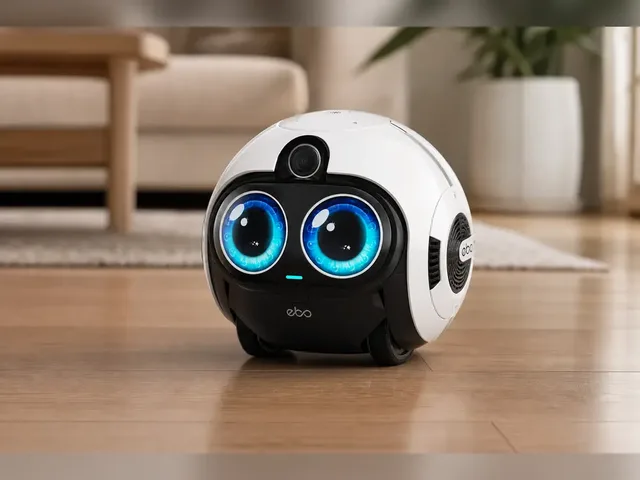
The Enabot EBO Max FamilyBot is a next-generation AI-powered home companion robot that builds on the EBO X with a fundamentally upgraded AI architecture. Unlike its predecessor's GPT-4o mini integration, EBO Max uses multimodal AI with long-term memory and contextual understanding to recognize family members, learn household routines, and adapt its behavior over time. It combines a 4K camera with V-SLAM autonomous navigation, multi-point spatial memory for scheduled patrols, and multi-model AI perception for person and pet detection. The robot handles two-way video calls, fall-detection alerts, pet monitoring, condition-based task execution, and personalized reminders — all while autonomously mapping, navigating, and recharging. At roughly half the price of the EBO X, it brings intelligent mobile home companionship to a broader audience. Listed as Available with a recorded price; confirm current ordering and delivery terms.
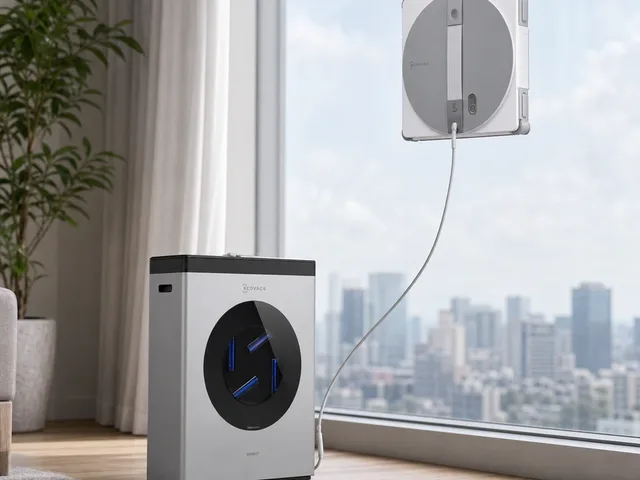
The WINBOT W3 OMNI is Ecovacs' CES 2026 window-cleaning robot. Its main differentiator is the OMNI multifunction station with Vortex Wash, which automatically washes the wiping pad between jobs instead of relying on manual rinsing — using 16 high-pressure nozzles at 20 kPa and four scrubbing discs at 200 RPM. Ecovacs also pairs WIN-SLAM 5.0 path planning with dynamic 1 mm obstacle avoidance, TruEdge edge cleaning with a retracting scrubber, three-nozzle wide-angle spray cleaning, dual plugged-in or battery operation (up to 130 min runtime), and a 12-stage anti-drop safety system generating over 800 N of suction force. The official US store lists the robot on sale, while CES coverage independently confirms its January 2026 debut. Listed as Available with a recorded price; confirm current ordering and delivery terms.

LilMilo is Ecovacs' first emotional AI companion robot: a plush robotic pet designed for lifelike home companionship rather than cleaning. The official product page and launch release describe an evolving personality, seven emotion types across 21 emotional states, a wide-angle camera nose for face/gesture/emotional-cue recognition, bionic eyes, a 3-DOF neck, three-microphone voice interaction with sound-source localization, touch sensors under warm bionic fur, and a built-in large language model with long-term memory. It can run fully offline for everyday commands and companionship, with up to 360 minutes of use and 30-minute fast charging to 50%. Listed as Available with a recorded price; confirm current ordering and delivery terms.
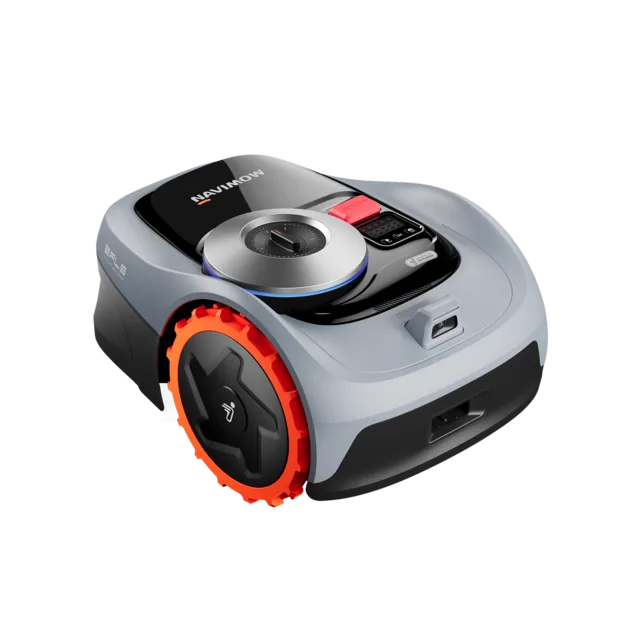
Segway Navimow i105 is a wire-free robotic lawn mower for smaller residential lawns. It uses EFLS 2.0 positioning (RTK + vision) with Visual SLAM for centimeter-level navigation, supports app-based mapping and multi-zone management, and includes AI obstacle avoidance via VisionFence. The mower is designed for quiet operation and can integrate with Alexa and Google Home. Listed as Available with a recorded price; confirm current ordering and delivery terms.
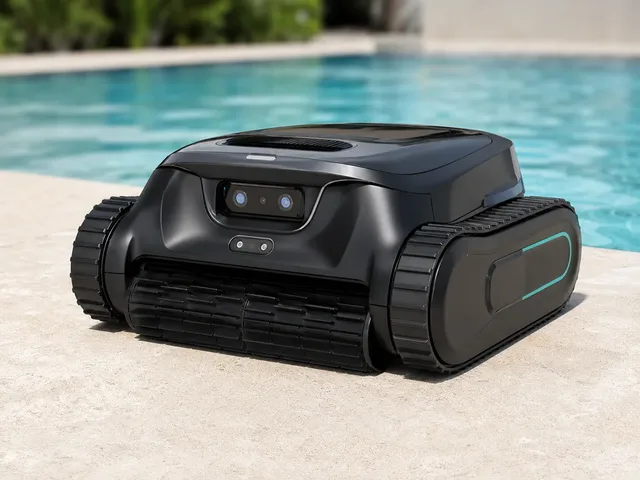
Aiper's flagship cordless robotic pool cleaner for 2026, distinguished by its Cognitive AI vision system — the first in a pool cleaner to combine a front-facing camera with dToF (direct Time-of-Flight) sensors for real-time debris identification and adaptive route planning. The VisionPath navigation system detects over 20 debris types and plans efficient cleaning paths rather than relying on random or fixed-grid patterns. AI Patrol mode targets only the dirtiest zones first, which Aiper claims reduces runtime and energy use by up to 40% compared to full-pool cycles. JetAssist technology uses a dedicated side-jet motor to keep the robot pressed against the waterline during surface cleaning, addressing a common weakness of cordless pool robots. The MicroMesh dual-layer filtration captures particles down to 3 microns (with a 180-micron pre-filter for larger debris), and the 3.5-liter debris basket is removable for easy cleaning. An AI Navium autonomous mode builds weekly cleaning schedules based on pool size, shape, cleaning history, and weather conditions. When a cycle finishes, the robot parks at the waterline and sends an app notification for retrieval. Dual LED lights enable night operation. Aiper is the world's top-selling brand of smart robotic pool cleaners by unit volume (Euromonitor, 2025 data). All camera data is processed on-device with zero cloud uploads, backed by TÜV-certified data privacy. Listed as Available with a recorded price; confirm current ordering and delivery terms.
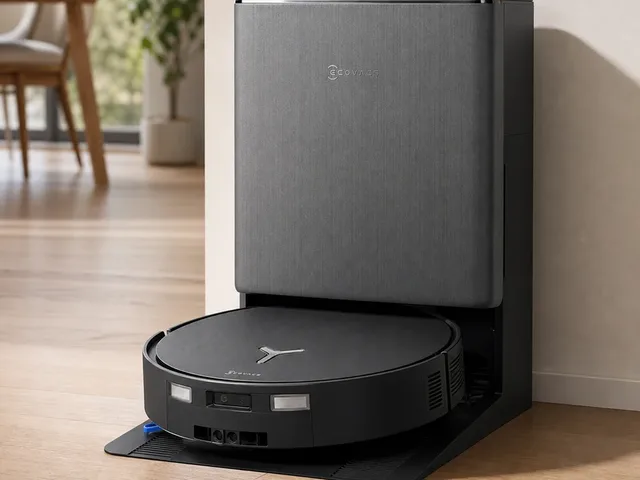
Ecovacs' mid-range robot vacuum and mop combo for 2026, positioned between the flagship X12 OmniCyclone and the value segment. The T90 Pro Omni features OZMO Roller 3.0 — a 27 cm self-washing microfiber mop roller (50% longer than the previous generation) with 32 pressurized nozzles and up to 200 RPM continuous self-cleaning during operation. BLAST suction technology delivers up to 30,000 Pa using an EV-grade pouch battery, paired with ZeroTangle 4.0 airflow-directed anti-tangle main brush. TruEdge 3.0 uses an air-cushion suspended roller with 1.5 cm extended reach and soft felt strip for wall-hugging edge cleaning. The TruePass adaptive 4-wheel-drive system handles single thresholds up to 2.4 cm and continuous transitions up to 4 cm via a mechanical climbing mechanism. AIVI 3D 4.0 with VLM deep learning provides object-aware navigation with semantic obstacle classification. The Triple Lift system intelligently separates dry and wet cleaning: lifting the mop on carpets, retracting brushes for large debris, and raising both brushes for liquid spills. The Omni Station offers auto-emptying with a 2.5 L disposable bag (up to 90 days hands-free), Fresh-flow Power Washing with 75°C heated clean water (not recycled dirty water), hot-air drying, automatic cleaning solution dispensing, and dirty water box self-cleaning at 5,000 RPM. PowerBoost Charging adds 10% battery in 3 minutes during station visits, enabling continuous cleaning runs up to 500 m² per task. Listed as Available with a recorded price; confirm current ordering and delivery terms.
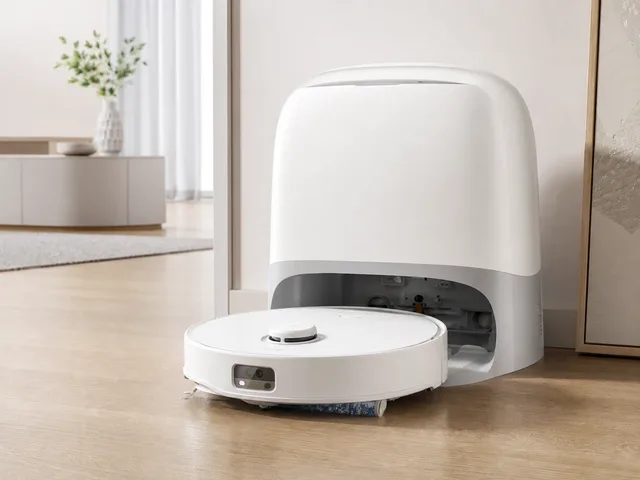
Roborock's first roller-mopping robot vacuum, debuting the SpiraFlow self-cleaning roller mop system. A 270 mm roller spinning at 220 RPM applies 15 N of downward pressure with continuous clean-water delivery via eight nozzles and an internal scraper that extracts dirty water into a separate tank. The roller lifts 15 mm on carpet and an automatic shield covers it for protection. On the vacuum side, the Qrevo Curv 2 Flow delivers 20,000 Pa HyperForce suction through a DuoDivide anti-tangle main brush (0% hair-tangle score in independent testing) and dual Lifting Arc side brushes. Navigation uses PreciSense spinning LiDAR with Reactive AI obstacle avoidance (structured light + camera, 200+ object types). The Multifunctional Dock washes the roller mop with 75 °C (167 °F) hot water, dries with 55 °C (131 °F) warm air, and auto-empties dust into a 2.7 L sealed bag. Onboard "Hello Rocky" voice control works offline; the app offers SmartPlan 3.0 scheduling, multi-floor maps, virtual no-go zones, and pet monitoring with photo capture. Available in white, 119 mm (4.7 in) tall with a 325 ml onboard dustbin and up to 242 minutes of battery life. Listed as Available with a recorded price; confirm current ordering and delivery terms.
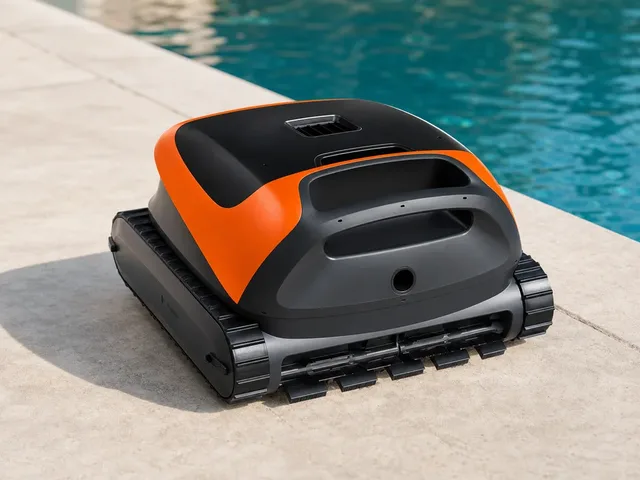
The Beatbot Sora 30 is a cordless robotic pool cleaner positioned as the more affordable sibling of the Sora 70, cleaning floors, walls, waterline, and shallow platforms without requiring boundary wires or manual setup. Four motors deliver 6,800 GPH suction through a 5.2-liter filter basket (150 µm standard; optional 3 µm ultra-fine filter) powered by HydroBalance architecture for stable movement across changing surfaces. A 10,000 mAh lithium-ion battery provides up to 5 hours of continuous floor cleaning per charge, with 65W fast charging restoring full capacity in approximately 4.5 hours via a titanium charging plug. SonicSense ultrasonic obstacle avoidance and 13 integrated sensors enable optimized S-shaped cleaning paths that adapt to the pool layout. The robot operates in water as shallow as 8 inches (20 cm) and covers pools up to 3,230 sq ft (300 m²) of all shapes and materials including concrete, vinyl, fiberglass, and ceramic tile. Smart Water-Surface Parking floats the unit to the top when a cycle finishes for easy retrieval. Three cleaning modes (Floor, Standard, ECO) handle everyday to light maintenance. Dual-band Wi-Fi and Bluetooth connect to the Beatbot app for remote monitoring, one-tap retrieval, and firmware updates. Available in Cosmic Orange and Deep Blue. Listed as Available with a recorded price; confirm current ordering and delivery terms.
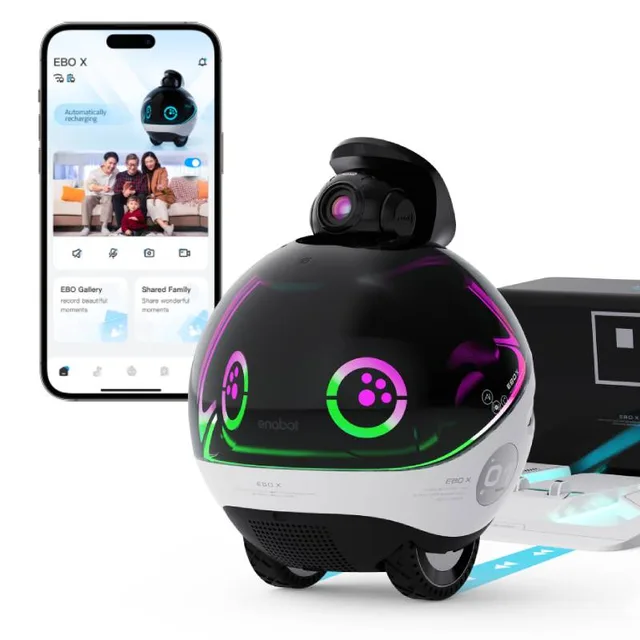
Enabot's EBO X is an AI family companion robot for home monitoring and communication. Enabot markets it with GPT-4o mini voice interaction, Visual SLAM navigation, a 4K stabilized camera with night vision, and Alexa-based assistant features for household use. Listed as Available with a recorded price; confirm current ordering and delivery terms.
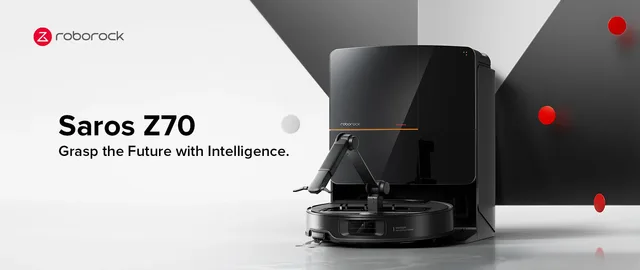
Roborock's first robot vacuum with a foldable five-axis mechanical arm (OmniGrip). The Saros Z70 can pick up items up to 300 g, with current official recognizable/organizable categories including socks, sandals, crumpled tissues, and towels; Roborock says more items will be added via firmware OTA. It can move obstacles out of the way and clean areas that were previously blocked — then return to clean the missed spots. At just 7.98cm (3.14 inches) tall, it's Roborock's slimmest design yet while packing 22,000 Pa suction, LiDAR navigation (StarSight 2.0), dual anti-tangle brushes, and an AdaptiLift chassis. The arm takes up only 10% of the space of prior prototypes. Announced at CES 2025, pre-orders opened March 2025, shipping since May 2025. Official FAQ examples cite about 2h15+ vacuuming/mopping with the arm disabled, or about 2h10+ with the arm enabled while tidying 10 items. Listed as Available with a recorded price; confirm current ordering and delivery terms.
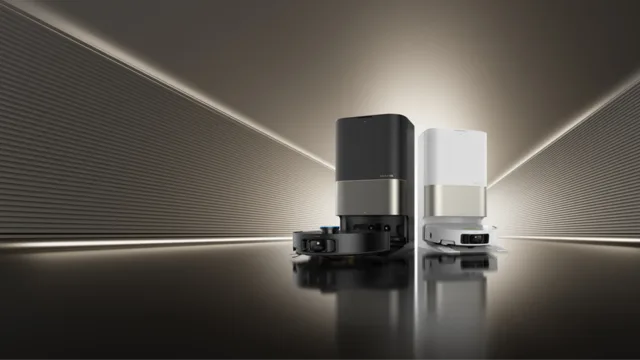
Dreame's flagship robot vacuum and mop, announced at CES 2025. The X50 Ultra is the first robot vacuum with retractable robotic legs (ProLeap System) that let it climb over thresholds up to 6 cm high. It features a motorized VersaLift LiDAR sensor that retracts to let the robot clean under furniture as low as 8.9 cm. The HyperStream Detangling DuoBrush system eliminates hair tangles, and 20,000 Pa suction handles everything from fine dust to pet hair. Dual rotating mop pads with MopExtend RoboSwing reach edges and corners, and the mop lifts 10.5 mm for carpet protection. The PowerDock base station auto-empties dust, washes mops with hot water up to 80°C, and refills cleaning solution. Listed as Available with a recorded price; confirm current ordering and delivery terms.
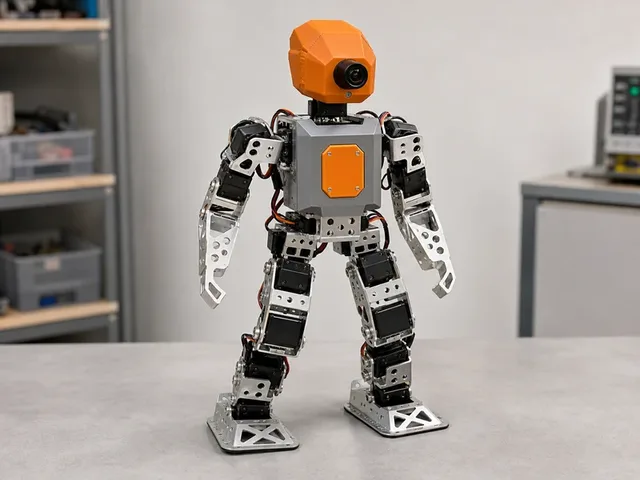
SamuRoid is XiaoR GEEK's Raspberry Pi 4B-powered miniature humanoid for robotics education, ROS development, and embodied-AI experiments. The official product page lists a 22-DOF bionic structure with high-voltage bus servos, a 1080p camera on a 2-DOF gimbal, USB microphone, MPU6050 IMU, Ubuntu 18.04 plus ROS Melodic, and Python/C++ programmability. Its AI features center on multimodal interaction: OpenCV vision tasks such as face recognition, color tracking, QR-code scanning, and target localization, plus API support for DeepSeek and Doubao so developers can combine voice, vision, and motion. XiaoR GEEK lists the base package as in stock, while independent coverage in April 2026 described it as a higher-end educational/research humanoid compared with simpler Raspberry Pi and servo-based robots. Buyers should note that it is a developer platform with an older ROS/Ubuntu stack and about one hour of official battery runtime, not a consumer home-helper robot. Listed as Available with a recorded price; confirm current ordering and delivery terms.
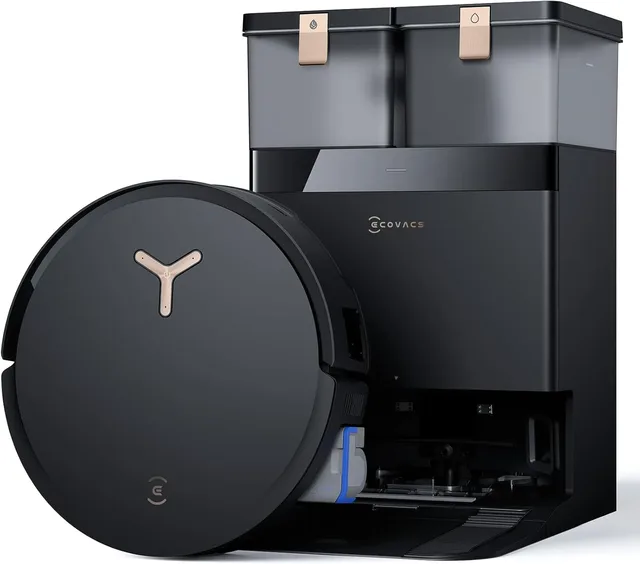
Ecovacs' flagship robot vacuum and mop combo for 2025. The X8 Pro Omni features the OZMO Roller — a self-washing roller mop that rinses itself 200 times per minute with 16 clean water nozzles, preventing cross-contamination. It delivers 18,000 Pa suction with ZeroTangle 2.0 anti-hair-wrap technology, TruEdge 2.0 extending mop and side brush for edge cleaning, and embedded dToF LiDAR for a slim 9.8cm profile. The Omni Station handles auto-emptying (3L bag), hot water mop washing up to 75°C, 63°C hot air drying, and automatic cleaning solution dispensing. YIKO-GPT voice assistant powered by a large language model lets you control the robot with natural conversation. Listed as Available with a recorded price; confirm current ordering and delivery terms.
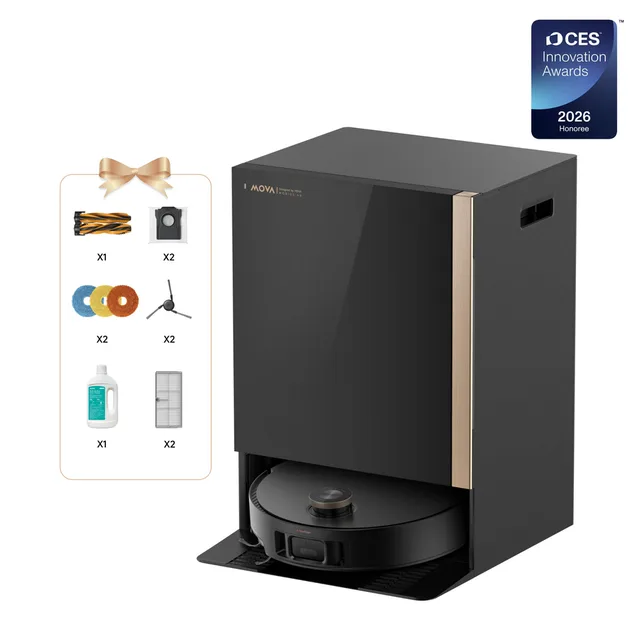
The MOVA Mobius 60 is a premium robot vacuum and mop combo featuring MOVA's MopSwap™ system — the first in its lineup to automatically select among three interchangeable mop pads (ThermoHold for grease, Plush for delicate wood, and HyperClean all-purpose) based on room type. It delivers up to 30,000Pa suction with a pressure-retention baffle that concentrates airflow on carpets, paired with a TroboWave™ DuoBrush dual-brush system and triple anti-tangle mechanisms. StepMaster 2.0 retractable legs lift the chassis to clear thresholds and obstacles up to 80mm (3.15 in). Navigation uses a retractable FlexScope™ DToF LiDAR sensor for low-profile cleaning under furniture, supplemented by AI SmartSight with a structured-light 3D scanner, LED fill light, and recognition of 240+ obstacle types. The all-in-one base station handles auto-emptying into a 3.2L dust bag, auto-refilling, hot-water mop washing at up to 212°F (100°C), heated-air drying, and dual cleaning-solution tanks. Independent testing by Vacuum Wars ranked it #4 on their Top 20 Robot Vacuums list, praising its carpet deep-clean performance (88%) and obstacle avoidance (22/24) while noting below-average battery life. Listed as Available with a recorded price; confirm current ordering and delivery terms.
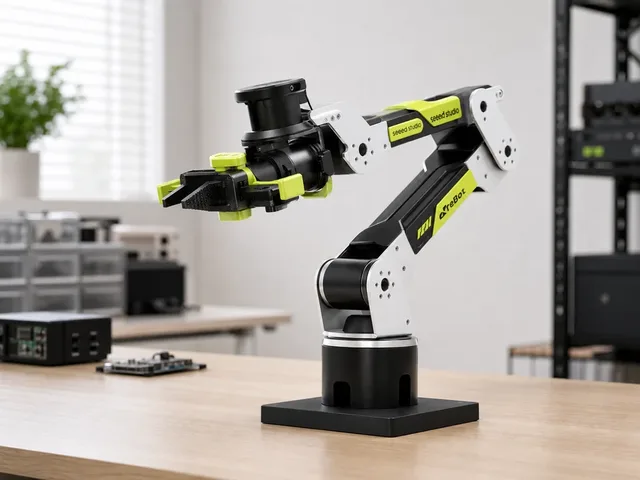
Seeed Studio's reBot Arm B601-DM is a desktop 6-DoF robotic arm plus gripper kit for embodied-AI learning, teleoperation, and manipulation research. Official Seeed materials describe a fully open-source hardware and software stack with Damiao actuators, 1.5kg recommended payload, up to 767mm reach, <0.2mm repeatability, ROS1/2, Python SDK, LeRobot, Pinocchio, and Isaac Sim support or roadmap coverage. Seeed's official reBot-DevArm repository corroborates the B601-DM/RS project, modular kit options, completed ROS2, LeRobot, Pinocchio, and depth-camera demo integrations for the DM version, and a 24V desktop form factor. Independent CNX Software coverage confirms the Damiao-actuated hardware, USB-CAN host-computer requirement, kit pricing/options, and April 2026 availability context. It is a developer and research arm, not a mobile consumer home assistant. Listed as Available with a recorded price; confirm current ordering and delivery terms.
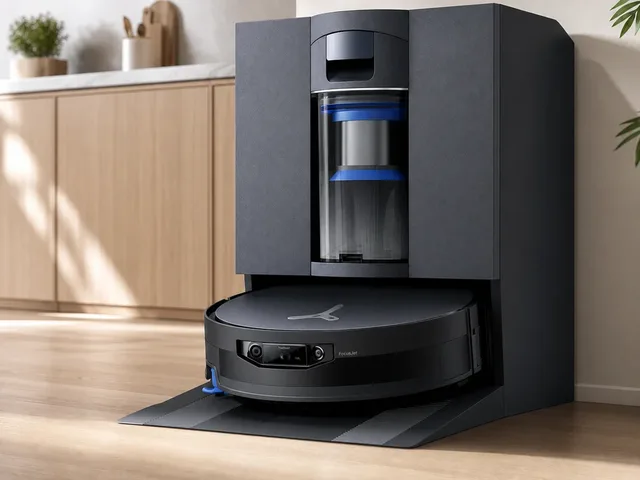
Ecovacs' flagship robot vacuum and mop combo for 2026, unveiled at CES 2026. The X12 OmniCyclone introduces the OZMO Roller 3.0, a 27 cm self-washing microfiber mop roller — 50% longer than the previous generation — with 32-way pressurized water flow for streak-free mopping and reduced residual moisture. FocusJet Stain Pre-dissolving Technology uses infrared detection and crossed water jets at 46,000 Pa to pre-soften dried-on stains before mopping. Suction reaches 22,000 Pa via BLAST technology with ZeroTangle 4.0 airflow-directed anti-tangle design. TruEdge 3.0 extends edge reach to 2.58 cm with an air-cushion suspended roller, and the TruePass adaptive 4-wheel-drive system handles single thresholds up to 2.4 cm and continuous double-step transitions up to 4 cm. AIVI 3D 4.0 provides object-aware navigation, and AGENT YIKO 2.0 autonomously plans weekly cleaning schedules. The OmniCyclone station features bagless PureCyclone 2.0 auto-empty (1.6 L dustbin, up to 48 days hands-free), fresh-flow power washing with heated water, dirty water box auto-cleaning, and PowerBoost Charging Plus, adding 13% battery in 3 minutes for uninterrupted runs up to 1,000 m². Listed as Available with a recorded price; confirm current ordering and delivery terms.
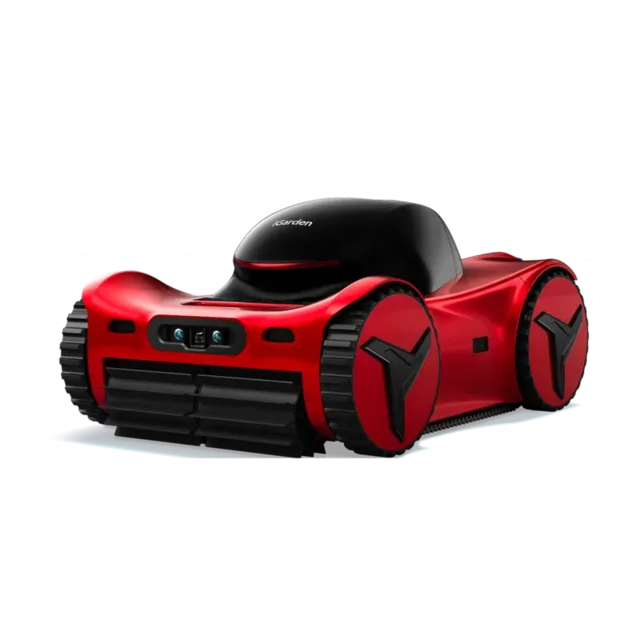
iGarden's M1-AI 90 is the top PRD-M1-100AI-US variant in the official M1-AI Series, superseding the earlier M1 Pro Max 100 AI naming on the redirected store page. It is a cordless robotic pool cleaner for in-ground or above-ground pools with more complex shapes, steps, walls, and waterlines. Official iGarden materials position it as the brand's premium dual-vision model, combining a biomimetic AI vision system, dual-pump suction, tracked wall-climbing traction, dual-layer filtration, and app-based scheduling. iGarden says it can clean pools up to 26 × 49 ft (about 1,274 sq ft), and the current store variant selector lists 9 hours of runtime for the M1-AI 90. Listed as Available with a recorded price; confirm current ordering and delivery terms.
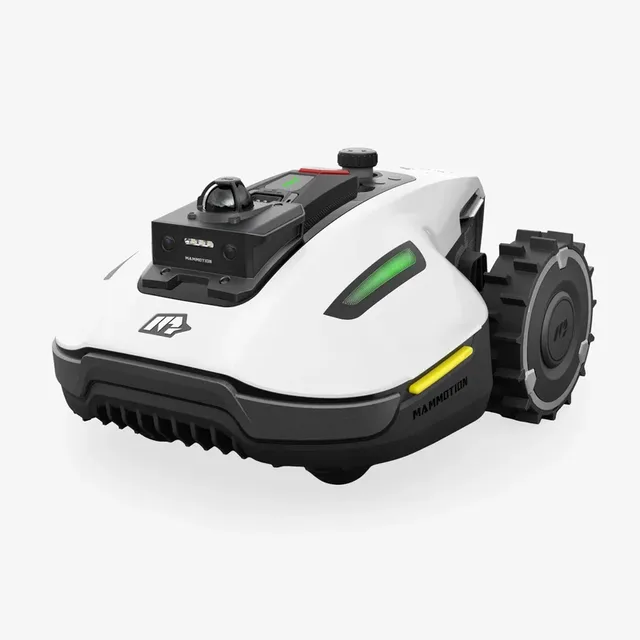
The Mammotion YUKA mini 2 1000H is a compact 2026 wire-free robotic lawn mower for lawns up to 1,000 m² (0.25 acres). Official Mammotion materials position it as the more affordable YUKA mini 2 variant that skips RTK in favor of a 360° LiDAR and AI vision fusion system for automatic mapping, intelligent path planning, and obstacle avoidance without perimeter wire installation. Mammotion says the rear-wheel-drive platform can handle slopes up to 45% (24°), store up to 10 lawn maps, navigate pathways as narrow as 21.7 inches, and use DropMow mode for quick one-off mowing jobs in unmapped areas. Listed as Available with a recorded price; confirm current ordering and delivery terms.
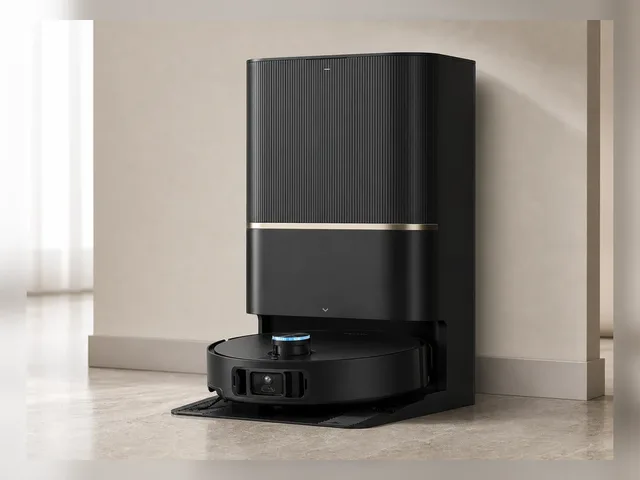
Dreame's L60 Pro Ultra is the flagship model in the L60 robot-vacuum series launched for the U.S. market in April 2026. It keeps the high-end Dreame threshold-crossing idea in a new L-series package: ProLeap robotic legs let the robot cross two-step obstacles up to 3.47 in / 8.8 cm, while liftable VersaLift LiDAR lets it clean under furniture as low as 3.5 in / 8.9 cm. The model pairs 35,000 Pa suction with hot-water mopping, extendable edge-cleaning hardware, 212°F / 100°C mop self-cleaning, and an automated PowerDock. Dreame's official materials also cite dual-laser 3D structured light, an AI RGB camera, and recognition for more than 280 object types, making this a notable new premium cleaner rather than a navigation-only vacuum. Listed as Available with a recorded price; confirm current ordering and delivery terms.
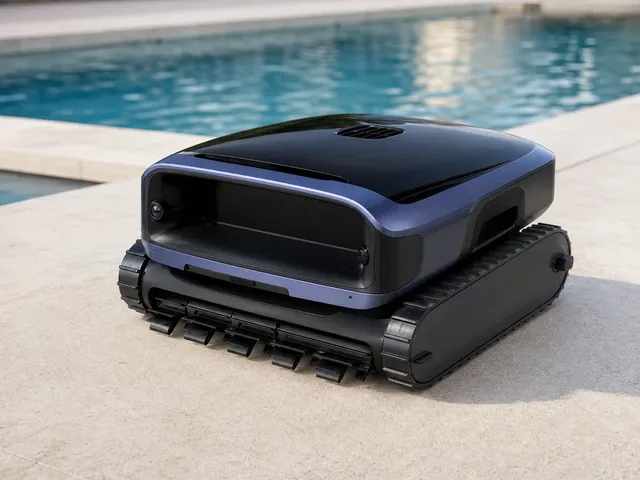
The Beatbot Sora 70 is a cordless robotic pool cleaner that cleans all four pool zones — water surface, walls, waterline, and floor — plus shallow platforms in water as shallow as 8 inches. Its JetPulse twin-jet surface skimming system actively draws floating debris toward the suction inlet rather than pushing it aside, and SonicSense ultrasonic obstacle avoidance adapts to different pool layouts. Eight motors deliver 6,800 GPH suction through a 6-liter filter basket (150 µm standard; optional 3 µm ultra-fine filter). A 10,000 mAh lithium-ion battery provides up to 7 hours of surface cleaning or 5 hours of floor cleaning per charge, with 65W fast charging restoring full capacity in approximately 4.5 hours. Five cleaning modes (Water Surface, Floor, Pro, Standard, and Eco) cover everyday maintenance through heavy cleanup. The robot automatically parks at the pool edge when a cycle finishes or the battery runs low for easy retrieval. It supports in-ground and above-ground pools up to 300 m² (3,299 sq ft) in all shapes and materials including concrete, vinyl, fiberglass, and ceramic tile, and is rated IPX68 waterproof. The Beatbot app offers remote navigation, one-tap retrieval, scheduling, and mode selection over dual-band Wi-Fi and Bluetooth. Winner of five media awards at CES 2026 including Best of CES from PCWorld. Listed as Available with a recorded price; confirm current ordering and delivery terms.
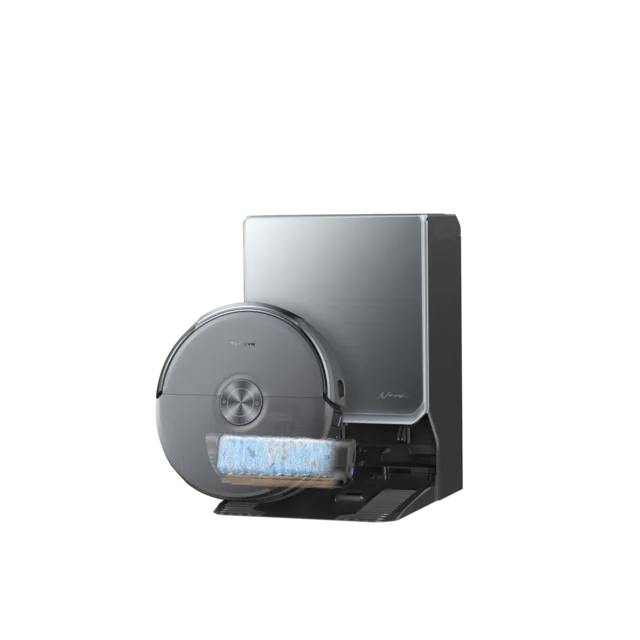
Narwal's 2026 flagship robot vacuum and mop, unveiled at CES 2026 and released April 2026. The Flow 2 introduces the Narmind Pro Autonomous System, pairing dual HD/RGB cameras and side structured light with Narwal's TwinAI/VLM obstacle-avoidance stack for real-time object recognition and adaptive avoidance behavior. The robot adjusts its clearance distance based on perceived risk, cleaning within 1 cm of walls while giving pet waste a wide berth. A track-style FlowWash roller mop with an extendable pad scrubs close to baseboards and cabinetry, using onboard water heated to 140°F (60°C). Suction increases to 31,000 Pa (up from 22,000 Pa on the original Flow) and battery capacity grows to 7,000 mAh. The redesigned maintenance base supports 212°F full-cycle self-cleaning of the mop, pipes, and water tank, 140°F hot-air drying, and a reusable dust bag rated for up to 120 days of capacity. It comes in both standalone-tank and plumbed-in configurations. Unique family-focused features include pet location scanning via the onboard cameras, automatic deep-cleaning of pet-active zones, a baby mode that switches to ultra-quiet operation near cribs, toy recognition with reminders, and a Smart Valuables Guard that alerts when jewelry, keys, or phones are detected on the floor. Listed as Available with a recorded price; confirm current ordering and delivery terms.
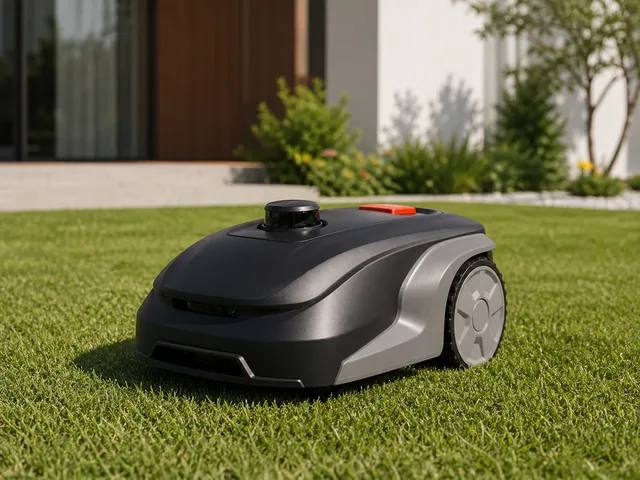
The Sunseeker S4 is a wire-free robotic lawn mower for residential lawns up to 1,000 m² (0.25 acre). It uses a 360° LiDAR sensor paired with AI Vision (the AllSense 3D Fusion system) to build a real-time 3D map of the yard, enabling systematic path planning instead of random mowing. Setup requires no perimeter wires or external antennas — connect to Wi-Fi, place it on the lawn, and it maps and mows autonomously. The S4 handles slopes up to 42% (22°), navigates narrow passages down to 80 cm, and supports up to 100 zones across five maps with virtual No-Go zones. A dual-blade 7-inch cutting deck with a floating disc and dedicated edge-trimming micro-blade cuts as close as 3 cm to borders. It is rated IPX6 waterproof and operates at ≤60 dB(A). CES 2026 Innovation Awards Honoree. Listed as Available with a recorded price; confirm current ordering and delivery terms.
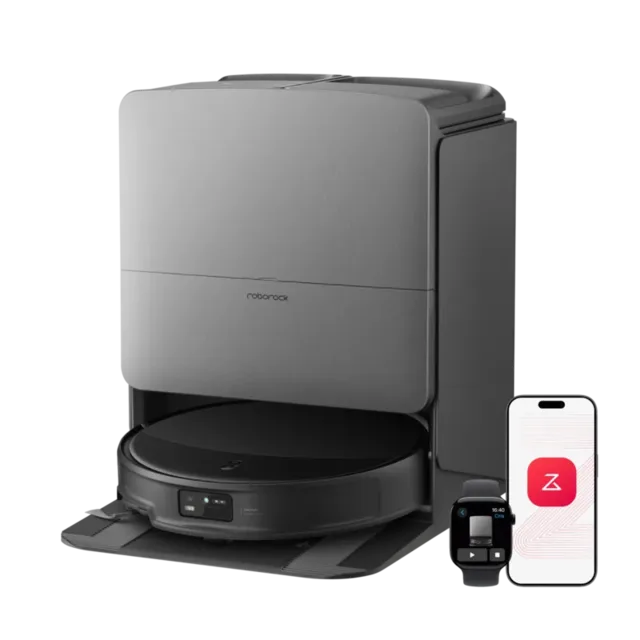
Roborock's 2026 flagship robot vacuum and mop, and the first consumer product to ship the AI architecture introduced with the development-stage Saros Rover. The Saros 20 features 36,000 Pa HyperForce suction, AdaptiLift Chassis 3.0 that lifts main wheels and deploys a climbing arm to cross double-layer thresholds up to about 3.46 inches (8.8 cm) and adapt to carpets up to 1.18 inches (3 cm) in pile height, and the StarSight Autonomous System 2.0 with embedded 3D ToF LiDAR that recognizes over 300 object types at 21× higher sampling frequency than traditional LDS navigation. Dual rotating mop pads with FlexiArm edge cleaning reach into toe-kick spaces as low as 0.79 inches (2 cm). The included RockDock auto-empties dust (2.7L bag, up to 65 days), washes mops with 212°F (100°C) hot water, dries with 131°F (55°C) warm air, and supports optional refill and drainage integration. Announced at CES 2026, available in the US since March 23, 2026. Listed as Available with a recorded price; confirm current ordering and delivery terms.
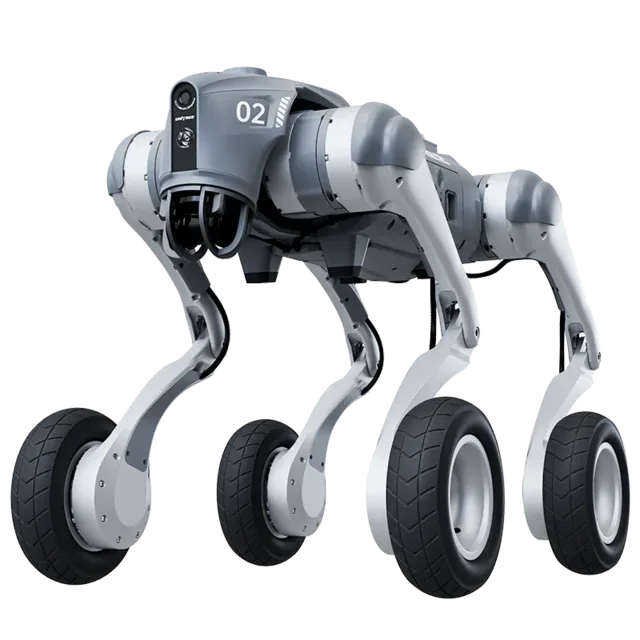
Unitree's consumer-grade quadruped robot dog featuring embodied AI and 4D LiDAR. The Go2 is available in four editions (Air, Pro, X, EDU) and gained global attention at the 2023 Hangzhou Asian Games where it transported discus and javelin on the field. Features AI-trained advanced gaits including upside-down walking, adaptive roll-over, and obstacle climbing. Supports 3D LiDAR mapping, intelligent side-follow (ISS 2.0), and OTA software updates. Official Unitree direct pricing is currently listed from $1,600 for Go2 Air, with Go2 Pro at $2,800, Go2 X at $4,500, and EDU pricing available via contact sales. Listed as Available with a recorded price; confirm current ordering and delivery terms.
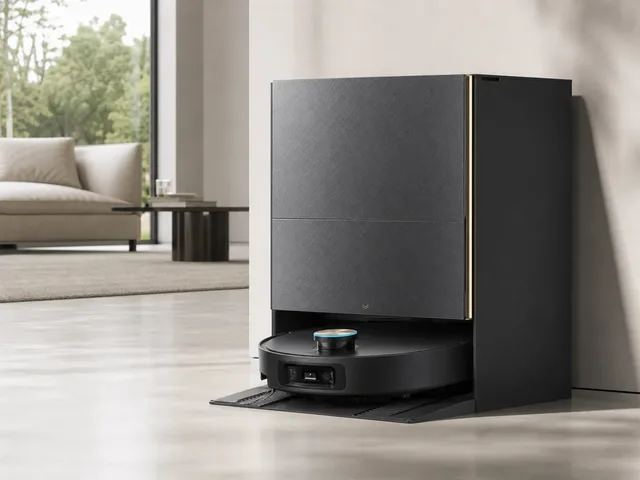
Dreame's 2026 flagship robot vacuum and mop, unveiled at CES 2026 and later sold through Dreame's US store and Amazon. The X60 Max Ultra Complete combines a 79.5 mm ultra-slim body with a retractable VersaLift DToF sensor, dual robotic legs for up to 8.8 cm double-layer threshold crossing, and 35,000 Pa suction. Its cleaning system pairs the HyperStream Detangling DuoBrush 2.0 with dual Omni-Scrub mops, 15 N heated mopping pressure, edge-extending arms, and automatic mop removal for vacuum-only runs. Dreame also equips it with dual AI cameras, lateral 3D structured light, proactive illumination, a 212°F self-cleaning dock, dual-solution auto refilling, and built-in plus third-party voice control. Listed as Available with a recorded price; confirm current ordering and delivery terms.
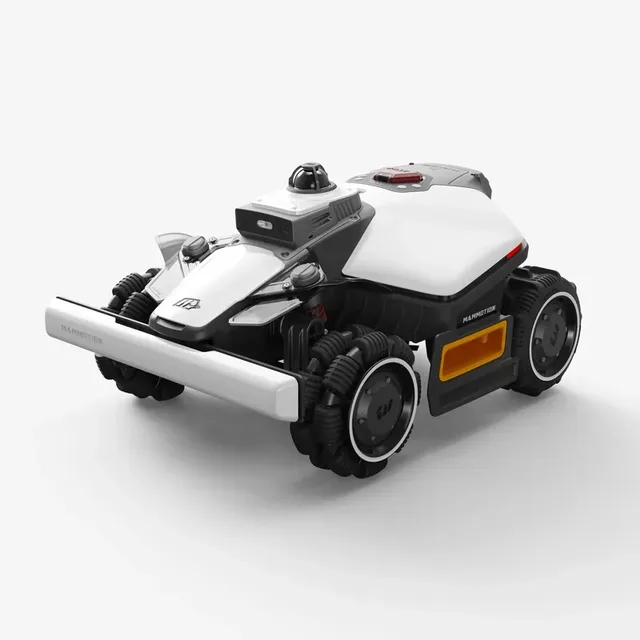
The Mammotion LUBA mini 2 AWD 1500 is a compact 2026 wire-free robotic lawn mower for lawns up to 1,500 m² (0.37 acres). Mammotion positions it as a smaller AWD alternative to the larger LUBA 3 models, pairing 360° LiDAR with dual-camera AI vision for boundary-free mapping and obstacle avoidance without perimeter wire installation. Its standout hardware twist is an asymmetrical cutting system with a dedicated 4.7-inch edge-cutting disc designed to trim closer to walls, fences, and flower beds than typical center-disc mowers. Official materials also highlight 80% slope handling, 300-plus obstacle recognition, DropMow for temporary unmapped areas, and a bundled 4G module with three years of data service. Listed as Available with a recorded price; confirm current ordering and delivery terms.
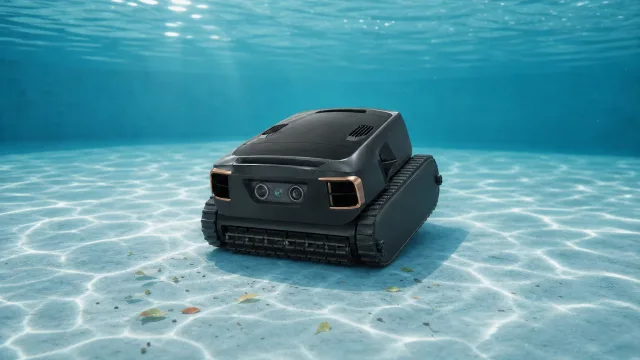
Aiper Scuba V3 Ultra is a 2026 flagship cordless robotic pool cleaner and skimmer that extends the Scuba line into full-pool floor, wall, waterline, water-surface, shallow sun-shelf, and chlorine-care coverage. Aiper's product and CES launch pages describe it as a Cognitive AI powered 6-in-1 robotic pool cleaner, pairing dual-camera Cognitive AI Vision with VisionPath 2.0 navigation and Navium Mode for real-time debris recognition, route adaptation, and weekly maintenance plans. It targets shallow areas down to 7.87 inches, uses JellyFloat technology for self-rescue and water-surface retrieval, and combines 8,500 GPH dual-pump suction, dual brushes, and a 3.5L MicroMesh filter basket. The live US store lists it for purchase, while PCWorld's early review corroborates wireless charging, app-controlled modes, AI Patrol cleaning, and real-world performance caveats. Listed as Available with a recorded price; confirm current ordering and delivery terms.
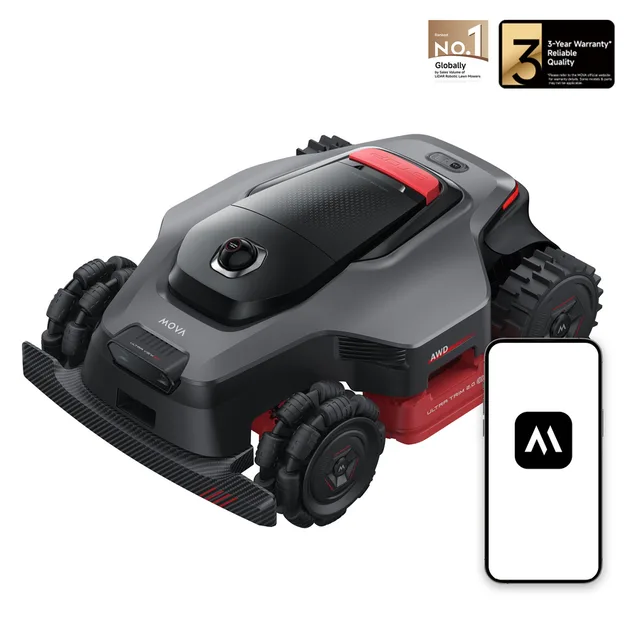
MOVA's LiDAX Ultra 3000 AWD is a wire-free robotic lawn mower for lawns up to 3,000 m² (about 0.75 acre). Official MOVA materials position it as the larger all-wheel-drive US launch model in the LiDAX Ultra line, combining 360° 3D LiDAR with AI dual vision for RTK-free auto mapping, obstacle avoidance, and multi-zone mowing. MOVA says it uses four hub motors to handle slopes up to 80% (38.6°), dual 15.8-inch cutting discs for wider coverage, and app-managed dual maps with support for up to 150 zones. Independent launch coverage from TechRadar also described it as MOVA's large-yard AI-navigation mower, broadly matching the official positioning. Listed as Available with a recorded price; confirm current ordering and delivery terms.
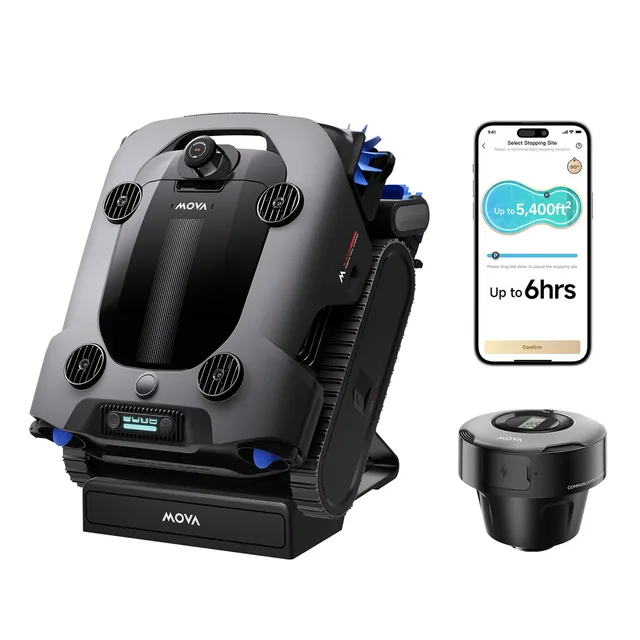
MOVA's Rover X10 is a cordless robotic pool cleaner that uses underwater LDS (Laser Distance Sensor) for real-time 3D pool mapping and AI-driven path planning. Official MOVA materials position it as the flagship model in their pool cleaner lineup, featuring a 7-in-1 OMNI Clean system that covers floor, walls, waterline, surface, corners, steps, and shallow zones. The robot uses four jet-drive motors with FloatDrive technology for stable hovering and movement underwater — described by MOVA as underwater-drone-like agility. With 10,000 GPH suction, 15 coordinated motors, a 15,000mAh battery for up to 6 hours of runtime, and a 5L dual-layer filtration system (3μm ultra-fine plus 180μm filters), the Rover X10 can clean pools up to approximately 5,400 sq ft in a single cycle. It connects via AquaSonar (WiFi-to-ultrasound relay) for real-time app monitoring and control through the MOVAhome app. Independent coverage from Pool Magazine and HomeCrux corroborated the feature set and spring 2026 North American availability. The robot also ships with a wireless IPX8-rated charging dock. Listed as Available with a recorded price; confirm current ordering and delivery terms.
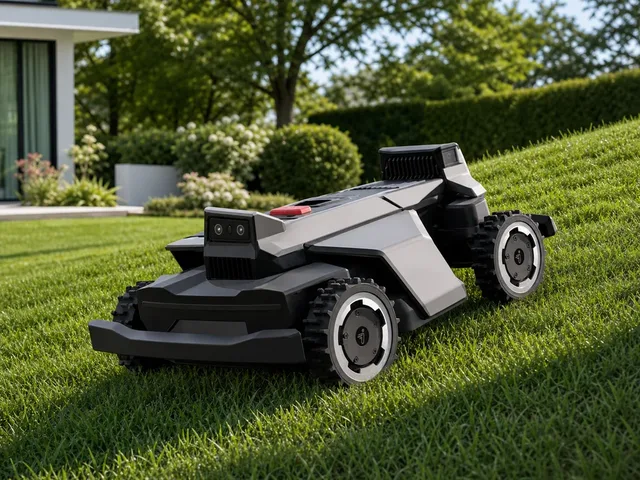
Segway Navimow X430 is the 1.0-acre model in the new X4 all-terrain robotic mower lineup for large residential lawns. Official Navimow materials position it above the earlier X3 series with Xero-Turn AWD, a dual-disc 17-inch cutting deck, tri-frequency Network RTK plus 360° VSLAM and VIO navigation, panoramic AI obstacle avoidance, and antenna-free auto-mapping for complex yards. Listed as Available with a recorded price; confirm current ordering and delivery terms.
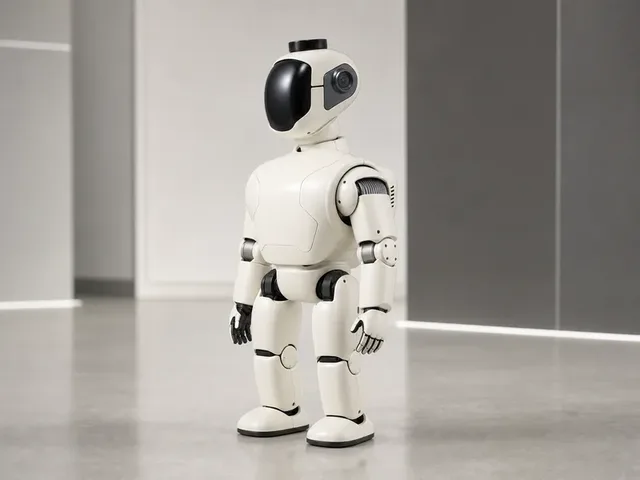
Zeroth Robotics M1 is a compact home companion robot that Zeroth introduced with its US launch at CES 2026 and now promotes through a dedicated product page plus a reservation flow. Official materials position M1 as an 'embodied intelligence' robot for home companionship, gentle fall detection, mobile safety checks, daily assistance, kid-focused interactive learning, pet behavior monitoring, and remote family interaction. The robot combines a 20-DoF body with both bipedal and wheeled mobility, whole-home LiDAR mapping, iTOF depth sensing, vision-based recognition and obstacle avoidance, multilingual conversation, and an open platform for programming, VR, and reinforcement-learning experimentation. Listed as Available with a recorded price; confirm current ordering and delivery terms.
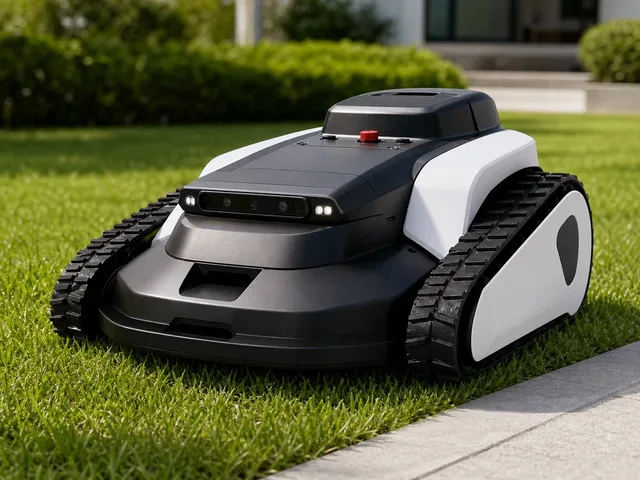
The Lymow One Plus is a wire-free robotic lawn mower built for rougher and steeper yards than typical residential mowers. Official Lymow materials position it around a tracked drive system instead of wheels, paired with RTK + VSLAM navigation, AI vision obstacle avoidance, and a 16-inch dual-rotary cutting deck. Lymow says the One Plus can handle slopes up to 45°, mow up to 1.73 acres per day, and keep cutting performance high with a 1,785 W peak-power blade motor, LiFePO₄ battery, and fast 10A charging option. Listed as Available with a recorded price; confirm current ordering and delivery terms.
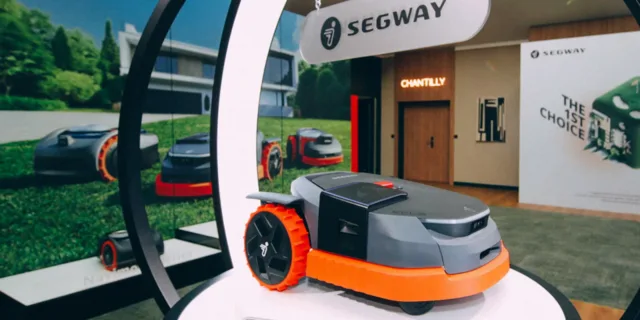
Segway Navimow X350 is a boundary-wire-free robotic mower in the X3 series for large residential lawns. Segway says the X3 launch includes X315/X330/X350/X390 models and positions the platform for larger-area mowing with EFLS 3.0 positioning and VisionFence obstacle sensing. Listed as Available with a recorded price; confirm current ordering and delivery terms.
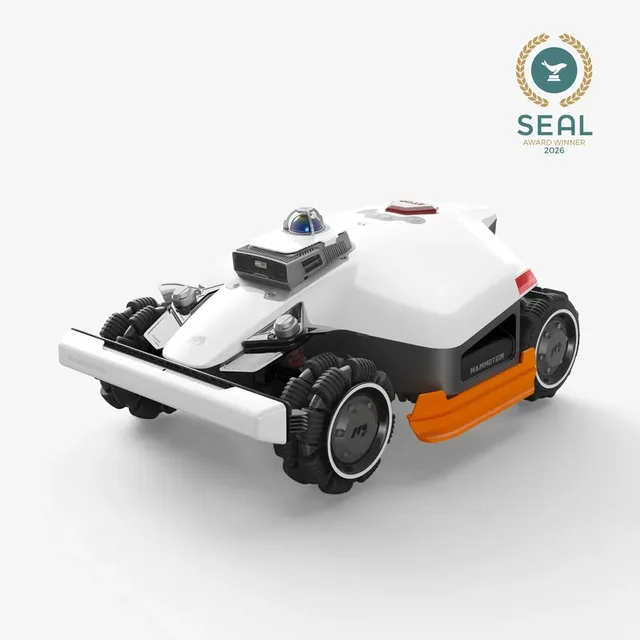
The Mammotion LUBA 3 AWD 5000 is Mammotion's 2026 flagship wire-free robotic lawn mower for lawns up to 5,000 m² (1.25 acres). It succeeds the LUBA 2 AWD 5000 with Mammotion's Tri-Fusion navigation stack, combining 360° LiDAR, NetRTK, and dual-camera AI vision for centimeter-level positioning without perimeter wire installation. Mammotion says the AWD platform can tackle slopes up to 80% (38.6°), use adaptive suspension to clear obstacles up to 3.15 inches, and mow with dual 165W cutting motors across a 15.8-inch deck. Official CES 2026 materials and the current store listing position it as the top residential LUBA 3 AWD model for larger, more complex yards. Listed as Available with a recorded price; confirm current ordering and delivery terms.
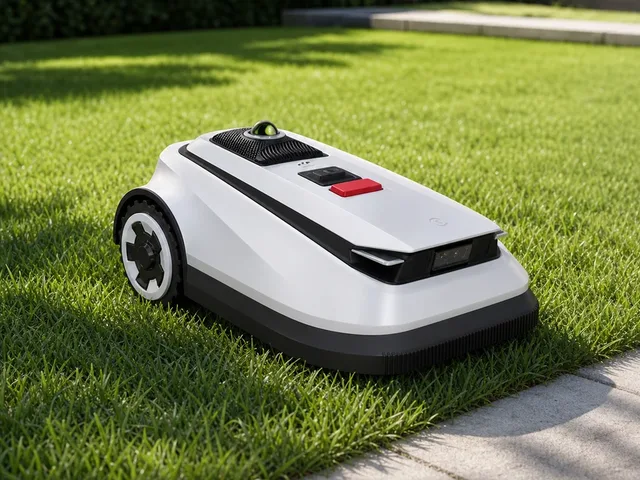
The Ecovacs GOAT A3000 LiDAR is a wire-free robotic lawn mower for lawns up to 3/4 acre (3,000 m²). Official Ecovacs materials position it as the large-yard model in the original GOAT A family, using a roof-mounted 360° LiDAR, forward 3D-ToF LiDAR, and AI camera for automatic boundary mapping, obstacle avoidance, and night-capable navigation without perimeter wire or RTK setup. Its 32V platform combines dual blade discs, app-adjustable 3-9 cm cutting height, up to 50% slope handling, 4 cm barrier crossing, and 45-minute fast charging. Listed as Available with a recorded price; confirm current ordering and delivery terms.
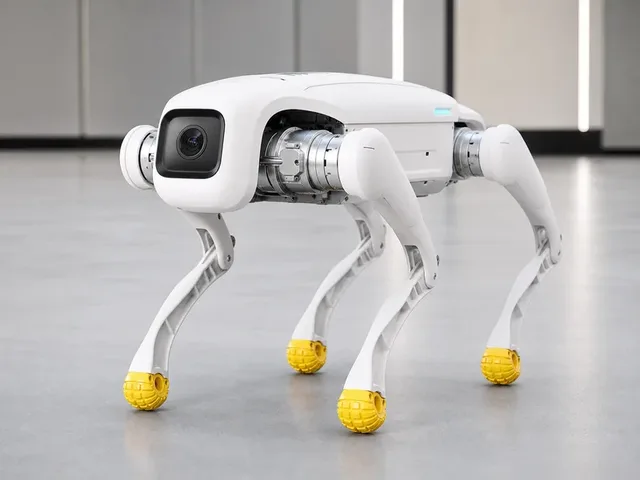
AGIBOT's compact quadruped robot platform, designed for research, education, security patrol, industrial inspection, and entertainment. Powered by reinforcement-learning-based gait control, the D1 Pro autonomously adapts to diverse terrain types including gravel, slopes, and stairs. It reaches 3.5 m/s top speed, carries a 5 kg effective payload, and performs dynamic maneuvers such as forward jumps (35 cm), backflips, and bipedal standing. Built with 12 aluminum-alloy precision joint motors delivering 48 N·m peak torque each, the robot features self-balancing, anti-fall, and anti-interference capabilities. Available in Pro (standard remote operation) and Edu (secondary development with expansion ports) variants. The D1 family also includes higher-performance D1 Max and D1 Max Pro models. Sold through AGIBOT's official store and select retailers; also available via AGIBOT's RaaS rental program. Listed as Available with a recorded price; confirm current ordering and delivery terms.
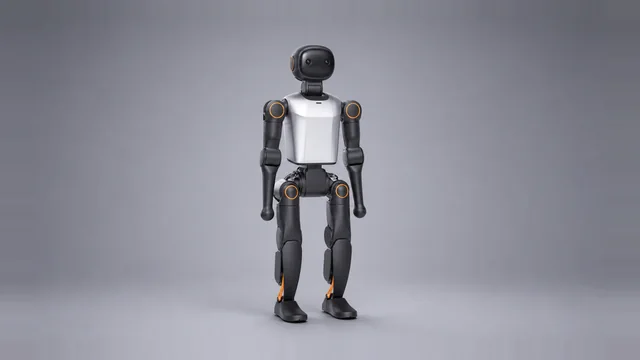
A compact 95 cm, 19.5 kg humanoid development platform for education, demos, and embodied-AI experimentation. Booster lists three versions: Geek with 48 TOPS Dense AI performance, a 2Ah battery, and 30 minutes of walking runtime at 0.4 m/s; Education with 117 TOPS, a 5Ah battery, and 80 minutes of walking runtime; and Professional with 200 TOPS, a 5Ah battery, and 80 minutes of walking runtime. K1 has 22 degrees of freedom, stereo depth vision, a 9-axis IMU, circular 6-mic audio, Bluetooth 5.2, Ethernet expansion, firmware upgrades, and secondary-development support. Listed as Available with a recorded price; confirm current ordering and delivery terms.
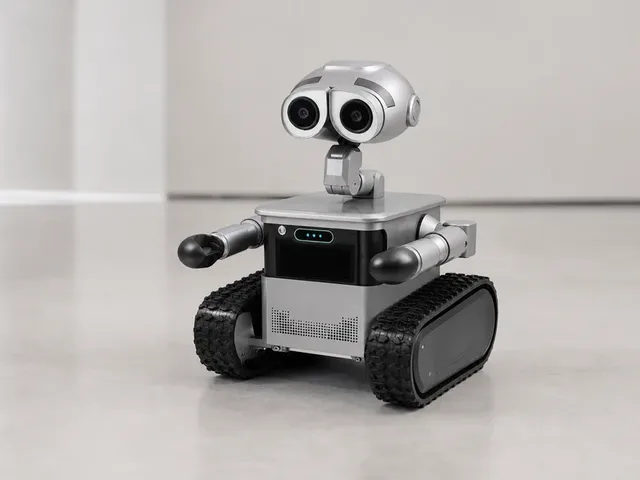
Zeroth Robotics W1 is a tracked mobile assistant that Zeroth launched for the US at CES 2026 and now lists on its official store. The robot is designed to follow users, transport gear, patrol indoor and outdoor spaces, and provide camera-based monitoring and portable power. Official product materials highlight a 20kg load capacity, 50kg traction rating, LiDAR and RGB-based perception, and terrain handling for grass, gravel, slopes, and other uneven ground. Listed as Available with a recorded price; confirm current ordering and delivery terms.
Genisom L1 is GENISOM AI's smaller industry-grade quadruped robot, positioned below the M1 for lightweight inspection, patrol, education, research, and mobile sensing work. Official materials describe the L1 as a small but rugged platform with AI reinforcement-learning motion control, an 8 kg continuous walking payload, 16 cm continuous stair climbing, up to 40 degree slope handling, IP54 protection, a full-protection body design, 12 self-developed 48 N·m joint modules, 7 open hardware interfaces, and a full-machine SDK for secondary development. The platform supports added compute, perception, positioning, 4G, and video-transmission modules; its L1 EDU configuration adds NVIDIA Orin NX compute up to 100 TOPS, 3D laser radar, depth camera, GNSS, and 5G for SLAM, autonomous navigation, reinforcement learning, and embodied-AI experimentation. GENISOM also offers the related L1-W wheeled-leg variant for longer-range mixed-terrain operation. Listed as Available with a recorded price; confirm current ordering and delivery terms.
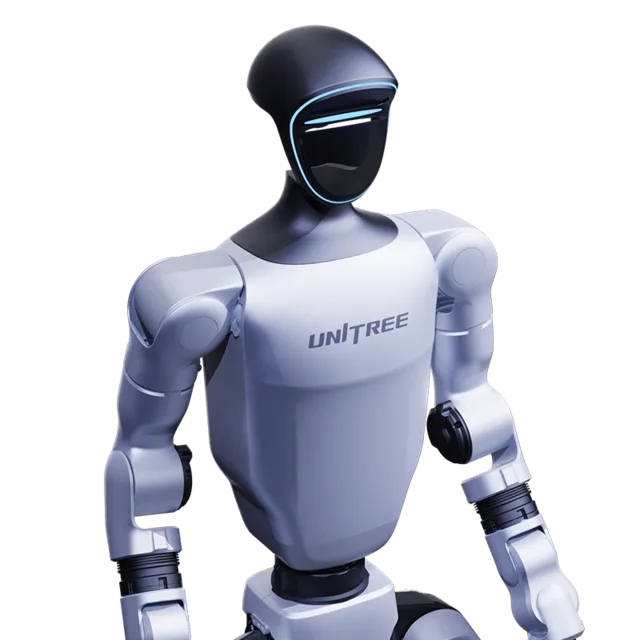
Unitree's compact humanoid robot, offered in standard G1 and G1 EDU versions. The standard G1 has 23 degrees of freedom, stands 132cm tall, and weighs about 35kg with its battery. Secondary development is supported on G1 EDU, which can be configured with up to 43 degrees of freedom, optional Dex3-1 three-fingered hands, and optional high-performance computing such as NVIDIA Jetson Orin. The standard G1 does not include these EDU options. Listed as Available with a recorded price; confirm current ordering and delivery terms.

AGIBOT's compact bipedal humanoid robot, standing 1.31m tall with 25 degrees of freedom in the base X2 and 30 degrees of freedom in the X2 Ultra. Designed for entertainment, research, and commercial applications with swappable batteries, 3D LiDAR, and an NVIDIA Orin NX compute board for on-device AI. Walks at up to 1.8 m/s and carries up to 3kg. Listed as Available with a recorded price; confirm current ordering and delivery terms.
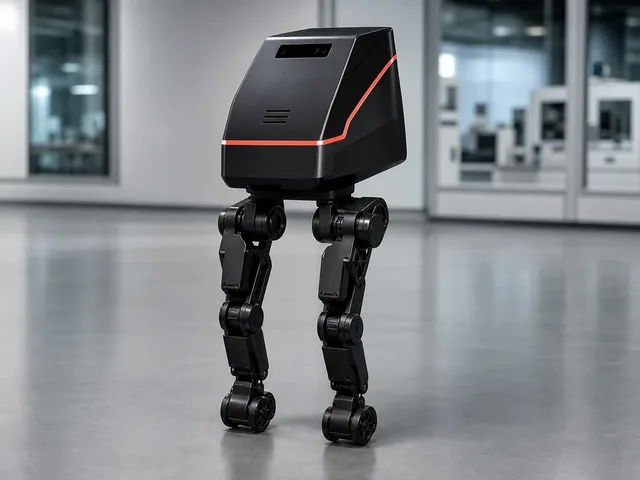
LimX Dynamics' TRON 1 is a compact multi-modal biped research robot for humanoid motion-control onboarding, reinforcement-learning experiments, and embodied-intelligence R&D. Its defining feature is a modular foot-end system that lets one platform switch between point-foot, sole, and wheeled modes, with automatic hardware recognition and software adaptation. LimX positions TRON 1 as a ready-to-use development platform with built-in high-performance motion control, an open SDK, Python-based development support, mainstream simulator compatibility, and optional arm, voice-interaction, and perception expansion kits for mobile manipulation, speech control, mapping, navigation, and obstacle-avoidance research. Listed as Available with a recorded price; confirm current ordering and delivery terms.
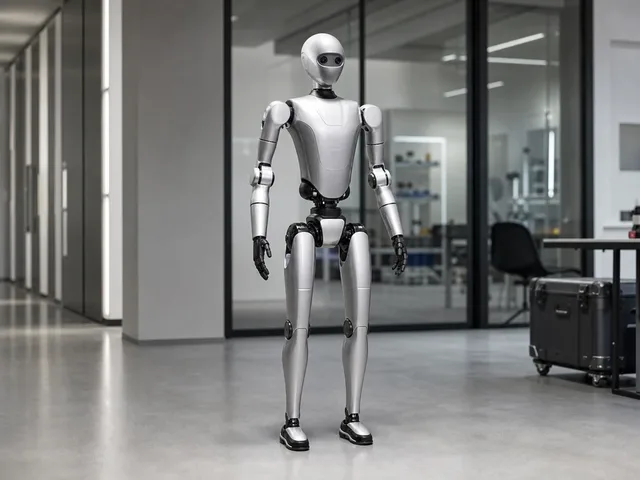
Unitree's flagship full-size humanoid robot, standing 182 cm tall with 31 degrees of freedom. The H2 features aircraft-grade aluminum and titanium alloy construction, 360 N·m peak leg joint torque, and up to 2070 TOPS of computing power via an optional Jetson AGX Thor module. Priced at $29,900, it is one of the most affordable full-size humanoids on the market. Equipped with binocular cameras, array microphone, and voice interaction, it supports OTA updates for continuous algorithm improvement. An EDU variant is available for research and secondary development. Listed as Available with a recorded price; confirm current ordering and delivery terms.
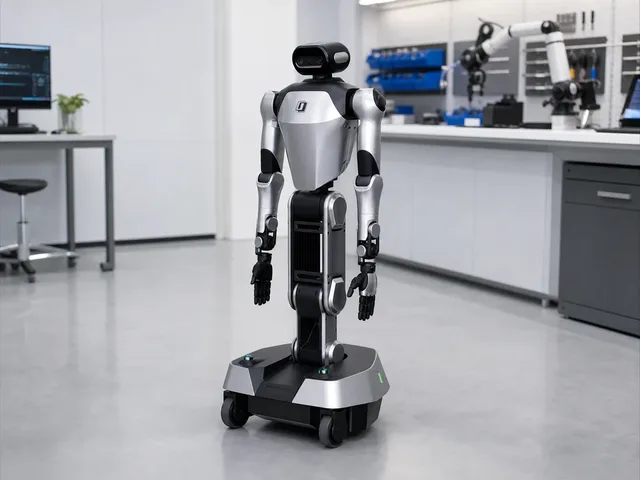
Galaxea R1 Pro is a 170 cm wheeled dual-arm humanoid/mobile manipulator for robotics labs, embodied-AI development, and industrial R&D rather than uncertified general home use. Galaxea's official store lists the 2026 model as in stock at $69,999, with dual 7-DOF Galaxea A2 arms, G1 force-controlled parallel grippers, a 4-DOF torso, a 6-DOF omnidirectional chassis, NVIDIA Jetson AGX Orin 32GB compute, multi-camera/LiDAR sensing, and VR teleoperation support. Official hardware docs list 96 kg with battery while the current store parameter table lists 126 kg including battery, so buyer weight should be verified before procurement. Listed as Available with a recorded price; confirm current ordering and delivery terms.

DOBOT Atom is a full-size humanoid robot platform focused on dexterous manipulation and human-like straight-knee walking. DOBOT states Atom has 28 upper-body degrees of freedom, ±0.05 mm precision, and ROM-1 embodied AI with 7.7× industry-standard compute. The robot debuted global mass production and delivery on June 27, 2025, at a launch conference in Nagoya, Japan. Listed as Available with a recorded price; confirm current ordering and delivery terms.

Zeroth Robotics Jupiter is a full-size humanoid robot in Zeroth's CES 2026 U.S. launch lineup. The official product page positions Jupiter for real-world task execution, with both teleoperation and autonomous modes for training, simulation, front-of-house service, and human-robot collaboration. Independent coverage and Humanoid Press describe the robot as about 1.65 m tall, with full bipedal walking, five-fingered hands, obstacle-aware navigation, and a commercial/research-oriented $89,999 price point. Zeroth has not published detailed weight, payload, runtime, actuator, compute, or sensor specifications, so Jupiter should be treated as an early high-price humanoid offering rather than a fully specified consumer home robot. Listed as Available with a recorded price; confirm current ordering and delivery terms.

AGIBOT's full-size commercially deployed humanoid robot. Over 1,000 units deployed in real-world operations. Set a Guinness World Record for longest distance walked by a humanoid robot (106.286 km). First humanoid to hold top-tier certifications across China, US, and Europe (CR, CE-MD, CE-RED, FCC). Won 2025 iF and Red Dot Design Awards. Listed as Available with a recorded price; confirm current ordering and delivery terms.
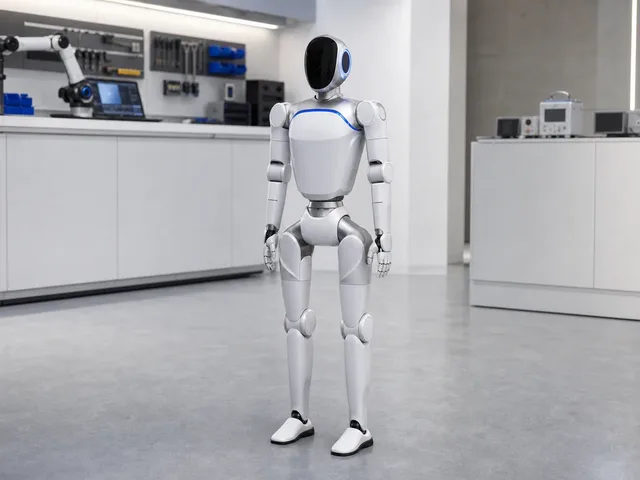
Kengo is Galaxea Dynamics' first self-developed bipedal humanoid robot, announced on June 2, 2026 as an expansion from the company's wheeled R1 mobile-manipulator line. Galaxea's official store positions it as a productivity-focused embodied-AI bipedal robot with a 1,396 x 440 x 225 mm body, about 40 kg weight including battery, 23+ degrees of freedom, 2 kg maximum arm payload, 130 N*m+ maximum knee-joint torque, and 2 hours of battery life. The listing price is $999,999 with delivery within 6 weeks, so it should be read as an advanced commercial/research platform rather than an ordinary consumer home robot. Listed as Available with a recorded price; confirm current ordering and delivery terms.
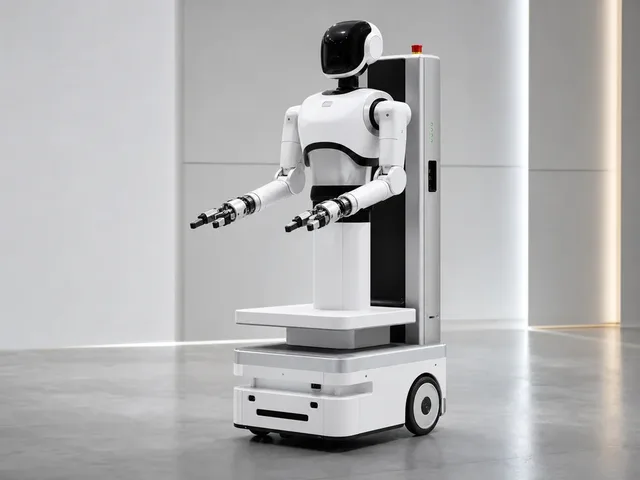
AGIBOT G1 is a wheeled humanoid-style universal embodied-intelligence robot in the AGIBOT Genie family for industrial, commercial, and domestic scenarios. The official product page says it has 26 degrees of freedom, a 130-180 cm height range, a working height over 2 m, continuous one-arm handling of a 3 kg object, a chassis that turns in place, navigates 95% of factory pathways, and clears obstacles up to 20 mm. It is designed as both a task robot and a data-collection platform, with millisecond-latency VR/motion-capture teleoperation, full-body joint-data recording, cloud-assisted validation, six-axis force sensors on both arms, eight upper-body high-resolution cameras, front and rear RGB-D cameras, LiDAR, emergency stop and collision protection, OTA upgrades, and HMI monitoring. AGIBOT says the model is in large-scale production with immediate delivery, but it has not published detailed public charging, max-speed, or price specs. Listed as Available; confirm pricing, ordering and delivery terms.

A biomimetic panda-cub companion robot designed for emotional support and therapeutic interaction. An'An is handcrafted with Australian wool and sheepskin and features a full-body tactile sensing system with over ten sensor suites that recognize strokes, squeezes, and hugs. Its affective AI learns voice patterns, touch signals, and interaction habits through long-term memory, gradually personalizing responses over weeks and months. A CES 2026 Innovation Awards Honoree in the AI category, An'An targets loneliness relief, elderly care, and pediatric therapy at a fraction of the cost of traditional therapeutic robots. A B2B clinical version captures interaction data (touch patterns, conversation cues, behavioral changes) and delivers trends to authorized clinicians via secure dashboards. Preliminary studies with Hong Kong's Jockey Club Centre for Positive Ageing showed measurable mood improvement in older adults with mild cognitive impairment or dementia. Listed as Available; confirm pricing, ordering and delivery terms.
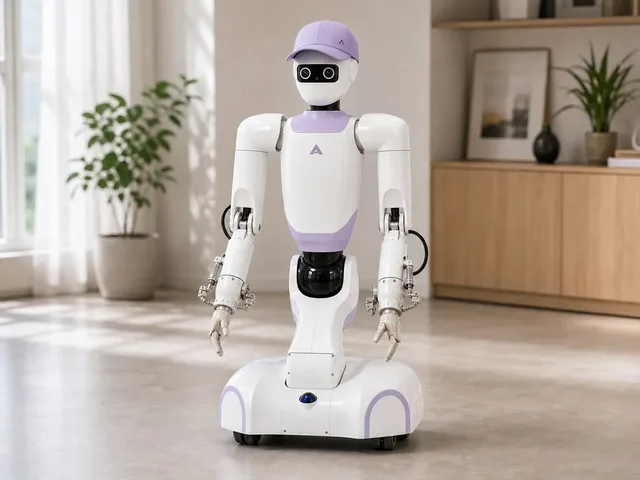
Astribot T1 is a wheeled humanoid from Shenzhen-based Astribot / Stardust Intelligence, announced in late May 2026 as a compact follow-on to the S1 platform. Official launch materials present T1 as a cable-driven, customizable AI-computing platform for real-world deployment. Astribot's September 29, 2026 release specifies approximately 155 cm, 66 kg, 23 degrees of freedom excluding end effectors and up to 5 kg payload per arm. Astribot positions T1 as a modular manipulation platform and reports a Lumo-2 backpack-tidying demonstration; that demonstration does not establish general household performance. Astribot reports SDK/API access, automatic charging and quick battery replacement. Runtime, charging duration, included sensor configuration and support terms remain unverified. US availability is a company claim, not independently confirmed customer fulfillment. Listed as Available; confirm pricing, ordering and delivery terms.
ZeeBot is Cainiao's self-developed rack-climbing warehouse robot for high-density storage and retrieval. The robot combines floor travel through ultra-narrow aisles with direct rack climbing, letting one mobile platform retrieve and put away totes instead of handing work between separate horizontal transport and vertical storage systems. Cainiao launched ZeeBot at MODEX 2026, says the first project is live in Guangdong, and reports over 100 units operating in a Dongguan cross-border logistics warehouse. Publicly disclosed performance claims include up to 4 m/s floor travel, climbing to five-level racking in as little as 10 seconds, 100% storage and retrieval productivity improvement, and 40% better space utilization for ZeeBot-enabled warehouses. Listed as Available; confirm pricing, ordering and delivery terms.
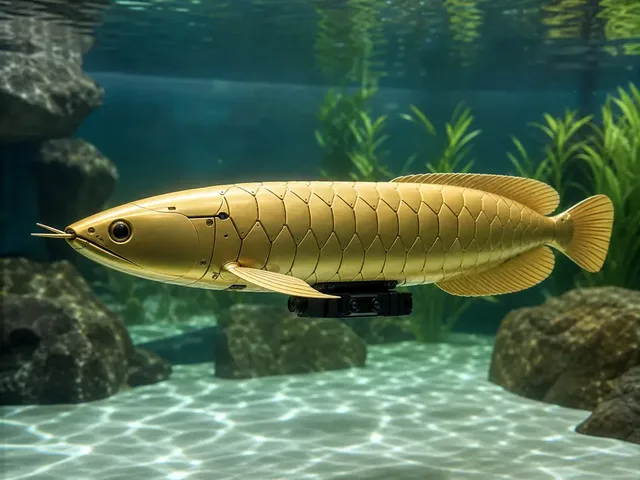
FullDepth's Intelligent Soft-Bodied Bionic Arowana, also described by the company as "Jinlin," is a lifelike robotic aquarium fish for home display, exhibitions, research, underwater photography, and inspection scenarios. The official FullDepth article describes a one-piece molded silicone soft body, bionic biological propulsion, automatic swimming, wireless remote control, and coordinated multi-fish operation. Official specifications list a 700 mm length, 200 mm height including fins, 3.8 kg weight, 20 m depth rating, 1-knot top speed, at least 12 hours of battery life, and charging in under 2.5 hours. FullDepth says the control system uses fish neuro-drive models and AI algorithms to simulate natural arowana swimming behavior. Listed as Available; confirm pricing, ordering and delivery terms.

LimX Dynamics' full-size humanoid robot with advanced loco-manipulation capabilities. Powered by the COSA (Cognitive OS of Agents) agentic operating system, Oli is the first humanoid to combine whole-body motion control with high-level autonomous cognition — thinking while acting in real environments. Can navigate construction debris, sand, rocks, and uneven terrain. Features OTA-updatable motion libraries and supports major simulation platforms. LimX Dynamics raised $200M in Series B funding. Listed as Available; confirm pricing, ordering and delivery terms.
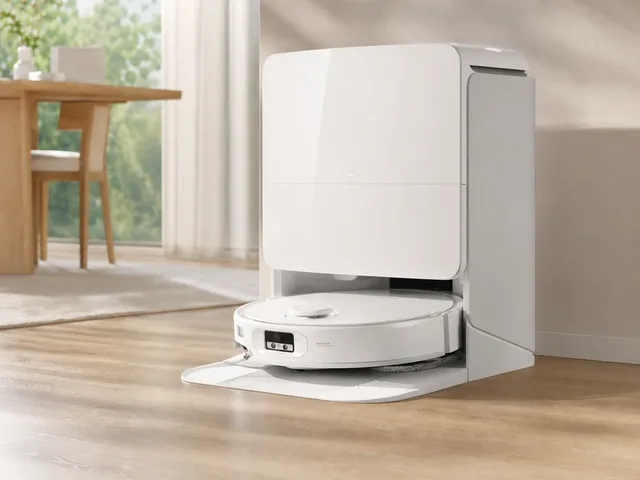
Roborock's 2026 premium robot vacuum and mop featuring a 7.98 cm ultra-slim profile with the RetractSense retractable LiDAR tower, enabling it to clean under low furniture. Delivers 25,000 Pa HyperForce suction through a DuoDivide anti-tangle main brush paired with a FlexiArm Arc side brush that extends automatically into corners and along edges. Dual spinning mop pads scrub at up to 200 RPM with 12 N of downward pressure; the robot can fully detach its mops at the dock before vacuuming carpets to prevent moisture transfer — a step beyond simple mop lifting. The AdaptiLift Chassis handles thresholds up to 4 cm and adapts to carpet height. The included Multifunctional Dock 3.0 Hygiene+ washes mops with 100 °C hot water, dries with 55 °C warm air, auto-empties dust into a 2.7 L sealed bag (up to 65 days), dispenses detergent automatically, and self-cleans its own base with hot water. Reactive AI obstacle recognition covers over 200 object types via structured light and RGB camera. Onboard "Hello Rocky" voice assistant works offline. SmartPlan 3.0 handles AI-driven room-by-room scheduling. Matter protocol support is planned via a future OTA update. Launched globally starting February 2026. Listed as Available; confirm pricing, ordering and delivery terms.

A compact humanoid companion/education robot from UBTECH with voice interaction, face and object recognition, and app-based graphical coding. Alpha Mini is designed for home and classroom interaction scenarios. Listed as Available; confirm pricing, ordering and delivery terms.
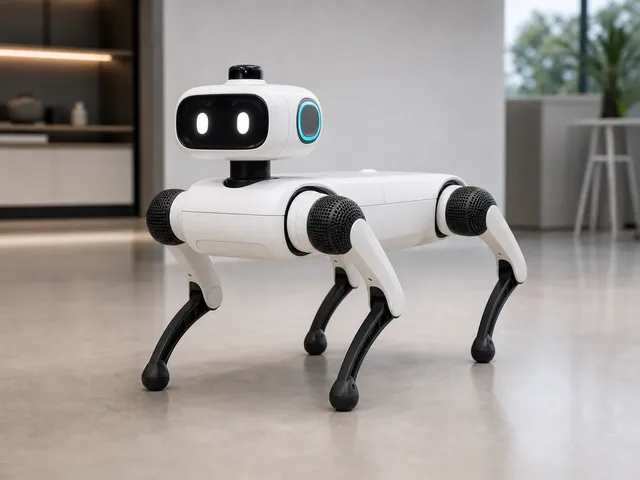
Vbot SuperDog is Vbot's consumer-grade embodied-AI quadruped robot dog, launched in China on December 23, 2025, shown globally at CES 2026, and listed on Vbot's official product page as a remote-free intelligent robot dog. The official page describes binocular depth vision, 16-line LiDAR, a four-microphone array, 128 TOPS AI compute, a self-developed spatial foundation model, large-language-model voice interaction, intelligent following, navigation, generative actions and dances, and a modular expansion backplate for cargo, camera, and towing accessories. Vbot's CES release says SuperDog demonstrated voice-command navigation through crowded halls, proactive following, obstacle avoidance, beverage delivery, a 12 kg payload, and up to 100 kg towing; independent CES coverage from TechNode and URDesign corroborated the demo, consumer positioning, and Q2 2026 global-edition availability target. Chinese availability reports said mass-production delivery began on May 8, 2026, with the first 500 units completed and larger delivery volumes planned through June. Listed as Available; confirm pricing, ordering and delivery terms.
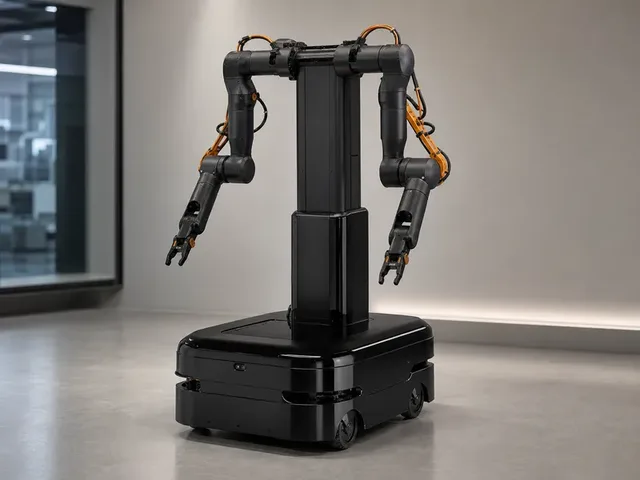
The L1 Agile Mobile Manipulator is VLAI Robotics' wheeled dual-arm embodied-AI platform for research, education, manufacturing, logistics, inspection, service, and other structured mobile-manipulation workflows. VLAI's official site lists the L1 as a mobile robot with X1 high-dexterity humanoid dual arms, 8 degrees of freedom per arm, 16 degrees of freedom total, 6 kg per-arm payload, compliant force control, gravity compensation, sub-100 kg whole-robot weight, 12-hour battery life, ROS 2/MoveIt2/Isaac Sim/MuJoCo/LeRobot compatibility, and joystick/VR/autonomous control modes. HouseBots coverage reports an adjustable dual-arm working range of 70-160 cm, a wheeled base, open developer interfaces, and a 28,800 CNY starting price. It is notable as an unusually low-cost wheeled mobile manipulator, but public sensor, max-speed, and international availability details remain limited. Active in the catalog with enough detail to review immediately.
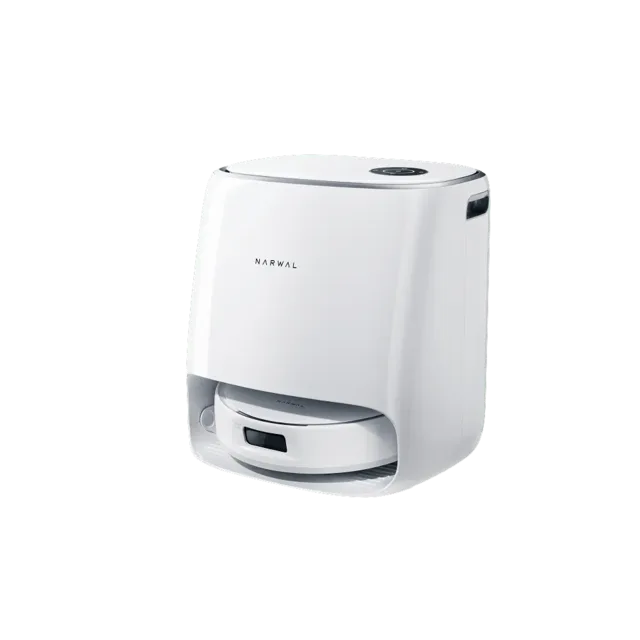
Narwal's flagship robot vacuum and mop combo, debuted at CES 2024. The Freo X Ultra pairs 8,200 Pa suction with patented Rouleaux triangular mop pads that press down with 12 Newtons of force at 180 RPM, leaving no gaps during mopping. A zero-tangle floating brush guides hair directly into the suction pipe, earning SGS and TÜV certification for a 0% tangle rate. The base station handles mop washing, drying, water refilling, and self-contained dust processing — no separate dust bag emptying needed. LiDAR SLAM 4.0 provides 360° mapping, while a tri-laser array handles obstacle avoidance. The mop pads auto-lift 12 mm on carpet so it can vacuum and mop in a single run. Battery life is strong at up to 210 minutes, covering large homes in one charge. Active in the catalog with enough detail to review immediately.
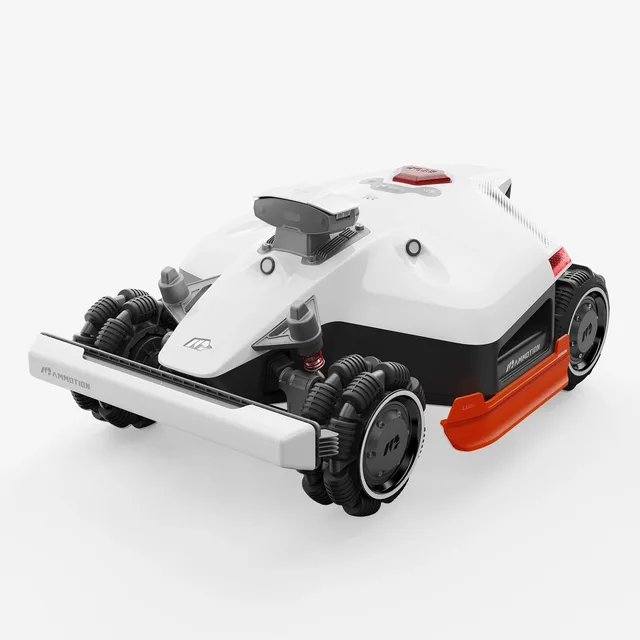
The Mammotion LUBA 2 AWD 5000 is a wire-free robotic lawn mower for large yards up to 5,000 m² (about 1.25 acres). It uses RTK satellite positioning combined with an AI vision system (UltraSense) to map and navigate without buried boundary wires — just drive it around your yard once to set the perimeter. All-wheel drive with omnidirectional wheels lets it climb slopes up to 80% (38°) and handle rough terrain. The dual 400mm cutting discs with 12 blades mow up to 1,200 m² per charge at a whisper-quiet sub-60 dB. It manages up to 50 mowing zones with individual schedules and cutting heights, returns to charge automatically, and resumes where it left off. Triple-redundant obstacle avoidance (3D vision, ultrasonic radar, bumper) keeps pets and kids safe. Controlled via the Mammotion app with 4G, Wi-Fi, and Bluetooth connectivity. Although Mammotion launched newer LUBA 3 AWD models in 2026, the LUBA 2 AWD is still listed on official Mammotion pages rather than clearly discontinued. Active in the catalog with enough detail to review immediately.
Lynx Sport is DEEPRobotics' original compact wheel-legged quadruped, listed on the company's global site as DEEPRoboticsLynx. It bridges wheeled speed and legged obstacle handling for off-road exploration, research, inspection, and remote operation, with official specs listing a 30 kg body, 12 kg payload, 5 m/s top speed, 3-hour / 15 km lab endurance, 22 cm continuous step traversal, and the ability to climb platforms up to 80 cm. The robot uses a 1080p wide-angle camera, Wi-Fi, GPS, app and handheld remote support, intelligent OTA updates, and a hot-swappable dual-battery system. DEEP Robotics' U.S. product listing now labels Lynx Sport discontinued, but the global product page remains live, so availability should be confirmed by region. Active in the catalog; verify the latest media and rollout details.

A lightweight, developer-focused humanoid robot built for research, competitions, and rapid prototyping. The T1 won the 2025 RoboCup Soccer AdultSize championship and is used by over 50 robotics teams and research labs worldwide. Available in three configurations: Standard (23 DoF), with Grippers (31 DoF), and with Dexterous Hands (41 DoF). Runs on NVIDIA Jetson AGX Orin with 200 TOPS of AI compute, supports ROS 2, and ships with a full SDK for custom development. Booster Robotics is based in Beijing. Active in the catalog with enough detail to review immediately.

Kepler's heavy-duty general-purpose humanoid robot designed for manufacturing and industrial applications. Features 40 DOF, 12-DOF dexterous hands with planetary roller screw actuators, and the NEBULA AI system. Part of the Forerunner series (K1, S1, D1) targeting different application scenarios. Active in the catalog with enough detail to review immediately.
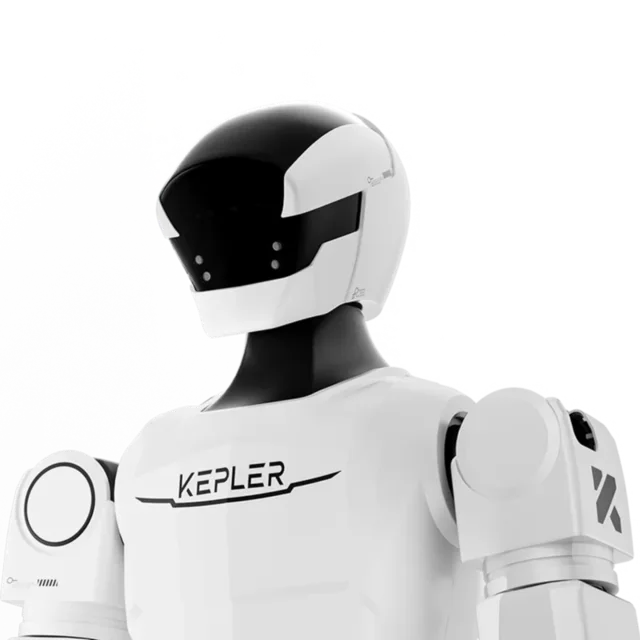
Kepler's 5th-generation humanoid robot and the world's first commercially available humanoid built on a hybrid architecture. Combines roller screw linear actuators and rotary actuators for natural, stable movements. Company-issued materials list 52 DOF, more than 80 integrated sensors, 25 tactile contact points per finger, and a 2.33kWh battery. Framework agreements for several thousand units signed. Active in the catalog with enough detail to review immediately.
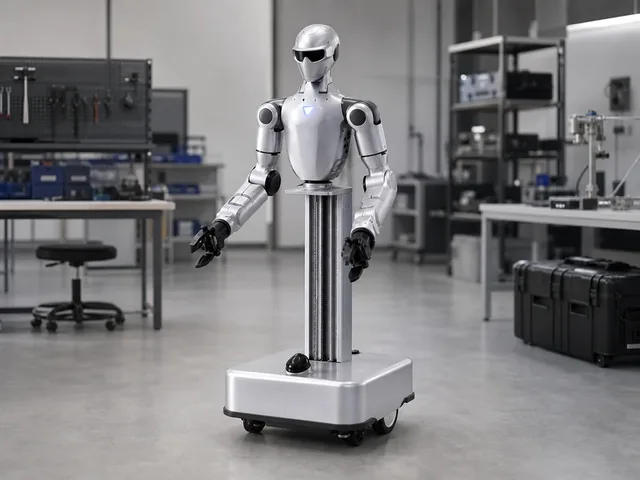
The Unitree R1-A7-D is the mobile-base, 7-DOF-arm configuration in Unitree's official R1-D dual-arm humanoid robot line. Unlike the bipedal R1, this variant uses a wheeled base with chassis LiDAR and a height-adjustable dual-arm torso for manipulation research, lab automation, factory demos, and secondary development. Unitree lists the dual-arm line from $4,290, with fixed or mobile bases, external power or Li-ion battery support across configurations, about 1.5 hours of battery-powered runtime, 2-4 kg maximum arm payload depending on posture, 10 TOPS head-module compute, optional NVIDIA Jetson Orin 40-100 TOPS compute, binocular vision, voice interaction, open interfaces, optional grippers or dexterous hands, and full-stack secondary development support. The official Unitree shop lists the R1-A7-D variant at $100,000 USD but currently marks it sold out/unavailable. Active in the catalog with enough detail to review immediately.
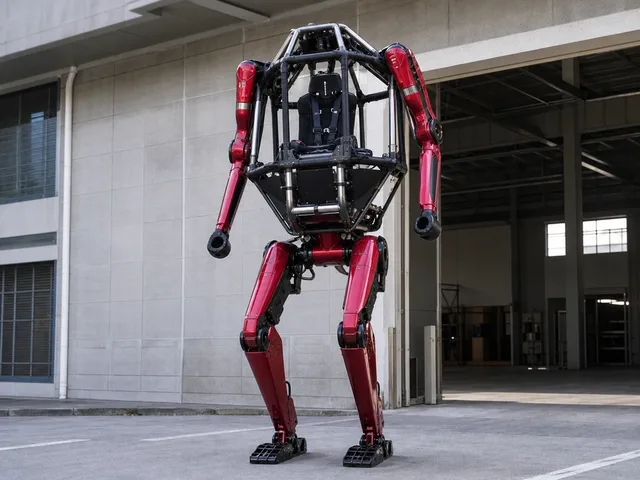
GD01 is Unitree Robotics' manned transformable mecha, unveiled in an official Unitree launch video published May 11, 2026. The video title lists it from $650,000, and WIRED reports Unitree confirmed that GD01 is an actual product for sale rather than a stunt. Public launch footage shows the large red-limbed robot walking, crawling in a crab-like configuration, changing posture, being piloted from an open cockpit, and operating without an onboard pilot during a cinder-block-wall demo. Unitree has not published a full product page, dimensions, weight, battery, sensor suite, control architecture, delivery timing, or buyer terms, so those details remain undisclosed. Active in the catalog with enough detail to review immediately.
AGIBOT A3 Ultra is a full-size A3-series humanoid variant unveiled at WAIC 2026 for long-duration operation in public-facing, commercial, and service environments. The official launch release lists a 1.74 m, 60 kg body with 51 active degrees of freedom, 5 kg payload capacity per arm, up to 8 hours of combined operating time, 3D LiDAR, RGB-D cameras, fisheye cameras, binocular vision, GPS/RTK/UWB positioning, and NVIDIA Thor high-level embodied-AI processing. AGIBOT says the platform supports direct charging, battery replacement, and autonomous charging, positioning it for extended service workflows rather than one-off demonstrations. Independent WAIC coverage from Global Times and Anadolu Agency corroborated the A3 Ultra name and launch context, but AGIBOT has not yet published a standalone product page or public price. Active in the catalog with enough detail to review immediately.

AGIBOT's full-size A3 humanoid is positioned as a stage-born, high-interaction platform for commercial performances, interactive entertainment, research, education, brand activations, and public-space deployments. The official A3 product page lists a 173 cm, 55 kg body, up to 10 hours of endurance from a dual-battery 1,152 Wh energy system, 10-second hot-swappable battery replacement for continuous operation, standard UWB positioning, dual-module 5G connectivity, and coordinated control for 100+ units. APC 2026 materials frame A3 as AGIBOT's third-generation Expedition-series full-size humanoid and as a deployment-phase interaction product rather than a consumer home chore robot. Active in the catalog with enough detail to review immediately.
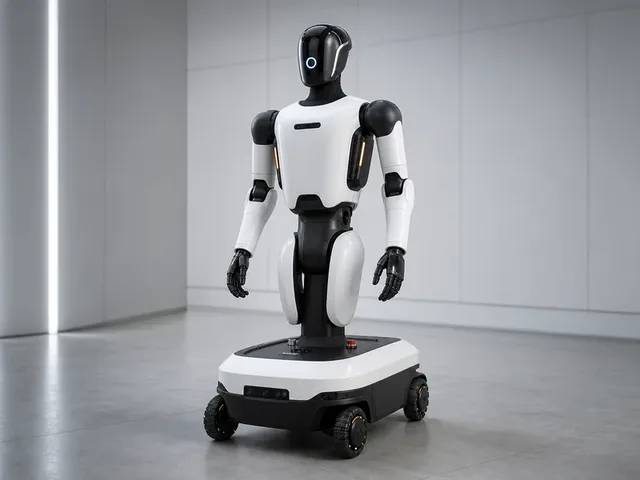
AGIBOT's industrial-grade wheeled humanoid robot for manufacturing, logistics, and guided-service deployments. Official launch materials describe the G2 as a next-generation embodied robot with a 3-degree-of-freedom waist, force-controlled arms, multimodal voice interaction, dual hot-swappable batteries for 24/7 operation, and autonomous charging. AGIBOT demonstrated the G2 in automotive-parts assembly, RAM insertion, parcel sorting, and guided-tour scenarios, while independent coverage corroborated its wheeled omnidirectional mobility and Jetson Thor-based onboard AI stack. Active in the catalog with enough detail to review immediately.
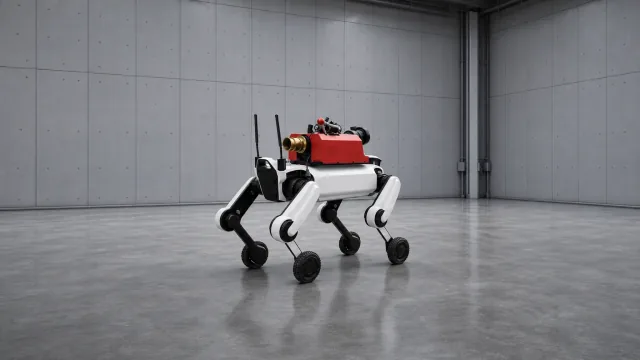
Hypertron-T01 is Astrall Dynamics' heavy-duty quadruped firefighting robot, unveiled at INTERSCHUTZ 2026 as an unmanned system for active fire suppression and reconnaissance in hazardous areas. The robot combines wheeled-legged all-terrain mobility with an integrated high-pressure water cannon, an 80 kg dynamic payload, hose-dragging capability, and stabilization for suppression while climbing slopes or moving through confined industrial spaces. Astrall says the system has completed bulk delivery to China Southern Power Grid and is accepting global orders, while the public A01/Hypertron platform page documents the underlying heavy-duty robot's 82 kg base weight, 4-8 hour endurance range, autonomous navigation, LiDAR and depth sensing, and fire-emergency modules. Public pricing and several configuration-specific details have not been disclosed. Active in the catalog with enough detail to review immediately.
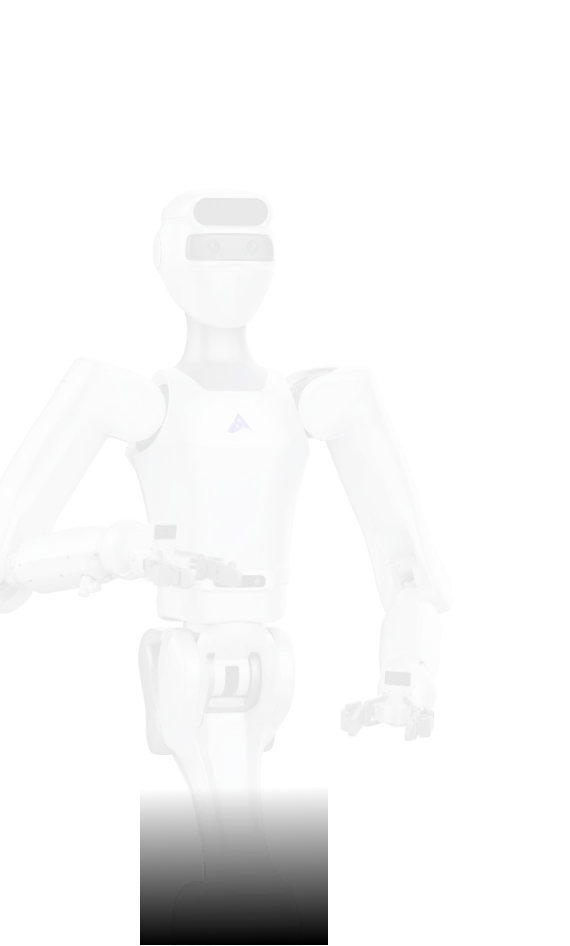
Astribot S1 is a humanoid robot from Shenzhen-based Stardust Intelligence (Astribot), founded in December 2022. Commercial availability began in late 2025 in China, with international rollout expected throughout 2026. Designed as an AI research platform, S1 mirrors an adult male's operational parameters with 7 degrees of freedom per arm, 5kg payload per arm at horizontal reach, and effector speeds exceeding 10 m/s. The company uses a Design for AI (DFAI) architecture that deeply couples AI capabilities with manipulation hardware. S1 supports VR teleoperation for data collection, comprehensive APIs, and major simulation platforms. Targeted at universities, data centers, and AI enterprises for embodied intelligence research. Active in the catalog with enough detail to review immediately.

Booster T2 is Booster Robotics' flagship embodied-AI development platform for researchers, developers, education teams, and real-world humanoid application work. The roughly 1.4 m, 42-43 kg biped combines a Thor T5000 compute platform, 31 degrees of freedom, 7-DoF arms, 3-DoF waist, 2-DoF head, binocular head and waist cameras, microphone array and speaker, and configurable end effectors. Booster lists Professional P1, P2, and P3 versions with optional end effector, gripper, or 6-DoF dexterous hand configurations, up to 2 m/s walking speed, two hours of continuous walking runtime, magnetic-port charging, Wi-Fi 6, Bluetooth 5.2, and optional LiDAR. Active in the catalog with enough detail to review immediately.
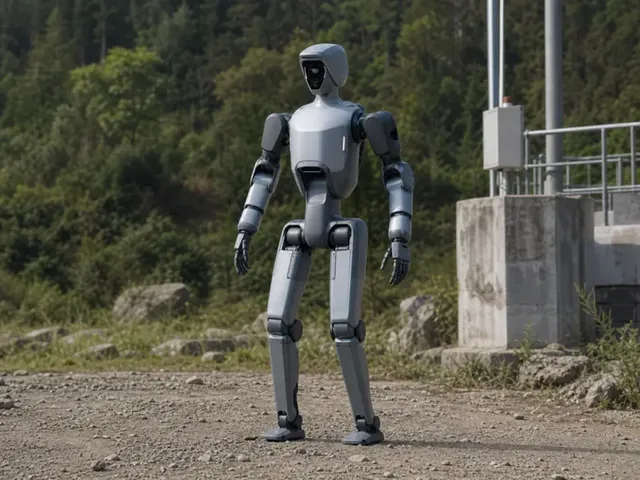
DR02 is DEEPRobotics' industrial full-size humanoid built for outdoor and harsh-environment deployment. The company describes it as the world's first humanoid with full-body IP66 dust and water protection, designed to operate across rain, humidity, dust, cold storage, and high-temperature workshop conditions from -20°C to 55°C. DEEPRobotics says the robot can move through human workspaces, traverse basic complex terrain, carry out practical tasks such as cargo transport and emergency equipment delivery, and use modular quick-detach arms and legs to reduce maintenance downtime. Launch coverage reports a 1.75 m frame, 1.5 m/s walking speed, 4 m/s top speed, LiDAR/depth/wide-angle sensing, and a 275 TOPS compute unit, but DEEPRobotics has not published public pricing or a consumer availability channel. Active in the catalog with enough detail to review immediately.
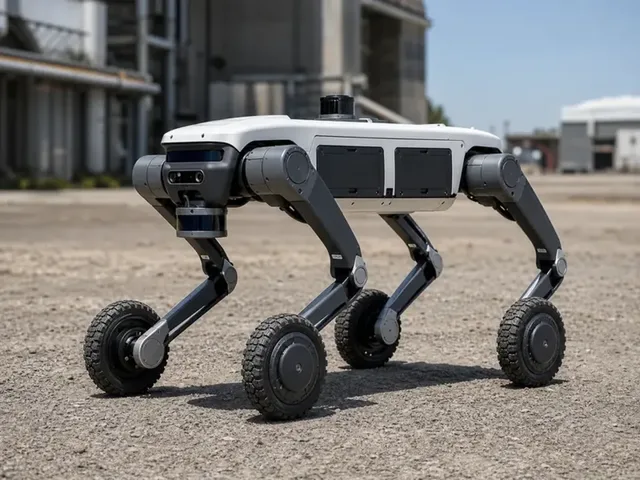
DEEPRobotics' LYNX M20 is a mid-size wheeled-legged industrial quadruped for hazardous terrain, inspection, emergency response, logistics, and exploration. The 33 kg platform combines wheel speed with legged gait switching, carries a 15 kg payload, climbs 25 cm continuous stairs and single steps up to 80 cm, and is rated IP66 for operation from -20°C to 55°C. Dual 96-line LiDAR, wide-angle cameras, hot-swappable batteries, optional self-charging, and OTA-enabled autonomy features make it a rugged field robot rather than a conventional mobile base. Active in the catalog with enough detail to review immediately.
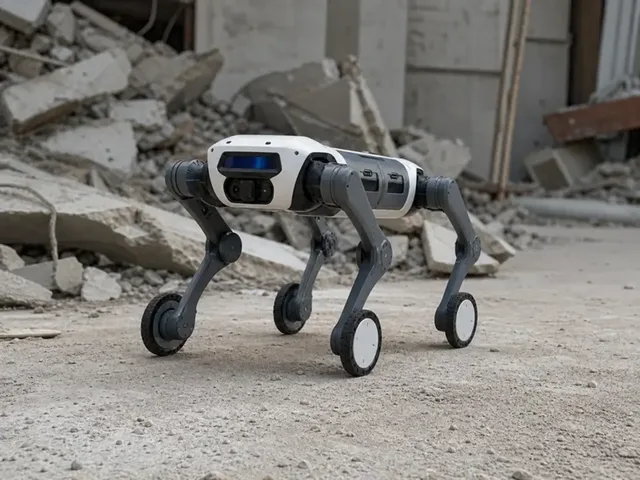
The Lynx S10 is DEEPRobotics' compact industry-grade wheeled-legged quadruped for lightweight inspection, patrol, emergency response, education, research, and outdoor exploration tasks. Official materials describe a sub-20 kg robot with wheeled-leg locomotion, AI gait control, autonomous mapping and path planning, intelligent obstacle avoidance, and an omnidirectional perception stack using ultra-wide-angle cameras plus front and rear LiDAR. It reaches up to 8 m/s on flat ground, can clear obstacles up to 50 cm, and is rated IP66 for dusty, wet, and outdoor operating environments from -20°C to 55°C. DEEP Robotics has not published public pricing, full dimensions, charging time, or an official payload spec. Active in the catalog with enough detail to review immediately.
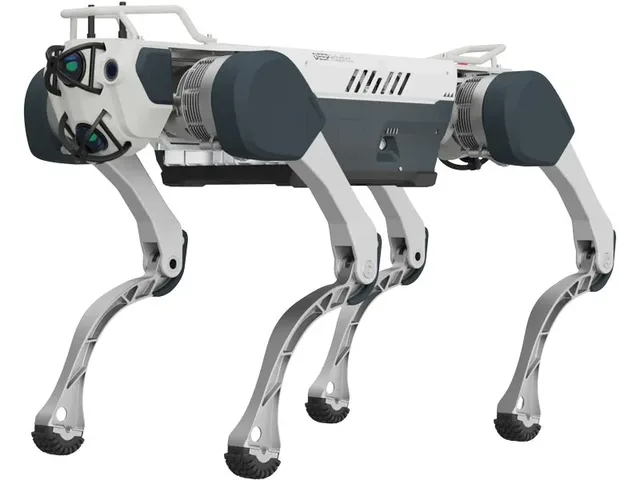
DEEPRobotics' flagship industrial quadruped robot designed for inspection, security, surveying, and rescue operations. Features IP67 protection, operates from -20°C to 55°C, and can climb 45° slopes. Quick-swap battery system provides 2.5–4 hours of endurance and over 10 km range. Deployed in power utilities, tunnels, mining, and construction. Active in the catalog with enough detail to review immediately.
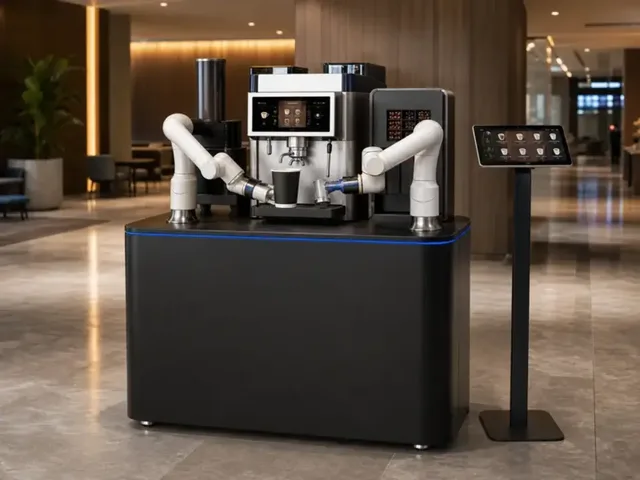
RoboBarista is Elite Robots' commercial robotic coffee station for hotels, offices, transit hubs, malls, airports, and other high-traffic venues. Official materials describe a turnkey kiosk that handles self-service ordering, coffee preparation, serving, cleaning, sales reporting, and remote stock monitoring with single- or dual-arm Elite Robots cobots. The station is offered in open and enclosed layouts, makes 10+ drinks, and the dual-arm version adds synchronized latte art; an optional caramel jet printer can print phone-uploaded images on foam. Elite Robots announced the product on April 30, 2026 after a NAMA Show 2026 showcase and promoted it for Venditalia, FOOD TAIPEI / Taiwan HORECA, and World of Coffee Brussels; public pricing is quote-only. Active in the catalog with enough detail to review immediately.
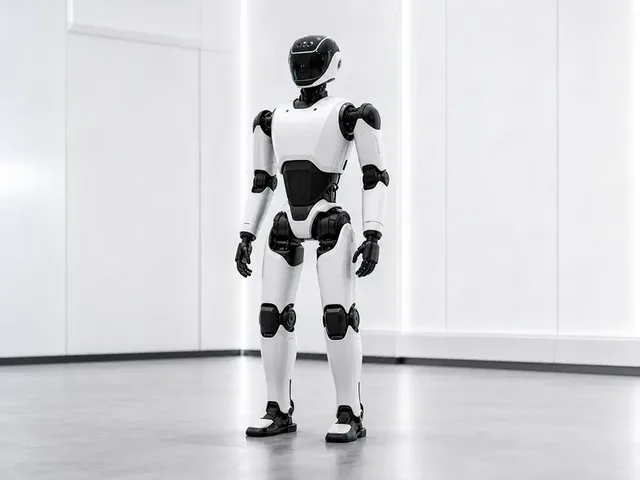
Embodied Tien Kung 3.0 is X-Humanoid's full-size general-purpose humanoid robotics platform built on the Wise KaiWu embodied AI stack. The official launch release describes a more open platform with expansion interfaces, ROS2/MQTT/TCP-IP support, high-torque integrated joints, whole-body high-dynamic motion control, tactile interaction, autonomous navigation, and multi-robot coordination for commercial, industrial, research, and high-risk deployment work. A later company release and independent coverage reported that Tien Kung 3.0 completed the April 2026 Beijing Robot Warrior Challenge fully autonomously, without remote control or preset scripts. Active in the catalog with enough detail to review immediately.
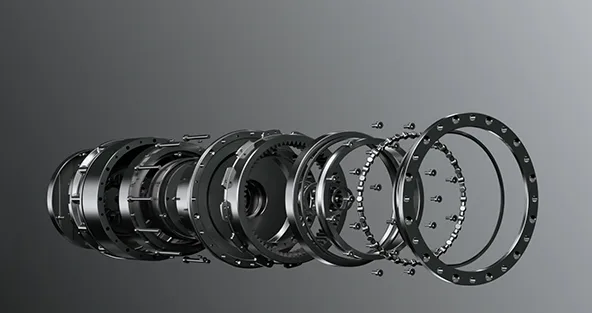
EngineAI's PM01 is a compact humanoid platform aimed at commercial and educational developers. The company positions PM01 as an open embodied-intelligence platform with quick-release battery packs and support for cross-platform algorithm deployment. Official PM01 specifications list a 1.4 m standing height class, around 42-43 kg operating weight, up to 24 total DoF (depending on edition), >2 m/s movement speed, and nearly 2 hours of battery life. Active in the catalog with enough detail to review immediately.
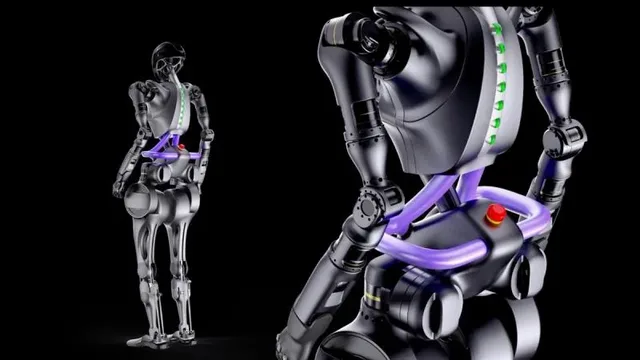
The Fourier GR-1 is a general-purpose humanoid robot unveiled in July 2023 at the World Artificial Intelligence Conference in Shanghai. Standing 1.65 meters tall and weighing 55 kg, it features up to 44 degrees of freedom and a peak joint torque of 230 N·m for agile bipedal locomotion. Designed for mass production, the GR-1 is aimed at research, rehabilitation, and real-world service applications. It can walk at up to 5 km/h and carry payloads approaching its own body weight. Fourier (formerly Fourier Intelligence), originally a medical and rehabilitation robotics company, developed the GR-1 as its first general-purpose humanoid platform; the current official product page describes LLM-powered interaction, one RealSense vision camera, one ring-shaped microphone sensor, and a six-RGB-camera pure-vision perception solution. Active in the catalog with enough detail to review immediately.

Fourier's third-generation humanoid and its first purpose-built "Care-bot," unveiled in August 2025. The GR-3 pivots the GRx platform away from research-only use toward healthcare, eldercare, and companionship. It offers up to 55 degrees of freedom, with standard 6-DoF dexterous hands and optional 12-DoF hands, and introduces an innovative soft-shell exterior with automotive-grade upholstery and 31 distributed pressure sensors for safe physical interaction with people. At its core is Fourier's proprietary Full-Perception Multimodal Interaction System, which fuses vision, audio, and tactile feedback into a real-time emotional processing engine. A dual-path decision architecture combines fast reflexive control with large-language-model reasoning for contextual dialogue. The robot demonstrated chess matches, dance routines, and natural conversation at CES 2026 in its first overseas appearance. Standing 165 cm tall and weighing 71 kg, the GR-3 supports hot-swappable batteries for around-the-clock operation and is ROS-compatible. Fourier's current GR-3 Series page also introduces GR-3C as an assistive companion variant expected to expand into research, high-risk operations, and rehab training. Active in the catalog with enough detail to review immediately.
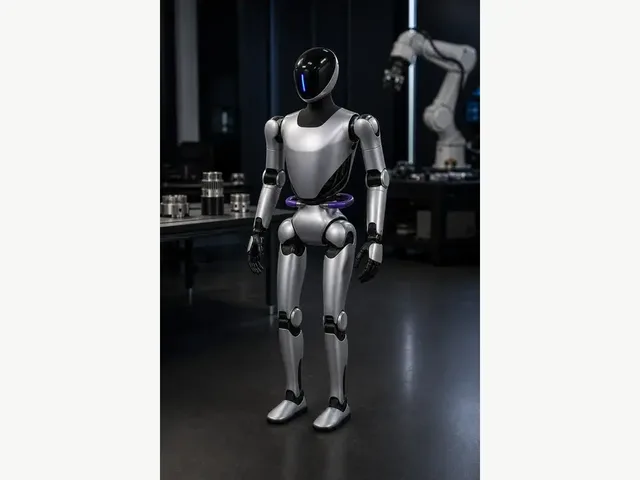
Fourier's second-generation humanoid robot, launched in October 2024. The GR-2 features 53 joints, 12-DoF dexterous hands with array-type tactile sensors, and FSA 2.0 actuators with peak torques exceeding 380 N·m. Built on feedback from GR-1 deployments, it offers integrated cabling, improved manufacturing, and better sim-to-real transfer. Supports NVIDIA Isaac Lab, ROS, and MuJoCo. Aimed at research institutions and enterprise customers exploring humanoid robotics applications. Active in the catalog with enough detail to review immediately.

A semi-humanoid mobile manipulator from Beijing Galaxy General Robot Co. (Galbot), featuring a wheeled base and two dexterous arms. Designed for retail automation — inventory management, shelf replenishment, delivery, and packaging. Galbot opened the world's first humanoid-powered convenience store in Beijing in 2025. By August 2025, G1 robots were also operating in more than 10 smart pharmacies in Beijing, with plans to expand pharmacy deployments to 100 by year-end. A G1 Premium variant unveiled at the World Robotics Conference integrated NVIDIA Jetson AGX Thor; Galbot claimed 7.5× the AI compute of Jetson Orin and 3.5× greater energy efficiency, and the robot won a World Humanoid Robot Games pharmacy-retrieval challenge autonomously in 10 min 22 sec. The G1 is powered by proprietary VLA (vision-language-action) models including GraspVLA and GroceryVLA, enabling it to handle over 5,000 different product types without per-item calibration. Raised $335 million by mid-2025, followed by over $300 million in December 2025 at a valuation exceeding RMB 20 billion, and RMB 2.5 billion (~$350 million) in early 2026 — bringing total funding well above $900 million. Strategic partners include CATL, Bosch Group, Toyota, BAIC Group, and SAIC Motor, with cumulative orders totaling several thousand units. Active in the catalog with enough detail to review immediately.
Galbot S1 is a heavy-duty wheeled humanoid robot for industrial and logistics material handling, positioned above the company's G1 service robot. Galbot's official product page highlights up to 50 kg payload handling, a 0-2.3 m operating range, autonomous path planning, dual-arm collaboration, disturbance-resistant embodied-AI control, an 8-hour runtime, and autonomous hot-swappable batteries for continuous operation. The official specification table lists 1793 mm maximum height, 320 kg weight, NVIDIA AGX Orin 64GB / 275 TOPS compute, 4-wheel omnidirectional mobility, and 1.5 m/s maximum speed. Independent coverage from Rocking Robots reports a January 2026 introduction, CATL production-line deployment for heavy-load handling, and Galbot collaborations with Bosch Group, Toyota, BAIC Group, SAIC Group, and Zeekr; iF Design's 2026 award profile corroborates the S1 identity, heavy-duty industrial target, 50 kg payload claim, 8-hour runtime, omnidirectional steerable wheels, swappable battery system, and trade/industry target market, while listing a 2027 launch date. Active in the catalog; verify the latest media and rollout details.
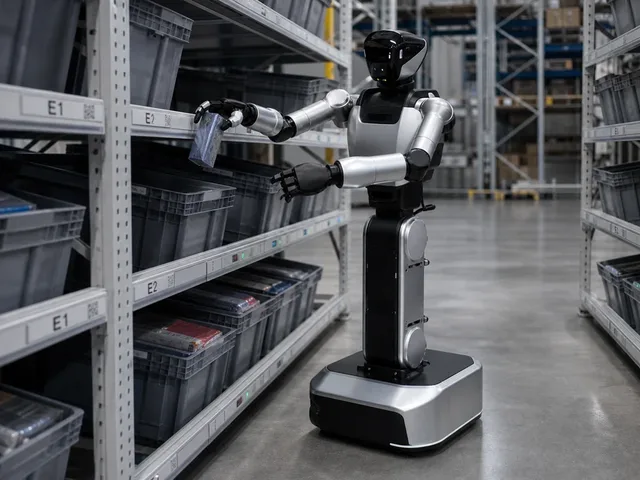
Gino 1 is Geekplus' warehouse-native humanoid/mobile manipulator for logistics operations. Geekplus describes it as a recently launched general-purpose humanoid powered by Geekplus Brain, purpose-built for warehouse work including picking, packing, box handling, and inspection. Independent warehouse-robotics coverage reports a dual-arm wheeled platform with force-controlled 7-DoF arms, three-finger grippers, tactile sensing, palm RGB-D cameras, an omnidirectional mobile chassis, and wireless charging. Public height, weight, runtime, payload, speed, and commercial deployment terms have not been fully disclosed. Active in the catalog with enough detail to review immediately.
Genisom M1 is an industrial quadruped robot from GENISOM AI, highlighted during the company's ICRA 2026 debut after GENISOM reported more than 10,000 cumulative quadruped robots produced and delivered across its platforms. Official materials position M1 as a lightweight, high-payload, fully protected field robot with approximately 30 kg body weight, a 30 kg continuous walking payload, 25 cm continuous stair climbing, up to 80 cm obstacle clearance, 45 degree slope capability, IP67 protection, dual hot-swappable batteries, optional autonomous recharging, and 15 open hardware interfaces for mission payloads and compute expansion. GENISOM's stack around the M1 includes in-house CHAMP P85MAX-S joint actuators, the MATRiX simulation platform, RoamerX autonomous navigation, whole-body control, and SomaMind task orchestration. The M1 family also includes Pro and Ultra configurations with UWB/laser-vision following, voice functions, and 720 degree surround perception. Public pricing, dimensions, charging time, and detailed sensor bill of materials have not been officially disclosed. Active in the catalog; verify the latest media and rollout details.
JAKA π is a compact bipedal humanoid robot from JAKA Robotics, unveiled in China around Children's Day 2026 and positioned for higher education, new business/retail, entertainment, exhibition guidance, and companion or elder-care scenarios. The official JAKA product page lists a 122 cm, 42 kg body with 27 active degrees of freedom, 3 kg per-arm payload, 120 Nm peak joint torque, 1.8 m/s walking speed, a 10 Ah 48 V battery with 2 hours of runtime, Wi-Fi, EtherCAT internal communication, app control, a handheld remote, voice interaction, and secondary-development support. Xinhua's launch coverage describes the Fusion Brain architecture as combining large-model, vision, business-logic, and open-application computing with millisecond-level EtherCAT motion control, giving JAKA π a small humanoid platform for labs, classrooms, venues, and light interactive service deployments. Active in the catalog with enough detail to review immediately.

The Kuavo 5 is a modular full-size humanoid robot from Shenzhen-based Leju Robotics, and the fifth generation of the Kuavo platform. Its defining feature is a swappable lower body: the standard Kuavo 5 walks bipedally, while the Kuavo 5-W variant swaps to a wheeled base for faster movement on flat surfaces. The upper body is equally modular, supporting interchangeable five-finger dexterous hands (10 DOF each), parallel grippers, or heavy-duty claws, with a 360-degree rotating torso and adjustable height. Official Kuavo 5 biped manuals list the robot at 1.73 m and 63.5 kg, with a quoted walking endurance of 1 hour and charging time of ≤1.5 hours. Leju integrates Huawei's Pangu embodied AI model running on HarmonyOS/KaihongOS, achieving end-to-end latency under 200 ms. The platform has been deployed in real-world pilots including NIO automotive assembly, China Southern Power Grid inspections, and served as the world's first 5G-A equipped humanoid torchbearer at China's 15th National Games in November 2025. Leju has raised over $200 million in pre-IPO funding and delivered its 100th full-size humanoid in 2025. Active in the catalog with enough detail to review immediately.
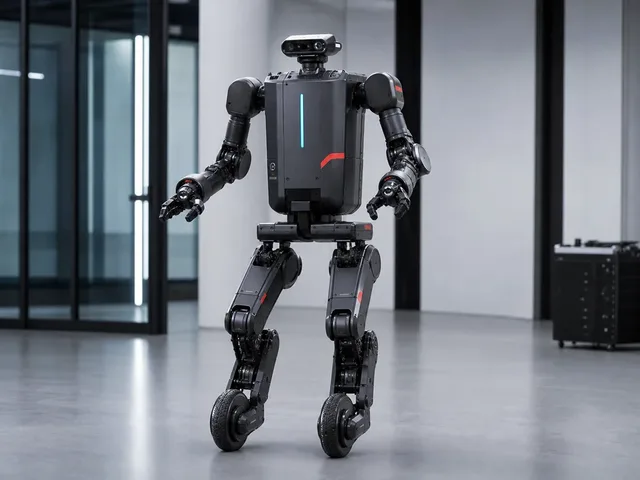
LimX Dynamics' TRON 2 is a multi-form embodied robot research and development platform that combines a dual-arm manipulation upper body with configurable sole and wheeled locomotion. It is aimed at VLA research, teleoperation, data collection, and mobile-manipulation development rather than consumer home use. Official specs list 7-DoF arms, 5-DoF legs, a 2-DoF active vision head, VR teleoperation with Oculus Quest 3, safety-boundary protection, open SDK access, and software support for Python/C++, ROS1/ROS2, data-platform workflows, and mainstream simulation. Active in the catalog with enough detail to review immediately.
LUS2 is a full-size humanoid robot platform from Lumos Robotics for research, education, and commercial applications. Lumos' official product page lists a 160 cm, 57 kg robot with 28 total degrees of freedom, a 2 m/s maximum speed, 360 N·m maximum joint torque, Intel RealSense D435i vision, finger and palm tactile sensors, an IMU, 360° LiDAR, NVIDIA Orin AGX compute rated at 275 TOPS, a dedicated real-time control processor, Wi-Fi, EtherCAT, and a Linux-based operating system. The company positions LUS2 as a modular, open-architecture platform for object manipulation, navigation, human-robot interaction, industrial automation, service, entertainment, and university or lab development work. Public price, exact launch date, ship timing, charging time, runtime, and payload have not been officially disclosed. Active in the catalog with enough detail to review immediately.

MagicBot Gen1 is MagicLab's full-size general-purpose humanoid robot, officially announced for Q1 2025 launch with simultaneous small-batch mass production in the company's Dec. 2024 factory-training update, then shown in MagicLab's CES 2026 lineup and positioned for flexible manufacturing, guided-tour, exhibition, and service scenarios. The official product page lists 42 active degrees of freedom, a 7.5 kg single-arm load, up to 40 kg total body static load, 3D LiDAR, depth and fisheye cameras, Wi-Fi 6, 5G, Bluetooth 5.2, voice interaction, face recognition, autonomous navigation, obstacle avoidance, manual mapping, and OTA support. MagicLab's launch materials say Gen1 has demonstrated multi-robot collaborative material handling and assembly in a home-appliance plant, but public pricing and consumer availability are not disclosed. Active in the catalog with enough detail to review immediately.
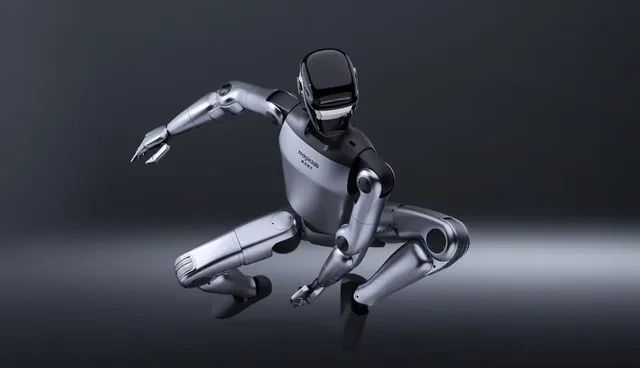
MagicBot Z1 is MagicLab's compact high-dynamics bipedal humanoid robot for scientific research and education. MagicLab's official product page lists a 136.9 cm, roughly 40 kg platform with a 24-DOF standard configuration, a development version expandable up to 50 DOF, optional 11-DOF tactile dexterous hand, 3D LiDAR, depth and binocular fisheye cameras, head tactile sensing, Wi-Fi 6, Bluetooth 5.2, a quick-release 10,000 mAh battery, and about two hours of battery life. Gasgoo reported that Z1 was introduced in July 2025 and shown again at CES 2026 alongside MagicBot Gen1 and MagicDog, while MagicLab's CES release positioned Z1 around high-dynamic motion, wide joint travel, impact recovery, prone recovery, and future commercial development rather than a consumer-ready home product. Active in the catalog with enough detail to review immediately.
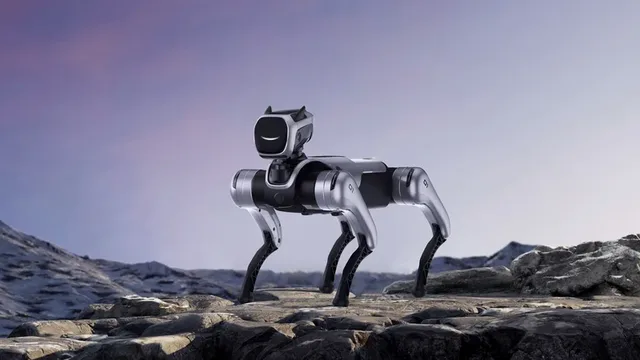
MagicDog is MagicLab's quadruped companion robot dog, presented during the company's CES 2026 debut and described by MagicLab as a robot dog that can autonomously express emotions. The official product page lists PRO and EDU variants with MagicLab's emotional interaction system, SAGE AI algorithm, voice/vision/touch interaction, target following, obstacle navigation, graphical programming, 13 degrees of freedom, and a 4K head camera for photo and video capture. CES directory materials also listed MagicDog in MagicLab's CES robotics demonstrations, including a MagicDog group-dance performance alongside the company's Z1 and Gen1 robots. Active in the catalog with enough detail to review immediately.
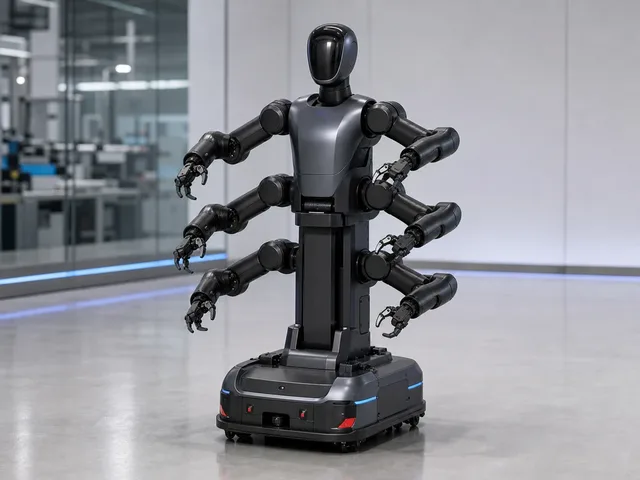
MIRO U is Midea Group's third-generation flagship ultra-humanoid robot for industrial production lines, officially disclosed at the 2025 Greater Bay Area New Economy Forum. Rather than using a conventional two-arm biped body, it has an industry-first six-arm, wheeled-legged form with stable vertical lifting, 360-degree in-place rotation, high-precision control across six bionic humanoid arms, and quick-swappable end-effectors such as dexterous hands and vacuum suction cups. Midea says the robot is intended to improve factory operation efficiency, with expected production-line changeover efficiency gains of about 30%; the company's 2025 annual reporting says MIRO U is undergoing pilot applications at Midea's Wuxi Double High-End Washing Machine Factory. Midea positions the MIRO family for industrial scenarios, while its separate MIRA line is aimed at commercial and domestic service settings. Active in the catalog with enough detail to review immediately.
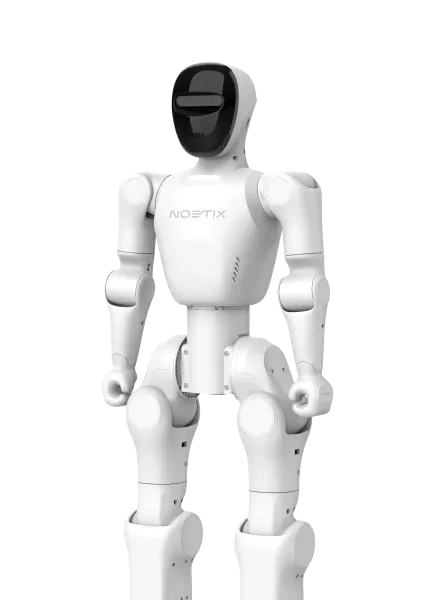
Noetix Robotics' Bumi is a compact humanoid marketed for companionship and robotics education. Current manufacturer specifications list 98 x 35 x 20 cm standing dimensions, about 17 kg including battery, 21 degrees of freedom and a 48 V, 5.1 Ah battery with a claimed 2–3 hours of runtime. The product table distinguishes Lite, Pro, EDU-Air, EDU-Pro and EDU-Max. Lite, Pro and EDU-Air have no additional compute module; EDU-Pro lists Jetson Orin Nano Super and EDU-Max lists Orin NX. Standard cameras are non-depth DC_V93; EDU camera names and the EDU-Air exception require configuration confirmation. The product table lists upper-level control for Lite/Pro and both upper/lower control for EDU. Official documents disagree on Pro control access, EDU-Max memory (8 versus 16 GB) and charger specifications. The FAQ says Bumi currently has no running, autonomous obstacle avoidance, stair climbing or person-following function. Voice conversation should not be confused with voice-controlled movement. Current pricing and regional delivery terms are not verified; request a version-specific quote. Active in the catalog with enough detail to review immediately.
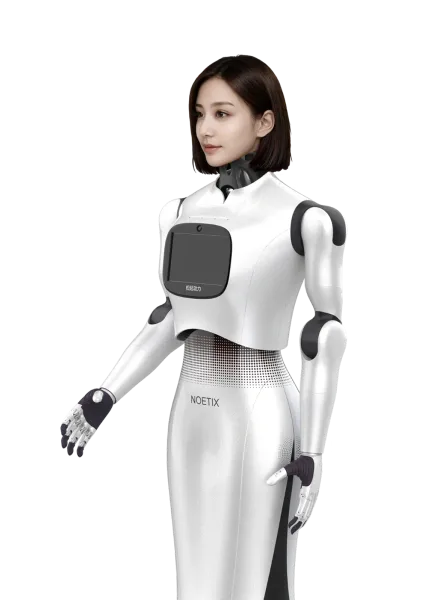
Noetix Robotics' Hobbs W1 is a wheeled bionic humanoid service robot built for customer-facing and guided-service environments rather than home chores. The official product page presents it as the company's first wheeled bionic robot with 54 active degrees of freedom, combining a lifelike silicone head, dual 5-DoF arms with dexterous hands, and a mobile laser-SLAM base. Noetix markets Hobbs W1 for government and enterprise service desks, corporate reception, school research settings, and hospital guidance or consultation. Official specs cite a 170 cm, 75 kg platform with up to 6 hours of full-load operation, while independent coverage in late 2025 highlighted its emotion-aware interaction and receptionist-style demos as part of China's fast-moving humanoid service-robot race. Active in the catalog with enough detail to review immediately.
Noetix Robotics' N2 (OpenHarmony Edition) is a compact 118 cm humanoid robot variant shown at Huawei Developer Conference 2026 as Noetix's OpenHarmony-connected consumer humanoid. The official N2 page positions the platform as an agile biped for entertainment performance, campus use, university research, and child companionship, with a lightweight biomimetic structure, high-precision motion control, consecutive-flip demonstrations, visual teaching, and custom action programming. Official specs list an 18-DoF, about 30 kg robot with 150 N.m peak knee torque, depth-camera and IMU sensing, Wi-Fi 6, Bluetooth 5.2, a 48 V 7 Ah quick-release battery, 1-2 hours of runtime, OTA updates, and SDK documentation. Independent launch coverage says the OpenHarmony Edition adds support for Ubuntu and OpenHarmony development ecosystems and was paired with a 100-developer co-creation program intended to seed local humanoid-robot applications. Active in the catalog; verify the latest media and rollout details.
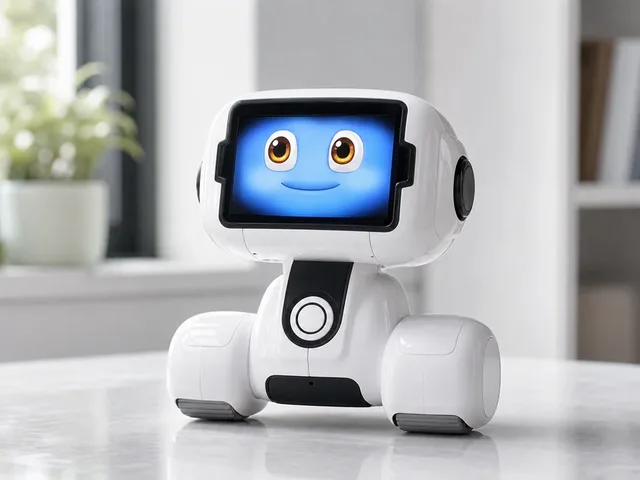
PadBot T2 is a wheeled desktop companion robot for children's learning and family communication. Official PadBot materials describe ChatGPT-based multilingual dialogue, storytelling, games, voice interaction, parental controls, activity monitoring, and mobile-app video calls, while the detailed product page lists a 5-inch screen, Wi-Fi, a 5000 mAh battery, 5-hour charging, 6-hour working time, and auto-charge support. It is closer to a kid-focused AI companion than a general home assistant, but its voice-controlled movement, face tracking, expressive head motion, and app-connected video calling make it a noteworthy smart robot entry rather than a static educational toy. Active in the catalog with enough detail to review immediately.

ProWhite Robot 2.0 is PL-Universe Robotics' wheeled humanoid embodied-AI robot for smart-factory and collaborative industrial work. The official product page describes a 400 kg, 203.5 cm-tall platform with a humanoid dual-arm body, modular end effectors, four-wheel omnidirectional mobility, MES task dispatch, and autonomous coordination across workstations for handling, assembly, inspection, and packaging. PL-Universe says the robot uses an industrial VLA model, reusable autonomous decision-making, and clustered planning/control to support flexible production, while its April 2026 Hannover Messe debut release says ProWhite has already been mass-produced and delivered for sectors such as 3C electronics and automotive manufacturing. Active in the catalog with enough detail to review immediately.
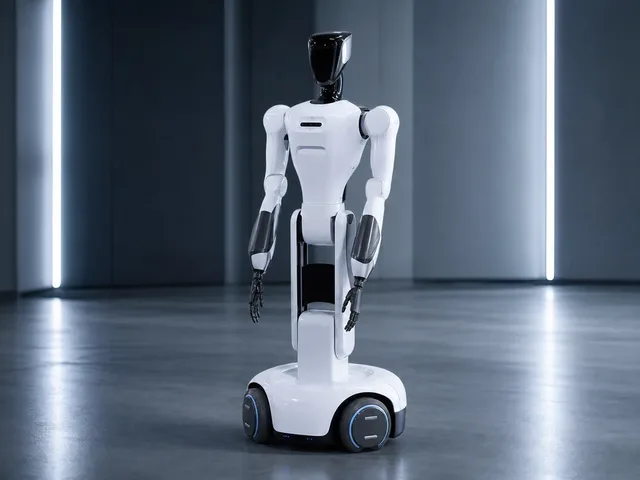
ψ-SynRobot is PsiBot's self-developed wheeled humanoid/mobile-manipulation platform for logistics, retail, and industrial scenarios. PsiBot's official launch article says the robot combines task execution with real-world data collection, is designed for high-precision work in complex environments, supports long-horizon multi-step manipulation, and captures visual, tactile, and action-trajectory data while it works so embodied-AI models can be iterated from field data. The same official article says mass production has started and positions the robot as the hardware bridge from PsiBot's embodied-intelligence brain to deployable execution platforms. Independent robot profiles add that ψ-SynRobot uses an omnidirectional wheeled base, force-controlled arms, a 2-DoF neck, 360° 3D/depth sensing, an RGB-D torso camera, and optional low- or high-DoF dexterous hands, but PsiBot has not published a full public spec sheet or pricing. Active in the catalog with enough detail to review immediately.
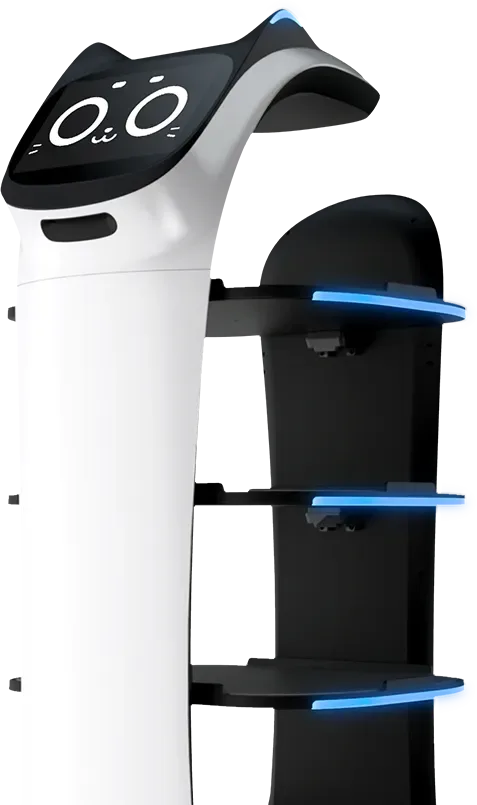
Pudu Robotics' premium food delivery robot, one of the most widely deployed commercial service robots in the world. BellaBot features an innovative bionic cat-face design with multimodal interaction (touch, light, voice), 3D omnidirectional obstacle avoidance with RGBD cameras and LiDAR, and a dual SLAM positioning system (LiDAR + Visual SLAM). The robot navigates autonomously through restaurants, hotels, and healthcare facilities, delivering food and items on up to four trays. It supports hot-swappable batteries for 24/7 operation. Deployed in over 60 countries across 600+ cities with tens of thousands of units in service. BellaBot responds to petting with cat-like animations and sounds, making it a crowd favorite in the hospitality industry. Active in the catalog with enough detail to review immediately.
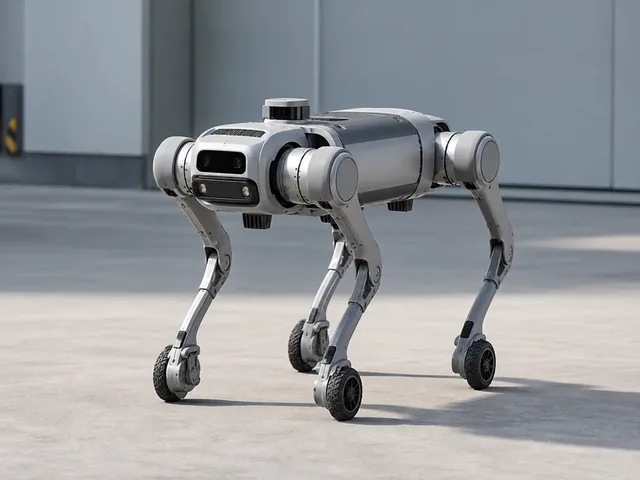
PUDU D5 Series is an industry-grade autonomous quadruped robot family from Pudu Robotics for industrial inspection, logistics support, patrol, research, and outdoor operations in complex environments. The lineup includes the legged PUDU D5 and wheeled PUDU D5-W configurations, with NVIDIA Orin plus RK3588 compute, dual 192-line LiDAR, four fisheye cameras, autonomous navigation and following, voice and gesture interaction, IP67 all-weather operation, and modular delivery or inspection add-ons. Active in the catalog with enough detail to review immediately.
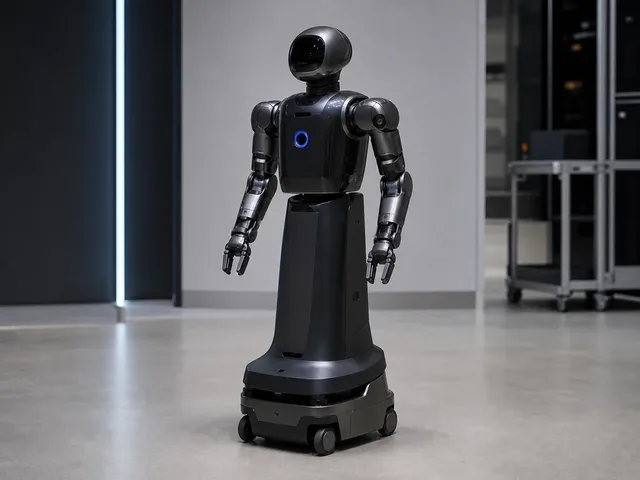
PUDU D7 is Pudu Robotics' first general embodied-intelligence semi-humanoid robot, combining a human-like upper body with robotic arms and an omnidirectional wheeled chassis. Pudu unveiled D7 in September 2024 with full commercialization anticipated in 2025, and the official D7 product page remains live as part of Pudu's humanoid lineup. The robot is aimed at industrial and commercial workflows where mobile manipulation matters, including elevator operation, item transport, sorting, and dual-arm collaborative tasks. Pudu's May 2026 partner-summit update describes the New PUDU D7 2.0 with proprietary joint modules and dexterous three-finger robotic hands, integrated into the company's embodied-AI framework. Active in the catalog with enough detail to review immediately.
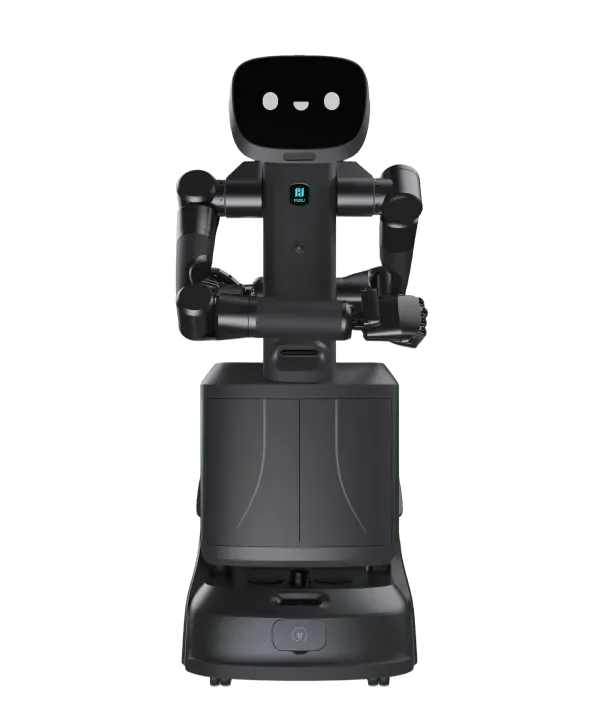
PUDU FlashBot Arm is a semi-humanoid embodied AI service robot from Pudu X-Lab that combines autonomous delivery with humanoid manipulation. The official product page describes a wheeled service platform with two 7-DOF arms, PUDU DH11 dexterous hands, an enclosed delivery compartment, VSLAM plus LiDAR SLAM mapping, RGBD cameras, LiDAR, panoramic cameras, pressure-sensitive skin, automatic recharging, and multi-robot collaboration for hospitality and service environments. Active in the catalog with enough detail to review immediately.
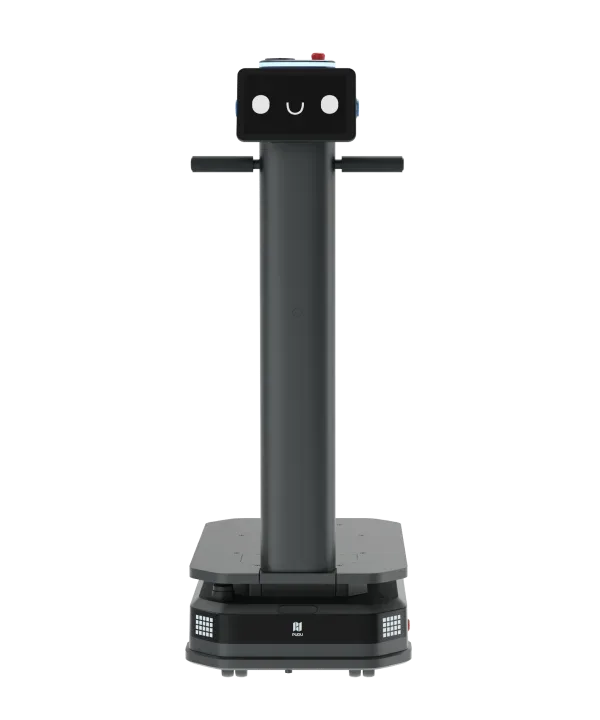
PUDU T150 is a light-payload industrial delivery AMR for internal material transport in manufacturing and warehouse environments. Launched in January 2026 as the 150 kg entry in Pudu Robotics' industrial delivery lineup, it is aimed at light-load, high-frequency transport for sectors such as electronics, plastics, FMCG, beauty, and fast fashion warehousing. The robot uses VSLAM plus LiDAR SLAM localization with dual RGBD cameras and 360-degree dual LiDAR for AI-driven obstacle avoidance, supports onboard mapping in about 10 minutes, and is designed for rapid deployment without site modifications or local fleet servers. Active in the catalog with enough detail to review immediately.
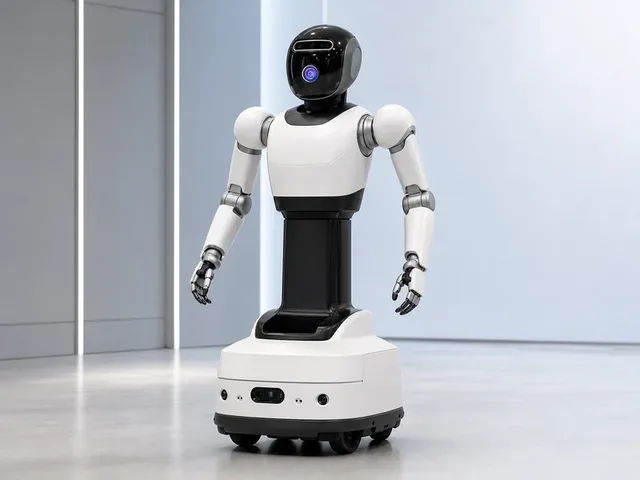
Quanta X2 is X Square Robot's next-generation wheeled humanoid platform for home-based services, research and education, commercial cleaning, and logistics sorting. The official product page lists a 164 cm robot with 62 whole-body degrees of freedom, a wheeled chassis, 765 mm arm reach, 6 kg single-arm payload, and optional 20-DOF dexterous hands. X Square says the robot runs its self-developed WALL-A embodied AI model for perception, reasoning, and precision manipulation, while an April 2026 company announcement described consumer-facing home-cleaning deployments through 58.com and selected-home trials beginning in May 2026. Active in the catalog with enough detail to review immediately.
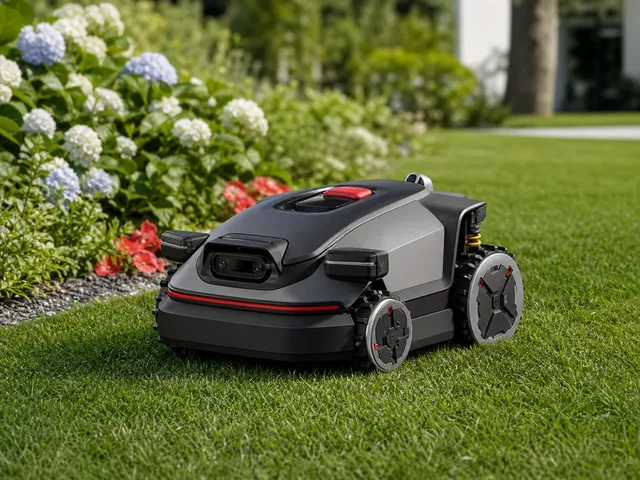
The Roborock RockMow X1 LiDAR is Roborock's first US-bound robotic lawn mower, unveiled at CES 2026 for large and complex residential lawns and now listed on Roborock's current US garden product site. Official Roborock materials position it as a wire-free mower that combines 360° 3D LiDAR, dual-camera vision, and VSLAM for centimeter-level positioning without perimeter wires. Roborock says the four-wheel-drive platform can handle slopes up to 80 percent (38.7°), ride over obstacles up to 3.1 inches, cut as close as 1.2 inches from edges with the optional PreciEdge module, and mow up to 0.5 acre per day. Roborock has not enabled checkout or disclosed US pricing yet, so this is tracked as active product information rather than available retail sale. Active in the catalog with enough detail to review immediately.
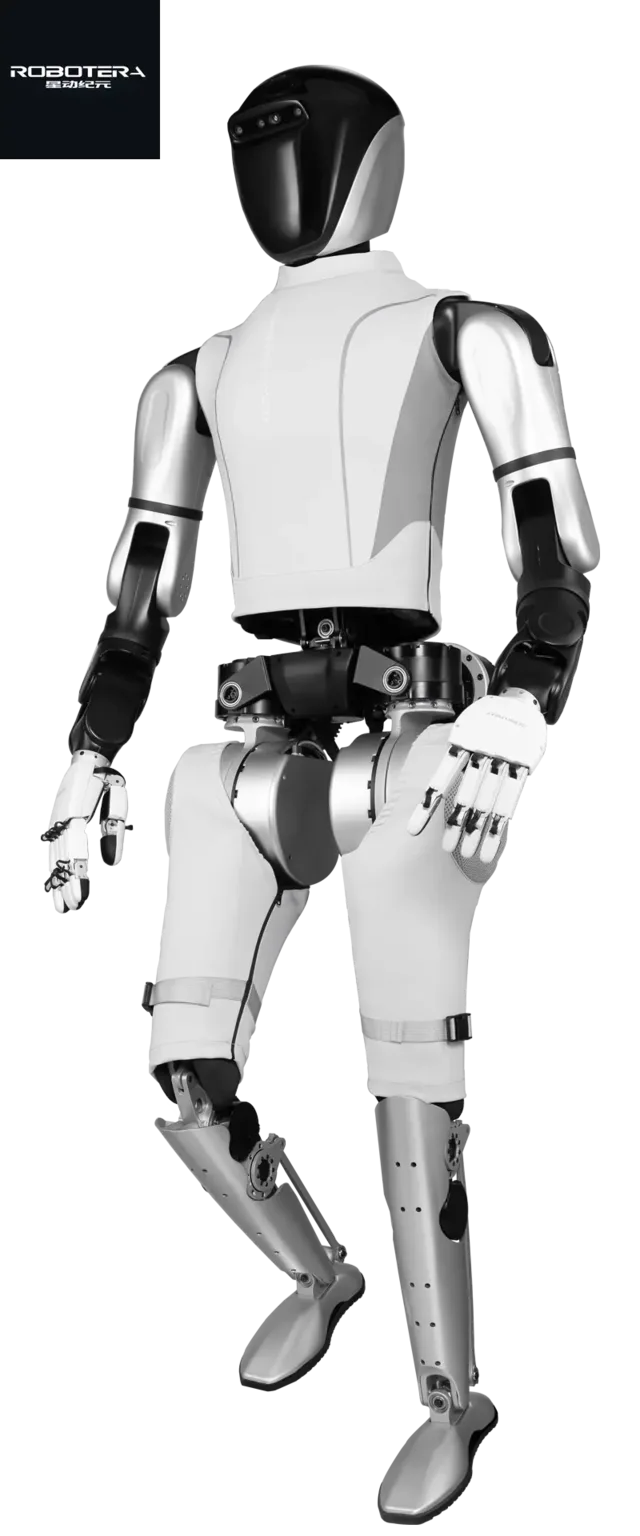
STAR1 is a humanoid robot from RobotEra (星动纪元). A 2025 company brochure hosted by the World Robot Conference identifies STAR1 as having 55 total degrees of freedom, including 12 across its legs, 7 per arm and 12 active degrees of freedom in each XHAND1 hand. The brochure lists maximum joint torque of 400 Nm and rotational speed of 25 rad/s, and describes a 3.6 m/s outdoor run as a world record for electrically driven humanoids. It also attributes tool-use manipulation examples to STAR1 working with RobotEra's ERA-42 model. Its separate ERA-42 section claims learning from limited data; this is a historical company claim about the model, not independently verified STAR1 task reliability. The brochure does not establish current availability or reliable deployment in homes. Active in the catalog with enough detail to review immediately.
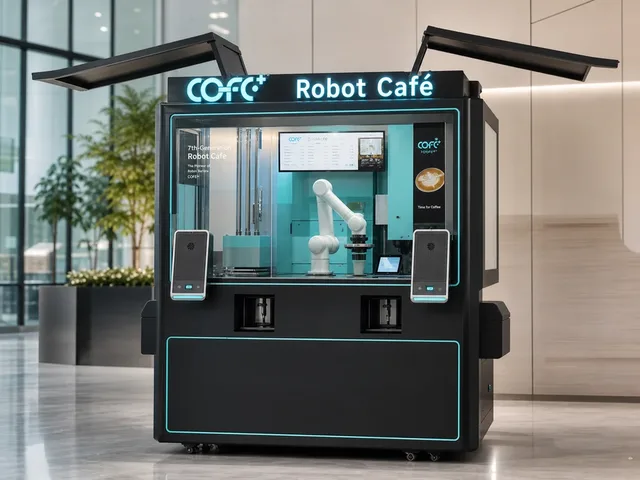
COFE+ 7th-Generation Robot Cafe is Shanghai Hi-Dolphin Robot Technology's fully unattended commercial coffee kiosk for airports, offices, hospitals, schools, shopping centers, and other high-traffic indoor venues. Hi-Dolphin announced the 7th-generation COFE+ for a U.S. debut at the National Restaurant Association Show 2026 in Chicago, and independent show-floor coverage from Kiosk Industry corroborated the debut and core performance claims. The kiosk combines a robotic arm, automatic cup dispensing and capping, smart ordering, integrated payments, backend store monitoring, and remote alerts for module and ingredient status. Official materials describe 24/7 operation in a 2.35 m2 footprint, an average 55-second drink time, 300+ drink types with 5,000+ customizable taste profiles, and a 10-year or 500,000-cup service-life claim. Public pricing is not listed. Active in the catalog with enough detail to review immediately.


Walker S2 is UBTECH's full-size industrial humanoid robot for factory and logistics environments. Official materials focus on its autonomous hot-swappable dual-battery system, which lets the robot replace batteries by itself in about three minutes for near-continuous operation, plus 15 kg manipulation capability and RGB binocular stereo vision. UBTECH said mass production and first deliveries began in November 2025, with staged deployments across automotive manufacturing, smart factories, logistics, data collection centers, and later aerospace manufacturing. Active in the catalog with enough detail to review immediately.
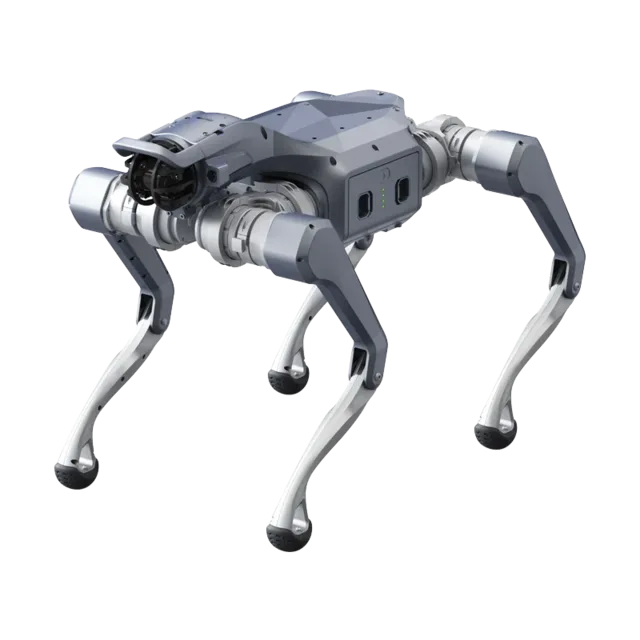
Unitree's mid-size quadruped robot positioned between the consumer Go2 and industrial B2. The As2 delivers roughly twice the dynamic performance of the Go2, with up to 90 N·m joint torque (EDU), a standing payload of up to 65 kg, and top speed above 5 m/s. Runtime depends on trim: AIR is rated around 2 hours unloaded, while PRO/EDU run around 4 hours unloaded with about 20 km range. PRO and EDU add IP54 weather resistance. All versions operate from -20°C to 50°C and can climb 25 cm stairs and 40° slopes. Available in three editions: AIR (basic), PRO (with 64–128 line industrial LiDAR, ISS 3.0 intelligent follow, GPS, 4G), and EDU (adds NVIDIA Jetson Orin NX expansion and full secondary development support). All versions receive continuous OTA software updates. Active in the catalog with enough detail to review immediately.
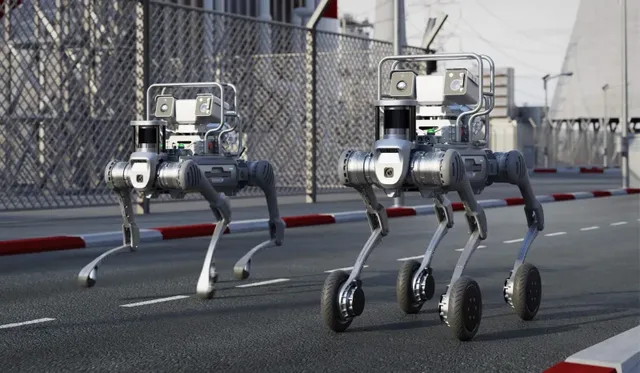
Unitree's mid-range industrial quadruped robot designed for complex terrain and harsh environments. The B1 carries a 20 kg continuous walking load (80 kg standing) and runs on three Jetson Xavier NX compute units paired with five Intel RealSense D430 depth cameras. It operates between -5 °C and 45 °C, with about 2 hours of continuous walking or 5 hours standing on a single 932 Wh lithium battery. Targets inspection, patrol, and surveillance tasks where wheeled platforms can't go. Active in the catalog with enough detail to review immediately.
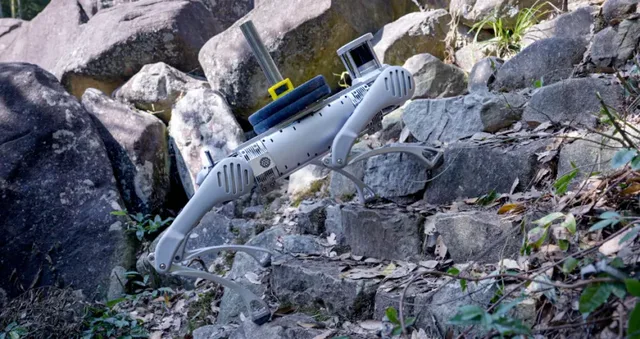
Unitree's industrial-grade quadruped robot built for demanding real-world applications including emergency rescue, industrial inspection, and power line patrol. The B2 is the fastest running industrial-grade quadruped robot at over 6 m/s, with 360 N·m joint torque, a standing load capacity of 120+ kg, and continuous walking load over 40 kg. Features IP67 ingress protection, an operating temperature range of -20°C to 55°C, and optional wheel-legged hybrid locomotion. Supports autonomous charging and plug-in battery swap for extended deployment. Active in the catalog with enough detail to review immediately.
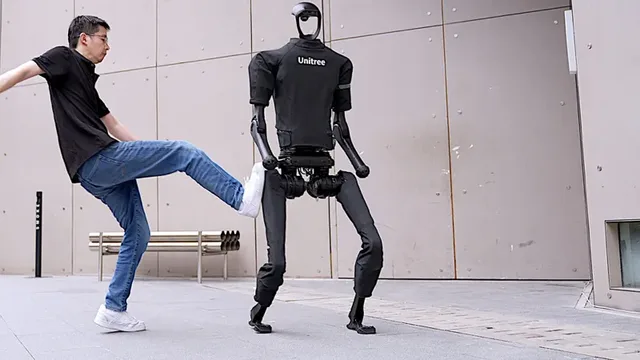
Unitree's full-size humanoid robot designed for dynamic walking, running, and terrain adaptation. It uses 3D LiDAR and a depth camera for spatial perception. Active in the catalog with enough detail to review immediately.
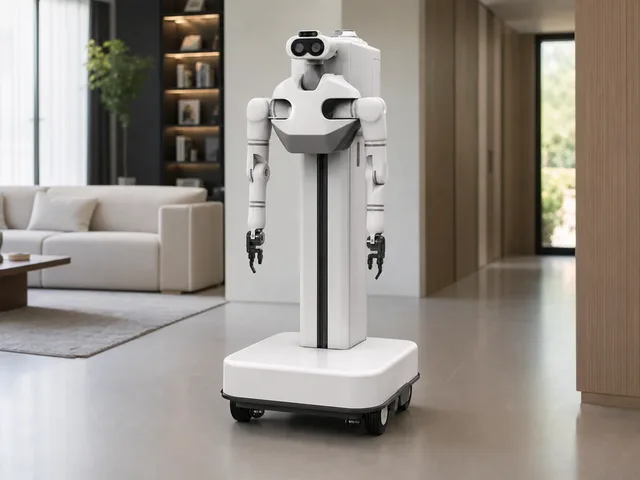
UniX AI's Panther is a next-generation full-size wheeled humanoid robot designed for real household deployment. Unveiled in February 2026 and already operating in homes in Suzhou, China, Panther can perform a full range of domestic tasks including waking residents, opening curtains, preparing breakfast, cooking, cleaning, laundry, and tidying. It features 34 high-degree-of-freedom joints powered by a 48 V high-voltage drive platform, the industry's first mass-produced 8-DoF bionic arms with adaptive intelligent grippers (12 kg dual-arm payload), and an omnidirectional four-wheel steering and drive chassis for agile indoor mobility. An 80 cm upper-body lift mechanism enables ground-level reach across the full 1.6–1.75 m height range. Onboard edge computing delivers up to 2070 TOPS for AI perception and real-time control. The perception suite includes top 3D LiDAR, head-mounted dual RGB and RGB-D camera, front and rear 360° LiDAR, ultrasonic sensing, and a six-microphone circular array for voice interaction. Battery life ranges from 6 to 12 hours depending on workload. Active in the catalog with enough detail to review immediately.
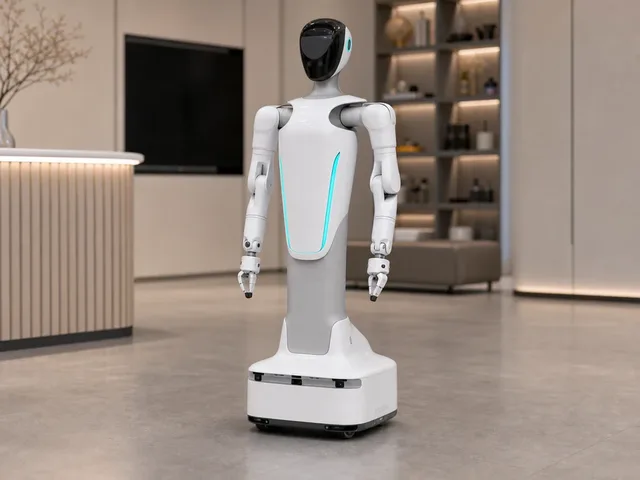
UniX AI's Wanda 2.0 is a full-size wheeled dual-arm humanoid robot designed for real-world service deployment across hospitality, household, retail, and property-management settings. Launched and opened for official pre-sale in December 2024, with a mass-production plan released in 2025, Wanda 2.0 was showcased globally at CES 2026 with live demonstrations of cocktail preparation, tea brewing, dishwashing, clothes sorting and folding, bed-making, and waste sorting. It features 23 high-degree-of-freedom joints, the industry's first mass-produced 8-DoF bionic arm with harmonic reducers, and adaptive intelligent grippers supporting up to 12 kg dual-arm payload. The perception suite includes head-mounted dual RGB/RGB-D cameras, 360° LiDAR, ultrasonic sensing, tactile/gripper sensing, and a six-microphone circular array. UniX AI's proprietary AI stack — UniFlex imitation learning, UniTouch tactile perception, and UniCortex long-sequence task planning — runs with up to 275 TOPS of edge compute for autonomous multi-step workflow execution. Battery endurance ranges from 8 to 16 hours depending on workload, with autonomous docking for charging. Active in the catalog with enough detail to review immediately.
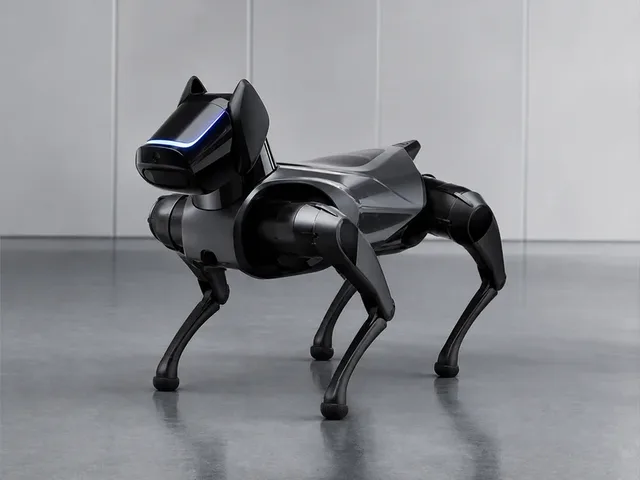
Xiaomi's second-generation quadruped robot, designed to look and move more like a real dog. Smaller and lighter than the original CyberDog, it stands about the size of a Doberman and weighs 8.9 kg. Equipped with 19 sensors, dual co-processors, and AI-driven motion control that enables tricks like continuous backflips. Runs Ubuntu and ROS2 on an open-source platform aimed at developers. Xiaomi launched CyberDog 2 in China in August 2023, but current direct checkout availability is not enabled on the official product page. Active in the catalog with enough detail to review immediately.
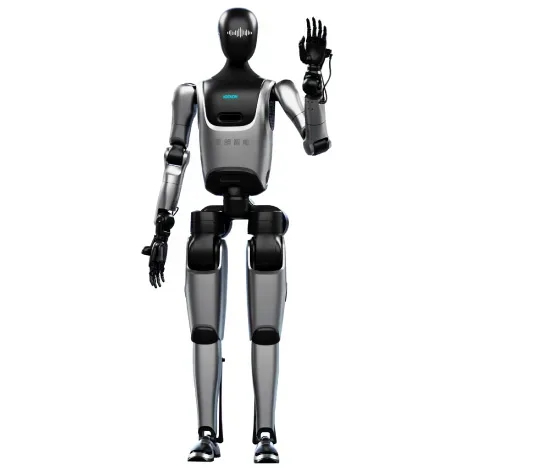
XMAN-F1 is KEENON Robotics' bipedal humanoid service robot, world-premiered at WAIC 2025 in Shanghai. KEENON positioned it as a role-specific embodied-AI service robot for commercial settings, with public demonstrations that included human-like mobility, popcorn service, personalized chilled-beverage mixing, autonomous stage presentations, product demos, multimodal interaction, and large-language-model-powered interaction. The company also showed XMAN-F1 working alongside KEENON logistics and delivery robots in medical-station and lounge-bar scenarios. Detailed physical specifications, production availability, and pricing have not been publicly disclosed. Active in the catalog with enough detail to review immediately.
XMAN-L1 is KEENON Robotics' compact humanoid for customer-facing service, greeting, guidance, and lightweight entertainment scenarios. Independent reporting says the small-size humanoid debuted at a streetwear brand event on May 25, 2026, while KEENON's July 2026 LEAP East release confirms XMAN-L1 was part of its humanoid lineup and performed dance and close-range visitor interactions at the booth. Reported specifications include a 136 cm body, 42 biomimetic degrees of freedom, 132 N·m peak knee torque, more than 2,000 W per leg, up to 100 TOPS of edge-side compute, and large-language-model integration from Doubao and Tencent for natural-language interaction. KEENON has not published a dedicated product page, public pricing, battery/runtime details, or a full manufacturer spec sheet. Active in the catalog; verify the latest media and rollout details.
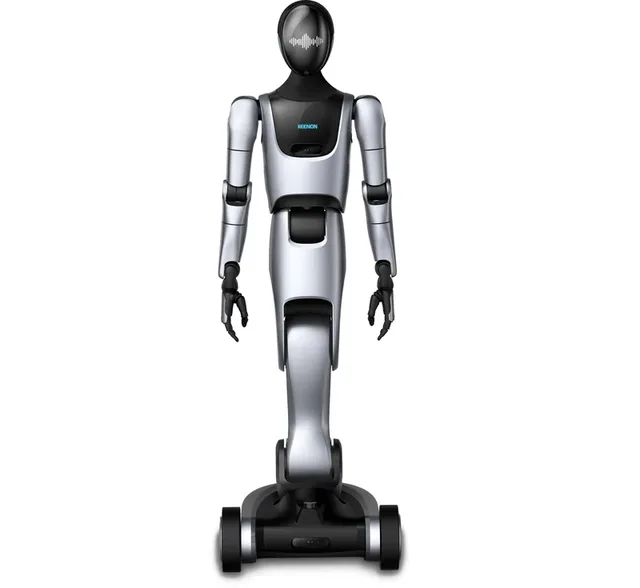
XMAN-R1 is KEENON Robotics' humanoid service robot for commercial settings. KEENON officially introduced the robot on March 31, 2025 as part of a broader multi-form service robotics lineup, describing it as a humanoid designed to interact with people and coordinate tasks with other KEENON robots such as DINERBOT T10, KLEENBOT C30, and KEENON S100. Official copy emphasizes multi-robot task coordination, intelligent learning, task optimization, and adaptation to changing service requirements. KEENON does not publish detailed public physical specifications, customer deployments, or public pricing; Humanoid.guide's non-manufacturer-verified profile currently lists a 172 cm height, 110 kg weight, 3-hour runtime, 2.9 km/h max speed, and service tasks such as meal delivery and collection, luggage handling, and room cleaning. Active in the catalog with enough detail to review immediately.
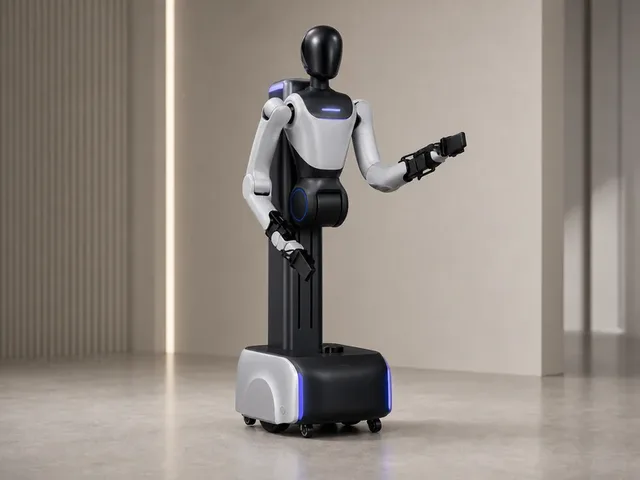
ZERITH H1 is a wheeled-arm service robot from Zerith Robotics, positioned as the company's H-series wheel-arm platform for commercial service, home-assistance, and data-collection tasks. Zerith's official product copy lists a 55 kg robot with a lift-adjustable 130–180 cm body height, 0–2.2 m reach, 23 total degrees of freedom with the standard gripper, 7 degrees of freedom per arm, 2.5 kg single-arm payload, 1,827.2 mm arm span, 4-hour runtime, RGBD depth cameras, tactile arrays, LiDAR, ultrasonic sensing, and self-developed embodied-intelligence algorithms with open interfaces for secondary development. Independent HouseBots coverage says H1 units are already deployed in Chinese hotels, malls, office towers, transportation hubs, and public buildings for restroom cleaning, sink and mirror wiping, mopping, vacuuming, and amenity restocking. Public price, charging time, maximum speed, and ordering terms have not been officially disclosed. Active in the catalog with enough detail to review immediately.
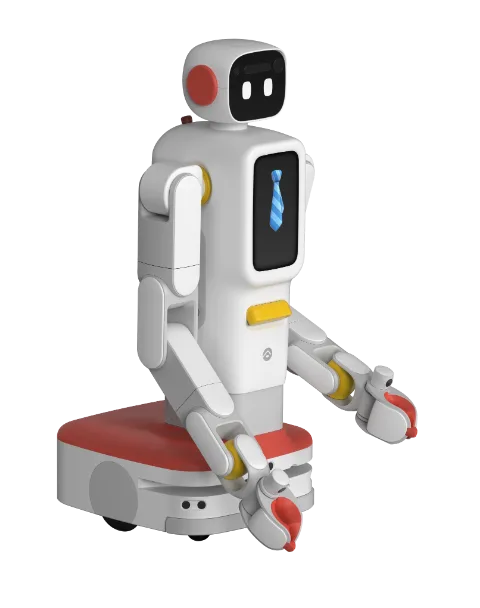
Futuring Robot's Futuring 2 (F2) is an announced home service robot designed for household chores, childcare support, pet care, and elder companionship. In April 2026 the company opened reservations for real-home trial experiences and positioned F2 as a full-scenario domestic robot rather than a single-purpose companion device. Official and independent coverage describe a wheeled dual-arm platform with 21 high-degree-of-freedom joints, multimodal perception, a 360° sensing system, and tactile force control for delicate manipulation such as handling eggs, carrying drinks, folding clothes, and operating household appliances. Commercial intent is clear, but delivery timing should be validated.

UWORLD U1 Series is UBTECH's consumer-facing full-size hyper-bionic humanoid companion robot, introduced through the company's UWORLD brand and opened for JD.com pre-sale on June 2, 2026 ahead of a planned June 30 launch. Launch coverage describes male and female full-size variants, 88 degrees of freedom, Wi-Fi connectivity, 2 to 4 hours of battery life, local encrypted memory for an emotional AI model, appearance customization, pricing from CNY 119,800 to CNY 990,000, and first deliveries planned for September 16, 2026. Detailed sensor specifications and safety limits have not yet been officially disclosed. Commercial intent is clear, but delivery timing should be validated.
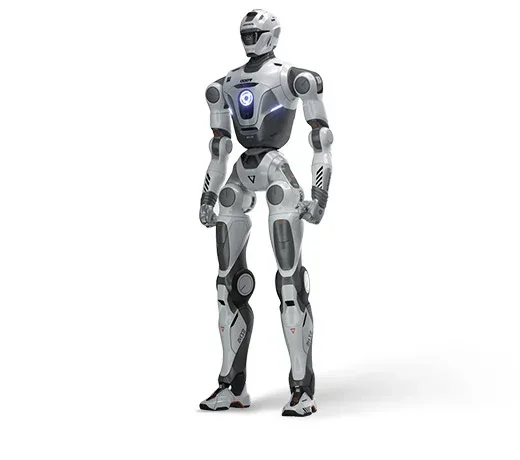
EngineAI's T800 is a full-size humanoid robot family positioned for industrial collaboration, inspection, research, logistics, and service deployments. Officially launched in December 2025 and shown globally at CES 2026, the platform is offered in Basic, Open Source, Pro, and Max editions. EngineAI says the T800 stands 173 cm tall, uses in-house joint modules capable of up to 450 N·m peak torque, supports hardware movement speeds of at least 3 m/s, and pairs active leg-joint cooling with quick-release battery packs for 4-5 hours of operation. Higher-tier versions add stereo-vision plus LiDAR perception, dexterous 7-DoF hands, and more onboard compute for developers and more demanding manipulation tasks. Commercial intent is clear, but delivery timing should be validated.
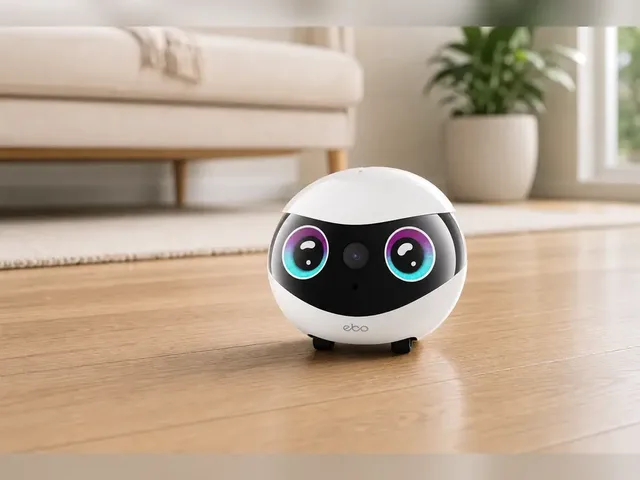
The Enabot EBO Mini Sport FamilyBot is a compact mobile presence robot for family check-ins, pet interaction, and home awareness. It pairs a 2K camera, two-way audio, app-controlled whole-home driving, night vision, motion alerts, 24/7 recording, and auto recharge with Sport-specific upgrades including a quieter brushless motor, expressive eye lighting, and AI human/pet recognition for event filtering. Enabot positions it as a small companion and mobile camera rather than a chore robot, but its moving low-angle viewpoint, remote laser/feather pet play, self-righting body, and person/pet-aware monitoring make it meaningfully more capable than a fixed indoor camera. Commercial intent is clear, but delivery timing should be validated.
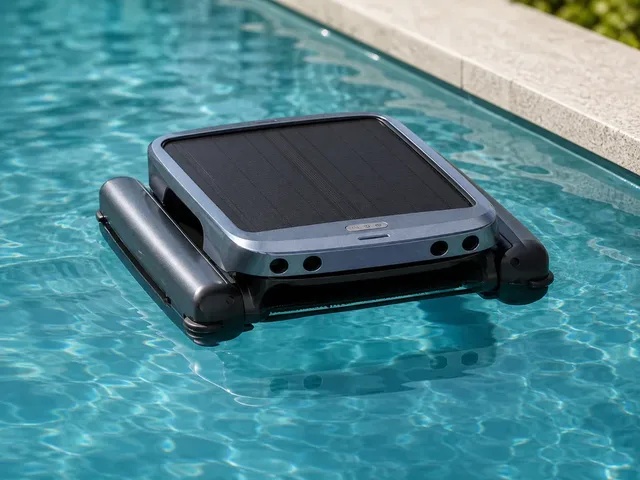
Beatbot iSkim is a solar-powered robotic pool skimmer focused on continuous water-surface debris collection rather than floor and wall scrubbing. It uses an extra-large 9-liter debris basket, a widened 29 × 270 mm skimming inlet, and an anti-spill baffle to capture leaves, pollen, pet hair, insects, and fine debris with fewer emptying stops. A 24W solar panel and 10,000 mAh battery provide up to 28 hours of runtime without sunlight, while SolarTrack light-tracking helps the robot move toward brighter areas for solar exposure. Dual-motor propulsion, guided wheels, and SonicSense ultrasonic obstacle avoidance support full-surface coverage around walls, corners, and different pool shapes. The Beatbot app provides real-time status, scheduling, remote operation, usage records, Smart Auto Parking, and one-tap recall. Beatbot lists compatibility with in-ground and above-ground pools across common materials, including concrete, vinyl, fiberglass, ceramic tile, and stainless steel, with saltwater support up to 5,000 ppm. The robot is rated IP68 and uses UV-, chlorine-, and salt-resistant materials with a 3-year warranty. Commercial intent is clear, but delivery timing should be validated.
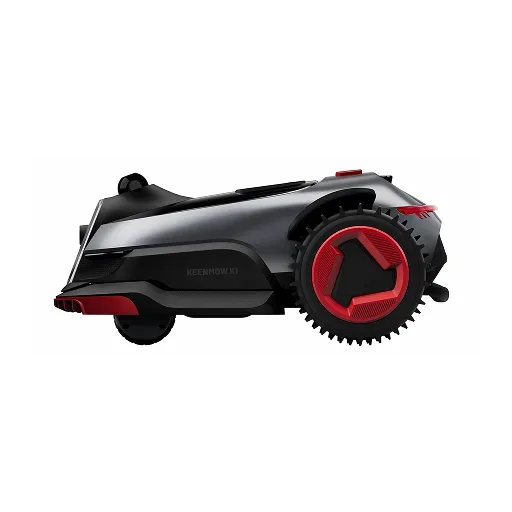
The KeenMow K1 is Keenon Robotics' first robotic lawn mower, bringing the company's commercial-grade autonomous navigation expertise — built on over 100,000 service robots deployed in hotels, hospitals, and factories worldwide since 2010 — to residential lawn care. It uses AuraVue, a wire-free 3D LiDAR plus 150° RGB camera fusion system, to map and navigate yards without perimeter wires, RTK base stations, or GPS. The mower manages up to 15 zones connected by virtual channels via the KeenonHome app, with SmartPath AI generating systematic parallel mowing routes. A 5-blade disc cutting at 2,850 RPM covers a 22 cm swath with electric height adjustment from 20–70 mm. The 23 cm all-terrain wheels and 60% above-industry-standard torque enable 50% (27°) slope capability. It features rain detection with auto-return and resume, night mowing with supplementary lighting, and an IPX6 waterproof rating. Announced at CES 2026, launching on Kickstarter April 11, 2026, with first-batch shipping expected May 2026. Commercial intent is clear, but delivery timing should be validated.
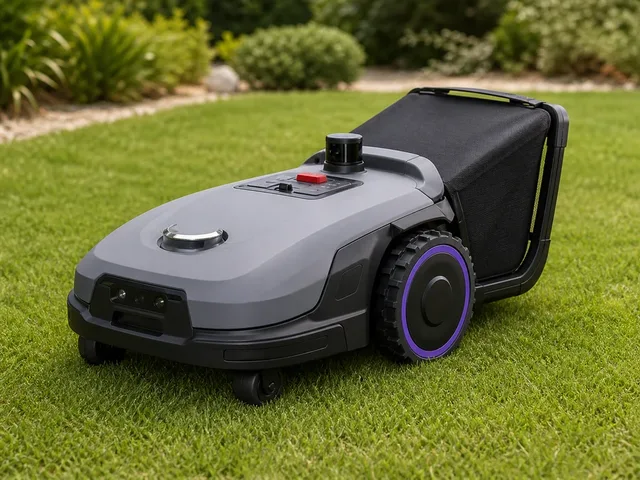
ANTHBOT N8 LiDAR is a 2026 residential robotic lawn mower for larger fenced gardens that stands out by doing more than routine wire-free mowing. Official ANTHBOT materials position it as a 4-in-1 lawn-care robot that can mow, mulch, collect clippings, and sweep leaves, using a 23-liter auto-dumping bin instead of leaving everything on the grass. The LiDAR variant pairs 360° LiDAR with dual-vision sensing for centimeter-level navigation without a boundary wire or RTK base station, making it a stronger fit for enclosed or obstacle-dense yards than many conventional premium mowers. Independent CES coverage also corroborates that the N8 LiDAR is the premium collection-focused model in ANTHBOT's new N series lineup. Commercial intent is clear, but delivery timing should be validated.
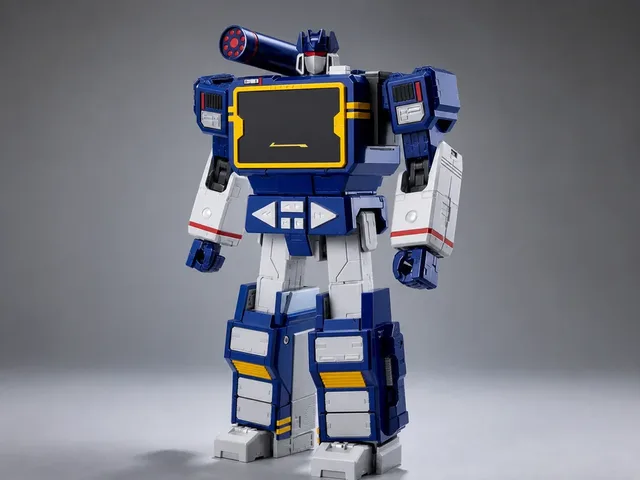
Robosen's Flagship Soundwave is an officially licensed Transformers G1 entertainment robot that auto-converts between cassette-player mode and a walking robot form. Official Robosen materials describe a dual cassette-player/Bluetooth-speaker identity, bipedal walking with articulating hips, app-triggered actions, five programming modes, Mini Theater synchronized scenes with Megatron, custom action sharing through Robosen Studio and Robosen Hub, 48 voice commands after the “Hey, Soundwave” wake phrase, and 200+ Frank Welker voice lines. Hasbro Pulse publishes official robot-mode and cassette-player-mode dimensions, while Robosen lists a 6-axis IMU and 28 high-precision intelligent servos; battery life and the full sensor suite remain undisclosed. Commercial intent is clear, but delivery timing should be validated.
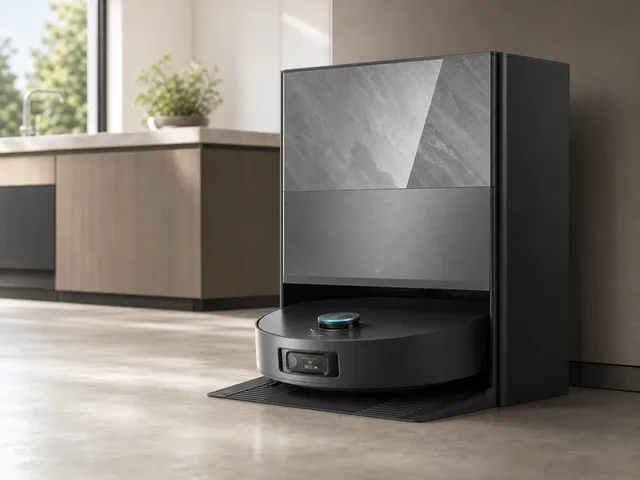
Dreame's Aqua20 Pro Ultra Roller Complete is an announced robot vacuum and mop from the DREAME NEXT Living Next showcase in San Francisco. Dreame describes it as the industry's first robot vacuum with 160°C high-temperature steam mopping, combining steam cleaning, 75°C hot-water mopping, 18 N bionic pressure, and a 100°C hot-water base-station wash in one system. Gizmodo's event coverage also describes the model as using a roller mop and reports a planned August 2026 launch at $1,800. Dreame has not yet published a full retail spec sheet, so navigation, battery, suction, and dock details remain undisclosed. Commercial intent is clear, but delivery timing should be validated.
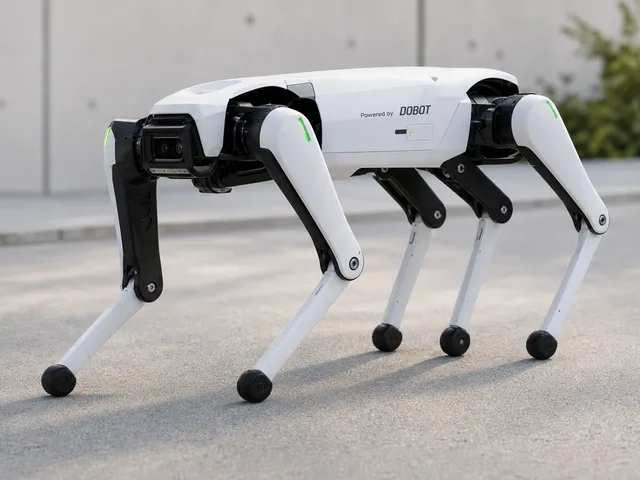
Rover X1 is DOBOT's INFFNI-branded consumer quadruped robot dog for home, outdoor carrying, follow filming, and companionship. DOBOT announced it as a smart quadruped robot designed for every home for CES 2026, while the INFFNI preorder page lists variants for US and EU buyers. Official materials describe all-terrain mobility, intelligent subject tracking, dual-vision smart perception, app/gesture/voice/remote control, small-item transport, and expressive companion behaviors; independent TechNode coverage corroborates the household positioning, hybrid wheel-leg option, item carrying, filming, patrol, coding-education, and companion use cases. Commercial intent is clear, but delivery timing should be validated.
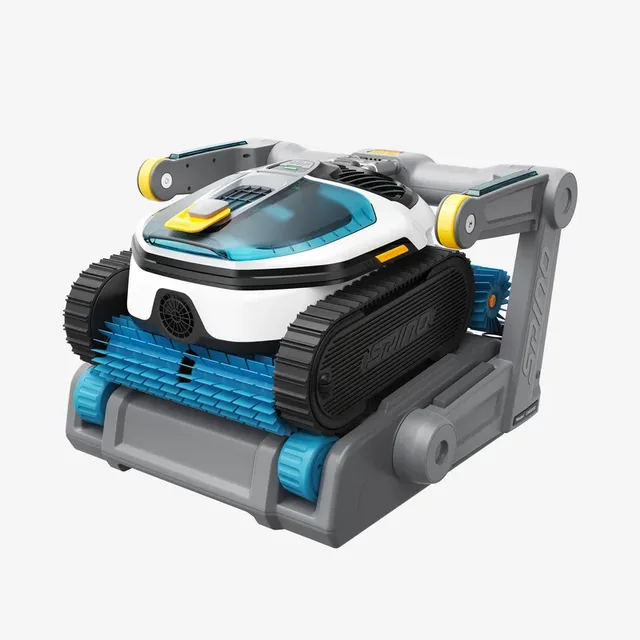
The Mammotion SPINO S1 Pro is a cordless robotic pool cleaner and CES 2026 Innovation Awards honoree, notable as the first pool-cleaning robot with a fully automated on-deck self-docking system. Mammotion's patented AutoShoreCharge™ uses a robotic arm integrated into a poolside charging station to lift the cleaner out of the water, align it, and begin charging — eliminating the need to manually fish a heavy robot from the pool. ZonePilot™ AI Vision combines an onboard camera with multi-sensor fusion to map the pool, identify debris, steps, edges, and obstacles, and plan optimized cleaning paths. Current official Mammotion copy highlights high-flow suction power up to 6,800 GPH / 26 m³/h and an all-pool compatible design for pools up to 300 m², rather than the earlier 8,800 GPH / five-motor wording. The S1 Pro cleans floors, walls, waterline (including horizontal sweeping), edges, and corners. An ultra-stable underwater communication link maintains connectivity within a 33 ft (10 m) radius of the dock for live monitoring and remote app control even while submerged. Optional water-quality sensing adds simultaneous pool-health monitoring during cleaning cycles. Mammotion positions the S1 Pro as the fully autonomous successor to the SPINO E1, extending its lawn-robot 'true hands-free' philosophy to pool care. The current official Mammotion page shows the product as sold out and points buyers to Kickstarter, with first-batch shipments expected in the second half of 2026. Commercial intent is clear, but delivery timing should be validated.
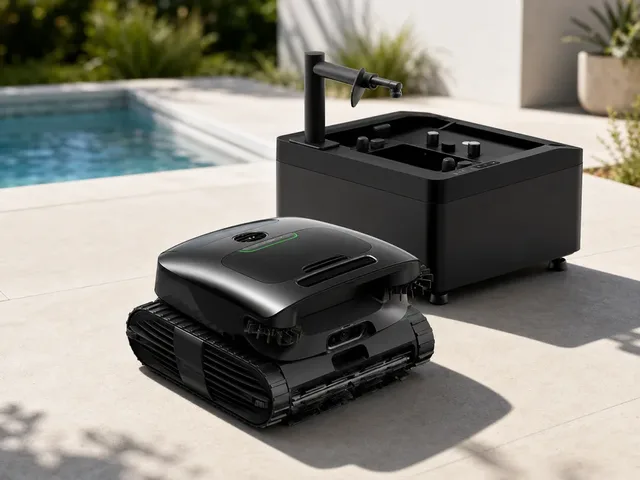
Beatbot's AquaSense X is a cordless robotic pool cleaner paired with the AstroRinse self-cleaning docking station, making it the first robotic pool cleaner that cleans its own filter automatically. After each cycle the robot docks, a rotating spray arm rinses the 5-liter internal filter basket, push rods extract debris into a 22-liter collection bin, and the station seals back up in about three minutes — the bin holds up to 3,000 leaves and may need emptying only every two months. The robot uses HybridSense AI Vision backed by 29 sensors (AI camera, infrared array, ultrasonic) to map the pool, recognize over 40 debris types, and adapt cleaning paths in real time. Eleven brushless motors deliver 6,800 GPH suction with 150-micron filtration, and a 13,400 mAh battery provides up to 10 hours of surface cleaning or 5 hours of floor/wall cleaning per charge. Seven cleaning modes cover floors, walls, waterline, elevated platforms, and the water surface, with dual 1,500-lux LED lights enabling night operation. The AstroRinse station handles 88W wireless charging (roughly 4.5 hours to full) and is weather-resistant with UV-resistant and corrosion-proof construction. CES 2026 Innovation Awards Honoree. Commercial intent is clear, but delivery timing should be validated.
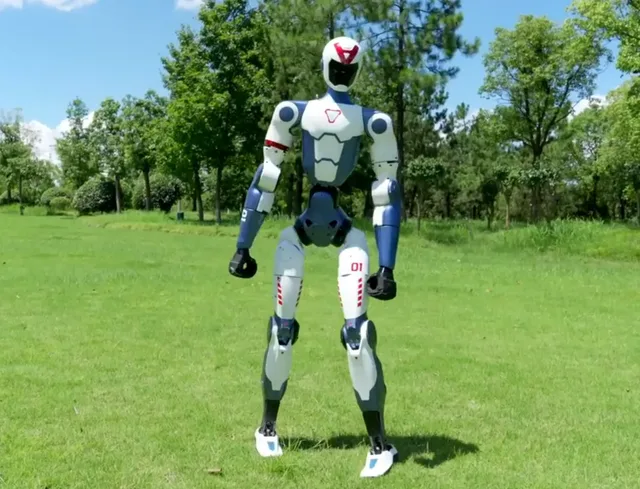
Unitree's most affordable humanoid robot, standing 1.23 meters tall and weighing about 29 kg. The R1 is built around agile bipedal locomotion — it can run, do cartwheels, handstands, and recover from pushes — rather than heavy manipulation. Available in three tiers: the stripped-down R1 Air (20 DOF, ~27 kg, $4,900), the standard R1 (26 DOF, ~29 kg, $5,900), and the R1 EDU with optional dexterous hands, head tracking, and an NVIDIA Jetson Orin module for AI workloads. Runs Unitree's UnifoLM multimodal language model locally for voice and image interaction. Aimed at researchers, educators, hobbyists, and early consumer adopters priced out of the $16,000+ G1. Commercial intent is clear, but delivery timing should be validated.

AiMOGA Robotics' full-size general-purpose humanoid, developed as a Chery Automobile subsidiary and now offered directly to consumers via JD.com. The Mornine M1 stands 168cm tall, weighs 70kg, and has 40 degrees of freedom in its body (excluding dexterous hands). It features 3D LiDAR, dual depth cameras, and ultrasonic radar sensing for autonomous navigation with ±5cm accuracy and dynamic obstacle avoidance. The robot can perform dual-hand collaborative tasks such as autonomously opening car doors, and supports VR-based remote operation. It is the first humanoid robot to achieve full EU CE certification covering both hardware (CE-MD, CE-RED) and software (EN 18031), verified by TÜV Rheinland. Over 300 units have already been deployed across more than 30 countries in automotive dealerships, retail, and public-service settings. AiMOGA's roadmap targets eventual expansion into household use. Commercial intent is clear, but delivery timing should be validated.

Joobie is Hugbibi's pocket-sized AI pet companion, positioned as a bag-friendly outdoor pal rather than a chore robot. Official Hugbibi pages list a 0.25 kg weight and describe a small companion that reacts to head and belly touch, playful pokes, ambient sounds, music, voice commands, walking, being picked up or lifted, and sudden jolts or falls. Hugbibi also describes an app that shows Joobie's mood and state, lets owners record memories and outfits, and uses an "MBTI for Pets" personality system so each unit develops different reactions over time. PledgeBox's public Kickstarter tracker corroborates the campaign identity and successful April-May 2026 funding, while Hugbibi has not yet published detailed battery, compute, dimensions, or retail-pricing specs. Commercial intent is clear, but delivery timing should be validated.
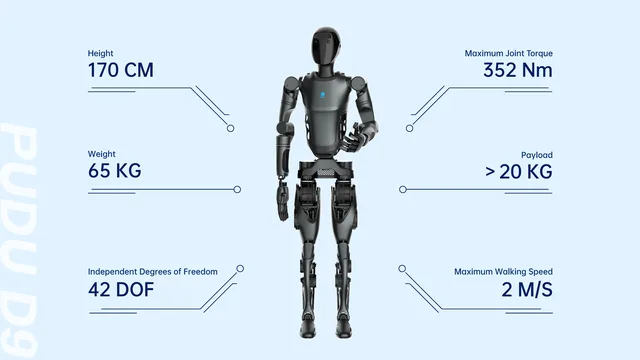
PUDU D9 is Pudu Robotics' first full-sized bipedal humanoid robot. Pudu's official launch page says the D9 is in pre-sale, while current product and 2026 development pages route buyers through contact-sales flows and note that some example features depend on sales-contract terms. The company positions D9 for commercially viable embodied-intelligence use cases such as logistics and operational assistance across service environments. Official Pudu sources currently vary by iteration: the product page lists a 65 kg platform weight, while an April 2026 ongoing-development update lists 58 kg for the latest iteration. Commercial intent is clear, but delivery timing should be validated.
RUMI is a small bipedal companion robot from Beijing Luvbotics, also known as Yueban Power, released as the company's L0-series home companion. It is designed for emotional presence rather than household chores, combining a skin-like silicone exterior, expressive animated eyes, tactile sensing, a 360-degree microphone array, five camera groups, and behavior generation shaped by touch, voice tone, emotion, and personality state. Official materials list indoor autonomous movement, outdoor following, automatic return-to-charge, OTA support, a 65 cm standing height, 12 kg weight, 21 degrees of freedom, and 3 hours of battery life; launch coverage also emphasizes long-term memory and personality evolution as core parts of the companion experience. Commercial intent is clear, but delivery timing should be validated.
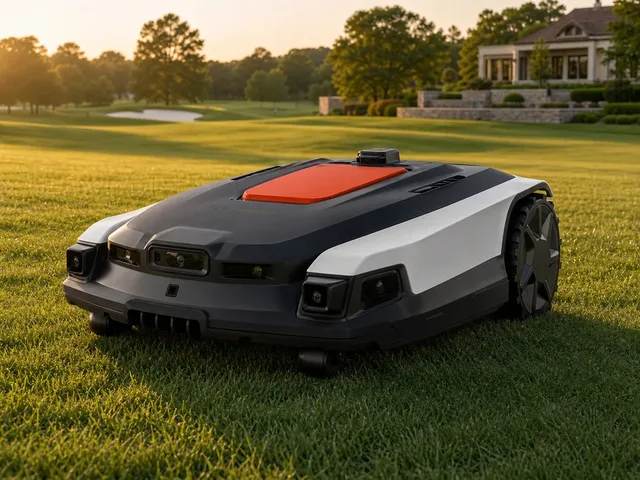
The Sunseeker Elite X9 is Sunseeker's new commercial-grade robotic lawn mower for large estates, sports facilities, and other professional green spaces. Announced during CES 2026 week, it expands Sunseeker beyond residential mowing into larger-scale autonomous turf care. Official launch materials say the base X9 can cover up to 12,000 m² within 48 hours using the company's AONavi 2.0 stack, which combines nRTK and VSLAM 2.0 for wire-free positioning. Sunseeker also highlights a 16-sensor OmniSight perception system, EdgeZero zero-distance cutting, AWD ATC Pro drive hardware, fleet management for multi-mower deployments, and faster PioneerVolt charging. Public pricing was not disclosed at launch. Commercial intent is clear, but delivery timing should be validated.
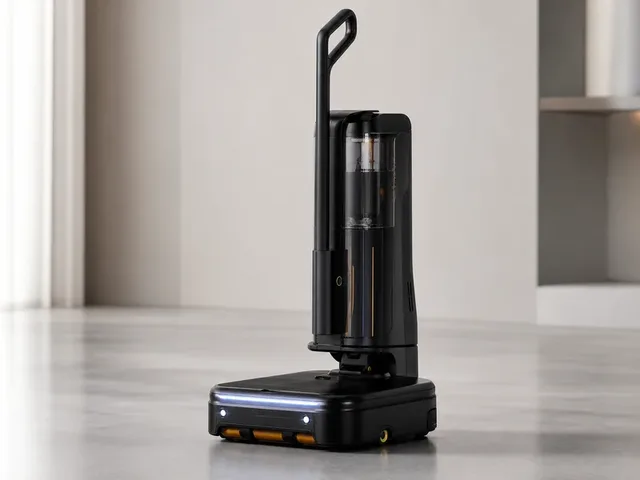
xLean's TR1 is a dual-form floor-cleaning robot that transforms from an autonomous robot into a handheld floor washer in about one second. Official xLean materials position it as a category-shifting cleaner for both routine autonomous runs and sudden wet-and-dry messes, combining a 17,000 Pa Dual-Motor DirectSuction system, dual 400-RPM rollers with up to 800 self-cleans per minute, and a Smart OMNI Station that separates waste and automates post-cleaning maintenance. xLean also emphasizes a self-evolving embodied-AI stack that uses reinforcement learning from human feedback during handheld use, alongside 360° LiDAR, an RGB-D camera, and targeted "Hunting Mode" mess detection. The robot was shown at IFA 2025, formally announced for CES 2026, and is currently being promoted through xLean's official site and Kickstarter campaign. Commercial intent is clear, but delivery timing should be validated.
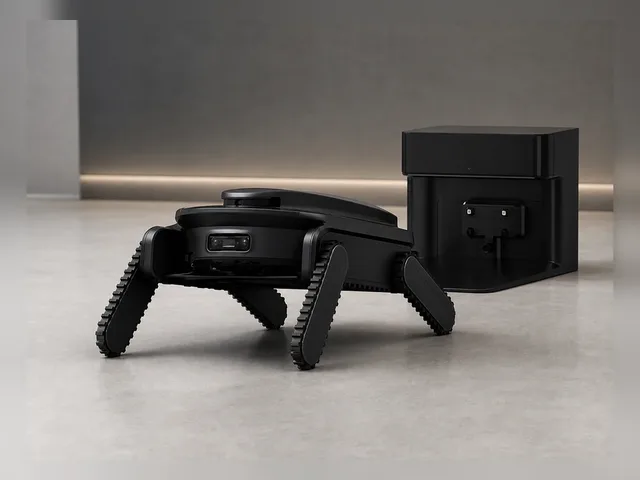
Cyber X is Dreame's stair-climbing transport and cleaning module for compatible X60 Pro Series robot vacuums. Dreame describes it as a bionic quad-track stair-climbing robot vacuum system that carries the vacuum between floors, handles straight, L-shaped, spiral, open-riser, and carpeted stairs, and cleans stair steps while descending. The module has its own 3D ToF vision, independent computing platform, 6,400 mAh battery, rubber track system, triple brake system, rear dual-brush cleaning module, and 6,000 Pa suction, making it a notable multi-level home-cleaning robot accessory rather than a conventional floor-only robot vacuum. Useful for roadmap scanning, not yet a clean near-term shortlist.
OLLOBOT's OlloNi is a cyber-pet companion robot that deliberately avoids mimicking biological forms, instead introducing a novel rounded body with a stretchable neck, expressive 8-inch screen eyes, and a glowing heart-shaped memory core. Designed to live in the home like a pet — nearby, responsive, and emotionally present — it uses cameras and facial recognition to sense emotions, captures photos and videos, and builds a growing memory of family routines and interactions. OlloNi features six emotional engines that develop its personality over time, responding with pixel-based expressions rather than speech. The company intentionally limits its intelligence to pet-level rather than smart-assistant-level, following the philosophy that companionship comes from emotional balance. Two variants are offered: the L1 with a 5-axis telescoping neck (up to 120 cm tall, 19 kg) and the more compact S1 with a 2-axis neck (65 cm tall, 17 kg). Both include autonomous docking, navigation, fall detection, and touch sensors. Unveiled at CES 2026 in Las Vegas. Useful for roadmap scanning, not yet a clean near-term shortlist.
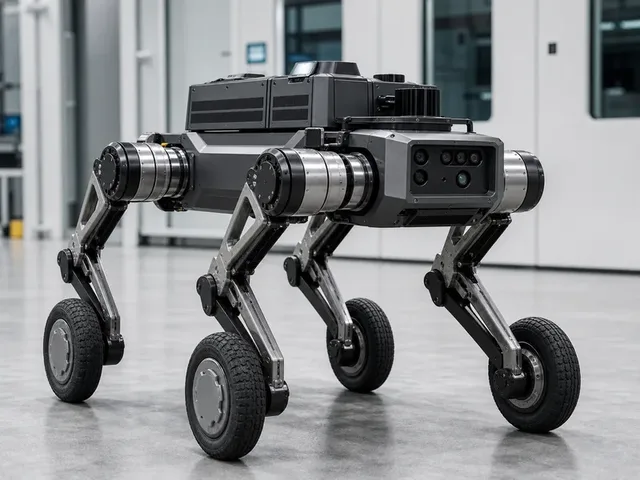
AGIBOT's D2 Max is a next-generation flagship quadruped unveiled at the company's 2026 Partner Conference. AGIBOT describes it as an all-terrain Level 3 autonomous quadruped intended to move beyond remote-controlled patrol robots into higher-autonomy field operation. The company positions D2 Max for mission-critical security patrol, industrial inspection, emergency rescue, logistics, agriculture, and education deployments, while independent launch coverage corroborated the announcement and the focus on autonomous operation across complex terrain. Useful for roadmap scanning, not yet a clean near-term shortlist.
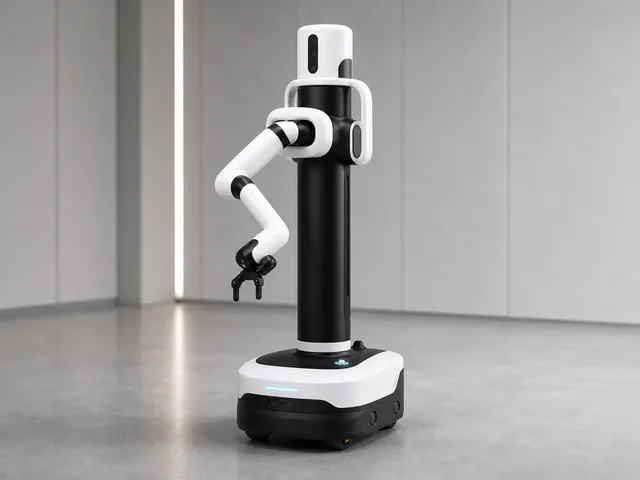
AGIBOT G2 Air is a compact single-arm mobile manipulator unveiled with the company's 2026 Partner Conference hardware lineup. It is designed for light-duty human-in-the-loop collaboration in retail, hospitality, logistics, and structured industrial workflows. AGIBOT's launch materials specify a 7-DOF arm, 3 kg payload, 750-800 mm reach, sub-800 mm width, speeds of at least 1.5 m/s, zero-radius turning, real-time task/data capture during operation, and an upgrade path from assisted operation toward fuller autonomy. Useful for roadmap scanning, not yet a clean near-term shortlist.
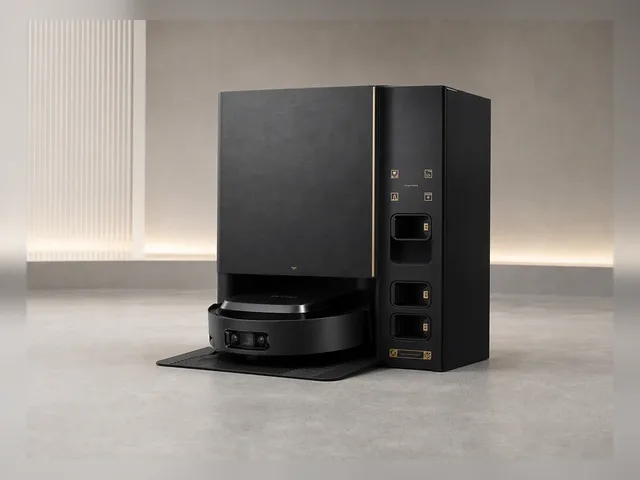
Dreame's Cyber10 Ultra is an announced robot vacuum built around the CyberDex Bionic Ecosystem. Official Dreame CES and newsroom pages describe a bionic robotic arm that handles items up to 1.1 lb / 500 g, clears obstacles from the cleaning path, and autonomously uses dock-stored cleaning tools. Dreame's IFA newsroom says the Hyper-Flex arm has four joints, five degrees of freedom, extends 33 cm from the vacuum edge, and can use brushes or vacuum nozzles with a 40 cm reach for gaps, baseboards, and crevices. Navigation is described through TriSight obstacle identification, binocular 3D mapping, arm-mounted RGB and infrared cameras, side laser sensors, and Dreame's Astro Vision AI. Independent CES coverage from Vacuum Wars and Tom's Guide corroborated the working demo and reported that final pricing and availability were not yet officially announced. Useful for roadmap scanning, not yet a clean near-term shortlist.
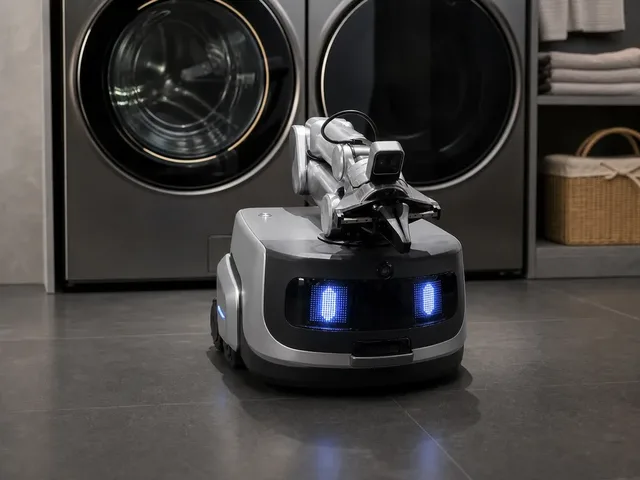
Dreame's Z1 Laundry Robot is an announced laundry-handling home robot shown during the DREAME NEXT Living Next showcase in San Francisco. Dreame's official newsroom and Dreame-sourced PRNewswire release describe the Z1 as using a multi-joint robotic arm, multimodal sensing, and proprietary AI perception to autonomously pick up, wash, dry, and retrieve clothing without human intervention. Dreame has not yet published detailed specifications, pricing, or retail availability, so this entry is limited to the capabilities the company has disclosed. Useful for roadmap scanning, not yet a clean near-term shortlist.
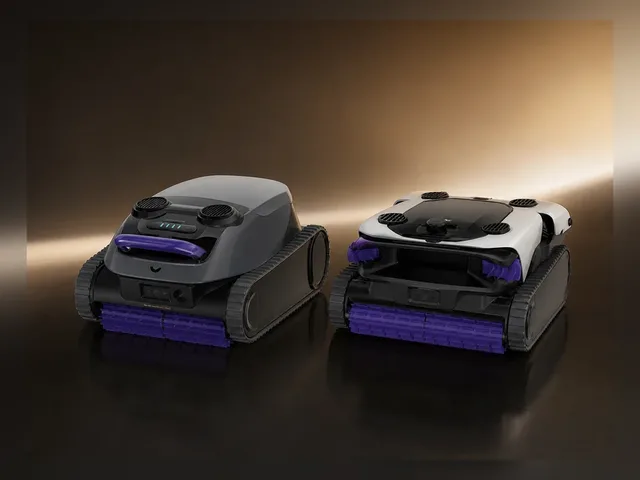
Dreame's Zircon 2 Pro is an announced robotic pool cleaner shown at the Dreame NEXT Silicon Valley launch event. The key idea is a more hands-free pool-cleaning workflow: when paired with the optional B2 Pro Automatic Charging Station, Dreame says the robot can start from the app, clean, return, dock, and recharge without the usual drop-in, retrieval, and manual charging steps. Dreame's launch release lists 8,000 GPH suction, up to 4 hours of runtime per charge, and PoolSense 2.0 navigation with 12 high-precision sensors for pool mapping and adaptive multi-pattern path planning. Independent event coverage from Appliance Retailer corroborated the B2 Pro dock concept and Dreame's focus on reducing manual handling. Dreame has not yet published a full live retail product page, price, dimensions, or shipping window, so this entry is limited to the launch facts currently available. Useful for roadmap scanning, not yet a clean near-term shortlist.
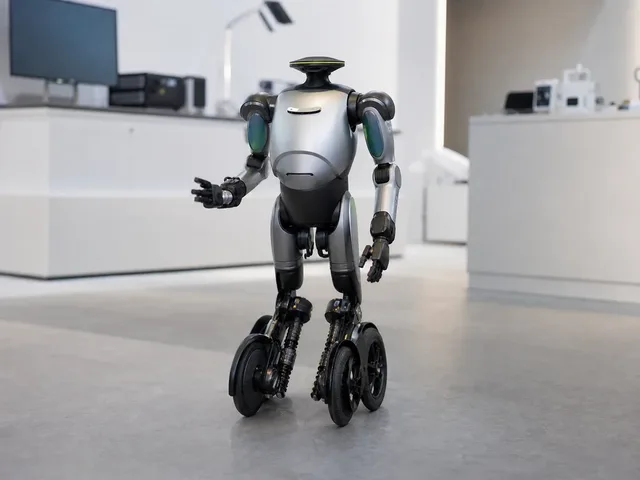
GoMate is GAC Group's third-generation embodied AI humanoid robot, unveiled in late 2024 as the automaker expanded beyond vehicles into service robotics. Multiple reports tied to the launch describe a full-size variable wheel-leg platform with 38 degrees of freedom that can shift between a lower, four-wheel energy-saving posture and a taller upright working posture. GAC says the robot is aimed first at security patrol, elderly-care support, inspection, and automotive service scenarios rather than general home chores, with pilot deployments planned ahead of small-batch production. Public launch reporting also credits GoMate with GAC's in-house vision-based autonomy stack and an all-solid-state battery system rated for up to six hours of operation. Useful for roadmap scanning, not yet a clean near-term shortlist.
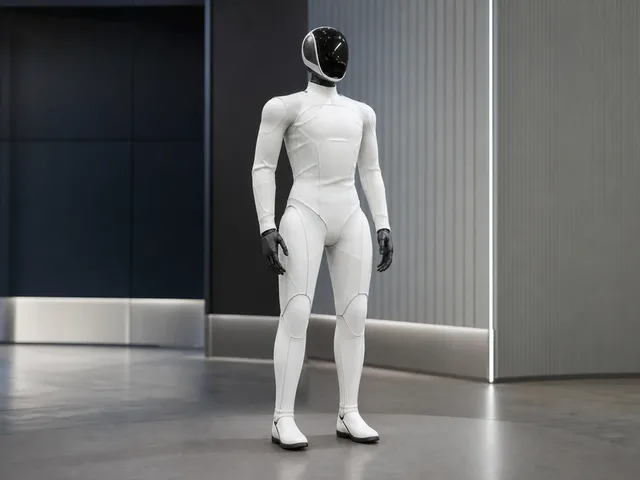
KAI, also presented by Kinetix AI under its KaiBot product page, is a full-size humanoid robot unveiled at the company's 2026 GIFTED launch event. Official Kinetix AI materials list KaiBot as a 2026 product, while independent launch coverage describes a 173 cm, 70 kg humanoid with 115 total degrees of freedom, 36 degrees of freedom per hand, full-body tactile skin with 18,000 sensing points, a 1.7 kWh semi-solid-state battery, and up to 20 kg of reported carrying capacity. Kinetix AI positions the platform around a world-model stack that predicts and evaluates action trajectories before movement, with announced use cases spanning household assistance, retail and concierge service, light product handling, and dexterous everyday manipulation rather than heavy industrial deployment. Public ordering, final pricing, shipping regions, and a production configuration have not been announced. Useful for roadmap scanning, not yet a clean near-term shortlist.
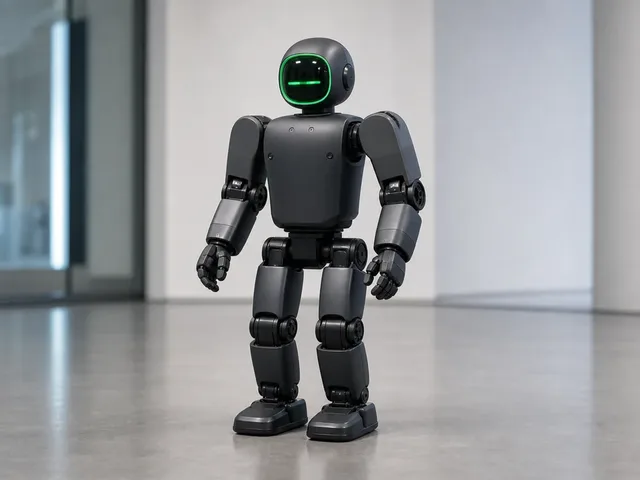
LUMOS NIX is a compact humanoid/developer robot platform being distributed through Lumos Robotics' Project EDGE — LUMOS NIX 100 Co-Creation Program. The official program targets universities, robotics labs, open-source builders, embodied-AI researchers, startups, and creative technology teams, with selected partners receiving NIX units for research, education, development, and creative exploration. Lumos lists an RK3588 onboard compute platform with about 6 TOPS of NPU compute for real-time inference, state estimation, motion scheduling, and safety monitoring; Lumos P60 high-speed actuators rated for 160 RPM peak rotational speed at 48 V and 102 N·m peak joint torque; Ethernet expansion; and C++/Python SDKs. RoboActu independently describes NIX as an 89 cm, 20 kg, 21-DOF compact humanoid, but the official Project EDGE page does not yet publish full physical specs, battery data, retail availability, or a standard purchase price. Useful for roadmap scanning, not yet a clean near-term shortlist.
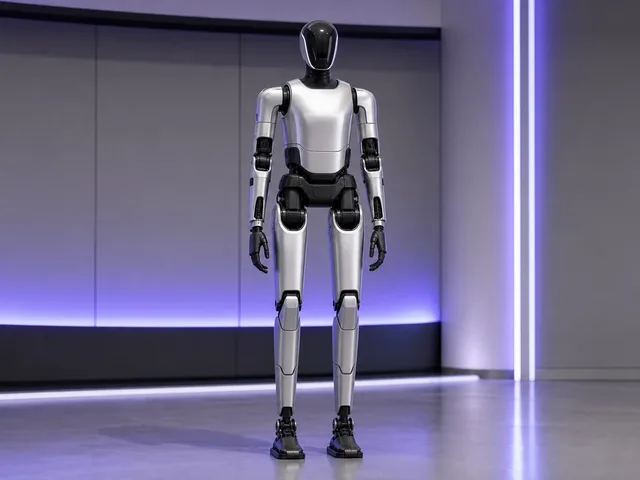
MagicBot X1 is MagicLab's next-generation flagship humanoid robot, unveiled at the company's Global Embodied Intelligence Summit in Silicon Valley alongside the Magic-Mix world model and H01 dexterous hand. MagicLab's company-issued launch release identifies X1 as a humanoid designed for real-world application integration, while Global Times coverage citing MagicLab materials reports a 180 cm, 70 kg platform with 31 active degrees of freedom, 450 N·m maximum joint torque, faster overall motion than MagicBot Gen1, and a dual-battery system intended for continuous operation. MagicLab describes standard and research editions, with the research edition aimed at universities, laboratories, developers, and industry partners that need lower-level secondary development and configurable hardware/software options; public pricing, shipping regions, and detailed sensor or compute specifications have not been disclosed. Useful for roadmap scanning, not yet a clean near-term shortlist.
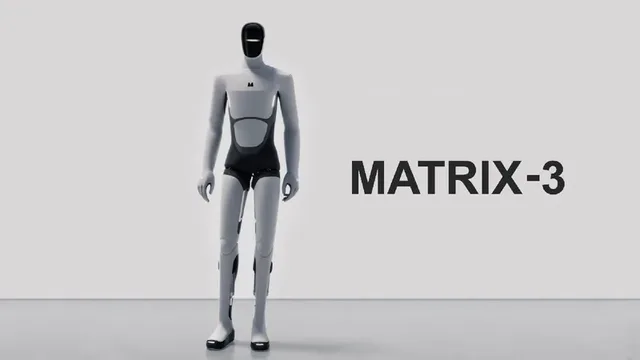
MATRIX-3 is the third-generation flagship humanoid from Matrix Robotics, launched January 10, 2026. It introduces three core innovations: 3D woven biomimetic skin with distributed tactile sensors capable of detecting forces as low as 0.1 N, 27-DOF cable-driven dexterous hands (the "Intuitive Hand") that closely mirror human anatomy for tool use and delicate manipulation, and a proprietary cognitive core enabling zero-shot generalization — the ability to perform unfamiliar tasks from natural-language instructions without task-specific training. Full-body motion is powered by proprietary linear actuators and trained on human motion-capture datasets for natural gait. Matrix Robotics targets commercial services, manufacturing, logistics, medical assistance, and eventually home environments. An Early Access Program for industry partners is open, with pilot deployments expected to begin in mid-2026. Height, weight, battery life, and pricing have not been officially disclosed. The CGI-heavy launch presentation attracted some industry skepticism about whether physical capabilities match the marketing. Useful for roadmap scanning, not yet a clean near-term shortlist.
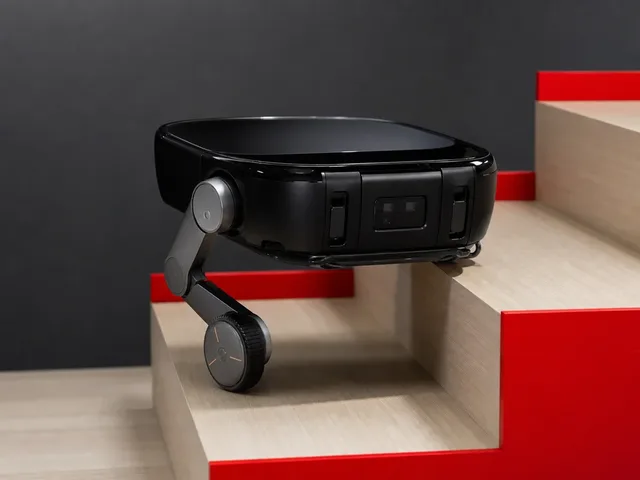
Roborock's Saros Rover is a development-stage robot vacuum unveiled at CES 2026 with a two-wheel-leg architecture designed to climb and clean stairs instead of stopping at them. Roborock says the independently controlled wheel-legs can raise and lower to keep the body level on changing terrain, handle slopes and complex thresholds, and even perform small jumps and agile direction changes. The company positions it as a multi-storey home cleaner, but has not yet announced final retail specifications, pricing, or a launch date. Useful for roadmap scanning, not yet a clean near-term shortlist.
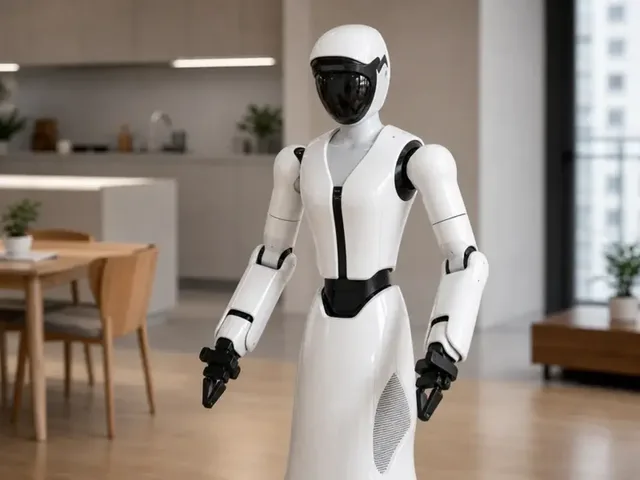
Shiguang S1 is a household-focused humanoid/general-purpose robot launched in Wuhan's Optics Valley on May 20, 2026 by Hubei Jijia Vision Robot Technology with local humanoid-robot industry partners. Official Wuhan and Optics Valley coverage says S1 demonstrated home tasks such as heating food, handling dishes, cooking, folding laundry, clearing a table, and chatting with older adults. The company says the robot is intended to understand household goals through its embodied-intelligence model, plan action paths without fixed factory-style programs, and keep improving in real home environments. A 100-unit cooperation order will put the first robots into Guanggu talent apartments from late May for scenario testing before seed-user trials in Wuhan homes. Useful for roadmap scanning, not yet a clean near-term shortlist.
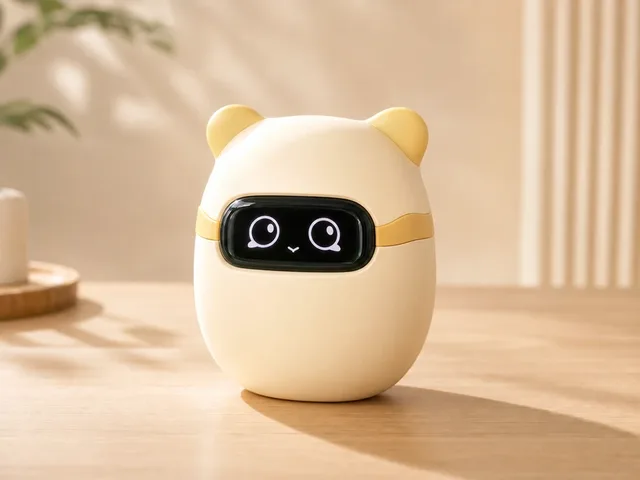
Sweekar is a palm-sized AI companion pet unveiled at CES 2026 by Shenzhen-based startup Takway AI. Billed as the world's first emotionally intelligent, physically growing AI pet, it combines a Tamagotchi-style nurturing loop with real robotic hardware. Sweekar evolves through four life stages — Egg, Baby, Teen, and Adult — driven by an XP-based care system where feeding, cleaning, and talking earn experience. The device simulates body warmth and gentle breathing rhythms for a lifelike feel, and its AI personality develops uniquely per user via MBTI-based behavioral modeling, Gemini Flash, and ChatGPT-class language models. At adulthood (Level 51+), Sweekar becomes self-sufficient, continuing to explore and learn autonomously while the user is away. At just 89 g, it is designed for everyday pocket portability with offline basic-care support. Useful for roadmap scanning, not yet a clean near-term shortlist.
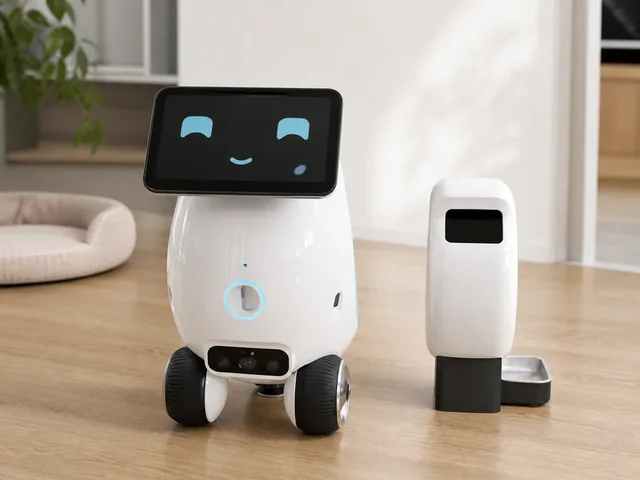
Aura is Tuya Smart's AI-powered pet companion robot, unveiled at CES 2026 as the company's first dedicated home robot for cats and dogs. Official materials position it as a mobile pet-care companion rather than just a feeder or camera, combining emotion analysis, interactive play, treat dispensing, pet-focused voice interaction, and autonomous home roaming. Tuya says Aura can interpret pet mood from behavior and sound cues, generate photo and video highlights, and return to a combined feeding-and-charging dock automatically. As of mid-April 2026, Tuya has not announced pricing or a consumer ship date. Useful for roadmap scanning, not yet a clean near-term shortlist.
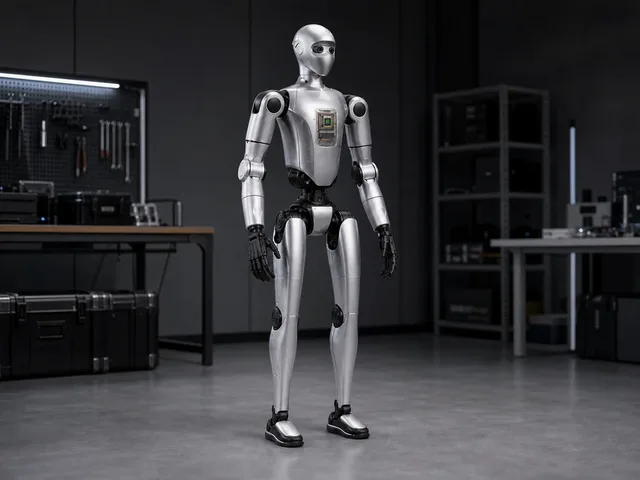
H2 Plus is Unitree Robotics' NVIDIA Isaac GR00T reference humanoid for academic and frontier physical-AI research. It packages the full-size Unitree H2 chassis with dual Sharpa Wave tactile five-finger hands, NVIDIA Jetson AGX Thor T5000 onboard compute, multi-view sensing, Isaac GR00T software workflows, and remote emergency stop into a validated platform for robot bring-up, data capture, simulation, policy evaluation, and real-world skill development. Unitree's product page lists a 182 cm, about 70 kg body with 31 joint-motor degrees of freedom, while the added dexterous hands bring the reference design to 75 total body-and-hand degrees of freedom. Pricing has not been disclosed, and availability is planned for late 2026. Useful for roadmap scanning, not yet a clean near-term shortlist.
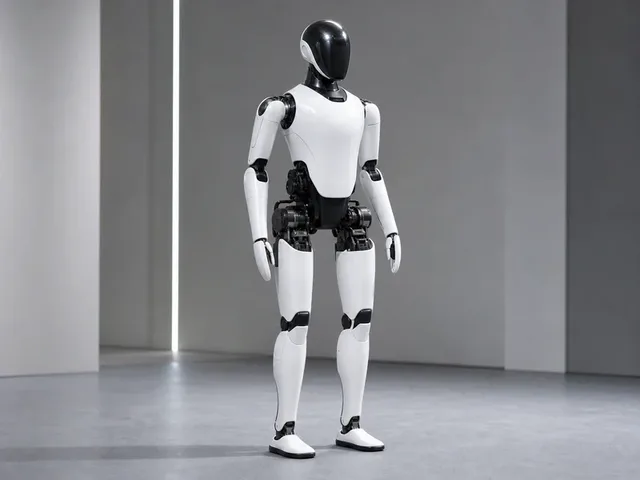
Xiaomi's humanoid robot prototype unveiled in August 2022. Capable of emotion recognition and bipedal locomotion. Currently a research/demo platform, not commercially available. Useful for roadmap scanning, not yet a clean near-term shortlist.

XPENG's humanoid robot, unveiled at the company's AI Day in November 2024 and updated as Next-Gen IRON at XPENG AI Day in November 2025. Built by Chinese EV maker XPENG Motors, IRON shares XPENG's physical-AI stack with its vehicles and uses a humanoid spine, bionic muscles, flexible skin, all-solid-state batteries, and bipedal locomotion. The current generation is described with 82 body degrees of freedom, 22-DoF 1:1-size hands, three Turing AI chips delivering 3,000 TOPS, and XPENG's first-generation physical-world large model. XPENG says IRON has entered factory training and targets large-scale production of high-level humanoid robots by the end of 2026, first for commercial scenarios such as guided tours, shopping guides, and industrial inspection. Useful for roadmap scanning, not yet a clean near-term shortlist.
Z01 is Zoomlion's bipedal humanoid robot for industrial collaboration, smart guiding, scientific research, and educational interaction. Zoomlion publicly showed the robot at HANNOVER MESSE 2026, where it performed factory inspection and material inventory tasks using the Robot Claw industrial driver, then featured it again at KOMATEK 2026 in Istanbul with Tai Chi, dance, and human-robot interaction demonstrations. The company frames Z01 as part of a broader embodied-AI program run with ZValley, including Robot Ops for data collection, model training, simulation validation, deployment, task orchestration, and multi-robot collaboration with logistics mobile robots. Zoomlion says its embodied-AI prototypes have been validated in real industrial environments at Zoomlion Smart City, but detailed Z01 hardware specifications, production timing, pricing, and customer availability have not been disclosed. Useful for roadmap scanning, not yet a clean near-term shortlist.
Tianshu and Tianji are ZUOWEI Technology's paired humanoid care robots for elderly-care environments, globally launched in Guilin on June 25, 2026. ZUOWEI presents the two robots as a coordinated system: Tianshu acts as the decision-making and scene-coordination hub, while Tianji handles bedside assistance and daily interaction. Official launch materials describe cross-device coordination with existing care equipment, physical assistance for scenarios such as bathing, toileting, mobility support, feeding, pressure-injury prevention, and cognitive engagement, plus emotional companionship, dialect recognition, emotion sensing, 24/7 safety monitoring, fall-warning workflows, cloud-assisted task planning, compliant force control, and full-body control. ZUOWEI and Chinese business coverage say the robots are moving from launch-stage demonstration into clinical pilot applications with medical and elder-care institutions; public pricing, detailed dimensions, runtime, payload, and sensor specifications have not been disclosed. Useful for roadmap scanning, not yet a clean near-term shortlist.
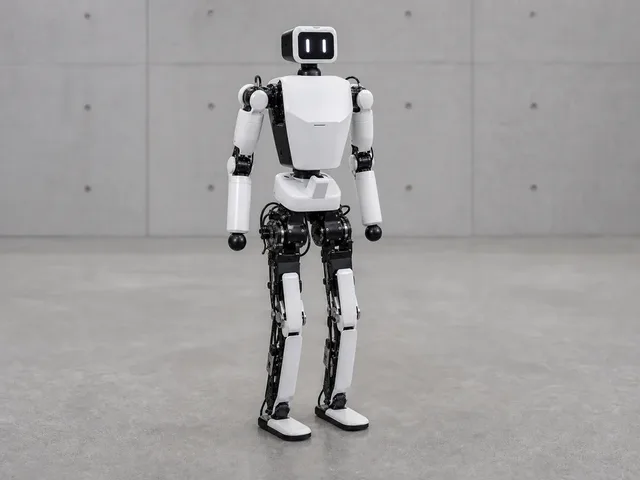
Roboto Origin is RoboParty's full-stack open-source bipedal humanoid prototype for education, research, and developer experimentation. The company says the 1.25 m, 34 kg robot was developed as a reproducible engineering baseline rather than an industrial-grade commercial product, with hardware drawings, electronics, BOM data, training code, deployment code, and engineering notes published through GitHub and the official documentation site. Official materials position it as a lightweight, high-performance open platform: 23 total degrees of freedom, a 48 V 15 Ah battery, an RDK X5 compute module, optional Intel D435i depth camera and E1R LiDAR, and an AMP gait algorithm supporting walking and running up to 3 m/s. Launch coverage in February 2026 reported more than 1,000 GitHub stars and nearly 100 development-kit pre-orders after the January 2026 open-source release, while RoboParty's own disclaimers emphasize that the robot is still early-stage research/development equipment that requires careful technical setup and safety precautions. Best treated as an exploratory lead until field readiness improves.
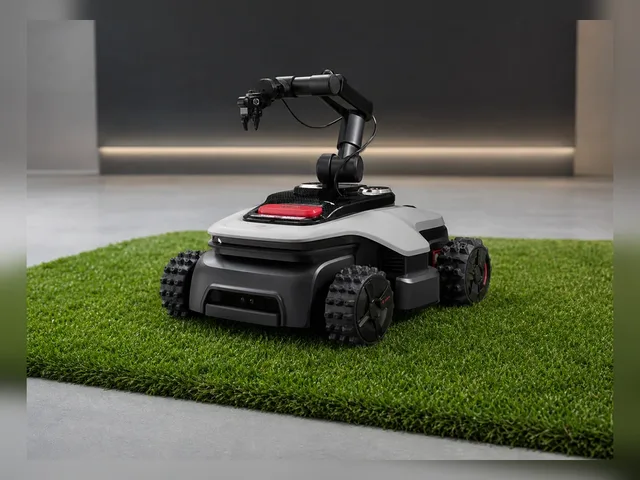
Dreame's Roboticmower APEX is an embodied intelligent yard-robot concept unveiled around Dreame NEXT: Autonomous Outdoors. Unlike a conventional robotic mower, APEX pairs mowing with a multi-function robotic arm and advanced AI so it can explore yard-maintenance tasks such as object tidying, leaf sweeping, tool switching, watering assistance, obstacle pickup, and delicate edge-trimming. Dreame has not published a full product page, spec sheet, price, or release window, so this entry is limited to the prototype capabilities described in Dreame-sourced launch materials and independent coverage. Best treated as an exploratory lead until field readiness improves.
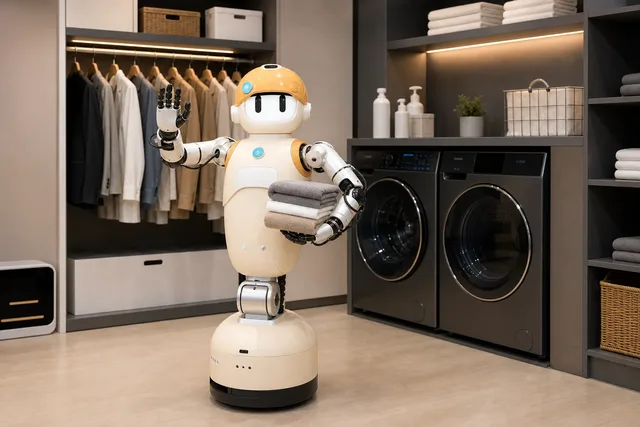
Hisense Savvy (赛维) is a mobile home butler robot unveiled at AWE 2026 in Shanghai. Designed as the central hub of Hisense's "household without housework" concept, Savvy combines a humanoid upper body with a wheeled chassis, allowing it to navigate home environments and physically interact with appliances and objects. It serves as the mobile interface within Hisense's "1+N+X" smart-home architecture, bridging fixed appliances (refrigerators, washing machines, air conditioners, TVs) and the people using them. Powered by Hisense's Xinghai AI model alongside DeepSeek technology, Savvy can coordinate appliance actions — for example, adjusting the air conditioner while fetching a drink from the refrigerator — and perform household tasks such as loading laundry. The robot was demonstrated in a real-scenario exhibit at AWE 2026 alongside two companion robots (Moii and Harley). Best treated as an exploratory lead until field readiness improves.
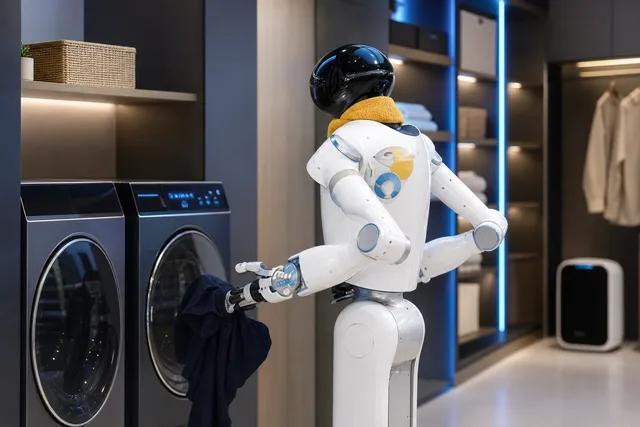
HIVA Haiwa is Haier Smart Home's housework-focused humanoid robot, described in official February 2026 Haier Smart Home materials and later showcased at AWE 2026 as part of the company's broader push toward embodied AI for the home. Official Haier and Xinhua coverage position it as the household 'hand' of Haier's smart-home platform, designed to coordinate with AI Eye 2.0-enabled appliances and help with chores such as moving groceries, sorting food for refrigeration, cleaning, laundry-related tasks, and kitchen assistance. Independent coverage also describes a full-size humanoid form factor with reach from floor level to around 2 meters, underscoring that Haier is targeting real domestic task coverage rather than a simple companion device. Best treated as an exploratory lead until field readiness improves.
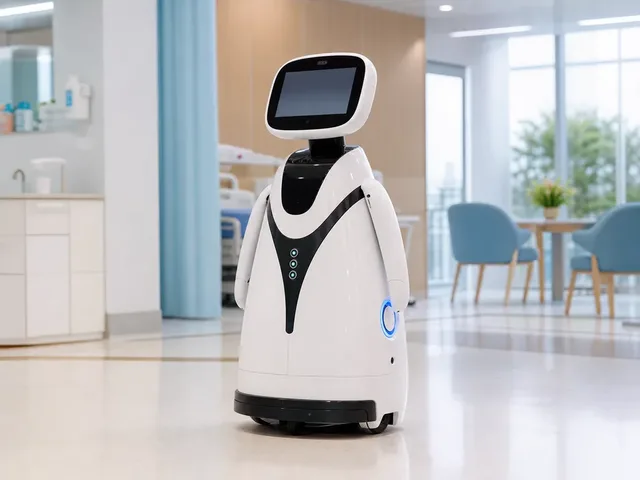
Kangbao (Health Baby) is a 1.2 m companion healthcare robot developed by a research team at the University of Electronic Science and Technology of China for elderly-care pilots in Chengdu. UESTC and Xinhua describe it as a non-contact health-check robot that can measure heart rate, blood pressure, and body temperature in about 30 seconds while also recognizing 13 emotional states. The team says Kangbao processes data locally with on-device inference, maintains electronic health and medication records, and can issue proactive alerts for potential health risks in care-center deployments. Best treated as an exploratory lead until field readiness improves.

LimX Dynamics' full-size interactive humanoid robot for commercial performance, entertainment venues, exhibitions, and other public-facing service scenarios. Luna uses a softer, fabric-wrapped, stage-friendly design rather than the industrial look of earlier LimX platforms. The current official spec lists a 160 cm, 54 kg body, 27 active degrees of freedom, 5 km/h max walking speed, about 4 hours of lab-measured battery life, and a content development kit for video imitation, manual teaching, choreography, smart tasks, and swarm control. Best treated as an exploratory lead until field readiness improves.
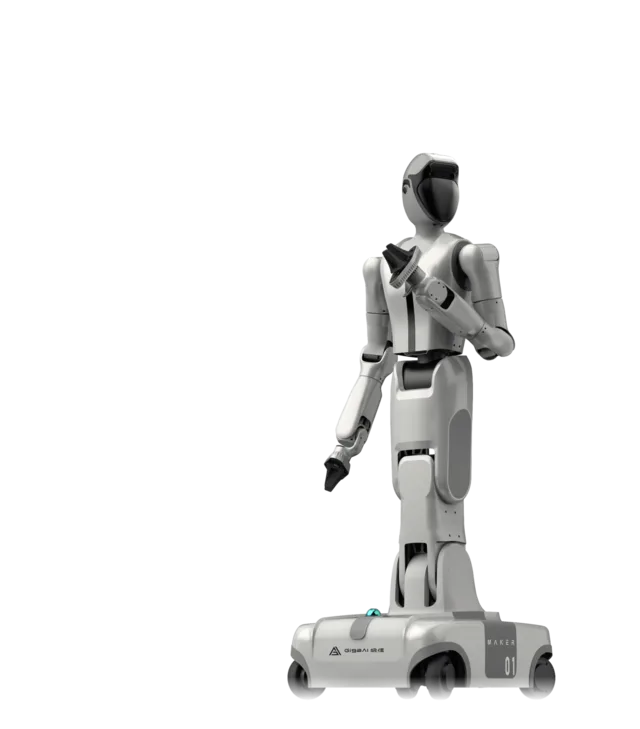
GigaAI Maker H01 is a wheeled dual-arm humanoid platform positioned as an AI-native physical body for service and home scenarios. GigaAI's official product page describes a full-stack self-developed embodied robot with dual arms and a mobile base, flexible-object manipulation, long-horizon task planning, and the ability to break vague instructions into many continuous atomic actions. The same official page frames Maker H01 for household assistance, broader service work, industrial tasks, research, training-data collection, pick-and-place, inspection, reception, lab assistance, meal-preparation workflows, shelf organization, and goods handling. Humanoid.Guide corroborates the Maker H01 identity as a wheeled GigaAI humanoid prototype and reports dual 7-DOF arms, 28 total degrees of freedom, 160 cm height, 64 kg weight, 4-hour runtime, 8 km/h maximum speed, and home/service/light-logistics target markets. Separate May 2026 coverage uses the SeeLight S1 name for a GigaAI home-butler pilot; public sources do not yet establish whether that is the same platform name or a sibling, so this entry avoids applying SeeLight S1 pricing or rollout details to Maker H01. Best treated as an exploratory lead until field readiness improves.
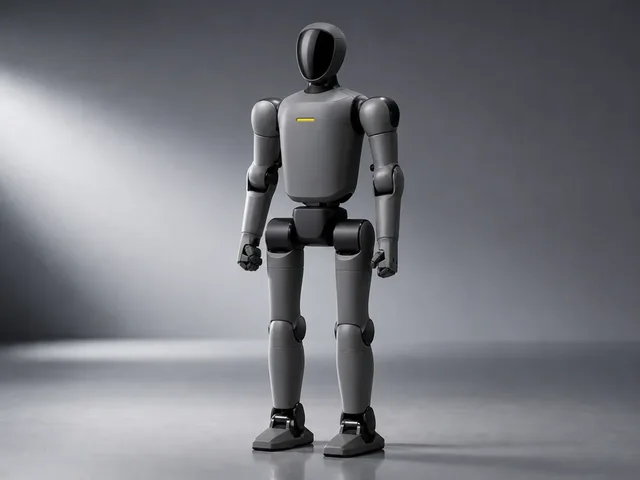
Prime Q1 is PrimeBot's compact personal humanoid robot and developer-focused tech companion, introduced on Chinese platforms on December 31, 2025 and shown globally with the Prime series at CES 2026. Official PrimeBot materials describe the Q1 as the world's smallest full-body force-controlled humanoid robot, aimed at developers, educators, research use, and family companionship. The official product page highlights a small high-torque QDD joint for extreme movements, a fully open SDK/HDK, inner and outer customization, and intimate interaction, while PrimeBot's CES launch release adds modular components, optional 3D-printed shells, expressive full-body motion, emotionally responsive interaction, and deep behavioral customization. Independent CES coverage and an award release corroborated the Q1's compact force-controlled humanoid positioning, but PrimeBot has not yet published core physical specifications, battery data, pricing, or a general retail purchase channel. Best treated as an exploratory lead until field readiness improves.
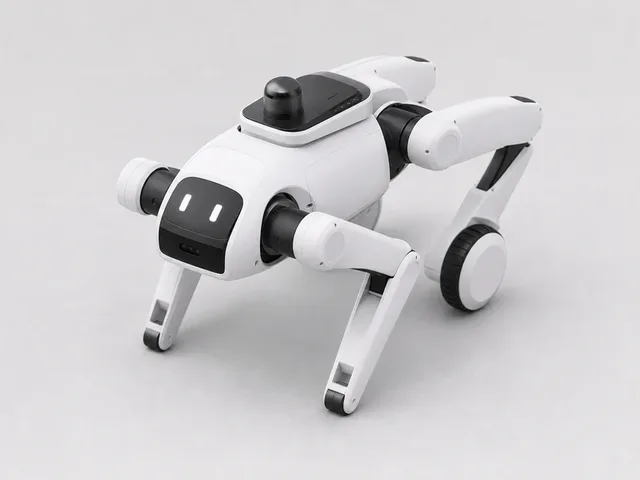
Prime T1 is PrimeBot's consumer-focused personal robot, unveiled at CES 2026 as part of the Prime series. Official launch materials describe it as a transformable robot that shifts between a wheeled humanoid mode for indoor movement and a bionic quadruped mode for stairs, slopes, and other uneven terrain. PrimeBot positions the T1 around everyday household use with cinematic motion control, intelligent visual tracking, multimodal interaction, contextual awareness, and long-term memory. Independent CES coverage also described follow-shot filming, remote control, and family-oriented companion roles such as tutoring and light home monitoring. Best treated as an exploratory lead until field readiness improves.
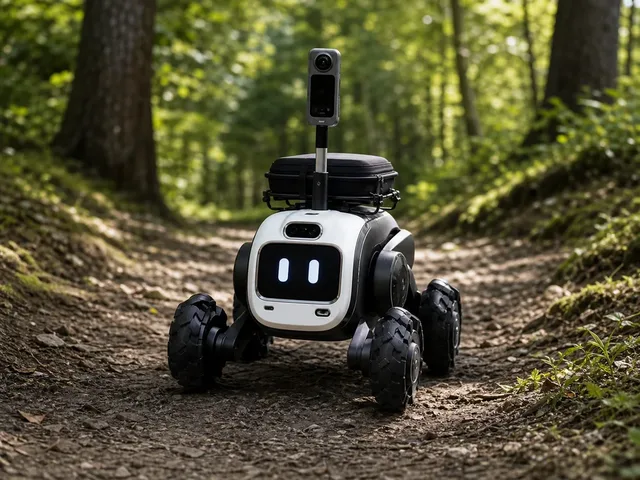
ROVAR X3 is Sentigent Technology's outdoor companion robot, presented on the company's official site as the world's first Outdoor DuoRover companion robot. Sentigent says it is designed for real-world outdoor use with multimodal adaptive following, active perception, social navigation, and adaptive motion control, with official use cases including daily walks, home yard and park activities, camping, and road trips. The robot was publicly shown at CES 2026, and Sentigent's own copy frames it as an early product moving from concept toward reality rather than a broadly available retail device. Best treated as an exploratory lead until field readiness improves.
Sudo R1 is Sudo AI's self-developed embodied manipulation research system for object picking. Public launch materials describe integrated robot hardware and software powered by a manipulation-centric foundation model trained on simulation data alone, with no real-world demonstrations or manual labeling used for the reported evaluation. Sudo and corroborating launch coverage report a 60-minute uncut test across unseen rigid, deformable, transparent, reflective, and irregular objects, with roughly 98% first-attempt pick success, near-total success within two attempts, and observation-conditioned closed-loop control running at 15-25 Hz. Sudo has not announced public pricing, a product configuration, or commercial shipment terms. Best treated as an exploratory lead until field readiness improves.
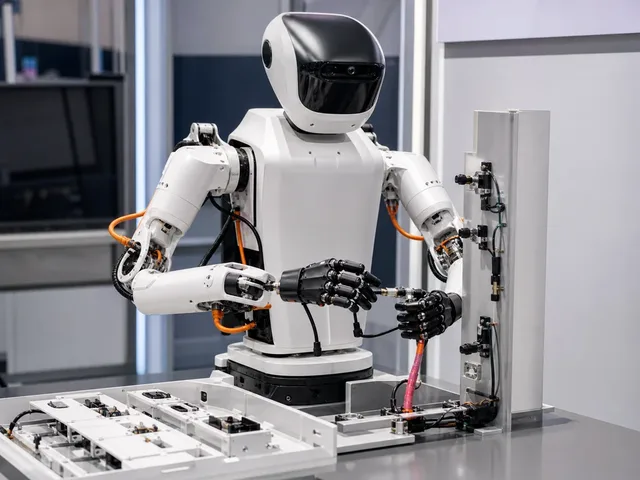
A1 is TARS Robotics' embodied-AI manipulation robot platform for industrial precision automation research and public demonstrations. TARS' June 2026 ICRA release says A1 was shown with the 21-DoF DexHand and AWE 3.0 foundation model performing multi-step backpack packing and sub-millimeter wire-harness insertion with live error correction and re-planning. Pandaily separately reported that A1 completed 105 valid sub-millimeter wire-harness assemblies in one hour for a Guinness World Records title in March 2026. TARS positions the platform around real industrial environments, but public hardware dimensions, battery specs, payload ratings, and sale terms have not been disclosed. Best treated as an exploratory lead until field readiness improves.
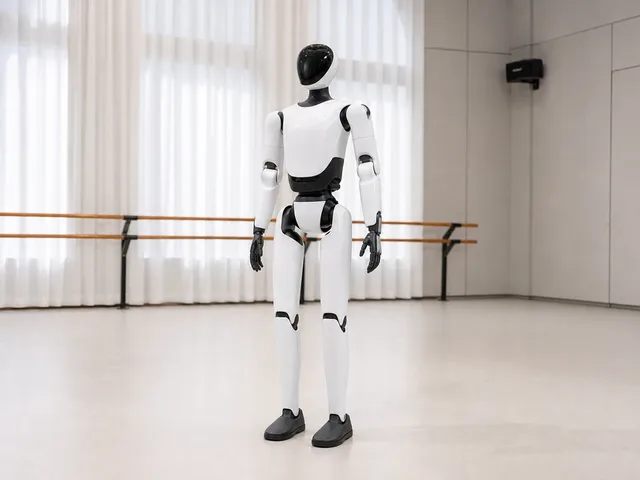
Walker C1 is UBTECH's new-generation full-size commercial service humanoid robot, first shown publicly in May 2026 through an official UBTECH demonstration for ChainExpo 2026. UBTECH describes the robot as a public-facing humanoid for intelligent service robotics, human-robot interaction, and expressive whole-body motion; the launch video showed Walker C1 performing waltz and ballet routines with human dancers. Detailed C1 specifications, pricing, and commercial availability have not been officially published yet, so this entry tracks only the verified launch identity and demonstrated service-robot positioning. Best treated as an exploratory lead until field readiness improves.
Ranked signals and price structure replace the old sprawling chip walls so the data reads faster on both mobile and desktop.
| # | Name | Usage |
|---|---|---|
| 1 | IMU | 25 · 13% |
| 2 | Not officially disclosed | 14 · 7% |
| 3 | Cliff Sensors | 11 · 6% |
| 4 | 3D LiDAR | 10 · 5% |
| 5 | LiDAR | 10 · 5% |
| 6 | 360° LiDAR | 8 · 4% |
| # | Name | Usage |
|---|---|---|
| 1 | Wi-Fi | 56 · 30% |
| 2 | Bluetooth | 36 · 19% |
| 3 | Not officially disclosed | 19 · 10% |
| 4 | Bluetooth 5.2 | 17 · 9% |
| 5 | Ethernet | 16 · 8% |
| 6 | Wi-Fi 6 | 14 · 7% |
| # | Name | Usage |
|---|---|---|
| 1 | Bipedal Walking | 16 · 8% |
| 2 | Autonomous Navigation | 13 · 7% |
| 3 | Object Manipulation | 7 · 4% |
| 4 | Voice Interaction | 7 · 4% |
| 5 | Cordless robotic pool cleaning | 6 · 3% |
| 6 | Multi-Floor Mapping | 6 · 3% |
USD only: 72 priced of 189 total · 16 priced in other currencies (excluded) · 101 without a recorded numeric price
| # | Name | Share |
|---|---|---|
| 1 | Available | 71 · 38% |
| 2 | Active | 65 · 34% |
| 3 | Development | 21 · 11% |
| 4 | Pre-order | 19 · 10% |
| 5 | Prototype | 13 · 7% |
Use peer routes to widen discovery only when they genuinely add more depth or a different market shape.
Decision lens
Use peer routes to add meaningful category overlap, more manufacturer breadth, or different published currency coverage. If the current route already answers those questions, wider browsing usually adds noise faster than it adds signal.
Catalog rank
#1
Share of tracked robots
46%
Avg shared categories
6.3
What to watch
Stay here when
You already have enough mature candidates, enough manufacturer depth, and enough price visibility to build a shortlist.
Compare outward when
The route is thin in your target category, clustered around one maker, or clearly skewed toward missing prices.
Best next click
Open the peer that changes the search shape the most — not just the next biggest route by raw robot count.
Peer route
More focused peer set · High category overlap
Common ground: Humanoid, Commercial +6
Open routePeer route
More focused peer set · High category overlap
Common ground: Companions, Research +3
Open routePeer route
More focused peer set · High category overlap
Common ground: Humanoid, Commercial +5
Open routePeer route
More focused peer set · High category overlap
Common ground: Cleaning, Companions +3
Open routeOpen another country route
Need the full directory? Browse all country pages.
This route is a structured view of ui44 dataset entries whose manufacturer headquarters label maps to China. The numbers on the page are generated from the catalog itself, not from outside shipment estimates or broad market-share reports. In practice, that means the route is best used for discovery and shortlisting inside this database: how many manufacturers are represented, how many robots are listed, which categories appear most often, and which lifecycle statuses show up across those records. It is useful because it compresses search time, but it should not be treated as proof that China leads the global robotics market in absolute terms.
Not by itself. A higher count here only indicates stronger representation in the ui44 catalog. It does not automatically prove global production leadership, deployment leadership, or shipment volume across every region. The practical value is relative orientation: if China has more entries than another country route in this catalog, you have a broader internal shortlisting surface to explore before you need outside research. Treat the count as a catalog-depth signal, then validate market importance with model-level evidence, current vendor activity, and real deployment references.
Available listings: 71. Pre-order listings: 19. Active records: 65. Available indicates an ordering listing, not confirmed stock. Pre-order indicates a reservation listing, not immediate delivery. Active status alone does not confirm public purchase availability or deployment. Other statuses do not establish a current purchase listing. Confirm regional access, stock, reservation terms, and delivery with the manufacturer.
Recorded numeric prices by currency: CNY ¥5k–¥198k; EUR €249–€2.6k; GBP £160; USD $125–$1M. 88 of 189 records have a recorded numeric price. Ranges and averages cover only those records and are calculated separately within each currency; no currency conversion or cross-currency affordability ranking is implied. Missing numeric prices do not establish a budget tier or the absence of other pricing terms. Check individual model pricing notes for membership, lease, quote or other terms. Confirm applicable charges and terms with the manufacturer.
Many robotics vendors publish capabilities without publishing a universal list price. Enterprise and service robots often depend on integration scope, software packages, service bundles, deployment country, or support contract terms. For that reason, a missing price should be read as “no numeric price recorded”, not as “cheap,” “premium,” or “not for sale.” Check individual model pricing notes for membership, lease, quote or other terms. Where a quote is needed, request a consistent cost breakdown. Ask each vendor for the same structure — hardware, accessories, onboarding, software, maintenance, and training — so the comparison stays apples to apples.
Yes. The route is useful because it compresses a large amount of catalog coverage into a cleaner planning sequence. Start with category concentration to see where the route is deepest, then use the robot cards to understand maturity and price posture, and then branch into manufacturer pages for documentation depth and product-family context. That path lets a team move from broad market scanning to a more disciplined shortlist without losing the reason each candidate advanced. It is not a substitute for pilots, but it is a strong way to reduce search time before pilots begin.
A practical stack is: (1) robot count share, (2) manufacturer count, (3) category overlap, and (4) price posture. This avoids over-indexing on a single number. A country can have a large catalog footprint and still be narrow in category variety, or it can have strong overlap with China but a much smaller pool of vendors. The peer-country table on this page is built for exactly that question: when is the current route enough, and when does a second country route add real search value? The answer should always be based on overlap and options, not on raw count alone.
Use the manufacturer links as a decision funnel. First, eliminate makers whose categories clearly do not fit your target workflow. Second, prioritize makers with model statuses aligned to your timeline. Third, inspect documentation depth on the manufacturer route: number of tracked robots, link quality, and whether the catalog shows breadth or a single flagship model. Finally, move only the strongest makers into structured outreach. That process turns a long route into a smaller, evidence-backed vendor set instead of an endless browse session.
Open peer-country routes when you need deeper category overlap, more manufacturer options, or a meaningfully different listed price profile. If the current route already covers your target workload with enough mature candidates, widening the search too early can create noise. If the route is strong in one segment but thin in another, or if the strongest candidates are clustered around a single manufacturer, that is a good signal to compare another country route before vendor outreach. The goal is not maximal browsing. The goal is enough market breadth to create a resilient shortlist.
Sensor stacks usually follow task design. Cleaning robots lean on LiDAR, vision, cliff sensing, and proximity systems to manage navigation and obstacle avoidance. Humanoid and quadruped systems tend to add richer perception, force feedback, or balance-oriented sensors. Delivery and patrol robots often mix cameras, positioning, and environmental sensing for wider-area coverage. The ranked signal tables on this route help with pattern detection, but the final evaluation should always ask whether a sensor suite matches your environment: indoor versus outdoor use, lighting conditions, floor changes, obstacle density, and how much autonomy you actually expect on day one.
Most modern robots expose Wi‑Fi and Bluetooth as baseline options, while higher-end systems may add cellular links, more advanced fleet connectivity, or integration-specific interfaces. The important question is not whether a connectivity term appears in the catalog; it is whether that connectivity fits your security policy, latency needs, facility coverage, and support model. For teams in enterprise or regulated environments, network segmentation, update policy, remote diagnostics, and account governance often matter more than the presence of a single radio standard. Treat connectivity labels as a starting filter, then verify integration details directly on the robot page and with the vendor.
Total cost of ownership is usually far larger than base hardware price. A good TCO model includes integration engineering, onboarding, operator training, software fees, consumables, replacement parts, maintenance windows, and downtime risk. For larger deployments, it may also include facility changes, charging infrastructure, support response commitments, or workflow redesign. The value of this route is that it helps you compare the catalog’s listed price posture quickly, but budgeting should never stop there. Normalize every quote into the same cost structure before ranking vendors, especially when some models publish price and others do not.
AI matters most when it improves a task in a way your team can actually verify. In practice, that may mean navigation quality, better object handling, stronger voice interaction, more resilient path planning, or better adaptation to changing environments. Some vendors push more on-device intelligence, while others rely on cloud services for heavier processing. The core buying question is not whether “AI” appears in the marketing copy; it is whether the implementation matches your latency expectations, privacy requirements, connectivity assumptions, and failure handling model. Use AI claims as a hypothesis generator, not as a substitute for proofs during pilot work.
Not necessarily. In this project, the country route is driven by the manufacturer headquarters label used for catalog organization. Manufacturing, integration, and service footprints can span several regions, and those realities do not always map cleanly to a single headquarters country. That means this route is excellent for navigation and initial analysis, but it is not enough for supply-chain, compliance, or local-service decisions. If geography matters for your deployment, verify model-level sourcing, support region, and service coverage directly with the vendor before committing budget.
Low representation is still meaningful. It may signal a narrow route with a small but relevant set of candidates, or it may indicate that the strongest options for your use case live somewhere else in the catalog. In those cases, use the current route for orientation, then widen the shortlist through category pages, manufacturer pages, and peer-country comparisons. The important thing is to keep the original reason for the search intact. A smaller route is not useless; it simply changes how quickly you should branch into the rest of the database.
Revisit at every major decision gate: initial discovery, post-RFI narrowing, and pre-pilot signoff. Country routes are especially useful for spotting newly represented manufacturers, new models, or lifecycle changes that can change the shortlist after the first pass. That cadence helps teams avoid stale screenshots, old notes, or memory-driven assumptions. A route review does not need to be long. It just needs to be consistent enough that the shortlist reflects the current catalog rather than a one-time snapshot taken weeks earlier.
The common mistake is treating country rank as a substitute for fit. A country can look strong by count and still be a poor match for your workload, budget, support constraints, or deployment environment. The better sequence is layered: use the country route for orientation, manufacturer and category routes for narrowing, robot detail pages for proof, and pilot work for final selection. That keeps the process fast without allowing a high-level catalog signal to overpower the operational reality of the deployment.