Category lead
Companions · 38%
The route is deepest in Companions, with Research as the next strongest follow-through.
17 manufacturers and 26 tracked robots, shaped into a country brief that shows where Japan is deepest, how much of the route is actually sourceable, and which maker pages deserve the next serious click.
Catalog rank
#3
Listed Available
6/26
Recorded numeric price
7/26
What matters first
Use the top-line signals here to judge whether this country already gives you enough breadth, price visibility, and vendor depth to build a serious shortlist.
Recorded numeric prices
Multiple currencies (JPY, USD)
Release window
1997–2026
Source coverage
26/26 official links
Category lead
The route is deepest in Companions, with Research as the next strongest follow-through.
Coverage quality
27% with recorded numeric prices and 96% image-backed, which tells you how quickly this route can turn into a shortlist instead of a research backlog.
Maker concentration
AIST contributes the biggest slice of tracked models, so this route is broad enough to compare beyond one flagship.
Open next
Peer routes
Start with the deepest categories and the strongest coverage signals before drilling into individual models.
17
Manufacturers
5
Tracked categories
6
Listed Available
7/26
Models with numeric prices
Category counts, availability mix, and price range reworked for a quicker first pass.
Japan can look dominant in this route simply because it is better represented in the ui44 catalog. Treat the counts as a shortlisting aid, then validate the winners on model pages and vendor material.
26 tracked models, restructured into a shortlist-first flow with featured picks up top and denser rows for the long tail.
Start with the models that are easiest to validate — the ones with live imagery, public pricing, or enough documentation to justify a deeper click. Then use the compact rows below to sweep the rest of the market without turning the page into a wall of oversized cards.
Listed Available
6
Numeric price recorded
7
With imagery
25
Manufacturers
17
How to scan this section
Best first clicks
These models score highest on status order, public detail quality, and image clarity, so they orient the route faster than a purely alphabetical sweep.

Mirumi is a tiny clip-on companion robot from Yukai Engineering designed to create brief, playful moments of eye contact and curiosity in public or at home. Instead of navigating or speaking, it hangs from a bag strap or handle and reacts with shy glances, head turns, spontaneous motions, and touch-triggered responses. Official materials describe an onboard behavior algorithm fed by touch and sound sensing, while launch coverage and retail details confirm an approximately 155 g body, about 8 hours of battery life, and USB-C charging. Japan sales began in April 2026, and the official Japan store currently lists color pre-orders for late-July 2026 delivery. Listed as Available with a recorded price; confirm current ordering and delivery terms.
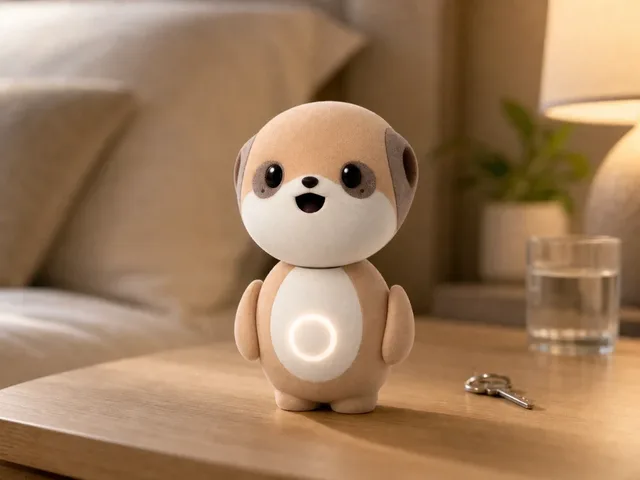
Poketomo is Sharp's pocket-sized companion robot, developed by the team behind RoBoHoN and launched in Japan in November 2025. The palm-sized meerkat-inspired robot uses Sharp's CE-LLM conversational AI to chat naturally, remember prior conversations and outings, recognize scenes with its camera, and express reactions through lights, voice, and four servo-driven head and arm gestures. A linked smartphone app shares memory with the robot and adds diary-style summaries, while built-in weather, news, and alarm features make it more than a novelty desk toy. Listed as Available with a recorded price; confirm current ordering and delivery terms.
Full directory
Sorted by status, then currency code and price within each currency; unlisted prices come last within each status.
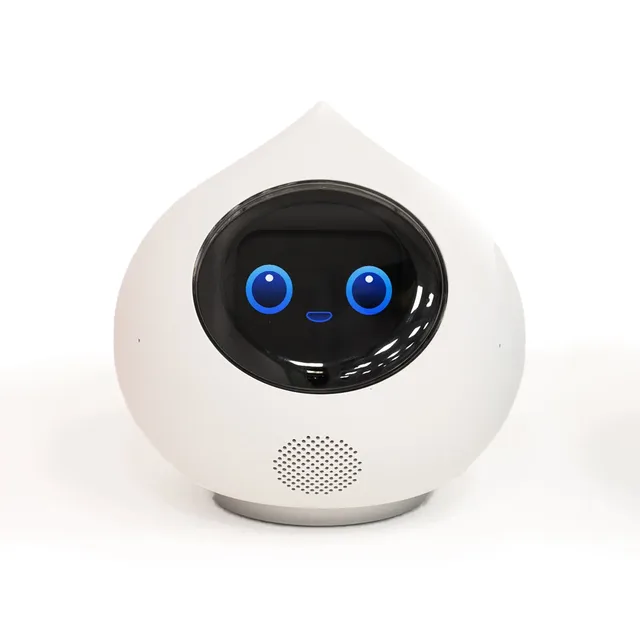
Romi Lacatan is MIXI's newer Japan-market conversational AI companion robot. Official Romi pages describe it as a small tabletop communication robot with AI-generated speech, ChatRomi 1.0 and ChatRomi 2.0 conversation modes, web search, optional visual understanding, long-term memory controls, app-generated diary summaries, face and voice recognition for family members, touch response, expressive eyes, and more than 100 support and entertainment functions. MIXI's July 2025 retail-sale notice says the Lacatan model moved from reservation sales to general sales in Japan on July 25, 2025, and the official store currently lists purchasable color variants. The core trade-off is that Romi is a conversation-first companion, not a mobile chore robot, and normal use depends on Wi-Fi, the Romi app, and an ongoing cloud service plan. Listed as Available with a recorded price; confirm current ordering and delivery terms.
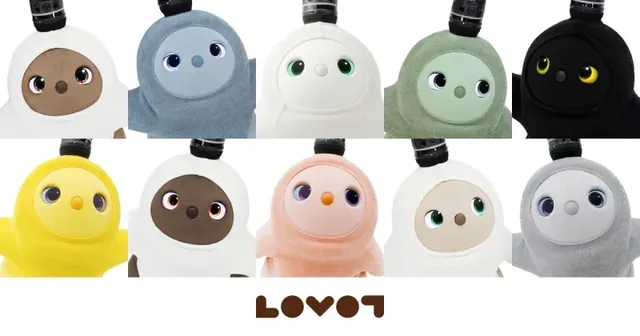
A companion robot from Japanese startup GROOVE X, designed purely to be loved. LOVOT doesn't clean or cook — it exists to make you feel happy. It uses over 50 sensors, deep learning, and a warm body temperature to create lifelike behavior. It recognizes its owner, reacts to touch all over its body, and develops a unique personality over time. The sensor horn on its head houses a 360° camera, thermal camera, and microphone array for room mapping and person detection. Listed as Available with a recorded price; confirm current ordering and delivery terms.

Casio's Moflin is a palm-sized AI companion pet designed for emotional comfort rather than household chores. Official Casio materials say it recognizes voices, responds to touch, and develops one of more than 4 million possible emotional profiles over time, while independent hands-on coverage corroborates its plush guinea-pig-like form, warm body, charging-bed dock, and app-linked mood tracking. The result is a small non-mobile companion robot aimed at stress relief, low-pressure companionship, and pet-like interaction without allergy or care burdens. Listed as Available with a recorded price; confirm current ordering and delivery terms.
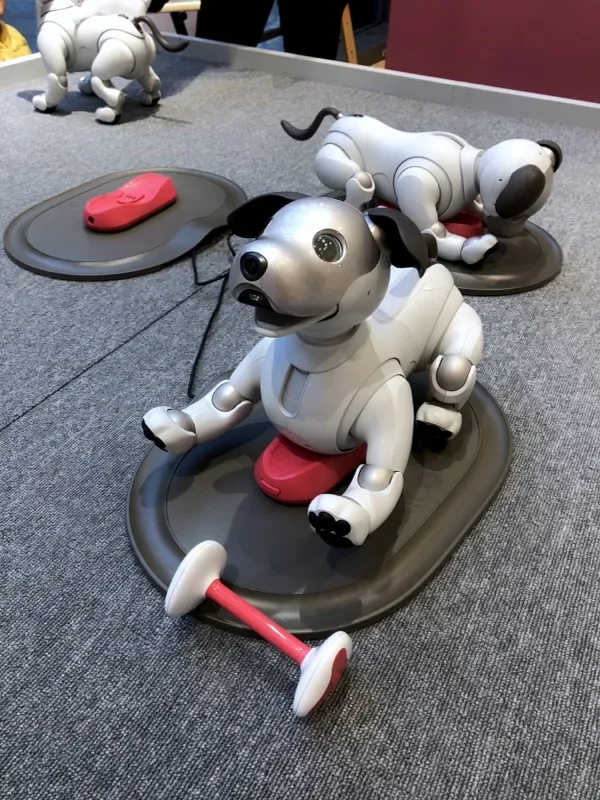
Sony's AI-powered robotic companion dog, the latest generation of the iconic AIBO line first launched in 1999. The ERS-1000 features OLED eyes, 22 axes of movement, and deep learning AI that develops a unique personality over time based on interactions with its owner. aibo recognizes faces, responds to over 100 voice commands, learns tricks, and navigates autonomously back to its charging station. With cameras, ToF sensors, and LTE connectivity, aibo forms emotional bonds and grows more expressive the more you interact with it. Over 27,000 units of previous generations were manufactured; the ERS-1000 launched in Japan in January 2018 and in the US later that year. Listed as Available with a recorded price; confirm current ordering and delivery terms.
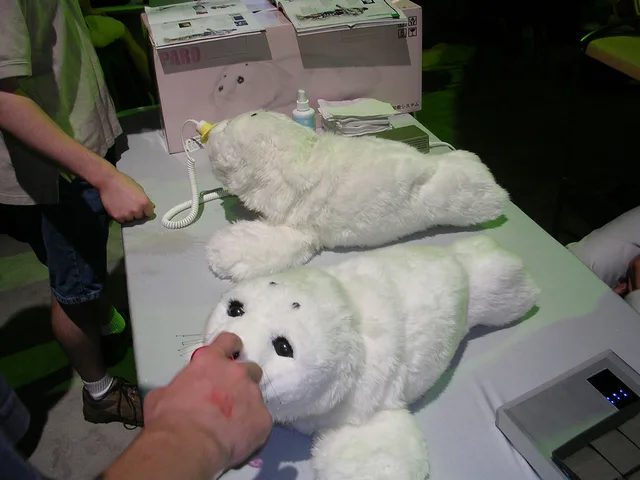
PARO is AIST's therapeutic baby harp-seal robot designed for dementia care and other clinical/social-care settings where live animals are difficult to use. The platform has been iterated over multiple generations and is used in hospitals and elder-care facilities globally. PARO focuses on calming interaction via touch, sound, posture, and light sensing, and responds with movement, vocalization, and learned behavior. Active in the catalog with enough detail to review immediately.
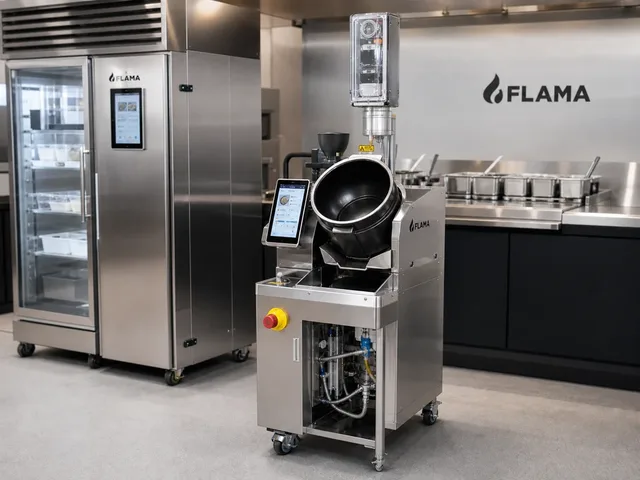
FLAMA is SoftBank Robotics' commercial autonomous cooking robot for restaurants, ready-meal operations, food courts, cafeterias, and other foodservice sites. The Japanese product page and launch release describe a wok-style system that automates ingredient and seasoning input, stir-frying, mixing, thickening, plating, and post-cooking cleaning, while SyncKitchen recipe management lets operators reproduce registered chef or restaurant recipes across locations. SoftBank says the standalone body measures 600 × 790 × 1,640 mm and cooks up to 1.2 kg per unit; the full-set configuration links three FLAMA units with a refrigerator, sauce machine, and conveyor for order-to-plating automation and 3.6 kg total capacity. The company began accepting Japanese applications on April 7, 2026 and announced a U.S. debut at the National Restaurant Association Show 2026. Pricing and detailed sensor specifications have not been publicly disclosed. Active in the catalog with enough detail to review immediately.
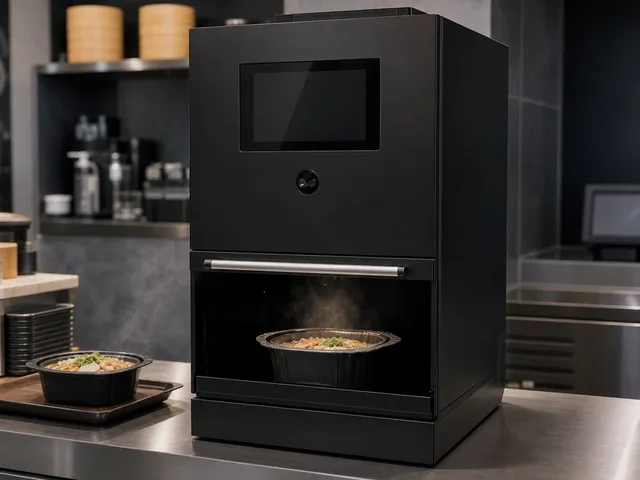
STEAMA is SoftBank Robotics' commercial steam-based cooking robot for restaurants, cafeterias, ready-meal operations, retail food courts, and other foodservice sites. The official product page says STEAMA uses proprietary high-temperature, high-pressure steam to recreate freshly prepared texture and aroma, with frozen noodle dishes such as ramen, pasta, and udon served in about 90 seconds through one-touch operation. SoftBank's May 2026 U.S. debut announcement positions STEAMA alongside FLAMA for operators facing labor, speed, and consistency pressure, and says the system heats noodles and ingredients evenly with steam to produce hot prepared dishes at repeatable quality. Rocking Robots independently corroborated the National Restaurant Association Show 2026 U.S. introduction and the 90-second high-pressure-steam cooking claim. Pricing, dimensions, weight, and detailed control/sensor specifications have not been publicly disclosed. Active in the catalog with enough detail to review immediately.
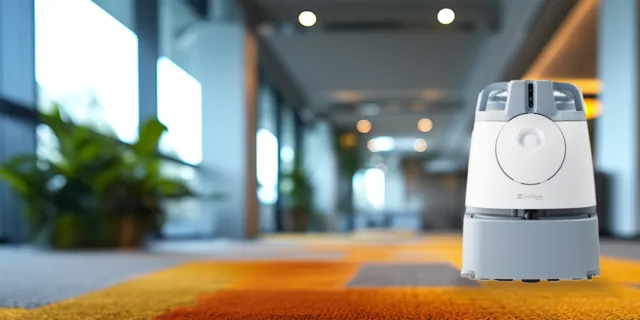
Whiz is SoftBank Robotics' autonomous commercial vacuum robot for carpeted indoor facilities such as hotels, airports, workplaces, universities, healthcare sites, and senior living communities. The system is positioned as a collaborative cleaning robot that follows programmed routes, navigates around obstacles, and reports cleaning performance through connected software. SoftBank states the platform is powered by Brain Corp's BrainOS operating system. In market expansion coverage, The Robot Report documented that Whiz can store up to 600 cleaning routes and cover up to 1,500 m² for about three hours per run on a four-hour battery charge. Whiz is commonly deployed as part of service bundles with deployment/training support and ongoing fleet reporting rather than as a one-time hardware sale. Active in the catalog with enough detail to review immediately.
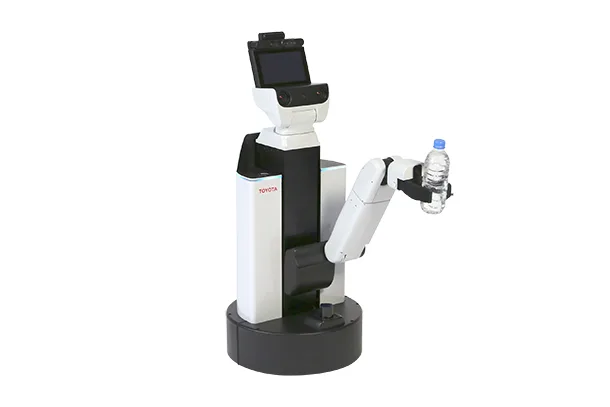
Toyota's compact home-assistance mobile manipulator designed to support independent living for elderly and disabled users. First announced in 2012, HSR uses a cylindrical mobile base and folding arm to pick up items from floors and shelves, and can also be operated remotely by family or caregivers. Active in the catalog with enough detail to review immediately.
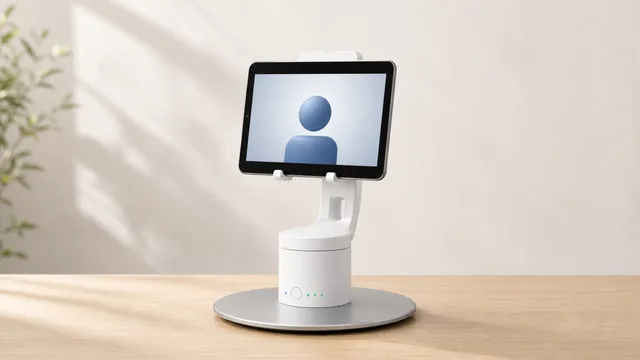
kubi 2.0 is iPresence's Japan-developed desktop AI telepresence robot, reviving the stationary Kubi concept after earlier US production ended. It holds an iPad-class tablet and uses motorized pan and tilt so a remote person or AI agent can turn the screen, nod, shake its head, and maintain a more natural sense of presence than a fixed video-call display. iPresence positions the device for education, healthcare, care facilities, hybrid work, reception, and developer AI-agent integrations; current official materials emphasize pre-order availability, dedicated apps, Bluetooth control, USB-C/AC power, and planned SDK/API extensibility rather than autonomous mobility. Commercial intent is clear, but delivery timing should be validated.
KOIBOT ROLA Series is Reon Robotics' family of lifelike AI companion robots, with ROLA One as an upper-body indoor presence and ROLA Unity as a larger full-body presence for lounges, showrooms, studios, private collections, and brand experience spaces. The platform centers on the Amoria emotional AI system for voice interaction, contextual responses, and memory-oriented conversation, paired with a KOIBOT Smart Head, app-connected setup, Wi-Fi/Bluetooth connectivity, integrated touchscreen interaction, rechargeable lithium-ion power, and hand-finished premium silicone surfaces. The official KOIBOT pages route buyers to a live Kickstarter campaign, with production and quality testing estimated for autumn 2026 and delivery in winter 2026. Commercial intent is clear, but delivery timing should be validated.
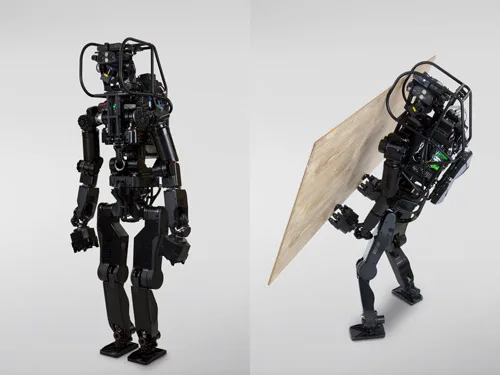
HRP-5P is AIST's large humanoid research platform built for heavy labor in construction-like environments. Announced in 2018, the robot was designed as a practical R&D platform for tasks such as carrying and installing gypsum boards, tool handling, and autonomous operation in spaces made for humans. AIST describes it as targeting assembly work in construction, aircraft facilities, and shipyards where labor shortages and hazardous tasks are common. Best treated as an exploratory lead until field readiness improves.
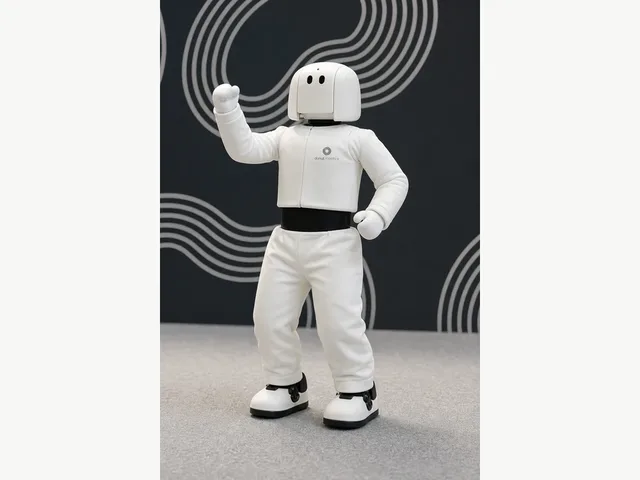
Cinnamon Mini is a compact humanoid that Donut Robotics first unveiled at SusHi Tech Tokyo 2026 as the smaller counterpart to its 170cm Cinnamon 1. Official materials describe the 130cm robot as a lighter, more mobile, lower-cost model focused on reception, guidance, events, staging, dance, and entertainment work rather than factory or construction labor replacement. Donut says Cinnamon Mini uses video-based motion learning instead of conventional motion-capture workflows, but pricing, weight, runtime, payload, sensors, and purchase timing have not been officially disclosed. Best treated as an exploratory lead until field readiness improves.
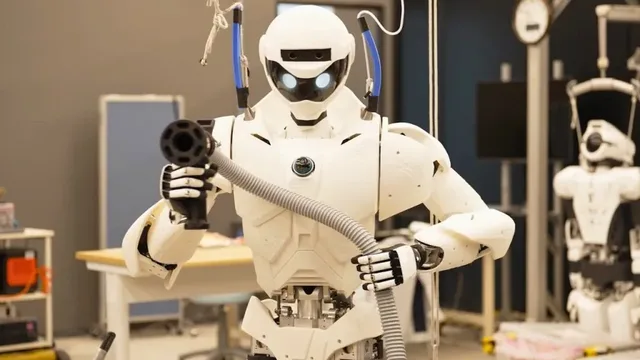
The ninth generation of Kawasaki's RHP Kaleido humanoid robot series, unveiled at iREX 2025 in Tokyo. Built on a decade of bipedal robotics R&D from one of Japan's largest industrial robot manufacturers. Features reinforced waist and leg joints for better stability, LiDAR and stereo cameras for autonomous navigation, and a modular end-effector system for swapping tools. Can be operated autonomously or via VR headset teleoperation. Kawasaki targets factory tasks by 2030 and disaster response by 2050. Best treated as an exploratory lead until field readiness improves.

Cocomo is an AI companion robot from Japanese startup Ludens AI, unveiled at CES 2026. Designed for emotional presence rather than productivity, it follows its owner around the home on a wheeled base and responds to voice and touch. Its warm exterior maintains near-human body temperature (~37 °C / 98.6 °F), rising during close contact such as hugs. Cocomo communicates through hums and non-verbal sounds rather than speech, and features an evolving personality with long-term memory that learns behaviors and preferences over time. The current official Cocomo page lists 8 DOF expressive motion across the head, arms, and body, plus auto-return dock charging with infrared homing. A crowdfunding campaign is planned but no pricing or shipping date has been announced. Best treated as an exploratory lead until field readiness improves.

INU is a compact desktop companion robot from Ludens AI, shown around CES 2026 as a smaller workspace companion alongside Cocomo. Ludens AI describes INU as a Desktop Alien Dog built to bring curiosity and wonder to a desk, using dual expressive displays, multi-sensor awareness, USB-C fast charging, and expressive 4-DOF head/body/tail motion. It is designed for emotional presence rather than household chores, reacting to a user's presence, voice, and touch with playful, spontaneous behaviors. Public pricing, exact dimensions, and a shipping date have not been announced. Best treated as an exploratory lead until field readiness improves.
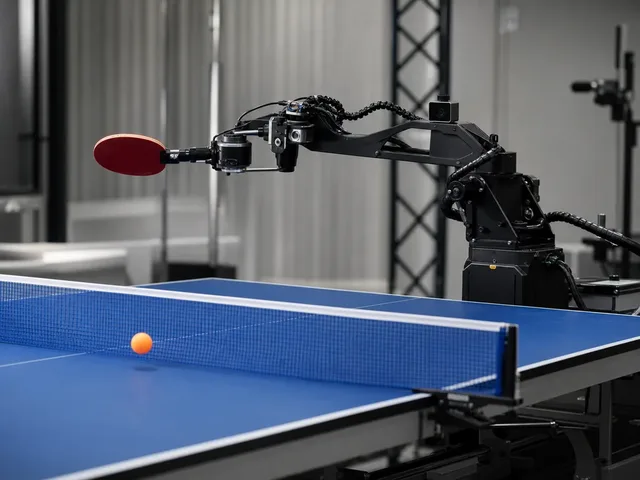
Ace is Sony AI's autonomous table-tennis research robot for studying physical AI in fast, interactive tasks. The system combines event-based vision, high-speed cameras, and reinforcement-learning control to track ball position and spin with millisecond timing, then return shots through an eight-degree-of-freedom racket platform. Sony AI says Ace followed International Table Tennis Federation rules and scored wins against elite players, while the Nature paper describes it as a real-world autonomous system competitive with elite human table-tennis players. It is a research prototype rather than a commercial sports or home robot, but it is notable for pushing real-time perception and agile robot control toward professional-speed human interaction. Best treated as an exploratory lead until field readiness improves.
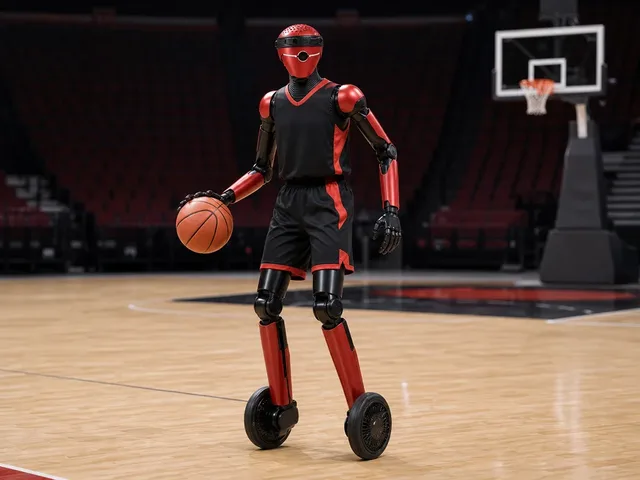
Toyota's seventh-generation CUE basketball humanoid, publicly debuted at an Alvark Tokyo home game in April 2026 and profiled by Toyota Times in May 2026. CUE7 is described as a full model change for the AI basketball robot program: beyond shooting, it can move around the court and dribble with smoother, more human-like motion. The robot is a Toyota research and demonstration platform rather than a commercial product. Best treated as an exploratory lead until field readiness improves.
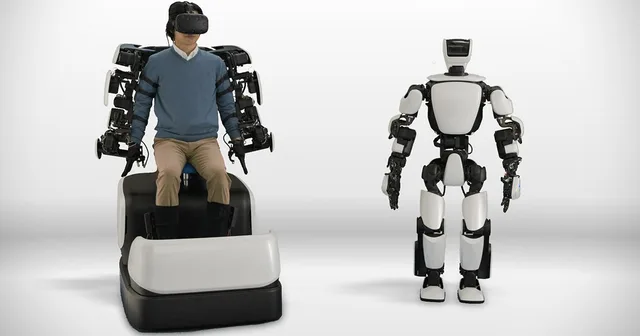
Toyota's third-generation humanoid platform unveiled in 2017. T-HR3 is teleoperated through Toyota's Master Maneuvering System with force feedback for safe interaction in human environments such as homes and medical facilities. Best treated as an exploratory lead until field readiness improves.
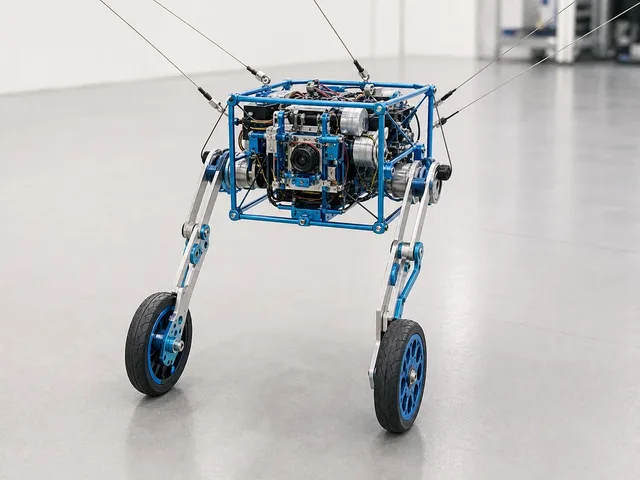
WiXus is a JSK Robotics Laboratory research robot from the University of Tokyo that fuses a two-wheeled-legged base with wire-driven environmental anchoring. The ICRA 2026 project page and paper describe a 180 mm cubic body, two 3-DOF wheeled legs, four environmental anchor wires, and a fifth tool wire, controlled by a Jetson Orin Nano with RGB-D cameras and RTAB-Map SLAM. Demonstrations include wheeled mapping, wire-assisted cliff climbing, a suspended rescue-style manipulation task that repurposes the legs as arms, and using loppers to harvest a mock apple. The paper notes the demonstrations include partial operator input, so WiXus should be treated as an early research prototype rather than a finished autonomous field robot. Best treated as an exploratory lead until field readiness improves.
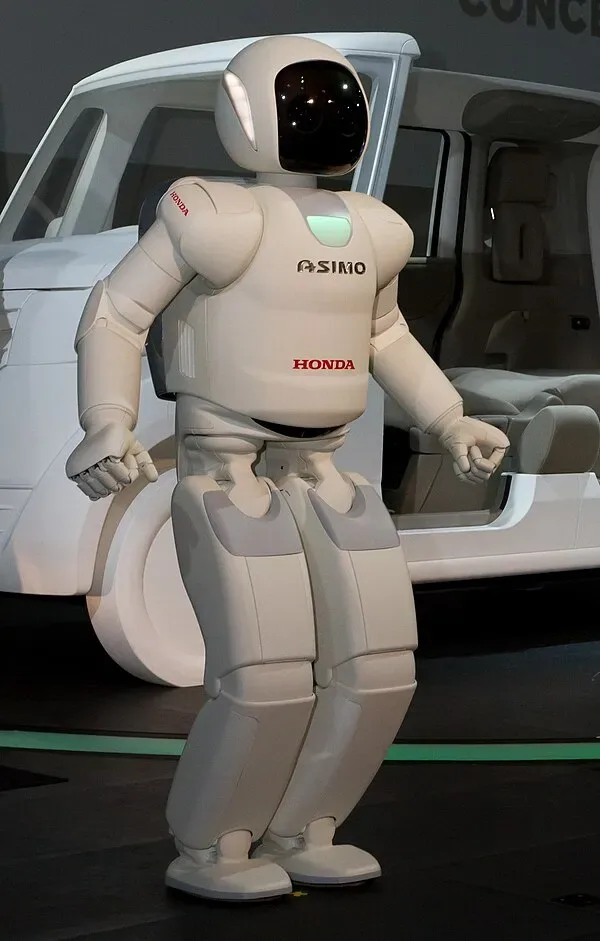
Honda's iconic humanoid robot, developed over two decades starting from the Honda E series (1986) and P series (1993). ASIMO (Advanced Step in Innovative Mobility) was one of the world's most recognizable humanoid robots, capable of walking, running, climbing stairs, recognizing faces/voices, and interacting with humans. The final 2011 model featured 57 degrees of freedom and could run at 9 km/h. Honda retired ASIMO in March 2022 to focus on avatar-style robotic technology. Inducted into the Carnegie Mellon Robot Hall of Fame in 2004. Reference model for historical context and vendor lineage.
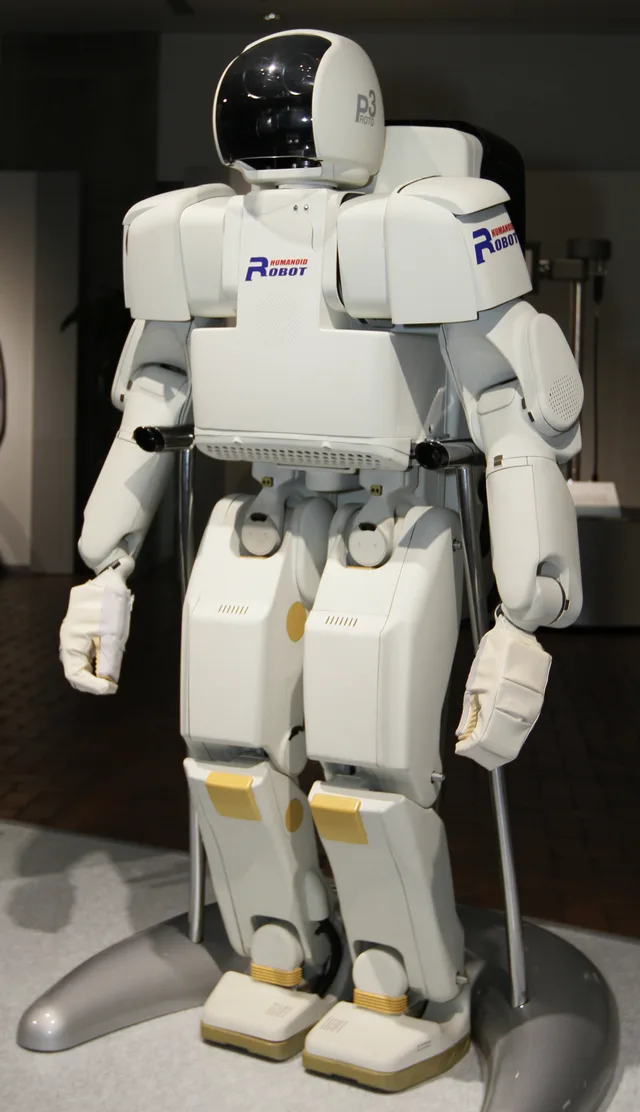
Honda P3 was unveiled in September 1997 as the first completely independent bipedal humanoid in Honda's P-series, preceding ASIMO. Compared with the larger P2, P3 used miniaturized components and a distributed control system to reduce size and weight while maintaining autonomous walking. Reference model for historical context and vendor lineage.
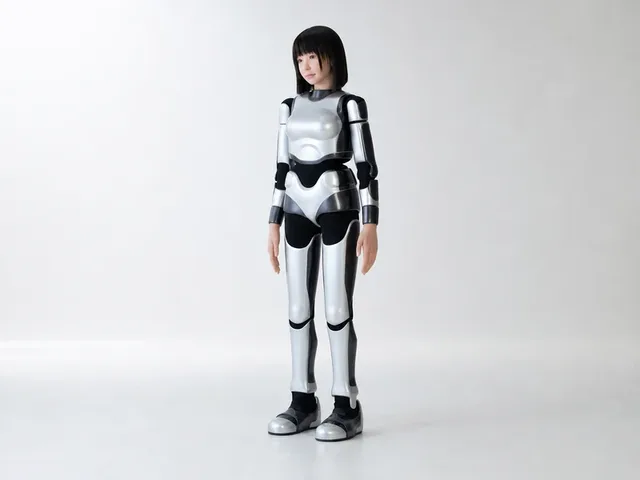
HRP-4C, nicknamed Miim, is a feminine-looking humanoid robot created by Japan's National Institute of Advanced Industrial Science and Technology (AIST). Standing 158cm tall and weighing 43kg (including battery), she was designed with the proportions of an average young Japanese female based on national body dimension data. HRP-4C uses 30 body motors, 8 facial expression motors, and 4 eye motors for a total of 42 degrees of freedom. She can walk bipedally, recognize speech and ambient sounds, and even sing using Yamaha's Vocaloid vocal synthesizer. First demonstrated publicly on March 16, 2009, she was later upgraded with more realistic walking and dancing abilities. Part of Japan's long-running Humanoid Robotics Project (HRP) series, she represented a leap toward human-like appearance and motion in research robotics. Reference model for historical context and vendor lineage.
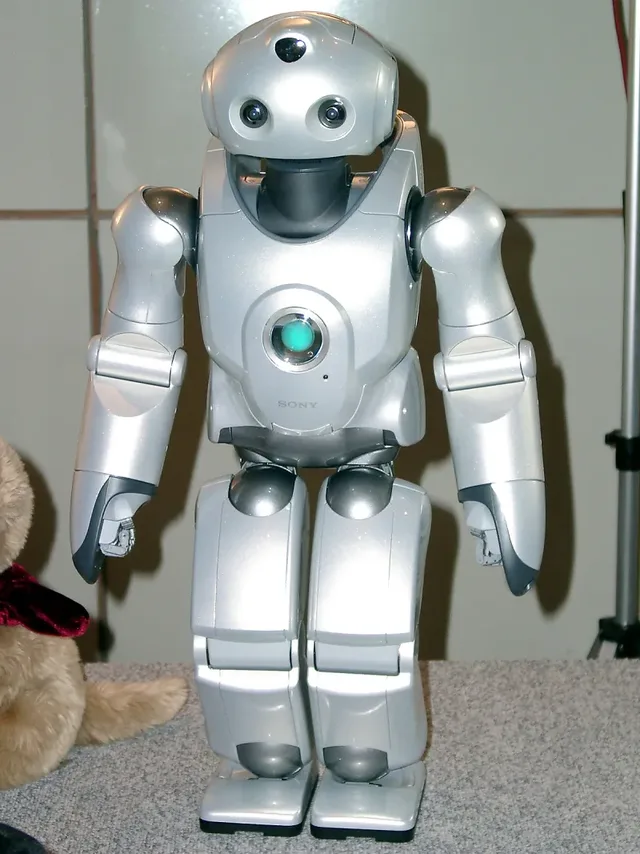
QRIO (Quest for cuRIOsity) was Sony's bipedal humanoid entertainment robot, developed as a follow-up to AIBO and announced from the SDR-4X II prototype platform. Standing 58 cm tall and weighing approximately 7 kg, it was the first bipedal robot capable of running — recognized by Guinness World Records in 2005. It could recognize faces and voices, dance, and interact with people. Sony discontinued development in January 2006. Four QRIO units famously appeared dancing in Beck's 'Hell Yes' music video. Reference model for historical context and vendor lineage.
Ranked signals and price structure replace the old sprawling chip walls so the data reads faster on both mobile and desktop.
| # | Name | Usage |
|---|---|---|
| 1 | Accelerometer / gyroscope sensor | 2 · 8% |
| 2 | Gyroscope | 2 · 8% |
| 3 | Illuminance sensor | 2 · 8% |
| 4 | Microphone | 2 · 8% |
| 5 | Stereo Cameras | 2 · 8% |
| 6 | Touch sensors | 2 · 8% |
| # | Name | Usage |
|---|---|---|
| 1 | Wi-Fi | 7 · 27% |
| 2 | Bluetooth | 3 · 12% |
| 3 | Not publicly detailed | 2 · 8% |
| # | Name | Usage |
|---|---|---|
| 1 | Autonomous Navigation | 5 · 19% |
| 2 | Bipedal Walking | 4 · 15% |
| 3 | Voice recognition | 3 · 12% |
| 4 | Conversational AI companionship | 2 · 8% |
| 5 | Personality Development Over Time | 2 · 8% |
| 6 | Touch response | 2 · 8% |
USD only: 3 priced of 26 total · 4 priced in other currencies (excluded) · 19 without a recorded numeric price
| # | Name | Share |
|---|---|---|
| 1 | Prototype | 9 · 35% |
| 2 | Available | 6 · 23% |
| 3 | Active | 5 · 19% |
| 4 | Discontinued | 4 · 15% |
| 5 | Pre-order | 2 · 8% |
Use peer routes to widen discovery only when they genuinely add more depth or a different market shape.
Decision lens
Use peer routes to add meaningful category overlap, more manufacturer breadth, or different published currency coverage. If the current route already answers those questions, wider browsing usually adds noise faster than it adds signal.
Catalog rank
#3
Share of tracked robots
6%
Avg shared categories
4.3
What to watch
Stay here when
You already have enough mature candidates, enough manufacturer depth, and enough price visibility to build a shortlist.
Compare outward when
The route is thin in your target category, clustered around one maker, or clearly skewed toward missing prices.
Best next click
Open the peer that changes the search shape the most — not just the next biggest route by raw robot count.
Peer route
Broader catalog depth · High category overlap
Common ground: Humanoid, Companions +3
Open routePeer route
Broader catalog depth · High category overlap
Common ground: Humanoid, Commercial +3
Open routePeer route
More focused peer set · High category overlap
Common ground: Humanoid, Commercial +2
Open routePeer route
More focused peer set · High category overlap
Common ground: Companions, Humanoid +1
Open routeOpen another country route
Need the full directory? Browse all country pages.
This route is a structured view of ui44 dataset entries whose manufacturer headquarters label maps to Japan. The numbers on the page are generated from the catalog itself, not from outside shipment estimates or broad market-share reports. In practice, that means the route is best used for discovery and shortlisting inside this database: how many manufacturers are represented, how many robots are listed, which categories appear most often, and which lifecycle statuses show up across those records. It is useful because it compresses search time, but it should not be treated as proof that Japan leads the global robotics market in absolute terms.
Not by itself. A higher count here only indicates stronger representation in the ui44 catalog. It does not automatically prove global production leadership, deployment leadership, or shipment volume across every region. The practical value is relative orientation: if Japan has more entries than another country route in this catalog, you have a broader internal shortlisting surface to explore before you need outside research. Treat the count as a catalog-depth signal, then validate market importance with model-level evidence, current vendor activity, and real deployment references.
Available listings: 6. Pre-order listings: 2. Active records: 5. Available indicates an ordering listing, not confirmed stock. Pre-order indicates a reservation listing, not immediate delivery. Active status alone does not confirm public purchase availability or deployment. Other statuses do not establish a current purchase listing. Confirm regional access, stock, reservation terms, and delivery with the manufacturer.
Recorded numeric prices by currency: JPY ¥19.8k–¥578k; USD $429–$3.2k. 7 of 26 records have a recorded numeric price. Ranges and averages cover only those records and are calculated separately within each currency; no currency conversion or cross-currency affordability ranking is implied. Missing numeric prices do not establish a budget tier or the absence of other pricing terms. Check individual model pricing notes for membership, lease, quote or other terms. Confirm applicable charges and terms with the manufacturer.
Many robotics vendors publish capabilities without publishing a universal list price. Enterprise and service robots often depend on integration scope, software packages, service bundles, deployment country, or support contract terms. For that reason, a missing price should be read as “no numeric price recorded”, not as “cheap,” “premium,” or “not for sale.” Check individual model pricing notes for membership, lease, quote or other terms. Where a quote is needed, request a consistent cost breakdown. Ask each vendor for the same structure — hardware, accessories, onboarding, software, maintenance, and training — so the comparison stays apples to apples.
Yes. The route is useful because it compresses a large amount of catalog coverage into a cleaner planning sequence. Start with category concentration to see where the route is deepest, then use the robot cards to understand maturity and price posture, and then branch into manufacturer pages for documentation depth and product-family context. That path lets a team move from broad market scanning to a more disciplined shortlist without losing the reason each candidate advanced. It is not a substitute for pilots, but it is a strong way to reduce search time before pilots begin.
A practical stack is: (1) robot count share, (2) manufacturer count, (3) category overlap, and (4) price posture. This avoids over-indexing on a single number. A country can have a large catalog footprint and still be narrow in category variety, or it can have strong overlap with Japan but a much smaller pool of vendors. The peer-country table on this page is built for exactly that question: when is the current route enough, and when does a second country route add real search value? The answer should always be based on overlap and options, not on raw count alone.
Use the manufacturer links as a decision funnel. First, eliminate makers whose categories clearly do not fit your target workflow. Second, prioritize makers with model statuses aligned to your timeline. Third, inspect documentation depth on the manufacturer route: number of tracked robots, link quality, and whether the catalog shows breadth or a single flagship model. Finally, move only the strongest makers into structured outreach. That process turns a long route into a smaller, evidence-backed vendor set instead of an endless browse session.
Open peer-country routes when you need deeper category overlap, more manufacturer options, or a meaningfully different listed price profile. If the current route already covers your target workload with enough mature candidates, widening the search too early can create noise. If the route is strong in one segment but thin in another, or if the strongest candidates are clustered around a single manufacturer, that is a good signal to compare another country route before vendor outreach. The goal is not maximal browsing. The goal is enough market breadth to create a resilient shortlist.
Sensor stacks usually follow task design. Cleaning robots lean on LiDAR, vision, cliff sensing, and proximity systems to manage navigation and obstacle avoidance. Humanoid and quadruped systems tend to add richer perception, force feedback, or balance-oriented sensors. Delivery and patrol robots often mix cameras, positioning, and environmental sensing for wider-area coverage. The ranked signal tables on this route help with pattern detection, but the final evaluation should always ask whether a sensor suite matches your environment: indoor versus outdoor use, lighting conditions, floor changes, obstacle density, and how much autonomy you actually expect on day one.
Most modern robots expose Wi‑Fi and Bluetooth as baseline options, while higher-end systems may add cellular links, more advanced fleet connectivity, or integration-specific interfaces. The important question is not whether a connectivity term appears in the catalog; it is whether that connectivity fits your security policy, latency needs, facility coverage, and support model. For teams in enterprise or regulated environments, network segmentation, update policy, remote diagnostics, and account governance often matter more than the presence of a single radio standard. Treat connectivity labels as a starting filter, then verify integration details directly on the robot page and with the vendor.
Total cost of ownership is usually far larger than base hardware price. A good TCO model includes integration engineering, onboarding, operator training, software fees, consumables, replacement parts, maintenance windows, and downtime risk. For larger deployments, it may also include facility changes, charging infrastructure, support response commitments, or workflow redesign. The value of this route is that it helps you compare the catalog’s listed price posture quickly, but budgeting should never stop there. Normalize every quote into the same cost structure before ranking vendors, especially when some models publish price and others do not.
AI matters most when it improves a task in a way your team can actually verify. In practice, that may mean navigation quality, better object handling, stronger voice interaction, more resilient path planning, or better adaptation to changing environments. Some vendors push more on-device intelligence, while others rely on cloud services for heavier processing. The core buying question is not whether “AI” appears in the marketing copy; it is whether the implementation matches your latency expectations, privacy requirements, connectivity assumptions, and failure handling model. Use AI claims as a hypothesis generator, not as a substitute for proofs during pilot work.
Not necessarily. In this project, the country route is driven by the manufacturer headquarters label used for catalog organization. Manufacturing, integration, and service footprints can span several regions, and those realities do not always map cleanly to a single headquarters country. That means this route is excellent for navigation and initial analysis, but it is not enough for supply-chain, compliance, or local-service decisions. If geography matters for your deployment, verify model-level sourcing, support region, and service coverage directly with the vendor before committing budget.
Low representation is still meaningful. It may signal a narrow route with a small but relevant set of candidates, or it may indicate that the strongest options for your use case live somewhere else in the catalog. In those cases, use the current route for orientation, then widen the shortlist through category pages, manufacturer pages, and peer-country comparisons. The important thing is to keep the original reason for the search intact. A smaller route is not useless; it simply changes how quickly you should branch into the rest of the database.
Revisit at every major decision gate: initial discovery, post-RFI narrowing, and pre-pilot signoff. Country routes are especially useful for spotting newly represented manufacturers, new models, or lifecycle changes that can change the shortlist after the first pass. That cadence helps teams avoid stale screenshots, old notes, or memory-driven assumptions. A route review does not need to be long. It just needs to be consistent enough that the shortlist reflects the current catalog rather than a one-time snapshot taken weeks earlier.
The common mistake is treating country rank as a substitute for fit. A country can look strong by count and still be a poor match for your workload, budget, support constraints, or deployment environment. The better sequence is layered: use the country route for orientation, manufacturer and category routes for narrowing, robot detail pages for proof, and pilot work for final selection. That keeps the process fast without allowing a high-level catalog signal to overpower the operational reality of the deployment.