Robot dossier

Verified May 28, 2026

TRON 2

Release

Dec 18, 2025

Price

Price TBA

Connectivity

6

Status

Active

Speed

Sole: 2-3m/s; Wheeled: 3-5m/s

Payload

End effector: up to 5kg per arm (3kg extended); locomotion load: 30kg flat ground / 20kg stair climbing

Research Active

TRON 2

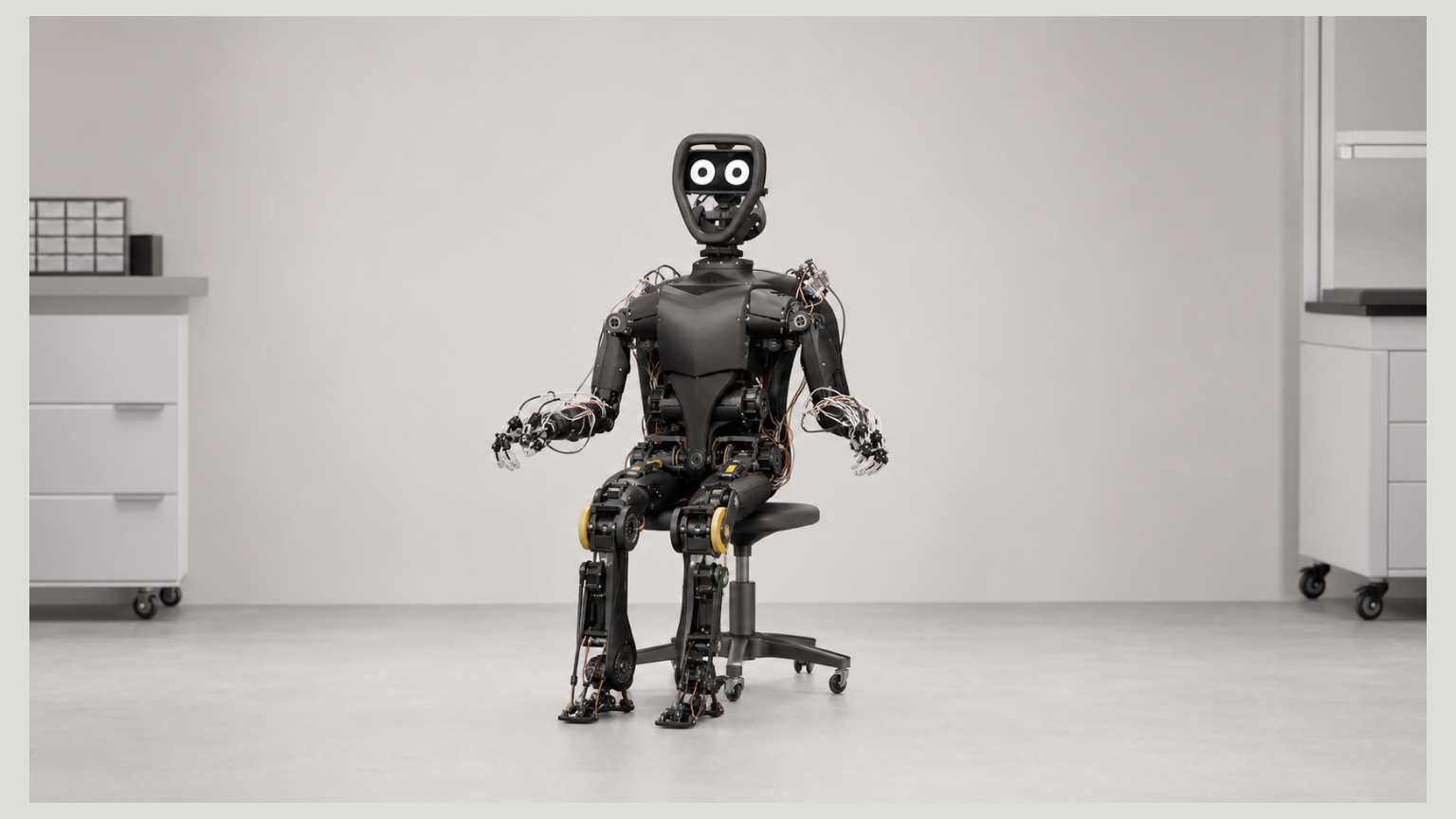
LimX Dynamics' TRON 2 is a multi-form embodied robot research and development platform that combines a dual-arm manipulation upper body with configurable sole and wheeled locomotion. It is aimed at VLA research, teleoperation, data collection, and mobile-manipulation development rather than consumer home use. Official specs list 7-DoF arms, 5-DoF legs, a 2-DoF active vision head, VR teleoperation with Oculus Quest 3, safety-boundary protection, open SDK access, and software support for Python/C++, ROS1/ROS2, data-platform workflows, and mainstream simulation.
Listed price

Price TBA

LimX's current official TRON 2 product and specification pages use a contact-sales flow and do not publish an official MSRP. Independent launch coverage reports conflicting starter/configuration prices, so pricing should be verified directly with LimX before quoting.

Release window

Dec 18, 2025

Current status

Active

LimX Dynamics

Last verified

May 28, 2026

Share this robot

Open a plain share composer on X or Bluesky for this robot profile.

Technical overview

Core specifications and system stack

A fast read on the mechanical profile, sensing package, and platform integrations behind TRON 2.

Technical Specifications

Height

Not officially disclosed

Weight

Not officially disclosed

Dimensions

Not officially disclosed

Battery Life

Not officially disclosed

Charging Time

20-80%: 30min; 20-100%: 54min

Max Speed

Sole: 2-3m/s; Wheeled: 3-5m/s

Payload

End effector: up to 5kg per arm (3kg extended); locomotion load: 30kg flat ground / 20kg stair climbing

Operational profile

How this robot is configured

Capabilities

14

Connectivity

6

Key capabilities

Multi-Form Embodied Robot PlatformDual-Arm ManipulationVR Teleoperation (Oculus Quest 3)Dual-Arms Safety Boundary ProtectionSole LocomotionWheeled-Leg MobilityFour-Directional Movement and TurningStatic Standing and Squatting

Ecosystem fit

PythonC++ROS1ROS2NVIDIA Isaac SimMuJoCo

About the TRON 2

4Sensors6Protocols14Capabilities

The TRON 2 is a Research robot built by LimX Dynamics. LimX Dynamics' TRON 2 is a multi-form embodied robot research and development platform that combines a dual-arm manipulation upper body with configurable sole and wheeled locomotion. It is aimed at VLA research, teleoperation, data collection, and mobile-manipulation development rather than consumer home use. Official specs list 7-DoF arms, 5-DoF legs, a 2-DoF active vision head, VR teleoperation with Oculus Quest 3, safety-boundary protection, open SDK access, and software support for Python/C++, ROS1/ROS2, data-platform workflows, and mainstream simulation.
Pricing has not been publicly disclosed. See all LimX Dynamics robots on the LimX Dynamics page.

Spec Breakdown

Detailed specifications for the TRON 2

Charging Time

20-80%: 30min; 20-100%: 54min

A charging time of 20-80%: 30min; 20-100%: 54min means the ratio of operation to downtime is an important consideration for applications requiring near-continuous availability. Some deployments use multiple robots in rotation to maintain uninterrupted service.

Maximum Speed

Sole: 2-3m/s; Wheeled: 3-5m/s

A top speed of Sole: 2-3m/s; Wheeled: 3-5m/s is calibrated for the robot's primary operating environment and safety requirements.

Payload Capacity

End effector: up to 5kg per arm (3kg extended); locomotion load: 30kg flat ground / 20kg stair climbing

A payload capacity of End effector: up to 5kg per arm (3kg extended); locomotion load: 30kg flat ground / 20kg stair climbing determines what the robot can carry or manipulate. This is a critical spec for practical applications where the robot needs to handle physical objects.

The TRON 2 uses Native VLA data acquisition and management workflow, fully open SDK/high-low-level access, and Python/C++ plus ROS1/ROS2 development support as its intelligence backbone. This AI platform powers the robot's decision-making, perception processing, and autonomous behavior. The sophistication of the AI stack directly impacts how well the robot handles unexpected situations and adapts to new environments.

TRON 2 Sensor Suite

The TRON 2 integrates 4 sensor types, forming the perceptual foundation that enables autonomous operation.

This sensor configuration enables the TRON 2 to perceive its environment and operate autonomously in its intended use cases. Multiple sensor modalities provide redundancy and more robust perception than any single sensor type alone.

Explore sensor technologies: components glossary · full components directory

TRON 2 Use Cases & Applications

Research robots serve as platforms for advancing robotics science and engineering. They enable researchers to test theories about locomotion, manipulation, perception, and human-robot interaction in controlled and real-world environments.

Capabilities That Enable Real-World Use

The TRON 2 offers 14 distinct capabilities, each contributing to the robot's practical utility.

Multi-Form Embodied Robot Platform
Dual-Arm Manipulation
VR Teleoperation (Oculus Quest 3)
Dual-Arms Safety Boundary Protection
Sole Locomotion
Wheeled-Leg Mobility
Four-Directional Movement and Turning
Static Standing and Squatting
Robot Height Adjustment
Stand Up After a Fall
Ground Clearance Detection
Data Collection and Storage
Battery Replacement Support
Open SDK and Hardware Interface

These capabilities work together with the robot's 4 onboard sensor types and Native VLA data acquisition and management workflow, fully open SDK/high-low-level access, and Python/C++ plus ROS1/ROS2 development support AI platform to deliver practical, real-world performance.

Ecosystem Integration

The TRON 2 integrates with the following platforms and ecosystems, extending its utility beyond standalone operation.

Python C++ ROS1 ROS2 NVIDIA Isaac Sim MuJoCo Gazebo Oculus Quest 3

This ecosystem compatibility enables the TRON 2 to work as part of a broader automation setup rather than operating in isolation.

TRON 2 Capabilities

14

Capabilities

4

Sensor Types

AI

Native VLA data acquisition …

Dual-Arm Manipulation

Dual-arm manipulation gives the TRON 2 the ability to use both arms simultaneously and coordinately — a capability that mirrors human bimanual dexterity. This enables tasks that are difficult or impossible with a single arm: stabilizing an object with one hand while operating on it with the other, pouring from one container into another, or handling two independent tasks in parallel. The coordination between arms requires sophisticated motion planning that accounts for the physical constraints of both arms operating in the same workspace without collision while achieving the desired task outcome.

Additional Capabilities

Multi-Form Embodied Robot Platform
VR Teleoperation (Oculus Quest 3)
Dual-Arms Safety Boundary Protection
Sole Locomotion
Wheeled-Leg Mobility
Four-Directional Movement and Turning
Static Standing and Squatting
Robot Height Adjustment
Stand Up After a Fall
Ground Clearance Detection
Data Collection and Storage
Battery Replacement Support
Open SDK and Hardware Interface

Connectivity & Integration

How the TRON 2 communicates with your network, smart home devices, cloud services, and companion apps.

Network & Communication Protocols

Network protocols for device communication — enabling the TRON 2 to participate in various networking scenarios.

TRON 2 Technology Stack Overview

The TRON 2 by LimX Dynamics integrates 11 distinct technology components across sensing, connectivity, intelligence, and interaction layers. The physical platform features a top speed of Sole: 2-3m/s; Wheeled: 3-5m/s, providing the foundation on which this technology stack operates.

Perception — 4 Sensor Types

The perception layer is built on Waist RGBD Camera, IMU, Head RGBD Camera (dual-arm configuration), Wrist RGBD Camera (dual-arm configuration). These work in concert to give the robot a detailed understanding of its operating environment. This multi-sensor approach provides redundancy and enables the robot to function reliably even when individual sensors encounter challenging conditions such as low light, reflective surfaces, or cluttered spaces.

Connectivity — 6 Protocols

For communications, the TRON 2 relies on Ethernet (1 port), USB 3.0 (1 port), EtherCAT (2 ports), RS485 (1 port), 12V/24V/48V power output ports, External power supply port. This connectivity stack ensures the robot can communicate with cloud services, local smart home devices, mobile apps, and other networked systems in its environment.

Intelligence — Native VLA data acquisition and management workflow, fully open SDK/high-low-level access, and Python/C++ plus ROS1/ROS2 development support

Native VLA data acquisition and management workflow, fully open SDK/high-low-level access, and Python/C++ plus ROS1/ROS2 development support serves as the computational brain, processing sensor data, making navigation decisions, and orchestrating the robot's autonomous behaviors. The quality of this AI platform directly influences how well the robot handles novel situations, adapts to changes in its environment, and improves its performance over time through learning.

Who Should Consider the TRON 2?

Target Audience

Research robots are acquired by universities, government labs, and corporate R&D departments. They serve as experimental platforms for developing new algorithms, testing locomotion strategies, and advancing the field of robotics. Some are also used for educational purposes.

Key Considerations

Open-source software compatibility (ROS/ROS 2), sensor modularity, programmability, available SDK/API quality, community support, and published research papers using the platform are key factors. Documentation quality and the ability to modify both hardware and software are essential for research use.

Pricing

TRON 2 does not currently have publicly listed pricing. Contact LimX Dynamics directly for quotes and availability information.

Availability

Active

The TRON 2 is in active commercial production and currently sold by LimX Dynamics. Check the manufacturer's website or authorized retailers for the latest stock and ordering information.

TRON 2: Strengths & Trade-offs

Engineering compromises and where this research robot excels

What the TRON 2 does well

Solid sensor coverage

The TRON 2 integrates 4 sensor types, providing good perceptual coverage for its intended applications. This sensor complement covers the essential modalities needed for effective research operation while keeping complexity manageable.

Versatile connectivity

Supporting 6 connectivity protocols gives the TRON 2 flexible integration options. Whether connecting to local smart home networks, cloud services, or companion devices, the breadth of connectivity ensures compatibility across a wide range of deployment scenarios and reduces the risk of network-related limitations.

Broad capability set

With 14 distinct capabilities, the TRON 2 is designed as a versatile platform rather than a single-task device. This breadth means the robot can handle varied scenarios and workflows, reducing the need for multiple specialized robots and increasing its utility across different situations.

Strong mobility performance

A top speed of Sole: 2-3m/s; Wheeled: 3-5m/s provides the TRON 2 with the agility to cover ground efficiently. This is particularly valuable for applications that require rapid response, large-area coverage, or keeping pace with human movement in shared environments.

Substantial payload capacity

With a payload capacity of End effector: up to 5kg per arm (3kg extended); locomotion load: 30kg flat ground / 20kg stair climbing, the TRON 2 can handle meaningful physical tasks. This capacity enables practical applications like carrying tools, transporting materials, or supporting equipment mounts that lighter robots simply cannot accommodate.

What to consider carefully

Undisclosed pricing

LimX Dynamics has not published a public price for the TRON 2. While common for enterprise-class robotics, the absence of transparent pricing can complicate budgeting and comparison shopping. Prospective buyers will need to engage directly with the manufacturer for quotes, which may vary by configuration and volume.

Note: This strengths and trade-offs assessment is based on the TRON 2's documented specifications as tracked in the ui44 database. Real-world performance depends on deployment conditions, firmware maturity, and environmental factors. For the most current information, check the LimX Dynamics manufacturer page or visit the official product page. Use the comparison tool to evaluate these trade-offs against competing robots in the same category.

How Research Robot Technology Works

Understanding the engineering behind this category

Research robots serve a fundamentally different purpose than commercial or consumer models. They are platforms for discovery — enabling scientists and engineers to test theories, develop algorithms, and push the boundaries of what robots can do. The technology in research robots prioritizes openness, flexibility, and access to raw data over consumer-friendly packaging or commercial reliability. Understanding this distinction is important for anyone considering a research robot platform.

Navigation & Mobility

Research robots typically expose their navigation systems at a much lower level than commercial products. Researchers can access raw sensor data, modify SLAM algorithms, implement custom path planners, and test novel navigation approaches. ROS (Robot Operating System) and ROS 2 compatibility is standard, providing a common framework for sharing navigation modules across the research community. This openness enables rapid iteration — a researcher can swap between different SLAM implementations, test new obstacle avoidance strategies, or develop entirely novel navigation paradigms without being locked into a vendor's proprietary stack.

The Role of AI

Research robots serve as physical testbeds for AI algorithms that may eventually appear in commercial products years later. Reinforcement learning, imitation learning, few-shot task learning, and human-robot interaction studies all require robot platforms that can execute AI-generated commands in the physical world. The gap between simulation (where training is cheap and fast) and reality (where physics is unforgiving) makes physical robot platforms essential for validating AI approaches. Research robots must support rapid deployment of new AI models without extensive integration work.

Sensor Fusion & Perception

Research platforms prioritize sensor modularity and data access. Standard mounting interfaces allow researchers to attach custom sensors alongside built-in ones. Raw sensor data streams (not just processed results) are accessible for developing novel perception algorithms. Precise time-stamping and synchronization across sensor streams enable accurate multi-modal fusion research. Many research robots include more sensors than strictly necessary for any single application, providing researchers with rich datasets for developing and testing new algorithms.

Power & Battery Management

Research robots balance operational runtime with practical lab use. Sessions of one to four hours are typical, with quick charging between experiments. Some research setups use tethered power for long-running experiments where battery limitations would interrupt data collection. Power monitoring and logging capabilities help researchers understand the energy costs of different behaviors and algorithms — important for developing efficient approaches that will eventually run on battery-constrained commercial systems.

Safety by Design

Research environments present unique safety challenges because robots are constantly being programmed with untested behaviors. Hardware safety limits (joint speed caps, force limits, emergency stops) must be robust regardless of software commands. Safety-rated monitored stop and speed monitoring ensure the robot cannot exceed safe operating parameters even when running experimental code. Collaborative operation standards apply when researchers work alongside the robot during experiments. Many labs implement layered safety with physical barriers for high-speed testing and open-area operation restricted to validated, lower-risk behaviors.

What's Next for Research Robots

Research robot platforms are becoming more accessible and capable. Cloud robotics enables remote experiment execution and shared datasets. Digital twins and high-fidelity simulators reduce the need for physical hardware time while improving sim-to-real transfer. Standardized benchmarks and open datasets enable fair comparison of results across labs. The democratization of robotics research — through lower-cost platforms, open-source software, and cloud infrastructure — is expanding who can contribute to advancing the field.

The TRON 2 by LimX Dynamics incorporates many of these technology pillars. For a detailed look at the specific sensors and components used in the TRON 2, see the sensor analysis and connectivity sections above, or browse the complete components glossary for explanations of every technology used across the robotics industry.

TRON 2 in the Research Market

How this robot compares in the research landscape

LimX Dynamics has not publicly disclosed pricing for the TRON 2, which is typical for enterprise-focused robotics platforms that offer customized solutions and direct-sales relationships.

The TRON 2's 4 sensor types provide solid perceptual coverage for its intended use cases. This mid-range sensor suite balances cost with capability, covering the essential modalities needed for research applications.

Being currently available for purchase gives the TRON 2 a practical advantage over competitors still in development or prototype stages. Buyers can evaluate the actual product rather than relying on spec-sheet promises that may change before release.

Head-to-Head Comparisons

Side-by-side specs, capability overlap analysis, and key differentiators.

For the full picture of LimX Dynamics's portfolio and market strategy, visit the LimX Dynamics manufacturer page.

Deployment Readiness and Procurement Signals for TRON 2

What the public profile tells you, and what still needs direct vendor confirmation

From a buying and rollout perspective, the TRON 2 should be read as a research platform aimed at labs and development teams validating robotics workflows. ui44 currently tracks 14 capability signals, 4 sensor inputs, and a last verification date of 2026-05-28. That mix gives buyers a useful first-pass picture, but it is still only the public layer of due diligence, especially when procurement, uptime, and support commitments are decided directly with LimX Dynamics.

Commercial model

Pricing not public

LimX's current official TRON 2 product and specification pages use a contact-sales flow and do not publish an official MSRP. Independent launch coverage reports conflicting starter/configuration prices, so pricing should be verified directly with LimX before quoting.. That usually means the final commercial package depends on deployment scope, services, or negotiated terms.

Integration posture

6 connectivity options

The profile lists Ethernet (1 port), USB 3.0 (1 port), EtherCAT (2 ports), RS485 (1 port), 12V/24V/48V power output ports, External power supply port, plus Native VLA data acquisition and management workflow, fully open SDK/high-low-level access, and Python/C++ plus ROS1/ROS2 development support as the AI stack. That is enough to infer the basic network posture, but buyers should still confirm APIs, fleet management, and workflow integration details. ui44 currently tracks 8 declared compatibility links.

Spec disclosure

3/7 core specs public

ui44 currently has 3 of 7 core physical and operating specs filled in for this model, leaving 4 gaps that matter for deployment planning. Missing runtime, charge, speed, or payload details can materially change staffing and site-readiness assumptions.

The current profile is useful for scouting, but it still leaves meaningful operational unknowns. If this robot is heading toward a pilot or purchase discussion, the next step should be a structured vendor Q&A that fills the remaining runtime, charging, payload, safety, or integration blanks before anyone builds ROI assumptions around it.

If you want a faster apples-to-apples read, compare the TRON 2 against nearby alternatives in ui44's compare view, then cross-check the underlying AI, sensor, and subsystem terms in the components glossary. For manufacturer-level context, the LimX Dynamics profile helps anchor this robot inside the wider product lineup.

Before you sign off on a pilot, confirm these points

  • Ask for real shift runtime under the intended workload, not just standby endurance.
  • Check what safety, electrical, or deployment certifications exist for the region and task you care about.

Owning the TRON 2: Setup, Maintenance & Tips

Practical guide from day one through years of ownership

Initial Setup

Research robot setup combines hardware assembly with software environment configuration. Unpack and assemble the platform following the manufacturer's documentation. Install the development framework — typically ROS or ROS 2 — and verify sensor connectivity. Calibrate all sensors using the manufacturer's tools and procedures. Set up the simulation environment (Gazebo, Isaac Sim, or equivalent) alongside the physical platform for parallel development. Establish version control for your experiment code and configuration. Document the initial calibration values and system state as your baseline for future reference. Plan network and computing infrastructure to handle the data rates your sensors will generate.

Ongoing Maintenance

Research robots need maintenance that preserves the precision required for valid experimental results. Regularly verify sensor calibration — drift in camera intrinsics or IMU biases can invalidate experiment data. Maintain clean workspace conditions to protect optical sensors. Document any hardware modifications or maintenance performed, as these can affect experimental reproducibility. Update software dependencies carefully, documenting versions used for each experiment. Joint and actuator wear in research robots that perform repetitive tasks should be monitored and factored into experimental design.

Software Updates & Long-Term Support

Research robot software updates require careful management to maintain experiment reproducibility. Document the exact software versions used for each experiment. Test updates in a separate environment before applying to your experiment platform. Contribute bug fixes and improvements back to the community when using open-source frameworks. Be aware that ROS and other framework updates may require code changes in your custom packages — budget time for integration testing after major framework updates.

Maximizing Longevity

Research robots often have longer productive lives than commercial products because they can be upgraded and repurposed. Extend your investment by maintaining clean mechanical and electrical systems, documenting all modifications for future lab members, and keeping spare parts for common wear items. When specific components become obsolete, community forums and lab networks can be valuable sources for replacements. Consider the platform's modularity when planning future research directions — a platform that can accept new sensors and actuators adapts to evolving research questions.

For LimX Dynamics-specific support resources and documentation, visit the LimX Dynamics page on ui44 or check the manufacturer's official website at LimX Dynamics's product page.

Frequently Asked Questions

What is the TRON 2?
The TRON 2 is a Research robot made by LimX Dynamics. LimX Dynamics' TRON 2 is a multi-form embodied robot research and development platform that combines a dual-arm manipulation upper body with configurable sole and wheeled locomotion. It is aimed at VLA research, teleoperation, data collection, and mobile-manipulation development rather than consumer home use. Official specs list 7-DoF arms, 5-DoF legs, a 2-DoF active vision head, VR teleoperation with Oculus Quest 3, safety-boundary protection, open SDK access, and software support for Python/C++, ROS1/ROS2, data-platform workflows, and mainstream simulation. It features 4 sensor types, 6 connectivity protocols, and 14 distinct capabilities.
How much does the TRON 2 cost?
LimX Dynamics has not disclosed public pricing for the TRON 2. Contact the manufacturer directly for pricing information. LimX's current official TRON 2 product and specification pages use a contact-sales flow and do not publish an official MSRP. Independent launch coverage reports conflicting starter/configuration prices, so pricing should be verified directly with LimX before quoting.
Is the TRON 2 available to buy?
Yes, the TRON 2 is in active commercial production and currently sold by LimX Dynamics. Check LimX Dynamics's official website or authorized retailers for the latest stock and ordering options.
What sensors does the TRON 2 have?
The TRON 2 is equipped with 4 sensor types: Waist RGBD Camera, IMU, Head RGBD Camera (dual-arm configuration), Wrist RGBD Camera (dual-arm configuration). These sensors work together through sensor fusion to provide comprehensive environmental awareness for autonomous operation. See the sensor analysis section for details.
What AI does the TRON 2 use?
The TRON 2 is powered by Native VLA data acquisition and management workflow, fully open SDK/high-low-level access, and Python/C++ plus ROS1/ROS2 development support. This AI platform handles the robot's perception processing, decision-making, and autonomous behavior. The sophistication of the AI directly impacts how well the robot handles unexpected situations, learns from its environment, and improves over time.
How does the TRON 2 compare to the TRON 1?
The TRON 2 and TRON 1 are both research robots, but they differ in key specifications, pricing, and manufacturer approach. Use the side-by-side comparison tool to see detailed differences in specs, sensors, and capabilities. You can also browse other similar robots below.
Does the TRON 2 work with smart home systems?
Yes, the TRON 2 is compatible with: Python, C++, ROS1, ROS2, NVIDIA Isaac Sim, MuJoCo, Gazebo, Oculus Quest 3. This ecosystem integration allows the robot to work alongside your existing smart home devices and platforms rather than operating as an isolated system.
How current is the TRON 2 data on ui44?
The TRON 2 specifications on ui44 were last verified on 2026-05-28. All data is sourced from official LimX Dynamics documentation, spec sheets, and press releases. If you notice any outdated information, please let us know.

Data Integrity

All TRON 2 data on ui44 is verified against official LimX Dynamics sources, including spec sheets, product pages, and press releases. Last verified: 2026-05-28. Official source: LimX Dynamics product page. If you find outdated or incorrect information, please let us know — accuracy is our top priority.

Explore More on ui44

Explore more research robots

See how the TRON 2 stacks up — compare specs, browse the research category, or search the full database.