Commercial model
Pricing not listed
A price is not listed for the Elite X9. No public pricing announced. Sunseeker said the Elite X9 Series is slated for commercial availability in the U.S. in Q2 2026.
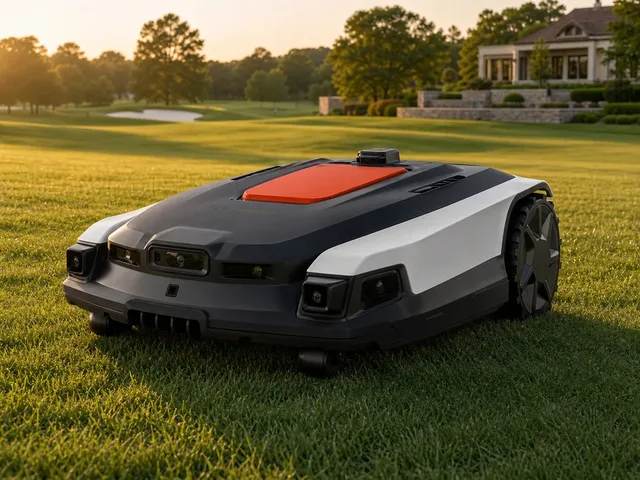
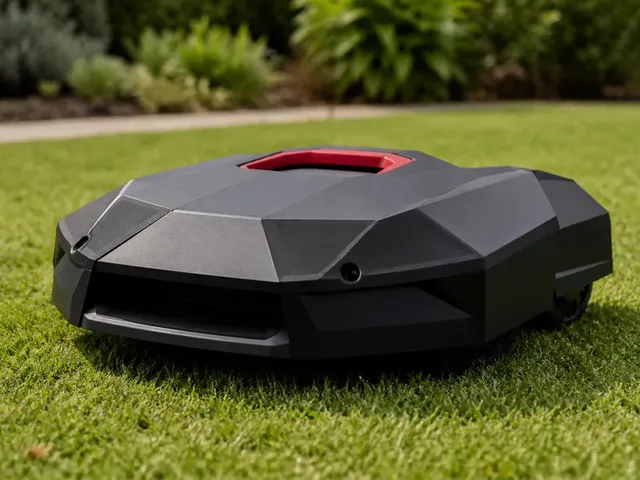
The Sunseeker Elite X9 is Sunseeker's new commercial-grade robotic lawn mower for large estates, sports facilities, and other professional green spaces. Announced during CES 2026 week, it expands Sunseeker beyond residential mowing into larger-scale autonomous turf care. Official launch materials say the base X9 can cover up to 12,000 m² within 48 hours using the company's AONavi 2.0 stack, which combines nRTK and VSLAM 2.0 for wire-free positioning. Sunseeker also highlights a 16-sensor OmniSight perception system, EdgeZero zero-distance cutting, AWD ATC Pro drive hardware, fleet management for multi-mower deployments, and faster PioneerVolt charging. Public pricing was not disclosed at launch.
Listed price
Price TBA
No public pricing announced. Sunseeker said the Elite X9 Series is slated for commercial availability in the U.S. in Q2 2026.
Release window
Jan 5, 2026
Current status
Pre-order
Sunseeker
Last verified
Apr 13, 2026
Share this robot
Open a plain share composer on X or Bluesky for this robot profile.
Technical overview
A fast read on the mechanical profile, sensing package, and listed platform details for Elite X9.
Height
Not officially disclosed
Weight
Not officially disclosed
Battery Life
Not officially disclosed
Charging Time
~50 min
Max Speed
Not officially disclosed
Operational profile
Capabilities
8
Connectivity
0
Key capabilities
Explore further
Benchmark set
Shortcuts to the closest alternatives in the current ui44 set.
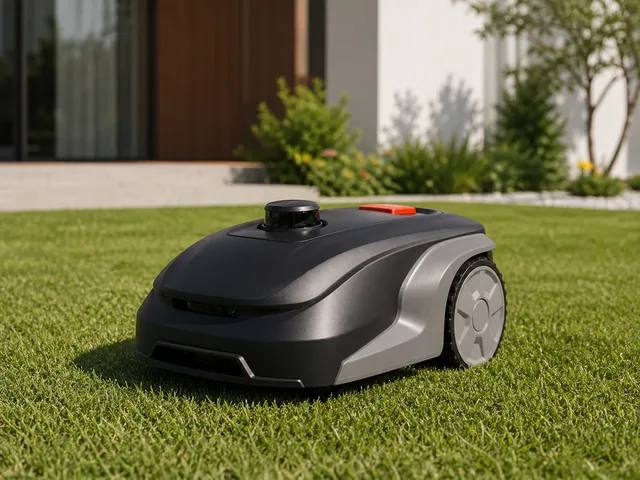
Lawn & Garden
S4
Sunseeker
$1,599
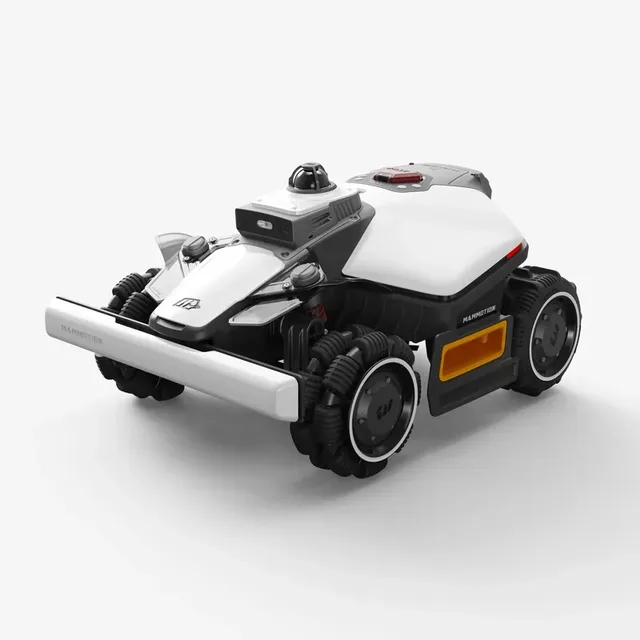
Lawn & Garden
LUBA mini 2 AWD 1500
Mammotion
$1,899
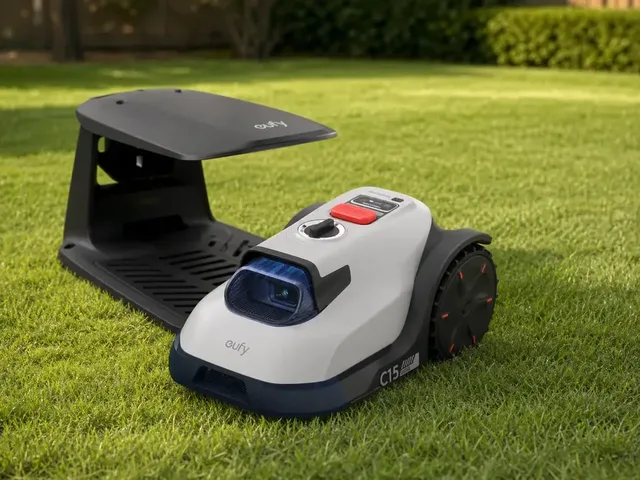
Lawn & Garden
Robot Lawn Mower C15
eufy
€899
Lawn & Garden
Lawn Companion X25
Volta
$1,422
The Elite X9 is a Lawn & Garden robot built by Sunseeker. The Sunseeker Elite X9 is Sunseeker's new commercial-grade robotic lawn mower for large estates, sports facilities, and other professional green spaces. Announced during CES 2026 week, it expands Sunseeker beyond residential mowing into larger-scale autonomous turf care. Official launch materials say the base X9 can cover up to 12,000 m² within 48 hours using the company's AONavi 2.0 stack, which combines nRTK and VSLAM 2.0 for wire-free positioning. Sunseeker also highlights a 16-sensor OmniSight perception system, EdgeZero zero-distance cutting, AWD ATC Pro drive hardware, fleet management for multi-mower deployments, and faster PioneerVolt charging. Public pricing was not disclosed at launch.
A price is not listed for the Elite X9. No public pricing announced. Sunseeker said the Elite X9 Series is slated for commercial availability in the U.S. in Q2 2026. See all Sunseeker robots on the Sunseeker page.
Detailed specifications for the Elite X9
Charging Time
~50 minutes full chargeA charging time of ~50 minutes full charge means the ratio of operation to downtime is an important consideration for applications requiring near-continuous availability. Some deployments use multiple robots in rotation to maintain uninterrupted service.
The AI entry recorded for the Elite X9 is AONavi 2.0 navigation with RTK + VSLAM 2.0, 10 TOPS onboard computing, and OmniSight full-scene obstacle and terrain recognition. Read this alongside the model description and source notes for announcement or deployment context. A platform name alone does not establish implemented features, autonomy, or performance.
The profile lists the sensor descriptions below. These entries do not establish physical sensor counts, sensor fusion, redundancy, or performance.
Consult the linked profile sources for hardware configuration and tested behavior. A technology label alone does not verify an operating capability.
Explore sensor technologies: components glossary · full components directory
Robotic lawn mowers maintain your lawn autonomously by making frequent, light cuts that keep grass at a consistent height. Unlike traditional mowing, the clippings are so fine they act as natural fertilizer, promoting healthier lawn growth.
The Elite X9 record lists 8 capabilities. Keep any announcement or demonstration qualifiers attached to these entries; the count alone does not establish practical performance.
These are the capabilities listed in the profile. Hardware configuration and demonstrated performance should be checked against the linked sources.
Compatibility and ecosystem details are not specified in the available profile.
8
Capabilities
AI
AONavi 2.0 navigation with…
The Elite X9 by Sunseeker has the following technology descriptions in its profile.
The profile lists 16-sensor full-scene perception suite, 8 cameras, RTK / nRTK positioning, VSLAM 2.0 vision localization, Infrared-assisted wildlife detection, Side ToF View camera (iToF + RGBD). Hardware quantities, integration, and tested behavior require separate source evidence.
Lawn and garden robots appeal to homeowners with medium to large lawns who want to eliminate the time and effort of manual mowing. They are particularly popular in Europe, where robotic mowers have been mainstream for over a decade.
Lawn size capacity, slope handling capability, boundary wire requirements (vs wire-free RTK/GPS navigation), cutting height adjustability, and weather resistance are the critical specs. Modern models increasingly use GPS and vision-based navigation instead of boundary wires, simplifying installation significantly.
Listed pricing
The Elite X9 is listed for pre-order, indicating a reservation listing. The label alone does not establish engineering completion or guarantee a delivery queue position. Check Sunseeker's reservation terms, regional availability, and estimated delivery dates.
Recorded features and considerations to assess
The Elite X9 record lists 8 capabilities. Review their qualifiers and supporting evidence for the tasks you need. The number of entries does not establish workflow coverage, reliability, or the ability to replace other robots.
A price is not listed for the Elite X9. No public pricing announced. Sunseeker said the Elite X9 Series is slated for commercial availability in the U.S. in Q2 2026.
The Elite X9 is listed for pre-order, indicating a reservation listing. The label alone does not establish engineering completion or guarantee a delivery queue position. Check Sunseeker's reservation terms, regional availability, and estimated delivery dates.
Compatibility and ecosystem details are not specified in the profile for the Elite X9. Confirm supported platforms, device-control functions, and deployment requirements in product documentation before relying on an integration.
Note: This strengths and trade-offs assessment is based on the Elite X9's documented specifications as tracked in the ui44 database. Real-world performance depends on deployment conditions, firmware maturity, and environmental factors. For the most current information, check the Sunseeker manufacturer page or visit the official product page. Use the comparison tool to evaluate these trade-offs against competing robots in the same category.
Understanding the engineering behind this category
Robotic lawn mowers have transformed from niche gadgets into reliable garden maintenance tools used by millions of homeowners worldwide. The technology behind these machines draws from precision agriculture, GPS navigation, and autonomous vehicle systems. Understanding how robotic mowers work helps you choose the right model and get the best results from your investment.
Robotic mowers use two main navigation approaches. Traditional models rely on a buried boundary wire that creates an electromagnetic signal defining the mowing area. The mower detects this signal and stays within bounds, typically using random or semi-random patterns to eventually cover the entire lawn. Newer wire-free models use RTK GPS (Real-Time Kinematic GPS) for centimeter-accurate positioning, combined with vision cameras and ultrasonic sensors for obstacle detection. RTK-equipped mowers follow precise, efficient mowing patterns similar to human mowing — straight parallel lines with systematic coverage. This results in faster, more even cuts and visible mowing stripes. Some advanced models combine GPS with computer vision to detect lawn edges, flower beds, and obstacles without any boundary markers at all.
AI in robotic mowers primarily focuses on coverage optimization, obstacle avoidance, and adaptive scheduling. Machine learning algorithms analyze mowing patterns to minimize overlap and ensure complete coverage. Weather integration adjusts schedules based on rain forecasts — postponing mowing when rain is expected and prioritizing sessions during dry weather windows. Some models use grass height detection to increase cutting frequency during active growing seasons and reduce it during dormant periods. Obstacle classification AI distinguishes between permanent objects (trees, garden furniture) and temporary ones (toys, garden hoses), building increasingly accurate maps of the mowing area over time.
Modern robotic mowers combine multiple sensor types for safe and efficient operation. Bump sensors detect physical contact with objects. Ultrasonic sensors provide non-contact obstacle detection at short range. Lift sensors detect when the mower is picked up, triggering an immediate blade stop for safety. Tilt sensors ensure the mower does not operate on dangerously steep slopes. Rain sensors pause operation in wet conditions. RTK GPS provides positioning data, while wheel odometry provides backup navigation when GPS signal is compromised. The integration of these sensors enables the mower to operate safely around children, pets, and garden obstacles.
Robotic mowers operate on rechargeable lithium-ion batteries, with runtime varying from 60 minutes for small-yard models to several hours for commercial-grade units. Unlike cleaning robots that complete their task in one session, mowers are designed to run daily for short periods — maintaining the lawn through frequent, light cuts rather than infrequent heavy mowing. This approach produces finer clippings that decompose quickly and act as natural fertilizer. Auto-return charging ensures the mower maintains itself without intervention. Solar-assisted models and more efficient brushless motors are extending runtimes and reducing charging frequency.
Safety is a primary concern for robotic mowers given their cutting blades. Modern designs use free-spinning blade discs with small, lightweight blades that retract on impact. Lift sensors immediately stop blades when the mower is picked up. Ultrasonic sensors and bumper systems detect obstacles before contact. Most models require a PIN code to operate, preventing unauthorized use or theft. The cutting height is limited to avoid damage to objects at ground level. Child and pet safety has driven blade designs toward lighter blades with less cutting force — sufficient for grass but designed to minimize injury risk from accidental contact.
The robotic mower market is rapidly shifting toward wire-free systems as RTK GPS and vision-based navigation become more affordable. Future developments include integration with smart irrigation systems for coordinated lawn care, AI-based weed detection and selective treatment, multi-zone management for complex garden layouts, and fleet coordination for commercial properties. Edge trimming capabilities and the ability to handle more varied terrain types are also active development areas. As prices continue to fall and capabilities improve, robotic mowing is expected to become as standard as robotic vacuuming in household automation.
These are category-level technology examples; they do not establish the capabilities of the Elite X9. For its recorded hardware details, see the sensor analysis and connectivity sections above. Check model-specific documentation from Sunseeker for supported behavior, or use the components glossary to look up terminology.
How this robot compares in the lawn & garden landscape
A price is not listed for the Elite X9. No public pricing announced. Sunseeker said the Elite X9 Series is slated for commercial availability in the U.S. in Q2 2026.
The Elite X9 is listed for pre-order, indicating a reservation listing. The label alone does not establish engineering completion or guarantee a delivery queue position. Check Sunseeker's reservation terms, regional availability, and estimated delivery dates.
Side-by-side specs, capability overlap analysis, and key differentiators.
For the full picture of Sunseeker's portfolio and market strategy, visit the Sunseeker manufacturer page.
What the public profile tells you, and what still needs direct vendor confirmation
From a buying and rollout perspective, the Elite X9 should be read as a lawn & garden platform aimed at outdoor properties with clearly defined maintenance zones. ui44 currently tracks 8 capability signals and a last verification date of 2026-04-13. That mix gives buyers a useful first-pass picture, but it is still only the public layer of due diligence, especially when procurement, uptime, and support commitments are decided directly with Sunseeker.
Commercial model
Pricing not listed
A price is not listed for the Elite X9. No public pricing announced. Sunseeker said the Elite X9 Series is slated for commercial availability in the U.S. in Q2 2026.
Integration posture
Integration details thin
The page does not list any connectivity standards, so procurement teams should verify network requirements, remote management options, and how the robot fits into existing software or facility infrastructure.
Spec disclosure
1/7 core specs public
ui44 currently has 1 of 7 core physical and operating specs filled in for this model, leaving 6 gaps that matter for deployment planning. Missing runtime, charge, speed, or payload details can materially change staffing and site-readiness assumptions.
The current profile is useful for scouting, but it still leaves meaningful operational unknowns. If this robot is heading toward a pilot or purchase discussion, the next step should be a structured vendor Q&A that fills the remaining runtime, charging, payload, safety, or integration blanks before anyone builds ROI assumptions around it.
If you want a faster apples-to-apples read, compare the Elite X9 against nearby alternatives in ui44's compare view, then cross-check the underlying AI, sensor, and subsystem terms in the components glossary. For manufacturer-level context, the Sunseeker profile helps anchor this robot inside the wider product lineup.
Practical guide from day one through years of ownership
Robotic mower setup varies significantly by navigation type. Boundary wire models require installing a perimeter wire around your lawn and any obstacles — a process that takes several hours for a typical yard but only needs to be done once. Wire-free models with RTK GPS require setting up a reference station and mapping the lawn boundary through the app, which is faster but may require clear sky views for GPS accuracy. After boundary setup, configure the cutting height, mowing schedule, and rain delay settings. Let the robot complete several full mowing sessions to learn your lawn before fine-tuning settings. The first few weeks may show uneven results as the robot establishes its patterns.
Robotic mower maintenance is straightforward but important for cut quality and longevity. Check and replace cutting blades every one to three months depending on lawn size, grass type, and the presence of debris. Clean the underside of the mower weekly to remove grass clippings and maintain airflow. Check wheels for embedded debris and ensure they spin freely. Clean the charging contacts on both the mower and dock monthly. Before the mowing season begins, perform a thorough inspection including battery health check, blade condition, and wheel wear. At the end of the season, clean the mower thoroughly and store it in a dry location (or leave it on its dock if the manufacturer recommends this for battery health).
Modern robotic mowers receive firmware updates that improve navigation efficiency, adjust mowing patterns, and enhance safety features. Wire-free models especially benefit from map and positioning algorithm updates. Keep the companion app updated and enable automatic firmware updates where possible. Some manufacturers release seasonal updates that adjust the mower's behavior for different grass growth periods.
Robotic mowers typically last five to ten years with proper maintenance. Key longevity factors include keeping the lawn free of hard objects (rocks, toys, fallen branches) that can damage blades and motors, maintaining a clean undercarriage, and protecting the mower from extreme weather when not in use. Boundary wire installations should be checked annually for damage from gardening tools or natural degradation. Battery replacement after three to five years is the most common life-extension measure. Avoid exceeding the mower's rated lawn size — continuous operation at maximum capacity accelerates wear.
Find product and source links on the Sunseeker page on ui44 or open Sunseeker's product page. Use model-specific manufacturer documentation for setup, cleaning, and service instructions.
The Elite X9 record brings together the listed specifications and attributed claims. Consult the model description and source notes to distinguish manufacturer announcements, reported information, and unknowns. A source link or review date does not establish independent testing or manufacturer confirmation of every claim. Record last checked: 2026-04-13. Official source: Sunseeker product page. If you find outdated or incorrect information, please let us know — accuracy is our top priority.
See how the Elite X9 stacks up — compare specs, browse the lawn & garden category, or search the full database.