Commercial model
See pricing details
No public purchase price or retail channel has been announced; UESTC says Kangbao is ready for pilot trials in Chengdu elderly-care facilities.
Height
1.2 m
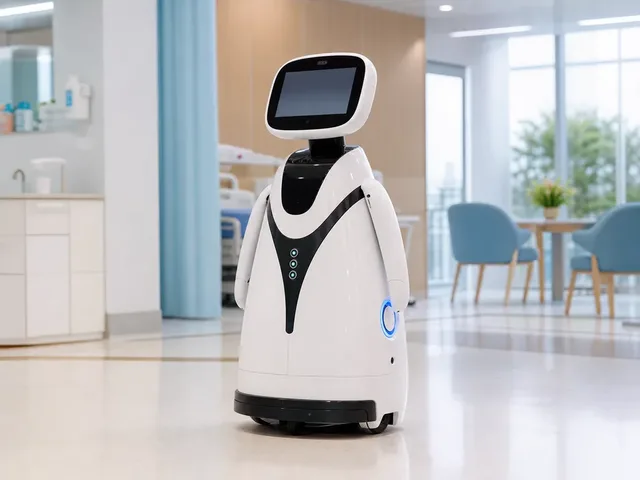
Kangbao (Health Baby) is a 1.2 m companion healthcare robot developed by a research team at the University of Electronic Science and Technology of China for elderly-care pilots in Chengdu. UESTC and Xinhua describe it as a non-contact health-check robot that can measure heart rate, blood pressure, and body temperature in about 30 seconds while also recognizing 13 emotional states. The team says Kangbao processes data locally with on-device inference, maintains electronic health and medication records, and can issue proactive alerts for potential health risks in care-center deployments.
Listed price
See pricing details
No public purchase price or retail channel has been announced; UESTC says Kangbao is ready for pilot trials in Chengdu elderly-care facilities.
Release window
Apr 1, 2026
Current status
Prototype
University of Electronic Science and Technology of China (UESTC)
Last verified
Apr 26, 2026
Share this robot
Open a plain share composer on X or Bluesky for this robot profile.
Technical overview
A fast read on the mechanical profile, sensing package, and listed platform details for Kangbao (Health Baby).
Height
1.2 m
Weight
Not officially disclosed
Battery Life
Not officially disclosed
Charging Time
Not officially disclosed
Max Speed
Not officially disclosed
Operational profile
Capabilities
10
Connectivity
1
Key capabilities
Listed platforms & ecosystem
Benchmark set
Shortcuts to the closest alternatives in the current ui44 set.
Companions
Ballie
Samsung
See pricing details
Companions
Rhem
Rhem Labs
$599
Companions
KOIBOT ROLA Series
Reon Robotics
See pricing details

Companions
Mirumi
Yukai Engineering
¥19,800
The Kangbao (Health Baby) is a Companions robot built by University of Electronic Science and Technology of China (UESTC). Kangbao (Health Baby) is a 1.2 m companion healthcare robot developed by a research team at the University of Electronic Science and Technology of China for elderly-care pilots in Chengdu. UESTC and Xinhua describe it as a non-contact health-check robot that can measure heart rate, blood pressure, and body temperature in about 30 seconds while also recognizing 13 emotional states. The team says Kangbao processes data locally with on-device inference, maintains electronic health and medication records, and can issue proactive alerts for potential health risks in care-center deployments.
No public purchase price or retail channel has been announced; UESTC says Kangbao is ready for pilot trials in Chengdu elderly-care facilities. See all University of Electronic Science and Technology of China (UESTC) robots on the University of Electronic Science and Technology of China (UESTC) page.
Detailed specifications for the Kangbao (Health Baby)
Height
1.2mThe listed height is 1.2m. Height alone does not establish working reach or clearance under furniture; check the documented operating configuration and required space.
Read this recorded AI entry alongside the model description and source notes for announcement or deployment context. A platform name alone does not establish implemented features, autonomy, or performance.
The profile lists the sensor descriptions below. These entries do not establish physical sensor counts, sensor fusion, redundancy, or performance.
Consult the linked profile sources for hardware configuration and tested behavior. A technology label alone does not verify an operating capability.
Explore sensor technologies: components glossary · full components directory
Companion robots provide social interaction, emotional support, and entertainment. Unlike utility robots, their primary value proposition is the relationship they build with their owner. The best companions learn preferences, develop personalities, and create genuine emotional connections.
The Kangbao (Health Baby) record lists 10 capabilities. Keep any announcement or demonstration qualifiers attached to these entries; the count alone does not establish practical performance.
These are the capabilities listed in the profile. Hardware configuration and demonstrated performance should be checked against the linked sources.
These are the platforms, communities, or ecosystem relationships listed in the profile. A listed name or protocol alone does not confirm home-device interoperability or automation support.
10
Capabilities
AI
Knowledge-hypergraph…
The Kangbao (Health Baby) profile lists the following communication and voice-system descriptions.
The Kangbao (Health Baby) by University of Electronic Science and Technology of China (UESTC) has the following technology descriptions in its profile. The physical platform features a height of 1.2m, providing the foundation on which this technology stack operates.
The profile lists Infrared sensing, Microvascular vibration analysis, Touch buttons. Hardware quantities, integration, and tested behavior require separate source evidence.
The connectivity descriptions listed for the Kangbao (Health Baby) are Not officially disclosed. Specific services and device interoperability require separate documentation.
Social and companion robots are purchased by families, elderly individuals, and tech enthusiasts looking for interactive, emotionally engaging robotic pets or social companions. They are particularly popular in Japan and increasingly in senior care contexts worldwide.
Emotional expressiveness, interaction quality, voice recognition, personality development over time, and durability (especially for children) are what matter most. Privacy controls for cameras and microphones are increasingly important. Battery life determines how available the companion is throughout the day.
Listed pricing
The Kangbao (Health Baby) is listed as Prototype, indicating a prototype-stage record. Specifications may change; the label alone does not establish purchase availability. Check University of Electronic Science and Technology of China (UESTC)'s current documentation for access options.
Recorded features and considerations to assess
The Kangbao (Health Baby) record lists 10 capabilities. Review their qualifiers and supporting evidence for the tasks you need. The number of entries does not establish workflow coverage, reliability, or the ability to replace other robots.
No public purchase price or retail channel has been announced; UESTC says Kangbao is ready for pilot trials in Chengdu elderly-care facilities.
The Kangbao (Health Baby) is listed as Prototype, indicating a prototype-stage record. Specifications may change; the label alone does not establish purchase availability. Check University of Electronic Science and Technology of China (UESTC)'s current documentation for access options.
Note: This strengths and trade-offs assessment is based on the Kangbao (Health Baby)'s documented specifications as tracked in the ui44 database. Real-world performance depends on deployment conditions, firmware maturity, and environmental factors. For the most current information, check the University of Electronic Science and Technology of China (UESTC) manufacturer page or visit the official source. Use the comparison tool to evaluate these trade-offs against competing robots in the same category.
Understanding the engineering behind this category
Companion robots sit at the intersection of engineering and emotional design. Unlike utility robots measured by specifications like suction power or payload capacity, companion robots are judged by how well they make people feel — their expressiveness, responsiveness, personality, and ability to form genuine-seeming bonds with their owners. The technology behind these emotional machines is surprisingly sophisticated, drawing from psychology, animation, and cutting-edge AI.
Companion robots typically operate in confined indoor spaces and prioritize safe, predictable movement over sophisticated mapping. Most use simple but effective navigation combining bump sensors, cliff detection, and basic obstacle avoidance. Some advanced models incorporate camera-based person-following — the ability to track and follow a specific person through rooms. Unlike utility robots that need systematic coverage, companion robots navigate toward social engagement: moving toward voices, approaching detected family members, or positioning themselves for optimal interaction. The movement itself is often designed to convey personality — a curious robot might lean forward when exploring, while a timid one might approach cautiously.
AI is the heart of a companion robot's appeal. Emotion recognition systems analyze facial expressions, voice tone, and behavioral patterns to infer the user's emotional state and respond appropriately. Natural language processing enables conversational interaction that goes beyond simple command-response patterns. Personality systems create consistent behavioral traits that make the robot feel like an individual rather than a generic device. Machine learning allows the robot to adapt to its owner's preferences, schedule, and interaction style over time. The most advanced companion robots use generative AI to create novel responses and behaviors rather than relying solely on pre-programmed scripts, making interactions feel more natural and less repetitive.
Companion robot sensors prioritize social perception over environmental mapping. Cameras detect faces, read expressions, and enable recognition of family members. Microphone arrays with beamforming capture and localize voice from across a room, enabling natural conversation without shouting. Touch sensors across the body detect petting, hugging, and other physical interaction, triggering appropriate emotional responses. Some models include heart-rate or breathing-rate sensors in their touch surfaces, enabling health-monitoring features for elderly users. Temperature and light sensors help the robot understand context — bedtime versus activity time — and adjust its behavior accordingly.
Companion robots need to be available throughout the day to maintain the social bond with their owner. Battery life of eight hours or more is typical, with automatic return-to-charging-dock behavior when levels drop. Power management is designed to be invisible — the robot should seem always available and never interrupt a social moment to announce low battery. Some companion robots use sleep modes during inactive periods, with motion or sound detection to wake instantly when the owner approaches. Charging docks often double as the robot's designated resting spot, making the charging behavior feel natural rather than mechanical.
Companion robots prioritize child and elderly safety with rounded corners, pinch-free joint designs, and materials safe for skin contact. Emotional safety is equally important — companion robots are designed to never express anger, fear, or distress in ways that could upset vulnerable users. Privacy features include physical camera covers, microphone mute buttons, and transparent data handling policies. For elderly users, companion robots may include fall-detection alerts, activity monitoring, and remote check-in features that balance safety with privacy. The robot's emotional responses are carefully calibrated to avoid over-attachment or dependency concerns.
Companion robotics is evolving toward more nuanced emotional intelligence, deeper personalization, and expanded health-monitoring capabilities. Advances in generative AI are enabling more natural and varied conversational interaction. Future companion robots may serve as health monitoring platforms that detect changes in an owner's mood, activity levels, or cognitive patterns — providing early warning of health issues to family members or caregivers. The integration of companion features into utility robots (and vice versa) may blur category boundaries, creating household robots that are both helpful and emotionally engaging.
These are category-level technology examples; they do not establish the capabilities of the Kangbao (Health Baby). For its recorded hardware details, see the sensor analysis and connectivity sections above. Check model-specific documentation from University of Electronic Science and Technology of China (UESTC) for supported behavior, or use the components glossary to look up terminology.
How this robot compares in the companions landscape
No public purchase price or retail channel has been announced; UESTC says Kangbao is ready for pilot trials in Chengdu elderly-care facilities.
The Kangbao (Health Baby) is listed as Prototype, indicating a prototype-stage record. Specifications may change; the label alone does not establish purchase availability. Check University of Electronic Science and Technology of China (UESTC)'s current documentation for access options.
Side-by-side specs, capability overlap analysis, and key differentiators.
For the full picture of University of Electronic Science and Technology of China (UESTC)'s portfolio and market strategy, visit the University of Electronic Science and Technology of China (UESTC) manufacturer page.
What the public profile tells you, and what still needs direct vendor confirmation
From a buying and rollout perspective, the Kangbao (Health Baby) should be read as a companions platform aimed at social, education, or care environments where interaction quality matters. ui44 currently tracks 10 capability signals and a last verification date of 2026-04-26. That mix gives buyers a useful first-pass picture, but it is still only the public layer of due diligence, especially when procurement, uptime, and support commitments are decided directly with University of Electronic Science and Technology of China (UESTC).
Commercial model
See pricing details
No public purchase price or retail channel has been announced; UESTC says Kangbao is ready for pilot trials in Chengdu elderly-care facilities.
Integration posture
1 connectivity option
The profile lists Not officially disclosed. These labels do not establish APIs, fleet-management features, or workflow integration. These are the platforms, communities, or ecosystem relationships listed in the profile. A listed name or protocol alone does not confirm home-device interoperability or automation support.Recorded AI description: Knowledge-hypergraph autonomous decision-making architecture with local on-device inference; UESTC reports over 97% physiological-measurement accuracy and over 92% emotion-recognition accuracy in validation
Spec disclosure
1/7 core specs public
ui44 currently has 1 of 7 core physical and operating specs filled in for this model, leaving 6 gaps that matter for deployment planning. Missing runtime, charge, speed, or payload details can materially change staffing and site-readiness assumptions.
The current profile is useful for scouting, but it still leaves meaningful operational unknowns. If this robot is heading toward a pilot or purchase discussion, the next step should be a structured vendor Q&A that fills the remaining runtime, charging, payload, safety, or integration blanks before anyone builds ROI assumptions around it.
If you want a faster apples-to-apples read, compare the Kangbao (Health Baby) against nearby alternatives in ui44's compare view, then cross-check the underlying AI, sensor, and subsystem terms in the components glossary. For manufacturer-level context, the University of Electronic Science and Technology of China (UESTC) profile helps anchor this robot inside the wider product lineup.
Recorded specifications and manufacturer guidance
Find product and source links on the University of Electronic Science and Technology of China (UESTC) page on ui44 or open University of Electronic Science and Technology of China (UESTC)'s official source. Use model-specific manufacturer documentation for setup, cleaning, and service instructions.
The Kangbao (Health Baby) record brings together the listed specifications and attributed claims. Consult the model description and source notes to distinguish manufacturer announcements, reported information, and unknowns. A source link or review date does not establish independent testing or manufacturer confirmation of every claim. Record last checked: 2026-04-26. Official source: University of Electronic Science and Technology of China (UESTC) official source. If you find outdated or incorrect information, please let us know — accuracy is our top priority.
See how the Kangbao (Health Baby) stacks up — compare specs, browse the companions category, or search the full database.