That is why the Realbotix and 10Things announcement is interesting. Rocking Robots reported that the companies plan to demonstrate a Realbotix humanoid fitted with 10Things robot arms at the London Humanoid Summit, with natural speech commands for actions like operating a tablet, picking up objects, and using simple tools. The claim is explicitly framed around accessibility, household routines, member recognition, privacy, safety, and reliability.
The hard part is not the microphone. It is the gap between speech-to-intent and safe physical execution. A smart speaker can misunderstand a command and play the wrong song. A robot arm can misunderstand a command and knock a glass, pinch a finger, drop medicine, scrape a wheelchair tray, or expose a private room map to a cloud service.
So the right buyer question is not "does it understand voice?" The right question is: can the robot turn a spoken request into a safe, repeatable, privacy-aware physical action in a messy home?
Can a voice-controlled robot arm actually help at home?
Yes, but only for narrow tasks at first.
A useful assistive robot arm needs five things working together:
- Language understanding: turn "bring the blue mug" into a specific goal.
- Perception: identify the mug, the handle, the table edge, the person, and the obstacles around it.
- Manipulation: reach, grasp, lift, carry, place, and recover if the object slips.
- Human safety: control speed, force, emergency stops, and distance from the user's body.
- Privacy and consent: handle cameras, microphones, household maps, routines, and user memory without treating the home as a training data free-for-all.
That is why voice alone is a weak signal. The same sentence can mean different things depending on the object, room, user posture, caregiver rules, medication schedule, or whether a pet just walked into the reach path. A strong demo should show the whole loop: the robot asks a clarifying question, confirms the target, moves slowly near people, pauses on uncertainty, and logs what happened without leaking household data.
This is also where ui44's robot data helps. The most credible near-term machines are not necessarily the most human-shaped. They are the ones with a real arm, known payload, indoor mobility, safety design, and a path to being deployed in actual homes.
The best current benchmark is not a humanoid
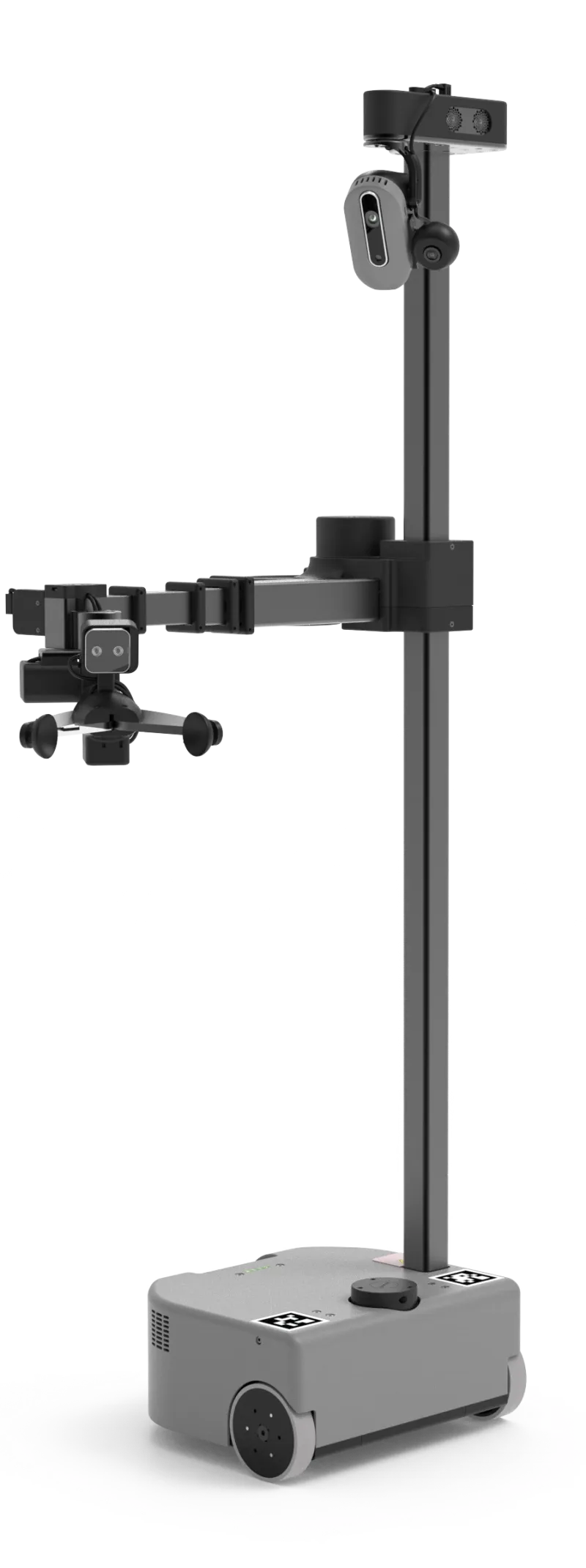
Hello Robot Stretch 4 is the cleanest current benchmark for assistive home manipulation because it is built around the job itself: move through rooms, reach things, and manipulate objects. ui44's database lists Stretch 4 at $29,950, available now for research and enterprise buyers, with a 160 cm working height, 45 cm diameter footprint, self-charging, 8 hours of light-load runtime, and a telescoping arm rated for 2.5 kg extended or 4 kg retracted.
Those numbers matter. A 2.5 kg extended-arm limit covers a phone, remote, cup, book, pill organizer, light kitchen item, many packages, and plenty of daily-life objects. It does not mean the robot can lift a person, catch a falling object, or handle every awkward container in a kitchen. But it is enough to make the category real.
IEEE Spectrum's Stretch 4 coverage also makes an important point: Hello Robot is explicitly designing pilots for homes of people with severe mobility impairments. That is a better accessibility signal than a humanoid walking across a stage. It means the robot has to survive real thresholds, clutter, caregiver workflows, emergency stops, remote assistance, and the emotional reality of depending on a machine for daily tasks.
Stretch is also a useful reminder that wheels are not a downgrade. For many accessibility use cases, a stable wheeled base is safer and easier to control than legs. If a wheeled robot emergency-stops, it can freeze. If a bipedal robot falls, it becomes a 30-70 kg moving hazard.
How home-ready are the robot-arm options?
The field is wide, but the buyer shortlist gets small quickly. Here is the practical comparison.
Robot
- ui44 data point
- $29,950; 160 cm tall; 45 cm footprint; 8h light-load runtime; 2.5 kg extended / 4 kg retracted payload
- Accessibility read
- Strongest near-term fit for assistive manipulation, but still a developer/pilot platform, not a mainstream appliance
Robot
- ui44 data point
- 100.5-135 cm; approx. 37 kg; 1.2 kg payload; voice-command support; remote family/caregiver operation
- Accessibility read
- One of the clearest examples of the right assistive use case, but primarily a research/developer-community platform
Robot
- ui44 data point
- 110-145 cm telescoping torso; 3 kg arm payload; 4-5h with one battery or 8-10h with two; speech recognition and telepresence
- Accessibility read
- Excellent research mobile manipulator; too configurable and quote-based to treat as a normal consumer purchase
Robot
- ui44 data point
- $20,000 early-adopter price; 167 cm; 30 kg; about 4h runtime; soft body and tendon-driven safety story
- Accessibility read
- Most home-branded humanoid in the set, but buyers need proof of reliable arm tasks, not only chore promises
Robot
- ui44 data point
- $13,500 starting price; 132 cm; 35 kg; about 2h runtime; about 2 kg standard arm load
- Accessibility read
- Affordable research humanoid, but Unitree itself warns individual buyers to understand current humanoid limitations
Robot
- ui44 data point
- 173 cm; 61 kg; about 5h runtime; 20 kg payload; Helix VLA; no public price
- Accessibility read
- Technically powerful, but currently framed around fleet learning and industrial/commercial development, not consumer assistive care
| Robot | ui44 data point | Accessibility read |
|---|---|---|
| Hello Robot Stretch 4 | $29,950; 160 cm tall; 45 cm footprint; 8h light-load runtime; 2.5 kg extended / 4 kg retracted payload | Strongest near-term fit for assistive manipulation, but still a developer/pilot platform, not a mainstream appliance |
| Toyota HSR | 100.5-135 cm; approx. 37 kg; 1.2 kg payload; voice-command support; remote family/caregiver operation | One of the clearest examples of the right assistive use case, but primarily a research/developer-community platform |
| PAL TIAGo | 110-145 cm telescoping torso; 3 kg arm payload; 4-5h with one battery or 8-10h with two; speech recognition and telepresence | Excellent research mobile manipulator; too configurable and quote-based to treat as a normal consumer purchase |
| 1X NEO | $20,000 early-adopter price; 167 cm; 30 kg; about 4h runtime; soft body and tendon-driven safety story | Most home-branded humanoid in the set, but buyers need proof of reliable arm tasks, not only chore promises |
| Unitree G1 | $13,500 starting price; 132 cm; 35 kg; about 2h runtime; about 2 kg standard arm load | Affordable research humanoid, but Unitree itself warns individual buyers to understand current humanoid limitations |
| Figure 03 | 173 cm; 61 kg; about 5h runtime; 20 kg payload; Helix VLA; no public price | Technically powerful, but currently framed around fleet learning and industrial/commercial development, not consumer assistive care |

The important pattern: arm payload is only one column. A robot with a strong arm may still be a poor accessibility robot if it lacks safe contact behavior, clear privacy controls, good recovery, or a support model for nontechnical users. A weaker arm can be more valuable if it reliably retrieves a phone from a side table every day.
What the Realbotix and 10Things demo needs to prove
Realbotix already has a clear strength: human-like presence. Its official robot page describes customizable faces and bodies, face and voice recognition, AI platform integration, and companion-oriented robots. The M-Series starts at $95,000, while the wheeled F-Series starts at $125,000. In ui44's database, Realbotix David is tracked as a companion robot, not a manipulation-focused home helper.
10Things, meanwhile, describes itself as a robotics platform layer: ROS 2 native, simulation-first, robot learning, code generation, deployment, telemetry, and fleet infrastructure. That is relevant because the safest way to launch new arm behaviors is to test them in simulation before putting hardware near a person.
Together, the pairing makes sense on paper: Realbotix brings the humanoid social interface; 10Things brings the speech-to-action and robotics infrastructure story. But a good accessibility demo should show more than a robot obeying a few clean commands on a stage.
It should show:
- Object variation: cups, remotes, tablets, fabric, handles, glossy surfaces, and partially hidden objects.
- Command ambiguity: "that one," "the usual cup," "move it closer," and "not there, the other side."
- Recovery: what happens when the grasp fails, the tablet screen times out, or the user changes their mind mid-motion.
- Force limits: how the arm behaves when a hand, wheelchair, blanket, tray, or pet enters the workspace.
- Consent boundaries: whether household-member recognition and routine memory can be opt-in, inspectable, deletable, and local where possible.
- Caregiver controls: emergency stop, remote supervision, audit logs, and task restrictions for medications, appliances, doors, and sharp objects.
If those pieces are missing, the demo is still interesting. It is just not enough to call the system home-ready.
Voice is useful, but shared control is safer
A fully voice-only robot sounds elegant. In practice, accessibility often needs multiple control modes.
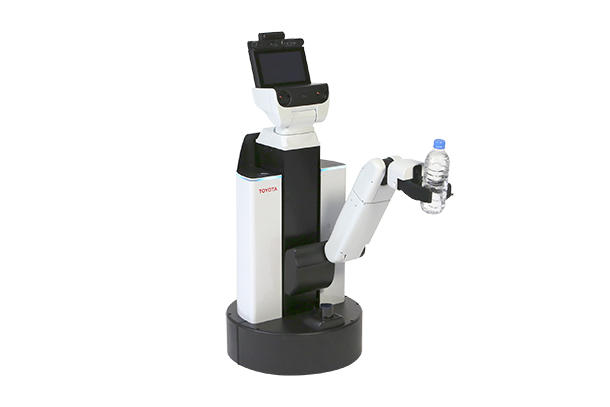
Toyota's Human Support Robot is a good example. The official Toyota material frames HSR around elderly and disabled users, but it also emphasizes remote operation by family or caregivers with real-time face and voice relay. ui44 tracks HSR with voice-command operation support, a compact cylindrical body, a folding arm, and a 1.2 kg object limit.
That mixed model is important. A person may want to say "bring me the remote" for simple tasks, tap a screen for target selection, use a joystick for fine control, or let a caregiver take over when the robot gets stuck. The best interface is not always the most futuristic one. It is the one that gives the user the most agency with the least fatigue and risk.
For buyers, the phrase to look for is shared autonomy. The robot should do the boring parts automatically, ask for help when confidence is low, and allow a human to supervise or intervene. Voice should be one input, not the only input.
That also protects dignity. A robot that constantly fails and asks the user to repeat commands can be more exhausting than no robot at all. A useful assistive robot should reduce the number of times someone has to ask for help, not create a new tech-support job in the living room.
What should buyers ask before trusting a speech-to-action demo?
Before treating a voice-controlled robot arm as an assistive home solution, ask these questions.
1. What tasks has the robot completed outside a staged setup?
Look for ordinary tasks: retrieve a phone from a nightstand, tap a microwave button, open a low drawer, pull a blanket corner, move a cup from desk to tray, or pick up a dropped item. Clean tabletop pick-and-place is a start, but homes are full of clutter, fabric, cords, reflections, pets, and bad lighting.
If the robot has only shown one table, one object set, and one operator, treat it as an early demo.
2. What is the real payload at reach?
Payload drops as arms extend. Stretch 4 is useful here because ui44 tracks both numbers: 2.5 kg extended and 4 kg retracted. Unitree G1 is listed around 2 kg standard arm load, while PAL TIAGo is 3 kg at the arm without the end-effector. The details matter because a robot might lift a bottle close to its body but not safely place it at the far side of a table.
If a company only gives a headline payload, ask for the payload at maximum reach, with the intended gripper, while moving at safe home speeds.
3. How does the robot stop?
Emergency stop should be physical, obvious, reachable, and understandable to the user and caregiver. Software stop commands are useful, but they are not enough. A home robot arm also needs low-speed modes, collision detection, compliant control, and behavior that fails safe rather than forcing through uncertainty.
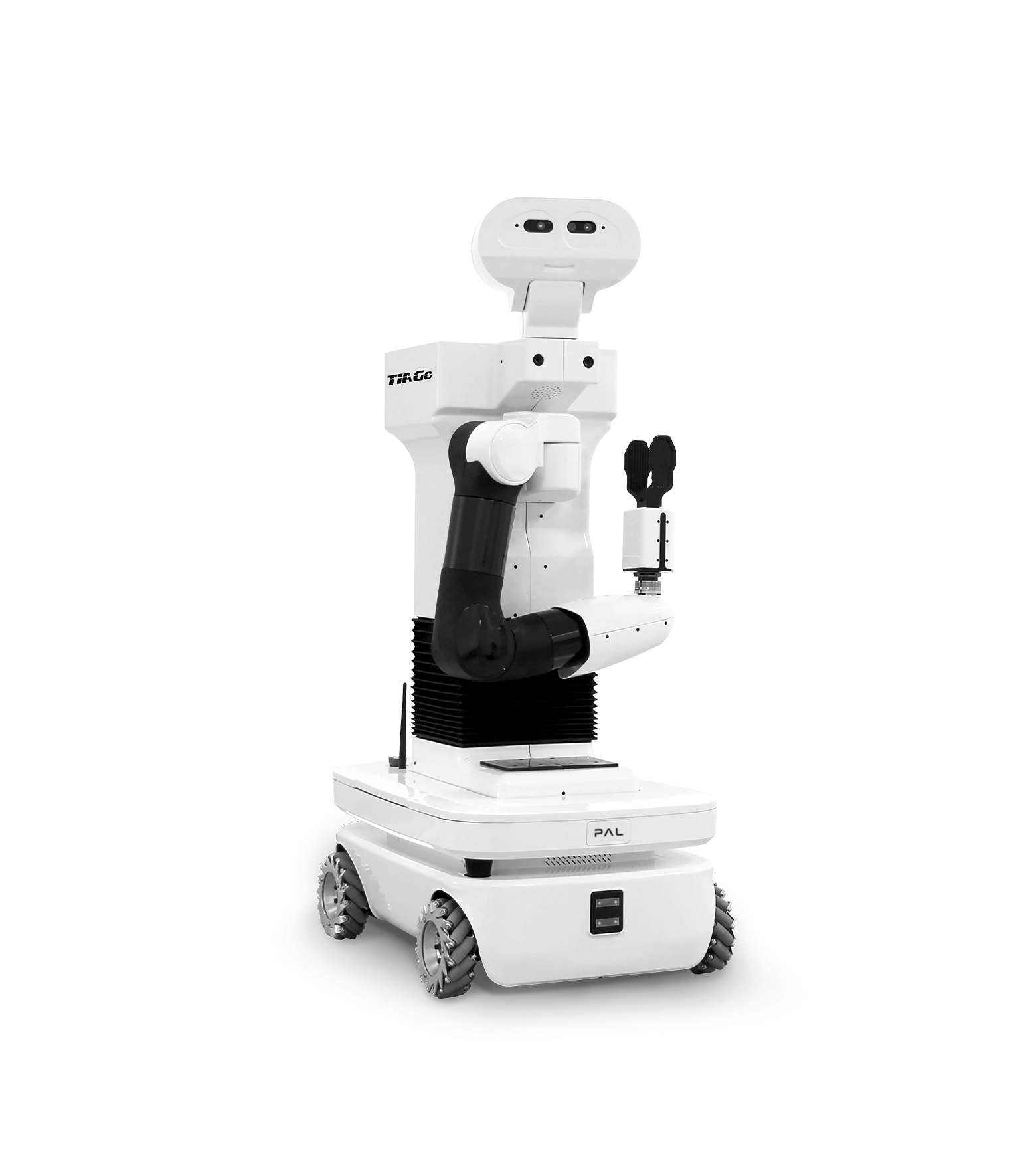
This is where platforms like PAL TIAGo and Reachy 2 are instructive. They are research robots, not mass consumer products, but they show the engineering vocabulary buyers should care about: compliant arms, force/torque sensing, teleoperation, simulation, and open software stacks.
4. Where do the cameras, microphones, maps, and memories go?
Accessibility robots see intimate spaces. They may learn room layouts, schedules, care routines, medication locations, family names, visitor patterns, and what the user can or cannot do independently. That data is more sensitive than a vacuum map.
A serious product should explain:
- whether speech and vision are processed locally, in the cloud, or both;
- what data is stored;
- how long it is kept;
- whether training use is opt-in;
- how household members can inspect and delete memories;
- how guest privacy works;
- what happens if the subscription ends.
This is one reason the Realbotix/10Things privacy language is worth watching. Privacy claims are easy to make at announcement time. The real test is whether settings, logs, and deletion controls are visible to ordinary households.
5. Who supports it when it breaks?
An assistive robot is not a gadget if someone depends on it. Buyers should ask about service response, spare parts, remote diagnostics, warranty, caregiver training, and what happens during outages. A failed toy is annoying. A failed assistive robot can remove independence.
For now, most capable robot-arm systems are still research, enterprise, or pilot products. That is not bad; it is honest. But it means buyers should expect a support relationship closer to medical equipment or accessibility infrastructure than to a smart speaker.
The realistic buying advice
If you need a robot arm for accessibility in 2026, start by separating three categories.
Available mobile manipulators are the most practical path. Stretch 4 is the standout because it is designed for real homes and assistive pilots, even though it is still expensive and developer-oriented. Toyota HSR and PAL TIAGo show the same core idea but are mainly research/developer platforms.
Home-branded humanoids like 1X NEO are worth tracking, especially because NEO is explicitly positioned for chores and gentle home interaction. But a humanoid shape is not proof of useful manipulation. Ask for task lists, safety evidence, privacy controls, support terms, and independent home trials.
Research humanoids like Unitree G1 and Figure 03 can be impressive, but they are not automatically assistive home products. Unitree G1 is comparatively accessible to developers at $13,500, while Figure 03 claims strong payload and fleet-learning progress. Neither should be evaluated like a finished home care tool.
For more context, compare this guide with ui44's broader pieces on assistive home robots, gesture versus voice control, safe home robot arms, and humanoid arm payload specs. You can also use the robot comparison tool to compare payload, height, runtime, category, price, and status across the current database.
Bottom line
Voice-controlled robot arms are one of the most important home-robot ideas because they connect AI directly to independence. The promise is not that a robot will become a perfect butler. The promise is smaller and more valuable: fewer moments where someone has to wait for another person to move an object, press a button, retrieve a phone, or clear a surface.
The Realbotix and 10Things demo is worth watching because it puts speech, arms, household routines, member recognition, privacy, and accessibility into one story. But the accessibility test is strict. A home robot has to work around bodies, furniture, care routines, clutter, fear, fatigue, and privacy. It has to fail softly. It has to stop safely. It has to respect the home.
The winners may not look like the most cinematic humanoids. They may look more like compact mobile manipulators with boringly good safety systems, clear data controls, and a habit of doing a few daily tasks reliably. For accessibility, that is not less exciting. It is the point.
Related in the database
Use this article as a privacy verification workflow
Turn the article into a privacy verification pass grounded in the robots, manufacturers, and components it actually references.
Voice-Controlled Robot Arms: The Accessibility Test already points you toward 8 linked robots, 8 manufacturers, and 6 countries inside the ui44 database. That matters because strong buyer guidance is easier to apply when you can move immediately from a claim or warning into concrete product pages, manufacturer directories, component explainers, and country-level context instead of treating the article as an isolated opinion piece. The fastest next step is to turn the article into a shortlist workflow: open the linked robot pages, verify which specs are actually published for those models, then compare the surrounding manufacturer and component context before you decide whether the underlying claim changes your buying plan.
For this topic, the useful discipline is to separate the editorial lesson from the catalog evidence. The article gives you the framing, but the robot pages tell you what each product actually ships with today: sensor stack, connectivity methods, listed price, release timing, category, and support-relevant compatibility notes. The manufacturer pages then show whether you are looking at a one-off launch, a broader lineup pattern, or a company that spans multiple categories. That layered workflow reduces the risk of buying on a single marketing phrase or a single support FAQ.
Use the robot pages to confirm which products actually expose cameras, microphones, Wi-Fi, or voice systems, then use the manufacturer pages to decide how much of the privacy question seems product-specific versus brand-wide. On this route cluster, Stretch 4, Human Support Robot (HSR), and TIAGo form the fastest reality check. If you want a quick working shortlist, open Compare Stretch 4, Human Support Robot (HSR), and TIAGo next, then keep this article open as the reasoning layer while you compare structured data side by side.
Practical Takeaway
Every robot, manufacturer, category, component, and country reference below resolves to a real ui44 page, keeping the follow-up path grounded in database records rather than generic advice.
Suggested next steps in ui44
- Open Stretch 4 and note the listed sensors, connectivity methods, and voice stack before you interpret any policy claim.
- Cross-check the wider brand context on Hello Robot so you can see whether the privacy question touches one model or a broader lineup.
- Use the linked component pages to confirm how common the relevant sensors and connectivity layers are across the database.
- Keep a short note of which policy layers you checked, which device features are actually present on the robot page, and which items still depend on region- or app-level confirmation.
- Finish with Compare Stretch 4, Human Support Robot (HSR), and TIAGo so the policy reading sits next to structured product data.
Robot profiles worth opening next
Use the linked product pages as the evidence layer
The linked robot pages are where this article becomes operational. Instead of asking whether the headline is interesting, use the robot entries to inspect the actual mix of sensors, connectivity options, batteries, pricing, release timing, and stated capabilities attached to the products mentioned in the article. That is the easiest way to see whether the warning or opportunity described here affects one product family, a specific design pattern, or an entire buying lane.
Stretch 4
Hello Robot · Home Assistants · Available
Stretch 4 is tracked on ui44 as a available home assistants robot from Hello Robot. The database currently records a listed price of $29,950, a release date of 2026-05-12, 8 hours (light CPU load) battery life, Not officially disclosed charging time, and a published stack that includes Wide-FOV depth sensing, High-resolution RGB cameras, and Calibrated RGB + depth perception plus its listed connectivity stack.
For privacy-focused reading, this page matters because it shows the concrete device surface behind the policy discussion. Use it to verify whether Stretch 4 combines sensors and connectivity in a way that could change the in-home data footprint, and compare the listed capabilities such as Mobile Manipulation, Omnidirectional Indoor Mobility, and Autonomous Mapping and Navigation with any cloud, app, or voice layers.
Human Support Robot (HSR)
Toyota · Home Assistants · Active
Human Support Robot (HSR) is tracked on ui44 as a active home assistants robot from Toyota. The database currently records a listed price of Price TBA, a release date of 2012, Not disclosed battery life, Not disclosed charging time, and a published stack that includes its published sensor stack plus Remote operation support (real-time face/voice relay).
For privacy-focused reading, this page matters because it shows the concrete device surface behind the policy discussion. Use it to verify whether Human Support Robot (HSR) combines sensors and connectivity in a way that could change the in-home data footprint, and compare the listed capabilities such as Pick up objects from floor, Retrieve items from shelves, and Remote teleoperation by family/caregivers with any cloud, app, or voice layers, including Voice-command operation support.
TIAGo
PAL Robotics · Research · Active
TIAGo is tracked on ui44 as a active research robot from PAL Robotics. The database currently records a listed price of Price TBA, a release date of 2015, 4–5h (1 battery) / 8–10h (2 batteries) battery life, Not disclosed charging time, and a published stack that includes RGB-D Camera, Force/Torque Sensor (wrist), and Laser Range Finder plus Wi-Fi and Ethernet.
For privacy-focused reading, this page matters because it shows the concrete device surface behind the policy discussion. Use it to verify whether TIAGo combines sensors and connectivity in a way that could change the in-home data footprint, and compare the listed capabilities such as Autonomous Navigation, Object Manipulation, and Pick and Place with any cloud, app, or voice layers.
NEO
1X Technologies · Humanoid · Pre-order
NEO is tracked on ui44 as a pre-order humanoid robot from 1X Technologies. The database currently records a listed price of $20,000, a release date of 2025-10-28, ~4 hours battery life, Not disclosed charging time, and a published stack that includes RGB Cameras, Depth Sensors, and Tactile Skin plus Wi-Fi and Bluetooth.
For privacy-focused reading, this page matters because it shows the concrete device surface behind the policy discussion. Use it to verify whether NEO combines sensors and connectivity in a way that could change the in-home data footprint, and compare the listed capabilities such as Household Chores, Tidying Up, and Safe Human Interaction with any cloud, app, or voice layers.
G1 is tracked on ui44 as a available humanoid robot from Unitree. The database currently records a listed price of $13,500, a release date of 2024-05-13, ~2 hours battery life, Not disclosed charging time, and a published stack that includes Depth Camera, 3D LiDAR, and 4 Microphone Array plus Wi-Fi 6 and Bluetooth 5.2.
For privacy-focused reading, this page matters because it shows the concrete device surface behind the policy discussion. Use it to verify whether G1 combines sensors and connectivity in a way that could change the in-home data footprint, and compare the listed capabilities such as Bipedal Walking, Object Manipulation, and Dexterous Hands (optional Dex3-1) with any cloud, app, or voice layers.
Manufacturer context behind the article
Check whether this is one product story or a broader company pattern
Manufacturer pages add the privacy context that individual product pages cannot show on their own. They help you check whether cameras, microphones, cloud accounts, app controls, and policy assumptions appear across a broader lineup or stay tied to one specific product story.
Hello Robot
ui44 currently tracks 2 robots from Hello Robot across 1 category. The company is grouped under USA, and the current catalog footprint on ui44 includes Stretch 3, Stretch 4.
That wider brand context matters because privacy questions rarely stop at one FAQ page. A manufacturer route helps you see whether the article is centered on one premium model or on a company that has several relevant products and therefore more than one place where the same policy or app assumptions might matter. The category mix here currently points toward Home Assistants as the most useful next route if you want to see whether this article reflects a wider pattern inside the brand.
Toyota
ui44 currently tracks 3 robots from Toyota across 2 categorys. The company is grouped under Japan, and the current catalog footprint on ui44 includes Human Support Robot (HSR), T-HR3, CUE7.
That wider brand context matters because privacy questions rarely stop at one FAQ page. A manufacturer route helps you see whether the article is centered on one premium model or on a company that has several relevant products and therefore more than one place where the same policy or app assumptions might matter. The category mix here currently points toward Home Assistants, Humanoid as the most useful next route if you want to see whether this article reflects a wider pattern inside the brand.
PAL Robotics
ui44 currently tracks 5 robots from PAL Robotics across 1 category. The company is grouped under Spain, and the current catalog footprint on ui44 includes TALOS, TIAGo, REEM-C.
That wider brand context matters because privacy questions rarely stop at one FAQ page. A manufacturer route helps you see whether the article is centered on one premium model or on a company that has several relevant products and therefore more than one place where the same policy or app assumptions might matter. The category mix here currently points toward Research as the most useful next route if you want to see whether this article reflects a wider pattern inside the brand.
1X Technologies
ui44 currently tracks 2 robots from 1X Technologies across 1 category. The company is grouped under Norway, and the current catalog footprint on ui44 includes NEO, EVE.
That wider brand context matters because privacy questions rarely stop at one FAQ page. A manufacturer route helps you see whether the article is centered on one premium model or on a company that has several relevant products and therefore more than one place where the same policy or app assumptions might matter. The category mix here currently points toward Humanoid as the most useful next route if you want to see whether this article reflects a wider pattern inside the brand.
Broaden the scan without leaving the database
Categories, components, and countries add the wider context
Category framing
Category pages are useful when the article touches a buying pattern that shows up across brands. A category route helps you confirm whether the linked products sit in a narrow niche or whether the same question should be tested across a larger field of alternatives.
Home Assistants
The Home Assistants category page currently groups 16 tracked robots from 14 manufacturers. ui44 describes this lane as: Arm-based household helpers — laundry folders, kitchen robots, and mobile manipulators that take on hands-on physical tasks around the home.
That makes the category route a practical follow-up when you want to check whether the products linked in this article are typical for the lane or whether they sit at one edge of the market. Useful starting examples currently include Robody, Futuring 2 (F2), Stretch 3.
Research
The Research category page currently groups 49 tracked robots from 39 manufacturers. ui44 describes this lane as: Academic and research robotics platforms pushing the boundaries of what machines can learn and do in the lab and beyond.
That makes the category route a practical follow-up when you want to check whether the products linked in this article are typical for the lane or whether they sit at one edge of the market. Useful starting examples currently include HRP-4C, HRP-5P, NAO6.
Country and ecosystem context
Country pages give extra context when support practices, launch sequencing, regulatory posture, or manufacturer mix matter. They are not a substitute for model-level verification, but they do help you see which ecosystems cluster together and which manufacturers sit in the same regional field when you broaden the search beyond the article headline.
USA
The USA route currently groups 89 tracked robots from 69 manufacturers in ui44. That gives you a useful regional lens when the article points toward support practices, launch sequencing, or brand clusters that may share similar ecosystem assumptions.
On the current route, manufacturers like Faraday Future, iRobot, Boston Dynamics make the page a good way to broaden the scan without losing the regional context that often shapes availability, documentation style, and adjacent alternatives.
Japan
The Japan route currently groups 26 tracked robots from 17 manufacturers in ui44. That gives you a useful regional lens when the article points toward support practices, launch sequencing, or brand clusters that may share similar ecosystem assumptions.
On the current route, manufacturers like AIST, SoftBank Robotics, Toyota make the page a good way to broaden the scan without losing the regional context that often shapes availability, documentation style, and adjacent alternatives.
Spain
The Spain route currently groups 6 tracked robots from 2 manufacturers in ui44. That gives you a useful regional lens when the article points toward support practices, launch sequencing, or brand clusters that may share similar ecosystem assumptions.
On the current route, manufacturers like PAL Robotics, Star Robotics make the page a good way to broaden the scan without losing the regional context that often shapes availability, documentation style, and adjacent alternatives.
Questions to answer before you move from reading to buying
A follow-up FAQ built from the entities already linked in this article
Frequently Asked Questions
Which page should I open first after reading “Voice-Controlled Robot Arms: The Accessibility Test”?
Start with Stretch 4. That gives you a concrete product anchor for the article’s main claim. From there, branch into the manufacturer and component pages so you can tell whether the article is describing one specific model, a repeated brand pattern, or a wider technology issue that affects multiple shortlist options.
How do the manufacturer pages change the buying decision?
Hello Robot help you zoom out from one article and one product. On ui44 they show lineup breadth, category spread, and the neighboring robots tied to the same company. That context is useful when you are deciding whether a risk belongs to a single model, whether it shows up across a brand’s portfolio, and whether you should keep looking at alternatives before committing.
When should I switch from reading to side-by-side comparison?
Move into Compare Stretch 4, Human Support Robot (HSR), and TIAGo as soon as you understand the article’s main warning or promise. The article explains what to watch for, but the compare view is where you can check whether price, status, battery life, connectivity, sensors, and category fit still make the robot a good match for your own home and budget.
Where to go next in ui44
Keep the research chain inside the database
If you want to keep going, these follow-on pages give you the cleanest expansion path from article to research session. Open the comparison route first if you are deciding between products today. Open the manufacturer, category, and component routes if you still need to understand the broader pattern behind the claim.
Written by
ui44 Team
Published May 13, 2026
Share this article
Open a plain share link on X or Bluesky. No embeds, no widgets, no cookie baggage.