For a home buyer, this matters more than the headline number. A robot that can briefly lift a heavy object may still be bad at carrying groceries through a hallway, handing you a glass, or putting a loaded laundry basket on a shelf. The useful question is not "which robot is strongest?" It is: what kind of load, in what posture, for how long, and around whom?
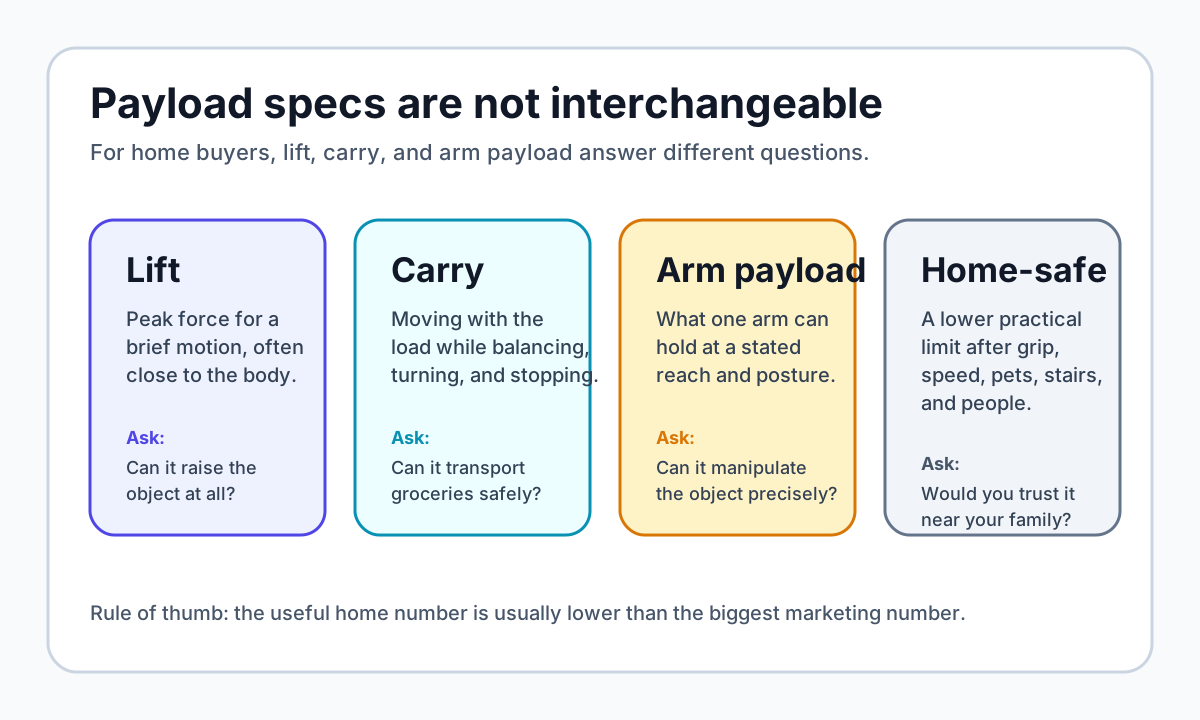
Here is the practical way to read humanoid robot payload specs, robot lift capacity, and carry claims before you trust them in a real home.
The Three Payload Numbers Mean Different Things
Lift capacity is the biggest, least home-specific number. It usually means a robot can raise or support a load briefly, often close to its body, sometimes in a lab-friendly posture. A lift number is useful for understanding peak strength, but it does not prove the robot can walk, turn, stop, or manipulate the object.
Carry capacity is closer to a real-world chore. Carrying means the robot must stay balanced while moving with the object. The load affects foot placement, torso posture, braking distance, battery use, and safety around people. For a biped, a 10 kg bag is not just 10 kg. It is a moving mass that can swing, shift, or block sensors.
Arm payload is the most important spec for household manipulation. It asks what one arm can hold while reaching, grasping, or placing an object. This is the number that matters for mugs, laundry, packages, plates, cabinet doors, and most chores above floor level.
1X makes the distinction unusually clear on its official NEO order page. NEO is listed with a 154 lb lift, 55 lb carry, and 18 lb arm payload. Converted roughly, that is about 70 kg lift, 25 kg carry, and 8.2 kg arm payload. The arm number is far lower than the lift number, and that is exactly the point. For a kitchen or laundry room, the lower number is usually the honest one.
The Same Kilogram Can Be Easy or Hard
A 3 kg dumbbell, a 3 kg grocery bag, and a 3 kg casserole dish are not the same robotics problem. The dumbbell has a predictable handle. The grocery bag swings. The casserole may be hot, fragile, slippery, and wider than the gripper.
That is why posture language matters. Unitree's official G1 page lists about 2 kg arm maximum load for the base model and about 3 kg for the EDU configuration, while also warning that maximum arm load varies greatly under different arm extension postures. AGIBOT is even more explicit for the X2: the database records 3 kg max in specific postures and ≤1 kg across the full range. Those two figures describe very different buyer expectations.
The distinction is not a weakness. It is good disclosure. A robot arm is a lever. The farther the object is from the shoulder, elbow, or wrist, the harder the job becomes. A robot that can hold 3 kg close to the torso may only handle a much lighter object when reaching into a cabinet or extending toward a counter edge.
Payload Clues for Robots Tracked in ui44
The table below compares several home-relevant and manipulation-relevant robots tracked in ui44. It deliberately avoids ranking every robot by one number, because the numbers describe different jobs. It also separates the source basis: some payload clues are already in ui44's robot records, while the 1X NEO and Unitree G1 values are official product-page specs that are not yet represented as payload fields in the ui44 database.
Robot
- Status
- Pre-order
- Price / access
- $20,000 early access
- Published payload clue
- 18 lb arm payload; 55 lb carry; 154 lb lift
- Source basis
- Official 1X order page, not ui44 payload data
- What the number is good for
- Separating household manipulation from peak strength
Robot
- Status
- Active
- Price / access
- No public price
- Published payload clue
- 50 kg instant, 30 kg sustained capacity
- Source basis
- ui44 description/capability record
- What the number is good for
- Industrial material handling, not a home promise
Robot
- Status
- Active
- Price / access
- Enterprise / RaaS
- Published payload clue
- Box carrying up to 16 kg
- Source basis
- ui44 capability record
- What the number is good for
- Tote and warehouse-style carrying
Robot
- Status
- Available
- Price / access
- $13,500 base
- Published payload clue
- About 2 kg arm load; EDU about 3 kg
- Source basis
- Official Unitree page, not ui44 payload data
- What the number is good for
- Research and light manipulation
Robot
- Status
- Available
- Price / access
- $24,240 list
- Published payload clue
- 3 kg max posture; ≤1 kg full range
- Source basis
- ui44 payload field
- What the number is good for
- Honest reminder that reach changes capacity
Robot
- Status
- Development
- Price / access
- Not announced
- Published payload clue
- 3 kg max arm payload
- Source basis
- ui44 payload field
- What the number is good for
- Open-source research baseline
Robot
- Status
- Pre-order
- Price / access
- €19,999 standard
- Published payload clue
- 3 kg payload
- Source basis
- ui44 payload field
- What the number is good for
- Compact education/research manipulation
Robot
- Status
- Active
- Price / access
- $24,950
- Published payload clue
- 2 kg payload
- Source basis
- ui44 capability record
- What the number is good for
- Real-home mobile manipulation research
Robot
- Status
- Active
- Price / access
- Contact for quote
- Published payload clue
- 6 kg per arm fully extended
- Source basis
- ui44 payload field
- What the number is good for
- Heavy research humanoid manipulation
Robot
- Status
- Active
- Price / access
- About $70,000
- Published payload clue
- 3 kg per arm
- Source basis
- ui44 payload field
- What the number is good for
- Teleoperated and open-source manipulation
| Robot | Status | Price / access | Published payload clue | Source basis | What the number is good for |
|---|---|---|---|---|---|
| 1X NEO | Pre-order | $20,000 early access | 18 lb arm payload; 55 lb carry; 154 lb lift | Official 1X order page, not ui44 payload data | Separating household manipulation from peak strength |
| Boston Dynamics Atlas | Active | No public price | 50 kg instant, 30 kg sustained capacity | ui44 description/capability record | Industrial material handling, not a home promise |
| Agility Digit | Active | Enterprise / RaaS | Box carrying up to 16 kg | ui44 capability record | Tote and warehouse-style carrying |
| Unitree G1 | Available | $13,500 base | About 2 kg arm load; EDU about 3 kg | Official Unitree page, not ui44 payload data | Research and light manipulation |
| AGIBOT X2 | Available | $24,240 list | 3 kg max posture; ≤1 kg full range | ui44 payload field | Honest reminder that reach changes capacity |
| ROBOTIS AI Sapiens K0 | Development | Not announced | 3 kg max arm payload | ui44 payload field | Open-source research baseline |
| NEURA 4NE-1 Mini | Pre-order | €19,999 standard | 3 kg payload | ui44 payload field | Compact education/research manipulation |
| Hello Robot Stretch 3 | Active | $24,950 | 2 kg payload | ui44 capability record | Real-home mobile manipulation research |
| PAL TALOS | Active | Contact for quote | 6 kg per arm fully extended | ui44 payload field | Heavy research humanoid manipulation |
| Reachy 2 | Active | About $70,000 | 3 kg per arm | ui44 payload field | Teleoperated and open-source manipulation |
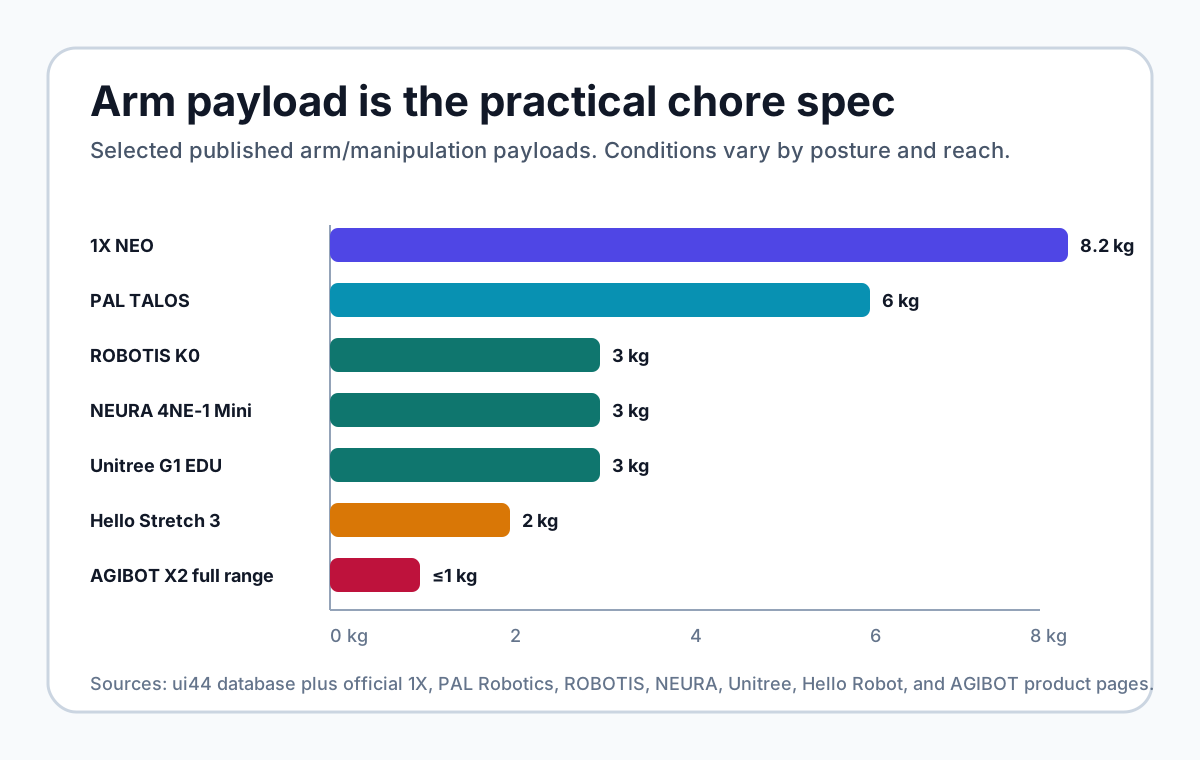
The buyer takeaway is blunt: a robot with a smaller, well-described arm payload may be more useful than a stronger robot with vague demo claims. A ui44 robot page is still the right starting point for price, status, battery life, links, and comparable specs, but payload numbers should be read with their source and posture caveat attached. Hello Robot Stretch 3 only lists a 2 kg payload, but it is built around a compact mobile manipulator that can reach real shelves, cabinets, and tables in homes. For assistive and research users, that may be more actionable than a humanoid that looks stronger on video but has no clear manipulation envelope.
What Counts as a Home Payload?
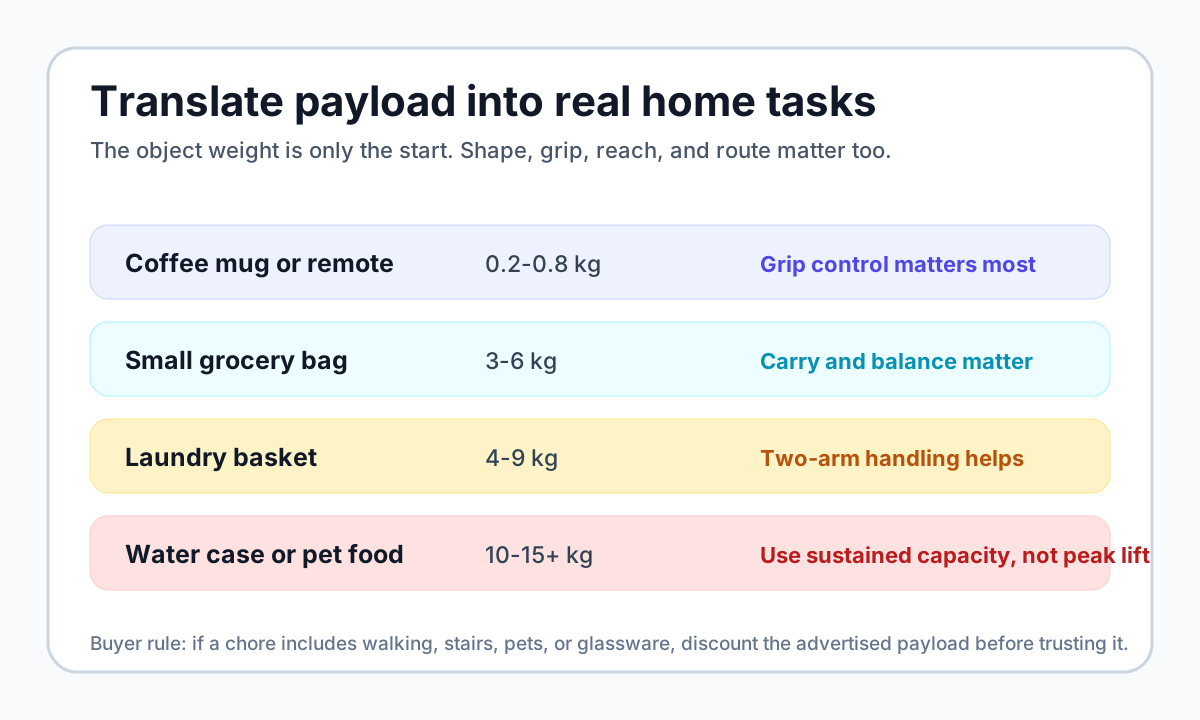
A home robot payload should be judged against real objects, not gym numbers. Most everyday chores fall into four bands:
- Small objects under 1 kg: remotes, mugs, medicine bottles, and snack bowls. The hard part is not mass. It is grip, perception, and not knocking things over. A robot needs compliant fingers, wrist control, and object recognition more than brute force.
- Light chores around 2-6 kg: a few groceries, a folded towel stack, or a small trash bag. This is where many current arms begin to look plausible, but only if the object is easy to grasp and the route is simple.
- Heavier household carrying around 6-15 kg: laundry baskets, heavier grocery bags, pet food, and water packs. Now robot carry capacity, two-arm handling, balance, and safety limits matter more than a single-arm spec.
- Human lifting: a separate category entirely. A robot that can lift a large number on paper should not be assumed safe for lifting a child, pet, older adult, or person who has fallen. Human handling requires medical-grade safety, compliance, perception, liability coverage, and certification. A payload number alone is nowhere near enough.
Peak Strength Is Not the Home-Safety Limit
The most impressive number in this space may be Boston Dynamics' Atlas. Boston Dynamics' current Atlas page lists 50 kg instant and 30 kg sustained weight capacity, with a 90 kg robot, IP67 rating, tactile sensing, 360-degree camera view, self-swappable batteries, and a 4-hour battery life. That is serious industrial strength.
It is also not a consumer home buying signal. Atlas is positioned for enterprise material handling, workflow integration, and selected customer deployments. It shows what high-end industrial humanoids can do, not what you should expect from a 2026 home assistant.
The same caution applies to Digit. ui44 lists Digit at 175 cm, 65 kg, roughly 4 hours of battery life, and a 16 kg box-carrying capability. That is meaningful because Digit's job is logistics: moving totes in warehouses and factories. A tote is standardized. A home is not. A half-open grocery bag, stairs, a dog underfoot, and a child walking nearby are different constraints.
For home buyers, the safe operating limit is usually below the lab or industrial limit. The robot may need to slow down, use two hands, avoid stairs, refuse fragile objects, or ask for human help.
The Posture Clause Is the Most Important Fine Print
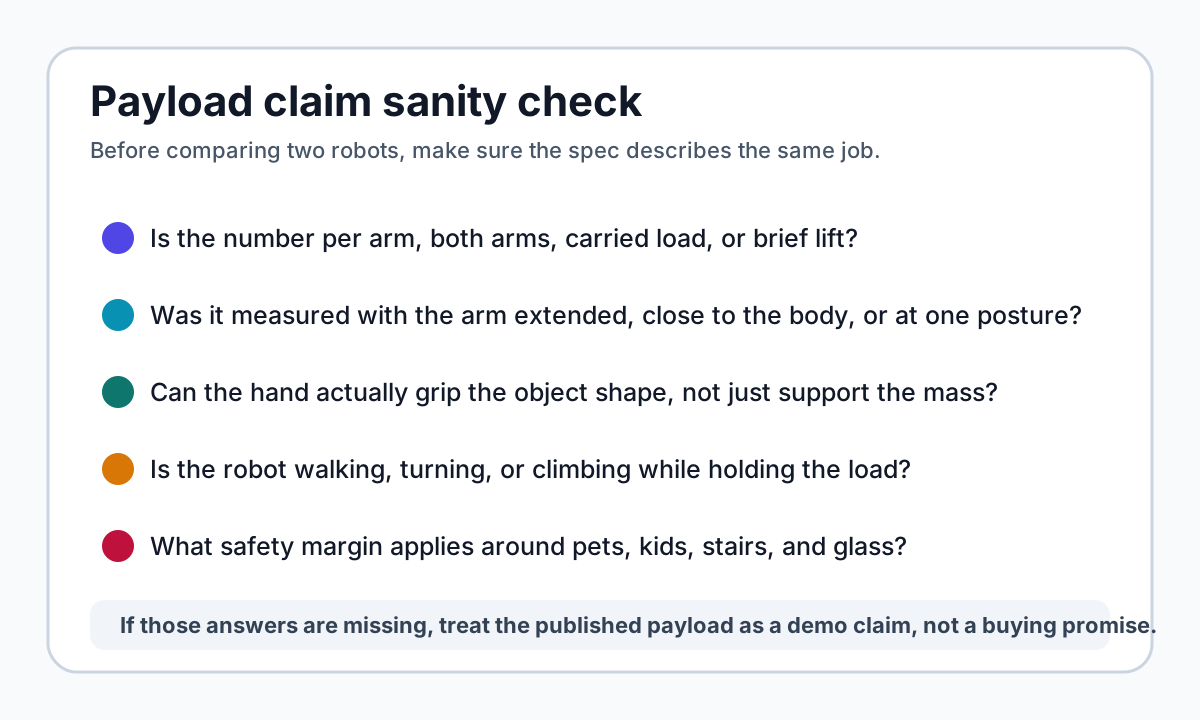
Whenever a spec says "arm payload," look for the posture clause. Ask whether the load is measured at full extension, close to the body, with the wrist straight, with the elbow bent, at a specific speed, during walking, or standing still.
Those details decide whether the number describes a useful chore or only a best case. A 3 kg arm payload at full reach is not the same promise as a 3 kg payload held tight against the torso.
PAL Robotics is clear about this for TALOS: the robot can lift 6 kg with one arm fully extended. That is a useful spec because it tells you the condition. ROBOTIS is similarly direct: AI Sapiens K0 is 1.3 m tall, 34 kg, has 23 degrees of freedom, and supports a 3 kg maximum arm payload. That is not a consumer claim, but it is a clean research-platform number.
Unitree's G1 page includes one of the best caveats in the market: maximum arm load varies greatly under different arm extension postures. Every manufacturer should say something like that. Without posture, a payload spec is a headline, not a buying guide.
How to Compare Two Robots Without Fooling Yourself
Use this sequence before comparing robots in /compare or a spreadsheet:
- Match the payload type. Do not compare lift against arm payload or sustained carry against a one-time peak number.
- Convert units. Pounds and kilograms hide differences. Convert everything before ranking.
- Check posture and reach. A full-extension arm payload is more useful than an unspecified max.
- Check the hand. A 5 kg arm with a weak gripper may be worse than a 2 kg arm with compliant fingers for kitchen tasks.
- Check status and access. A pre-order, enterprise robot, and available research platform are not equal buying options.
- Discount for home safety. Pets, children, stairs, glass, water, and narrow hallways all reduce the practical limit.
What Payload Actually Tells You About a Home Robot
Payload is a useful spec, but it is not a proxy for intelligence. It tells you what the hardware may be able to support under certain conditions. It does not tell you whether the robot can identify the right object, choose a grip, avoid spilling, recover from a slip, or decide that a task is unsafe.
That is why the best home-robot payload spec is not a single number. It is a bundle: arm payload, carry payload, object examples, posture limits, hand design, speed limits, safety behavior, and real deployment status.
In 2026, the clearest home-focused payload disclosure comes from 1X because NEO separates lift, carry, and arm payload on the same page. The most powerful public spec comes from Boston Dynamics Atlas, but that is an industrial robot. The most useful buyer fine print comes from AGIBOT and Unitree, because they make posture limits explicit. And the most quietly practical home-manipulation example may still be Hello Robot Stretch 3, because it trades humanoid theater for a modest, specific 2 kg payload in real indoor spaces.
If you are choosing a robot for chores, do not ask "how much can it lift?" Ask: what can it safely hold at arm's length, carry through my home, and put down without making the problem worse? That is the payload spec that matters.
Written by
ui44 Team
Published April 26, 2026
Share this article
Open a plain share link on X or Bluesky. No embeds, no widgets, no cookie baggage.