That is why arm safety is becoming one of the most important hidden specs in home robotics. Payload is easy to market. A robot can lift 3 kg, 6 kg, or 15 kg. But a home is not a factory cell. It is full of soft objects, awkward handles, cluttered counters, moving people, pets, and furniture the robot will occasionally touch.
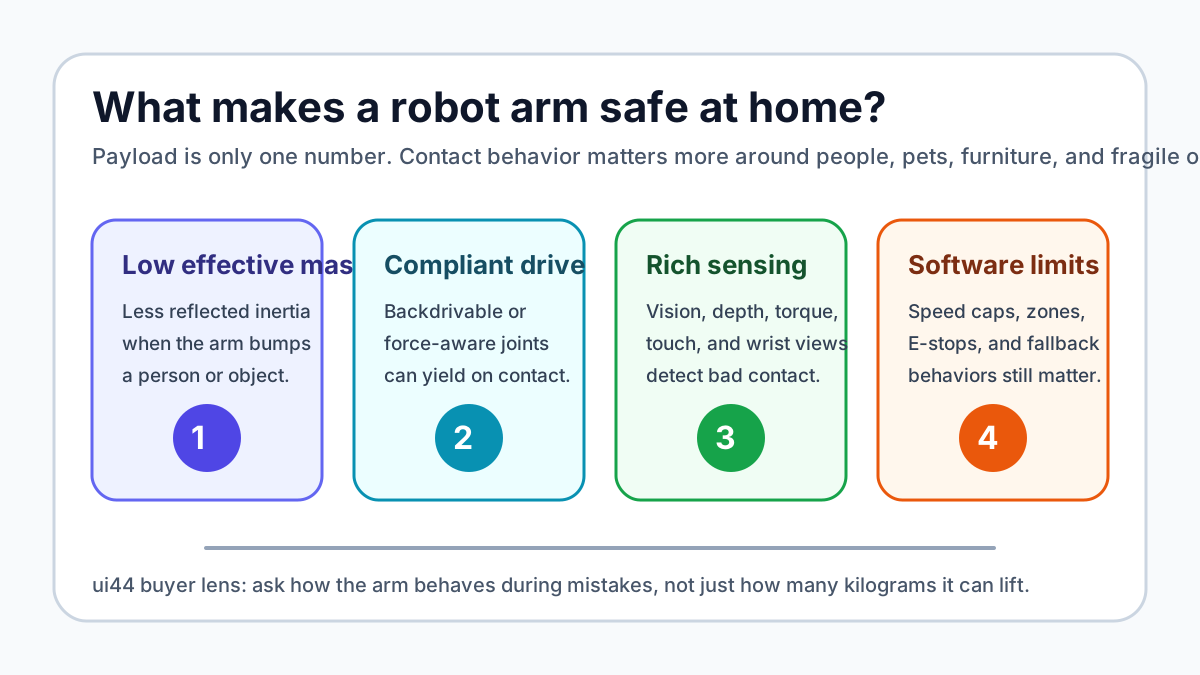
The buyer question is not simply "how strong is the arm?" It is "what happens when the arm is wrong?"
The Problem With Judging Robot Arms by Payload Alone
Payload tells you how much weight a robot can carry under a stated condition. It does not tell you how safely the arm behaves while reaching across a kitchen counter, nudging a laundry basket, or recovering from a bad grasp.
A high payload number can even be misleading. Strong, highly geared robot arms are excellent in industrial settings where the workspace is controlled and humans stay outside the robot's operating envelope. In homes, those same traits can create a problem: if the robot arm has a lot of reflected inertia, a small collision can feel much larger than the arm's visible size suggests.
RAI Institute's AthenaZero research is useful because it explains this in plain mechanical terms. The institute argues that many standard robot arms use stiff linkage designs and high gear ratios, often above 80:1. That can improve precision and strength, but it also amplifies effective inertia. When the arm contacts the world, the robot may have a harder time yielding gently.
AthenaZero goes in the opposite direction. RAI describes it as a bimanual manipulation platform with two 7-DoF arms, two 6-DoF underactuated hands, low gear ratios, backdrivable joints, and a design goal of keeping effective mass closer to human-arm behavior. The point is not that AthenaZero is a home product. It is a research signal: safe manipulation depends on force behavior, mass distribution, backdrivability, and control authority — not just muscle.
What "Compliance" Means in a Home Robot
In robotics, compliance means the robot can give way, absorb error, or control contact instead of behaving like a rigid machine. That can come from hardware, software, or both.
A compliant home robot arm might use:
- backdrivable or quasi-direct-drive actuators that can yield to external forces;
- torque sensing or current-based force estimation;
- soft covers, flexible grippers, or tendon-driven mechanisms;
- tactile skin or contact sensors;
- speed and force limits near people;
- emergency-stop hardware and conservative fallback behavior.
The best systems combine several of these. A soft exterior does not help if the arm swings too fast. A force limit does not help if the robot cannot detect the person or object it is hitting. A strong gripper is not useful if it crushes the thing it was supposed to pick up.
That is why the new generation of home-oriented humanoids and mobile manipulators increasingly talks about softness, tactile sensing, and safe interaction alongside AI.
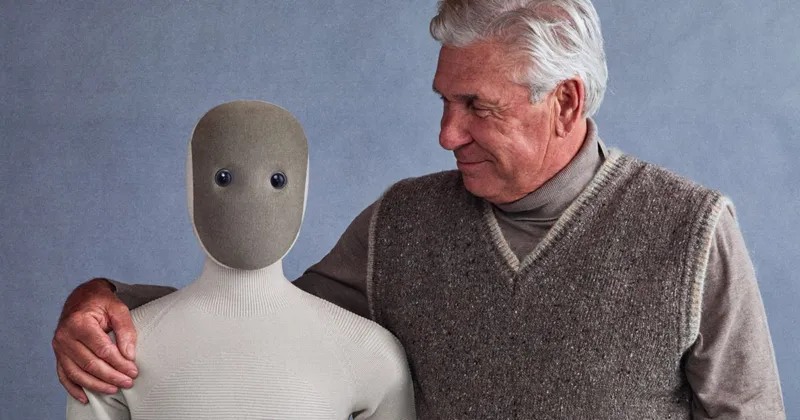
1X NEO is the clearest consumer-facing example. In the ui44 database, NEO is tracked as a $20,000 pre-order humanoid, 167 cm tall, 30 kg, with about four hours of battery life, RGB cameras, depth sensors, tactile skin, and household chore positioning. 1X's official NEO page emphasizes that the robot is light, soft, quiet, and tendon-driven. It also says Expert Mode can guide chores the robot does not know yet.
That last detail matters. Early home robots will make mistakes. A safer arm is not one that never fails. It is one that fails slowly, softly, observably, and with a human override path.
Effective Mass: The Spec Buyers Rarely See
Effective mass is a way to think about how heavy a robot arm behaves at the point of contact. A slim arm can still hit hard if its gearing and inertia make it difficult to decelerate. A larger arm can feel gentler if its design keeps reflected inertia low and the controller can respond quickly.
RAI Institute's AthenaZero write-up compares this directly. It says AthenaZero's wrist effective mass in a neutral configuration is about 9 lb, while a human arm is about 6 lb. The same post lists much higher wrist effective-mass figures for common collaborative research arms, including Franka Research 3 and Universal Robots UR5e. The exact numbers belong to a research comparison, not a consumer shopping label, but the direction is important: low-inertia arms are easier to make gentle at human cadence.
For home buyers, this becomes a practical checklist:
Buyer question
Does the arm have force or torque awareness?
- Why it matters at home
- It needs to notice contact, not just continue a path.
Buyer question
Are the joints backdrivable or compliant?
- Why it matters at home
- A yielding joint can reduce collision severity.
Buyer question
Is the robot lightweight relative to its reach?
- Why it matters at home
- Lower moving mass usually helps around people.
Buyer question
Are hands/grippers soft or force-limited?
- Why it matters at home
- Home objects are fragile, slippery, and irregular.
Buyer question
Can the robot stop or hand control to a person?
- Why it matters at home
- Recovery matters as much as autonomy.
| Buyer question | Why it matters at home |
|---|---|
| Does the arm have force or torque awareness? | It needs to notice contact, not just continue a path. |
| Are the joints backdrivable or compliant? | A yielding joint can reduce collision severity. |
| Is the robot lightweight relative to its reach? | Lower moving mass usually helps around people. |
| Are hands/grippers soft or force-limited? | Home objects are fragile, slippery, and irregular. |
| Can the robot stop or hand control to a person? | Recovery matters as much as autonomy. |
This is also why a robot that looks less impressive may be more home-ready. A modest 2 kg gripper on a compact mobile base can be safer and more useful in a kitchen than a much stronger arm designed for pallets, machines, or warehouse bins.
How Current Robots Compare
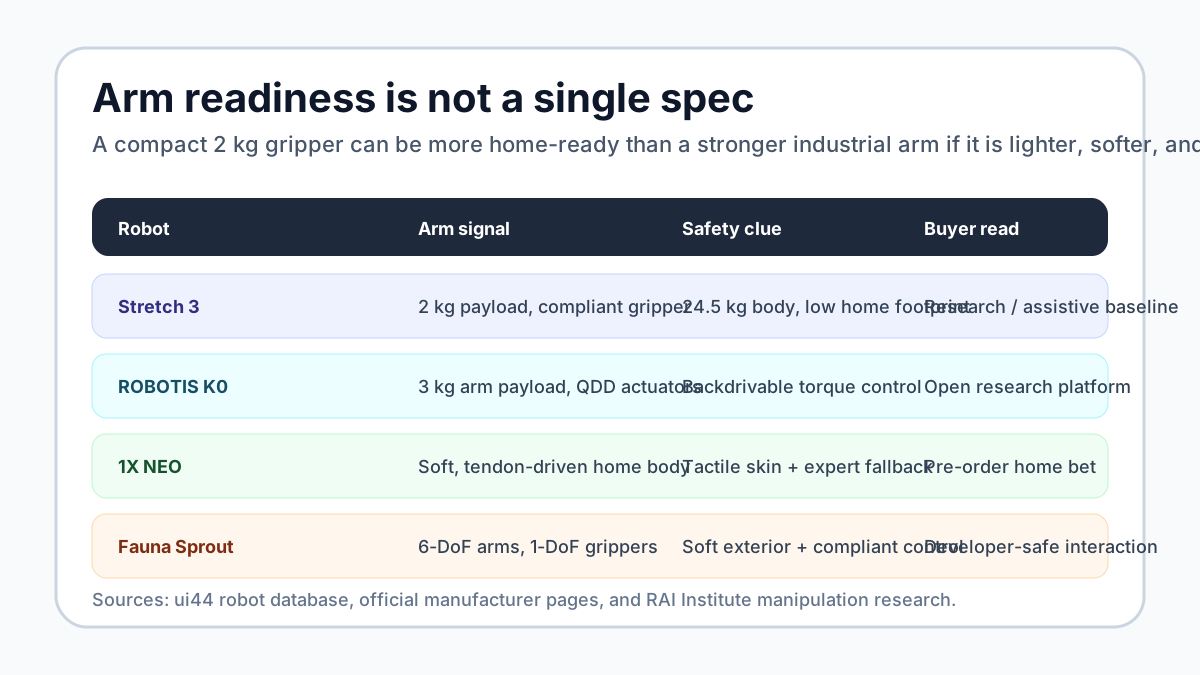
The ui44 database now tracks enough manipulation-focused robots to see four different design paths.
Robot
- Arm and safety signal
- Compact mobile manipulator with compliant gripper
- ui44 data point
- $24,950, 24.5 kg body, 33 x 34 cm footprint, 2 kg payload, 2-5 hour runtime
- What it means for buyers
- One of the most honest real-home manipulation baselines, but still a research/developer platform.
Robot
- Arm and safety signal
- Quasi-direct-drive actuators and torque-level control
- ui44 data point
- 1.3 m, 34 kg, 23 DoF, 3 kg max arm payload, development status
- What it means for buyers
- Strong signal for open, compliant humanoid research; not a household product yet.
Robot
- Arm and safety signal
- Soft body, tendon-driven movement, tactile skin, Expert Mode
- ui44 data point
- $20,000 pre-order, 167 cm, 30 kg, about 4 hours battery
- What it means for buyers
- The boldest home-facing safety story, but real autonomy and privacy trade-offs remain.
Robot
- Arm and safety signal
- Soft exterior, compliant motor control, minimized pinch points
- ui44 data point
- 107 cm, 22.7 kg, 29 DoF, 3-3.5 hour swappable battery
- What it means for buyers
- A developer platform built around safer interaction rather than heavy-duty household labor.
Robot
- Arm and safety signal
- Two 7-DoF bio-inspired arms for manipulation research
- ui44 data point
- About $70,000, 50 kg, 3 kg per arm, ROS 2 and Python SDK
- What it means for buyers
- Excellent for labs and embodied-AI work; not a consumer chore robot.
Robot
- Arm and safety signal
- Pro tier adds dexterous hands and teleoperation
- ui44 data point
- €19,999 standard, €29,999 Pro, 132 cm, 36 kg, 3 kg payload
- What it means for buyers
- A compact humanoid price breakthrough, but manipulation features depend on tier and availability.
| Robot | Arm and safety signal | ui44 data point | What it means for buyers |
|---|---|---|---|
| Hello Robot Stretch 3 | Compact mobile manipulator with compliant gripper | $24,950, 24.5 kg body, 33 x 34 cm footprint, 2 kg payload, 2-5 hour runtime | One of the most honest real-home manipulation baselines, but still a research/developer platform. |
| ROBOTIS AI Sapiens K0 | Quasi-direct-drive actuators and torque-level control | 1.3 m, 34 kg, 23 DoF, 3 kg max arm payload, development status | Strong signal for open, compliant humanoid research; not a household product yet. |
| 1X NEO | Soft body, tendon-driven movement, tactile skin, Expert Mode | $20,000 pre-order, 167 cm, 30 kg, about 4 hours battery | The boldest home-facing safety story, but real autonomy and privacy trade-offs remain. |
| Fauna Sprout | Soft exterior, compliant motor control, minimized pinch points | 107 cm, 22.7 kg, 29 DoF, 3-3.5 hour swappable battery | A developer platform built around safer interaction rather than heavy-duty household labor. |
| Reachy 2 | Two 7-DoF bio-inspired arms for manipulation research | About $70,000, 50 kg, 3 kg per arm, ROS 2 and Python SDK | Excellent for labs and embodied-AI work; not a consumer chore robot. |
| NEURA 4NE-1 Mini | Pro tier adds dexterous hands and teleoperation | €19,999 standard, €29,999 Pro, 132 cm, 36 kg, 3 kg payload | A compact humanoid price breakthrough, but manipulation features depend on tier and availability. |
The pattern is clear. The most home-relevant robots are not simply the strongest. They are the ones that combine manageable body weight, explicit safe-interaction design, sensing, accessible control, and a realistic task scope.
Stretch 3 Shows Why Small Can Be Serious
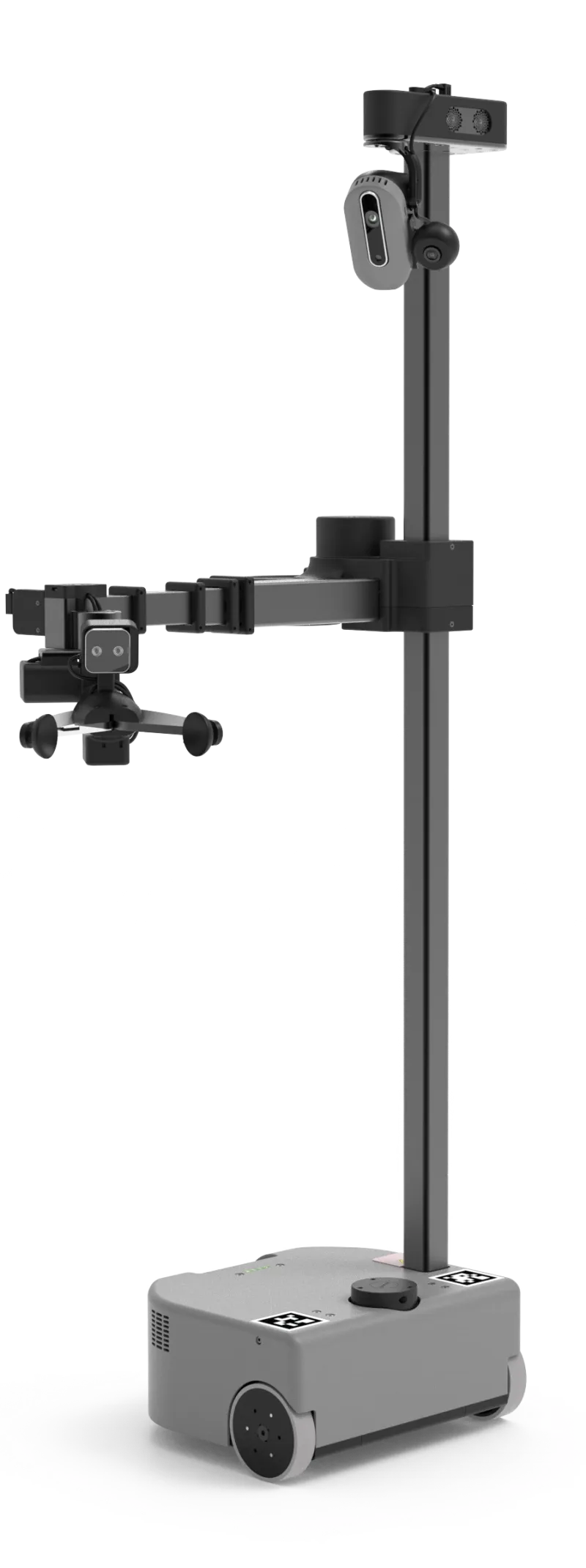
Stretch 3 is a useful counterpoint to humanoid hype. It does not pretend to be a general household servant. It is a purpose-built mobile manipulator for homes, assistive care, and embodied-AI research.
Hello Robot's official product page lists a 2 kg payload, 24.5 kg weight, 33 x 34 x 141 cm size, 2-5 hour runtime, ROS 2 and Python SDK support, 7 manipulator degrees of freedom, and a compliant grabber. The company also emphasizes a compact footprint, low mass, contact sensitivity, web teleoperation, and autonomy demos.
That combination is exactly why Stretch keeps showing up in serious home-manipulation research. It gives developers a body that can reach from the floor to cabinets, collect data in real rooms, and interact with people without the mass and speed of an industrial arm.
For a buyer, the lesson is not "buy Stretch instead of a humanoid." It is "look for Stretch-like honesty." A robot that clearly states payload, runtime, footprint, software access, and teleoperation limits is easier to evaluate than one that only shows a glossy demo of folding a shirt.
ROBOTIS K0 Shows Where Humanoid Arms Are Going
ROBOTIS AI Sapiens K0 is not a consumer product, but it is one of the better technical signals for future home humanoids. ROBOTIS lists K0 as a 1.3 m, 34 kg, 23-DoF platform with a 3 kg maximum arm payload. More important, it uses Dynamixel-Q quasi-direct-drive actuators intended for high backdrivability, low impedance, and precise torque control.
That is the vocabulary buyers should learn. Backdrivability and low impedance sound like engineering details, but they point directly at safer contact. A robot that can sense and yield through its joints is better suited to homes than a robot whose arm mainly optimizes stiffness.
ROBOTIS also frames K0 around reinforcement learning, imitation learning, open hardware files, CAD, source code, simulation assets, and tutorials. That open research model may matter because home safety should not be a black box forever. If a robot arm will operate near people, independent labs need ways to test what it can and cannot do.
Soft Bodies Help, But They Do Not Solve Everything
A soft robot can still be unsafe if it is too fast, too confident, or too opaque. A compliant arm can still drop a glass. A tactile skin can still miss the actual hazard if the software does not respond correctly.
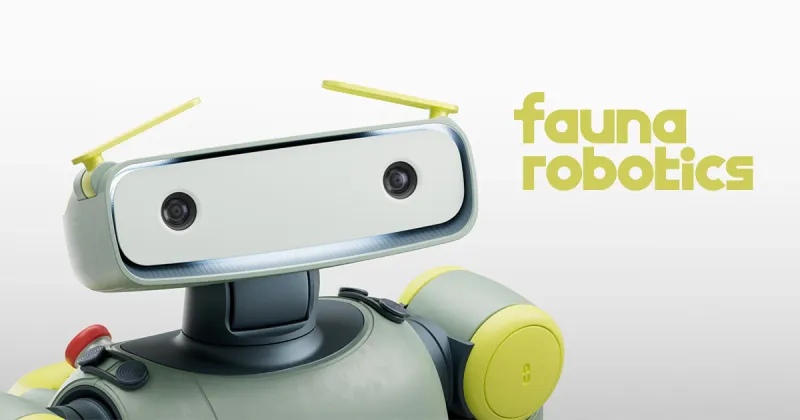
Fauna Sprout illustrates the right direction and the limitation. Its official product page emphasizes lightweight materials, a soft exterior, minimized pinch points, onboard safety sensing, compliant motor control, and an E-stop. In ui44, Sprout is tracked as a 107 cm, 22.7 kg developer humanoid with 29 degrees of freedom, 6-DoF arms, 1-DoF grippers, ZED 2i stereo vision, four time-of-flight sensors, Jetson AGX Orin compute, and a 3-3.5 hour swappable battery.
Those are strong safety ingredients. They still do not make Sprout a dishwasher-unloading appliance. The robot's form factor is promising for classrooms, labs, retail, and human-interaction development. For household chores, it would still need robust task policies, object handling, failure recovery, and long-term reliability.
The same caution applies to 1X NEO. A soft body and tendon-driven design are meaningful. So are tactile skin and expert fallback. But buyers should still ask what chores are autonomous on day one, what requires remote guidance, what data is shared, and how safety is certified.
What Should You Ask Before Buying a Robot With Arms?
If you are considering a home robot with arms, ask questions that force the company beyond demo language:
- What is the payload at full reach? A peak lift number near the body is less useful than what the robot can safely carry while extended.
- How does the arm detect contact? Look for torque sensing, current sensing, tactile skin, force/torque sensors, or clear software limits.
- Is the arm mechanically compliant or only software-limited? Both can help, but software alone may not compensate for high inertia.
- What happens after a failed grasp? Useful robots need recovery behavior, not just success videos.
- Can a human stop it instantly? E-stops, app stop controls, and physical interruption behavior should be obvious.
- What tasks are actually supported today? "Future household chores" is not the same as "can pick up dropped medication now."
- Who can see teleoperation or training data? Remote help may be valuable, but privacy needs to be explicit.
For many 2026 buyers, the right answer is still "wait." If you need a practical product now, a single-purpose robot may outperform a humanoid. If you are a developer, researcher, or early adopter, the arm safety details are where the real due diligence starts.
The Bottom Line
Safe home manipulation is not a race to the biggest arm payload. It is a race to controlled contact.
The most credible systems in the ui44 database point in the same direction: lighter bodies, soft coverings, compliant or backdrivable actuation, rich sensing, teleoperation fallback, and narrow initial task scopes. Stretch 3 shows what a serious home-sized manipulator looks like today. ROBOTIS K0 shows why quasi-direct-drive humanoid actuators matter. NEO shows how a consumer-facing robot can make softness and expert fallback part of the product story. Sprout shows that developers are designing around safer interaction from the start.
That does not mean general-purpose home robots are ready. It means buyers now have better questions to ask.
When a robot company says its arm can lift 6 kg, ask how gently it can be wrong.
Written by
ui44 Team
Published April 26, 2026
Share this article
Open a plain share link on X or Bluesky. No embeds, no widgets, no cookie baggage.