Article 22 min read 5,042 words

Home Robot Gesture Control: Is Voice Enough?

Home robot gesture control sounds like a small interface detail until you imagine actually living with a robot. Do you want to say every instruction out loud? What if the room is noisy, someone is asleep, the robot misunderstands which object you mean, or you simply want to point at the thing on the floor?

ui44 Team All articles

Voice will remain important. It is still the most natural way to ask for broad help: "check the kitchen," "remind me later," or "take this to the bedroom." But home robots are moving from smart speakers on wheels toward machines that see, move, follow, grasp, and sometimes require a human fallback. That makes voice only one control layer, not the whole interface.
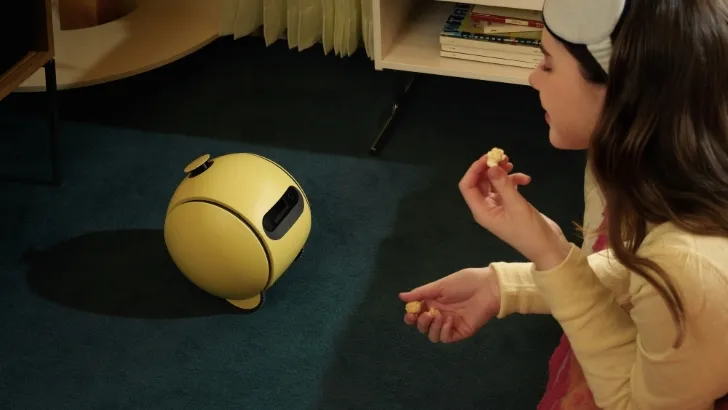
Samsung Ballie home AI companion robot using multimodal voice and visual control for smart home tasks

The useful question is not whether voice or gestures "win." It is whether the robot gives you enough ways to express intent: voice for broad goals, app controls for repeatable routines, pointing or gestures for spatial context, teleoperation for hard tasks, and autonomy when the robot can safely close the loop itself.

Why won't voice commands be enough for home robots?

Voice is excellent for low-risk intent. It is much less reliable when the robot needs precision, privacy, or confirmation.

A smart display can recover from a misunderstood weather request. A mobile robot with a camera can embarrass you if it starts a patrol at the wrong time. A manipulator can break something if "pick up the red one" refers to the wrong object. A companion robot in an elder-care or children's room may need to respond quietly without turning every interaction into a spoken command.

That is why the control stack matters. In the ui44 database, Samsung Ballie is a good example of the voice-first future becoming multimodal. Samsung says Ballie pairs Gemini with Samsung models and processes audio, voice, camera input, and environmental sensor data. That is not just a chatbot interface; it is an attempt to combine conversation with context about the room.

Amazon Astro shows the older smart-home pattern. It is a $1,599.99 invitation-only mobile home robot built around Alexa, home patrol, Visual ID, Ring integration, and remote monitoring. Astro proves that voice can make a moving robot approachable, but its most practical functions also depend on maps, cameras, app controls, alerts, and remote viewing.

Small companions make the same point. Loona is a $499 petbot with a 720p camera, 3D ToF sensor, touch sensor, four-microphone array, voice commands, remote monitoring, app controls, Blockly programming, and ChatGPT-4o integration. Miko 3 is a $299 child-focused companion with microphones, camera, touchscreen, touch sensors, face recognition, voice recognition, parental controls, and autonomous navigation. These are not humanoid workers, but they already blend speech, touch, app and visual context because one input mode is not enough.
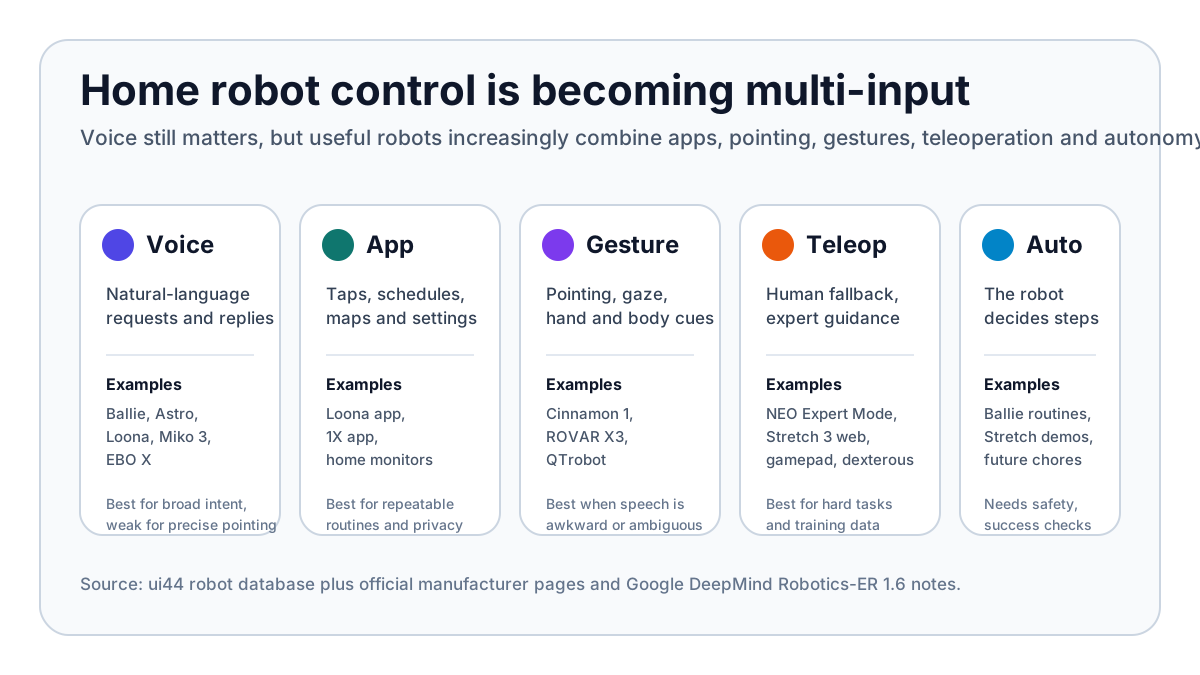
Home robot gesture control chart comparing voice, app, gesture, teleoperation and autonomy input channels
Scroll sideways to inspect the full chart.

Voice is also socially awkward. Many people do not want to announce private reminders, health questions, accessibility needs, or family routines to everyone nearby. A silent tap, a physical button, a hand gesture, or a pointed camera view can be a more comfortable interface than speaking to a machine in the middle of the room.

What counts as home robot gesture control?

Gesture control does not have to mean waving like a conductor. For a home robot, it can mean several related things:

  • Pointing: "that cup," "this spill," "go over there," or "avoid this area."
  • Gaze and attention: the robot understands what you are looking at or who is addressing it.
  • Hand signals: stop, follow, come here, wait, move left, or hand me that.
  • Body cues: the robot recognizes posture, proximity, or a person preparing to interact.
  • Demonstration: you show the robot a motion or correction instead of writing code.

The most useful near-term version is probably pointing plus confirmation. If a robot can show what it thinks you mean, then wait for a tap, nod, button press, or app confirmation, the interaction becomes safer than either voice alone or full autonomy alone.

Donut Robotics is the reason this topic is not just speculative UX chatter. The company's official homepage describes a mass-produced bipedal humanoid equipped with gesture control and says its own VLA, developed in Japan, is intended to power safe humanoids under a Japanese brand. HouseBots' coverage of Cinnamon 1 frames the idea around silent control in loud, awkward, or accessibility-sensitive environments. Cinnamon 1 is not yet a ui44 database robot, and buyers should treat it as an early signal rather than a proven household product. But the signal is important: humanoid makers are starting to market non-voice control as a first-class feature.

Google DeepMind's Gemini Robotics-ER 1.6 points in the same direction from the AI side. DeepMind describes pointing as a foundation for spatial reasoning: a way for an embodied model to identify objects, count, compare relationships, map trajectories, and reason about constraints such as which objects are small enough or safe enough to manipulate. That is exactly the gap voice leaves open. Saying "move that" is not enough unless the robot can ground "that" in space.

Which robots already show the control split?

No shipping consumer robot has solved the whole problem. But the database shows a clear pattern: the more physical the robot becomes, the more control channels it needs.

Robot

Samsung Ballie

ui44 status and price
Development, no price announced
Control lesson
Voice and conversation are paired with camera, spatial sensors, SmartThings and Gemini-style multimodal reasoning.

Robot

Amazon Astro

ui44 status and price
Active, $1,599.99 by invitation
Control lesson
Alexa makes it approachable, but patrol, alerts and monitoring depend on maps, cameras, Ring and app workflows.

Robot

Loona

ui44 status and price
Available, $499 bundle
Control lesson
A small companion still needs voice, touch, app, camera, ToF sensing and programming modes.

Robot

EBO X

ui44 status and price
Available, $999 retail
Control lesson
Home patrol and family communication blend autonomous movement, camera, app, Alexa and AI voice interactions.

Robot

1X NEO

ui44 status and price
Pre-order, $20,000 early-adopter price
Control lesson
A 167 cm, 30 kg humanoid cannot rely only on voice; 1X explicitly offers app control and Expert Mode fallback.

Robot

Stretch 3

ui44 status and price
Active, $24,950 list price
Control lesson
Mobile manipulation needs web, gamepad and dexterous teleoperation alongside autonomy demos.

Robot

Reachy Mini

ui44 status and price
Pre-order, $299 Lite / $449 wireless
Control lesson
Desktop robots expose camera, microphones, expressive motion and Python/Hugging Face programming because builders need multiple input paths.

Robot

ROVAR X3

ui44 status and price
Prototype, no price announced
Control lesson
Sentigent lists gaze and gesture input sensing as part of multimodal adaptive following.

Robot

QTrobot

ui44 status and price
Available research robot, about €10,900 ex. VAT
Control lesson
Upper-body gestures, skeleton tracking and programmable behaviors are core HRI features, not decoration.
1X NEO home humanoid robot illustrating why voice, app control and expert fallback all matter for physical chores

The split is especially obvious with manipulators. 1X NEO is listed in ui44 as a 167 cm, 30 kg humanoid with roughly four hours of battery life, tactile skin, RGB cameras, depth sensors, a microphone array, Wi-Fi, Bluetooth, a 1X app, and pre-order status. 1X's own page says NEO works autonomously by default, but for chores it does not know, a buyer can schedule a 1X Expert to guide it.

That is not a small caveat. It is the honest interface for an early home humanoid: autonomy for known tasks, voice or app for intent, and human guidance when the robot reaches the edge of its competence. In the real home, gesture or pointing should sit in that same stack. If the robot asks, "which mug?" you should not have to describe its exact color, position and handle direction in a sentence. You should be able to point, tap the camera view, or confirm a highlighted target.

Hello Robot Stretch 3 is the more transparent research-side example. Stretch 3 costs $24,950, weighs 24.5 kg, has a 2 kg payload, a compact 33 × 34 × 141 cm body, 2-5 hours of runtime, RGB-D cameras, LiDAR, microphone array, ROS 2 and Python support. Hello Robot explicitly offers web, gamepad and dexterous teleoperation. That tells you something important: when a robot can physically touch the home, fallback control is not a luxury. It is part of making the system usable at all.

When should buyers care before buying?

Most buyers should not ask, "does it have gesture control?" as a yes/no feature. They should ask what happens in five common situations.
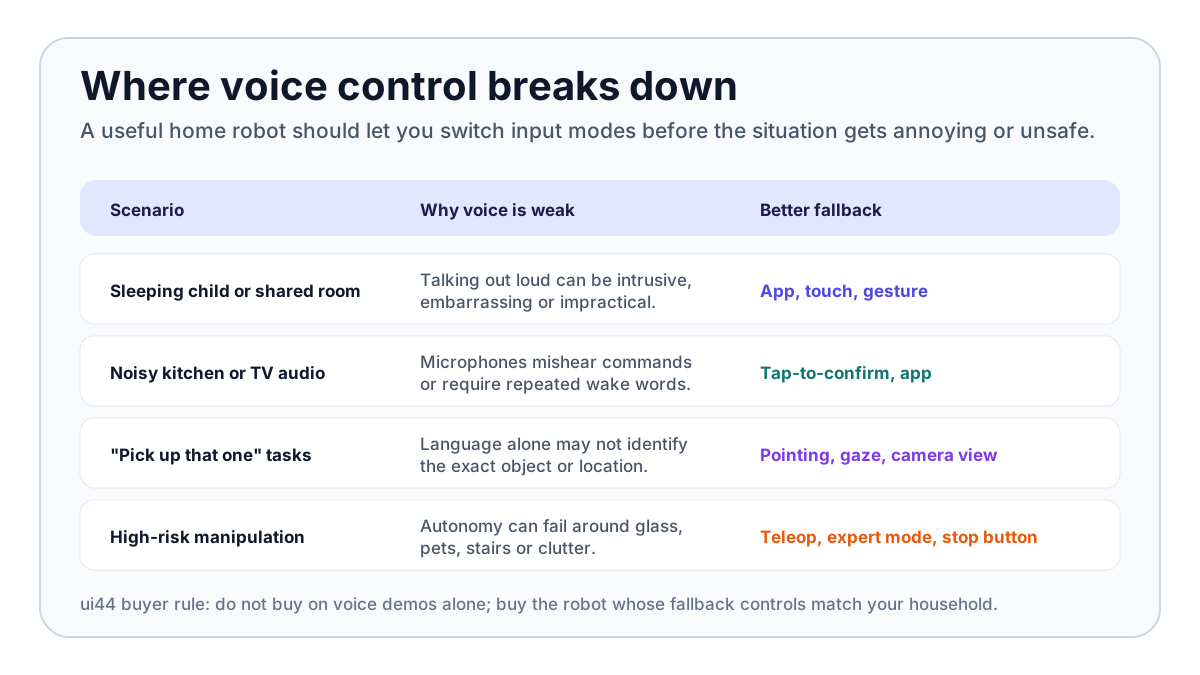
Home robot buying checklist showing when voice control should fall back to gesture, app control, pointing or teleoperation
Scroll sideways to inspect the full chart.

1. Can the robot confirm what it thinks you mean? A good interface shows intent before action. That could be a projected highlight, app preview, spoken summary, screen prompt, or simple stop/confirm gesture. This matters for any robot that moves, sees private spaces, or handles objects.

2. Is there a silent control path? If the only interface is a wake word, the robot will be annoying in bedrooms, shared apartments, elder-care rooms, calls, TV rooms, and late-night routines. Silent controls can be app buttons, touch surfaces, physical buttons, gestures, or scheduled automations.

3. Can you separate routine control from emergency control? "Start the patrol" and "stop now" should not feel like the same interaction. A physical stop, app stop, hand signal, or clearly visible pause control matters more than a flashy demo phrase.

4. Does the robot understand spatial language? If a robot accepts commands like "go there," "pick up that," or "watch this area," it needs visual grounding. DeepMind's Robotics-ER work is relevant because pointing, counting, multi-view reasoning, success detection and safety constraints are the real ingredients behind those casual phrases.

5. Is there a human fallback for manipulation? The more capable the robot, the more you should care about teleoperation or expert assistance. Stretch 3's web/gamepad/dexterous teleop and NEO's Expert Mode are not signs of failure. They are signs that the maker understands how hard homes are.
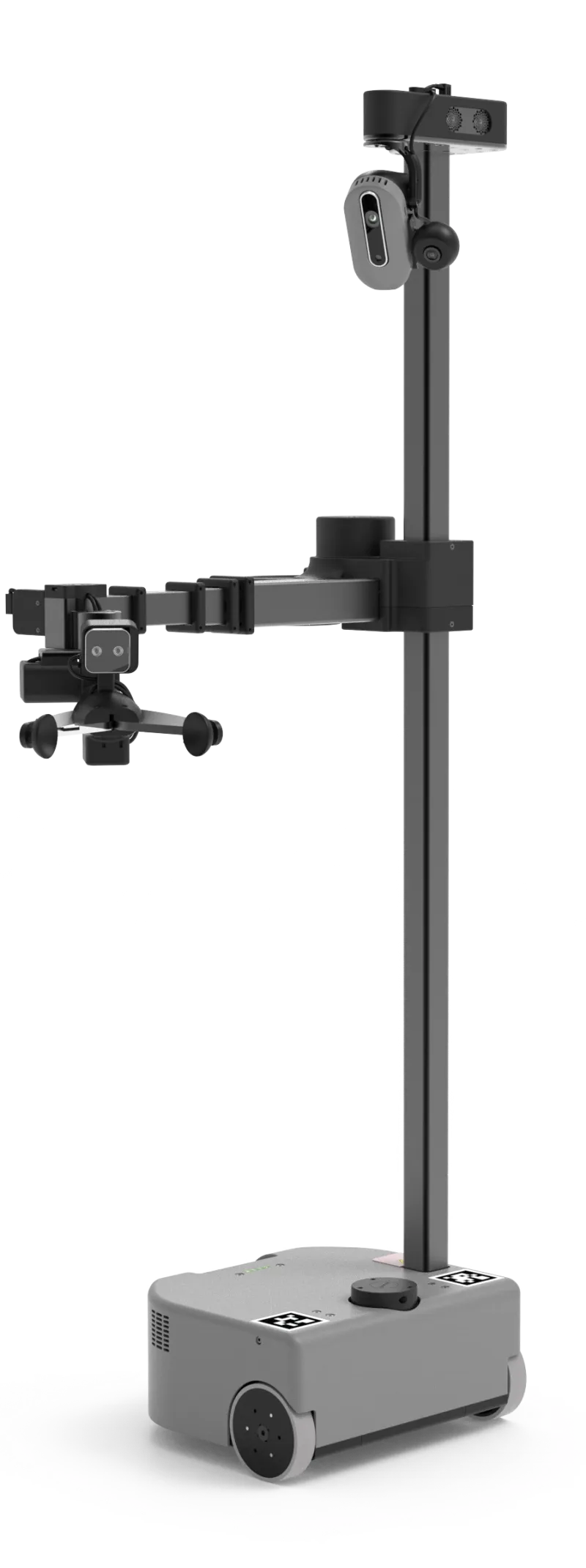
Hello Robot Stretch 3 mobile manipulator showing web, gamepad and dexterous teleoperation as home robot fallback controls

The accessibility angle is also real. Voice is not universally accessible. Some people cannot speak easily, do not want to speak, are hard of hearing, share a space where commands would be disruptive, or need a robot to interpret physical cues. Conversely, gesture-only control can exclude people with limited mobility or tremors. The best system is not voice-free; it is multi-input and user-configurable.

Will gesture control replace voice?

No. Voice is too useful to disappear. It is still the best interface for broad, low-risk intent: "remind me to take medication," "start a room check," "call my son," "play a game," or "what is on my schedule?" For companion robots, speech is part of the product.

But gesture control will matter wherever the robot needs physical context. A home robot should eventually understand a sentence like "put that over there" only because it can combine language with pointing, vision, object recognition, spatial memory, safety checks, and confirmation. The gesture is not the whole command. It is the missing coordinate system.

That is why Reachy Mini is interesting even though it is a small desktop kit rather than a chore robot. At $299 for the Lite version or $449 for the wireless version, it exposes the builder side of the future: camera, four microphones, expressive 6-DoF head motion, body rotation, animated antennas, Python programming, Hugging Face integrations and open-source behaviors. It is not trying to clean your home. It is showing how speech, vision, expression and programmable behaviors will get mixed together.

The same applies to social robots. QTrobot is a 64 cm, 5 kg research/social humanoid with upper-body gesture control and human gesture or skeleton tracking. ROVAR X3, still a prototype, explicitly lists gaze and gesture input sensing for multimodal adaptive following. Those features may look niche today, but they are the social interface primitives a future home robot will need if it is expected to follow, wait, approach, hand over, avoid, or respond without a full spoken script.

What should you look for in a multimodal home robot?

Use this buyer filter before getting excited by any voice or gesture demo:

  • Voice: Can it understand natural commands, accents and interruptions? Does it process anything locally, or is every request cloud-dependent?
  • Visual grounding: Can it identify objects, people, rooms and locations well enough to act safely?
  • Pointing or selection: Can you indicate "this" and "there" without a long verbal description?
  • App and schedule controls: Can routine tasks happen without repeated voice commands?
  • Physical stop: Can anyone nearby stop or pause the robot quickly?
  • Fallback mode: Is there teleoperation, expert mode, guided setup, or a manual control interface for hard tasks?
  • Privacy controls: Can cameras, microphones, maps and logs be limited, reviewed or disabled?
  • Accessibility: Can the interface work for people who cannot rely on voice, touch or fine hand gestures?

If a robot only has voice, it is probably a smart speaker with wheels or a companion device. If it only has an app, it may be useful but not socially fluid. If it only has autonomy, it is risky unless the task is narrow. The strongest home robots will feel boringly flexible: talk when that is natural, tap when that is quieter, point when the task is spatial, and let a human take over when the robot is not ready.

The bottom line: home robot gesture control is not a gimmick, but it also is not a magic feature. It is one layer in the bigger shift from voice assistants to embodied agents. The robots worth watching are not the ones that understand the most impressive sentence. They are the ones that can understand intent across speech, sight, motion, confirmation and safe fallback — then do the right thing in a messy home.

Database context

Use this article as a privacy verification workflow

Turn the article into a real verification pass

Home Robot Gesture Control: Is Voice Enough? already points you toward 10 linked robots, 10 manufacturers, and 5 countries inside the ui44 database. That matters because strong buyer guidance is easier to apply when you can move immediately from a claim or warning into concrete product pages, manufacturer directories, component explainers, and country-level context instead of treating the article as an isolated opinion piece. The fastest next step is to turn the article into a shortlist workflow: open the linked robot pages, verify which specs are actually published for those models, then compare the surrounding manufacturer and component context before you decide whether the underlying claim changes your buying plan.

For this topic, the useful discipline is to separate the editorial lesson from the catalog evidence. The article gives you the framing, but the robot pages tell you what each product actually ships with today: sensor stack, connectivity methods, listed price, release timing, category, and support-relevant compatibility notes. The manufacturer pages then show whether you are looking at a one-off launch, a broader lineup pattern, or a company that spans multiple categories. That layered workflow reduces the risk of buying on a single marketing phrase or a single support FAQ.

Use the robot pages to confirm which products actually expose cameras, microphones, Wi-Fi, or voice systems, then use the manufacturer pages to decide how much of the privacy question seems product-specific versus brand-wide. On this route cluster, Ballie, Astro, and Loona form the fastest reality check. If you want a quick working shortlist, open Compare Ballie, Astro, and Loona next, then keep this article open as the reasoning layer while you compare structured data side by side.

Practical Takeaway

Every robot, manufacturer, category, component, and country reference below resolves to a real ui44 page, keeping the follow-up path grounded in database records rather than generic advice.

Suggested next steps in ui44

  1. Open Ballie and note the listed sensors, connectivity methods, and voice stack before you interpret any policy claim.
  2. Cross-check the wider brand context on Samsung so you can see whether the privacy question touches one model or a broader lineup.
  3. Use the linked component pages to confirm how common the relevant sensors and connectivity layers are across the database.
  4. Keep a short note of which policy layers you checked, which device features are actually present on the robot page, and which items still depend on region- or app-level confirmation.
  5. Finish with Compare Ballie, Astro, and Loona so the policy reading sits next to structured product data.

Database context

Robot profiles worth opening next

Use the linked product pages as the evidence layer

The linked robot pages are where this article becomes operational. Instead of asking whether the headline is interesting, use the robot entries to inspect the actual mix of sensors, connectivity options, batteries, pricing, release timing, and stated capabilities attached to the products mentioned in the article. That is the easiest way to see whether the warning or opportunity described here affects one product family, a specific design pattern, or an entire buying lane.

Ballie

Samsung · Companions · Development

Price TBA

Ballie is tracked on ui44 as a development companions robot from Samsung. The database currently records a listed price of Price TBA, a release date of TBD, Not officially disclosed battery life, Not officially disclosed charging time, and a published stack that includes Camera, Spatial Sensors, and Environmental Sensors plus Wi-Fi and SmartThings.

For privacy-focused reading, this page matters because it shows the concrete device surface behind the policy discussion. Use it to verify whether Ballie combines sensors and connectivity in a way that could change the in-home data footprint, and compare the listed capabilities such as Autonomous Home Navigation, Built-in Projector (Wall & Floor), and Smart Home Control via SmartThings with any cloud, app, or voice layers, including Bixby.

Astro

Amazon · Security & Patrol · Active

$1,599

Astro is tracked on ui44 as a active security & patrol robot from Amazon. The database currently records a listed price of $1,599, a release date of 2021, Not officially disclosed battery life, Not officially disclosed charging time, and a published stack that includes 5MP Bezel Camera, 1080p Periscope Camera (132° FOV), and Infrared Vision plus Wi-Fi 802.11ac and Bluetooth.

For privacy-focused reading, this page matters because it shows the concrete device surface behind the policy discussion. Use it to verify whether Astro combines sensors and connectivity in a way that could change the in-home data footprint, and compare the listed capabilities such as Autonomous Home Patrol, Visual ID (face recognition), and Remote Home Monitoring with any cloud, app, or voice layers, including Amazon Alexa.

Loona

KEYi Tech · Companions · Available

$499

Loona is tracked on ui44 as a available companions robot from KEYi Tech. The database currently records a listed price of $499, a release date of 2023, 1.5 hours continuous play; up to 30 hours depending on usage battery life, Not officially disclosed charging time, and a published stack that includes 3D Time-of-Flight (ToF) Sensor, 720p RGB Camera, and Touch Sensor plus Wi-Fi (Dual-band 2.4G/5.8G, 802.11a/b/g/n) and USB Type-C (charging).

For privacy-focused reading, this page matters because it shows the concrete device surface behind the policy discussion. Use it to verify whether Loona combines sensors and connectivity in a way that could change the in-home data footprint, and compare the listed capabilities such as Face Recognition, Voice Commands, and Emotion Expression (LCD face) with any cloud, app, or voice layers.

Miko 3

Miko · Companions · Available

$299

Miko 3 is tracked on ui44 as a available companions robot from Miko. The database currently records a listed price of $299, a release date of 2022, 5–7 hours active use, up to 12 hours standby battery life, ~4 hours (15W USB-C adapter) charging time, and a published stack that includes Time-of-Flight Range Sensor, Odometric Sensors, and Dual MEMS Microphones plus Wi-Fi and Bluetooth.

For privacy-focused reading, this page matters because it shows the concrete device surface behind the policy discussion. Use it to verify whether Miko 3 combines sensors and connectivity in a way that could change the in-home data footprint, and compare the listed capabilities such as AI-Powered Conversations, Face Recognition, and Voice Recognition with any cloud, app, or voice layers.

EBO X

Enabot · Companions · Available

$999

EBO X is tracked on ui44 as a available companions robot from Enabot. The database currently records a listed price of $999, a release date of 2023-05, 2-3 hours battery life, 2 hours charging time, and a published stack that includes 4K one-axis stabilized camera, 8MP ultra-low-light sensor, and 106° camera FOV plus 2.4GHz Wi-Fi and 5GHz Wi-Fi.

For privacy-focused reading, this page matters because it shows the concrete device surface behind the policy discussion. Use it to verify whether EBO X combines sensors and connectivity in a way that could change the in-home data footprint, and compare the listed capabilities such as Autonomous home patrol, Two-way video communication, and AI voice interactions with any cloud, app, or voice layers, including Amazon Alexa.

Database context

Manufacturer context behind the article

Check whether this is one product story or a broader company pattern

Manufacturer pages add the privacy context that individual product pages cannot show on their own. They help you check whether cameras, microphones, cloud accounts, app controls, and policy assumptions appear across a broader lineup or stay tied to one specific product story.

Samsung

ui44 currently tracks 2 robots from Samsung across 2 categorys. The company is grouped under South Korea, and the current catalog footprint on ui44 includes Ballie, Bespoke AI Jet Bot Steam Ultra.

That wider brand context matters because privacy questions rarely stop at one FAQ page. A manufacturer route helps you see whether the article is centered on one premium model or on a company that has several relevant products and therefore more than one place where the same policy or app assumptions might matter. The category mix here currently points toward Companions, Cleaning as the most useful next route if you want to see whether this article reflects a wider pattern inside the brand.

Amazon

ui44 currently tracks 1 robot from Amazon across 1 category. The company is grouped under USA, and the current catalog footprint on ui44 includes Astro.

That wider brand context matters because privacy questions rarely stop at one FAQ page. A manufacturer route helps you see whether the article is centered on one premium model or on a company that has several relevant products and therefore more than one place where the same policy or app assumptions might matter. The category mix here currently points toward Security & Patrol as the most useful next route if you want to see whether this article reflects a wider pattern inside the brand.

KEYi Tech

ui44 currently tracks 1 robot from KEYi Tech across 1 category. The current catalog footprint on ui44 includes Loona.

That wider brand context matters because privacy questions rarely stop at one FAQ page. A manufacturer route helps you see whether the article is centered on one premium model or on a company that has several relevant products and therefore more than one place where the same policy or app assumptions might matter. The category mix here currently points toward Companions as the most useful next route if you want to see whether this article reflects a wider pattern inside the brand.

Miko

ui44 currently tracks 2 robots from Miko across 1 category. The company is grouped under India, and the current catalog footprint on ui44 includes Miko 3, Miko Mini.

That wider brand context matters because privacy questions rarely stop at one FAQ page. A manufacturer route helps you see whether the article is centered on one premium model or on a company that has several relevant products and therefore more than one place where the same policy or app assumptions might matter. The category mix here currently points toward Companions as the most useful next route if you want to see whether this article reflects a wider pattern inside the brand.

Database context

Broaden the scan without leaving the database

Categories, components, and countries add the wider context

Category framing

Category pages are useful when the article touches a buying pattern that shows up across brands. A category route helps you confirm whether the linked products sit in a narrow niche or whether the same question should be tested across a larger field of alternatives.

Companions

The Companions category page currently groups 34 tracked robots from 32 manufacturers. ui44 describes this lane as: Social robots, robot pets, and elderly care companions designed for emotional connection and daily support.

That makes the category route a practical follow-up when you want to check whether the products linked in this article are typical for the lane or whether they sit at one edge of the market. Useful starting examples currently include PARO, Abi, Moflin.

Security & Patrol

The Security & Patrol category page currently groups 3 tracked robots from 3 manufacturers. ui44 describes this lane as: Surveillance and patrol robots that monitor homes, businesses, and perimeters autonomously.

That makes the category route a practical follow-up when you want to check whether the products linked in this article are typical for the lane or whether they sit at one edge of the market. Useful starting examples currently include Astro, Vision 60, Watchbot 2.

Country and ecosystem context

Country pages give extra context when support practices, launch sequencing, regulatory posture, or manufacturer mix matter. They are not a substitute for model-level verification, but they do help you see which ecosystems cluster together and which manufacturers sit in the same regional field when you broaden the search beyond the article headline.

South Korea

The South Korea route currently groups 2 tracked robots from 1 manufacturers in ui44. That gives you a useful regional lens when the article points toward support practices, launch sequencing, or brand clusters that may share similar ecosystem assumptions.

On the current route, manufacturers like Samsung make the page a good way to broaden the scan without losing the regional context that often shapes availability, documentation style, and adjacent alternatives.

USA

The USA route currently groups 16 tracked robots from 12 manufacturers in ui44. That gives you a useful regional lens when the article points toward support practices, launch sequencing, or brand clusters that may share similar ecosystem assumptions.

On the current route, manufacturers like Boston Dynamics, Figure AI, Tesla make the page a good way to broaden the scan without losing the regional context that often shapes availability, documentation style, and adjacent alternatives.

India

The India route currently groups 2 tracked robots from 1 manufacturers in ui44. That gives you a useful regional lens when the article points toward support practices, launch sequencing, or brand clusters that may share similar ecosystem assumptions.

On the current route, manufacturers like Miko make the page a good way to broaden the scan without losing the regional context that often shapes availability, documentation style, and adjacent alternatives.

Database context

Questions to answer before you move from reading to buying

A follow-up FAQ built from the entities already linked in this article

Frequently Asked Questions

Which page should I open first after reading “Home Robot Gesture Control: Is Voice Enough?”?

Start with Ballie. That gives you a concrete product anchor for the article’s main claim. From there, branch into the manufacturer and component pages so you can tell whether the article is describing one specific model, a repeated brand pattern, or a wider technology issue that affects multiple shortlist options.

How do the manufacturer pages change the buying decision?

Samsung help you zoom out from one article and one product. On ui44 they show lineup breadth, category spread, and the neighboring robots tied to the same company. That context is useful when you are deciding whether a risk belongs to a single model, whether it shows up across a brand’s portfolio, and whether you should keep looking at alternatives before committing.

When should I switch from reading to side-by-side comparison?

Move into Compare Ballie, Astro, and Loona as soon as you understand the article’s main warning or promise. The article explains what to watch for, but the compare view is where you can check whether price, status, battery life, connectivity, sensors, and category fit still make the robot a good match for your own home and budget.

Database context

Where to go next in ui44

Keep the research chain inside the database

If you want to keep going, these follow-on pages give you the cleanest expansion path from article to research session. Open the comparison route first if you are deciding between products today. Open the manufacturer, category, and component routes if you still need to understand the broader pattern behind the claim.

UT

Written by

ui44 Team

Published April 29, 2026

Share this article

Open a plain share link on X or Bluesky. No embeds, no widgets, no cookie baggage.

Explore the database

Go beyond the headlines

Compare specs, features, and prices across 100+ robots from leading manufacturers worldwide.