Devanthro
Robody
Category
Home Assistants
Since
2024
Arm-based household helpers — laundry folders, kitchen robots, and mobile manipulators that handle physical tasks at home. This route is designed to move from fast inventory scan to deeper technical and buyer guidance without turning the page into a wall of undifferentiated content.
Current home assistants coverage in ui44.
6 still sit in pre-release or inactive states.
Enough supplier breadth to spot concentration quickly.
Visible range runs $1.5k to $24.9k.
Market shape
How to use this route
Route map
Inventory
This is the fastest way to understand catalog breadth before you read the deeper buyer, technical, and market context chapters below.
Browse the full home assistants inventory currently tracked in ui44.
The strongest signal for real-world shortlist work.
Useful when the first pass needs fast budget framing.
A quick read on concentration versus competitive spread.
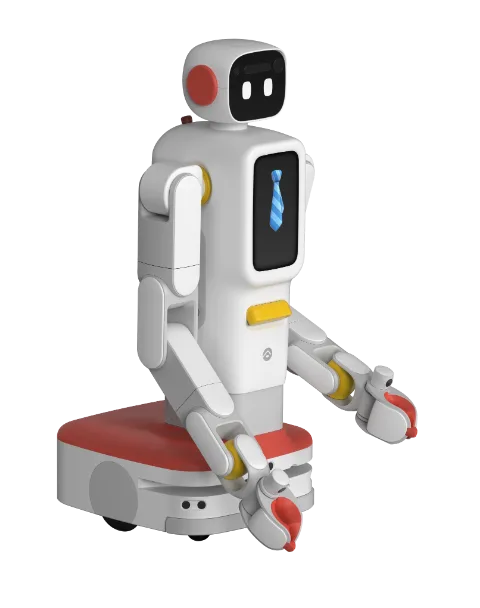
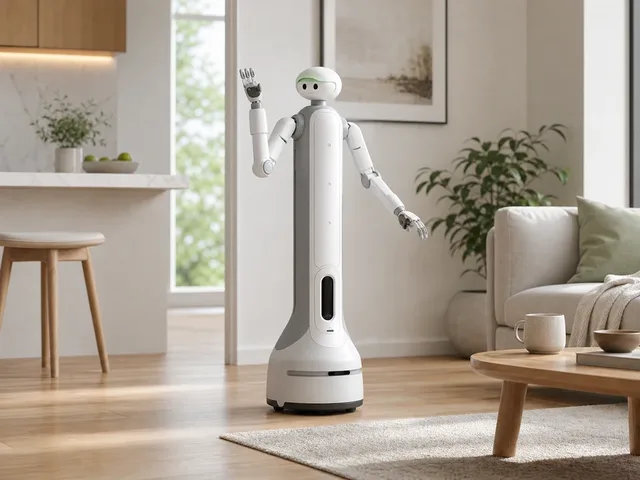
Devanthro
Robody
Category
Home Assistants
Since
2024
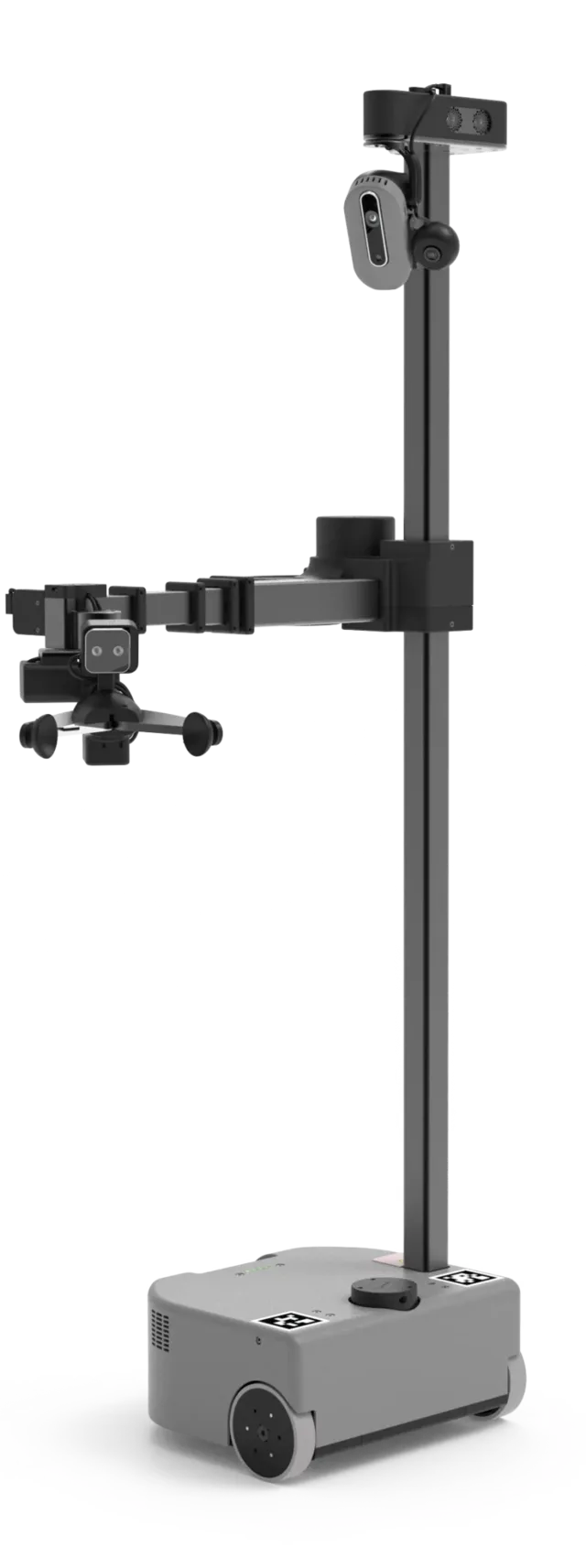
Hello Robot's open-source mobile manipulator designed for home environments, assistive care, and Embodied AI research. Stretch 3 is a lightweight (24.5kg)…
Hisense
Savvy
Category
Home Assistants
Since
2026
LG Electronics
CLOiD
Category
Home Assistants
Since
2026
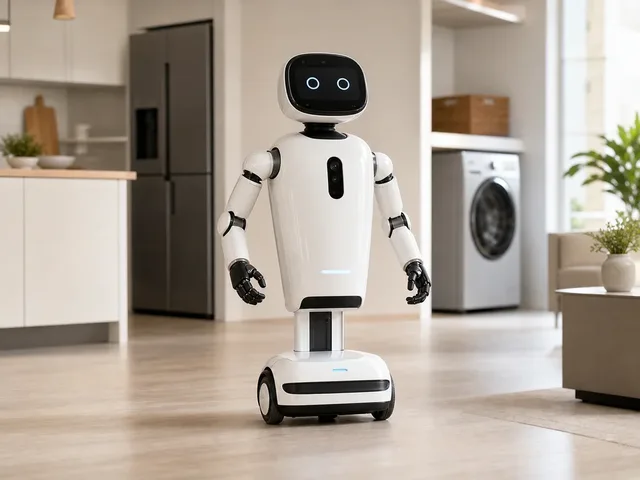
LG Electronics' CLOiD is a wheeled home robot unveiled at CES 2026 as part of the company's 'Zero Labor Home' vision. It combines a mobile base with a tilting…
Nosh Robotics
Nosh One
Category
Home Assistants
Price
$1,499
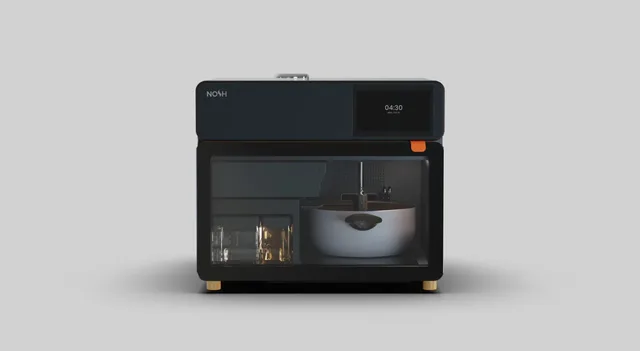
The Nosh One is an AI-powered autonomous cooking robot from Bengaluru-based Nosh Robotics. It handles the full cooking cycle — portioning ingredients,…
Sunday
Memo
Category
Home Assistants
Since
2026
SwitchBot
onero H1
Category
Home Assistants
Price
$9,999
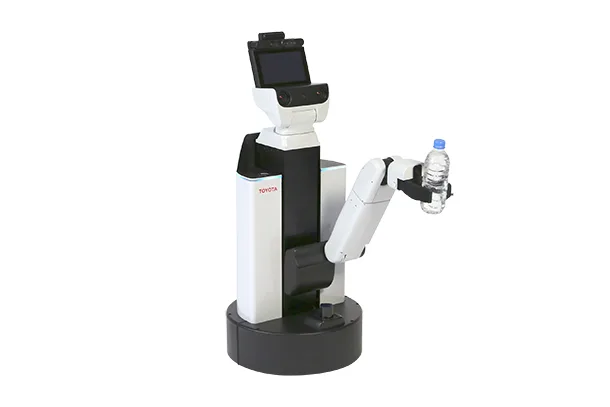
Toyota's compact home-assistance mobile manipulator designed to support independent living for elderly and disabled users. First announced in 2012, HSR uses a…
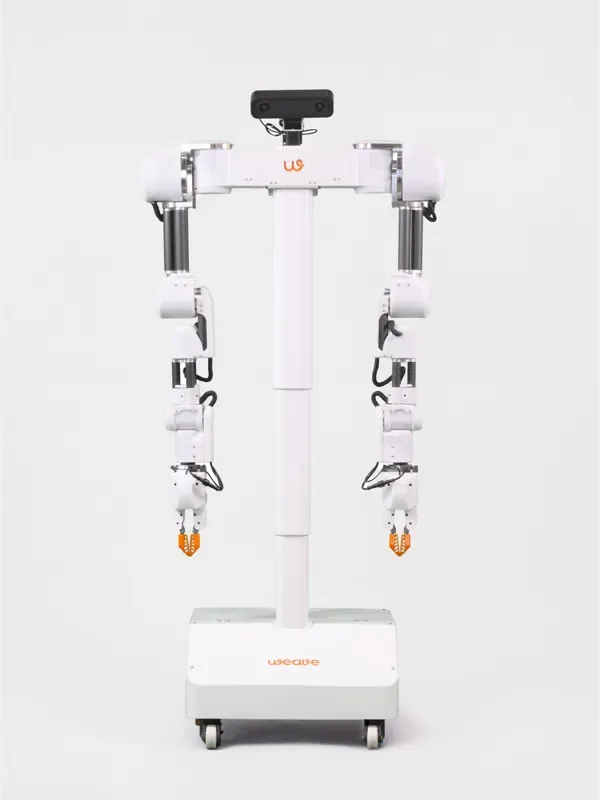
Weave Robotics' stationary laundry-folding robot for the home. Isaac 0 folds t-shirts, long sleeves, sweaters, pants, and towels autonomously in 30–90 minutes…
Zeroth Robotics
W1
Category
Home Assistants
Price
$4,999
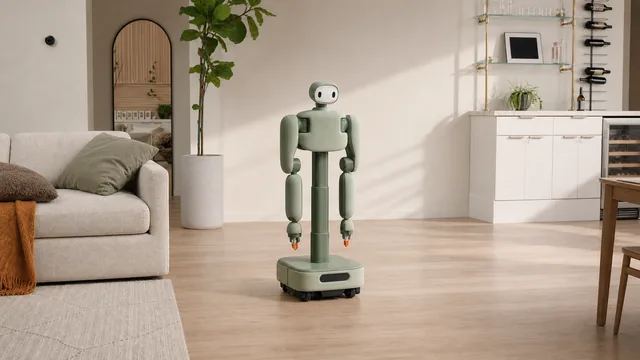
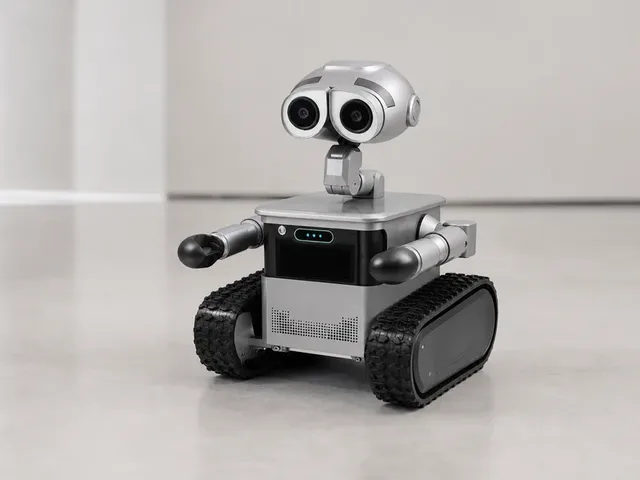
Zeroth Robotics W1 is a tracked mobile assistant that Zeroth launched for the US at CES 2026 and now lists on its official store. The robot is designed to…
Buyer guide
Use this chapter to orient the page, calibrate expectations, and pressure-test whether the category really matches the workload you have in mind.
Home assistant robots go beyond voice-activated speakers — they are physical machines with arms, grippers, or mobile manipulation capabilities designed to perform household tasks. This category includes laundry-folding robots, kitchen prep assistants, mobile manipulators that can fetch objects and open doors, and specialized single-task robots for ironing, cooking, or tidying.
Unlike cleaning robots that handle one repetitive task, home assistants aim to be general-purpose helpers in the home. Samsung's Ballie, Richtech's ADAM, and various robotic arm platforms represent different approaches to the same goal: reducing the physical work of daily life.
This is one of the most technically challenging categories in robotics, requiring dexterous manipulation, object recognition, and safe operation in unpredictable home environments.
Home assistant robots vary enormously in scope and capability. Some are specialized single-task machines (a laundry folder, a kitchen stirrer), while others aspire to be general-purpose manipulators.
For most consumers today, the practical options are task-specific robots with proven reliability rather than general-purpose platforms that promise everything. When evaluating a home assistant, consider: what specific tasks does it demonstrably perform? Watch video demonstrations of real-world operation, not just marketing renders.
Check the robot's safety features — any robot operating near humans needs force-limited actuators, collision detection, and emergency stop mechanisms. Evaluate the setup requirements: does it need a dedicated space, counter mounting, or modifications to your home? Price varies dramatically from a few hundred dollars for simple single-function devices to tens of thousands for mobile manipulation platforms.
Identify the specific household task you most want automated. If it's kitchen help, look at dedicated kitchen robotics platforms with food-safe materials and recipe-driven operation.
Identify the specific household task you most want automated
If it's kitchen help, look at dedicated kitchen robotics platforms with food-safe materials and recipe-driven operation
If it's general fetch-and-carry tasks (bringing items from other rooms, opening doors, picking up objects from the floor), you need a mobile manipulator with navigation and…
For elderly or mobility-impaired users, focus on reliability and simplicity over feature count — a robot that reliably performs three tasks is more valuable than one that attempts…
Consider the maturity of the product: robots in 'Development' or 'Prototype' status may not ship for years
Practical tip: Consider the maturity of the product: robots in 'Development' or 'Prototype' status may not ship for years. Available and Active models have real user feedback and proven track records.
Specs and pricing
These sections help separate the robots that merely sit in the category from the ones that genuinely fit a deployment or buying brief.
When evaluating home assistants robots, these are the specifications that matter most for real-world performance and value:
number of arms, degrees of freedom, grip force
maximum object weight it can handle
can it move between rooms autonomously?
force limiting, collision detection
how many tasks can it actually perform?
dedicated space, mounting, home modifications
The home assistants category serves a variety of applications, from consumer households to industrial deployments:
Kitchen assistance (prep, cooking, serving)
Laundry folding and wardrobe management
Object retrieval and room-to-room delivery
Elderly and disability daily living support
Home tidying and organization
Bartending and beverage service
Home Assistants robots with published pricing range from $1.5k to $24.9k. 5 models in this category do not have publicly listed pricing. Below is a breakdown by price tier to help you understand what's available at different budget levels.
Compare key specifications across all 10 home assistants robots in the database. All data is sourced from manufacturer disclosures and verified against official documentation.
Manufacturer landscape
Once the inventory looks promising, this is where you figure out whether the category is broad and competitive or concentrated around a smaller set of serious builders.
10 companies are building home assistants robots tracked in the ui44 database. Here's how the product landscape breaks down by manufacturer.
View all robotics companies in our manufacturers directory.
A comprehensive look at the sensors, connectivity, capabilities, and AI platforms used across all 10 home assistants robots in the database.
Operations
This chapter keeps the route useful after the first visual scan, when the real questions become ownership, rollout friction, and operational constraints.
Home assistant robots operating in close proximity to humans — especially those with arms, grippers, and mobile platforms — face the most stringent safety requirements in consumer robotics. Manipulation robots must implement force-torque limiting in every joint to prevent injury during contact with humans: ISO/TS 15066 specifies maximum allowable forces for different body regions (e.g., 140 N for chest contact, 65 N for hand contact).
Modern robots implement multiple safety layers including force limiting, collision detection, and emergency stops.
Look for ISO, CE, FCC, and category-specific certifications that validate safety compliance.
Connected robots with cameras and microphones require careful evaluation of data handling and security practices.
Kitchen robots handling food must use food-safe materials (FDA-compliant, BPA-free) and be designed for easy cleaning to prevent cross-contamination. Mobile home assistants need obstacle detection, fall prevention (especially around stairs), and must be able to safely handle unexpected encounters with children and pets.
Emergency stop mechanisms must be easily accessible — both physical buttons and voice-activated stop commands. The regulatory landscape for home assistant robots is evolving: the EU Machinery Regulation (2023/1230) covers robotic household appliances, while the proposed EU AI Act classifies robots in domestic settings as potentially high-risk depending on their capabilities.
Home assistant robots span a wide range of complexity, and maintenance requirements scale accordingly. Simple single-task robots (e.g., a laundry folder or a kitchen stirrer) may need only periodic cleaning, lubrication of moving parts, and software updates — annual maintenance costs under $50.
Most robots need periodic cleaning, software updates, and consumable replacements to maintain peak performance.
Factor in consumables, subscriptions, battery replacements, and potential maintenance contracts when budgeting.
A well-maintained robot's lifespan varies by category — from 4–7 years for cleaning robots to 8–12 years for mowers.
2–4 yr
Battery lifespan
$10–$30/mo
Subscription cost
General-purpose mobile manipulators are significantly more complex, with maintenance requirements closer to industrial robots: joint calibration, gripper pad replacement, sensor cleaning, and battery maintenance. Budget for annual maintenance costs of 8–12% of the purchase price for complex manipulation platforms.
Kitchen robots require additional food-safety maintenance: regular deep cleaning, replacement of food-contact surfaces, and inspection of seals and gaskets. Battery life varies enormously — stationary robots plugged into wall power have no battery concerns, while mobile platforms typically need battery replacement every 2–4 years ($200–$800 depending on capacity).
If you are new to home assistants robots, here is a step-by-step approach to finding the right model for your needs. This guide applies whether you are buying your first robot or upgrading from an earlier model.
Identify the specific household tasks you want automated — focus on robots with demonstrated, proven capabilities rather than broad marketing promises.
Watch real-world demo videos (not marketing renders) to see how the robot actually performs the tasks you care about.
Check safety features: any robot with arms or mobile manipulation near humans needs force-limited joints, collision detection, and accessible emergency stops.
Evaluate setup requirements: does the robot need dedicated counter space, wall mounting, specific room dimensions, or modifications to your home?
Verify the robot's current availability status — many home assistant robots are still in development or prototype stages and may not ship for months or years.
Start with a proven, task-specific robot rather than waiting for the perfect general-purpose home assistant — a reliable single-task robot delivers value today.
Use ui44's comparison tool and individual robot detail pages to evaluate the 10 home assistants robots in the database.
Outlook
The goal here is not trend theater. It is to show whether the category is stabilizing, accelerating, or still too early for confident buyer decisions.
The dream of household robots dates back to the 1960s (Unimate's industrial arm adapted for demonstrations on The Tonight Show), but practical home assistant robots have proven extraordinarily difficult to build. Early attempts focused on general-purpose platforms: Willow Garage's PR2 (2010) demonstrated that a mobile manipulator could fold towels and fetch beer, but at $400,000 it was strictly a research platform.
The 2010s saw a wave of ambitious Kickstarter and venture-backed projects — robotic kitchen systems, laundry-folding machines, and general household helpers — most of which failed to deliver on their promises. The fundamental challenge is that homes are unstructured environments with enormous variation in objects, layouts, and tasks.
The breakthrough period began around 2020–2023 as AI capabilities caught up with hardware ambitions. Deep learning for object recognition and grasping, combined with large language models for task understanding, enabled robots to handle novel objects without explicit programming for each one.
Companies like Richtech Robotics found success with specialized robots (bartending and food service), while Samsung's Ballie and similar projects represent the tech industry's bet on general home assistance. Mobile manipulation platforms have become more affordable, dropping from hundreds of thousands to tens of thousands of dollars.
The next frontier is foundation models for robotics — large AI models that can translate natural language instructions into physical actions — which could finally make the dream of a general-purpose home robot achievable.
Home assistant robots are perhaps the most aspirational category in consumer robotics, and the comparison with traditional alternatives requires honest assessment of where robots add value today versus where they remain inferior to established solutions. For kitchen tasks, traditional kitchen appliances — food processors, stand mixers, slow cookers, dishwashers — remain vastly more capable, reliable, and affordable for specific cooking tasks than any current robotic system.
Kitchen robots like robotic arms or cooking systems add value primarily in novel use cases: autonomous stirring over long periods, precise multi-step recipe execution, or bartending and beverage preparation in commercial settings where consistency and throughput matter more than culinary creativity. For laundry, dedicated folding machines like FoldiMate and Laundroid have struggled to deliver on their promises — the physical variability of clothing (different sizes, materials, states of entanglement) remains an extraordinarily difficult manipulation challenge.
Where home assistant robots genuinely shine today is in commercial food service (consistent drink preparation, plate delivery), accessibility assistance for people with mobility impairments who cannot perform these tasks independently, and in situations where the physical labor saving compounds over thousands of repetitions. The category is genuinely transformative for people with disabilities — a robot that can fetch a glass of water, open a door, or pick up a dropped item restores independence in ways that no traditional alternative can match.
The home assistant category is at an inflection point. Foundation models for robotics — large AI models trained on millions of manipulation demonstrations — are rapidly improving robots' ability to handle novel objects and tasks without explicit programming.
Companies like Google DeepMind (RT-2), Toyota Research Institute, and startup Covariant are developing the AI backbone that will make general-purpose home robots feasible. Meanwhile, specialized home robots continue to improve: laundry-folding robots are getting faster and more reliable, kitchen robots are expanding their recipe repertoires, and mobile manipulators are becoming more affordable.
The long-term vision — a single robot that handles most household chores — remains years away, but incremental products are delivering real value today.
Home assistant robots represent the long-term vision of consumer robotics — a general-purpose machine that handles the physical work of daily life. While that vision remains years from full realization, the path forward is becoming clearer.
$15B
Market by 2032
2032
Key milestone year
While that vision remains years from full realization, the path forward is becoming clearer
The market for home assistant robots is projected to exceed $15 billion by 2032, with the steepest growth curve coming as foundation model capabilities reach the threshold for reliable real-world task execution.
FAQ and routes
Finish here when you need practical next steps rather than more category theory.
Arm-based household helpers — laundry folders, kitchen robots, and mobile manipulators that handle physical tasks at home. The ui44 database currently tracks 10 robots in this category from 10 manufacturers.
ui44 currently tracks 10 home assistants robots from 10 different manufacturers including Devanthro, Hello Robot, Hisense, LG Electronics, Nosh Robotics, and 5 more. Browse the full robot directory to see all categories.
Across the 10 robots in this category, 73 distinct capabilities are represented, including: VR telepresence for family members and caregivers, Medication reminders, Meal preparation assistance, Fetching and carrying household items, Conversation and companionship, 24/7 monitoring and fall-alert workflows, Two-handed mobile manipulation, Self-docking, and 65 more. The specific capability set varies by model, price point, and intended application — visit individual robot pages for detailed capability breakdowns.
10 companies make home assistants robots tracked in the ui44 database: Devanthro, Hello Robot, Hisense, LG Electronics, Nosh Robotics, Sunday, SwitchBot, Toyota, Weave Robotics, Zeroth Robotics. Explore all robotics companies on the manufacturers page.
All robot data on ui44 is periodically verified against manufacturer sources, spec sheets, and press releases. The most recent verification for a robot in the Home Assistants category was on 2026-04-08. Each robot page includes a "last verified" date for transparency. If you notice outdated information, please let us know.
Home assistant robots operating in close proximity to humans — especially those with arms, grippers, and mobile platforms — face the most stringent safety requirements in consumer robotics. Manipulation robots must implement force-torque limiting in every joint to prevent injury during contact with humans: ISO/TS 15066 specifies maximum allowable forces for different body regions (e.g., 140 N for… Read the full safety & regulation section for detailed information on certifications, standards, and precautions for home assistants robots.
The dream of household robots dates back to the 1960s (Unimate's industrial arm adapted for demonstrations on The Tonight Show), but practical home assistant robots have proven extraordinarily difficult to build. Early attempts focused on general-purpose platforms: Willow Garage's PR2 (2010) demonstrated that a mobile manipulator could fold towels and fetch beer, but at $400,000 it was strictly a… Read the full history & evolution section for a detailed timeline of home assistants robot development.
Home Assistants robots with published pricing range from $1.5k to $24.9k. 5 models in this category do not list public pricing. See the price range overview for a detailed breakdown by budget tier.
Home assistant robots span a wide range of complexity, and maintenance requirements scale accordingly. Simple single-task robots (e.g., a laundry folder or a kitchen stirrer) may need only periodic cleaning, lubrication of moving parts, and software updates — annual maintenance costs under $50. General-purpose mobile manipulators are significantly more complex, with maintenance requirements… See the full maintenance & ownership section for a complete breakdown of ongoing costs, consumables, and expected lifespan for home assistants robots.
The most affordable home assistants robot with published pricing is the Nosh One by Nosh Robotics at $1.5k. At the other end of the spectrum, the Stretch 3 by Hello Robot is listed at $24.9k. Price is just one factor — compare capabilities, sensors, and support when making your decision. See the price overview for a full tier breakdown.
Home Assistants robots in the database use 31 types of sensors. The most common include 4K fisheye RGB cameras, mm-wave radar, Stereo microphones, Intel D405 RGBD Camera (gripper), Intel D435if RGBD Camera (head), Wide-Angle RGB Camera (head), and 25 more. See the technology landscape section for a complete breakdown, or browse the components directory.
Home Assistants robots in the database support 16 types of connectivity. The most common include 5G, Wi-Fi 6, Wi-Fi, Ethernet, USB, Hisense ConnectLife smart-home platform, and 10 more. Connectivity determines how the robot communicates with your network, cloud services, companion apps, and other smart devices. Visit the components directory for detailed information on each protocol.
Some home assistants robots integrate with voice assistant platforms including Voice-command operation support. Voice integration enables hands-free control, status updates, and interaction with your broader smart home ecosystem. Not all models support voice assistants — check individual robot pages for specific compatibility details.
4 home assistants robots are currently available or actively deployed: Stretch 3 by Hello Robot, Human Support Robot (HSR) by Toyota, Isaac 0 by Weave Robotics, W1 by Zeroth Robotics. Visit each robot's page for the latest purchasing details and availability.
ui44 offers a side-by-side comparison tool that lets you compare up to 4 home assistants robots at once. Compare specs like battery life, weight, sensors, price, and capabilities across models including Robody, Stretch 3, Savvy, CLOiD, Nosh One, and 5 more. You can also check the specifications comparison table above for a quick overview of all models.
Start by defining your specific requirements and budget. The getting started guide above walks through 6 key steps: Identify the specific household tasks you want automated — focus on robots with…; Watch real-world demo videos (not marketing renders) to see how the robot…; Check safety features: any robot with arms or mobile manipulation near humans…. Use ui44's comparison tool and the specs comparison table to narrow down your shortlist.
All home assistants robot data on ui44 is verified against official manufacturer sources, spec sheets, and press releases. Most recent verification: 2026-04-08. If you notice outdated or incorrect data, please let us know — accuracy is our top priority.
Source: ui44 Home Robot Database · 10 models tracked in Home Assistants · Browse all robots · All categories
Next move
You now have the inventory view, the buyer guidance, and the spec context. The cleanest next step is to compare a small set of candidates, then validate the strongest manufacturers in detail.