Article 21 min read 4,774 words

Assistive Home Robots: What Can Actually Help?

Assistive home robots are finally becoming more than a feel-good demo category. The useful models are not all humanoids, and most are not general-purpose caregivers. The best ones solve narrower problems: reminding someone to take medicine, making video calls easier, moving a small object across a room, checking on the house, folding laundry, or giving a caregiver a better way to be present from far away.

ui44 Team All articles

That distinction matters. A robot that helps someone live independently does not need to do every chore. It needs to reduce the exact friction that makes daily life harder.
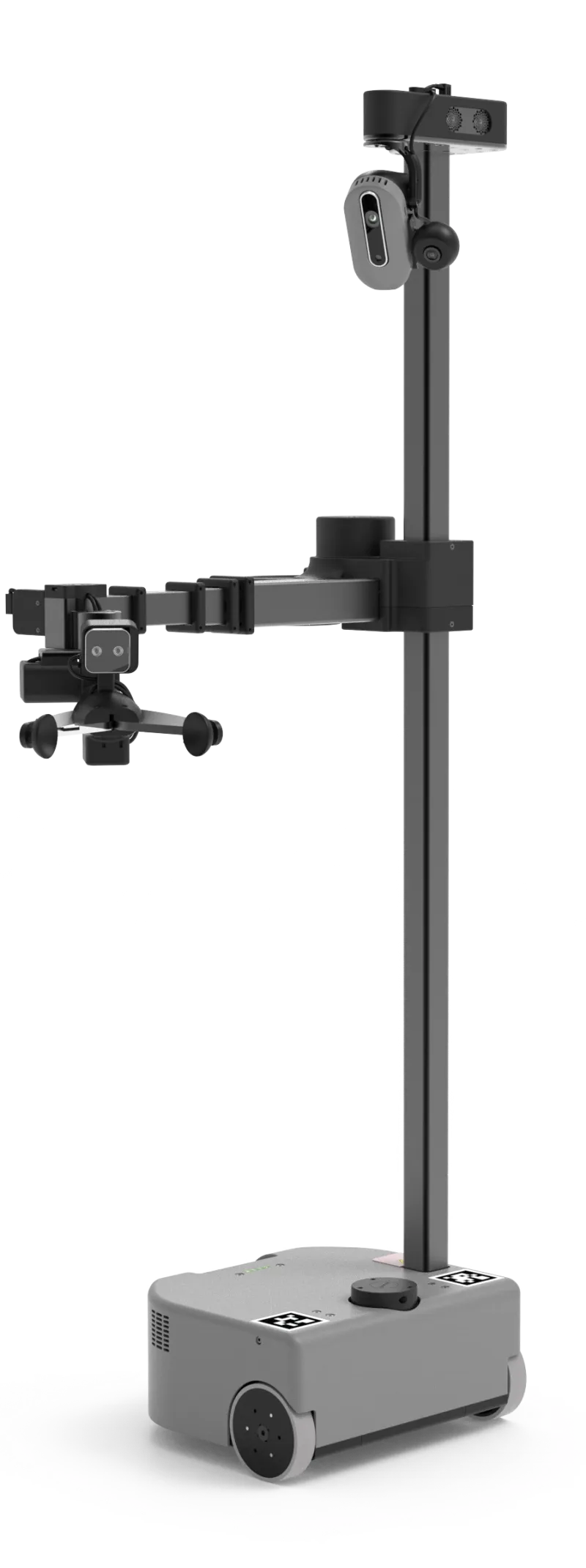
Assistive home robots guide showing Hello Robot Stretch 3 mobile manipulator for independent living support

The ui44 database tracks more than 230 robots, and the assistive category cuts across several labels: home assistants, companions, telepresence robots, hospital logistics robots, therapeutic pets, and research platforms. That variety is the point. If you are buying for an older adult, a person with limited mobility, or a family member who needs more support at home, the first question is not "which robot is smartest?" It is what kind of help is actually needed?

What should an assistive home robot actually do?

The phrase "assistive robot" gets used too broadly. A robot vacuum can help, but it is still a floor-care appliance. A companion bot can help, but it may not physically move anything. A humanoid can look capable in a demo while still being years away from safe, unsupervised home care.

For buyers, it is better to split the market into five practical jobs.

Job at home

Medication and routine reminders

What the robot needs
Proactive conversation, schedule handling, caregiver visibility
Examples in the ui44 database
ElliQ 3, MyMemo ONE
Buyer reality check
Mostly social/software help, not physical assistance

Job at home

Remote presence and check-ins

What the robot needs
Navigation, camera, video calling, privacy controls
Examples in the ui44 database
Amazon Astro, temi V3, Robody
Buyer reality check
Useful only if the person accepts a mobile camera in the home

Job at home

Fetching and carrying

What the robot needs
A mobile base, safe arm, reachable storage, payload
Examples in the ui44 database
Stretch 3, Toyota HSR, Robody
Buyer reality check
This is the hardest category and still the least consumer-ready

Job at home

Emotional or dementia support

What the robot needs
Touch, voice, predictable behavior, clinical workflow
Examples in the ui44 database
PARO, ElliQ 3, Abi, QTrobot
Buyer reality check
The goal is engagement and calm, not independence by itself

Job at home

Facility or caregiver workload relief

What the robot needs
Reliable navigation, delivery workflows, support contract
Examples in the ui44 database
aeo, Moxi, temi V3
Buyer reality check
Stronger in care facilities than private homes today

A good assistive robot is therefore not one product class. It is a match between a person's limitation, the home layout, the caregiver workflow, and the robot's actual autonomy.

The most realistic help today is reminders, connection, and monitoring

If the need is companionship, routine support, and easier family contact, the best assistive robots are not the ones with arms. They are the ones that people actually keep using.

ElliQ 3 is the clearest example in the ui44 database. It is a tabletop companion for older adults with proactive conversation, medication reminders, wellness programs, pain and health tracking, video calling, photo and message sharing, games, music, and community activities. ui44 records the current pricing model as a $249.99 enrollment fee plus a $59.99 monthly subscription. That is not cheap, but it is much closer to a real consumer care service than a research humanoid.

The limitation is obvious: ElliQ cannot bring you a glass of water, lift a bag, or pick up dropped keys. It can lower social and cognitive friction. It cannot replace physical help.

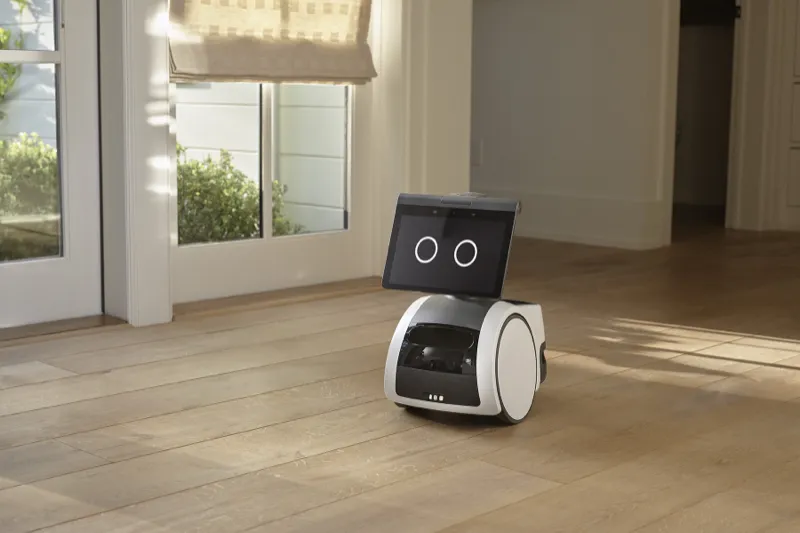
Amazon Astro sits in a different bucket. It is a mobile home-monitoring robot with Alexa, Visual ID, remote video, Ring integration, and room-to-room patrol. Amazon's own compatibility notes are important: Astro is for single-floor indoor homes, supports areas up to 3,500 sq ft, and cannot handle stairs or certain floor transitions. That makes it a check-in and security robot, not a mobility aid.

Amazon Astro assistive home robot for remote monitoring, video calls, and single-floor home patrol

The buyer question here is privacy and consent. A mobile camera can be genuinely helpful when an older adult wants easier contact with family. It can also feel intrusive if installed as surveillance. Before buying any mobile monitoring robot, decide who can connect, when video is allowed, whether rooms can be blocked, and how guests will be told.

Physical help is where the promise gets harder

The dream version of an assistive robot is simple: it fetches medication, brings meals, carries laundry, picks up dropped objects, and opens doors. The engineering version is not simple at all.

Labrador Systems is useful context here because it frames the job plainly: carrying meals, laundry, and critical items around the home for people with chronic pain, injury, or other health issues. Its Retriever-style approach is not trying to be a humanoid. It is trying to be an extra pair of mobile hands. That is often the more realistic assistive design target.

Hello Robot Stretch 3 shows the same challenge from the manipulation side. Stretch 3 is one of the most credible mobile manipulators for real indoor environments, but it is still best understood as an open-source research and assistive-care platform. ui44 records a $24,950 list price, a compact 33 × 34 cm footprint, 24.5 kg weight, 141 cm height, 2–5 hour runtime, ROS 2 and Python SDK support, RGB-D cameras, LiDAR, a compliant gripper, and a 2 kg payload. Hello Robot's own product page emphasizes web-browser manipulation, autonomy demos, home reach, and a community around embodied AI.

That makes Stretch 3 exciting. It also makes the buyer profile narrow. If you need a supported consumer appliance, Stretch is probably too technical. If you are a research lab, assistive-tech developer, or serious care-robotics project, it is one of the best platforms because it is small enough for homes and honest about manipulation limits.

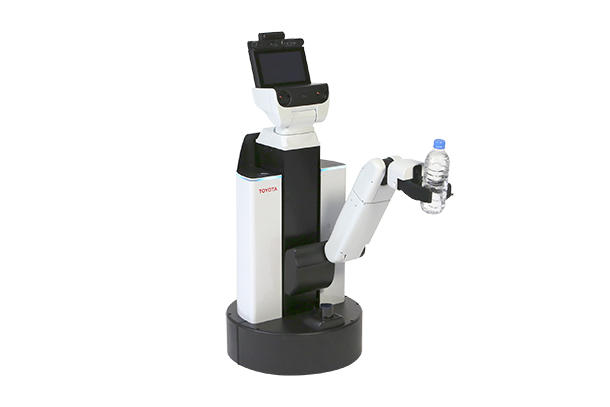
Toyota's Human Support Robot is the older but important reference point. Toyota built HSR specifically around independent living for elderly and disabled users. The official specs list a 100.5–135 cm height range, roughly 37 kg body, 430 mm diameter, about 600 mm arm length, 0.8 km/h top speed, and a small 1.2 kg object payload. It can pick objects up from the floor, retrieve objects from shelves, and be remotely operated by family or caregivers.

Toyota Human Support Robot HSR assistive home robot designed to fetch objects for independent living

The HSR lesson is still current: home assistance is often about modest payloads and awkward reach, not superhuman strength. A 1.2 kg object limit sounds small until the task is a phone, TV remote, medicine bottle, cup, or dropped item. Those are exactly the objects that can determine whether someone needs help right now.

Human-in-the-loop care may arrive before full autonomy

A fully autonomous care robot is a high bar. A robot that lets a trusted human step in remotely is more plausible sooner.

Robody is the most explicit version of this model in ui44. Devanthro positions Robody as a home-care robotic avatar for older adults, combining AI for routine chores and monitoring with VR teleoperation for tasks that need judgment, empathy, or dexterity. The current Robody Cares offering is pre-order / waitlist, with an all-inclusive €690 per month service plan and no upfront hardware purchase. ui44 records a 1.65 m, 60 kg robot with 6 hours of battery life, 5G and Wi-Fi 6, 4K fisheye RGB cameras, mm-wave radar, stereo microphones, self-docking, and about 1.5 kg payload per arm.

That is not the same as a robot that independently handles every care task. It is closer to a telepresence-and-manipulation service: a family member or professional caregiver can be present through the robot when the AI should not be trusted alone. For home care, that hybrid model may be more honest than claiming full autonomy.

The same pattern appears in narrower home robots. Weave Isaac 0 folds laundry for $7,999 upfront or $450 per month, but it also uses remote teleoperation assistance when it gets stuck. That is not a failure. It is a realistic admission that messy home tasks still need a human backstop.

Therapeutic robots help differently

Some assistive robots do not try to move through the house at all. They help by creating predictable interaction.

PARO is the durable example. It is a therapeutic baby harp-seal robot designed for hospitals, elder-care facilities, dementia care, and other settings where live animals are difficult. The official PARO site emphasizes tactile, light, audio, temperature, and posture sensors; responses to stroking, holding, voice direction, greetings, and praise; learned preferred behaviors; and clinical-style goals such as reducing stress and stimulating interaction between patients and caregivers.

PARO therapeutic companion robot for dementia care and assistive home robot emotional support

That is a different kind of value from fetching or monitoring. PARO is not a home chore robot. It is an engagement tool. For some dementia-care and long-term-care settings, that can still be meaningful because calm interaction, routine, and social stimulation are part of care.

QTrobot and Misty II are more programmable social platforms than off-the-shelf elder-care devices. QTrobot is a 64 cm tabletop social humanoid used in human-robot interaction, autism intervention, special-needs education, and research; current LuxAI shop pricing starts around €10,900 before VAT for one RD-V2 configuration. Misty II is a mobile programmable robot with face recognition, speech interaction, 3D mapping, capacitive touch, and an open API; current official-shop pricing is best treated as roughly €17k because regional tax and storefront changes can move the exact figure. In both cases, the value depends heavily on the program, therapist, educator, or developer around the robot.

Care facilities are ahead of private homes

Private homes are chaotic. Care facilities, hospitals, and senior-living sites are still hard, but they have repeatable routes, staff training, service contracts, and clearer workflows. That is why several assistive robots are commercial before they are truly consumer.

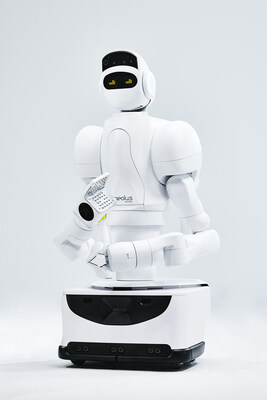
aeo from Aeolus Robotics is a good example. It is a dual-arm service robot offered through robot-as-a-service subscriptions for delivery, security, disinfection, and elder-care support. ui44 records an 8 lb / 3.6 kg single-arm lift capacity, dual seven-degree-of-freedom arms, autonomous elevator operation, door operation, object pickup, delivery workflows, and app-based task scheduling. Aeolus' public material emphasizes senior care, property management, hospitals, and leasing/support rather than a normal retail checkout.

aeo service robot for elder care facilities showing assistive robot delivery and care support workflows

Diligent Robotics Moxi makes the same point in hospitals. It is not a home robot, but it shows where mobile manipulation is already useful: medication and lab-sample delivery, patient-supply transport, site-specific workflows, and dense indoor navigation. Moxi's lesson for home buyers is not "buy a hospital robot." It is that robots get useful faster when the job is narrow, repeated, and operationally supported.

A buyer checklist for assistive home robots

  1. Is the job cognitive, social, physical, or safety-related? ElliQ-style
  2. Does the person receiving help actually want the robot? Assistive tech
  3. Can the robot work in the home layout? Stairs, thresholds, narrow doors,
  4. Who maintains it? Batteries, subscriptions, network setup, cleaning,
  5. What happens when autonomy fails? Look for teleoperation, caregiver
  6. Where does video/audio data go? Monitoring and companionship robots are
  7. Is there a real deployment model? A waitlist, research loan, or care-home

The bottom line

Assistive home robots are real, but the useful ones are mostly specialized. ElliQ can support routines and connection. Astro and temi can make remote presence easier. PARO can support therapeutic engagement. Stretch 3 and Toyota HSR show what physical assistance looks like when a robot has a real arm. Robody points toward a near-term hybrid model where AI handles routine work and humans step in remotely when care requires judgment.

The wrong expectation is a single robot caregiver that does everything. The right expectation is a carefully chosen tool that removes one recurring burden. For independent living, that can still be a big deal.

Database context

Use this article as a privacy verification workflow

Turn the article into a real verification pass

Assistive Home Robots: What Can Actually Help? already points you toward 14 linked robots, 14 manufacturers, and 3 countries inside the ui44 database. That matters because strong buyer guidance is easier to apply when you can move immediately from a claim or warning into concrete product pages, manufacturer directories, component explainers, and country-level context instead of treating the article as an isolated opinion piece. The fastest next step is to turn the article into a shortlist workflow: open the linked robot pages, verify which specs are actually published for those models, then compare the surrounding manufacturer and component context before you decide whether the underlying claim changes your buying plan.

For this topic, the useful discipline is to separate the editorial lesson from the catalog evidence. The article gives you the framing, but the robot pages tell you what each product actually ships with today: sensor stack, connectivity methods, listed price, release timing, category, and support-relevant compatibility notes. The manufacturer pages then show whether you are looking at a one-off launch, a broader lineup pattern, or a company that spans multiple categories. That layered workflow reduces the risk of buying on a single marketing phrase or a single support FAQ.

Use the robot pages to confirm which products actually expose cameras, microphones, Wi-Fi, or voice systems, then use the manufacturer pages to decide how much of the privacy question seems product-specific versus brand-wide. On this route cluster, ElliQ 3, MyMemo ONE, and Astro form the fastest reality check. If you want a quick working shortlist, open Compare ElliQ 3, MyMemo ONE, and Astro next, then keep this article open as the reasoning layer while you compare structured data side by side.

Practical Takeaway

Every robot, manufacturer, category, component, and country reference below resolves to a real ui44 page, keeping the follow-up path grounded in database records rather than generic advice.

Suggested next steps in ui44

  1. Open ElliQ 3 and note the listed sensors, connectivity methods, and voice stack before you interpret any policy claim.
  2. Cross-check the wider brand context on Intuition Robotics so you can see whether the privacy question touches one model or a broader lineup.
  3. Use the linked component pages to confirm how common the relevant sensors and connectivity layers are across the database.
  4. Keep a short note of which policy layers you checked, which device features are actually present on the robot page, and which items still depend on region- or app-level confirmation.
  5. Finish with Compare ElliQ 3, MyMemo ONE, and Astro so the policy reading sits next to structured product data.

Database context

Robot profiles worth opening next

Use the linked product pages as the evidence layer

The linked robot pages are where this article becomes operational. Instead of asking whether the headline is interesting, use the robot entries to inspect the actual mix of sensors, connectivity options, batteries, pricing, release timing, and stated capabilities attached to the products mentioned in the article. That is the easiest way to see whether the warning or opportunity described here affects one product family, a specific design pattern, or an entire buying lane.

ElliQ 3

Intuition Robotics · Companions · Available

Price TBA

ElliQ 3 is tracked on ui44 as a available companions robot from Intuition Robotics. The database currently records a listed price of Price TBA, a release date of 2024-01, Mains powered battery life, N/A (plugged in) charging time, and a published stack that includes Far-field Microphones, Front Camera, and Integrated Touchscreen plus Wi-Fi and Bluetooth.

For privacy-focused reading, this page matters because it shows the concrete device surface behind the policy discussion. Use it to verify whether ElliQ 3 combines sensors and connectivity in a way that could change the in-home data footprint, and compare the listed capabilities such as Proactive Conversation, Medication Reminders, and Health & Pain Tracking with any cloud, app, or voice layers, including ElliQ Voice AI.

MyMemo ONE

MyMemo AI · Humanoid · Development

Price TBA

MyMemo ONE is tracked on ui44 as a development humanoid robot from MyMemo AI. The database currently records a listed price of Price TBA, a release date of 2026-01, Not officially disclosed battery life, Not officially disclosed charging time, and a published stack that includes Multimodal interaction system and Smart-home integration sensors not individually disclosed plus Smart home integration.

For privacy-focused reading, this page matters because it shows the concrete device surface behind the policy discussion. Use it to verify whether MyMemo ONE combines sensors and connectivity in a way that could change the in-home data footprint, and compare the listed capabilities such as AI memory and personalized recall, Multimodal interaction, and Listening Mode for memory preservation with any cloud, app, or voice layers.

Astro

Amazon · Security & Patrol · Active

$1,599

Astro is tracked on ui44 as a active security & patrol robot from Amazon. The database currently records a listed price of $1,599, a release date of 2021, Not officially disclosed battery life, Not officially disclosed charging time, and a published stack that includes 5MP Bezel Camera, 1080p Periscope Camera (132° FOV), and Infrared Vision plus Wi-Fi 802.11ac and Bluetooth.

For privacy-focused reading, this page matters because it shows the concrete device surface behind the policy discussion. Use it to verify whether Astro combines sensors and connectivity in a way that could change the in-home data footprint, and compare the listed capabilities such as Autonomous Home Patrol, Visual ID (face recognition), and Remote Home Monitoring with any cloud, app, or voice layers, including Amazon Alexa.

temi V3

temi · Commercial · Available

Price TBA

temi V3 is tracked on ui44 as a available commercial robot from temi. The database currently records a listed price of Price TBA, a release date of 2022, Up to 8 hours battery life, Autonomous docking (220V/110V) charging time, and a published stack that includes 360° LIDAR, 2x Depth Cameras, and RGB Camera (13MP, 120° FOV) plus Wi-Fi 5 (802.11 a/b/g/n/ac, 2.4G/5G) and Bluetooth 5.1 BLE.

For privacy-focused reading, this page matters because it shows the concrete device surface behind the policy discussion. Use it to verify whether temi V3 combines sensors and connectivity in a way that could change the in-home data footprint, and compare the listed capabilities such as Autonomous Navigation (5cm accuracy), Human Follow Mode, and Telepresence Video Calling with any cloud, app, or voice layers, including temi AI Assistant.

Robody

Devanthro · Home Assistants · Pre-order

Price TBA

Robody is tracked on ui44 as a pre-order home assistants robot from Devanthro. The database currently records a listed price of Price TBA, a release date of 2024-11, 6 hours battery life, Self-docking; full charge time not officially disclosed charging time, and a published stack that includes 4K fisheye RGB cameras, mm-wave radar, and Stereo microphones plus 5G and Wi-Fi 6.

For privacy-focused reading, this page matters because it shows the concrete device surface behind the policy discussion. Use it to verify whether Robody combines sensors and connectivity in a way that could change the in-home data footprint, and compare the listed capabilities such as VR telepresence for family members and caregivers, Medication reminders, and Meal preparation assistance with any cloud, app, or voice layers.

Database context

Manufacturer context behind the article

Check whether this is one product story or a broader company pattern

Manufacturer pages add the privacy context that individual product pages cannot show on their own. They help you check whether cameras, microphones, cloud accounts, app controls, and policy assumptions appear across a broader lineup or stay tied to one specific product story.

Intuition Robotics

ui44 currently tracks 1 robot from Intuition Robotics across 1 category. The company is grouped under Israel, and the current catalog footprint on ui44 includes ElliQ 3.

That wider brand context matters because privacy questions rarely stop at one FAQ page. A manufacturer route helps you see whether the article is centered on one premium model or on a company that has several relevant products and therefore more than one place where the same policy or app assumptions might matter. The category mix here currently points toward Companions as the most useful next route if you want to see whether this article reflects a wider pattern inside the brand.

MyMemo AI

ui44 currently tracks 1 robot from MyMemo AI across 1 category. The current catalog footprint on ui44 includes MyMemo ONE.

That wider brand context matters because privacy questions rarely stop at one FAQ page. A manufacturer route helps you see whether the article is centered on one premium model or on a company that has several relevant products and therefore more than one place where the same policy or app assumptions might matter. The category mix here currently points toward Humanoid as the most useful next route if you want to see whether this article reflects a wider pattern inside the brand.

Amazon

ui44 currently tracks 1 robot from Amazon across 1 category. The company is grouped under USA, and the current catalog footprint on ui44 includes Astro.

That wider brand context matters because privacy questions rarely stop at one FAQ page. A manufacturer route helps you see whether the article is centered on one premium model or on a company that has several relevant products and therefore more than one place where the same policy or app assumptions might matter. The category mix here currently points toward Security & Patrol as the most useful next route if you want to see whether this article reflects a wider pattern inside the brand.

temi

ui44 currently tracks 1 robot from temi across 1 category. The current catalog footprint on ui44 includes temi V3.

That wider brand context matters because privacy questions rarely stop at one FAQ page. A manufacturer route helps you see whether the article is centered on one premium model or on a company that has several relevant products and therefore more than one place where the same policy or app assumptions might matter. The category mix here currently points toward Commercial as the most useful next route if you want to see whether this article reflects a wider pattern inside the brand.

Database context

Broaden the scan without leaving the database

Categories, components, and countries add the wider context

Category framing

Category pages are useful when the article touches a buying pattern that shows up across brands. A category route helps you confirm whether the linked products sit in a narrow niche or whether the same question should be tested across a larger field of alternatives.

Home Assistants

The Home Assistants category page currently groups 12 tracked robots from 12 manufacturers. ui44 describes this lane as: Arm-based household helpers — laundry folders, kitchen robots, and mobile manipulators that handle physical tasks at home.

That makes the category route a practical follow-up when you want to check whether the products linked in this article are typical for the lane or whether they sit at one edge of the market. Useful starting examples currently include Robody, Futuring 2 (F2), Stretch 3.

Companions

The Companions category page currently groups 33 tracked robots from 31 manufacturers. ui44 describes this lane as: Social robots, robot pets, and elderly care companions designed for emotional connection and daily support.

That makes the category route a practical follow-up when you want to check whether the products linked in this article are typical for the lane or whether they sit at one edge of the market. Useful starting examples currently include PARO, Abi, Moflin.

Country and ecosystem context

Country pages give extra context when support practices, launch sequencing, regulatory posture, or manufacturer mix matter. They are not a substitute for model-level verification, but they do help you see which ecosystems cluster together and which manufacturers sit in the same regional field when you broaden the search beyond the article headline.

Israel

The Israel route currently groups 2 tracked robots from 2 manufacturers in ui44. That gives you a useful regional lens when the article points toward support practices, launch sequencing, or brand clusters that may share similar ecosystem assumptions.

On the current route, manufacturers like Intuition Robotics, Mentee Robotics make the page a good way to broaden the scan without losing the regional context that often shapes availability, documentation style, and adjacent alternatives.

USA

The USA route currently groups 16 tracked robots from 12 manufacturers in ui44. That gives you a useful regional lens when the article points toward support practices, launch sequencing, or brand clusters that may share similar ecosystem assumptions.

On the current route, manufacturers like Boston Dynamics, Figure AI, Tesla make the page a good way to broaden the scan without losing the regional context that often shapes availability, documentation style, and adjacent alternatives.

Denmark

The Denmark route currently groups 1 tracked robots from 1 manufacturers in ui44. That gives you a useful regional lens when the article points toward support practices, launch sequencing, or brand clusters that may share similar ecosystem assumptions.

On the current route, manufacturers like Weave Robotics make the page a good way to broaden the scan without losing the regional context that often shapes availability, documentation style, and adjacent alternatives.

Database context

Questions to answer before you move from reading to buying

A follow-up FAQ built from the entities already linked in this article

Frequently Asked Questions

Which page should I open first after reading “Assistive Home Robots: What Can Actually Help?”?

Start with ElliQ 3. That gives you a concrete product anchor for the article’s main claim. From there, branch into the manufacturer and component pages so you can tell whether the article is describing one specific model, a repeated brand pattern, or a wider technology issue that affects multiple shortlist options.

How do the manufacturer pages change the buying decision?

Intuition Robotics help you zoom out from one article and one product. On ui44 they show lineup breadth, category spread, and the neighboring robots tied to the same company. That context is useful when you are deciding whether a risk belongs to a single model, whether it shows up across a brand’s portfolio, and whether you should keep looking at alternatives before committing.

When should I switch from reading to side-by-side comparison?

Move into Compare ElliQ 3, MyMemo ONE, and Astro as soon as you understand the article’s main warning or promise. The article explains what to watch for, but the compare view is where you can check whether price, status, battery life, connectivity, sensors, and category fit still make the robot a good match for your own home and budget.

Database context

Where to go next in ui44

Keep the research chain inside the database

If you want to keep going, these follow-on pages give you the cleanest expansion path from article to research session. Open the comparison route first if you are deciding between products today. Open the manufacturer, category, and component routes if you still need to understand the broader pattern behind the claim.

UT

Written by

ui44 Team

Published April 29, 2026

Share this article

Open a plain share link on X or Bluesky. No embeds, no widgets, no cookie baggage.

Explore the database

Go beyond the headlines

Compare specs, features, and prices across 100+ robots from leading manufacturers worldwide.