The short version: Rotaku's official reservation page now shows Domo Basic at $2,999, Domo Developer at $3,998, and Domo Plus Developer at $9,899. The $3,998 Developer configuration is the one that matters for most serious readers because it is framed around SDK access, simulation-ready files, whole-body policy training, and custom behavior development rather than simple showpiece motion.
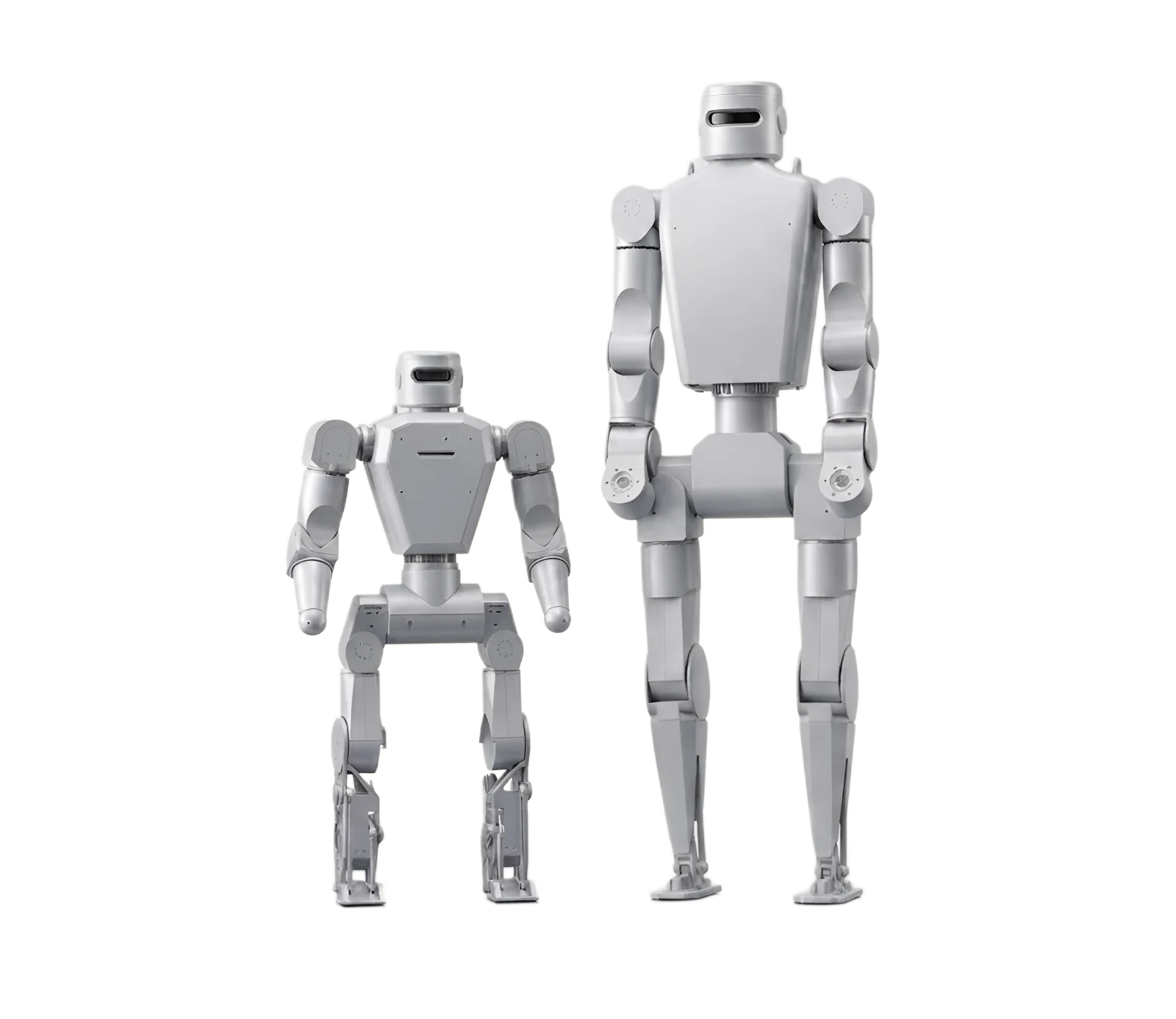
That does not make Domo a normal household purchase. A buyer should treat it as a compact developer humanoid with promising public specs, limited-batch reservations, and many open questions around support, safety, availability, and real chore autonomy.
What is Rotaku Domo?
Rotaku Domo is a compact bipedal humanoid robot from Rotaku. The official page positions it for developers, researchers, and early-stage robotics teams working on locomotion policy training, full-body control, manipulation research, teleoperation, vision-based policy learning, reinforcement learning, and imitation learning.
The headline hardware claims are simple:
Official Rotaku spec
Height
- Domo
- 90 cm / 35.4 in
- Domo Plus
- 130 cm / 51.2 in
Official Rotaku spec
Weight
- Domo
- 20 kg
- Domo Plus
- 35 kg
Official Rotaku spec
Degrees of freedom
- Domo
- 23 DoF
- Domo Plus
- 25 DoF
Official Rotaku spec
Listed torque figure
- Domo
- 70 Nm
- Domo Plus
- 110 Nm
Official Rotaku spec
Developer price
- Domo
- $3,998
- Domo Plus
- $9,899
| Official Rotaku spec | Domo | Domo Plus |
|---|---|---|
| Height | 90 cm / 35.4 in | 130 cm / 51.2 in |
| Weight | 20 kg | 35 kg |
| Degrees of freedom | 23 DoF | 25 DoF |
| Listed torque figure | 70 Nm | 110 Nm |
| Developer price | $3,998 | $9,899 |
Rotaku also says Domo has a modular design, replaceable end effectors, a wide-FOV depth camera, onboard battery and compute, wireless developer access, SSH access, enclosed wiring, and an untethered operating design. The ui44 robot record still treats runtime as not officially disclosed, notes independent coverage around a 2-hour figure, and lists charging time as not officially disclosed, so buyers should verify battery packs, charger details, and endurance before treating any runtime claim as a planning number.
Those numbers are attention-grabbing because the comparable humanoid market is usually either much cheaper but smaller and less capable, or much larger and far more expensive. In the ui44 database, Noetix Bumi is a roughly 94 cm, 12 kg preorder humanoid listed around $1,370, but it is aimed more at education and simple interaction. Unitree R1 starts at $4,900 for the R1 Air presale and is much more athletic, but the standard database record is locomotion-first rather than heavy manipulation-first.
Domo sits between those examples: not the cheapest biped, not the most mature platform, and not a home appliance. Its pitch is low-cost whole-body development.
What does the $3,998 Domo Developer price include?
The most important detail is that Rotaku's pricing is tiered. A third-party writeup framed Domo around a $2,999 starting price, and Rotaku's current official page does list Domo Basic at $2,999. But the more useful tier for builders is Domo Developer at $3,998, which Rotaku describes as a developer-focused humanoid platform for full-body control research, manipulation experiments, and custom behavior development.
The official page lists the Developer tier with:
- a developer SDK
- a whole-body training workflow
- simulation-ready support with URDF files
- onboard operation rather than external control cables
- wireless developer access and SSH
- the base Domo humanoid hardware platform
That price should not be read as an all-in robotics lab budget. Rotaku's public reservation flow also lists several add-ons that can change the real cost of a serious setup:
Add-on listed by Rotaku
Dual-arm teleoperation kit
- Price shown
- +$1,299
- Why it matters
- Leader-arm controls for manipulation data collection
Add-on listed by Rotaku
Advanced AI compute unit
- Price shown
- +$1,280
- Why it matters
- NVIDIA Jetson Orin NX for local vision and policy workloads
Add-on listed by Rotaku
Whole-body teleoperation kit
- Price shown
- +$1,799
- Why it matters
- More complete teleop for body/control research
Add-on listed by Rotaku
Dexterous hand
- Price shown
- +$2,500
- Why it matters
- Moves Domo closer to manipulation experiments
Add-on listed by Rotaku
LiDAR navigation kit
- Price shown
- +$1,199
- Why it matters
- Mapping, obstacle detection, localization, and indoor navigation
Add-on listed by Rotaku
Extra battery pack
- Price shown
- +$499
- Why it matters
- More practical continuous testing
Add-on listed by Rotaku
Developer policy training package
- Price shown
- +$1,499
- Why it matters
- Training workflow help for policy development
| Add-on listed by Rotaku | Price shown | Why it matters |
|---|---|---|
| Dual-arm teleoperation kit | +$1,299 | Leader-arm controls for manipulation data collection |
| Advanced AI compute unit | +$1,280 | NVIDIA Jetson Orin NX for local vision and policy workloads |
| Whole-body teleoperation kit | +$1,799 | More complete teleop for body/control research |
| Dexterous hand | +$2,500 | Moves Domo closer to manipulation experiments |
| LiDAR navigation kit | +$1,199 | Mapping, obstacle detection, localization, and indoor navigation |
| Extra battery pack | +$499 | More practical continuous testing |
| Developer policy training package | +$1,499 | Training workflow help for policy development |
A Domo Developer reservation with compute, LiDAR, extra battery, and dexterous hands can therefore move far beyond the $3,998 sticker before shipping, tax, support, spare parts, and lab equipment enter the picture.
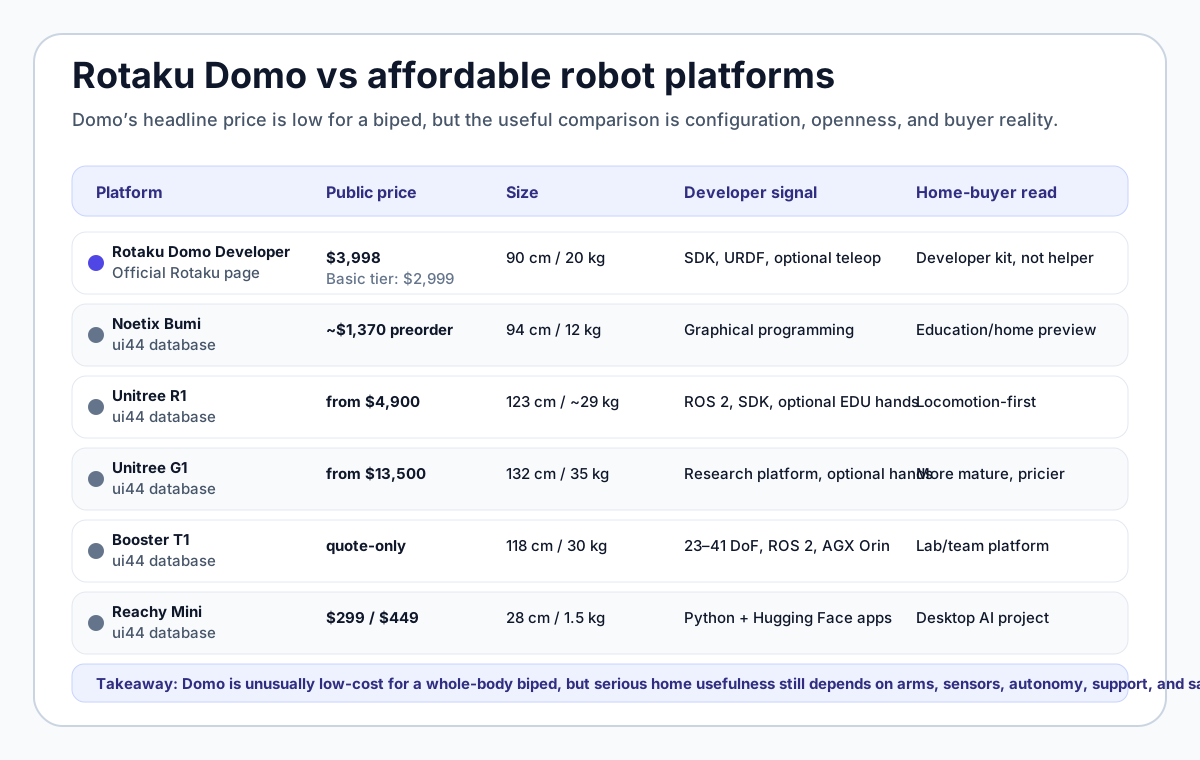
That is not a criticism. It is how developer robots work. The mistake would be to compare a bare reservation price with the complete cost of a supported home robot.
Is Rotaku Domo a home robot?
Not in the ordinary buyer sense. Domo may be physically small enough for a home, but Rotaku's own language is about developers, researchers, and robotics teams. The page says it is suitable for locomotion policy training, full-body control, manipulation research, teleoperation, vision-based policy learning, reinforcement learning, and imitation learning.
That is lab language, not appliance language.
A home buyer wants answers to questions such as:
- Can it safely operate around pets, children, stairs, rugs, cables, and glass?
- What can it reliably do without a human teleoperator?
- How are software updates, remote access, and recorded sensor data handled?
- Who repairs a joint, hand, camera, or battery if it fails?
- What happens if the company changes pricing, batches, or configuration terms?
Domo's official page does answer some developer questions. It says reservations are first-come, first-served, deposits are $99, batches are limited, and once fulfillment begins delivery typically takes 2–4 weeks after configuration and availability are confirmed. It also says Domo is designed to run untethered with onboard battery, compute, sensors, and motor control.
Those are useful signals. They are not the same as verified consumer support, home safety certification, or repeatable household chore performance.
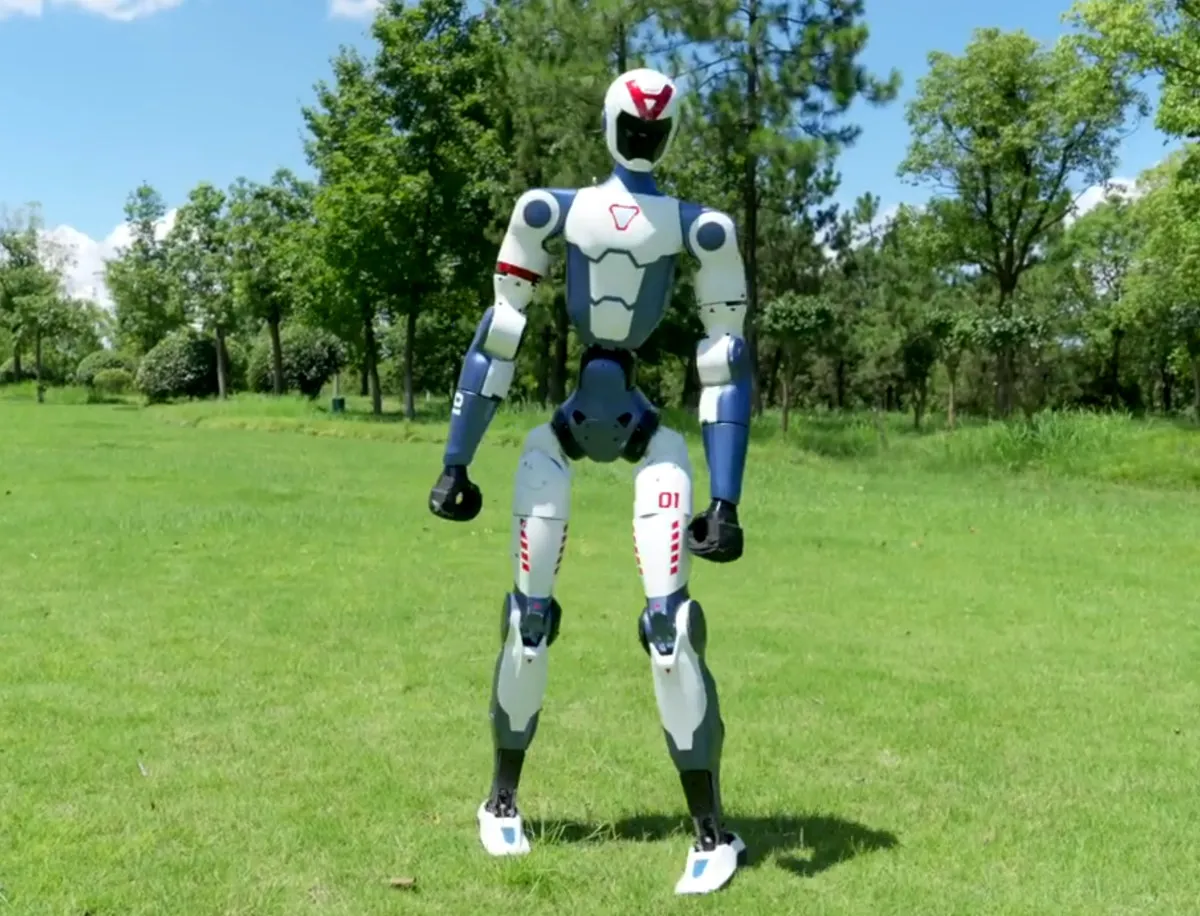
The better comparison is not "Domo versus a Roomba." It is "Domo versus other early humanoid and developer platforms." By that standard, Domo is genuinely interesting.
How does Domo compare with Unitree R1, G1, Booster T1, and Reachy Mini?
Rotaku's pricing puts Domo into a crowded and confusing part of the market. The closest ui44 comparisons are not all direct substitutes, but they help define what the buyer is actually getting.
Robot
- ui44 status / price
- Pre-order; about $1,370 in China
- Key difference from Domo
- Smaller and cheaper; education/home companion angle rather than an SDK-heavy whole-body research platform
Robot
- ui44 status / price
- Pre-order; $299 Lite / $449 wireless
- Key difference from Domo
- Desktop AI project robot with Python and Hugging Face integration; not mobile manipulation hardware
Robot
- ui44 status / price
- Pre-order; from $4,900
- Key difference from Domo
- 123 cm, about 29 kg, athletic biped, optional EDU hands; strong locomotion signal
Robot
- ui44 status / price
- Available; from $13,500
- Key difference from Domo
- More established compact research humanoid with depth camera, 3D LiDAR, SDK, and optional dexterous hands
Robot
- ui44 status / price
- Active; official price not public
- Key difference from Domo
- 118 cm, 30 kg, 23–41 DoF, ROS 2, NVIDIA Jetson AGX Orin, used by research/competition teams
Robot
- ui44 status / price
- Development; price not announced
- Key difference from Domo
- Open-source 1.3 m humanoid research platform planned around Dynamixel-Q actuators and simulation assets
Robot
- ui44 status / price
- Available; $29,950
- Key difference from Domo
- Not a humanoid, but a real mobile manipulator with ROS 2/Python, self-charging, 8-hour light-load runtime, and a 2.5–4 kg arm payload
| Robot | ui44 status / price | Key difference from Domo |
|---|---|---|
| Noetix Bumi | Pre-order; about $1,370 in China | Smaller and cheaper; education/home companion angle rather than an SDK-heavy whole-body research platform |
| Reachy Mini | Pre-order; $299 Lite / $449 wireless | Desktop AI project robot with Python and Hugging Face integration; not mobile manipulation hardware |
| Unitree R1 | Pre-order; from $4,900 | 123 cm, about 29 kg, athletic biped, optional EDU hands; strong locomotion signal |
| Unitree G1 | Available; from $13,500 | More established compact research humanoid with depth camera, 3D LiDAR, SDK, and optional dexterous hands |
| Booster T1 | Active; official price not public | 118 cm, 30 kg, 23–41 DoF, ROS 2, NVIDIA Jetson AGX Orin, used by research/competition teams |
| ROBOTIS AI Sapiens K0 | Development; price not announced | Open-source 1.3 m humanoid research platform planned around Dynamixel-Q actuators and simulation assets |
| Hello Robot Stretch 4 | Available; $29,950 | Not a humanoid, but a real mobile manipulator with ROS 2/Python, self-charging, 8-hour light-load runtime, and a 2.5–4 kg arm payload |
The contrast with Stretch 4 is especially useful. Stretch 4 looks less humanoid, costs much more, and will not win a viral biped demo. But it is aimed at real indoor manipulation, assistive pilots, mapping, navigation, data collection, VLM grasping demos, and a clearly documented developer workflow. For someone who wants to build useful home manipulation rather than humanoid locomotion, a wheeled manipulator can still be the more practical machine.

The contrast with Reachy Mini is the opposite. Reachy Mini is inexpensive, open, expressive, and good for AI interaction experiments, but it has no legs, arms, or household manipulation path. Domo gives developers a real whole-body biped to experiment with, at a price much closer to a serious hobby budget than to an industrial humanoid program.
What should buyers verify before reserving Domo?
A low humanoid price is exciting only if the hidden assumptions are clear. Before placing a Domo reservation, a serious buyer should verify at least six things.
First, confirm the exact configuration. The difference between Basic, Developer, Plus Developer, compute, LiDAR, teleoperation, batteries, and dexterous hands is not cosmetic. It changes what the robot can do, how much data you can collect, and whether you are buying a platform or a project shell.
Second, ask what software access really means. SDK access, URDF files, SSH, and simulation readiness are good signs. But buyers should still ask about examples, API stability, update cadence, licensing, ROS compatibility, telemetry, and what happens if a software image is corrupted.
Third, ask about repair and spares. A $3,998 humanoid can become expensive fast if a joint, battery, end effector, camera, or charger fails and replacement parts are slow or unclear.
Fourth, ask about safety limits. Compact does not mean harmless. Domo is listed at 20 kg, while Domo Plus is 35 kg. Any biped with arms, motors, batteries, and optional dexterous hands needs conservative operating rules indoors.
Fifth, ask what is actually autonomous. Teleoperation and imitation-learning workflows are valuable for researchers. They are not proof that Domo can tidy a room, fetch medicine, or load a dishwasher without human intervention.
Sixth, compare the total setup cost against the project goal. If you want a coding companion, Reachy Mini may be enough. If you want manipulation research, Domo, Unitree R1 EDU, Unitree G1, Booster T1, or Stretch 4 belong on the same spreadsheet. If you want a reliable household helper, none of these are simple appliance purchases yet.
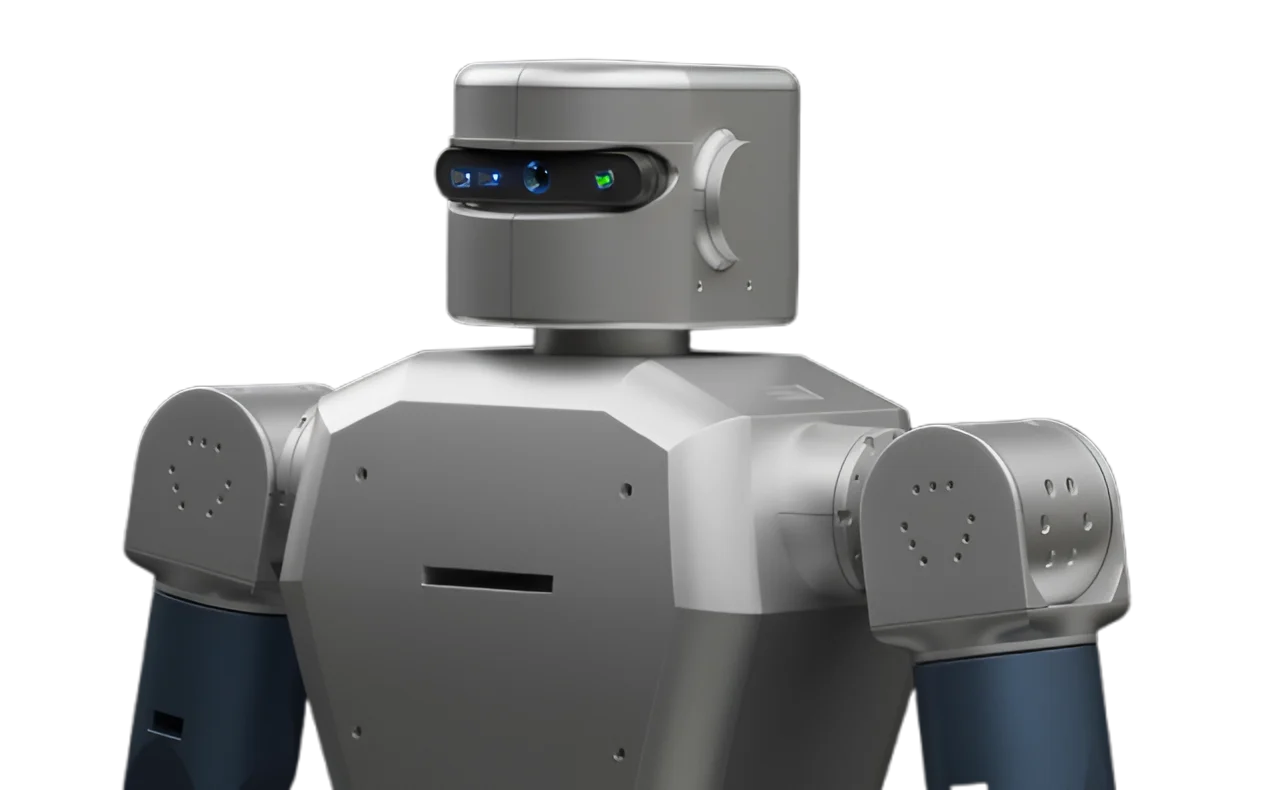
Who is Rotaku Domo actually for?
Domo makes the most sense for three groups.
The first is a small robotics lab or startup that wants a low-cost bipedal body for control, teleoperation, imitation learning, or embodiment experiments. The price is low enough to make multiple units imaginable, especially compared with larger humanoid platforms.
The second is an experienced developer who understands that a humanoid robot is not a finished product. If you are comfortable with SSH, simulation, policy training, logs, spare batteries, failed demos, and hardware debugging, Domo's trade-offs may be part of the appeal.
The third is an early adopter who wants to learn from the market rather than buy a chore robot. Domo may be useful as a signal: whole-body humanoid hardware is moving down-market, and the developer tier between desktop robots and expensive research humanoids is getting more competitive.
It is not a good fit for someone who wants a child-safe family companion, a private household assistant, eldercare support, or guaranteed domestic labor. For that, the better question is not price. It is reliability, service, autonomy, privacy, and support.
Bottom line: should you reserve Rotaku Domo?
Reserve Domo only if you want a developer humanoid and can tolerate the uncertainty that comes with limited-batch early hardware. The official specs are strong for the price: 90 cm, 20 kg, 23 DoF, depth camera, modular end effectors, a $3,998 Developer tier, and a $9,899 Plus Developer tier with a larger 130 cm body and higher listed torque. Treat runtime, charging time, support, and spare parts as verification questions rather than settled appliance-style guarantees.
But Domo is not evidence that useful home humanoids have arrived. It is evidence that the lower end of the humanoid developer market is getting more serious. That matters. Low-cost platforms create more experiments, more data, more failed attempts, and eventually better robots.
For now, the honest buyer framing is simple: Rotaku Domo is a promising whole-body development platform, not a household helper. Compare it with Unitree R1, Unitree G1, Booster T1, Reachy Mini, Noetix Bumi, and Hello Robot Stretch 4 before treating the headline price as the real cost.
Start with the ui44 robot database, then use /compare to separate price, size, status, manipulation hardware, and developer support before putting money down.
Related in the database
Use this article as a setup-friction workflow
Turn the article into a first-day setup pass grounded in the robots, manufacturers, and countries it actually references.
Rotaku Domo: What $3,998 Really Includes already points you toward 7 linked robots, 7 manufacturers, and 4 countries inside the ui44 database. Treat those links as a first-day setup trail: open the robot pages, check what is actually published about charging, battery life, control method, app or OTA support, and recovery, then use the surrounding manufacturer and country context to judge whether the article describes a low-friction product path or a still-specialist deployment.
For setup topics, the useful discipline is to separate a polished demo from the work required after the box arrives. The article gives you the narrative, but the robot pages show the operational clues: dimensions, weight, battery runtime, charging time, controller support, listed availability, and the capabilities that might need supervision. Manufacturer pages then reveal whether the same setup assumptions repeat across a wider lineup.
Use the robot pages to verify what happens between delivery and the first useful task: size, weight, battery, charger or dock path, controller, app, OTA support, and recovery cues. On this route cluster, Bumi, R1, and Reachy Mini form the fastest setup-friction reality check. If you want a quick working shortlist, open Compare Bumi, R1, and Reachy Mini next, then keep this article open while you compare first-day setup evidence side by side.
Practical Takeaway
The links below stay tied to the robots, manufacturers, and countries actually referenced by this setup article, so the checklist remains grounded in published ui44 records rather than generic humanoid advice.
Suggested next steps in ui44
- Open Bumi and check the concrete first-day fields: box contents, charger or dock path, battery life, controller, app, OTA support, and recovery options.
- Use Noetix Robotics to see whether the company’s broader lineup looks appliance-like, developer-first, or still closer to a pilot deployment.
- Run Compare Bumi, R1, and Reachy Mini with the article open and compare battery, size, weight, price path, status, and support cues side by side.
- Write down the first realistic task each robot can plausibly attempt on day one, then separate low-friction setup signals from impressive but still lab-style demos.
Robot profiles worth opening next
Use the linked product pages as the evidence layer
The linked robot pages are where this setup article becomes operational. Use the robot entries to inspect the actual mix of size, weight, battery runtime, charging path, control method, pricing, availability, and stated capabilities attached to the products mentioned in the article. That is the easiest way to see whether the first useful task looks appliance-like, developer-led, or still dependent on supervised experimentation.
Bumi
Noetix Robotics · Humanoid · Active
Bumi is tracked on ui44 as a active humanoid robot from Noetix Robotics. The database currently records a listed price of $1,370, a release date of 2025-10, 2–3 hours (48 V, 3.5 Ah smart battery) battery life, Not officially disclosed charging time, and a published stack that includes Camera and IMU plus Wi-Fi and Bluetooth.
For setup-friction reading, this page matters because it shows the physical and support burden behind the demo. Use it to verify whether Bumi has a credible day-one path across charging, control, recovery, battery limits, and listed capabilities such as Bipedal Walking, Running, and Dancing, with voice support noted as Voice interaction (proprietary).
R1
Unitree Robotics · Humanoid · Pre-order
R1 is tracked on ui44 as a pre-order humanoid robot from Unitree Robotics. The database currently records a listed price of $4,900, a release date of 2025, ~1 hour (mixed activity) battery life, Not officially disclosed charging time, and a published stack that includes Monocular camera (R1 Air); binocular camera (R1/R1 EDU), 4-Mic Array, and Dual 6-Axis IMU plus Wi-Fi 6 and Bluetooth 5.2.
For setup-friction reading, this page matters because it shows the physical and support burden behind the demo. Use it to verify whether R1 has a credible day-one path across charging, control, recovery, battery limits, and listed capabilities such as Bipedal Walking & Running, Cartwheels & Handstands, and Push Recovery, with voice support noted as UnifoLM (voice + image commands).
Reachy Mini
Pollen Robotics · Companions · Available
Reachy Mini is tracked on ui44 as a available companions robot from Pollen Robotics. The database currently records a listed price of $299, a release date of 2025-07, Not officially disclosed battery life, Not officially disclosed charging time, and a published stack that includes 120° 12 MP autofocus wide-angle camera, 4 PDM MEMS digital microphones, and 5 W speaker plus USB (Reachy Mini Lite via host computer) and Wi-Fi (wireless Reachy Mini).
For setup-friction reading, this page matters because it shows the physical and support burden behind the demo. Use it to verify whether Reachy Mini has a credible day-one path across charging, control, recovery, battery limits, and listed capabilities such as 6-DoF head movement, Full body rotation, and Animated antennas for expressive interaction.
G1 is tracked on ui44 as a available humanoid robot from Unitree. The database currently records a listed price of $13,500, a release date of 2024-05-13, ~2 hours battery life, Not disclosed charging time, and a published stack that includes Depth Camera, 3D LiDAR, and 4 Microphone Array plus Wi-Fi 6 and Bluetooth 5.2.
For setup-friction reading, this page matters because it shows the physical and support burden behind the demo. Use it to verify whether G1 has a credible day-one path across charging, control, recovery, battery limits, and listed capabilities such as Bipedal Walking, Object Manipulation, and Dexterous Hands (optional Dex3-1).
Booster T1
Booster Robotics · Humanoid · Active
Booster T1 is tracked on ui44 as a active humanoid robot from Booster Robotics. The database currently records a listed price of $29,800, a release date of 2024, 2 hours walking, 4 hours standing battery life, Not disclosed charging time, and a published stack that includes Intel RealSense D455 RGBD Depth Camera, 9-axis IMU, and Circular 6-Mic Array plus Wi-Fi 6 and Bluetooth 5.2.
For setup-friction reading, this page matters because it shows the physical and support burden behind the demo. Use it to verify whether Booster T1 has a credible day-one path across charging, control, recovery, battery limits, and listed capabilities such as 23-41 Degrees of Freedom (version-dependent), Bipedal Walking & Running, and Self-Recovery (prone to standing).
Manufacturer context behind the article
Check whether this is one product story or a broader company pattern
Manufacturer pages add the setup context that individual product pages cannot show on their own. They help you check whether a brand repeats the same controller, battery, update, support, and availability patterns across multiple robots, or whether the article is really describing one early product path. That matters for humanoids because first-day friction usually comes from the surrounding ecosystem as much as from the robot itself.
Noetix Robotics
ui44 currently tracks 3 robots from Noetix Robotics across 2 categorys. The company is grouped under China, and the current catalog footprint on ui44 includes Hobbs W1, Bumi, N2 (OpenHarmony Edition).
That wider brand context matters because setup friction is rarely just a box problem. A manufacturer route helps you see whether the company has repeated controller, battery, support, and update patterns across its lineup, or whether the article is really about one early product story. The category mix here currently points toward Commercial, Humanoid as the most useful next route if you want to see whether this article reflects a wider pattern inside the brand.
Unitree Robotics
ui44 currently tracks 9 robots from Unitree Robotics across 3 categorys. The company is grouped under China, and the current catalog footprint on ui44 includes B2, B1, Go2.
That wider brand context matters because setup friction is rarely just a box problem. A manufacturer route helps you see whether the company has repeated controller, battery, support, and update patterns across its lineup, or whether the article is really about one early product story. The category mix here currently points toward Quadruped, Humanoid, Research as the most useful next route if you want to see whether this article reflects a wider pattern inside the brand.
Pollen Robotics
ui44 currently tracks 2 robots from Pollen Robotics across 2 categorys. The company is grouped under France, and the current catalog footprint on ui44 includes Reachy 2, Reachy Mini.
That wider brand context matters because setup friction is rarely just a box problem. A manufacturer route helps you see whether the company has repeated controller, battery, support, and update patterns across its lineup, or whether the article is really about one early product story. The category mix here currently points toward Research, Companions as the most useful next route if you want to see whether this article reflects a wider pattern inside the brand.
Unitree
ui44 currently tracks 2 robots from Unitree across 1 category. The company is grouped under China, and the current catalog footprint on ui44 includes H1, G1.
That wider brand context matters because setup friction is rarely just a box problem. A manufacturer route helps you see whether the company has repeated controller, battery, support, and update patterns across its lineup, or whether the article is really about one early product story. The category mix here currently points toward Humanoid as the most useful next route if you want to see whether this article reflects a wider pattern inside the brand.
Broaden the scan without leaving the database
Categories, components, and countries add the wider context
Category framing
Category pages are useful when the article touches a buying pattern that shows up across brands. A category route helps you confirm whether the linked products sit in a narrow niche or whether the same question should be tested across a larger field of alternatives.
Humanoid
The Humanoid category page currently groups 129 tracked robots from 92 manufacturers. ui44 describes this lane as: Full-size bipedal humanoid robots built to work alongside people — from factory floors to household tasks. Compare the cutting edge of humanoid robotics.
That makes the category route a practical follow-up when you want to check whether the products linked in this article are typical for the lane or whether they sit at one edge of the market. Useful starting examples currently include NEO, EVE, Mornine M1.
Companions
The Companions category page currently groups 53 tracked robots from 48 manufacturers. ui44 describes this lane as: Social robots, robot pets, and elderly-care companions designed for emotional connection and everyday support at home.
That makes the category route a practical follow-up when you want to check whether the products linked in this article are typical for the lane or whether they sit at one edge of the market. Useful starting examples currently include PARO, Abi, Next-Generation Companion Robot.
Country and ecosystem context
Country pages give extra context when support practices, launch sequencing, regulatory posture, or manufacturer mix matter. They are not a substitute for model-level verification, but they do help you see which ecosystems cluster together and which manufacturers sit in the same regional field when you broaden the search beyond the article headline.
China
The China route currently groups 189 tracked robots from 87 manufacturers in ui44. That gives you a useful regional lens when the article points toward support practices, launch sequencing, or brand clusters that may share similar ecosystem assumptions.
On the current route, manufacturers like AGIBOT, Dreame, Unitree Robotics make the page a good way to broaden the scan without losing the regional context that often shapes availability, documentation style, and adjacent alternatives.
France
The France route currently groups 8 tracked robots from 7 manufacturers in ui44. That gives you a useful regional lens when the article points toward support practices, launch sequencing, or brand clusters that may share similar ecosystem assumptions.
On the current route, manufacturers like Pollen Robotics, Aldebaran / Maxtronics, Aldebaran Robotics make the page a good way to broaden the scan without losing the regional context that often shapes availability, documentation style, and adjacent alternatives.
South Korea
The South Korea route currently groups 9 tracked robots from 7 manufacturers in ui44. That gives you a useful regional lens when the article points toward support practices, launch sequencing, or brand clusters that may share similar ecosystem assumptions.
On the current route, manufacturers like ROBOTIS, Samsung, GenON make the page a good way to broaden the scan without losing the regional context that often shapes availability, documentation style, and adjacent alternatives.
Questions to answer before you move from reading to buying
A follow-up FAQ built from the entities already linked in this article
Frequently Asked Questions
Which page should I open first after reading “Rotaku Domo: What $3,998 Really Includes”?
Start with Bumi. That gives you a concrete product anchor for the article’s main claim. From there, branch into the manufacturer and component pages so you can tell whether the article is describing one specific model, a repeated brand pattern, or a wider technology issue that affects multiple shortlist options.
How do the manufacturer pages change the buying decision?
Noetix Robotics help you zoom out from one article and one product. On ui44 they show lineup breadth, category spread, and the neighboring robots tied to the same company. That context is useful when you are deciding whether a risk belongs to a single model, whether it shows up across a brand’s portfolio, and whether you should keep looking at alternatives before committing.
When should I switch from reading to side-by-side comparison?
Move into Compare Bumi, R1, and Reachy Mini as soon as you understand the article’s main warning or promise. The article explains what to watch for, but the compare view is where you can check whether price, status, battery life, connectivity, sensors, and category fit still make the robot a good match for your own home and budget.
Where to go next in ui44
Keep the research chain inside the database
If you want to keep going, these follow-on pages give you the cleanest expansion path from article to research session. Open the comparison route first if you are deciding between products today. Open the manufacturer, category, and component routes if you still need to understand the broader pattern behind the claim.
Written by
ui44 Team
Published May 18, 2026
Share this article
Open a plain share link on X or Bluesky. No embeds, no widgets, no cookie baggage.