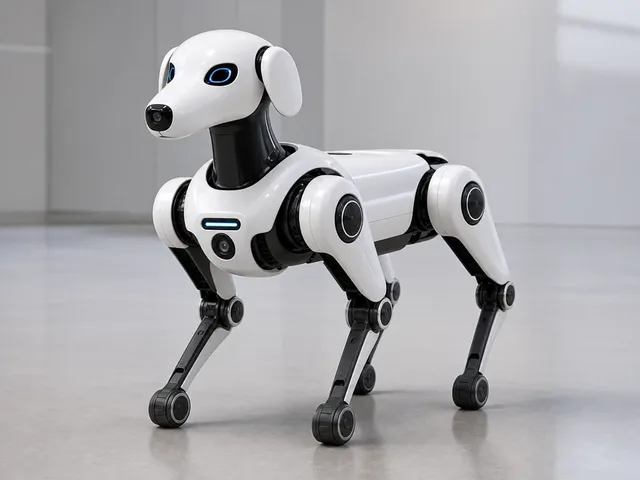
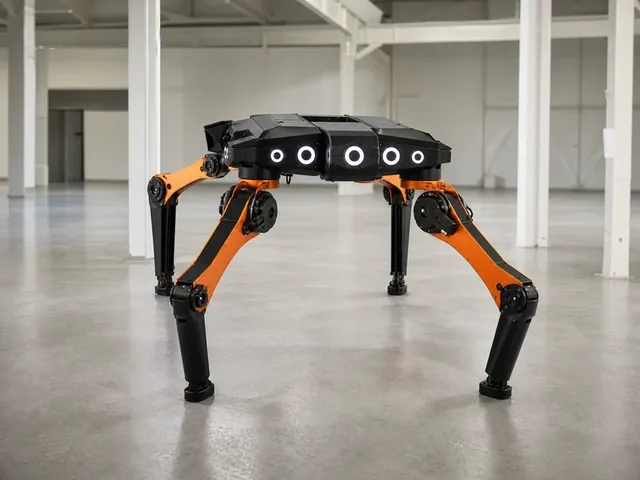
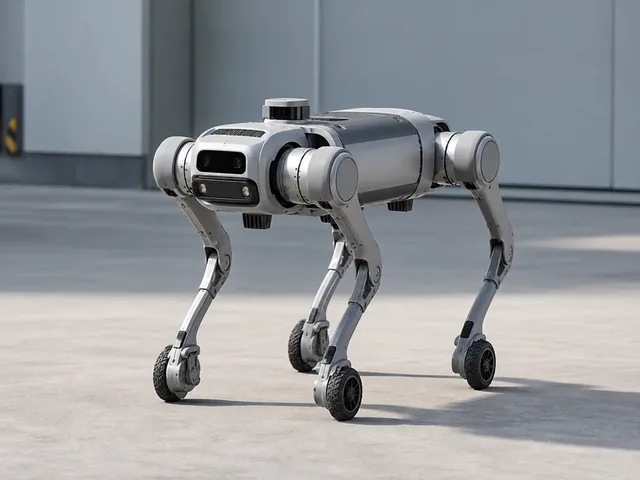
AGIBOT
D1 Pro
Category
Quadruped
Price
$3,200
Four-legged robot dogs and quadrupeds built for rough terrain, inspection, and exploration where wheels can't go. This route is designed to move from fast inventory scan to deeper technical and buyer guidance without turning the page into a wall of undifferentiated content.
Current quadruped coverage in ui44.
0 still sit in pre-release or inactive states.
Enough supplier breadth to spot concentration quickly.
Visible range runs $1.8k to $3.2k.
Market shape
How to use this route
Route map
Inventory
This is the fastest way to understand catalog breadth before you read the deeper buyer, technical, and market context chapters below.
Browse the full quadruped inventory currently tracked in ui44.
The strongest signal for real-world shortlist work.
Useful when the first pass needs fast budget framing.
A quick read on concentration versus competitive spread.
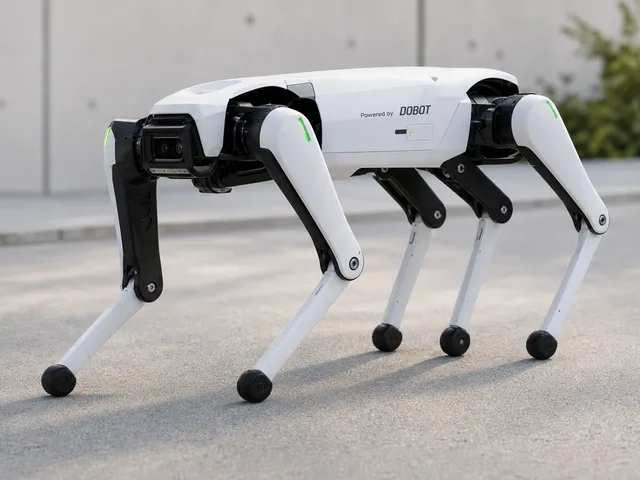
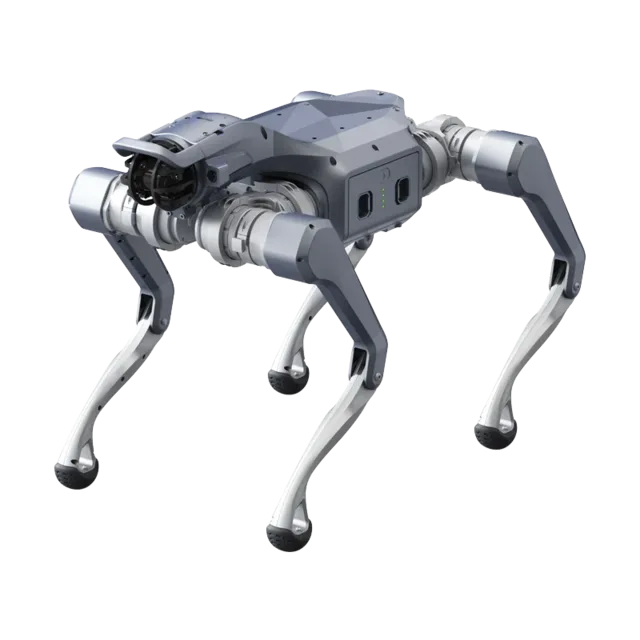
AGIBOT
D1 Pro
Category
Quadruped
Price
$3,200
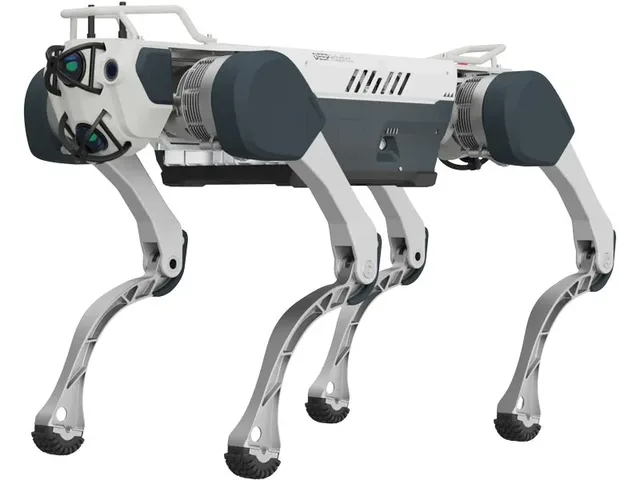
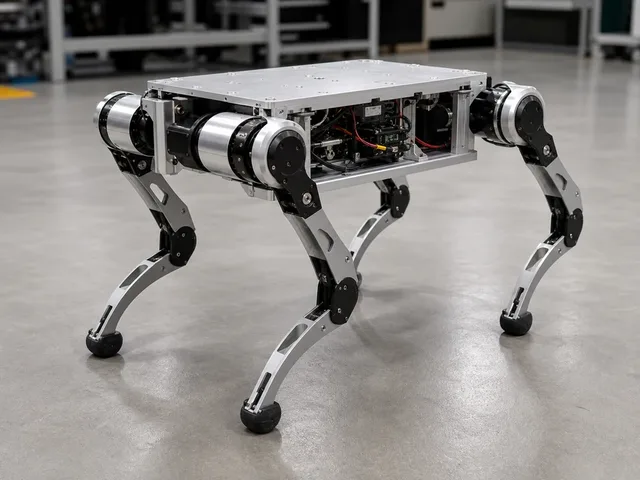
DEEPRobotics' flagship industrial quadruped robot designed for inspection, security, surveying, and rescue operations. Features IP67 protection, operates from…
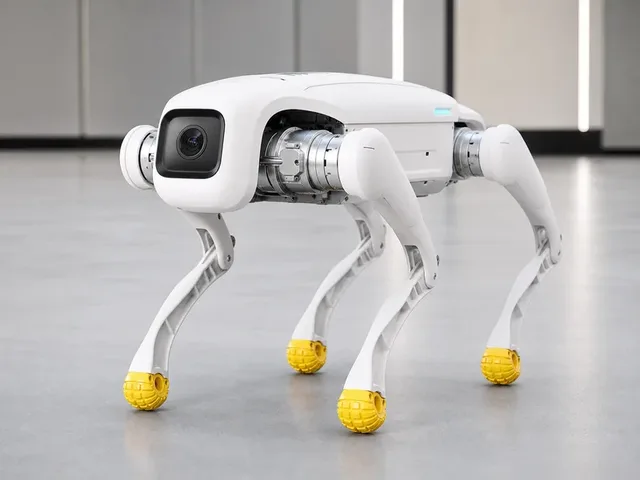
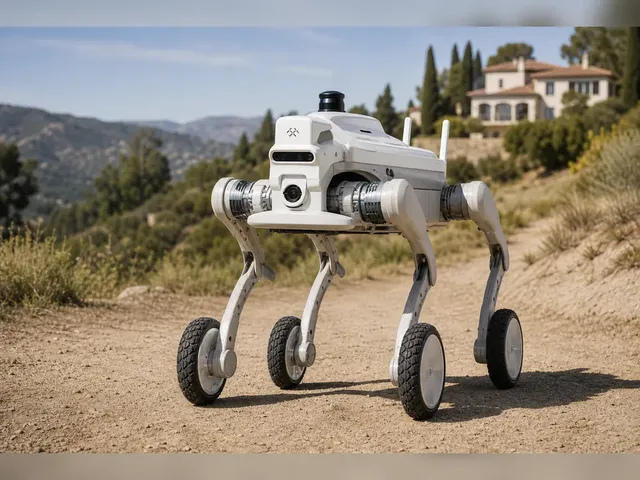
Faraday Future
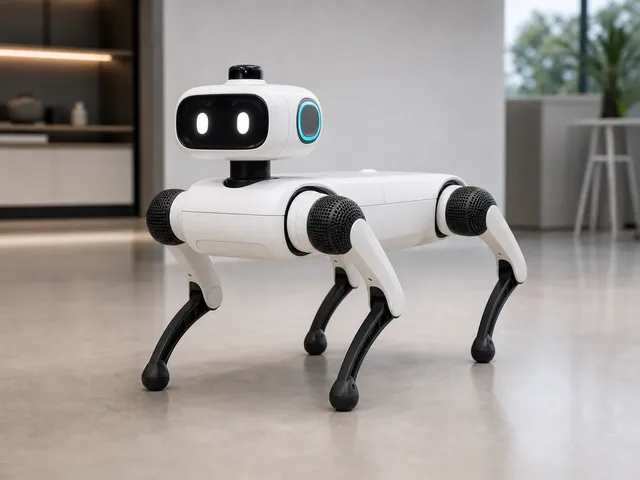
FX Aegis
Category
Quadruped
Price
$2,490
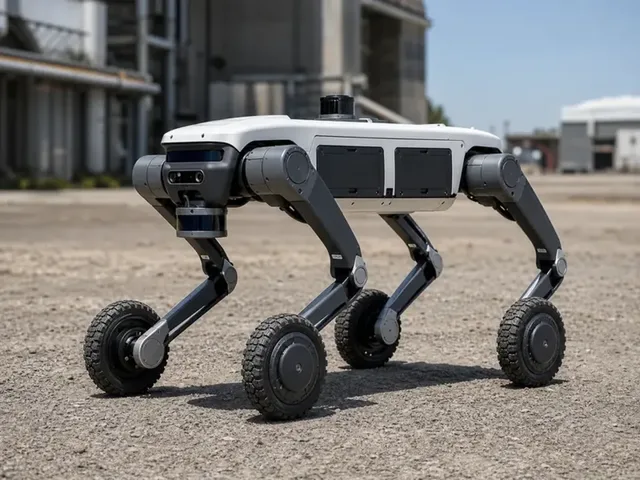
Quadruped robot from Faraday Future's EAI Robotics division, launched alongside the FF Futurist and FF Master at the NADA Show in Las Vegas on February 5,…
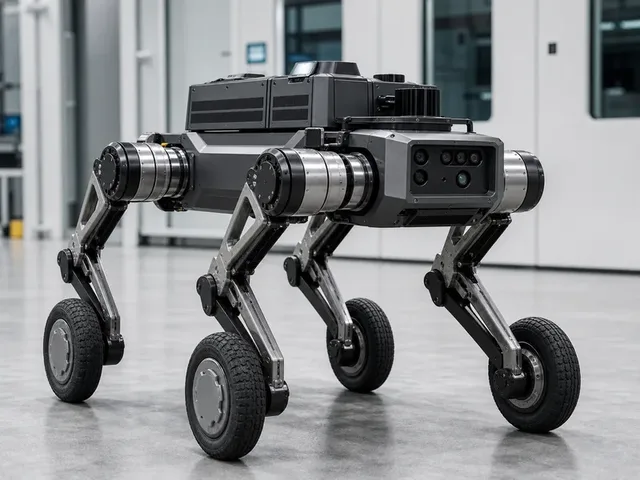
Unitree's industrial-grade quadruped robot built for demanding real-world applications including emergency rescue, industrial inspection, and power line…
Unitree's mid-range industrial quadruped robot designed for complex terrain and harsh environments. The B1 carries a 20 kg continuous walking load (80 kg…
Unitree's consumer-grade quadruped robot dog featuring embodied AI and 4D LiDAR. The Go2 is available in four editions (Air, Pro, X, EDU) and gained global…
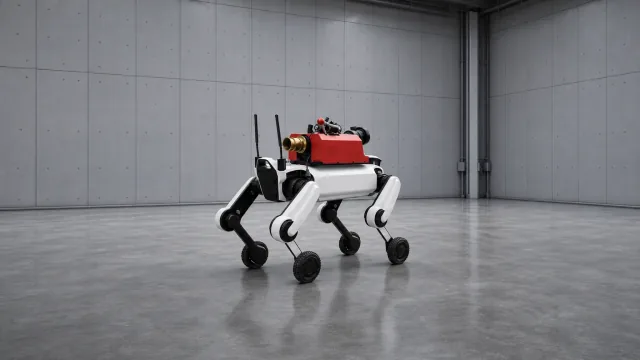
Unitree's mid-size quadruped robot positioned between the consumer Go2 and industrial B2. The As2 delivers roughly twice the dynamic performance of the Go2,…
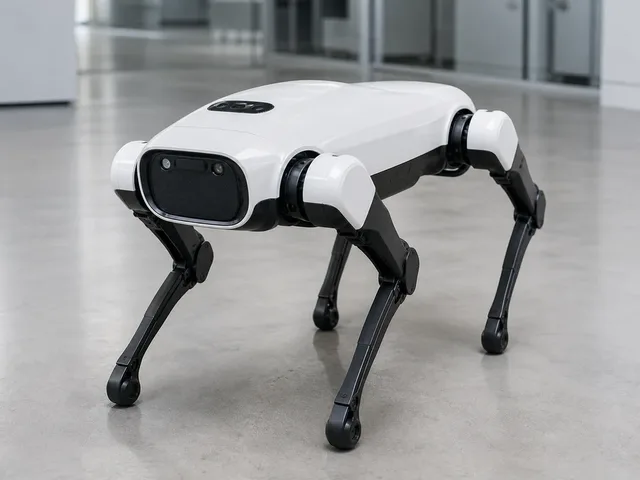
Xiaomi
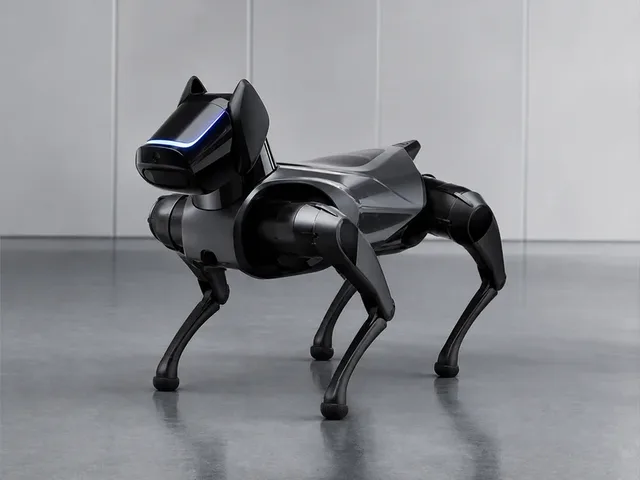
CyberDog 2
Category
Quadruped
Price
$1,785
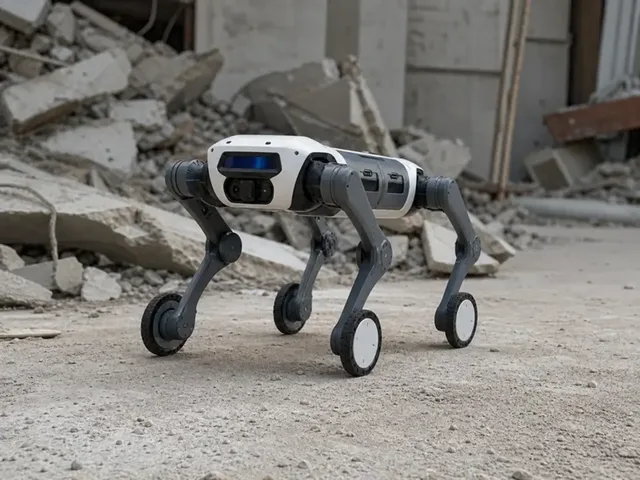
Xiaomi's second-generation quadruped robot, designed to look and move more like a real dog. Smaller and lighter than the original CyberDog, it stands about the…
Buyer guide
Use this chapter to orient the page, calibrate expectations, and pressure-test whether the category really matches the workload you have in mind.
Quadruped robots — commonly known as robot dogs — are four-legged machines designed to traverse terrain that would stop wheeled or tracked robots. Inspired by animal locomotion, these robots can walk over rubble, climb stairs, navigate narrow corridors, and maintain balance on uneven surfaces.
Boston Dynamics' Spot is the most recognizable quadruped, deployed in industrial inspection, construction monitoring, and public safety. Unitree Robotics has made quadrupeds more accessible with consumer-priced models like the Go2, while companies like ANYbotics focus on autonomous industrial inspection.
The quadruped form factor offers a unique advantage: it can go almost anywhere a human can, but without risking human safety. This makes them ideal for inspection of hazardous environments, search and rescue, and security patrol in complex terrain.
Quadruped robots serve two distinct markets: industrial/professional and consumer/education. Professional quadrupeds like Spot and ANYmal cost $50,000 to $150,000+ but offer ruggedized construction, payload mounting systems, autonomous inspection capabilities, and enterprise support contracts.
Consumer quadrupeds like Unitree Go2 range from $1,600 to $5,000 and serve as educational platforms, developer kits, or hobby robots. When evaluating a quadruped, consider: payload capacity (can it carry inspection sensors?), runtime (most operate 60–120 minutes per charge), IP rating (outdoor use requires IP54+), and SDK availability (how programmable is it?).
For industrial buyers, also evaluate the software ecosystem — autonomous inspection routines, fleet management, and data integration with existing systems.
Define your application first. For industrial inspection (power plants, oil rigs, construction sites), you need autonomous waypoint navigation, thermal and visual camera payloads, IP67+ water resistance, and enterprise-grade support — this means Spot or ANYmal class robots.
Define your application first
For industrial inspection (power plants, oil rigs, construction sites), you need autonomous waypoint navigation, thermal and visual camera payloads, IP67+ water resistance, and…
For research and education, prioritize open SDKs, ROS integration, and active community support — Unitree models excel here with competitive pricing and strong developer…
For security patrol, look for long runtime (90+ minutes), night vision, and integration with security management platforms
If terrain is a primary concern, compare maximum slope ratings and stair-climbing ability (most quality quadrupeds handle 35°+ slopes and standard stairs)
Practical tip: If terrain is a primary concern, compare maximum slope ratings and stair-climbing ability (most quality quadrupeds handle 35°+ slopes and standard stairs).
Specs and pricing
These sections help separate the robots that merely sit in the category from the ones that genuinely fit a deployment or buying brief.
When evaluating quadruped robots, these are the specifications that matter most for real-world performance and value:
determines what sensors/tools can be mounted
most operate 60–120 minutes
ranges from 1.5 m/s to 5 m/s
essential for outdoor and industrial use
ability to handle terrain
ROS support, Python APIs
The quadruped category serves a variety of applications, from consumer households to industrial deployments:
Industrial facility inspection (power plants, oil & gas)
Construction site monitoring and progress documentation
Search and rescue in disaster zones
Security patrol in complex terrain
Research and education in legged locomotion
Entertainment and consumer robotics hobby
Quadruped robots with published pricing range from $1.8k to $3.2k. 4 models in this category do not have publicly listed pricing. Below is a breakdown by price tier to help you understand what's available at different budget levels.
Compare key specifications across all 8 quadruped robots in the database. All data is sourced from manufacturer disclosures and verified against official documentation.
Manufacturer landscape
Once the inventory looks promising, this is where you figure out whether the category is broad and competitive or concentrated around a smaller set of serious builders.
5 companies are building quadruped robots tracked in the ui44 database. Here's how the product landscape breaks down by manufacturer.
View all robotics companies in our manufacturers directory.
A comprehensive look at the sensors, connectivity, capabilities, and AI platforms used across all 8 quadruped robots in the database.
Operations
This chapter keeps the route useful after the first visual scan, when the real questions become ownership, rollout friction, and operational constraints.
Quadruped robots operating in industrial and public environments face stringent safety requirements. Industrial quadrupeds like Spot and ANYmal implement multiple safety layers: proximity sensors detect nearby humans and trigger speed reduction or stopping, force-limited joints prevent injury during unexpected contact, and emergency stop buttons are accessible on the robot's body and through remote control software.
Modern robots implement multiple safety layers including force limiting, collision detection, and emergency stops.
Look for ISO, CE, FCC, and category-specific certifications that validate safety compliance.
Connected robots with cameras and microphones require careful evaluation of data handling and security practices.
These robots are typically deployed in controlled industrial settings governed by ISO 10218 (industrial robots) and ISO/TS 15066 (collaborative robots) standards, with risk assessments required before deployment. For consumer quadrupeds, safety considerations center on the robot's interaction with people and pets — most consumer models are lightweight enough (under 15 kg) that collision forces are manageable, and built-in fall recovery algorithms prevent the robot from toppling onto people.
IP ratings (typically IP54 to IP67 for industrial models) ensure safe operation in wet or dusty environments. Cyber security is an emerging concern, particularly for inspection robots that operate autonomously in critical infrastructure — manufacturers are implementing encrypted communications, access controls, and regular security audits.
Quadruped robots are complex machines with 12+ actuated joints, and maintenance requirements vary significantly between consumer and industrial models. Consumer quadrupeds like the Unitree Go2 are designed for relatively low maintenance — periodic firmware updates over Wi-Fi, battery charging after each use session (60–90 minutes typical runtime), and occasional cleaning of sensors and joint areas.
Most robots need periodic cleaning, software updates, and consumable replacements to maintain peak performance.
Factor in consumables, subscriptions, battery replacements, and potential maintenance contracts when budgeting.
A well-maintained robot's lifespan varies by category — from 4–7 years for cleaning robots to 8–12 years for mowers.
1–3 yr
Battery lifespan
5–8 yr
Expected lifespan
Battery replacement every 1–3 years is the primary consumable cost. Industrial quadrupeds like Spot and ANYmal require professional maintenance programs.
Boston Dynamics offers service contracts for Spot that include preventive maintenance, software updates, and hardware repairs — typical annual costs run 10–15% of the purchase price. Joint actuators, the most stressed components, may need replacement after 2,000–5,000 hours of operation depending on terrain and payload demands.
If you are new to quadruped robots, here is a step-by-step approach to finding the right model for your needs. This guide applies whether you are buying your first robot or upgrading from an earlier model.
Determine your primary application: industrial inspection, research, security patrol, or consumer entertainment — each requires a very different platform and budget.
For industrial use, verify the robot's IP rating matches your environment (IP54 minimum for outdoor, IP67 for harsh industrial conditions).
Evaluate the payload system: industrial inspection requires mounting points for thermal cameras, gas detectors, or LiDAR scanners — check compatibility with your existing sensors.
Test autonomous navigation in your actual environment if possible — request a pilot deployment to verify the robot handles your specific terrain and obstacle layout.
For research use, verify ROS 2 compatibility, SDK documentation quality, and the availability of simulation models (Gazebo, Isaac Sim, or MuJoCo).
Budget for the full system: the robot, charging dock, spare batteries, payload sensors, and annual software licenses or maintenance contracts.
Use ui44's comparison tool and individual robot detail pages to evaluate the 8 quadruped robots in the database.
Outlook
The goal here is not trend theater. It is to show whether the category is stabilizing, accelerating, or still too early for confident buyer decisions.
Quadruped robot research traces back to the 1960s with General Electric's Walking Truck (1968), a four-legged hydraulic machine that required a human operator to control each leg. The field advanced slowly through academic research until Boston Dynamics' BigDog (2005) demonstrated truly dynamic four-legged locomotion — a gas-powered robot that could walk over rubble, climb hills, and recover from being kicked.
Quadruped robot research traces back to the 1960s with General Electric's Walking Truck (1968), a four-legged hydraulic machine that required a human operator to control each leg
The field advanced slowly through academic research until Boston Dynamics' BigDog (2005) demonstrated truly dynamic four-legged locomotion — a gas-powered robot that could walk over rubble, climb hills, and recover from being kicked
The commercial breakthrough came with Boston Dynamics' Spot, introduced in 2019 as the first commercially available quadruped robot
Meanwhile, Chinese companies transformed the economics of the field: Unitree Robotics introduced quadrupeds at a fraction of traditional prices, with the Go1 (2021) available for under $3,000 and later models dropping even further
BigDog's successor, LS3 (Legged Squad Support System), carried 180 kg of payload for military logistics research. The commercial breakthrough came with Boston Dynamics' Spot, introduced in 2019 as the first commercially available quadruped robot.
Spot's modular payload system and Python SDK made it accessible to industries beyond research, and it quickly found adoption in construction monitoring, oil & gas inspection, and public safety. Meanwhile, Chinese companies transformed the economics of the field: Unitree Robotics introduced quadrupeds at a fraction of traditional prices, with the Go1 (2021) available for under $3,000 and later models dropping even further.
ANYbotics pursued a different path, building the ANYmal specifically for autonomous industrial inspection with ruggedized construction and integrated perception. Today, the quadruped market has bifurcated into professional inspection platforms ($50,000+) and consumer/education platforms ($1,000–$5,000), with both segments growing rapidly.
Recent advances in reinforcement learning are enabling quadrupeds to learn parkour-like agility and adapt to novel terrains without explicit programming.
Quadruped robots fill a niche between wheeled/tracked mobile robots and drones, each of which has distinct strengths and limitations. Wheeled AMRs (Autonomous Mobile Robots) are the dominant platform for indoor logistics and inspection: they are cheaper ($10,000–$50,000), have longer battery life (8–24 hours), carry heavier payloads (50–500 kg), and are mechanically simpler with fewer failure points. However, wheeled robots are fundamentally limited by terrain — they cannot climb stairs, traverse rubble, step over cables, or navigate narrow catwalks.
$10k–$50k
Simpler mechanics, longer battery life, lower maintenance costs
Cannot traverse stairs, rough terrain, or unstructured environments
Best for: Flat-surface inspection in warehouses and facilities
$2k–$30k
Fastest coverage for large outdoor areas, excellent for surveying
Limited flight time (20–40 min), restricted in indoor/confined spaces
Best for: Outdoor site surveys, roof inspection, and perimeter monitoring
$50k–$100k/year salary
Judgment, adaptability, and ability to make real-time decisions
Dangerous in hazardous environments, cannot patrol 24/7
Best for: Complex assessments requiring human judgment and intervention
The honest tradeoff is cost and complexity — a quadruped costs 3–10 times more than a wheeled robot with equivalent sensors, has shorter battery life, and requires more maintenance due to its 12+ actuated joints. The right choice depends on the terrain: if your facility is flat with smooth floors, a wheeled robot is better and cheaper. If your inspection route includes stairs, mixed terrain, or human-scale obstacles, a quadruped is the only robotic platform that can handle it without infrastructure modifications.
Quadruped robotics is maturing from proof-of-concept demonstrations to routine commercial deployment. Industrial inspection is the killer application — companies like ANYbotics and Boston Dynamics have robots performing daily autonomous inspection rounds in facilities worldwide.
AI is enabling quadrupeds to learn new gaits and recovery behaviors through reinforcement learning, making them more stable and capable in unpredictable environments. The consumer segment is growing rapidly with Unitree's aggressive pricing strategy, making robot dogs accessible to hobbyists and small businesses for the first time.
Sensor payloads are becoming more sophisticated, with thermal cameras, gas detectors, and acoustic monitoring turning quadrupeds into walking sensor platforms.
Quadruped robotics is transitioning from early commercial deployment to mainstream industrial adoption. Several trends will shape the next three to five years.
$3–5B
Market by 2030
30–50%
Projected change
2030
Key milestone year
Fully autonomous multi-hour patrols with real-time anomaly detection, reducing the need for human operators during routine inspections.
Robot arms mounted on quadruped platforms enable door opening, sample collection, and physical interaction during inspection missions.
Price points under $5k for basic quadrupeds, making them accessible for home security, entertainment, and personal robotics experimentation.
Fifth, cost reduction through manufacturing scale is making industrial quadrupeds more accessible: prices are expected to decrease 30–50% over the next five years as production volumes increase and component costs fall. The quadruped market is projected to reach $3–$5 billion by 2030, with industrial inspection remaining the dominant application but consumer and security segments growing faster in percentage terms.
FAQ and routes
Finish here when you need practical next steps rather than more category theory.
Four-legged robot dogs and quadrupeds built for rough terrain, inspection, and exploration where wheels can't go. The ui44 database currently tracks 8 robots in this category from 5 manufacturers.
ui44 currently tracks 8 quadruped robots from 5 different manufacturers including AGIBOT, DEEPRobotics, Faraday Future, Unitree Robotics, Xiaomi. Browse the full robot directory to see all categories.
Across the 8 robots in this category, 72 distinct capabilities are represented, including: All-Terrain Locomotion (RL-based gait), Stair Climbing (up to 16 cm steps), Slope Traversal (up to 40°), Forward Jump (35 cm off ground), Backflip, Bipedal Standing, Self-Balancing & Anti-Fall, Remote & App Control, and 64 more. The specific capability set varies by model, price point, and intended application — visit individual robot pages for detailed capability breakdowns.
5 companies make quadruped robots tracked in the ui44 database: AGIBOT, DEEPRobotics, Faraday Future, Unitree Robotics, Xiaomi. Explore all robotics companies on the manufacturers page.
All robot data on ui44 is periodically verified against manufacturer sources, spec sheets, and press releases. The most recent verification for a robot in the Quadruped category was on 2026-04-15. Each robot page includes a "last verified" date for transparency. If you notice outdated information, please let us know.
Quadruped robots operating in industrial and public environments face stringent safety requirements. Industrial quadrupeds like Spot and ANYmal implement multiple safety layers: proximity sensors detect nearby humans and trigger speed reduction or stopping, force-limited joints prevent injury during unexpected contact, and emergency stop buttons are accessible on the robot's body and through… Read the full safety & regulation section for detailed information on certifications, standards, and precautions for quadruped robots.
Quadruped robot research traces back to the 1960s with General Electric's Walking Truck (1968), a four-legged hydraulic machine that required a human operator to control each leg. The field advanced slowly through academic research until Boston Dynamics' BigDog (2005) demonstrated truly dynamic four-legged locomotion — a gas-powered robot that could walk over rubble, climb hills, and recover from… Read the full history & evolution section for a detailed timeline of quadruped robot development.
Quadruped robots with published pricing range from $1.8k to $3.2k. 4 models in this category do not list public pricing. See the price range overview for a detailed breakdown by budget tier.
Quadruped robots are complex machines with 12+ actuated joints, and maintenance requirements vary significantly between consumer and industrial models. Consumer quadrupeds like the Unitree Go2 are designed for relatively low maintenance — periodic firmware updates over Wi-Fi, battery charging after each use session (60–90 minutes typical runtime), and occasional cleaning of sensors and joint… See the full maintenance & ownership section for a complete breakdown of ongoing costs, consumables, and expected lifespan for quadruped robots.
The most affordable quadruped robot with published pricing is the CyberDog 2 by Xiaomi at $1.8k. At the other end of the spectrum, the D1 Pro by AGIBOT is listed at $3.2k. Price is just one factor — compare capabilities, sensors, and support when making your decision. See the price overview for a full tier breakdown.
Quadruped robots in the database use 29 types of sensors. The most common include Wide-Angle Camera (122° DFOV), IMU, Depth Cameras, RGB Cameras, Fusion Perception System, HD Cameras, and 23 more. See the technology landscape section for a complete breakdown, or browse the components directory.
Quadruped robots in the database support 16 types of connectivity. The most common include Wi-Fi, Bluetooth 5.2, Ethernet, 5G, 1000M Ethernet ×4, USB 3.0 ×4, and 10 more. Connectivity determines how the robot communicates with your network, cloud services, companion apps, and other smart devices. Visit the components directory for detailed information on each protocol.
Some quadruped robots integrate with voice assistant platforms including Offline voice interaction (Pro/X/EDU), Speaker + Microphone, AI Voice Recognition. Voice integration enables hands-free control, status updates, and interaction with your broader smart home ecosystem. Not all models support voice assistants — check individual robot pages for specific compatibility details.
8 quadruped robots are currently available or actively deployed: D1 Pro by AGIBOT, X30 by DEEPRobotics, FX Aegis by Faraday Future, B2 by Unitree Robotics, B1 by Unitree Robotics, Go2 by Unitree Robotics, As2 by Unitree Robotics, CyberDog 2 by Xiaomi. Visit each robot's page for the latest purchasing details and availability.
ui44 offers a side-by-side comparison tool that lets you compare up to 4 quadruped robots at once. Compare specs like battery life, weight, sensors, price, and capabilities across models including D1 Pro, X30, FX Aegis, B2, B1, and 3 more. You can also check the specifications comparison table above for a quick overview of all models.
Start by defining your specific requirements and budget. The getting started guide above walks through 6 key steps: Determine your primary application: industrial inspection, research, security…; For industrial use, verify the robot's IP rating matches your environment (IP54…; Evaluate the payload system: industrial inspection requires mounting points for…. Use ui44's comparison tool and the specs comparison table to narrow down your shortlist.
All quadruped robot data on ui44 is verified against official manufacturer sources, spec sheets, and press releases. Most recent verification: 2026-04-15. If you notice outdated or incorrect data, please let us know — accuracy is our top priority.
Source: ui44 Home Robot Database · 8 models tracked in Quadruped · Browse all robots · All categories
Next move
You now have the inventory view, the buyer guidance, and the spec context. The cleanest next step is to compare a small set of candidates, then validate the strongest manufacturers in detail.