Category lead
Commercial · 38%
The route is deepest in Commercial, with Humanoid as the next strongest follow-through.
7 manufacturers and 8 tracked robots, shaped into a country brief that shows where France is deepest, how much of the route is actually sourceable, and which maker pages deserve the next serious click.
Catalog rank
#8
Listed Available
2/8
Recorded numeric price
3/8
What matters first
Use the top-line signals here to judge whether this country already gives you enough breadth, price visibility, and vendor depth to build a serious shortlist.
Recorded numeric prices
USD $299–$70k
Release window
2014–2026
Source coverage
8/8 official links
Category lead
The route is deepest in Commercial, with Humanoid as the next strongest follow-through.
Coverage quality
38% with recorded numeric prices and 75% image-backed, which tells you how quickly this route can turn into a shortlist instead of a research backlog.
Maker concentration
Pollen Robotics contributes the biggest slice of tracked models, so this route is broad enough to compare beyond one flagship.
Open next
Peer routes
Start with the deepest categories and the strongest coverage signals before drilling into individual models.
7
Manufacturers
4
Tracked categories
2
Listed Available
3/8
Models with numeric prices
Category counts, availability mix, and price range reworked for a quicker first pass.
France can look dominant in this route simply because it is better represented in the ui44 catalog. Treat the counts as a shortlisting aid, then validate the winners on model pages and vendor material.
8 tracked models, restructured into a shortlist-first flow with featured picks up top and denser rows for the long tail.
Start with the models that are easiest to validate — the ones with live imagery, public pricing, or enough documentation to justify a deeper click. Then use the compact rows below to sweep the rest of the market without turning the page into a wall of oversized cards.
Listed Available
2
Numeric price recorded
3
With imagery
6
Manufacturers
7
How to scan this section
Best first clicks
These models score highest on status order, public detail quality, and image clarity, so they orient the route faster than a purely alphabetical sweep.
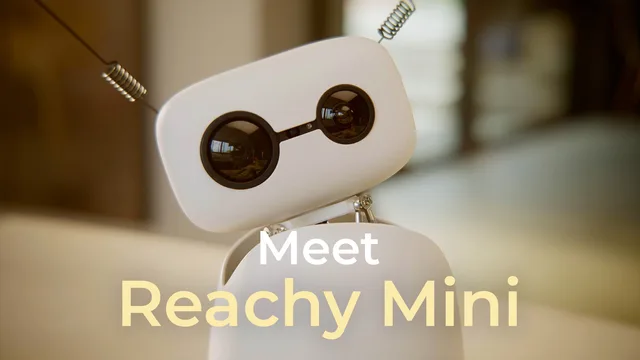
Reachy Mini is an open-source desktop robot from Pollen Robotics and Hugging Face focused on human-robot interaction, creative coding, and AI experimentation. It ships as a DIY kit and comes in two variants: a Lite version that runs from a connected computer and a wireless version with onboard Raspberry Pi Compute Module 4, Wi-Fi, USB, battery, and accelerometer. The platform emphasizes accessibility for developers, educators, and hobbyists, with Python programmability, Hugging Face app integration, and expressive head/body motion for conversational and multimodal projects. Listed as Available with a recorded price; confirm current ordering and delivery terms.
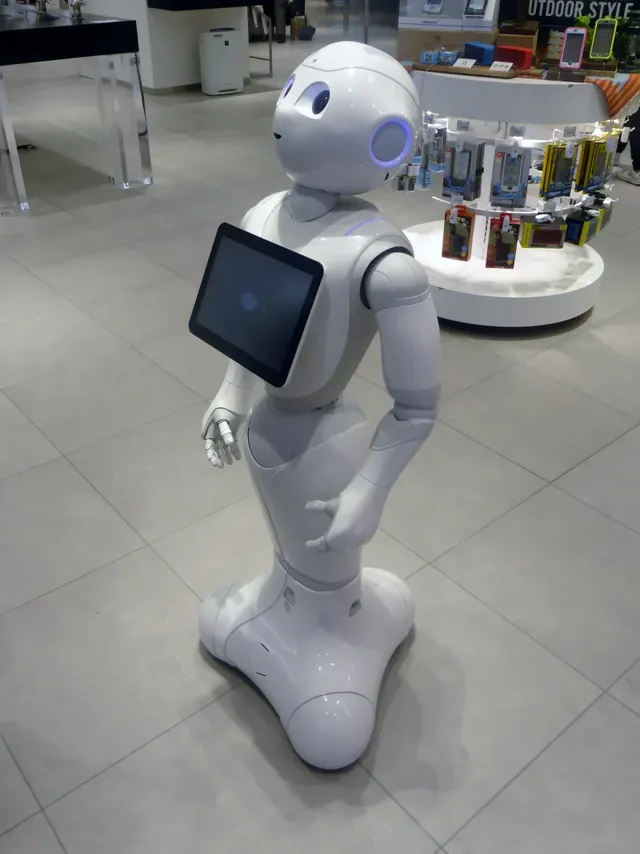
Aldebaran Robotics' semi-humanoid robot designed to read emotions and interact with people. Introduced by SoftBank in Tokyo in June 2014, Pepper became one of the most recognized social robots in the world — approximately 27,000 units were manufactured before production was paused in June 2021 due to weak demand. The first batch of 1,000 units sold out in 60 seconds in June 2015. Pepper was deployed in SoftBank stores, banks, hospitals, airports, and restaurants across Japan, Europe, and North America. Features a 10.1-inch touch display, emotion recognition via facial expression and voice tone analysis, and a wheeled omnidirectional base. In June 2025, Aldebaran Robotics went into receivership. In July 2025, Shenzhen-based Maxvision Technology Corp. acquired Aldebaran's core assets, including the Pepper and NAO intellectual property. Listed as Available; confirm pricing, ordering and delivery terms.
Full directory
Sorted by status, then currency code and price within each currency; unlisted prices come last within each status.
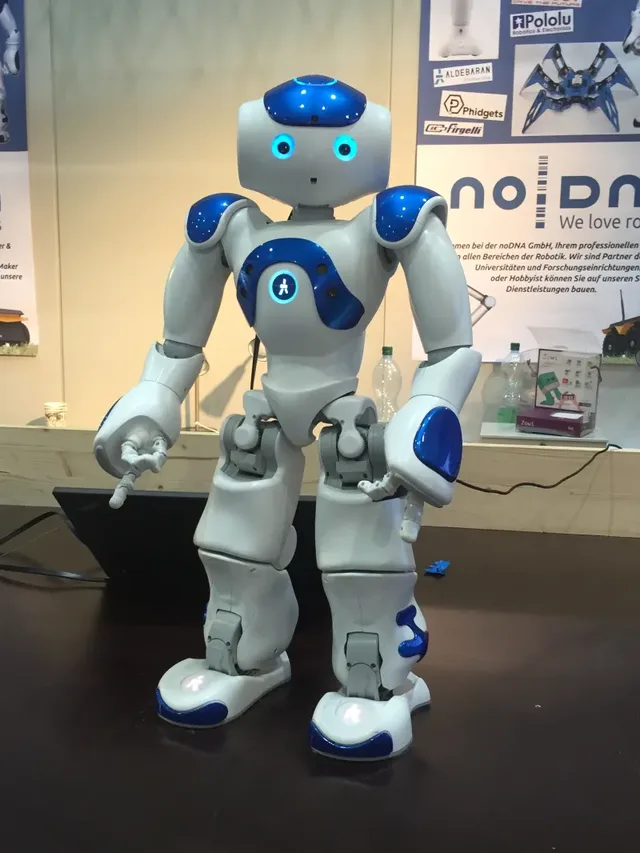
The sixth generation of the iconic NAO humanoid robot, originally developed by Aldebaran Robotics (France) and now supported by Maxtronics, which was established in France on August 28, 2025 after Maxvision Technology Corporation acquired Aldebaran's core assets in July 2025. Standing 58cm tall with 25 degrees of freedom, NAO is one of the most widely deployed humanoid robots in history, with more than 20,000 units deployed worldwide. NAO replaced Sony's AIBO as the RoboCup Standard Platform League robot in 2007 and has been used in education, research, healthcare, and autism therapy. Features multilingual speech, facial recognition, and the Choregraphe graphical programming tool. Development began as 'Project Nao' in 2004. Active in the catalog with enough detail to review immediately.
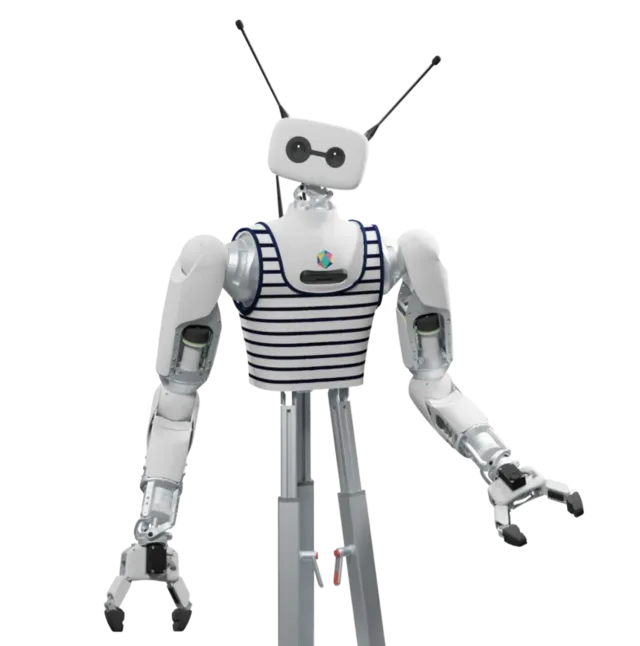
An open-source humanoid robot built by French company Pollen Robotics for research in manipulation, human-robot interaction, and embodied AI. Features two 7-DoF bio-inspired arms, a 3-DoF expressive head, and an omnidirectional mobile base with lidar. Partnered with Hugging Face on their LeRobot open-source robotics initiative. Fully open-source with ROS 2 support and a Python SDK. Designed for researchers, developers, and robotics enthusiasts who want a customizable platform. In April 2025, Pollen Robotics was acquired by Hugging Face, which plans to fully open-source both hardware and software. Active in the catalog with enough detail to review immediately.
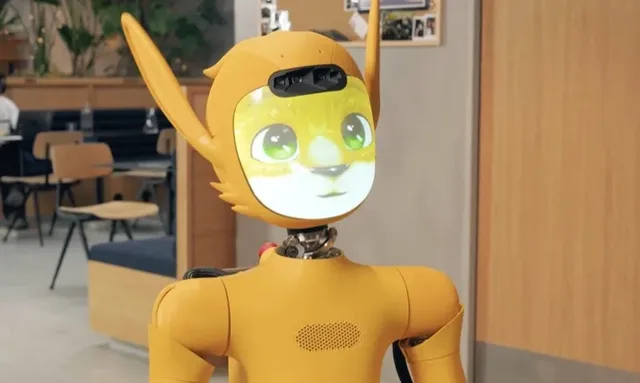
Mirokaï is a social humanoid robot built by Enchanted Tools, a French startup founded in 2021 by Jérôme Monceaux — who previously co-created NAO and Pepper at Aldebaran Robotics. Standing about 1.23m tall and weighing around 26kg, Mirokaï moves on a patented omnidirectional rolling globe instead of legs, letting it glide smoothly through human spaces like hospitals, hotels, and airports. Its animated face is projected onto a 3D head using a built-in projector, giving it expressive real-time facial animations. The latest Explorer Suit version features torque-controlled arms with a 97% grasping success rate, multi-LLM conversational AI, VSLAM autonomous navigation, and GDPR-compliant face tracking. Enchanted Tools delivered its first unit to ISIR (Institut des Systèmes Intelligents et de Robotique) in mid-2024 and has a partnership with the Montpellier Cancer Institute to accompany children to radiation therapy. The company raised €15 million (~$17M USD) in seed funding — the largest early-stage robotics investment in France. Active in the catalog with enough detail to review immediately.
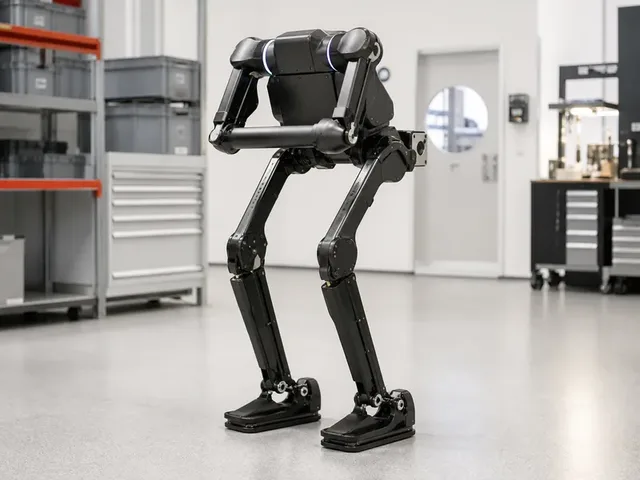
Calvin-40 is Wandercraft's autonomous industrial humanoid for heavy, physically demanding factory and logistics tasks. Developed from Wandercraft's self-balancing medical robotics platform, it was announced with Renault Group as the first robot in the Calvin family and later tied to a SAPA industrial deployment partnership. Renault Group describes Calvin as able to carry 40 to 50 kg loads, while Wandercraft's product page highlights modular configuration for different industrial use cases, advanced vision for manipulation, navigation, and obstacle avoidance, LLM-powered reasoning, force-sensing feet, reactive balance control, medical-grade software, and operator-facing LED status strips. Active in the catalog with enough detail to review immediately.
Eno is Genesis AI's first general-purpose robot, unveiled in June 2026 as a wheeled, non-humanoid mobile manipulator built around dexterity rather than humanlike appearance. Official Genesis materials describe a compact articulated-panel body that adjusts height and reach in real time, folds down for storage, and uses proprietary dexterous hands with twenty active, back-drivable degrees of freedom. The robot is powered by Genesis AI's GENE robotics-native foundation model for goal understanding, reasoning, memory, and long-horizon task planning. Genesis plans targeted customer deployments by the end of 2026, first in manufacturing, logistics, and laboratories, followed by service settings such as hotels and hospitals and later consumer home and outdoor use. Pricing, runtime, payload, exact dimensions, and the detailed sensor suite have not been publicly disclosed. Useful for roadmap scanning, not yet a clean near-term shortlist.
Northstar is UMA's first humanoid robot design, unveiled at Machina Summit in July 2026 by the Paris-based Physical AI company. UMA positions the robot around human-scale proportions, a neutral visor rather than facial features, a soft technical outer shell with visible mechanical joints, and a Real-Time Learning architecture intended to let robots learn new skills from demonstrations instead of manual reprogramming. The company says the platform is aimed first at factories, warehouses, logistics centers, and other industrial facilities, with pilot programs planned for 2026; public pricing, production availability, battery, motion, and detailed hardware specifications have not been disclosed. Best treated as an exploratory lead until field readiness improves.
Ranked signals and price structure replace the old sprawling chip walls so the data reads faster on both mobile and desktop.
| # | Name | Usage |
|---|---|---|
| 1 | Ethernet | 3 · 38% |
| 2 | Not officially disclosed | 3 · 38% |
| 3 | Wi-Fi | 2 · 25% |
| # | Name | Usage |
|---|---|---|
| 1 | Autonomous Navigation | 2 · 25% |
| 2 | Education & Research Platform | 2 · 25% |
USD only: 3 priced of 8 total · 0 priced in other currencies (excluded) · 5 without a recorded numeric price
| # | Name | Share |
|---|---|---|
| 1 | Active | 4 · 50% |
| 2 | Available | 2 · 25% |
| 3 | Development | 1 · 13% |
| 4 | Prototype | 1 · 13% |
Use peer routes to widen discovery only when they genuinely add more depth or a different market shape.
Decision lens
Use peer routes to add meaningful category overlap, more manufacturer breadth, or different published currency coverage. If the current route already answers those questions, wider browsing usually adds noise faster than it adds signal.
Catalog rank
#8
Share of tracked robots
2%
Avg shared categories
3.8
What to watch
Stay here when
You already have enough mature candidates, enough manufacturer depth, and enough price visibility to build a shortlist.
Compare outward when
The route is thin in your target category, clustered around one maker, or clearly skewed toward missing prices.
Best next click
Open the peer that changes the search shape the most — not just the next biggest route by raw robot count.
Peer route
Broader catalog depth · High category overlap
Common ground: Humanoid, Companions +2
Open routePeer route
Broader catalog depth · High category overlap
Common ground: Humanoid, Commercial +2
Open routePeer route
Broader catalog depth · High category overlap
Common ground: Companions, Research +2
Open routePeer route
Broader catalog depth · High category overlap
Common ground: Humanoid, Commercial +1
Open routeOpen another country route
Need the full directory? Browse all country pages.
This route is a structured view of ui44 dataset entries whose manufacturer headquarters label maps to France. The numbers on the page are generated from the catalog itself, not from outside shipment estimates or broad market-share reports. In practice, that means the route is best used for discovery and shortlisting inside this database: how many manufacturers are represented, how many robots are listed, which categories appear most often, and which lifecycle statuses show up across those records. It is useful because it compresses search time, but it should not be treated as proof that France leads the global robotics market in absolute terms.
Not by itself. A higher count here only indicates stronger representation in the ui44 catalog. It does not automatically prove global production leadership, deployment leadership, or shipment volume across every region. The practical value is relative orientation: if France has more entries than another country route in this catalog, you have a broader internal shortlisting surface to explore before you need outside research. Treat the count as a catalog-depth signal, then validate market importance with model-level evidence, current vendor activity, and real deployment references.
Available listings: 2. Pre-order listings: 0. Active records: 4. Available indicates an ordering listing, not confirmed stock. Pre-order indicates a reservation listing, not immediate delivery. Active status alone does not confirm public purchase availability or deployment. Other statuses do not establish a current purchase listing. Confirm regional access, stock, reservation terms, and delivery with the manufacturer.
Recorded numeric prices by currency: USD $299–$70k. 3 of 8 records have a recorded numeric price. Ranges and averages cover only those records and are calculated separately within each currency; no currency conversion or cross-currency affordability ranking is implied. Missing numeric prices do not establish a budget tier or the absence of other pricing terms. Check individual model pricing notes for membership, lease, quote or other terms. Confirm applicable charges and terms with the manufacturer.
Many robotics vendors publish capabilities without publishing a universal list price. Enterprise and service robots often depend on integration scope, software packages, service bundles, deployment country, or support contract terms. For that reason, a missing price should be read as “no numeric price recorded”, not as “cheap,” “premium,” or “not for sale.” Check individual model pricing notes for membership, lease, quote or other terms. Where a quote is needed, request a consistent cost breakdown. Ask each vendor for the same structure — hardware, accessories, onboarding, software, maintenance, and training — so the comparison stays apples to apples.
Yes. The route is useful because it compresses a large amount of catalog coverage into a cleaner planning sequence. Start with category concentration to see where the route is deepest, then use the robot cards to understand maturity and price posture, and then branch into manufacturer pages for documentation depth and product-family context. That path lets a team move from broad market scanning to a more disciplined shortlist without losing the reason each candidate advanced. It is not a substitute for pilots, but it is a strong way to reduce search time before pilots begin.
A practical stack is: (1) robot count share, (2) manufacturer count, (3) category overlap, and (4) price posture. This avoids over-indexing on a single number. A country can have a large catalog footprint and still be narrow in category variety, or it can have strong overlap with France but a much smaller pool of vendors. The peer-country table on this page is built for exactly that question: when is the current route enough, and when does a second country route add real search value? The answer should always be based on overlap and options, not on raw count alone.
Use the manufacturer links as a decision funnel. First, eliminate makers whose categories clearly do not fit your target workflow. Second, prioritize makers with model statuses aligned to your timeline. Third, inspect documentation depth on the manufacturer route: number of tracked robots, link quality, and whether the catalog shows breadth or a single flagship model. Finally, move only the strongest makers into structured outreach. That process turns a long route into a smaller, evidence-backed vendor set instead of an endless browse session.
Open peer-country routes when you need deeper category overlap, more manufacturer options, or a meaningfully different listed price profile. If the current route already covers your target workload with enough mature candidates, widening the search too early can create noise. If the route is strong in one segment but thin in another, or if the strongest candidates are clustered around a single manufacturer, that is a good signal to compare another country route before vendor outreach. The goal is not maximal browsing. The goal is enough market breadth to create a resilient shortlist.
Sensor stacks usually follow task design. Cleaning robots lean on LiDAR, vision, cliff sensing, and proximity systems to manage navigation and obstacle avoidance. Humanoid and quadruped systems tend to add richer perception, force feedback, or balance-oriented sensors. Delivery and patrol robots often mix cameras, positioning, and environmental sensing for wider-area coverage. The ranked signal tables on this route help with pattern detection, but the final evaluation should always ask whether a sensor suite matches your environment: indoor versus outdoor use, lighting conditions, floor changes, obstacle density, and how much autonomy you actually expect on day one.
Most modern robots expose Wi‑Fi and Bluetooth as baseline options, while higher-end systems may add cellular links, more advanced fleet connectivity, or integration-specific interfaces. The important question is not whether a connectivity term appears in the catalog; it is whether that connectivity fits your security policy, latency needs, facility coverage, and support model. For teams in enterprise or regulated environments, network segmentation, update policy, remote diagnostics, and account governance often matter more than the presence of a single radio standard. Treat connectivity labels as a starting filter, then verify integration details directly on the robot page and with the vendor.
Total cost of ownership is usually far larger than base hardware price. A good TCO model includes integration engineering, onboarding, operator training, software fees, consumables, replacement parts, maintenance windows, and downtime risk. For larger deployments, it may also include facility changes, charging infrastructure, support response commitments, or workflow redesign. The value of this route is that it helps you compare the catalog’s listed price posture quickly, but budgeting should never stop there. Normalize every quote into the same cost structure before ranking vendors, especially when some models publish price and others do not.
AI matters most when it improves a task in a way your team can actually verify. In practice, that may mean navigation quality, better object handling, stronger voice interaction, more resilient path planning, or better adaptation to changing environments. Some vendors push more on-device intelligence, while others rely on cloud services for heavier processing. The core buying question is not whether “AI” appears in the marketing copy; it is whether the implementation matches your latency expectations, privacy requirements, connectivity assumptions, and failure handling model. Use AI claims as a hypothesis generator, not as a substitute for proofs during pilot work.
Not necessarily. In this project, the country route is driven by the manufacturer headquarters label used for catalog organization. Manufacturing, integration, and service footprints can span several regions, and those realities do not always map cleanly to a single headquarters country. That means this route is excellent for navigation and initial analysis, but it is not enough for supply-chain, compliance, or local-service decisions. If geography matters for your deployment, verify model-level sourcing, support region, and service coverage directly with the vendor before committing budget.
Low representation is still meaningful. It may signal a narrow route with a small but relevant set of candidates, or it may indicate that the strongest options for your use case live somewhere else in the catalog. In those cases, use the current route for orientation, then widen the shortlist through category pages, manufacturer pages, and peer-country comparisons. The important thing is to keep the original reason for the search intact. A smaller route is not useless; it simply changes how quickly you should branch into the rest of the database.
Revisit at every major decision gate: initial discovery, post-RFI narrowing, and pre-pilot signoff. Country routes are especially useful for spotting newly represented manufacturers, new models, or lifecycle changes that can change the shortlist after the first pass. That cadence helps teams avoid stale screenshots, old notes, or memory-driven assumptions. A route review does not need to be long. It just needs to be consistent enough that the shortlist reflects the current catalog rather than a one-time snapshot taken weeks earlier.
The common mistake is treating country rank as a substitute for fit. A country can look strong by count and still be a poor match for your workload, budget, support constraints, or deployment environment. The better sequence is layered: use the country route for orientation, manufacturer and category routes for narrowing, robot detail pages for proof, and pilot work for final selection. That keeps the process fast without allowing a high-level catalog signal to overpower the operational reality of the deployment.