If you follow funding headlines, you would think Figure 03 and Apptronik Apollo are clearly leading the market. If you follow public deployment proof instead, the picture shifts toward Unitree G1, Unitree H2, AGIBOT A2 Ultra, AGIBOT X2, and even the less-discussed Galbot G1.
That does not mean the Chinese leaders have already won the home. It means 2026 has split the humanoid market into two very different leaderboards: one for investor belief, and one for publicly visible delivery. ui44 readers should care about the second one more.
My short answer after cross-checking CNBC's valuation report, TrendForce's commercialization data, and ui44's robot records is this:
- Figure and Apptronik lead on capital and investor narrative
- Unitree and AGIBOT lead on public productization and deployment proof
- Galbot looks commercially meaningful, but its biggest scale claims are still company-reported
- 1X still has one of the clearest home stories, but not one of the clearest shipment stories
If you only remember one thing, make it this: the most expensive humanoid companies are not automatically the ones shipping the most real robots.
Do humanoid robot valuations match real shipments in 2026?
Not really.
Figure says it has more than $1 billion in committed Series C capital at a $39 billion post-money valuation. Apptronik raised a $520 million extension that brought its Series A total to $935 million, and CNBC reported a roughly $5 billion valuation. Those are massive numbers.
But CNBC's April 2026 China-vs-U.S. snapshot points to a different operational reality. It says Chinese humanoid startups took the top six spots in Omdia's 2025 global shipment rankings, while U.S. names attracted far richer AI-platform-style valuations. TrendForce adds that China's humanoid output could grow 94% in 2026, with Unitree and AGIBOT projected to capture nearly 80% of shipments.
That gap exists because investors and operators are rewarding different things.
Investors pay up for a future platform story: general AI, rich software margins, training data, and the hope that one company becomes the Android or iPhone of embodied AI. Shipment evidence is much duller. It asks simpler questions:
- Is there a public product?
- Is there a public price?
- Are there real deployments, not just demo videos?
- Is there evidence of repeatable manufacturing or fleet support?
- Can a buyer outside a lab plausibly get one?
Those are not the same questions, and 2026 is finally making the difference obvious.
What does ui44's scoreboard measure that funding headlines miss?
ui44's database is useful here because it forces the conversation back to actual robots.
Instead of asking who raised the most money, we can compare what each company is publicly offering, how much delivery evidence is visible, and whether the robot even has a believable path toward home relevance.
Company
Figure AI
- Valuation or funding signal
- $39B post-money valuation, $1B+ committed capital
- Strongest public delivery evidence
- Figure 02 logged 1,250+ runtime hours tied to 30,000+ BMW-built cars
- Public buying signal
- No public price for Figure 03
- Home relevance today
- Medium, mostly future-facing
- ui44 read
- Huge belief, limited public buying proof
Company
Apptronik
- Valuation or funding signal
- ~$5B valuation, $935M Series A total
- Strongest public delivery evidence
- Apollo pilots with Mercedes-Benz, GXO, and Jabil
- Public buying signal
- No public price
- Home relevance today
- Low today
- ui44 read
- Serious pilots, still mostly a factory story
Company
Unitree
- Valuation or funding signal
- Much less valuation hype, clearer product pricing
- Strongest public delivery evidence
- Publicly available humanoids and shipment leadership claims tied to TrendForce and company reporting
- Home relevance today
- Medium
- ui44 read
- Best public productization signal right now
Company
AGIBOT
- Valuation or funding signal
- Lower valuation than top U.S. peers
- Strongest public delivery evidence
- 10,000th embodied robot milestone, A2 Ultra with 1,000+ deployments
- Public buying signal
- X2 has public pricing at $24,240
- Home relevance today
- Medium
- ui44 read
- Strongest deployment proof with plausible home-adjacent clues
Company
Galbot
- Valuation or funding signal
- $3B valuation in December 2025 funding announcement
- Strongest public delivery evidence
- Autonomous retail and warehouse deployments; company says it has orders for thousands of units
- Public buying signal
- No consumer path
- Home relevance today
- Low
- ui44 read
- Interesting commercial signal, but its biggest scale claims are still company-reported
Company
1X
- Valuation or funding signal
- Not the loudest 2026 valuation story
- Strongest public delivery evidence
- Clear home narrative and preorder path, but thinner public shipment proof
- Public buying signal
- NEO at $20,000 preorder
- Home relevance today
- High narrative relevance
- ui44 read
- Strong home fit, weaker delivery proof
Company
Tesla
- Valuation or funding signal
- Tesla-scale capital, but not a clean robot-only valuation
- Strongest public delivery evidence
- Internal factory use claims remain limited and opaque
- Public buying signal
- No public order path for Optimus Gen 2
- Home relevance today
- Medium future relevance
- ui44 read
- Still mostly priced as a promise
| Company | Valuation or funding signal | Strongest public delivery evidence | Public buying signal | Home relevance today | ui44 read |
|---|---|---|---|---|---|
| Figure AI | $39B post-money valuation, $1B+ committed capital | Figure 02 logged 1,250+ runtime hours tied to 30,000+ BMW-built cars | No public price for Figure 03 | Medium, mostly future-facing | Huge belief, limited public buying proof |
| Apptronik | ~$5B valuation, $935M Series A total | Apollo pilots with Mercedes-Benz, GXO, and Jabil | No public price | Low today | Serious pilots, still mostly a factory story |
| Unitree | Much less valuation hype, clearer product pricing | Publicly available humanoids and shipment leadership claims tied to TrendForce and company reporting | G1 at $13,500, H2 at $29,900 | Medium | Best public productization signal right now |
| AGIBOT | Lower valuation than top U.S. peers | 10,000th embodied robot milestone, A2 Ultra with 1,000+ deployments | X2 has public pricing at $24,240 | Medium | Strongest deployment proof with plausible home-adjacent clues |
| Galbot | $3B valuation in December 2025 funding announcement | Autonomous retail and warehouse deployments; company says it has orders for thousands of units | No consumer path | Low | Interesting commercial signal, but its biggest scale claims are still company-reported |
| 1X | Not the loudest 2026 valuation story | Clear home narrative and preorder path, but thinner public shipment proof | NEO at $20,000 preorder | High narrative relevance | Strong home fit, weaker delivery proof |
| Tesla | Tesla-scale capital, but not a clean robot-only valuation | Internal factory use claims remain limited and opaque | No public order path for Optimus Gen 2 | Medium future relevance | Still mostly priced as a promise |
That table is why I think this topic deserves its own article instead of being folded into our broader guide to which humanoid companies may actually ship in 2026. This is not a general shipping roundup. It is a valuation-vs-delivery reality check.
Who has the strongest delivery proof right now?
The answer depends on what kind of proof you want.
Figure and Apptronik still look richer than their public delivery evidence
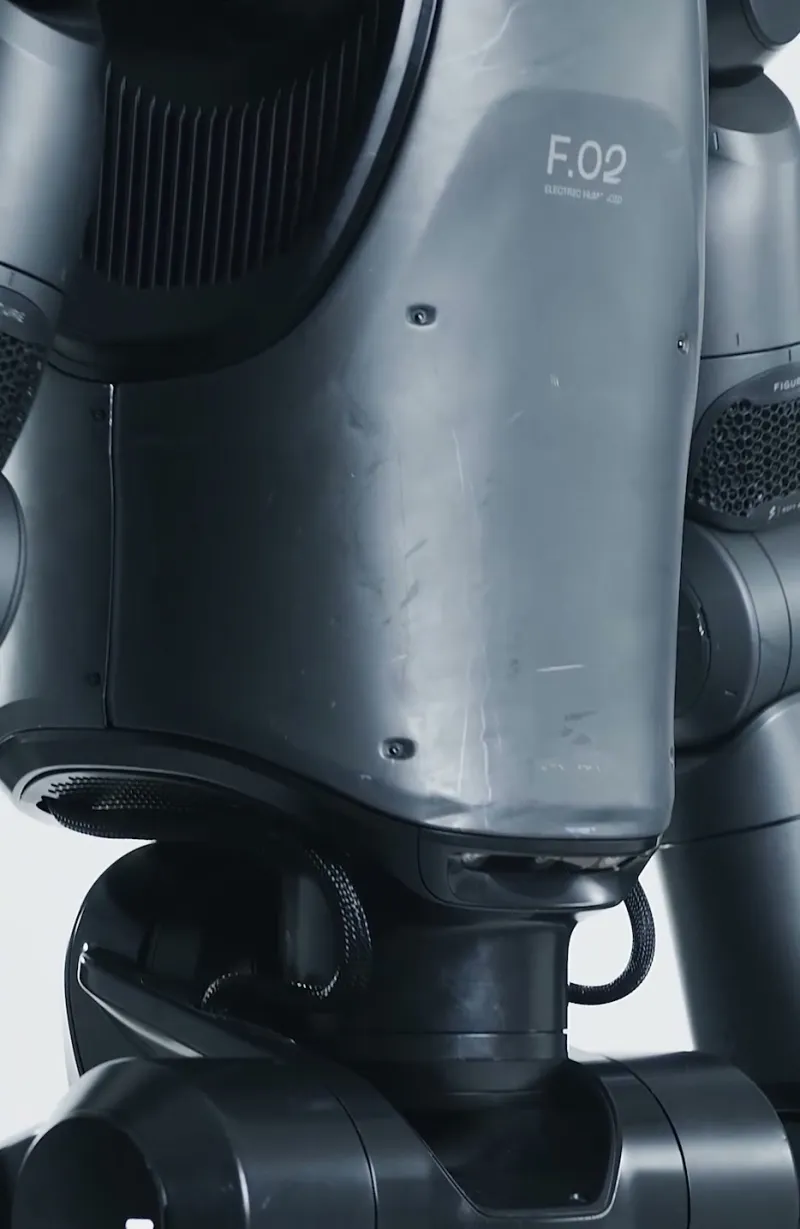
Figure is not empty hype. Figure 02 really did build a stronger industrial proof point than many rivals, with 1,250+ runtime hours tied to 30,000+ cars at BMW. That matters. But the valuation story is still far ahead of the public buying story. Figure 03 is listed in ui44 at 168 cm, 60 kg, and about 5 hours of battery life, with no public price and no consumer purchase path.
Apptronik looks a little more grounded to me because it talks more openly like an enterprise robot company. CNBC says early Apollo units are already working inside designated factory and warehouse zones for partners including Mercedes-Benz, GXO, and Jabil. ui44's Apollo record adds useful reality: 173 cm, 73 kg, ~4 hours of battery life, and no public price.
That is enough to call Apollo real. It is not enough to say Apptronik's public delivery evidence matches a $5 billion valuation.
My read on both companies is similar: serious technology, real partners, meaningful industrial progress, but still not the clearest proof of large-scale public robot delivery.
Unitree and AGIBOT have the clearest public product and deployment signals
Unitree remains the easiest company to reason about because it has made humanoids feel like products instead of just future concepts.
Unitree G1 starts at $13,500, stands 132 cm tall, weighs 35 kg, and runs for about 2 hours. Unitree H2 is listed at $29,900, about 182 cm tall, roughly 70 kg, and offers about 3 hours of battery life. Those are still early-adopter machines, not normal household appliances. But they are among the clearest public pricing anchors anywhere in humanoids.
AGIBOT's case is stronger on scale and deployment maturity. A2 Ultra is a 169 cm, 69 kg humanoid with 1.5 hours+ walking battery life, 2-hour charging, and more than 1,000 units deployed in real-world operations according to ui44's source-backed record. X2 is smaller at 131 cm, starts around $24,240, and adds practical clues like a swappable battery and optional auto-charging dock.

If you care about the dull but important stuff, namely fleets, charging, uptime, and repeatable deployment, AGIBOT looks unusually strong. If you care about whether a humanoid feels purchasable at all, Unitree still looks unusually strong.
That is why this article is different from our narrower Unitree vs AGIBOT comparison. That piece asks which Chinese company looks closer to a home robot. This one asks a broader market question: who is actually delivering, regardless of where investors are placing the biggest bets?
Galbot is the sleeper case many Western readers are missing
Galbot deserves more attention in this conversation.
Its December 2025 funding announcement put the company at a $3 billion valuation after a $300 million+ round. More interestingly, the funding release and ui44's Galbot G1 record point to public commercial deployment signals: autonomous retail, warehouse and industrial workflows. The same funding announcement also says Galbot has secured orders for thousands of units, but that specific scale figure should be treated as a company claim, not independent shipment proof.
The robot itself also tells you why Galbot gets missed. G1 is not a classic biped. It is a semi-humanoid wheeled mobile manipulator, about 173 cm tall, 85 kg, with up to 10 hours of battery life. From a home-buyer point of view, that is less exciting than a humanoid walking through a kitchen. From a commercialization point of view, it may be more impressive.
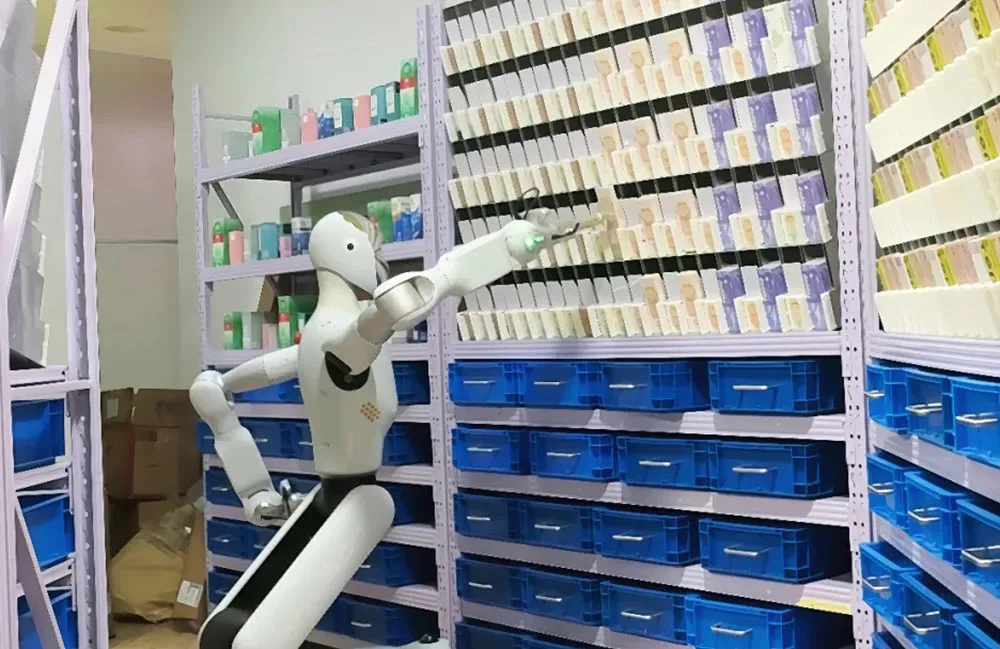
That matters because real robot markets do not always look like sci-fi marketing. Sometimes the more commercially serious body plan is the less glamorous one. If you have read our wheeled vs bipedal home robot breakdown, this should sound familiar.
Which companies matter most if you care about future homes?
Shipment proof is not the whole story for ui44. A robot can be commercially real and still not matter much to a home buyer.
That is why 1X NEO still matters. NEO is one of the few humanoids with a direct home pitch, a $20,000 early-adopter price, a 167 cm frame, a 30 kg body, and around 4 hours of battery life. 1X emphasizes softness, quiet behavior, and safe coexistence. Those are exactly the right things to emphasize for a home robot.

The problem is that 1X still looks stronger on story than on public deployment proof. That is not a knock on the company. It is just the current state of the evidence. If you want a deeper breakdown of where remote help still fits in, read our teleop vs autonomy breakdown.
Tesla sits in a different version of the same gap. Optimus Gen 2 has a stated future price target around $30,000, but no consumer order path and limited transparent deployment evidence beyond internal factory use claims.
So if the question shifts from Who is shipping? to Who might matter in homes next?, my ranking changes:
- Unitree, because public pricing and public products make the category feel real
- 1X, because it has the clearest direct home narrative
- AGIBOT, because smaller-body options and charging behavior clues could age well
- Figure, because its home ambitions are visible even if the public buying path is not
- Tesla, because scale could matter later even if the present evidence is thin
That is a very different ranking from a pure shipment scoreboard, and that is exactly the point.
So who is actually delivering, and who is mostly priced on belief?
Here is the cleanest verdict I can give.
Strongest public delivery proof in 2026
- AGIBOT
- Unitree
Most interesting additional commercial signal
- Galbot, especially if its reported order book holds up beyond company statements
Strongest investor-belief story in 2026
- Figure
- Apptronik
- Tesla by halo effect, even without a clean standalone robot valuation
Strongest home narrative in 2026
- 1X
- Unitree
- Figure, but mostly as a future promise
That is why I would be suspicious of any 2026 humanoid leaderboard that collapses everything into one winner.
A company can be:
- richly valued and still early on public delivery
- plainly shipping and still not very home-relevant
- commercially real without having a strong consumer story
- home-promising without much visible deployment proof yet
Right now, the healthiest way to read the humanoid market is to separate those categories instead of pretending they are the same. That makes the market look messier, but it also makes it more honest.
For buyers, that honesty matters. The future home-robot winner will need more than dazzling demos and giant funding rounds. It will need public product paths, repeatable deployments, clear safety thinking, and the kind of boring operational competence that real households eventually depend on.
Frequently Asked Questions
Who is actually shipping humanoid robots in 2026?
Based on current public evidence, AGIBOT and Unitree look strongest on
delivery proof. Galbot also looks commercially serious, but its biggest
order numbers are still company-reported rather than independently verified.
That does not mean any of them have already won the home market. It means the
most richly valued U.S. names are not the only companies showing visible signs
of real deployment.
Why doesn't the most valuable humanoid company automatically win?
Because valuation reflects investor expectations, not just shipped hardware.
Investors may be pricing AI platform upside, training data, future software
margins, or strategic optionality. Real shipments are narrower and more
practical. They ask whether a company can actually build, deliver, and support
robots repeatedly.
Which humanoid company looks most relevant to homes right now?
If you care about a direct home story, 1X is still the clearest. If you care
about public product pricing, Unitree is the clearest. If you care about
operational maturity that could eventually transfer into homes, AGIBOT is
one of the most interesting names to watch.
Sources & References
Source
https://www.cnbc.com/2026/04/21/china-humanoid-robots-us-investors.html
- Type
- CNBC market analysis
- Accessed
- 2026-04-23
Source
https://www.figure.ai/news/series-c
- Type
- Figure official funding announcement
- Accessed
- 2026-04-23
Source
https://www.cnbc.com/2026/02/11/apptronik-raises-520-million-at-5-billion-valuation-for-apollo-robot.html
- Type
- CNBC Apptronik funding report
- Accessed
- 2026-04-23
Source
https://www.trendforce.com/presscenter/news/20260409-13007.html
- Type
- TrendForce commercialization report
- Accessed
- 2026-04-23
Source
https://www.prnewswire.com/news-releases/galbot-secures-over-300-million-in-new-funding-breaking-records-with-3-billion-valuation-in-chinas-humanoid-robot-sector-302647204.html
- Type
- Galbot funding announcement
- Accessed
- 2026-04-23
Source
https://www.galbot.com/g1
- Type
- Galbot official product page
- Accessed
- 2026-04-23
Source
https://www.unitree.com/g1/
- Type
- Unitree official product page
- Accessed
- 2026-04-23
Source
https://www.unitree.com/H2/
- Type
- Unitree official product page
- Accessed
- 2026-04-23
Source
https://www.agibot.com/products/A2_Ultra
- Type
- AGIBOT official product page
- Accessed
- 2026-04-23
Source
https://www.agibot.com/products/X2
- Type
- AGIBOT official product page
- Accessed
- 2026-04-23
Source
https://www.1x.tech/neo
- Type
- 1X official product page
- Accessed
- 2026-04-23
| Source | Type | Accessed |
|---|---|---|
| https://www.cnbc.com/2026/04/21/china-humanoid-robots-us-investors.html | CNBC market analysis | 2026-04-23 |
| https://www.figure.ai/news/series-c | Figure official funding announcement | 2026-04-23 |
| https://www.cnbc.com/2026/02/11/apptronik-raises-520-million-at-5-billion-valuation-for-apollo-robot.html | CNBC Apptronik funding report | 2026-04-23 |
| https://www.trendforce.com/presscenter/news/20260409-13007.html | TrendForce commercialization report | 2026-04-23 |
| https://www.prnewswire.com/news-releases/galbot-secures-over-300-million-in-new-funding-breaking-records-with-3-billion-valuation-in-chinas-humanoid-robot-sector-302647204.html | Galbot funding announcement | 2026-04-23 |
| https://www.galbot.com/g1 | Galbot official product page | 2026-04-23 |
| https://www.unitree.com/g1/ | Unitree official product page | 2026-04-23 |
| https://www.unitree.com/H2/ | Unitree official product page | 2026-04-23 |
| https://www.agibot.com/products/A2_Ultra | AGIBOT official product page | 2026-04-23 |
| https://www.agibot.com/products/X2 | AGIBOT official product page | 2026-04-23 |
| https://www.1x.tech/neo | 1X official product page | 2026-04-23 |
Data points on specs, price visibility, release status, and deployment framing are cross-checked against ui44's tracked robot records and related pages like /compare and /categories/humanoid.
Written by
ui44 Team
Published April 23, 2026
Share this article
Open a plain share link on X or Bluesky. No embeds, no widgets, no cookie baggage.