But shipment share is not the same thing as home readiness.
A company can be great at making impressive bipeds for labs, factories, and showrooms and still be far from building a robot you would trust around a sofa, a charging cable, and a sleeping dog. So the better question is not "who is winning the humanoid race?" It is: which company looks closer to making a robot that could plausibly matter in a home?
My short answer is this: Unitree looks closer to getting a humanoid into an enthusiast's home, while AGIBOT looks closer to making a humanoid genuinely useful in real-world deployments. If you mean a calm, mainstream household product for normal buyers, neither company is there yet.
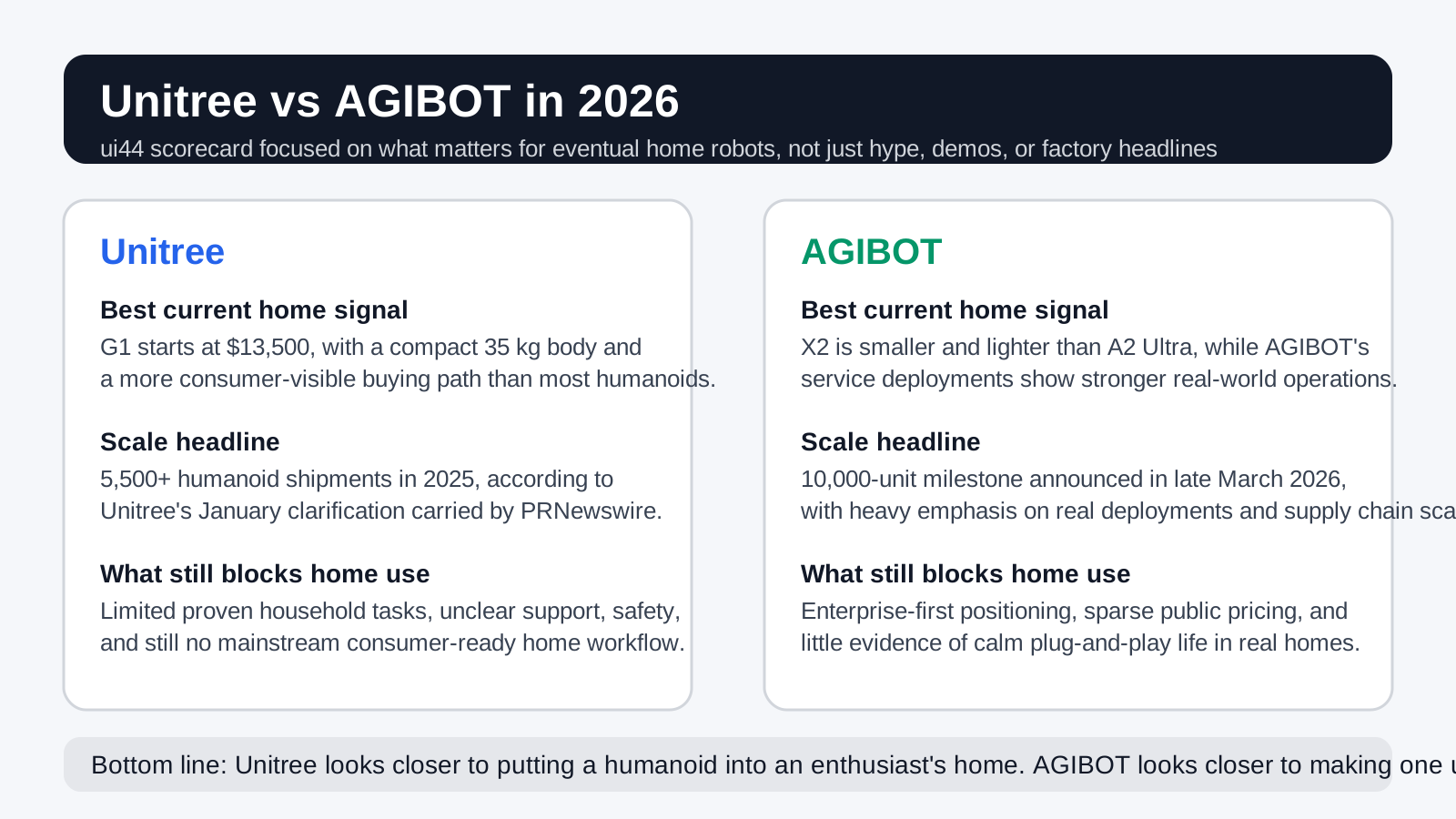
That distinction matters if you are using ui44 to track where home humanoids are actually going, not just which demo clip is trending.
Why are Unitree and AGIBOT worth comparing right now?
The macro case is easy. TrendForce says China's humanoid robot output could grow 94% in 2026, and it specifically calls out Unitree and AGIBOT as the companies most likely to dominate shipments. But the companies are getting there in very different ways.
Unitree's case is built on accessibility, price pressure, and unusually visible product focus. A January clarification distributed through PRNewswire said Unitree shipped more than 5,500 humanoid robots in 2025, with mass-production output above 6,500. In ui44's database, the company already has multiple public-facing humanoids that matter for a home-readiness conversation: Unitree G1, Unitree H1, and Unitree H2.
AGIBOT's case is less about public storefront simplicity and more about scale in actual deployments. TrendForce highlighted AGIBOT's late-March 10,000-unit milestone, while ui44's database already shows a portfolio that looks more operationally varied: A2 Ultra, X2, Expedition A3, and G2.
If you want the cleanest framing, it is this:
- Unitree is pushing humanoids toward lower-cost, more visible access
- AGIBOT is pushing humanoids toward more proven deployment maturity
Those are not the same thing, and home buyers should care about both.
Unitree's best argument: it looks more like the first company that could actually get a humanoid into a home
The biggest reason Unitree feels closer to the home is not that it already has a true home robot. It is that its lineup looks more reachable.
Unitree G1 is the clearest example. In ui44's database, it starts at $13,500, stands 132 cm tall, weighs 35 kg, and runs for about 2 hours. Unitree's official page also makes that positioning explicit: the base G1 is publicly listed at US $13.5K before tax and shipping. That price is still wildly expensive for a mainstream household device, but in humanoid terms it changes the conversation. It turns "future home robot" from abstract science-fiction pricing into something closer to luxury-tech territory for early adopters and developers.
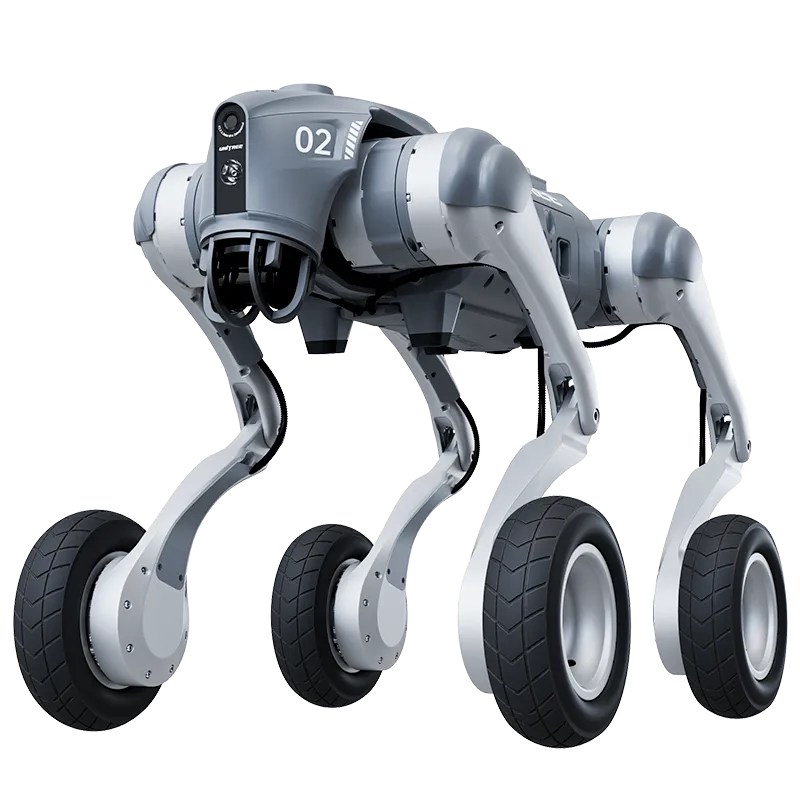
Unitree also has a stronger public affordability ladder than AGIBOT right now. The H2 is listed in ui44 at $29,900, about 182 cm tall, ~70 kg, with about 3 hours of battery life and built-in voice interaction. That matters because it suggests Unitree is not only shipping research hardware, it is also trying to turn humanoids into clearer products with recognizable tiers.
Then there is H1, which remains one of the most useful reference platforms for locomotion. ui44 lists H1 at 180 cm, 47 kg, with 3.3 m/s top speed and about 2 hours of battery. The official Unitree page still leans heavily into that speed-first positioning. That does not make H1 a home robot. It does show that Unitree has already solved more of the "can this machine move impressively and repeatedly?" problem than most rivals.
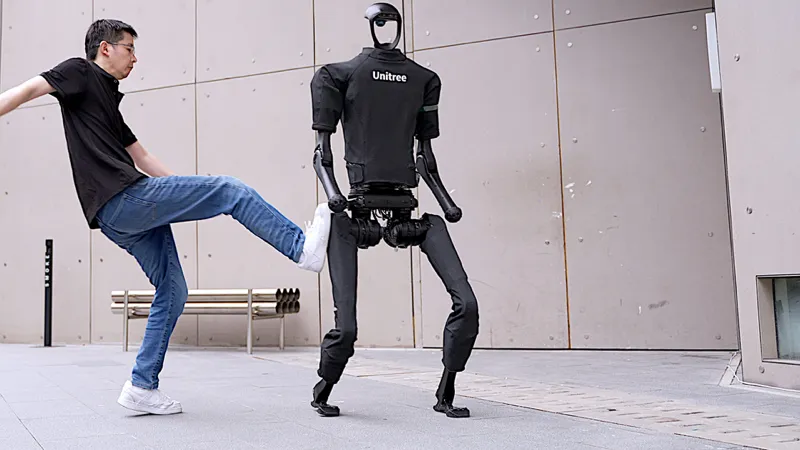
Where Unitree still looks weak is everything that happens after the robot enters your space. Public pricing and strong locomotion are useful signals, but they do not automatically mean calm home behavior, reliable manipulation, quiet indoor operation, or good consumer support. The company looks closer to selling a humanoid into a home than to shipping a humanoid that already earns its place there.
AGIBOT's best argument: it looks more mature when you care about actual usefulness, not just access
If Unitree wins the affordability and visibility round, AGIBOT wins the "show me real operational evidence" round.
Start with A2 Ultra. ui44 lists it as a full-size 169 cm, 69 kg humanoid with 1.5 hours+ walking battery, 2-hour charging, 1.2 m/s top speed, and more than 1,000 units deployed in real-world operations. The database also notes its 106.286 km Guinness walking record and certifications spanning CR, CE-MD, CE-RED, and FCC.
That is not home polish, but it is a serious real-world maturity signal. A robot that is slower and less glamorous than a sprint-focused humanoid can still be closer to future home usefulness if it survives repetitive work, fleets, and service conditions.
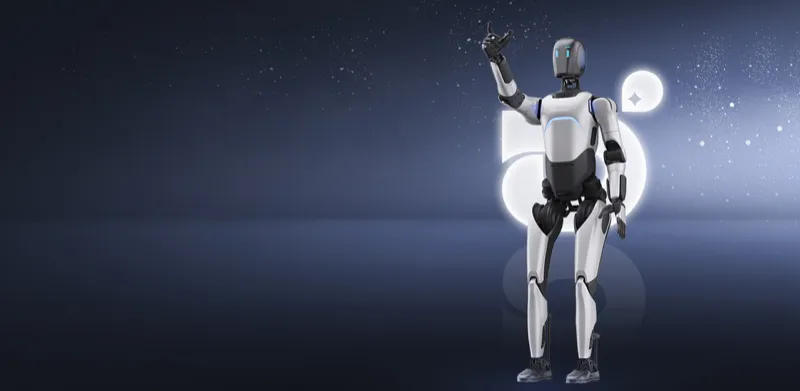
The more interesting home-adjacent AGIBOT robot may be X2. In ui44 it is 131 cm tall, 35 to 39 kg, starts at $24,240, walks up to 1.8 m/s, and supports a swappable battery with an optional auto-charging dock on the Ultra version. That is still much more expensive than Unitree G1, but X2 combines a smaller body with better signs of practical upkeep planning. If you care about a robot living in a real room instead of starring in a video, battery handling and dock behavior matter a lot.
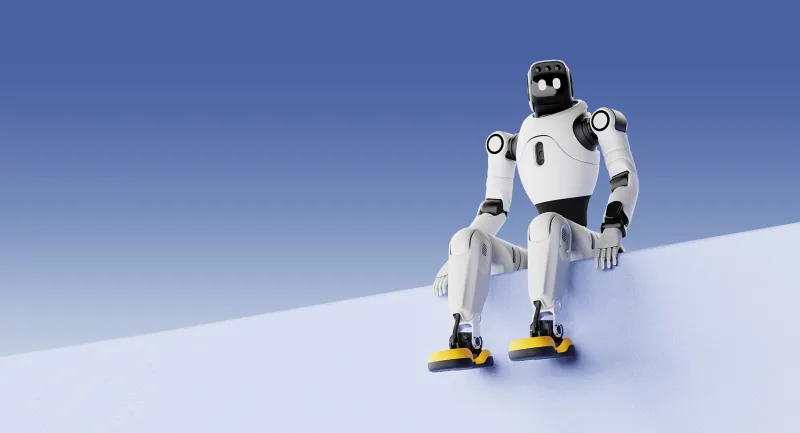
AGIBOT also looks broader above the robot level. ui44's Expedition A3 entry points to up to 8 hours of battery life, 49+ degrees of freedom (DOF), and the late-March milestone where AGIBOT's 10,000th unit rolled off the line. It is also the fastest tracked AGIBOT humanoid in ui44's database at 7 km/h, slightly ahead of X2's 1.8 m/s pace. The G2 entry adds a different clue: a wheeled humanoid architecture with dual hot-swappable batteries, autonomous charging, and explicit 24/7 operation language. That also makes it a good counterpoint to our wheeled vs bipedal home robot breakdown, because AGIBOT is clearly exploring both paths instead of betting on one body style.
That does not mean G2 belongs in your kitchen tomorrow. It does mean AGIBOT appears to be thinking more deeply about uptime, fleet use, and sustained service workflows, which are exactly the unglamorous things future home robots will eventually need.
Head-to-head: what ui44's data says when you score both companies for home readiness
If I reduce this to buyer-relevant criteria, the picture looks like this:
Home-readiness factor
Cheapest tracked humanoid
- Unitree
- G1 at $13,500
- AGIBOT
- X2 at $24,240
- Current edge
- Unitree
Home-readiness factor
Smallest tracked humanoid
- Unitree
- G1 at 132 cm, 35 kg
- AGIBOT
- X2 at 131 cm, 35-39 kg
- Current edge
- Roughly even
Home-readiness factor
Fastest tracked humanoid
- Unitree
- H1 at 3.3 m/s
- AGIBOT
- Expedition A3 at 7 km/h (about 1.94 m/s), ahead of X2 at 1.8 m/s
- Current edge
- Unitree
Home-readiness factor
Strongest deployment proof
- Unitree
- Shipment scale and broad visibility
- AGIBOT
- A2 Ultra 1,000+ deployments, service-heavy positioning
- Current edge
- AGIBOT
Home-readiness factor
Best battery/upkeep signal
- Unitree
- H2 quick-release battery
- AGIBOT
- X2 swappable battery and optional auto-dock, G2 24/7 battery model
- Current edge
- AGIBOT
Home-readiness factor
Most consumer-visible pricing path
- Unitree
- Public G1 and H2 pricing
- AGIBOT
- Fewer clearly public humanoid price anchors
- Current edge
- Unitree
Home-readiness factor
Closest to a useful normal home robot
- Unitree
- Not there yet
- AGIBOT
- Not there yet
- Current edge
- Neither
| Home-readiness factor | Unitree | AGIBOT | Current edge |
|---|---|---|---|
| Cheapest tracked humanoid | G1 at $13,500 | X2 at $24,240 | Unitree |
| Smallest tracked humanoid | G1 at 132 cm, 35 kg | X2 at 131 cm, 35-39 kg | Roughly even |
| Fastest tracked humanoid | H1 at 3.3 m/s | Expedition A3 at 7 km/h (about 1.94 m/s), ahead of X2 at 1.8 m/s | Unitree |
| Strongest deployment proof | Shipment scale and broad visibility | A2 Ultra 1,000+ deployments, service-heavy positioning | AGIBOT |
| Best battery/upkeep signal | H2 quick-release battery | X2 swappable battery and optional auto-dock, G2 24/7 battery model | AGIBOT |
| Most consumer-visible pricing path | Public G1 and H2 pricing | Fewer clearly public humanoid price anchors | Unitree |
| Closest to a useful normal home robot | Not there yet | Not there yet | Neither |
That table is why I would split the verdict instead of forcing a single winner.
Unitree is ahead on the thing that makes headlines and attracts early buyers: it has made humanoids feel financially and commercially closer. If someone actually tries to put a current Chinese humanoid into a developer's home, Unitree still feels like the most plausible path.
AGIBOT is ahead on the thing that matters more long term: it looks more serious about turning robots into reliable deployed systems. That is less sexy than a low starting price, but it probably transfers better to future home value.
So which company is actually closer to a real home robot?
It depends on what you mean by "closer."
If you mean "which company could put a humanoid in a wealthy enthusiast's home first?"
I would pick Unitree.
The reasons are concrete:
- G1 is much cheaper than most rivals
- the product ladder from G1 to H2 is clearer
- Unitree behaves more like a company trying to normalize humanoid purchasing
- fast locomotion and compact form factors make the hardware feel less academic
That still does not mean the robot will be useful enough to justify living there. It means Unitree has done more to narrow the distance between "research platform" and "something a determined person might really buy."
If you mean "which company looks closer to a humanoid that could consistently earn its keep in the real world?"
I would pick AGIBOT.
The reasons are also concrete:
- A2 Ultra already has stronger deployment evidence than most consumer-facing humanoids
- X2 shows better upkeep planning clues than a pure demo bot
- G2 emphasizes uptime and battery logistics
- AGIBOT's March 2026 scale milestone looks tied to deployment and supply-chain maturity, not just attention
If home robots are eventually won by companies that master boring reliability, not flashy demos, AGIBOT's direction may age better.
What both companies still need before normal buyers should care too much
This is the reality check section.
Neither Unitree nor AGIBOT has shown enough public evidence that a humanoid can already behave like a dependable household appliance. Both are still early. Both still have major unanswered questions around:
- safety around children, pets, and clutter
- noise and thermal behavior indoors
- setup, support, warranty, and repairs for home users
- privacy and voice interaction in lived-in spaces
- manipulation reliability on ordinary household objects
- graceful recovery when something goes wrong
A home robot is not impressive because it can do one hard thing on camera. It is impressive because it can do a hundred ordinary things without becoming your new part-time job.
That is why I would not recommend reading either company as "the winner of home humanoids" yet. I would read them as leaders on different halves of the same future.
ui44 verdict
If you force me to choose today, the cleanest verdict is this:
- Unitree is closer to getting a humanoid into the home
- AGIBOT is closer to making a humanoid useful once it gets somewhere real
For actual household buyers, that still adds up to wait and watch.
If you want to track the gap yourself, compare Unitree G1, Unitree H2, AGIBOT X2, and AGIBOT A2 Ultra in ui44's humanoid category and compare tool. The interesting story is no longer whether Chinese humanoid companies can build impressive machines. It is which one learns to turn impressive machines into calm, trustworthy products first.
Frequently Asked Questions
Can you buy a Unitree or AGIBOT humanoid for home use right now?
You can get much closer with Unitree than with most humanoid brands because the
pricing and product positioning. But that is not the same as a polished consumer
home robot. The current evidence still points more toward developer, research,
and early-adopter use than a normal household appliance experience.
Why doesn't the cheaper robot automatically win this comparison?
Because home readiness is not just about entry price. A robot that costs less
but needs more supervision, more rescue, or more battery management can still be
less practical at home than a pricier robot with better uptime clues.
AGIBOT X2 and G2 matter here because
swappable batteries, auto-charging paths, and 24/7 service language are the
kinds of boring signals that often predict long-term usefulness better than a
flashy demo.
Sources & References
Source
https://www.trendforce.com/presscenter/news/20260409-13007.html
- Type
- TrendForce market note
- Accessed
- 2026-04-21
Source
https://www.prnewswire.com/news-releases/unitree-ranks-no1-globally-in-humanoid-robot-shipments-exceeding-5-500-units-in-2025--302674729.html
- Type
- Unitree shipment clarification via PRNewswire
- Accessed
- 2026-04-21
Source
https://www.prnewswire.com/news-releases/agibot-reaches-10-000-units-as-real-world-demand-for-robots-accelerates-302728295.html
- Type
- AGIBOT milestone announcement via PRNewswire
- Accessed
- 2026-04-21
Source
https://www.unitree.com/g1/
- Type
- Official manufacturer page
- Accessed
- 2026-04-21
Source
https://www.unitree.com/h1/
- Type
- Official manufacturer page
- Accessed
- 2026-04-21
Source
https://www.unitree.com/H2/
- Type
- Official manufacturer page
- Accessed
- 2026-04-21
Source
https://www.agibot.com/products/A2_Ultra
- Type
- Official manufacturer page
- Accessed
- 2026-04-21
Source
https://www.agibot.com/products/X2
- Type
- Official manufacturer page
- Accessed
- 2026-04-21
| Source | Type | Accessed |
|---|---|---|
| https://www.trendforce.com/presscenter/news/20260409-13007.html | TrendForce market note | 2026-04-21 |
| https://www.prnewswire.com/news-releases/unitree-ranks-no1-globally-in-humanoid-robot-shipments-exceeding-5-500-units-in-2025--302674729.html | Unitree shipment clarification via PRNewswire | 2026-04-21 |
| https://www.prnewswire.com/news-releases/agibot-reaches-10-000-units-as-real-world-demand-for-robots-accelerates-302728295.html | AGIBOT milestone announcement via PRNewswire | 2026-04-21 |
| https://www.unitree.com/g1/ | Official manufacturer page | 2026-04-21 |
| https://www.unitree.com/h1/ | Official manufacturer page | 2026-04-21 |
| https://www.unitree.com/H2/ | Official manufacturer page | 2026-04-21 |
| https://www.agibot.com/products/A2_Ultra | Official manufacturer page | 2026-04-21 |
| https://www.agibot.com/products/X2 | Official manufacturer page | 2026-04-21 |
Written by
ui44 Team
Published April 21, 2026
Share this article
Open a plain share link on X or Bluesky. No embeds, no widgets, no cookie baggage.