If by autonomous you mean a robot that can handle your home with no remote help, no rescue, and no carefully limited task list, the honest answer is still no. Most home humanoid robots sit somewhere between teleoperation, shared autonomy, and narrow autonomy. They can do parts of a task alone, but humans still matter in the loop, whether that means remote expert help, human-demonstration training data, beta-household learning, or tightly bounded chores instead of broad "do anything" household intelligence.
That distinction matters because it changes what you are actually buying. A robot that can patrol a house, load a dishwasher in a carefully staged demo, or learn from thousands of human demonstrations is not the same as a robot that can handle your messy kitchen, your laundry pile, your pets, and your changing routine with no help.
My short version is simple:
- Fully autonomous whole-home humanoids are not here yet
- Shared-autonomy home robots are real and improving
- Narrower wheeled robots often deliver more dependable autonomy today
If you want company-specific takes, read our 1X NEO preorder guide, our look at Figure 03 autonomy claims, our Sunday Memo beta breakdown, and our wheeled vs bipedal home robot comparison. This piece is the broader framework that ties them together.

What counts as teleoperation, shared autonomy, and real autonomy?
A lot of confusion comes from companies using one word, autonomous, to cover very different realities.
For buyers, this is the framework that matters most:
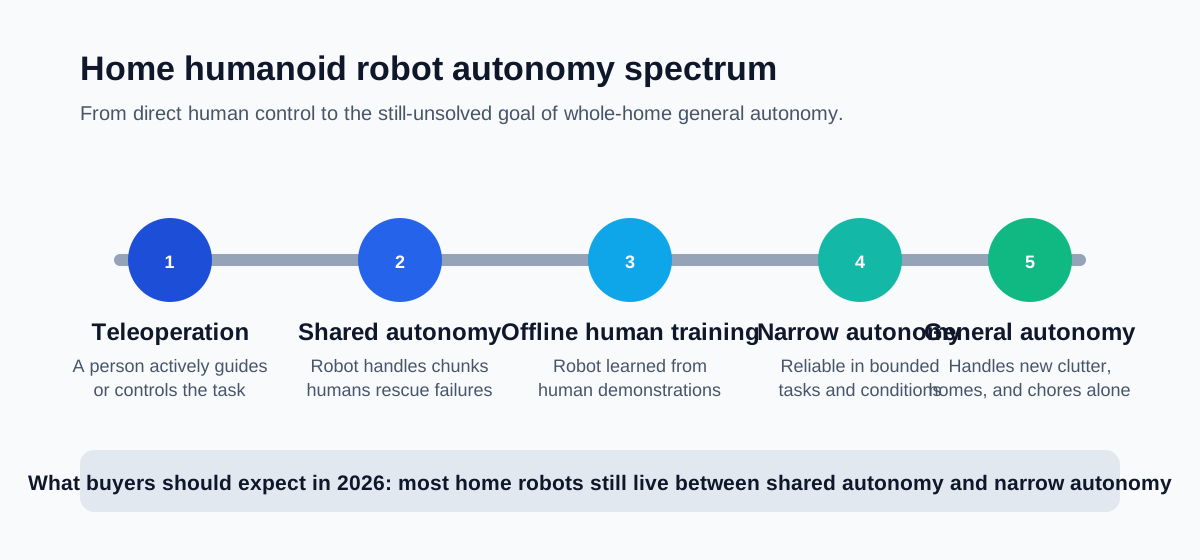
Level
Live teleoperation
- What it means in practice
- A human operator is directly controlling or guiding the robot during the task
- What buyers should assume
- The robot is not independently solving the whole job
Level
Shared autonomy
- What it means in practice
- The robot handles parts of the task, but a human still rescues failures or exceptions
- What buyers should assume
- Performance may look smooth until the environment gets unfamiliar
Level
Offline human training
- What it means in practice
- The robot is not remotely driven live, but its skills were learned from human demonstrations or teleoperated data
- What buyers should assume
- Good demos do not prove broad household reliability
Level
Narrow autonomy
- What it means in practice
- The robot can reliably do a bounded set of tasks in bounded conditions
- What buyers should assume
- This is the most mature kind of home autonomy today
Level
General autonomy
- What it means in practice
- The robot can handle new homes, new clutter, new objects, and long multi-step chores without rescue
- What buyers should assume
- This is still the hardest goal in home robotics
| Level | What it means in practice | What buyers should assume |
|---|---|---|
| Live teleoperation | A human operator is directly controlling or guiding the robot during the task | The robot is not independently solving the whole job |
| Shared autonomy | The robot handles parts of the task, but a human still rescues failures or exceptions | Performance may look smooth until the environment gets unfamiliar |
| Offline human training | The robot is not remotely driven live, but its skills were learned from human demonstrations or teleoperated data | Good demos do not prove broad household reliability |
| Narrow autonomy | The robot can reliably do a bounded set of tasks in bounded conditions | This is the most mature kind of home autonomy today |
| General autonomy | The robot can handle new homes, new clutter, new objects, and long multi-step chores without rescue | This is still the hardest goal in home robotics |
That is why a polished demo can be both real and misleading at the same time. A company may be showing genuine progress, but that progress may still depend on careful task selection, human-taught skills, or fallback support.
1X says on its official NEO page that "NEO works autonomously by default. For any chore it doesn't know, you can schedule a 1X Expert to guide it." That is useful, unusually honest product language. It also clearly describes shared autonomy, not a fully independent robot butler.
Why does home autonomy break faster than factory autonomy?
Because homes are harder than they look.
Figure's official Helix release says the home presents robotics' greatest challenge because it is full of delicate glassware, crumpled clothing, scattered toys, and many household objects robots have never seen before. That is a much tougher setting than a controlled warehouse or factory line.
A factory gives robots a stable floor plan, repeatable workflows, known parts, and a smaller set of edge cases. A home does the opposite. The dishwasher may be half-loaded, the dog bowl may have moved, a chair may be out of place, and the laundry basket may contain five fabric types the robot has not seen arranged in that exact way before.
That is why the strongest current home-robot claims usually sound like this:
- trained on real homes
- learned from demonstrations
- can improve over time
- supports expert help
- beta launching in selected households
Those are not marketing flaws. They are clues about how hard the problem still is.
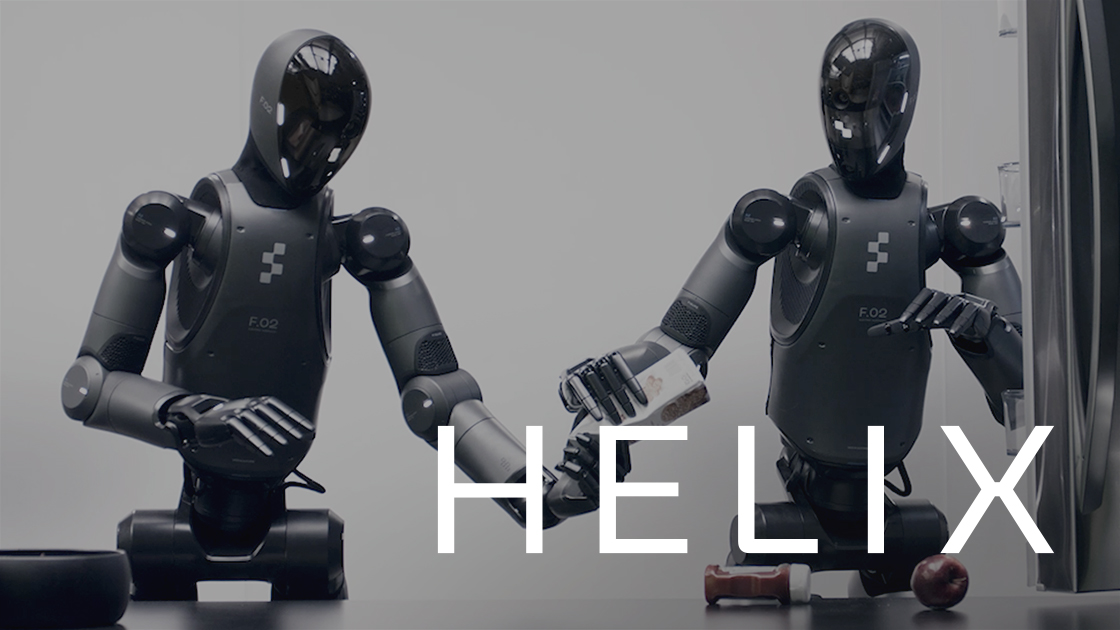
Figure's Helix announcement is especially useful because it says the quiet part out loud. The company frames Helix as a step toward language-driven robot control for homes, not proof that the household-autonomy problem is solved. Even in that same release, Figure emphasizes the scale challenge and the need to generalize to objects robots have never seen before.
For buyers, the practical takeaway is simple. A robot that can do one long, impressive kitchen demo is more meaningful than a short clip. But it is still not the same thing as a home robot that can calmly handle your whole house every day.
Which robots look closest to useful autonomy in ui44's database?
Different robots are closest in different ways. Some are closer to useful consumer autonomy. Others are closer to breakthrough manipulation research. Those are not the same thing.
1X NEO looks like the clearest shared-autonomy consumer pitch
In ui44's database, 1X NEO is a $20,000 pre-order humanoid that stands 167 cm tall, weighs 30 kg, and claims about 4 hours of battery life.
That already makes it one of the most concrete home-humanoid products buyers can actually evaluate. Just as importantly, 1X's own messaging is much more useful than typical hype. The company says Early Access starts with foundational autonomy, and that expert guidance is available for chores NEO does not yet know.
That reads as a real product direction, but it also clearly suggests three things:
- NEO can likely do some household work without direct control
- 1X expects meaningful failure cases and unknown chores
- human fallback is still part of the product story
So if someone asks, "Is 1X NEO autonomous?" my answer is: partly, yes, but in a shared-autonomy sense, not an unsupervised whole-home sense.
Figure 03 looks strong on autonomy research, not consumer readiness
In ui44's database, Figure 03 stands 168 cm, weighs 60 kg, and claims about 5 hours of battery life. ui44 still lists it with no public price and no consumer purchase path.
That matters, because Figure's strongest autonomy evidence is not retail readiness. It is model capability.
Figure says Helix lets its robots pick up novel household objects, follow natural-language instructions, and run entirely onboard for commercial deployment. Those are serious technical signals. But Figure is still better read as a company pushing a vision-language-action autonomy stack forward than as proof that buyers can order a broadly autonomous home humanoid today.
Figure is important because it shows what the field is aiming at. It is not yet a reason to treat home autonomy as solved.
Sunday Memo is betting on real-home learning at scale
Sunday Memo is still tracked by ui44 as Development status with no public price, but Sunday is one of the most interesting companies in this category because its claims are unusually specific.
Sunday's official site says Memo is a helpful home robot with a late-2026 beta, that it works autonomously out of the box, and that hundreds of people in unique homes are showing Memo how chores are done. The company also says it has shipped more than 2,000 Skill Capture Gloves so human household movements can be turned into robot skills.
That is one of the clearest examples of the real state of home autonomy in 2026. Sunday is not pretending these skills appeared by magic. It is openly saying the path to autonomy still runs through large volumes of human-demonstrated, real-home task data.
For buyers, Sunday Memo looks promising, but still early. It is best read as a serious beta-era household robot, not as proof that laundry folding and kitchen cleanup are solved mainstream consumer products.
LG CLOiD shows a safer, more bounded version of autonomy
LG CLOiD is another useful example. ui44 tracks it as a development-stage home robot with a wheeled base, two seven-degree-of-freedom arms, and five-fingered hands, but with no public retail price or launch date.
LG's official CES 2026 announcement says CLOiD is meant to retrieve items, coordinate connected appliances, start laundry, and help with food preparation. The company also says its VLM (vision language model) and VLA (vision language action) stack was trained on tens of thousands of hours of household task data. In plain English, that means the robot's AI is supposed to look at a room, understand a spoken instruction, and decide what physical action to try next.
That is ambitious, but the physical design is the more revealing detail. LG says it chose wheels for stability, safety, and cost-effectiveness, with a low center of gravity that reduces tipping risk if a child or pet bumps into the robot.
That is a good example of a company narrowing the autonomy problem instead of pretending to solve all of it at once.
A quick ui44 comparison: what kind of autonomy are these robots actually showing?
Robot
- Key ui44 data
- $20,000, 167 cm, 30 kg, pre-order
- What looks autonomous today
- Basic chore execution, home-first product framing, adaptive learning
- What still looks limited
- Explicit expert fallback for chores it does not know
Robot
- Key ui44 data
- 168 cm, 60 kg, active, no public price
- What looks autonomous today
- Strong manipulation demos and serious onboard AI signals
- What still looks limited
- No consumer path, still mostly technical demos and industrial-adjacent positioning
Robot
- Key ui44 data
- Development, late-2026 beta, no public price
- What looks autonomous today
- Practical chore focus, real-home data pipeline, autonomous task framing
- What still looks limited
- Still beta-stage, no broad public proof or retail terms
Robot
- Key ui44 data
- Development, wheeled base, dual seven-degree-of-freedom arms
- What looks autonomous today
- Appliance-centered home autonomy in a bounded form
- What still looks limited
- No public retail plan, still CES-stage demonstration
Robot
- Key ui44 data
- Development, no public price
- What looks autonomous today
- Navigation, reminders, smart-home control, conversational help
- What still looks limited
- Narrow scope, no evidence of general manipulation
Robot
- Key ui44 data
- $1,599, active, 9.35 kg
- What looks autonomous today
- Patrols, mapping, alerts, room-to-room navigation
- What still looks limited
- Not a general-purpose chore robot
| Robot | Key ui44 data | What looks autonomous today | What still looks limited |
|---|---|---|---|
| 1X NEO | $20,000, 167 cm, 30 kg, pre-order | Basic chore execution, home-first product framing, adaptive learning | Explicit expert fallback for chores it does not know |
| Figure 03 | 168 cm, 60 kg, active, no public price | Strong manipulation demos and serious onboard AI signals | No consumer path, still mostly technical demos and industrial-adjacent positioning |
| Sunday Memo | Development, late-2026 beta, no public price | Practical chore focus, real-home data pipeline, autonomous task framing | Still beta-stage, no broad public proof or retail terms |
| LG CLOiD | Development, wheeled base, dual seven-degree-of-freedom arms | Appliance-centered home autonomy in a bounded form | No public retail plan, still CES-stage demonstration |
| Samsung Ballie | Development, no public price | Navigation, reminders, smart-home control, conversational help | Narrow scope, no evidence of general manipulation |
| Amazon Astro | $1,599, active, 9.35 kg | Patrols, mapping, alerts, room-to-room navigation | Not a general-purpose chore robot |
If you want to compare these machines side by side, ui44's compare tool makes the tradeoffs much easier to see than company videos do.
Why do wheeled home robots often feel more autonomous than humanoids?
Because a robot does not need a human shape to deliver useful autonomy.
This is where buyers get tripped up. A humanoid looks more futuristic, so people assume it must be more autonomous. In practice, a narrower wheeled robot can be more dependable because it is solving a smaller problem.
Amazon Astro is a good example. ui44 tracks Astro at $1,599 as a wheeled home robot focused on patrols, room-to-room navigation, alerts, remote monitoring, and Alexa-based assistance. That is not general household intelligence, but it is a real and bounded form of autonomy buyers can understand.
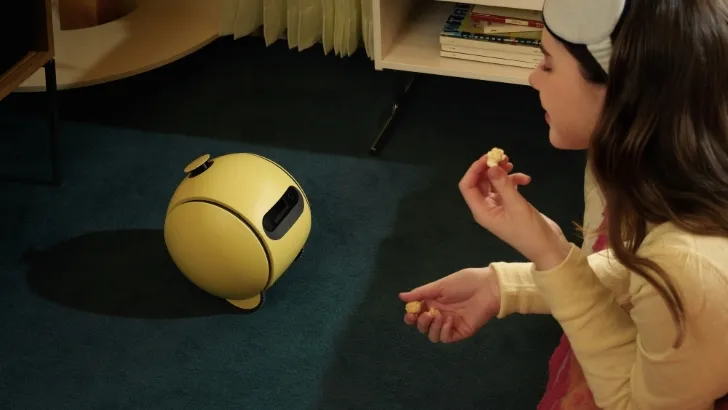
The same logic applies to Samsung Ballie. Samsung's public framing for Ballie is not "general robot maid." It is home monitoring, schedules, conversational help, projection, and smart-home control. That is a narrower lane than a full humanoid, which is exactly why it can look more believable.
LG CLOiD sits in the middle. It keeps a wheeled base, which simplifies mobility, and spends more complexity on arms, hands, and appliance interaction.
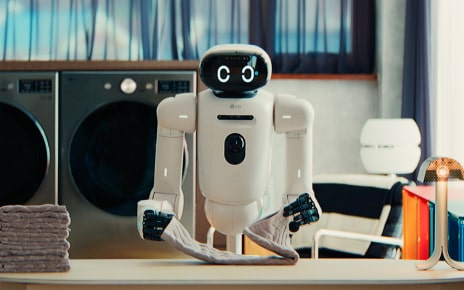
That is why our broader wheeled vs bipedal home robot analysis matters so much. In a real home, stable mobility plus narrower goals may beat a more dramatic body plan with broader promises.
How can buyers tell when an autonomy claim is actually believable?
If a company says its home robot is autonomous, these are the questions I would ask first.
1. What happens when the robot sees something it does not know?
A believable product answer sounds like a workflow. 1X's expert-guidance line is a good example. A vague answer usually means the company is hiding how brittle the system still is.
2. Was the skill shown live, or mainly learned from human demonstrations?
Both matter, but they are not the same thing. Sunday's gloves and Figure's training data are part of the autonomy story, not proof that human dependence is gone.
If you want the deeper labor side of that issue, read our article on the hidden workforce training home robots.
3. Is the autonomy broad, or just narrow and reliable?
A robot that can patrol, remind, monitor, and navigate may be far more dependable than one claiming it can do any chore in a messy kitchen.
4. Does the company show a full task, or just a polished moment?
A whole workflow tells you more than one impressive grab or one carefully framed clip. Recovery, hesitation, error handling, and continuity matter.
5. Are the commercial terms real?
If there is no price, no support model, no service language, and no plain explanation of failure handling, you are probably looking at progress, not yet a finished household product.
The bottom line
So, are home humanoid robots really autonomous?
Not in the fully independent, whole-home, no-help-needed way most buyers mean.
What is real in 2026 is more nuanced:
- 1X NEO shows a serious shared-autonomy consumer pitch
- Figure 03 shows real progress in onboard manipulation and language-driven control
- Sunday Memo shows how much autonomy still depends on large-scale human teaching in real homes
- LG CLOiD, Ballie, and Astro show why narrower or wheeled robots can reach useful autonomy sooner
That is not a reason to dismiss the category. It is the reason to read the claims more carefully.
If you are buying now, my rule is simple:
- buy narrow autonomy if you want something useful today
- watch shared-autonomy humanoids if you want to see where the market is heading
- do not confuse a strong demo with solved home autonomy
The most trustworthy companies are usually the ones that admit autonomy is still arriving in layers.
Written by
ui44 Team
Published April 22, 2026
Share this article
Open a plain share link on X or Bluesky. No embeds, no widgets, no cookie baggage.