That distinction matters. A brain-computer interface, or BCI, is not a shortcut to a consumer humanoid butler. It is a possible control layer for assistive robotics: the part that turns intent into a robot action. The useful question for home-robot buyers is narrower and more practical: what kind of home robot would actually become more useful if the control signal came from a brain implant?
Can a brain implant control a home robot today?
In a clinical research setting, yes: Neuralink's CONVOY listing says the study is testing whether participants can modulate brain activity to control assistive devices through the N1 Implant. The intervention is listed as a device: an Assistive Robotic Arm controlled through neural signals. The study is small by design, with an estimated enrollment of three participants, invitation-only enrollment, and outcomes focused on effectiveness, consistency, safety, quality of life, and assistive-technology fit over months and years.
That is very different from "buy a robot and think commands at it." The trial is not a home-robot product page. It is a medical-device feasibility study. The strongest takeaway is that robotic arms are becoming important enough to test as endpoints for BCI systems, because reaching, grasping, lifting, and placing objects are exactly the tasks that can change daily independence.
The home-robot angle is also not mostly about humanoids. A person who needs assistive control may care less about whether a robot has legs and more about whether it can safely get a cup, move a phone, open a microwave, fetch medication packaging, or bring a dropped item within reach. In ui44's database, the closest current category is not sci-fi avatars. It is mobile manipulators and assistive home platforms with arms.
The robot side matters as much as the implant
A BCI does not remove the hard parts of robotics. It changes the input method. The robot still needs safe motion, stable manipulation, reliable perception, emergency stop behavior, and enough payload to handle real household objects. If the robot arm wobbles, loses calibration, crushes soft objects, or needs a perfect lab table, a better control signal will not make it home-ready.
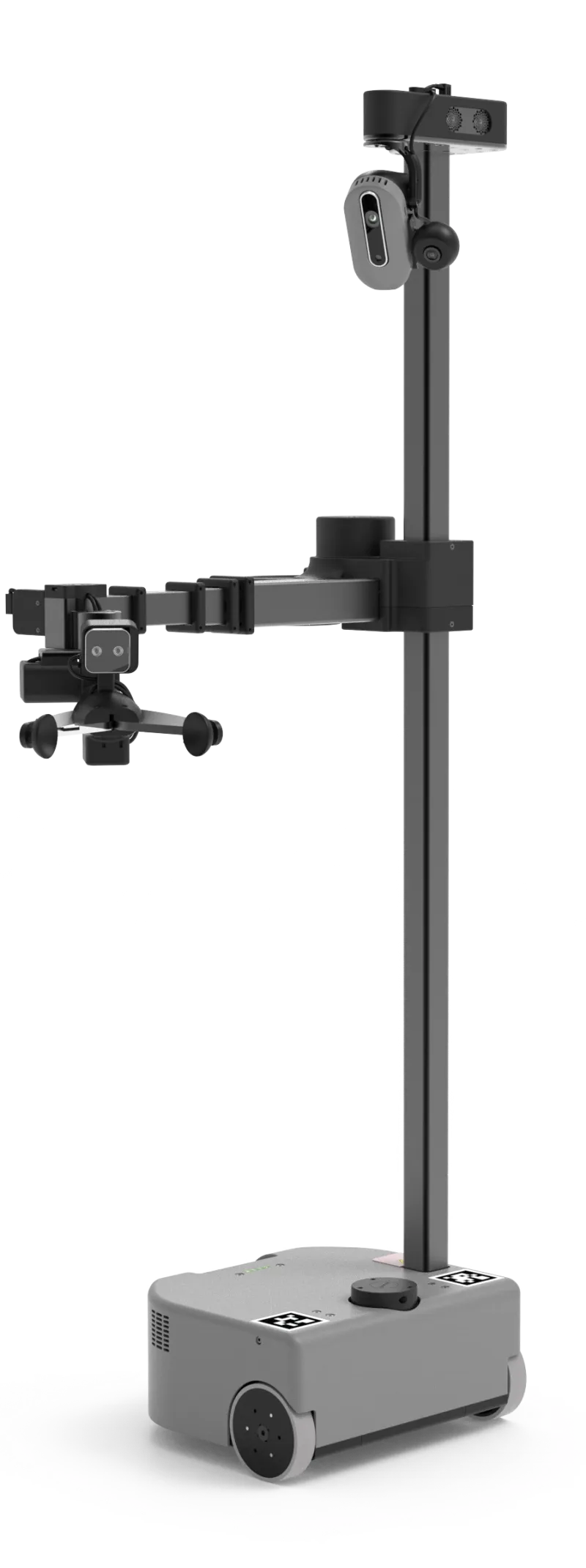
That is why the most realistic near-term platforms look a lot like Hello Robot Stretch 4, not a walking humanoid. Stretch 4 is a wheeled mobile manipulator with a 160 cm working height, 45 cm diameter footprint, self-charging, an 8-hour light-load runtime, and a telescoping arm rated for 2.5 kg extended or 4 kg retracted payload. Hello Robot's official page emphasizes ROS 2, Python SDK access, mapping, navigation, 3D SLAM, data collection, and VLM grasping demos. IEEE Spectrum also reports that Stretch 4 is intended for in-home assistive pilot deployments with people who have severe mobility impairments.
That combination is exactly the point: the robot is designed around indoor mobility and manipulation first. It does not need to climb stairs or impersonate a person to be useful. It needs to reach the counter, avoid the wheelchair, stop safely, and hand control back to a person or caregiver when confidence is low.
What assistive robots already teach us
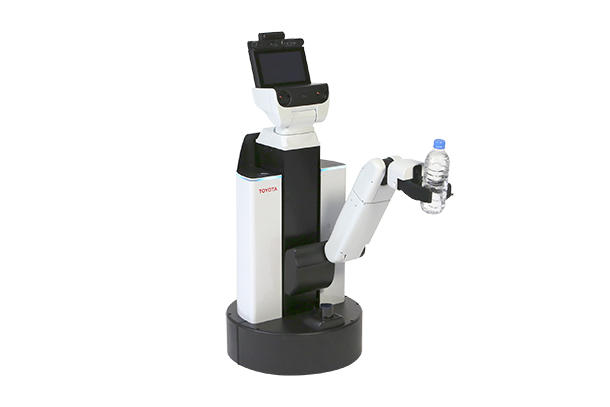
The assistive-robot category has been moving toward this problem for years. Toyota Human Support Robot is a compact home-assistance mobile manipulator designed for elderly and disabled users. Toyota's official specs list a 100.5-135 cm body height, roughly 37 kg weight, a folding arm, up to 1.2 kg object handling, voice-command support, and remote operation by family or caregivers. It was never a consumer appliance, but it shows how long the field has treated independent living as a manipulation problem.
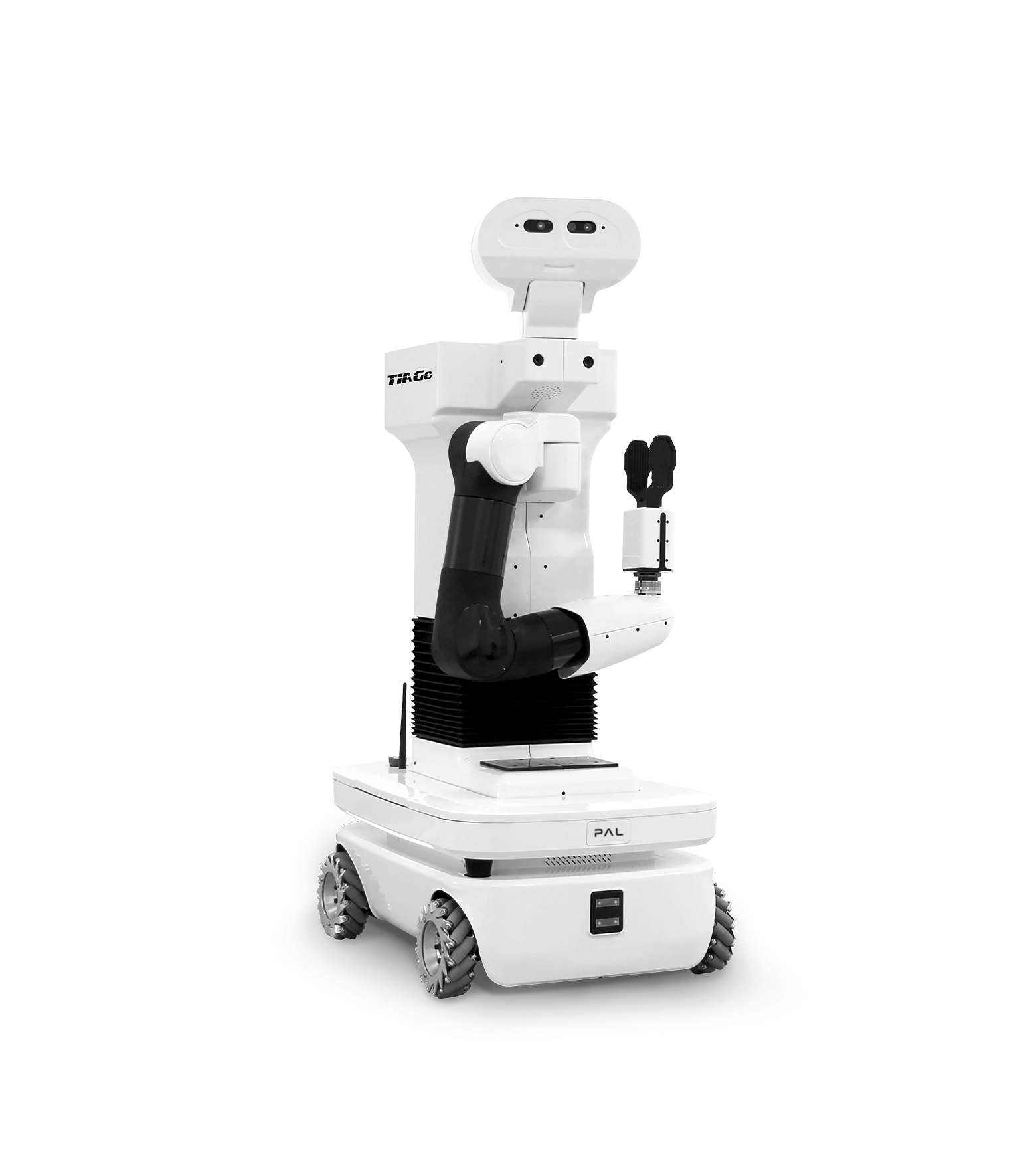
PAL Robotics TIAGo is another useful comparison. In ui44's database it is a research robot, not a home product, but its specs are the sort that matter for future BCI-controlled assistance: a 110-145 cm telescoping torso, optional 7-DoF arms, 3 kg arm payload, 4-5 hours of battery life with one battery or 8-10 hours with two, ROS-based navigation and manipulation, force/torque sensing options, telepresence, and learning-by-demonstration workflows.
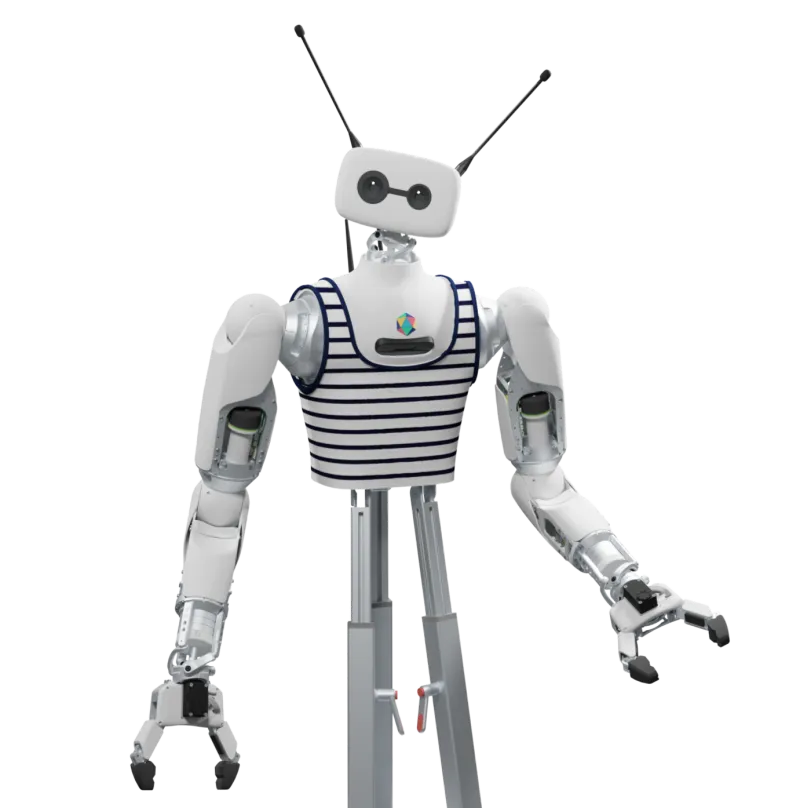
Reachy 2 takes a more humanoid upper-body approach. It has two 7-DoF bio-inspired arms, a mobile base option, VR teleoperation, ROS 2, Python SDK support, and a 3 kg payload per arm. Pollen Robotics positions it for real-world object manipulation in offices, homes, hospitals, and shops. That makes it relevant to BCI discussion even if today's control path is VR, SDK, or teleoperation rather than an implant.
The pattern is clear: the robot must expose controllable actions that are simple enough for a human intention signal to guide, but safe enough that the robot can handle the details. "Move cup from fridge to table" is a better target than "be my full-body avatar."
Control methods: BCI versus voice, joystick, teleop, and autonomy
For buyers, the control interface is not a novelty feature. It determines who can use the robot and how tiring it is to operate.
Control method
Voice command
- Best fit
- Simple requests, reminders, smart-home scenes
- Main limitation
- Not private, hard for users with speech impairment, ambiguous for precise motion
Control method
Joystick or switch control
- Best fit
- Wheelchair users who already use physical controls
- Main limitation
- Requires reliable motor control and can be slow for multi-step manipulation
Control method
Caregiver teleoperation
- Best fit
- Remote help, supervised tasks, troubleshooting
- Main limitation
- Depends on another person and good connectivity
Control method
Robot autonomy
- Best fit
- Repetitive navigation, grasping demos, routine tasks
- Main limitation
- Still brittle in cluttered homes and needs safe fallback behavior
Control method
BCI intent control
- Best fit
- Users with severe paralysis who cannot use voice or joysticks consistently
- Main limitation
- Clinical, invasive, early-stage, and dependent on robot safety/autonomy
| Control method | Best fit | Main limitation |
|---|---|---|
| Voice command | Simple requests, reminders, smart-home scenes | Not private, hard for users with speech impairment, ambiguous for precise motion |
| Joystick or switch control | Wheelchair users who already use physical controls | Requires reliable motor control and can be slow for multi-step manipulation |
| Caregiver teleoperation | Remote help, supervised tasks, troubleshooting | Depends on another person and good connectivity |
| Robot autonomy | Repetitive navigation, grasping demos, routine tasks | Still brittle in cluttered homes and needs safe fallback behavior |
| BCI intent control | Users with severe paralysis who cannot use voice or joysticks consistently | Clinical, invasive, early-stage, and dependent on robot safety/autonomy |
The best future system probably blends several of these. A BCI might select a goal or approve an action. The robot's autonomy might plan the path and grasp. A caregiver might take over when the robot is uncertain. A physical emergency stop still needs to exist because homes are messy, pets move, and people cannot wait for a neural decoder to recover if an arm is doing something unsafe.
This is where buyer hype gets dangerous. If a company claims that a robot can be "mind controlled," ask what level of control it means. Is the user driving individual joints? Choosing from on-screen targets? Selecting from suggested actions? Confirming an autonomous plan? Those are not the same product.
Why humanoid avatars are the wrong benchmark
Neuralink-adjacent commentary often jumps from robotic arms to humanoid avatars. It is understandable: a full-body robot controlled by thought is a compelling image. But as a home-assistance benchmark, it is usually the wrong place to start.
Minimalist mobile manipulators have advantages for assistive homes: wheels are stable, the robot can fit into wheelchair-adapted spaces, and the payload problem is focused on one arm and reachable objects. A bipedal humanoid has to solve balance, fall safety, legged navigation, two-arm coordination, hand dexterity, battery life, and whole-body control before it can deliver the same cup of water.
Toyota's T-HR3 is a good example of the gap. It is a sophisticated teleoperated humanoid research platform with Toyota's Master Maneuvering System, force feedback, torque sensors, a 154 cm body, 75 kg weight, 32 robot axes, and 10 fingers. That is fascinating technology. It is not a near-term home accessibility product.
The first BCI-controlled home robots are more likely to be arm-first systems: a wheelchair-mounted arm, a tabletop assistive arm, or a wheeled mobile manipulator that can be supervised. The less dramatic form factor may be the more useful one.
A buyer checklist for BCI-ready assistive robots
What would count as real progress?
For ui44, a credible BCI-home-robot milestone would not be a viral video of a robot waving. It would be evidence that a person with severe motor impairment can complete useful household tasks repeatedly, safely, and with less fatigue than existing controls.
The key metrics are practical: time to complete a task, number of failed grasps, number of caregiver interventions, emergency-stop events, user workload, quality-of-life impact, and whether the setup works outside a lab. Neuralink's CONVOY outcomes point in that direction by measuring effectiveness, consistency, safety, quality of life, and assistive-device predisposition over time.
That is also why the current moment is exciting without being consumer-ready. BCI control may eventually make assistive robots usable for people who cannot rely on hands, speech, or conventional switches. But the robot still has to be worth controlling. The winning home systems will combine a safe manipulator, modest autonomy, multiple fallback controls, and a support model families can trust.
For now, treat the Neuralink robot-arm news as a serious assistive-technology signal, not a shopping shortcut. If you want to compare the robot side of the equation, start with mobile manipulators and research platforms in ui44's database: Stretch 4, Stretch 3, Toyota HSR, TIAGo, and Reachy 2. The future of BCI-controlled home robots will be decided less by whether the robot looks human and more by whether it can safely pick up the thing you actually need.
Related in the database
Use this article as a buyer workflow
Turn the article into a real verification pass grounded in the robots, manufacturers, categories, components, and countries it actually references.
Neuralink Robot Arm: Can BCI Control Home Robots? already points you toward 6 linked robots, 4 manufacturers, and 4 countries inside the ui44 database. That matters because strong buyer guidance is easier to apply when you can move immediately from a claim or warning into concrete product pages, manufacturer directories, component explainers, and country-level context instead of treating the article as an isolated opinion piece. The fastest next step is to turn the article into a shortlist workflow: open the linked robot pages, verify which specs are actually published for those models, then compare the surrounding manufacturer and component context before you decide whether the underlying claim changes your buying plan.
For this topic, the useful discipline is to separate the editorial lesson from the catalog evidence. The article gives you the framing, but the robot pages tell you what each product actually ships with today: sensor stack, connectivity methods, listed price, release timing, category, and support-relevant compatibility notes. The manufacturer pages then show whether you are looking at a one-off launch, a broader lineup pattern, or a company that spans multiple categories. That layered workflow reduces the risk of buying on a single marketing phrase or a single support FAQ.
The fastest win is to keep the article’s editorial framing tied to real product pages. That way you can test whether Stretch 4, Human Support Robot (HSR), and TIAGo still make sense once price, category, release timing, and surrounding manufacturer context are visible in one place. If you want a quick working shortlist, open Compare Stretch 4, Human Support Robot (HSR), and TIAGo next, then keep this article open as the reasoning layer while you compare structured data side by side.
Practical Takeaway
Every robot, manufacturer, category, component, and country reference below resolves to a real ui44 page, keeping the follow-up path grounded in database records rather than generic advice.
Suggested next steps in ui44
- Open Stretch 4 first so the article’s main point is anchored to a real robot page.
- Use Hello Robot to see the broader company context around the products linked in the article.
- Open the linked component pages when you want to separate a shared technology pattern from a single-brand story.
- Build a working shortlist with Compare Stretch 4, Human Support Robot (HSR), and TIAGo.
- Keep a short note of what is already verified in the article and what still needs live confirmation from current vendor documentation.
Robot profiles worth opening next
Use the linked product pages as the evidence layer
The linked robot pages are where this article becomes operational. Instead of asking whether the headline is interesting, use the robot entries to inspect the actual mix of sensors, connectivity options, batteries, pricing, release timing, and stated capabilities attached to the products mentioned in the article. That is the easiest way to see whether the warning or opportunity described here affects one product family, a specific design pattern, or an entire buying lane.
Stretch 4
Hello Robot · Home Assistants · Available
Stretch 4 is tracked on ui44 as a available home assistants robot from Hello Robot. The database currently records a listed price of $29,950, a release date of 2026-05-12, 8 hours (light CPU load) battery life, Not officially disclosed charging time, and a published stack that includes Wide-FOV depth sensing, High-resolution RGB cameras, and Calibrated RGB + depth perception plus its listed connectivity stack.
For general buyer research, this route gives you the concrete profile that the article alone cannot. Compare the published capabilities of Mobile Manipulation, Omnidirectional Indoor Mobility, and Autonomous Mapping and Navigation with the linked alternatives so the final decision is based on actual product fit, not just the framing of the article.
Human Support Robot (HSR)
Toyota · Home Assistants · Active
Human Support Robot (HSR) is tracked on ui44 as a active home assistants robot from Toyota. The database currently records a listed price of Price TBA, a release date of 2012, Not disclosed battery life, Not disclosed charging time, and a published stack that includes its published sensor stack plus Remote operation support (real-time face/voice relay).
For general buyer research, this route gives you the concrete profile that the article alone cannot. Compare the published capabilities of Pick up objects from floor, Retrieve items from shelves, and Remote teleoperation by family/caregivers with the linked alternatives so the final decision is based on actual product fit, not just the framing of the article.
TIAGo
PAL Robotics · Research · Active
TIAGo is tracked on ui44 as a active research robot from PAL Robotics. The database currently records a listed price of Price TBA, a release date of 2015, 4–5h (1 battery) / 8–10h (2 batteries) battery life, Not disclosed charging time, and a published stack that includes RGB-D Camera, Force/Torque Sensor (wrist), and Laser Range Finder plus Wi-Fi and Ethernet.
For general buyer research, this route gives you the concrete profile that the article alone cannot. Compare the published capabilities of Autonomous Navigation, Object Manipulation, and Pick and Place with the linked alternatives so the final decision is based on actual product fit, not just the framing of the article.
Reachy 2
Pollen Robotics · Research · Active
Reachy 2 is tracked on ui44 as a active research robot from Pollen Robotics. The database currently records a listed price of $70,000, a release date of 2024, 8 hours (mobile base, per official hardware docs) battery life, Not disclosed charging time, and a published stack that includes Stereo RGB Cameras (fish-eye), Time-of-Flight Depth Sensor (OAK-FFC ToF 33D), and RGB-D Camera (Orbbec Gemini 336) plus Wi-Fi and Ethernet.
For general buyer research, this route gives you the concrete profile that the article alone cannot. Compare the published capabilities of Object manipulation (pick and place), VR teleoperation, and Autonomous navigation with the linked alternatives so the final decision is based on actual product fit, not just the framing of the article.
T-HR3 is tracked on ui44 as a prototype humanoid robot from Toyota. The database currently records a listed price of Price TBA, a release date of 2017, Not disclosed battery life, Not disclosed charging time, and a published stack that includes Torque Sensors (all joints via Torque Servo Modules) and Head-Mounted Display feedback system plus Teleoperation link (Master Maneuvering System).
For general buyer research, this route gives you the concrete profile that the article alone cannot. Compare the published capabilities of Remote Whole-Body Teleoperation, Force Feedback Interaction, and Balance Control During Contact with the linked alternatives so the final decision is based on actual product fit, not just the framing of the article.
Manufacturer context behind the article
Check whether this is one product story or a broader company pattern
Manufacturer pages add the market context that individual product pages cannot show on their own. They help you check whether the article is centered on a brand with a deep lineup, whether that brand spans several categories, and how much of its ui44 footprint depends on one flagship model versus a broader product strategy.
Hello Robot
ui44 currently tracks 2 robots from Hello Robot across 1 category. The company is grouped under USA, and the current catalog footprint on ui44 includes Stretch 3, Stretch 4.
That wider brand context matters because the best buying decision usually depends on lineup depth and adjacent options, not just the one model featured most prominently in the article. The category mix here currently points toward Home Assistants as the most useful next route if you want to see whether this article reflects a wider pattern inside the brand.
Toyota
ui44 currently tracks 3 robots from Toyota across 2 categorys. The company is grouped under Japan, and the current catalog footprint on ui44 includes Human Support Robot (HSR), T-HR3, CUE7.
That wider brand context matters because the best buying decision usually depends on lineup depth and adjacent options, not just the one model featured most prominently in the article. The category mix here currently points toward Home Assistants, Humanoid as the most useful next route if you want to see whether this article reflects a wider pattern inside the brand.
PAL Robotics
ui44 currently tracks 5 robots from PAL Robotics across 1 category. The company is grouped under Spain, and the current catalog footprint on ui44 includes TALOS, TIAGo, REEM-C.
That wider brand context matters because the best buying decision usually depends on lineup depth and adjacent options, not just the one model featured most prominently in the article. The category mix here currently points toward Research as the most useful next route if you want to see whether this article reflects a wider pattern inside the brand.
Pollen Robotics
ui44 currently tracks 2 robots from Pollen Robotics across 2 categorys. The company is grouped under France, and the current catalog footprint on ui44 includes Reachy 2, Reachy Mini.
That wider brand context matters because the best buying decision usually depends on lineup depth and adjacent options, not just the one model featured most prominently in the article. The category mix here currently points toward Research, Companions as the most useful next route if you want to see whether this article reflects a wider pattern inside the brand.
Broaden the scan without leaving the database
Categories, components, and countries add the wider context
Category framing
Category pages are useful when the article touches a buying pattern that shows up across brands. A category route helps you confirm whether the linked products sit in a narrow niche or whether the same question should be tested across a larger field of alternatives.
Home Assistants
The Home Assistants category page currently groups 16 tracked robots from 14 manufacturers. ui44 describes this lane as: Arm-based household helpers — laundry folders, kitchen robots, and mobile manipulators that take on hands-on physical tasks around the home.
That makes the category route a practical follow-up when you want to check whether the products linked in this article are typical for the lane or whether they sit at one edge of the market. Useful starting examples currently include Robody, Futuring 2 (F2), Stretch 3.
Research
The Research category page currently groups 49 tracked robots from 39 manufacturers. ui44 describes this lane as: Academic and research robotics platforms pushing the boundaries of what machines can learn and do in the lab and beyond.
That makes the category route a practical follow-up when you want to check whether the products linked in this article are typical for the lane or whether they sit at one edge of the market. Useful starting examples currently include HRP-4C, HRP-5P, NAO6.
Country and ecosystem context
Country pages give extra context when support practices, launch sequencing, regulatory posture, or manufacturer mix matter. They are not a substitute for model-level verification, but they do help you see which ecosystems cluster together and which manufacturers sit in the same regional field when you broaden the search beyond the article headline.
USA
The USA route currently groups 89 tracked robots from 69 manufacturers in ui44. That gives you a useful regional lens when the article points toward support practices, launch sequencing, or brand clusters that may share similar ecosystem assumptions.
On the current route, manufacturers like Faraday Future, iRobot, Boston Dynamics make the page a good way to broaden the scan without losing the regional context that often shapes availability, documentation style, and adjacent alternatives.
Japan
The Japan route currently groups 26 tracked robots from 17 manufacturers in ui44. That gives you a useful regional lens when the article points toward support practices, launch sequencing, or brand clusters that may share similar ecosystem assumptions.
On the current route, manufacturers like AIST, SoftBank Robotics, Toyota make the page a good way to broaden the scan without losing the regional context that often shapes availability, documentation style, and adjacent alternatives.
Spain
The Spain route currently groups 6 tracked robots from 2 manufacturers in ui44. That gives you a useful regional lens when the article points toward support practices, launch sequencing, or brand clusters that may share similar ecosystem assumptions.
On the current route, manufacturers like PAL Robotics, Star Robotics make the page a good way to broaden the scan without losing the regional context that often shapes availability, documentation style, and adjacent alternatives.
Questions to answer before you move from reading to buying
A follow-up FAQ built from the entities already linked in this article
Frequently Asked Questions
Which page should I open first after reading “Neuralink Robot Arm: Can BCI Control Home Robots?”?
Start with Stretch 4. That gives you a concrete product anchor for the article’s main claim. From there, branch into the manufacturer and component pages so you can tell whether the article is describing one specific model, a repeated brand pattern, or a wider technology issue that affects multiple shortlist options.
How do the manufacturer pages change the buying decision?
Hello Robot help you zoom out from one article and one product. On ui44 they show lineup breadth, category spread, and the neighboring robots tied to the same company. That context is useful when you are deciding whether a risk belongs to a single model, whether it shows up across a brand’s portfolio, and whether you should keep looking at alternatives before committing.
When should I switch from reading to side-by-side comparison?
Move into Compare Stretch 4, Human Support Robot (HSR), and TIAGo as soon as you understand the article’s main warning or promise. The article explains what to watch for, but the compare view is where you can check whether price, status, battery life, connectivity, sensors, and category fit still make the robot a good match for your own home and budget.
Where to go next in ui44
Keep the research chain inside the database
If you want to keep going, these follow-on pages give you the cleanest expansion path from article to research session. Open the comparison route first if you are deciding between products today. Open the manufacturer, category, and component routes if you still need to understand the broader pattern behind the claim.
Written by
ui44 Team
Published May 13, 2026
Share this article
Open a plain share link on X or Bluesky. No embeds, no widgets, no cookie baggage.