That is the promise of vision-language-action robotics: connect what the robot sees, what the person asks, and what the motors actually do.
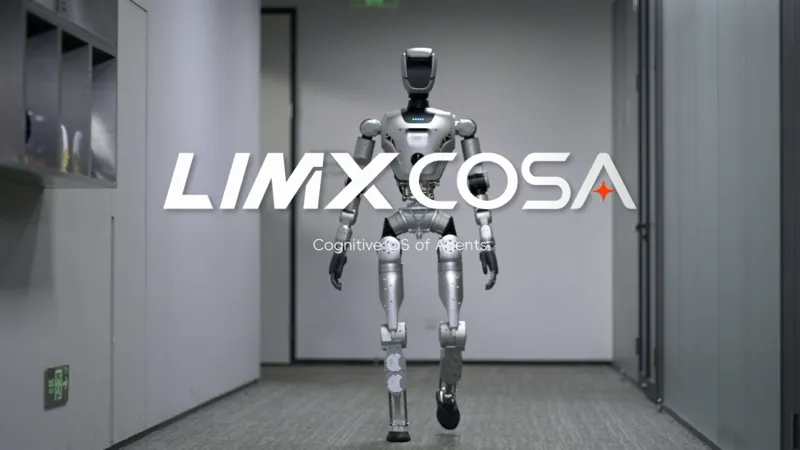
The reason this matters now is that VLA claims are moving from research papers into real product pages. Figure calls Helix a VLA model. Galbot lists GraspVLA and GroceryVLA. SwitchBot says its onero H1 uses an on-device OmniSense VLA model. Narwal even uses VLA language for a robot vacuum's object-aware cleaning system. LimX's new FluxVLA Engine frames VLA as a full engineering pipeline, not just a model name.
The useful question is not "does this robot have AI?" Every robot says that now. The better question is: does its AI close the loop from seeing, to understanding, to acting, to checking whether the action worked?
What is a VLA model in robotics?
A VLA model in robotics is a model that takes visual observations and language instructions, then outputs robot actions. Those actions might be tokenized commands, continuous joint targets, end-effector poses, action chunks, or another control format that a robot's lower-level software can execute.
In plain English, a VLA model tries to answer three questions at once:
- What am I looking at? Cameras, depth sensors, tactile sensors, and robot state describe the scene.
- What is the person asking for? Language gives the goal: "pick up the red cup," "open the drawer," "fold the towel," or "move that out of the way."
- What should my body do next? The model produces actions that the robot can send toward its arm, hand, base, head, or whole body.
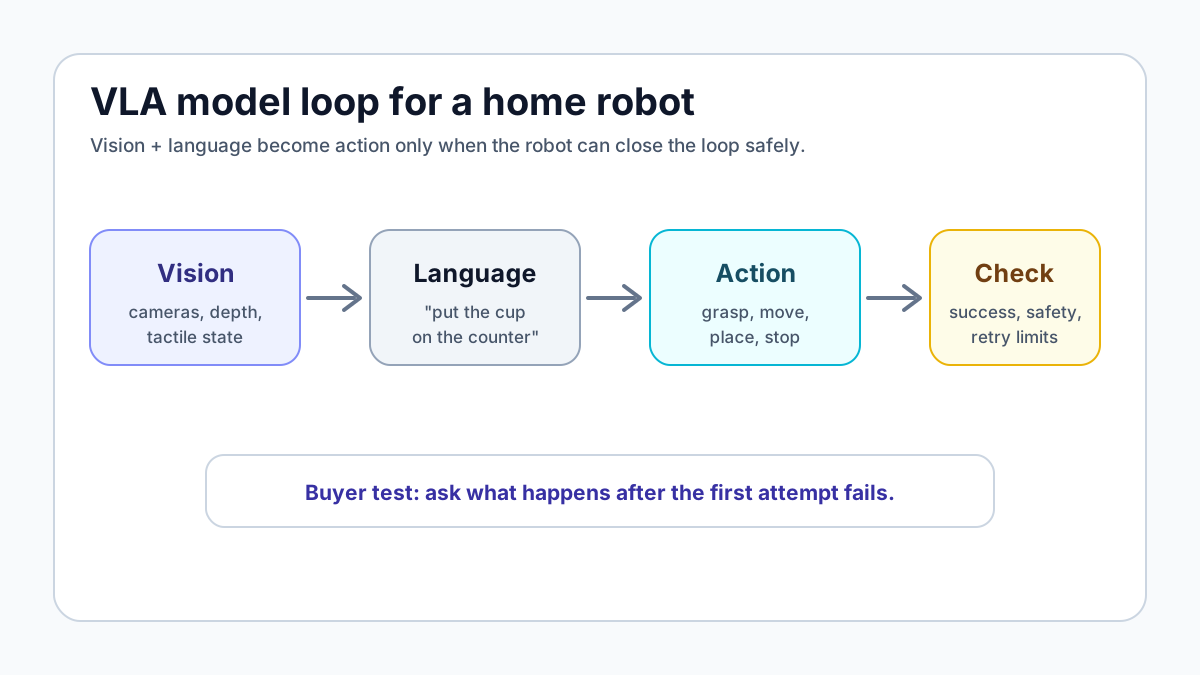
That last step is the difference between a VLA model and an ordinary vision-language model. A VLM can caption a scene or answer questions about an image. A VLA model is supposed to make the robot move.
That does not make it magic. A robot still needs motor controllers, collision checking, joint limits, balance, grasp planning, safety stops, privacy rules, and a recovery plan for failed attempts. But VLA is the layer that tries to connect high-level intent with embodied motion.
Why VLA is suddenly showing up in home robot claims
Home environments are brutal for robotics. Factories can standardize workcells. Homes change every hour. A chair moves, a child drops a toy, a towel is wrinkled differently, the dog walks through the scene, and the robot has to adapt without a robotics engineer standing nearby.
That is why robot companies are excited about VLA models. The hope is that a robot can learn a more general mapping from scenes and instructions to actions, instead of needing a hand-coded routine for every chore.
The research direction is real. OpenVLA describes a 7B-parameter open-source VLA trained on 970,000 robot episodes from the Open X-Embodiment dataset. Physical Intelligence's openpi repository says its π₀ family is trained on 10,000+ hours of robot data. NVIDIA's GR00T N1.5 work focuses on humanoid foundation models that combine vision-language grounding with action generation. Figure's Helix splits the problem into a slower semantic system and a fast reactive control system.
Those are serious signals. They are also not the same as a home robot that can reliably do your laundry today.
A useful way to read VLA news is this: the field is improving the translation layer between "the robot understood the scene" and "the robot acted correctly." That is necessary for home robots, but it is not sufficient by itself.
VLA is not the same as a chatbot on wheels
This is the most common misunderstanding. A robot can have a strong chatbot and still be bad at chores.
A chatbot is good at language. It can explain a recipe, answer a question, or suggest a plan. A home robot needs something harder: embodied execution. If you ask it to put groceries away, it has to identify objects, choose grasps, avoid crushing packaging, open a cabinet, handle changed lighting, recover from a slip, and stop if a person gets too close.
That is why Figure's Helix announcement is interesting. Figure describes Helix as a VLA model that unifies perception, language understanding, and learned control. The technical details matter: its slower System 2 runs at about 7-9 Hz for scene understanding and language, while its faster System 1 policy runs at 200 Hz for continuous upper-body control. Figure also says Helix was trained on about 500 hours of teleoperated behavior and can control a 35-DoF upper-body action space.
For a buyer, the takeaway is not "Figure solved the home." The takeaway is that serious VLA work starts to look like robotics engineering, not a voice-assistant feature. It has to name action rates, training data, controls, hardware, and failure modes.
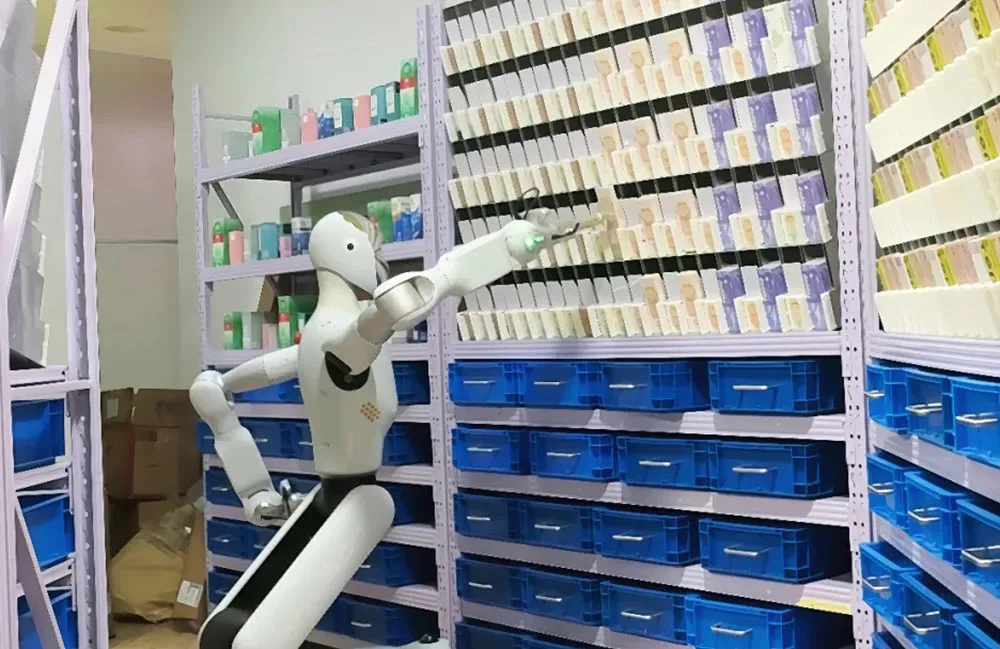
Galbot is a second useful example because it is not framed as a home companion. The Galbot G1 is a 173 cm, 85 kg wheeled mobile manipulator for retail automation. ui44 data lists proprietary VLA models including GraspVLA, GroceryVLA, and TrackVLA, with a claimed ability to handle 5,000+ product types. That is not a kitchen robot for consumers, but it is exactly the kind of constrained commercial environment where VLA manipulation can mature before it reaches normal homes.
What FluxVLA changes about the conversation
LimX's FluxVLA Engine is useful because it treats VLA as an engineering system, not a single model label. Its documentation describes a full-stack platform for embodied intelligence applications, with unified configuration, standardized interfaces, modular models, training, evaluation, inference, and real-robot deployment.
The details are more important than the branding. FluxVLA says it supports OpenVLA, LlavaVLA, GR00T, Pi0, and Pi0.5-style models; Parquet and RLDS data pipelines; LIBERO benchmark evaluation; ALOHA, TRON 2, and UR3 physical deployment paths; and RTC trajectory guidance for smoother real-world motion. Its Hugging Face page also highlights a GR00T-N1.5 example reaching 42.8 Hz on an RTX 5090.
That does not mean a LimX humanoid is suddenly ready to clean your house. In ui44's database, LimX Oli is a 165 cm, 55 kg development humanoid running COSA, LimX's physical-world-native agentic OS. Its price is contact-sales only, and key consumer details such as battery life are not publicly disclosed.
But FluxVLA is a good sign of what to ask every vendor. If a company claims a home robot is powered by a VLA model, can it also explain the data format, simulation tests, real-robot deployment path, inference frequency, supported hardware, and recovery behavior? Or is "VLA" just a more modern way to say "AI-powered"?
VLA, world models, and robot operating systems are different layers
These terms are starting to blur together, so it helps to separate them.
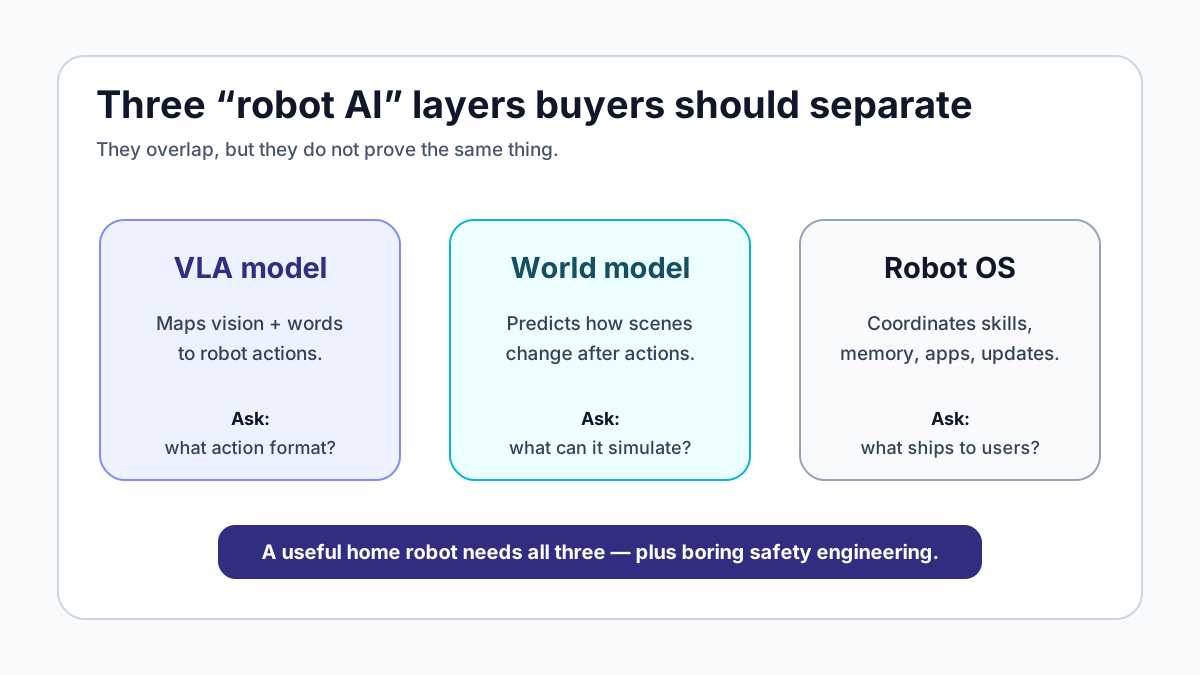
A VLA model maps vision and language toward robot action. A world model tries to predict how the scene will change when actions happen. A robot OS or embodied AI platform coordinates skills, memory, apps, safety rules, deployment, updates, and sometimes multiple models.
A future home robot may need all three. For example, a robot asked to put away a mug might use a VLA model to convert "pick up the mug" into an action sequence, a world model to reason that the mug could tip or collide with a drawer, and a robot OS to manage navigation, permissions, battery, logging, and a fallback to remote assistance.
This is why ui44 treats VLA as one signal, not a pass/fail badge. If you want a deeper companion piece, see our guide to robot world models and AGIBOT Genie. World models and VLA models can reinforce each other, but one does not prove the other.
What ui44's robot database shows right now
The current market is mixed. Some robots use explicit VLA language. Others avoid the term but are clearly working on similar embodied-AI problems. A few are shipping or pre-order products; many are still research, commercial, or contact-sales platforms.
Robot
- VLA or embodied-AI signal in ui44 data
- Helix VLA; 168 cm, 60 kg, about 5 hours battery
- Buyer reality check
- Active humanoid, no public price, still not a consumer home purchase
Robot
- VLA or embodied-AI signal in ui44 data
- GraspVLA, GroceryVLA, TrackVLA; 5 kg carry, 15 kg arm strength
- Buyer reality check
- Commercial retail robot, not a home helper, but strong manipulation evidence
Robot
- VLA or embodied-AI signal in ui44 data
- On-device OmniSense VLA; 22 DoF household robot concept
- Buyer reality check
- Development status; product metadata listed $9,999, but timing and specs remain limited
Robot
- VLA or embodied-AI signal in ui44 data
- Omni Vision AI / NarGPT VLA for obstacle-aware cleaning
- Buyer reality check
- Narrow consumer use case; useful, but not general household manipulation
Robot
- VLA or embodied-AI signal in ui44 data
- WALL-A embodied model for perception, reasoning, and precision manipulation
- Buyer reality check
- Home-service trials are interesting; public purchase price is undisclosed
Robot
- VLA or embodied-AI signal in ui44 data
- 1X Embodied Intelligence, household chores, Expert Mode
- Buyer reality check
- $20,000 pre-order; remote expert support and learning model matter as much as autonomy claims
Robot
- VLA or embodied-AI signal in ui44 data
- Open-source ROS 2 / Python autonomy stack, not branded as VLA
- Buyer reality check
- $24,950 research/home-assist platform; simpler body may beat humanoids for narrow chores
Robot
- VLA or embodied-AI signal in ui44 data
- NVIDIA Isaac GR00T XX foundation model and fleet learning
- Buyer reality check
- €19,999 pre-order; research/light-service path rather than proven home chores
Robot
- VLA or embodied-AI signal in ui44 data
- Isaac Sim reinforcement learning and imitation-learning baseline
- Buyer reality check
- Open-source development platform, not a finished home robot
| Robot | VLA or embodied-AI signal in ui44 data | Buyer reality check |
|---|---|---|
| Figure 03 | Helix VLA; 168 cm, 60 kg, about 5 hours battery | Active humanoid, no public price, still not a consumer home purchase |
| Galbot G1 | GraspVLA, GroceryVLA, TrackVLA; 5 kg carry, 15 kg arm strength | Commercial retail robot, not a home helper, but strong manipulation evidence |
| SwitchBot onero H1 | On-device OmniSense VLA; 22 DoF household robot concept | Development status; product metadata listed $9,999, but timing and specs remain limited |
| Narwal Flow 2 | Omni Vision AI / NarGPT VLA for obstacle-aware cleaning | Narrow consumer use case; useful, but not general household manipulation |
| X Square Quanta X2 | WALL-A embodied model for perception, reasoning, and precision manipulation | Home-service trials are interesting; public purchase price is undisclosed |
| 1X NEO | 1X Embodied Intelligence, household chores, Expert Mode | $20,000 pre-order; remote expert support and learning model matter as much as autonomy claims |
| Hello Robot Stretch 3 | Open-source ROS 2 / Python autonomy stack, not branded as VLA | $24,950 research/home-assist platform; simpler body may beat humanoids for narrow chores |
| NEURA 4NE-1 Mini | NVIDIA Isaac GR00T XX foundation model and fleet learning | €19,999 pre-order; research/light-service path rather than proven home chores |
| ROBOTIS AI Sapiens K0 | Isaac Sim reinforcement learning and imitation-learning baseline | Open-source development platform, not a finished home robot |
The lesson is simple: VLA is most meaningful when paired with hardware that can actually manipulate the world and a deployment story that explains what happens after mistakes.
The buyer checklist for VLA robot claims
Why simpler robots may still win early chores
A strange thing about VLA hype is that it may make simpler robots more useful, not less.
Hello Robot Stretch 3 is not a flashy humanoid. It is a 24.5 kg wheeled mobile manipulator with a telescoping arm, 2 kg payload, 2-5 hours of battery life, ROS 2 support, and a $24,950 list price. For many assistive or research tasks, that kind of body is easier to reason about than a full biped.
That matters because VLA models still need good embodiments. A model that works well for tabletop manipulation may not transfer cleanly to a tall humanoid with balance constraints. A biped that can walk may still have weak hands. A robot vacuum with VLA-style obstacle reasoning may be genuinely useful for pet mess avoidance, while still being irrelevant to folding laundry.
So the practical buying question is not "humanoid or not?" It is: does the robot's body match the actions the model is supposed to produce?
What VLA means for home robots in 2026
In 2026, VLA is best understood as a readiness signal, not a guarantee.
It is a strong signal when a company can show named training data, real-robot tests, control frequency, deployment scripts, supported hardware, safety rules, and examples beyond polished demos. It is a weak signal when the same term is attached to a product page without any explanation of what the robot can safely do in a messy home.
For buyers, the near-term winners will probably not be robots that claim the most general intelligence. They will be robots that are honest about the small set of actions they can execute reliably, update those skills over time, and make it clear when a human is still in the loop.
That is where VLA models matter. They are one of the paths from voice-command novelty to physical usefulness. But the home robot still has to prove the boring parts: safe motion, repeatable grasps, recovery, support, privacy, and a body that can survive everyday clutter.
If a robot company can explain all of that, its VLA claim is worth paying attention to. If it cannot, treat "vision-language-action" as a marketing word until the robot shows its work.
Related in the database
Use this article as a privacy verification workflow
Turn the article into a privacy verification pass grounded in the robots, manufacturers, and components it actually references.
What Is a VLA Model? Home Robot AI Explained already points you toward 10 linked robots, 10 manufacturers, and 5 countries inside the ui44 database. That matters because strong buyer guidance is easier to apply when you can move immediately from a claim or warning into concrete product pages, manufacturer directories, component explainers, and country-level context instead of treating the article as an isolated opinion piece. The fastest next step is to turn the article into a shortlist workflow: open the linked robot pages, verify which specs are actually published for those models, then compare the surrounding manufacturer and component context before you decide whether the underlying claim changes your buying plan.
For this topic, the useful discipline is to separate the editorial lesson from the catalog evidence. The article gives you the framing, but the robot pages tell you what each product actually ships with today: sensor stack, connectivity methods, listed price, release timing, category, and support-relevant compatibility notes. The manufacturer pages then show whether you are looking at a one-off launch, a broader lineup pattern, or a company that spans multiple categories. That layered workflow reduces the risk of buying on a single marketing phrase or a single support FAQ.
Use the robot pages to confirm which products actually expose cameras, microphones, Wi-Fi, or voice systems, then use the manufacturer pages to decide how much of the privacy question seems product-specific versus brand-wide. On this route cluster, G1, Oli, and Figure 03 form the fastest reality check. If you want a quick working shortlist, open Compare G1, Oli, and Figure 03 next, then keep this article open as the reasoning layer while you compare structured data side by side.
Practical Takeaway
Every robot, manufacturer, category, component, and country reference below resolves to a real ui44 page, keeping the follow-up path grounded in database records rather than generic advice.
Suggested next steps in ui44
- Open G1 and note the listed sensors, connectivity methods, and voice stack before you interpret any policy claim.
- Cross-check the wider brand context on Galbot so you can see whether the privacy question touches one model or a broader lineup.
- Use the linked component pages to confirm how common the relevant sensors and connectivity layers are across the database.
- Keep a short note of which policy layers you checked, which device features are actually present on the robot page, and which items still depend on region- or app-level confirmation.
- Finish with Compare G1, Oli, and Figure 03 so the policy reading sits next to structured product data.
Robot profiles worth opening next
Use the linked product pages as the evidence layer
The linked robot pages are where this article becomes operational. Instead of asking whether the headline is interesting, use the robot entries to inspect the actual mix of sensors, connectivity options, batteries, pricing, release timing, and stated capabilities attached to the products mentioned in the article. That is the easiest way to see whether the warning or opportunity described here affects one product family, a specific design pattern, or an entire buying lane.
G1 is tracked on ui44 as a active commercial robot from Galbot. The database currently records a listed price of Price TBA, a release date of 2025, 10 hours battery life, Not disclosed charging time, and a published stack that includes Binocular camera x1, Wrist depth cameras x2, and 6-axis force sensors x2 plus Wi-Fi (2.4/5 GHz) and Ethernet.
For privacy-focused reading, this page matters because it shows the concrete device surface behind the policy discussion. Use it to verify whether G1 combines sensors and connectivity in a way that could change the in-home data footprint, and compare the listed capabilities such as Autonomous Retail Store Operation, Generalizable Object Grasping (5,000+ product types), and Shelf Replenishment & Inventory Management with any cloud, app, or voice layers, including Natural Language Voice Commands.
Oli
LimX Dynamics · Humanoid · Available
Oli is tracked on ui44 as a available humanoid robot from LimX Dynamics. The database currently records a listed price of Price TBA, a release date of 2025-07-30, About 2h (lab power-test room; actual data may vary) battery life, Not disclosed charging time, and a published stack that includes Self-developed 6-axis IMU, Head-mounted depth camera, and Chest-mounted depth camera plus WiFi 6 and Bluetooth.
For privacy-focused reading, this page matters because it shows the concrete device surface behind the policy discussion. Use it to verify whether Oli combines sensors and connectivity in a way that could change the in-home data footprint, and compare the listed capabilities such as Loco-manipulation (walk + manipulate simultaneously), Rough Terrain Navigation, and 31 Degrees of Freedom with any cloud, app, or voice layers, including Voice/Text Prompt Interaction.
Figure 03 is tracked on ui44 as a active humanoid robot from Figure AI. The database currently records a listed price of Price TBA, a release date of 2025-10-09, ~5 hours battery life, Not disclosed charging time, and a published stack that includes Stereo Vision, Depth Cameras, and Force Sensors plus Wi-Fi and Bluetooth.
For privacy-focused reading, this page matters because it shows the concrete device surface behind the policy discussion. Use it to verify whether Figure 03 combines sensors and connectivity in a way that could change the in-home data footprint, and compare the listed capabilities such as Complex Manipulation, Warehouse Work, and Manufacturing Tasks with any cloud, app, or voice layers.
onero H1 is tracked on ui44 as a development home assistants robot from SwitchBot. The database currently records a listed price of $9,999, a release date of 2026-01-04, Not officially disclosed battery life, Not officially disclosed charging time, and a published stack that includes Multiple cameras, Depth sensing, and Tactile feedback sensing plus its listed connectivity stack.
For privacy-focused reading, this page matters because it shows the concrete device surface behind the policy discussion. Use it to verify whether onero H1 combines sensors and connectivity in a way that could change the in-home data footprint, and compare the listed capabilities such as Indoor wheeled home navigation, Household object manipulation, and Grasping, pushing, opening, and organizing tasks with any cloud, app, or voice layers.
Flow 2 is tracked on ui44 as a available cleaning robot from Narwal. The database currently records a listed price of $1,500, a release date of 2026-04, 7,000 mAh battery (up from 6,400 mAh on original Flow) battery life, Not officially disclosed charging time, and a published stack that includes Dual HD/RGB Cameras, Side Structured Light, and Narmind Pro Autonomous System plus Wi-Fi and Narwal App (iOS / Android).
For privacy-focused reading, this page matters because it shows the concrete device surface behind the policy discussion. Use it to verify whether Flow 2 combines sensors and connectivity in a way that could change the in-home data footprint, and compare the listed capabilities such as 31,000 Pa Suction, Vacuuming and Mopping, and FlowWash Track-Style Roller Mop with any cloud, app, or voice layers.
Manufacturer context behind the article
Check whether this is one product story or a broader company pattern
Manufacturer pages add the privacy context that individual product pages cannot show on their own. They help you check whether cameras, microphones, cloud accounts, app controls, and policy assumptions appear across a broader lineup or stay tied to one specific product story.
Galbot
ui44 currently tracks 2 robots from Galbot across 2 categorys. The company is grouped under China, and the current catalog footprint on ui44 includes G1, S1.
That wider brand context matters because privacy questions rarely stop at one FAQ page. A manufacturer route helps you see whether the article is centered on one premium model or on a company that has several relevant products and therefore more than one place where the same policy or app assumptions might matter. The category mix here currently points toward Commercial, Humanoid as the most useful next route if you want to see whether this article reflects a wider pattern inside the brand.
LimX Dynamics
ui44 currently tracks 4 robots from LimX Dynamics across 2 categorys. The company is grouped under China, and the current catalog footprint on ui44 includes Oli, Luna, TRON 1.
That wider brand context matters because privacy questions rarely stop at one FAQ page. A manufacturer route helps you see whether the article is centered on one premium model or on a company that has several relevant products and therefore more than one place where the same policy or app assumptions might matter. The category mix here currently points toward Humanoid, Research as the most useful next route if you want to see whether this article reflects a wider pattern inside the brand.
Figure AI
ui44 currently tracks 2 robots from Figure AI across 1 category. The company is grouped under USA, and the current catalog footprint on ui44 includes Figure 03, Figure 02.
That wider brand context matters because privacy questions rarely stop at one FAQ page. A manufacturer route helps you see whether the article is centered on one premium model or on a company that has several relevant products and therefore more than one place where the same policy or app assumptions might matter. The category mix here currently points toward Humanoid as the most useful next route if you want to see whether this article reflects a wider pattern inside the brand.
SwitchBot
ui44 currently tracks 3 robots from SwitchBot across 3 categorys. The company is grouped under USA, and the current catalog footprint on ui44 includes K20+ Pro, onero H1, KATA Friends.
That wider brand context matters because privacy questions rarely stop at one FAQ page. A manufacturer route helps you see whether the article is centered on one premium model or on a company that has several relevant products and therefore more than one place where the same policy or app assumptions might matter. The category mix here currently points toward Cleaning, Home Assistants, Companions as the most useful next route if you want to see whether this article reflects a wider pattern inside the brand.
Broaden the scan without leaving the database
Categories, components, and countries add the wider context
Category framing
Category pages are useful when the article touches a buying pattern that shows up across brands. A category route helps you confirm whether the linked products sit in a narrow niche or whether the same question should be tested across a larger field of alternatives.
Commercial
The Commercial category page currently groups 44 tracked robots from 38 manufacturers. ui44 describes this lane as: Delivery robots, warehouse automation, and hospitality service bots — robots built for business and commercial operations.
That makes the category route a practical follow-up when you want to check whether the products linked in this article are typical for the lane or whether they sit at one edge of the market. Useful starting examples currently include G2 Air, aeo, Pepper.
Humanoid
The Humanoid category page currently groups 129 tracked robots from 92 manufacturers. ui44 describes this lane as: Full-size bipedal humanoid robots built to work alongside people — from factory floors to household tasks. Compare the cutting edge of humanoid robotics.
That makes the category route a practical follow-up when you want to check whether the products linked in this article are typical for the lane or whether they sit at one edge of the market. Useful starting examples currently include NEO, EVE, Mornine M1.
Country and ecosystem context
Country pages give extra context when support practices, launch sequencing, regulatory posture, or manufacturer mix matter. They are not a substitute for model-level verification, but they do help you see which ecosystems cluster together and which manufacturers sit in the same regional field when you broaden the search beyond the article headline.
China
The China route currently groups 189 tracked robots from 87 manufacturers in ui44. That gives you a useful regional lens when the article points toward support practices, launch sequencing, or brand clusters that may share similar ecosystem assumptions.
On the current route, manufacturers like AGIBOT, Dreame, Unitree Robotics make the page a good way to broaden the scan without losing the regional context that often shapes availability, documentation style, and adjacent alternatives.
USA
The USA route currently groups 89 tracked robots from 69 manufacturers in ui44. That gives you a useful regional lens when the article points toward support practices, launch sequencing, or brand clusters that may share similar ecosystem assumptions.
On the current route, manufacturers like Faraday Future, iRobot, Boston Dynamics make the page a good way to broaden the scan without losing the regional context that often shapes availability, documentation style, and adjacent alternatives.
Norway
The Norway route currently groups 2 tracked robots from 1 manufacturers in ui44. That gives you a useful regional lens when the article points toward support practices, launch sequencing, or brand clusters that may share similar ecosystem assumptions.
On the current route, manufacturers like 1X Technologies make the page a good way to broaden the scan without losing the regional context that often shapes availability, documentation style, and adjacent alternatives.
Questions to answer before you move from reading to buying
A follow-up FAQ built from the entities already linked in this article
Frequently Asked Questions
Which page should I open first after reading “What Is a VLA Model? Home Robot AI Explained”?
Start with G1. That gives you a concrete product anchor for the article’s main claim. From there, branch into the manufacturer and component pages so you can tell whether the article is describing one specific model, a repeated brand pattern, or a wider technology issue that affects multiple shortlist options.
How do the manufacturer pages change the buying decision?
Galbot help you zoom out from one article and one product. On ui44 they show lineup breadth, category spread, and the neighboring robots tied to the same company. That context is useful when you are deciding whether a risk belongs to a single model, whether it shows up across a brand’s portfolio, and whether you should keep looking at alternatives before committing.
When should I switch from reading to side-by-side comparison?
Move into Compare G1, Oli, and Figure 03 as soon as you understand the article’s main warning or promise. The article explains what to watch for, but the compare view is where you can check whether price, status, battery life, connectivity, sensors, and category fit still make the robot a good match for your own home and budget.
Where to go next in ui44
Keep the research chain inside the database
If you want to keep going, these follow-on pages give you the cleanest expansion path from article to research session. Open the comparison route first if you are deciding between products today. Open the manufacturer, category, and component routes if you still need to understand the broader pattern behind the claim.
Written by
ui44 Team
Published April 30, 2026
Share this article
Open a plain share link on X or Bluesky. No embeds, no widgets, no cookie baggage.