AGIBOT's Genie work matters because it shows where home robots are going next. The spec sheet still matters — height, battery, payload, cameras, price — but reliable chores will depend just as much on whether the robot can simulate a messy scene, plan actions, execute them, notice failure, and improve without a human engineer rebuilding every task by hand.

The short version: a world model will not magically make a humanoid safe in your kitchen this year. But it is one of the clearest signals that the industry is moving from "watch this demo" toward "can this robot learn and deploy repeatable skills?"
What Is a Robot World Model?
A robot world model is an internal or simulated model of how the physical world changes when the robot acts. It is not consciousness. It is not a guarantee of common sense. It is closer to a constantly updated rehearsal space.
For a home robot, that rehearsal space could include questions like:
- If I push this chair, does it slide, tip, or block my path?
- If I lift this soft towel, does it fold, stretch, or fall?
- If the person moves while I am carrying something, should I stop?
- If my first grasp failed, what is the safer second attempt?
That is different from a normal camera-recognition system. Recognition answers "what am I looking at?" A useful world model tries to answer "what happens if I do something here?"
This is why the term keeps appearing next to embodied AI, VLA models, imitation learning, reinforcement learning, simulation, and digital twins. They are not all the same technology, but they are parts of the same problem: robots need a way to connect perception, language, motion, feedback, and memory into a loop that survives contact with the real world.
Why AGIBOT Genie Is a Useful Case Study
AGIBOT is a good example because its recent software announcements form a stack, not a single feature. TrendForce's April 23 humanoid robot bulletin summarized the shift clearly: Genie Envisioner 2.0 moves world models toward interactive learning environments; GO-2 unifies vision, semantics, and motion; and Genie Studio Agent focuses on training-to-deployment workflows.
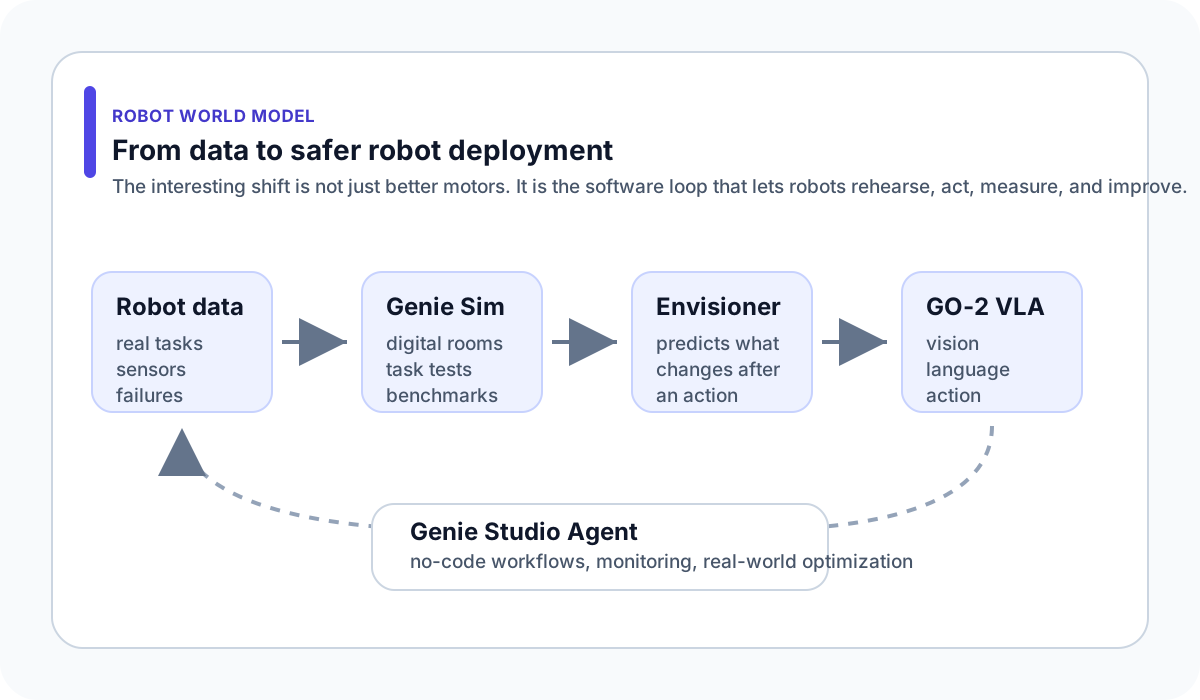
The pieces look like this:
AGIBOT layer
Genie Sim 3.0
- What it tries to solve
- Creates simulated task environments, data, and benchmarks
- Why it matters for home robots
- Lets teams test skills before risking hardware or people
AGIBOT layer
Genie Envisioner 2.0
- What it tries to solve
- Turns a world model into an interactive environment that responds to robot actions
- Why it matters for home robots
- Helps a robot reason about consequences, not just labels
AGIBOT layer
GO-2 VLA
- What it tries to solve
- Connects vision, language, and action execution
- Why it matters for home robots
- Reduces the gap between "I understood the instruction" and "I moved correctly"
AGIBOT layer
Genie Studio Agent
- What it tries to solve
- Turns model capabilities into deployable workflows
- Why it matters for home robots
- Makes robot skills easier to replicate across sites and fleets
| AGIBOT layer | What it tries to solve | Why it matters for home robots |
|---|---|---|
| Genie Sim 3.0 | Creates simulated task environments, data, and benchmarks | Lets teams test skills before risking hardware or people |
| Genie Envisioner 2.0 | Turns a world model into an interactive environment that responds to robot actions | Helps a robot reason about consequences, not just labels |
| GO-2 VLA | Connects vision, language, and action execution | Reduces the gap between "I understood the instruction" and "I moved correctly" |
| Genie Studio Agent | Turns model capabilities into deployable workflows | Makes robot skills easier to replicate across sites and fleets |
The interesting part is the direction of travel. AGIBOT is not just saying its robots can walk or hold objects. It is building tooling around how those robots are trained, tested, deployed, monitored, and improved.
That distinction matters for buyers because a home robot is not judged by a single viral clip. It is judged by Tuesday morning: the floor has a cable on it, the chair was moved, the laundry is wrinkled, the dog is curious, and the robot has to decide what to do without turning every exception into a support ticket.
What AGIBOT Has Actually Claimed
The claims are ambitious, so they deserve careful framing.
AGIBOT says Genie Sim 3.0 includes more than 10,000 hours of open-source synthetic data, covers 200+ tasks, and provides 100,000+ simulation scenarios. It also says the platform can use natural-language scene generation so users can describe environments and produce structured scenes, visual previews, and semantic variations.
For GO-2, AGIBOT has claimed benchmark results including a 98.5% average success rate on LIBERO, 86.6% zero-shot success on LIBERO-Plus, and 82.9% sim-to-real success after training only on simulation data. Those are not home-kitchen numbers. They are benchmark and lab-to-real claims, and they should be read that way.
Genie Studio Agent is more deployment-focused. AGIBOT describes it as a no-code or low-code platform with workflow orchestration, simulation-first deployment, real-world reinforcement learning, and end-to-end monitoring. Its public example is not a house: AGIBOT says the system has been deployed with Huatian Technology for wafer handling in semiconductor packaging and testing.
That industrial validation is useful, but it is not the same as proving a robot can clear a dining table. The honest takeaway is narrower: AGIBOT is trying to standardize the pipeline from robot model to repeatable deployment. If home robots become practical, that pipeline will matter.
How This Changes the Home Robot Buying Question
Most home-robot comparisons still start with visible hardware. That is natural: price, size, battery life, payload, and speed are easier to compare than model architecture.
ui44 data shows how different the current platforms already are:
Robot
- ui44 status
- Available compact humanoid
- Price signal
- $24,240 official store price
- Useful world-model question
- Can the Genie Platform turn a developer robot into repeatable household skills?
Robot
- ui44 status
- Available enterprise humanoid
- Price signal
- Contact sales
- Useful world-model question
- Are commercial deployments producing data that improves manipulation reliability?
Robot
- ui44 status
- Active full-size humanoid
- Price signal
- About $45,000 / RaaS noted in ui44 data
- Useful world-model question
- Does agility translate into safe object handling, or mostly performance work?
Robot
- ui44 status
- Active wheeled humanoid
- Price signal
- Not publicly disclosed
- Useful world-model question
- Does 24/7 industrial operation create a better software loop than bipedal demos?
Robot
- ui44 status
- Available research humanoid
- Price signal
- Starts at $13,500
- Useful world-model question
- Is the buyer getting a robot platform, or a supported skill ecosystem?
Robot
- ui44 status
- Pre-order home humanoid
- Price signal
- $20,000 early-adopter price in ui44 data
- Useful world-model question
- How much autonomy is local, remote-assisted, or learned after deployment?
Robot
- ui44 status
- Active home-assistant platform
- Price signal
- $24,950 list price
- Useful world-model question
- Can a simpler mobile manipulator outperform humanoids on narrow real chores?
| Robot | ui44 status | Price signal | Useful world-model question |
|---|---|---|---|
| AGIBOT X2 | Available compact humanoid | $24,240 official store price | Can the Genie Platform turn a developer robot into repeatable household skills? |
| AGIBOT A2 Ultra | Available enterprise humanoid | Contact sales | Are commercial deployments producing data that improves manipulation reliability? |
| AGIBOT Expedition A3 | Active full-size humanoid | About $45,000 / RaaS noted in ui44 data | Does agility translate into safe object handling, or mostly performance work? |
| AGIBOT G2 | Active wheeled humanoid | Not publicly disclosed | Does 24/7 industrial operation create a better software loop than bipedal demos? |
| Unitree G1 | Available research humanoid | Starts at $13,500 | Is the buyer getting a robot platform, or a supported skill ecosystem? |
| 1X NEO | Pre-order home humanoid | $20,000 early-adopter price in ui44 data | How much autonomy is local, remote-assisted, or learned after deployment? |
| Hello Robot Stretch 3 | Active home-assistant platform | $24,950 list price | Can a simpler mobile manipulator outperform humanoids on narrow real chores? |

This is where the buyer question changes. It is no longer enough to ask whether a humanoid can stand, wave, dance, or pick up a single object. The better question is whether the company has a credible path for turning scattered demos into maintained skills.
A robot world model can help with that path because it gives the robot a place to test action consequences. But the surrounding system matters just as much: telemetry, privacy rules, failure review, software updates, support staff, safety limits, and whether the vendor is honest about unsupported tasks.
World Models Are Not the Same as Teleoperation
A home robot can look autonomous while still depending heavily on remote humans. That is not automatically bad. Human-in-the-loop support can make early robots safer and more useful, especially when a chore has too many exceptions for a fully autonomous system.
But it is a different product promise.
Teleoperation means a human helps guide or control the robot. Imitation learning means the robot learns from demonstrations. A world model means the robot has a predictive environment for reasoning about how actions change the scene. A VLA model connects vision, language, and action so the instruction and the movement stay aligned.
The future home robot probably uses all of these. A buyer should not demand that everything be fully autonomous on day one. The useful demand is transparency: what does the robot do by itself, what is supervised, what is uploaded, what is stored, and what happens when the model is uncertain?
If you want the deeper autonomy framing, the related ui44 guide on teleoperation vs autonomy is a better place to start. This article is specifically about the model-and-platform layer behind those autonomy claims.
Why Homes Are Harder Than Factories
AGIBOT's strongest public validation so far is commercial and industrial. Its March production announcement said the company had rolled out its 10,000th humanoid robot, with deployments across logistics, showroom navigation, retail, hospitality, education, and production-line work. TrendForce also said China's humanoid robot output could grow 94% in 2026, with Unitree and AGIBOT projected to account for nearly 80% of shipments.
That is impressive scale. It also explains why homes may come later.
Factories and logistics sites can be standardized. Objects, routes, lighting, and safety zones can be constrained. A home is the opposite. Homes have pets, children, rugs, reflections, soft objects, narrow hallways, moving people, and unlabeled clutter. The same dish towel can be dry, wet, folded, crumpled, half under a plate, or hanging from an oven handle.
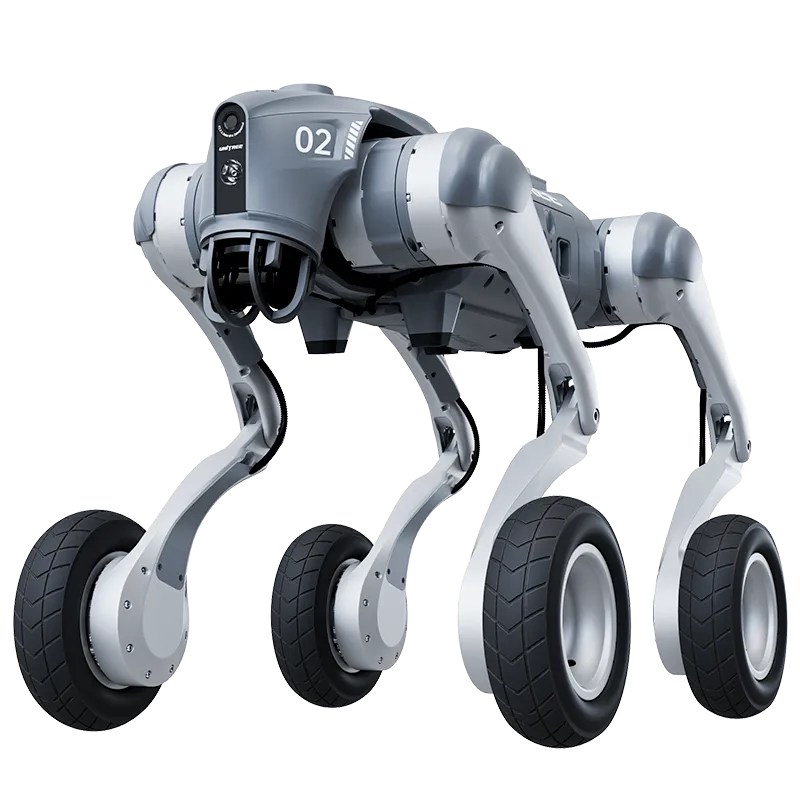
That is exactly why world models are relevant. A robot that only recognizes objects may still fail when the scene changes after contact. A robot with a better predictive model can at least try to evaluate consequences before acting.
But again: a better model is not a home-safety certificate. It is one ingredient in a much longer stack.
The Buyer Checklist for Robot World Model Claims
When a robot company starts talking about world models, foundation models, VLA, or embodied AI, use these questions to translate the pitch into something practical.
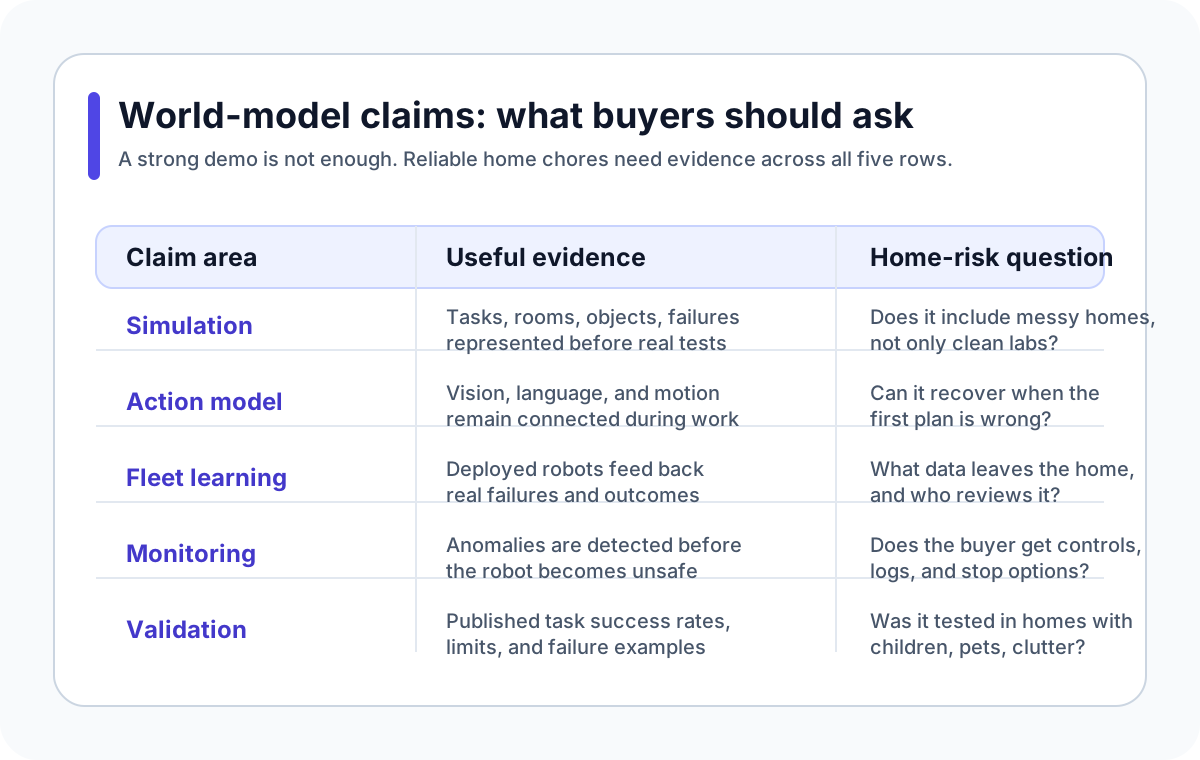
- What task was actually validated? A benchmark, a factory workflow, a lab table, and a family kitchen are not interchangeable.
- What changed when the robot failed? Look for recovery behavior, not just success clips.
- Does the model connect to real deployment? A simulator is useful only if it improves real robot behavior.
- Who monitors the robot? Home buyers should know whether errors are handled locally, by vendor staff, or by remote operators.
- What data is collected? A fleet-learning loop can be valuable, but it raises privacy and consent questions inside a home.
- Can the buyer disable risky behavior? A good system should have task boundaries, logs, and clear stop controls.
- Is there a maintained skill ecosystem? Hardware without deployable skills is a research project, not a household helper.
These questions are especially important for humanoids because the form factor creates high expectations. A robot shaped like a person invites people to assume it can do people-shaped chores. In practice, manipulation, safety, perception, and support maturity matter more than the silhouette.
What This Means for Current Robots in the ui44 Database
The near-term impact is not that everyone should wait for AGIBOT Genie. It is that software architecture should become part of the comparison.
For a robot like AGIBOT X2, the hardware is already concrete: 131 cm tall, 35-39 kg depending on version, about two hours of walking battery life at 0.5 m/s, up to 1.8 m/s speed, and a $24,240 official-store price in ui44 data. The next question is what the Genie Platform actually lets developers and operators build on top of that body.
For Unitree G1, the story is different. ui44 lists it as a 132 cm, 35 kg available research humanoid starting at $13,500. That makes it one of the most visible affordable humanoid platforms, but affordability does not answer whether there is a consumer-grade chore stack behind it.
For 1X NEO, the framing is home-first. ui44 tracks NEO as a $20,000 pre-order robot with about four hours of battery life. That makes its autonomy, safety, and remote-assistance model central to the buying decision.
For Hello Robot Stretch 3, the lesson is that a robot does not need to be a humanoid to benefit from better world modeling. Stretch is a $24,950 mobile manipulator with an open-source autonomy stack and a narrower body plan. A focused robot with a clear arm, mobile base, and software stack may beat a more human-looking robot on some household tasks.
And for newer home-service claims like X Square Robot Quanta X2, the same questions apply: claimed model scale and home deployment are interesting, but buyers still need task evidence, support details, safety limits, and privacy answers.
Bottom Line: World Models Are a Reason to Watch, Not a Reason to Hype
AGIBOT Genie is worth paying attention to because it points at the right problem. Home robots do not fail only because they lack stronger motors. They fail because the real world changes after every action, and the robot needs a way to predict, test, recover, and improve.
That is what a robot world model is supposed to help with.
For buyers, the practical conclusion is simple: keep comparing the visible specs, but start comparing the software loop too. Ask whether the robot has a simulator, a deployment platform, a learning pipeline, safety boundaries, privacy controls, and published evidence from real tasks.
A robot that can rehearse consequences before it moves is more promising than a robot that only reacts after it fails. But until those claims are proven in real homes, the right stance is informed skepticism: interested, data-driven, and not fooled by a perfect demo.
Written by
ui44 Team
Published April 29, 2026
Share this article
Open a plain share link on X or Bluesky. No embeds, no widgets, no cookie baggage.