Article 20 min read 4,696 words

ROBOTIS AI Sapiens K0: Open-Source Humanoid?

ROBOTIS AI Sapiens K0 is one of the more credible open-source humanoid robot announcements of 2026, but not because it is ready to unload a dishwasher in a normal kitchen. It matters because ROBOTIS is promising a full hardware and software baseline for a 1.3 m humanoid: bill of materials, CAD files, source code, simulation assets, and tutorials around the same robot.

ui44 Team All articles

The short answer for home-robot buyers is this: ROBOTIS AI Sapiens K0 looks important for the next wave of home humanoids, but it is still a research platform. If you want a consumer helper, it is too early. If you want to know which platforms might make future helpers less black-box, K0 belongs near the top of the watchlist.
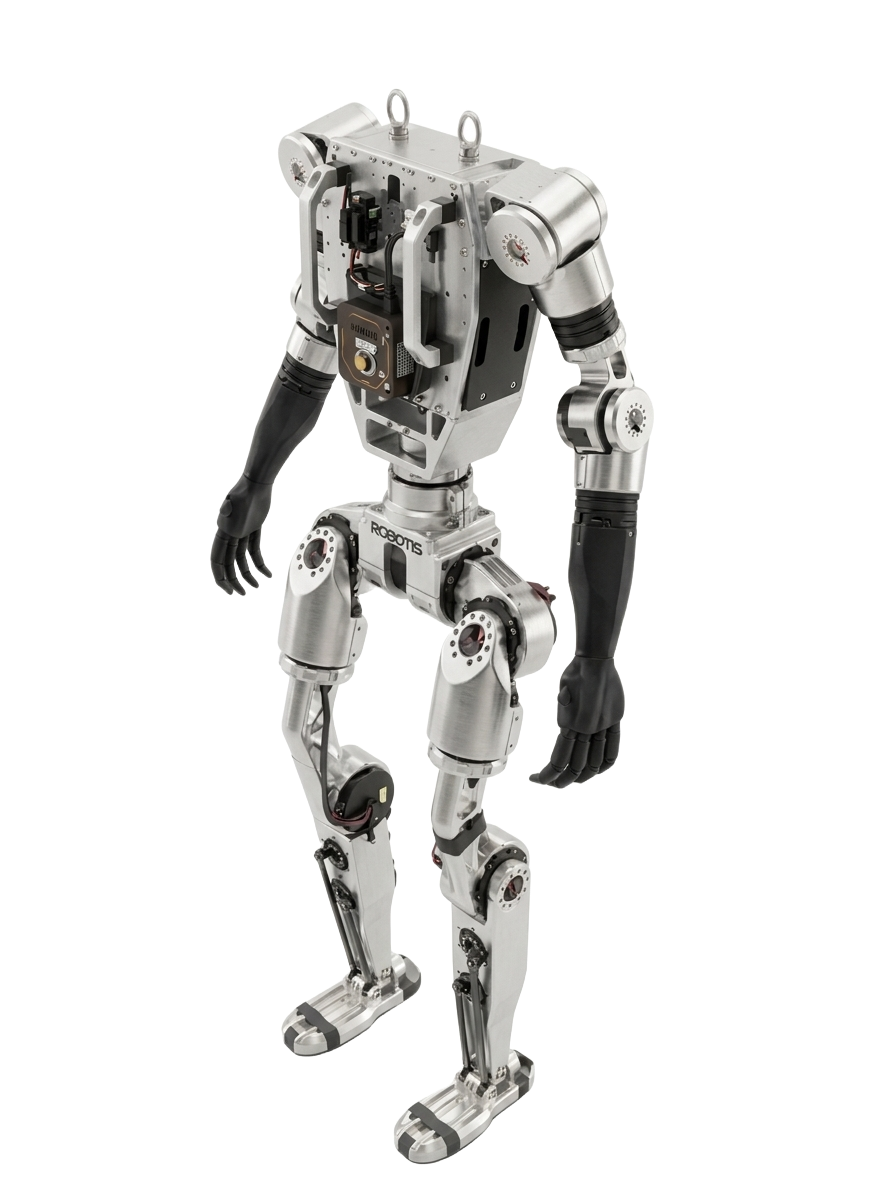
ROBOTIS AI Sapiens K0 open-source humanoid robot official product image for Physical AI research

That distinction is important. An open-source humanoid is not automatically a home robot. It can still be expensive, fragile, developer-heavy, and unsafe for unsupervised household work. But openness changes what buyers, researchers, and small companies can verify. Instead of judging only a launch video, you can ask whether the robot's mechanical files, control code, simulation assets, and training workflow actually exist.

What Is ROBOTIS AI Sapiens K0?

AI Sapiens K0 is ROBOTIS' first humanoid in its AI Sapiens line. ROBOTIS is best known in robotics circles for Dynamixel actuators, including the servos used in education, research, and older open humanoids such as ROBOTIS OP3. With K0, the company is moving up from small lab humanoids to a larger Physical AI platform built around its newer Dynamixel-Q quasi-direct-drive actuators.

The official K0 numbers are unusually specific:

ROBOTIS AI Sapiens K0 spec Official / ui44 data
Height 1300 mm / 1.3 m
Weight 34 kg
Degrees of freedom 23 total: 5 per arm, 6 per leg, 1 waist
Actuators 14× QM-060 and 9× QM-080 Dynamixel-Q QDD actuators
Max arm payload 3 kg
Battery 46.8 V, 9000 mAh
Compute Cortex-A76 ×4, Cortex-A55 ×4, Mali-G610 GPU, 6 TOPS NPU
Connectivity Wi-Fi 5, Bluetooth 5.0, 2× Ethernet, USB 2.0, USB 3.0
Status Development; price not announced

Those specs put K0 in the compact humanoid range, very close in size to Unitree G1, which ui44 tracks at 132 cm, 35 kg, about two hours of battery life, and a $13,500 starting price. The difference is not that K0 is obviously stronger or cheaper. ROBOTIS has not announced a K0 price. The difference is that ROBOTIS is explicitly positioning K0 as a reproducible, open-source baseline for training and deploying robot policies.

Why Does Open Source Matter for Humanoid Robots?

Open source matters because humanoid robots are easy to over-market. A polished video can hide teleoperation, rehearsed scenes, safety constraints, and missing failure cases. A usable open platform gives outside teams a way to inspect what is actually there: the parts, the joints, the simulator, the control stack, and the steps needed to reproduce a behavior.
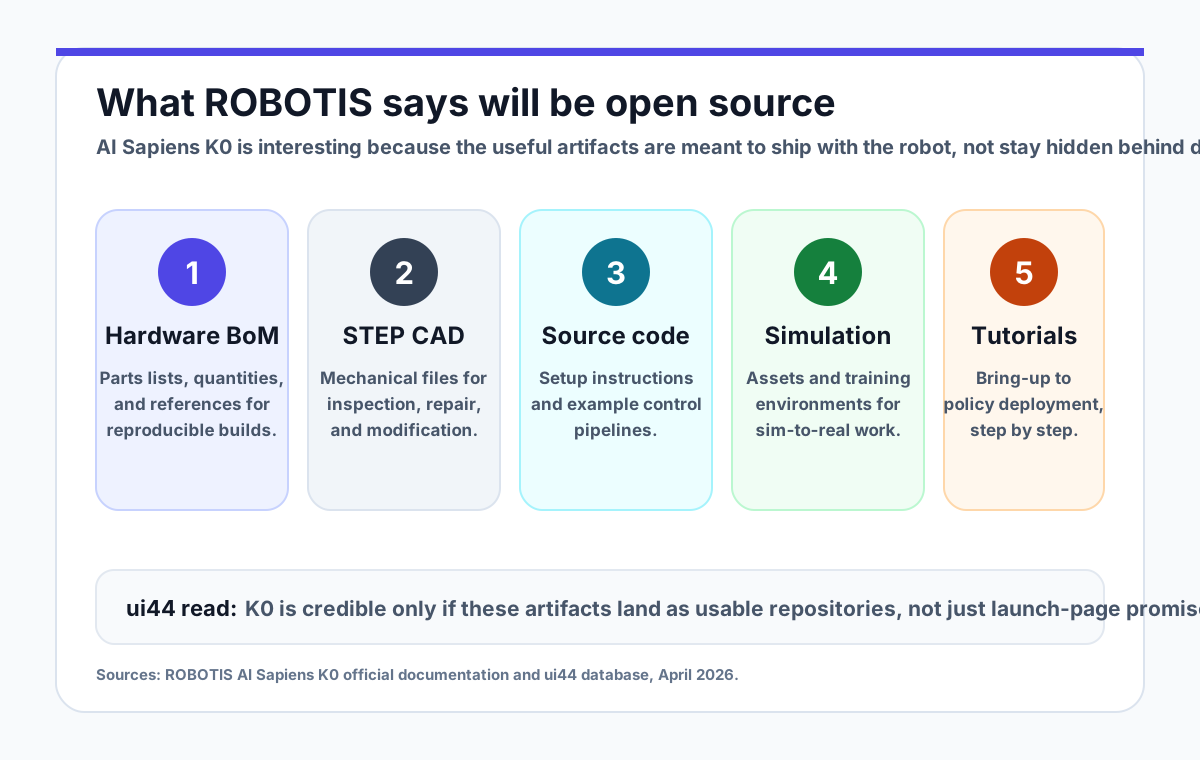
ROBOTIS AI Sapiens K0 open-source humanoid stack showing bill of materials CAD source code simulation and tutorials

ROBOTIS says the K0 open-source release is being prepared in stages. The planned resources include:

  • a hardware bill of materials,
  • STEP CAD files,
  • source code,
  • simulation assets,
  • and tutorials from bring-up to policy deployment.

That is the right list. It does not guarantee success, but it targets the real bottleneck. A future home robot company does not only need legs and hands. It needs repeatable training, repairable hardware, a clear software stack, and a way to test behaviors before a 34 kg machine moves near a person.

The most valuable part is not the word "open." It is reproducibility. If a lab can train in NVIDIA Isaac Sim, collect demonstrations, deploy on the same physical robot, and then publish the artifacts, the rest of the field can learn from more than a highlight reel. That is how home robots get less mysterious and less dependent on one company's private demo pipeline.

How Does K0 Compare With Other Open Robots?

K0 is not the first open robot, and it is not the only credible platform. The home-robot relevance comes from where it sits between older research humanoids, wheeled manipulators, and newer low-cost developer bots.
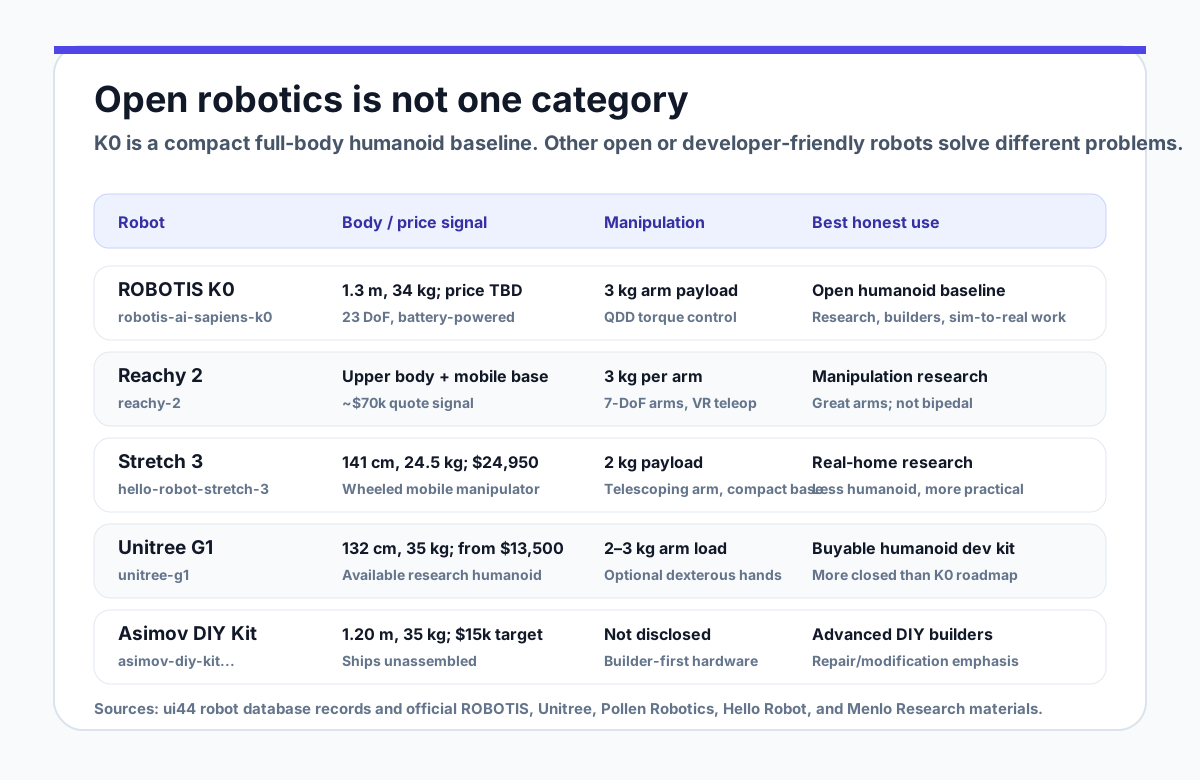
Open-source humanoid robot comparison chart for ROBOTIS K0, Reachy 2, Stretch 3, Unitree G1, and Asimov DIY Kit

The closest comparison is Unitree G1. G1 is already commercially listed, starts at $13,500 before tax and shipping, and offers a compact 132 cm / 35 kg research humanoid with 23 DoF in the base model and up to 43 DoF in the EDU configuration. Unitree's official page also lists optional three-finger dexterous hands and about two hours of battery life. For a buyer who needs hardware now, G1 is the clearer path.

K0's advantage is different. ROBOTIS is not merely saying "developer platform." It is saying that the robot's mechanical and training ecosystem will be opened as a reproducible baseline. That could matter more for small labs, universities, and startups that want to understand and modify the whole robot rather than use a closed platform as-is.

Reachy 2 is another useful comparison. It is open source, ROS 2 based, and excellent for manipulation research with two 7-DoF arms and 3 kg per-arm payload. But Reachy 2 is an upper-body humanoid on a mobile base, not a biped. It is arguably more practical for tabletop and kitchen-counter manipulation, but it will not answer the same bipedal locomotion questions.

Hello Robot Stretch 3 is even more practical in homes. ui44 tracks it as a 24.5 kg mobile manipulator with a compact 33 × 34 cm footprint, 2 kg payload, 2-5 hour runtime, ROS 2/Python support, and a $24,950 list price. Stretch does not look like the popular image of a humanoid, but it is closer to a usable home-assistive research robot today. If the question is "what can move around a real house and reach things," Stretch may beat a bipedal humanoid on usefulness.

Then there are smaller open robots such as Reachy Mini, which starts at $299 but is a desktop companion/developer kit, and open humanoid kits such as Menlo Research's Asimov DIY Kit, which ui44 tracks as a $15,000 target pre-order for advanced builders. Those are not direct K0 replacements. They show that "open" ranges from educational desk robot to unassembled full-body humanoid.

What Specs Actually Matter for a Home Buyer?

For a future home buyer, K0's headline specs are less important than the trade-offs underneath them. A 1.3 m robot can potentially reach counters, shelves, and handles better than a tiny desktop bot. A 34 kg body is light compared with a 95 kg research humanoid such as PAL TALOS, but still heavy enough to demand real safety systems around kids, pets, stairs, and furniture. A 3 kg arm payload is useful for many household objects, but it does not mean the robot can safely carry a full laundry basket or catch a falling object.
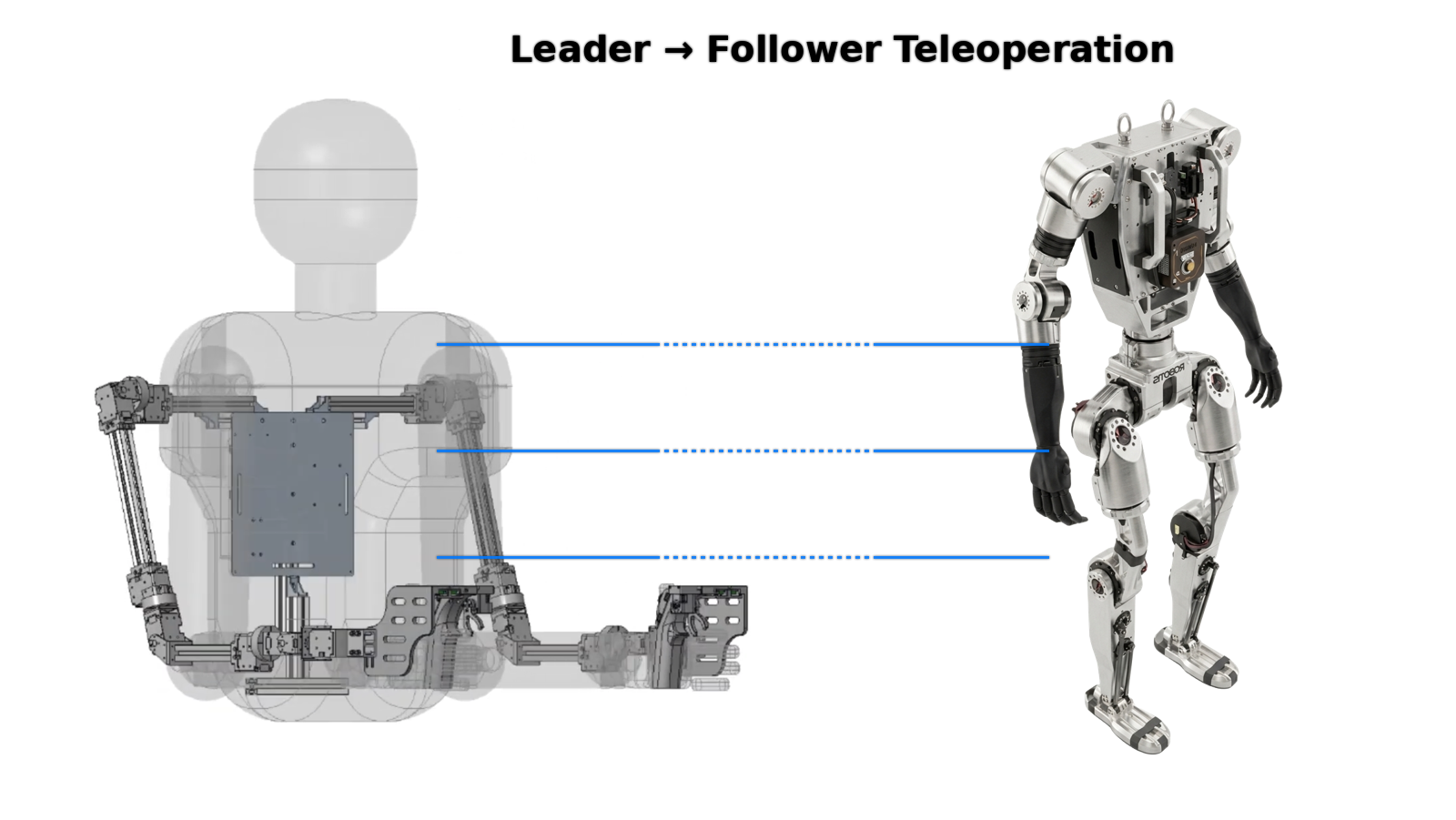
ROBOTIS AI Sapiens K0 leader-follower imitation learning setup for open-source humanoid training

The imitation-learning workflow is the more interesting home signal. ROBOTIS describes a leader-follower data collection system, training, and inference pipeline. In plain English: a human can demonstrate motions, those demonstrations can become training data, and policies can be tested on the real robot.

That is exactly the kind of pipeline home robots need for chores. Homes are not factories. The chair is in a different place. The mug is half hidden. The shirt is soft. The dog walks through the task. A robot that only executes fixed scripts will fail quickly. A robot that can collect demonstrations, train policies, and publish the process gives the field a better path toward skills that generalize.

Still, the buyer-facing caution is simple: a training pipeline is not the same as a chore guarantee. K0's official page does not claim a consumer product, a home warranty, a household task list, or a retail price. It is a development platform for Physical AI research.

Is K0 the Most Credible Open-Source Humanoid Yet?

It depends on what you mean by credible.

If credibility means "available to buy today," K0 is not the winner yet. Unitree G1 is listed with a starting price. Stretch 3 has a real price and a long-running research community. Reachy 2 is an established open-source manipulation platform. K0 is still in development, and ROBOTIS says some details may change as it moves toward launch. The Dynamixel-Q actuator family is also listed as scheduled for commercial release in the second half of 2026, with schedule caveats.

If credibility means "a serious company with a plausible full-stack open humanoid plan," K0 is much stronger. ROBOTIS has decades of actuator and robotics platform experience. K0's specs are not vague. The joint count, actuator models, compute, battery voltage, arm payload, and open-source artifact list are all concrete. That makes it easier to evaluate than a humanoid announcement that has only a name, a walking video, and a promise of future autonomy.
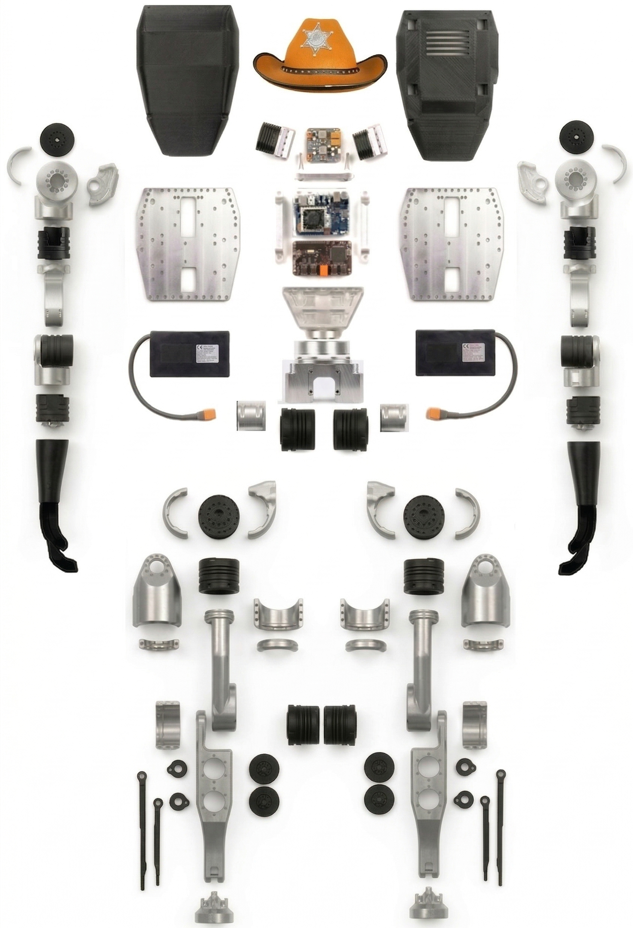
ROBOTIS AI Sapiens K0 exploded-view official diagram for humanoid robot hardware inspection

The open-source promise also fits where humanoid robotics is stuck. Most of the hard problems are not solved by adding a chatbot. A useful home humanoid needs whole-body control, safe compliant manipulation, perception, planning, teleoperation fallback, recoverable failures, and a way to learn from real homes. Open artifacts can make those problems easier to audit and compare.

But K0 still has to ship the artifacts. A launch page that says "coming soon" is not the same as a usable repository with build instructions, calibration steps, simulation assets, and example policies that other teams can reproduce.

Should a Normal Person Wait for K0?

No. A normal buyer should not wait for ROBOTIS AI Sapiens K0 as a household helper. There is no public consumer price, no home-service package, no published household chore warranty, and no sign that it is meant for unsupervised family use. If you want something useful at home today, the better categories are still single-purpose robots, companion robots, and research manipulators with clear support paths.

A technically adventurous lab, school, or robotics startup should watch K0 much more closely. The reason is not that it will be easier than a vacuum or companion bot. It will not. The reason is that K0 may become a shared reference platform for full-body humanoid learning. That is rare.

For ui44, the practical checklist is:

  1. Does ROBOTIS publish the promised BoM, CAD, code, simulation, and tutorials?
  2. Does the published stack let outside teams reproduce official demos?
  3. Does the 3 kg arm payload hold up in real household postures, not only ideal positions?
  4. Does K0 get a clear price, warranty, and support model?
  5. Do researchers publish independent results, failures, and modifications?

If those answers turn positive, K0 becomes more than a cool humanoid page. It becomes infrastructure for a more transparent home-robot ecosystem.

Bottom Line

ROBOTIS AI Sapiens K0 is not the home humanoid to buy in 2026. It is a compact, 34 kg, 23-DoF research humanoid with a 3 kg arm payload, a 46.8 V battery, and a promised open-source stack around hardware, software, simulation, and training. That makes it important, but not consumer-ready.

The honest verdict: K0 is one of the strongest open-source humanoid signals in the ui44 database because the company is promising the pieces that would let other teams inspect and extend the robot. The next proof is not another demo. It is the public release of the artifacts, independent replication, and clear pricing. Until then, treat K0 as a serious research platform that could shape future home robots, not as a robot you should expect to put to work in your house.

Database context

Use this article as a privacy verification workflow

Turn the article into a real verification pass

ROBOTIS AI Sapiens K0: Open-Source Humanoid? already points you toward 7 linked robots, 5 manufacturers, and 3 countries inside the ui44 database. That matters because strong buyer guidance is easier to apply when you can move immediately from a claim or warning into concrete product pages, manufacturer directories, component explainers, and country-level context instead of treating the article as an isolated opinion piece. The fastest next step is to turn the article into a shortlist workflow: open the linked robot pages, verify which specs are actually published for those models, then compare the surrounding manufacturer and component context before you decide whether the underlying claim changes your buying plan.

For this topic, the useful discipline is to separate the editorial lesson from the catalog evidence. The article gives you the framing, but the robot pages tell you what each product actually ships with today: sensor stack, connectivity methods, listed price, release timing, category, and support-relevant compatibility notes. The manufacturer pages then show whether you are looking at a one-off launch, a broader lineup pattern, or a company that spans multiple categories. That layered workflow reduces the risk of buying on a single marketing phrase or a single support FAQ.

Use the robot pages to confirm which products actually expose cameras, microphones, Wi-Fi, or voice systems, then use the manufacturer pages to decide how much of the privacy question seems product-specific versus brand-wide. On this route cluster, AI Sapiens K0, ROBOTIS OP3, and G1 form the fastest reality check. If you want a quick working shortlist, open Compare AI Sapiens K0, ROBOTIS OP3, and G1 next, then keep this article open as the reasoning layer while you compare structured data side by side.

Practical Takeaway

Every robot, manufacturer, category, component, and country reference below resolves to a real ui44 page, keeping the follow-up path grounded in database records rather than generic advice.

Suggested next steps in ui44

  1. Open AI Sapiens K0 and note the listed sensors, connectivity methods, and voice stack before you interpret any policy claim.
  2. Cross-check the wider brand context on ROBOTIS so you can see whether the privacy question touches one model or a broader lineup.
  3. Use the linked component pages to confirm how common the relevant sensors and connectivity layers are across the database.
  4. Keep a short note of which policy layers you checked, which device features are actually present on the robot page, and which items still depend on region- or app-level confirmation.
  5. Finish with Compare AI Sapiens K0, ROBOTIS OP3, and G1 so the policy reading sits next to structured product data.

Database context

Robot profiles worth opening next

Use the linked product pages as the evidence layer

The linked robot pages are where this article becomes operational. Instead of asking whether the headline is interesting, use the robot entries to inspect the actual mix of sensors, connectivity options, batteries, pricing, release timing, and stated capabilities attached to the products mentioned in the article. That is the easiest way to see whether the warning or opportunity described here affects one product family, a specific design pattern, or an entire buying lane.

AI Sapiens K0

ROBOTIS · Research · Development

Price TBA

AI Sapiens K0 is tracked on ui44 as a development research robot from ROBOTIS. The database currently records a listed price of Price TBA, a release date of 2026, Not officially disclosed (46.8 V, 9000 mAh battery) battery life, Not disclosed charging time, and a published stack that includes IMU (inferred from locomotion capability) plus Wi-Fi 5 and Bluetooth 5.0.

For privacy-focused reading, this page matters because it shows the concrete device surface behind the policy discussion. Use it to verify whether AI Sapiens K0 combines sensors and connectivity in a way that could change the in-home data footprint, and compare the listed capabilities such as Bipedal locomotion research, Reinforcement learning training in NVIDIA Isaac Sim, and Imitation learning via leader-follower data collection with any cloud, app, or voice layers.

ROBOTIS OP3

ROBOTIS · Research · Available

$13,764

ROBOTIS OP3 is tracked on ui44 as a available research robot from ROBOTIS. The database currently records a listed price of $13,764, a release date of TBD, Hot-swappable LiPo packs (runtime not officially specified) battery life, Not disclosed charging time, and a published stack that includes Logitech C920 HD Pro Webcam, 3-axis gyroscope, and 3-axis accelerometer plus Ethernet and Wi-Fi.

For privacy-focused reading, this page matters because it shows the concrete device surface behind the policy discussion. Use it to verify whether ROBOTIS OP3 combines sensors and connectivity in a way that could change the in-home data footprint, and compare the listed capabilities such as Bipedal locomotion research, Humanoid gait and control experiments, and Computer vision research with any cloud, app, or voice layers.

G1

Unitree · Humanoid · Available

$13,500

G1 is tracked on ui44 as a available humanoid robot from Unitree. The database currently records a listed price of $13,500, a release date of 2024, ~2 hours battery life, Not disclosed charging time, and a published stack that includes Depth Camera, 3D LiDAR, and 4 Microphone Array plus Wi-Fi 6 and Bluetooth 5.2.

For privacy-focused reading, this page matters because it shows the concrete device surface behind the policy discussion. Use it to verify whether G1 combines sensors and connectivity in a way that could change the in-home data footprint, and compare the listed capabilities such as Bipedal Walking, Object Manipulation, and Dexterous Hands (optional Dex3-1) with any cloud, app, or voice layers.

Reachy 2

Pollen Robotics · Research · Active

Price TBA

Reachy 2 is tracked on ui44 as a active research robot from Pollen Robotics. The database currently records a listed price of Price TBA, a release date of 2024, Not disclosed battery life, Not disclosed charging time, and a published stack that includes Stereo RGB Cameras (fish-eye), Time-of-Flight Depth Sensor (OAK-FFC ToF 33D), and RGB-D Camera (Orbbec Gemini 336) plus Wi-Fi and Ethernet.

For privacy-focused reading, this page matters because it shows the concrete device surface behind the policy discussion. Use it to verify whether Reachy 2 combines sensors and connectivity in a way that could change the in-home data footprint, and compare the listed capabilities such as Object manipulation (pick and place), VR teleoperation, and Autonomous navigation with any cloud, app, or voice layers.

Stretch 3

Hello Robot · Home Assistants · Active

$24,950

Stretch 3 is tracked on ui44 as a active home assistants robot from Hello Robot. The database currently records a listed price of $24,950, a release date of 2024, 2–5 hours battery life, Not disclosed charging time, and a published stack that includes Intel D405 RGBD Camera (gripper), Intel D435if RGBD Camera (head), and Wide-Angle RGB Camera (head) plus Wi-Fi and Ethernet.

For privacy-focused reading, this page matters because it shows the concrete device surface behind the policy discussion. Use it to verify whether Stretch 3 combines sensors and connectivity in a way that could change the in-home data footprint, and compare the listed capabilities such as Mobile Manipulation, Autonomous Navigation, and Teleoperation (Web / Gamepad / Dexterous) with any cloud, app, or voice layers.

Database context

Manufacturer context behind the article

Check whether this is one product story or a broader company pattern

Manufacturer pages add the market context that individual product pages cannot show on their own. They help you check whether the article is centered on a brand with a deep lineup, whether that brand spans several categories, and how much of its ui44 footprint depends on one flagship model versus a broader product strategy. That matters for topics like privacy, warranty terms, setup friction, and launch promises because the surrounding lineup often reveals whether a pattern is isolated or systemic.

ROBOTIS

ui44 currently tracks 2 robots from ROBOTIS across 1 category. The company is grouped under Unknown, and the current catalog footprint on ui44 includes ROBOTIS OP3, AI Sapiens K0.

That wider brand context matters because privacy questions rarely stop at one FAQ page. A manufacturer route helps you see whether the article is centered on one premium model or on a company that has several relevant products and therefore more than one place where the same policy or app assumptions might matter. The category mix here currently points toward Research as the most useful next route if you want to see whether this article reflects a wider pattern inside the brand.

Unitree

ui44 currently tracks 2 robots from Unitree across 1 category. The company is grouped under China, and the current catalog footprint on ui44 includes H1, G1.

That wider brand context matters because privacy questions rarely stop at one FAQ page. A manufacturer route helps you see whether the article is centered on one premium model or on a company that has several relevant products and therefore more than one place where the same policy or app assumptions might matter. The category mix here currently points toward Humanoid as the most useful next route if you want to see whether this article reflects a wider pattern inside the brand.

Pollen Robotics

ui44 currently tracks 2 robots from Pollen Robotics across 2 categorys. The company is grouped under France, and the current catalog footprint on ui44 includes Reachy 2, Reachy Mini.

That wider brand context matters because privacy questions rarely stop at one FAQ page. A manufacturer route helps you see whether the article is centered on one premium model or on a company that has several relevant products and therefore more than one place where the same policy or app assumptions might matter. The category mix here currently points toward Research, Companions as the most useful next route if you want to see whether this article reflects a wider pattern inside the brand.

Hello Robot

ui44 currently tracks 1 robot from Hello Robot across 1 category. The company is grouped under USA, and the current catalog footprint on ui44 includes Stretch 3.

That wider brand context matters because privacy questions rarely stop at one FAQ page. A manufacturer route helps you see whether the article is centered on one premium model or on a company that has several relevant products and therefore more than one place where the same policy or app assumptions might matter. The category mix here currently points toward Home Assistants as the most useful next route if you want to see whether this article reflects a wider pattern inside the brand.

Database context

Broaden the scan without leaving the database

Categories, components, and countries add the wider context

Category framing

Category pages are useful when the article touches a buying pattern that shows up across brands. A category route helps you confirm whether the linked products sit in a narrow niche or whether the same question should be tested across a larger field of alternatives.

Research

The Research category page currently groups 21 tracked robots from 16 manufacturers. ui44 describes this lane as: Academic and research robotics platforms pushing the boundaries of what machines can learn and do.

That makes the category route a practical follow-up when you want to check whether the products linked in this article are typical for the lane or whether they sit at one edge of the market. Useful starting examples currently include HRP-4C, HRP-5P, NAO6.

Humanoid

The Humanoid category page currently groups 62 tracked robots from 45 manufacturers. ui44 describes this lane as: Full-size bipedal humanoid robots designed to work alongside humans. From factory floors to household tasks, these machines represent the cutting edge of robotics.

That makes the category route a practical follow-up when you want to check whether the products linked in this article are typical for the lane or whether they sit at one edge of the market. Useful starting examples currently include NEO, EVE, Mornine M1.

Country and ecosystem context

Country pages give extra context when support practices, launch sequencing, regulatory posture, or manufacturer mix matter. They are not a substitute for model-level verification, but they do help you see which ecosystems cluster together and which manufacturers sit in the same regional field when you broaden the search beyond the article headline.

China

The China route currently groups 47 tracked robots from 14 manufacturers in ui44. That gives you a useful regional lens when the article points toward support practices, launch sequencing, or brand clusters that may share similar ecosystem assumptions.

On the current route, manufacturers like AGIBOT, Roborock, Unitree Robotics make the page a good way to broaden the scan without losing the regional context that often shapes availability, documentation style, and adjacent alternatives.

France

The France route currently groups 5 tracked robots from 4 manufacturers in ui44. That gives you a useful regional lens when the article points toward support practices, launch sequencing, or brand clusters that may share similar ecosystem assumptions.

On the current route, manufacturers like Pollen Robotics, Aldebaran / Maxtronics, Aldebaran Robotics make the page a good way to broaden the scan without losing the regional context that often shapes availability, documentation style, and adjacent alternatives.

USA

The USA route currently groups 16 tracked robots from 12 manufacturers in ui44. That gives you a useful regional lens when the article points toward support practices, launch sequencing, or brand clusters that may share similar ecosystem assumptions.

On the current route, manufacturers like Boston Dynamics, Figure AI, Tesla make the page a good way to broaden the scan without losing the regional context that often shapes availability, documentation style, and adjacent alternatives.

Database context

Questions to answer before you move from reading to buying

A follow-up FAQ built from the entities already linked in this article

Frequently Asked Questions

Which page should I open first after reading “ROBOTIS AI Sapiens K0: Open-Source Humanoid?”?

Start with AI Sapiens K0. That gives you a concrete product anchor for the article’s main claim. From there, branch into the manufacturer and component pages so you can tell whether the article is describing one specific model, a repeated brand pattern, or a wider technology issue that affects multiple shortlist options.

How do the manufacturer pages change the buying decision?

ROBOTIS help you zoom out from one article and one product. On ui44 they show lineup breadth, category spread, and the neighboring robots tied to the same company. That context is useful when you are deciding whether a risk belongs to a single model, whether it shows up across a brand’s portfolio, and whether you should keep looking at alternatives before committing.

When should I switch from reading to side-by-side comparison?

Move into Compare AI Sapiens K0, ROBOTIS OP3, and G1 as soon as you understand the article’s main warning or promise. The article explains what to watch for, but the compare view is where you can check whether price, status, battery life, connectivity, sensors, and category fit still make the robot a good match for your own home and budget.

Database context

Where to go next in ui44

Keep the research chain inside the database

If you want to keep going, these follow-on pages give you the cleanest expansion path from article to research session. Open the comparison route first if you are deciding between products today. Open the manufacturer, category, and component routes if you still need to understand the broader pattern behind the claim.

UT

Written by

ui44 Team

Published April 27, 2026

Share this article

Open a plain share link on X or Bluesky. No embeds, no widgets, no cookie baggage.

Explore the database

Go beyond the headlines

Compare specs, features, and prices across 100+ robots from leading manufacturers worldwide.