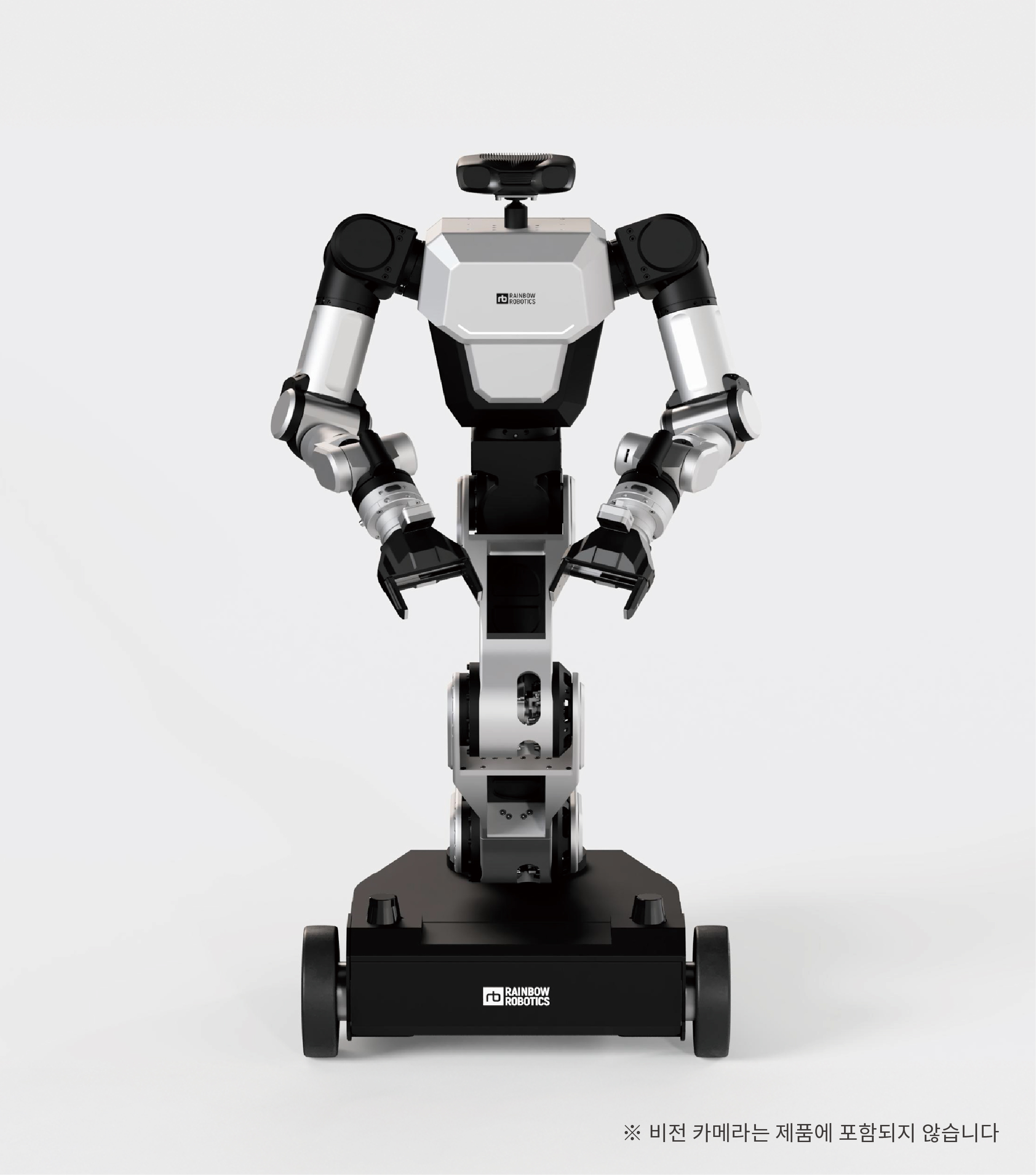
Rainbow Robotics' RB-Y1 has two arms, a torso, a moving "leg" column, and a wheeled base. It is not a friendly home appliance, and it is not being sold as a consumer robot. But it asks a useful buyer question: if the first practical home helper needs to move around a house and use both arms, does it really need legs?
That question matters because Samsung is now much closer to Rainbow Robotics than a casual investor. Samsung announced that it would exercise a call option to increase its stake in Rainbow Robotics to 35%, making it the largest shareholder and bringing Rainbow into Samsung's consolidated financial statements. Samsung also said it would create a Future Robotics Office and use Rainbow's collaborative robots, dual-arm mobile manipulator, and AMRs for manufacturing and logistics automation.
For home-robot buyers, the point is not "Samsung will ship RB-Y1 to your kitchen." There is no evidence for that. The point is that Samsung's robotics roadmap now includes a serious arms-on-wheels platform, and that platform may be a better near-term signal than another biped demo.
What is the Rainbow Robotics RB-Y1?
RB-Y1 is Rainbow Robotics' dual-arm mobile manipulator. Rainbow describes it as a humanoid-type dual-arm robot mounted on a high-speed wheeled base, using actuators from its collaborative robots and AMR work. The current official product page lists a 600 × 690 × 1,400 mm body, 131 kg total weight, 24 degrees of freedom, 3 kg per-arm payload, a 50 V / 25 Ah 1,270 Wh battery pack, and 1.5 m/s mobile operation velocity.
The body layout is the important part. RB-Y1 has two 7-DOF arms, two 1-DOF grippers, a 6-DOF central leg/torso mechanism, and wheels in the base. Rainbow's 2024 launch release said the moving column can shift the body vertically by more than 50 cm, which lets the robot work at different heights without walking on legs. In home terms, that is the difference between reaching a counter, a shelf, a table, and a floor-adjacent basket with the same platform.
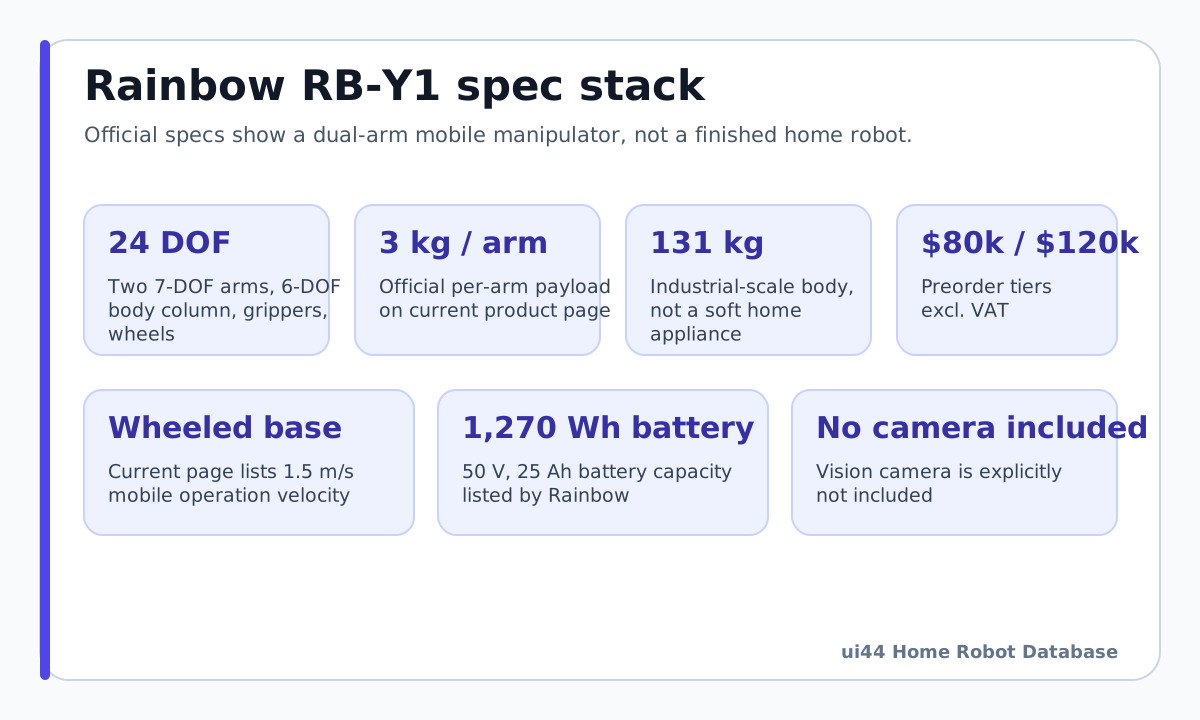
Rainbow's pre-order announcement in May 2024 put the research platform at $80,000 and the commercial platform at $120,000, excluding VAT, during the pre-order period. It also said LiDAR for autonomous movement is adopted and that a high-performance 3D recognition sensor, master arm, APIs, and other options are part of the research/developer story. The current product page is more cautious on vision: it explicitly says "Vision camera is not included." That is a useful reminder to read robot specs closely. A robot can have arms, motion control, and a mobile base without including the perception stack that would make it useful in an unknown home.
Why is Samsung's Rainbow Robotics stake important?
Samsung's announcement is careful. It says humanoid robots, future robot development, manufacturing automation, logistics automation, AI algorithms, and market demand. It does not say RB-Y1 is a Samsung home robot.
Still, the move changes the signal. Samsung already has Ballie, a home companion robot that remains delayed with no confirmed price or ship date in the ui44 database. Ballie is a rolling AI companion with SmartThings, projection, cameras, audio, and Gemini/Bixby integration. It is about presence, smart-home control, and interaction. RB-Y1 is almost the opposite: a large, expensive, industrial-grade body for manipulation.
That combination is why this is worth watching. A useful home robot eventually needs both sides: software that understands the home and hardware that can do physical work. Samsung brings AI, software, chips, appliances, SmartThings, and global sales infrastructure. Rainbow brings robot arms, motion control, collaborative-robot actuators, AMRs, and a KAIST humanoid lineage. If that collaboration produces a consumer product one day, it may not look like RB-Y1, but RB-Y1 shows the hardware direction Samsung considers strategically useful.
Are arms on wheels more realistic than a biped humanoid?
For many household jobs, yes — at least in the near term.
Legs are valuable when the robot must climb stairs, step over obstacles, recover from uneven terrain, or work in environments built only for humans. But legs also add cost, energy draw, balance risk, fall risk, and control complexity. Homes are not factories, but many first useful tasks happen on mostly flat indoor floors: carrying items, opening some doors or drawers, reaching counters, loading objects into bins, retrieving a bottle, or moving between rooms.
A wheeled base avoids the hardest walking problem and spends more of the engineering budget on arms, perception, safety, and repeatability. That is why ui44 keeps treating mobile manipulators as serious home-robot candidates, not boring compromises. Our earlier wheeled-vs-bipedal humanoid guide made the same basic point: legs sell the dream, but wheels may ship the first useful helper.
The catch is that wheels are not magic. A wheeled robot still needs floor clearance, threshold handling, safe navigation around people and pets, and a reach envelope that matches real furniture. RB-Y1's 131 kg body is also a very different safety problem from a 30 kg soft-bodied home humanoid such as 1X NEO. Mass matters in a kitchen.
How does RB-Y1 compare with robots already in the ui44 database?
RB-Y1 is not currently a mass-market home robot. The better comparison is to ask which ui44-tracked robots already prove pieces of the same formula.
Robot
Rainbow Robotics RB-Y1
- ui44 data point
- $80,000 research / $120,000 commercial pre-order period; 131 kg; 24 DOF; 3 kg per arm
- What it proves
- Industrial-grade bimanual manipulation on wheels
- Home-buyer caveat
- Not a consumer home product; current page says vision camera is not included
Robot
- ui44 data point
- $29,950; available; 46 kg; 2.5 kg extended / 4 kg retracted arm payload; 8-hour light-load runtime
- What it proves
- A real home-shaped mobile manipulator for research and assistive pilots
- Home-buyer caveat
- Expensive developer/assistive platform, not a mass appliance
Robot
- ui44 data point
- $70,000; two 7-DOF arms; 3 kg per arm; 8-hour mobile-base battery
- What it proves
- Open-source dual-arm manipulation with a research community
- Home-buyer caveat
- Research platform; not designed as a finished home helper
Robot
- ui44 data point
- Active commercial service robot; two 7-DOF arms; dexterous hands; 15 kg delivery capacity; up to 8 hours no-load
- What it proves
- A service robot can combine delivery, autonomy, and manipulation
- Home-buyer caveat
- Hotel/service workflow first; pricing is quote-only
Robot
- ui44 data point
- €9,999 pre-order; modular home/service assistant; 2–8 hours motion endurance
- What it proves
- A lower-cost wheeled home/service platform can focus on transport and interaction
- Home-buyer caveat
- Public specs do not show a full dual-arm household manipulator
Robot
- ui44 data point
- Starts at $13,500; available; 35 kg; optional dexterous hands; around 2 kg standard arm load
- What it proves
- Biped humanoid hardware is getting cheaper fast
- Home-buyer caveat
- Developer platform, not a supervised home appliance
Robot
- ui44 data point
- $20,000 early-adopter pre-order; 30 kg; roughly 4-hour battery; home-focused soft body
- What it proves
- Consumer-home intent and safer physical design matter
- Home-buyer caveat
- Capability proof, delivery timing, and service model still matter
Robot
- ui44 data point
- No public price; about 5-hour battery; 20 kg payload; Helix VLA
- What it proves
- Strong manipulation and learning-from-demonstration story
- Home-buyer caveat
- Industrial/commercial focus, not available to consumers
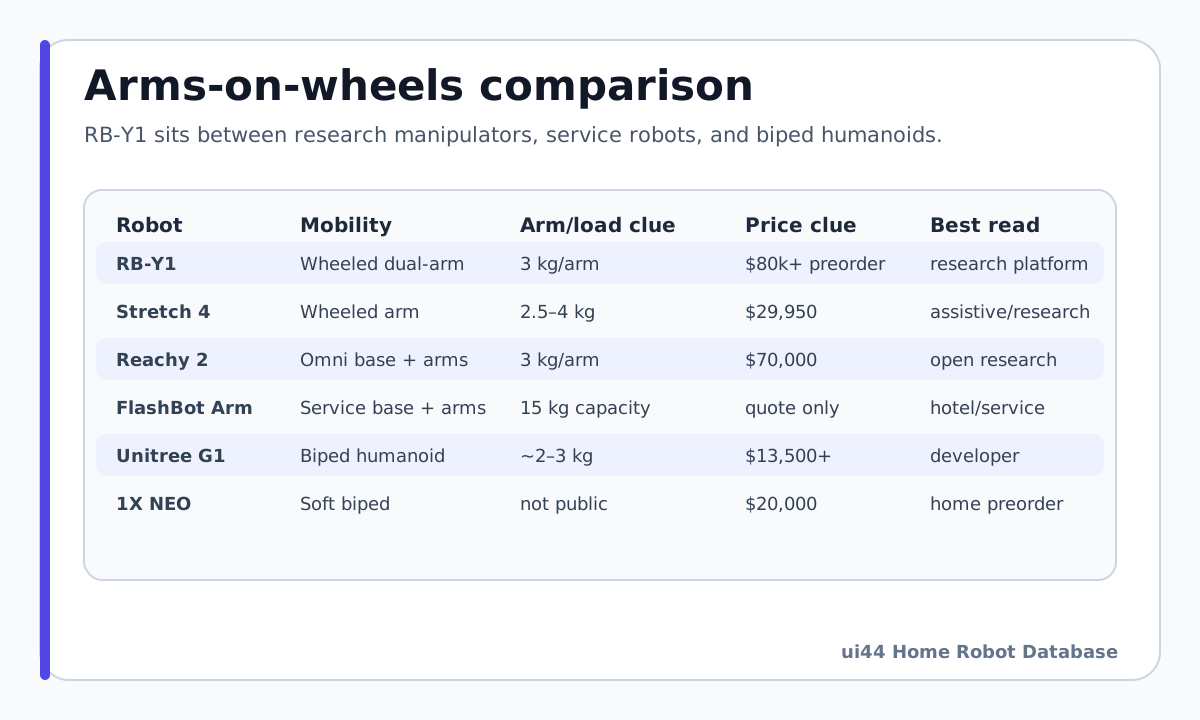
| Robot | ui44 data point | What it proves | Home-buyer caveat |
|---|---|---|---|
| Rainbow Robotics RB-Y1 | $80,000 research / $120,000 commercial pre-order period; 131 kg; 24 DOF; 3 kg per arm | Industrial-grade bimanual manipulation on wheels | Not a consumer home product; current page says vision camera is not included |
| Hello Robot Stretch 4 | $29,950; available; 46 kg; 2.5 kg extended / 4 kg retracted arm payload; 8-hour light-load runtime | A real home-shaped mobile manipulator for research and assistive pilots | Expensive developer/assistive platform, not a mass appliance |
| Reachy 2 | $70,000; two 7-DOF arms; 3 kg per arm; 8-hour mobile-base battery | Open-source dual-arm manipulation with a research community | Research platform; not designed as a finished home helper |
| PUDU FlashBot Arm | Active commercial service robot; two 7-DOF arms; dexterous hands; 15 kg delivery capacity; up to 8 hours no-load | A service robot can combine delivery, autonomy, and manipulation | Hotel/service workflow first; pricing is quote-only |
| NEURA MiPA | €9,999 pre-order; modular home/service assistant; 2–8 hours motion endurance | A lower-cost wheeled home/service platform can focus on transport and interaction | Public specs do not show a full dual-arm household manipulator |
| Unitree G1 | Starts at $13,500; available; 35 kg; optional dexterous hands; around 2 kg standard arm load | Biped humanoid hardware is getting cheaper fast | Developer platform, not a supervised home appliance |
| 1X NEO | $20,000 early-adopter pre-order; 30 kg; roughly 4-hour battery; home-focused soft body | Consumer-home intent and safer physical design matter | Capability proof, delivery timing, and service model still matter |
| Figure 03 | No public price; about 5-hour battery; 20 kg payload; Helix VLA | Strong manipulation and learning-from-demonstration story | Industrial/commercial focus, not available to consumers |
The pattern is clear. RB-Y1 is not the cheapest, softest, or most home-ready robot in this list. But it hits a meaningful middle: two serious arms, a wheeled base, teachable motion, industrial components, and a developer path. That is a credible route to useful manipulation even if the product itself belongs in labs and factories.
What should buyers learn from RB-Y1's missing camera?
The small line "Vision camera is not included" is one of the most important facts on the official RB-Y1 page.
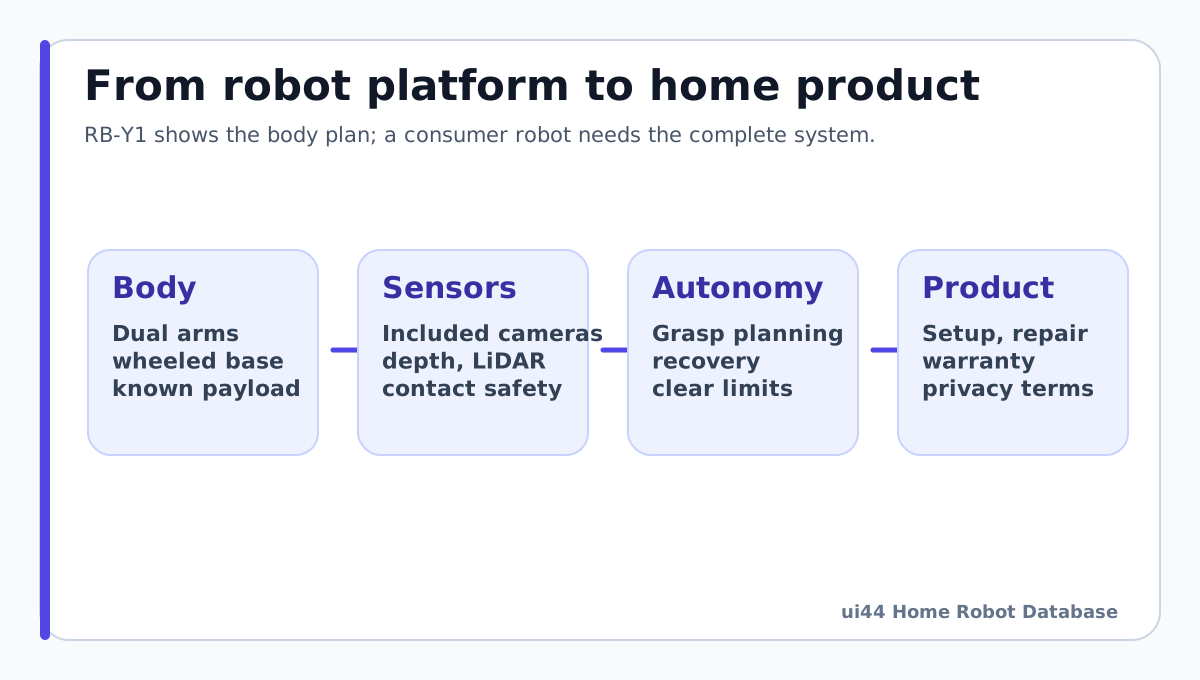
A home robot is not useful because it has arms. It is useful when it can see, localize, choose a safe grasp, understand what not to touch, recover from a failed attempt, and explain what it is doing. Those capabilities require sensors, software, training data, compute, and safety constraints around the arm.
RB-Y1's optional sensor and API story makes sense for AI researchers. A lab may want to choose its own camera, 3D sensor, perception model, teleoperation rig, and data pipeline. A consumer does not want that. A consumer wants the robot to arrive with a validated perception stack, clear operating limits, support, warranty terms, and repair options.
This is where ui44's database lens helps. Stretch 4 lists wide-FOV depth sensing, calibrated RGB/depth perception, LiDAR, wrist sensing, open ROS 2/Python tools, and VLM grasping demos. PUDU FlashBot Arm lists RGBD cameras, LiDAR, panoramic cameras, pressure-sensitive skin, VSLAM plus LiDAR SLAM, and automatic recharging. Those are not just accessory specs. They are the difference between a robot arm that can move and a robot system that can work around people.
Where would an RB-Y1-style robot fit before the home?
The first realistic settings are controlled but messy: labs, factories, logistics sites, hospitals, hotels, retail back rooms, and service corridors. Those spaces have repeatable tasks, trained operators, maintenance staff, and a clearer business case than a private home.
Rainbow's own language points there. It describes industrial reliability, collaborative-robot and AMR components, complex assembly, manufacturing, and services. Samsung says manufacturing and logistics automation. That should lower expectations for a near-term Samsung kitchen helper, not raise them.
But it also explains why RB-Y1 matters. The road to home robots probably runs through paid deployments where companies can learn which arm motions fail, which objects are too slippery, how often sensors need cleaning, how humans interrupt tasks, and what service networks cost. A robot that carries parts in a factory or handles items in a hotel corridor may generate more useful reliability data than a beautiful living-room demo.
What would make an arms-on-wheels robot home-ready?
RB-Y1 suggests the body plan. It does not yet answer the buyer checklist.
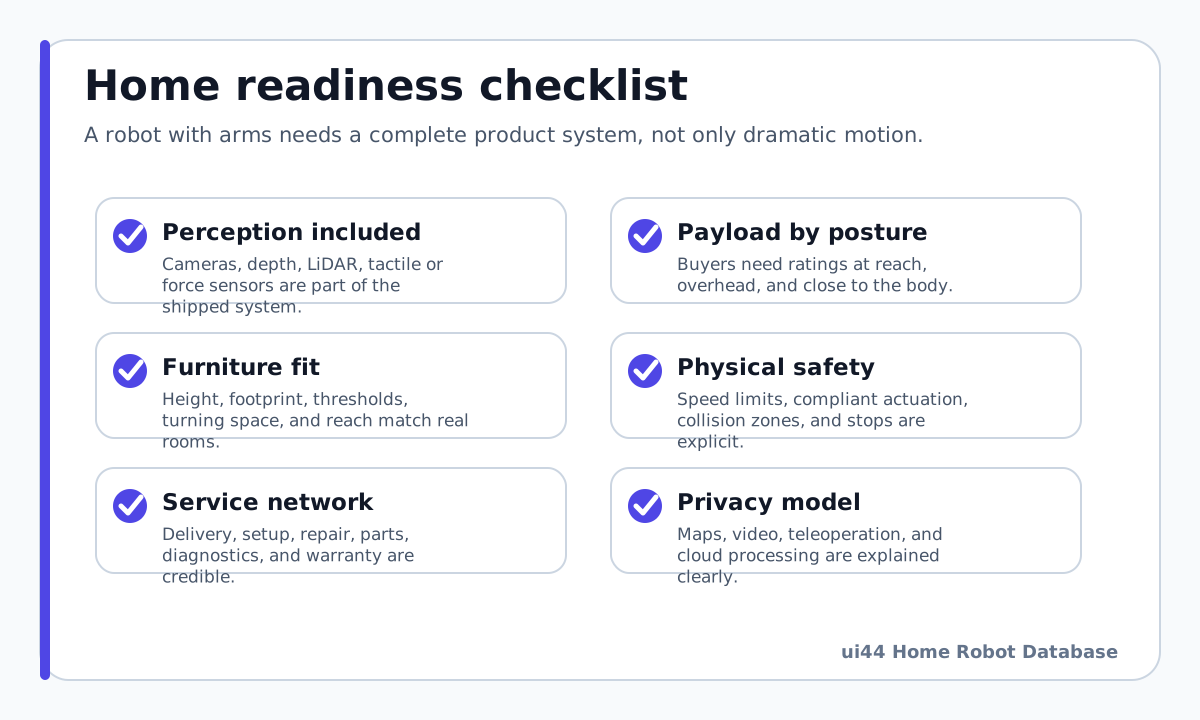
Before treating any arms-on-wheels robot as a home product, look for six proof points:
- Perception is included, not optional. The robot should ship with the cameras, depth sensors, LiDAR, tactile sensing, or safety sensors needed for its advertised tasks.
- Payload is stated by arm position. A 3 kg arm rating is not the same at full reach, overhead, or close to the body. Stretch 4's 2.5 kg extended / 4 kg retracted distinction is the kind of detail buyers should want.
- The robot has a furniture-fit story. Height, reach, footprint, turning radius, thresholds, and minimum path width matter more than a flashy top speed.
- Safety is physical, not just AI. Look for speed limits around people, compliant actuation, collision zones, pressure or force sensing, emergency stops, and clear exclusions.
- The service model is credible. A 100 kg robot in a home needs delivery, setup, repair, parts, insurance, and remote diagnostics. A waitlist is not a service network.
- The privacy model matches the sensors. A manipulation robot needs cameras and maps. Buyers should know what stays local, what goes to the cloud, and whether teleoperation is used.
That checklist is why Samsung's Rainbow move is strategically interesting but not a buying recommendation. RB-Y1 is evidence that serious companies are putting dual-arm manipulation on mobile bases. It is not evidence that the consumer-home problem is solved.
Should you wait for a Samsung RB-Y1 home robot?
No. There is no announced Samsung RB-Y1 home product, no consumer price, no home release date, and no public home-support plan.
What you should do is watch the ingredients. If Samsung and Rainbow turn RB-Y1's industrial platform into a smaller, safer, sensor-complete robot with SmartThings integration, service support, published safety limits, and real home pilots, that would be meaningful. If they only show a humanoid-looking platform moving boxes in controlled demos, it remains an important robotics platform but not a buyer-ready home robot.
For now, the practical takeaway is simple: the near future of useful home robots may look less like a person and more like a careful machine with wheels, two arms, good sensors, and boring reliability. RB-Y1 is not that home robot yet. But Samsung's bet on Rainbow Robotics makes the arms-on-wheels path much harder to dismiss.
Related in the database
Use this article as a setup-friction workflow
Turn the article into a first-day setup pass grounded in the robots, manufacturers, and countries it actually references.
Rainbow RB-Y1: Samsung’s Arms-on-Wheels Bet already points you toward 8 linked robots, 8 manufacturers, and 6 countries inside the ui44 database. Treat those links as a first-day setup trail: open the robot pages, check what is actually published about charging, battery life, control method, app or OTA support, and recovery, then use the surrounding manufacturer and country context to judge whether the article describes a low-friction product path or a still-specialist deployment.
For setup topics, the useful discipline is to separate a polished demo from the work required after the box arrives. The article gives you the narrative, but the robot pages show the operational clues: dimensions, weight, battery runtime, charging time, controller support, listed availability, and the capabilities that might need supervision. Manufacturer pages then reveal whether the same setup assumptions repeat across a wider lineup.
Use the robot pages to verify what happens between delivery and the first useful task: size, weight, battery, charger or dock path, controller, app, OTA support, and recovery cues. On this route cluster, Ballie, NEO, and Stretch 4 form the fastest setup-friction reality check. If you want a quick working shortlist, open Compare Ballie, NEO, and Stretch 4 next, then keep this article open while you compare first-day setup evidence side by side.
Practical Takeaway
The links below stay tied to the robots, manufacturers, and countries actually referenced by this setup article, so the checklist remains grounded in published ui44 records rather than generic humanoid advice.
Suggested next steps in ui44
- Open Ballie and check the concrete first-day fields: box contents, charger or dock path, battery life, controller, app, OTA support, and recovery options.
- Use Samsung to see whether the company’s broader lineup looks appliance-like, developer-first, or still closer to a pilot deployment.
- Run Compare Ballie, NEO, and Stretch 4 with the article open and compare battery, size, weight, price path, status, and support cues side by side.
- Write down the first realistic task each robot can plausibly attempt on day one, then separate low-friction setup signals from impressive but still lab-style demos.
Robot profiles worth opening next
Use the linked product pages as the evidence layer
The linked robot pages are where this setup article becomes operational. Use the robot entries to inspect the actual mix of size, weight, battery runtime, charging path, control method, pricing, availability, and stated capabilities attached to the products mentioned in the article. That is the easiest way to see whether the first useful task looks appliance-like, developer-led, or still dependent on supervised experimentation.
Ballie is tracked on ui44 as a development companions robot from Samsung. The database currently records a listed price of Price TBA, a release date of TBD, Not officially disclosed battery life, Not officially disclosed charging time, and a published stack that includes Camera, Spatial Sensors, and Environmental Sensors plus Wi-Fi and SmartThings.
For setup-friction reading, this page matters because it shows the physical and support burden behind the demo. Use it to verify whether Ballie has a credible day-one path across charging, control, recovery, battery limits, and listed capabilities such as Autonomous Home Navigation, Built-in Projector (Wall & Floor), and Smart Home Control via SmartThings, with voice support noted as Bixby.
NEO
1X Technologies · Humanoid · Pre-order
NEO is tracked on ui44 as a pre-order humanoid robot from 1X Technologies. The database currently records a listed price of $20,000, a release date of 2025-10-28, ~4 hours battery life, Not disclosed charging time, and a published stack that includes RGB Cameras, Depth Sensors, and Tactile Skin plus Wi-Fi and Bluetooth.
For setup-friction reading, this page matters because it shows the physical and support burden behind the demo. Use it to verify whether NEO has a credible day-one path across charging, control, recovery, battery limits, and listed capabilities such as Household Chores, Tidying Up, and Safe Human Interaction.
Stretch 4
Hello Robot · Home Assistants · Available
Stretch 4 is tracked on ui44 as a available home assistants robot from Hello Robot. The database currently records a listed price of $29,950, a release date of 2026-05-12, 8 hours (light CPU load) battery life, Not officially disclosed charging time, and a published stack that includes Wide-FOV depth sensing, High-resolution RGB cameras, and Calibrated RGB + depth perception plus its listed connectivity stack.
For setup-friction reading, this page matters because it shows the physical and support burden behind the demo. Use it to verify whether Stretch 4 has a credible day-one path across charging, control, recovery, battery limits, and listed capabilities such as Mobile Manipulation, Omnidirectional Indoor Mobility, and Autonomous Mapping and Navigation.
Reachy 2
Pollen Robotics · Research · Active
Reachy 2 is tracked on ui44 as a active research robot from Pollen Robotics. The database currently records a listed price of $70,000, a release date of 2024, 8 hours (mobile base, per official hardware docs) battery life, Not disclosed charging time, and a published stack that includes Stereo RGB Cameras (fish-eye), Time-of-Flight Depth Sensor (OAK-FFC ToF 33D), and RGB-D Camera (Orbbec Gemini 336) plus Wi-Fi and Ethernet.
For setup-friction reading, this page matters because it shows the physical and support burden behind the demo. Use it to verify whether Reachy 2 has a credible day-one path across charging, control, recovery, battery limits, and listed capabilities such as Object manipulation (pick and place), VR teleoperation, and Autonomous navigation.
PUDU FlashBot Arm
Pudu Robotics · Commercial · Active
PUDU FlashBot Arm is tracked on ui44 as a active commercial robot from Pudu Robotics. The database currently records a listed price of Price TBA, a release date of 2025-03, Up to 8 hours (no-load) battery life, 4 hours charging time, and a published stack that includes RGBD cameras, LiDAR, and Panoramic cameras plus Not publicly disclosed.
For setup-friction reading, this page matters because it shows the physical and support burden behind the demo. Use it to verify whether PUDU FlashBot Arm has a credible day-one path across charging, control, recovery, battery limits, and listed capabilities such as Autonomous delivery, Two 7-DOF robotic arms, and PUDU DH11 dexterous hands.
Manufacturer context behind the article
Check whether this is one product story or a broader company pattern
Manufacturer pages add the setup context that individual product pages cannot show on their own. They help you check whether a brand repeats the same controller, battery, update, support, and availability patterns across multiple robots, or whether the article is really describing one early product path. That matters for humanoids because first-day friction usually comes from the surrounding ecosystem as much as from the robot itself.
Samsung
ui44 currently tracks 2 robots from Samsung across 2 categorys. The company is grouped under South Korea, and the current catalog footprint on ui44 includes Ballie, Bespoke AI Jet Bot Steam Ultra.
That wider brand context matters because setup friction is rarely just a box problem. A manufacturer route helps you see whether the company has repeated controller, battery, support, and update patterns across its lineup, or whether the article is really about one early product story. The category mix here currently points toward Companions, Cleaning as the most useful next route if you want to see whether this article reflects a wider pattern inside the brand.
1X Technologies
ui44 currently tracks 2 robots from 1X Technologies across 1 category. The company is grouped under Norway, and the current catalog footprint on ui44 includes NEO, EVE.
That wider brand context matters because setup friction is rarely just a box problem. A manufacturer route helps you see whether the company has repeated controller, battery, support, and update patterns across its lineup, or whether the article is really about one early product story. The category mix here currently points toward Humanoid as the most useful next route if you want to see whether this article reflects a wider pattern inside the brand.
Hello Robot
ui44 currently tracks 2 robots from Hello Robot across 1 category. The company is grouped under USA, and the current catalog footprint on ui44 includes Stretch 3, Stretch 4.
That wider brand context matters because setup friction is rarely just a box problem. A manufacturer route helps you see whether the company has repeated controller, battery, support, and update patterns across its lineup, or whether the article is really about one early product story. The category mix here currently points toward Home Assistants as the most useful next route if you want to see whether this article reflects a wider pattern inside the brand.
Pollen Robotics
ui44 currently tracks 2 robots from Pollen Robotics across 2 categorys. The company is grouped under France, and the current catalog footprint on ui44 includes Reachy 2, Reachy Mini.
That wider brand context matters because setup friction is rarely just a box problem. A manufacturer route helps you see whether the company has repeated controller, battery, support, and update patterns across its lineup, or whether the article is really about one early product story. The category mix here currently points toward Research, Companions as the most useful next route if you want to see whether this article reflects a wider pattern inside the brand.
Broaden the scan without leaving the database
Categories, components, and countries add the wider context
Category framing
Category pages are useful when the article touches a buying pattern that shows up across brands. A category route helps you confirm whether the linked products sit in a narrow niche or whether the same question should be tested across a larger field of alternatives.
Companions
The Companions category page currently groups 53 tracked robots from 48 manufacturers. ui44 describes this lane as: Social robots, robot pets, and elderly-care companions designed for emotional connection and everyday support at home.
That makes the category route a practical follow-up when you want to check whether the products linked in this article are typical for the lane or whether they sit at one edge of the market. Useful starting examples currently include PARO, Abi, Next-Generation Companion Robot.
Humanoid
The Humanoid category page currently groups 129 tracked robots from 92 manufacturers. ui44 describes this lane as: Full-size bipedal humanoid robots built to work alongside people — from factory floors to household tasks. Compare the cutting edge of humanoid robotics.
That makes the category route a practical follow-up when you want to check whether the products linked in this article are typical for the lane or whether they sit at one edge of the market. Useful starting examples currently include NEO, EVE, Mornine M1.
Country and ecosystem context
Country pages give extra context when support practices, launch sequencing, regulatory posture, or manufacturer mix matter. They are not a substitute for model-level verification, but they do help you see which ecosystems cluster together and which manufacturers sit in the same regional field when you broaden the search beyond the article headline.
South Korea
The South Korea route currently groups 9 tracked robots from 7 manufacturers in ui44. That gives you a useful regional lens when the article points toward support practices, launch sequencing, or brand clusters that may share similar ecosystem assumptions.
On the current route, manufacturers like ROBOTIS, Samsung, GenON make the page a good way to broaden the scan without losing the regional context that often shapes availability, documentation style, and adjacent alternatives.
Norway
The Norway route currently groups 2 tracked robots from 1 manufacturers in ui44. That gives you a useful regional lens when the article points toward support practices, launch sequencing, or brand clusters that may share similar ecosystem assumptions.
On the current route, manufacturers like 1X Technologies make the page a good way to broaden the scan without losing the regional context that often shapes availability, documentation style, and adjacent alternatives.
USA
The USA route currently groups 89 tracked robots from 69 manufacturers in ui44. That gives you a useful regional lens when the article points toward support practices, launch sequencing, or brand clusters that may share similar ecosystem assumptions.
On the current route, manufacturers like Faraday Future, iRobot, Boston Dynamics make the page a good way to broaden the scan without losing the regional context that often shapes availability, documentation style, and adjacent alternatives.
Questions to answer before you move from reading to buying
A follow-up FAQ built from the entities already linked in this article
Frequently Asked Questions
Which page should I open first after reading “Rainbow RB-Y1: Samsung’s Arms-on-Wheels Bet”?
Start with Ballie. That gives you a concrete product anchor for the article’s main claim. From there, branch into the manufacturer and component pages so you can tell whether the article is describing one specific model, a repeated brand pattern, or a wider technology issue that affects multiple shortlist options.
How do the manufacturer pages change the buying decision?
Samsung help you zoom out from one article and one product. On ui44 they show lineup breadth, category spread, and the neighboring robots tied to the same company. That context is useful when you are deciding whether a risk belongs to a single model, whether it shows up across a brand’s portfolio, and whether you should keep looking at alternatives before committing.
When should I switch from reading to side-by-side comparison?
Move into Compare Ballie, NEO, and Stretch 4 as soon as you understand the article’s main warning or promise. The article explains what to watch for, but the compare view is where you can check whether price, status, battery life, connectivity, sensors, and category fit still make the robot a good match for your own home and budget.
Where to go next in ui44
Keep the research chain inside the database
If you want to keep going, these follow-on pages give you the cleanest expansion path from article to research session. Open the comparison route first if you are deciding between products today. Open the manufacturer, category, and component routes if you still need to understand the broader pattern behind the claim.
Written by
ui44 Team
Published May 27, 2026
Share this article
Open a plain share link on X or Bluesky. No embeds, no widgets, no cookie baggage.