Category lead
Research · 33%
The route is deepest in Research, with Humanoid as the next strongest follow-through.
7 manufacturers and 9 tracked robots, shaped into a country brief that shows where South Korea is deepest, how much of the route is actually sourceable, and which maker pages deserve the next serious click.
Catalog rank
#7
Listed Available
2/9
Recorded numeric price
2/9
What matters first
Use the top-line signals here to judge whether this country already gives you enough breadth, price visibility, and vendor depth to build a serious shortlist.
Recorded numeric prices
Multiple currencies (KRW, USD)
Release window
2015–2026
Source coverage
9/9 official links
Category lead
The route is deepest in Research, with Humanoid as the next strongest follow-through.
Coverage quality
22% with recorded numeric prices and 100% image-backed, which tells you how quickly this route can turn into a shortlist instead of a research backlog.
Maker concentration
ROBOTIS contributes the biggest slice of tracked models, so this route is broad enough to compare beyond one flagship.
Open next
Peer routes
Start with the deepest categories and the strongest coverage signals before drilling into individual models.
7
Manufacturers
6
Tracked categories
2
Listed Available
2/9
Models with numeric prices
Category counts, availability mix, and price range reworked for a quicker first pass.
South Korea can look dominant in this route simply because it is better represented in the ui44 catalog. Treat the counts as a shortlisting aid, then validate the winners on model pages and vendor material.
9 tracked models, restructured into a shortlist-first flow with featured picks up top and denser rows for the long tail.
Start with the models that are easiest to validate — the ones with live imagery, public pricing, or enough documentation to justify a deeper click. Then use the compact rows below to sweep the rest of the market without turning the page into a wall of oversized cards.
Listed Available
2
Numeric price recorded
2
With imagery
9
Manufacturers
7
How to scan this section
Best first clicks
These models score highest on status order, public detail quality, and image clarity, so they orient the route faster than a purely alphabetical sweep.
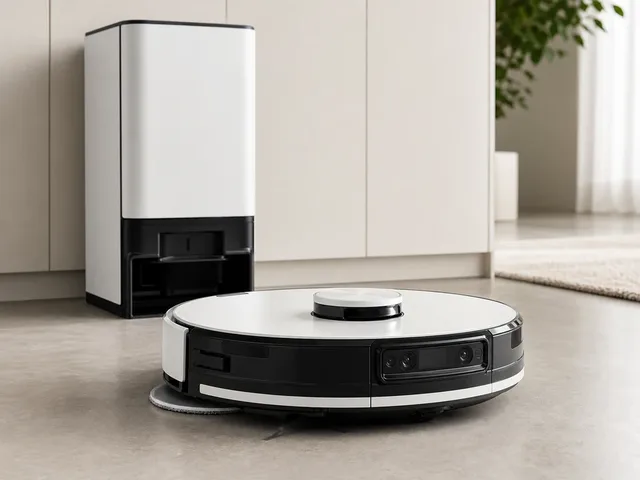
Samsung's flagship robot vacuum for 2026, first previewed at IFA 2025 and detailed at CES 2026. The Bespoke AI Jet Bot Steam Ultra is the first Samsung robot vacuum to feature 100°C steam cleaning, combining vacuuming, mopping, and steam sanitization in a single autonomous device. Powered by a Qualcomm Dragonwing AI processor, it uses deep learning for AI Object Recognition to distinguish between humans, pets, cables, and rugs, and introduces AI Liquid Recognition that detects liquid spills and contextually decides whether to clean or avoid them based on user preferences. The EasyPass Wheel system raises the robot's body and lowers its wheels to climb thresholds up to 2.4 inches, addressing one of the most common robot vacuum limitations. Additional features include AI Floor Detect, Stained Area Deep Cleaning, a self-cleaning Clean Station, SmartThings Pet Care, Safety Patrol with Bluetooth call, Bixby voice control, and Samsung Knox security. Samsung Korea lists package SKU VR90F01AAG98C in stock at ₩1,907,000 KRW, making current availability and pricing Korea-specific. Listed as Available with a recorded price; confirm current ordering and delivery terms.
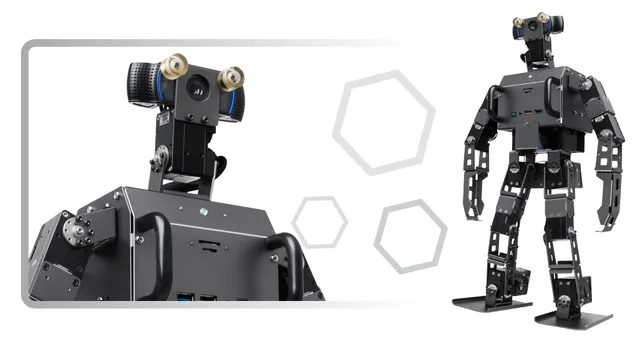
ROBOTIS OP3 is a miniature open-platform humanoid intended for robotics research and education. It is the successor to DARwIn-OP/OP2 and moves to XM430-W350 actuators plus an Intel NUC i3 controller, with ROS/ROS 2 oriented development. The platform is designed for locomotion, perception, and manipulation experiments with 20 DoF, onboard IMU sensing, and a Logitech C920 camera. ROBOTIS documents battery hot-swap support so labs can continue operation while changing packs. Listed as Available with a recorded price; confirm current ordering and delivery terms.
Full directory
Sorted by status, then currency code and price within each currency; unlisted prices come last within each status.
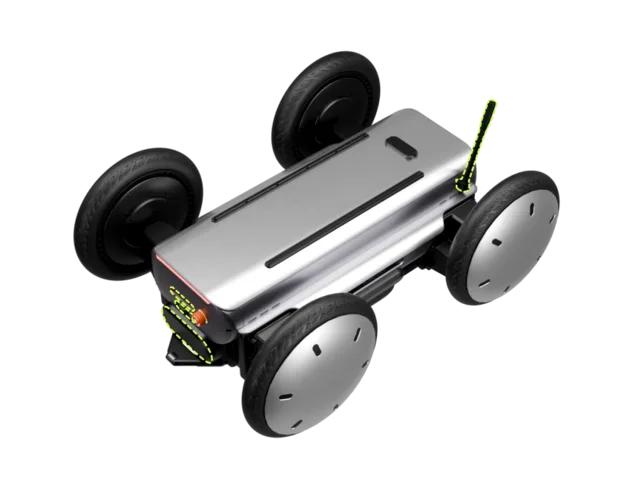
MobED (Mobile Eccentric Droid) is a modular mobile robot platform developed by Hyundai Motor Group's Robotics Lab. Unveiled at iREX in December 2025, with MobED Pro and MobED Basic scheduled for sales and mass production in 2026, it features four independently controlled wheels with an eccentric mechanism that enables agile movement and stable balance across uneven terrain, including curbs up to 200 mm. The platform comes in Pro and Basic variants — the current official product page says the Pro adds LiDAR, radar, depth cameras, a GNSS antenna, streaming, and autonomous navigation. MobED is designed for delivery, patrol, education, and industrial logistics. Its mounting rail system allows easy customization for different use cases. It won a CES 2026 Best of Innovation Award in the robotics category. Active in the catalog with enough detail to review immediately.

GenP is GenON's senior-care Physical AI humanoid, developed with KB Financial Group for care-facility scenarios rather than announced consumer sale. GenON's official AI EXPO KOREA 2026 materials say GenP was first shown publicly in May 2026 and demonstrated recognizing a pill bottle, controlling finger joints precisely, grasping the bottle with suitable force and orientation, checking a senior's condition, and holding simple care-oriented conversations. GenON's current Physical AI page frames GenP as a care-facility solution with staged capabilities from companionship and medication reminders through delivery, wheelchair or door assistance, and direct posture-support care. Korean business and technology coverage independently reported the live AI EXPO demo, KB's role, medication recognition and delivery scenarios, rehabilitation guidance, and the fact that field deployment was still future-facing rather than live operation. Useful for roadmap scanning, not yet a clean near-term shortlist.
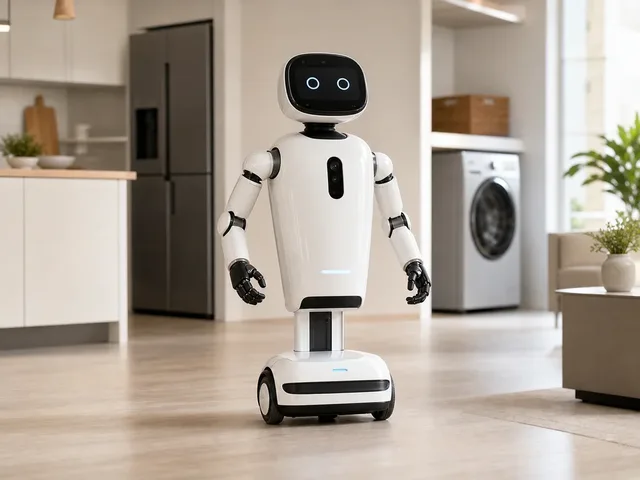
LG Electronics' CLOiD is a wheeled home robot unveiled at CES 2026 as part of the company's 'Zero Labor Home' vision. It combines a mobile base with a tilting torso, two 7-DoF arms, and five independently actuated fingers on each hand so it can interact with household objects and LG appliances in kitchens, laundry rooms, and living spaces. LG says CLOiD is designed to retrieve items, help with meal prep, start laundry cycles, and fold or stack garments after drying, while its head unit serves as a mobile AI home hub with cameras, sensors, a speaker, display, and voice-based generative AI. As of April 2026, LG has shown CLOiD publicly and outlined the platform's ThinQ integration and Physical AI stack, but has not announced pricing or a retail launch timeline. Useful for roadmap scanning, not yet a clean near-term shortlist.
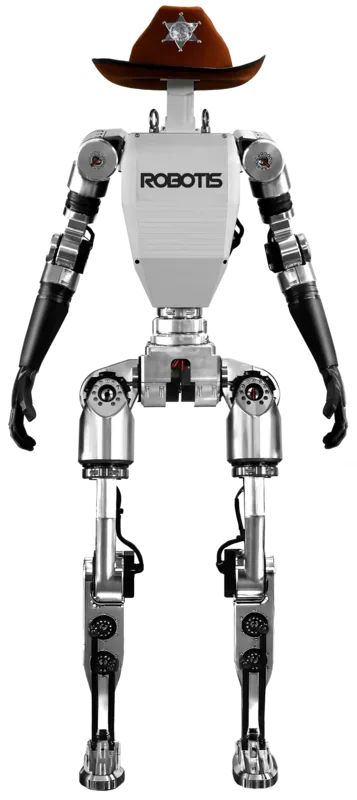
AI Sapiens K0 is a fully open-source humanoid research platform from ROBOTIS, the South Korean actuator manufacturer behind the Dynamixel servo line. Standing 1.3 m tall and weighing 34 kg with 23 degrees of freedom, it is designed as a reproducible baseline for Physical AI research — bridging simulation-trained policies with real hardware deployment. The platform is powered by 23 Dynamixel-Q Quasi-Direct Drive (QDD) actuators (14× QM-060, 9× QM-080) that provide high backdrivability and torque-level control for dynamic balancing and compliant manipulation. K0 supports reinforcement learning training in NVIDIA Isaac Sim and imitation learning via a leader-follower data collection system. ROBOTIS plans to release the complete hardware Bill of Materials, STEP CAD files, source code, simulation assets, and tutorials as open source, enabling researchers to build, modify, and extend the platform without licensing restrictions. The onboard compute features a Cortex-A76/A55 CPU, Mali-G610 GPU, and a 6 TOPS NPU, powered by a 46.8 V 9000 mAh battery. Useful for roadmap scanning, not yet a clean near-term shortlist.

ALLEX is WIRobotics' upper-body general-purpose humanoid platform built around force-responsive physical interaction rather than only visual recognition and position control. Official WIRobotics launch material says the platform combines 15-degree-of-freedom human-sized compliant hands, ultra-low-friction backdrivable arms, a gravity-compensated waist, and whole-body force response across the arms, fingers, and waist for service, manufacturing, and household-task research. The company says ALLEX can respond to forces as small as 100 gf without tactile sensors, deliver 40 N fingertip force, achieve fingertip repeatability of 0.5 mm or better, provide over 30 kg hook grip, and handle more than 3 kg with one hand across its workspace. WIRobotics plans modular research-platform distribution for arms, hands, body, and leader systems, plus staged commercialization partnerships; Engadget independently saw the waist-up robot demonstrated at CES 2026. Useful for roadmap scanning, not yet a clean near-term shortlist.
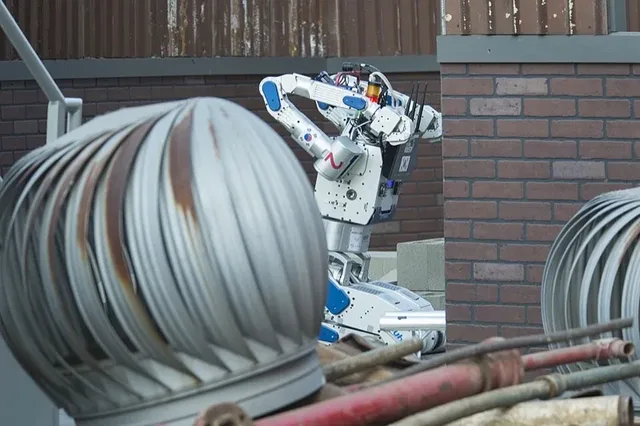
The DRC-HUBO+ is the DARPA Robotics Challenge-winning humanoid robot developed by Team KAIST at the Korea Advanced Institute of Science and Technology. It won first place and the $2 million prize at the DRC Finals in Pomona, California on June 6, 2015, completing all eight disaster-response tasks faster than any competitor. Its key innovation is the ability to transform between a walking bipedal posture and a wheeled kneeling posture — it drops to its knees and rolls on built-in knee wheels for fast, stable traversal, then stands up to use its arms and climb stairs. Built on the HUBO 2 (KHR-4) platform originally released in 2005, it represents over 15 years of humanoid research at KAIST led by Professor Jun-Ho Oh. Best treated as an exploratory lead until field readiness improves.

Unreleased; consumer launch reportedly shelved. Samsung introduced Ballie as a rolling home-robot concept at CES 2020 and presented a redesigned version at CES 2024. Samsung's promotional materials described home navigation, connected-appliance control, projection, pet and family video updates, calls, music, and personalized behavior. Its April 9, 2025 announcement with Google Cloud proposed Gemini alongside Samsung language models and promised consumer availability in the United States and Korea in summer 2025. Bloomberg reported indefinite shelving on January 7, 2026. The sources reviewed do not establish a consumer retail release or a primary Samsung confirmation of permanent cancellation. Samsung's current Korean promotional page warns that staged scenes, features, functions, and behavior may differ from the actual product. Listed capabilities describe announcements and demonstrations, not verified performance of a released consumer model. Best treated as an exploratory lead until field readiness improves.
Ranked signals and price structure replace the old sprawling chip walls so the data reads faster on both mobile and desktop.
| # | Name | Usage |
|---|---|---|
| 1 | Not officially disclosed | 2 · 22% |
| 2 | SmartThings | 2 · 22% |
| 3 | Wi-Fi | 2 · 22% |
| # | Name | Usage |
|---|---|---|
| 1 | Bipedal locomotion research | 2 · 22% |
USD only: 1 priced of 9 total · 1 priced in other currencies (excluded) · 7 without a recorded numeric price
| # | Name | Share |
|---|---|---|
| 1 | Development | 4 · 44% |
| 2 | Available | 2 · 22% |
| 3 | Prototype | 2 · 22% |
| 4 | Active | 1 · 11% |
Use peer routes to widen discovery only when they genuinely add more depth or a different market shape.
Decision lens
Use peer routes to add meaningful category overlap, more manufacturer breadth, or different published currency coverage. If the current route already answers those questions, wider browsing usually adds noise faster than it adds signal.
Catalog rank
#7
Share of tracked robots
2%
Avg shared categories
5.5
What to watch
Stay here when
You already have enough mature candidates, enough manufacturer depth, and enough price visibility to build a shortlist.
Compare outward when
The route is thin in your target category, clustered around one maker, or clearly skewed toward missing prices.
Best next click
Open the peer that changes the search shape the most — not just the next biggest route by raw robot count.
Peer route
Broader catalog depth · High category overlap
Common ground: Humanoid, Cleaning +4
Open routePeer route
Broader catalog depth · High category overlap
Common ground: Humanoid, Commercial +4
Open routePeer route
Broader catalog depth · High category overlap
Common ground: Companions, Research +3
Open routePeer route
Similar catalog depth · High category overlap
Common ground: Humanoid, Commercial +3
Open routeOpen another country route
Need the full directory? Browse all country pages.
This route is a structured view of ui44 dataset entries whose manufacturer headquarters label maps to South Korea. The numbers on the page are generated from the catalog itself, not from outside shipment estimates or broad market-share reports. In practice, that means the route is best used for discovery and shortlisting inside this database: how many manufacturers are represented, how many robots are listed, which categories appear most often, and which lifecycle statuses show up across those records. It is useful because it compresses search time, but it should not be treated as proof that South Korea leads the global robotics market in absolute terms.
Not by itself. A higher count here only indicates stronger representation in the ui44 catalog. It does not automatically prove global production leadership, deployment leadership, or shipment volume across every region. The practical value is relative orientation: if South Korea has more entries than another country route in this catalog, you have a broader internal shortlisting surface to explore before you need outside research. Treat the count as a catalog-depth signal, then validate market importance with model-level evidence, current vendor activity, and real deployment references.
Available listings: 2. Pre-order listings: 0. Active records: 1. Available indicates an ordering listing, not confirmed stock. Pre-order indicates a reservation listing, not immediate delivery. Active status alone does not confirm public purchase availability or deployment. Other statuses do not establish a current purchase listing. Confirm regional access, stock, reservation terms, and delivery with the manufacturer.
Recorded numeric prices by currency: KRW ₩1.9M; USD $13.8k. 2 of 9 records have a recorded numeric price. Ranges and averages cover only those records and are calculated separately within each currency; no currency conversion or cross-currency affordability ranking is implied. Missing numeric prices do not establish a budget tier or the absence of other pricing terms. Check individual model pricing notes for membership, lease, quote or other terms. Confirm applicable charges and terms with the manufacturer.
Many robotics vendors publish capabilities without publishing a universal list price. Enterprise and service robots often depend on integration scope, software packages, service bundles, deployment country, or support contract terms. For that reason, a missing price should be read as “no numeric price recorded”, not as “cheap,” “premium,” or “not for sale.” Check individual model pricing notes for membership, lease, quote or other terms. Where a quote is needed, request a consistent cost breakdown. Ask each vendor for the same structure — hardware, accessories, onboarding, software, maintenance, and training — so the comparison stays apples to apples.
Yes. The route is useful because it compresses a large amount of catalog coverage into a cleaner planning sequence. Start with category concentration to see where the route is deepest, then use the robot cards to understand maturity and price posture, and then branch into manufacturer pages for documentation depth and product-family context. That path lets a team move from broad market scanning to a more disciplined shortlist without losing the reason each candidate advanced. It is not a substitute for pilots, but it is a strong way to reduce search time before pilots begin.
A practical stack is: (1) robot count share, (2) manufacturer count, (3) category overlap, and (4) price posture. This avoids over-indexing on a single number. A country can have a large catalog footprint and still be narrow in category variety, or it can have strong overlap with South Korea but a much smaller pool of vendors. The peer-country table on this page is built for exactly that question: when is the current route enough, and when does a second country route add real search value? The answer should always be based on overlap and options, not on raw count alone.
Use the manufacturer links as a decision funnel. First, eliminate makers whose categories clearly do not fit your target workflow. Second, prioritize makers with model statuses aligned to your timeline. Third, inspect documentation depth on the manufacturer route: number of tracked robots, link quality, and whether the catalog shows breadth or a single flagship model. Finally, move only the strongest makers into structured outreach. That process turns a long route into a smaller, evidence-backed vendor set instead of an endless browse session.
Open peer-country routes when you need deeper category overlap, more manufacturer options, or a meaningfully different listed price profile. If the current route already covers your target workload with enough mature candidates, widening the search too early can create noise. If the route is strong in one segment but thin in another, or if the strongest candidates are clustered around a single manufacturer, that is a good signal to compare another country route before vendor outreach. The goal is not maximal browsing. The goal is enough market breadth to create a resilient shortlist.
Sensor stacks usually follow task design. Cleaning robots lean on LiDAR, vision, cliff sensing, and proximity systems to manage navigation and obstacle avoidance. Humanoid and quadruped systems tend to add richer perception, force feedback, or balance-oriented sensors. Delivery and patrol robots often mix cameras, positioning, and environmental sensing for wider-area coverage. The ranked signal tables on this route help with pattern detection, but the final evaluation should always ask whether a sensor suite matches your environment: indoor versus outdoor use, lighting conditions, floor changes, obstacle density, and how much autonomy you actually expect on day one.
Most modern robots expose Wi‑Fi and Bluetooth as baseline options, while higher-end systems may add cellular links, more advanced fleet connectivity, or integration-specific interfaces. The important question is not whether a connectivity term appears in the catalog; it is whether that connectivity fits your security policy, latency needs, facility coverage, and support model. For teams in enterprise or regulated environments, network segmentation, update policy, remote diagnostics, and account governance often matter more than the presence of a single radio standard. Treat connectivity labels as a starting filter, then verify integration details directly on the robot page and with the vendor.
Total cost of ownership is usually far larger than base hardware price. A good TCO model includes integration engineering, onboarding, operator training, software fees, consumables, replacement parts, maintenance windows, and downtime risk. For larger deployments, it may also include facility changes, charging infrastructure, support response commitments, or workflow redesign. The value of this route is that it helps you compare the catalog’s listed price posture quickly, but budgeting should never stop there. Normalize every quote into the same cost structure before ranking vendors, especially when some models publish price and others do not.
AI matters most when it improves a task in a way your team can actually verify. In practice, that may mean navigation quality, better object handling, stronger voice interaction, more resilient path planning, or better adaptation to changing environments. Some vendors push more on-device intelligence, while others rely on cloud services for heavier processing. The core buying question is not whether “AI” appears in the marketing copy; it is whether the implementation matches your latency expectations, privacy requirements, connectivity assumptions, and failure handling model. Use AI claims as a hypothesis generator, not as a substitute for proofs during pilot work.
Not necessarily. In this project, the country route is driven by the manufacturer headquarters label used for catalog organization. Manufacturing, integration, and service footprints can span several regions, and those realities do not always map cleanly to a single headquarters country. That means this route is excellent for navigation and initial analysis, but it is not enough for supply-chain, compliance, or local-service decisions. If geography matters for your deployment, verify model-level sourcing, support region, and service coverage directly with the vendor before committing budget.
Low representation is still meaningful. It may signal a narrow route with a small but relevant set of candidates, or it may indicate that the strongest options for your use case live somewhere else in the catalog. In those cases, use the current route for orientation, then widen the shortlist through category pages, manufacturer pages, and peer-country comparisons. The important thing is to keep the original reason for the search intact. A smaller route is not useless; it simply changes how quickly you should branch into the rest of the database.
Revisit at every major decision gate: initial discovery, post-RFI narrowing, and pre-pilot signoff. Country routes are especially useful for spotting newly represented manufacturers, new models, or lifecycle changes that can change the shortlist after the first pass. That cadence helps teams avoid stale screenshots, old notes, or memory-driven assumptions. A route review does not need to be long. It just needs to be consistent enough that the shortlist reflects the current catalog rather than a one-time snapshot taken weeks earlier.
The common mistake is treating country rank as a substitute for fit. A country can look strong by count and still be a poor match for your workload, budget, support constraints, or deployment environment. The better sequence is layered: use the country route for orientation, manufacturer and category routes for narrowing, robot detail pages for proof, and pilot work for final selection. That keeps the process fast without allowing a high-level catalog signal to overpower the operational reality of the deployment.