That matters for home robot buyers because actuators are where cost, strength, safety, runtime, and repairability collide. A robot with weak joints cannot lift much. A robot with powerful joints but poor force limits is not something you want near children, pets, glass, stairs, or kitchen counters.
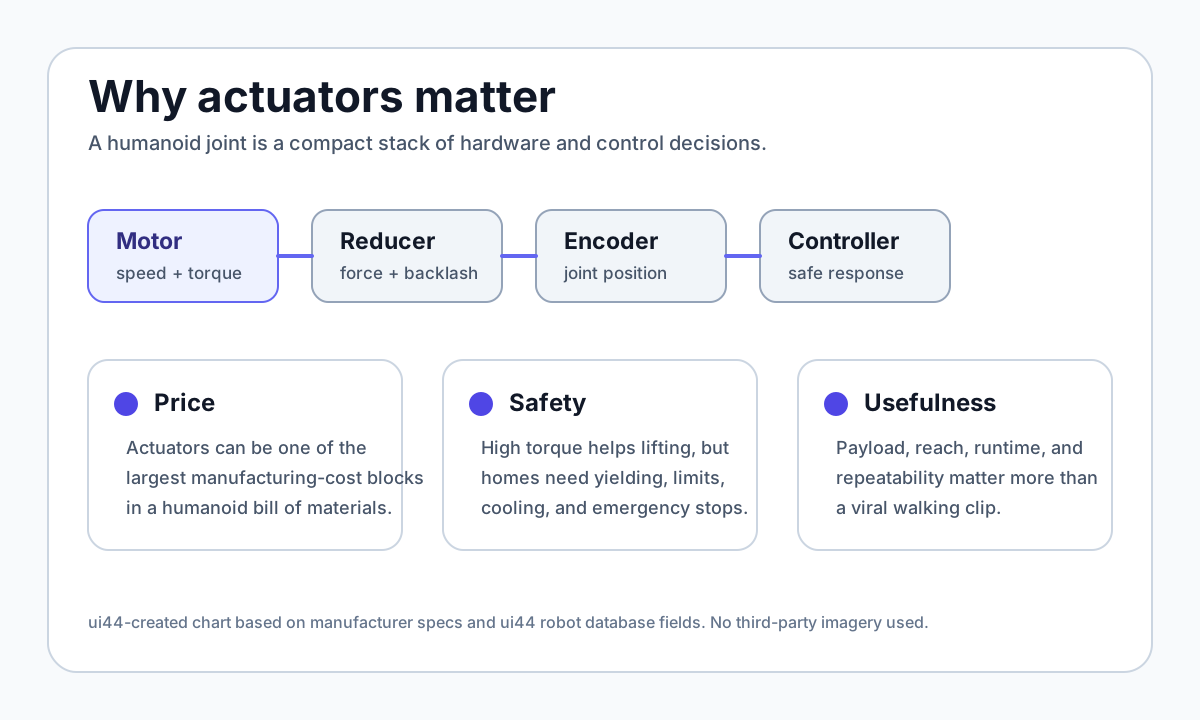
Korea JoongAng Daily recently framed actuators as a new battleground in the humanoid race, noting that the components combine motors, reducers, controllers, and sensors, and can account for roughly 30-50% of humanoid manufacturing cost. That tracks with what the ui44 database shows: the robots closest to useful home work are not just the ones with more AI. They are the ones with better joints, better hands, better cooling, and clearer limits.
What is a humanoid robot actuator?
A humanoid actuator is the compact joint module that lets a robot bend a knee, turn a shoulder, rotate a wrist, close a gripper, or recover balance after a push. In a modern humanoid, it usually includes a motor, reduction gearing, encoders, electronics, thermal design, and control software.
That sounds like a component detail, but it shapes the whole robot:
- Torque decides whether the robot can lift, stand, brace, or recover.
- Degrees of freedom decide how many axes the robot can coordinate.
- Backdrivability and compliance decide whether a joint can yield safely.
- Cooling and continuous power decide whether a chore lasts minutes or hours.
- Sensor feedback decides whether motion is controlled or merely strong.
This is why two humanoids with similar size can behave very differently. One may walk well but have weak arms. Another may lift more but drain its battery quickly. A third may have promising hands but no public price, no service plan, and no evidence that it can survive daily household contact.
For ui44 readers, the useful question is not "How many joints does it have?" It is what do those joints let the robot do safely, repeatedly, and affordably in a real home?
Which actuator specs actually matter for buyers?
The actuator spec sheet can be noisy. Manufacturers may publish peak torque for one joint, total degrees of freedom with or without hands, payload in a favorable arm posture, or runtime under light activity. Those numbers are still useful, but only when read together.
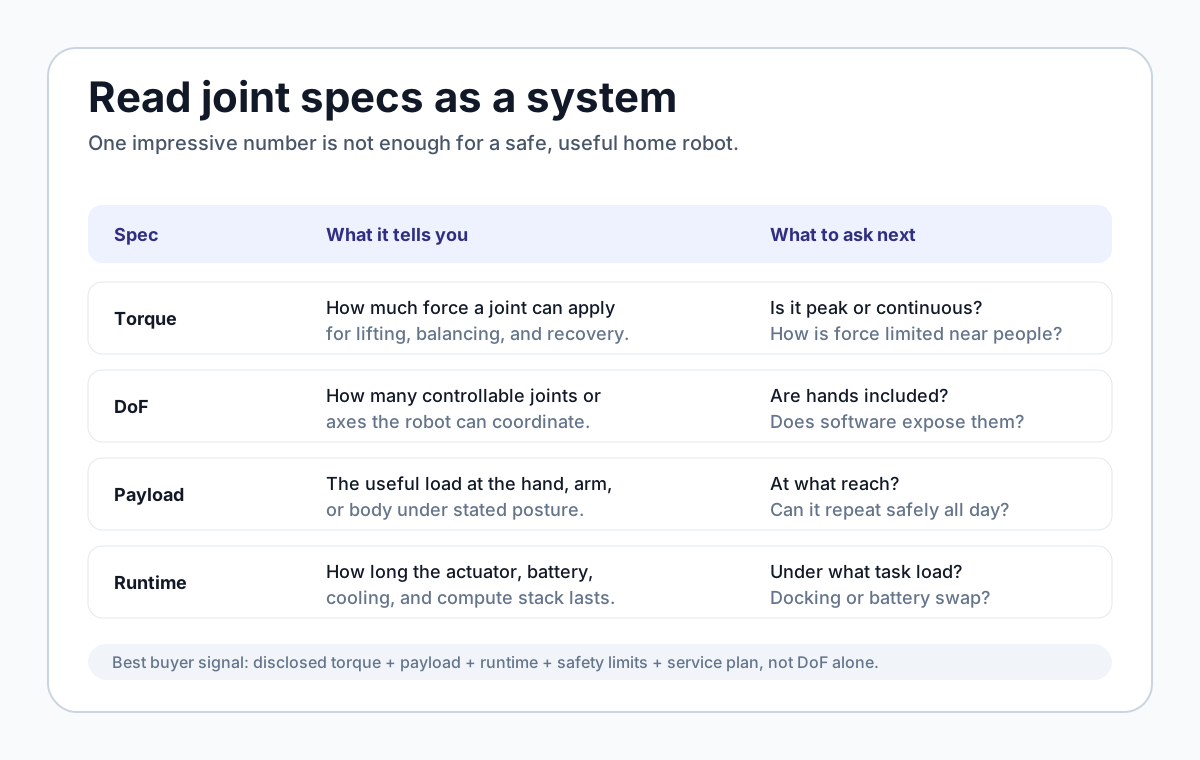
Here is the buyer translation:
Spec
Total DoF
- What it can tell you
- Whether the robot has enough controllable joints for full-body motion
- What it does not prove
- Whether the software can use them well
Spec
Arm or leg torque
- What it can tell you
- Whether joints can lift, squat, stabilize, or recover
- What it does not prove
- Whether that force is safe near people
Spec
Arm payload
- What it can tell you
- What the hand or arm might carry under stated conditions
- What it does not prove
- Whether the robot can manipulate awkward household objects
Spec
Runtime
- What it can tell you
- How the battery, actuators, cooling, and compute behave together
- What it does not prove
- Whether runtime holds during heavy chores
Spec
Hand design
- What it can tell you
- Whether the robot can grasp more than simple boxes
- What it does not prove
- Whether it can handle soft, wet, fragile, or tangled objects
Spec
Safety warnings
- What it can tell you
- How honest the manufacturer is about power and limits
- What it does not prove
- Whether independent home safety testing exists
| Spec | What it can tell you | What it does not prove |
|---|---|---|
| Total DoF | Whether the robot has enough controllable joints for full-body motion | Whether the software can use them well |
| Arm or leg torque | Whether joints can lift, squat, stabilize, or recover | Whether that force is safe near people |
| Arm payload | What the hand or arm might carry under stated conditions | Whether the robot can manipulate awkward household objects |
| Runtime | How the battery, actuators, cooling, and compute behave together | Whether runtime holds during heavy chores |
| Hand design | Whether the robot can grasp more than simple boxes | Whether it can handle soft, wet, fragile, or tangled objects |
| Safety warnings | How honest the manufacturer is about power and limits | Whether independent home safety testing exists |
A high DoF number is not automatically better. Hands can add many small joints, but a home robot also needs balance, reach, perception, force limits, and task recovery. Likewise, a high torque number may be impressive for standing up or carrying loads, but it raises the stakes for collision avoidance and emergency stopping.
How do current humanoids compare on joints and price?
The spread across current robots is already wide. Unitree G1 starts at $13,500, stands 132 cm tall, weighs about 35 kg, and lists 23 DoF on the standard model, with G1 EDU configurations reaching up to 43 DoF when expanded with hands and development options. Its official specs list a 90 N·m maximum knee-joint torque on G1, 120 N·m on G1 EDU, about 2-3 kg arm load depending on version and posture, and roughly 2 hours of battery life.
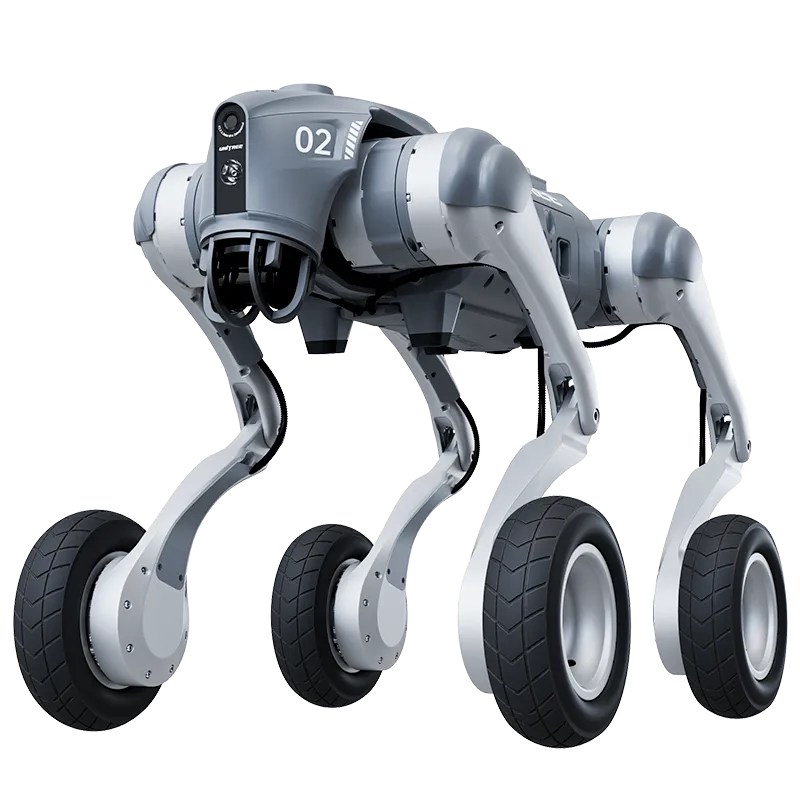
That makes G1 one of the most accessible serious humanoids in the ui44 database, but it is still a research and development platform, not a plug-and-play home helper. The actuator lesson is simple: affordable humanoids are getting real joint hardware, but useful household manipulation still depends on payload, software, safety limits, and serviceability.
Unitree R1 pushes price even lower: R1 Air starts at $4,900, the standard R1 at $5,900, and the EDU version is contact-sales. The tradeoff is clear in the specs. R1 is movement-first, with 20-26 DoF on the consumer tiers, about 1 hour of battery life, and optional dexterous hands only on higher configurations. Unitree's own buyer warnings are unusually direct: these are powerful early-stage humanoids, and individual buyers should understand their limitations before purchase.
Then there is Unitree R1-A7-D, a wheeled dual-arm variant in the R1-D line. Unitree lists the line from $4,290, with mobile or fixed bases, 5- or 7-DoF arms, optional grippers or dexterous hands, about 1.5 hours of battery-powered runtime, 2-4 kg maximum arm payload depending on posture, and 60 N·m shoulder torque. For home relevance, the interesting part is not the low entry price alone. It is that a wheeled dual-arm robot may avoid some bipedal balance cost while spending more of its actuator budget on arms.
At the other end, Unitree H2 is a full-size humanoid at $29,900. It lists 31 DoF, 360 N·m peak leg joint torque, 120 N·m peak arm joint torque, a peak arm payload around 15 kg, a rated arm payload around 7 kg, and about 3 hours of runtime. Those numbers are far more serious for whole-body work, but they also reinforce the home safety problem: powerful legs and arms need conservative control around people.
Why does high torque raise both capability and risk?
High torque is not hype. It is one reason a humanoid can stand, squat, catch itself, carry a box, open a heavy door, or manipulate objects without stalling. But torque is also the reason home deployment is hard.
EngineAI T800 is a good example. In ui44 it is listed as a pre-order humanoid priced from CNY 180,000 for the basic edition, with a 173 cm body, 75-85 kg weight range, 4-5 hour runtime, 25-46 total DoF depending on edition, and official claims of up to 450 N·m maximum joint torque. Higher tiers add dexterous 7-DoF hands and tactile sensing, with a listed 5 kg payload per hand on Pro and Max versions.
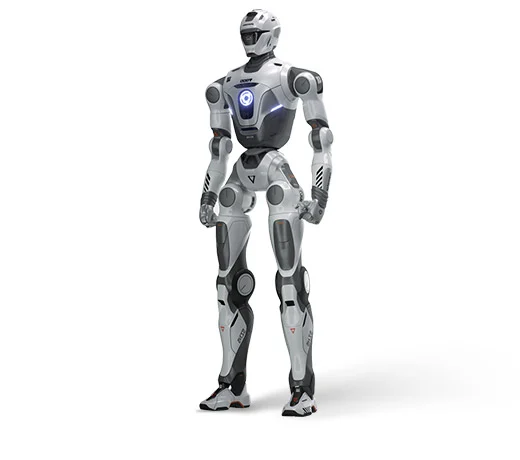
That is the kind of actuator stack needed for demanding industrial or service work. It is also exactly why a buyer should ask how force is limited in close contact. A robot that can exert a lot of torque must prove that it can stop, yield, or soften impact before it is safe for a living room.
EngineAI PM01 shows a smaller version of the same pattern. It is a compact 140 cm humanoid at roughly 42-43 kg, with 23-24 DoF, 2 m/s hardware-supported movement, nearly 2 hours of runtime, quick-release battery packs, and self-developed joint actuators. Official PM01 materials list motor modules such as Q90H and Q25H with different torque classes. The buyer signal is not "one motor is strong." It is that platform companies are starting to compete on in-house actuator design because off-the-shelf joints may not be enough for cost, agility, and product control.
Are more degrees of freedom always better?
No. More degrees of freedom can help, especially in hands, wrists, waist, and shoulders. But DoF without useful control is just complexity.
ROBOTIS AI Sapiens K0 is a useful counterpoint because it is honest about the actuator stack. K0 is a 1.3 m, 34 kg open-source humanoid research platform with 23 DoF, 3 kg max arm payload, and 23 Dynamixel-Q QDD actuators. ROBOTIS emphasizes backdrivability, low impedance, torque-level control, simulation assets, CAD, source code, and imitation-learning tools.
That does not make K0 a consumer home robot. It is listed as Development in ui44 with no announced price. But it points to the right lesson: for home work, a joint that can be controlled transparently, audited, and tuned for compliant contact may matter more than a larger black-box DoF number.
MenteeBot is another useful case. It is a development-stage humanoid with no public price, 175 cm height, 70 kg weight, 40 DoF, voice interaction, Sim2Real learning, NeRF-based mapping, motor-based tactile sensing, hot-swappable batteries, and a stated ability to carry up to 25 kg. Mentee also talks about full vertical integration with self-made actuators. If that holds up in real deployments, it could reduce supply risk and allow tighter control of the robot's safety behavior.
The caution is equally important: MenteeBot is still development-stage. A vertically integrated actuator story is promising, but buyers should wait for repeatable public proof, service terms, price, and safety evidence before treating it as a household product.
What do non-humanoid manipulators teach us?
Not every useful home robot needs legs. Hello Robot Stretch 4 is a wheeled mobile manipulator priced at $29,950, with an 8-hour light-load runtime, self-charging, a 160 cm working height, and an arm rated for 2.5 kg extended or 4 kg retracted. Its arm is less humanoid than a two-armed robot, but its actuator design is aimed at real indoor manipulation, reach, repairability, and research use.
That matters because the home does not reward human shape by itself. It rewards a robot that can reach the shelf, carry the object, avoid pinching fingers, fit through doorways, dock reliably, and keep working. A single practical arm on a stable base can beat a full humanoid if the task is narrow enough.
1X NEO approaches the problem from the opposite direction: a home-focused soft humanoid body, roughly 30 kg weight, about 4 hours of runtime, tactile skin, and a $20,000 early-adopter price. Its public database entry does not expose the same joint-torque detail as Unitree or EngineAI, so buyers should judge it by demonstrated task reliability, remote-assist model, privacy terms, and safe physical interaction rather than assuming the humanoid form solves the actuator problem.
Figure 03 and UBTECH Walker S2 show industrial lessons. Figure 03 lists a 20 kg payload, tactile arrays, force sensors, and roughly 5 hours of runtime, but no public price or consumer path. Walker S2 lists a 15 kg payload and an autonomous battery swap in about 3 minutes for 24/7 industrial operation. Those are serious actuator-and-energy signals, but they point toward factories first, not apartments.
How should you compare humanoid actuator claims?
A simple comparison table is more useful than any single demo clip.
Robot
- Status
- Pre-order
- Public price
- From $4,900
- Actuator-relevant signal
- 20-26 DoF, light body, movement-first design
- Home-readiness caveat
- About 1 hour runtime; early-stage buyer warnings
Robot
- Status
- Available
- Public price
- From $13,500
- Actuator-relevant signal
- 23 DoF standard, G1 EDU up to 43 DoF, optional dexterous hands
- Home-readiness caveat
- Research platform; 2-3 kg arm-load range depends on posture
Robot
- Status
- Available
- Public price
- $29,900
- Actuator-relevant signal
- 31 DoF, 360 N·m leg torque, 120 N·m arm torque
- Home-readiness caveat
- Full-size power raises safety and service stakes
Robot
- Status
- Pre-order
- Public price
- From CNY 180,000
- Actuator-relevant signal
- Up to 450 N·m torque, 25-46 DoF, 4-5h runtime
- Home-readiness caveat
- Industrial/service focus; home safety proof still needed
Robot
- Status
- Development
- Public price
- Not announced
- Actuator-relevant signal
- 23 QDD actuators, open hardware/software stack
- Home-readiness caveat
- Research baseline, not a consumer product
Robot
- Status
- Development
- Public price
- Not announced
- Actuator-relevant signal
- 40 DoF, self-made actuators, tactile sensing
- Home-readiness caveat
- Price, service, and public deployment proof remain open
Robot
- Status
- Available
- Public price
- $29,950
- Actuator-relevant signal
- Practical arm payload, self-charging, 8h light-load runtime
- Home-readiness caveat
- Wheeled single-arm platform, not a humanoid
| Robot | Status | Public price | Actuator-relevant signal | Home-readiness caveat |
|---|---|---|---|---|
| Unitree R1 | Pre-order | From $4,900 | 20-26 DoF, light body, movement-first design | About 1 hour runtime; early-stage buyer warnings |
| Unitree G1 | Available | From $13,500 | 23 DoF standard, G1 EDU up to 43 DoF, optional dexterous hands | Research platform; 2-3 kg arm-load range depends on posture |
| Unitree H2 | Available | $29,900 | 31 DoF, 360 N·m leg torque, 120 N·m arm torque | Full-size power raises safety and service stakes |
| EngineAI T800 | Pre-order | From CNY 180,000 | Up to 450 N·m torque, 25-46 DoF, 4-5h runtime | Industrial/service focus; home safety proof still needed |
| ROBOTIS K0 | Development | Not announced | 23 QDD actuators, open hardware/software stack | Research baseline, not a consumer product |
| MenteeBot | Development | Not announced | 40 DoF, self-made actuators, tactile sensing | Price, service, and public deployment proof remain open |
| Stretch 4 | Available | $29,950 | Practical arm payload, self-charging, 8h light-load runtime | Wheeled single-arm platform, not a humanoid |
The pattern is clear. Lower-priced humanoids are becoming real, but they tend to trade away runtime, payload, or mature home software. Higher-power humanoids are more capable, but they raise safety, cost, and service questions. Research platforms may be technically transparent, but they are not ordinary consumer products.
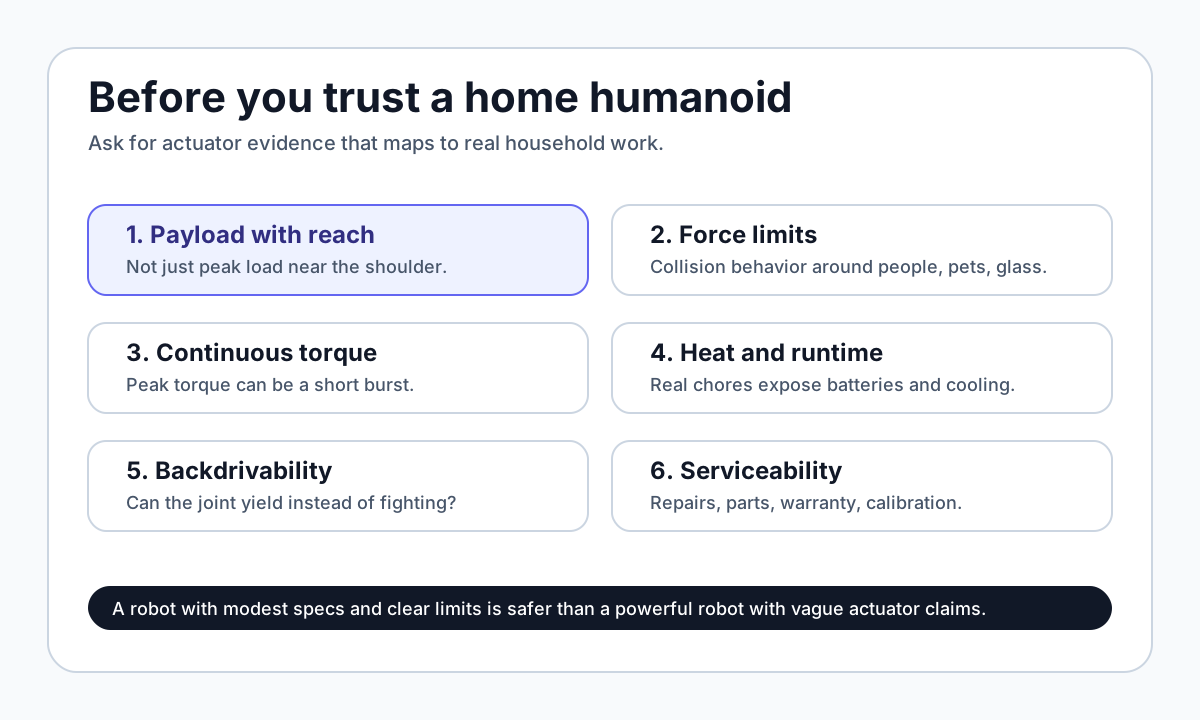
What should home robot buyers ask before paying?
Before treating any humanoid as a practical home robot, ask six actuator-focused questions:
- What is the rated payload at real reach? A 15 kg peak payload near the body is different from lifting a grocery bag at arm's length.
- Is torque peak, rated, or continuous? Short bursts are not the same as repeated chores.
- How does the robot limit force near people? Look for compliant control, tactile sensing, collision behavior, and emergency stops.
- What is the runtime under manipulation, not just standing or walking? Arms, hands, cooling, and onboard AI all draw power.
- Can the robot be serviced? Actuators wear, heat, drift, and break. Repairs, parts, calibration, and warranty matter.
- What tasks have been repeated in real spaces? One demo is not enough. Repeated folding, loading, carrying, opening, and recovery tasks are more meaningful.
This is where ui44's comparison view helps. Specs like price, status, payload, runtime, sensors, and category are easier to compare side by side in /compare than in a string of launch videos.
Bottom line: robot joints are the home-readiness bottleneck
The next wave of home humanoid marketing will talk about AI agents, foundation models, and voice commands. Those matter. But the robot still has to move a real arm, apply real force, avoid real harm, and survive real wear.
Actuators are where that promise becomes physical. They explain why a $4,900 humanoid can be exciting but limited, why a $29,900 humanoid can still be risky for ordinary homes, why a CNY 180,000 platform may be built for industry first, and why a wheeled manipulator can sometimes be more useful than a walking body.
The best buyer rule is simple: do not buy the humanoid with the loudest demo. Buy, or wait for, the robot with the clearest actuator evidence: disclosed payload, usable runtime, force limits, repair support, and repeated proof in the kind of home task you actually need solved.
Related in the database
Use this article as a privacy verification workflow
Turn the article into a privacy verification pass grounded in the robots, manufacturers, and components it actually references.
Humanoid Robot Actuators: Home Readiness Guide already points you toward 12 linked robots, 9 manufacturers, and 5 countries inside the ui44 database. That matters because strong buyer guidance is easier to apply when you can move immediately from a claim or warning into concrete product pages, manufacturer directories, component explainers, and country-level context instead of treating the article as an isolated opinion piece. The fastest next step is to turn the article into a shortlist workflow: open the linked robot pages, verify which specs are actually published for those models, then compare the surrounding manufacturer and component context before you decide whether the underlying claim changes your buying plan.
For this topic, the useful discipline is to separate the editorial lesson from the catalog evidence. The article gives you the framing, but the robot pages tell you what each product actually ships with today: sensor stack, connectivity methods, listed price, release timing, category, and support-relevant compatibility notes. The manufacturer pages then show whether you are looking at a one-off launch, a broader lineup pattern, or a company that spans multiple categories. That layered workflow reduces the risk of buying on a single marketing phrase or a single support FAQ.
Use the robot pages to confirm which products actually expose cameras, microphones, Wi-Fi, or voice systems, then use the manufacturer pages to decide how much of the privacy question seems product-specific versus brand-wide. On this route cluster, G1, R1, and R1-A7-D form the fastest reality check. If you want a quick working shortlist, open Compare G1, R1, and R1-A7-D next, then keep this article open as the reasoning layer while you compare structured data side by side.
Practical Takeaway
Every robot, manufacturer, category, component, and country reference below resolves to a real ui44 page, keeping the follow-up path grounded in database records rather than generic advice.
Suggested next steps in ui44
- Open G1 and note the listed sensors, connectivity methods, and voice stack before you interpret any policy claim.
- Cross-check the wider brand context on Unitree so you can see whether the privacy question touches one model or a broader lineup.
- Use the linked component pages to confirm how common the relevant sensors and connectivity layers are across the database.
- Keep a short note of which policy layers you checked, which device features are actually present on the robot page, and which items still depend on region- or app-level confirmation.
- Finish with Compare G1, R1, and R1-A7-D so the policy reading sits next to structured product data.
Robot profiles worth opening next
Use the linked product pages as the evidence layer
The linked robot pages are where this article becomes operational. Instead of asking whether the headline is interesting, use the robot entries to inspect the actual mix of sensors, connectivity options, batteries, pricing, release timing, and stated capabilities attached to the products mentioned in the article. That is the easiest way to see whether the warning or opportunity described here affects one product family, a specific design pattern, or an entire buying lane.
G1 is tracked on ui44 as a available humanoid robot from Unitree. The database currently records a listed price of $13,500, a release date of 2024-05-13, ~2 hours battery life, Not disclosed charging time, and a published stack that includes Depth Camera, 3D LiDAR, and 4 Microphone Array plus Wi-Fi 6 and Bluetooth 5.2.
For privacy-focused reading, this page matters because it shows the concrete device surface behind the policy discussion. Use it to verify whether G1 combines sensors and connectivity in a way that could change the in-home data footprint, and compare the listed capabilities such as Bipedal Walking, Object Manipulation, and Dexterous Hands (optional Dex3-1) with any cloud, app, or voice layers.
R1
Unitree Robotics · Humanoid · Pre-order
R1 is tracked on ui44 as a pre-order humanoid robot from Unitree Robotics. The database currently records a listed price of $4,900, a release date of 2025, ~1 hour (mixed activity) battery life, Not officially disclosed charging time, and a published stack that includes Monocular camera (R1 Air); binocular camera (R1/R1 EDU), 4-Mic Array, and Dual 6-Axis IMU plus Wi-Fi 6 and Bluetooth 5.2.
For privacy-focused reading, this page matters because it shows the concrete device surface behind the policy discussion. Use it to verify whether R1 combines sensors and connectivity in a way that could change the in-home data footprint, and compare the listed capabilities such as Bipedal Walking & Running, Cartwheels & Handstands, and Push Recovery with any cloud, app, or voice layers, including UnifoLM (voice + image commands).
R1-A7-D
Unitree Robotics · Humanoid · Active
R1-A7-D is tracked on ui44 as a active humanoid robot from Unitree Robotics. The database currently records a listed price of $100,000, a release date of 2026-04-30, Approx. 1.5 hours (battery-powered; external power also supported) battery life, Not officially disclosed charging time, and a published stack that includes Chassis LiDAR, Binocular camera / depth module, and Optional wrist camera plus Wi-Fi 6 and Bluetooth 5.2.
For privacy-focused reading, this page matters because it shows the concrete device surface behind the policy discussion. Use it to verify whether R1-A7-D combines sensors and connectivity in a way that could change the in-home data footprint, and compare the listed capabilities such as Mobile Dual-Arm Manipulation, 7-DOF Arms, and Wheeled Mobile Base with any cloud, app, or voice layers, including Voice interaction via 4-mic array and dual speakers.
Unitree H2
Unitree Robotics · Humanoid · Available
Unitree H2 is tracked on ui44 as a available humanoid robot from Unitree Robotics. The database currently records a listed price of $29,900, a release date of 2025-10-20, About 3 hours battery life, Not officially disclosed charging time, and a published stack that includes Binocular Camera (Wide FOV), Array Microphone, and IMU plus Wi-Fi 6 and Bluetooth 5.2.
For privacy-focused reading, this page matters because it shows the concrete device surface behind the policy discussion. Use it to verify whether Unitree H2 combines sensors and connectivity in a way that could change the in-home data footprint, and compare the listed capabilities such as 31 Degrees of Freedom, 360 N·m Peak Leg Joint Torque, and 120 N·m Peak Arm Joint Torque with any cloud, app, or voice layers, including Built-in Voice Interaction.
T800 is tracked on ui44 as a pre-order humanoid robot from EngineAI. The database currently records a listed price of ¥180,000, a release date of 2025-12-08, 4-5 hours battery life, 2.5 hours (ternary lithium) or 3 hours (solid-state) charging time, and a published stack that includes Intel depth camera (Basic edition), Stereo vision + LiDAR perception system (Open Source/Pro/Max editions), and Tactile sensing in dexterous hands (Pro/Max editions) plus Wi-Fi and Bluetooth.
For privacy-focused reading, this page matters because it shows the concrete device surface behind the policy discussion. Use it to verify whether T800 combines sensors and connectivity in a way that could change the in-home data footprint, and compare the listed capabilities such as Bipedal locomotion, High-dynamic full-body motion, and Obstacle avoidance and path planning with any cloud, app, or voice layers.
Manufacturer context behind the article
Check whether this is one product story or a broader company pattern
Manufacturer pages add the privacy context that individual product pages cannot show on their own. They help you check whether cameras, microphones, cloud accounts, app controls, and policy assumptions appear across a broader lineup or stay tied to one specific product story.
Unitree
ui44 currently tracks 2 robots from Unitree across 1 category. The company is grouped under China, and the current catalog footprint on ui44 includes H1, G1.
That wider brand context matters because privacy questions rarely stop at one FAQ page. A manufacturer route helps you see whether the article is centered on one premium model or on a company that has several relevant products and therefore more than one place where the same policy or app assumptions might matter. The category mix here currently points toward Humanoid as the most useful next route if you want to see whether this article reflects a wider pattern inside the brand.
Unitree Robotics
ui44 currently tracks 9 robots from Unitree Robotics across 3 categorys. The company is grouped under China, and the current catalog footprint on ui44 includes B2, B1, Go2.
That wider brand context matters because privacy questions rarely stop at one FAQ page. A manufacturer route helps you see whether the article is centered on one premium model or on a company that has several relevant products and therefore more than one place where the same policy or app assumptions might matter. The category mix here currently points toward Quadruped, Humanoid, Research as the most useful next route if you want to see whether this article reflects a wider pattern inside the brand.
EngineAI
ui44 currently tracks 2 robots from EngineAI across 1 category. The company is grouped under China, and the current catalog footprint on ui44 includes PM01, T800.
That wider brand context matters because privacy questions rarely stop at one FAQ page. A manufacturer route helps you see whether the article is centered on one premium model or on a company that has several relevant products and therefore more than one place where the same policy or app assumptions might matter. The category mix here currently points toward Humanoid as the most useful next route if you want to see whether this article reflects a wider pattern inside the brand.
ROBOTIS
ui44 currently tracks 2 robots from ROBOTIS across 1 category. The company is grouped under South Korea, and the current catalog footprint on ui44 includes ROBOTIS OP3, AI Sapiens K0.
That wider brand context matters because privacy questions rarely stop at one FAQ page. A manufacturer route helps you see whether the article is centered on one premium model or on a company that has several relevant products and therefore more than one place where the same policy or app assumptions might matter. The category mix here currently points toward Research as the most useful next route if you want to see whether this article reflects a wider pattern inside the brand.
Broaden the scan without leaving the database
Categories, components, and countries add the wider context
Category framing
Category pages are useful when the article touches a buying pattern that shows up across brands. A category route helps you confirm whether the linked products sit in a narrow niche or whether the same question should be tested across a larger field of alternatives.
Humanoid
The Humanoid category page currently groups 129 tracked robots from 92 manufacturers. ui44 describes this lane as: Full-size bipedal humanoid robots built to work alongside people — from factory floors to household tasks. Compare the cutting edge of humanoid robotics.
That makes the category route a practical follow-up when you want to check whether the products linked in this article are typical for the lane or whether they sit at one edge of the market. Useful starting examples currently include NEO, EVE, Mornine M1.
Research
The Research category page currently groups 49 tracked robots from 39 manufacturers. ui44 describes this lane as: Academic and research robotics platforms pushing the boundaries of what machines can learn and do in the lab and beyond.
That makes the category route a practical follow-up when you want to check whether the products linked in this article are typical for the lane or whether they sit at one edge of the market. Useful starting examples currently include HRP-4C, HRP-5P, NAO6.
Country and ecosystem context
Country pages give extra context when support practices, launch sequencing, regulatory posture, or manufacturer mix matter. They are not a substitute for model-level verification, but they do help you see which ecosystems cluster together and which manufacturers sit in the same regional field when you broaden the search beyond the article headline.
China
The China route currently groups 189 tracked robots from 87 manufacturers in ui44. That gives you a useful regional lens when the article points toward support practices, launch sequencing, or brand clusters that may share similar ecosystem assumptions.
On the current route, manufacturers like AGIBOT, Dreame, Unitree Robotics make the page a good way to broaden the scan without losing the regional context that often shapes availability, documentation style, and adjacent alternatives.
South Korea
The South Korea route currently groups 9 tracked robots from 7 manufacturers in ui44. That gives you a useful regional lens when the article points toward support practices, launch sequencing, or brand clusters that may share similar ecosystem assumptions.
On the current route, manufacturers like ROBOTIS, Samsung, GenON make the page a good way to broaden the scan without losing the regional context that often shapes availability, documentation style, and adjacent alternatives.
Israel
The Israel route currently groups 5 tracked robots from 5 manufacturers in ui44. That gives you a useful regional lens when the article points toward support practices, launch sequencing, or brand clusters that may share similar ecosystem assumptions.
On the current route, manufacturers like Flytrex, Intuition Robotics, Maytronics make the page a good way to broaden the scan without losing the regional context that often shapes availability, documentation style, and adjacent alternatives.
Questions to answer before you move from reading to buying
A follow-up FAQ built from the entities already linked in this article
Frequently Asked Questions
Which page should I open first after reading “Humanoid Robot Actuators: Home Readiness Guide”?
Start with G1. That gives you a concrete product anchor for the article’s main claim. From there, branch into the manufacturer and component pages so you can tell whether the article is describing one specific model, a repeated brand pattern, or a wider technology issue that affects multiple shortlist options.
How do the manufacturer pages change the buying decision?
Unitree help you zoom out from one article and one product. On ui44 they show lineup breadth, category spread, and the neighboring robots tied to the same company. That context is useful when you are deciding whether a risk belongs to a single model, whether it shows up across a brand’s portfolio, and whether you should keep looking at alternatives before committing.
When should I switch from reading to side-by-side comparison?
Move into Compare G1, R1, and R1-A7-D as soon as you understand the article’s main warning or promise. The article explains what to watch for, but the compare view is where you can check whether price, status, battery life, connectivity, sensors, and category fit still make the robot a good match for your own home and budget.
Where to go next in ui44
Keep the research chain inside the database
If you want to keep going, these follow-on pages give you the cleanest expansion path from article to research session. Open the comparison route first if you are deciding between products today. Open the manufacturer, category, and component routes if you still need to understand the broader pattern behind the claim.
Written by
ui44 Team
Published May 25, 2026
Share this article
Open a plain share link on X or Bluesky. No embeds, no widgets, no cookie baggage.