Commercial model
See pricing details
No public pricing (development stage)
Height
175 cm
Weight
70 kg
Battery
Hot-swappable (continuous operation)
Speed
1.5 m/s
Payload
Can carry up to 25 kg
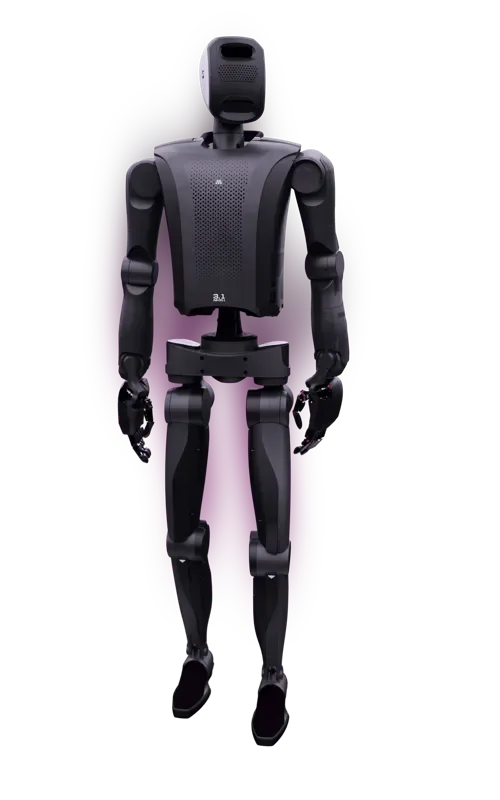
Mentee Robotics' AI-first humanoid robot designed for household and warehouse tasks. Co-founded by Prof. Amnon Shashua (also co-founder of Mobileye) and Prof. Shai Shalev-Shwartz. Features full vertical integration with self-made actuators, Sim2Real learning for lifelike gait, NeRF-based 3D mapping, and LLM-powered task planning. Mobileye announced a definitive agreement to acquire Mentee Robotics in January 2026, with Mentee expected to operate as an independent unit; first customer proof-of-concept deployments are expected in 2026 and series production/commercialization is targeted for 2028. Can be 'mentored' by humans — learning new skills through observation. Hot-swappable battery for continuous operation.
Listed price
See pricing details
No public pricing (development stage)
Release window
2028 (target)
Current status
Development
Mentee Robotics
Last verified
May 26, 2026
Share this robot
Open a plain share composer on X or Bluesky for this robot profile.
Technical overview
A fast read on the mechanical profile, sensing package, and listed platform details for MenteeBot.
Height
175 cm
Weight
70 kg
Dimensions
40 degrees of freedom
Battery Life
Hot-swappable (continuous operation)
Charging Time
Not disclosed
Max Speed
1.5 m/s
Payload
Can carry up to 25 kg
Operational profile
Capabilities
9
Connectivity
1
Key capabilities
Explore further
Benchmark set
Shortcuts to the closest alternatives in the current ui44 set.
Humanoid
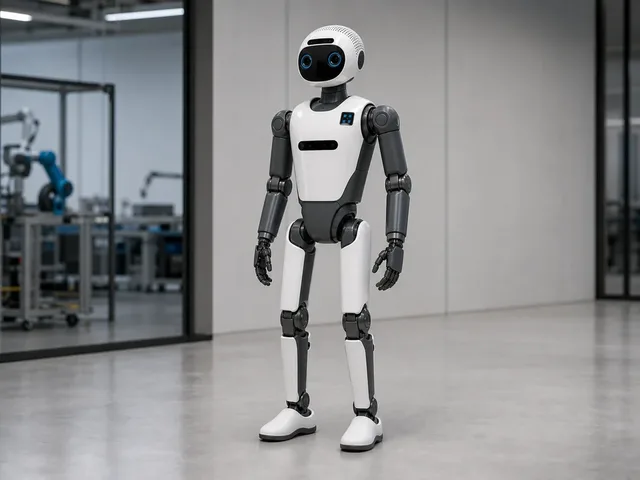
Agile ONE
Agile Robots
See pricing details

Humanoid
A2 Ultra
AGIBOT
$999,999
Humanoid
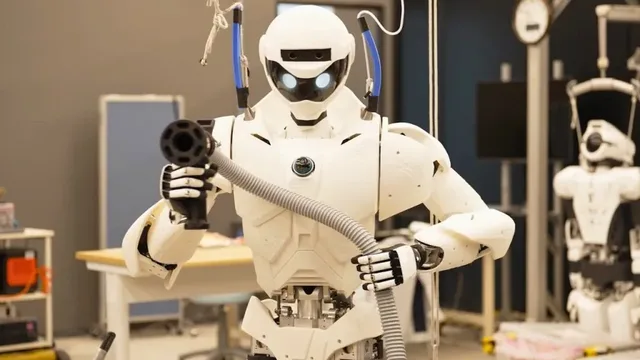
Kaleido 9
Kawasaki Heavy Industries
See pricing details
Humanoid
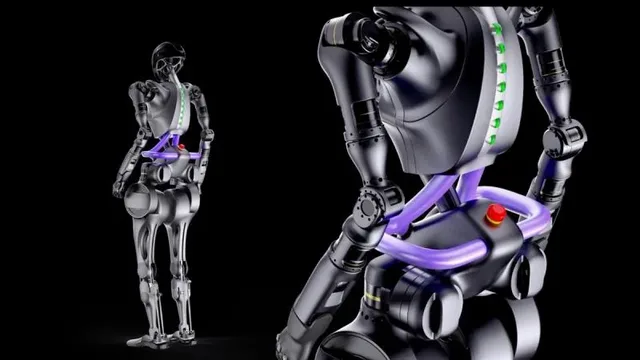
GR-1
Fourier
See pricing details
Coverage
Reporting and explainers linked to MenteeBot.
Blog
2026-06-09 · ui44 Team
Home Humanoid Reliability Tests Before You Buy
Blog
2026-05-25 · ui44 Team
Humanoid Robot Actuators: Home Readiness Guide
Blog
2026-05-24 · ui44 Team
WIRobotics ALLEX: Wearable Data to Home Humanoids
Blog
2026-05-19 · ui44 Team
Home Humanoid Safety Rules: Mobileye Mentee
Blog
2026-05-19 · ui44 Team
Home Robot Capability Contracts: Buyer Checklist
The MenteeBot is a Humanoid robot built by Mentee Robotics. Mentee Robotics' AI-first humanoid robot designed for household and warehouse tasks. Co-founded by Prof. Amnon Shashua (also co-founder of Mobileye) and Prof. Shai Shalev-Shwartz. Features full vertical integration with self-made actuators, Sim2Real learning for lifelike gait, NeRF-based 3D mapping, and LLM-powered task planning. Mobileye announced a definitive agreement to acquire Mentee Robotics in January 2026, with Mentee expected to operate as an independent unit; first customer proof-of-concept deployments are expected in 2026 and series production/commercialization is targeted for 2028. Can be 'mentored' by humans — learning new skills through observation. Hot-swappable battery for continuous operation.
No public pricing (development stage) See all Mentee Robotics robots on the Mentee Robotics page.
Detailed specifications for the MenteeBot
Height
175cmThe listed height is 175cm. Height alone does not establish working reach or clearance under furniture; check the documented operating configuration and required space.
Weight
70kgThe listed weight is 70kg. Weight alone does not establish locomotion, stability or safety around people. Check handling requirements and the model’s documented operating limits.
Dimensions
40 degrees of freedomThe overall dimensions of 40 degrees of freedom are a recorded size entry. Check which axes and configuration it covers: a height-only entry does not establish width, depth or passage fit. Planning clearance also requires the operating envelope, turning space, attachments and documented margins.
Battery Life
Hot-swappable (continuous operation)This is the recorded runtime entry. Test conditions and independent verification are not established by this field. Confirm workload, operating mode and environmental conditions before comparing runtimes.
Maximum Speed
1.5 m/s (5.4 km/h)The recorded maximum-speed entry is 1.5 m/s (5.4 km/h). It does not establish sustained travel speed, terrain handling, or safe speed around people. Check the source's gait, operating mode, surface and load conditions before planning movement through a shared space.
Payload Capacity
Can carry up to 25 kgThe recorded payload entry is Can carry up to 25 kg. A load figure alone does not establish which objects the robot can grasp, lift or carry. Confirm whether the limit applies to one arm, two arms or a mounted load, and check reach, posture and motion conditions in model-specific documentation.
Read this recorded AI entry alongside the model description and source notes for announcement or deployment context. A platform name alone does not establish implemented features, autonomy, or performance.
The profile lists the sensor descriptions below. These entries do not establish physical sensor counts, sensor fusion, redundancy, or performance.
Consult the linked profile sources for hardware configuration and tested behavior. A technology label alone does not verify an operating capability.
Explore sensor technologies: components glossary · full components directory
The Humanoid category includes different mobility configurations. Check the specific model’s documented locomotion, doorway clearances and operating surfaces. Category membership alone does not establish stair capability or suitability for an unmodified workspace.
The MenteeBot record lists 9 capabilities. Keep any announcement or demonstration qualifiers attached to these entries; the count alone does not establish practical performance.
These are the capabilities listed in the profile. Hardware configuration and demonstrated performance should be checked against the linked sources.
Compatibility and ecosystem details are not specified in the available profile.
9
Capabilities
AI
Sim2Real learning for gait…
General context · confirm model-specific support
Autonomous navigation concerns movement toward a goal within defined operating conditions. Useful evidence includes the mapped area, localization method, obstacle tests, permitted surfaces and recovery process when a route is blocked. Establish when a person must intervene and whether remote assistance is involved; the label alone does not identify SLAM, particular sensors or an unattended operating envelope.
The MenteeBot record lists warehouse operations as an application. This label does not establish pick-and-pack performance or the changes needed at a particular facility. For a proposed workflow, request model-specific evidence for the objects handled, transfer points, operator involvement and integration requirements. Distinguish a demonstration or pilot from a repeatable deployment, and confirm throughput, exceptions and recovery procedures for the intended site.
The MenteeBot profile lists the following communication and voice-system descriptions.
The MenteeBot by Mentee Robotics has the following technology descriptions in its profile. The physical platform features a height of 175cm, a weight of 70kg, a top speed of 1.5 m/s (5.4 km/h), providing the foundation on which this technology stack operates.
The profile lists Vision System, Depth Sensors, Proprioceptive Sensors, NeRF-based 3D Mapping, Motor-based Tactile Sensing (hands). Hardware quantities, integration, and tested behavior require separate source evidence.
The connectivity descriptions listed for the MenteeBot are Wi-Fi. Specific services and device interoperability require separate documentation.
The profile lists these voice systems: Voice Interaction. This listing does not establish control of other devices or support for particular automation routines.
Humanoid robots are typically targeted at enterprise customers, research institutions, and forward-thinking businesses looking to automate tasks that require human-like form and dexterity. While some models are approaching consumer pricing, the majority remain in the commercial and industrial space.
When evaluating a humanoid robot, payload capacity, degrees of freedom, and manipulation dexterity are critical factors. Battery life and charging time determine operational uptime. The AI platform determines how well the robot can adapt to new tasks and environments. Consider whether the robot needs to work alongside humans (requiring safety certifications) or will operate independently.
Listed pricing
The MenteeBot is listed as Development, indicating active development in the catalog. Specifications and release plans may change. Check Mentee Robotics's current documentation for access options and release updates.
Recorded features and considerations to assess
The MenteeBot record lists 9 capabilities. Review their qualifiers and supporting evidence for the tasks you need. The number of entries does not establish workflow coverage, reliability, or the ability to replace other robots.
The speed entry is 1.5 m/s (5.4 km/h). Preserve its gait, mode, and comparison qualifiers when comparing models. This figure alone does not establish agility, response time, terrain handling, or safe speed around people.
The payload entry is Can carry up to 25 kg. This figure alone does not establish grasping, carrying, tool use or equipment-mount compatibility. Confirm the manufacturer's load envelope, attachment requirements and operating conditions for the proposed task.
At 70kg, the MenteeBot is a substantial piece of equipment. Check documented floor-load limits, transport and handling requirements, and operating precautions. Weight alone does not establish stability, robustness or safety around people.
No public pricing (development stage)
The MenteeBot is listed as Development, indicating active development in the catalog. Specifications and release plans may change. Check Mentee Robotics's current documentation for access options and release updates.
Note: This strengths and trade-offs assessment is based on the MenteeBot's documented specifications as tracked in the ui44 database. Real-world performance depends on deployment conditions, firmware maturity, and environmental factors. For the most current information, check the Mentee Robotics manufacturer page or visit the official source. Use the comparison tool to evaluate these trade-offs against competing robots in the same category.
Understanding the engineering behind this category
Humanoid robots represent one of the most technically ambitious categories in robotics. Building a machine that walks, balances, manipulates objects, and interacts naturally with humans requires breakthroughs across multiple engineering disciplines simultaneously. Understanding the technology behind humanoid robots helps buyers and enthusiasts appreciate both the capabilities and limitations of current systems.
Humanoid robots navigate using a combination of visual SLAM (Simultaneous Localization and Mapping), depth sensing, and inertial measurement. Unlike wheeled robots that simply avoid obstacles, humanoids must plan footstep placement, maintain dynamic balance on uneven surfaces, and anticipate terrain changes. Advanced systems use predictive models to plan several steps ahead, similar to how humans unconsciously adjust their gait when approaching stairs or rough ground. The computational requirements for real-time bipedal navigation are substantial, often requiring dedicated motion-planning processors separate from the main AI system.
Artificial intelligence in humanoid robots serves multiple roles: high-level task planning (understanding what needs to be done), perception (recognizing objects, people, and environments), manipulation planning (figuring out how to grasp and move objects), and social interaction (understanding speech, gestures, and context). Modern humanoids increasingly use large language models and vision-language models for task understanding, allowing them to interpret natural language instructions and generalize to new tasks without explicit programming for each scenario.
The sensor suite in a humanoid robot must provide comprehensive environmental awareness while maintaining real-time processing speeds. Sensor fusion algorithms combine data from cameras, LiDAR, depth sensors, force/torque sensors, and IMUs to create a unified model of the robot's surroundings. This multi-modal perception is critical because no single sensor type works perfectly in all conditions — cameras struggle in darkness, LiDAR cannot distinguish materials, and touch sensors only detect what the robot physically contacts. By combining these inputs, the robot achieves more robust and reliable perception than any individual sensor could provide.
Battery technology is one of the primary limiting factors for humanoid robots. Bipedal locomotion is inherently energy-intensive — maintaining balance requires constant motor activity even when standing still. Current lithium-ion battery packs typically provide two to four hours of active operation, with charging times that can match or exceed operational time. Research into more efficient actuators, energy-harvesting techniques, and advanced battery chemistries aims to extend operational windows. Some commercial deployments address this limitation through battery-swap systems or scheduled charging rotations.
Safety in humanoid robotics is paramount because these robots operate in close proximity to humans. Design approaches include compliant actuators that absorb impact forces, real-time collision prediction systems, force-limited joints that automatically reduce power when unexpected contact occurs, and emergency stop mechanisms accessible to nearby humans. International safety standards like ISO 13482 for personal care robots provide frameworks for evaluating safety, but the field is still developing standards specific to general-purpose humanoid systems. Buyers should inquire about safety testing, certifications, and the robot's behavior in failure modes.
The humanoid robotics field is advancing rapidly on multiple fronts. Improvements in foundation models are enabling more generalizable intelligence. New actuator designs are making robots lighter and more efficient. Manufacturing scale is driving down costs. Over the next several years, expect humanoid robots to transition from controlled industrial environments to more varied commercial and eventually residential settings. The convergence of better AI, cheaper hardware, and proven deployment experience will accelerate adoption across industries.
These are category-level technology examples; they do not establish the capabilities of the MenteeBot. For its recorded hardware details, see the sensor analysis and connectivity sections above. Check model-specific documentation from Mentee Robotics for supported behavior, or use the components glossary to look up terminology.
How this robot compares in the humanoid landscape
No public pricing (development stage)
The MenteeBot is listed as Development, indicating active development in the catalog. Specifications and release plans may change. Check Mentee Robotics's current documentation for access options and release updates.
Side-by-side specs, capability overlap analysis, and key differentiators.
For the full picture of Mentee Robotics's portfolio and market strategy, visit the Mentee Robotics manufacturer page.
What the public profile tells you, and what still needs direct vendor confirmation
From a buying and rollout perspective, the MenteeBot should be read as a humanoid platform aimed at human-scale workplaces and pilot automation programs. ui44 currently tracks 9 capability signals and a last verification date of 2026-05-26. That mix gives buyers a useful first-pass picture, but it is still only the public layer of due diligence, especially when procurement, uptime, and support commitments are decided directly with Mentee Robotics.
Commercial model
See pricing details
No public pricing (development stage)
Integration posture
1 connectivity option
The profile lists Wi-Fi. These labels do not establish APIs, fleet-management features, or workflow integration. Compatibility and ecosystem details are not specified in the available profile.Recorded AI description: Sim2Real learning for gait and hand movement; NeRF-based real-time 3D mapping/localization; dynamic navigation; Large Language Models for cognitive mapping and advanced task execution
Spec disclosure
6/7 core specs public
ui44 currently has 6 of 7 core physical and operating specs filled in for this model, leaving 1 gap that matter for deployment planning. Missing runtime, charge, speed, or payload details can materially change staffing and site-readiness assumptions.
The current profile is detailed enough to support early comparison work, shortlist creation, and cross-checking against other humanoid robots. It is still worth validating the final deployment package, because integration services, support coverage, software entitlements, and site-preparation requirements often sit outside the raw hardware spec sheet.
If you want a faster apples-to-apples read, compare the MenteeBot against nearby alternatives in ui44's compare view, then cross-check the underlying AI, sensor, and subsystem terms in the components glossary. For manufacturer-level context, the Mentee Robotics profile helps anchor this robot inside the wider product lineup.
Practical guide from day one through years of ownership
Setting up a humanoid robot is substantially more involved than plug-and-play consumer devices. Expect a professional installation or guided setup process that includes physical unpacking and assembly (if shipped disassembled), initial calibration of joints and sensors, environment mapping and safety zone definition, network and cloud service configuration, and application-specific programming or task teaching. Plan for several hours to a full day of setup time, and budget for potential integration consulting if the robot needs to connect with existing systems. The manufacturer or a certified integrator should provide training on safe operation, emergency procedures, and basic troubleshooting.
Humanoid robots require regular maintenance to ensure safe and reliable operation. Monthly maintenance typically includes visual inspection of joints and actuators for wear, sensor cleaning (especially cameras and LiDAR), firmware and software updates, battery health checks, and calibration verification. Quarterly maintenance may include more thorough mechanical inspection, lubrication of moving parts, and performance benchmarking to detect gradual degradation. Keep a maintenance log and follow the manufacturer's recommended schedule precisely — humanoid robots are complex systems where small issues can cascade if not addressed promptly.
Humanoid robot software is evolving rapidly, and regular updates can significantly improve performance, add new capabilities, and patch security vulnerabilities. Most manufacturers provide over-the-air updates, but enterprise deployments may require staging and testing updates before rolling them out. Evaluate the manufacturer's update track record — frequent, well-documented updates indicate active development and long-term commitment. Be aware that major software updates may require recalibration or retraining of custom behaviors.
To maximize the useful life of a humanoid robot, avoid operating beyond specified payload limits, maintain a controlled environment (temperature, humidity), keep sensors clean and unobstructed, and address any unusual sounds or behaviors promptly. Battery longevity is improved by avoiding deep discharges and extreme temperatures during charging. Investing in a service contract with the manufacturer or a certified partner provides access to replacement parts and expertise that can extend the robot's productive life significantly beyond the standard warranty period.
Find product and source links on the Mentee Robotics page on ui44 or open Mentee Robotics's official source. Use model-specific manufacturer documentation for setup, cleaning, and service instructions.
The MenteeBot record brings together the listed specifications and attributed claims. Consult the model description and source notes to distinguish manufacturer announcements, reported information, and unknowns. A source link or review date does not establish independent testing or manufacturer confirmation of every claim. Record last checked: 2026-05-26. Official source: Mentee Robotics official source. If you find outdated or incorrect information, please let us know — accuracy is our top priority.
See how the MenteeBot stacks up — compare specs, browse the humanoid category, or search the full database.