Article 20 min read 4,570 words

Humanoid Robot Battery Life: All-Day Work?

A home humanoid robot that works all day sounds simple: charge it overnight, let it handle chores, then plug it back in. The spec sheets tell a different story. Most humanoids in the ui44 database advertise roughly one to five hours of battery life, and those numbers often depend on whether the robot is standing, walking slowly, carrying a load, or waiting between tasks.

ui44 Team All articles

That does not mean home humanoids are doomed. It means buyers need to read runtime claims like they read range estimates on an electric car: useful, but highly dependent on speed, payload, terrain, temperature, software, and how much of the day is actually spent moving.
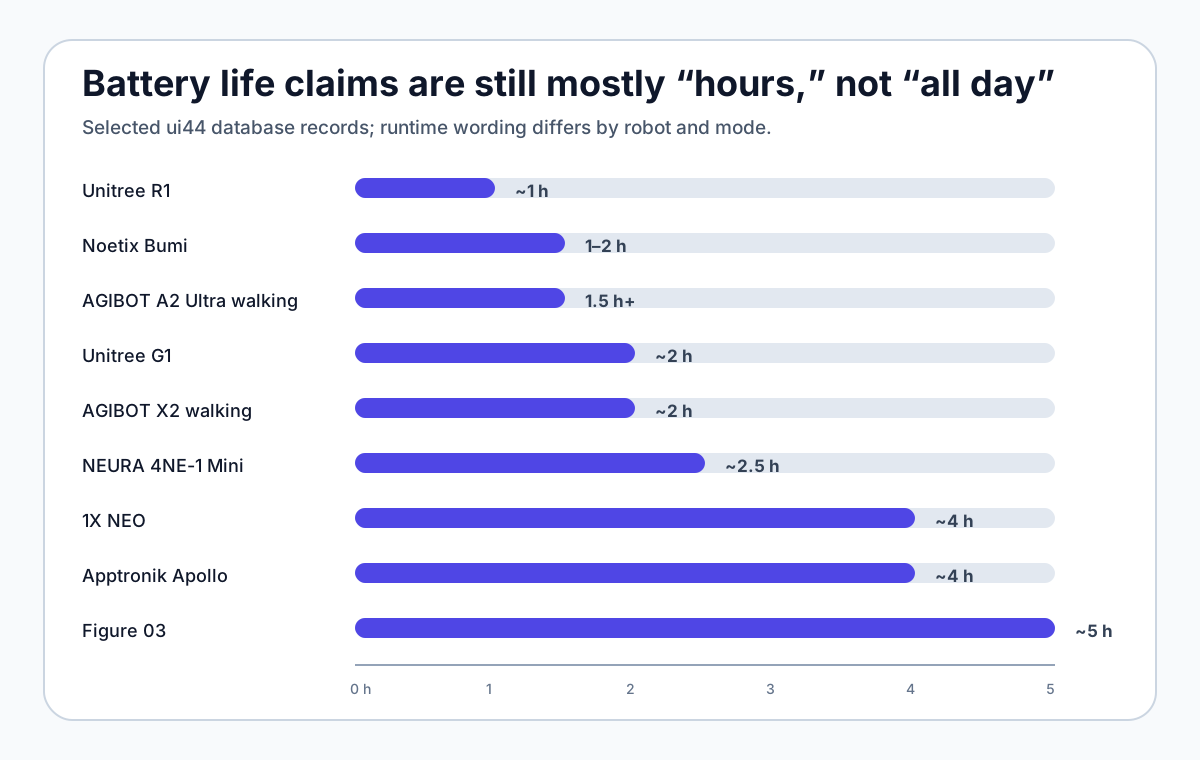
Humanoid robot battery life chart comparing home robot runtime claims

The short answer: a home humanoid is unlikely to do continuous physical work all day on a single battery in 2026. The more realistic near-term model is a robot that works in blocks, docks or swaps batteries, and spends most of its day idle, learning, waiting for instructions, or doing low-power sensing.

The ui44 Runtime Snapshot

Here is what current public spec data looks like for several home-relevant or home-adjacent humanoids and mobile manipulators tracked by ui44.

Robot Public price / status Claimed runtime What the number really means
Unitree R1 from $4,900, pre-order ~1 hour Compact, movement-first humanoid; short sessions, not chores all day
Noetix Bumi ~$1,370-$1,400, China-first pre-order 1-2 hours Education/companion-sized humanoid, not a full home labor platform
AGIBOT A2 Ultra enterprise pricing, available 1.5h+ walking / 3h standing Walking burns far more than standing presence
Unitree G1 from $13,500, available ~2 hours Research platform with enough power for demos and development sessions
AGIBOT X2 $24,240, available ~2 hours at 0.5 m/s walking Compact humanoid with a 500 Wh swappable battery
Booster T1 inquiry-only, active 2h walking / 4h standing Developer robot where posture and motion mode change the result
NEURA 4NE-1 Mini €19,999 / €29,999 pre-order ~2.5 hours Compact cognitive humanoid; Pro tier adds manipulation and teleoperation
1X NEO $20,000 early-adopter pre-order ~4 hours Home-focused design, but still a partial-day physical runtime
Apptronik Apollo enterprise, no public price ~4 hours Industrial/factory-first humanoid, not a consumer appliance yet
Figure 03 active, no public price ~5 hours Home-positioned messaging, but not a priced consumer product

The pattern is clear. Affordable compact humanoids are often closer to one or two hours. Larger commercial humanoids sometimes reach four or five hours, but they are usually priced for pilots, warehouses, factories, or early-access programs rather than normal households.

Why “All Day” Is Harder Than It Sounds

A humanoid robot is not a tablet on legs. The battery is powering compute, vision, wireless communication, speakers, microphones, cooling, balance control, arm motors, leg motors, hands, and safety systems at the same time.

Texas Instruments' robotics systems team framed the problem well in an April 2026 engineering interview: commercial humanoids need reliability at scale, deterministic real-time control, and system-level power and thermal efficiency before they can operate all day. That is the hidden part of the demo. The robot has to sense, decide, and actuate in milliseconds while keeping heat and peak power under control.

A home makes that harder. Factory robots can repeat a known motion in a known space. A home robot may need to walk across rugs, avoid pets, listen for a person, identify a dish, open a cabinet, decide whether a mug is safe to grab, and recover when the lighting changes. Every extra perception and control loop uses energy.

1X NEO home humanoid robot battery life and soft-body home robot design

1X NEO shows the most consumer-facing version of the trade-off. The ui44 record lists NEO at 167 cm tall, 30 kg, about four hours of battery life, and a $20,000 early-adopter price. 1X emphasizes softness, quiet operation, tendon-driven actuation, and Expert Mode for chores the robot does not yet know. Those are exactly the right design priorities for a home. They also underline why runtime is not the only spec that matters. A lighter, softer robot may be safer and easier to live with, even if it cannot run continuously for a full workday.

Runtime Labels Are Not Comparable Unless You Read the Fine Print

One of the easiest mistakes is to compare two battery-life numbers as if they measure the same thing. They often do not.

For example, AGIBOT A2 Ultra is listed with separate standing and walking figures: about three hours standing, but 1.5 hours or more walking. Booster T1 uses a similar distinction: two hours walking, four hours standing. AGIBOT X2 is more specific, claiming about two hours at 0.5 m/s walking.

Those differences matter because home work is spiky. Standing in a kitchen while listening is cheap compared with walking, balancing, lifting an object, turning, recovering from a slip, or holding an arm out while manipulating something.
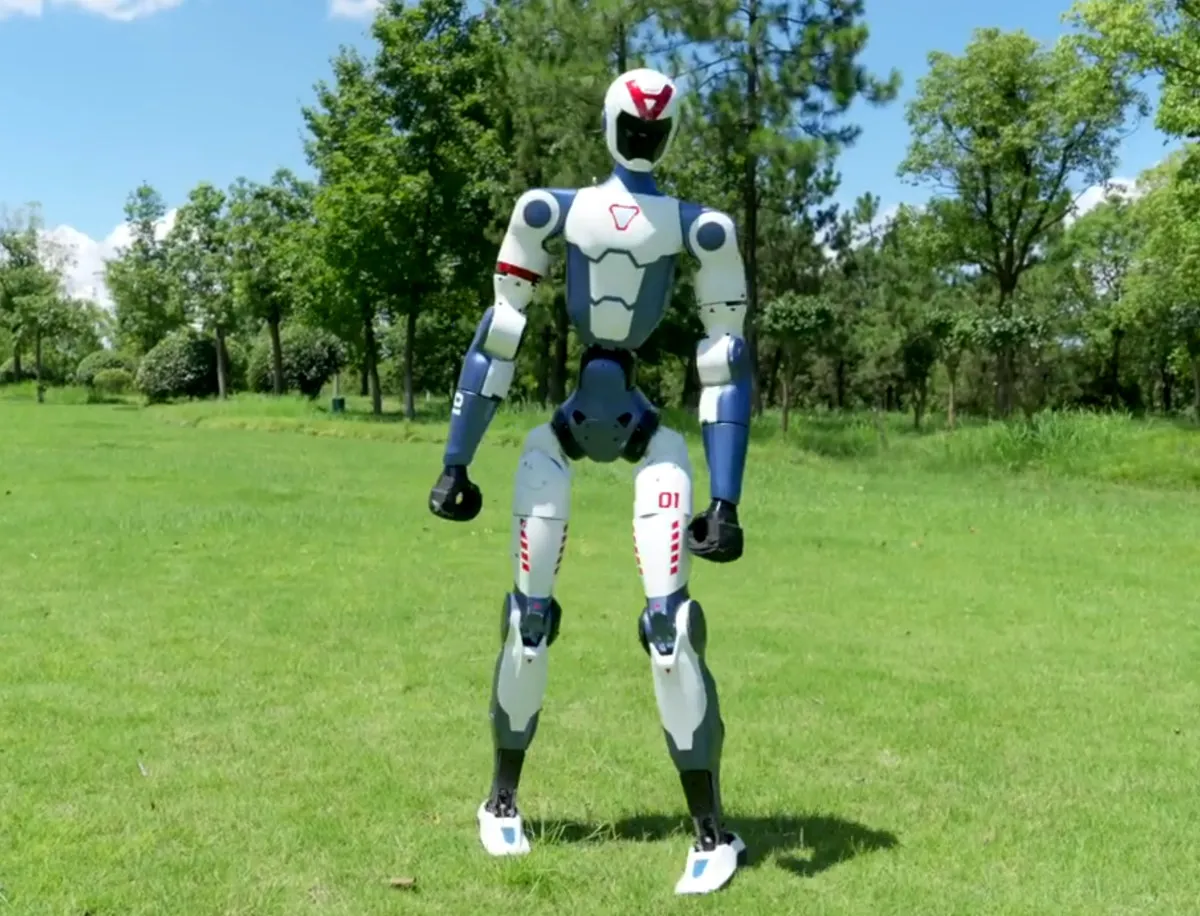
Unitree R1 compact humanoid robot battery life for home robot runtime comparison

Unitree's public pages are unusually useful here because they also include clear buyer warnings. Unitree R1 starts at $4,900 and claims about one hour of battery life. Unitree G1 starts at $13,500 and claims about two hours. Unitree also tells individual users to understand the limitations of humanoid robots before buying and to maintain a safe distance during operation. That is not a throwaway disclaimer. It is a good summary of where the market actually is: exciting hardware, limited continuous runtime, and a lot of responsibility pushed onto the buyer.

Heat Is the Quiet Runtime Killer

Battery capacity is only half the story. The other half is heat.

Motors generate heat. Motor drivers generate heat. Onboard processors generate heat. Compact hands and wrists are especially difficult because they need high power density in small spaces. If the robot is walking while running vision models and manipulating objects, the thermal problem compounds.

That is why efficient actuators, real-time current control, and cooling design matter. Unitree's G1 and R1 pages both call out low-inertia high-speed internal rotor PMSM motors with local air cooling. ROBOTIS positions AI Sapiens K0 around quasi-direct-drive Dynamixel-Q actuators for dynamic balancing and compliant manipulation, with a 46.8 V, 9000 mAh battery but no official runtime yet. These details are not consumer-friendly marketing, but they are meaningful clues. A robot with poor thermal design can have a large battery and still need to slow down, pause, or limit torque to protect itself.

Heat also changes the buyer experience. If a humanoid can do a dramatic three-minute demo, that does not prove it can fold towels for an hour, walk between rooms, then unload groceries. Long chores expose thermal limits that short demos hide.

Charging Strategy Matters More Than Peak Runtime

For a normal buyer, the practical question is not "what is the maximum battery life?" It is "how does the robot recover when the battery is low?"

A short-runtime robot can still be useful if it has a predictable job, an auto-docking station, and software that schedules work around charging. A longer runtime robot can still be frustrating if charging is manual, slow, or awkward.
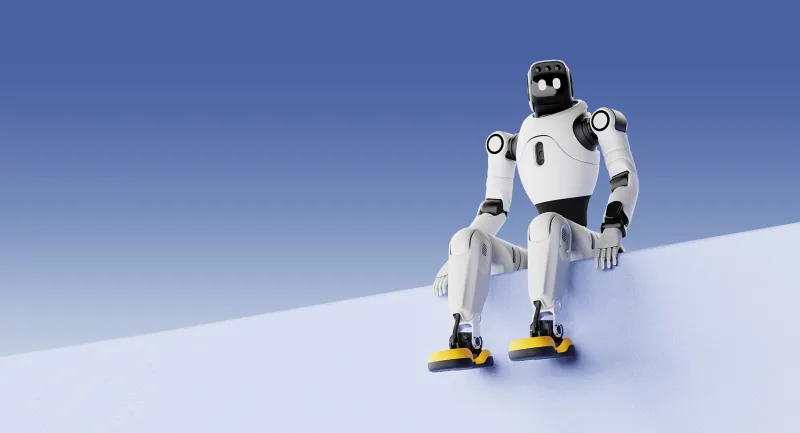
AGIBOT X2 compact humanoid robot swappable battery and charging strategy

AGIBOT X2 is a useful example. Its record lists a roughly 500 Wh battery, about two hours of operation at 0.5 m/s walking, charging in up to 1.5 hours, and a swappable battery. The Ultra tier also supports an optional auto-charging dock. That combination is more informative than runtime alone. It suggests the robot is intended for repeated sessions rather than one continuous shift.

The same idea appears in more industrial form with AGIBOT G2, which ui44 tracks as a wheeled humanoid with dual hot-swappable batteries, autonomous charging, and 24/7 operation language. That does not make it a home consumer robot. It does show the direction all-day systems may take: not one miracle battery, but a service design built around battery swaps, docking, and work scheduling.

The Robots That Avoid the Humanoid Battery Problem

Some of the most credible home robots avoid the full humanoid battery problem by not trying to be full humanoids.

Hello Robot Stretch 3 is a wheeled mobile manipulator with a 24.5 kg body, 2 kg payload, compact 33 x 34 cm footprint, and 2-5 hour runtime. It cannot walk like a person, but it is explicitly designed to reach useful home spaces with less mass and fewer balance problems.

Weave Isaac 0 goes further: it is mains powered at 600 W and built around a fixed laundry-folding task. That means it gives up free-roam humanoid fantasy in exchange for an appliance-like power model. For buyers, that can be a feature, not a compromise. If the job is folding laundry, plugging in near the laundry area may beat a walking humanoid that runs out of battery halfway through a load.
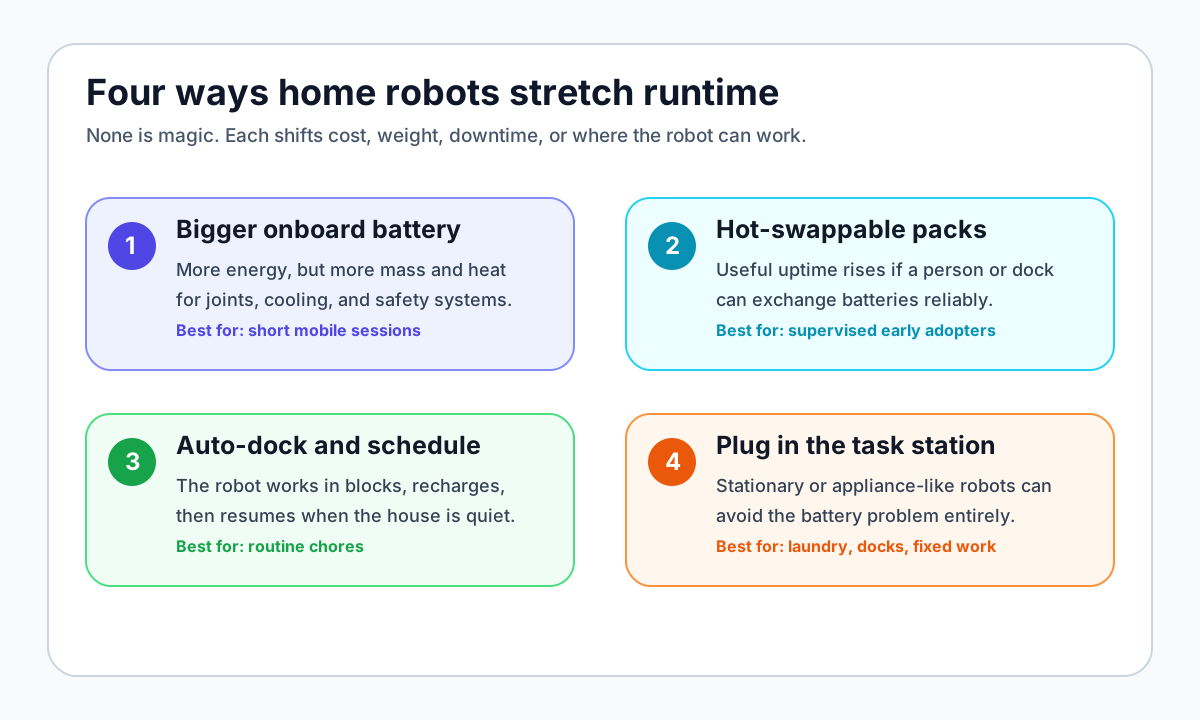
Home humanoid robot power strategies for extending useful runtime

This is the most important buying lesson: a robot does not need to be awake, walking, and manipulating all day to be useful. It needs a task design that fits its power system.

What Buyers Should Ask Before Preordering

If you are comparing home humanoids on ui44, do not stop at the battery-life line. Ask these questions instead:

  1. What mode was the runtime measured in? Standing, walking, mixed use, manipulation, standby, and demo mode are different things.
  2. Does the robot dock itself? Manual charging turns a "helper" into another device you must manage.
  3. Are batteries swappable? Swaps can extend uptime, but only if packs are safe, available, and not painfully expensive.
  4. How long is charging? A two-hour robot with a 90-minute charge behaves very differently from a two-hour robot with overnight charging.
  5. What happens under load? Carrying, reaching, gripping, and climbing drain power faster than standing in a showroom.
  6. Does the robot publish thermal limits? Few consumer-facing pages do, but cooling, motor design, and power electronics are central to real chores.
  7. Is the task worth a humanoid? If a fixed robot, docked appliance, or wheeled manipulator can do the job, it may be more reliable and cheaper.

Use /compare to put robots side by side, but treat runtime as a starting point, not a final ranking. A five-hour claim on an unpriced industrial platform may be less relevant than a two-hour claim on a robot that actually ships, docks, and has a realistic home task.

So, Can a Home Humanoid Work All Day?

In 2026, usually not in the way people imagine.

A home humanoid can plausibly be available all day: sitting on a dock, checking in when called, doing short scheduled tasks, and spending idle time charging. It can plausibly do a few useful physical sessions if the tasks are narrow and the home is prepared. What it probably cannot do is roam for eight hours, handle arbitrary chores, stay cool, stay safe, and never need a recharge.

The first useful home robots will feel less like a tireless butler and more like a managed system: task windows, charging windows, human approvals, battery swaps, teleoperation fallback, and conservative safety limits. That may sound less magical, but it is a healthier expectation. Runtime is not the end of the home humanoid story. It is the constraint that reveals which robot designs are honest about the work.

Database context

Use this article as a privacy verification workflow

Turn the article into a real verification pass

Humanoid Robot Battery Life: All-Day Work? already points you toward 14 linked robots, 12 manufacturers, and 5 countries inside the ui44 database. That matters because strong buyer guidance is easier to apply when you can move immediately from a claim or warning into concrete product pages, manufacturer directories, component explainers, and country-level context instead of treating the article as an isolated opinion piece. The fastest next step is to turn the article into a shortlist workflow: open the linked robot pages, verify which specs are actually published for those models, then compare the surrounding manufacturer and component context before you decide whether the underlying claim changes your buying plan.

For this topic, the useful discipline is to separate the editorial lesson from the catalog evidence. The article gives you the framing, but the robot pages tell you what each product actually ships with today: sensor stack, connectivity methods, listed price, release timing, category, and support-relevant compatibility notes. The manufacturer pages then show whether you are looking at a one-off launch, a broader lineup pattern, or a company that spans multiple categories. That layered workflow reduces the risk of buying on a single marketing phrase or a single support FAQ.

Use the robot pages to confirm which products actually expose cameras, microphones, Wi-Fi, or voice systems, then use the manufacturer pages to decide how much of the privacy question seems product-specific versus brand-wide. On this route cluster, R1, Bumi, and A2 Ultra form the fastest reality check. If you want a quick working shortlist, open Compare R1, Bumi, and A2 Ultra next, then keep this article open as the reasoning layer while you compare structured data side by side.

Practical Takeaway

Every robot, manufacturer, category, component, and country reference below resolves to a real ui44 page, keeping the follow-up path grounded in database records rather than generic advice.

Suggested next steps in ui44

  1. Open R1 and note the listed sensors, connectivity methods, and voice stack before you interpret any policy claim.
  2. Cross-check the wider brand context on Unitree Robotics so you can see whether the privacy question touches one model or a broader lineup.
  3. Use the linked component pages to confirm how common the relevant sensors and connectivity layers are across the database.
  4. Keep a short note of which policy layers you checked, which device features are actually present on the robot page, and which items still depend on region- or app-level confirmation.
  5. Finish with Compare R1, Bumi, and A2 Ultra so the policy reading sits next to structured product data.

Database context

Robot profiles worth opening next

Use the linked product pages as the evidence layer

The linked robot pages are where this article becomes operational. Instead of asking whether the headline is interesting, use the robot entries to inspect the actual mix of sensors, connectivity options, batteries, pricing, release timing, and stated capabilities attached to the products mentioned in the article. That is the easiest way to see whether the warning or opportunity described here affects one product family, a specific design pattern, or an entire buying lane.

R1

Unitree Robotics · Humanoid · Pre-order

$4,900

R1 is tracked on ui44 as a pre-order humanoid robot from Unitree Robotics. The database currently records a listed price of $4,900, a release date of 2025, ~1 hour (mixed activity) battery life, Not officially disclosed charging time, and a published stack that includes Binocular Cameras, 4-Mic Array, and Dual 6-Axis IMU plus Wi-Fi and Bluetooth 5.2.

For privacy-focused reading, this page matters because it shows the concrete device surface behind the policy discussion. Use it to verify whether R1 combines sensors and connectivity in a way that could change the in-home data footprint, and compare the listed capabilities such as Bipedal Walking & Running, Cartwheels & Handstands, and Push Recovery with any cloud, app, or voice layers, including UnifoLM (voice + image commands).

Bumi

Noetix Robotics · Humanoid · Pre-order

$1,370

Bumi is tracked on ui44 as a pre-order humanoid robot from Noetix Robotics. The database currently records a listed price of $1,370, a release date of 2025, 1–2 hours (48 V, 3.5+ Ah battery) battery life, Not officially disclosed charging time, and a published stack that includes IMU and Joint encoders plus Wi-Fi.

For privacy-focused reading, this page matters because it shows the concrete device surface behind the policy discussion. Use it to verify whether Bumi combines sensors and connectivity in a way that could change the in-home data footprint, and compare the listed capabilities such as Bipedal Walking, Running, and Dancing with any cloud, app, or voice layers, including Voice interaction (proprietary).

A2 Ultra

AGIBOT · Humanoid · Available

Price TBA

A2 Ultra is tracked on ui44 as a available humanoid robot from AGIBOT. The database currently records a listed price of Price TBA, a release date of 2024, Standing: 3h, Walking: 1.5h+ battery life, 2 hours charging time, and a published stack that includes 3D LiDAR, RGB-D Camera, and RGB Camera plus Wi-Fi and 4G/5G.

For privacy-focused reading, this page matters because it shows the concrete device surface behind the policy discussion. Use it to verify whether A2 Ultra combines sensors and connectivity in a way that could change the in-home data footprint, and compare the listed capabilities such as Bipedal Walking, Autonomous Navigation, and Intelligent Obstacle Avoidance with any cloud, app, or voice layers.

G1

Unitree · Humanoid · Available

$13,500

G1 is tracked on ui44 as a available humanoid robot from Unitree. The database currently records a listed price of $13,500, a release date of 2024, ~2 hours battery life, Not disclosed charging time, and a published stack that includes Depth Camera, 3D LiDAR, and 4 Microphone Array plus Wi-Fi 6 and Bluetooth 5.2.

For privacy-focused reading, this page matters because it shows the concrete device surface behind the policy discussion. Use it to verify whether G1 combines sensors and connectivity in a way that could change the in-home data footprint, and compare the listed capabilities such as Bipedal Walking, Object Manipulation, and Dexterous Hands (optional Dex3-1) with any cloud, app, or voice layers.

X2

AGIBOT · Humanoid · Available

$24,240

X2 is tracked on ui44 as a available humanoid robot from AGIBOT. The database currently records a listed price of $24,240, a release date of 2025, ~2 hours at 0.5 m/s walking battery life, ~1.5 hours charging time, and a published stack that includes 3D LiDAR (Ultra), RGB-D Camera (Ultra), and RGB Cameras plus Wi-Fi and Bluetooth.

For privacy-focused reading, this page matters because it shows the concrete device surface behind the policy discussion. Use it to verify whether X2 combines sensors and connectivity in a way that could change the in-home data footprint, and compare the listed capabilities such as Bipedal Walking, 25-30 DOF Articulation, and Object Manipulation (with OmniHand accessory) with any cloud, app, or voice layers.

Database context

Manufacturer context behind the article

Check whether this is one product story or a broader company pattern

Manufacturer pages add the market context that individual product pages cannot show on their own. They help you check whether the article is centered on a brand with a deep lineup, whether that brand spans several categories, and how much of its ui44 footprint depends on one flagship model versus a broader product strategy. That matters for topics like privacy, warranty terms, setup friction, and launch promises because the surrounding lineup often reveals whether a pattern is isolated or systemic.

Unitree Robotics

ui44 currently tracks 6 robots from Unitree Robotics across 2 categorys. The company is grouped under China, and the current catalog footprint on ui44 includes B2, B1, Go2.

That wider brand context matters because privacy questions rarely stop at one FAQ page. A manufacturer route helps you see whether the article is centered on one premium model or on a company that has several relevant products and therefore more than one place where the same policy or app assumptions might matter. The category mix here currently points toward Quadruped, Humanoid as the most useful next route if you want to see whether this article reflects a wider pattern inside the brand.

Noetix Robotics

ui44 currently tracks 2 robots from Noetix Robotics across 2 categorys. The company is grouped under Unknown, and the current catalog footprint on ui44 includes Hobbs W1, Bumi.

That wider brand context matters because privacy questions rarely stop at one FAQ page. A manufacturer route helps you see whether the article is centered on one premium model or on a company that has several relevant products and therefore more than one place where the same policy or app assumptions might matter. The category mix here currently points toward Commercial, Humanoid as the most useful next route if you want to see whether this article reflects a wider pattern inside the brand.

AGIBOT

ui44 currently tracks 6 robots from AGIBOT across 2 categorys. The company is grouped under China, and the current catalog footprint on ui44 includes A2 Ultra, X2, Expedition A3.

That wider brand context matters because privacy questions rarely stop at one FAQ page. A manufacturer route helps you see whether the article is centered on one premium model or on a company that has several relevant products and therefore more than one place where the same policy or app assumptions might matter. The category mix here currently points toward Humanoid, Quadruped as the most useful next route if you want to see whether this article reflects a wider pattern inside the brand.

Unitree

ui44 currently tracks 2 robots from Unitree across 1 category. The company is grouped under China, and the current catalog footprint on ui44 includes H1, G1.

That wider brand context matters because privacy questions rarely stop at one FAQ page. A manufacturer route helps you see whether the article is centered on one premium model or on a company that has several relevant products and therefore more than one place where the same policy or app assumptions might matter. The category mix here currently points toward Humanoid as the most useful next route if you want to see whether this article reflects a wider pattern inside the brand.

Database context

Broaden the scan without leaving the database

Categories, components, and countries add the wider context

Category framing

Category pages are useful when the article touches a buying pattern that shows up across brands. A category route helps you confirm whether the linked products sit in a narrow niche or whether the same question should be tested across a larger field of alternatives.

Humanoid

The Humanoid category page currently groups 61 tracked robots from 44 manufacturers. ui44 describes this lane as: Full-size bipedal humanoid robots designed to work alongside humans. From factory floors to household tasks, these machines represent the cutting edge of robotics.

That makes the category route a practical follow-up when you want to check whether the products linked in this article are typical for the lane or whether they sit at one edge of the market. Useful starting examples currently include NEO, EVE, Mornine M1.

Research

The Research category page currently groups 21 tracked robots from 16 manufacturers. ui44 describes this lane as: Academic and research robotics platforms pushing the boundaries of what machines can learn and do.

That makes the category route a practical follow-up when you want to check whether the products linked in this article are typical for the lane or whether they sit at one edge of the market. Useful starting examples currently include HRP-4C, HRP-5P, NAO6.

Country and ecosystem context

Country pages give extra context when support practices, launch sequencing, regulatory posture, or manufacturer mix matter. They are not a substitute for model-level verification, but they do help you see which ecosystems cluster together and which manufacturers sit in the same regional field when you broaden the search beyond the article headline.

China

The China route currently groups 46 tracked robots from 14 manufacturers in ui44. That gives you a useful regional lens when the article points toward support practices, launch sequencing, or brand clusters that may share similar ecosystem assumptions.

On the current route, manufacturers like AGIBOT, Roborock, Unitree Robotics make the page a good way to broaden the scan without losing the regional context that often shapes availability, documentation style, and adjacent alternatives.

Germany

The Germany route currently groups 2 tracked robots from 1 manufacturers in ui44. That gives you a useful regional lens when the article points toward support practices, launch sequencing, or brand clusters that may share similar ecosystem assumptions.

On the current route, manufacturers like NEURA Robotics make the page a good way to broaden the scan without losing the regional context that often shapes availability, documentation style, and adjacent alternatives.

Norway

The Norway route currently groups 2 tracked robots from 1 manufacturers in ui44. That gives you a useful regional lens when the article points toward support practices, launch sequencing, or brand clusters that may share similar ecosystem assumptions.

On the current route, manufacturers like 1X Technologies make the page a good way to broaden the scan without losing the regional context that often shapes availability, documentation style, and adjacent alternatives.

Database context

Questions to answer before you move from reading to buying

A follow-up FAQ built from the entities already linked in this article

Frequently Asked Questions

Which page should I open first after reading “Humanoid Robot Battery Life: All-Day Work?”?

Start with R1. That gives you a concrete product anchor for the article’s main claim. From there, branch into the manufacturer and component pages so you can tell whether the article is describing one specific model, a repeated brand pattern, or a wider technology issue that affects multiple shortlist options.

How do the manufacturer pages change the buying decision?

Unitree Robotics help you zoom out from one article and one product. On ui44 they show lineup breadth, category spread, and the neighboring robots tied to the same company. That context is useful when you are deciding whether a risk belongs to a single model, whether it shows up across a brand’s portfolio, and whether you should keep looking at alternatives before committing.

When should I switch from reading to side-by-side comparison?

Move into Compare R1, Bumi, and A2 Ultra as soon as you understand the article’s main warning or promise. The article explains what to watch for, but the compare view is where you can check whether price, status, battery life, connectivity, sensors, and category fit still make the robot a good match for your own home and budget.

Database context

Where to go next in ui44

Keep the research chain inside the database

If you want to keep going, these follow-on pages give you the cleanest expansion path from article to research session. Open the comparison route first if you are deciding between products today. Open the manufacturer, category, and component routes if you still need to understand the broader pattern behind the claim.

UT

Written by

ui44 Team

Published April 26, 2026

Share this article

Open a plain share link on X or Bluesky. No embeds, no widgets, no cookie baggage.

Explore the database

Go beyond the headlines

Compare specs, features, and prices across 100+ robots from leading manufacturers worldwide.