Category lead
Humanoid · 38%
The route is deepest in Humanoid, with Commercial as the next strongest follow-through.
9 manufacturers and 13 tracked robots, shaped into a country brief that shows where Germany is deepest, how much of the route is actually sourceable, and which maker pages deserve the next serious click.
Catalog rank
#4
Listed Available
4/13
Recorded numeric price
6/13
What matters first
Use the top-line signals here to judge whether this country already gives you enough breadth, price visibility, and vendor depth to build a serious shortlist.
Recorded numeric prices
Multiple currencies (EUR, GBP)
Release window
2024–2026
Source coverage
13/13 official links
Category lead
The route is deepest in Humanoid, with Commercial as the next strongest follow-through.
Coverage quality
46% with recorded numeric prices and 69% image-backed, which tells you how quickly this route can turn into a shortlist instead of a research backlog.
Maker concentration
NEURA Robotics contributes the biggest slice of tracked models, so this route is broad enough to compare beyond one flagship.
Open next
Peer routes
Start with the deepest categories and the strongest coverage signals before drilling into individual models.
9
Manufacturers
7
Tracked categories
4
Listed Available
6/13
Models with numeric prices
Category counts, availability mix, and price range reworked for a quicker first pass.
Germany can look dominant in this route simply because it is better represented in the ui44 catalog. Treat the counts as a shortlisting aid, then validate the winners on model pages and vendor material.
13 tracked models, restructured into a shortlist-first flow with featured picks up top and denser rows for the long tail.
Start with the models that are easiest to validate — the ones with live imagery, public pricing, or enough documentation to justify a deeper click. Then use the compact rows below to sweep the rest of the market without turning the page into a wall of oversized cards.
Listed Available
4
Numeric price recorded
6
With imagery
9
Manufacturers
9
How to scan this section
Best first clicks
These models score highest on status order, public detail quality, and image clarity, so they orient the route faster than a purely alphabetical sweep.
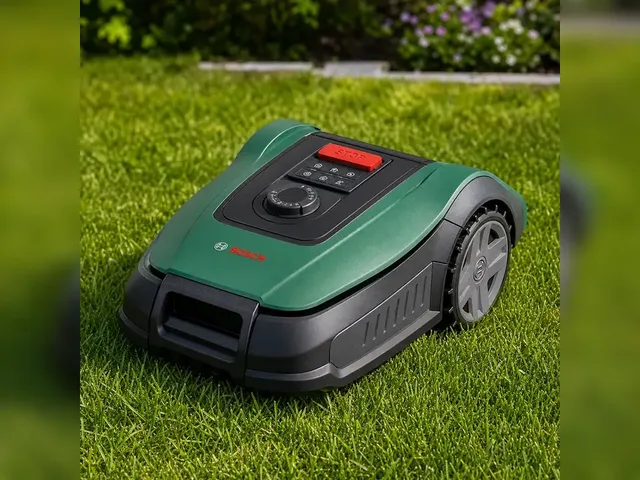
The Bosch VISIMOW18V-100 is a compact, wire-free robotic lawn mower designed for small gardens up to 100 m². Setup requires no boundary wires, RTK antennas, or beacons — place it on the lawn, press three buttons, and it starts mowing within seconds. A SmartVision camera identifies grass and lawn boundaries, while ultrasonic and bump sensors handle obstacle avoidance. The mower uses a random cutting pattern with a three-blade disc (16 cm cutting width) and offers adjustable cutting height from 20 to 60 mm. A dedicated SpotMow mode targets any patches the mower misses, such as areas under moved furniture. It runs on a removable 18 V lithium-ion battery from the POWER FOR ALL ALLIANCE ecosystem, which shares one battery across 10+ brands and 150+ products. Compact and lightweight at 6.9 kg, it is easy to carry between front and rear lawns, tiered gardens, or multiple zones. Listed as Available with a recorded price; confirm current ordering and delivery terms.
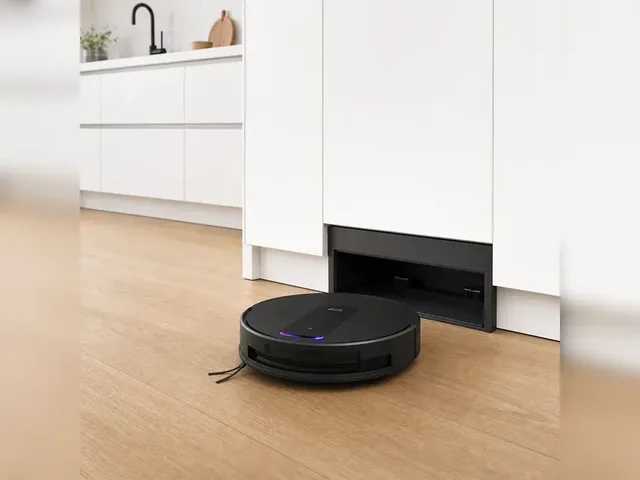
Bosch's BCRI3BX1 is a built-in robot vacuum and mop designed to live inside a kitchen plinth instead of beside a wall. Its fully integrated service station connects to fresh and waste water lines, hides the robot inside the cabinetry, empties the dust container, washes the mop with 70 °C water, dries it with 45 °C hot air, and self-cleans the station. The low-profile 8.4 cm robot delivers up to 20,000 Pa suction and uses laser navigation with camera, cross-laser, infrared, and touch sensors. Bosch positions it as an accent line appliance controlled through Home Connect, while independent launch coverage reports European store availability from spring 2026 and development in collaboration with ECOVACS. Listed as Available; confirm pricing, ordering and delivery terms.
Full directory
Sorted by status, then currency code and price within each currency; unlisted prices come last within each status.
Iggy Rob Home is igus's wheeled humanoid service robot variant for reception and information areas, education and research, catering, building-service tasks, in-house transport, and AI training. It adapts the Iggy Rob platform from industrial environments to service and household-adjacent settings with a ReBeLMove Pro AMR base instead of legs, two ReBeL robot arms, configurable 1.30 to 1.70 m height, quieter service-focused motion profiles, a simple facial-expression display, preconfigured service functions, an integrated linear axis, and optional rear-basket transport. igus says the system is CE-certified, ROS 2 controlled, prepared for VDE 5050 fleet operation, supports wireless charging, and uses LiDAR plus 3D cameras for navigation, object recognition, and gripping. The company announced availability from EUR 55,000 in June 2026, with test-before-purchase evaluation and integration support. Listed as Available with a recorded price; confirm current ordering and delivery terms.
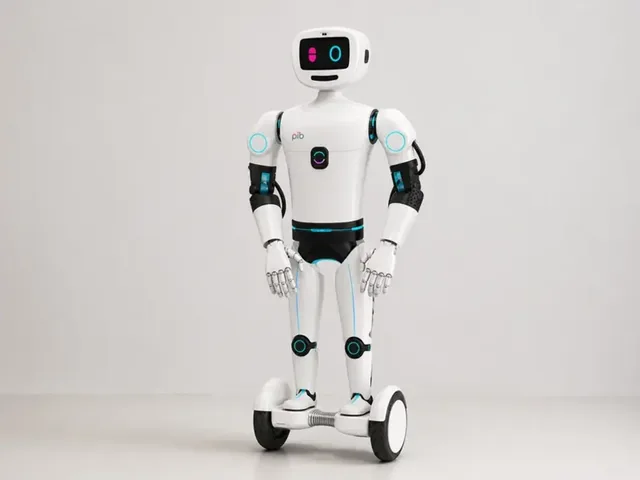
pib.Pro is isento robotics GmbH's professional version of the open-source pib humanoid platform. The official April 2026 pib.Pro page describes it as Europe's first open, ready-to-ship humanoid robot and positions it for pilot customers in manufacturing support, clinical and rehabilitation assistance, education, research, and custom automation development. Compared with the maker-focused 3D-printable pib project, pib.Pro emphasizes stronger hardware, higher payload, precise motors, advanced 3D vision, LiDAR, onboard AI, and modular integration of sensors, actuators, and ROS software modules while keeping an open, GDPR-conscious European platform model. Listed as Available; confirm pricing, ordering and delivery terms.
CA-1 Series 4 is Circus SE's autonomous meal-production robot for supermarkets, workplaces, mobility hubs, hospitality, care, schools, and other public food-service sites. The installed system fits into a 7 m2 footprint and automates ingredient storage, cooking, plating, heated pickup, cleaning, and fleet monitoring through Circus OS. Circus says the system can produce about 800 meals per day, operate 24/7, use up to 36 ingredient silos, and needs less than one hour of daily human interaction. The first REWE supermarket deployment opened in Dusseldorf-Heerdt on October 29, 2025, with additional pilot locations planned or under construction. Active in the catalog; verify the latest media and rollout details.
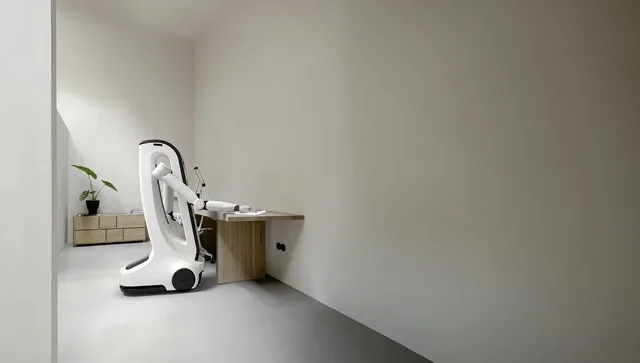
MiPA (My intelligent Personal Assistant) is NEURA Robotics' cognitive household and service robot for private homes, care, hospitality, retail, healthcare, and workplace support. Official product and reservation pages position it as a smart personal assistant that can transport items, serve, guide, interact, and support daily routines through modular attachments such as a backpack, shelf, table, hook, clip system, and tool-change modules. NEURA's Automatica 2025 launch described MiPA as the market launch of a cognitive household and service robot with an open platform, Neuraverse skills, and partner hardware or IoT integrations; the current reservation page lists MiPA Home at €9,999 with a refundable €100 reservation fee. Verified official specs include 16 degrees of freedom for the base robot, 2-8 hours of motion endurance, SLAM/LiDAR and AI-driven planning for autonomous mobility, 360° perception, person recognition up to three meters, environmental sensors, multimodal touch/display/microphone/speaker/LED/projector interaction, Wi-Fi and Bluetooth, and automatic recharging. Exact height, weight, payload, charging time, delivery regions, and production shipment status are not publicly confirmed. Commercial intent is clear, but delivery timing should be validated.
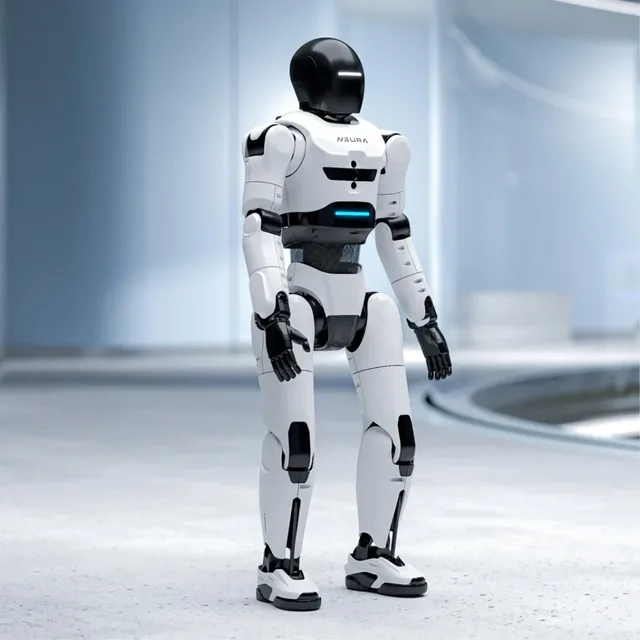
The 4NE-1 Mini is a compact cognitive humanoid from NEURA Robotics, designed as a more accessible sibling of the full-size 4NE-1. Standing 132 cm tall and weighing 36 kg, it packs the same cognitive AI platform — including NVIDIA Isaac GR00T XX foundation models and the Neuraverse fleet-learning OS — into a smaller frame suited for research, education, and light service roles. The Mini offers 25 degrees of freedom, a 3 kg payload, and roughly 2.5 hours of battery life. Two tiers are available: Standard (€19,999) for basic interaction, education, and entertainment, and Pro (€29,999) which adds 12-DOF dexterous hands, C++ SDK, digital twin access, and teleoperation. NEURA positions the Mini as the first Western-produced humanoid at this price point, directly competing with Chinese imports like the Unitree G1. The robot debuted publicly at CES 2026 in January and made headlines in March 2026 by performing on-field tasks during a Bundesliga match at VfB Stuttgart's MHPArena — the first humanoid robot to participate in a professional football match. Official reservation wording now says reservations are open and both Standard and Pro versions are expected to be available in 2026. Commercial intent is clear, but delivery timing should be validated.
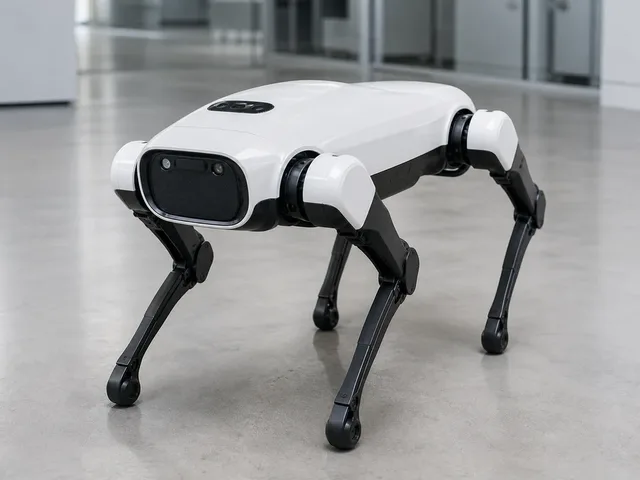
NEURA Quadruped is a four-legged explorer robot from NEURA Robotics for inspection, surveillance, payload transport, research, and other complex-environment work. NEURA introduced the robot in its CES 2026 program and now lists a reservation page and datasheet. Official materials describe a 620 mm tall, 60 kg platform with a 22 kg payload, 12 km/h top speed, six-hour battery life, 15 cm step capability, 360° environment vision, intelligent mapping, path planning, obstacle avoidance, and multi-sensor fusion for fully autonomous operation over rough terrain, stairs, and obstacles. The robot integrates with the Neuraverse through NEURA Sync and supports Wi-Fi 6, Gigabit Ethernet, ROS 2, C++, Python SDK access, teleoperation, digital twin access, and readiness for Neura Gym training. Public availability remains pre-order/reservation only, with final delivery timing, charging time, detailed sensor bill of materials, and regional sales terms not yet fully disclosed. Commercial intent is clear, but delivery timing should be validated.

The 4NE-1 is a cognitive humanoid robot from NEURA Robotics, a Stuttgart-based company founded in 2019. Standing 180 cm tall and weighing 80 kg, it's built for both industrial and domestic use. The robot features 360-degree 3D perception, force-torque sensors on all joints, and a sensor skin for safe human interaction. It learns autonomously through reinforcement learning and can operate independently or via remote control. NEURA partnered with NVIDIA to accelerate development using their robotics simulation platform. Current official product metrics list 5 km/h speed and a 10–100 kg payload range, while the reservation page positions Gen 3.5 availability for the end of 2026. A smaller variant, the 4NE-1 Mini, is planned for research and education use. Commercial intent is clear, but delivery timing should be validated.

Devanthro's Robody is a home-care robotic avatar designed for older adults and other home-assistance use cases. The Munich company says its latest home-care generation was unveiled in November 2024 after tests in real private homes, and that Robodies have been deployed in homes since early 2024. Instead of relying on full autonomy, Robody combines AI for routine chores and monitoring with VR teleoperation for tasks that need human judgment, empathy, or dexterous intervention. Official and independent coverage describe it handling medication reminders, meal preparation, fetching items, conversation, and remote family or caregiver visits, while Devanthro positions the current commercial model as a subscription-based Robody Cares service rather than a conventional retail hardware sale. Commercial intent is clear, but delivery timing should be validated.
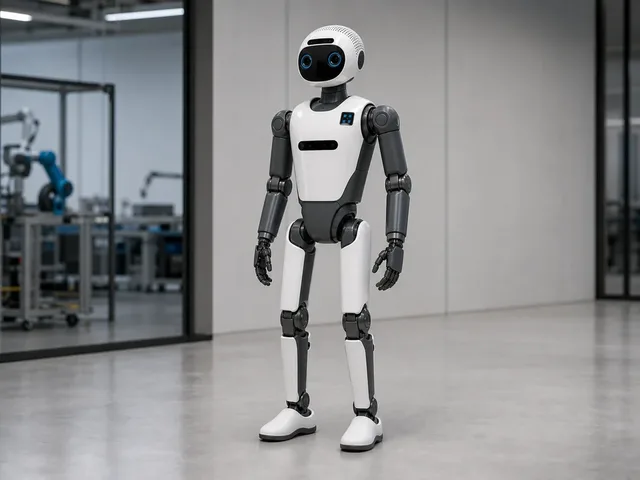
Full-size industrial humanoid robot from Munich-based Agile Robots, designed to work alongside humans on factory floors. Standing 174 cm tall, Agile ONE features dexterous hands with 21 joints per hand, integrated force and tactile sensors for precise manipulation, and a layered AI architecture trained on real-world industrial data. Equipped with cameras, LiDAR, and speech recognition for environmental perception and human interaction. Moves at up to 2 m/s and communicates intent through a chest display, expressive eyes, and proximity sensors. Series production is planned for 2026, with Google DeepMind's Gemini Robotics models being integrated following a strategic partnership announced in March 2026. Useful for roadmap scanning, not yet a clean near-term shortlist.
MOBY A1 is Sphaira's autonomous one-person shuttle concept for intra-hospital patient and visitor transport. The system builds on Sphaira's MOBY platform and targets low-speed, high-stakes indoor environments such as hospitals, using a hospital-optimized H-frame, app and API integration, 360-degree redundant perception, Nvidia-powered onboard AI, human-motion trajectory prediction, mapping, perception, prediction, control, and remote teleguidance for difficult edge cases. Sphaira says it is developing autonomous on-campus transport for non-bedridden patients at Universitätsklinikum Schleswig-Holstein, while a reported Mayo Clinic design-input agreement focuses on Sphaira's one-person shuttle and guidance robot for clinical workflows and early validation. Useful for roadmap scanning, not yet a clean near-term shortlist.
Athena is an open-hardware tracked rescue robot from the SIM Group at the Technical University of Darmstadt. The research platform combines a whole-body crawler chassis with four independently reconfigurable flippers, a central 7-DoF manipulator, LiDAR and camera-based environment perception, and a custom remote emergency-stop system. The team designed Athena for rough-terrain search-and-rescue research: it has demonstrated 41 cm step traversal, 45-degree stair climbing, valve and button manipulation, and payload handling up to 7.2 kg close to the base or 2.9 kg at full 1.54 m reach. CAD, PCB, and low-level software files are public for research reference, but the robot is a prototype rather than a commercial product. Best treated as an exploratory lead until field readiness improves.
Ranked signals and price structure replace the old sprawling chip walls so the data reads faster on both mobile and desktop.
| # | Name | Usage |
|---|---|---|
| 1 | LiDAR | 4 · 31% |
| 2 | Cameras | 3 · 23% |
| 3 | Force/Torque Sensors | 2 · 15% |
| 4 | Voice Recognition | 2 · 15% |
| # | Name | Usage |
|---|---|---|
| 1 | Wi-Fi 6 | 4 · 31% |
| 2 | NEURA Sync | 3 · 23% |
| 3 | Gigabit Ethernet | 2 · 15% |
| # | Name | Usage |
|---|---|---|
| 1 | Autonomous Navigation | 4 · 31% |
| 2 | 25 Degrees of Freedom | 2 · 15% |
| 3 | Human-Safe Collaboration | 2 · 15% |
USD only: 0 priced of 13 total · 6 priced in other currencies (excluded) · 7 without a recorded numeric price
| # | Name | Share |
|---|---|---|
| 1 | Pre-order | 5 · 38% |
| 2 | Available | 4 · 31% |
| 3 | Development | 2 · 15% |
| 4 | Active | 1 · 8% |
| 5 | Prototype | 1 · 8% |
Use peer routes to widen discovery only when they genuinely add more depth or a different market shape.
Decision lens
Use peer routes to add meaningful category overlap, more manufacturer breadth, or different published currency coverage. If the current route already answers those questions, wider browsing usually adds noise faster than it adds signal.
Catalog rank
#4
Share of tracked robots
3%
Avg shared categories
5.5
What to watch
Stay here when
You already have enough mature candidates, enough manufacturer depth, and enough price visibility to build a shortlist.
Compare outward when
The route is thin in your target category, clustered around one maker, or clearly skewed toward missing prices.
Best next click
Open the peer that changes the search shape the most — not just the next biggest route by raw robot count.
Peer route
Broader catalog depth · High category overlap
Common ground: Humanoid, Cleaning +5
Open routePeer route
Broader catalog depth · High category overlap
Common ground: Humanoid, Commercial +5
Open routePeer route
Broader catalog depth · High category overlap
Common ground: Research, Commercial +2
Open routePeer route
Similar catalog depth · High category overlap
Common ground: Cleaning, Humanoid +2
Open routeOpen another country route
Need the full directory? Browse all country pages.
This route is a structured view of ui44 dataset entries whose manufacturer headquarters label maps to Germany. The numbers on the page are generated from the catalog itself, not from outside shipment estimates or broad market-share reports. In practice, that means the route is best used for discovery and shortlisting inside this database: how many manufacturers are represented, how many robots are listed, which categories appear most often, and which lifecycle statuses show up across those records. It is useful because it compresses search time, but it should not be treated as proof that Germany leads the global robotics market in absolute terms.
Not by itself. A higher count here only indicates stronger representation in the ui44 catalog. It does not automatically prove global production leadership, deployment leadership, or shipment volume across every region. The practical value is relative orientation: if Germany has more entries than another country route in this catalog, you have a broader internal shortlisting surface to explore before you need outside research. Treat the count as a catalog-depth signal, then validate market importance with model-level evidence, current vendor activity, and real deployment references.
Available listings: 4. Pre-order listings: 5. Active records: 1. Available indicates an ordering listing, not confirmed stock. Pre-order indicates a reservation listing, not immediate delivery. Active status alone does not confirm public purchase availability or deployment. Other statuses do not establish a current purchase listing. Confirm regional access, stock, reservation terms, and delivery with the manufacturer.
Recorded numeric prices by currency: EUR €10k–€98k; GBP £436. 6 of 13 records have a recorded numeric price. Ranges and averages cover only those records and are calculated separately within each currency; no currency conversion or cross-currency affordability ranking is implied. Missing numeric prices do not establish a budget tier or the absence of other pricing terms. Check individual model pricing notes for membership, lease, quote or other terms. Confirm applicable charges and terms with the manufacturer.
Many robotics vendors publish capabilities without publishing a universal list price. Enterprise and service robots often depend on integration scope, software packages, service bundles, deployment country, or support contract terms. For that reason, a missing price should be read as “no numeric price recorded”, not as “cheap,” “premium,” or “not for sale.” Check individual model pricing notes for membership, lease, quote or other terms. Where a quote is needed, request a consistent cost breakdown. Ask each vendor for the same structure — hardware, accessories, onboarding, software, maintenance, and training — so the comparison stays apples to apples.
Yes. The route is useful because it compresses a large amount of catalog coverage into a cleaner planning sequence. Start with category concentration to see where the route is deepest, then use the robot cards to understand maturity and price posture, and then branch into manufacturer pages for documentation depth and product-family context. That path lets a team move from broad market scanning to a more disciplined shortlist without losing the reason each candidate advanced. It is not a substitute for pilots, but it is a strong way to reduce search time before pilots begin.
A practical stack is: (1) robot count share, (2) manufacturer count, (3) category overlap, and (4) price posture. This avoids over-indexing on a single number. A country can have a large catalog footprint and still be narrow in category variety, or it can have strong overlap with Germany but a much smaller pool of vendors. The peer-country table on this page is built for exactly that question: when is the current route enough, and when does a second country route add real search value? The answer should always be based on overlap and options, not on raw count alone.
Use the manufacturer links as a decision funnel. First, eliminate makers whose categories clearly do not fit your target workflow. Second, prioritize makers with model statuses aligned to your timeline. Third, inspect documentation depth on the manufacturer route: number of tracked robots, link quality, and whether the catalog shows breadth or a single flagship model. Finally, move only the strongest makers into structured outreach. That process turns a long route into a smaller, evidence-backed vendor set instead of an endless browse session.
Open peer-country routes when you need deeper category overlap, more manufacturer options, or a meaningfully different listed price profile. If the current route already covers your target workload with enough mature candidates, widening the search too early can create noise. If the route is strong in one segment but thin in another, or if the strongest candidates are clustered around a single manufacturer, that is a good signal to compare another country route before vendor outreach. The goal is not maximal browsing. The goal is enough market breadth to create a resilient shortlist.
Sensor stacks usually follow task design. Cleaning robots lean on LiDAR, vision, cliff sensing, and proximity systems to manage navigation and obstacle avoidance. Humanoid and quadruped systems tend to add richer perception, force feedback, or balance-oriented sensors. Delivery and patrol robots often mix cameras, positioning, and environmental sensing for wider-area coverage. The ranked signal tables on this route help with pattern detection, but the final evaluation should always ask whether a sensor suite matches your environment: indoor versus outdoor use, lighting conditions, floor changes, obstacle density, and how much autonomy you actually expect on day one.
Most modern robots expose Wi‑Fi and Bluetooth as baseline options, while higher-end systems may add cellular links, more advanced fleet connectivity, or integration-specific interfaces. The important question is not whether a connectivity term appears in the catalog; it is whether that connectivity fits your security policy, latency needs, facility coverage, and support model. For teams in enterprise or regulated environments, network segmentation, update policy, remote diagnostics, and account governance often matter more than the presence of a single radio standard. Treat connectivity labels as a starting filter, then verify integration details directly on the robot page and with the vendor.
Total cost of ownership is usually far larger than base hardware price. A good TCO model includes integration engineering, onboarding, operator training, software fees, consumables, replacement parts, maintenance windows, and downtime risk. For larger deployments, it may also include facility changes, charging infrastructure, support response commitments, or workflow redesign. The value of this route is that it helps you compare the catalog’s listed price posture quickly, but budgeting should never stop there. Normalize every quote into the same cost structure before ranking vendors, especially when some models publish price and others do not.
AI matters most when it improves a task in a way your team can actually verify. In practice, that may mean navigation quality, better object handling, stronger voice interaction, more resilient path planning, or better adaptation to changing environments. Some vendors push more on-device intelligence, while others rely on cloud services for heavier processing. The core buying question is not whether “AI” appears in the marketing copy; it is whether the implementation matches your latency expectations, privacy requirements, connectivity assumptions, and failure handling model. Use AI claims as a hypothesis generator, not as a substitute for proofs during pilot work.
Not necessarily. In this project, the country route is driven by the manufacturer headquarters label used for catalog organization. Manufacturing, integration, and service footprints can span several regions, and those realities do not always map cleanly to a single headquarters country. That means this route is excellent for navigation and initial analysis, but it is not enough for supply-chain, compliance, or local-service decisions. If geography matters for your deployment, verify model-level sourcing, support region, and service coverage directly with the vendor before committing budget.
Low representation is still meaningful. It may signal a narrow route with a small but relevant set of candidates, or it may indicate that the strongest options for your use case live somewhere else in the catalog. In those cases, use the current route for orientation, then widen the shortlist through category pages, manufacturer pages, and peer-country comparisons. The important thing is to keep the original reason for the search intact. A smaller route is not useless; it simply changes how quickly you should branch into the rest of the database.
Revisit at every major decision gate: initial discovery, post-RFI narrowing, and pre-pilot signoff. Country routes are especially useful for spotting newly represented manufacturers, new models, or lifecycle changes that can change the shortlist after the first pass. That cadence helps teams avoid stale screenshots, old notes, or memory-driven assumptions. A route review does not need to be long. It just needs to be consistent enough that the shortlist reflects the current catalog rather than a one-time snapshot taken weeks earlier.
The common mistake is treating country rank as a substitute for fit. A country can look strong by count and still be a poor match for your workload, budget, support constraints, or deployment environment. The better sequence is layered: use the country route for orientation, manufacturer and category routes for narrowing, robot detail pages for proof, and pilot work for final selection. That keeps the process fast without allowing a high-level catalog signal to overpower the operational reality of the deployment.