The public signal is hiring, not a consumer launch. OpenAI currently has robotics-related roles such as Simulation Realism Engineer and Technical Program Manager, Robotics Data Acquisition. Those titles point to simulation, data collection, and embodied AI work. They do not prove that OpenAI is about to sell a home humanoid.
For buyers, that distinction matters. A good language model can make a robot sound smarter. It can help a robot understand instructions, recover from vague commands, and explain what it is doing. But a useful home robot also needs a body that can move safely, hands that can manipulate messy objects, sensors that work in ordinary rooms, warranties, parts, and a price that makes sense outside a lab.
The Hiring Signal Is About Embodied AI
OpenAI's current public robotics signal looks like an infrastructure buildout: simulation realism, data acquisition, robotics firmware, and hardware-adjacent roles appearing in career listings. That is the work you do when you need robots to learn from physical data instead of only internet text, code, images, or video.
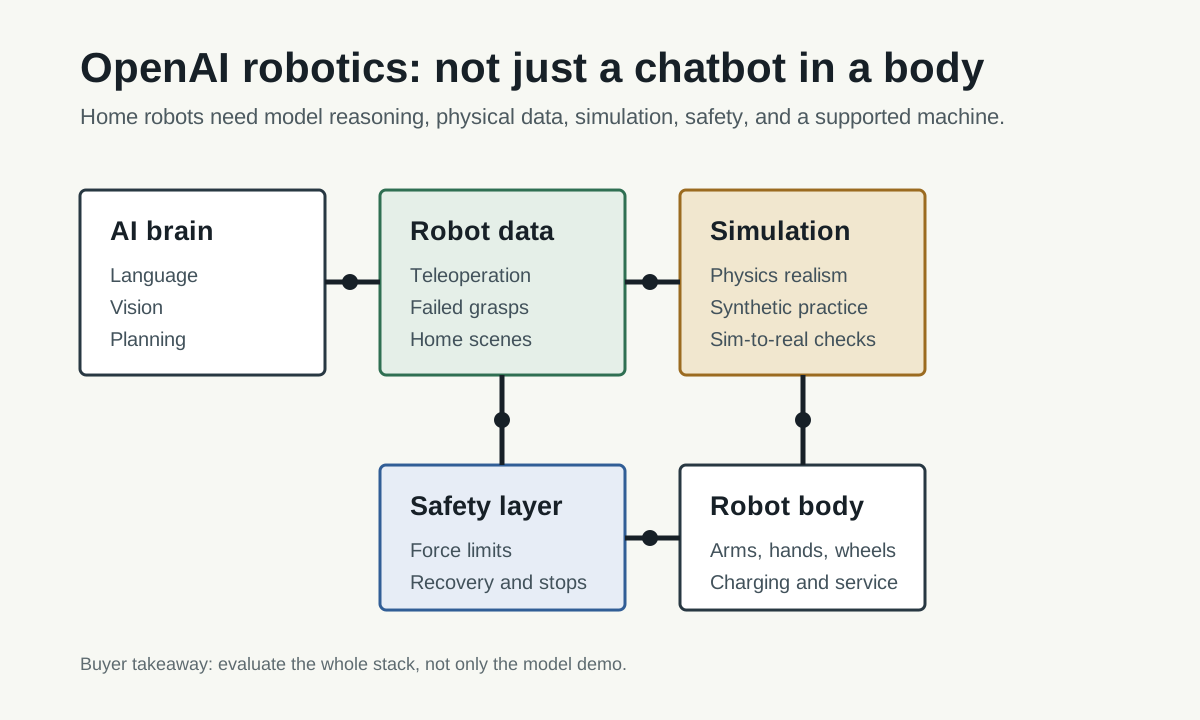
Simulation realism is especially important. If a robot learns a task in a virtual world, the lesson only matters if it transfers to the real world. A drawer sticks. A shirt folds differently every time. A kitchen floor has chair legs, pets, cables, shadows, and spilled water. Home robots fail in these small physical details, not just in high-level reasoning.
Robotics data acquisition points in the same direction. Today's general AI models have been trained on enormous digital datasets. Home robotics needs a different kind of data: camera views from rooms, force feedback from grippers, failed grasps, recovery attempts, safe handoffs near people, and repeated chores performed with real hardware. That data is slow and expensive because robots cannot collect it at the same speed that servers process text.
This makes the likely near-term OpenAI robotics role less glamorous but more important. OpenAI may help create better robot policies, multimodal reasoning, simulation pipelines, and data systems before it ever sells a branded robot body. For home buyers, that could still change the market, because many robot companies are already strong in hardware but weaker in general-purpose reasoning.
Body Versus Brain Is The Wrong Split
It is tempting to split home robots into two clean parts: the body and the brain. The body walks, rolls, grips, and charges. The brain listens, reasons, plans, and talks. Real robots are messier.
A robot's "brain" needs to know what its body can actually do. A humanoid that can talk about cleaning a shelf is not useful if its hands cannot pick up a glass, its balance is unreliable, or its battery dies after a short demo. A robot body also changes what the AI can learn. A wheeled home assistant has different affordances than a biped humanoid, and a two-finger gripper creates different tasks than a dexterous hand.
That is why the most practical OpenAI robotics outcome may be a stack rather than a product: data systems, simulation environments, model interfaces, and robot-control tools that make many bodies more capable. If OpenAI builds its own robot, the same stack still has to exist underneath it.
The home market is already proving that buyers should evaluate both layers. 1X NEO is a pre-order humanoid listed in the ui44 database at $20,000, with household chores, tidying, safe human interaction, adaptive learning, and gentle manipulation as claimed capabilities. That price buys a serious home-humanoid promise, but it is still a pre-order.
Unitree G1 is available at $13,500 and is better framed as a research and development humanoid, with bipedal walking, object manipulation, optional dexterous hands, and secondary development support. Unitree R1 is listed at $4,900 on pre-order, which is a dramatic price signal, but its public strengths are motion, recovery, voice and image interaction, and gesture recognition rather than finished household labor.
SwitchBot onero H1 sits closer to the home assistant category. It is a development-stage wheeled home robot in our database at $9,999, with indoor navigation and household object manipulation demos. That is a reminder that the first useful OpenAI-powered home robot might not be a walking humanoid at all.
What Current Robots Tell Us About OpenAI's Path
The existing home-humanoid market gives OpenAI three obvious routes.
The first route is a full robot. OpenAI could design hardware, software, data collection, simulation, safety systems, and the user experience end to end. That would create the clearest consumer story, but it is also the hardest route. Robots need supply chains, service networks, repair plans, safety certification, and years of physical iteration. A model company can move quickly in software; household hardware punishes shortcuts.
The second route is a platform for other robot makers. OpenAI could supply the reasoning layer, task planner, speech interface, vision-language model, or data tooling while companies such as 1X, Figure AI, Unitree, SwitchBot, or others build the machines. This is more plausible in the near term because the robot market already has bodies looking for better autonomy.
The third route is internal infrastructure first. OpenAI could use robotics to improve world models, physical reasoning, synthetic data, and embodied evaluation without selling a home robot soon. That would still matter to buyers if the resulting technology later appears inside partner robots.
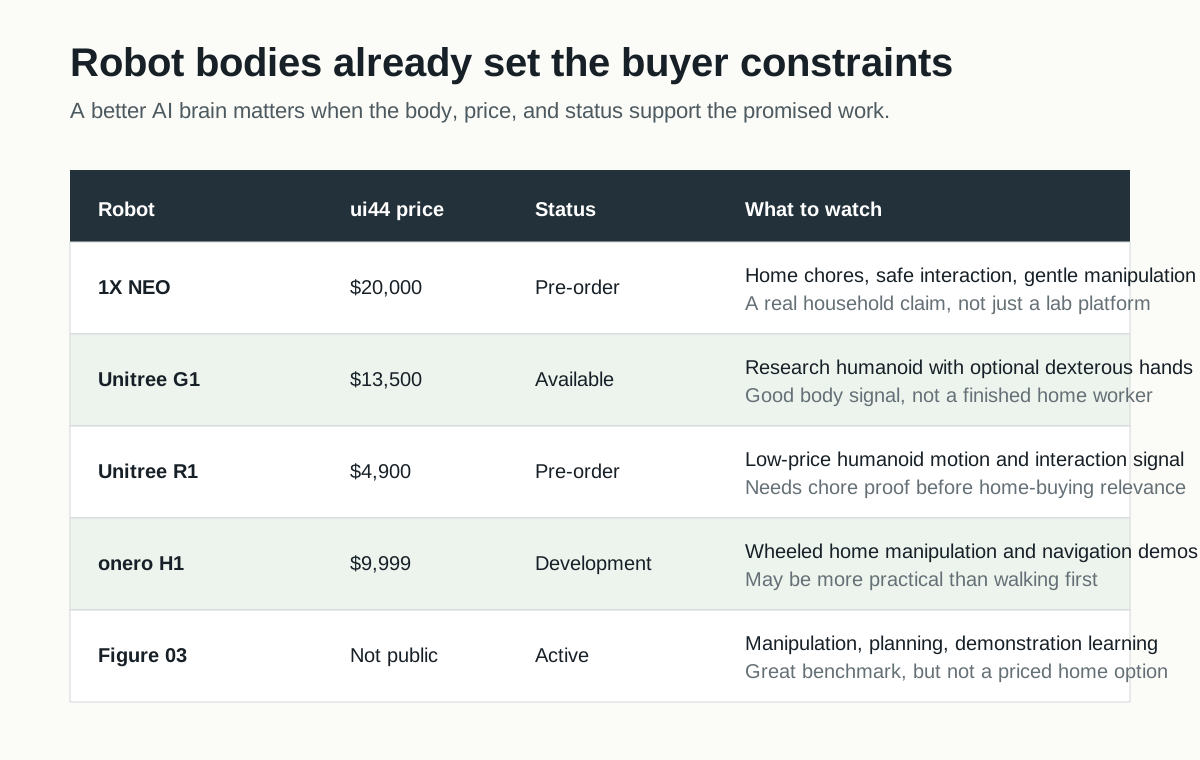
The ui44 database makes the gap visible. Figure AI's Figure 03 is active with no public price in our data, focused on complex manipulation, warehouse work, manufacturing tasks, learning from demonstration, and multi-step planning. Figure 02 is marked discontinued, but it remains important as an example of how fast humanoid hardware generations can turn over. The body changes, the data pipeline keeps learning, and the software stack has to survive those transitions.
That is exactly where a company like OpenAI could matter. A better robot brain is not just a chatbot mounted on a torso. It is the ability to map a spoken request into a safe sequence of physical actions, observe whether those actions worked, recover when they did not, and ask for help before doing something risky.
What Should Buyers Watch For?
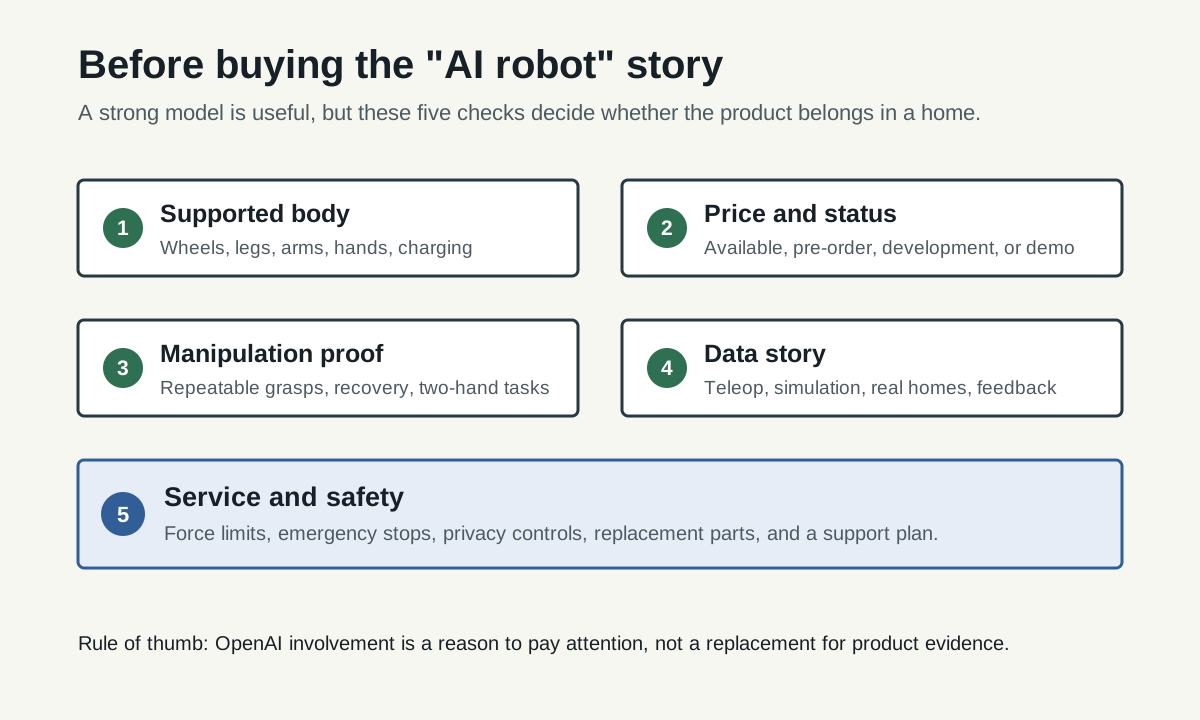
If OpenAI announces a robot partnership or prototype, ignore the demo sizzle at first. Watch for five concrete signals.
First, look for a supported body. Is the robot wheeled, bipedal, tabletop, or a mobile manipulator? Can it charge itself? Can it navigate ordinary homes? Does it have arms and hands capable of the chores being shown?
Second, look for a price and availability. A lab prototype is interesting. A $4,900 pre-order like Unitree R1 changes a different part of the market than a $20,000 home humanoid like 1X NEO. An unpriced "coming soon" robot is not a purchase decision yet.
Third, look for manipulation evidence. Voice chat is the easy part to demo. The harder proof is repeatable object handling: picking up soft items, opening drawers, using both hands, sorting clutter, and recovering from mistakes without creating safety problems.
Fourth, look for the data story. A serious robotics effort should explain how the system improves: teleoperation, simulation, demonstrations, fleet learning, human feedback, or controlled data collection. "Powered by AI" is not enough.
Fifth, look for service and safety. Home robots operate near children, pets, glassware, stairs, and furniture. The best AI model in the world still needs speed limits, force limits, emergency stops, privacy controls, and a support model when a joint, sensor, or battery fails.
The Likely Near-Term Impact
The most realistic near-term impact is not an OpenAI-branded home humanoid shipping next month. It is a faster race to make robot bodies feel less scripted.
That could show up in robots that understand messier voice requests. Instead of "go to waypoint three," a home robot should understand "clear the shoes near the door, but leave the boots drying on the mat." It could show up in better failure recovery: "I cannot pick up that glass safely because it is too close to the edge." It could show up in more natural teaching, where a person shows the robot a task once or twice and the system generalizes without a robotics engineer in the room.
Those improvements would help more than humanoids. Companion robots need better memory and social timing. Mobile home assistants need better scene understanding. Educational robots need safer autonomy. Even robot vacuums and mops benefit when perception and language help them understand rooms, messes, and user preferences, though ui44's bigger interest is in robots that move beyond floor cleaning.
The catch is that AI progress can make early products more confusing. A robot may sound competent before it is physically competent. Buyers should treat OpenAI involvement as a reason to pay attention, not as a reason to stop asking basic questions about the body.
Bottom Line
OpenAI robotics is a meaningful signal because the company is hiring around the hard parts of embodied AI: simulation, data acquisition, robotics systems, and the bridge between models and physical action. That could eventually reshape home robots, especially humanoids and mobile manipulators.
But for 2026 buyers, the answer is still practical. Do not buy the idea of a "ChatGPT body" by itself. Compare the actual robot: price, status, sensors, hands, locomotion, service, and proven household tasks. A stronger AI brain will matter enormously once the body is ready. Until then, the body is still the part that has to lift the laundry basket.
Related in the database
Use this article as a privacy verification workflow
Turn the article into a privacy verification pass grounded in the robots, manufacturers, and components it actually references.
OpenAI Robotics: Body, Brain, or Both? already points you toward 6 linked robots, 5 manufacturers, and 3 countries inside the ui44 database. That matters because strong buyer guidance is easier to apply when you can move immediately from a claim or warning into concrete product pages, manufacturer directories, component explainers, and country-level context instead of treating the article as an isolated opinion piece. The fastest next step is to turn the article into a shortlist workflow: open the linked robot pages, verify which specs are actually published for those models, then compare the surrounding manufacturer and component context before you decide whether the underlying claim changes your buying plan.
For this topic, the useful discipline is to separate the editorial lesson from the catalog evidence. The article gives you the framing, but the robot pages tell you what each product actually ships with today: sensor stack, connectivity methods, listed price, release timing, category, and support-relevant compatibility notes. The manufacturer pages then show whether you are looking at a one-off launch, a broader lineup pattern, or a company that spans multiple categories. That layered workflow reduces the risk of buying on a single marketing phrase or a single support FAQ.
Use the robot pages to confirm which products actually expose cameras, microphones, Wi-Fi, or voice systems, then use the manufacturer pages to decide how much of the privacy question seems product-specific versus brand-wide. On this route cluster, NEO, G1, and R1 form the fastest reality check. If you want a quick working shortlist, open Compare NEO, G1, and R1 next, then keep this article open as the reasoning layer while you compare structured data side by side.
Practical Takeaway
Every robot, manufacturer, category, component, and country reference below resolves to a real ui44 page, keeping the follow-up path grounded in database records rather than generic advice.
Suggested next steps in ui44
- Open NEO and note the listed sensors, connectivity methods, and voice stack before you interpret any policy claim.
- Cross-check the wider brand context on 1X Technologies so you can see whether the privacy question touches one model or a broader lineup.
- Use the linked component pages to confirm how common the relevant sensors and connectivity layers are across the database.
- Keep a short note of which policy layers you checked, which device features are actually present on the robot page, and which items still depend on region- or app-level confirmation.
- Finish with Compare NEO, G1, and R1 so the policy reading sits next to structured product data.
Robot profiles worth opening next
Use the linked product pages as the evidence layer
The linked robot pages are where this article becomes operational. Instead of asking whether the headline is interesting, use the robot entries to inspect the actual mix of sensors, connectivity options, batteries, pricing, release timing, and stated capabilities attached to the products mentioned in the article. That is the easiest way to see whether the warning or opportunity described here affects one product family, a specific design pattern, or an entire buying lane.
NEO
1X Technologies · Humanoid · Pre-order
NEO is tracked on ui44 as a pre-order humanoid robot from 1X Technologies. The database currently records a listed price of $20,000, a release date of 2025-10-28, ~4 hours battery life, Not disclosed charging time, and a published stack that includes RGB Cameras, Depth Sensors, and Tactile Skin plus Wi-Fi and Bluetooth.
For privacy-focused reading, this page matters because it shows the concrete device surface behind the policy discussion. Use it to verify whether NEO combines sensors and connectivity in a way that could change the in-home data footprint, and compare the listed capabilities such as Household Chores, Tidying Up, and Safe Human Interaction with any cloud, app, or voice layers.
G1 is tracked on ui44 as a available humanoid robot from Unitree. The database currently records a listed price of $13,500, a release date of 2024-05-13, ~2 hours battery life, Not disclosed charging time, and a published stack that includes Depth Camera, 3D LiDAR, and 4 Microphone Array plus Wi-Fi 6 and Bluetooth 5.2.
For privacy-focused reading, this page matters because it shows the concrete device surface behind the policy discussion. Use it to verify whether G1 combines sensors and connectivity in a way that could change the in-home data footprint, and compare the listed capabilities such as Bipedal Walking, Object Manipulation, and Dexterous Hands (optional Dex3-1) with any cloud, app, or voice layers.
R1
Unitree Robotics · Humanoid · Pre-order
R1 is tracked on ui44 as a pre-order humanoid robot from Unitree Robotics. The database currently records a listed price of $4,900, a release date of 2025, ~1 hour (mixed activity) battery life, Not officially disclosed charging time, and a published stack that includes Monocular camera (R1 Air); binocular camera (R1/R1 EDU), 4-Mic Array, and Dual 6-Axis IMU plus Wi-Fi 6 and Bluetooth 5.2.
For privacy-focused reading, this page matters because it shows the concrete device surface behind the policy discussion. Use it to verify whether R1 combines sensors and connectivity in a way that could change the in-home data footprint, and compare the listed capabilities such as Bipedal Walking & Running, Cartwheels & Handstands, and Push Recovery with any cloud, app, or voice layers, including UnifoLM (voice + image commands).
onero H1 is tracked on ui44 as a development home assistants robot from SwitchBot. The database currently records a listed price of $9,999, a release date of 2026-01-04, Not officially disclosed battery life, Not officially disclosed charging time, and a published stack that includes Multiple cameras, Depth sensing, and Tactile feedback sensing plus its listed connectivity stack.
For privacy-focused reading, this page matters because it shows the concrete device surface behind the policy discussion. Use it to verify whether onero H1 combines sensors and connectivity in a way that could change the in-home data footprint, and compare the listed capabilities such as Indoor wheeled home navigation, Household object manipulation, and Grasping, pushing, opening, and organizing tasks with any cloud, app, or voice layers.
Figure 03 is tracked on ui44 as a active humanoid robot from Figure AI. The database currently records a listed price of Price TBA, a release date of 2025-10-09, ~5 hours battery life, Not disclosed charging time, and a published stack that includes Stereo Vision, Depth Cameras, and Force Sensors plus Wi-Fi and Bluetooth.
For privacy-focused reading, this page matters because it shows the concrete device surface behind the policy discussion. Use it to verify whether Figure 03 combines sensors and connectivity in a way that could change the in-home data footprint, and compare the listed capabilities such as Complex Manipulation, Warehouse Work, and Manufacturing Tasks with any cloud, app, or voice layers.
Manufacturer context behind the article
Check whether this is one product story or a broader company pattern
Manufacturer pages add the privacy context that individual product pages cannot show on their own. They help you check whether cameras, microphones, cloud accounts, app controls, and policy assumptions appear across a broader lineup or stay tied to one specific product story.
1X Technologies
ui44 currently tracks 2 robots from 1X Technologies across 1 category. The company is grouped under Norway, and the current catalog footprint on ui44 includes NEO, EVE.
That wider brand context matters because privacy questions rarely stop at one FAQ page. A manufacturer route helps you see whether the article is centered on one premium model or on a company that has several relevant products and therefore more than one place where the same policy or app assumptions might matter. The category mix here currently points toward Humanoid as the most useful next route if you want to see whether this article reflects a wider pattern inside the brand.
Unitree
ui44 currently tracks 2 robots from Unitree across 1 category. The company is grouped under China, and the current catalog footprint on ui44 includes H1, G1.
That wider brand context matters because privacy questions rarely stop at one FAQ page. A manufacturer route helps you see whether the article is centered on one premium model or on a company that has several relevant products and therefore more than one place where the same policy or app assumptions might matter. The category mix here currently points toward Humanoid as the most useful next route if you want to see whether this article reflects a wider pattern inside the brand.
Unitree Robotics
ui44 currently tracks 9 robots from Unitree Robotics across 3 categorys. The company is grouped under China, and the current catalog footprint on ui44 includes B2, B1, Go2.
That wider brand context matters because privacy questions rarely stop at one FAQ page. A manufacturer route helps you see whether the article is centered on one premium model or on a company that has several relevant products and therefore more than one place where the same policy or app assumptions might matter. The category mix here currently points toward Quadruped, Humanoid, Research as the most useful next route if you want to see whether this article reflects a wider pattern inside the brand.
SwitchBot
ui44 currently tracks 3 robots from SwitchBot across 3 categorys. The company is grouped under USA, and the current catalog footprint on ui44 includes K20+ Pro, onero H1, KATA Friends.
That wider brand context matters because privacy questions rarely stop at one FAQ page. A manufacturer route helps you see whether the article is centered on one premium model or on a company that has several relevant products and therefore more than one place where the same policy or app assumptions might matter. The category mix here currently points toward Cleaning, Home Assistants, Companions as the most useful next route if you want to see whether this article reflects a wider pattern inside the brand.
Broaden the scan without leaving the database
Categories, components, and countries add the wider context
Category framing
Category pages are useful when the article touches a buying pattern that shows up across brands. A category route helps you confirm whether the linked products sit in a narrow niche or whether the same question should be tested across a larger field of alternatives.
Humanoid
The Humanoid category page currently groups 129 tracked robots from 92 manufacturers. ui44 describes this lane as: Full-size bipedal humanoid robots built to work alongside people — from factory floors to household tasks. Compare the cutting edge of humanoid robotics.
That makes the category route a practical follow-up when you want to check whether the products linked in this article are typical for the lane or whether they sit at one edge of the market. Useful starting examples currently include NEO, EVE, Mornine M1.
Home Assistants
The Home Assistants category page currently groups 16 tracked robots from 14 manufacturers. ui44 describes this lane as: Arm-based household helpers — laundry folders, kitchen robots, and mobile manipulators that take on hands-on physical tasks around the home.
That makes the category route a practical follow-up when you want to check whether the products linked in this article are typical for the lane or whether they sit at one edge of the market. Useful starting examples currently include Robody, Futuring 2 (F2), Stretch 3.
Country and ecosystem context
Country pages give extra context when support practices, launch sequencing, regulatory posture, or manufacturer mix matter. They are not a substitute for model-level verification, but they do help you see which ecosystems cluster together and which manufacturers sit in the same regional field when you broaden the search beyond the article headline.
Norway
The Norway route currently groups 2 tracked robots from 1 manufacturers in ui44. That gives you a useful regional lens when the article points toward support practices, launch sequencing, or brand clusters that may share similar ecosystem assumptions.
On the current route, manufacturers like 1X Technologies make the page a good way to broaden the scan without losing the regional context that often shapes availability, documentation style, and adjacent alternatives.
China
The China route currently groups 189 tracked robots from 87 manufacturers in ui44. That gives you a useful regional lens when the article points toward support practices, launch sequencing, or brand clusters that may share similar ecosystem assumptions.
On the current route, manufacturers like AGIBOT, Dreame, Unitree Robotics make the page a good way to broaden the scan without losing the regional context that often shapes availability, documentation style, and adjacent alternatives.
USA
The USA route currently groups 89 tracked robots from 69 manufacturers in ui44. That gives you a useful regional lens when the article points toward support practices, launch sequencing, or brand clusters that may share similar ecosystem assumptions.
On the current route, manufacturers like Faraday Future, iRobot, Boston Dynamics make the page a good way to broaden the scan without losing the regional context that often shapes availability, documentation style, and adjacent alternatives.
Questions to answer before you move from reading to buying
A follow-up FAQ built from the entities already linked in this article
Frequently Asked Questions
Which page should I open first after reading “OpenAI Robotics: Body, Brain, or Both?”?
Start with NEO. That gives you a concrete product anchor for the article’s main claim. From there, branch into the manufacturer and component pages so you can tell whether the article is describing one specific model, a repeated brand pattern, or a wider technology issue that affects multiple shortlist options.
How do the manufacturer pages change the buying decision?
1X Technologies help you zoom out from one article and one product. On ui44 they show lineup breadth, category spread, and the neighboring robots tied to the same company. That context is useful when you are deciding whether a risk belongs to a single model, whether it shows up across a brand’s portfolio, and whether you should keep looking at alternatives before committing.
When should I switch from reading to side-by-side comparison?
Move into Compare NEO, G1, and R1 as soon as you understand the article’s main warning or promise. The article explains what to watch for, but the compare view is where you can check whether price, status, battery life, connectivity, sensors, and category fit still make the robot a good match for your own home and budget.
Where to go next in ui44
Keep the research chain inside the database
If you want to keep going, these follow-on pages give you the cleanest expansion path from article to research session. Open the comparison route first if you are deciding between products today. Open the manufacturer, category, and component routes if you still need to understand the broader pattern behind the claim.
Written by
ui44 Team
Published June 24, 2026
Share this article
Open a plain share link on X or Bluesky. No embeds, no widgets, no cookie baggage.