The important part is not that another startup has shown a cute robot animal. The important part is who is making it, what problem it is choosing, and what it is refusing to be. Familiar is not a humanoid maid, not a screen on wheels, and not a robot vacuum with more personality. It is a bet that the next big home robot category may be emotional presence rather than chore execution.

That makes Familiar worth watching, but not worth treating like a normal product launch yet. The company has opened a waitlist and shown the first Familiar publicly, but core buyer details — price, battery life, durability, service coverage, and exact launch terms — are still undisclosed.
What Familiar actually is
Familiar Machines & Magic describes Familiars as emotionally intelligent, physically embodied AI systems. The first product is a small dog-sized quadruped, intentionally shaped more like a friendly creature than a person. According to the company's launch material and our Familiar database entry, the current public facts are:
Familiar detail
Robot type
- Public status
- Companion quadruped for home use
Familiar detail
Status
- Public status
- Development / waitlist
Familiar detail
Expected availability
- Public status
- 2027, according to The Robot Report interview
Familiar detail
Price
- Public status
- Not announced; Angle has compared it to the cost of owning a dog
Familiar detail
Movement
- Public status
- 23 degrees of freedom for walking and expressive behavior
Familiar detail
Interface
- Public status
- No screen-first design; communicates through motion, posture, sound, and context
Familiar detail
Sensors
- Public status
- Vision, audio, and a touch-sensitive exterior
Familiar detail
AI architecture
- Public status
- On-device edge AI with local processing emphasized
Familiar detail
Primary job
- Public status
- Routine support, companionship, social presence, and habit nudges
| Familiar detail | Public status |
|---|---|
| Robot type | Companion quadruped for home use |
| Status | Development / waitlist |
| Expected availability | 2027, according to The Robot Report interview |
| Price | Not announced; Angle has compared it to the cost of owning a dog |
| Movement | 23 degrees of freedom for walking and expressive behavior |
| Interface | No screen-first design; communicates through motion, posture, sound, and context |
| Sensors | Vision, audio, and a touch-sensitive exterior |
| AI architecture | On-device edge AI with local processing emphasized |
| Primary job | Routine support, companionship, social presence, and habit nudges |
The shape matters. A humanoid invites people to ask whether it can fold laundry, load a dishwasher, or carry groceries. A companion quadruped invites a different question: will I enjoy having this thing around every day?
That is a harder product problem than it sounds. The robot has to be expressive enough to feel alive, but not so human-like that it creates unrealistic expectations. It has to understand tone, facial expression, body language, and household rhythms, while also being simple enough that users are not constantly managing another device.
Why this is not just another robot pet
Robot pets have existed for decades. The difference with Familiar is the claim that modern AI and home-robotics experience are finally strong enough to make a companion robot feel consistent over months and years, not just charming in a show-floor demo.
Sony's aibo remains the obvious reference point. In ui44's database, the current aibo ERS-1000 is listed at $2,899.99 in the US, with a subscription plan required. It weighs 2.2 kg, runs for about 2 hours, has 22 axes of movement, recognizes up to 100 faces, responds to more than 100 voice commands, and develops a personality over time.
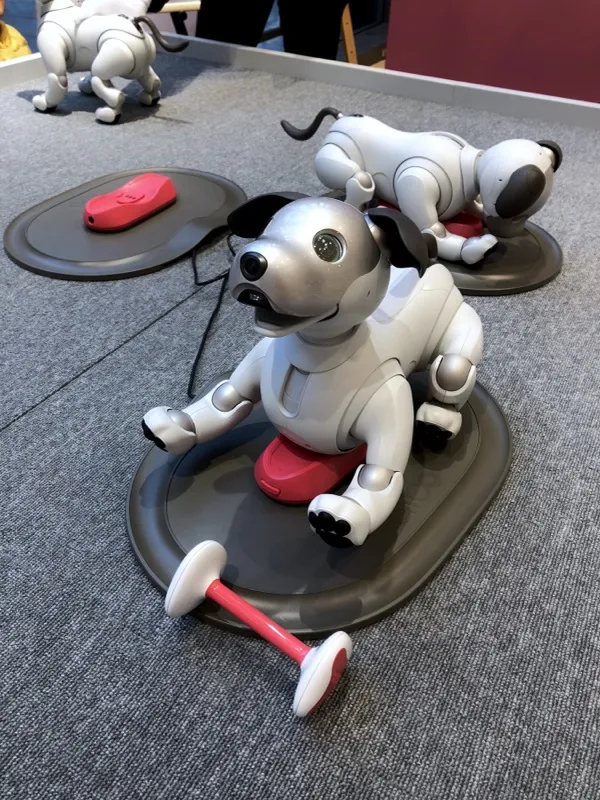
Familiar is trying to move that idea into a larger, more physically present form factor. Familiar Machines says the robot has a custom touch-sensitive coat, a vision system, microphones and audio, and an onboard multimodal model. The company's official press release frames this as "Consumer Physical AI": systems that perceive, remember, and respond in ways that feel natural over time.
The Robot Report interview adds several useful buyer-facing details. Familiar is covered in a fuzzy 3D-knitted exterior, is meant to follow people from room to room, and does not rely on a screen by design. Angle also said the first Familiar will not speak in the conventional chatbot sense. The communication goal is motion, posture, timing, and context — a head tilt, a nudge, backing off, or showing excitement.
That restraint is smart. A robot that tries to be a pet, therapist, friend, assistant, and chatbot at once usually collapses under expectations. Familiar's most credible angle is narrower: be a consistent physical companion that notices patterns and gently interrupts bad routines.
The buyer question: what job would it do in a home?
A Familiar is not being pitched as a chore robot. If your priority is cleaning, security patrol, or carrying objects, other categories are further along. Amazon Astro is already a mobile security and Alexa platform at $1,599.99 by invitation only. Unitree Go2 is a real consumer-grade quadruped platform starting around $2,800, with 4D LiDAR, 1–2 hours of standard battery life, Wi-Fi 6, Bluetooth 5.2, and developer features in higher trims.
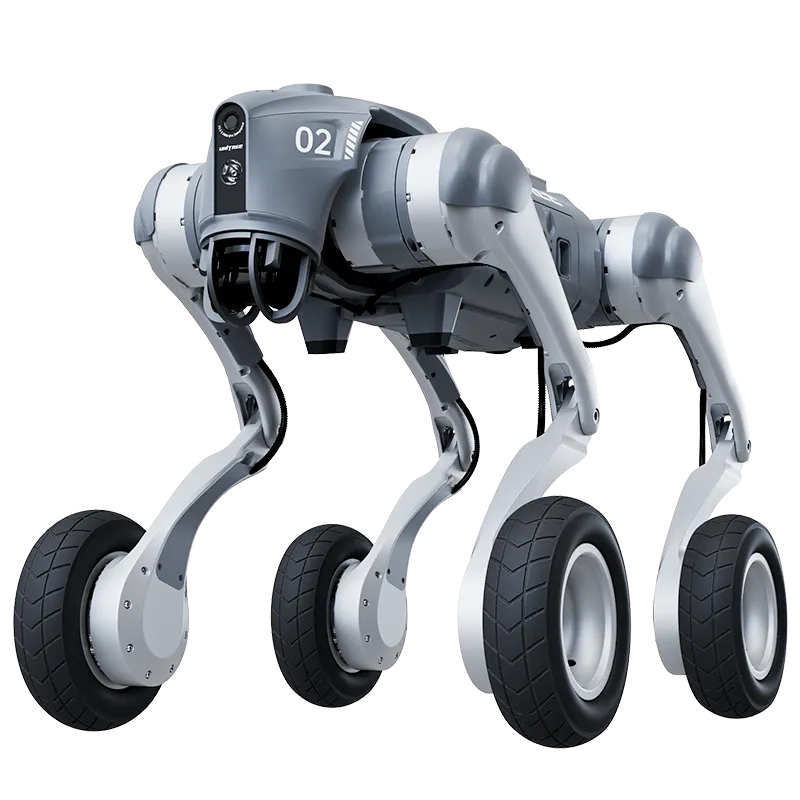
Those robots answer different questions. Astro asks, "Do you want a mobile screen and security assistant?" Go2 asks, "Do you want a programmable robot dog platform?" Familiar asks, "Would a physical AI companion improve the way your household feels and behaves?"
That makes the buying logic closer to companion robots such as LOVOT and PARO than to a humanoid. LOVOT is a dedicated emotional companion from GROOVE X, priced in Japan at ¥577,500 for LOVOT 3.0 with a monthly care plan. PARO is a therapeutic seal robot used in hospitals and elder-care settings, with institutional pricing rather than a normal consumer MSRP. Both prove there is demand for non-chore robots when the emotional job is specific enough.
For Familiar, the practical home jobs would likely be:
- Routine reinforcement: nudging a walk, a bedtime wind-down, or less screen time.
- Low-pressure companionship: being present without demanding conversation.
- Family interaction: encouraging kids into screen-free play without acting like a tablet.
- Pet-like presence for people who cannot have pets: apartments, allergies, travel schedules, or care settings.
- Social context for future home robots: learning how a household wants robots to behave before more capable robots arrive.
The risk is that those jobs are softer than vacuuming a floor. A buyer can see when a robot vacuum misses dirt. It is harder to measure whether a companion robot improved a routine, reduced loneliness, or made a household feel calmer.
The privacy angle is a real advantage — if it holds
Always-on companion robots are privacy-sensitive by default. They sit in living rooms, bedrooms, kitchens, and sometimes care environments. They may see faces, hear voices, recognize stress, and remember patterns.
Familiar Machines is making the right claim here: local, on-device processing. The official site says user data stays on the device and that owners control if and when data is shared with the cloud. The press release also emphasizes edge AI to reduce latency and strengthen privacy.

That is exactly the direction home robots should move. A robot should not need a cloud round trip to decide whether a person looks stressed, whether a child is nearby, or whether to stop moving. Local perception also makes the robot feel more responsive, which matters for social timing.
But buyers should wait for specifics before treating privacy as solved:
Privacy question
What video, audio, and interaction data is stored locally?
- Why it matters
- "On-device" can still include logs, clips, embeddings, or summaries.
Privacy question
Can all cloud sharing be disabled?
- Why it matters
- Companion robots may need updates, diagnostics, or fleet learning.
Privacy question
How is household memory deleted or exported?
- Why it matters
- Long-term personality and memory are only trustworthy if users control them.
Privacy question
Are guests and children handled differently?
- Why it matters
- A robot that reads faces and tone needs clear consent boundaries.
Privacy question
What happens if the company shuts down?
- Why it matters
- Companion robots become intimate objects; service continuity matters.
| Privacy question | Why it matters |
|---|---|
| What video, audio, and interaction data is stored locally? | "On-device" can still include logs, clips, embeddings, or summaries. |
| Can all cloud sharing be disabled? | Companion robots may need updates, diagnostics, or fleet learning. |
| How is household memory deleted or exported? | Long-term personality and memory are only trustworthy if users control them. |
| Are guests and children handled differently? | A robot that reads faces and tone needs clear consent boundaries. |
| What happens if the company shuts down? | Companion robots become intimate objects; service continuity matters. |
The privacy promise is one of Familiar's strongest ideas. It just needs to be backed by product-level controls, not only launch language.
What Familiar changes about the home robot market
Familiar is interesting because it says the home robot market is not only a race toward humanoid labor. A lot of 2026 robotics coverage is about bipedal robots, robotic hands, factory scale, and whether a humanoid can become affordable. That race matters. But a humanoid that can pick up socks is not automatically a robot people want in the living room.
Familiar starts from the living room first. It assumes the hard part is not only mobility or manipulation, but trust, presence, social timing, and long-term attachment.
That connects directly to Angle's iRobot history. Roomba succeeded because it was useful, bounded, and easy to understand: press a button, get cleaner floors. Familiar has a much less concrete promise, so the product burden is higher. It must be delightful without becoming needy, useful without pretending to be a therapist, and private without becoming isolated from improvements.
For buyers, the best way to frame Familiar is not "should I buy it today?" The right question is: what would make a companion robot worth living with?
A credible answer needs five things:
- A clear price and support plan.
- Enough battery life to participate in daily routines.
- Local AI controls that are understandable to non-technical users.
- Durable hardware that can survive children, pets, stairs, dust, and normal home chaos.
- Behavior that remains appealing after the first week.
Should you join the waitlist?
If you are curious about companion robots, yes — with realistic expectations. Join the waitlist to follow development, not because Familiar is a known product with known value yet.
You should be especially interested if you care about:
- home robots beyond cleaning and humanoid chores;
- pet-like robots for adults, families, or people who cannot have animals;
- on-device AI and privacy-first robotics;
- emotional intelligence as a serious robot design problem;
- the next move from the team that helped put consumer robots into tens of millions of homes.
You should wait for more evidence if you need:
- a robot that performs chores;
- a disclosed price, warranty, service plan, or subscription model;
- accessibility claims validated by care professionals;
- a fully documented privacy policy for cameras, microphones, memory, and cloud sharing;
- delivery certainty before 2027.
Familiar is one of the most intriguing home-robot announcements of 2026 because it is not chasing the obvious trend. It is not another vacuum. It is not another humanoid promise. It is a focused attempt to make a home robot that people may actually want near them every day.
That is ambitious, risky, and genuinely worth tracking.
For the current specs, status, and future updates, see ui44's Familiar robot profile. To compare it with existing companion and quadruped robots, start with Sony aibo, LOVOT, PARO, and Unitree Go2, or use the ui44 robot comparison tool.
Related in the database
Use this article as a privacy verification workflow
Turn the article into a privacy verification pass grounded in the robots, manufacturers, and components it actually references.
Familiar Robot: iRobot Founder's Home Companion already points you toward 6 linked robots, 6 manufacturers, and 3 countries inside the ui44 database. That matters because strong buyer guidance is easier to apply when you can move immediately from a claim or warning into concrete product pages, manufacturer directories, component explainers, and country-level context instead of treating the article as an isolated opinion piece. The fastest next step is to turn the article into a shortlist workflow: open the linked robot pages, verify which specs are actually published for those models, then compare the surrounding manufacturer and component context before you decide whether the underlying claim changes your buying plan.
For this topic, the useful discipline is to separate the editorial lesson from the catalog evidence. The article gives you the framing, but the robot pages tell you what each product actually ships with today: sensor stack, connectivity methods, listed price, release timing, category, and support-relevant compatibility notes. The manufacturer pages then show whether you are looking at a one-off launch, a broader lineup pattern, or a company that spans multiple categories. That layered workflow reduces the risk of buying on a single marketing phrase or a single support FAQ.
Use the robot pages to confirm which products actually expose cameras, microphones, Wi-Fi, or voice systems, then use the manufacturer pages to decide how much of the privacy question seems product-specific versus brand-wide. On this route cluster, Familiar, aibo (ERS-1000), and Astro form the fastest reality check. If you want a quick working shortlist, open Compare Familiar, aibo (ERS-1000), and Astro next, then keep this article open as the reasoning layer while you compare structured data side by side.
Practical Takeaway
Every robot, manufacturer, category, component, and country reference below resolves to a real ui44 page, keeping the follow-up path grounded in database records rather than generic advice.
Suggested next steps in ui44
- Open Familiar and note the listed sensors, connectivity methods, and voice stack before you interpret any policy claim.
- Cross-check the wider brand context on Familiar Machines & Magic so you can see whether the privacy question touches one model or a broader lineup.
- Use the linked component pages to confirm how common the relevant sensors and connectivity layers are across the database.
- Keep a short note of which policy layers you checked, which device features are actually present on the robot page, and which items still depend on region- or app-level confirmation.
- Finish with Compare Familiar, aibo (ERS-1000), and Astro so the policy reading sits next to structured product data.
Robot profiles worth opening next
Use the linked product pages as the evidence layer
The linked robot pages are where this article becomes operational. Instead of asking whether the headline is interesting, use the robot entries to inspect the actual mix of sensors, connectivity options, batteries, pricing, release timing, and stated capabilities attached to the products mentioned in the article. That is the easiest way to see whether the warning or opportunity described here affects one product family, a specific design pattern, or an entire buying lane.
Familiar
Familiar Machines & Magic · Quadruped · Development
Familiar is tracked on ui44 as a development quadruped robot from Familiar Machines & Magic. The database currently records a listed price of Price TBA, a release date of 2027, Not disclosed battery life, Not disclosed charging time, and a published stack that includes Vision (facial expression and gesture recognition), Audio (tone of voice analysis), and Touch-sensitive exterior (3D-knitted fuzzy covering) plus Not disclosed.
For privacy-focused reading, this page matters because it shows the concrete device surface behind the policy discussion. Use it to verify whether Familiar combines sensors and connectivity in a way that could change the in-home data footprint, and compare the listed capabilities such as Quadruped Walking (23 DOF), Autonomous Navigation, and Emotional Intelligence (EQ over IQ) with any cloud, app, or voice layers.
aibo (ERS-1000)
Sony · Companions · Available
aibo (ERS-1000) is tracked on ui44 as a available companions robot from Sony. The database currently records a listed price of $3,200, a release date of 2018-01, ~2 hours battery life, ~3 hours charging time, and a published stack that includes Front Camera, SLAM Camera, and Time-of-Flight Sensor plus Wi-Fi 802.11 b/g/n (2.4GHz) and LTE.
For privacy-focused reading, this page matters because it shows the concrete device surface behind the policy discussion. Use it to verify whether aibo (ERS-1000) combines sensors and connectivity in a way that could change the in-home data footprint, and compare the listed capabilities such as Emotion Recognition, Face Recognition (up to 100 faces), and Voice Command Recognition (100+ commands) with any cloud, app, or voice layers.
Astro is tracked on ui44 as a active security & patrol robot from Amazon. The database currently records a listed price of $1,599, a release date of 2021, Not officially disclosed battery life, Not officially disclosed charging time, and a published stack that includes 5MP Bezel Camera, 1080p Periscope Camera (132° FOV), and Infrared Vision plus Wi-Fi 802.11ac and Bluetooth.
For privacy-focused reading, this page matters because it shows the concrete device surface behind the policy discussion. Use it to verify whether Astro combines sensors and connectivity in a way that could change the in-home data footprint, and compare the listed capabilities such as Autonomous Home Patrol, Visual ID (face recognition), and Remote Home Monitoring with any cloud, app, or voice layers, including Amazon Alexa.
Go2
Unitree Robotics · Quadruped · Available
Go2 is tracked on ui44 as a available quadruped robot from Unitree Robotics. The database currently records a listed price of $1,600, a release date of 2023-07-12, 1–2h (standard) / 2–4h (EDU long endurance) battery life, Not officially disclosed charging time, and a published stack that includes 4D LiDAR L2 (360°×96° hemispherical), HD Wide-angle Camera, and Depth Camera (EDU) plus Wi-Fi 6 and Bluetooth 5.2.
For privacy-focused reading, this page matters because it shows the concrete device surface behind the policy discussion. Use it to verify whether Go2 combines sensors and connectivity in a way that could change the in-home data footprint, and compare the listed capabilities such as Quadruped Walking & Running, Advanced AI Gaits (roll-over, obstacle climbing), and 3D LiDAR Mapping with any cloud, app, or voice layers, including Offline voice interaction (Pro/X/EDU).
LOVOT is tracked on ui44 as a available companions robot from GROOVE X. The database currently records a listed price of ¥577,500, a release date of 2019, 30-45 minutes active, then returns to nest battery life, 15-30 minutes (on charging nest) charging time, and a published stack that includes Horn Top Camera (half-sphere), Horn Front Camera, and Depth Camera plus Wi-Fi and Bluetooth.
For privacy-focused reading, this page matters because it shows the concrete device surface behind the policy discussion. Use it to verify whether LOVOT combines sensors and connectivity in a way that could change the in-home data footprint, and compare the listed capabilities such as Emotional Companionship, Person Recognition, and Touch Response (full body sensors) with any cloud, app, or voice layers.
Manufacturer context behind the article
Check whether this is one product story or a broader company pattern
Manufacturer pages add the privacy context that individual product pages cannot show on their own. They help you check whether cameras, microphones, cloud accounts, app controls, and policy assumptions appear across a broader lineup or stay tied to one specific product story.
Familiar Machines & Magic
ui44 currently tracks 1 robot from Familiar Machines & Magic across 1 category. The company is grouped under USA, and the current catalog footprint on ui44 includes Familiar.
That wider brand context matters because privacy questions rarely stop at one FAQ page. A manufacturer route helps you see whether the article is centered on one premium model or on a company that has several relevant products and therefore more than one place where the same policy or app assumptions might matter. The category mix here currently points toward Quadruped as the most useful next route if you want to see whether this article reflects a wider pattern inside the brand.
Sony
ui44 currently tracks 2 robots from Sony across 2 categorys. The company is grouped under Japan, and the current catalog footprint on ui44 includes aibo (ERS-1000), QRIO.
That wider brand context matters because privacy questions rarely stop at one FAQ page. A manufacturer route helps you see whether the article is centered on one premium model or on a company that has several relevant products and therefore more than one place where the same policy or app assumptions might matter. The category mix here currently points toward Companions, Research as the most useful next route if you want to see whether this article reflects a wider pattern inside the brand.
Amazon
ui44 currently tracks 1 robot from Amazon across 1 category. The company is grouped under USA, and the current catalog footprint on ui44 includes Astro.
That wider brand context matters because privacy questions rarely stop at one FAQ page. A manufacturer route helps you see whether the article is centered on one premium model or on a company that has several relevant products and therefore more than one place where the same policy or app assumptions might matter. The category mix here currently points toward Security & Patrol as the most useful next route if you want to see whether this article reflects a wider pattern inside the brand.
Unitree Robotics
ui44 currently tracks 9 robots from Unitree Robotics across 3 categorys. The company is grouped under China, and the current catalog footprint on ui44 includes B2, B1, Go2.
That wider brand context matters because privacy questions rarely stop at one FAQ page. A manufacturer route helps you see whether the article is centered on one premium model or on a company that has several relevant products and therefore more than one place where the same policy or app assumptions might matter. The category mix here currently points toward Quadruped, Humanoid, Research as the most useful next route if you want to see whether this article reflects a wider pattern inside the brand.
Broaden the scan without leaving the database
Categories, components, and countries add the wider context
Category framing
Category pages are useful when the article touches a buying pattern that shows up across brands. A category route helps you confirm whether the linked products sit in a narrow niche or whether the same question should be tested across a larger field of alternatives.
Quadruped
The Quadruped category page currently groups 25 tracked robots from 16 manufacturers. ui44 describes this lane as: Four-legged robot dogs and quadrupeds built for rough terrain, inspection, and exploration — going where wheels can't.
That makes the category route a practical follow-up when you want to check whether the products linked in this article are typical for the lane or whether they sit at one edge of the market. Useful starting examples currently include Argos X1, D1 Pro, D2 Max.
Companions
The Companions category page currently groups 53 tracked robots from 48 manufacturers. ui44 describes this lane as: Social robots, robot pets, and elderly-care companions designed for emotional connection and everyday support at home.
That makes the category route a practical follow-up when you want to check whether the products linked in this article are typical for the lane or whether they sit at one edge of the market. Useful starting examples currently include PARO, Abi, Next-Generation Companion Robot.
Country and ecosystem context
Country pages give extra context when support practices, launch sequencing, regulatory posture, or manufacturer mix matter. They are not a substitute for model-level verification, but they do help you see which ecosystems cluster together and which manufacturers sit in the same regional field when you broaden the search beyond the article headline.
USA
The USA route currently groups 89 tracked robots from 69 manufacturers in ui44. That gives you a useful regional lens when the article points toward support practices, launch sequencing, or brand clusters that may share similar ecosystem assumptions.
On the current route, manufacturers like Faraday Future, iRobot, Boston Dynamics make the page a good way to broaden the scan without losing the regional context that often shapes availability, documentation style, and adjacent alternatives.
Japan
The Japan route currently groups 26 tracked robots from 17 manufacturers in ui44. That gives you a useful regional lens when the article points toward support practices, launch sequencing, or brand clusters that may share similar ecosystem assumptions.
On the current route, manufacturers like AIST, SoftBank Robotics, Toyota make the page a good way to broaden the scan without losing the regional context that often shapes availability, documentation style, and adjacent alternatives.
China
The China route currently groups 189 tracked robots from 87 manufacturers in ui44. That gives you a useful regional lens when the article points toward support practices, launch sequencing, or brand clusters that may share similar ecosystem assumptions.
On the current route, manufacturers like AGIBOT, Dreame, Unitree Robotics make the page a good way to broaden the scan without losing the regional context that often shapes availability, documentation style, and adjacent alternatives.
Questions to answer before you move from reading to buying
A follow-up FAQ built from the entities already linked in this article
Frequently Asked Questions
Which page should I open first after reading “Familiar Robot: iRobot Founder's Home Companion”?
Start with Familiar. That gives you a concrete product anchor for the article’s main claim. From there, branch into the manufacturer and component pages so you can tell whether the article is describing one specific model, a repeated brand pattern, or a wider technology issue that affects multiple shortlist options.
How do the manufacturer pages change the buying decision?
Familiar Machines & Magic help you zoom out from one article and one product. On ui44 they show lineup breadth, category spread, and the neighboring robots tied to the same company. That context is useful when you are deciding whether a risk belongs to a single model, whether it shows up across a brand’s portfolio, and whether you should keep looking at alternatives before committing.
When should I switch from reading to side-by-side comparison?
Move into Compare Familiar, aibo (ERS-1000), and Astro as soon as you understand the article’s main warning or promise. The article explains what to watch for, but the compare view is where you can check whether price, status, battery life, connectivity, sensors, and category fit still make the robot a good match for your own home and budget.
Where to go next in ui44
Keep the research chain inside the database
If you want to keep going, these follow-on pages give you the cleanest expansion path from article to research session. Open the comparison route first if you are deciding between products today. Open the manufacturer, category, and component routes if you still need to understand the broader pattern behind the claim.
Written by
ui44 Team
Published May 5, 2026
Share this article
Open a plain share link on X or Bluesky. No embeds, no widgets, no cookie baggage.