That puts Rover X1 in a useful but tricky category. It is much cheaper than industrial quadrupeds, more physically capable than a wheeled companion robot, and less emotionally polished than Sony's aibo. The right question is not "is this the robot dog future?" It is whether the actual spec sheet and delivery plan are strong enough for a buyer who wants a robot in a real home, not just a launch video.
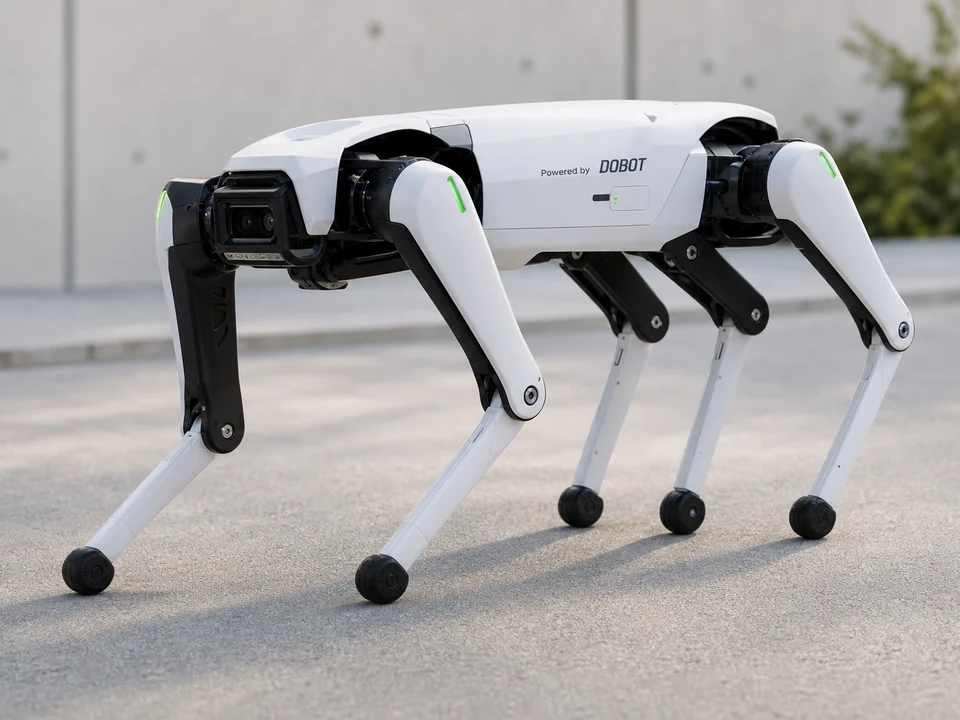
What Rover X1 Actually Offers
The official INFFNI preorder page describes Rover X1 as a "first robot dog" with standard and wheel-foot variants. In ui44's robot database, the entry price is $2,199, the higher preorder configuration reaches $2,749, and the listed shipping context is Europe and North America warehouse stock expected in mid-June 2026 with sequential shipment after warehouse arrival.
The core hardware claims are more specific than many early robot dog listings:
Rover X1 detail
Category
- ui44 database value
- Quadruped
Rover X1 detail
Status
- ui44 database value
- Pre-order
Rover X1 detail
Price
- ui44 database value
- $2,199 to $2,749 preorder variants
Rover X1 detail
Weight
- ui44 database value
- About 15 kg for the complete device set
Rover X1 detail
Runtime
- ui44 database value
- About 90 minutes standard battery, about 180 minutes high-capacity battery
Rover X1 detail
Speed
- ui44 database value
- 1.25 m/s walking, 1.8 m/s running; wheel-foot version up to 2.5 m/s, or 3 m/s wheel-only
Rover X1 detail
Controls
- ui44 database value
- Mobile app, Bluetooth pairing, remote controller, gesture control, voice commands within 1-2 m
Rover X1 detail
Perception
- ui44 database value
- Dual vision and smart perception; dual-vision tracking system
Rover X1 detail
Carrying
- ui44 database value
- 3 kg in official specs; official imagery also claims 3-7 kg high-payload carrying ability
| Rover X1 detail | ui44 database value |
|---|---|
| Category | Quadruped |
| Status | Pre-order |
| Price | $2,199 to $2,749 preorder variants |
| Weight | About 15 kg for the complete device set |
| Runtime | About 90 minutes standard battery, about 180 minutes high-capacity battery |
| Speed | 1.25 m/s walking, 1.8 m/s running; wheel-foot version up to 2.5 m/s, or 3 m/s wheel-only |
| Controls | Mobile app, Bluetooth pairing, remote controller, gesture control, voice commands within 1-2 m |
| Perception | Dual vision and smart perception; dual-vision tracking system |
| Carrying | 3 kg in official specs; official imagery also claims 3-7 kg high-payload carrying ability |
Those numbers make Rover X1 feel more appliance-adjacent than most quadrupeds, but there are still important blanks. INFFNI now lists size at 820 x 480 x 180 mm and payload at 3 kg, while height as a separate standing measurement, charging time, compute stack, mapping limits, fall behavior, service logistics, and safe-load guidance across terrain and gaits are not all public in a buyer-friendly way. That matters because a 15 kg moving robot with legs is not the same risk profile as a camera on wheels.
The Home Use Cases That Look Real
Rover X1's most credible home use cases are the ones that do not require household manipulation. Following a person while filming, carrying a light bag or bottle, patrolling a yard or ground floor, responding to short voice commands, and acting as an interactive robot pet are all believable for a consumer quadruped if the perception and control stack works as advertised.
The useful distinction is between mobility tasks and chore tasks. Rover X1 is a mobility robot. It can move with you, cross terrain, act as a mobile camera, and potentially carry small objects. It is not a humanoid that loads a dishwasher, folds clothes, opens drawers, or handles broad object manipulation. Buyers should treat every "helper" claim through that lens.
There is also a real outdoor angle. The wheel-foot version's faster rolling mode could make it more practical for driveways, parks, warehouses, events, and larger homes than a pure walking quadruped. Indoors, the same feature may be less important than quiet movement, low-speed control, obstacle handling, and how reliably it avoids pets, children, thresholds, stairs, and furniture legs.
How Rover X1 Compares With Other Robot Dogs
Rover X1's price is what makes it stand out. In ui44's database, AGIBOT D1 Pro is an available quadruped at $3,200, about 15.5 kg, with 1-2 hours per charge and a 3.5 m/s top speed. AiMOGA Argos X1 is also an available quadruped, but its listed price is 15,800 CNY (about $2.3k USD), with about 2 hours of runtime, a 13.6 kg body, and a 2.5 m/s top speed. Rover X1 is still a preorder, so the headline comparison is less about being cheapest everywhere and more about preorder risk versus available support.
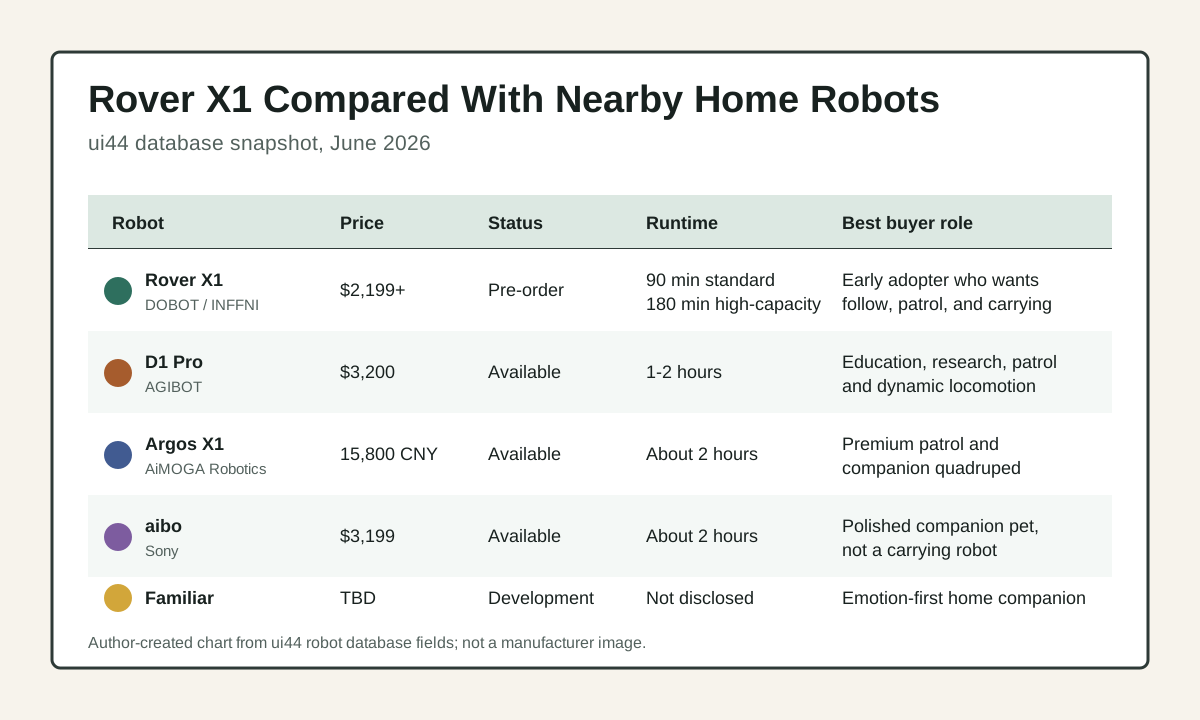
That comparison cuts both ways. The cheaper price makes Rover X1 more reachable, but an available robot with clear support may be a better fit than a cheaper preorder if you need it for a real use case now. A buyer comparing Rover X1 with AGIBOT D1 Pro should ask whether they want a consumer companion and filming robot, or a more education and research-oriented quadruped. A buyer comparing it with Argos X1 should ask whether local availability, patrol reliability, service, and a mature support path outweigh Rover X1's preorder timing.
It Is Not The Same Kind Of Robot As aibo
The closest emotional comparison is Sony aibo, but the products are not trying to solve the same problem. aibo is a polished companion pet at $3,199.99 in the US, with a 3-year A.I. Cloud Plan included and cloud-plan service required for the full experience, OLED eyes, about 2 hours of battery life, face recognition, voice commands, and a long history as a consumer entertainment robot.
Rover X1 is a legged mobility platform first. It is heavier, faster, and framed around follow, patrol, carrying, outdoor movement, and mobile video. That could make it far more useful for certain homes, but it also means the emotional layer needs to be judged differently. A cute gesture set is nice. Reliable docking, safe stopping, robust low-speed walking, predictable app control, and clear repair options matter more.

For families that mainly want a low-risk robot pet, aibo or Loona may make more sense. Loona's current official Premium bundle is listed at $442 for Loona Go, the charging dock, and the game prop kit, with a small wheeled body, GPT-powered conversations, face recognition, games, and auto-docking. EBO Max FamilyBot, currently listed by Enabot at $599.99 and marked out of stock, is another home companion option focused on patrol, video calls, reminders, and pet or person detection. Neither can walk over terrain or carry items like Rover X1, but both are easier to imagine in an apartment with less physical risk.
Familiar Shows The Other Direction
Familiar is useful because it shows a different bet on the home robot dog idea. Familiar Machines & Magic is building a small-dog-size quadruped companion with a soft exterior, touch sensitivity, local edge AI, and body-language interaction rather than a screen-first or task-first design. It is still in development and has no announced price, but the product direction is clearly emotional and context-aware.

Rover X1 is more practical on paper. Familiar is more explicit about companionship. That difference should shape buyer expectations. If you want a robot to move across a yard, follow you with a camera, and carry a water bottle, Rover X1 is the more relevant product. If you want a robot that reads the room and builds a relationship through body language, Rover X1 still has to prove that its companion features are more than gestures.
What Buyer Risks Still Matter?
The biggest Rover X1 risk is not price. It is verification. A preorder page can list compelling features while still leaving the hardest home questions unanswered.
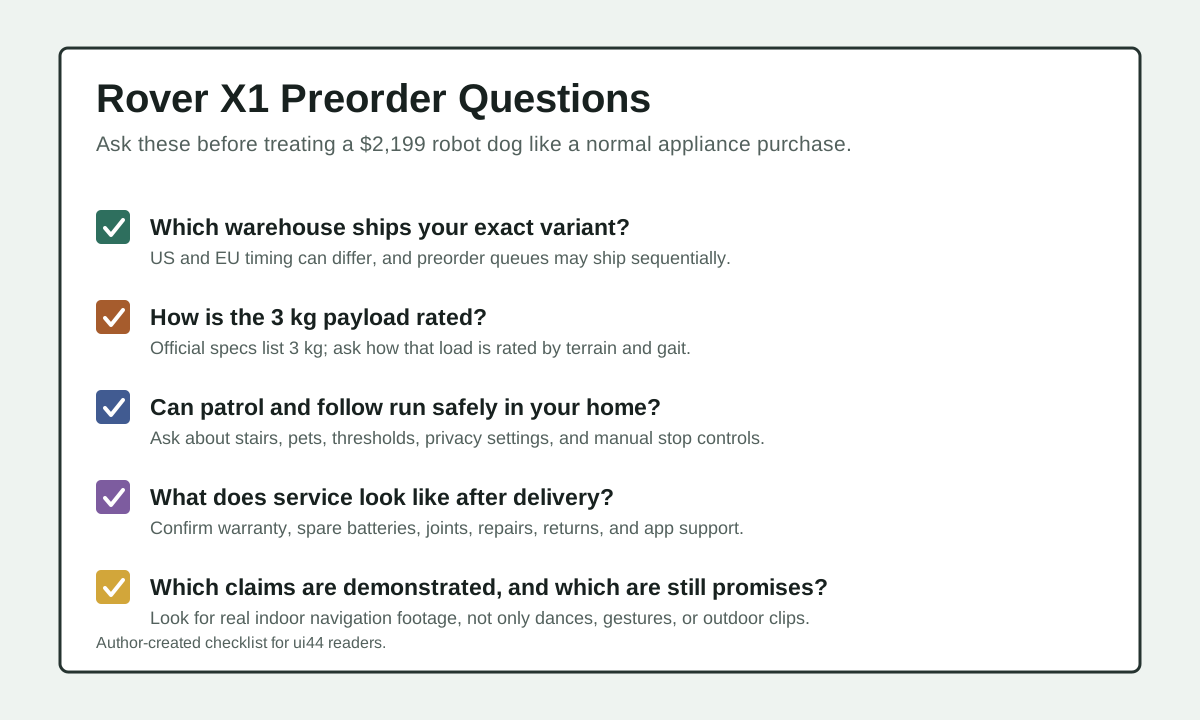
Before placing a preorder, ask these questions:
Question
Which warehouse ships your exact variant?
- Why it matters
- A product can be "available" regionally while your configuration waits in a queue.
Question
How is the 3 kg payload rated?
- Why it matters
- The number is useful, but buyers still need safe load guidance by terrain and gait.
Question
What surfaces are supported indoors?
- Why it matters
- Homes include rugs, thresholds, stairs, pet bowls, cables, and glossy floors.
Question
How does emergency stop work?
- Why it matters
- A 15 kg robot should have obvious manual and remote stop behavior.
Question
What video data leaves the home?
- Why it matters
- Follow mode and app video transmission raise privacy questions.
Question
What parts are user-replaceable?
- Why it matters
- Batteries, feet, wheels, joints, and chargers will determine long-term cost.
Question
What happens if it arrives damaged or unsafe?
- Why it matters
- Preorders need clear return, repair, and warranty terms.
| Question | Why it matters |
|---|---|
| Which warehouse ships your exact variant? | A product can be "available" regionally while your configuration waits in a queue. |
| How is the 3 kg payload rated? | The number is useful, but buyers still need safe load guidance by terrain and gait. |
| What surfaces are supported indoors? | Homes include rugs, thresholds, stairs, pet bowls, cables, and glossy floors. |
| How does emergency stop work? | A 15 kg robot should have obvious manual and remote stop behavior. |
| What video data leaves the home? | Follow mode and app video transmission raise privacy questions. |
| What parts are user-replaceable? | Batteries, feet, wheels, joints, and chargers will determine long-term cost. |
| What happens if it arrives damaged or unsafe? | Preorders need clear return, repair, and warranty terms. |
The published payload number is especially important. Rover X1's official specs list 3 kg for both point-foot and wheel-foot versions, and product imagery also markets "3-7kg High Payload & Carrying Ability." That is useful, but it is not the same as buyer-ready guidance for balance limits, gait restrictions, terrain limits, attachment points, and warranty coverage. A buyer should not assume it can carry a pet, child, heavy grocery bag, or anything fragile.
Who Should Consider Rover X1
Rover X1 makes the most sense for an early adopter who understands that this is a preorder consumer quadruped, not a finished home servant. It could be a good fit if you want:
- A legged robot for filming, following, and outdoor demos
- A mobile patrol camera that is more physically expressive than a wheeled bot
- A robot dog that can carry very light items under supervision
- A programmable or app-controlled platform for family experiments
- A cheaper entry point into quadrupeds than premium patrol robots
It is a weaker fit if you need a proven assistive device, a quiet apartment pet, a reliable security system, or anything that must work without supervision. It is also not the best choice if your home has many stairs, small children, reactive pets, narrow furniture paths, or privacy-sensitive spaces unless DOBOT and INFFNI publish strong controls for those scenarios.
Bottom Line
Rover X1 is worth watching because it puts a real consumer price on a home-facing robot dog. At $2,199, it sits close enough to premium companion robots to make the category feel less theoretical, while offering far more mobility than wheeled home bots. The 90-minute standard runtime, optional 180-minute battery, dual-vision tracking, app video transmission, voice commands, and wheel-foot option all point toward a practical home and outdoor companion.
But it is still a preorder robot with several buyer-critical unknowns. Payload limits beyond the published 3 kg spec, final support model, repair process, charging behavior, autonomy boundaries, and indoor safety evidence matter more than the launch-page personality. The smart move is to treat Rover X1 as an early consumer quadruped platform: promising, unusually affordable, and potentially fun, but not yet a normal appliance purchase.
For most buyers, the decision is simple. If you want a polished emotional pet, compare Sony aibo, Loona, and Familiar. If you want an available quadruped platform, compare AGIBOT D1 Pro and AiMOGA Argos X1. If you specifically want a lower-cost robot dog that follows, films, patrols, and carries small items, Rover X1 is one of the more serious preorder options in the home robot dog category.
Related in the database
Use this article as a buyer workflow
Turn the article into a real verification pass grounded in the robots, manufacturers, categories, components, and countries it actually references.
INFFNI Rover X1 Buyer Guide: $2,199 Robot Dog already points you toward 7 linked robots, 7 manufacturers, and 3 countries inside the ui44 database. That matters because strong buyer guidance is easier to apply when you can move immediately from a claim or warning into concrete product pages, manufacturer directories, component explainers, and country-level context instead of treating the article as an isolated opinion piece. The fastest next step is to turn the article into a shortlist workflow: open the linked robot pages, verify which specs are actually published for those models, then compare the surrounding manufacturer and component context before you decide whether the underlying claim changes your buying plan.
For this topic, the useful discipline is to separate the editorial lesson from the catalog evidence. The article gives you the framing, but the robot pages tell you what each product actually ships with today: sensor stack, connectivity methods, listed price, release timing, category, and support-relevant compatibility notes. The manufacturer pages then show whether you are looking at a one-off launch, a broader lineup pattern, or a company that spans multiple categories. That layered workflow reduces the risk of buying on a single marketing phrase or a single support FAQ.
The fastest win is to keep the article’s editorial framing tied to real product pages. That way you can test whether Rover X1, D1 Pro, and Argos X1 still make sense once price, category, release timing, and surrounding manufacturer context are visible in one place. If you want a quick working shortlist, open Compare Rover X1, D1 Pro, and Argos X1 next, then keep this article open as the reasoning layer while you compare structured data side by side.
Practical Takeaway
Every robot, manufacturer, category, component, and country reference below resolves to a real ui44 page, keeping the follow-up path grounded in database records rather than generic advice.
Suggested next steps in ui44
- Open Rover X1 first so the article’s main point is anchored to a real robot page.
- Use DOBOT to see the broader company context around the products linked in the article.
- Open the linked component pages when you want to separate a shared technology pattern from a single-brand story.
- Build a working shortlist with Compare Rover X1, D1 Pro, and Argos X1.
- Keep a short note of what is already verified in the article and what still needs live confirmation from current vendor documentation.
Robot profiles worth opening next
Use the linked product pages as the evidence layer
The linked robot pages are where this article becomes operational. Instead of asking whether the headline is interesting, use the robot entries to inspect the actual mix of sensors, connectivity options, batteries, pricing, release timing, and stated capabilities attached to the products mentioned in the article. That is the easiest way to see whether the warning or opportunity described here affects one product family, a specific design pattern, or an entire buying lane.
Rover X1 is tracked on ui44 as a pre-order quadruped robot from DOBOT. The database currently records a listed price of $2,199, a release date of 2026-01, Approximately 90 minutes with standard battery; approximately 180 minutes with high-capacity battery battery life, Not officially disclosed charging time, and a published stack that includes Dual vision and smart perception and Dual-vision tracking system plus iOS/Android mobile app with Bluetooth pairing and Remote controller.
For general buyer research, this route gives you the concrete profile that the article alone cannot. Compare the published capabilities of Quadruped Mobility, Wheel-foot Mobility Option, and Intelligent Subject Tracking with the linked alternatives so the final decision is based on actual product fit, not just the framing of the article.
D1 Pro is tracked on ui44 as a available quadruped robot from AGIBOT. The database currently records a listed price of $3,200, a release date of 2025-08-01, 1–2 hours per charge battery life, Approx. 1 hour (10% to 90% charge) charging time, and a published stack that includes Wide-Angle Camera (122° DFOV) and IMU plus Wi-Fi and Bluetooth 5.2.
For general buyer research, this route gives you the concrete profile that the article alone cannot. Compare the published capabilities of All-Terrain Locomotion (RL-based gait), Stair Climbing (up to 16 cm steps), and Slope Traversal (up to 40°) with the linked alternatives so the final decision is based on actual product fit, not just the framing of the article.
Argos X1
AiMOGA Robotics · Quadruped · Available
Argos X1 is tracked on ui44 as a available quadruped robot from AiMOGA Robotics. The database currently records a listed price of ¥15,800, a release date of 2025-12, Approximately 2 hours battery life, Not officially disclosed charging time, and a published stack that includes HD panoramic camera, 2× high-sensitivity ultrasonic radars, and 6-microphone ring array plus Remote control with real-time video viewing.
For general buyer research, this route gives you the concrete profile that the article alone cannot. Compare the published capabilities of Quadruped Walking and Running, Terrain-adaptive Locomotion, and 40-degree Slope Climbing with the linked alternatives so the final decision is based on actual product fit, not just the framing of the article.
aibo (ERS-1000)
Sony · Companions · Available
aibo (ERS-1000) is tracked on ui44 as a available companions robot from Sony. The database currently records a listed price of $3,200, a release date of 2018-01, ~2 hours battery life, ~3 hours charging time, and a published stack that includes Front Camera, SLAM Camera, and Time-of-Flight Sensor plus Wi-Fi 802.11 b/g/n (2.4GHz) and LTE.
For general buyer research, this route gives you the concrete profile that the article alone cannot. Compare the published capabilities of Emotion Recognition, Face Recognition (up to 100 faces), and Voice Command Recognition (100+ commands) with the linked alternatives so the final decision is based on actual product fit, not just the framing of the article.
Loona is tracked on ui44 as a available companions robot from KEYi Tech. The database currently records a listed price of $442, a release date of 2023, 2 hours continuous playtime; 1350 mAh, 11.1 V lithium-ion rechargeable battery battery life, Not officially disclosed charging time, and a published stack that includes 3D Time-of-Flight (ToF) Sensor, 720p RGB Camera, and Touch Sensor plus Wi-Fi (Dual-band 2.4G/5.8G, 802.11a/b/g/n) and USB Type-C (charging).
For general buyer research, this route gives you the concrete profile that the article alone cannot. Compare the published capabilities of Face Recognition, Voice Commands, and Emotion Expression (LCD face) with the linked alternatives so the final decision is based on actual product fit, not just the framing of the article.
Manufacturer context behind the article
Check whether this is one product story or a broader company pattern
Manufacturer pages add the market context that individual product pages cannot show on their own. They help you check whether the article is centered on a brand with a deep lineup, whether that brand spans several categories, and how much of its ui44 footprint depends on one flagship model versus a broader product strategy.
DOBOT
ui44 currently tracks 2 robots from DOBOT across 2 categorys. The company is grouped under China, and the current catalog footprint on ui44 includes DOBOT Atom, Rover X1.
That wider brand context matters because the best buying decision usually depends on lineup depth and adjacent options, not just the one model featured most prominently in the article. The category mix here currently points toward Humanoid, Quadruped as the most useful next route if you want to see whether this article reflects a wider pattern inside the brand.
AGIBOT
ui44 currently tracks 10 robots from AGIBOT across 3 categorys. The company is grouped under China, and the current catalog footprint on ui44 includes A2 Ultra, X2, Expedition A3.
That wider brand context matters because the best buying decision usually depends on lineup depth and adjacent options, not just the one model featured most prominently in the article. The category mix here currently points toward Humanoid, Quadruped, Commercial as the most useful next route if you want to see whether this article reflects a wider pattern inside the brand.
AiMOGA Robotics
ui44 currently tracks 2 robots from AiMOGA Robotics across 2 categorys. The company is grouped under China, and the current catalog footprint on ui44 includes Mornine M1, Argos X1.
That wider brand context matters because the best buying decision usually depends on lineup depth and adjacent options, not just the one model featured most prominently in the article. The category mix here currently points toward Humanoid, Quadruped as the most useful next route if you want to see whether this article reflects a wider pattern inside the brand.
Sony
ui44 currently tracks 2 robots from Sony across 2 categorys. The company is grouped under Japan, and the current catalog footprint on ui44 includes aibo (ERS-1000), QRIO.
That wider brand context matters because the best buying decision usually depends on lineup depth and adjacent options, not just the one model featured most prominently in the article. The category mix here currently points toward Companions, Research as the most useful next route if you want to see whether this article reflects a wider pattern inside the brand.
Broaden the scan without leaving the database
Categories, components, and countries add the wider context
Category framing
Category pages are useful when the article touches a buying pattern that shows up across brands. A category route helps you confirm whether the linked products sit in a narrow niche or whether the same question should be tested across a larger field of alternatives.
Quadruped
The Quadruped category page currently groups 25 tracked robots from 16 manufacturers. ui44 describes this lane as: Four-legged robot dogs and quadrupeds built for rough terrain, inspection, and exploration — going where wheels can't.
That makes the category route a practical follow-up when you want to check whether the products linked in this article are typical for the lane or whether they sit at one edge of the market. Useful starting examples currently include Argos X1, D1 Pro, D2 Max.
Companions
The Companions category page currently groups 53 tracked robots from 48 manufacturers. ui44 describes this lane as: Social robots, robot pets, and elderly-care companions designed for emotional connection and everyday support at home.
That makes the category route a practical follow-up when you want to check whether the products linked in this article are typical for the lane or whether they sit at one edge of the market. Useful starting examples currently include PARO, Abi, Next-Generation Companion Robot.
Country and ecosystem context
Country pages give extra context when support practices, launch sequencing, regulatory posture, or manufacturer mix matter. They are not a substitute for model-level verification, but they do help you see which ecosystems cluster together and which manufacturers sit in the same regional field when you broaden the search beyond the article headline.
China
The China route currently groups 189 tracked robots from 86 manufacturers in ui44. That gives you a useful regional lens when the article points toward support practices, launch sequencing, or brand clusters that may share similar ecosystem assumptions.
On the current route, manufacturers like Unitree Robotics, AGIBOT, Dreame make the page a good way to broaden the scan without losing the regional context that often shapes availability, documentation style, and adjacent alternatives.
Japan
The Japan route currently groups 26 tracked robots from 17 manufacturers in ui44. That gives you a useful regional lens when the article points toward support practices, launch sequencing, or brand clusters that may share similar ecosystem assumptions.
On the current route, manufacturers like AIST, SoftBank Robotics, Toyota make the page a good way to broaden the scan without losing the regional context that often shapes availability, documentation style, and adjacent alternatives.
USA
The USA route currently groups 89 tracked robots from 69 manufacturers in ui44. That gives you a useful regional lens when the article points toward support practices, launch sequencing, or brand clusters that may share similar ecosystem assumptions.
On the current route, manufacturers like Faraday Future, iRobot, Boston Dynamics make the page a good way to broaden the scan without losing the regional context that often shapes availability, documentation style, and adjacent alternatives.
Questions to answer before you move from reading to buying
A follow-up FAQ built from the entities already linked in this article
Frequently Asked Questions
Which page should I open first after reading “INFFNI Rover X1 Buyer Guide: $2,199 Robot Dog”?
Start with Rover X1. That gives you a concrete product anchor for the article’s main claim. From there, branch into the manufacturer and component pages so you can tell whether the article is describing one specific model, a repeated brand pattern, or a wider technology issue that affects multiple shortlist options.
How do the manufacturer pages change the buying decision?
DOBOT help you zoom out from one article and one product. On ui44 they show lineup breadth, category spread, and the neighboring robots tied to the same company. That context is useful when you are deciding whether a risk belongs to a single model, whether it shows up across a brand’s portfolio, and whether you should keep looking at alternatives before committing.
When should I switch from reading to side-by-side comparison?
Move into Compare Rover X1, D1 Pro, and Argos X1 as soon as you understand the article’s main warning or promise. The article explains what to watch for, but the compare view is where you can check whether price, status, battery life, connectivity, sensors, and category fit still make the robot a good match for your own home and budget.
Where to go next in ui44
Keep the research chain inside the database
If you want to keep going, these follow-on pages give you the cleanest expansion path from article to research session. Open the comparison route first if you are deciding between products today. Open the manufacturer, category, and component routes if you still need to understand the broader pattern behind the claim.
Written by
ui44 Team
Published June 9, 2026
Share this article
Open a plain share link on X or Bluesky. No embeds, no widgets, no cookie baggage.