That may sound less exciting than a general-purpose home assistant. It is also more believable.
In its June 17 robotics launch, Faraday Future described FX Navi as a foundational education quadruped with 12 joint motors, an 8 kg body, a smartphone-powered "brain," a 3D-printable head module, visual programming, curriculum access, and a Skill Store. In a June 22 Automate follow-up, FF put Navi inside a broader "one brain, multiple forms" strategy spanning humanoids, quadrupeds, and mobile manipulators.
For a buyer, the useful question is not whether every part of that ecosystem is proven. It is whether education is the first home robotics category where the value proposition can be honest.
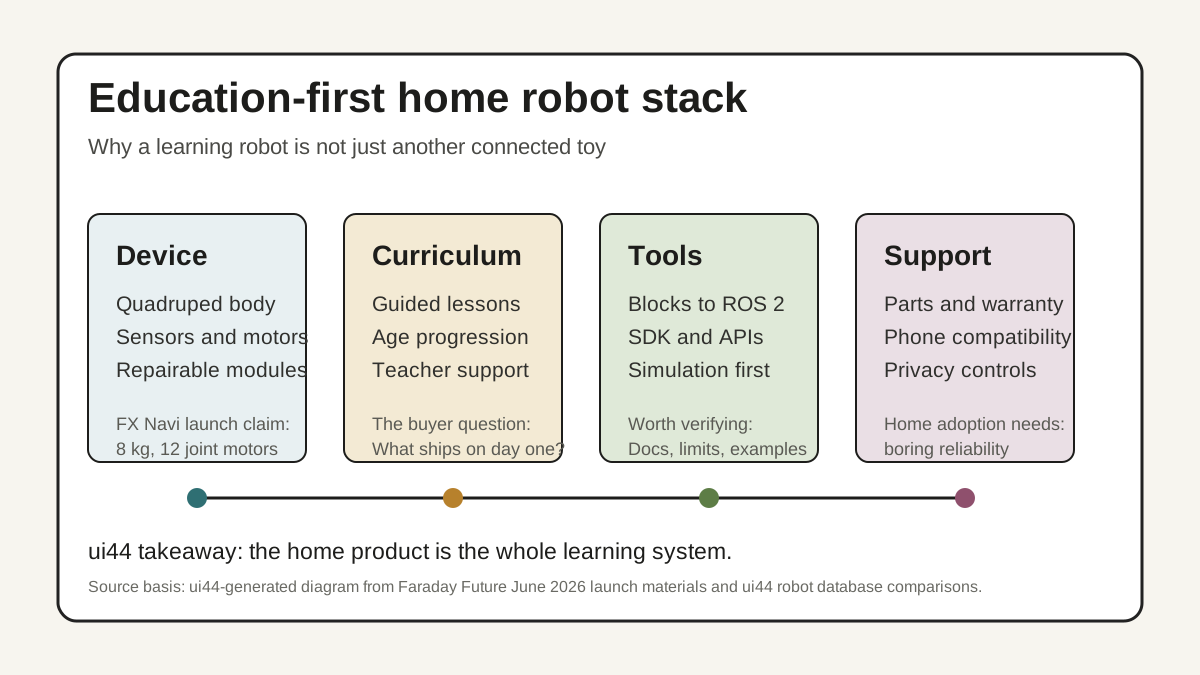
Why education is a smarter first home market than chores
Most home robots fail when they try to compete with human expectations inside messy rooms. A robot that says it can "help around the house" is immediately judged against picking up socks, opening drawers, using appliances, handling pets, avoiding stairs, and recovering from weird edge cases. That is a brutal bar.
Education changes the bar. A learning robot does not need to complete the whole chore. It needs to make robotics visible, programmable, repeatable, and fun enough that a family or school keeps using it. A quadruped that walks, follows, reacts to commands, runs small programs, and lets a child modify a head shell can be useful without pretending to be a domestic worker.
That is the lane FX Navi is trying to occupy. FF says the robot uses a phone for compute, camera, and microphone input, supports iOS and Android, and can be programmed through a visual platform. The company also describes beginner tools, SDK/API access, simulation before real-robot deployment, and curriculum packages that sit across its robot lineup.
Those details matter because "robot education" is not just a product category. It is a bundle:
- A physical robot that can survive repeated use
- Lessons that progress beyond the first afternoon
- Programming tools that scale from blocks to real code
- Safety limits that make sense around children
- Support, parts, and batteries that do not turn a lesson plan into a repair project
The robot body is the visible part. The learning system is the product.
The price is the first real signal
FX Navi's $1,990 launch price puts it in an unusual middle band. It is much more expensive than a desktop learning robot, but much cheaper than most serious research quadrupeds. It also lands near consumer-priced robot dogs that already appear in the ui44 database.
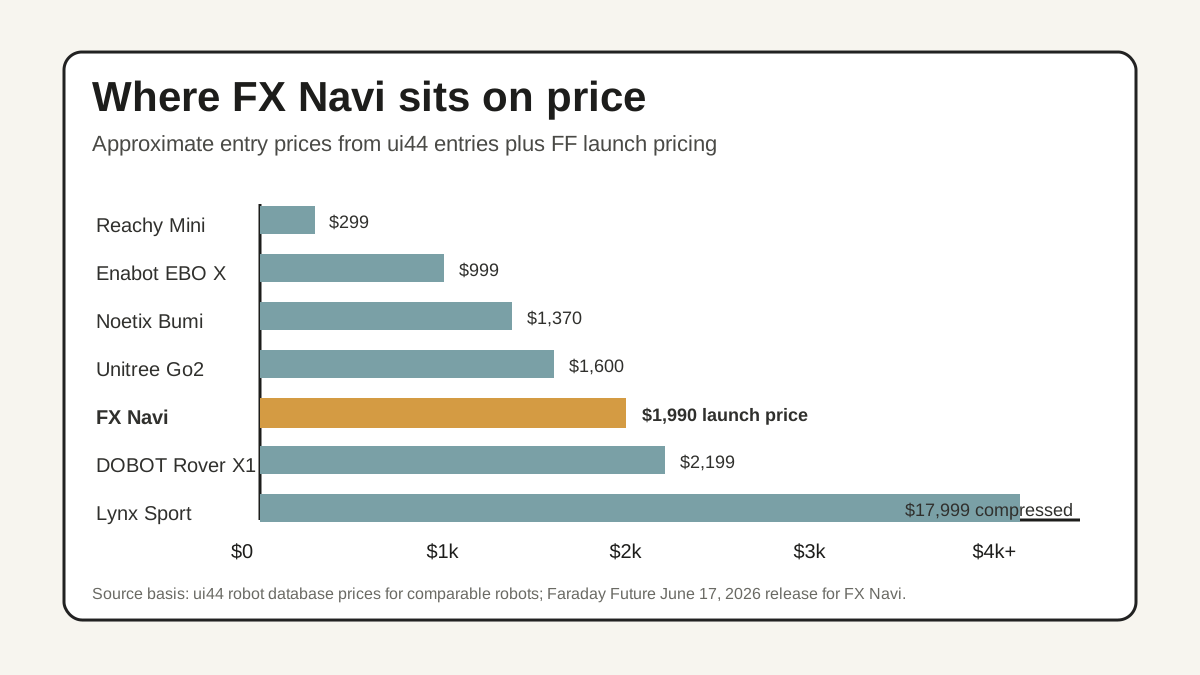
For context, Reachy Mini is listed in ui44 at $299 as a low-cost companion and developer robot. Enabot EBO X is listed at $999 as a mobile family companion and home-monitoring robot. Noetix Bumi is listed at $1,370, while Unitree Go2 appears at $1,600 as a lower-cost quadruped. DOBOT Rover X1, another home-leaning robot dog with coding-education and follow-filming positioning, is listed at $2,199.
That makes Navi's pricing strategic. It is high enough that a parent will expect real value, not a novelty toy. It is low enough that schools, STEM clubs, and some households can at least consider it without entering $10,000-plus research-platform territory.
The problem is that price alone does not prove accessibility. FF's own release says a Lifetime Premium Development & Skills Package costs an additional $390, while a Curriculum Skills Package costs $490 per year. A family comparing Navi against a cheaper robot dog should count the first-year software cost, replacement parts, batteries, warranty terms, and whether curriculum access is tied to a subscription.
If the actual learning loop depends on paid packages, the headline robot price is only the starting point.
What FX Navi can teach that a screen cannot
The reason a physical robot can justify its cost is embodiment. A child can write a program, see a legged robot move, watch it fail, change the code, and learn that software has consequences in the real world. That is different from dragging blocks on a tablet.
Navi's launch claims point to several useful learning paths:
- Locomotion: how gait, balance, terrain, and motion commands interact
- Perception: what a phone camera and microphone can and cannot understand
- Human-robot interaction: voice, movement, facial expression, and feedback
- Design: 3D-printable shells and visible physical customization
- Systems thinking: one robot body connected to apps, cloud services, tools, and content
That last point is important. The home robotics market is moving from isolated gadgets toward ecosystems. FF's robotics site describes three pieces: devices, data, and an embodied-AI brain/open platform. The June 22 Automate release expanded the same idea into six product series, including humanoids such as FF Master and FF Futurist, larger quadrupeds such as FX Aegis, and the new Faber mobile manipulator series.
For families, that big vision is both exciting and risky. A shared robot "brain" across several bodies could make lessons portable. A child could learn a perception concept on a small quadruped, then later apply related skills to a humanoid or mobile manipulator. But it could also become a complicated platform story where the most impressive claims remain just out of reach for ordinary buyers.
The useful buyer test is simple: can a beginner do something meaningful in the first week, and can an intermediate learner still grow after three months?
The better comparison is not a toy. It is a kit.
FX Navi should be compared less like a toy robot dog and more like a robotics kit with a body. That changes the competitive set.
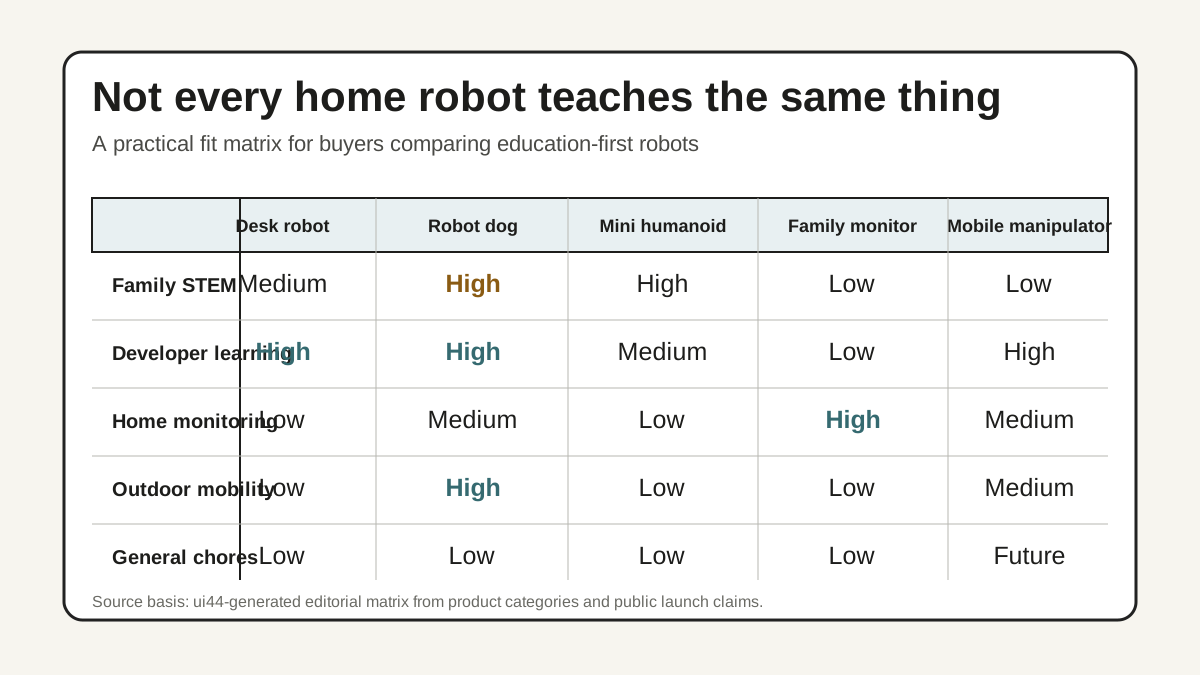
Desk robots such as Reachy Mini can be better for coding-first learning because they are cheaper, easier to keep on a table, and less likely to create safety or durability issues. Family companion robots such as EBO X are better for home awareness, video calls, and everyday presence. Humanoids such as Noetix Bumi make body motion more relatable, but they also raise harder expectations around dexterity and balance.
Robot dogs sit in a useful middle. They are physical enough to make autonomy feel real, but not as expectation-heavy as humanoids with hands. A quadruped can patrol, follow, recover from small disturbances, and show off motion planning without implying that it should cook dinner.
That is why Navi's category is interesting. A robot dog is legged, social, and mobile, but still bounded. It can be a learning object first. It does not have to be a servant.
Against Unitree Go2, Navi's education story needs to prove that FF has better beginner materials and family support. Against DOBOT Rover X1, it needs to prove that the curriculum and developer ecosystem are more than a marketing layer. Against Reachy Mini, it needs to justify why a family should pay several times more for legs, motion, and a larger physical presence.
Those are fair tests. They are also healthier tests than asking whether Navi can become Rosie from The Jetsons.
What to verify before buying
Because this is a launch-stage product, buyers should treat FF's claims as a checklist, not a conclusion. The company says sales and delivery opened immediately, but the practical experience depends on what a customer can actually order, receive, update, repair, and teach with.
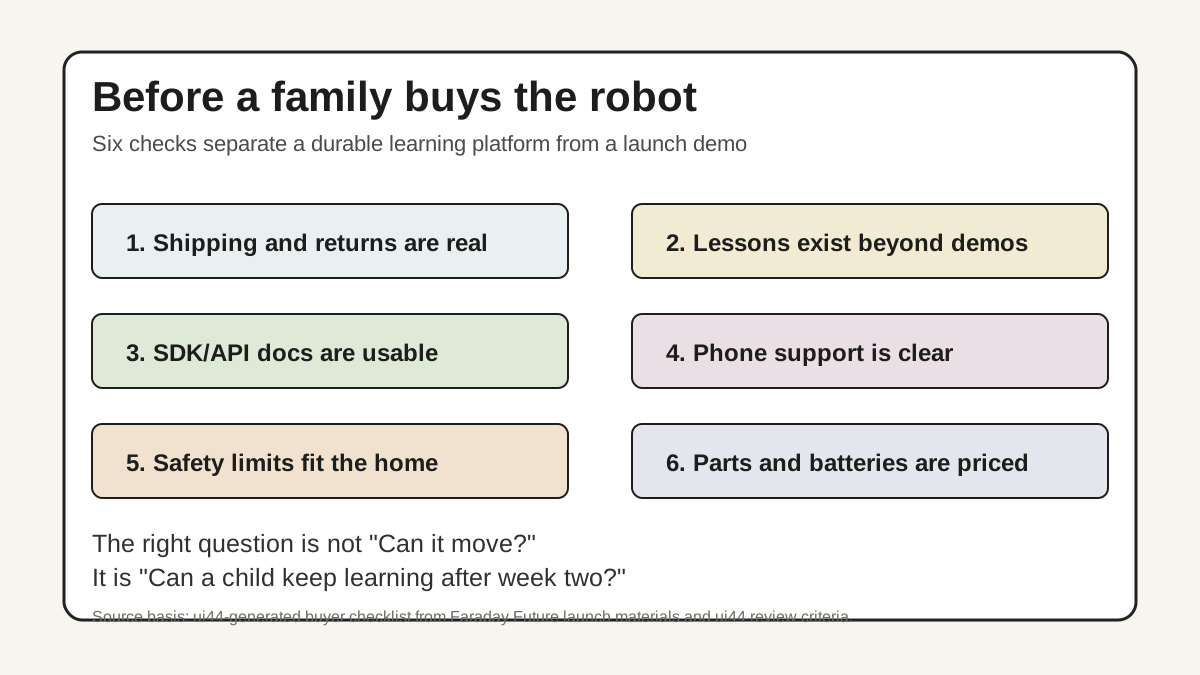
Before paying, verify six things.
First, confirm shipping status and return terms in your region. "Available today" in a launch release is not the same as predictable consumer fulfillment.
Second, inspect the curriculum. Look for actual lesson samples, age bands, teacher guides, project outcomes, and whether the nine-level curriculum FF mentions is included, optional, or subscription-based.
Third, check the developer platform. Blocks-to-ROS 2 sounds valuable, but buyers should ask whether documentation, example projects, SDK downloads, API limits, and simulator workflows are public and maintained.
Fourth, understand the phone dependency. A smartphone-powered robot can reduce cost and let the system improve as phones improve. It can also create compatibility, heat, battery, privacy, and household-device-management questions.
Fifth, ask about safety. An 8 kg walking robot is not huge, but it is still a moving machine around ankles, pets, furniture, and children. Buyers should look for speed limits, manual stop behavior, fall recovery, and clear guidance for indoor use.
Sixth, price the boring parts: batteries, chargers, feet, shells, motors, service plans, and warranty coverage. Educational robots get handled, dropped, bumped, carried, and modified. If replacement parts are hard to buy, the learning value drops fast.
The Automate update makes the story bigger, not simpler
The June 22 Automate announcement widened FF's robotics strategy. The company says the complete six-series lineup now spans humanoids, quadrupeds, and mobile manipulators. It also introduced Faber, an industrial-grade mobile manipulator family aimed at factory support, logistics, inspection, and other commercial tasks.
That matters for a home-education article because it shows the tension in FF's plan. Education is the first B2C bridge. Industry is the scale and revenue story. The same "one brain, multiple forms" language is meant to connect both.
For ui44 readers, the home implication is practical: do not judge Navi only by the most ambitious FF roadmap. Judge it by whether the education product works as a standalone purchase. A family should not need the entire EAI Robot World to become real before the $1,990 robot makes sense.
If the curriculum is strong, the tools are open enough, and the hardware support is dependable, Navi could be a credible home robotics learning platform even if the larger ecosystem takes years to mature. If those pieces are thin, the robot becomes a pricey demo of a corporate strategy.
So, is robot education the first real home market?
It might be.
Home robotics has spent years overpromising chores and underdelivering general autonomy. Education is different because the buyer is not paying to avoid work. The buyer is paying for learning, curiosity, and a controlled way to touch the next computing platform.
That is a more honest near-term market for robots with legs, cameras, speakers, apps, and developer tools. The job is not to replace a person. The job is to help a person understand robotics.
FX Navi is important because it puts that idea into a consumer-shaped package: a robot dog under $2,000, tied to curriculum, visual programming, customization, and a broader embodied-AI platform. It is also early enough that buyers should be careful. Shipping proof, lesson quality, software access, support, safety, and subscription costs matter more than launch-event language.
The best version of Navi is not a toy and not a home assistant. It is a family robotics kit with enough personality to stay interesting after the first week.
That may be exactly where useful home robots begin.
Related in the database
Use this article as a privacy verification workflow
Turn the article into a privacy verification pass grounded in the robots, manufacturers, and components it actually references.
Is Robot Education the First Home Robot Market? already points you toward 8 linked robots, 6 manufacturers, and 3 countries inside the ui44 database. That matters because strong buyer guidance is easier to apply when you can move immediately from a claim or warning into concrete product pages, manufacturer directories, component explainers, and country-level context instead of treating the article as an isolated opinion piece. The fastest next step is to turn the article into a shortlist workflow: open the linked robot pages, verify which specs are actually published for those models, then compare the surrounding manufacturer and component context before you decide whether the underlying claim changes your buying plan.
For this topic, the useful discipline is to separate the editorial lesson from the catalog evidence. The article gives you the framing, but the robot pages tell you what each product actually ships with today: sensor stack, connectivity methods, listed price, release timing, category, and support-relevant compatibility notes. The manufacturer pages then show whether you are looking at a one-off launch, a broader lineup pattern, or a company that spans multiple categories. That layered workflow reduces the risk of buying on a single marketing phrase or a single support FAQ.
Use the robot pages to confirm which products actually expose cameras, microphones, Wi-Fi, or voice systems, then use the manufacturer pages to decide how much of the privacy question seems product-specific versus brand-wide. On this route cluster, FX Aegis, FF Master, and FF Futurist form the fastest reality check. If you want a quick working shortlist, open Compare FX Aegis, FF Master, and FF Futurist next, then keep this article open as the reasoning layer while you compare structured data side by side.
Practical Takeaway
Every robot, manufacturer, category, component, and country reference below resolves to a real ui44 page, keeping the follow-up path grounded in database records rather than generic advice.
Suggested next steps in ui44
- Open FX Aegis and note the listed sensors, connectivity methods, and voice stack before you interpret any policy claim.
- Cross-check the wider brand context on Faraday Future so you can see whether the privacy question touches one model or a broader lineup.
- Use the linked component pages to confirm how common the relevant sensors and connectivity layers are across the database.
- Keep a short note of which policy layers you checked, which device features are actually present on the robot page, and which items still depend on region- or app-level confirmation.
- Finish with Compare FX Aegis, FF Master, and FF Futurist so the policy reading sits next to structured product data.
Robot profiles worth opening next
Use the linked product pages as the evidence layer
The linked robot pages are where this article becomes operational. Instead of asking whether the headline is interesting, use the robot entries to inspect the actual mix of sensors, connectivity options, batteries, pricing, release timing, and stated capabilities attached to the products mentioned in the article. That is the easiest way to see whether the warning or opportunity described here affects one product family, a specific design pattern, or an entire buying lane.
FX Aegis
Faraday Future · Quadruped · Pre-order
FX Aegis is tracked on ui44 as a pre-order quadruped robot from Faraday Future. The database currently records a listed price of $2,490, a release date of 2026-02-05, 120 minutes battery life, Not officially disclosed charging time, and a published stack that includes HD Cameras, LiDAR (optional module), and Depth Cameras (optional module) plus Wi-Fi and 5G.
For privacy-focused reading, this page matters because it shows the concrete device surface behind the policy discussion. Use it to verify whether FX Aegis combines sensors and connectivity in a way that could change the in-home data footprint, and compare the listed capabilities such as Quadruped Locomotion, Wheeled Mobility (optional variant), and Autonomous Navigation with any cloud, app, or voice layers.
FF Master
Faraday Future · Humanoid · Active
FF Master is tracked on ui44 as a active humanoid robot from Faraday Future. The database currently records a listed price of $19,990, a release date of 2026-02-04, Up to 2 hours battery life, Not disclosed charging time, and a published stack that includes 3D LiDAR, Stereo RGB Cameras, and Interactive RGB Camera plus Wi-Fi and Bluetooth.
For privacy-focused reading, this page matters because it shows the concrete device surface behind the policy discussion. Use it to verify whether FF Master combines sensors and connectivity in a way that could change the in-home data footprint, and compare the listed capabilities such as Bipedal Walking, Autonomous Navigation, and Obstacle Avoidance with any cloud, app, or voice layers.
FF Futurist
Faraday Future · Humanoid · Active
FF Futurist is tracked on ui44 as a active humanoid robot from Faraday Future. The database currently records a listed price of $34,990, a release date of 2026-02-04, Approx. 3 hours continuous standing time; hot-swappable without power interruption battery life, Not disclosed (hot-swappable battery design) charging time, and a published stack that includes 3D LiDAR, RGB-D Camera, and Fisheye Camera plus Wi-Fi and 4G.
For privacy-focused reading, this page matters because it shows the concrete device surface behind the policy discussion. Use it to verify whether FF Futurist combines sensors and connectivity in a way that could change the in-home data footprint, and compare the listed capabilities such as Bipedal Walking, Autonomous Navigation, and Obstacle Avoidance with any cloud, app, or voice layers.
Rover X1 is tracked on ui44 as a pre-order quadruped robot from DOBOT. The database currently records a listed price of $2,199, a release date of 2026-01, Approximately 90 minutes with standard battery; approximately 180 minutes with high-capacity battery battery life, Not officially disclosed charging time, and a published stack that includes Dual vision and smart perception and Dual-vision tracking system plus iOS/Android mobile app with Bluetooth pairing and Remote controller.
For privacy-focused reading, this page matters because it shows the concrete device surface behind the policy discussion. Use it to verify whether Rover X1 combines sensors and connectivity in a way that could change the in-home data footprint, and compare the listed capabilities such as Quadruped Mobility, Wheel-foot Mobility Option, and Intelligent Subject Tracking with any cloud, app, or voice layers, including Built-in voice commands within 1-2 m.
Go2
Unitree Robotics · Quadruped · Available
Go2 is tracked on ui44 as a available quadruped robot from Unitree Robotics. The database currently records a listed price of $1,600, a release date of 2023-07-12, 1–2h (standard) / 2–4h (EDU long endurance) battery life, Not officially disclosed charging time, and a published stack that includes 4D LiDAR L2 (360°×96° hemispherical), HD Wide-angle Camera, and Depth Camera (EDU) plus Wi-Fi 6 and Bluetooth 5.2.
For privacy-focused reading, this page matters because it shows the concrete device surface behind the policy discussion. Use it to verify whether Go2 combines sensors and connectivity in a way that could change the in-home data footprint, and compare the listed capabilities such as Quadruped Walking & Running, Advanced AI Gaits (roll-over, obstacle climbing), and 3D LiDAR Mapping with any cloud, app, or voice layers, including Offline voice interaction (Pro/X/EDU).
Manufacturer context behind the article
Check whether this is one product story or a broader company pattern
Manufacturer pages add the privacy context that individual product pages cannot show on their own. They help you check whether cameras, microphones, cloud accounts, app controls, and policy assumptions appear across a broader lineup or stay tied to one specific product story.
Faraday Future
ui44 currently tracks 5 robots from Faraday Future across 3 categorys. The company is grouped under USA, and the current catalog footprint on ui44 includes FF Futurist, FF Master, FX Aegis.
That wider brand context matters because privacy questions rarely stop at one FAQ page. A manufacturer route helps you see whether the article is centered on one premium model or on a company that has several relevant products and therefore more than one place where the same policy or app assumptions might matter. The category mix here currently points toward Humanoid, Quadruped, Commercial as the most useful next route if you want to see whether this article reflects a wider pattern inside the brand.
DOBOT
ui44 currently tracks 2 robots from DOBOT across 2 categorys. The company is grouped under China, and the current catalog footprint on ui44 includes DOBOT Atom, Rover X1.
That wider brand context matters because privacy questions rarely stop at one FAQ page. A manufacturer route helps you see whether the article is centered on one premium model or on a company that has several relevant products and therefore more than one place where the same policy or app assumptions might matter. The category mix here currently points toward Humanoid, Quadruped as the most useful next route if you want to see whether this article reflects a wider pattern inside the brand.
Unitree Robotics
ui44 currently tracks 9 robots from Unitree Robotics across 3 categorys. The company is grouped under China, and the current catalog footprint on ui44 includes B2, B1, Go2.
That wider brand context matters because privacy questions rarely stop at one FAQ page. A manufacturer route helps you see whether the article is centered on one premium model or on a company that has several relevant products and therefore more than one place where the same policy or app assumptions might matter. The category mix here currently points toward Quadruped, Humanoid, Research as the most useful next route if you want to see whether this article reflects a wider pattern inside the brand.
Pollen Robotics
ui44 currently tracks 2 robots from Pollen Robotics across 2 categorys. The company is grouped under France, and the current catalog footprint on ui44 includes Reachy 2, Reachy Mini.
That wider brand context matters because privacy questions rarely stop at one FAQ page. A manufacturer route helps you see whether the article is centered on one premium model or on a company that has several relevant products and therefore more than one place where the same policy or app assumptions might matter. The category mix here currently points toward Research, Companions as the most useful next route if you want to see whether this article reflects a wider pattern inside the brand.
Broaden the scan without leaving the database
Categories, components, and countries add the wider context
Category framing
Category pages are useful when the article touches a buying pattern that shows up across brands. A category route helps you confirm whether the linked products sit in a narrow niche or whether the same question should be tested across a larger field of alternatives.
Quadruped
The Quadruped category page currently groups 25 tracked robots from 16 manufacturers. ui44 describes this lane as: Four-legged robot dogs and quadrupeds built for rough terrain, inspection, and exploration — going where wheels can't.
That makes the category route a practical follow-up when you want to check whether the products linked in this article are typical for the lane or whether they sit at one edge of the market. Useful starting examples currently include Argos X1, D1 Pro, D2 Max.
Humanoid
The Humanoid category page currently groups 129 tracked robots from 92 manufacturers. ui44 describes this lane as: Full-size bipedal humanoid robots built to work alongside people — from factory floors to household tasks. Compare the cutting edge of humanoid robotics.
That makes the category route a practical follow-up when you want to check whether the products linked in this article are typical for the lane or whether they sit at one edge of the market. Useful starting examples currently include NEO, EVE, Mornine M1.
Country and ecosystem context
Country pages give extra context when support practices, launch sequencing, regulatory posture, or manufacturer mix matter. They are not a substitute for model-level verification, but they do help you see which ecosystems cluster together and which manufacturers sit in the same regional field when you broaden the search beyond the article headline.
USA
The USA route currently groups 89 tracked robots from 69 manufacturers in ui44. That gives you a useful regional lens when the article points toward support practices, launch sequencing, or brand clusters that may share similar ecosystem assumptions.
On the current route, manufacturers like Faraday Future, iRobot, Boston Dynamics make the page a good way to broaden the scan without losing the regional context that often shapes availability, documentation style, and adjacent alternatives.
China
The China route currently groups 189 tracked robots from 87 manufacturers in ui44. That gives you a useful regional lens when the article points toward support practices, launch sequencing, or brand clusters that may share similar ecosystem assumptions.
On the current route, manufacturers like AGIBOT, Dreame, Unitree Robotics make the page a good way to broaden the scan without losing the regional context that often shapes availability, documentation style, and adjacent alternatives.
France
The France route currently groups 8 tracked robots from 7 manufacturers in ui44. That gives you a useful regional lens when the article points toward support practices, launch sequencing, or brand clusters that may share similar ecosystem assumptions.
On the current route, manufacturers like Pollen Robotics, Aldebaran / Maxtronics, Aldebaran Robotics make the page a good way to broaden the scan without losing the regional context that often shapes availability, documentation style, and adjacent alternatives.
Questions to answer before you move from reading to buying
A follow-up FAQ built from the entities already linked in this article
Frequently Asked Questions
Which page should I open first after reading “Is Robot Education the First Home Robot Market?”?
Start with FX Aegis. That gives you a concrete product anchor for the article’s main claim. From there, branch into the manufacturer and component pages so you can tell whether the article is describing one specific model, a repeated brand pattern, or a wider technology issue that affects multiple shortlist options.
How do the manufacturer pages change the buying decision?
Faraday Future help you zoom out from one article and one product. On ui44 they show lineup breadth, category spread, and the neighboring robots tied to the same company. That context is useful when you are deciding whether a risk belongs to a single model, whether it shows up across a brand’s portfolio, and whether you should keep looking at alternatives before committing.
When should I switch from reading to side-by-side comparison?
Move into Compare FX Aegis, FF Master, and FF Futurist as soon as you understand the article’s main warning or promise. The article explains what to watch for, but the compare view is where you can check whether price, status, battery life, connectivity, sensors, and category fit still make the robot a good match for your own home and budget.
Where to go next in ui44
Keep the research chain inside the database
If you want to keep going, these follow-on pages give you the cleanest expansion path from article to research session. Open the comparison route first if you are deciding between products today. Open the manufacturer, category, and component routes if you still need to understand the broader pattern behind the claim.
Written by
ui44 Team
Published July 3, 2026
Share this article
Open a plain share link on X or Bluesky. No embeds, no widgets, no cookie baggage.