
That distinction matters. A robot maker can show a humanoid walking, greeting, dancing or moving boxes long before it can provide a safe, repaired, supported home product in Berlin, Singapore, Dubai or Los Angeles. Hong Kong gives AGIBOT and similar companies a middle step between domestic Chinese pilots and true global consumer availability.
So the answer is: yes, Chinese humanoid robots may reach global markets through Hong Kong first — but mostly through service, research, rental and enterprise deployments before private homes.
Will Chinese humanoid robots reach global markets through Hong Kong first?
Hong Kong is a credible first stop because it solves a different problem from robot hardware. The hardware already exists in several forms: AGIBOT has full-size humanoids, compact bipedal robots, wheeled manipulation platforms, quadrupeds and a commercial cleaning robot family. Unitree, EngineAI, UBTECH, Galbot and RobotEra all have their own versions of the Chinese humanoid or mobile-manipulator story.
The harder problem is turning those machines into a product a buyer can trust in a new market. That means distribution, maintenance, local operators, insurance, safety rules, data governance, training data, warranty expectations and a clear job that justifies the cost.
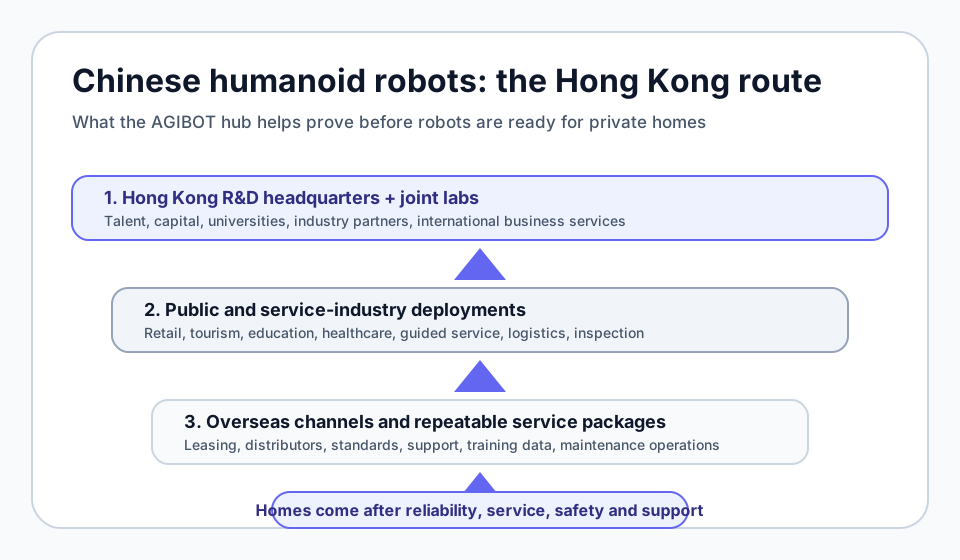
AGIBOT's May 2026 Hong Kong summit was aimed at that layer. The official Chinese announcement says the Hong Kong Embodied AI Industry Co-Creation Initiative will support an international R&D headquarters, several joint labs, dozens of embodied-AI startups and hundreds of industry partners over five years. The English release frames Hong Kong as a gateway for global capital, customers, industry partners and innovation ecosystems. China Daily's Hong Kong coverage adds that AGIBOT plans hundreds of local partnerships and that its deployment solutions are expected to be rolled out in Hong Kong.
That is not the same as saying a humanoid is ready to clean your kitchen. It is closer to saying: AGIBOT wants Hong Kong to become a proving ground for robots that work in visible, supervised, service-heavy environments.
What AGIBOT is actually taking to Hong Kong
The most important word in AGIBOT's own messaging is deployment. Founder and CEO Deng Taihua described 2026 as the year embodied AI moves from development to deployment. The product portfolio supports that framing: AGIBOT is not betting on one generic home humanoid. It has several bodies for several markets.
Robot
- ui44 status
- Available
- Public price signal
- Enterprise pricing
- Key buyer-relevant specs
- 169 cm, 69 kg, 3h standing or 1.5h+ walking, CR / CE-MD / CE-RED / FCC certifications
- What it says about global availability
- A mature service/exhibition humanoid is more globally legible than a vague concept robot
Robot
- ui44 status
- Available
- Public price signal
- $24,240 official store listing
- Key buyer-relevant specs
- 131 cm, 35-39 kg, ~2h walking, up to 30 DOF on Ultra, swappable battery
- What it says about global availability
- Buyable research/commercial robot, but still not a domestic appliance
Robot
- ui44 status
- Active
- Public price signal
- ~$45,000 listed; RaaS rental noted from €899/day
- Key buyer-relevant specs
- 173 cm, 55 kg, up to 10h endurance, 10-second battery swap, 100+ unit coordination
- What it says about global availability
- Public interaction, events and education are easier first markets than homes
Robot
- ui44 status
- Available
- Public price signal
- Not disclosed
- Key buyer-relevant specs
- Wheeled humanoid-style robot, working height over 2 m, 3 kg one-arm handling, force sensors, eight upper-body cameras
- What it says about global availability
- Structured commercial and data-collection scenarios look more realistic than apartments
Robot
- ui44 status
- Development
- Public price signal
- Not announced
- Key buyer-relevant specs
- 7-DOF arm, 3 kg payload, 750-800 mm reach, compact sub-800 mm width
- What it says about global availability
- Retail, hospitality and logistics may be the real bridge to useful manipulation
| Robot | ui44 status | Public price signal | Key buyer-relevant specs | What it says about global availability |
|---|---|---|---|---|
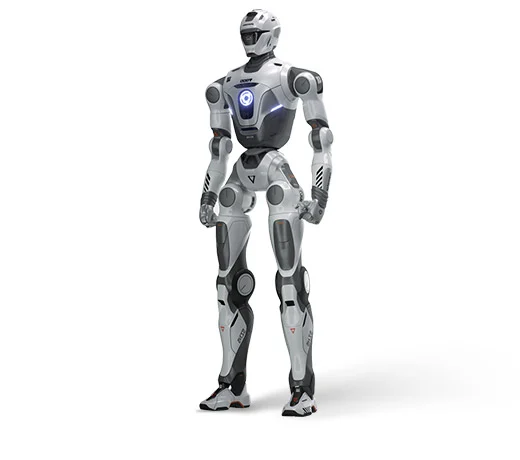
| AGIBOT A2 Ultra | Available | Enterprise pricing | 169 cm, 69 kg, 3h standing or 1.5h+ walking, CR / CE-MD / CE-RED / FCC certifications | A mature service/exhibition humanoid is more globally legible than a vague concept robot |
| AGIBOT X2 | Available | $24,240 official store listing | 131 cm, 35-39 kg, ~2h walking, up to 30 DOF on Ultra, swappable battery | Buyable research/commercial robot, but still not a domestic appliance |
| AGIBOT Expedition A3 | Active | ~$45,000 listed; RaaS rental noted from €899/day | 173 cm, 55 kg, up to 10h endurance, 10-second battery swap, 100+ unit coordination | Public interaction, events and education are easier first markets than homes |
| AGIBOT G1 | Available | Not disclosed | Wheeled humanoid-style robot, working height over 2 m, 3 kg one-arm handling, force sensors, eight upper-body cameras | Structured commercial and data-collection scenarios look more realistic than apartments |
| AGIBOT G2 Air | Development | Not announced | 7-DOF arm, 3 kg payload, 750-800 mm reach, compact sub-800 mm width | Retail, hospitality and logistics may be the real bridge to useful manipulation |
This spread is a clue. A home humanoid has to handle a messy, private, low-supervision environment. A public-space robot can start with narrower jobs: greeting visitors, guiding people, carrying light objects, sorting parcels, interacting in education demos, supporting a hospital workflow, or collecting data under an operator's supervision.
That is why Hong Kong matters. It offers dense service environments, public venues, universities, hospitals, telecom partners, financial partners and a bilingual international business setting. Those conditions are useful for robots that need a controlled first market before broader export.
Why this is not a home-robot launch
The biggest mistake is to treat every international humanoid announcement as a home-robot countdown. A robot can be globally deployed before it is globally consumer-ready.
AGIBOT's Hong Kong language is mostly about industry, service scenarios, public services, research and education, partners, and global expansion. CnTechPost reports that the company wants overseas sales to become more than 30% of overall revenue, with a longer-term goal above 50%. It also says Hong Kong will be AGIBOT's first stop for overseas expansion and that the company will explore mature service-industry scenarios such as retail, tourism and online education.
Those are valuable markets. They are also not homes.
For a buyer, that is actually helpful. It means you can judge progress by the right milestones. Do not ask, "Did AGIBOT say home someday?" Ask whether the robot has a support channel in your market, whether local partners can service it, whether it has safety certification, whether the job is specific, whether data handling is clear, and whether the pricing model is purchase, lease, operator-led deployment or research platform.
A true home product needs all of that plus household-specific proof: quiet operation, reliable manipulation around fragile objects, safe failure around children and pets, privacy controls, affordable repairs, and a warranty that makes sense for a nontechnical owner.
The first global markets will look public, not private
A useful near-term map is:
- Public service deployments — malls, exhibitions, hotels, airports, museums, hospitals, schools and tourism sites.
- Structured commercial work — logistics sorting, guided service, retail replenishment, cleaning, patrol and simple material handling.
- Research and education — universities, labs and developer teams that can tolerate rough edges.
- Rental and robot-as-a-service — venues or companies paying for an outcome with operator support, not families buying a robot outright.
- Homes — only after enough reliability, maintenance and safety lessons survive the earlier stages.
That sequence is consistent with what ui44 has seen across the robot database. The robots closest to wide availability are often not the most home-ready. The Unitree G1 starts around $13,500 and is available, but it is primarily a compact research and development humanoid. The EngineAI T800 has an official Chinese starting price of 180,000 yuan and a 173 cm full-size body, but ui44 tracks it as a preorder platform for industrial collaboration, inspection, research, logistics and service deployments. UBTECH Walker S2 is active and interesting because it can autonomously swap batteries in about three minutes, but UBTECH frames it around factory and logistics work, not household chores.

That is the pattern: global first does not mean home first. It usually means the robot can be sold, leased, demonstrated or supported in places where a trained operator and a clear task exist.
How AGIBOT compares with other Chinese humanoid routes
AGIBOT's Hong Kong route is only one version of Chinese robot globalization. Other companies are pushing through price, developer access, industrial pilots, retail automation or EV supply-chain leverage.
Company / robot
- Global-market signal
- Public official-store pricing at $24,240 and an Ultra version with developer features
- Home-readiness warning
- Compact and buyable, but still a research/commercial platform
Company / robot
- Global-market signal
- $13,500 starting price puts humanoid hardware within reach of labs, startups and wealthy hobbyists
- Home-readiness warning
- Basic availability does not equal safe household autonomy
Company / robot
- Global-market signal
- 180,000 yuan starting price in China and a full-size 173 cm platform create pricing pressure
- Home-readiness warning
- Preorder status, edition complexity and service deployment focus matter more than demo videos
Company / robot
- Global-market signal
- Autonomous battery swapping is a serious operations feature for 24/7 work
- Home-readiness warning
- Industrial battery infrastructure does not translate directly to apartments
Company / robot
- Global-market signal
- Retail automation, 10h runtime and claims around handling 5,000+ product types show a practical service niche
- Home-readiness warning
- A convenience store is structured; a home pantry is not
| Company / robot | Global-market signal | Home-readiness warning |
|---|---|---|
| AGIBOT X2 | Public official-store pricing at $24,240 and an Ultra version with developer features | Compact and buyable, but still a research/commercial platform |
| Unitree G1 | $13,500 starting price puts humanoid hardware within reach of labs, startups and wealthy hobbyists | Basic availability does not equal safe household autonomy |
| EngineAI T800 | 180,000 yuan starting price in China and a full-size 173 cm platform create pricing pressure | Preorder status, edition complexity and service deployment focus matter more than demo videos |
| UBTECH Walker S2 | Autonomous battery swapping is a serious operations feature for 24/7 work | Industrial battery infrastructure does not translate directly to apartments |
| Galbot G1 | Retail automation, 10h runtime and claims around handling 5,000+ product types show a practical service niche | A convenience store is structured; a home pantry is not |
AGIBOT's advantage is not just that it has humanoids. It is that the company is trying to package bodies, models, datasets, simulation, teleoperation, hands, service robots and partners into a deployment stack. That makes Hong Kong a logical test market: it can combine physical robot pilots with finance, university labs, hospitals, telecoms, tourism, retail and cross-border business support.
The caution is that this can still produce impressive public deployments without creating a consumer product. A robot that guides visitors in a mall may use the same perception or interaction stack that eventually helps in a home. But the mall deployment can be scripted, mapped, staffed and maintained in a way a private apartment cannot.
What home-robot buyers should watch next
If you are trying to understand whether Hong Kong-style expansion makes a Chinese humanoid realistic for your home market, watch the boring details.
1. Local service and parts
The first real consumer signal is not a dance demo. It is a service partner that can replace batteries, joints, cameras, hands and compute modules without shipping the robot back across borders. If Hong Kong pilots create trained maintenance teams and spare-parts channels, that is meaningful progress.
2. Pricing model
A $24,240 AGIBOT X2 or $13,500 Unitree G1 is very different from a venue rental, a research purchase, or an enterprise lease with operators included. Homes need a clear consumer price, not just a robotics budget.
3. Safety and certification
AGIBOT A2 Ultra's listed CR, CE-MD, CE-RED and FCC certifications are more useful buyer signals than vague "AI companion" language. Certification does not make a robot a home helper by itself, but it shows the company is thinking about markets where compliance matters.
4. A narrow first job
The best early home robots will probably not be "do everything" humanoids. They will have a narrow task and a support model. The same logic explains why public service robots arrive first: greeting, guiding, carrying, sorting and education are easier to scope than "help around the house."
5. Data policy
AGIBOT's G1 page emphasizes native data collection, force sensors, multi-camera perception, VR/motion-capture teleoperation and cloud-assisted validation. That is powerful for improving models, but in a home it creates obvious privacy questions. A global route has to include clear data handling, not only better hardware.
Bottom line: Hong Kong is a bridge, not the destination
AGIBOT's Hong Kong hub is important because it shows how Chinese humanoid companies may move from domestic scale to international deployment. It gives the industry a place to test service robots, build partnerships, recruit talent, create local support and learn what international customers will actually buy.
For home buyers, the conclusion is more cautious. Hong Kong may make Chinese humanoid robots more visible outside mainland China. It may help service and research deployments arrive sooner. It may create the support channels that future home robots need.
But it does not make a general-purpose home humanoid suddenly ready.
The near-term signal is public and commercial: AGIBOT A2 Ultra in service-like settings, A3 in events and education, X2 in research and development, G1 in structured manipulation and data collection, and similar Chinese robots entering retail, logistics, schools, hospitals and tourism before kitchens and bedrooms.
That is still progress. It is just the kind of progress buyers should read correctly. The bridge to home robots may run through Hong Kong, but the first traffic on that bridge will be operators, service contracts, labs and public venues — not ordinary households.
For a broader policy view, see ui44's analysis of China's AI robot strategy and the home humanoid timeline. For a concrete AGIBOT public-space example, see our AGIBOT A3 buyer-readiness analysis.
Related in the database
Use this article as a privacy verification workflow
Turn the article into a privacy verification pass grounded in the robots, manufacturers, and components it actually references.
Chinese Humanoids: Hong Kong Route to Homes? already points you toward 9 linked robots, 5 manufacturers, and 1 country inside the ui44 database. That matters because strong buyer guidance is easier to apply when you can move immediately from a claim or warning into concrete product pages, manufacturer directories, component explainers, and country-level context instead of treating the article as an isolated opinion piece. The fastest next step is to turn the article into a shortlist workflow: open the linked robot pages, verify which specs are actually published for those models, then compare the surrounding manufacturer and component context before you decide whether the underlying claim changes your buying plan.
For this topic, the useful discipline is to separate the editorial lesson from the catalog evidence. The article gives you the framing, but the robot pages tell you what each product actually ships with today: sensor stack, connectivity methods, listed price, release timing, category, and support-relevant compatibility notes. The manufacturer pages then show whether you are looking at a one-off launch, a broader lineup pattern, or a company that spans multiple categories. That layered workflow reduces the risk of buying on a single marketing phrase or a single support FAQ.
Use the robot pages to confirm which products actually expose cameras, microphones, Wi-Fi, or voice systems, then use the manufacturer pages to decide how much of the privacy question seems product-specific versus brand-wide. On this route cluster, A2 Ultra, X2, and Expedition A3 form the fastest reality check. If you want a quick working shortlist, open Compare A2 Ultra, X2, and Expedition A3 next, then keep this article open as the reasoning layer while you compare structured data side by side.
Practical Takeaway
Every robot, manufacturer, category, component, and country reference below resolves to a real ui44 page, keeping the follow-up path grounded in database records rather than generic advice.
Suggested next steps in ui44
- Open A2 Ultra and note the listed sensors, connectivity methods, and voice stack before you interpret any policy claim.
- Cross-check the wider brand context on AGIBOT so you can see whether the privacy question touches one model or a broader lineup.
- Use the linked component pages to confirm how common the relevant sensors and connectivity layers are across the database.
- Keep a short note of which policy layers you checked, which device features are actually present on the robot page, and which items still depend on region- or app-level confirmation.
- Finish with Compare A2 Ultra, X2, and Expedition A3 so the policy reading sits next to structured product data.
Robot profiles worth opening next
Use the linked product pages as the evidence layer
The linked robot pages are where this article becomes operational. Instead of asking whether the headline is interesting, use the robot entries to inspect the actual mix of sensors, connectivity options, batteries, pricing, release timing, and stated capabilities attached to the products mentioned in the article. That is the easiest way to see whether the warning or opportunity described here affects one product family, a specific design pattern, or an entire buying lane.
A2 Ultra is tracked on ui44 as a available humanoid robot from AGIBOT. The database currently records a listed price of $999,999, a release date of 2024, Standing: 3h, Walking: 1.5h+ battery life, 2 hours charging time, and a published stack that includes 3D LiDAR, RGB-D Camera, and RGB Camera plus Wi-Fi and 4G/5G.
For privacy-focused reading, this page matters because it shows the concrete device surface behind the policy discussion. Use it to verify whether A2 Ultra combines sensors and connectivity in a way that could change the in-home data footprint, and compare the listed capabilities such as Bipedal Walking, Autonomous Navigation, and Intelligent Obstacle Avoidance with any cloud, app, or voice layers.
X2 is tracked on ui44 as a available humanoid robot from AGIBOT. The database currently records a listed price of $24,240, a release date of 2025, ~2 hours at 0.5 m/s walking battery life, ~1.5 hours charging time, and a published stack that includes 3D LiDAR (Ultra), RGB-D Camera (Ultra), and RGB Cameras plus Wi-Fi and Bluetooth.
For privacy-focused reading, this page matters because it shows the concrete device surface behind the policy discussion. Use it to verify whether X2 combines sensors and connectivity in a way that could change the in-home data footprint, and compare the listed capabilities such as Bipedal Walking, 25-30 DOF Articulation, and Object Manipulation (with OmniHand accessory) with any cloud, app, or voice layers.
Expedition A3
AGIBOT · Humanoid · Active
Expedition A3 is tracked on ui44 as a active humanoid robot from AGIBOT. The database currently records a listed price of Price TBA, a release date of 2026-04, Up to 10 hours (dual 1,152 Wh hot-swappable battery system) battery life, ≤2 hours; supports direct charging and battery swapping; 10-second battery swap per product page charging time, and a published stack that includes RGB binocular camera, GPS, and UWB positioning plus Wi-Fi and 4G/5G mobile network.
For privacy-focused reading, this page matters because it shows the concrete device surface behind the policy discussion. Use it to verify whether Expedition A3 combines sensors and connectivity in a way that could change the in-home data footprint, and compare the listed capabilities such as Bipedal Walking & Running, Aerial Kicks & Dynamic Maneuvers, and 31-57 DOF Whole-Body Articulation Depending on Configuration with any cloud, app, or voice layers.
G1 is tracked on ui44 as a available humanoid robot from AGIBOT. The database currently records a listed price of Price TBA, a release date of TBD, 4h+ runtime battery life, Not officially disclosed charging time, and a published stack that includes Six-axis force sensors on both arms, Eight high-resolution upper-body cameras, and Front and rear RGB-D cameras plus Wired data connection and Cloud data transmission.
For privacy-focused reading, this page matters because it shows the concrete device surface behind the policy discussion. Use it to verify whether G1 combines sensors and connectivity in a way that could change the in-home data footprint, and compare the listed capabilities such as 26-DOF Wheeled Manipulation, One-Arm 3 kg Continuous Handling, and Working Height over 2 m with any cloud, app, or voice layers.
G2 Air is tracked on ui44 as a development commercial robot from AGIBOT. The database currently records a listed price of Price TBA, a release date of 2026-04, Not officially disclosed battery life, Not officially disclosed charging time, and a published stack that includes Not officially disclosed plus Not officially disclosed.
For privacy-focused reading, this page matters because it shows the concrete device surface behind the policy discussion. Use it to verify whether G2 Air combines sensors and connectivity in a way that could change the in-home data footprint, and compare the listed capabilities such as Single-Arm Mobile Manipulation, 7-DOF Arm, and Human-in-the-Loop Operation with any cloud, app, or voice layers.
Manufacturer context behind the article
Check whether this is one product story or a broader company pattern
Manufacturer pages add the privacy context that individual product pages cannot show on their own. They help you check whether cameras, microphones, cloud accounts, app controls, and policy assumptions appear across a broader lineup or stay tied to one specific product story.
AGIBOT
ui44 currently tracks 10 robots from AGIBOT across 3 categorys. The company is grouped under China, and the current catalog footprint on ui44 includes A2 Ultra, X2, Expedition A3.
That wider brand context matters because privacy questions rarely stop at one FAQ page. A manufacturer route helps you see whether the article is centered on one premium model or on a company that has several relevant products and therefore more than one place where the same policy or app assumptions might matter. The category mix here currently points toward Humanoid, Quadruped, Commercial as the most useful next route if you want to see whether this article reflects a wider pattern inside the brand.
Unitree
ui44 currently tracks 2 robots from Unitree across 1 category. The company is grouped under China, and the current catalog footprint on ui44 includes H1, G1.
That wider brand context matters because privacy questions rarely stop at one FAQ page. A manufacturer route helps you see whether the article is centered on one premium model or on a company that has several relevant products and therefore more than one place where the same policy or app assumptions might matter. The category mix here currently points toward Humanoid as the most useful next route if you want to see whether this article reflects a wider pattern inside the brand.
EngineAI
ui44 currently tracks 2 robots from EngineAI across 1 category. The company is grouped under China, and the current catalog footprint on ui44 includes PM01, T800.
That wider brand context matters because privacy questions rarely stop at one FAQ page. A manufacturer route helps you see whether the article is centered on one premium model or on a company that has several relevant products and therefore more than one place where the same policy or app assumptions might matter. The category mix here currently points toward Humanoid as the most useful next route if you want to see whether this article reflects a wider pattern inside the brand.
UBTECH
ui44 currently tracks 5 robots from UBTECH across 2 categorys. The company is grouped under China, and the current catalog footprint on ui44 includes Walker S, Walker S2, Alpha Mini.
That wider brand context matters because privacy questions rarely stop at one FAQ page. A manufacturer route helps you see whether the article is centered on one premium model or on a company that has several relevant products and therefore more than one place where the same policy or app assumptions might matter. The category mix here currently points toward Humanoid, Companions as the most useful next route if you want to see whether this article reflects a wider pattern inside the brand.
Broaden the scan without leaving the database
Categories, components, and countries add the wider context
Category framing
Category pages are useful when the article touches a buying pattern that shows up across brands. A category route helps you confirm whether the linked products sit in a narrow niche or whether the same question should be tested across a larger field of alternatives.
Humanoid
The Humanoid category page currently groups 129 tracked robots from 92 manufacturers. ui44 describes this lane as: Full-size bipedal humanoid robots built to work alongside people — from factory floors to household tasks. Compare the cutting edge of humanoid robotics.
That makes the category route a practical follow-up when you want to check whether the products linked in this article are typical for the lane or whether they sit at one edge of the market. Useful starting examples currently include NEO, EVE, Mornine M1.
Commercial
The Commercial category page currently groups 44 tracked robots from 38 manufacturers. ui44 describes this lane as: Delivery robots, warehouse automation, and hospitality service bots — robots built for business and commercial operations.
That makes the category route a practical follow-up when you want to check whether the products linked in this article are typical for the lane or whether they sit at one edge of the market. Useful starting examples currently include G2 Air, aeo, Pepper.
Country and ecosystem context
Country pages give extra context when support practices, launch sequencing, regulatory posture, or manufacturer mix matter. They are not a substitute for model-level verification, but they do help you see which ecosystems cluster together and which manufacturers sit in the same regional field when you broaden the search beyond the article headline.
China
The China route currently groups 189 tracked robots from 87 manufacturers in ui44. That gives you a useful regional lens when the article points toward support practices, launch sequencing, or brand clusters that may share similar ecosystem assumptions.
On the current route, manufacturers like AGIBOT, Dreame, Unitree Robotics make the page a good way to broaden the scan without losing the regional context that often shapes availability, documentation style, and adjacent alternatives.
Questions to answer before you move from reading to buying
A follow-up FAQ built from the entities already linked in this article
Frequently Asked Questions
Which page should I open first after reading “Chinese Humanoids: Hong Kong Route to Homes?”?
Start with A2 Ultra. That gives you a concrete product anchor for the article’s main claim. From there, branch into the manufacturer and component pages so you can tell whether the article is describing one specific model, a repeated brand pattern, or a wider technology issue that affects multiple shortlist options.
How do the manufacturer pages change the buying decision?
AGIBOT help you zoom out from one article and one product. On ui44 they show lineup breadth, category spread, and the neighboring robots tied to the same company. That context is useful when you are deciding whether a risk belongs to a single model, whether it shows up across a brand’s portfolio, and whether you should keep looking at alternatives before committing.
When should I switch from reading to side-by-side comparison?
Move into Compare A2 Ultra, X2, and Expedition A3 as soon as you understand the article’s main warning or promise. The article explains what to watch for, but the compare view is where you can check whether price, status, battery life, connectivity, sensors, and category fit still make the robot a good match for your own home and budget.
Where to go next in ui44
Keep the research chain inside the database
If you want to keep going, these follow-on pages give you the cleanest expansion path from article to research session. Open the comparison route first if you are deciding between products today. Open the manufacturer, category, and component routes if you still need to understand the broader pattern behind the claim.
Written by
ui44 Team
Published May 16, 2026
Share this article
Open a plain share link on X or Bluesky. No embeds, no widgets, no cookie baggage.