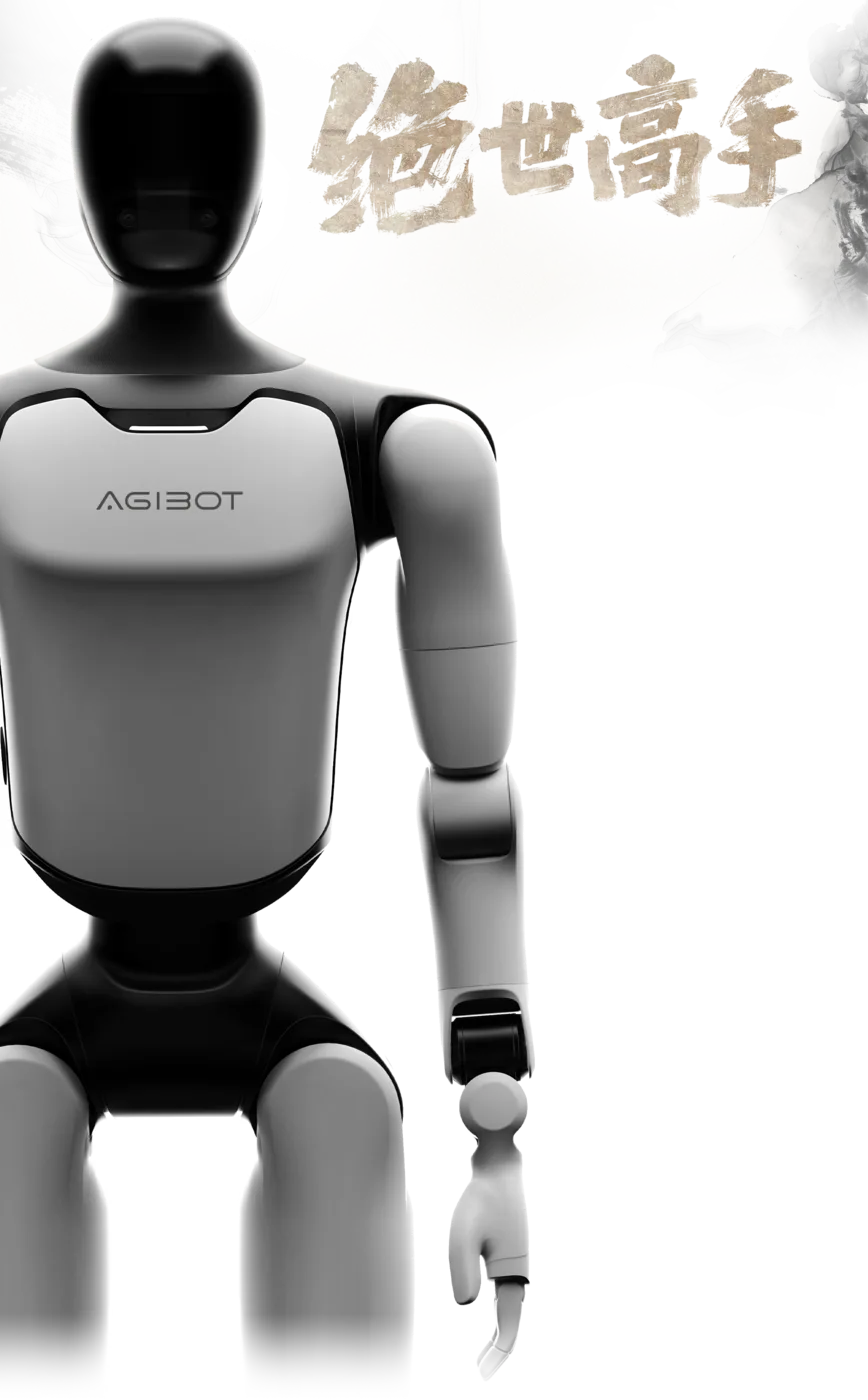
That matters for buyers. A3 is not just another humanoid hype clip; it is a strong signal that public spaces may get useful humanoids years before ordinary homes do. The reason is not that stages are more important than homes. It is that stages, retail venues, parks, schools and exhibitions give robot makers a narrower job, an operator nearby, a service budget, and a controlled environment. Homes give them messy chores, pets, stairs, privacy questions, warranty expectations and almost no tolerance for failure.
Is AGIBOT A3 a home robot?
No, not in the consumer sense. In the ui44 robot database, AGIBOT Expedition A3 is tracked as an active humanoid platform, not a home product you should compare directly with a preorder like 1X NEO. The important distinction is intent.
AGIBOT's official A3 page highlights specs that make sense for shows and venue deployment: 173 cm height, 55 kg weight, up to 10 hours of endurance, a 10-second hot battery swap, standard UWB positioning, dual-module 5G, and coordinated control for 100+ units. Those are not random numbers. They are exactly the kinds of features a venue operator, rental partner or event producer would care about.
The A3 pitch is less "send it into an unpredictable apartment" and more "move reliably, look expressive, synchronize with other units, communicate with people, and stay on schedule." That is still interesting robotics. It is just not the same product problem as a safe domestic assistant.
AGIBOT A3 at a glance
Robot
- Status in ui44 DB
- Active
- Public price signal
- ~$45,000 listed; RaaS rental noted from €899/day
- Height / weight
- 173 cm / 55 kg
- Runtime
- Up to 10h
- Most home-relevant reading
- A polished public-interaction platform, not a consumer chore robot
Robot
- Status in ui44 DB
- Available
- Public price signal
- Enterprise pricing
- Height / weight
- 169 cm / 69 kg
- Runtime
- 3h standing, 1.5h+ walking
- Most home-relevant reading
- Service/exhibition humanoid with certifications and deployed-unit claims
Robot
- Status in ui44 DB
- Available
- Public price signal
- $24,240
- Height / weight
- 131 cm / 35-39 kg
- Runtime
- ~2h walking
- Most home-relevant reading
- More developer/commercial platform than home appliance
Robot
- Status in ui44 DB
- Available
- Public price signal
- Not publicly disclosed
- Height / weight
- Working height over 2 m
- Runtime
- Not disclosed
- Most home-relevant reading
- Wheeled manipulation/data platform for structured scenarios
Robot
- Status in ui44 DB
- Pre-order
- Public price signal
- $20,000 early adopter price
- Height / weight
- 167 cm / 30 kg
- Runtime
- ~4h
- Most home-relevant reading
- Explicitly home-focused, but still preorder and unproven at scale
Robot
- Status in ui44 DB
- Available
- Public price signal
- $13,500 starting price
- Height / weight
- 132 cm / 35 kg
- Runtime
- ~2h
- Most home-relevant reading
- Buyable research humanoid, not a polished domestic helper
| Robot | Status in ui44 DB | Public price signal | Height / weight | Runtime | Most home-relevant reading |
|---|---|---|---|---|---|
| AGIBOT Expedition A3 | Active | ~$45,000 listed; RaaS rental noted from €899/day | 173 cm / 55 kg | Up to 10h | A polished public-interaction platform, not a consumer chore robot |
| AGIBOT A2 Ultra | Available | Enterprise pricing | 169 cm / 69 kg | 3h standing, 1.5h+ walking | Service/exhibition humanoid with certifications and deployed-unit claims |
| AGIBOT X2 | Available | $24,240 | 131 cm / 35-39 kg | ~2h walking | More developer/commercial platform than home appliance |
| AGIBOT G1 | Available | Not publicly disclosed | Working height over 2 m | Not disclosed | Wheeled manipulation/data platform for structured scenarios |
| 1X NEO | Pre-order | $20,000 early adopter price | 167 cm / 30 kg | ~4h | Explicitly home-focused, but still preorder and unproven at scale |
| Unitree G1 | Available | $13,500 starting price | 132 cm / 35 kg | ~2h | Buyable research humanoid, not a polished domestic helper |
The comparison is the point. A3 may look closer to a home humanoid than a kiosk or a delivery robot, but the deployment assumptions are closer to entertainment tech, education fleets and commercial service than to a Roomba-style consumer appliance.
What AGIBOT is actually optimizing A3 for
AGIBOT's A3 page and Partner Conference materials use a very specific vocabulary: stage, performance, customization, swarm control, interaction, easy deployment and research/education. The hardware follows that vocabulary.

Start with endurance. A robot that performs in a public venue has to stay available through a shift or event block. AGIBOT says A3 uses a dual-battery system with 1,152 Wh capacity and up to 10 hours of endurance. The 10-second battery swap is arguably more important than the headline runtime, because it means the operator can keep a show, queue or rental deployment running without waiting for a recharge.
Then look at positioning and fleet control. Standard UWB positioning with claimed single-unit accuracy under ±10 cm, plus support for coordinated operation of 100+ units, is not a home-first feature. It is a choreography, event and multi-robot-venue feature. If a park, mall or conference wants a group of humanoids to move in sync, know where they are, and avoid turning every show into a manual setup, centimeter-class local positioning matters.
Finally, look at interaction. AGIBOT calls out shoulder touch sensing, 360-degree audio pickup and multimodal communication. In a home, those features would still be useful, but they would not be enough. In a public venue, they can support greeter behavior, photo moments, tour-guide interaction, brand performance and simple question answering. The threshold for "useful" is lower because the job is narrower.
Why public spaces are easier than homes
The home is the hardest robot environment because it combines low margins with high expectations. A family does not want a humanoid that merely looks impressive. It wants laundry moved without ripping clothes, dishes handled without breakage, pets avoided, children protected, data kept private, stairs and thresholds handled safely, and service available when something fails.
Public-space robots can start with a smaller contract.
A mall robot can greet visitors. A stage robot can dance. A school robot can demonstrate embodied AI. A retail robot can perform a scripted interaction, collect training data, or move through a prepared area. These jobs can be valuable even if the robot is not ready to clean a kitchen after dinner.
AGIBOT's broader 2026 Partner Conference message fits that pattern. The company framed embodied AI as moving from capability showcases toward real-world deployment across industrial, commercial and service environments. It also announced other platforms aimed at structured work: G2 Air for light-duty human-in-the-loop retail, hospitality, logistics and industrial workflows; D2 Max for field inspection and patrol; and new data and model systems for physical AI.
That portfolio says a lot. The path to homes may run through factories, venues, hotels, schools and retail counters first, because those environments pay for uptime and tolerate operational support.

The A3 spec that matters most is not walking
Humanoid coverage often overweights movement clips. A3 can perform dynamic motions, and AGIBOT emphasizes a 0.218 kW/kg power-to-weight ratio, lightweight magnesium/titanium/TPU construction and a full-size 55 kg body. Those are meaningful engineering choices. But walking, dancing or even martial-arts-style movement is not what makes a robot useful at home.
For home readiness, the harder questions are manipulation, reliability, support and software boundaries:
- Can it pick up unknown household objects without crushing, dropping or misclassifying them?
- Can it recover when a drawer is stuck, a cable is underfoot, or a child moves the target object?
- Can it explain what it is about to do before moving a heavy limb near a person?
- Can the owner set hard no-go rules that the robot obeys offline?
- Can the manufacturer service the robot without making the buyer ship a 55 kg machine across borders?
A3's best published evidence is not aimed at those questions. It is aimed at public interaction, customization and deployment logistics. That does not make A3 less impressive. It makes the product category clearer.
Compare that with 1X NEO. NEO is also not yet a proven mass-market home helper, but its stated design target is different: a soft, lightweight, home-focused humanoid with household chores and safe coexistence in the capability set. Or compare Figure 03, Tesla Optimus Gen 2, and Apptronik Apollo: all are still primarily proven in factory, warehouse or development contexts rather than ordinary homes.
Where AGIBOT A3 fits inside the AGIBOT lineup
A3 is not AGIBOT's only humanoid, and that is useful context. The database view suggests a company building multiple bodies for multiple deployment assumptions rather than one all-purpose home robot.

A2 Ultra is the full-size service/exhibition humanoid in ui44's data, with enterprise pricing, 169 cm height, 69 kg weight, RGB-D cameras, LiDAR, microphone array, facial display, 6-DOF dexterous manipulation and certifications listed across China, the US and Europe. It is the more traditional commercial service humanoid.
X2 is smaller and more developer-friendly: 131 cm tall, 35-39 kg depending on version, starting from a listed $24,240, with swappable battery support, optional dexterous hands and secondary development on the Ultra version. That makes it easier to imagine in labs, education and developer programs than in ordinary homes.
G1 and G2 Air are even more revealing. They are not bipedal stage stars. They are wheeled manipulation platforms for structured industrial, commercial, data-collection and assisted-operation workflows. G1 can handle a 3 kg object with one arm, uses force sensors, multiple cameras and LiDAR, and is framed around embodied-AI data and task execution. G2 Air is a single-arm mobile manipulator with a 3 kg payload and 750-800 mm reach.
That is the split: legs for presence and performance, wheels for productivity and manipulation, compact bipeds for research and developer access. A3 belongs to the presence/performance side.
What buyers should watch before treating A3 as a home signal
If you are tracking home robots, A3 is worth watching. It shows that full-size humanoid hardware is becoming more deployable, more productized and more serviceable. AGIBOT says it reached its 10,000th robot milestone in March 2026, and its official materials emphasize real deployment rather than one-off lab demos.
But the home-buyer checklist is stricter than the stage checklist.
Before treating A3, or any similar humanoid, as evidence that a domestic robot is close, ask these questions:
- Is there an individual-buyer channel? If the sales path is rental, partner deployment or contact-sales enterprise procurement, it is not yet a consumer product.
- What is the useful task, not the impressive motion? A robot that can perform in sync may still be unable to load a dishwasher safely.
- Who maintains it? Public venues can have staff, spare batteries and technician access. Homes need simple support and predictable repair costs.
- What happens when it fails? A stage routine can pause. A home robot failure can mean broken glass, blocked hallways or unsafe movement around children.
- What data leaves the home? Public interaction robots and data-collection platforms often assume fleet learning. A private home needs clearer consent and local controls.

What would make A3-style robots home-relevant?
A3-style robots become home-relevant when the evidence shifts from presence to chores. The signs to watch are not another synchronized dance video. They are boring, practical disclosures:
- a consumer or supervised-home pilot with named tasks and failure rates;
- clear safety certifications for operation around children, pets and furniture;
- a service model that covers battery replacement, actuators, falls and software support;
- manipulation benchmarks using ordinary home objects, not only props;
- privacy controls for cameras, microphones, maps and remote assistance;
- pricing that makes sense against home value, not event rental value.
Until then, A3 is best read as a public-space humanoid milestone. It tells us AGIBOT can build a full-size platform with long runtime, hot-swap batteries, fleet coordination and polished interaction. It does not tell us that an AGIBOT humanoid is ready to handle your laundry.
That is not a criticism. It is the market sorting itself out. Public spaces are the near-term proving ground because the job is easier to define and easier to support. Homes are still the final exam.
Bottom line
AGIBOT A3 is important because it is specific. It is not a vague "robot for everything" pitch. It is a full-size humanoid optimized for stage presence, public interaction, coordinated fleets and deployment logistics.
For ui44 readers, the takeaway is simple: when a humanoid looks home-ready, check what environment it is actually built for. A3 points toward a future where humanoids may become normal in malls, events, schools and branded venues before they become normal in kitchens. That is progress, but it is not the same as a home robot you should buy.
Use A3 as a signal of maturing humanoid hardware. Use ui44's comparison tools to separate that from consumer readiness.
Related in the database
Use this article as a privacy verification workflow
Turn the article into a privacy verification pass grounded in the robots, manufacturers, and components it actually references.
AGIBOT A3: Why Stage Humanoids Come First already points you toward 10 linked robots, 6 manufacturers, and 3 countries inside the ui44 database. That matters because strong buyer guidance is easier to apply when you can move immediately from a claim or warning into concrete product pages, manufacturer directories, component explainers, and country-level context instead of treating the article as an isolated opinion piece. The fastest next step is to turn the article into a shortlist workflow: open the linked robot pages, verify which specs are actually published for those models, then compare the surrounding manufacturer and component context before you decide whether the underlying claim changes your buying plan.
For this topic, the useful discipline is to separate the editorial lesson from the catalog evidence. The article gives you the framing, but the robot pages tell you what each product actually ships with today: sensor stack, connectivity methods, listed price, release timing, category, and support-relevant compatibility notes. The manufacturer pages then show whether you are looking at a one-off launch, a broader lineup pattern, or a company that spans multiple categories. That layered workflow reduces the risk of buying on a single marketing phrase or a single support FAQ.
Use the robot pages to confirm which products actually expose cameras, microphones, Wi-Fi, or voice systems, then use the manufacturer pages to decide how much of the privacy question seems product-specific versus brand-wide. On this route cluster, Expedition A3, NEO, and A2 Ultra form the fastest reality check. If you want a quick working shortlist, open Compare Expedition A3, NEO, and A2 Ultra next, then keep this article open as the reasoning layer while you compare structured data side by side.
Practical Takeaway
Every robot, manufacturer, category, component, and country reference below resolves to a real ui44 page, keeping the follow-up path grounded in database records rather than generic advice.
Suggested next steps in ui44
- Open Expedition A3 and note the listed sensors, connectivity methods, and voice stack before you interpret any policy claim.
- Cross-check the wider brand context on AGIBOT so you can see whether the privacy question touches one model or a broader lineup.
- Use the linked component pages to confirm how common the relevant sensors and connectivity layers are across the database.
- Keep a short note of which policy layers you checked, which device features are actually present on the robot page, and which items still depend on region- or app-level confirmation.
- Finish with Compare Expedition A3, NEO, and A2 Ultra so the policy reading sits next to structured product data.
Robot profiles worth opening next
Use the linked product pages as the evidence layer
The linked robot pages are where this article becomes operational. Instead of asking whether the headline is interesting, use the robot entries to inspect the actual mix of sensors, connectivity options, batteries, pricing, release timing, and stated capabilities attached to the products mentioned in the article. That is the easiest way to see whether the warning or opportunity described here affects one product family, a specific design pattern, or an entire buying lane.
Expedition A3
AGIBOT · Humanoid · Active
Expedition A3 is tracked on ui44 as a active humanoid robot from AGIBOT. The database currently records a listed price of Price TBA, a release date of 2026-04, Up to 10 hours (dual 1,152 Wh hot-swappable battery system) battery life, ≤2 hours; supports direct charging and battery swapping; 10-second battery swap per product page charging time, and a published stack that includes RGB binocular camera, GPS, and UWB positioning plus Wi-Fi and 4G/5G mobile network.
For privacy-focused reading, this page matters because it shows the concrete device surface behind the policy discussion. Use it to verify whether Expedition A3 combines sensors and connectivity in a way that could change the in-home data footprint, and compare the listed capabilities such as Bipedal Walking & Running, Aerial Kicks & Dynamic Maneuvers, and 31-57 DOF Whole-Body Articulation Depending on Configuration with any cloud, app, or voice layers.
NEO
1X Technologies · Humanoid · Pre-order
NEO is tracked on ui44 as a pre-order humanoid robot from 1X Technologies. The database currently records a listed price of $20,000, a release date of 2025-10-28, ~4 hours battery life, Not disclosed charging time, and a published stack that includes RGB Cameras, Depth Sensors, and Tactile Skin plus Wi-Fi and Bluetooth.
For privacy-focused reading, this page matters because it shows the concrete device surface behind the policy discussion. Use it to verify whether NEO combines sensors and connectivity in a way that could change the in-home data footprint, and compare the listed capabilities such as Household Chores, Tidying Up, and Safe Human Interaction with any cloud, app, or voice layers.
A2 Ultra is tracked on ui44 as a available humanoid robot from AGIBOT. The database currently records a listed price of $999,999, a release date of 2024, Standing: 3h, Walking: 1.5h+ battery life, 2 hours charging time, and a published stack that includes 3D LiDAR, RGB-D Camera, and RGB Camera plus Wi-Fi and 4G/5G.
For privacy-focused reading, this page matters because it shows the concrete device surface behind the policy discussion. Use it to verify whether A2 Ultra combines sensors and connectivity in a way that could change the in-home data footprint, and compare the listed capabilities such as Bipedal Walking, Autonomous Navigation, and Intelligent Obstacle Avoidance with any cloud, app, or voice layers.
X2 is tracked on ui44 as a available humanoid robot from AGIBOT. The database currently records a listed price of $24,240, a release date of 2025, ~2 hours at 0.5 m/s walking battery life, ~1.5 hours charging time, and a published stack that includes 3D LiDAR (Ultra), RGB-D Camera (Ultra), and RGB Cameras plus Wi-Fi and Bluetooth.
For privacy-focused reading, this page matters because it shows the concrete device surface behind the policy discussion. Use it to verify whether X2 combines sensors and connectivity in a way that could change the in-home data footprint, and compare the listed capabilities such as Bipedal Walking, 25-30 DOF Articulation, and Object Manipulation (with OmniHand accessory) with any cloud, app, or voice layers.
G1 is tracked on ui44 as a available humanoid robot from AGIBOT. The database currently records a listed price of Price TBA, a release date of TBD, 4h+ runtime battery life, Not officially disclosed charging time, and a published stack that includes Six-axis force sensors on both arms, Eight high-resolution upper-body cameras, and Front and rear RGB-D cameras plus Wired data connection and Cloud data transmission.
For privacy-focused reading, this page matters because it shows the concrete device surface behind the policy discussion. Use it to verify whether G1 combines sensors and connectivity in a way that could change the in-home data footprint, and compare the listed capabilities such as 26-DOF Wheeled Manipulation, One-Arm 3 kg Continuous Handling, and Working Height over 2 m with any cloud, app, or voice layers.
Manufacturer context behind the article
Check whether this is one product story or a broader company pattern
Manufacturer pages add the privacy context that individual product pages cannot show on their own. They help you check whether cameras, microphones, cloud accounts, app controls, and policy assumptions appear across a broader lineup or stay tied to one specific product story.
AGIBOT
ui44 currently tracks 10 robots from AGIBOT across 3 categorys. The company is grouped under China, and the current catalog footprint on ui44 includes A2 Ultra, X2, Expedition A3.
That wider brand context matters because privacy questions rarely stop at one FAQ page. A manufacturer route helps you see whether the article is centered on one premium model or on a company that has several relevant products and therefore more than one place where the same policy or app assumptions might matter. The category mix here currently points toward Humanoid, Quadruped, Commercial as the most useful next route if you want to see whether this article reflects a wider pattern inside the brand.
1X Technologies
ui44 currently tracks 2 robots from 1X Technologies across 1 category. The company is grouped under Norway, and the current catalog footprint on ui44 includes NEO, EVE.
That wider brand context matters because privacy questions rarely stop at one FAQ page. A manufacturer route helps you see whether the article is centered on one premium model or on a company that has several relevant products and therefore more than one place where the same policy or app assumptions might matter. The category mix here currently points toward Humanoid as the most useful next route if you want to see whether this article reflects a wider pattern inside the brand.
Unitree
ui44 currently tracks 2 robots from Unitree across 1 category. The company is grouped under China, and the current catalog footprint on ui44 includes H1, G1.
That wider brand context matters because privacy questions rarely stop at one FAQ page. A manufacturer route helps you see whether the article is centered on one premium model or on a company that has several relevant products and therefore more than one place where the same policy or app assumptions might matter. The category mix here currently points toward Humanoid as the most useful next route if you want to see whether this article reflects a wider pattern inside the brand.
Figure AI
ui44 currently tracks 2 robots from Figure AI across 1 category. The company is grouped under USA, and the current catalog footprint on ui44 includes Figure 03, Figure 02.
That wider brand context matters because privacy questions rarely stop at one FAQ page. A manufacturer route helps you see whether the article is centered on one premium model or on a company that has several relevant products and therefore more than one place where the same policy or app assumptions might matter. The category mix here currently points toward Humanoid as the most useful next route if you want to see whether this article reflects a wider pattern inside the brand.
Broaden the scan without leaving the database
Categories, components, and countries add the wider context
Category framing
Category pages are useful when the article touches a buying pattern that shows up across brands. A category route helps you confirm whether the linked products sit in a narrow niche or whether the same question should be tested across a larger field of alternatives.
Humanoid
The Humanoid category page currently groups 129 tracked robots from 92 manufacturers. ui44 describes this lane as: Full-size bipedal humanoid robots built to work alongside people — from factory floors to household tasks. Compare the cutting edge of humanoid robotics.
That makes the category route a practical follow-up when you want to check whether the products linked in this article are typical for the lane or whether they sit at one edge of the market. Useful starting examples currently include NEO, EVE, Mornine M1.
Commercial
The Commercial category page currently groups 44 tracked robots from 38 manufacturers. ui44 describes this lane as: Delivery robots, warehouse automation, and hospitality service bots — robots built for business and commercial operations.
That makes the category route a practical follow-up when you want to check whether the products linked in this article are typical for the lane or whether they sit at one edge of the market. Useful starting examples currently include G2 Air, aeo, Pepper.
Country and ecosystem context
Country pages give extra context when support practices, launch sequencing, regulatory posture, or manufacturer mix matter. They are not a substitute for model-level verification, but they do help you see which ecosystems cluster together and which manufacturers sit in the same regional field when you broaden the search beyond the article headline.
China
The China route currently groups 189 tracked robots from 87 manufacturers in ui44. That gives you a useful regional lens when the article points toward support practices, launch sequencing, or brand clusters that may share similar ecosystem assumptions.
On the current route, manufacturers like AGIBOT, Dreame, Unitree Robotics make the page a good way to broaden the scan without losing the regional context that often shapes availability, documentation style, and adjacent alternatives.
Norway
The Norway route currently groups 2 tracked robots from 1 manufacturers in ui44. That gives you a useful regional lens when the article points toward support practices, launch sequencing, or brand clusters that may share similar ecosystem assumptions.
On the current route, manufacturers like 1X Technologies make the page a good way to broaden the scan without losing the regional context that often shapes availability, documentation style, and adjacent alternatives.
USA
The USA route currently groups 89 tracked robots from 69 manufacturers in ui44. That gives you a useful regional lens when the article points toward support practices, launch sequencing, or brand clusters that may share similar ecosystem assumptions.
On the current route, manufacturers like Faraday Future, iRobot, Boston Dynamics make the page a good way to broaden the scan without losing the regional context that often shapes availability, documentation style, and adjacent alternatives.
Questions to answer before you move from reading to buying
A follow-up FAQ built from the entities already linked in this article
Frequently Asked Questions
Which page should I open first after reading “AGIBOT A3: Why Stage Humanoids Come First”?
Start with Expedition A3. That gives you a concrete product anchor for the article’s main claim. From there, branch into the manufacturer and component pages so you can tell whether the article is describing one specific model, a repeated brand pattern, or a wider technology issue that affects multiple shortlist options.
How do the manufacturer pages change the buying decision?
AGIBOT help you zoom out from one article and one product. On ui44 they show lineup breadth, category spread, and the neighboring robots tied to the same company. That context is useful when you are deciding whether a risk belongs to a single model, whether it shows up across a brand’s portfolio, and whether you should keep looking at alternatives before committing.
When should I switch from reading to side-by-side comparison?
Move into Compare Expedition A3, NEO, and A2 Ultra as soon as you understand the article’s main warning or promise. The article explains what to watch for, but the compare view is where you can check whether price, status, battery life, connectivity, sensors, and category fit still make the robot a good match for your own home and budget.
Where to go next in ui44
Keep the research chain inside the database
If you want to keep going, these follow-on pages give you the cleanest expansion path from article to research session. Open the comparison route first if you are deciding between products today. Open the manufacturer, category, and component routes if you still need to understand the broader pattern behind the claim.
Written by
ui44 Team
Published May 14, 2026
Share this article
Open a plain share link on X or Bluesky. No embeds, no widgets, no cookie baggage.