For home-robot buyers, the headline is easy to misread. More policy support should mean more Chinese humanoids, lower prices, and faster iteration. It does not mean that a general-purpose household helper is around the corner.
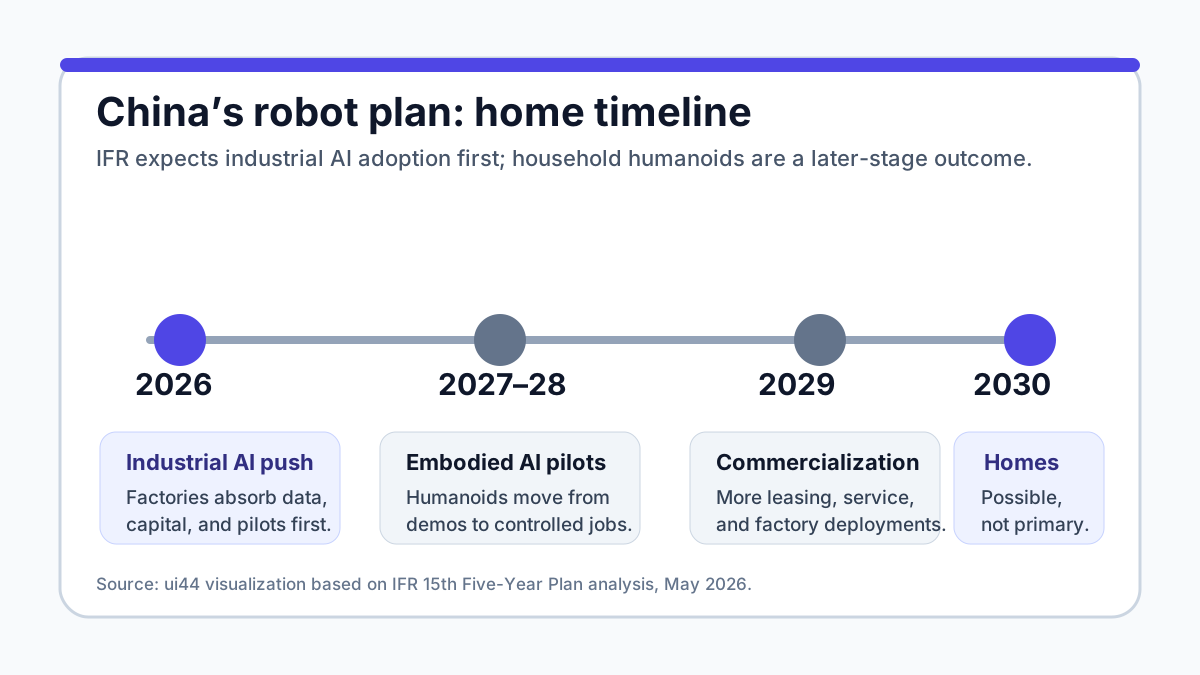
The International Federation of Robotics' May 2026 analysis is the best sober starting point. China already has around 2 million operational industrial robots, about 4.5 times Japan's stock, and 54% of annual global industrial robot installations happen in China. The new policy focus shifts that scale from conventional automation toward high-end, intelligent robotics integrated with AI.
That is a big deal. But IFR also says mass adoption of universal humanoid factory helpers or private-household humanoids will not happen in the near or medium term. In its reading, humanoid commercialization sits closer to the end of the 2026–2030 plan period, while AI upgrades to traditional industrial robots spread over the next five to ten years.
That is the frame buyers should use: industrial AI first, home humanoids later.
Does China's AI robot strategy make home humanoids closer?
Yes, but mostly by improving the supply chain around them.
The policy tailwind can help Chinese companies build better actuators, battery systems, cameras, force sensors, low-cost compute modules, data pipelines, and manufacturing processes. Those pieces matter for future home robots. A useful home humanoid is not just a torso with a language model; it needs reliable joints, safe hands, long enough runtime, quiet operation, local safety logic, repairability, and a price that does not turn every buyer into a lab sponsor.
China is strong in the parts of that stack that benefit from scale. That is why Unitree R1 can list a humanoid from $4,900, why Unitree G1 starts around $13,500, and why the Chinese humanoid market is already putting pressure on Western price expectations. It is also why companies such as AGIBOT, Galbot, UBTECH, RobotEra, and XPENG Robotics can move quickly from demos to factory, warehouse, or enterprise pilots.
But the home is a harder environment than it looks. Factories can be mapped, restricted, supervised, and tuned around a repeatable task. Homes are small, cluttered, emotionally loaded, full of pets and children, and full of objects that were not placed for robot convenience. A factory robot can be useful while handling one task extremely well. A home humanoid has to be safe while failing gracefully at dozens of loosely defined tasks.
So the plan probably makes the foundation of home robots stronger before it makes the home product good.
The industrial robot numbers are the real story
The most important line in the IFR release is not about dancing humanoids or a robot marathon. It is the installed base.
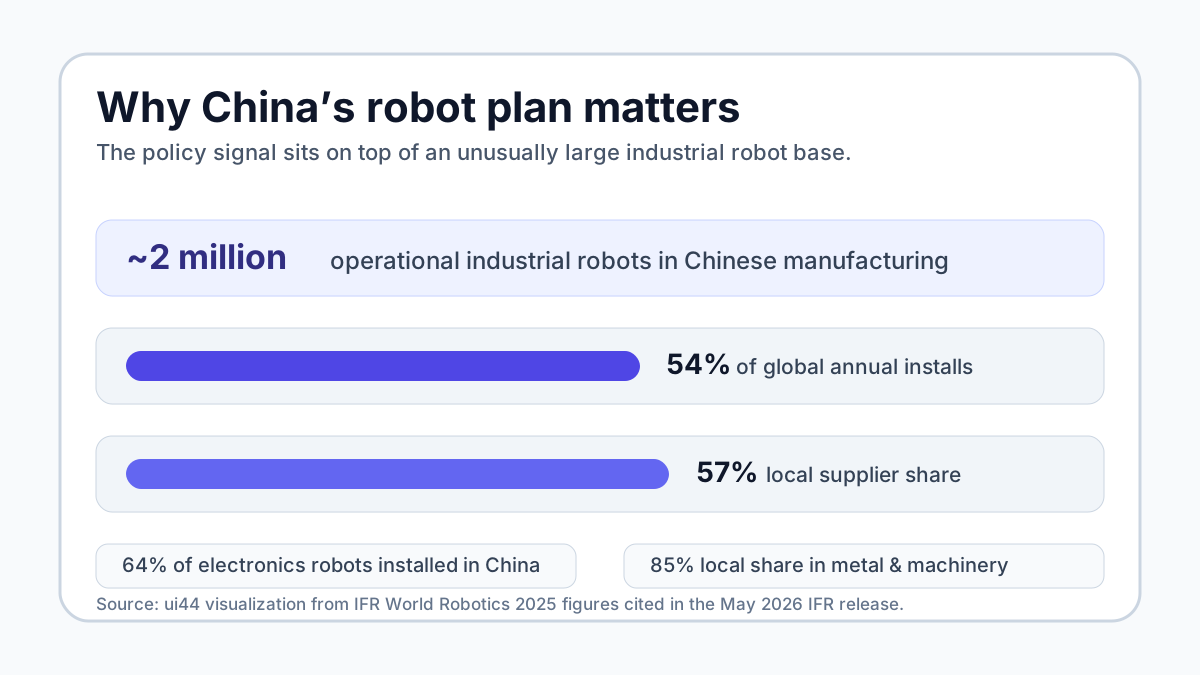
China's local supplier share in domestic industrial robot installations rose from 30% in 2020 to 57% in 2024. In electronics, 64% of the world's industrial robots are installed in China, and Chinese manufacturers supply 59% of that market. In metal and machinery, local suppliers have reached 85% domestic share.
Those numbers explain why the 2026–2030 robot plan should be taken seriously. China is not starting from a glossy humanoid video. It has factories, robot integrators, component suppliers, automation customers, and regional policy machinery that can absorb new robotics funding.
They also explain why homes are not first.
A home robot buyer wants a product that works in a chaotic kitchen. A factory manager wants an operation that improves throughput, quality, or labor coverage on a measurable line item. The factory version is easier to justify, easier to supervise, and easier to iterate. When a robot fails in a pilot line, the company learns from controlled data. When it fails in a living room, the buyer returns it, posts a video, or stops trusting the brand.
That is why the most realistic path to home humanoids runs through industrial and service deployments: more robots doing bounded tasks, more repair cycles, more safety testing, more operator data, and more pressure to make the hardware cheap enough to maintain.
Which Chinese robots matter for home buyers now?
ui44's database shows a split between affordable early-buyer platforms and more serious commercial robots that are not really household products yet.
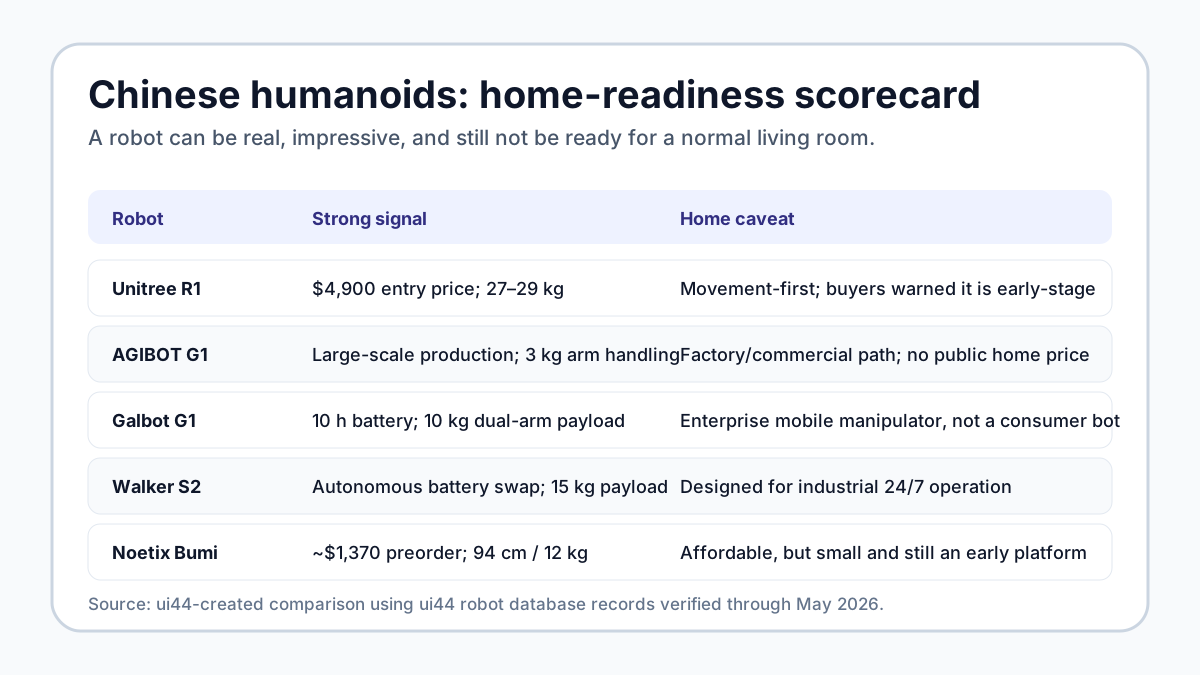
Robot
- ui44 database signal
- From $4,900, 123 cm, about 27–29 kg, roughly 1 hour runtime
- Why it matters
- The price floor for humanoid hardware is falling fast
- Home caveat
- Unitree itself warns individual users to understand humanoid limitations before buying
Robot
- ui44 database signal
- From $13,500, 132 cm, 35 kg, roughly 2 hours runtime
- Why it matters
- More capable developer/education-class platform
- Home caveat
- Still an early-stage humanoid with safety-distance cautions
Robot
- ui44 database signal
- Large-scale production, immediate delivery, 3 kg continuous one-arm handling
- Why it matters
- Strong evidence of industrialization and data-collection focus
- Home caveat
- No public price; factory/commercial positioning dominates
Robot
- ui44 database signal
- 173 cm, 85 kg, 10-hour battery, 10 kg total dual-arm payload
- Why it matters
- A serious mobile manipulator path, especially for retail/logistics
- Home caveat
- Enterprise product, not a consumer home assistant
Robot
- ui44 database signal
- Autonomous battery swapping, 15 kg payload, industrial 24/7 design
- Why it matters
- Shows how uptime problems may be solved before home use
- Home caveat
- Built for production lines, not kitchens
Robot
- ui44 database signal
- 173 cm, 70 kg, enterprise pricing around $150,000 in ui44 data
- Why it matters
- Connects autonomous-driving AI, batteries, and humanoids
- Home caveat
- Too expensive and industrial for normal buyers
Robot
- ui44 database signal
- Around $1,370 preorder, 94 cm, 12 kg
- Why it matters
- Shows how small humanoids may reach consumers first
- Home caveat
- Cute price does not equal useful household labor
| Robot | ui44 database signal | Why it matters | Home caveat |
|---|---|---|---|
| Unitree R1 | From $4,900, 123 cm, about 27–29 kg, roughly 1 hour runtime | The price floor for humanoid hardware is falling fast | Unitree itself warns individual users to understand humanoid limitations before buying |
| Unitree G1 | From $13,500, 132 cm, 35 kg, roughly 2 hours runtime | More capable developer/education-class platform | Still an early-stage humanoid with safety-distance cautions |
| AGIBOT G1 | Large-scale production, immediate delivery, 3 kg continuous one-arm handling | Strong evidence of industrialization and data-collection focus | No public price; factory/commercial positioning dominates |
| Galbot G1 | 173 cm, 85 kg, 10-hour battery, 10 kg total dual-arm payload | A serious mobile manipulator path, especially for retail/logistics | Enterprise product, not a consumer home assistant |
| UBTECH Walker S2 | Autonomous battery swapping, 15 kg payload, industrial 24/7 design | Shows how uptime problems may be solved before home use | Built for production lines, not kitchens |
| XPENG Iron | 173 cm, 70 kg, enterprise pricing around $150,000 in ui44 data | Connects autonomous-driving AI, batteries, and humanoids | Too expensive and industrial for normal buyers |
| Noetix Bumi | Around $1,370 preorder, 94 cm, 12 kg | Shows how small humanoids may reach consumers first | Cute price does not equal useful household labor |
This is why policy headlines need product-level reading. A buyer might look at China's robot strategy and ask, "Which one should I buy?" The honest answer is: maybe none, unless you are an early adopter, developer, researcher, or business with a specific pilot. If you want a home helper that reliably tidies, folds, loads, cleans, and handles surprises, the market is not there yet.
The more useful question is which robots are moving the home timeline forward. Unitree is pulling down the price floor. AGIBOT is pushing mass-production and native data collection. Galbot and UBTECH are testing commercial mobile manipulation and uptime. XPENG is linking vehicle-scale physical AI to humanoids. Noetix and Zeroth are exploring smaller, consumer-adjacent formats. Each matters, but none by itself proves the home is solved.
Why humanoid demos can be misleading
IFR calls out the same problem that keeps showing up in ui44's database: humanoid visibility and humanoid usefulness are not the same thing.
China can show robots dancing on television, running in a half-marathon, or performing stage tasks. Those demos are valuable as signals of mobility, control, and national ambition. They are poor proxies for a robot doing laundry, clearing dishes, caring for an older adult, or operating around a toddler.
The gap comes from task structure. A public demonstration is rehearsed. A race course is constrained compared with a home. A production line can be redesigned around the robot. A living room usually will not be.
That is why ui44 tends to separate four claims:
- The robot exists. Hardware has been built and shown.
- The robot ships. A buyer can actually order it.
- The robot works in a bounded deployment. A factory, store, hospital, or lab can use it under supervision.
- The robot is useful at home. It can create enough everyday value for a normal buyer to keep it.
China's AI robot strategy improves the odds of steps two and three. Step four is still the hard one.
The 100,000-unit question
A ChinaNews report from May 2026 adds useful industry context. Qiao Zhongliang, founder and CEO of Xiaoyu Zhizao, argued that annual shipments of 5,000 to 10,000 units are a necessary condition for joining the first tier of embodied intelligence companies, while 100,000 units per year is the "final table" threshold. He also said the path to general embodied AI will be paved by front-line production scenarios, not by waiting for an immediate consumer "iPhone moment."
That framing matches the IFR timeline. A humanoid company can get headlines with a few hundred machines. It gets real learning from thousands. It gets cost curves, warranty data, supplier leverage, fleet management, and software feedback loops at tens of thousands. Home buyers benefit from that scale only after the lessons become safer, cheaper, quieter, and easier to support.
The best analogy may be robot vacuums, but with a warning. Robot vacuums became credible because they attacked a narrow task, shipped in volume, improved mapping, and reduced maintenance over many generations. Humanoids are trying to start with a much broader task surface. That makes the volume threshold more important, not less.
What should buyers watch through 2030?
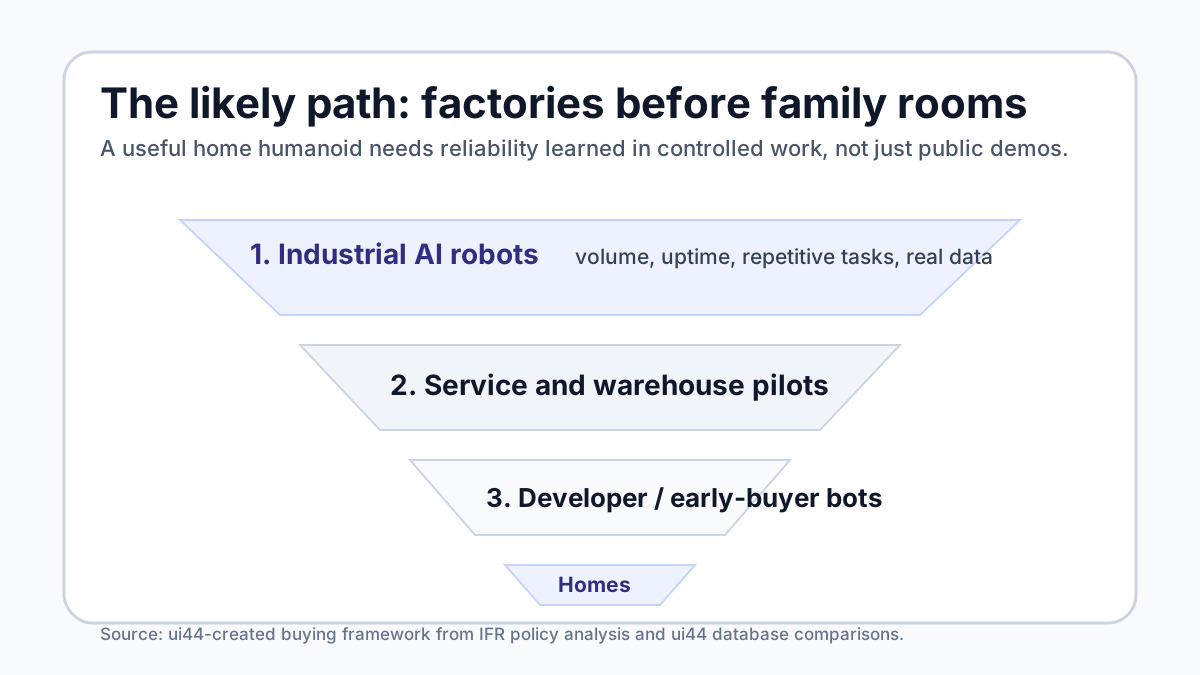
For a practical buyer, the next four years are not about guessing which demo is coolest. They are about watching whether the industrial pipeline starts solving home-relevant problems.
Watch these signals:
- Public pricing with support terms. A price without warranty, repair, shipping, import, and safety guidance is not a consumer product.
- Hands that can fail safely. Payload is useful, but force control, tactile sensing, emergency stops, and recovery behavior matter more at home.
- Runtime and charging autonomy. UBTECH's battery-swap work is industrial, but the underlying question applies to homes: can the robot keep itself useful without constant human babysitting?
- Task evidence outside demos. Look for boring videos: repeated pickups, doors, laundry baskets, dishware, dropped objects, and recovery from mistakes.
- Local safety behavior. Cloud intelligence is powerful, but stop commands, obstacle avoidance, and human-contact safety cannot depend entirely on a slow network.
- Repairability and parts. A $5,000 humanoid can still be expensive if a joint failure turns it into decorative furniture.
This is where compare tools and product pages matter more than policy slogans. If a robot's page lists price, payload, runtime, sensors, official source, and limitations, buyers can reason about it. If the product only has a cinematic launch video, it is still a signal, not a purchase plan.
The bottom line
China's 2026–2030 AI robot strategy is bullish for robotics and cautious for home buyers at the same time.
It is bullish because China already has the industrial robot base, supplier share, manufacturing density, and policy coordination to make AI-powered robotics a serious national project. That can lower costs and accelerate real robot learning.
It is cautious because the first beneficiaries are likely to be industrial robots, production-line humanoids, warehouse/service pilots, developer kits, and enterprise fleets. Private homes are a harder target, and IFR's own framing places mass household humanoid adoption outside the near- and medium-term window.
So if you see a headline saying China's plan will bring humanoids home, read it as: China is building the industrial runway that home robots may eventually use. That runway matters. It just is not the same as a robot that can safely clean your kitchen in 2026.
Related in the database
Use this article as a warranty and coverage workflow
Turn the article into a warranty and coverage pass grounded in the robots and manufacturers it actually references.
China’s AI Robot Strategy: Home Humanoid Timeline already points you toward 8 linked robots, 8 manufacturers, and 1 country inside the ui44 database. That matters because strong buyer guidance is easier to apply when you can move immediately from a claim or warning into concrete product pages, manufacturer directories, component explainers, and country-level context instead of treating the article as an isolated opinion piece. The fastest next step is to turn the article into a shortlist workflow: open the linked robot pages, verify which specs are actually published for those models, then compare the surrounding manufacturer and component context before you decide whether the underlying claim changes your buying plan.
For this topic, the useful discipline is to separate the editorial lesson from the catalog evidence. The article gives you the framing, but the robot pages tell you what each product actually ships with today: sensor stack, connectivity methods, listed price, release timing, category, and support-relevant compatibility notes. The manufacturer pages then show whether you are looking at a one-off launch, a broader lineup pattern, or a company that spans multiple categories. That layered workflow reduces the risk of buying on a single marketing phrase or a single support FAQ.
The most practical move is to keep warranty language and product context together. Compare the linked robots first, then check whether the manufacturer pages suggest a mature service lane or a more limited lineup. On this article, R1, G1, and G1 are the right place to start. If you want a quick working shortlist, open Compare R1, G1, and G1 next, then keep this article open as the reasoning layer while you compare structured data side by side.
Practical Takeaway
Every robot, manufacturer, category, component, and country reference below resolves to a real ui44 page, keeping the follow-up path grounded in database records rather than generic advice.
Suggested next steps in ui44
- Compare the listed price, release timing, and category fit of the linked robots before you treat warranty length as a direct value proxy.
- Open Unitree Robotics to see whether the brand has several relevant models in the same lane or whether the article is centered on one flagship product.
- Record what the article proves, what still depends on seller or region rules, and which consumables or battery-related details you still need to verify externally.
- Use Compare R1, G1, and G1 before checkout so the warranty conversation stays anchored to a real shortlist.
- Do not treat the article as the final source of truth on coverage terms. Treat it as the framing layer that tells you which documentation you still need to inspect before purchase.
Robot profiles worth opening next
Use the linked product pages as the evidence layer
The linked robot pages are where this article becomes operational. Instead of asking whether the headline is interesting, use the robot entries to inspect the actual mix of sensors, connectivity options, batteries, pricing, release timing, and stated capabilities attached to the products mentioned in the article. That is the easiest way to see whether the warning or opportunity described here affects one product family, a specific design pattern, or an entire buying lane.
R1
Unitree Robotics · Humanoid · Pre-order
R1 is tracked on ui44 as a pre-order humanoid robot from Unitree Robotics. The database currently records a listed price of $4,900, a release date of 2025, ~1 hour (mixed activity) battery life, Not officially disclosed charging time, and a published stack that includes Monocular camera (R1 Air); binocular camera (R1/R1 EDU), 4-Mic Array, and Dual 6-Axis IMU plus Wi-Fi 6 and Bluetooth 5.2.
For warranty and coverage questions, the robot page gives you the operating context that fine print often leaves out. Review the published capability mix, including Bipedal Walking & Running, Cartwheels & Handstands, and Push Recovery, and the listed battery and charging profile before deciding whether a coverage term meaningfully reduces your ownership risk or merely sounds reassuring in isolation.
G1 is tracked on ui44 as a available humanoid robot from Unitree. The database currently records a listed price of $13,500, a release date of 2024-05-13, ~2 hours battery life, Not disclosed charging time, and a published stack that includes Depth Camera, 3D LiDAR, and 4 Microphone Array plus Wi-Fi 6 and Bluetooth 5.2.
For warranty and coverage questions, the robot page gives you the operating context that fine print often leaves out. Review the published capability mix, including Bipedal Walking, Object Manipulation, and Dexterous Hands (optional Dex3-1), and the listed battery and charging profile before deciding whether a coverage term meaningfully reduces your ownership risk or merely sounds reassuring in isolation.
G1 is tracked on ui44 as a available humanoid robot from AGIBOT. The database currently records a listed price of Price TBA, a release date of TBD, 4h+ runtime battery life, Not officially disclosed charging time, and a published stack that includes Six-axis force sensors on both arms, Eight high-resolution upper-body cameras, and Front and rear RGB-D cameras plus Wired data connection and Cloud data transmission.
For warranty and coverage questions, the robot page gives you the operating context that fine print often leaves out. Review the published capability mix, including 26-DOF Wheeled Manipulation, One-Arm 3 kg Continuous Handling, and Working Height over 2 m, and the listed battery and charging profile before deciding whether a coverage term meaningfully reduces your ownership risk or merely sounds reassuring in isolation.
G1 is tracked on ui44 as a active commercial robot from Galbot. The database currently records a listed price of Price TBA, a release date of 2025, 10 hours battery life, Not disclosed charging time, and a published stack that includes Binocular camera x1, Wrist depth cameras x2, and 6-axis force sensors x2 plus Wi-Fi (2.4/5 GHz) and Ethernet.
For warranty and coverage questions, the robot page gives you the operating context that fine print often leaves out. Review the published capability mix, including Autonomous Retail Store Operation, Generalizable Object Grasping (5,000+ product types), and Shelf Replenishment & Inventory Management, and the listed battery and charging profile before deciding whether a coverage term meaningfully reduces your ownership risk or merely sounds reassuring in isolation.
Walker S2 is tracked on ui44 as a active humanoid robot from UBTECH. The database currently records a listed price of Price TBA, a release date of 2025-07-17, Designed for 24/7 continuous operation with autonomous battery swapping battery life, Autonomous battery swap in about 3 minutes charging time, and a published stack that includes Pure RGB Binocular Stereo Vision System, Stereo Depth Estimation System, and Real-Time Battery Monitoring plus Gigabit Ethernet Port and USB 3.0.
For warranty and coverage questions, the robot page gives you the operating context that fine print often leaves out. Review the published capability mix, including Autonomous Battery Swapping, 24/7 Continuous Operation, and Industrial Handling and Assembly, and the listed battery and charging profile before deciding whether a coverage term meaningfully reduces your ownership risk or merely sounds reassuring in isolation.
Manufacturer context behind the article
Check whether this is one product story or a broader company pattern
Manufacturer pages add the support context that individual product pages cannot show on their own. They help you check whether the article is pointing at one coverage promise or at a company with a broader service footprint and multiple products to maintain.
Unitree Robotics
ui44 currently tracks 9 robots from Unitree Robotics across 3 categorys. The company is grouped under China, and the current catalog footprint on ui44 includes B2, B1, Go2.
That wider brand context matters because support confidence is easier to judge when you can see the company’s overall footprint, not just one warranty phrase attached to one product. A broader tracked lineup can change how you interpret the article’s coverage discussion. The category mix here currently points toward Quadruped, Humanoid, Research as the most useful next route if you want to see whether this article reflects a wider pattern inside the brand.
Unitree
ui44 currently tracks 2 robots from Unitree across 1 category. The company is grouped under China, and the current catalog footprint on ui44 includes H1, G1.
That wider brand context matters because support confidence is easier to judge when you can see the company’s overall footprint, not just one warranty phrase attached to one product. A broader tracked lineup can change how you interpret the article’s coverage discussion. The category mix here currently points toward Humanoid as the most useful next route if you want to see whether this article reflects a wider pattern inside the brand.
AGIBOT
ui44 currently tracks 10 robots from AGIBOT across 3 categorys. The company is grouped under China, and the current catalog footprint on ui44 includes A2 Ultra, X2, Expedition A3.
That wider brand context matters because support confidence is easier to judge when you can see the company’s overall footprint, not just one warranty phrase attached to one product. A broader tracked lineup can change how you interpret the article’s coverage discussion. The category mix here currently points toward Humanoid, Quadruped, Commercial as the most useful next route if you want to see whether this article reflects a wider pattern inside the brand.
Galbot
ui44 currently tracks 2 robots from Galbot across 2 categorys. The company is grouped under China, and the current catalog footprint on ui44 includes G1, S1.
That wider brand context matters because support confidence is easier to judge when you can see the company’s overall footprint, not just one warranty phrase attached to one product. A broader tracked lineup can change how you interpret the article’s coverage discussion. The category mix here currently points toward Commercial, Humanoid as the most useful next route if you want to see whether this article reflects a wider pattern inside the brand.
Broaden the scan without leaving the database
Categories, components, and countries add the wider context
Category framing
Category pages are useful when the article touches a buying pattern that shows up across brands. A category route helps you confirm whether the linked products sit in a narrow niche or whether the same question should be tested across a larger field of alternatives.
Humanoid
The Humanoid category page currently groups 129 tracked robots from 92 manufacturers. ui44 describes this lane as: Full-size bipedal humanoid robots built to work alongside people — from factory floors to household tasks. Compare the cutting edge of humanoid robotics.
That makes the category route a practical follow-up when you want to check whether the products linked in this article are typical for the lane or whether they sit at one edge of the market. Useful starting examples currently include NEO, EVE, Mornine M1.
Commercial
The Commercial category page currently groups 44 tracked robots from 38 manufacturers. ui44 describes this lane as: Delivery robots, warehouse automation, and hospitality service bots — robots built for business and commercial operations.
That makes the category route a practical follow-up when you want to check whether the products linked in this article are typical for the lane or whether they sit at one edge of the market. Useful starting examples currently include G2 Air, aeo, Pepper.
Country and ecosystem context
Country pages give extra context when support practices, launch sequencing, regulatory posture, or manufacturer mix matter. They are not a substitute for model-level verification, but they do help you see which ecosystems cluster together and which manufacturers sit in the same regional field when you broaden the search beyond the article headline.
China
The China route currently groups 189 tracked robots from 87 manufacturers in ui44. That gives you a useful regional lens when the article points toward support practices, launch sequencing, or brand clusters that may share similar ecosystem assumptions.
On the current route, manufacturers like AGIBOT, Dreame, Unitree Robotics make the page a good way to broaden the scan without losing the regional context that often shapes availability, documentation style, and adjacent alternatives.
Questions to answer before you move from reading to buying
A follow-up FAQ built from the entities already linked in this article
Frequently Asked Questions
Which page should I open first after reading “China’s AI Robot Strategy: Home Humanoid Timeline”?
Start with R1. That gives you a concrete product anchor for the article’s main claim. From there, branch into the manufacturer and component pages so you can tell whether the article is describing one specific model, a repeated brand pattern, or a wider technology issue that affects multiple shortlist options.
How do the manufacturer pages change the buying decision?
Unitree Robotics help you zoom out from one article and one product. On ui44 they show lineup breadth, category spread, and the neighboring robots tied to the same company. That context is useful when you are deciding whether a risk belongs to a single model, whether it shows up across a brand’s portfolio, and whether you should keep looking at alternatives before committing.
When should I switch from reading to side-by-side comparison?
Move into Compare R1, G1, and G1 as soon as you understand the article’s main warning or promise. The article explains what to watch for, but the compare view is where you can check whether price, status, battery life, connectivity, sensors, and category fit still make the robot a good match for your own home and budget.
Where to go next in ui44
Keep the research chain inside the database
If you want to keep going, these follow-on pages give you the cleanest expansion path from article to research session. Open the comparison route first if you are deciding between products today. Open the manufacturer, category, and component routes if you still need to understand the broader pattern behind the claim.
Written by
ui44 Team
Published May 13, 2026
Share this article
Open a plain share link on X or Bluesky. No embeds, no widgets, no cookie baggage.