That sounds like the moment home robots finally become normal. It is not that simple.
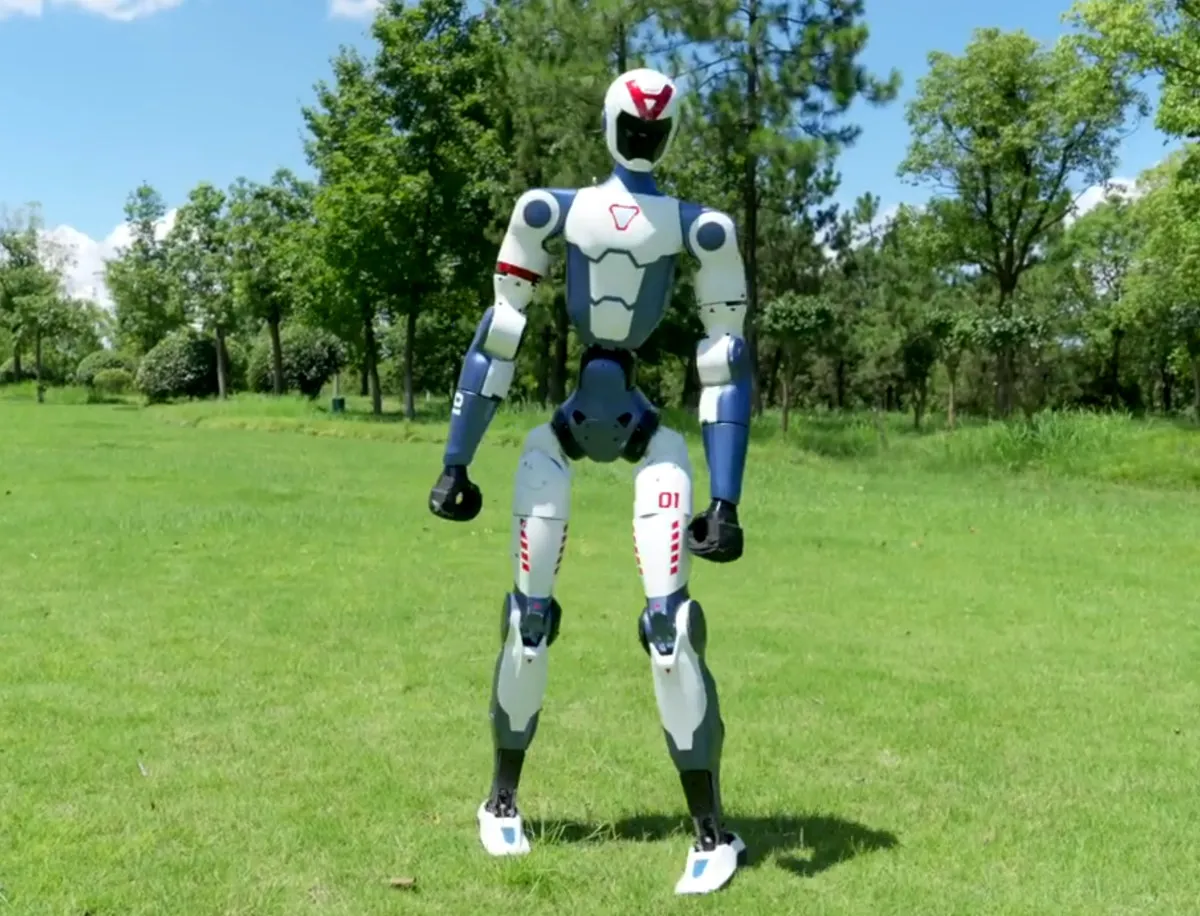
The production boom is real, but most of the robots are still headed to Chinese factories, labs, schools, stores, exhibitions, and commercial pilots before they reach Western living rooms. For buyers, the useful question is not "is China making humanoids?" It is: which part of mass production helps homes first — price, parts, developer supply, or actual chores?
What Is Actually Scaling in China?
TrendForce's April 2026 report is important because it is not just another viral robot video. It points to a supply-chain shift: Chinese vendors are moving from one-off prototypes toward repeatable manufacturing, order-driven production, and commercial deployments.
The standout numbers are blunt:
- China's annual humanoid robot output could grow up to 94% in 2026.
- Unitree and AGIBOT together are projected to account for nearly 80% of Chinese shipments.
- Unitree's 2025 humanoid robot revenue reportedly surpassed its quadruped revenue, reaching more than 51% of total revenue.
- Unitree has committed to capacity of 75,000 humanoid robots and 115,000 quadruped robots annually.
- AGIBOT's scale moved from 1,000 units in 2025 to 5,000 units, then to 10,000 units within three months, according to TrendForce.
Those numbers matter because a household robot is not only software. It needs motors, gearboxes, batteries, hands, sensors, safety covers, charging hardware, repair parts, packaging, certification, and support. A company that can build 10,000 repeatable bodies has a different learning loop than a company that can only stage ten polished demos.
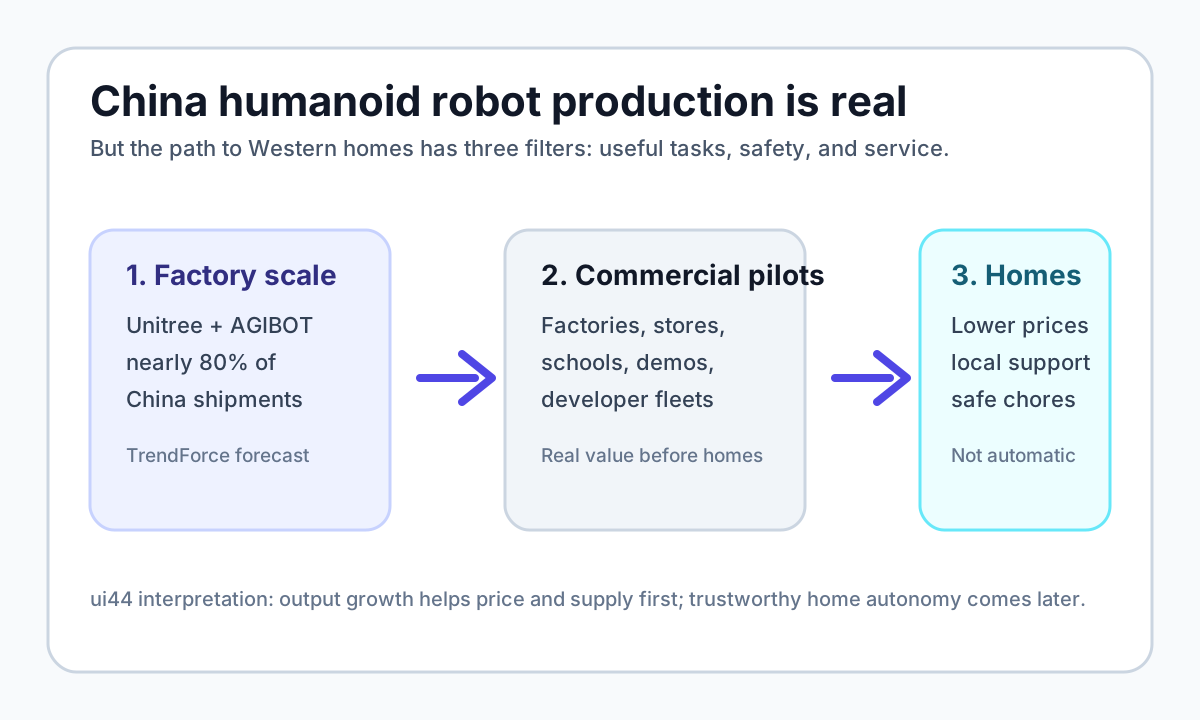
But scale does not magically create a useful home robot. The first buyers are usually institutions that can tolerate supervision, fixed routes, managed spaces, and service contracts. A factory line, showroom, university lab, or retail lobby is much easier than a messy kitchen with children, pets, rugs, stairs, privacy expectations, and no technician on site.
Which Chinese Humanoids in ui44 Are Closest to Home Buyers?
The ui44 database tracks a wide spread of Chinese humanoids and humanoid-like robots. They are not all aimed at homes, and that distinction matters.
Robot
- ui44 status
- Pre-order
- Price / access
- From $4,900 R1 Air; $5,900 R1
- Useful home signal
- Lowest Unitree humanoid entry price; low-cost locomotion
- Main catch
- About 1 hour runtime; movement-first, not a chore robot
Robot
- ui44 status
- Available
- Price / access
- From $13,500
- Useful home signal
- Developer platform with 23 DOF and about 2 hours runtime
- Main catch
- Research-first; manipulation still limited
Robot
- ui44 status
- Available
- Price / access
- $24,240 list
- Useful home signal
- 131 cm body, 2-hour walking runtime, swappable battery
- Main catch
- 3 kg payload only in specific postures; 1 kg full range
Robot
- ui44 status
- Pre-order
- Price / access
- ¥9,998 in China, about $1,370-$1,400
- Useful home signal
- Tiny, low-cost education/home companion angle
- Main catch
- China-first pre-order; not a general chore robot
Robot
- ui44 status
- Active
- Price / access
- Contact sales
- Useful home signal
- Mass-produced full-size humanoid, 165 cm, 55 kg
- Main catch
- Research/rehab/commercial, no public home price
Robot
- ui44 status
- Active
- Price / access
- Inquiry-only
- Useful home signal
- Lightweight 118 cm developer humanoid, 2h walking
- Main catch
- Competition and research platform, not consumer support
Robot
- ui44 status
- Active
- Price / access
- Contact sales
- Useful home signal
- Strong manipulation demos, 5 kg per arm
- Main catch
- Scientific research version, not a household product
Robot
- ui44 status
- Active
- Price / access
- Inquiry-only
- Useful home signal
- Fast full-size platform, about 4h battery
- Main catch
- Enterprise/research access, not home service
| Robot | ui44 status | Price / access | Useful home signal | Main catch |
|---|---|---|---|---|
| Unitree R1 | Pre-order | From $4,900 R1 Air; $5,900 R1 | Lowest Unitree humanoid entry price; low-cost locomotion | About 1 hour runtime; movement-first, not a chore robot |
| Unitree G1 | Available | From $13,500 | Developer platform with 23 DOF and about 2 hours runtime | Research-first; manipulation still limited |
| AGIBOT X2 | Available | $24,240 list | 131 cm body, 2-hour walking runtime, swappable battery | 3 kg payload only in specific postures; 1 kg full range |
| Noetix Bumi | Pre-order | ¥9,998 in China, about $1,370-$1,400 | Tiny, low-cost education/home companion angle | China-first pre-order; not a general chore robot |
| Fourier GR-1 | Active | Contact sales | Mass-produced full-size humanoid, 165 cm, 55 kg | Research/rehab/commercial, no public home price |
| Booster T1 | Active | Inquiry-only | Lightweight 118 cm developer humanoid, 2h walking | Competition and research platform, not consumer support |
| Astribot S1 | Active | Contact sales | Strong manipulation demos, 5 kg per arm | Scientific research version, not a household product |
| RobotEra STAR1 | Active | Inquiry-only | Fast full-size platform, about 4h battery | Enterprise/research access, not home service |
This table explains the real shape of the market. China already has robots that look much closer to purchasable hardware than most Western humanoid projects. The home gap is not the existence of bodies. The gap is safe, repeatable, supported household work.
The Unitree R1 is the Unitree price shock. Unitree's official page lists the R1 Air from $4,900 and the standard R1 from $5,900 before tax and shipping. It is 123 cm tall, about 29 kg with battery or roughly 27 kg for the Air model, and has about one hour of battery life. That makes it easier to imagine as an education, development, or early-adopter robot than many larger inquiry-only humanoids, but it is not the cheapest humanoid in ui44: Noetix Bumi is listed much lower at about $1,370-$1,400 in China. Unitree's own page also warns individual users to understand the limitations of humanoid robots before buying.
The AGIBOT X2 is the more serious compact biped. ui44 lists it at $24,240, with a 131 cm body, about 35 kg for X2 or 39 kg for X2 Ultra, roughly 2 hours at 0.5 m/s walking, optional LiDAR and RGB-D perception, and swappable battery support. It also shows why spec reading matters: the payload is 3 kg max in specific postures, but 1 kg across the full range. That is the kind of honest detail home buyers need.
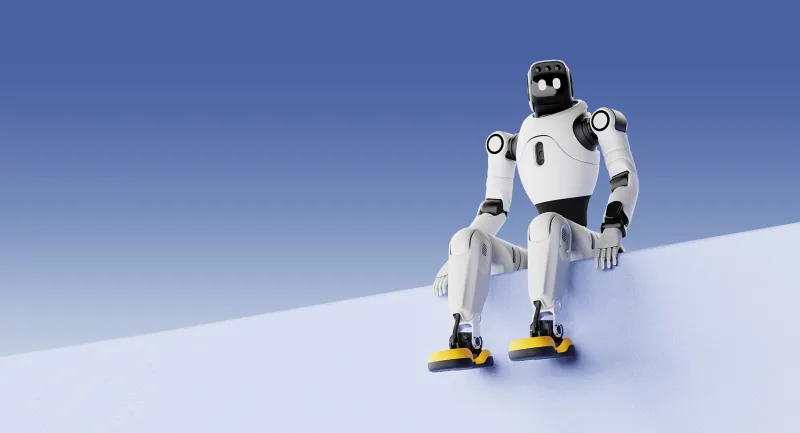
The Noetix Bumi is the affordability outlier. ui44 lists it as a China-first pre-order at ¥9,998, roughly $1,370-$1,400, with a 94 cm, 12 kg body and 1-2 hours of battery life. That price is dramatic, but the job is not "clean my house." Bumi is closer to an educational companion and programming platform.
Does 10,000 Robots Mean 10,000 Home Helpers?
No. The AGIBOT milestone is still a big deal, but not because it proves a humanoid can unload your dishwasher.
AGIBOT's 2026 partner-conference announcement focused on real-world deployment across industrial, commercial, entertainment, retail, logistics, security, and service environments. Its A3 humanoid, G2 Air mobile manipulator, OmniHand series, D2 Max quadruped, and data-collection tools are part of a broader embodied-AI infrastructure push.
That matters for homes indirectly. A robot trained in retail, hotel, and logistics settings can produce manipulation data, failure data, safety data, and repair data. A manufacturer shipping hundreds or thousands of bodies learns which joints fail, which batteries age badly, which screens break, how often hands need service, and what customers actually ask robots to do.
But most of that learning happens in supervised places. A commercial pilot can run with staff nearby, restricted routes, known objects, and service contracts. A Western home customer expects the robot to work after delivery, respect privacy, avoid pets, not scratch floors, not need a weekly engineer visit, and have clear warranty support in their country.
That is why production is necessary but not sufficient. Mass production can make robots cheaper. It can make parts more available. It can make developer access more realistic. It does not automatically solve autonomy, support, liability, privacy, import compliance, or cultural trust.
Why Chinese Scale Still Changes Western Homes
Even if most 2026 Chinese humanoids do not arrive as ready household helpers, the scale shift still changes what Western buyers will see.
First, it creates price pressure. The Unitree G1 at $13,500 already made many older humanoid price assumptions look stale. The R1 pushes the entry price lower again. A Western company trying to sell a humanoid for tens of thousands of dollars now has to explain exactly what safety, service, autonomy, and warranty value it adds.
Second, it widens developer supply. Schools, labs, hobbyists, and startups can buy or rent more bodies, which means more software, task attempts, public failures, and third-party tooling. That does not guarantee a consumer product, but it speeds up the ecosystem.
Third, it normalizes swappable batteries, modular hands, robot-native language models, and remote supervision as ordinary product categories. Those features show up repeatedly across Unitree, AGIBOT, Booster, Fourier, Astribot, and other Chinese platforms. Western home robots will be judged against them.
Fourth, it sharpens policy and support questions. ui44 has already covered how a proposed U.S. Chinese robot ban could affect home humanoids and robot dogs. Even without a ban, a Western buyer has to ask: Who repairs it? Where is the data processed? Are spare parts legal to import? Does the warranty survive resale? Can the robot be updated if the manufacturer's cloud changes?
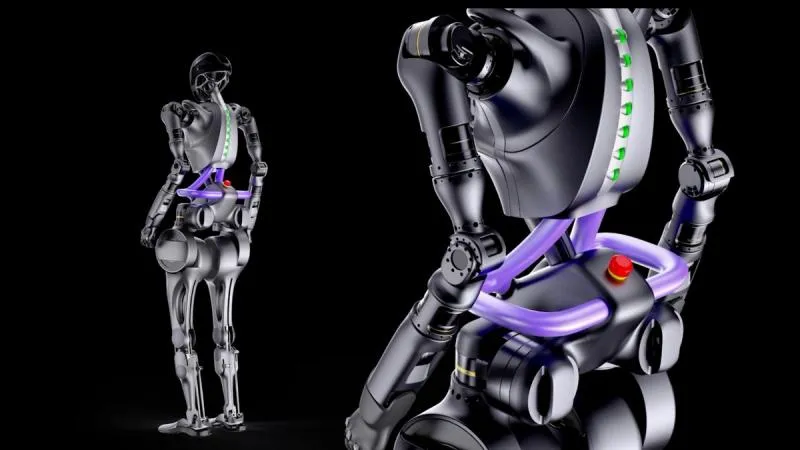
That is the Android-versus-iPhone analogy people reach for, but it is too neat. Phones became global because apps, networks, stores, carriers, payments, repairs, and user expectations matured together. Home humanoids need the same stack, plus physical safety.
What Would Make a Chinese Humanoid Truly Home-Ready?
For a Western household, the checklist is more boring than the demo reel.
A credible home humanoid needs at least six things:
- Clear legal availability. Not a reseller mystery listing, not a research inquiry form, and not a China-only pre-order unless the buyer lives there.
- Local support and parts. Motors, batteries, hands, skins, chargers, and sensors must be replaceable without sending the whole robot across the world.
- Safe default behavior. The robot should move slowly around people, recover gracefully, avoid pinch points, and make conservative decisions when uncertain.
- Real chore boundaries. A useful robot says what it can and cannot do: fetch objects, patrol, carry light items, talk, guide, monitor, entertain, or learn a task with supervision.
- Runtime that matches the job. One hour can be fine for demos or lessons. It is not enough for an all-day helper unless charging and task scheduling are excellent.
- Privacy and control clarity. Cameras, microphones, maps, remote expert modes, and training data must be explained before the robot enters a home.
This is where Western home-facing projects still have a different pitch. The 1X NEO, for example, is explicitly framed as a home robot with U.S. deliveries starting in 2026, a $499/month subscription option, a $20,000 early-access ownership option, a soft body, tendon-driven actuation, self charging, and Expert Mode for chores it does not yet know. Whether it delivers on that promise is a separate question, but the product page is at least aimed at households rather than factories.
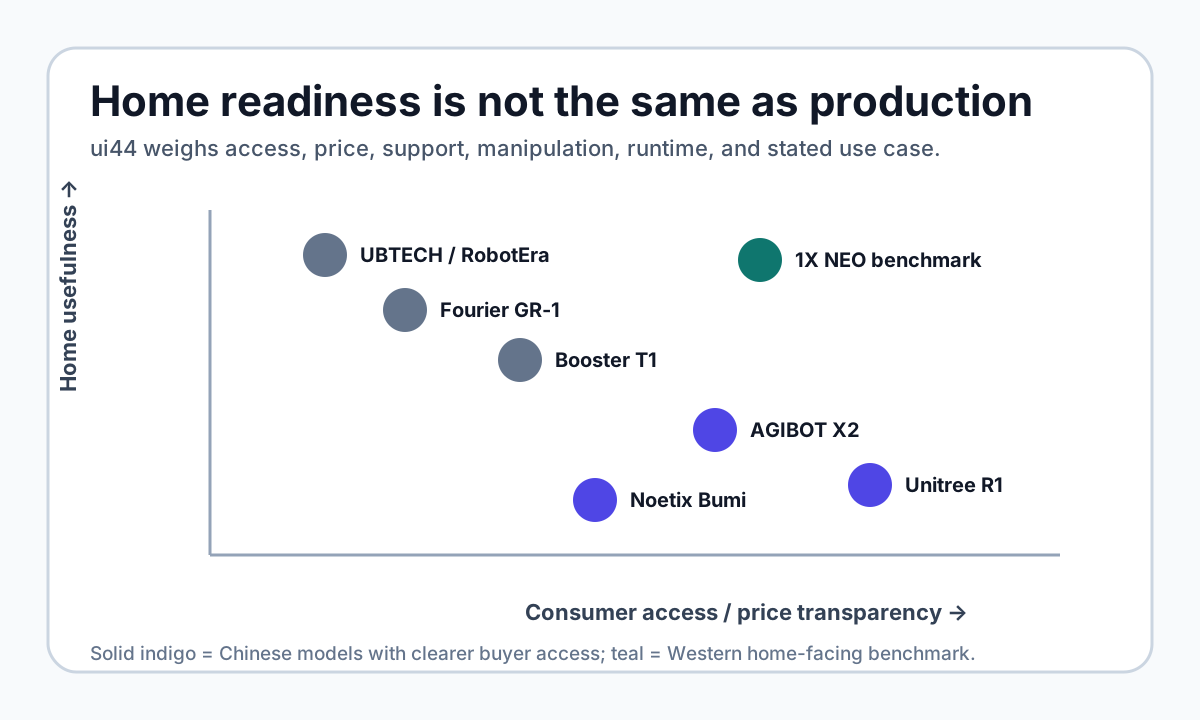
That is the standard Chinese humanoids must meet if they want Western homes, not just Western YouTube channels.
Which Robots Should Buyers Watch First?
For ordinary buyers, the near-term watchlist is narrow.
Watch Unitree R1 for price discovery. It may not be a chore robot, but it sets a new floor for Unitree humanoid pricing and makes locomotion-first bipedal hardware feel less exotic. If deliveries are reliable, software improves, and service becomes more transparent, R1-like robots could become one early wave of humanoids people buy for education, experimentation, entertainment, and light interaction.
Watch AGIBOT X2 for compact commercial-to-home crossover. X2 has a more serious spec sheet than toy-like humanoids, with swappable batteries, optional higher-end perception, and a clearly stated payload caveat. It is still more research/commercial than family helper, but it is the kind of platform that could pressure Western compact humanoids.
Watch Noetix Bumi for the low-cost companion lane. Bumi will not fold your laundry, but a sub-$1,500 humanoid-shaped education robot could make bipedal robots feel normal to families if quality and availability hold up.
Watch Fourier, Booster, Astribot, RobotEra, and UBTECH for industrial learning loops. These platforms may not be household products, but they can generate better actuators, hands, safety practices, training data, and service playbooks. Those improvements eventually flow into home robots.
If you are comparing actual products, start with the robot pages rather than the hype cycle. ui44's pages for Unitree R1, Unitree G1, AGIBOT X2, Noetix Bumi, and 1X NEO make the price, status, runtime, and source links visible. You can also compare several at once using /compare/unitree-r1/agibot-x2/noetix-bumi/1x-neo.
So When Do They Reach Western Homes?
The honest answer: parts of the boom reach Western homes before the robots fully do.
In 2026, Chinese mass production should already influence price expectations, developer access, robot dog and humanoid components, and the number of real bodies available for experiments. Western buyers may be able to import or order some models, but that is not the same as a supported household appliance.
The first genuinely plausible Western-home uses are likely to be limited: education, telepresence, entertainment, companionship, light object carrying, security patrol, and supervised task learning. Full autonomous chores — laundry, dishes, cooking, bathroom cleaning, complex tidying — remain much harder. If runtime is the problem, see ui44's guide to home humanoid battery life. If form factor is the problem, the compact vs full-size humanoid comparison is the better starting point.
China's humanoid production boom is still the biggest supply-side signal in home robotics right now. It makes humanoids cheaper, more common, and harder to dismiss. But a Western household should not buy the shipment number. It should buy the support model, the safety case, the task boundary, and the specific robot in front of it.
That is where the market is heading: not from zero to robot butler overnight, but from rare demos to many imperfect bodies. The countries and companies that learn fastest from those bodies will shape what home robots become.
Written by
ui44 Team
Published April 27, 2026
Share this article
Open a plain share link on X or Bluesky. No embeds, no widgets, no cookie baggage.