The market is splitting into two very different form factors: compact humanoid robots around child height, and full-size humanoid robots built to reach adult counters, shelves, and workplaces. If you are trying to predict what arrives in homes first, height is not a cosmetic spec. It is one of the strongest clues.
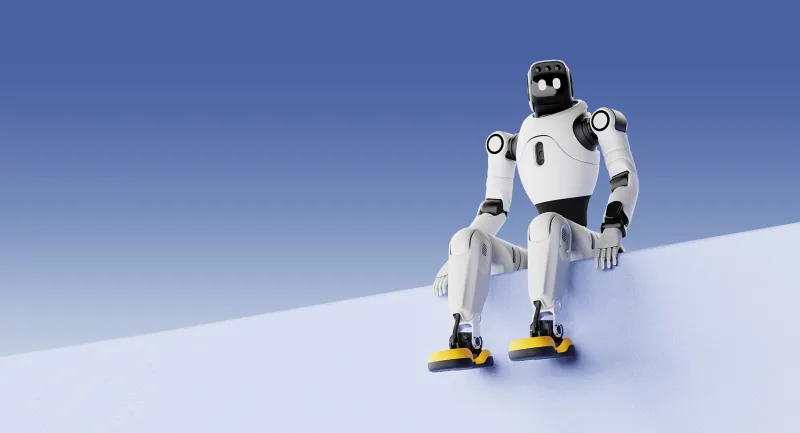
That early home market may therefore look less like "a robot butler for everyone" and more like a ladder: compact humanoid robots for learning and controlled tasks now, full-size or carefully engineered middle-class humanoid robots for meaningful chores later.
What Counts as Compact?
For this comparison, a compact humanoid is roughly 90-135 cm tall and light enough that two adults can move it without treating it like industrial equipment. That includes robots such as Noetix Bumi, Unitree R1, Booster T1, Unitree G1, AGIBOT X2, and NEURA 4NE-1 Mini.
A full-size humanoid is closer to adult height. That includes robots such as 1X NEO, Figure 03, AGIBOT A2 Ultra, Unitree H1, NEURA 4NE-1, and Apptronik Apollo. The boundary is not perfect. NEO is 167 cm tall but unusually light at 30 kg, while some compact research platforms are heavy for their height. Still, the split is useful because it maps to a real home question: can this machine safely share the same rooms as people before it is truly autonomous?
The ui44 Specs and Form Factor Snapshot
The database shows why compact platforms are getting so much attention. They are still expensive by consumer-electronics standards, but several are already listed with public prices or pre-order pricing. Full-size humanoids more often sit behind enterprise sales, waitlists, or prototype programs.
Robot
- Form factor
- Compact education humanoid
- Status in ui44
- Pre-order
- Price signal
- About $1,370 from ¥9,998 China pricing
- Height
- 94 cm
- Weight
- 12 kg
- Battery / runtime note
- 1-2 hours
Robot
- Form factor
- Compact developer humanoid
- Status in ui44
- Pre-order
- Price signal
- From $4,900 R1 Air / $5,900 R1
- Height
- 123 cm
- Weight
- ~29 kg with battery (~25 kg R1 Air)
- Battery / runtime note
- about 1 hour
Robot
- Form factor
- Compact developer humanoid
- Status in ui44
- Active
- Price signal
- Inquiry-only
- Height
- 118 cm
- Weight
- about 30 kg
- Battery / runtime note
- 2 hours walking / 4 hours standing
Robot
- Form factor
- Compact research humanoid
- Status in ui44
- Available
- Price signal
- From $13,500
- Height
- 132 cm
- Weight
- 35 kg
- Battery / runtime note
- about 2 hours
Robot
- Form factor
- Compact interactive humanoid
- Status in ui44
- Available
- Price signal
- $24,240 official store listing
- Height
- 131 cm
- Weight
- 35 kg / 39 kg Ultra
- Battery / runtime note
- about 2 hours walking
Robot
- Form factor
- Compact cognitive humanoid
- Status in ui44
- Pre-order
- Price signal
- €19,999 Standard / €29,999 Pro
- Height
- 132 cm
- Weight
- 36 kg
- Battery / runtime note
- about 2.5 hours
Robot
- Form factor
- Full-height home humanoid
- Status in ui44
- Pre-order
- Price signal
- $20,000 early-adopter price in ui44
- Height
- 167 cm
- Weight
- 30 kg
- Battery / runtime note
- about 4 hours
Robot
- Form factor
- Full-size service humanoid
- Status in ui44
- Available
- Price signal
- Contact sales
- Height
- 169 cm
- Weight
- 69 kg
- Battery / runtime note
- 1.5+ hours walking
Robot
- Form factor
- Full-size home-focused humanoid
- Status in ui44
- Active
- Price signal
- No public price in ui44
- Height
- 168 cm
- Weight
- 60 kg
- Battery / runtime note
- about 5 hours
Robot
- Form factor
- Full-size dynamic humanoid
- Status in ui44
- Active
- Price signal
- Contact sales
- Height
- 180 cm
- Weight
- 47 kg
- Battery / runtime note
- about 2 hours
Robot
- Form factor
- Full-size cognitive humanoid
- Status in ui44
- Pre-order
- Price signal
- about €98,000/unit reservation estimate
- Height
- 180 cm
- Weight
- 80 kg
- Battery / runtime note
- about 2 hours
Robot
- Form factor
- Full-size industrial humanoid
- Status in ui44
- Active
- Price signal
- No public price
- Height
- 173 cm
- Weight
- 73 kg
- Battery / runtime note
- about 4 hours
| Robot | Form factor | Status in ui44 | Price signal | Height | Weight | Battery / runtime note |
|---|---|---|---|---|---|---|
| Noetix Bumi | Compact education humanoid | Pre-order | About $1,370 from ¥9,998 China pricing | 94 cm | 12 kg | 1-2 hours |
| Unitree R1 | Compact developer humanoid | Pre-order | From $4,900 R1 Air / $5,900 R1 | 123 cm | ~29 kg with battery (~25 kg R1 Air) | about 1 hour |
| Booster T1 | Compact developer humanoid | Active | Inquiry-only | 118 cm | about 30 kg | 2 hours walking / 4 hours standing |
| Unitree G1 | Compact research humanoid | Available | From $13,500 | 132 cm | 35 kg | about 2 hours |
| AGIBOT X2 | Compact interactive humanoid | Available | $24,240 official store listing | 131 cm | 35 kg / 39 kg Ultra | about 2 hours walking |
| NEURA 4NE-1 Mini | Compact cognitive humanoid | Pre-order | €19,999 Standard / €29,999 Pro | 132 cm | 36 kg | about 2.5 hours |
| 1X NEO | Full-height home humanoid | Pre-order | $20,000 early-adopter price in ui44 | 167 cm | 30 kg | about 4 hours |
| AGIBOT A2 Ultra | Full-size service humanoid | Available | Contact sales | 169 cm | 69 kg | 1.5+ hours walking |
| Figure 03 | Full-size home-focused humanoid | Active | No public price in ui44 | 168 cm | 60 kg | about 5 hours |
| Unitree H1 | Full-size dynamic humanoid | Active | Contact sales | 180 cm | 47 kg | about 2 hours |
| NEURA 4NE-1 | Full-size cognitive humanoid | Pre-order | about €98,000/unit reservation estimate | 180 cm | 80 kg | about 2 hours |
| Apptronik Apollo | Full-size industrial humanoid | Active | No public price | 173 cm | 73 kg | about 4 hours |
That table makes one thing clear: "humanoid" is no longer a single category. The Bumi and the 4NE-1 are both humanoids, but they are not solving the same problem. Bumi is closer to an educational and companion platform. 4NE-1 is a large cognitive robot designed for human-scale work. Comparing them only by whether they have two legs misses the point.
Why Compact Humanoids Reach Homes First
The strongest case for compact humanoids is not that they can do more. It is that they can fail more safely and cheaply.
A 12 kg Bumi or 29 kg Unitree R1 is still a serious machine, but the practical risk profile is different from an 80 kg adult-size robot. Smaller robots are easier to box, ship, place in a corner, recover after a fall, and keep away from children or pets when something goes wrong. For early home buyers, that matters. The official Unitree R1 page even warns individual users to understand humanoid limitations before purchasing and to keep a safe distance from the robot. That kind of warning is not a reason to dismiss the category; it is a reminder that first-generation home humanoids are closer to developer hardware than appliances.
Compact robots also fit the way early markets usually form. Schools, robotics clubs, labs, smart-home enthusiasts, and makers can justify a smaller humanoid for demonstrations, teleoperation experiments, human-robot interaction, and software development. Those buyers do not need a robot to fold all their laundry on day one. They need a platform that is physically manageable and technically accessible.
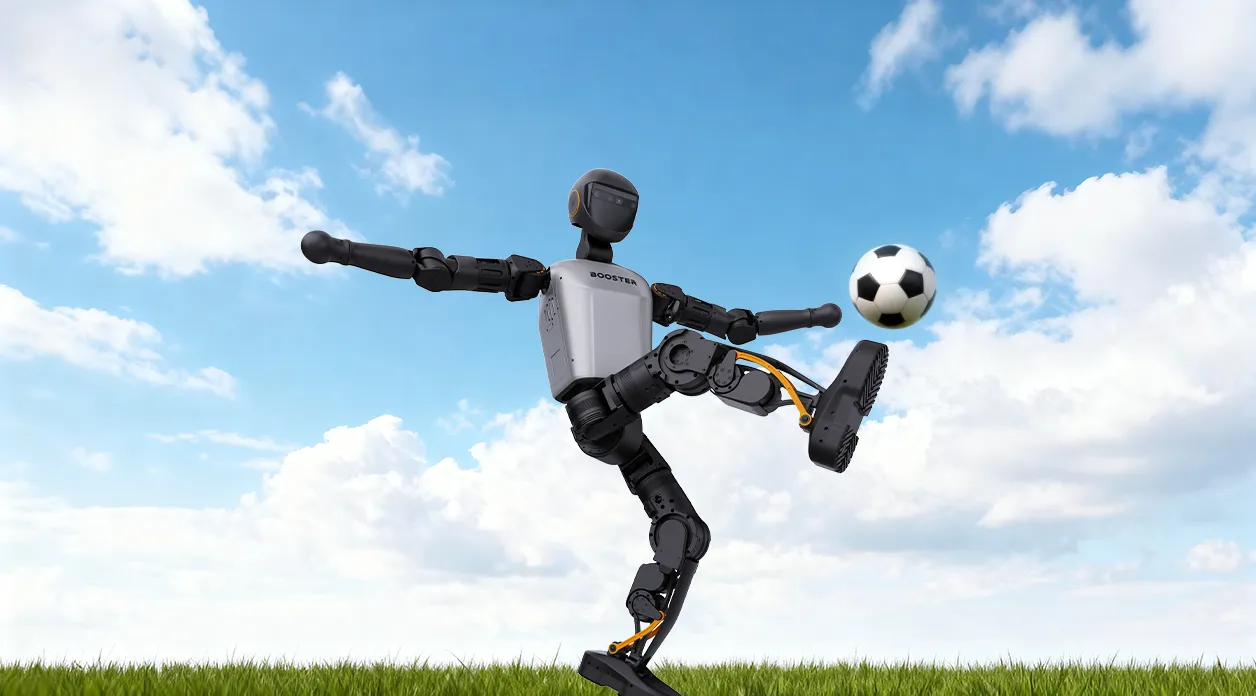
Booster T1 is a good example. Booster positions it as a developer and competition robot, not a chore robot. The official specs list a 118 x 47 x 23 cm body, about 30 kg weight, 23 degrees of freedom in the base configuration, and up to 41 degrees of freedom with dexterous hands. That is not a consumer appliance pitch. It is a platform pitch. For early adoption, that is exactly why it is interesting.
AGIBOT X2 pushes the same compact logic in a different direction. The official AGIBOT store describes it as a half-size humanoid for entertainment and commercial performance, with 25 degrees of freedom, multimodal interaction, a flexible shell, swappable battery, and a $24,240 price before taxes, duties, and import costs. It is not cheap, but it is concrete. You can compare that with full-size humanoids where pricing, support, and delivery are often far less transparent.
Where Compact Humanoids Still Fall Short
The home is built around adult reach. Kitchen counters are high. Washing machines, shelves, doors, cabinet handles, trash bins, and tables assume a human arm span and shoulder height. A 118-132 cm robot can be useful in demos, low surfaces, classrooms, entertainment, or supervised interaction, but many household chores become awkward unless the environment is redesigned around it.
Payload disclosure is another limiting factor. ui44 lists AGIBOT X2 at 3 kg maximum in specific postures and 1 kg across the full range, while NEURA 4NE-1 Mini lists a 3 kg payload. Unitree G1 has optional dexterous hands, but ui44's current source-of-truth record does not list an arm-payload field, so it should not be treated as a direct payload comparison from the database. The disclosed compact-humanoid numbers are enough for light objects, but they are not a universal chore ticket. A wet laundry basket, a heavy pan, a grocery bag, or a stuck drawer can quickly exceed what a compact humanoid should be trusted to handle.
Autonomy is the bigger constraint. Compact hardware can walk, recover, wave, listen, and manipulate in controlled settings. That does not mean it can safely plan a messy household task from end to end. A buyer should separate the robot's body from its actual skill stack. Can it recognize your objects? Can it recover when the object slips? Can it ask for help? Can it stop before it pinches a finger? Can it dock and recharge reliably? The most important form-factor question is not "is it humanoid?" It is "what happens when the task stops going according to the demo?"
Why Full-Size Humanoids Still Matter
If the goal is real household labor, full-size robots have an obvious advantage: they can use the human environment without as many compromises. A robot that can reach a countertop, open a normal-height cabinet, carry a moderate load, and see over clutter has a better chance of doing useful work in an unmodified home.
That is the pitch behind 1X NEO. 1X presents NEO as a home robot for chores, conversation, and gentle interaction. The current ui44 record lists a 167 cm height, 30 kg weight, about 4 hours of battery life, tactile skin, RGB cameras, depth sensors, and a $20,000 early-adopter price. NEO is important because it tries to combine adult reach with an unusually low body weight. If that safety strategy works in practice, it could blur the compact-versus-full line.
Figure is taking a different route with Figure 03. The company's official Figure 03 introduction says the robot is designed for Helix, the home, and manufacturing scale, with soft goods, wireless charging, upgraded audio, home-safety improvements, and tactile fingertip sensors. ui44 lists Figure 03 at 168 cm and 60 kg, with about 5 hours of battery life. That is a much heavier machine than NEO, but the design target is similar: human-scale reach plus home-specific safety features.
NEURA 4NE-1 shows the trade-off at the high end. It is 180 cm, 80 kg, and listed around €98,000 in ui44, with a 15 kg payload and sensor skin. That makes it far more plausible for carrying and manipulating heavier objects, but much less plausible as an early consumer purchase. The machine may be home-capable in principle while still being commercially aimed at enterprise, research, or carefully managed deployments.
The Middle Class Is the Most Interesting Part
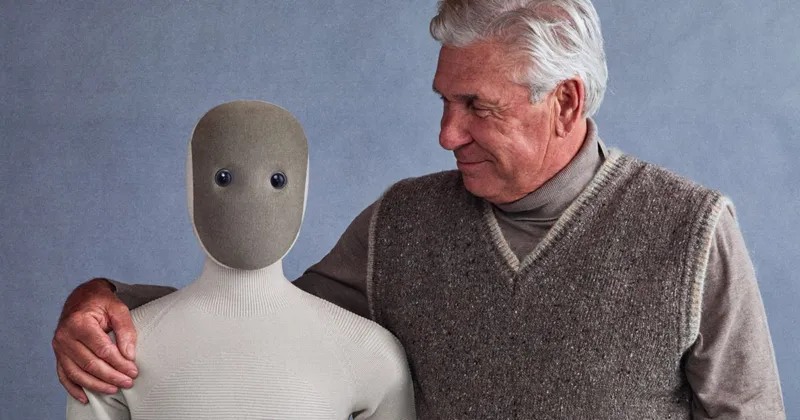
The most useful form factor may not be tiny or fully adult-size. The emerging sweet spot is around 120-135 cm and 30-36 kg: tall enough to interact with many home surfaces, light enough to move and service, and small enough to reduce some of the fear factor.
That is where Unitree R1, Unitree G1, AGIBOT X2, Booster T1, ROBOTIS AI Sapiens K0, Asimov-style DIY kits, and NEURA 4NE-1 Mini all cluster. These are not the same product class, but their size band is telling. The hardware industry seems to be searching for a form factor that is human-relevant without being human-heavy.
For buyers, that middle class is also the easiest place to ask practical questions. Can it pass through doorways without special clearance? Can one or two people move it after a fault? Is the battery hot-swappable? Does it have a real SDK? Is the warranty written for institutions or households? Are repair parts available? Does the company publish enough specs to make a fair comparison? The answers matter more than whether the demo video looks like a person.
This is where ui44's compare tool is useful. A 132 cm robot and a 180 cm robot may both show up under the same broad humanoid label, but their price, runtime, mass, payload, sensor disclosure, and status tell a more honest story.
Which Form Factor Should You Actually Want?
Choose a compact humanoid if your real goal is learning, development, education, entertainment, or early experimentation. A Unitree R1 or Unitree G1 is more believable as a developer purchase than as a fully autonomous household worker. An AGIBOT X2 or Booster T1 makes more sense when the value is movement, interaction, programmability, and controlled demos.
Choose a full-size humanoid only if the task truly requires adult reach and payload, and only if the vendor can explain deployment, service, remote support, safety boundaries, and what the robot can do without a human operator. That category includes the most exciting home claims, but also the largest gap between videos and daily reliability.
Be especially careful with the phrase "home robot." It can mean three very different things:
- Physically home-sized: small enough to fit in a house.
- Legally and operationally home-ready: safe, supportable, and serviceable for non-experts.
- Actually useful at chores: capable of completing tasks without constant rescue.
Compact humanoids often satisfy the first definition. A few are starting to aim at the second. Very few satisfy the third today. Full-size humanoids are built for the third definition, but most are still proving whether they can reach the second outside controlled pilots.
Five Checks Before You Preorder
Before treating any humanoid as a home purchase, run the robot through these checks:
1. Public price and refund terms. Public pricing is not the same as real availability, but it is a useful filter. Unitree R1, Unitree G1, AGIBOT X2, NEURA 4NE-1 Mini, Noetix Bumi, and 1X NEO all have some price signal in ui44. Many full-size systems still do not.
2. Weight and recovery plan. Ask what happens if the robot falls, freezes, or loses network access. If the answer assumes a trained technician, it is not a normal household product yet.
3. Manipulation, not just walking. Hands, tactile sensing, payload, object recognition, and error recovery matter more than viral running clips. A humanoid that walks beautifully but cannot safely pick up irregular objects is not a home helper.
4. Docking and battery strategy. One-hour runtime can be fine for demos and classrooms. It is weak for household labor unless the robot can dock, resume, and manage tasks over a day.
5. Support model. Developer platforms expect technical users. Home products need consumer support, clear warranties, spare parts, and conservative safety limits. Do not confuse an SDK with a service plan.
Verdict: Compact First, Full-Size Later
Compact humanoids are the form factor most likely to enter homes first because they lower the physical and financial barrier. They are easier to ship, easier to test, less frightening in a small room, and better aligned with education, research, demos, and early adopter experimentation.
Full-size humanoids remain the form factor to watch for real household work. They have the reach and payload for adult spaces, and robots like 1X NEO and Figure 03 are explicitly being designed around the home. But their path depends on more than height. They need safe manipulation, reliable autonomy, supportable service models, and prices that do not require enterprise budgets.
So if you are asking which form factor reaches homes first, the answer is compact. If you are asking which form factor eventually does the chores people actually imagine when they say "home humanoid robot," the answer is probably full-size or a carefully engineered middle class. The winner will not be the robot that looks most human. It will be the one that is small enough to trust, large enough to be useful, and honest enough about what it cannot do yet.
Written by
ui44 Team
Published April 26, 2026
Share this article
Open a plain share link on X or Bluesky. No embeds, no widgets, no cookie baggage.