Figure AI's new System 0 claim makes the question worth revisiting. In its latest Figure 03 production update, Figure says its humanoid can now use camera perception inside its whole-body controller to traverse stairs, ramps, and uneven terrain zero-shot from simulation, with no real-world fine-tuning and no operator-in-the-loop adjustment. That is a serious mobility claim. It is not, by itself, proof that you should put a humanoid on your staircase.
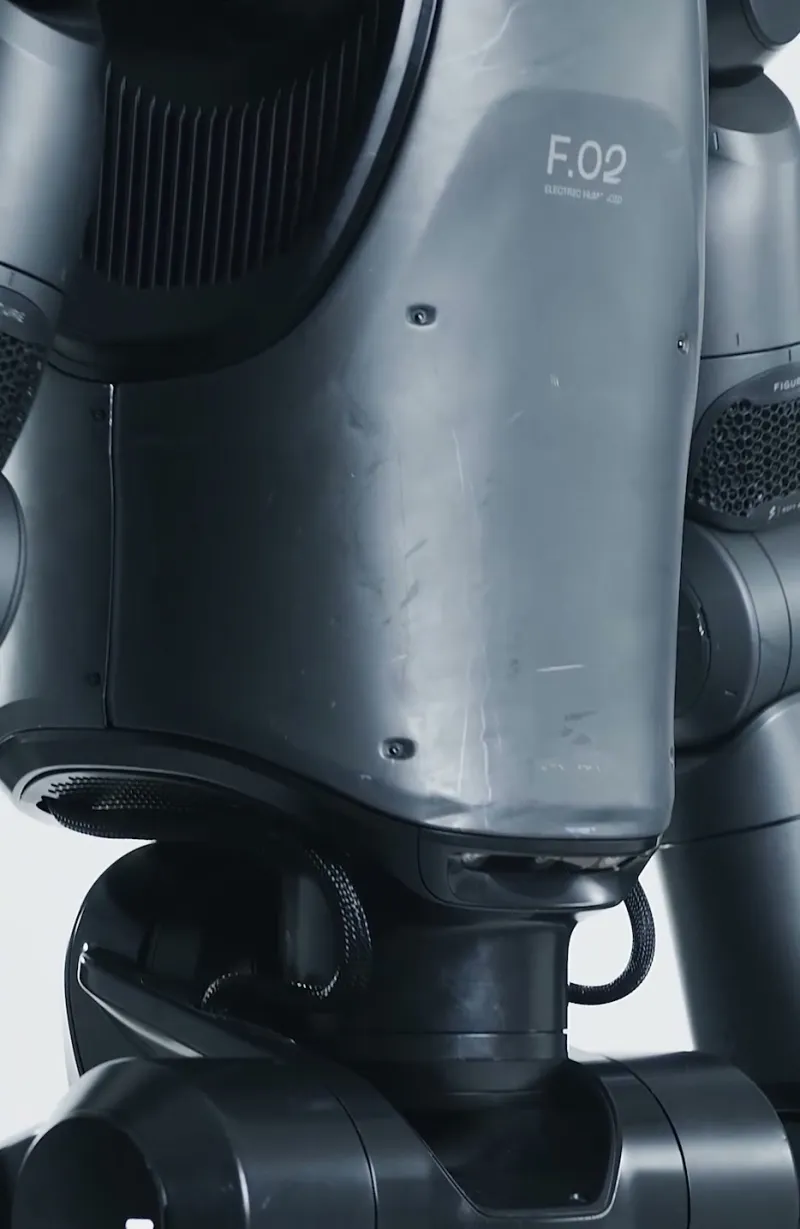
The honest answer is: some humanoid robots can climb stairs in demos or research settings, but no broadly available home humanoid has proven safe, repeatable, consumer-ready stair autonomy yet. Stairs matter because they are not just a locomotion trick. They force perception, balance, recovery, payload, safety policy, and support infrastructure to work together in a place where a mistake can damage a robot, a home, or a person.
Can humanoid robots climb stairs today?
Yes, but with a giant asterisk. Stair climbing is not new to humanoid robotics. Honda's ASIMO could climb stairs years ago. PAL Robotics' REEM-C, a 165 cm, 80 kg research humanoid, is listed in the ui44 database with stable walking, stair climbing, chair sitting, ROS support, 68 degrees of freedom, and a 3-hour walking battery figure. Unitree's full-size H1 is recorded with stair-climbing and terrain adaptation among its capabilities.
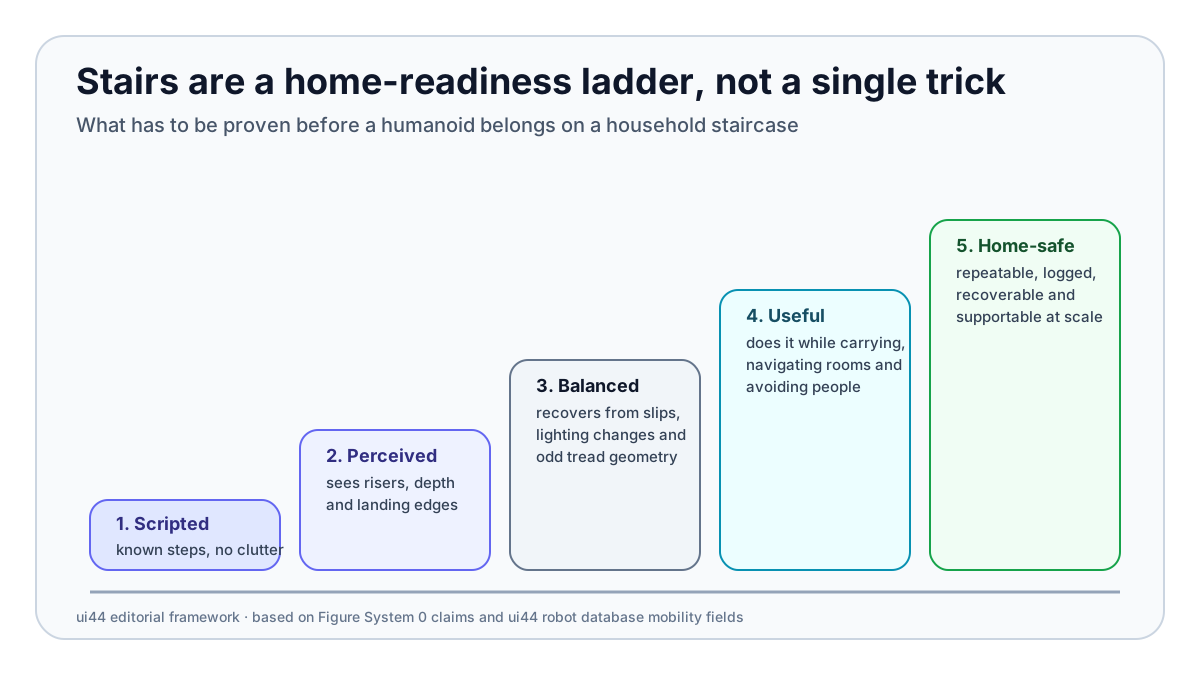
That history is useful because it prevents hype. A humanoid stepping up a known staircase does not automatically mean it can roam a normal home. The harder question is whether it can notice an unfamiliar staircase, estimate the height and depth of each step, keep its body stable, carry an object, pause when a pet crosses its path, recover from a foot placement error, and explain or log what happened if it refuses to continue.
Figure's System 0 update is interesting because it points at exactly that transition. Figure says S0 previously reasoned only about the robot's own body: joint state, base motion, and proprioception. It could walk on flat ground, but stairs and ramps required hand-tuned mode switches and operator intervention. The new version feeds RGB images from the onboard head cameras through a stereo model to build a 3D scene representation, then conditions the whole-body policy on that scene plus proprioception. In plain language: the robot is not just feeling its body; it is looking at the terrain before it steps.
That is the right direction for homes. A household staircase is not a factory lane. It may have carpet, glossy wood, shadows, a turn, a baby gate, shoes on the landing, poor lighting, or a person coming the other way. A controller that cannot perceive the world has to rely on scripted assumptions. A controller that can perceive still has to prove it can act safely when those assumptions break.
Why Figure System 0 is more than a stair demo
The most important part of Figure's announcement is not simply "the robot climbed stairs." It is the claimed architecture: perception in, whole-body control out, trained in simulation across thousands of randomized terrains, then deployed on hardware zero-shot.
For buyers, that matters for three reasons.
First, it hints at generalization. If a robot needs a special hand-coded routine for every staircase, it will struggle in real homes. If the same policy can use 3D scene understanding for stairs, ramps, thresholds, and uneven flooring, the robot starts to look less like a demo machine and more like a mobile helper. Figure is explicit that stairs are the first use case, not the whole point.
Second, it connects to manufacturing scale. Figure says BotQ has delivered over 350 Figure 03 units, increased production from one robot per day to one per hour, produced more than 9,000 actuators, reached over 80% end-of-line first-pass yield, and subjects each robot to more than 80 functional verification tests. Those numbers matter because mobility failures are often long-tail failures. You do not learn all of them from one beautiful video. You learn them from many robots, many hours, logs, repairs, and repeated failures.
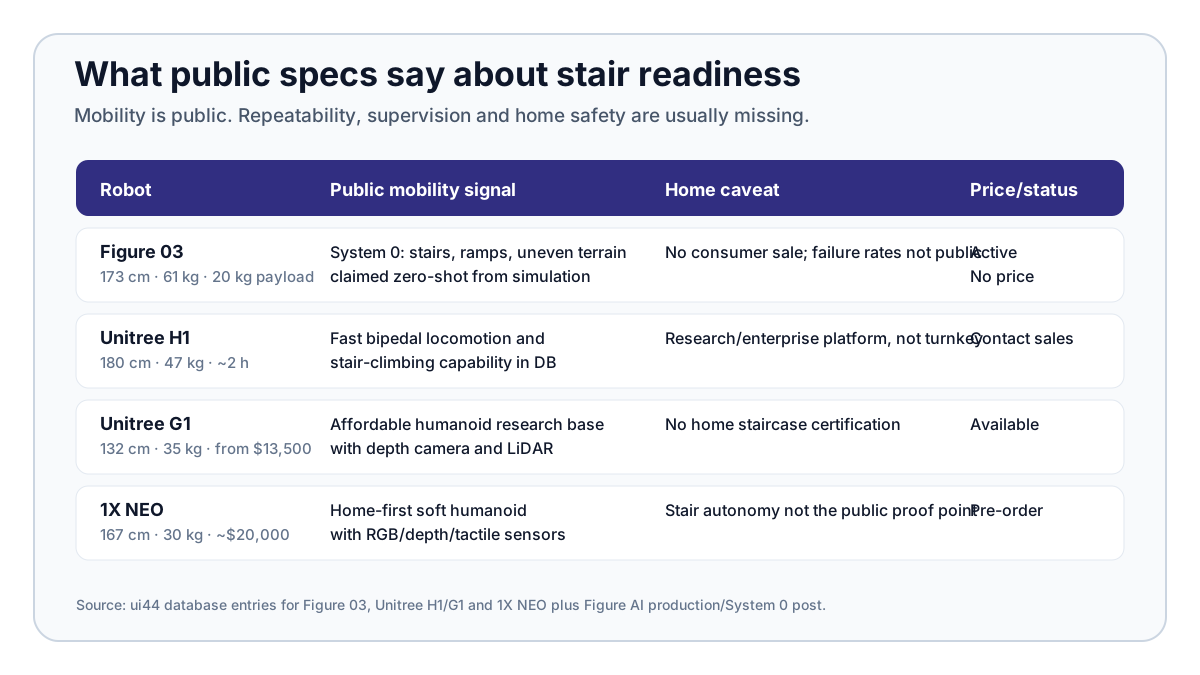
Third, it shows why the home story still needs restraint. Figure 03 is listed in the ui44 database as an active humanoid with a 173 cm height, 61 kg weight, roughly 5-hour battery life, 4.3 km/h maximum speed, stereo vision, depth cameras, force sensors, tactile arrays, Helix VLA, and a 20 kg payload. It is also not available for consumer purchase and has no public price. The same facts that make Figure 03 exciting also make it a fleet-development platform first, not a normal home product.
That is why stair climbing should be read as a benchmark, not a purchase signal. A company showing perception-conditioned stair traversal is telling us something about the maturity of its control stack. It is not yet telling us warranty terms, liability policy, child safety behavior, remote-support rules, or whether the robot is allowed to use your staircase while carrying laundry.
What does the ui44 database say about stair-ready robots?
The database shows a messy split: many robots have impressive mobility, but few connect that mobility to a supported home use case.
Unitree H1 is the cleanest public humanoid comparison for raw locomotion. It is 180 cm tall, 47 kg, has about 2 hours of battery life, and is known for fast walking, running, stair climbing, and terrain adaptation. That is excellent for robotics labs and enterprise developers. It does not mean H1 is a plug-and-play home robot for a parent who wants laundry carried upstairs.
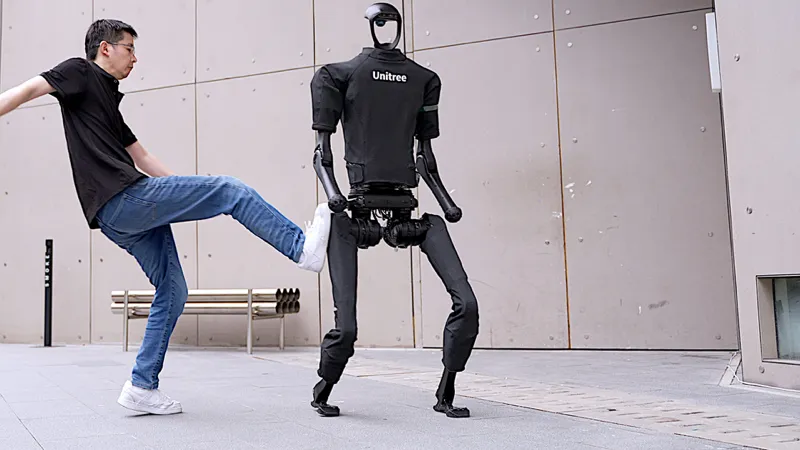
Unitree G1 is more accessible at a listed starting price of $13,500, but it is smaller at 132 cm and 35 kg, designed primarily for research and development, and does not carry the same home-stair claim in the database. Unitree R1 pushes affordability further, starting at $4,900 for the R1 Air pre-sale, with agile bipedal moves, push recovery, cartwheels, handstands, and a roughly 1-hour mixed-activity battery. That is remarkable pricing for a humanoid. It is also a reminder that acrobatics are not the same as certified household stair use.
1X NEO takes a different path. It is explicitly home-focused, soft-bodied, 167 cm tall, only 30 kg, and listed at $20,000 for early adopters, with roughly 4 hours of battery life. NEO's home-first design matters because human coexistence, softness, and chores are the real buyer problem. But stair autonomy is not the public proof point buyers should assume from that listing.
Other entries underline the trade-off. Boston Dynamics' Atlas Electric is an industrial humanoid with a 50 kg instant lift capacity, 90 kg body weight, IP67 rating, autonomous navigation, and dynamic recovery, but no normal consumer sale. RobotEra STAR1 claims outdoor terrain navigation, running, jumping, 55 degrees of freedom, and 20 kg payload, but again it is not a consumer staircase appliance. PrimeBot's Prime T1 is one of the few consumer-positioned robots explicitly framed around a transformable wheeled-humanoid and quadruped mode for stairs, slopes, and uneven terrain, but it remains a prototype with no announced price or detailed public specs.
Why stairs are harder at home than in a lab
A staircase is a hostile test environment hiding inside a familiar object. Humans ignore it because we have decades of embodied practice. Robots have to make the whole loop explicit.
The first problem is geometry. A robot has to understand riser height, tread depth, nosing, slope, landing shape, and whether the next surface is actually a step or a shadow. Even small errors matter because a bipedal robot is balancing a tall body over small contact patches.
The second problem is perception under bad conditions. Bright sun through a window, dark carpet, glossy wood, patterned runners, reflective edges, or a pile of shoes can all degrade depth estimates. Figure's stereo-camera framing is therefore meaningful, but buyers still need evidence across lighting and surface conditions, not one clean staircase.
The third problem is whole-body coordination. A humanoid cannot treat legs, torso, arms, and payload as separate systems. Carrying a laundry basket blocks cameras, shifts balance, and changes recovery behavior. Opening a door at the top of stairs adds manipulation and foot placement. Reaching for a handrail may help stability, but now the robot needs safe arm contact and force control.
The fourth problem is safety around humans. A 61 kg Figure 03, a 70 kg Unitree H2, or a 90 kg Atlas is not a toy. A staircase is narrow, elevated, and shared. A useful home robot must know when to wait, when to back down, when to ask for help, and when a child or pet makes the route off-limits.
The fifth problem is support. If a robot refuses a staircase, who diagnoses it? If an OTA update improves one stair pattern but worsens another, how is that tracked? Figure's production post mentions diagnostics, fallback ladders, fleet management, over-the-air updates, and field-service loops. Those are not boring enterprise details. They are the machinery needed before robots can be trusted outside scripted demos.
Are quadrupeds better for stairs than humanoids?
For pure mobility, often yes. Quadrupeds have four contact points, lower centers of mass, and a longer history of rough-terrain deployment. The ui44 database has several examples that make humanoid stair hype look less special.
Unitree As2, a mid-size quadruped, is listed with the ability to climb 25 cm stairs, traverse about 40-degree slopes, operate from -20°C to 50°C, and run over 4 hours unloaded. AGIBOT D1 Pro is much cheaper at $3,200 and is recorded with stair climbing up to 16 cm steps, 40-degree slopes, a 3.5 m/s top speed, self-balancing, anti-fall behavior, and 1-2 hours per charge. Roborock's Saros Rover is not a humanoid at all, but its wheel-leg architecture is explicitly designed to climb and clean stairs in multi-storey homes.
Those robots clarify the humanoid trade-off. If the job is only to traverse stairs, a quadruped or specialized wheel-leg robot may be more stable. The reason humanoids remain interesting is not that two legs are the easiest way to climb. It is that human homes are built around human reach, human tools, human stairs, human appliances, and human-scale furniture. A humanoid that can climb stairs and then use both hands upstairs is solving a broader home-access problem than a mobility-only platform.
That is also why the comparison page can be more useful than any single viral clip. The buyer question is not "which robot looked coolest on a staircase?" It is "which robot combines mobility, manipulation, battery life, safety, support, and availability in a way that matches my home?"
What proof should buyers ask for?
Do not ask only whether a humanoid can climb stairs. Ask what kind of evidence backs the claim.
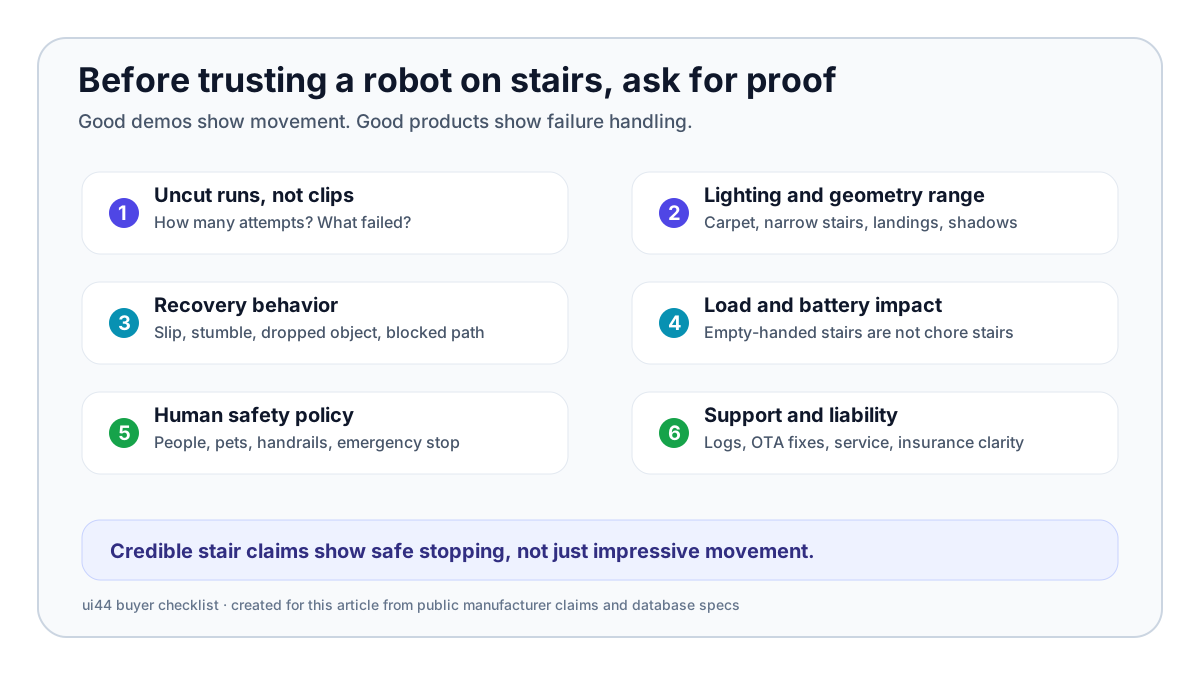
The best public proof would include uncut runs across different staircases, lighting conditions, and floor materials. It would disclose attempt counts, not just successful clips. It would show the robot stopping when a person blocks the path, recovering from a misstep, refusing a staircase it cannot parse, and continuing safely after carrying a realistic object.
Battery and payload should be tested together. Empty-handed stair climbing is useful, but a home helper will be asked to carry laundry, small packages, cleaning supplies, or assistive items. Carrying changes center of mass, camera visibility, arm availability, and fall risk. If a robot has a 20 kg payload on paper but cannot use stairs while carrying anything safely, the payload number is less relevant for a multi-level home.
Support terms should be concrete. A company should explain whether stair use is approved, experimental, remotely supervised, restricted to mapped staircases, or forbidden by the warranty. It should provide emergency-stop behavior, logs, fleet update policy, service response, and a clear human override. The more powerful the robot, the less acceptable vague "AI will figure it out" language becomes.
Should stair climbing change your home robot buying plan?
Not yet, unless you are buying for research or development. For normal buyers, stair climbing should change how you evaluate future robots, not push you into a purchase today.
If you want a home humanoid now, 1X NEO is the clearest home-positioned pre-order in the database, but its value case is home coexistence and chore learning, not proven autonomous stair service. If you want a low-cost bipedal research platform, Unitree R1 and Unitree G1 are fascinating, but they are not appliance-like household helpers. If you want serious legged mobility, quadrupeds such as Unitree As2 or AGIBOT D1 Pro may be more immediately relevant, though they do not give you humanoid arms for upstairs chores.
Figure's System 0 claim is still worth watching closely. It combines the right ingredients: perception, whole-body control, simulation-trained reinforcement learning, fleet scale, diagnostics, OTA updates, and a manufacturing ramp large enough to generate real failure data. If those ingredients hold up in messy, public, repeatable environments, stairs could become one of the most useful benchmarks for home humanoid readiness.
For now, the safest conclusion is simple: humanoid stair climbing is becoming credible, but home stair use is not solved. The demo asks the right question. The product proof still has to arrive.
Related in the database
Use this article as a warranty and coverage workflow
Turn the article into a warranty and coverage pass grounded in the robots and manufacturers it actually references.
Can Humanoid Robots Climb Stairs? already points you toward 14 linked robots, 11 manufacturers, and 5 countries inside the ui44 database. That matters because strong buyer guidance is easier to apply when you can move immediately from a claim or warning into concrete product pages, manufacturer directories, component explainers, and country-level context instead of treating the article as an isolated opinion piece. The fastest next step is to turn the article into a shortlist workflow: open the linked robot pages, verify which specs are actually published for those models, then compare the surrounding manufacturer and component context before you decide whether the underlying claim changes your buying plan.
For this topic, the useful discipline is to separate the editorial lesson from the catalog evidence. The article gives you the framing, but the robot pages tell you what each product actually ships with today: sensor stack, connectivity methods, listed price, release timing, category, and support-relevant compatibility notes. The manufacturer pages then show whether you are looking at a one-off launch, a broader lineup pattern, or a company that spans multiple categories. That layered workflow reduces the risk of buying on a single marketing phrase or a single support FAQ.
The most practical move is to keep warranty language and product context together. Compare the linked robots first, then check whether the manufacturer pages suggest a mature service lane or a more limited lineup. On this article, ASIMO, REEM-C, and H1 are the right place to start. If you want a quick working shortlist, open Compare ASIMO, REEM-C, and H1 next, then keep this article open as the reasoning layer while you compare structured data side by side.
Practical Takeaway
Every robot, manufacturer, category, component, and country reference below resolves to a real ui44 page, keeping the follow-up path grounded in database records rather than generic advice.
Suggested next steps in ui44
- Compare the listed price, release timing, and category fit of the linked robots before you treat warranty length as a direct value proxy.
- Open Honda to see whether the brand has several relevant models in the same lane or whether the article is centered on one flagship product.
- Record what the article proves, what still depends on seller or region rules, and which consumables or battery-related details you still need to verify externally.
- Use Compare ASIMO, REEM-C, and H1 before checkout so the warranty conversation stays anchored to a real shortlist.
- Do not treat the article as the final source of truth on coverage terms. Treat it as the framing layer that tells you which documentation you still need to inspect before purchase.
Robot profiles worth opening next
Use the linked product pages as the evidence layer
The linked robot pages are where this article becomes operational. Instead of asking whether the headline is interesting, use the robot entries to inspect the actual mix of sensors, connectivity options, batteries, pricing, release timing, and stated capabilities attached to the products mentioned in the article. That is the easiest way to see whether the warning or opportunity described here affects one product family, a specific design pattern, or an entire buying lane.
ASIMO is tracked on ui44 as a discontinued research robot from Honda. The database currently records a listed price of Price TBA, a release date of 2000-10, 40 minutes walking; continuous operation possible using automatic recharging battery life, 3 hours charging time, and a published stack that includes Stereo Cameras, Laser Sensor, and Infrared Sensor plus Wi-Fi and Wireless Controller.
For warranty and coverage questions, the robot page gives you the operating context that fine print often leaves out. Review the published capability mix, including Bipedal Walking, Running (9 km/h), and Stair Climbing, and the listed battery and charging profile before deciding whether a coverage term meaningfully reduces your ownership risk or merely sounds reassuring in isolation.
REEM-C
PAL Robotics · Research · Active
REEM-C is tracked on ui44 as a active research robot from PAL Robotics. The database currently records a listed price of Price TBA, a release date of 2013, 3h walking / 6h standby battery life, Not disclosed charging time, and a published stack that includes Stereo Camera, Back Camera, and 6-Axis Force/Torque Sensors (ankles and wrists) plus Wi-Fi and Ethernet.
For warranty and coverage questions, the robot page gives you the operating context that fine print often leaves out. Review the published capability mix, including Bipedal Walking, Stair Climbing, and Sitting in Chairs, and the listed battery and charging profile before deciding whether a coverage term meaningfully reduces your ownership risk or merely sounds reassuring in isolation.
H1 is tracked on ui44 as a active humanoid robot from Unitree. The database currently records a listed price of Price TBA, a release date of 2023-08-15, ~2 hours battery life, ~2 hours charging time, and a published stack that includes 3D LiDAR, Depth Camera, and IMU plus Wi-Fi 6 and Bluetooth 5.2.
For warranty and coverage questions, the robot page gives you the operating context that fine print often leaves out. Review the published capability mix, including Dynamic Walking, Running, and Stair Climbing, and the listed battery and charging profile before deciding whether a coverage term meaningfully reduces your ownership risk or merely sounds reassuring in isolation.
Figure 03 is tracked on ui44 as a active humanoid robot from Figure AI. The database currently records a listed price of Price TBA, a release date of 2025-10-09, ~5 hours battery life, Not disclosed charging time, and a published stack that includes Stereo Vision, Depth Cameras, and Force Sensors plus Wi-Fi and Bluetooth.
For warranty and coverage questions, the robot page gives you the operating context that fine print often leaves out. Review the published capability mix, including Complex Manipulation, Warehouse Work, and Manufacturing Tasks, and the listed battery and charging profile before deciding whether a coverage term meaningfully reduces your ownership risk or merely sounds reassuring in isolation.
G1 is tracked on ui44 as a available humanoid robot from Unitree. The database currently records a listed price of $13,500, a release date of 2024-05-13, ~2 hours battery life, Not disclosed charging time, and a published stack that includes Depth Camera, 3D LiDAR, and 4 Microphone Array plus Wi-Fi 6 and Bluetooth 5.2.
For warranty and coverage questions, the robot page gives you the operating context that fine print often leaves out. Review the published capability mix, including Bipedal Walking, Object Manipulation, and Dexterous Hands (optional Dex3-1), and the listed battery and charging profile before deciding whether a coverage term meaningfully reduces your ownership risk or merely sounds reassuring in isolation.
Manufacturer context behind the article
Check whether this is one product story or a broader company pattern
Manufacturer pages add the support context that individual product pages cannot show on their own. They help you check whether the article is pointing at one coverage promise or at a company with a broader service footprint and multiple products to maintain.
Honda
ui44 currently tracks 2 robots from Honda across 1 category. The company is grouped under Japan, and the current catalog footprint on ui44 includes ASIMO, P3.
That wider brand context matters because support confidence is easier to judge when you can see the company’s overall footprint, not just one warranty phrase attached to one product. A broader tracked lineup can change how you interpret the article’s coverage discussion. The category mix here currently points toward Research as the most useful next route if you want to see whether this article reflects a wider pattern inside the brand.
PAL Robotics
ui44 currently tracks 5 robots from PAL Robotics across 1 category. The company is grouped under Spain, and the current catalog footprint on ui44 includes TALOS, TIAGo, REEM-C.
That wider brand context matters because support confidence is easier to judge when you can see the company’s overall footprint, not just one warranty phrase attached to one product. A broader tracked lineup can change how you interpret the article’s coverage discussion. The category mix here currently points toward Research as the most useful next route if you want to see whether this article reflects a wider pattern inside the brand.
Unitree
ui44 currently tracks 2 robots from Unitree across 1 category. The company is grouped under China, and the current catalog footprint on ui44 includes H1, G1.
That wider brand context matters because support confidence is easier to judge when you can see the company’s overall footprint, not just one warranty phrase attached to one product. A broader tracked lineup can change how you interpret the article’s coverage discussion. The category mix here currently points toward Humanoid as the most useful next route if you want to see whether this article reflects a wider pattern inside the brand.
Figure AI
ui44 currently tracks 2 robots from Figure AI across 1 category. The company is grouped under USA, and the current catalog footprint on ui44 includes Figure 03, Figure 02.
That wider brand context matters because support confidence is easier to judge when you can see the company’s overall footprint, not just one warranty phrase attached to one product. A broader tracked lineup can change how you interpret the article’s coverage discussion. The category mix here currently points toward Humanoid as the most useful next route if you want to see whether this article reflects a wider pattern inside the brand.
Broaden the scan without leaving the database
Categories, components, and countries add the wider context
Category framing
Category pages are useful when the article touches a buying pattern that shows up across brands. A category route helps you confirm whether the linked products sit in a narrow niche or whether the same question should be tested across a larger field of alternatives.
Research
The Research category page currently groups 49 tracked robots from 39 manufacturers. ui44 describes this lane as: Academic and research robotics platforms pushing the boundaries of what machines can learn and do in the lab and beyond.
That makes the category route a practical follow-up when you want to check whether the products linked in this article are typical for the lane or whether they sit at one edge of the market. Useful starting examples currently include HRP-4C, HRP-5P, NAO6.
Humanoid
The Humanoid category page currently groups 129 tracked robots from 92 manufacturers. ui44 describes this lane as: Full-size bipedal humanoid robots built to work alongside people — from factory floors to household tasks. Compare the cutting edge of humanoid robotics.
That makes the category route a practical follow-up when you want to check whether the products linked in this article are typical for the lane or whether they sit at one edge of the market. Useful starting examples currently include NEO, EVE, Mornine M1.
Country and ecosystem context
Country pages give extra context when support practices, launch sequencing, regulatory posture, or manufacturer mix matter. They are not a substitute for model-level verification, but they do help you see which ecosystems cluster together and which manufacturers sit in the same regional field when you broaden the search beyond the article headline.
Japan
The Japan route currently groups 26 tracked robots from 17 manufacturers in ui44. That gives you a useful regional lens when the article points toward support practices, launch sequencing, or brand clusters that may share similar ecosystem assumptions.
On the current route, manufacturers like AIST, SoftBank Robotics, Toyota make the page a good way to broaden the scan without losing the regional context that often shapes availability, documentation style, and adjacent alternatives.
Spain
The Spain route currently groups 6 tracked robots from 2 manufacturers in ui44. That gives you a useful regional lens when the article points toward support practices, launch sequencing, or brand clusters that may share similar ecosystem assumptions.
On the current route, manufacturers like PAL Robotics, Star Robotics make the page a good way to broaden the scan without losing the regional context that often shapes availability, documentation style, and adjacent alternatives.
China
The China route currently groups 189 tracked robots from 87 manufacturers in ui44. That gives you a useful regional lens when the article points toward support practices, launch sequencing, or brand clusters that may share similar ecosystem assumptions.
On the current route, manufacturers like AGIBOT, Dreame, Unitree Robotics make the page a good way to broaden the scan without losing the regional context that often shapes availability, documentation style, and adjacent alternatives.
Questions to answer before you move from reading to buying
A follow-up FAQ built from the entities already linked in this article
Frequently Asked Questions
Which page should I open first after reading “Can Humanoid Robots Climb Stairs?”?
Start with ASIMO. That gives you a concrete product anchor for the article’s main claim. From there, branch into the manufacturer and component pages so you can tell whether the article is describing one specific model, a repeated brand pattern, or a wider technology issue that affects multiple shortlist options.
How do the manufacturer pages change the buying decision?
Honda help you zoom out from one article and one product. On ui44 they show lineup breadth, category spread, and the neighboring robots tied to the same company. That context is useful when you are deciding whether a risk belongs to a single model, whether it shows up across a brand’s portfolio, and whether you should keep looking at alternatives before committing.
When should I switch from reading to side-by-side comparison?
Move into Compare ASIMO, REEM-C, and H1 as soon as you understand the article’s main warning or promise. The article explains what to watch for, but the compare view is where you can check whether price, status, battery life, connectivity, sensors, and category fit still make the robot a good match for your own home and budget.
Where to go next in ui44
Keep the research chain inside the database
If you want to keep going, these follow-on pages give you the cleanest expansion path from article to research session. Open the comparison route first if you are deciding between products today. Open the manufacturer, category, and component routes if you still need to understand the broader pattern behind the claim.
Written by
ui44 Team
Published May 1, 2026
Share this article
Open a plain share link on X or Bluesky. No embeds, no widgets, no cookie baggage.