That loop matters for home robots because homes are full of edge cases: a mug handle facing the wrong way, a dog crossing a hallway, a drawer that sticks, a charging cable half-hidden under a chair. A beautiful launch video can avoid those moments. A real home robot has to survive them.
The buyer question is simple: when a robot company says its AI will improve over time, is there a real data loop behind that claim, or only a model name?
What is a robot data factory?
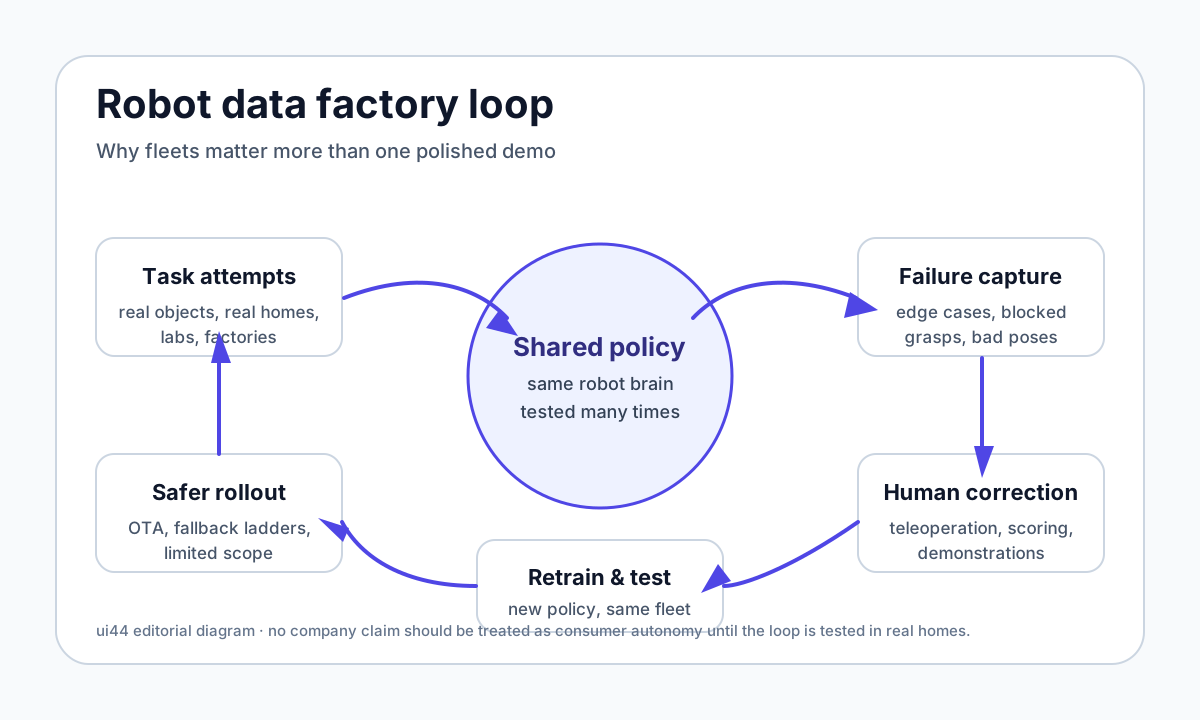
A robot data factory is a repeatable system for turning physical robot work into better robot behavior. The useful version has five parts:
- A fleet of robots doing similar tasks often enough to expose rare failures.
- Sensor logs and outcome labels that show what happened, not just what the robot intended.
- Human correction through teleoperation, demonstration, scoring, or post-run annotation.
- Model training and evaluation that converts those corrections into a new policy.
- Controlled deployment through OTA updates, fallback modes, and safety limits.
That is different from a normal dataset. A dataset can be static. A data factory keeps producing new examples because the robots keep failing in slightly new ways. For a home buyer, that is exactly the difference between "the robot knows one chore" and "the company can make the robot less bad at thousands of small variants of that chore."
The catch: most robot data factories are industrial today. Warehouses, factories, research labs, and pilot homes are easier places to measure outcomes than a normal apartment. That does not make the work irrelevant to homes. It means the most credible home-robot companies will probably prove the loop outside the home first, then bring the lessons into gentler consumer products.
Why training fleets matter more than one demo
A single robot demo tells you a task is possible. A training fleet tells you whether a company can find and fix the long tail.
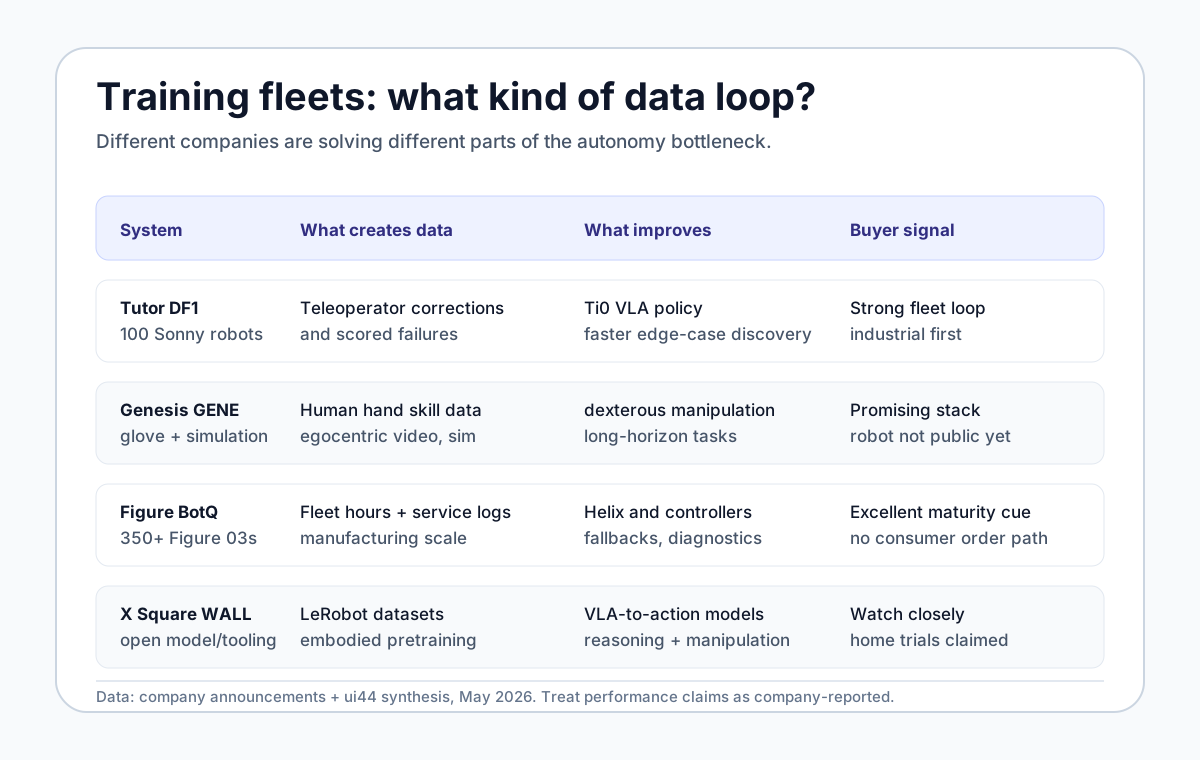
Tutor Intelligence is the cleanest recent example. Its DF1 system uses 100 Sonny semi-humanoid robots as a data factory for bimanual manipulation. The company says remote tutors supervise and correct the robots, Ti0 is the vision-language-action model trained from the fleet, and running the same policy across all 100 robots can reveal an edge case in about five minutes that might otherwise take eight hours to notice on one robot.
That is the whole point of fleet learning. Rare mistakes stop being rare when you multiply the number of bodies doing the task. The same idea shows up in Figure's latest production update. Figure says BotQ has produced 350+ Figure 03 robots, moved from one robot per day to one per hour, and uses the growing fleet for data collection, diagnostics, fallback ladders, field service, and OTA updates. Whether or not a consumer can buy Figure 03 today, that kind of fleet loop is a serious maturity signal.
Genesis AI is taking a different route. Its GENE-26.5 announcement focuses on dexterous manipulation: human-scale robotic hands, a tactile data glove, egocentric video, internet video, and simulation intended to narrow the sim-to-real gap. Genesis says the glove is far cheaper than typical data collection hardware and more efficient than traditional teleoperation in its internal testing. That is not yet a product claim for your kitchen. It is a bet that better human hand data will unlock robot hands that can cook, wire, pipette, and manipulate delicate objects.
X Square Robot adds another piece of the puzzle. Its WALL-OSS release and GitHub repository expose training and inference code for embodied foundation models, including LeRobot data preparation, flow-matching and FAST action branches, and evaluation tooling for real and simulated robots. Open tooling does not prove a home robot is reliable, but it does show how quickly the field is moving toward shared robot-learning infrastructure.
What the ui44 database says about home-relevant robots
The ui44 database does not list a consumer robot that should be treated as a fully autonomous, self-improving housekeeper today. It does show which products are closest to the ingredients of a real data loop.
1X NEO is the most direct home-facing example. ui44 lists NEO as a $20,000 pre-order humanoid with a 167 cm, 30 kg soft body, about four hours of battery life, RGB and depth sensing, tactile skin, microphones, and capabilities including household chores, adaptive learning, and gentle manipulation. 1X's own AI page says Redwood trains on both successes and failures, while the NEO page says Expert Mode can let a 1X Expert guide chores the robot does not know, helping NEO learn while getting the job done.

That is promising because NEO is explicitly aimed at the home. It is also why buyers should ask hard questions. Which data leaves the house? Can owners delete or opt out of training examples? Does a human expert see video or audio? What happens if a learned behavior gets worse after an update? A data loop is useful only if the privacy, safety, and service loop are equally concrete.
X Square Quanta X2 is a more research-and-service-oriented case. ui44 records it as a 164 cm wheeled humanoid with 62 whole-body degrees of freedom, a 765 mm arm reach, a 6 kg single-arm payload, optional 20-DOF dexterous hands, and the company's WALL-A embodied AI model. X Square says it is using Quanta X2 for home-based services, commercial cleaning, logistics sorting, and education or research. Public pricing is not disclosed, and commercial home service trials are not the same as a household product you can order, but the robot's data story is directly tied to embodied AI rather than appliance-style automation.
Figure 03 is not a consumer purchase path, but it is one of the clearest examples of why scale matters. ui44 records Figure 03 as a 173 cm, 61 kg humanoid with roughly five hours of battery life, stereo vision, depth cameras, force sensors, tactile arrays, a 20 kg payload, and Figure's Helix VLA. Figure says its larger fleet is generating data for Helix and exposing failures that were invisible at smaller scale. For buyers, that is a useful benchmark: when a future home robot company claims learning, ask whether it has anything like this operating loop.
Unitree R1 shows the opposite side of the market. It starts at $4,900 for the R1 Air, with the standard R1 at $5,900, a 123 cm body, a 27-29 kg weight range depending on version, about one hour of battery life, ROS 2 support, OTA updates, and secondary development on higher tiers. That is exceptional affordability for a humanoid platform. It is not, by itself, proof of a data factory. OTA and SDK support help developers. They do not mean your individual robot safely learns from every failed home chore.
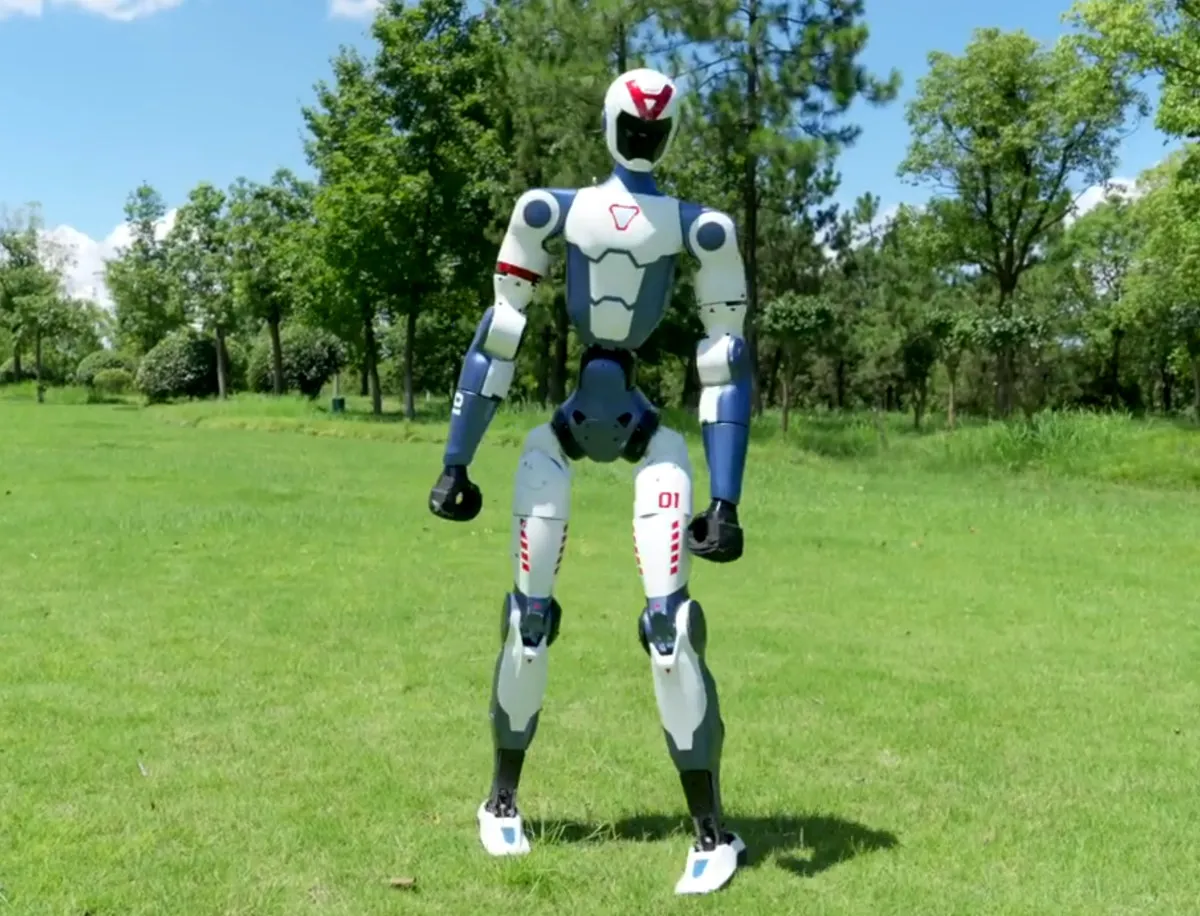
ROBOTIS AI Sapiens K0 is worth watching because it is built for reproducible Physical AI research. ui44 lists K0 as a 1.3 m, 34 kg development platform with 23 degrees of freedom, a 3 kg arm payload, a 6 TOPS NPU, reinforcement learning in NVIDIA Isaac Sim, and imitation learning through a leader-follower data collection system. It is not the robot most people will buy for a living room. It is the kind of open platform that can make data-loop claims easier to audit.
The buyer test: data loop or marketing loop?
The phrase "robot data factory" should make you ask better questions, not make you trust the claim automatically.
A credible data loop has measurable scope. Tutor starts with industrial picking and bimanual manipulation. Figure talks about diagnostics, fallback ladders, field failures, and specific fleet operations. Google DeepMind's Gemini Robotics-ER work highlights success detection because a robot has to know when a task is finished before it can decide whether to retry. These are concrete systems problems.
A weak marketing loop sounds broader: "our AI learns from every interaction" or "the robot gets smarter over time" without explaining what data is collected, how success is measured, who reviews failures, and how bad updates are contained. Those phrases may still be true in a narrow sense. They are not enough for a buyer deciding whether to put a robot around children, pets, stairs, glassware, or private conversations.
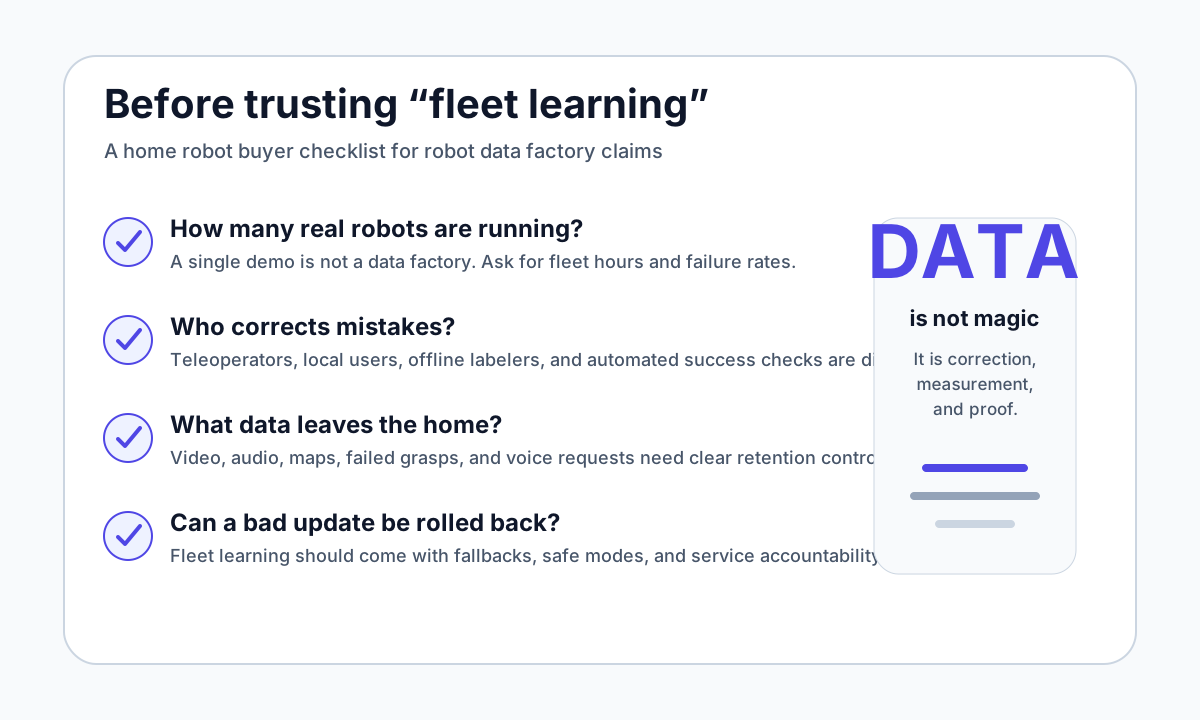
Here is the practical checklist:
- How many real robots are running? Fleet size is not everything, but one prototype is not a data factory.
- What tasks are inside the loop? Picking boxes, wiping counters, climbing stairs, and folding laundry create very different data.
- Who corrects failures? A remote expert, local owner, offline labeler, and automatic success detector have different privacy and reliability trade-offs.
- What data leaves the home? Video, audio, maps, failed grasps, and voice requests should have clear retention, deletion, and opt-out controls.
- Can updates be rolled back? A fleet-learned behavior should ship with safe modes, fallbacks, versioning, and service accountability.
- Is the claim independently testable? Public demos are useful. Long-term household reliability data is better.
What a data factory cannot promise yet
A data factory does not make a robot general-purpose overnight. It mostly helps companies find repeated failure patterns faster.
That is still valuable. If 1,000 robots all fail when a towel is half over a chair, the company can collect examples, correct the behavior, and push a safer policy. If one robot in one home fails once, the lesson may never become a product improvement. Scale changes the economics of learning.
But homes are not factories. The outcome of a warehouse pick can be measured: the item moved to the bin, or it did not. The outcome of "tidy the living room" is subjective. A parent, a pet owner, a wheelchair user, and a renter may all want different behavior. That is why home robots need both fleet learning and local control. The fleet can teach general skills; the home needs permissions, privacy boundaries, room-specific rules, and human override.
This is also why the topic is distinct from ui44's earlier guide on home robots getting better with practice. Practice learning asks whether one robot improves at a task. A data factory asks whether the company has enough robots, humans, logs, and deployment discipline to improve the whole fleet without creating new risks.
Bottom line
For home robot buyers, "data factory" is not hype to dismiss. It is a useful maturity test.
The companies most likely to produce helpful home robots will not only have a humanoid body and a good demo. They will have a working loop for failures, corrections, retraining, rollout, and rollback. Tutor's 100-robot DF1, Genesis' hand-data strategy, Figure's BotQ fleet loop, and X Square's open embodied-model work all point in that direction, even though most of the evidence is still industrial, research, or pre-consumer.
If you are comparing robots on ui44, treat fleet learning as an infrastructure claim. It should show up in specs, policies, service design, and update history, not just in a launch video. Until then, the safest reading is: data factories are how home robots may eventually become useful, not proof that today's robot can handle your house unsupervised.
Related in the database
Use this article as a privacy verification workflow
Turn the article into a privacy verification pass grounded in the robots, manufacturers, and components it actually references.
Robot Data Factories: Why Training Fleets Matter already points you toward 5 linked robots, 5 manufacturers, and 4 countries inside the ui44 database. That matters because strong buyer guidance is easier to apply when you can move immediately from a claim or warning into concrete product pages, manufacturer directories, component explainers, and country-level context instead of treating the article as an isolated opinion piece. The fastest next step is to turn the article into a shortlist workflow: open the linked robot pages, verify which specs are actually published for those models, then compare the surrounding manufacturer and component context before you decide whether the underlying claim changes your buying plan.
For this topic, the useful discipline is to separate the editorial lesson from the catalog evidence. The article gives you the framing, but the robot pages tell you what each product actually ships with today: sensor stack, connectivity methods, listed price, release timing, category, and support-relevant compatibility notes. The manufacturer pages then show whether you are looking at a one-off launch, a broader lineup pattern, or a company that spans multiple categories. That layered workflow reduces the risk of buying on a single marketing phrase or a single support FAQ.
Use the robot pages to confirm which products actually expose cameras, microphones, Wi-Fi, or voice systems, then use the manufacturer pages to decide how much of the privacy question seems product-specific versus brand-wide. On this route cluster, NEO, Quanta X2, and Figure 03 form the fastest reality check. If you want a quick working shortlist, open Compare NEO, Quanta X2, and Figure 03 next, then keep this article open as the reasoning layer while you compare structured data side by side.
Practical Takeaway
Every robot, manufacturer, category, component, and country reference below resolves to a real ui44 page, keeping the follow-up path grounded in database records rather than generic advice.
Suggested next steps in ui44
- Open NEO and note the listed sensors, connectivity methods, and voice stack before you interpret any policy claim.
- Cross-check the wider brand context on 1X Technologies so you can see whether the privacy question touches one model or a broader lineup.
- Use the linked component pages to confirm how common the relevant sensors and connectivity layers are across the database.
- Keep a short note of which policy layers you checked, which device features are actually present on the robot page, and which items still depend on region- or app-level confirmation.
- Finish with Compare NEO, Quanta X2, and Figure 03 so the policy reading sits next to structured product data.
Robot profiles worth opening next
Use the linked product pages as the evidence layer
The linked robot pages are where this article becomes operational. Instead of asking whether the headline is interesting, use the robot entries to inspect the actual mix of sensors, connectivity options, batteries, pricing, release timing, and stated capabilities attached to the products mentioned in the article. That is the easiest way to see whether the warning or opportunity described here affects one product family, a specific design pattern, or an entire buying lane.
NEO
1X Technologies · Humanoid · Pre-order
NEO is tracked on ui44 as a pre-order humanoid robot from 1X Technologies. The database currently records a listed price of $20,000, a release date of 2025-10-28, ~4 hours battery life, Not disclosed charging time, and a published stack that includes RGB Cameras, Depth Sensors, and Tactile Skin plus Wi-Fi and Bluetooth.
For privacy-focused reading, this page matters because it shows the concrete device surface behind the policy discussion. Use it to verify whether NEO combines sensors and connectivity in a way that could change the in-home data footprint, and compare the listed capabilities such as Household Chores, Tidying Up, and Safe Human Interaction with any cloud, app, or voice layers.
Quanta X2
X Square Robot · Humanoid · Active
Quanta X2 is tracked on ui44 as a active humanoid robot from X Square Robot. The database currently records a listed price of Price TBA, a release date of 2025-08, Not officially disclosed battery life, Not officially disclosed charging time, and a published stack that includes 2D LiDAR, Ultrasonic Sensors, and RGB-D Camera plus Not officially disclosed.
For privacy-focused reading, this page matters because it shows the concrete device surface behind the policy discussion. Use it to verify whether Quanta X2 combines sensors and connectivity in a way that could change the in-home data footprint, and compare the listed capabilities such as Wheeled Humanoid Mobility, 62-DOF Whole-Body Motion, and 6-DOF Torso with any cloud, app, or voice layers.
Figure 03 is tracked on ui44 as a active humanoid robot from Figure AI. The database currently records a listed price of Price TBA, a release date of 2025-10-09, ~5 hours battery life, Not disclosed charging time, and a published stack that includes Stereo Vision, Depth Cameras, and Force Sensors plus Wi-Fi and Bluetooth.
For privacy-focused reading, this page matters because it shows the concrete device surface behind the policy discussion. Use it to verify whether Figure 03 combines sensors and connectivity in a way that could change the in-home data footprint, and compare the listed capabilities such as Complex Manipulation, Warehouse Work, and Manufacturing Tasks with any cloud, app, or voice layers.
R1
Unitree Robotics · Humanoid · Pre-order
R1 is tracked on ui44 as a pre-order humanoid robot from Unitree Robotics. The database currently records a listed price of $4,900, a release date of 2025, ~1 hour (mixed activity) battery life, Not officially disclosed charging time, and a published stack that includes Monocular camera (R1 Air); binocular camera (R1/R1 EDU), 4-Mic Array, and Dual 6-Axis IMU plus Wi-Fi 6 and Bluetooth 5.2.
For privacy-focused reading, this page matters because it shows the concrete device surface behind the policy discussion. Use it to verify whether R1 combines sensors and connectivity in a way that could change the in-home data footprint, and compare the listed capabilities such as Bipedal Walking & Running, Cartwheels & Handstands, and Push Recovery with any cloud, app, or voice layers, including UnifoLM (voice + image commands).
AI Sapiens K0
ROBOTIS · Research · Development
AI Sapiens K0 is tracked on ui44 as a development research robot from ROBOTIS. The database currently records a listed price of Price TBA, a release date of 2026, Not officially disclosed (46.8 V, 9000 mAh battery) battery life, Not disclosed charging time, and a published stack that includes IMU (inferred from locomotion capability) plus Wi-Fi 5 and Bluetooth 5.0.
For privacy-focused reading, this page matters because it shows the concrete device surface behind the policy discussion. Use it to verify whether AI Sapiens K0 combines sensors and connectivity in a way that could change the in-home data footprint, and compare the listed capabilities such as Bipedal locomotion research, Reinforcement learning training in NVIDIA Isaac Sim, and Imitation learning via leader-follower data collection with any cloud, app, or voice layers.
Manufacturer context behind the article
Check whether this is one product story or a broader company pattern
Manufacturer pages add the privacy context that individual product pages cannot show on their own. They help you check whether cameras, microphones, cloud accounts, app controls, and policy assumptions appear across a broader lineup or stay tied to one specific product story.
1X Technologies
ui44 currently tracks 2 robots from 1X Technologies across 1 category. The company is grouped under Norway, and the current catalog footprint on ui44 includes NEO, EVE.
That wider brand context matters because privacy questions rarely stop at one FAQ page. A manufacturer route helps you see whether the article is centered on one premium model or on a company that has several relevant products and therefore more than one place where the same policy or app assumptions might matter. The category mix here currently points toward Humanoid as the most useful next route if you want to see whether this article reflects a wider pattern inside the brand.
X Square Robot
ui44 currently tracks 1 robot from X Square Robot across 1 category. The company is grouped under China, and the current catalog footprint on ui44 includes Quanta X2.
That wider brand context matters because privacy questions rarely stop at one FAQ page. A manufacturer route helps you see whether the article is centered on one premium model or on a company that has several relevant products and therefore more than one place where the same policy or app assumptions might matter. The category mix here currently points toward Humanoid as the most useful next route if you want to see whether this article reflects a wider pattern inside the brand.
Figure AI
ui44 currently tracks 2 robots from Figure AI across 1 category. The company is grouped under USA, and the current catalog footprint on ui44 includes Figure 03, Figure 02.
That wider brand context matters because privacy questions rarely stop at one FAQ page. A manufacturer route helps you see whether the article is centered on one premium model or on a company that has several relevant products and therefore more than one place where the same policy or app assumptions might matter. The category mix here currently points toward Humanoid as the most useful next route if you want to see whether this article reflects a wider pattern inside the brand.
Unitree Robotics
ui44 currently tracks 9 robots from Unitree Robotics across 3 categorys. The company is grouped under China, and the current catalog footprint on ui44 includes B2, B1, Go2.
That wider brand context matters because privacy questions rarely stop at one FAQ page. A manufacturer route helps you see whether the article is centered on one premium model or on a company that has several relevant products and therefore more than one place where the same policy or app assumptions might matter. The category mix here currently points toward Quadruped, Humanoid, Research as the most useful next route if you want to see whether this article reflects a wider pattern inside the brand.
Broaden the scan without leaving the database
Categories, components, and countries add the wider context
Category framing
Category pages are useful when the article touches a buying pattern that shows up across brands. A category route helps you confirm whether the linked products sit in a narrow niche or whether the same question should be tested across a larger field of alternatives.
Humanoid
The Humanoid category page currently groups 129 tracked robots from 92 manufacturers. ui44 describes this lane as: Full-size bipedal humanoid robots built to work alongside people — from factory floors to household tasks. Compare the cutting edge of humanoid robotics.
That makes the category route a practical follow-up when you want to check whether the products linked in this article are typical for the lane or whether they sit at one edge of the market. Useful starting examples currently include NEO, EVE, Mornine M1.
Research
The Research category page currently groups 49 tracked robots from 39 manufacturers. ui44 describes this lane as: Academic and research robotics platforms pushing the boundaries of what machines can learn and do in the lab and beyond.
That makes the category route a practical follow-up when you want to check whether the products linked in this article are typical for the lane or whether they sit at one edge of the market. Useful starting examples currently include HRP-4C, HRP-5P, NAO6.
Country and ecosystem context
Country pages give extra context when support practices, launch sequencing, regulatory posture, or manufacturer mix matter. They are not a substitute for model-level verification, but they do help you see which ecosystems cluster together and which manufacturers sit in the same regional field when you broaden the search beyond the article headline.
Norway
The Norway route currently groups 2 tracked robots from 1 manufacturers in ui44. That gives you a useful regional lens when the article points toward support practices, launch sequencing, or brand clusters that may share similar ecosystem assumptions.
On the current route, manufacturers like 1X Technologies make the page a good way to broaden the scan without losing the regional context that often shapes availability, documentation style, and adjacent alternatives.
China
The China route currently groups 189 tracked robots from 87 manufacturers in ui44. That gives you a useful regional lens when the article points toward support practices, launch sequencing, or brand clusters that may share similar ecosystem assumptions.
On the current route, manufacturers like AGIBOT, Dreame, Unitree Robotics make the page a good way to broaden the scan without losing the regional context that often shapes availability, documentation style, and adjacent alternatives.
USA
The USA route currently groups 89 tracked robots from 69 manufacturers in ui44. That gives you a useful regional lens when the article points toward support practices, launch sequencing, or brand clusters that may share similar ecosystem assumptions.
On the current route, manufacturers like Faraday Future, iRobot, Boston Dynamics make the page a good way to broaden the scan without losing the regional context that often shapes availability, documentation style, and adjacent alternatives.
Questions to answer before you move from reading to buying
A follow-up FAQ built from the entities already linked in this article
Frequently Asked Questions
Which page should I open first after reading “Robot Data Factories: Why Training Fleets Matter”?
Start with NEO. That gives you a concrete product anchor for the article’s main claim. From there, branch into the manufacturer and component pages so you can tell whether the article is describing one specific model, a repeated brand pattern, or a wider technology issue that affects multiple shortlist options.
How do the manufacturer pages change the buying decision?
1X Technologies help you zoom out from one article and one product. On ui44 they show lineup breadth, category spread, and the neighboring robots tied to the same company. That context is useful when you are deciding whether a risk belongs to a single model, whether it shows up across a brand’s portfolio, and whether you should keep looking at alternatives before committing.
When should I switch from reading to side-by-side comparison?
Move into Compare NEO, Quanta X2, and Figure 03 as soon as you understand the article’s main warning or promise. The article explains what to watch for, but the compare view is where you can check whether price, status, battery life, connectivity, sensors, and category fit still make the robot a good match for your own home and budget.
Where to go next in ui44
Keep the research chain inside the database
If you want to keep going, these follow-on pages give you the cleanest expansion path from article to research session. Open the comparison route first if you are deciding between products today. Open the manufacturer, category, and component routes if you still need to understand the broader pattern behind the claim.
Written by
ui44 Team
Published May 8, 2026
Share this article
Open a plain share link on X or Bluesky. No embeds, no widgets, no cookie baggage.