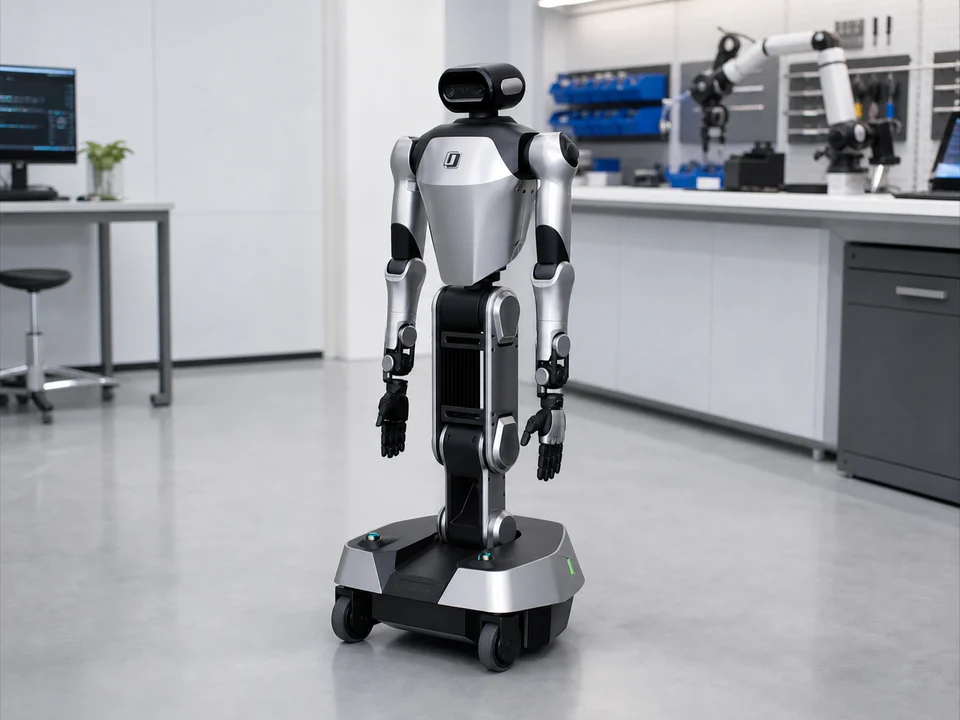
That makes the fine print more important, not less. Galaxea's own R1 Pro hardware documentation says the robot is intended for experienced research users and is not designed for general consumer home use or certified for that purpose. For buyers watching humanoids move from labs toward kitchens, that sentence is the article. R1 Pro is not a fake robot. It is a serious research robot whose manual explains why a serious research robot is still not the same thing as a home robot.
The R1 Pro Specs Are Real, And That Is The Point
On paper, Galaxea R1 Pro has many of the ingredients people expect in a useful household humanoid. ui44 tracks it as an available Galaxea Dynamics robot at $69,999. The current official store page lists the R1 Pro 2026 as in stock and available to ship in 15 days.
The official spec sheet is serious enough to make the home-readiness question worth asking, but the details read like lab procurement data rather than a consumer product label.
R1 Pro detail
Whole-body platform
- What the official material says
- 26 total degrees of freedom, 170 cm height, and 675 mm width.
R1 Pro detail
Weight
- What the official material says
- The hardware documentation lists 96 kg with battery, while the current store parameter table lists 126 kg including battery.
R1 Pro detail
Manipulation
- What the official material says
- Two Galaxea A2 arms and two G1 grippers, with 7 degrees of freedom per arm, 3.5 kg rated payload per arm, and 5 kg maximum payload per arm.
R1 Pro detail
Reach and torso
- What the official material says
- An 86 cm gripper-equipped arm radius, 0.5 mm repeat positioning accuracy, and a torso that can lift, tilt, and swivel through a floor-to-2 m workspace.
R1 Pro detail
Compute and operation
- What the official material says
- NVIDIA Jetson AGX Orin 32GB compute and VR teleoperation support.
R1 Pro detail
Sensing
- What the official material says
- Head cameras, chassis cameras, optional wrist depth cameras, IMU coverage, and at least one standard 360-degree LiDAR.
| R1 Pro detail | What the official material says |
|---|---|
| Whole-body platform | 26 total degrees of freedom, 170 cm height, and 675 mm width. |
| Weight | The hardware documentation lists 96 kg with battery, while the current store parameter table lists 126 kg including battery. |
| Manipulation | Two Galaxea A2 arms and two G1 grippers, with 7 degrees of freedom per arm, 3.5 kg rated payload per arm, and 5 kg maximum payload per arm. |
| Reach and torso | An 86 cm gripper-equipped arm radius, 0.5 mm repeat positioning accuracy, and a torso that can lift, tilt, and swivel through a floor-to-2 m workspace. |
| Compute and operation | NVIDIA Jetson AGX Orin 32GB compute and VR teleoperation support. |
| Sensing | Head cameras, chassis cameras, optional wrist depth cameras, IMU coverage, and at least one standard 360-degree LiDAR. |
Galaxea's public tables vary on whether the 3.5 kg rated payload is measured at 0.5 m or 0.6 m. The sensor tables also show a variable or optional dual-LiDAR configuration. Those are normal procurement details for a research platform, but they are not the kind of simple, sealed specification a household buyer expects.
That is why this robot belongs in a home-robot database. It is exactly the kind of platform that can collect manipulation data, test embodied-AI software, and teach the industry what a future home robot may need. But those same specs also make the home-readiness problem visible.
What Does The Manual Say About Home Readiness?
The strongest home-robot signal in the R1 Pro documentation is not the number of cameras or the payload rating. It is the warning. Galaxea's hardware introduction says R1 Pro is for research applications by users experienced in operating and programming research robots, and that it is not designed for general consumer home use or certified for that purpose.
That is a clean line between a research humanoid and a consumer home robot. Research buyers can accept calibration, startup sequences, joystick control, manual shutdown procedures, mechanical risk, and engineering support channels. Home buyers expect a product that fails safely around pets, children, furniture, glassware, stairs, rugs, cords, visitors, and tired owners.
The getting-started guide makes the gap more concrete:
Manual clue
Software-based emergency stop
- Why it matters in a home
- The guide says the emergency stop does not cut power. That may be acceptable in a lab workflow, but consumer safety expectations are higher.
Manual clue
Manual battery access
- Why it matters in a home
- The battery sits in the lower chassis and the guide describes removing screws and a cover to change it. That is maintenance, not appliance-like ownership.
Manual clue
Controller setup before motion
- Why it matters in a home
- The joystick workflow expects switches, drivers, and startup programs to be in the right state before operation.
Manual clue
Heavy mobile base
- Why it matters in a home
- A 96-126 kg robot with moving arms is not comparable to a small companion robot or robot vacuum.
Manual clue
Arm brake warning
- Why it matters in a home
- The hardware docs warn that current A2 arm motors do not have brakes, so cutting power may cause the arms to drop suddenly.
| Manual clue | Why it matters in a home |
|---|---|
| Software-based emergency stop | The guide says the emergency stop does not cut power. That may be acceptable in a lab workflow, but consumer safety expectations are higher. |
| Manual battery access | The battery sits in the lower chassis and the guide describes removing screws and a cover to change it. That is maintenance, not appliance-like ownership. |
| Controller setup before motion | The joystick workflow expects switches, drivers, and startup programs to be in the right state before operation. |
| Heavy mobile base | A 96-126 kg robot with moving arms is not comparable to a small companion robot or robot vacuum. |
| Arm brake warning | The hardware docs warn that current A2 arm motors do not have brakes, so cutting power may cause the arms to drop suddenly. |
None of those details make R1 Pro a bad product. They make it an honest research product. A lab can build procedures around them. A household usually cannot.
Research Humanoid Versus Home Robot
A research humanoid is optimized for access, data, experiments, and hardware capability. A home robot is optimized for predictable ownership. The overlap is real, but it is smaller than the category labels suggest.
Question
Who operates it?
- Research humanoid answer
- Engineers, trained users, teleoperators, researchers
- Home robot answer
- Ordinary owners, caregivers, family members
Question
What counts as success?
- Research humanoid answer
- Task demonstrations, data collection, autonomy experiments
- Home robot answer
- Reliable daily help with low supervision
Question
What happens when it fails?
- Research humanoid answer
- Stop, debug, re-run, repair, collect data
- Home robot answer
- Fail quietly, avoid harm, explain what happened
Question
What documentation is normal?
- Research humanoid answer
- Manuals, SDKs, ROS2 workflows, controller procedures
- Home robot answer
- Setup app, warranty, service plan, simple maintenance
Question
What risk is acceptable?
- Research humanoid answer
- Managed lab risk
- Home robot answer
- Consumer-product risk tolerance
| Question | Research humanoid answer | Home robot answer |
|---|---|---|
| Who operates it? | Engineers, trained users, teleoperators, researchers | Ordinary owners, caregivers, family members |
| What counts as success? | Task demonstrations, data collection, autonomy experiments | Reliable daily help with low supervision |
| What happens when it fails? | Stop, debug, re-run, repair, collect data | Fail quietly, avoid harm, explain what happened |
| What documentation is normal? | Manuals, SDKs, ROS2 workflows, controller procedures | Setup app, warranty, service plan, simple maintenance |
| What risk is acceptable? | Managed lab risk | Consumer-product risk tolerance |
This distinction is useful because humanoid marketing often collapses the two. If a robot has arms, cameras, and a vision-language-action model or other embodied-AI story, it can be framed as "almost ready for homes." R1 Pro shows why that is too loose. Arms and perception are necessary, but the home robot also needs safety certification, serviceability, quiet operation, repair paths, strong fall behavior, clear ownership terms, local privacy controls, and behavior that still makes sense when the Wi-Fi drops or a user gives a vague command.
How R1 Pro Compares With More Home-Like Platforms
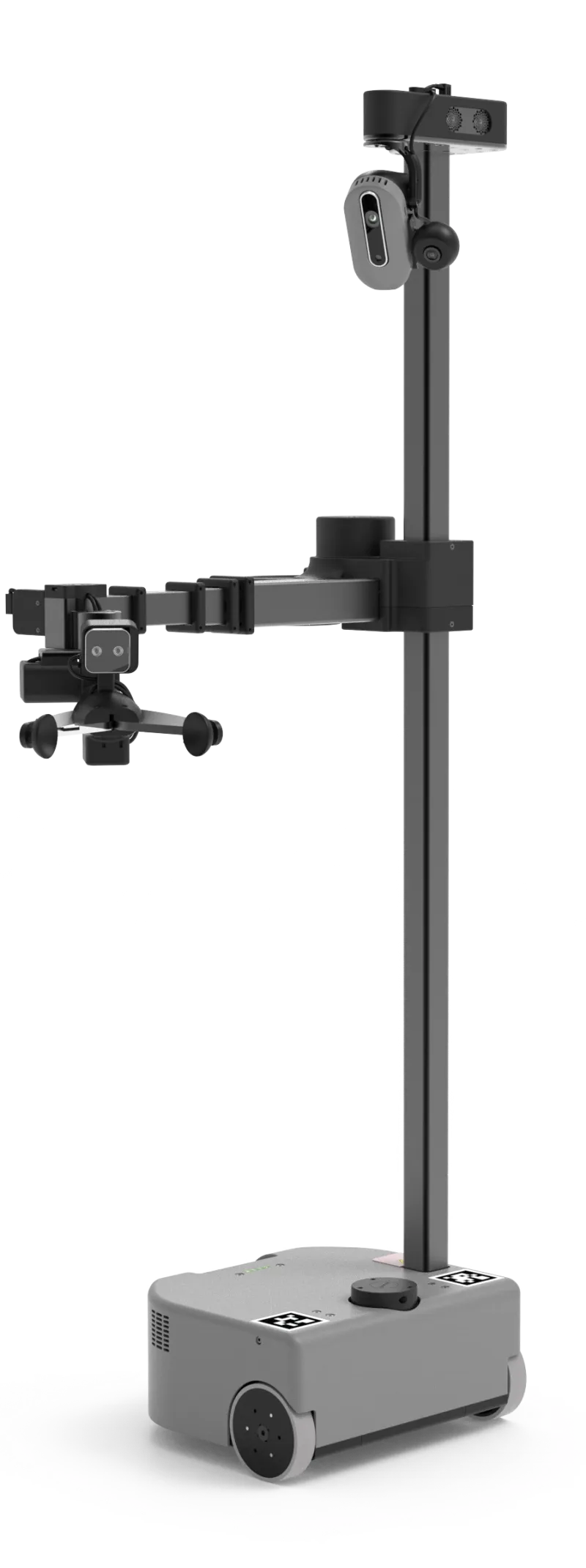
R1 Pro is useful to compare against robots that make different trade-offs. Hello Robot Stretch 3 is not a humanoid, but it is explicitly shaped around home environments, assistive research, and mobile manipulation. ui44 tracks Stretch 3 at $24,950, 24.5 kg, 2-5 hours of battery life, floor-to-cabinet reach, a 2 kg payload, and an open-source ROS 2 and Python stack. It gives up the full humanoid silhouette, but it is much closer to a robot a home research site can physically manage.
SwitchBot onero H1 is the opposite kind of signal. It is positioned around household tasks and smart-home integration, with ui44 tracking a $9,999 metadata signal, 22 DOF, cameras, depth sensing, tactile feedback, and an on-device OmniSense VLA model. But it remains in development and lacks the full public spec sheet buyers would need. Its promise is more home-shaped than R1 Pro. Its evidence is thinner.
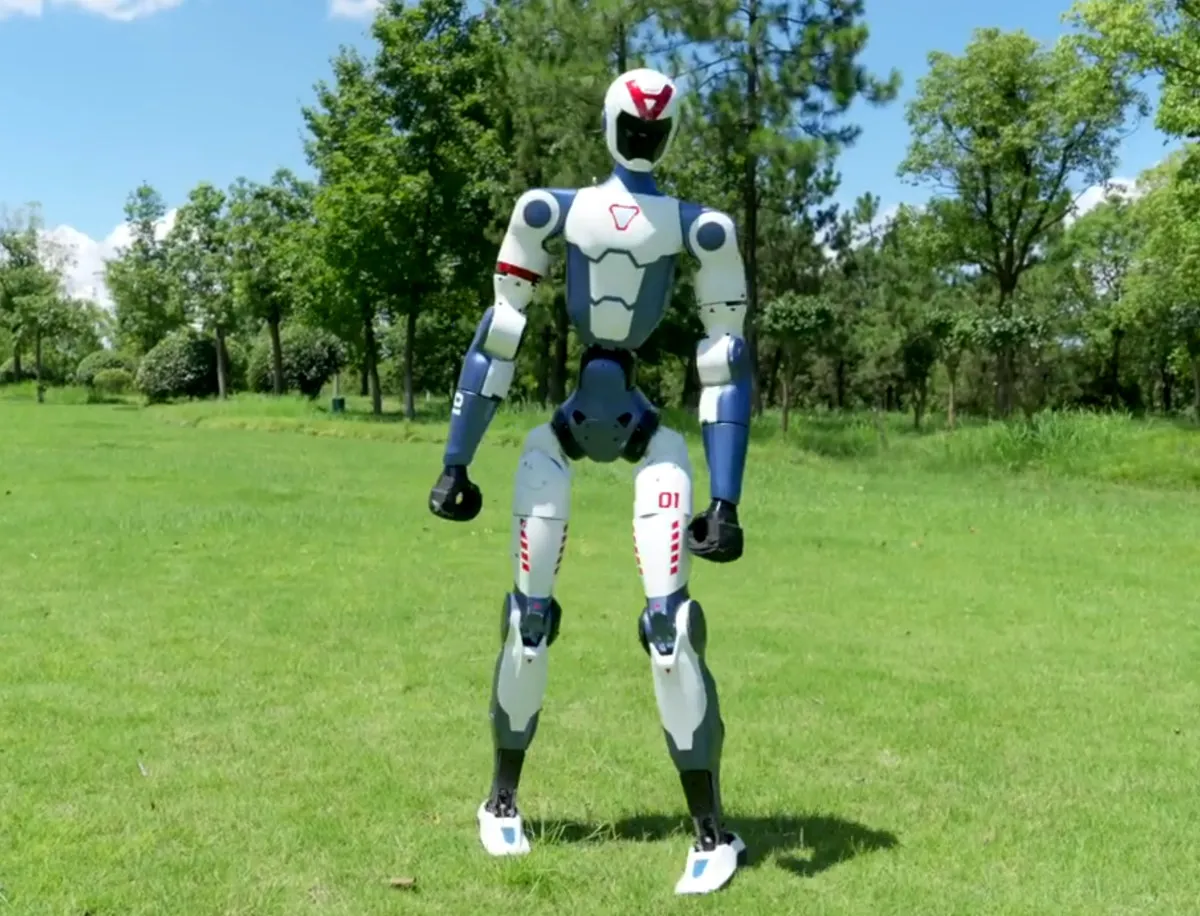
Unitree R1 is a third signal. At $4,900 for R1 Air in ui44 data, it is dramatically cheaper and lighter than R1 Pro, with a compact 123 cm body, roughly 27-29 kg weight, about one hour of mixed battery life, 20-26 DOF depending on version, and consumer-visible humanoid demos. But R1 is mostly a low-cost bipedal experimentation platform. It does not solve household manipulation just because it walks.
The practical buyer takeaway is not "buy the cheapest robot" or "wait for the most humanoid robot." It is to separate body capability from ownership readiness. R1 Pro has more manipulation hardware than many home-facing robots, but it also asks for a research environment. Stretch 3 is less humanoid but more domestic in its footprint and support model. onero H1 speaks the language of home tasks, but still needs product evidence. Unitree R1 makes humanoid hardware more accessible, but accessibility is not the same as household usefulness.
Kengo Shows Galaxea Is Moving Toward Bipedal Robots
Galaxea's Kengo makes the story more interesting. Kengo is now listed on Galaxea's official store as a $999,999 bipedal humanoid that can ship within 6 weeks. The store spec sheet lists a 1,396 x 440 x 225 mm body, about 40 kg including battery, 23+ degrees of freedom, 2 kg maximum arm payload, 130 N*m+ maximum knee-joint torque, and 2 hours of battery life.
That is not a normal consumer price. It is also not a normal consumer posture. Even though Galaxea's product language points toward productivity and commercial readiness, the public evidence still reads like advanced platform work. Kengo is lighter and more human-shaped than R1 Pro, but its public material is a store listing, not the same kind of deployment manual trail that R1 Pro has. R1 Pro is the stronger evidence base for what Galaxea can already ship to labs. Kengo is the stronger signal for where the company's body plan is going.
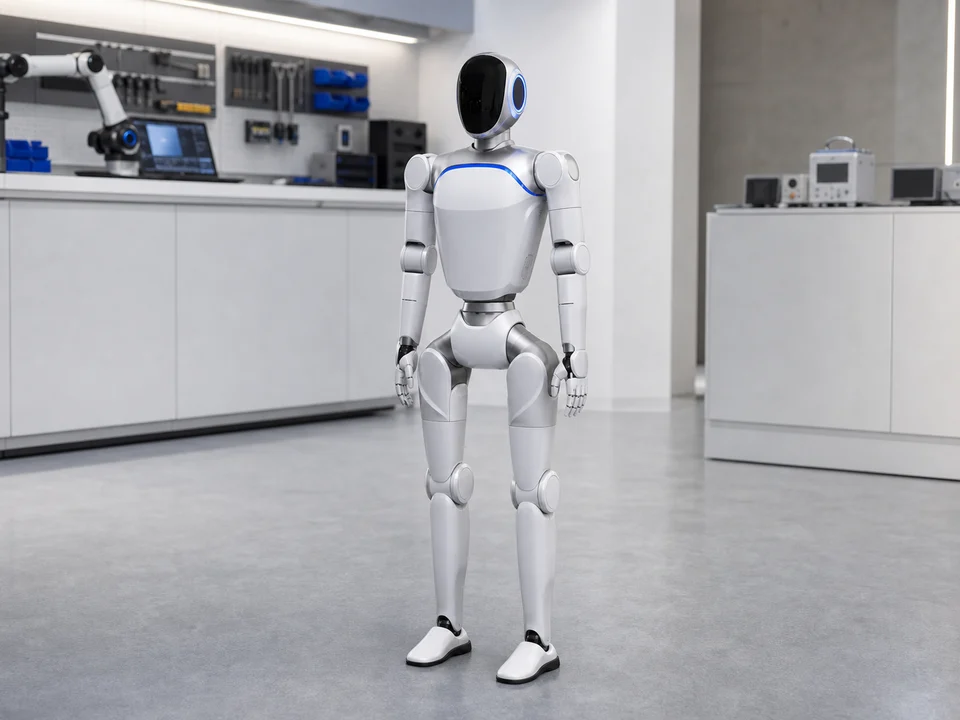
For home-robot watchers, that combination is useful. R1 Pro tells us what Galaxea can already ship for labs. Kengo hints at where the company wants the body plan to go. Neither should be read as proof that a Galaxea robot is ready to fold laundry unsupervised in a normal apartment.
What To Look For Before Calling A Humanoid Home-Ready
The R1 Pro manual suggests a better checklist than the usual demo-video questions. Before treating any humanoid as a home robot, look for these signals:
- A consumer-use statement. If the manual says research users only, believe the manual.
- Safety certification and support terms. Home claims should come with certifications, warranty language, repair logistics, and clear service coverage.
- Fail-safe arm behavior. A useful home robot needs safe power-loss and emergency-stop behavior, especially if its arms can lift several kilograms.
- Maintenance that feels appliance-like. Battery swaps, calibration, and startup procedures should not require a lab mindset.
- Documented autonomy boundaries. Teleoperation is valuable, but it is not the same as autonomous household labor.
- A realistic weight and footprint. A 100 kg mobile robot can be viable in a lab or warehouse and still be wrong for narrow hallways.
- Specific household task evidence. "Embodied AI" is less important than repeatable dish loading, laundry handling, object pickup, fall recovery, and safe interruption.
That checklist is stricter than most product pages, but homes are stricter than demo floors. A robot that can lift a grocery bag in a lab may still be the wrong machine to place next to a kitchen island.
Bottom Line
Galaxea R1 Pro is one of the more credible research humanoid platforms because the hardware is specific and the documentation is unusually direct. The store page lists a real price and configuration. The manual gives meaningful specs, from a 1680 Wh battery and 26 DOF to payload, sensors, and teleoperation. It also says the robot is not for general consumer home use.
That is the right way to read the current humanoid market. The next generation of useful home robots will borrow from research platforms like R1 Pro: mobile manipulation, rich sensing, better teleoperation, and embodied-AI data loops. But a buyer should not mistake research capability for consumer readiness.
If a humanoid's best documentation is still a research manual, it may be worth tracking, comparing, and learning from. It is not yet the robot you buy to help around the house.
Related in the database
Use this article as a privacy verification workflow
Turn the article into a privacy verification pass grounded in the robots, manufacturers, and components it actually references.
Galaxea R1 Pro: Research Robot, Not Home Robot already points you toward 5 linked robots, 4 manufacturers, and 2 countries inside the ui44 database. That matters because strong buyer guidance is easier to apply when you can move immediately from a claim or warning into concrete product pages, manufacturer directories, component explainers, and country-level context instead of treating the article as an isolated opinion piece. The fastest next step is to turn the article into a shortlist workflow: open the linked robot pages, verify which specs are actually published for those models, then compare the surrounding manufacturer and component context before you decide whether the underlying claim changes your buying plan.
For this topic, the useful discipline is to separate the editorial lesson from the catalog evidence. The article gives you the framing, but the robot pages tell you what each product actually ships with today: sensor stack, connectivity methods, listed price, release timing, category, and support-relevant compatibility notes. The manufacturer pages then show whether you are looking at a one-off launch, a broader lineup pattern, or a company that spans multiple categories. That layered workflow reduces the risk of buying on a single marketing phrase or a single support FAQ.
Use the robot pages to confirm which products actually expose cameras, microphones, Wi-Fi, or voice systems, then use the manufacturer pages to decide how much of the privacy question seems product-specific versus brand-wide. On this route cluster, R1 Pro, Stretch 3, and onero H1 form the fastest reality check. If you want a quick working shortlist, open Compare R1 Pro, Stretch 3, and onero H1 next, then keep this article open as the reasoning layer while you compare structured data side by side.
Practical Takeaway
Every robot, manufacturer, category, component, and country reference below resolves to a real ui44 page, keeping the follow-up path grounded in database records rather than generic advice.
Suggested next steps in ui44
- Open R1 Pro and note the listed sensors, connectivity methods, and voice stack before you interpret any policy claim.
- Cross-check the wider brand context on Galaxea Dynamics so you can see whether the privacy question touches one model or a broader lineup.
- Use the linked component pages to confirm how common the relevant sensors and connectivity layers are across the database.
- Keep a short note of which policy layers you checked, which device features are actually present on the robot page, and which items still depend on region- or app-level confirmation.
- Finish with Compare R1 Pro, Stretch 3, and onero H1 so the policy reading sits next to structured product data.
Robot profiles worth opening next
Use the linked product pages as the evidence layer
The linked robot pages are where this article becomes operational. Instead of asking whether the headline is interesting, use the robot entries to inspect the actual mix of sensors, connectivity options, batteries, pricing, release timing, and stated capabilities attached to the products mentioned in the article. That is the easiest way to see whether the warning or opportunity described here affects one product family, a specific design pattern, or an entire buying lane.
R1 Pro
Galaxea Dynamics · Humanoid · Available
R1 Pro is tracked on ui44 as a available humanoid robot from Galaxea Dynamics. The database currently records a listed price of $69,999, a release date of 2026, Not officially disclosed; official docs list a 35Ah / 1680Wh lithium-ion battery battery life, Not officially disclosed charging time, and a published stack that includes Head binocular / stereo-ready camera system, 5 chassis monocular cameras, and Optional wrist depth cameras plus Ethernet and USB 3.0.
For privacy-focused reading, this page matters because it shows the concrete device surface behind the policy discussion. Use it to verify whether R1 Pro combines sensors and connectivity in a way that could change the in-home data footprint, and compare the listed capabilities such as Wheeled Dual-Arm Humanoid Manipulation, 26 Total Degrees of Freedom, and Dual 7-DOF A2 Robotic Arms with any cloud, app, or voice layers.
Stretch 3
Hello Robot · Home Assistants · Active
Stretch 3 is tracked on ui44 as a active home assistants robot from Hello Robot. The database currently records a listed price of $24,950, a release date of 2024, 2–5 hours battery life, Not disclosed charging time, and a published stack that includes Intel D405 RGBD Camera (gripper), Intel D435if RGBD Camera (head), and Wide-Angle RGB Camera (head) plus Wi-Fi 6E and Bluetooth.
For privacy-focused reading, this page matters because it shows the concrete device surface behind the policy discussion. Use it to verify whether Stretch 3 combines sensors and connectivity in a way that could change the in-home data footprint, and compare the listed capabilities such as Mobile Manipulation, Autonomous Navigation, and Teleoperation (Web / Gamepad / Dexterous) with any cloud, app, or voice layers.
onero H1 is tracked on ui44 as a development home assistants robot from SwitchBot. The database currently records a listed price of $9,999, a release date of 2026-01-04, Not officially disclosed battery life, Not officially disclosed charging time, and a published stack that includes Multiple cameras, Depth sensing, and Tactile feedback sensing plus its listed connectivity stack.
For privacy-focused reading, this page matters because it shows the concrete device surface behind the policy discussion. Use it to verify whether onero H1 combines sensors and connectivity in a way that could change the in-home data footprint, and compare the listed capabilities such as Indoor wheeled home navigation, Household object manipulation, and Grasping, pushing, opening, and organizing tasks with any cloud, app, or voice layers.
R1
Unitree Robotics · Humanoid · Pre-order
R1 is tracked on ui44 as a pre-order humanoid robot from Unitree Robotics. The database currently records a listed price of $4,900, a release date of 2025, ~1 hour (mixed activity) battery life, Not officially disclosed charging time, and a published stack that includes Monocular camera (R1 Air); binocular camera (R1/R1 EDU), 4-Mic Array, and Dual 6-Axis IMU plus Wi-Fi 6 and Bluetooth 5.2.
For privacy-focused reading, this page matters because it shows the concrete device surface behind the policy discussion. Use it to verify whether R1 combines sensors and connectivity in a way that could change the in-home data footprint, and compare the listed capabilities such as Bipedal Walking & Running, Cartwheels & Handstands, and Push Recovery with any cloud, app, or voice layers, including UnifoLM (voice + image commands).
Kengo
Galaxea Dynamics · Humanoid · Available
Kengo is tracked on ui44 as a available humanoid robot from Galaxea Dynamics. The database currently records a listed price of $999,999, a release date of 2026-06-02, 2 hours battery life, Not officially disclosed charging time, and a published stack that includes Not officially disclosed plus Not officially disclosed.
For privacy-focused reading, this page matters because it shows the concrete device surface behind the policy discussion. Use it to verify whether Kengo combines sensors and connectivity in a way that could change the in-home data footprint, and compare the listed capabilities such as Bipedal Locomotion, Autonomous Balance, and Terrain Adaptation with any cloud, app, or voice layers.
Manufacturer context behind the article
Check whether this is one product story or a broader company pattern
Manufacturer pages add the privacy context that individual product pages cannot show on their own. They help you check whether cameras, microphones, cloud accounts, app controls, and policy assumptions appear across a broader lineup or stay tied to one specific product story.
Galaxea Dynamics
ui44 currently tracks 2 robots from Galaxea Dynamics across 1 category. The company is grouped under China, and the current catalog footprint on ui44 includes R1 Pro, Kengo.
That wider brand context matters because privacy questions rarely stop at one FAQ page. A manufacturer route helps you see whether the article is centered on one premium model or on a company that has several relevant products and therefore more than one place where the same policy or app assumptions might matter. The category mix here currently points toward Humanoid as the most useful next route if you want to see whether this article reflects a wider pattern inside the brand.
Hello Robot
ui44 currently tracks 2 robots from Hello Robot across 1 category. The company is grouped under USA, and the current catalog footprint on ui44 includes Stretch 3, Stretch 4.
That wider brand context matters because privacy questions rarely stop at one FAQ page. A manufacturer route helps you see whether the article is centered on one premium model or on a company that has several relevant products and therefore more than one place where the same policy or app assumptions might matter. The category mix here currently points toward Home Assistants as the most useful next route if you want to see whether this article reflects a wider pattern inside the brand.
SwitchBot
ui44 currently tracks 3 robots from SwitchBot across 3 categorys. The company is grouped under USA, and the current catalog footprint on ui44 includes K20+ Pro, onero H1, KATA Friends.
That wider brand context matters because privacy questions rarely stop at one FAQ page. A manufacturer route helps you see whether the article is centered on one premium model or on a company that has several relevant products and therefore more than one place where the same policy or app assumptions might matter. The category mix here currently points toward Cleaning, Home Assistants, Companions as the most useful next route if you want to see whether this article reflects a wider pattern inside the brand.
Unitree Robotics
ui44 currently tracks 9 robots from Unitree Robotics across 3 categorys. The company is grouped under China, and the current catalog footprint on ui44 includes B2, B1, Go2.
That wider brand context matters because privacy questions rarely stop at one FAQ page. A manufacturer route helps you see whether the article is centered on one premium model or on a company that has several relevant products and therefore more than one place where the same policy or app assumptions might matter. The category mix here currently points toward Quadruped, Humanoid, Research as the most useful next route if you want to see whether this article reflects a wider pattern inside the brand.
Broaden the scan without leaving the database
Categories, components, and countries add the wider context
Category framing
Category pages are useful when the article touches a buying pattern that shows up across brands. A category route helps you confirm whether the linked products sit in a narrow niche or whether the same question should be tested across a larger field of alternatives.
Humanoid
The Humanoid category page currently groups 129 tracked robots from 92 manufacturers. ui44 describes this lane as: Full-size bipedal humanoid robots built to work alongside people — from factory floors to household tasks. Compare the cutting edge of humanoid robotics.
That makes the category route a practical follow-up when you want to check whether the products linked in this article are typical for the lane or whether they sit at one edge of the market. Useful starting examples currently include NEO, EVE, Mornine M1.
Home Assistants
The Home Assistants category page currently groups 16 tracked robots from 14 manufacturers. ui44 describes this lane as: Arm-based household helpers — laundry folders, kitchen robots, and mobile manipulators that take on hands-on physical tasks around the home.
That makes the category route a practical follow-up when you want to check whether the products linked in this article are typical for the lane or whether they sit at one edge of the market. Useful starting examples currently include Robody, Futuring 2 (F2), Stretch 3.
Country and ecosystem context
Country pages give extra context when support practices, launch sequencing, regulatory posture, or manufacturer mix matter. They are not a substitute for model-level verification, but they do help you see which ecosystems cluster together and which manufacturers sit in the same regional field when you broaden the search beyond the article headline.
China
The China route currently groups 189 tracked robots from 87 manufacturers in ui44. That gives you a useful regional lens when the article points toward support practices, launch sequencing, or brand clusters that may share similar ecosystem assumptions.
On the current route, manufacturers like AGIBOT, Dreame, Unitree Robotics make the page a good way to broaden the scan without losing the regional context that often shapes availability, documentation style, and adjacent alternatives.
USA
The USA route currently groups 89 tracked robots from 69 manufacturers in ui44. That gives you a useful regional lens when the article points toward support practices, launch sequencing, or brand clusters that may share similar ecosystem assumptions.
On the current route, manufacturers like Faraday Future, iRobot, Boston Dynamics make the page a good way to broaden the scan without losing the regional context that often shapes availability, documentation style, and adjacent alternatives.
Questions to answer before you move from reading to buying
A follow-up FAQ built from the entities already linked in this article
Frequently Asked Questions
Which page should I open first after reading “Galaxea R1 Pro: Research Robot, Not Home Robot”?
Start with R1 Pro. That gives you a concrete product anchor for the article’s main claim. From there, branch into the manufacturer and component pages so you can tell whether the article is describing one specific model, a repeated brand pattern, or a wider technology issue that affects multiple shortlist options.
How do the manufacturer pages change the buying decision?
Galaxea Dynamics help you zoom out from one article and one product. On ui44 they show lineup breadth, category spread, and the neighboring robots tied to the same company. That context is useful when you are deciding whether a risk belongs to a single model, whether it shows up across a brand’s portfolio, and whether you should keep looking at alternatives before committing.
When should I switch from reading to side-by-side comparison?
Move into Compare R1 Pro, Stretch 3, and onero H1 as soon as you understand the article’s main warning or promise. The article explains what to watch for, but the compare view is where you can check whether price, status, battery life, connectivity, sensors, and category fit still make the robot a good match for your own home and budget.
Where to go next in ui44
Keep the research chain inside the database
If you want to keep going, these follow-on pages give you the cleanest expansion path from article to research session. Open the comparison route first if you are deciding between products today. Open the manufacturer, category, and component routes if you still need to understand the broader pattern behind the claim.
Written by
ui44 Team
Published July 11, 2026
Share this article
Open a plain share link on X or Bluesky. No embeds, no widgets, no cookie baggage.