For home robot buyers, that distinction matters. A robot that can fold laundry, retrieve objects, avoid pets, and coordinate with appliances needs much more than a better chatbot. It needs a trained action model, safe hardware, service support, parts supply, household data, and a company willing to ship and maintain the machine after the demo.
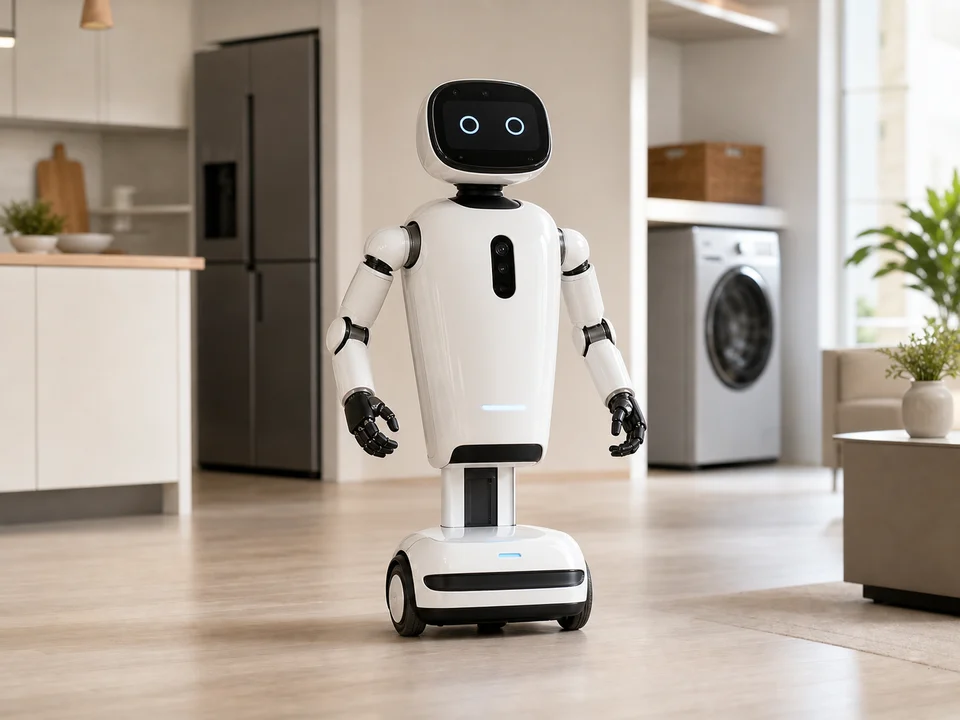
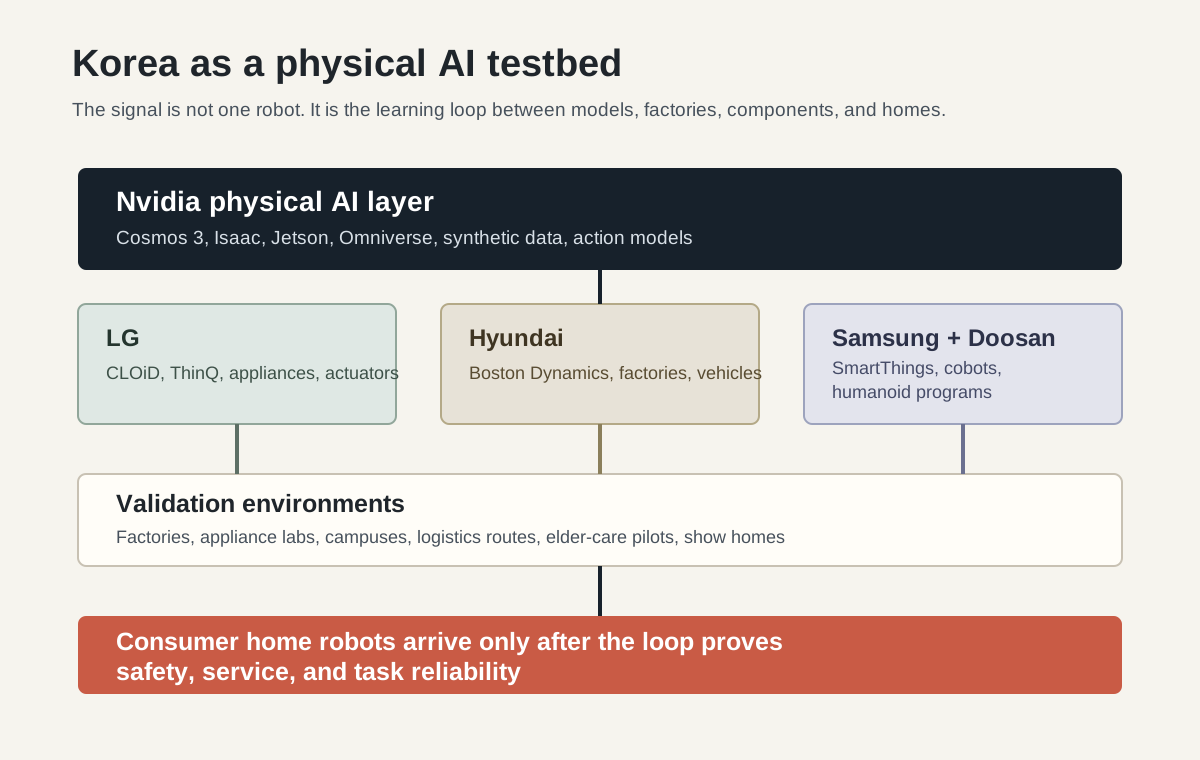
That is why LG, Hyundai, Doosan, Samsung, Rainbow Robotics, and Naver belong in the same conversation as Nvidia Cosmos and Isaac. They are not interchangeable companies, and most of their work is not consumer-ready. But together they show where future home robots may be validated first: factories, appliance labs, show homes, logistics sites, elder-care pilots, and commercial service settings.
What Changed In June 2026
Korea JoongAng Daily reported on June 5, 2026, that Nvidia CEO Jensen Huang's latest Korea trip shifted attention from chips alone toward robotics, physical AI, autonomous driving, and industrial digital twins. The report described LG Electronics' share price hitting the daily limit for two sessions after the visit was reported, Doosan Robotics rising about 50 percent, and Hyundai, LG, Doosan, Naver, Samsung, and SK appearing in the broader robotics ecosystem conversation.
The more important detail for home robots is the testbed framing. The article argued that Nvidia needs real-world hardware environments to test and validate physical AI, not only cloud compute or synthetic simulations. Korea is unusually relevant because it has large manufacturers that can connect several layers at once: appliance hardware, batteries, sensors, actuators, robots, cars, factories, logistics, smart homes, and software platforms.
Nvidia's official Cosmos 3 announcement on June 1, 2026, fits that same pattern. Cosmos 3 is an open physical AI foundation model family for vision reasoning, world simulation, and action generation. Nvidia says it can reduce training and evaluation cycles from months to days, and it named LG Electronics, Samsung, Doosan Robotics, and others as companies building robotics applications on the Cosmos platform.
That does not mean a useful home humanoid is suddenly around the corner. It means the stack is getting more explicit.
Why Is Korea A Better Testbed Than A Single Robot Demo?
The home robot market has a recurring problem: single demos look better than deployed systems. A robot can pour a drink onstage, but that does not prove it can survive a messy kitchen, recognize a child's toy, open an unfamiliar refrigerator, recover from a dropped towel, and get repaired two years later.
Korea's advantage is not one magic robot. It is the ability to test many parts of the deployment chain:
Layer
Appliance control
- Korean ecosystem example
- LG ThinQ, Samsung SmartThings
- Why it matters for homes
- Home robots need reliable appliance APIs, not only arms
Layer
Robot bodies
- Korean ecosystem example
- LG CLOiD, Samsung Ballie, Rainbow-linked humanoids
- Why it matters for homes
- Physical AI needs wheels, arms, sensors, and safety systems
Layer
Industrial validation
- Korean ecosystem example
- Hyundai, Doosan, Naver labs
- Why it matters for homes
- Factories and campuses can generate repeatable operating data
Layer
Components
- Korean ecosystem example
- LG actuators, batteries, sensors, automotive suppliers
- Why it matters for homes
- Home robots need durable parts at consumer-service scale
Layer
Simulation and AI
- Korean ecosystem example
- Nvidia Cosmos, Isaac, Omniverse
- Why it matters for homes
- World models and synthetic data can shorten training loops
| Layer | Korean ecosystem example | Why it matters for homes |
|---|---|---|
| Appliance control | LG ThinQ, Samsung SmartThings | Home robots need reliable appliance APIs, not only arms |
| Robot bodies | LG CLOiD, Samsung Ballie, Rainbow-linked humanoids | Physical AI needs wheels, arms, sensors, and safety systems |
| Industrial validation | Hyundai, Doosan, Naver labs | Factories and campuses can generate repeatable operating data |
| Components | LG actuators, batteries, sensors, automotive suppliers | Home robots need durable parts at consumer-service scale |
| Simulation and AI | Nvidia Cosmos, Isaac, Omniverse | World models and synthetic data can shorten training loops |
The useful buyer question is simple: which companies can turn learning loops into products that work in ordinary rooms? Software-only companies struggle here because they do not own the appliance, actuator, repair, or deployment surface. A manufacturing-heavy ecosystem can at least attempt all of those at once.
LG CLOiD Is The Clearest Home Signal
LG CLOiD is the most direct home robot in this story. In the ui44 database, CLOiD is tracked as a development-stage home assistant with no public price yet. The claimed capabilities are unusually relevant to real housework: autonomous indoor wheeled navigation, dual-arm manipulation, appliance coordination through LG ThinQ, cooking and meal-prep assistance, laundry handling, folding demos, voice interaction, and an expressive display.
LG's official CES 2026 newsroom post described CLOiD as an AI-enabled home robot with a torso, two articulated arms, a wheeled base, cameras, sensors, voice-based generative AI, and integration with ThinQ and ThinQ ON. The same post said each arm has seven degrees of freedom and each hand has five independently actuated fingers. It also described vision-language and vision-language-action models trained on household task data.
That is still a demo-stage claim, not a buy recommendation. The difference is that LG also owns the appliance context. If a home robot is supposed to start laundry, move food between appliances, or coordinate with refrigerators and ovens, the appliance maker has a practical advantage over a standalone robot startup. It can design the robot, the appliance controls, the sensors, and the home automation layer together.
The open questions are still large:
- Price: ui44 has no public CLOiD price.
- Availability: status is development, not active or pre-order.
- Safety: LG has not shown enough public evidence for unsupervised household manipulation.
- Scope: folding staged laundry is not the same as handling every fabric, drawer, basket, and obstacle in a lived-in home.
The buyer takeaway is not "wait for CLOiD." It is "watch CLOiD because LG is testing the right kind of integrated problem."
Hyundai And Boston Dynamics Show The Factory-To-Home Path
Hyundai's role is different. Hyundai owns Boston Dynamics, which gives it one of the most credible robotics hardware organizations in the world. The ui44 database tracks Spot as an active commercial quadruped with autonomous industrial inspection, stair climbing, obstacle avoidance, self-righting, autonomous charging, and optional mobile manipulation with Spot Arm.
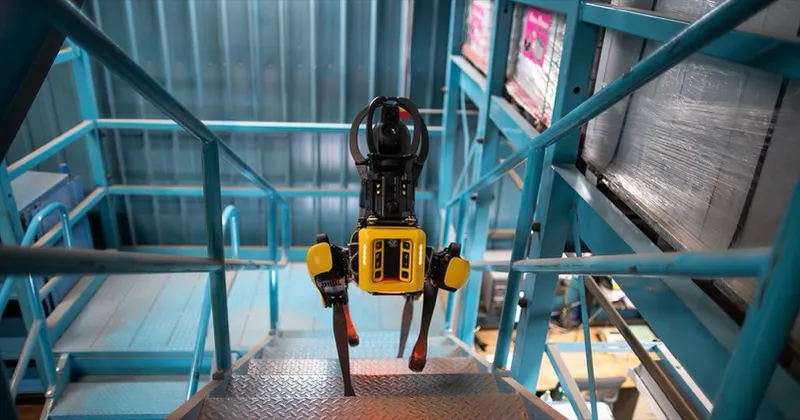
Spot is not a home robot for most buyers. It is expensive commercial equipment, and the public pricing field in ui44 is not populated because Boston Dynamics does not sell it like a consumer product. But Spot is useful evidence that reliable mobile robots usually mature in commercial environments first. Factories, warehouses, campuses, and inspection routes are easier to instrument and supervise than homes.
That matters for humanoids. A robot that cannot operate reliably on a factory floor will not become trustworthy in a living room just because the marketing says "home." If Hyundai uses factories, logistics, automotive data, and Boston Dynamics hardware to validate physical AI, the first consumer benefit may be indirect: better safety systems, better fleet learning, better manipulation policies, and better service economics.
The realistic path is not:
- Nvidia launches a model.
- A humanoid appears in kitchens.
- Consumers stop doing chores.
The realistic path is:
- Models learn in simulation and controlled deployments.
- Industrial partners test bodies, sensors, actuators, and repair loops.
- Narrow home tasks are productized after the failure modes are understood.
Samsung, Ballie, And The Risk Of Smart-Home Theater
Samsung also belongs in the Korea testbed story, but home buyers should be careful with the signal. Samsung Ballie is still listed in ui44 as a development-stage companion robot with no announced price. The database tracks autonomous home navigation, a built-in projector, SmartThings control, family and pet monitoring, scheduling, reminders, and conversational interaction.
Those capabilities are interesting, but Ballie also shows the danger of mistaking smart-home theater for shipped robotics. A rolling AI projector can be charming without proving manipulation, safe navigation around clutter, serviceability, or long-term household value. If Samsung connects physical AI work to SmartThings and its appliance business, the platform could matter. If Ballie remains a concept without a retail product, it is evidence of ambition rather than adoption.
That distinction is central to Nvidia's Korea story. The home robot winners will not be the companies with the best keynote footage. They will be the companies that can run boring, repeated, measurable tests:
- Did the robot identify the right object?
- Did it choose a safe action?
- Did it complete the task without damaging the object?
- Did it recover when the object moved?
- Did it log enough data to improve the next attempt?
- Did the owner understand what the robot was allowed to do?
Doosan And Rainbow Matter Even If They Are Not Home Brands
Doosan Robotics is more industrial than household, but that is not a weakness for this stage. Industrial arms, collaborative robots, and service robots produce the kind of repeatable manipulation data that home robots need. Korea JoongAng Daily reported that Nvidia is already cooperating with Doosan on intelligent robotic systems planned for commercialization in 2027, with a commercial humanoid model expected later.
Rainbow Robotics is relevant through Samsung's robotics ambitions. Even if the first deployments are commercial, the knowledge transfers: torque control, balance, perception, safety certification, and maintenance routines all become cheaper and more reliable as production volume increases.
For consumers, the point is not to buy a Doosan cobot for the kitchen. It is to understand where the expensive lessons will be learned before a household robot is allowed near fragile objects and pets.
What The ui44 Database Says To Watch
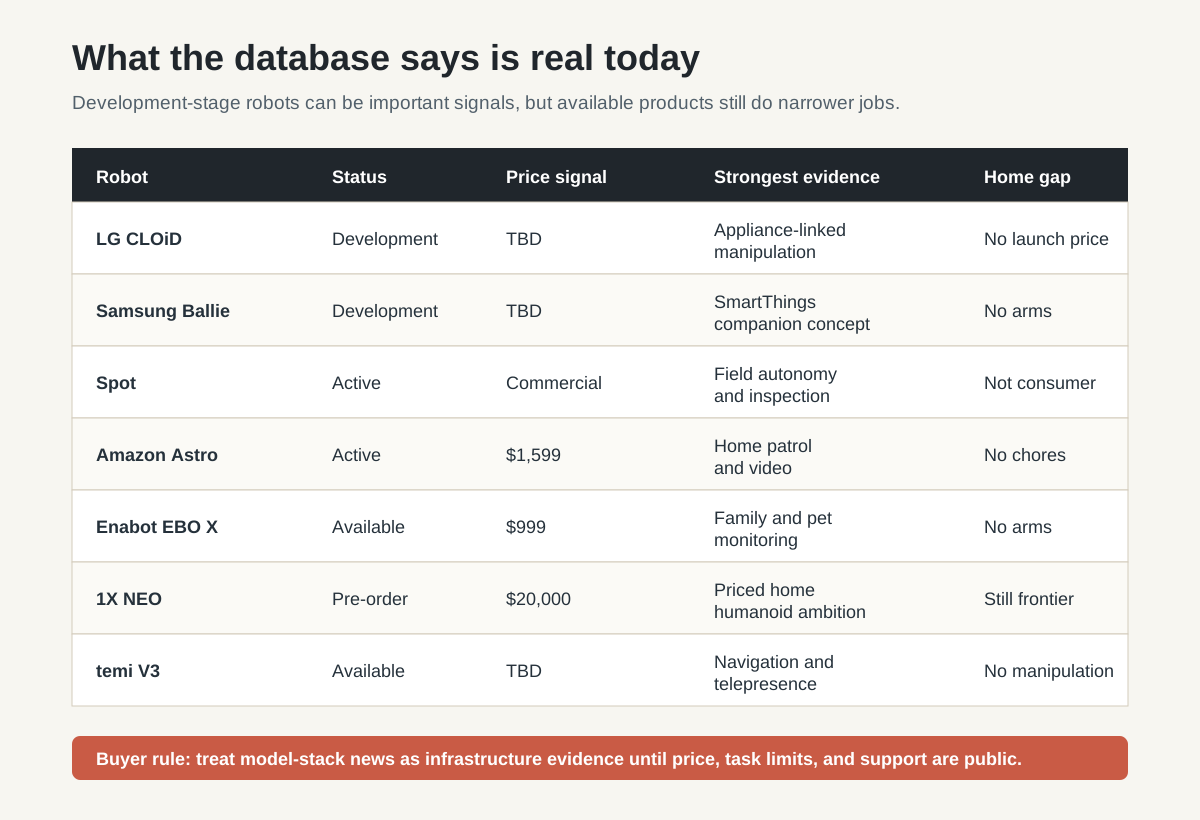
The ui44 database separates demo appeal from buyer relevance by tracking status, price, category, and capabilities. In this story, the contrast is useful:
Robot
- ui44 status
- Development
- Public price
- Not announced
- What it proves
- Appliance-linked home manipulation roadmap
- What it does not prove
- Shipping price, safety, and durability
Robot
- ui44 status
- Development
- Public price
- Not announced
- What it proves
- Smart-home companion concept
- What it does not prove
- Manipulation or confirmed consumer launch
Robot
- ui44 status
- Active
- Public price
- Not listed
- What it proves
- Commercial mobile autonomy and optional manipulation
- What it does not prove
- Consumer affordability
Robot
- ui44 status
- Active
- Public price
- $1,599
- What it proves
- Home patrol, Alexa, Ring, video calls
- What it does not prove
- General manipulation or chores
Robot
- ui44 status
- Available
- Public price
- $999
- What it proves
- Family and pet monitoring in a compact home robot
- What it does not prove
- Heavy-duty autonomy or arms
Robot
- ui44 status
- Pre-order
- Public price
- $20,000
- What it proves
- A priced humanoid home ambition
- What it does not prove
- Mature, broadly proven household autonomy
Robot
- ui44 status
- Available
- Public price
- Not listed
- What it proves
- Navigation and telepresence in homes and businesses
- What it does not prove
- Dexterous housework
| Robot | ui44 status | Public price | What it proves | What it does not prove |
|---|---|---|---|---|
| LG CLOiD | Development | Not announced | Appliance-linked home manipulation roadmap | Shipping price, safety, and durability |
| Samsung Ballie | Development | Not announced | Smart-home companion concept | Manipulation or confirmed consumer launch |
| Spot | Active | Not listed | Commercial mobile autonomy and optional manipulation | Consumer affordability |
| Amazon Astro | Active | $1,599 | Home patrol, Alexa, Ring, video calls | General manipulation or chores |
| Enabot EBO X | Available | $999 | Family and pet monitoring in a compact home robot | Heavy-duty autonomy or arms |
| 1X NEO | Pre-order | $20,000 | A priced humanoid home ambition | Mature, broadly proven household autonomy |
| temi V3 | Available | Not listed | Navigation and telepresence in homes and businesses | Dexterous housework |
This table is why Nvidia's Korea push should be read as infrastructure news, not consumer-launch news. The available home robots today are still mostly patrol, companionship, telepresence, and monitoring products. The manipulation-heavy home robots are still development-stage or frontier pre-orders.
That does not make the Korea story unimportant. It makes it early.
How To Judge The Next Nvidia-Partner Home Robot Claim
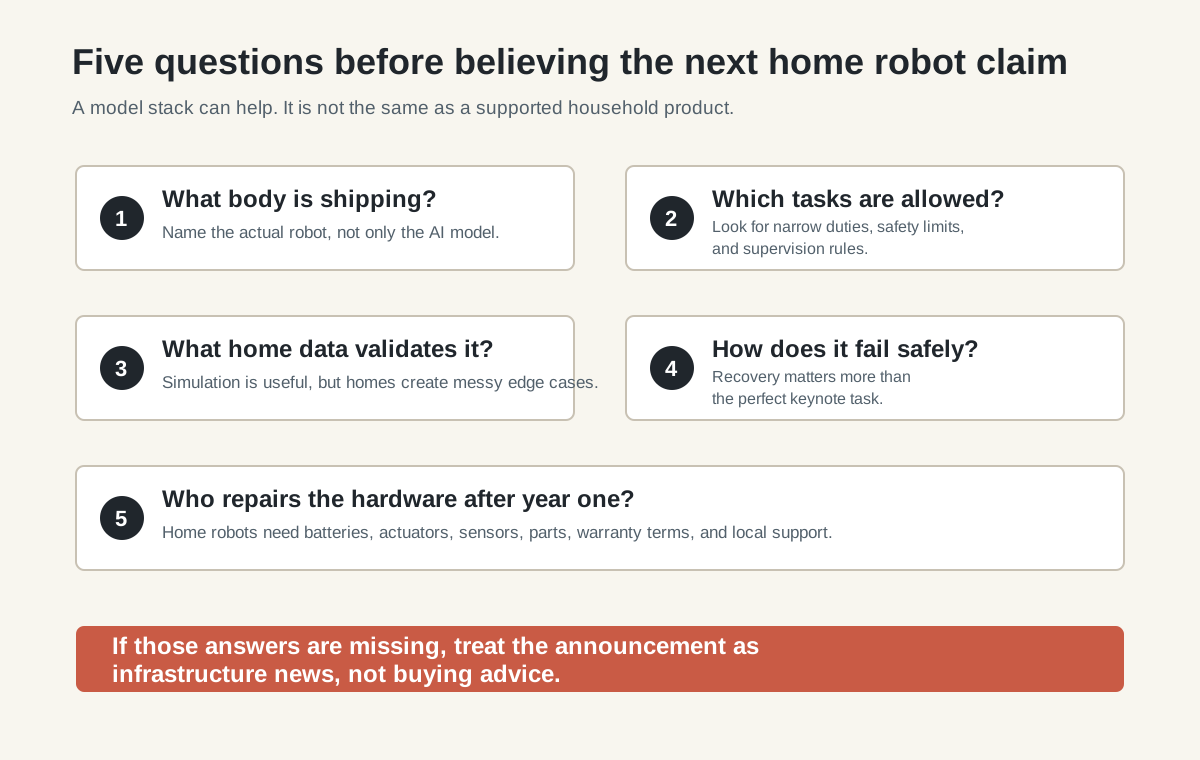
When a robot brand says it is using Nvidia physical AI, ask what part of the stack is real. A model name alone is not enough. A serious home robot claim should answer five questions:
- What body is shipping?
- What tasks are allowed without supervision?
- What home data was used to validate those tasks?
- What happens when the robot fails?
- Who repairs the hardware?
If the answer is mostly "Cosmos," "Isaac," or "Jetson," the company is talking about enabling technology, not a finished consumer product. Those tools can matter a lot. They can accelerate simulation, training, perception, and action policy development. But they do not replace grippers, batteries, actuators, household safety testing, support teams, or product liability.
That is where Korea's ecosystem may become useful. LG can test appliance coordination. Hyundai can test robots in factories and logistics. Doosan can test manipulation around commercial workflows. Samsung can test smart-home integration. Naver can test digital twins and cloud robotics environments. Nvidia can provide the AI and simulation stack that connects these experiments.
The Bottom Line For Home Robot Buyers
Nvidia's Korea robotics push is a stronger signal than another isolated robot demo because it points at validation infrastructure. Home robots need exactly that. They need models that understand the physical world, but they also need appliance access, safe bodies, actuators, real deployment data, service networks, and companies willing to own long product cycles.
LG CLOiD is the home robot to watch because it ties arms, appliances, ThinQ, and household tasks together. Hyundai and Boston Dynamics matter because commercial robotics is where reliability usually gets proven first. Doosan and Rainbow matter because manipulation and actuator knowledge often starts outside the home. Samsung matters because SmartThings could be a powerful home-control layer, even if Ballie itself remains unproven.
The sober expectation is that Korea helps physical AI get less theoretical before it gets consumer-friendly. The next meaningful milestone is not another keynote clip. It is a robot that ships with a real price, a narrow task list, clear safety limits, and enough deployment evidence to compare against today's available home robots in the ui44 database.
Related in the database
Use this article as a market-reality workflow
Turn the article into a market-reality pass grounded in the robots, manufacturers, and countries it actually references.
Nvidia Korea Testbed: Home Robot Signals already points you toward 7 linked robots, 7 manufacturers, and 5 countries inside the ui44 database. That matters because strong buyer guidance is easier to apply when you can move immediately from a claim or warning into concrete product pages, manufacturer directories, component explainers, and country-level context instead of treating the article as an isolated opinion piece. The fastest next step is to turn the article into a shortlist workflow: open the linked robot pages, verify which specs are actually published for those models, then compare the surrounding manufacturer and component context before you decide whether the underlying claim changes your buying plan.
For this topic, the useful discipline is to separate the editorial lesson from the catalog evidence. The article gives you the framing, but the robot pages tell you what each product actually ships with today: sensor stack, connectivity methods, listed price, release timing, category, and support-relevant compatibility notes. The manufacturer pages then show whether you are looking at a one-off launch, a broader lineup pattern, or a company that spans multiple categories. That layered workflow reduces the risk of buying on a single marketing phrase or a single support FAQ.
Launch claims age fast. The safest move is to pair the article with robot status, price, and manufacturer breadth checks inside ui44 so you can see whether CLOiD, Spot, and Ballie are actually ready for a shortlist or still mostly launch-stage signals. If you want a quick working shortlist, open Compare CLOiD, Spot, and Ballie next, then keep this article open as the reasoning layer while you compare structured data side by side.
Practical Takeaway
Every robot, manufacturer, category, component, and country reference below resolves to a real ui44 page, keeping the follow-up path grounded in database records rather than generic advice.
Suggested next steps in ui44
- Check each linked robot page for listed price, status, and release timing before you treat a launch announcement as a shipping reality.
- Open LG Electronics to see whether the company’s ui44 footprint already shows a mature product lane or only a small launch cluster.
- Use country pages when the article spans several ecosystems, because launch timing and lineup depth often differ by region even when the headline sounds global.
- Finish with Compare CLOiD, Spot, and Ballie so availability claims sit next to real product data.
- Treat every article as a live market snapshot. Re-check status and pricing before you move from interest to purchase intent.
Robot profiles worth opening next
Use the linked product pages as the evidence layer
The linked robot pages are where this article becomes operational. Instead of asking whether the headline is interesting, use the robot entries to inspect the actual mix of sensors, connectivity options, batteries, pricing, release timing, and stated capabilities attached to the products mentioned in the article. That is the easiest way to see whether the warning or opportunity described here affects one product family, a specific design pattern, or an entire buying lane.
CLOiD
LG Electronics · Home Assistants · Development
CLOiD is tracked on ui44 as a development home assistants robot from LG Electronics. The database currently records a listed price of Price TBA, a release date of 2026-01-04, Not officially disclosed battery life, Not officially disclosed charging time, and a published stack that includes Cameras and Various onboard sensors plus LG ThinQ and ThinQ ON.
For market and launch stories, this entry grounds the article in real product data. Use the combination of status, release timing, price, and published capabilities like Autonomous indoor wheeled navigation, Dual-arm household manipulation, and Appliance coordination via LG ThinQ to decide whether CLOiD belongs on a live shortlist or should stay in the watchlist bucket a little longer.
Spot
Boston Dynamics · Commercial · Active
Spot is tracked on ui44 as a active commercial robot from Boston Dynamics. The database currently records a listed price of Price TBA, a release date of 2020, ~90 minutes battery life, 60 minutes charging time, and a published stack that includes 360° Stereo Cameras, Time-of-Flight Sensor, and Ultrasonic Sensors (front + rear) plus Wi-Fi 2.4GHz/5GHz and Ethernet.
For market and launch stories, this entry grounds the article in real product data. Use the combination of status, release timing, price, and published capabilities like Autonomous Industrial Inspection, Stair Climbing (±30° slopes), and Dynamic Obstacle Avoidance to decide whether Spot belongs on a live shortlist or should stay in the watchlist bucket a little longer.
Ballie is tracked on ui44 as a development companions robot from Samsung. The database currently records a listed price of Price TBA, a release date of TBD, Not officially disclosed battery life, Not officially disclosed charging time, and a published stack that includes Camera, Spatial Sensors, and Environmental Sensors plus Wi-Fi and SmartThings.
For market and launch stories, this entry grounds the article in real product data. Use the combination of status, release timing, price, and published capabilities like Autonomous Home Navigation, Built-in Projector (Wall & Floor), and Smart Home Control via SmartThings to decide whether Ballie belongs on a live shortlist or should stay in the watchlist bucket a little longer.
Astro is tracked on ui44 as a active security & patrol robot from Amazon. The database currently records a listed price of $1,599, a release date of 2021, Not officially disclosed battery life, Not officially disclosed charging time, and a published stack that includes 5MP Bezel Camera, 1080p Periscope Camera (132° FOV), and Infrared Vision plus Wi-Fi 802.11ac and Bluetooth.
For market and launch stories, this entry grounds the article in real product data. Use the combination of status, release timing, price, and published capabilities like Autonomous Home Patrol, Visual ID (face recognition), and Remote Home Monitoring to decide whether Astro belongs on a live shortlist or should stay in the watchlist bucket a little longer.
EBO X is tracked on ui44 as a available companions robot from Enabot. The database currently records a listed price of $999, a release date of 2023-05, 2-3 hours battery life, 2 hours charging time, and a published stack that includes 4K one-axis stabilized camera, 8MP ultra-low-light sensor, and 106° camera FOV plus 2.4GHz Wi-Fi and 5GHz Wi-Fi.
For market and launch stories, this entry grounds the article in real product data. Use the combination of status, release timing, price, and published capabilities like Autonomous home patrol, Two-way video communication, and AI voice interactions to decide whether EBO X belongs on a live shortlist or should stay in the watchlist bucket a little longer.
Manufacturer context behind the article
Check whether this is one product story or a broader company pattern
Manufacturer pages add the market context that individual product pages cannot show on their own. They help you check whether a launch headline is backed by a deeper tracked lineup, a visible order path, and adjacent products that make the company look committed rather than opportunistic.
LG Electronics
ui44 currently tracks 1 robot from LG Electronics across 1 category. The company is grouped under South Korea, and the current catalog footprint on ui44 includes CLOiD.
That wider brand context matters because launch headlines can obscure how deep or shallow a company’s actual product footprint is. The manufacturer route helps you tell the difference between a growing ecosystem and a single high-visibility announcement. The category mix here currently points toward Home Assistants as the most useful next route if you want to see whether this article reflects a wider pattern inside the brand.
Boston Dynamics
ui44 currently tracks 3 robots from Boston Dynamics across 2 categorys. The company is grouped under USA, and the current catalog footprint on ui44 includes Atlas (Electric), Spot, Stretch.
That wider brand context matters because launch headlines can obscure how deep or shallow a company’s actual product footprint is. The manufacturer route helps you tell the difference between a growing ecosystem and a single high-visibility announcement. The category mix here currently points toward Humanoid, Commercial as the most useful next route if you want to see whether this article reflects a wider pattern inside the brand.
Samsung
ui44 currently tracks 2 robots from Samsung across 2 categorys. The company is grouped under South Korea, and the current catalog footprint on ui44 includes Ballie, Bespoke AI Jet Bot Steam Ultra.
That wider brand context matters because launch headlines can obscure how deep or shallow a company’s actual product footprint is. The manufacturer route helps you tell the difference between a growing ecosystem and a single high-visibility announcement. The category mix here currently points toward Companions, Cleaning as the most useful next route if you want to see whether this article reflects a wider pattern inside the brand.
Amazon
ui44 currently tracks 1 robot from Amazon across 1 category. The company is grouped under USA, and the current catalog footprint on ui44 includes Astro.
That wider brand context matters because launch headlines can obscure how deep or shallow a company’s actual product footprint is. The manufacturer route helps you tell the difference between a growing ecosystem and a single high-visibility announcement. The category mix here currently points toward Security & Patrol as the most useful next route if you want to see whether this article reflects a wider pattern inside the brand.
Broaden the scan without leaving the database
Categories, components, and countries add the wider context
Category framing
Category pages are useful when the article touches a buying pattern that shows up across brands. A category route helps you confirm whether the linked products sit in a narrow niche or whether the same question should be tested across a larger field of alternatives.
Home Assistants
The Home Assistants category page currently groups 16 tracked robots from 14 manufacturers. ui44 describes this lane as: Arm-based household helpers — laundry folders, kitchen robots, and mobile manipulators that take on hands-on physical tasks around the home.
That makes the category route a practical follow-up when you want to check whether the products linked in this article are typical for the lane or whether they sit at one edge of the market. Useful starting examples currently include Robody, Futuring 2 (F2), Stretch 3.
Commercial
The Commercial category page currently groups 44 tracked robots from 38 manufacturers. ui44 describes this lane as: Delivery robots, warehouse automation, and hospitality service bots — robots built for business and commercial operations.
That makes the category route a practical follow-up when you want to check whether the products linked in this article are typical for the lane or whether they sit at one edge of the market. Useful starting examples currently include G2 Air, aeo, Pepper.
Country and ecosystem context
Country pages give extra context when support practices, launch sequencing, regulatory posture, or manufacturer mix matter. They are not a substitute for model-level verification, but they do help you see which ecosystems cluster together and which manufacturers sit in the same regional field when you broaden the search beyond the article headline.
South Korea
The South Korea route currently groups 9 tracked robots from 7 manufacturers in ui44. That gives you a useful regional lens when the article points toward support practices, launch sequencing, or brand clusters that may share similar ecosystem assumptions.
On the current route, manufacturers like ROBOTIS, Samsung, GenON make the page a good way to broaden the scan without losing the regional context that often shapes availability, documentation style, and adjacent alternatives.
USA
The USA route currently groups 89 tracked robots from 69 manufacturers in ui44. That gives you a useful regional lens when the article points toward support practices, launch sequencing, or brand clusters that may share similar ecosystem assumptions.
On the current route, manufacturers like Faraday Future, iRobot, Boston Dynamics make the page a good way to broaden the scan without losing the regional context that often shapes availability, documentation style, and adjacent alternatives.
China
The China route currently groups 189 tracked robots from 87 manufacturers in ui44. That gives you a useful regional lens when the article points toward support practices, launch sequencing, or brand clusters that may share similar ecosystem assumptions.
On the current route, manufacturers like AGIBOT, Dreame, Unitree Robotics make the page a good way to broaden the scan without losing the regional context that often shapes availability, documentation style, and adjacent alternatives.
Questions to answer before you move from reading to buying
A follow-up FAQ built from the entities already linked in this article
Frequently Asked Questions
Which page should I open first after reading “Nvidia Korea Testbed: Home Robot Signals”?
Start with CLOiD. That gives you a concrete product anchor for the article’s main claim. From there, branch into the manufacturer and component pages so you can tell whether the article is describing one specific model, a repeated brand pattern, or a wider technology issue that affects multiple shortlist options.
How do the manufacturer pages change the buying decision?
LG Electronics help you zoom out from one article and one product. On ui44 they show lineup breadth, category spread, and the neighboring robots tied to the same company. That context is useful when you are deciding whether a risk belongs to a single model, whether it shows up across a brand’s portfolio, and whether you should keep looking at alternatives before committing.
When should I switch from reading to side-by-side comparison?
Move into Compare CLOiD, Spot, and Ballie as soon as you understand the article’s main warning or promise. The article explains what to watch for, but the compare view is where you can check whether price, status, battery life, connectivity, sensors, and category fit still make the robot a good match for your own home and budget.
Where to go next in ui44
Keep the research chain inside the database
If you want to keep going, these follow-on pages give you the cleanest expansion path from article to research session. Open the comparison route first if you are deciding between products today. Open the manufacturer, category, and component routes if you still need to understand the broader pattern behind the claim.
Written by
ui44 Team
Published June 23, 2026
Share this article
Open a plain share link on X or Bluesky. No embeds, no widgets, no cookie baggage.