That sequencing matters. Eno is not a robot you can buy for an apartment today. But it is a useful signal for anyone following home robots because it asks the right question: does a general-purpose domestic robot need legs and a human face, or does it need stable indoor mobility, useful reach, hands, and a way to show what it is about to do?
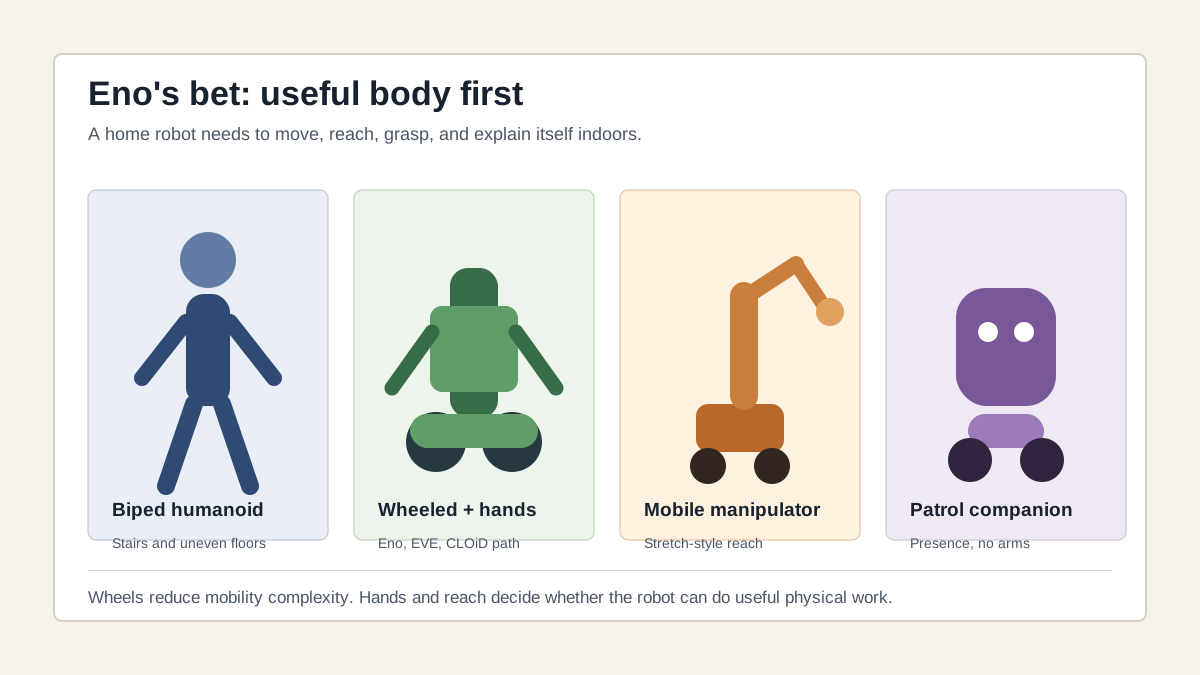
The short answer is that wheels and hands are not a compromise. For many real homes, they may be the more honest starting point.
What Genesis Eno Actually Claims
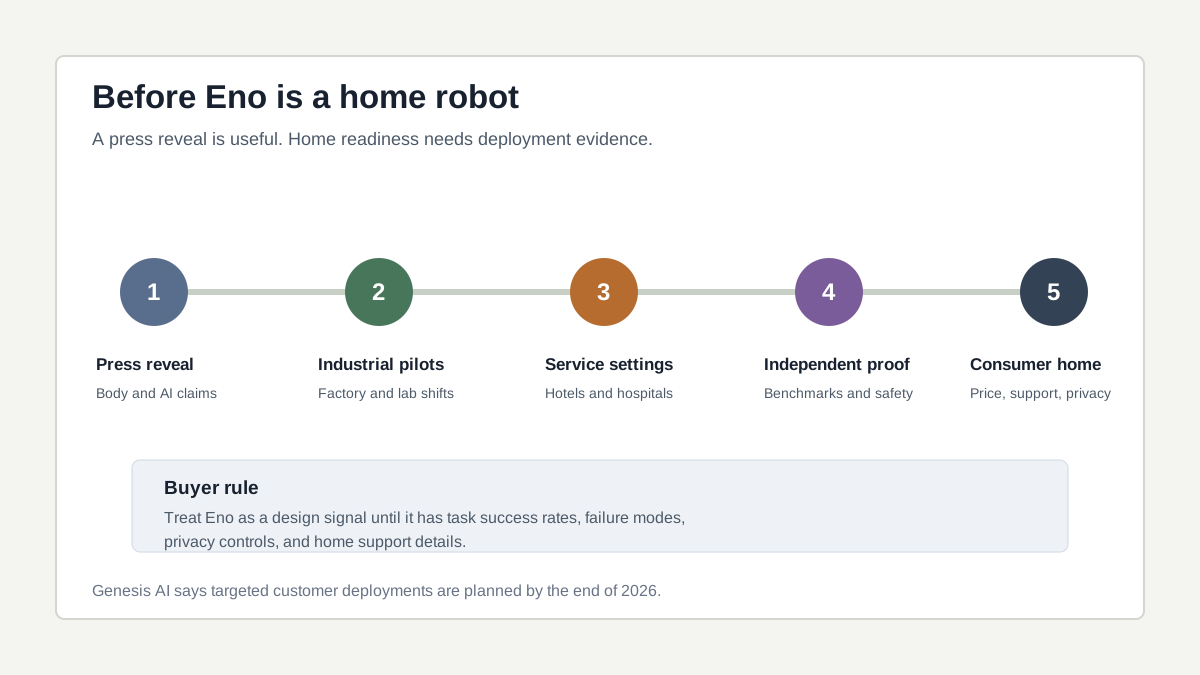
Genesis AI introduced Eno on June 16, 2026 as its first general-purpose robot. The company describes the robot as a single hardware and AI platform designed to move, adapt, and learn across work environments. The body is explicitly not a human replica. Eno uses a wheeled base, a height-adjusting body, and arms with dexterous robotic hands. Genesis AI says those hands are meant to interact with tools and objects already designed for people.
The company also ties Eno to GENE, its robotics-native AI model. The claim is not just "voice command plus motion." Genesis frames the system as an agent that can understand a high-level goal, reason through changing conditions, keep memory of context, and plan long-horizon tasks. For a buyer, that claim should be read as an ambition, not a finished home feature. The important detail is where the first deployments are aimed: factories, logistics, and laboratories first; then hotels and hospitals; consumer home and outdoor applications later.
That is a responsible rollout path. Homes are messy, private, high-variance spaces. A warehouse aisle or lab bench is still difficult, but it can be mapped, staffed, supervised, and standardized more easily than a family kitchen.
Why Wheels May Beat Legs Indoors
Humanoid robots get attention because they look like they belong in a human world. They can potentially climb stairs, step over clutter, and use spaces designed for bodies with two legs. But legged locomotion is expensive, power hungry, mechanically complex, and hard to make quiet enough for a home.
A wheeled indoor robot gives up some terrain ability in exchange for stability, lower mechanical risk, simpler docking, and easier continuous operation on flat floors. That trade-off is familiar in the ui44 database. Amazon Astro is a $1,599 wheeled home patrol robot with Alexa, video calling, remote monitoring, and visual ID. It cannot manipulate objects, but its wheeled form is well matched to patrol, presence, and communication. Hello Robot Stretch 4 is a $29,950 mobile manipulator built around indoor mobility, mapping, self-charging, and a useful arm rather than a humanoid body. 1X EVE is another important comparison point: a wheeled humanoid platform with dual-arm manipulation, autonomous indoor navigation, and teleoperation.
Eno belongs in that lineage more than in the "make a person out of metal" lane. The bet is that human-scale reach and dexterous hands matter more than a pair of knees for the first valuable chores.
Robot
- ui44 category
- Security & Patrol
- Public price in ui44
- $1,599
- What matters for this comparison
- Wheeled home mobility, monitoring, Alexa, no arms
Robot
- ui44 category
- Humanoid
- Public price in ui44
- $20,000
- What matters for this comparison
- Home-first humanoid, soft interaction, household chores
Robot
- ui44 category
- Humanoid
- Public price in ui44
- $13,500
- What matters for this comparison
- Research humanoid with optional dexterous hands
Robot
- ui44 category
- Home Assistants
- Public price in ui44
- $29,950
- What matters for this comparison
- Mobile manipulation, omnidirectional indoor mobility, self-charging
Robot
- ui44 category
- Home Assistants
- Public price in ui44
- Not listed
- What matters for this comparison
- Wheeled dual-arm household concept tied to home appliances
Robot
- ui44 category
- Humanoid
- Public price in ui44
- Not listed
- What matters for this comparison
- Complex manipulation and learning from demonstration
| Robot | ui44 category | Public price in ui44 | What matters for this comparison |
|---|---|---|---|
| Amazon Astro | Security & Patrol | $1,599 | Wheeled home mobility, monitoring, Alexa, no arms |
| 1X NEO | Humanoid | $20,000 | Home-first humanoid, soft interaction, household chores |
| Unitree G1 | Humanoid | $13,500 | Research humanoid with optional dexterous hands |
| Hello Robot Stretch 4 | Home Assistants | $29,950 | Mobile manipulation, omnidirectional indoor mobility, self-charging |
| LG CLOiD | Home Assistants | Not listed | Wheeled dual-arm household concept tied to home appliances |
| Figure 03 | Humanoid | Not listed | Complex manipulation and learning from demonstration |
The table shows why Eno is not a strange detour. The home-robot market already has separate proof points for wheels, arms, speech, monitoring, mapping, and humanoid manipulation. Eno's novelty is the packaging: wheels, hands, adjustable reach, and a transparency screen in one function-first body.
Hands Are The Hard Part
The strongest part of the Eno pitch is not the base. It is the hands.
Many home robots can move. Many can see. A smaller number can talk. Very few can reliably interact with the objects that make home labor valuable: a mug with an awkward handle, a soft towel, a half-open drawer, a charging cable, a spray bottle, a dish on a crowded counter, or a toy under a chair.
This is why Figure 03, 1X NEO, and Unitree G1 are relevant even if their shapes are different. The buyer question is not "which robot looks most human?" It is "which robot can perceive an object, reach it safely, grasp it, move it, recover from a mistake, and explain what it is doing?"
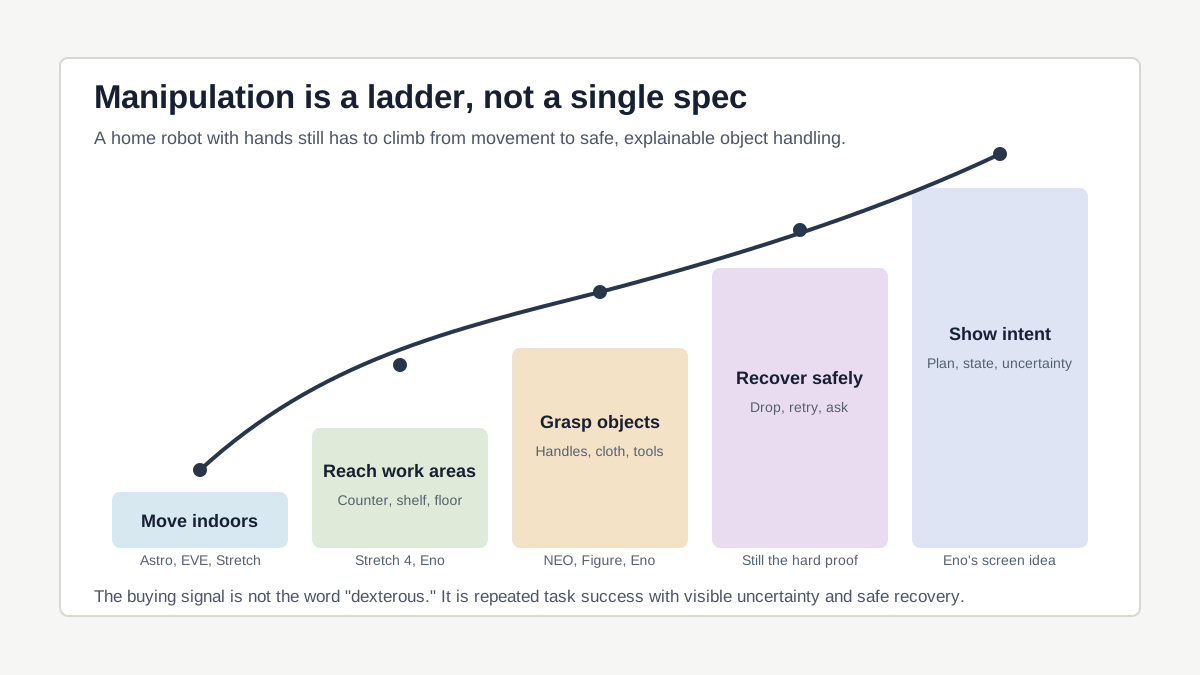
Hello Robot's Stretch 4 is useful here because it makes the compromise visible. It has one practical arm, indoor mapping, omnidirectional mobility, and a self-charging design. It does not pretend to be a person. It is built around reach and manipulation. Eno appears to push that mobile-manipulator logic toward a more general two-arm, human-hand architecture.
That could be powerful. It could also be expensive and slow to mature. Dexterous hands add sensors, actuators, control complexity, maintenance points, and safety questions. A hand that can grip a pan handle can also pinch, drop, scrape, or misread a scene. For the home, the promise of hands must be paired with very conservative safety behavior.
The Intent Display Is More Than A Gimmick
Genesis AI says Eno can include an optional cognitive interface: a screen that shows intent, reasoning, and operational state. That sounds small, but it points at a real home-robot trust problem.
When a robot vacuum moves unpredictably, the stakes are usually annoyance: it misses a room, bumps a chair, or gets stuck. When a robot with arms moves around people, the stakes are higher. A useful home robot needs to answer basic human questions without forcing the owner to inspect logs:
- What task are you doing?
- What object are you about to touch?
- Are you confident, uncertain, waiting, or blocked?
- Did you see the person, pet, cable, glass, or edge near your arm?
- Can I interrupt you quickly?
A visible intent display cannot solve manipulation safety by itself, but it can make a robot less opaque. That matters for people living with the machine. A robot that can say "I am clearing the table; next I will pick up the blue cup" is easier to supervise than a silent machine that simply moves.
The ui44 database already separates robots that are mostly communication devices from robots that physically act on the world. Amazon Astro is strong on presence and monitoring but does not manipulate household objects. LG CLOiD is framed around wheeled navigation, dual-arm household manipulation, appliance coordination, and cooking or laundry demos, but still lacks ordinary consumer availability and public pricing. Eno's intent-display idea sits between those categories: communication is not the product, but it may be necessary for physical work to feel acceptable at home.
What Should Buyers Not Assume Yet?
The main risk with Eno is over-reading the announcement. There is no consumer price. There is no home shipping date. There is no public list of supported chores for a normal apartment. There is no independent household benchmark. The first customers are expected to be industrial and institutional, not families.
That does not make Eno irrelevant. It means the correct buyer stance is "watch the deployment evidence," not "waitlist equals purchase plan."
For home use, the hard evidence to watch is specific:
- Can Eno dock, charge, and resume work without staff intervention?
- Can it safely navigate cluttered spaces with pets, children, thresholds, and reflective surfaces?
- Can its hands repeatedly handle common objects without custom fixtures?
- Can the robot explain uncertainty before acting, not only after a mistake?
- Can Genesis publish task success rates, failure modes, and maintenance needs?
- Can the system work with local privacy controls suitable for a private home?
Those questions are more useful than arguing whether Eno is "really" a humanoid. For a home buyer, the label matters less than the task envelope.
How Eno Compares With Home-First Humanoids
1X NEO remains the clearest home-first humanoid comparison in the ui44 database. It is listed at $20,000 and is explicitly aimed at household chores, tidying, safe human interaction, adaptive learning, and gentle manipulation. Its pitch is domestic from the start.
Eno is different. Genesis is starting with work environments, then service industries, then later home and outdoor applications. That may sound less exciting for buyers, but it may produce better evidence. A robot that survives real shifts in logistics, laboratories, hospitals, or hotels may teach us more about reliability than a polished living-room demo.
Figure 03 and Unitree G1 represent the bipedal path: humanlike mobility, complex manipulation ambitions, and a stronger claim to working in spaces designed around human legs. Eno represents a different thesis: solve for usefulness first, then borrow only the human traits that matter. In this case, those traits are reach, hands, and visible intent, not a face or a walking gait.
The Home Robot Takeaway
Eno is not the home robot to buy in 2026. It is a market signal.
The signal is that general-purpose robotics may split into two practical design families. One family will keep chasing full humanoids because stairs, human tools, and social familiarity matter. The other will use wheels, compact bodies, height adjustment, and dexterous arms because most economically useful indoor work happens on floors, tables, carts, counters, doors, drawers, and shelves.
For many homes, the second family may arrive first. A robot that can roll quietly, raise itself to counter height, use two hands, show its intent, and avoid pretending to be a person could be easier to trust than a biped that still needs years of supervision.
That is why Eno is worth watching. Not because it proves the humanoid race is over, and not because it is ready for your kitchen. It is worth watching because it treats the home-robot problem as a body-design problem, not just an AI demo. The first useful general-purpose home robot may not look like a person. It may look like a tool that finally learned how to reach.
Related in the database
Use this article as a privacy verification workflow
Turn the article into a privacy verification pass grounded in the robots, manufacturers, and components it actually references.
Genesis Eno: A Wheeled Home Robot With Hands already points you toward 8 linked robots, 7 manufacturers, and 5 countries inside the ui44 database. That matters because strong buyer guidance is easier to apply when you can move immediately from a claim or warning into concrete product pages, manufacturer directories, component explainers, and country-level context instead of treating the article as an isolated opinion piece. The fastest next step is to turn the article into a shortlist workflow: open the linked robot pages, verify which specs are actually published for those models, then compare the surrounding manufacturer and component context before you decide whether the underlying claim changes your buying plan.
For this topic, the useful discipline is to separate the editorial lesson from the catalog evidence. The article gives you the framing, but the robot pages tell you what each product actually ships with today: sensor stack, connectivity methods, listed price, release timing, category, and support-relevant compatibility notes. The manufacturer pages then show whether you are looking at a one-off launch, a broader lineup pattern, or a company that spans multiple categories. That layered workflow reduces the risk of buying on a single marketing phrase or a single support FAQ.
Use the robot pages to confirm which products actually expose cameras, microphones, Wi-Fi, or voice systems, then use the manufacturer pages to decide how much of the privacy question seems product-specific versus brand-wide. On this route cluster, Eno, Astro, and Stretch 4 form the fastest reality check. If you want a quick working shortlist, open Compare Eno, Astro, and Stretch 4 next, then keep this article open as the reasoning layer while you compare structured data side by side.
Practical Takeaway
Every robot, manufacturer, category, component, and country reference below resolves to a real ui44 page, keeping the follow-up path grounded in database records rather than generic advice.
Suggested next steps in ui44
- Open Eno and note the listed sensors, connectivity methods, and voice stack before you interpret any policy claim.
- Cross-check the wider brand context on Genesis AI so you can see whether the privacy question touches one model or a broader lineup.
- Use the linked component pages to confirm how common the relevant sensors and connectivity layers are across the database.
- Keep a short note of which policy layers you checked, which device features are actually present on the robot page, and which items still depend on region- or app-level confirmation.
- Finish with Compare Eno, Astro, and Stretch 4 so the policy reading sits next to structured product data.
Robot profiles worth opening next
Use the linked product pages as the evidence layer
The linked robot pages are where this article becomes operational. Instead of asking whether the headline is interesting, use the robot entries to inspect the actual mix of sensors, connectivity options, batteries, pricing, release timing, and stated capabilities attached to the products mentioned in the article. That is the easiest way to see whether the warning or opportunity described here affects one product family, a specific design pattern, or an entire buying lane.
Eno
Genesis AI · Commercial · Development
Eno is tracked on ui44 as a development commercial robot from Genesis AI. The database currently records a listed price of Price TBA, a release date of 2026-06-16, Not officially disclosed battery life, Not officially disclosed charging time, and a published stack that includes Vision/perception stack for GENE; exact camera and sensor hardware not officially disclosed plus Not officially disclosed.
For privacy-focused reading, this page matters because it shows the concrete device surface behind the policy discussion. Use it to verify whether Eno combines sensors and connectivity in a way that could change the in-home data footprint, and compare the listed capabilities such as General-purpose mobile manipulation, Wheeled indoor mobility, and Dual-arm dexterous manipulation with any cloud, app, or voice layers.
Astro is tracked on ui44 as a active security & patrol robot from Amazon. The database currently records a listed price of $1,599, a release date of 2021, Not officially disclosed battery life, Not officially disclosed charging time, and a published stack that includes 5MP Bezel Camera, 1080p Periscope Camera (132° FOV), and Infrared Vision plus Wi-Fi 802.11ac and Bluetooth.
For privacy-focused reading, this page matters because it shows the concrete device surface behind the policy discussion. Use it to verify whether Astro combines sensors and connectivity in a way that could change the in-home data footprint, and compare the listed capabilities such as Autonomous Home Patrol, Visual ID (face recognition), and Remote Home Monitoring with any cloud, app, or voice layers, including Amazon Alexa.
Stretch 4
Hello Robot · Home Assistants · Available
Stretch 4 is tracked on ui44 as a available home assistants robot from Hello Robot. The database currently records a listed price of $29,950, a release date of 2026-05-12, 8 hours (light CPU load) battery life, Not officially disclosed charging time, and a published stack that includes Wide-FOV depth sensing, High-resolution RGB cameras, and Calibrated RGB + depth perception plus its listed connectivity stack.
For privacy-focused reading, this page matters because it shows the concrete device surface behind the policy discussion. Use it to verify whether Stretch 4 combines sensors and connectivity in a way that could change the in-home data footprint, and compare the listed capabilities such as Mobile Manipulation, Omnidirectional Indoor Mobility, and Autonomous Mapping and Navigation with any cloud, app, or voice layers.
EVE
1X Technologies · Humanoid · Active
EVE is tracked on ui44 as a active humanoid robot from 1X Technologies. The database currently records a listed price of Price TBA, a release date of 2018, 4-6 hours battery life, Not disclosed charging time, and a published stack that includes High-Resolution HDR Camera (Front x2), Rear Camera, and Panoramic View System plus Wi-Fi and Bluetooth.
For privacy-focused reading, this page matters because it shows the concrete device surface behind the policy discussion. Use it to verify whether EVE combines sensors and connectivity in a way that could change the in-home data footprint, and compare the listed capabilities such as 25 Degrees of Freedom, Dual-Wheel Self-Balancing Mobility, and Dual-Arm Manipulation (heavy and fragile items) with any cloud, app, or voice layers.
NEO
1X Technologies · Humanoid · Pre-order
NEO is tracked on ui44 as a pre-order humanoid robot from 1X Technologies. The database currently records a listed price of $20,000, a release date of 2025-10-28, ~4 hours battery life, Not disclosed charging time, and a published stack that includes RGB Cameras, Depth Sensors, and Tactile Skin plus Wi-Fi and Bluetooth.
For privacy-focused reading, this page matters because it shows the concrete device surface behind the policy discussion. Use it to verify whether NEO combines sensors and connectivity in a way that could change the in-home data footprint, and compare the listed capabilities such as Household Chores, Tidying Up, and Safe Human Interaction with any cloud, app, or voice layers.
Manufacturer context behind the article
Check whether this is one product story or a broader company pattern
Manufacturer pages add the privacy context that individual product pages cannot show on their own. They help you check whether cameras, microphones, cloud accounts, app controls, and policy assumptions appear across a broader lineup or stay tied to one specific product story.
Genesis AI
ui44 currently tracks 1 robot from Genesis AI across 1 category. The company is grouped under France, and the current catalog footprint on ui44 includes Eno.
That wider brand context matters because privacy questions rarely stop at one FAQ page. A manufacturer route helps you see whether the article is centered on one premium model or on a company that has several relevant products and therefore more than one place where the same policy or app assumptions might matter. The category mix here currently points toward Commercial as the most useful next route if you want to see whether this article reflects a wider pattern inside the brand.
Amazon
ui44 currently tracks 1 robot from Amazon across 1 category. The company is grouped under USA, and the current catalog footprint on ui44 includes Astro.
That wider brand context matters because privacy questions rarely stop at one FAQ page. A manufacturer route helps you see whether the article is centered on one premium model or on a company that has several relevant products and therefore more than one place where the same policy or app assumptions might matter. The category mix here currently points toward Security & Patrol as the most useful next route if you want to see whether this article reflects a wider pattern inside the brand.
Hello Robot
ui44 currently tracks 2 robots from Hello Robot across 1 category. The company is grouped under USA, and the current catalog footprint on ui44 includes Stretch 3, Stretch 4.
That wider brand context matters because privacy questions rarely stop at one FAQ page. A manufacturer route helps you see whether the article is centered on one premium model or on a company that has several relevant products and therefore more than one place where the same policy or app assumptions might matter. The category mix here currently points toward Home Assistants as the most useful next route if you want to see whether this article reflects a wider pattern inside the brand.
1X Technologies
ui44 currently tracks 2 robots from 1X Technologies across 1 category. The company is grouped under Norway, and the current catalog footprint on ui44 includes NEO, EVE.
That wider brand context matters because privacy questions rarely stop at one FAQ page. A manufacturer route helps you see whether the article is centered on one premium model or on a company that has several relevant products and therefore more than one place where the same policy or app assumptions might matter. The category mix here currently points toward Humanoid as the most useful next route if you want to see whether this article reflects a wider pattern inside the brand.
Broaden the scan without leaving the database
Categories, components, and countries add the wider context
Category framing
Category pages are useful when the article touches a buying pattern that shows up across brands. A category route helps you confirm whether the linked products sit in a narrow niche or whether the same question should be tested across a larger field of alternatives.
Commercial
The Commercial category page currently groups 44 tracked robots from 38 manufacturers. ui44 describes this lane as: Delivery robots, warehouse automation, and hospitality service bots — robots built for business and commercial operations.
That makes the category route a practical follow-up when you want to check whether the products linked in this article are typical for the lane or whether they sit at one edge of the market. Useful starting examples currently include G2 Air, aeo, Pepper.
Security & Patrol
The Security & Patrol category page currently groups 5 tracked robots from 5 manufacturers. ui44 describes this lane as: Autonomous surveillance and patrol robots that monitor homes, businesses, and perimeters — keeping watch without an operator on site.
That makes the category route a practical follow-up when you want to check whether the products linked in this article are typical for the lane or whether they sit at one edge of the market. Useful starting examples currently include Astro, Vision 60, K7 Autonomous Security Robot.
Country and ecosystem context
Country pages give extra context when support practices, launch sequencing, regulatory posture, or manufacturer mix matter. They are not a substitute for model-level verification, but they do help you see which ecosystems cluster together and which manufacturers sit in the same regional field when you broaden the search beyond the article headline.
France
The France route currently groups 8 tracked robots from 7 manufacturers in ui44. That gives you a useful regional lens when the article points toward support practices, launch sequencing, or brand clusters that may share similar ecosystem assumptions.
On the current route, manufacturers like Pollen Robotics, Aldebaran / Maxtronics, Aldebaran Robotics make the page a good way to broaden the scan without losing the regional context that often shapes availability, documentation style, and adjacent alternatives.
USA
The USA route currently groups 89 tracked robots from 69 manufacturers in ui44. That gives you a useful regional lens when the article points toward support practices, launch sequencing, or brand clusters that may share similar ecosystem assumptions.
On the current route, manufacturers like Faraday Future, iRobot, Boston Dynamics make the page a good way to broaden the scan without losing the regional context that often shapes availability, documentation style, and adjacent alternatives.
Norway
The Norway route currently groups 2 tracked robots from 1 manufacturers in ui44. That gives you a useful regional lens when the article points toward support practices, launch sequencing, or brand clusters that may share similar ecosystem assumptions.
On the current route, manufacturers like 1X Technologies make the page a good way to broaden the scan without losing the regional context that often shapes availability, documentation style, and adjacent alternatives.
Questions to answer before you move from reading to buying
A follow-up FAQ built from the entities already linked in this article
Frequently Asked Questions
Which page should I open first after reading “Genesis Eno: A Wheeled Home Robot With Hands”?
Start with Eno. That gives you a concrete product anchor for the article’s main claim. From there, branch into the manufacturer and component pages so you can tell whether the article is describing one specific model, a repeated brand pattern, or a wider technology issue that affects multiple shortlist options.
How do the manufacturer pages change the buying decision?
Genesis AI help you zoom out from one article and one product. On ui44 they show lineup breadth, category spread, and the neighboring robots tied to the same company. That context is useful when you are deciding whether a risk belongs to a single model, whether it shows up across a brand’s portfolio, and whether you should keep looking at alternatives before committing.
When should I switch from reading to side-by-side comparison?
Move into Compare Eno, Astro, and Stretch 4 as soon as you understand the article’s main warning or promise. The article explains what to watch for, but the compare view is where you can check whether price, status, battery life, connectivity, sensors, and category fit still make the robot a good match for your own home and budget.
Where to go next in ui44
Keep the research chain inside the database
If you want to keep going, these follow-on pages give you the cleanest expansion path from article to research session. Open the comparison route first if you are deciding between products today. Open the manufacturer, category, and component routes if you still need to understand the broader pattern behind the claim.
Written by
ui44 Team
Published July 3, 2026
Share this article
Open a plain share link on X or Bluesky. No embeds, no widgets, no cookie baggage.