That is why the phrase embodied robot OS is starting to matter. It is not just branding for another app layer. A real robot operating layer has to connect language, perception, memory, skill selection, whole-body control, safety, and updates. Without that connection, the robot has a brain that talks but a body that cannot reliably act.
The short version: if you are comparing LimX Oli, 1X NEO, Hello Robot Stretch 3, Samsung Ballie, AGIBOT X2, or Unitree R1, do not only ask which AI model they mention. Ask what system turns that model into repeatable behavior.
What is an embodied robot OS?
An embodied robot OS is the coordination layer between a robot's AI models and its physical body. It decides what the robot should perceive, remember, plan, try, stop, ask, or update next.
That sounds abstract, so translate it into a normal home request:
"Bring the water bottle from the kitchen counter to the living room."
A chatbot can parse the sentence. A home robot has to do much more:
- Identify which counter and which bottle you mean.
- Build or update a map of the kitchen, hallway, people, pets, furniture, and obstacles.
- Plan a path that its body can actually travel.
- Move near the counter without bumping into people or cabinets.
- Reach, grasp, and lift the bottle without knocking other things over.
- Recover if the bottle slips, the path changes, or someone interrupts.
- Decide when to ask for help instead of improvising dangerously.
- Remember enough context to improve the next attempt without leaking private household data.
That is not a single language-model call. It is a stack.

The useful distinction is simple: a chatbot predicts words; an embodied robot OS coordinates action. The more a robot has arms, wheels, legs, cameras, microphones, maps, batteries, and force limits, the more this coordination layer matters.
Why a chatbot brain is not enough for home robots
The home is a terrible environment for brittle automation. It changes every day. Shoes move. Pets appear. Children leave toys in walkways. Lighting changes. Chairs are not always pushed in. A human may say "the mug" while there are three mugs on the table.
That is where many impressive demos break. The AI may understand the instruction but still lack a reliable bridge to the body. In home-robot terms, the hard part is not only what does the user want? It is also:
- Can the robot see the relevant object from this angle?
- Does it know which grasp is safe for this object?
- Can its arm reach without losing balance?
- Is the task worth doing autonomously, or should a human approve it?
- What should happen when the first plan fails?
Meta's PARTNR benchmark makes this gap concrete. The official AI Habitat page describes PARTNR as a benchmark for planning and reasoning in embodied multi-agent tasks, with 100,000 natural-language tasks for studying human-robot collaboration. The striking number for home-robot buyers is the failure gap: the page says people solve 93% of tasks, while LLM-based planners solve only 30%, with coordination, task tracking, and recovery from errors among the limitations.
That is not a reason to dismiss robot AI. It is a reason to be precise. The models are improving, but physical task completion needs planning, grounding, recovery, and safety mechanisms around the model.
LimX COSA shows why the term is becoming real
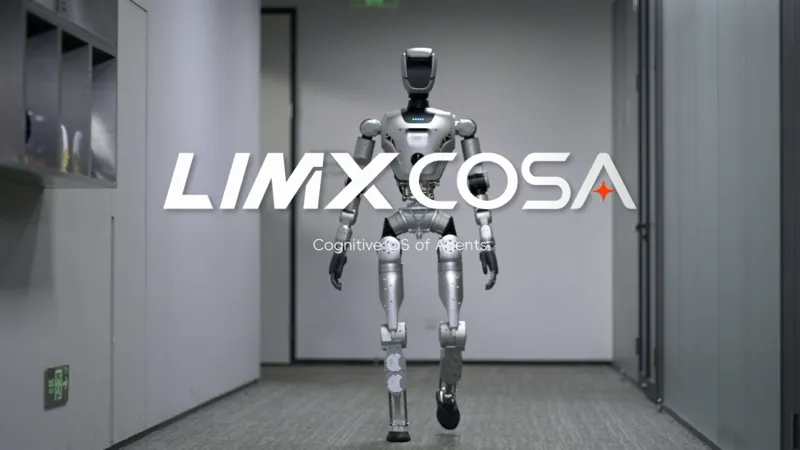
LimX Dynamics gives the clearest recent example of the embodied robot OS framing. Its Chinese announcement for LimX COSA calls it a physical-world-native "具身 Agentic OS" and expands COSA as Cognitive OS of Agents. LimX says the system integrates high-level cognition with whole-body motion control so a robot can "think, move, and work while thinking" — the original phrase is "能想、能动、边思考边干活."
The important part is not the slogan. It is the architecture LimX describes. COSA is presented as a system for managing models, skills, memory, and action, aligning VLA-style cognition with whole-body control. The company describes a modular skill toolbox, unified scheduling and planning across models and skills, and a full loop from understanding the task to perceiving the environment, adjusting decisions, combining skills, and executing.
LimX also describes three layers:
COSA layer
Whole-body control foundation model
- What it means for a home robot
- The robot can stay balanced and move robustly instead of only producing a plan.
COSA layer
Higher-level skill layer
- What it means for a home robot
- Navigation, obstacle avoidance, grasping, stairs, and other trained skills can be combined.
COSA layer
Autonomous cognition and decision layer
- What it means for a home robot
- The robot can interpret goals, remember context, and adjust as the environment changes.
| COSA layer | What it means for a home robot |
|---|---|
| Whole-body control foundation model | The robot can stay balanced and move robustly instead of only producing a plan. |
| Higher-level skill layer | Navigation, obstacle avoidance, grasping, stairs, and other trained skills can be combined. |
| Autonomous cognition and decision layer | The robot can interpret goals, remember context, and adjust as the environment changes. |
That is exactly the kind of stack buyers should look for. It does not prove that LimX Oli is ready to fold laundry in your apartment. In the ui44 database, Oli is still listed as Development, with contact-sales pricing and undisclosed battery life. But it does show where the category is moving: from "this robot has an LLM" to "this robot has a system that connects models, body control, memory, and recoverable skills."
What the ui44 database says today
The current market is uneven. Some robots have strong bodies and weak public software detail. Some have polished conversational AI but limited manipulation. Some are developer platforms that expose the stack, while others are consumer companions with closed systems.
Here is the buyer-relevant snapshot from the ui44 database:
Robot
- Status / price signal
- Development; contact sales
- What the AI stack suggests
- COSA physical-world-native agentic OS, 31 DOF, loco-manipulation, ROS2/Python SDK
- Home-buyer reality check
- Best viewed as an autonomy-stack signal, not a household purchase today.
Robot
- Status / price signal
- Pre-order; $20,000 early-adopter price
- What the AI stack suggests
- 1X Embodied Intelligence, tactile skin, RGB/depth sensing, about 4 hours runtime
- Home-buyer reality check
- One of the clearest home-humanoid paths, but still early and expensive.
Robot
- Status / price signal
- Active; $24,950 list price
- What the AI stack suggests
- Open-source ROS 2 + Python stack, mobile manipulation, 2 kg payload, 2-5 hour battery
- Home-buyer reality check
- Less humanoid, but more practical for research and assistive manipulation.
Robot
- Status / price signal
- Available; $24,240 official-store price
- What the AI stack suggests
- RK3588 + NVIDIA Orin NX on X2 Ultra, AGIBOT Genie platform, 3D LiDAR/RGB-D
- Home-buyer reality check
- Real buying signal, but still a developer/commercial humanoid more than a home appliance.
Robot
- Status / price signal
- Pre-order from $4,900 Air / $5,900 standard
- What the AI stack suggests
- UnifoLM multimodal model, voice/image interaction, optional Jetson Orin in EDU
- Home-buyer reality check
- Price is disruptive; autonomy and useful manipulation are the questions.
Robot
- Status / price signal
- Development; no public price
- What the AI stack suggests
- Google Gemini + Samsung models, SmartThings integration, mobile projector
- Home-buyer reality check
- Strong smart-home companion idea, but not a manipulator.
Robot
- Status / price signal
- Active; $1,599.99 invitation-only
- What the AI stack suggests
- Alexa, Ring integration, home patrol, visual ID
- Home-buyer reality check
- Useful as a patrol/telepresence robot, not a general chore robot.
Robot
- Status / price signal
- Active; no public price
- What the AI stack suggests
- Helix VLA, tactile arrays, depth cameras, multi-step planning
- Home-buyer reality check
- Important to watch, but not a consumer product with public buying terms.
| Robot | Status / price signal | What the AI stack suggests | Home-buyer reality check |
|---|---|---|---|
| LimX Oli | Development; contact sales | COSA physical-world-native agentic OS, 31 DOF, loco-manipulation, ROS2/Python SDK | Best viewed as an autonomy-stack signal, not a household purchase today. |
| 1X NEO | Pre-order; $20,000 early-adopter price | 1X Embodied Intelligence, tactile skin, RGB/depth sensing, about 4 hours runtime | One of the clearest home-humanoid paths, but still early and expensive. |
| Hello Robot Stretch 3 | Active; $24,950 list price | Open-source ROS 2 + Python stack, mobile manipulation, 2 kg payload, 2-5 hour battery | Less humanoid, but more practical for research and assistive manipulation. |
| AGIBOT X2 | Available; $24,240 official-store price | RK3588 + NVIDIA Orin NX on X2 Ultra, AGIBOT Genie platform, 3D LiDAR/RGB-D | Real buying signal, but still a developer/commercial humanoid more than a home appliance. |
| Unitree R1 | Pre-order from $4,900 Air / $5,900 standard | UnifoLM multimodal model, voice/image interaction, optional Jetson Orin in EDU | Price is disruptive; autonomy and useful manipulation are the questions. |
| Samsung Ballie | Development; no public price | Google Gemini + Samsung models, SmartThings integration, mobile projector | Strong smart-home companion idea, but not a manipulator. |
| Amazon Astro | Active; $1,599.99 invitation-only | Alexa, Ring integration, home patrol, visual ID | Useful as a patrol/telepresence robot, not a general chore robot. |
| Figure 03 | Active; no public price | Helix VLA, tactile arrays, depth cameras, multi-step planning | Important to watch, but not a consumer product with public buying terms. |

The pattern is clear: the robots closest to meaningful home use are not simply the ones with the most impressive language model. They are the ones with a body, sensors, safety story, support model, and autonomy stack that fit the tasks you actually expect.
The six questions to ask before believing an AI robot claim
When a manufacturer says a robot has embodied AI, an agentic OS, a VLA model, or a robot foundation model, ask these six questions.
1. What does the robot perceive locally?
Cameras and microphones are not enough as labels. A home robot needs to know how it turns raw sensing into usable state: where objects are, where people are, where the robot can safely move, and what has changed since the last attempt.
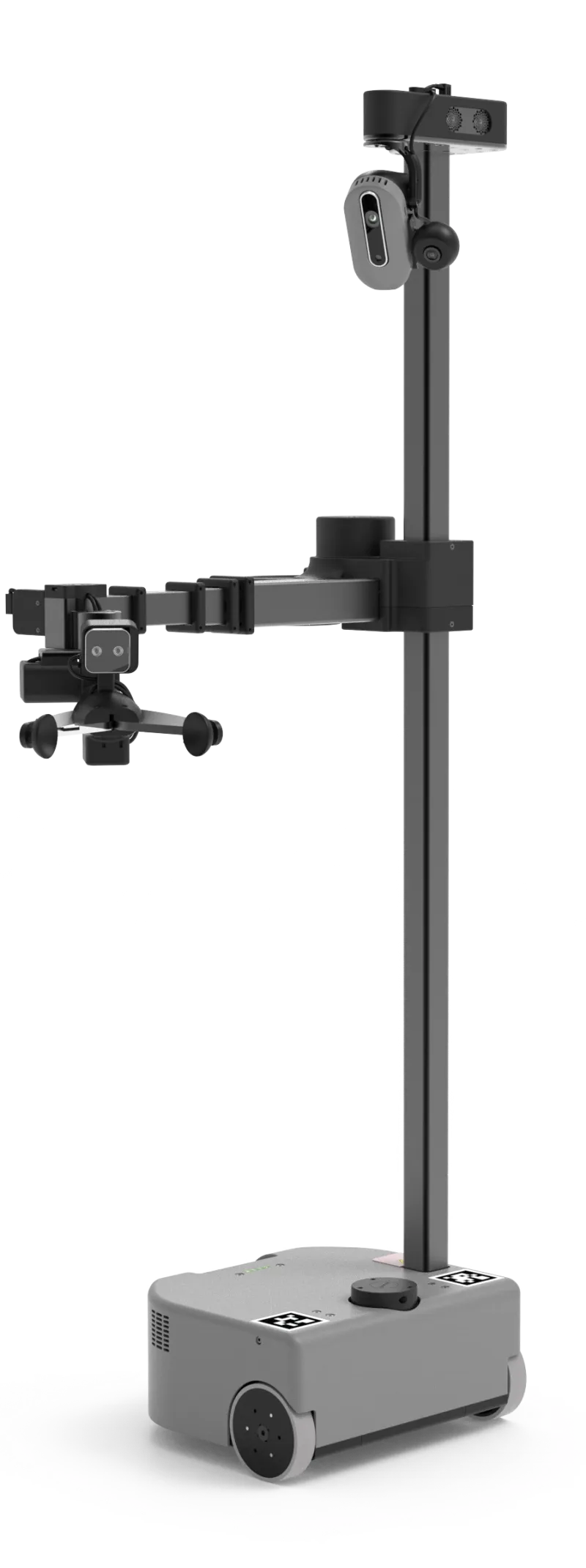
This is where robots like Stretch 3 are instructive. It is not shaped like a humanoid, but the database record is very concrete: head and gripper RGB-D cameras, navigation LiDAR, microphone array, IMU, ROS 2, Python SDK, and mobile manipulation. That specificity is useful because it tells you what the robot can actually sense and expose to software.
2. Can it plan more than one step ahead?
A voice assistant can set a timer. A home robot needs to sequence tasks under physical constraints. "Clean this up" may require navigating, identifying objects, choosing which item to move first, avoiding fragile objects, and switching plans when a person enters the space.
PARTNR's 93% human versus 30% LLM-planner task result is a good reminder: even strong language models struggle when coordination and recovery matter. A robot OS should not only generate a plan; it should track whether that plan is still valid.
3. Does it have reusable skills, or only demos?
A useful home robot needs skills that can be called repeatedly: dock, undock, open gripper, close gripper, approach counter, avoid pet, climb small threshold, hand object to user, stop safely. The manufacturer should be able to describe how these skills are trained, updated, tested, and combined.
This is why the LimX COSA description is interesting. LimX explicitly talks about modular, reusable skills that can be independently trained, iterated, and combined. That is more meaningful than a single viral video, although it still needs independent proof in homes.
4. How does memory work?
Memory is useful and sensitive. A robot that remembers room layouts, object locations, habits, faces, and previous instructions can become much more useful. It can also become a privacy risk if storage, deletion, cloud processing, and sharing rules are vague.
A buyer-friendly robot OS should make memory understandable: what is stored, where it is stored, whether it is local or cloud-based, how long it lasts, and how a user can reset it.
5. What happens when the robot should refuse?
Physical AI needs a "no" layer. If the robot is uncertain, blocked, carrying something fragile, near a child, or about to exceed a force limit, it should slow or stop. It should ask for help before it improvises with a heavy body in a private home.
This is especially important for humanoids and mobile manipulators. A robot that can lift, reach, or roll into another room needs stronger refusal and recovery behavior than a screen-only assistant.
6. Who fixes the stack after purchase?
Home robots will improve through updates, but updates are also a trust risk. A manufacturer should be clear about software support, OTA update policies, service channels, warranty limits, and whether core autonomy features depend on a subscription or remote operator.
That is why status and price matter in the database. A $4,900 Unitree R1 pre-order is exciting because it lowers the humanoid entry price. A $24,950 Stretch 3 is expensive but explicit about its research/developer stack. A no-price development robot can be technologically important while still being impossible to recommend as a buyer option.
How this changes home-robot shopping
The phrase "robot OS" can sound like inside-baseball engineering language, but it maps directly to buyer questions.
If you want...
A companion or smart-home presence
- Look for...
- Reliable navigation, privacy controls, voice model, smart-home integration
- Be careful with...
- Mistaking a mobile speaker or projector for a chore robot
If you want...
Assistive manipulation
- Look for...
- Reach, payload, camera placement, teleoperation fallback, support terms
- Be careful with...
- Humanoid hype without safe object handling
If you want...
A developer humanoid
- Look for...
- SDKs, ROS2 support, local compute, skill libraries, battery specs
- Be careful with...
- Viral movement demos that do not show task completion
If you want...
A future chore robot
- Look for...
- Perception, planning, memory, recovery, refusal, updates
- Be careful with...
- Any claim that an LLM alone makes it autonomous
| If you want... | Look for... | Be careful with... |
|---|---|---|
| A companion or smart-home presence | Reliable navigation, privacy controls, voice model, smart-home integration | Mistaking a mobile speaker or projector for a chore robot |
| Assistive manipulation | Reach, payload, camera placement, teleoperation fallback, support terms | Humanoid hype without safe object handling |
| A developer humanoid | SDKs, ROS2 support, local compute, skill libraries, battery specs | Viral movement demos that do not show task completion |
| A future chore robot | Perception, planning, memory, recovery, refusal, updates | Any claim that an LLM alone makes it autonomous |

For most buyers in 2026, the practical answer is still modest. If you need a robot today, buy for a narrow, supported task: patrol, telepresence, assistive research, education, smart-home companionship, or a specific developer project. Do not buy a humanoid because a demo video implies general autonomy.
If you are evaluating the next generation, though, the OS layer is one of the best signals to watch. A company that can explain how perception, skills, planning, memory, motion, safety, and updates fit together is further along than a company that only says "we added an AI model."
The bottom line
Home robots need more than chatbot brains because homes are physical, changing, and unforgiving. A useful robot must understand language, but it also has to know where it is, what its body can do, what it should remember, when it should stop, and how to recover when the plan breaks.
That is the promise behind an embodied robot OS. It should not be taken at face value, and it is not a shortcut to home-ready autonomy. But it is the right question to ask.
When you compare the next wave of home robots, ask less about whether they can chat and more about what system lets them act. The future home robot will not be a chatbot with legs. It will be a body, a planner, a memory, a safety layer, and a support system working together.
Written by
ui44 Team
Published April 30, 2026
Share this article
Open a plain share link on X or Bluesky. No embeds, no widgets, no cookie baggage.