That is why the phrase "Chinese hardware, American AI" is worth taking seriously. It is not a prediction that every home robot will be built this way. It is a useful test for the market. If Chinese companies scale cheaper humanoid bodies faster, and U.S. or Western companies keep leading parts of the model, app, cloud, safety, and training stack, buyers may end up evaluating combinations rather than brands.
For a buyer, the important question is not national pride. It is simpler: who controls the body, who controls the brain, who services the robot, and who is responsible when something goes wrong?
Could home humanoids arrive as a split hardware/software stack?
Yes, and the early evidence points in that direction.
CNBC's China Connection reported that Chinese humanoid startups are already shipping robots to factories and malls while many U.S. rivals remain valued more like broad AI platforms. The same report noted that Americans are going to Shenzhen to buy humanoid parts and combine them with U.S. software. TrendForce's April 2026 market note sharpened the hardware side: it expects China's humanoid robot output to grow 94% in 2026, with Unitree and AGIBOT projected to account for nearly 80% of shipments.
That does not mean a cheap home humanoid is suddenly ready. Factories, malls, airports, and demo floors are not kitchens, kids' rooms, or cluttered apartments. But it does suggest the home robot stack may split into layers:
Layer
Robot body
- What it controls
- Motors, joints, hands, batteries, sensors
- Why it matters at home
- Determines price, repairability, noise, strength, and physical safety
Layer
Low-level control
- What it controls
- Balance, walking, recovery, joint limits
- Why it matters at home
- Keeps the robot from falling, hitting furniture, or damaging itself
Layer
AI autonomy
- What it controls
- Vision-language-action models, planning, memory
- Why it matters at home
- Decides whether the robot can understand real chores, not just demos
Layer
Human support
- What it controls
- Teleoperation, training, service, escalation
- Why it matters at home
- Covers the gap when autonomy fails
Layer
App and cloud
- What it controls
- Updates, accounts, privacy, subscriptions
- Why it matters at home
- Determines long-term ownership, data exposure, and lock-in
| Layer | What it controls | Why it matters at home |
|---|---|---|
| Robot body | Motors, joints, hands, batteries, sensors | Determines price, repairability, noise, strength, and physical safety |
| Low-level control | Balance, walking, recovery, joint limits | Keeps the robot from falling, hitting furniture, or damaging itself |
| AI autonomy | Vision-language-action models, planning, memory | Decides whether the robot can understand real chores, not just demos |
| Human support | Teleoperation, training, service, escalation | Covers the gap when autonomy fails |
| App and cloud | Updates, accounts, privacy, subscriptions | Determines long-term ownership, data exposure, and lock-in |
A buyer does not need to know every actuator supplier. But they do need to know whether the product is a real integrated robot or a clever bundle of parts, models, and promises.
What does China's hardware advantage look like in ui44's database?
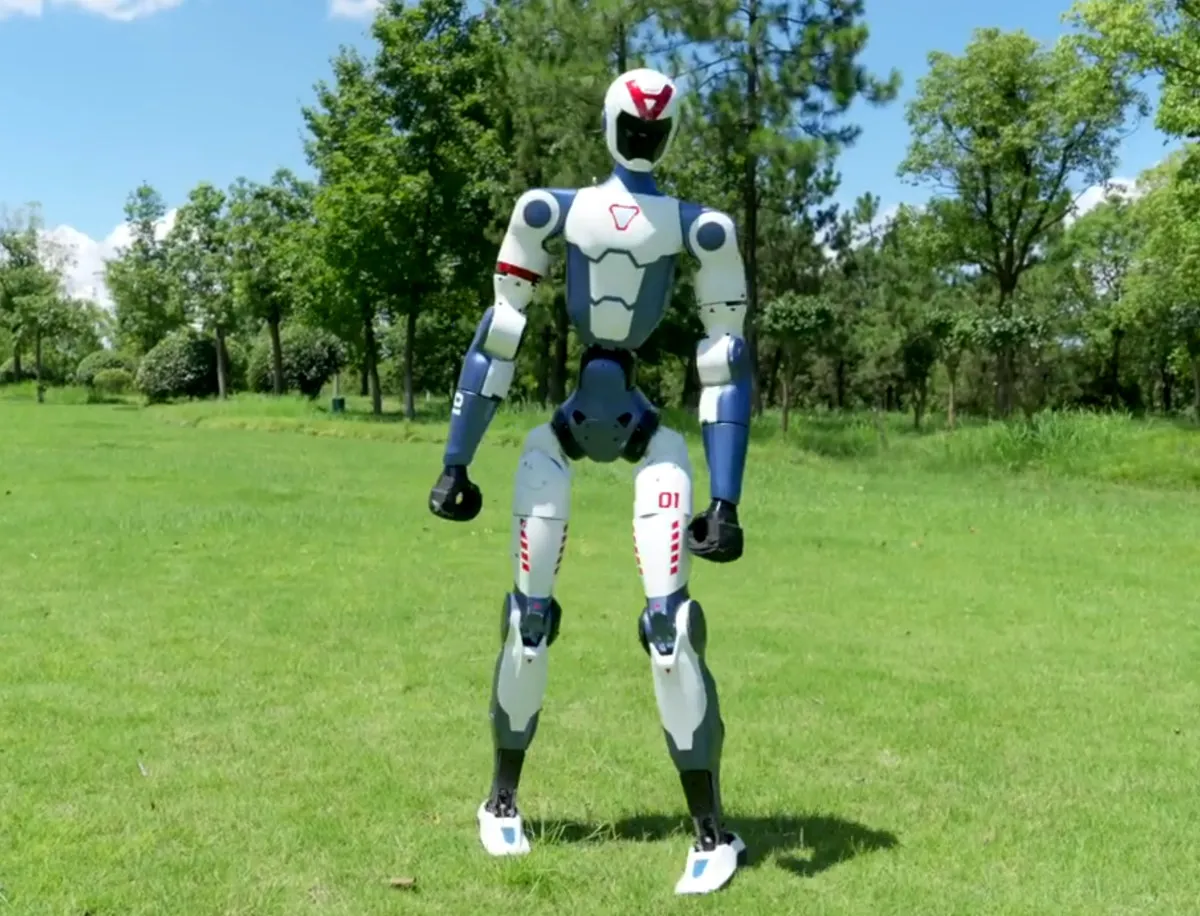
The clearest sign is price compression. In the ui44 database, Unitree R1 starts at $4,900 in pre-sale form. It is a 123 cm, roughly 29 kg humanoid with 20 to 26 degrees of freedom, voice and image interaction through Unitree's UnifoLM model, and ROS 2 / SDK support for development versions. That is not a proven home helper, but it changes the entry price for serious biped hardware.
Unitree G1 sits one tier up at $13,500, with a 132 cm, 35 kg body, 23 DOF in the standard model, optional dexterous hands on EDU versions, depth camera, 3D LiDAR, Wi-Fi 6, Bluetooth 5.2, and about 2 hours of battery life. It is still a research and development platform more than a family product, but it shows how quickly capable bodies are moving below old six-figure robot expectations.
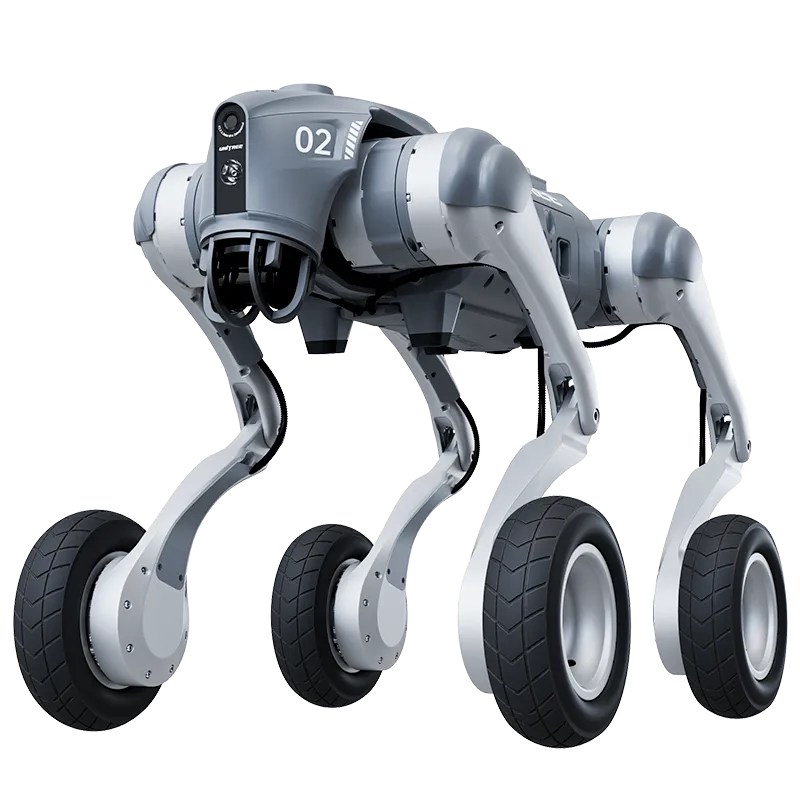
The low end is even more striking. Noetix Bumi is tracked at about $1,370 in China, with a 94 cm, 12 kg body aimed at education and home use. It is not a chore robot. It is closer to a small programmable humanoid companion. But as a signal, it matters: bodies are getting cheap enough for developers, schools, and early adopters to experiment at home.
AGIBOT shows the opposite end of the Chinese hardware story: scale and deployment. ui44 tracks AGIBOT A2 Ultra as an available full-size humanoid with 169 cm height, 69 kg weight, 3D LiDAR, RGB-D vision, 4G/5G, a Jetson Orin-class compute stack, and enterprise pricing. AGIBOT X2 is smaller and publicly listed at $24,240, with up to 30 DOF, swappable batteries, 3D LiDAR on the Ultra version, and a 3 kg maximum payload.
The buyer takeaway is not "buy the cheapest Chinese humanoid." It is that the robot body is becoming a product category. Once bodies become more standardized, the software, warranty, training data, safety policy, and service network start to matter more.
Where do Western AI companies still matter?
The U.S. and Western side is not simply "software on top." The best home robot companies are still trying to solve the integration problem: how to make a robot safe, useful, updatable, and supportable in ordinary homes.
1X NEO is the cleanest home-focused example in ui44's database. It is listed at $20,000 for early adopters, stands 167 cm, weighs 30 kg, and promises around 4 hours of battery life. The important detail is not just the humanoid body. 1X markets NEO around soft, tendon-driven interaction, household chores, visual-spatial context, and Expert Mode, where a human 1X expert can guide chores the robot cannot yet complete autonomously.

That is the support layer in plain sight. It says the company knows home autonomy will be incomplete at launch, and it is building a bridge between today's robot and tomorrow's learned behavior.
Figure 03 is not a consumer robot, but it shows the software ambition. ui44 tracks it as an active industrial humanoid with 173 cm height, 61 kg weight, around 5 hours of battery life, 20 kg payload, tactile arrays, and Figure's in-house Helix VLA system. Figure's BotQ manufacturing note also says the company is building high-volume manufacturing around a production robot architecture, reliability testing, and software infrastructure for manufacturing operations.
That is a different philosophy from buying a generic body and bolting on software. Figure is betting on tight integration. 1X is betting on a home-specific robot, soft hardware, autonomy, and human support. Open platforms such as Reachy Mini, priced from $299 to $449, show another side of the Western stack: open-source AI experimentation and community-distributed behaviors rather than full-size labor.
What would buyers gain from a hybrid robot stack?
A split hardware/software market could be good for buyers if it is done honestly.
First, it could lower prices. If the body becomes less exotic, a home humanoid does not need to carry the full cost of custom motors, custom hands, custom batteries, custom cloud software, and a custom app all from one company. The difference between a $4,900 Unitree R1, a $13,500 Unitree G1, a $20,000 1X NEO, and an unpriced enterprise humanoid is already wide enough to create real segmentation.
Second, it could make robot software more portable. A software company might train manipulation, conversation, household memory, or safety behaviors across multiple body types. A developer could prototype on a desktop robot such as Reachy Mini, test on a research humanoid, and eventually target a more capable body. That is not seamless today, but it is where robotics developers want the market to go.
Third, it could speed up iteration. The robot that ships in 2026 will not be finished. The question is whether it can get meaningfully better after purchase through OTA updates, new behaviors, better perception, and safer fallback modes. A body-plus-software ecosystem can improve faster than a sealed appliance if the interfaces are stable and the company keeps supporting it.
What are the risks of buying a split-stack humanoid?
The risks are just as real.
Service can fall between companies. If the motor fails, is that the body maker's problem, the importer, or the AI company that sold the package? A home robot is not a phone. It is heavy, mobile, expensive, and mechanically stressed. Buyers should demand clear repair terms before paying a deposit.
Safety responsibility can get blurry. A model might decide what to do, but a controller executes the movement. If a robot drops a pan, pushes into a pet gate, or falls on stairs, the root cause could be perception, planning, balance control, hardware limits, or user setup. That makes liability complicated.
Privacy can spread across layers. A home humanoid sees rooms, people, objects, habits, and mistakes. If the body vendor, AI provider, teleoperation team, cloud host, and app company are different entities, buyers need a much clearer answer about who receives video, audio, maps, and task logs.
Geopolitics can interrupt ownership. Import rules, sanctions, app-store restrictions, cloud availability, parts supply, and payment rails can all matter. Even if a robot works on day one, long-term support is part of the product.
Compatibility claims can be overstated. ROS 2 support, SDK access, open joint interfaces, and simulation tools are useful, but they do not automatically make a robot safe or useful at home. A developer platform is not the same thing as a supported consumer appliance.
How should you evaluate a Chinese-hardware, Western-AI robot before preordering?
Use a stack checklist rather than a spec sheet alone.
- Body: What is the exact robot body, weight, battery life, payload, hand design, and replacement-parts policy?
- Controller: Who owns balance, fall recovery, joint limits, collision handling, and emergency stop behavior?
- AI model: Does the robot use a named VLA or multimodal model, and what tasks has it completed outside a demo video?
- Human fallback: Is there teleoperation, expert assist, or remote support? If so, who can see your home and when?
- Data policy: Are video, audio, maps, and task attempts stored locally, in the cloud, or shared with model-training teams?
- Update path: How long are software updates promised, and can the robot keep basic functions if the cloud service changes?
- Warranty: Who repairs motors, sensors, batteries, hands, chargers, and damaged exterior shells?
- Jurisdiction: Which country governs the sale, data processing, warranty, and import/customs process?

The cheapest humanoid body is not automatically the best deal. The most advanced AI demo is not automatically a safe home product. The winner is the company, or bundle of companies, that can make the full stack understandable.
Bottom line: buy the support system, not just the body
Chinese hardware scale could absolutely shape how home humanoid robots arrive. Unitree's low-cost R1 and G1 platforms, AGIBOT's broader commercial lineup, and China's accelerating production base suggest the body side of humanoid robotics is moving fast.
But a home robot is not just a body. It is a machine that must understand your rooms, avoid your family, respect your privacy, recover from mistakes, improve over time, and get repaired when hardware breaks. That is where AI software, human support, safety validation, and long-term ownership policy become the real product.
So if a future preorder promises "Chinese hardware plus American AI," do not dismiss it. Also do not accept it at face value. Ask what each layer does, who owns it, who supports it, and what happens when the robot fails.
That is the practical home-robot question. Not which country wins. Which stack can you actually live with?
Sources checked
- CNBC, "China ships more humanoid robots than the U.S. as investors diverge on AI bets"
- TrendForce, "China's Humanoid Robot Output to Surge 94% in 2026"
- Unitree R1 and G1 official product pages
- 1X NEO official product page
- Figure BotQ manufacturing note
- Hugging Face / Pollen Robotics Reachy Mini launch note
Related in the database
Use this article as a privacy verification workflow
Turn the article into a privacy verification pass grounded in the robots, manufacturers, and components it actually references.
Chinese Hardware, American AI: Home Humanoids already points you toward 8 linked robots, 7 manufacturers, and 4 countries inside the ui44 database. That matters because strong buyer guidance is easier to apply when you can move immediately from a claim or warning into concrete product pages, manufacturer directories, component explainers, and country-level context instead of treating the article as an isolated opinion piece. The fastest next step is to turn the article into a shortlist workflow: open the linked robot pages, verify which specs are actually published for those models, then compare the surrounding manufacturer and component context before you decide whether the underlying claim changes your buying plan.
For this topic, the useful discipline is to separate the editorial lesson from the catalog evidence. The article gives you the framing, but the robot pages tell you what each product actually ships with today: sensor stack, connectivity methods, listed price, release timing, category, and support-relevant compatibility notes. The manufacturer pages then show whether you are looking at a one-off launch, a broader lineup pattern, or a company that spans multiple categories. That layered workflow reduces the risk of buying on a single marketing phrase or a single support FAQ.
Use the robot pages to confirm which products actually expose cameras, microphones, Wi-Fi, or voice systems, then use the manufacturer pages to decide how much of the privacy question seems product-specific versus brand-wide. On this route cluster, R1, G1, and A2 Ultra form the fastest reality check. If you want a quick working shortlist, open Compare R1, G1, and A2 Ultra next, then keep this article open as the reasoning layer while you compare structured data side by side.
Practical Takeaway
Every robot, manufacturer, category, component, and country reference below resolves to a real ui44 page, keeping the follow-up path grounded in database records rather than generic advice.
Suggested next steps in ui44
- Open R1 and note the listed sensors, connectivity methods, and voice stack before you interpret any policy claim.
- Cross-check the wider brand context on Unitree Robotics so you can see whether the privacy question touches one model or a broader lineup.
- Use the linked component pages to confirm how common the relevant sensors and connectivity layers are across the database.
- Keep a short note of which policy layers you checked, which device features are actually present on the robot page, and which items still depend on region- or app-level confirmation.
- Finish with Compare R1, G1, and A2 Ultra so the policy reading sits next to structured product data.
Robot profiles worth opening next
Use the linked product pages as the evidence layer
The linked robot pages are where this article becomes operational. Instead of asking whether the headline is interesting, use the robot entries to inspect the actual mix of sensors, connectivity options, batteries, pricing, release timing, and stated capabilities attached to the products mentioned in the article. That is the easiest way to see whether the warning or opportunity described here affects one product family, a specific design pattern, or an entire buying lane.
R1
Unitree Robotics · Humanoid · Pre-order
R1 is tracked on ui44 as a pre-order humanoid robot from Unitree Robotics. The database currently records a listed price of $4,900, a release date of 2025, ~1 hour (mixed activity) battery life, Not officially disclosed charging time, and a published stack that includes Monocular camera (R1 Air); binocular camera (R1/R1 EDU), 4-Mic Array, and Dual 6-Axis IMU plus Wi-Fi 6 and Bluetooth 5.2.
For privacy-focused reading, this page matters because it shows the concrete device surface behind the policy discussion. Use it to verify whether R1 combines sensors and connectivity in a way that could change the in-home data footprint, and compare the listed capabilities such as Bipedal Walking & Running, Cartwheels & Handstands, and Push Recovery with any cloud, app, or voice layers, including UnifoLM (voice + image commands).
G1 is tracked on ui44 as a available humanoid robot from Unitree. The database currently records a listed price of $13,500, a release date of 2024-05-13, ~2 hours battery life, Not disclosed charging time, and a published stack that includes Depth Camera, 3D LiDAR, and 4 Microphone Array plus Wi-Fi 6 and Bluetooth 5.2.
For privacy-focused reading, this page matters because it shows the concrete device surface behind the policy discussion. Use it to verify whether G1 combines sensors and connectivity in a way that could change the in-home data footprint, and compare the listed capabilities such as Bipedal Walking, Object Manipulation, and Dexterous Hands (optional Dex3-1) with any cloud, app, or voice layers.
A2 Ultra is tracked on ui44 as a available humanoid robot from AGIBOT. The database currently records a listed price of $999,999, a release date of 2024, Standing: 3h, Walking: 1.5h+ battery life, 2 hours charging time, and a published stack that includes 3D LiDAR, RGB-D Camera, and RGB Camera plus Wi-Fi and 4G/5G.
For privacy-focused reading, this page matters because it shows the concrete device surface behind the policy discussion. Use it to verify whether A2 Ultra combines sensors and connectivity in a way that could change the in-home data footprint, and compare the listed capabilities such as Bipedal Walking, Autonomous Navigation, and Intelligent Obstacle Avoidance with any cloud, app, or voice layers.
X2 is tracked on ui44 as a available humanoid robot from AGIBOT. The database currently records a listed price of $24,240, a release date of 2025, ~2 hours at 0.5 m/s walking battery life, ~1.5 hours charging time, and a published stack that includes 3D LiDAR (Ultra), RGB-D Camera (Ultra), and RGB Cameras plus Wi-Fi and Bluetooth.
For privacy-focused reading, this page matters because it shows the concrete device surface behind the policy discussion. Use it to verify whether X2 combines sensors and connectivity in a way that could change the in-home data footprint, and compare the listed capabilities such as Bipedal Walking, 25-30 DOF Articulation, and Object Manipulation (with OmniHand accessory) with any cloud, app, or voice layers.
NEO
1X Technologies · Humanoid · Pre-order
NEO is tracked on ui44 as a pre-order humanoid robot from 1X Technologies. The database currently records a listed price of $20,000, a release date of 2025-10-28, ~4 hours battery life, Not disclosed charging time, and a published stack that includes RGB Cameras, Depth Sensors, and Tactile Skin plus Wi-Fi and Bluetooth.
For privacy-focused reading, this page matters because it shows the concrete device surface behind the policy discussion. Use it to verify whether NEO combines sensors and connectivity in a way that could change the in-home data footprint, and compare the listed capabilities such as Household Chores, Tidying Up, and Safe Human Interaction with any cloud, app, or voice layers.
Manufacturer context behind the article
Check whether this is one product story or a broader company pattern
Manufacturer pages add the privacy context that individual product pages cannot show on their own. They help you check whether cameras, microphones, cloud accounts, app controls, and policy assumptions appear across a broader lineup or stay tied to one specific product story.
Unitree Robotics
ui44 currently tracks 9 robots from Unitree Robotics across 3 categorys. The company is grouped under China, and the current catalog footprint on ui44 includes B2, B1, Go2.
That wider brand context matters because privacy questions rarely stop at one FAQ page. A manufacturer route helps you see whether the article is centered on one premium model or on a company that has several relevant products and therefore more than one place where the same policy or app assumptions might matter. The category mix here currently points toward Quadruped, Humanoid, Research as the most useful next route if you want to see whether this article reflects a wider pattern inside the brand.
Unitree
ui44 currently tracks 2 robots from Unitree across 1 category. The company is grouped under China, and the current catalog footprint on ui44 includes H1, G1.
That wider brand context matters because privacy questions rarely stop at one FAQ page. A manufacturer route helps you see whether the article is centered on one premium model or on a company that has several relevant products and therefore more than one place where the same policy or app assumptions might matter. The category mix here currently points toward Humanoid as the most useful next route if you want to see whether this article reflects a wider pattern inside the brand.
AGIBOT
ui44 currently tracks 10 robots from AGIBOT across 3 categorys. The company is grouped under China, and the current catalog footprint on ui44 includes A2 Ultra, X2, Expedition A3.
That wider brand context matters because privacy questions rarely stop at one FAQ page. A manufacturer route helps you see whether the article is centered on one premium model or on a company that has several relevant products and therefore more than one place where the same policy or app assumptions might matter. The category mix here currently points toward Humanoid, Quadruped, Commercial as the most useful next route if you want to see whether this article reflects a wider pattern inside the brand.
1X Technologies
ui44 currently tracks 2 robots from 1X Technologies across 1 category. The company is grouped under Norway, and the current catalog footprint on ui44 includes NEO, EVE.
That wider brand context matters because privacy questions rarely stop at one FAQ page. A manufacturer route helps you see whether the article is centered on one premium model or on a company that has several relevant products and therefore more than one place where the same policy or app assumptions might matter. The category mix here currently points toward Humanoid as the most useful next route if you want to see whether this article reflects a wider pattern inside the brand.
Broaden the scan without leaving the database
Categories, components, and countries add the wider context
Category framing
Category pages are useful when the article touches a buying pattern that shows up across brands. A category route helps you confirm whether the linked products sit in a narrow niche or whether the same question should be tested across a larger field of alternatives.
Humanoid
The Humanoid category page currently groups 129 tracked robots from 92 manufacturers. ui44 describes this lane as: Full-size bipedal humanoid robots built to work alongside people — from factory floors to household tasks. Compare the cutting edge of humanoid robotics.
That makes the category route a practical follow-up when you want to check whether the products linked in this article are typical for the lane or whether they sit at one edge of the market. Useful starting examples currently include NEO, EVE, Mornine M1.
Companions
The Companions category page currently groups 53 tracked robots from 48 manufacturers. ui44 describes this lane as: Social robots, robot pets, and elderly-care companions designed for emotional connection and everyday support at home.
That makes the category route a practical follow-up when you want to check whether the products linked in this article are typical for the lane or whether they sit at one edge of the market. Useful starting examples currently include PARO, Abi, Next-Generation Companion Robot.
Country and ecosystem context
Country pages give extra context when support practices, launch sequencing, regulatory posture, or manufacturer mix matter. They are not a substitute for model-level verification, but they do help you see which ecosystems cluster together and which manufacturers sit in the same regional field when you broaden the search beyond the article headline.
China
The China route currently groups 189 tracked robots from 87 manufacturers in ui44. That gives you a useful regional lens when the article points toward support practices, launch sequencing, or brand clusters that may share similar ecosystem assumptions.
On the current route, manufacturers like AGIBOT, Dreame, Unitree Robotics make the page a good way to broaden the scan without losing the regional context that often shapes availability, documentation style, and adjacent alternatives.
Norway
The Norway route currently groups 2 tracked robots from 1 manufacturers in ui44. That gives you a useful regional lens when the article points toward support practices, launch sequencing, or brand clusters that may share similar ecosystem assumptions.
On the current route, manufacturers like 1X Technologies make the page a good way to broaden the scan without losing the regional context that often shapes availability, documentation style, and adjacent alternatives.
USA
The USA route currently groups 89 tracked robots from 69 manufacturers in ui44. That gives you a useful regional lens when the article points toward support practices, launch sequencing, or brand clusters that may share similar ecosystem assumptions.
On the current route, manufacturers like Faraday Future, iRobot, Boston Dynamics make the page a good way to broaden the scan without losing the regional context that often shapes availability, documentation style, and adjacent alternatives.
Questions to answer before you move from reading to buying
A follow-up FAQ built from the entities already linked in this article
Frequently Asked Questions
Which page should I open first after reading “Chinese Hardware, American AI: Home Humanoids”?
Start with R1. That gives you a concrete product anchor for the article’s main claim. From there, branch into the manufacturer and component pages so you can tell whether the article is describing one specific model, a repeated brand pattern, or a wider technology issue that affects multiple shortlist options.
How do the manufacturer pages change the buying decision?
Unitree Robotics help you zoom out from one article and one product. On ui44 they show lineup breadth, category spread, and the neighboring robots tied to the same company. That context is useful when you are deciding whether a risk belongs to a single model, whether it shows up across a brand’s portfolio, and whether you should keep looking at alternatives before committing.
When should I switch from reading to side-by-side comparison?
Move into Compare R1, G1, and A2 Ultra as soon as you understand the article’s main warning or promise. The article explains what to watch for, but the compare view is where you can check whether price, status, battery life, connectivity, sensors, and category fit still make the robot a good match for your own home and budget.
Where to go next in ui44
Keep the research chain inside the database
If you want to keep going, these follow-on pages give you the cleanest expansion path from article to research session. Open the comparison route first if you are deciding between products today. Open the manufacturer, category, and component routes if you still need to understand the broader pattern behind the claim.
Written by
ui44 Team
Published May 1, 2026
Share this article
Open a plain share link on X or Bluesky. No embeds, no widgets, no cookie baggage.