The clearest example is Menlo Research's Asimov DIY Kit, a 1.20 m, 35 kg, 25+2 DoF open-source humanoid kit listed with a $15,000 target price and a refundable $499 preorder deposit. The official page says the robot ships unassembled, includes a manual and build videos, and requires mechanical and electrical knowledge. That is exciting. It is also a giant warning label.
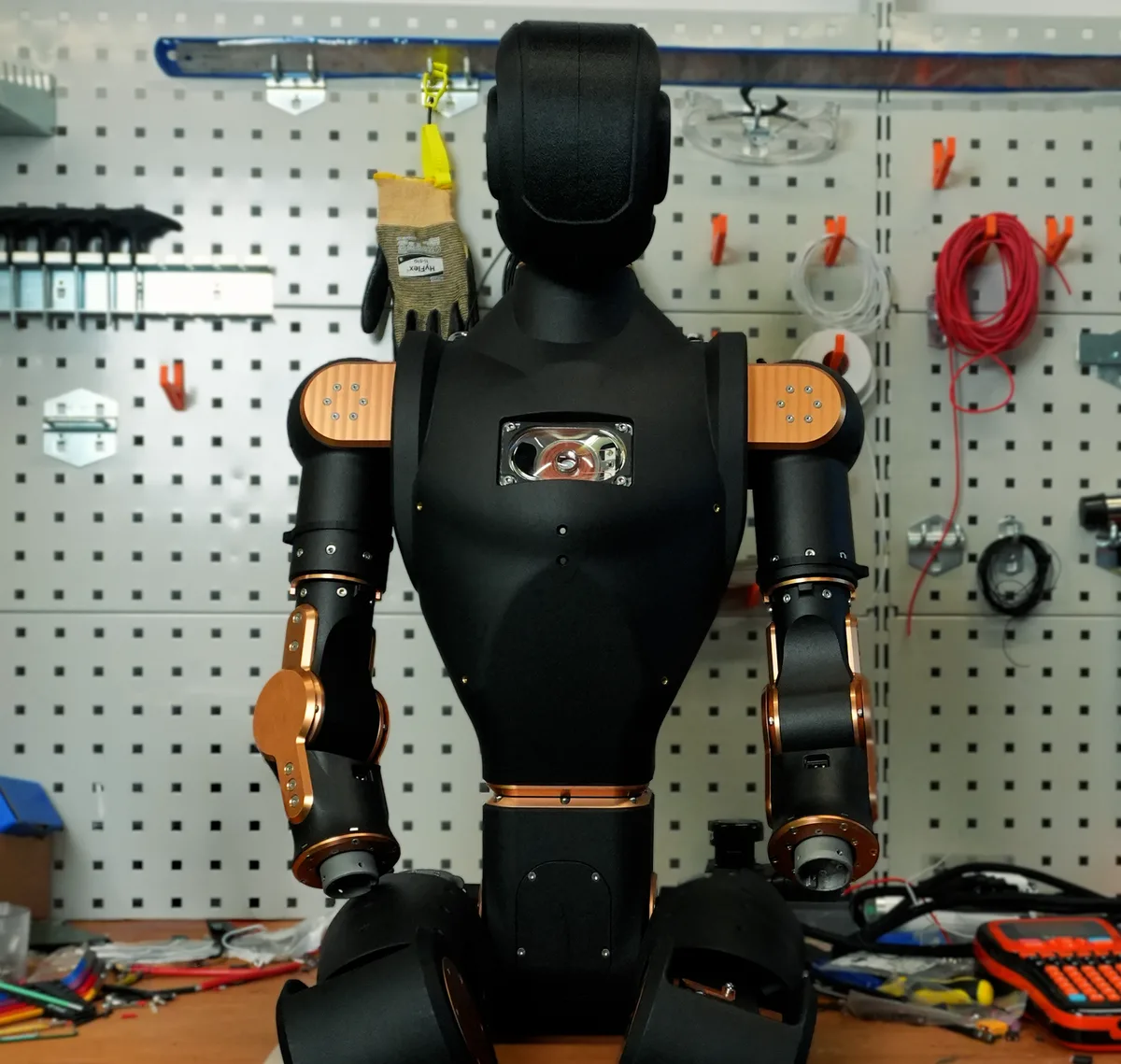
The short answer: a DIY humanoid kit is a real path into humanoid robotics for advanced builders, small labs, robotics clubs, and startups. It is not the best path for a normal household that wants chores done safely and reliably. For buyers, the more useful question is not "can I assemble one?" It is: what kind of ownership are you signing up for after the robot stands up?
Can You Actually Build Your Own Humanoid Robot in 2026?
Yes, if you already know that "build" means assembly, debugging, calibration, software setup, safety testing, and ongoing repair. No, if you expect a finished consumer product.
The Asimov DIY Kit is the first full-size-ish humanoid in the ui44 database that is explicitly sold as a kit for people who want to assemble the robot personally. It is different from Unitree R1, which is a low-cost ready-made humanoid body, and different from ROBOTIS AI Sapiens K0, which is an open-source research platform whose price has not been announced yet.
That distinction matters because humanoid robots are not one category. A cheap humanoid body, an open research platform, and a DIY kit solve different problems:
- a ready-made robot reduces assembly risk;
- an open platform improves auditability and reproducibility;
- a DIY kit teaches the physical stack because you literally put the stack together;
- a consumer home robot should hide most of that complexity and carry product liability, support, and safety burden for you.
Asimov sits in the third bucket. It is a builder platform. That makes it more interesting than a concept video, but less suitable than a supported appliance.
What Does the Asimov DIY Kit Include?
The official Asimov DIY Kit page says the kit includes the structural frame, actuators, motors, sensors, wiring harness, assembly manual, and build videos. Menlo describes it as a "Raspberry Pi or Arduino for humanoid robots": a full humanoid core that you can hack, repair, extend, and build software around.
The headline specs are unusually concrete for a preorder kit:
| Asimov DIY Kit detail | Official / ui44 data |
|---|---|
| Height | 1.20 m |
| Weight | 35 kg |
| Degrees of freedom | 25+2 DoF |
| Price | $15,000 target price |
| Deposit | $499, refundable |
| Assembly | Ships unassembled |
| Support | Manual, build videos, Discord and forum support |
| Availability | Shipment starts "in a few months" according to the official page |
The appeal is repairability and access. The kit uses off-the-shelf parts and simple 3D-printable components, which should make it easier to repair or modify than a sealed consumer humanoid. Menlo also says the engineering team will support builders through Discord and dedicated forum threads, while making the boundary clear: "we are not going to build it for you."
That is exactly the right framing. A DIY humanoid is not cheaper because the hard work disappeared. It is cheaper because some of the integration, testing, and support burden moves from the manufacturer to the builder.
One spec needs special caution: Asimov's page says most of the cost comes from actuators and claims arm strength close to or above Unitree G1 in some motions, including roughly 15 kg per arm for bicep curls and 18 kg per arm for lateral raises. Treat that as a posture-specific actuator demonstration, not a promise that the robot can safely carry groceries around your kitchen. Home usefulness depends on grip, reach, balance, perception, software, and safety limits, not a single lift number.
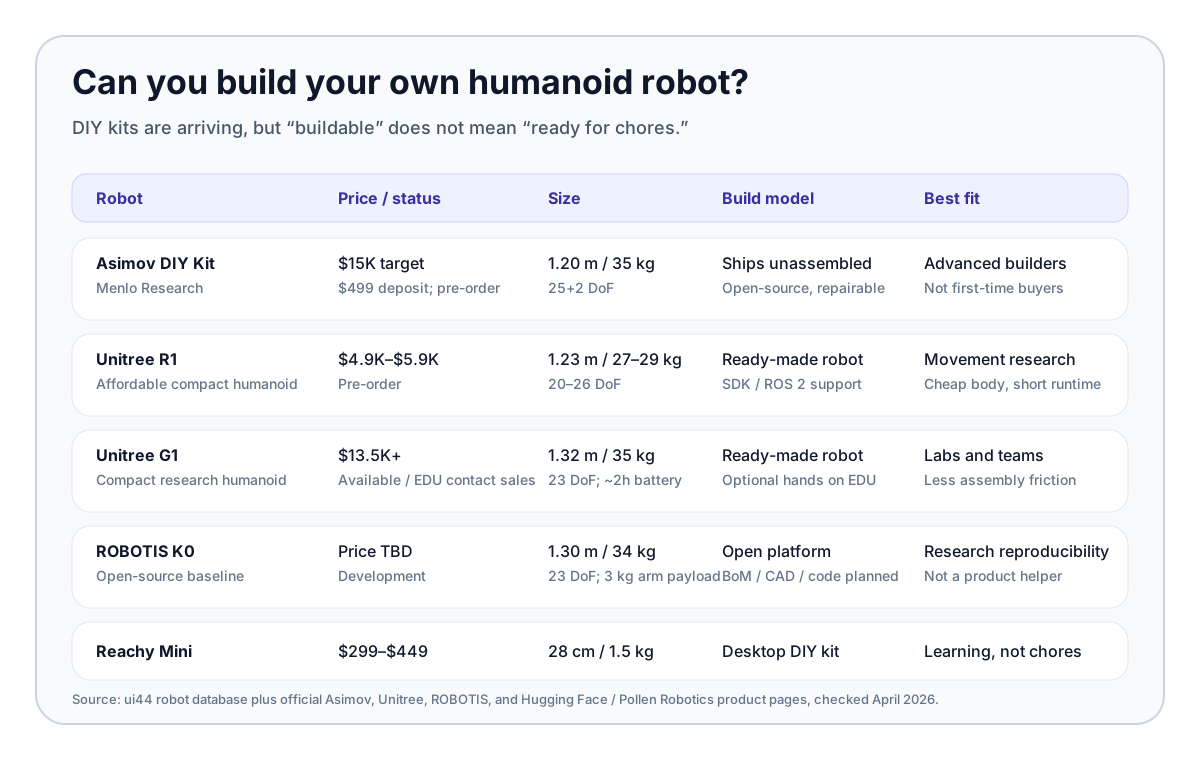
How Does Asimov Compare With Unitree R1, G1, and ROBOTIS K0?
The easiest mistake is to compare DIY humanoids only by price. Price matters, but it hides the more important question: are you buying a body, a platform, a learning project, or a supported product?
| Robot | Price / status | Size | What you are really buying |
|---|---|---|---|
| Asimov DIY Kit | $15,000 target; preorder | 1.20 m, 35 kg | An unassembled open-source humanoid kit for advanced builders |
| Unitree R1 | $4,900 R1 Air / $5,900 R1; preorder | 1.23 m, about 27-29 kg | A low-cost ready-made humanoid focused on movement and experimentation |
| Unitree G1 | $13,500+; available | 1.32 m, 35 kg | A compact research humanoid with optional dexterous hands on EDU versions |
| ROBOTIS AI Sapiens K0 | Price not announced; development | 1.30 m, 34 kg | A reproducible open-source research baseline with BoM, CAD, code, simulation assets, and tutorials planned |
| Reachy Mini | $299 / $449; preorder | 28 cm, 1.5 kg | A desktop open-source robot kit for interaction and AI projects, not household labor |
Unitree R1 is the most disruptive price point. Its official page lists R1 Air at $4,900 and standard R1 at $5,900, with about one hour of battery life, 20-26 DoF, Wi-Fi 6, Bluetooth 5.2, microphone array, cameras, OTA updates, and warnings that individual users should understand the limits of humanoids before buying. If your goal is to get a small humanoid body moving with less assembly risk, R1 is hard to ignore.
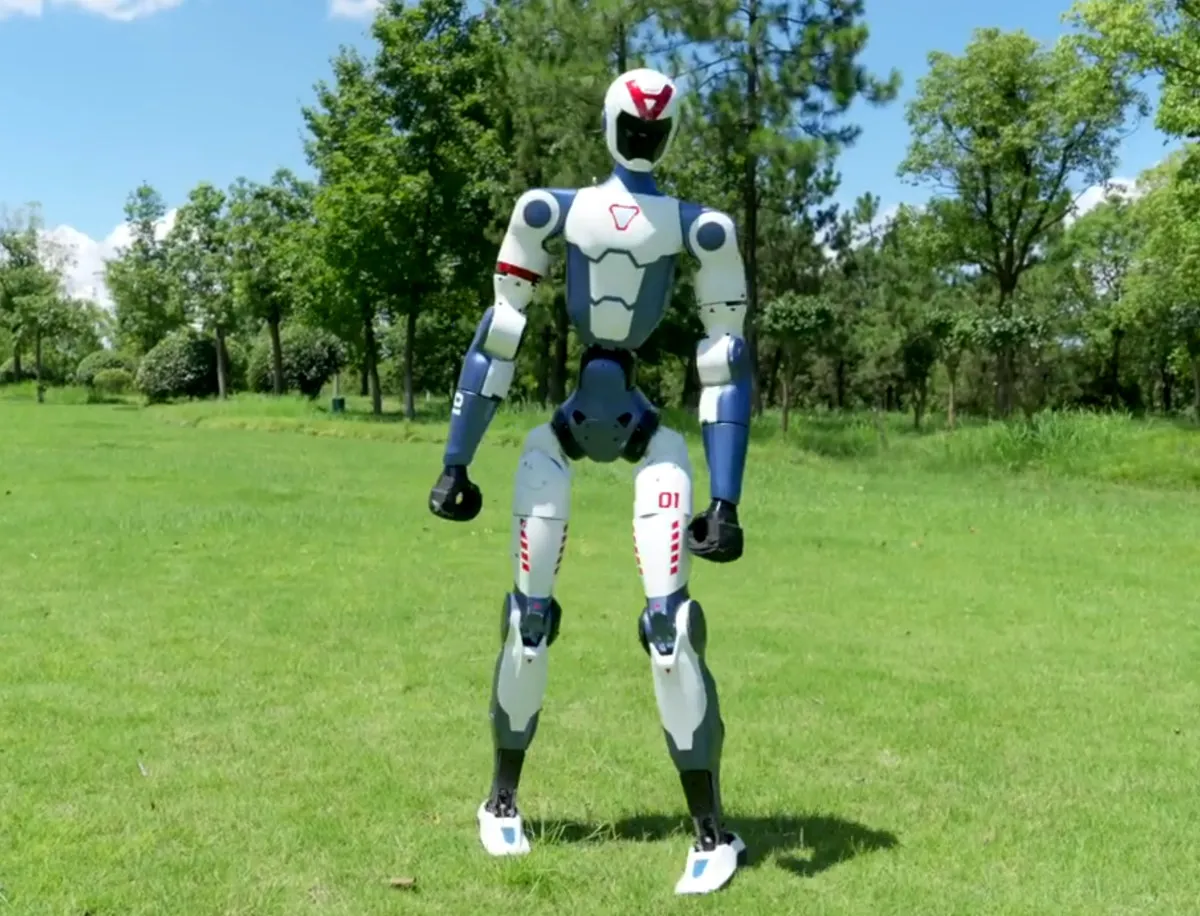
Unitree G1 is the more mature compact platform. In ui44 data, it starts at $13,500, stands 132 cm tall, weighs about 35 kg with battery, runs for about two hours, and supports optional dexterous hands and expanded development features on the EDU version. It is less of a weekend project and more of a research purchase.
ROBOTIS K0 is the most interesting comparison for openness. ROBOTIS says K0 is a 1.3 m, 34 kg, 23 DoF humanoid with a 3 kg max arm payload, Dynamixel-Q actuators, a 46.8 V 9000 mAh battery, and a fully open stack planned across hardware BoM, STEP CAD files, source code, simulation assets, and tutorials. But K0 is still a development platform with no announced price. It may become the more reproducible lab baseline, while Asimov is the more direct builder kit.
Reachy Mini belongs in the table because it shows the other end of the open robot spectrum. At $299 or $449, it is a small expressive desktop kit with a camera, microphones, speaker, 6-DoF head movement, Python programmability, and Hugging Face integration. It cannot lift a sock. But for learning the software and interaction side of physical AI, it may be a better first robot than a 35 kg humanoid.
What Home Tasks Can a DIY Humanoid Teach?
A DIY humanoid can teach a lot before it becomes useful. That sounds like a criticism, but it is the real value of the category.
A builder platform can help teams learn:
- how bipedal balance changes when a battery, cover, or arm payload changes;
- how much calibration is needed before motion policies transfer cleanly;
- how wiring, heat, battery access, and emergency stops affect daily operation;
- how fragile manipulation becomes when objects are soft, shiny, heavy, or partly hidden;
- how much software is needed around a model before a robot action is safe.
Those lessons matter for future home robots. A robot that can only succeed in a lab does not become a home helper by adding a nicer shell. Homes have pets, stairs, clutter, reflective surfaces, rugs, cables, children, visitors, and owners who do not read debug logs. The robot needs task planning, perception, force control, error recovery, privacy rules, and a way to say no when a command is unsafe.
That is why open-source hardware matters. If a platform's wiring, actuators, control code, and simulation assets are inspectable, more people can find the limits. More people can test repair procedures. More people can compare whether a policy works on the real robot rather than only in a launch video.
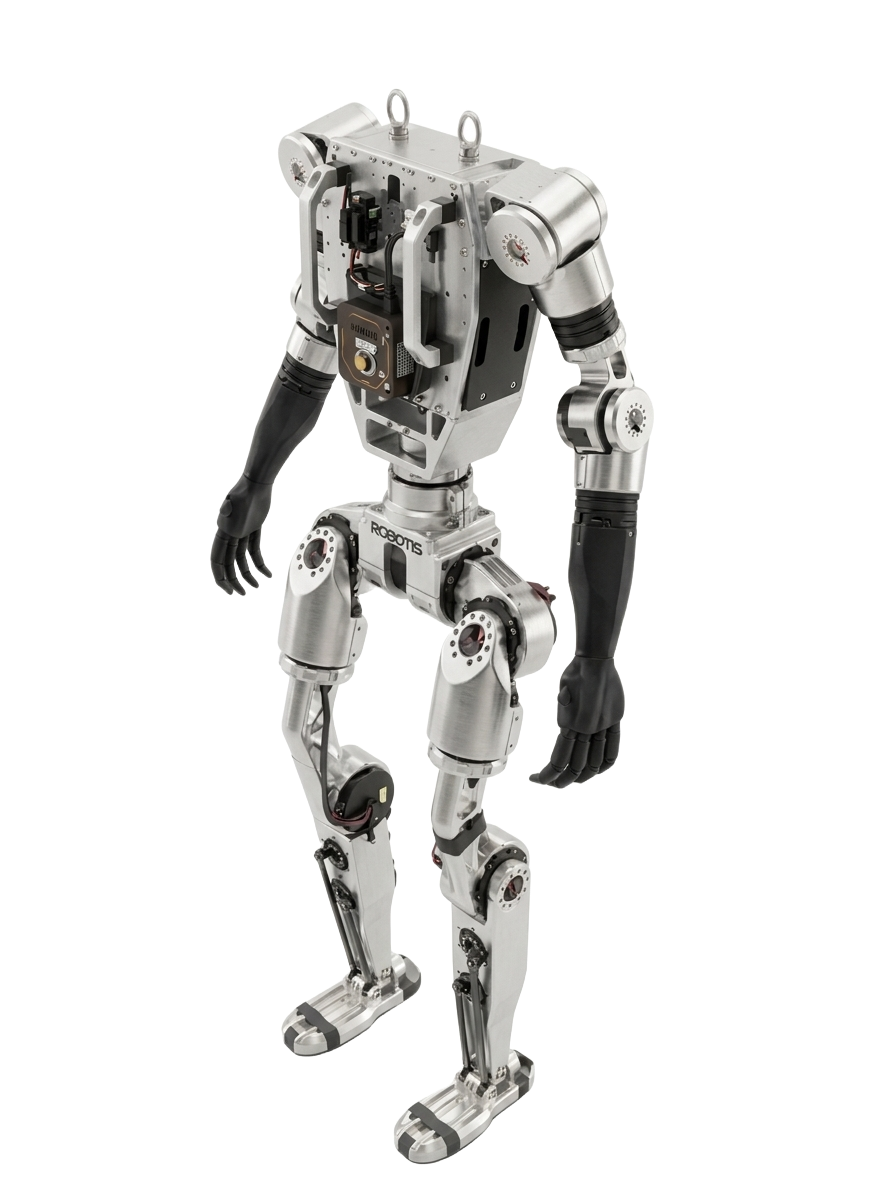
But open source is not magic. A visible bill of materials does not make the robot child-safe. A Discord server does not replace a warranty. A modifiable arm can still pinch, fall, overheat, or drop something. For home buyers, openness is a trust signal only when it is paired with practical support and clear safety limits.
Who Should Not Buy a DIY Humanoid Kit?
Do not buy a DIY humanoid kit if your goal is household convenience. Buy one only if the building, debugging, and learning are part of the value.
A DIY humanoid is probably the wrong choice if you:
- want a robot that cleans, folds laundry, or carries objects reliably today;
- do not have a safe workspace for a 35 kg powered machine;
- cannot troubleshoot mechanical alignment, wiring, battery, and software issues;
- need a warranty-backed appliance for a family home;
- expect quiet, polished, app-first setup;
- plan to run it around children, pets, or guests without strict supervision;
- are uncomfortable with command-line tools, firmware updates, logs, and simulator workflows.
That does not make Asimov a bad product. It makes the buyer profile narrow. The right buyer is closer to a robotics lab, university club, hardware startup, advanced maker space, or serious hobbyist than a normal consumer choosing between home robots.
It also changes the budget. The purchase price is not the full cost. You may need tools, spare parts, batteries, safe flooring, a workbench, storage, compute, protective equipment, and time. You are not just buying a robot. You are buying an unfinished robotics program with a body.
What Should Buyers Ask Before Preordering?
If you are still interested, ask harder questions than "can it walk?" Walking is only the entry ticket.
Before preordering any DIY humanoid robot, ask:
- What exactly is open source? Hardware files, firmware, high-level code, simulation assets, training pipelines, or only documentation?
- What license applies? A public repo is less useful if commercial use, modification, or redistribution is unclear.
- What safety hardware is included? Look for emergency stop, torque limits, speed limits, battery protections, and clear recovery procedures.
- How long does assembly take? A kit that takes 20 hours and a kit that takes 200 hours are different products.
- How are spare parts handled? Actuators and batteries decide whether a robot is repairable or becomes a very expensive statue.
- What software works on day one? Standing, walking, teleoperation, simulation, calibration, logging, and update tooling all matter.
- What happens if the company changes direction? Open files help, but community size, parts availability, and documentation quality determine whether the platform survives.
- What data leaves the robot? If cloud-connected reasoning is involved, privacy and home-map handling matter even for a developer robot.
The best sign is boring documentation: assembly steps, torque specs, connector maps, battery guidance, calibration routines, known failure modes, and clear limitations. The worst sign is a polished video with no practical support trail.
So, Is a DIY Humanoid the Fastest Path to Home Robots?
For ordinary homes, no. For the home-robot ecosystem, maybe.
DIY humanoids will not beat supported products to real household usefulness. The first useful home robots are more likely to be narrow, heavily supported, and task-specific: mobile manipulators, assistive carts, companion robots, cleaning robots with better autonomy, or humanoids operating with human backup. A 35 kg kit that you assemble yourself is not the fastest way to get chores done.
But DIY kits could speed up the part of robotics that actually needs speed: iteration. More builders with access to full humanoid hardware means more experiments, more failed assumptions, more repair knowledge, and more pressure on closed platforms to explain what they can really do.
That is why the Asimov DIY Kit is worth watching. It is not a consumer home helper. It is a sign that humanoid robotics is moving from one-off lab machines and venture-funded black boxes toward a more open builder market.
If you want a robot for your home today, do not buy a DIY humanoid kit expecting an appliance. If you want to help discover what home humanoids are actually capable of, and you have the skills and workspace to handle a powerful machine, then building one may finally be a real option.
Database context
Use this article as a privacy verification workflow
Turn the article into a real verification pass
Can You Build Your Own Humanoid Robot? already points you toward 5 linked robots, 5 manufacturers, and 2 countries inside the ui44 database. That matters because strong buyer guidance is easier to apply when you can move immediately from a claim or warning into concrete product pages, manufacturer directories, component explainers, and country-level context instead of treating the article as an isolated opinion piece. The fastest next step is to turn the article into a shortlist workflow: open the linked robot pages, verify which specs are actually published for those models, then compare the surrounding manufacturer and component context before you decide whether the underlying claim changes your buying plan.
For this topic, the useful discipline is to separate the editorial lesson from the catalog evidence. The article gives you the framing, but the robot pages tell you what each product actually ships with today: sensor stack, connectivity methods, listed price, release timing, category, and support-relevant compatibility notes. The manufacturer pages then show whether you are looking at a one-off launch, a broader lineup pattern, or a company that spans multiple categories. That layered workflow reduces the risk of buying on a single marketing phrase or a single support FAQ.
Use the robot pages to confirm which products actually expose cameras, microphones, Wi-Fi, or voice systems, then use the manufacturer pages to decide how much of the privacy question seems product-specific versus brand-wide. On this route cluster, Asimov DIY Kit (Here Be Dragons Edition), R1, and AI Sapiens K0 form the fastest reality check. If you want a quick working shortlist, open Compare Asimov DIY Kit (Here Be Dragons Edition), R1, and AI Sapiens K0 next, then keep this article open as the reasoning layer while you compare structured data side by side.
Practical Takeaway
Every robot, manufacturer, category, component, and country reference below resolves to a real ui44 page, keeping the follow-up path grounded in database records rather than generic advice.
Suggested next steps in ui44
- Open Asimov DIY Kit (Here Be Dragons Edition) and note the listed sensors, connectivity methods, and voice stack before you interpret any policy claim.
- Cross-check the wider brand context on Menlo Research so you can see whether the privacy question touches one model or a broader lineup.
- Use the linked component pages to confirm how common the relevant sensors and connectivity layers are across the database.
- Keep a short note of which policy layers you checked, which device features are actually present on the robot page, and which items still depend on region- or app-level confirmation.
- Finish with Compare Asimov DIY Kit (Here Be Dragons Edition), R1, and AI Sapiens K0 so the policy reading sits next to structured product data.
Database context
Robot profiles worth opening next
Use the linked product pages as the evidence layer
The linked robot pages are where this article becomes operational. Instead of asking whether the headline is interesting, use the robot entries to inspect the actual mix of sensors, connectivity options, batteries, pricing, release timing, and stated capabilities attached to the products mentioned in the article. That is the easiest way to see whether the warning or opportunity described here affects one product family, a specific design pattern, or an entire buying lane.
Asimov DIY Kit (Here Be Dragons Edition)
Menlo Research · Research · Pre-order
Asimov DIY Kit (Here Be Dragons Edition) is tracked on ui44 as a pre-order research robot from Menlo Research. The database currently records a listed price of $15,000, a release date of 2026, Not officially disclosed battery life, Not officially disclosed charging time, and a published stack that includes Depth sensing, Force feedback, and Proprioceptive sensing plus its listed connectivity stack.
For privacy-focused reading, this page matters because it shows the concrete device surface behind the policy discussion. Use it to verify whether Asimov DIY Kit (Here Be Dragons Edition) combines sensors and connectivity in a way that could change the in-home data footprint, and compare the listed capabilities such as DIY full-body humanoid assembly, Open-source hardware modification, and Open-source software development with any cloud, app, or voice layers.
R1
Unitree Robotics · Humanoid · Pre-order
R1 is tracked on ui44 as a pre-order humanoid robot from Unitree Robotics. The database currently records a listed price of $4,900, a release date of 2025, ~1 hour (mixed activity) battery life, Not officially disclosed charging time, and a published stack that includes Binocular Cameras, 4-Mic Array, and Dual 6-Axis IMU plus Wi-Fi and Bluetooth 5.2.
For privacy-focused reading, this page matters because it shows the concrete device surface behind the policy discussion. Use it to verify whether R1 combines sensors and connectivity in a way that could change the in-home data footprint, and compare the listed capabilities such as Bipedal Walking & Running, Cartwheels & Handstands, and Push Recovery with any cloud, app, or voice layers, including UnifoLM (voice + image commands).
AI Sapiens K0
ROBOTIS · Research · Development
AI Sapiens K0 is tracked on ui44 as a development research robot from ROBOTIS. The database currently records a listed price of Price TBA, a release date of 2026, Not officially disclosed (46.8 V, 9000 mAh battery) battery life, Not disclosed charging time, and a published stack that includes IMU (inferred from locomotion capability) plus Wi-Fi 5 and Bluetooth 5.0.
For privacy-focused reading, this page matters because it shows the concrete device surface behind the policy discussion. Use it to verify whether AI Sapiens K0 combines sensors and connectivity in a way that could change the in-home data footprint, and compare the listed capabilities such as Bipedal locomotion research, Reinforcement learning training in NVIDIA Isaac Sim, and Imitation learning via leader-follower data collection with any cloud, app, or voice layers.
G1 is tracked on ui44 as a available humanoid robot from Unitree. The database currently records a listed price of $13,500, a release date of 2024, ~2 hours battery life, Not disclosed charging time, and a published stack that includes Depth Camera, 3D LiDAR, and 4 Microphone Array plus Wi-Fi 6 and Bluetooth 5.2.
For privacy-focused reading, this page matters because it shows the concrete device surface behind the policy discussion. Use it to verify whether G1 combines sensors and connectivity in a way that could change the in-home data footprint, and compare the listed capabilities such as Bipedal Walking, Object Manipulation, and Dexterous Hands (optional Dex3-1) with any cloud, app, or voice layers.
Reachy Mini
Pollen Robotics · Companions · Pre-order
Reachy Mini is tracked on ui44 as a pre-order companions robot from Pollen Robotics. The database currently records a listed price of $299, a release date of 2025-07, Not officially disclosed battery life, Not officially disclosed charging time, and a published stack that includes Wide-angle camera, 4 microphones, and Accelerometer (wireless Reachy Mini) plus USB (Reachy Mini Lite via host computer) and Wi-Fi (wireless Reachy Mini).
For privacy-focused reading, this page matters because it shows the concrete device surface behind the policy discussion. Use it to verify whether Reachy Mini combines sensors and connectivity in a way that could change the in-home data footprint, and compare the listed capabilities such as 6-DoF head movement, Full body rotation, and Animated antennas for expressive interaction with any cloud, app, or voice layers.
Database context
Manufacturer context behind the article
Check whether this is one product story or a broader company pattern
Manufacturer pages add the market context that individual product pages cannot show on their own. They help you check whether the article is centered on a brand with a deep lineup, whether that brand spans several categories, and how much of its ui44 footprint depends on one flagship model versus a broader product strategy. That matters for topics like privacy, warranty terms, setup friction, and launch promises because the surrounding lineup often reveals whether a pattern is isolated or systemic.
Menlo Research
ui44 currently tracks 1 robot from Menlo Research across 1 category. The company is grouped under Unknown, and the current catalog footprint on ui44 includes Asimov DIY Kit (Here Be Dragons Edition).
That wider brand context matters because privacy questions rarely stop at one FAQ page. A manufacturer route helps you see whether the article is centered on one premium model or on a company that has several relevant products and therefore more than one place where the same policy or app assumptions might matter. The category mix here currently points toward Research as the most useful next route if you want to see whether this article reflects a wider pattern inside the brand.
Unitree Robotics
ui44 currently tracks 6 robots from Unitree Robotics across 2 categorys. The company is grouped under China, and the current catalog footprint on ui44 includes B2, B1, Go2.
That wider brand context matters because privacy questions rarely stop at one FAQ page. A manufacturer route helps you see whether the article is centered on one premium model or on a company that has several relevant products and therefore more than one place where the same policy or app assumptions might matter. The category mix here currently points toward Quadruped, Humanoid as the most useful next route if you want to see whether this article reflects a wider pattern inside the brand.
ROBOTIS
ui44 currently tracks 2 robots from ROBOTIS across 1 category. The company is grouped under Unknown, and the current catalog footprint on ui44 includes ROBOTIS OP3, AI Sapiens K0.
That wider brand context matters because privacy questions rarely stop at one FAQ page. A manufacturer route helps you see whether the article is centered on one premium model or on a company that has several relevant products and therefore more than one place where the same policy or app assumptions might matter. The category mix here currently points toward Research as the most useful next route if you want to see whether this article reflects a wider pattern inside the brand.
Unitree
ui44 currently tracks 2 robots from Unitree across 1 category. The company is grouped under China, and the current catalog footprint on ui44 includes H1, G1.
That wider brand context matters because privacy questions rarely stop at one FAQ page. A manufacturer route helps you see whether the article is centered on one premium model or on a company that has several relevant products and therefore more than one place where the same policy or app assumptions might matter. The category mix here currently points toward Humanoid as the most useful next route if you want to see whether this article reflects a wider pattern inside the brand.
Database context
Broaden the scan without leaving the database
Categories, components, and countries add the wider context
Category framing
Category pages are useful when the article touches a buying pattern that shows up across brands. A category route helps you confirm whether the linked products sit in a narrow niche or whether the same question should be tested across a larger field of alternatives.
Research
The Research category page currently groups 21 tracked robots from 16 manufacturers. ui44 describes this lane as: Academic and research robotics platforms pushing the boundaries of what machines can learn and do.
That makes the category route a practical follow-up when you want to check whether the products linked in this article are typical for the lane or whether they sit at one edge of the market. Useful starting examples currently include HRP-4C, HRP-5P, NAO6.
Humanoid
The Humanoid category page currently groups 62 tracked robots from 45 manufacturers. ui44 describes this lane as: Full-size bipedal humanoid robots designed to work alongside humans. From factory floors to household tasks, these machines represent the cutting edge of robotics.
That makes the category route a practical follow-up when you want to check whether the products linked in this article are typical for the lane or whether they sit at one edge of the market. Useful starting examples currently include NEO, EVE, Mornine M1.
Country and ecosystem context
Country pages give extra context when support practices, launch sequencing, regulatory posture, or manufacturer mix matter. They are not a substitute for model-level verification, but they do help you see which ecosystems cluster together and which manufacturers sit in the same regional field when you broaden the search beyond the article headline.
China
The China route currently groups 47 tracked robots from 14 manufacturers in ui44. That gives you a useful regional lens when the article points toward support practices, launch sequencing, or brand clusters that may share similar ecosystem assumptions.
On the current route, manufacturers like AGIBOT, Roborock, Unitree Robotics make the page a good way to broaden the scan without losing the regional context that often shapes availability, documentation style, and adjacent alternatives.
France
The France route currently groups 5 tracked robots from 4 manufacturers in ui44. That gives you a useful regional lens when the article points toward support practices, launch sequencing, or brand clusters that may share similar ecosystem assumptions.
On the current route, manufacturers like Pollen Robotics, Aldebaran / Maxtronics, Aldebaran Robotics make the page a good way to broaden the scan without losing the regional context that often shapes availability, documentation style, and adjacent alternatives.
Database context
Questions to answer before you move from reading to buying
A follow-up FAQ built from the entities already linked in this article
Frequently Asked Questions
Which page should I open first after reading “Can You Build Your Own Humanoid Robot?”?
Start with Asimov DIY Kit (Here Be Dragons Edition). That gives you a concrete product anchor for the article’s main claim. From there, branch into the manufacturer and component pages so you can tell whether the article is describing one specific model, a repeated brand pattern, or a wider technology issue that affects multiple shortlist options.
How do the manufacturer pages change the buying decision?
Menlo Research help you zoom out from one article and one product. On ui44 they show lineup breadth, category spread, and the neighboring robots tied to the same company. That context is useful when you are deciding whether a risk belongs to a single model, whether it shows up across a brand’s portfolio, and whether you should keep looking at alternatives before committing.
When should I switch from reading to side-by-side comparison?
Move into Compare Asimov DIY Kit (Here Be Dragons Edition), R1, and AI Sapiens K0 as soon as you understand the article’s main warning or promise. The article explains what to watch for, but the compare view is where you can check whether price, status, battery life, connectivity, sensors, and category fit still make the robot a good match for your own home and budget.
Database context
Where to go next in ui44
Keep the research chain inside the database
If you want to keep going, these follow-on pages give you the cleanest expansion path from article to research session. Open the comparison route first if you are deciding between products today. Open the manufacturer, category, and component routes if you still need to understand the broader pattern behind the claim.
Written by
ui44 Team
Published April 27, 2026
Share this article
Open a plain share link on X or Bluesky. No embeds, no widgets, no cookie baggage.