Article 21 min read 4,737 words

Wheeled Robot Dogs: Why Roll-and-Walk Matters

A wheeled robot dog sounds like a contradiction until you picture a real home. Most rooms are flat. Most of the annoying parts are not: thresholds, stairs, chair legs, rugs, toy piles, patios, garden paths, and the lip between a kitchen tile floor and a living-room rug.

ui44 Team All articles

That is why wheel-legged robots are worth watching. Wheels are efficient on smooth surfaces. Legs are useful when the floor stops being smooth. A robot that can roll for the boring 90% and step for the awkward 10% could be more practical than a pure quadruped that burns battery walking everywhere.

The catch is just as important: the best public examples today are still industrial, research, or development-stage machines. DEEP Robotics' new LYNX M20 is an impressive wheel-legged robot, but DEEP Robotics describes it for inspection, rescue, firefighting, logistics, and scientific exploration — not for carrying laundry around a normal apartment. For home buyers, the right takeaway is not "buy a wheel-legged dog now." It is: watch this form factor because it solves some of the reasons robot dogs still feel impractical indoors.
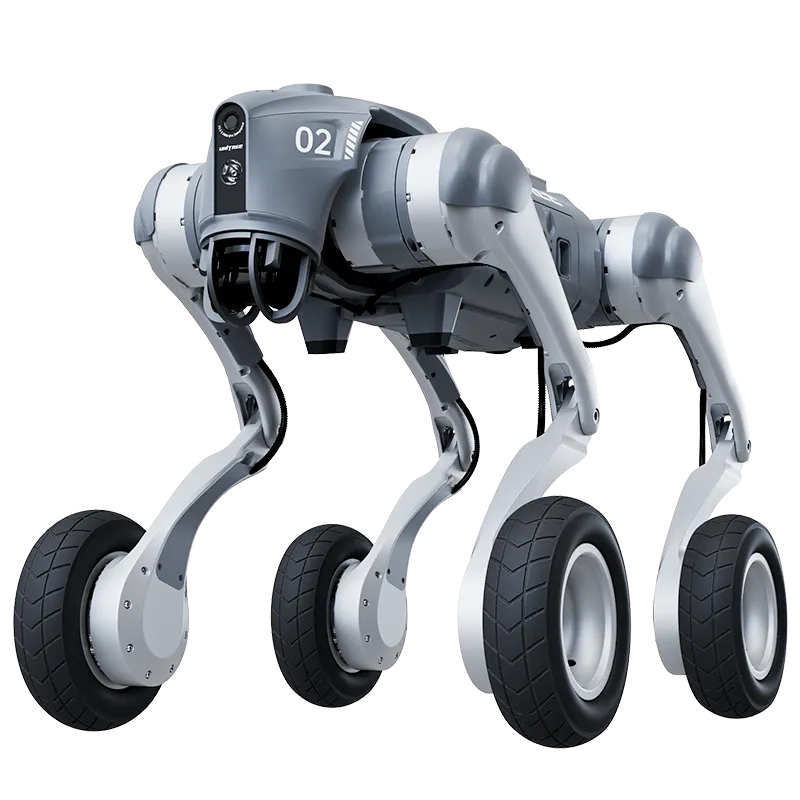
Unitree Go2 quadruped robot dog for home quadruped robot comparison

Why wheels may matter more than legs inside a home

Legged robots are good at making impressive videos. They can recover from bumps, step over cables, climb stairs, and keep their body level on uneven ground. That is exactly why quadrupeds are used for industrial inspection, security, rescue, and research.

But a household robot has a different job. It needs to be boringly reliable. It must move quietly at night, dock without drama, avoid pets, survive spilled water, and still have enough battery left to do something useful after it crosses the hallway.

Pure wheels already work well for home robots because homes are mostly flat. That is why robot vacuums, telepresence robots, Amazon Astro, and many companion robots use wheels instead of legs. Wheels are efficient, easy to control, and easier to package into a small product.

The problem is that wheels fail at exactly the places where a more capable home robot would become useful. Stairs separate floors. Thresholds split rooms. Outdoor spaces are rarely flat. A wheeled robot can be excellent in one room and trapped in the next.

A wheel-legged design is an attempt to avoid that trade-off. The robot rolls when rolling is cheap, then uses leg articulation when the environment gets messy. If that becomes reliable and supportable, it could make future home quadrupeds less like stunt machines and more like everyday mobile platforms.
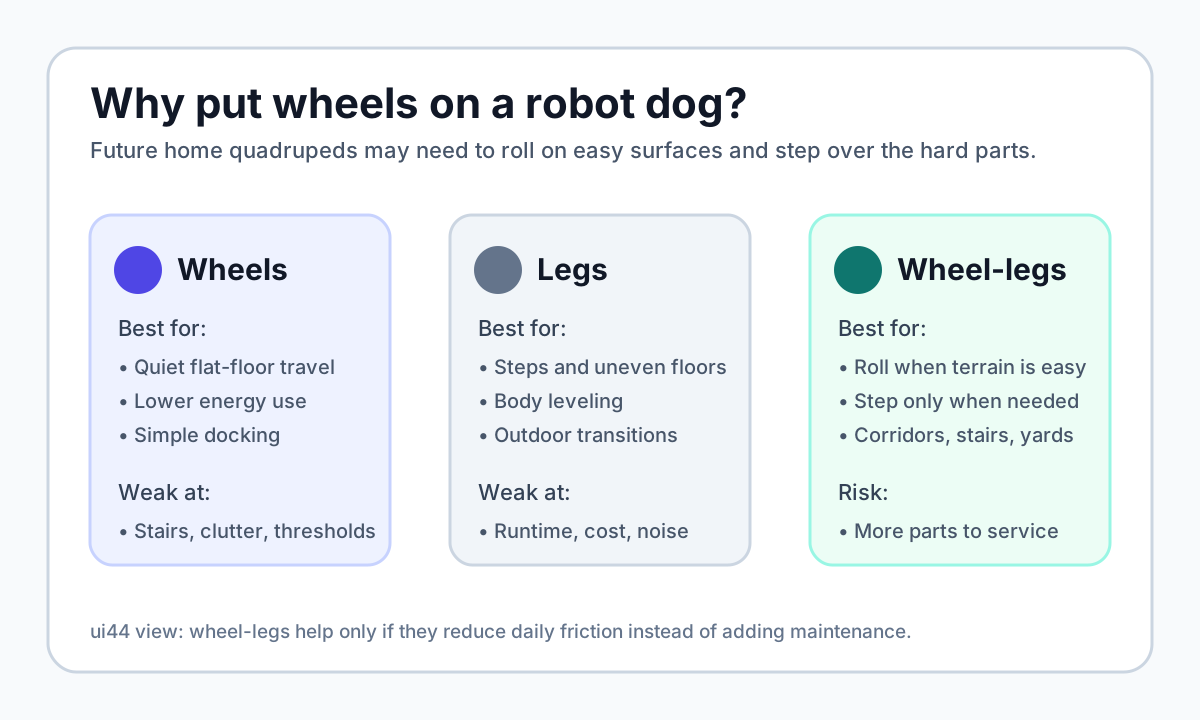
Wheeled robot dog mobility chart comparing wheels, legs, and wheel-legged robot designs
Scroll sideways to inspect the full chart.

What DEEP Robotics LYNX M20 proves — and what it does not

DEEP Robotics frames the LYNX M20 as the world's first mid-sized wheeled-legged robot built for challenging terrain and hazardous industrial environments. The use case list matters: power-line inspection, emergency response, firefighting, logistics, and scientific exploration. In other words, this is not a consumer robot dog.

The numbers are still useful because they show what wheel-legs are trying to solve:

  • 33 kg body weight, which puts it near the same mass class as Boston Dynamics Spot but below heavier industrial quadrupeds.
  • 2.5 hours under load and up to 3 hours unloaded, helped by a hot-swappable battery design.
  • 15 kg effective payload and 50 kg maximum load capacity, according to DEEP Robotics' launch page.
  • 80 cm single-step climbing and the ability to move through corridors as narrow as 50 cm.
  • IP66 dust and water resistance, plus operation from -20°C to 55°C.
  • A 96-beam LiDAR with a 360° × 90° field of view for mapping, navigation, and omnidirectional obstacle avoidance.

Those are not normal home specs. An 80 cm step claim is overkill for almost any house. IP66 and -20°C operation are more relevant to tunnels, industrial sites, and rescue scenes than bedrooms. But the direction is interesting: DEEP is trying to combine the speed and efficiency of wheels with leg postures that can handle stairs, debris, slopes, and narrow spaces.

For home robotics, that combination matters more than a single stunt claim. A future robot that can roll across a kitchen, climb two steps into a sunken living room, cross a patio threshold, and still dock reliably would solve a real home mobility problem. The LYNX M20 does not prove that product exists yet. It proves that serious robot makers are investing in the body plan.

How current robot dogs compare in ui44's database

ui44's database is useful here because it shows the gap between a promising form factor and buyable robots. The public quadruped market already includes small robot dogs, enterprise inspection robots, and development platforms, but not a mainstream wheel-legged home helper.

Robot

Unitree Go2

What ui44 tracks
$2,800, about 15 kg, 1-2 hours standard runtime, 3.7 m/s top speed, 4D LiDAR
Why it matters
One of the clearest buyable robot-dog baselines for enthusiasts

Robot

AGIBOT D1 Pro

What ui44 tracks
$3,200, 15.5 kg, 1-2 hours, 3.5 m/s, ≈5 kg payload, 16 cm stair climb
Why it matters
Another comparatively accessible quadruped, but still short-task oriented

Robot

Unitree B2

What ui44 tracks
60 kg, 4-6 hours, more than 6 m/s, IP67, optional wheeled-foot configuration
Why it matters
Shows wheel-legged ideas already appearing in industrial quadrupeds

Robot

DEEPRobotics X30

What ui44 tracks
56 kg, 2.5-4 hours, 4 m/s, IP67, dark-environment navigation
Why it matters
A strong industrial quadruped benchmark before the LYNX M20 generation

Robot

Spot

What ui44 tracks
33.8 kg, about 90 minutes, 14 kg payload, 1.6 m/s, IP54
Why it matters
The best-known deployed legged robot, but still enterprise contact-sales

Robot

Roborock Saros Rover

What ui44 tracks
Development-stage wheel-leg robot vacuum with no launch date
Why it matters
Proof that wheel-leg thinking is entering actual home-appliance design

The interesting split is clear. Smaller robot dogs such as the Go2 and D1 Pro are closer to the consumer price band, but they are still mainly development, education, entertainment, and light-duty platforms. Larger machines such as B2, X30, Spot, and LYNX M20 have the payload, ruggedness, and endurance story, but they are industrial products.

That is the middle ground a future home wheel-legged robot dog would need to hit: light enough to live around people, affordable enough to sell, durable enough to survive daily use, and capable enough that the wheels and legs do more than make a good demo.
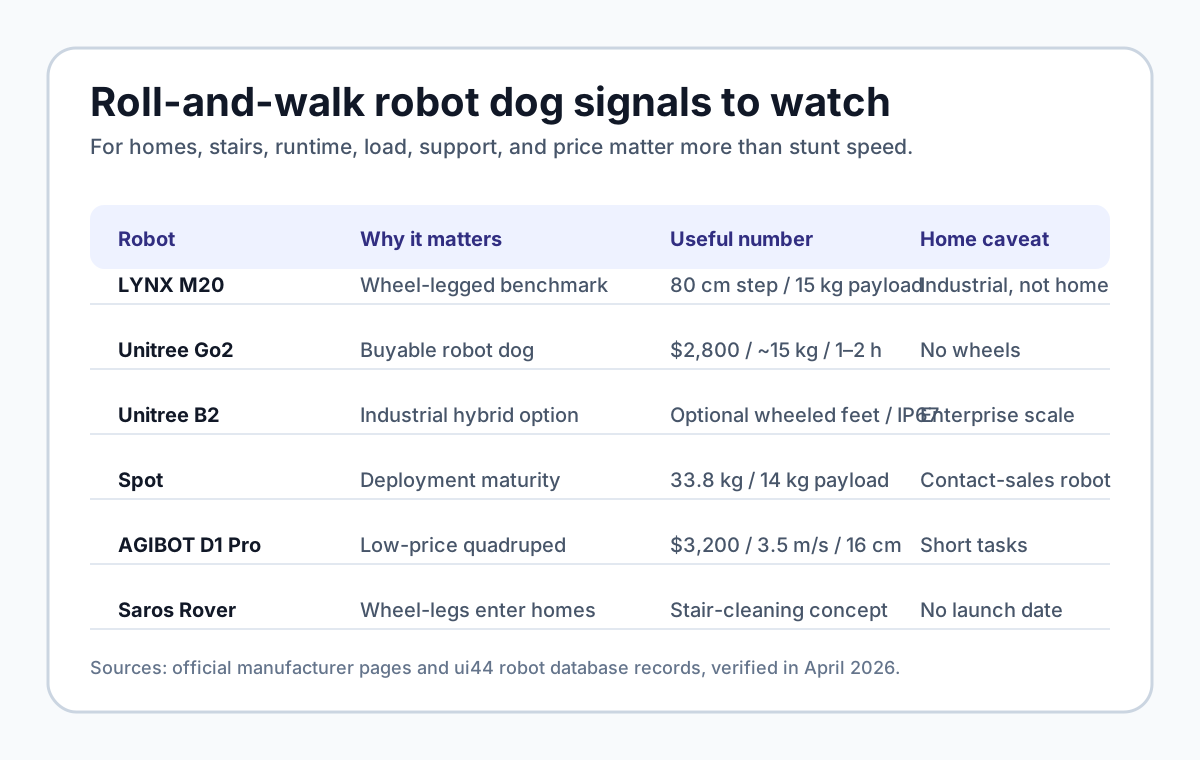
Wheeled robot dog spec comparison chart for LYNX M20, Unitree Go2, Unitree B2, Spot, AGIBOT D1 Pro, and Saros Rover
Scroll sideways to inspect the full chart.

The home-use test is not "can it climb stairs?"

Stair climbing gets attention because it is easy to understand. If a robot dog can climb stairs, surely it is more useful at home than a robot vacuum that gets stuck downstairs.

Maybe. But stair climbing is only one part of the home-use test.

A useful home quadruped has to pass five less glamorous checks.

1. It needs a job worth the complexity

Mobility alone is not usefulness. A robot dog that can follow you upstairs but cannot carry anything, fetch anything, inspect anything important, or interact with smart-home systems is still mostly a gadget.

This is why payload and manipulation matter. Spot can carry up to 14 kg of payload and supports an optional arm, but it is an enterprise platform. Unitree Go2 is far more accessible, but its home value depends on development, payloads, apps, and user willingness to tinker. The AGIBOT D1 Pro is similarly interesting at $3,200, yet AGIBOT's own store frames many practical applications around entertainment, research, education, industrial inspection, and security patrol, not everyday domestic chores.

2. It needs enough runtime for real routines

A robot that lasts 60 to 90 minutes can be fun. A home helper needs to complete boring routines reliably: patrol at night, move between rooms, map changes, or stand by for long stretches. That is where industrial robots show why batteries matter.

Unitree B2's database record lists 4-6 hours of battery life, and the LYNX M20 launch page claims 2.5 hours under load. Those numbers are closer to useful work. But they come in bigger, more expensive, more industrial packages. For homes, the hard problem is getting enough runtime without making the robot heavy, loud, intimidating, or costly.

3. It must be safe around people and pets

Wheel-legs add moving parts near floors, ankles, tails, toys, and furniture. That can be a feature if the robot can maintain a stable body and avoid obstacles well. It can also be a risk if the robot is under-tested or the service model is weak.

For home buyers, the safety questions are practical: Does it stop gently? Can it see a pet lying on a dark rug? What happens if a wheel-leg jams on a cable? Does it have certification, support, replacement parts, and clear warranty terms? A robot dog should not make the home feel like a lab.

4. It needs quiet, repeatable docking

Robot vacuums became mainstream partly because they dock themselves. A robot dog that needs manual charging every night will stay niche. Wheel-legged robots may help with mobility, but charging, alignment, and long-term autonomy are just as important.

This is why Unitree B2's optional autonomous charging and DEEP Robotics' hot-swap battery framing are worth noting, even though they are industrial features. In a home product, the equivalent would be simple: roll back to base, dock cleanly, charge safely, and resume without a human babysitter.

5. It should reduce friction, not create a new hobby

A household robot can be technically brilliant and still fail if it demands too much setup. Many current quadrupeds make sense for developers, researchers, and companies because those buyers expect configuration, SDKs, payload integration, and maintenance.

Normal buyers do not. They expect an appliance. If wheel-legged robot dogs come home, the winning version will probably hide most of the robotics stack behind a clear task: home patrol, elder check-in, fetch-and-carry, outdoor-to-indoor inspection, or stair-capable cleaning.

Where wheel-legs may show up first

The first practical home examples may not look like the LYNX M20. They may be smaller, quieter, and less dramatic.

One clue is Roborock Saros Rover, a development-stage robot vacuum with a two-wheel-leg architecture. Roborock says it is designed to navigate and clean stairs, slopes, and complex thresholds, but it has no confirmed launch date, price, or final specs. That makes it risky to count as a near-term product — but it is exactly the kind of application where wheel-legs make consumer sense. The robot has a clear job, and the mobility problem is obvious.
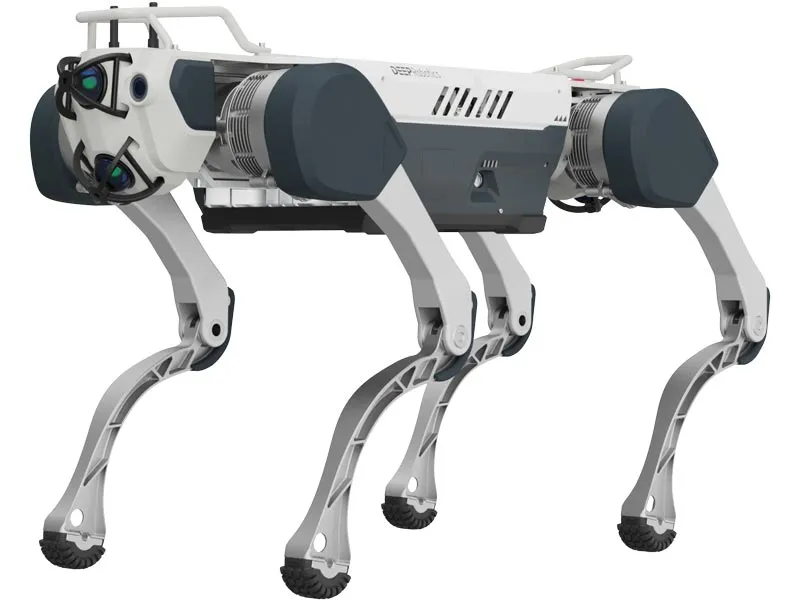
DEEPRobotics X30 industrial quadruped robot dog showing why rugged mobility matters before wheel-legged home robots arrive

A second path is the enthusiast/developer market. Unitree Go2 and AGIBOT D1 Pro are already in a price range where some non-enterprise buyers can experiment. They are not finished home helpers, but they create a base for software, payloads, and user learning. If wheeled-foot kits or hybrid variants become more common, the first buyers may be builders rather than families.

A third path is enterprise-to-home trickle-down. Industrial robots such as Unitree B2, DEEPRobotics X30, Spot, and LYNX M20 are overbuilt for houses, but they stress-test the parts that matter: weather resistance, mapping, payloads, remote operation, self-charging, and fall recovery. Those lessons can eventually move into smaller robots.

Should you wait for a wheeled robot dog?

If you want a home robot today, no. Buy for the task you need now, not the form factor you hope becomes useful later. A wheeled robot vacuum, companion robot, security robot, or smart-home device may solve more real problems than a robot dog that mostly needs supervision.

If you are an enthusiast, developer, researcher, or robotics-heavy household, then wheel-legged designs are worth tracking closely. The key questions are:

  • Does the robot use wheels only as a stunt, or does rolling materially improve battery life and quiet movement?
  • Can it handle normal home thresholds, stairs, rugs, and clutter without manual rescue?
  • Is there a supported app, API, or payload ecosystem?
  • Are replacement batteries, feet, wheels, and service parts easy to get?
  • Is the robot safe and certified for the environment where you plan to use it?

The best near-term buying advice is boring: do not pay for mobility without a job. A wheel-legged robot dog will matter at home only when it can do something useful after it reaches the room.

Bottom line

Wheeled robot dogs are not a gimmick, but they are not mainstream home robots yet. The LYNX M20 shows why the design is technically attractive: roll for speed, step for obstacles, carry meaningful payloads, and keep operating in hard environments. Unitree B2 shows that hybrid thinking already exists in industrial quadrupeds. Roborock Saros Rover shows the idea can move into an actual home category.

The missing piece is product discipline. For homes, a wheel-legged robot dog has to be smaller, safer, quieter, easier to charge, and tied to a job normal people care about. Until then, treat wheel-legs as one of the more promising body plans for future home quadrupeds — not as proof that a robot dog is ready to replace a vacuum, a security camera, or a helpful human.

Database context

Use this article as a warranty and coverage workflow

Turn the article into a real verification pass

Wheeled Robot Dogs: Why Roll-and-Walk Matters already points you toward 7 linked robots, 6 manufacturers, and 2 countries inside the ui44 database. That matters because strong buyer guidance is easier to apply when you can move immediately from a claim or warning into concrete product pages, manufacturer directories, component explainers, and country-level context instead of treating the article as an isolated opinion piece. The fastest next step is to turn the article into a shortlist workflow: open the linked robot pages, verify which specs are actually published for those models, then compare the surrounding manufacturer and component context before you decide whether the underlying claim changes your buying plan.

For this topic, the useful discipline is to separate the editorial lesson from the catalog evidence. The article gives you the framing, but the robot pages tell you what each product actually ships with today: sensor stack, connectivity methods, listed price, release timing, category, and support-relevant compatibility notes. The manufacturer pages then show whether you are looking at a one-off launch, a broader lineup pattern, or a company that spans multiple categories. That layered workflow reduces the risk of buying on a single marketing phrase or a single support FAQ.

The most practical move is to keep warranty language and product context together. Compare the linked robots first, then check whether the manufacturer pages suggest a mature service lane or a more limited lineup. On this article, Astro, Spot, and Go2 are the right place to start. If you want a quick working shortlist, open Compare Astro, Spot, and Go2 next, then keep this article open as the reasoning layer while you compare structured data side by side.

Practical Takeaway

Every robot, manufacturer, category, component, and country reference below resolves to a real ui44 page, keeping the follow-up path grounded in database records rather than generic advice.

Suggested next steps in ui44

  1. Compare the listed price, release timing, and category fit of the linked robots before you treat warranty length as a direct value proxy.
  2. Open Amazon to see whether the brand has several relevant models in the same lane or whether the article is centered on one flagship product.
  3. Record what the article proves, what still depends on seller or region rules, and which consumables or battery-related details you still need to verify externally.
  4. Use Compare Astro, Spot, and Go2 before checkout so the warranty conversation stays anchored to a real shortlist.
  5. Do not treat the article as the final source of truth on coverage terms. Treat it as the framing layer that tells you which documentation you still need to inspect before purchase.

Database context

Robot profiles worth opening next

Use the linked product pages as the evidence layer

The linked robot pages are where this article becomes operational. Instead of asking whether the headline is interesting, use the robot entries to inspect the actual mix of sensors, connectivity options, batteries, pricing, release timing, and stated capabilities attached to the products mentioned in the article. That is the easiest way to see whether the warning or opportunity described here affects one product family, a specific design pattern, or an entire buying lane.

Astro

Amazon · Security & Patrol · Active

$1,599

Astro is tracked on ui44 as a active security & patrol robot from Amazon. The database currently records a listed price of $1,599, a release date of 2021, Not officially disclosed battery life, Not officially disclosed charging time, and a published stack that includes 5MP Bezel Camera, 1080p Periscope Camera (132° FOV), and Infrared Vision plus Wi-Fi 802.11ac and Bluetooth.

For warranty and coverage questions, the robot page gives you the operating context that fine print often leaves out. Review the published capability mix, including Autonomous Home Patrol, Visual ID (face recognition), and Remote Home Monitoring, and the listed battery and charging profile before deciding whether a coverage term meaningfully reduces your ownership risk or merely sounds reassuring in isolation.

Spot

Boston Dynamics · Commercial · Active

Price TBA

Spot is tracked on ui44 as a active commercial robot from Boston Dynamics. The database currently records a listed price of Price TBA, a release date of 2020, ~90 minutes battery life, 60 minutes charging time, and a published stack that includes 360° Stereo Cameras, Time-of-Flight Sensor, and Ultrasonic Sensors (front + rear) plus Wi-Fi 2.4GHz/5GHz and Ethernet.

For warranty and coverage questions, the robot page gives you the operating context that fine print often leaves out. Review the published capability mix, including Autonomous Industrial Inspection, Stair Climbing (±30° slopes), and Dynamic Obstacle Avoidance, and the listed battery and charging profile before deciding whether a coverage term meaningfully reduces your ownership risk or merely sounds reassuring in isolation.

Go2

Unitree Robotics · Quadruped · Available

$2,800

Go2 is tracked on ui44 as a available quadruped robot from Unitree Robotics. The database currently records a listed price of $2,800, a release date of 2023, 1–2h (standard) / 2–4h (EDU long endurance) battery life, Not officially disclosed charging time, and a published stack that includes 4D LiDAR L2 (360°×96° hemispherical), HD Wide-angle Camera, and Depth Camera (EDU) plus Wi-Fi 6 and Bluetooth 5.2.

For warranty and coverage questions, the robot page gives you the operating context that fine print often leaves out. Review the published capability mix, including Quadruped Walking & Running, Advanced AI Gaits (roll-over, obstacle climbing), and 3D LiDAR Mapping, and the listed battery and charging profile before deciding whether a coverage term meaningfully reduces your ownership risk or merely sounds reassuring in isolation.

D1 Pro

AGIBOT · Quadruped · Available

$3,200

D1 Pro is tracked on ui44 as a available quadruped robot from AGIBOT. The database currently records a listed price of $3,200, a release date of 2024, 1–2 hours per charge battery life, ≤2 hours charging time, and a published stack that includes Wide-Angle Camera (122° DFOV) and IMU plus Wi-Fi and Bluetooth 5.2.

For warranty and coverage questions, the robot page gives you the operating context that fine print often leaves out. Review the published capability mix, including All-Terrain Locomotion (RL-based gait), Stair Climbing (up to 16 cm steps), and Slope Traversal (up to 40°), and the listed battery and charging profile before deciding whether a coverage term meaningfully reduces your ownership risk or merely sounds reassuring in isolation.

B2

Unitree Robotics · Quadruped · Active

Price TBA

B2 is tracked on ui44 as a active quadruped robot from Unitree Robotics. The database currently records a listed price of Price TBA, a release date of 2024, 4–6 hours (unloaded walking >5h / 20km; 20kg load >4h / 15km) battery life, Not disclosed (plug-in battery swap supported) charging time, and a published stack that includes 3D LiDAR, Depth Camera ×2, and Optical Camera ×2 plus 1000M Ethernet ×4 and USB 3.0 ×4.

For warranty and coverage questions, the robot page gives you the operating context that fine print often leaves out. Review the published capability mix, including Industrial Inspection, Emergency Rescue, and Power Line Patrol, and the listed battery and charging profile before deciding whether a coverage term meaningfully reduces your ownership risk or merely sounds reassuring in isolation.

Database context

Manufacturer context behind the article

Check whether this is one product story or a broader company pattern

Manufacturer pages add the support context that individual product pages cannot show on their own. They help you check whether the article is pointing at one coverage promise or at a company with a broader service footprint and multiple products to maintain.

Amazon

ui44 currently tracks 1 robot from Amazon across 1 category. The company is grouped under USA, and the current catalog footprint on ui44 includes Astro.

That wider brand context matters because support confidence is easier to judge when you can see the company’s overall footprint, not just one warranty phrase attached to one product. A broader tracked lineup can change how you interpret the article’s coverage discussion. The category mix here currently points toward Security & Patrol as the most useful next route if you want to see whether this article reflects a wider pattern inside the brand.

Boston Dynamics

ui44 currently tracks 3 robots from Boston Dynamics across 2 categorys. The company is grouped under USA, and the current catalog footprint on ui44 includes Atlas (Electric), Spot, Stretch.

That wider brand context matters because support confidence is easier to judge when you can see the company’s overall footprint, not just one warranty phrase attached to one product. A broader tracked lineup can change how you interpret the article’s coverage discussion. The category mix here currently points toward Humanoid, Commercial as the most useful next route if you want to see whether this article reflects a wider pattern inside the brand.

Unitree Robotics

ui44 currently tracks 6 robots from Unitree Robotics across 2 categorys. The company is grouped under China, and the current catalog footprint on ui44 includes B2, B1, Go2.

That wider brand context matters because support confidence is easier to judge when you can see the company’s overall footprint, not just one warranty phrase attached to one product. A broader tracked lineup can change how you interpret the article’s coverage discussion. The category mix here currently points toward Quadruped, Humanoid as the most useful next route if you want to see whether this article reflects a wider pattern inside the brand.

AGIBOT

ui44 currently tracks 6 robots from AGIBOT across 2 categorys. The company is grouped under China, and the current catalog footprint on ui44 includes A2 Ultra, X2, Expedition A3.

That wider brand context matters because support confidence is easier to judge when you can see the company’s overall footprint, not just one warranty phrase attached to one product. A broader tracked lineup can change how you interpret the article’s coverage discussion. The category mix here currently points toward Humanoid, Quadruped as the most useful next route if you want to see whether this article reflects a wider pattern inside the brand.

Database context

Broaden the scan without leaving the database

Categories, components, and countries add the wider context

Category framing

Category pages are useful when the article touches a buying pattern that shows up across brands. A category route helps you confirm whether the linked products sit in a narrow niche or whether the same question should be tested across a larger field of alternatives.

Security & Patrol

The Security & Patrol category page currently groups 3 tracked robots from 3 manufacturers. ui44 describes this lane as: Surveillance and patrol robots that monitor homes, businesses, and perimeters autonomously.

That makes the category route a practical follow-up when you want to check whether the products linked in this article are typical for the lane or whether they sit at one edge of the market. Useful starting examples currently include Astro, Vision 60, Watchbot 2.

Commercial

The Commercial category page currently groups 23 tracked robots from 20 manufacturers. ui44 describes this lane as: Delivery robots, warehouse automation, hospitality service bots, and other robots built for business operations.

That makes the category route a practical follow-up when you want to check whether the products linked in this article are typical for the lane or whether they sit at one edge of the market. Useful starting examples currently include aeo, Pepper, ANYmal D.

Country and ecosystem context

Country pages give extra context when support practices, launch sequencing, regulatory posture, or manufacturer mix matter. They are not a substitute for model-level verification, but they do help you see which ecosystems cluster together and which manufacturers sit in the same regional field when you broaden the search beyond the article headline.

USA

The USA route currently groups 16 tracked robots from 12 manufacturers in ui44. That gives you a useful regional lens when the article points toward support practices, launch sequencing, or brand clusters that may share similar ecosystem assumptions.

On the current route, manufacturers like Boston Dynamics, Figure AI, Tesla make the page a good way to broaden the scan without losing the regional context that often shapes availability, documentation style, and adjacent alternatives.

China

The China route currently groups 47 tracked robots from 14 manufacturers in ui44. That gives you a useful regional lens when the article points toward support practices, launch sequencing, or brand clusters that may share similar ecosystem assumptions.

On the current route, manufacturers like AGIBOT, Roborock, Unitree Robotics make the page a good way to broaden the scan without losing the regional context that often shapes availability, documentation style, and adjacent alternatives.

Database context

Questions to answer before you move from reading to buying

A follow-up FAQ built from the entities already linked in this article

Frequently Asked Questions

Which page should I open first after reading “Wheeled Robot Dogs: Why Roll-and-Walk Matters”?

Start with Astro. That gives you a concrete product anchor for the article’s main claim. From there, branch into the manufacturer and component pages so you can tell whether the article is describing one specific model, a repeated brand pattern, or a wider technology issue that affects multiple shortlist options.

How do the manufacturer pages change the buying decision?

Amazon help you zoom out from one article and one product. On ui44 they show lineup breadth, category spread, and the neighboring robots tied to the same company. That context is useful when you are deciding whether a risk belongs to a single model, whether it shows up across a brand’s portfolio, and whether you should keep looking at alternatives before committing.

When should I switch from reading to side-by-side comparison?

Move into Compare Astro, Spot, and Go2 as soon as you understand the article’s main warning or promise. The article explains what to watch for, but the compare view is where you can check whether price, status, battery life, connectivity, sensors, and category fit still make the robot a good match for your own home and budget.

Database context

Where to go next in ui44

Keep the research chain inside the database

If you want to keep going, these follow-on pages give you the cleanest expansion path from article to research session. Open the comparison route first if you are deciding between products today. Open the manufacturer, category, and component routes if you still need to understand the broader pattern behind the claim.

UT

Written by

ui44 Team

Published April 30, 2026

Share this article

Open a plain share link on X or Bluesky. No embeds, no widgets, no cookie baggage.

Explore the database

Go beyond the headlines

Compare specs, features, and prices across 100+ robots from leading manufacturers worldwide.