Commercial model
See pricing details
Enterprise/security-deployment pricing has not been publicly disclosed; contact Star Robotics for commercial deployments.
Battery
up to 16 h
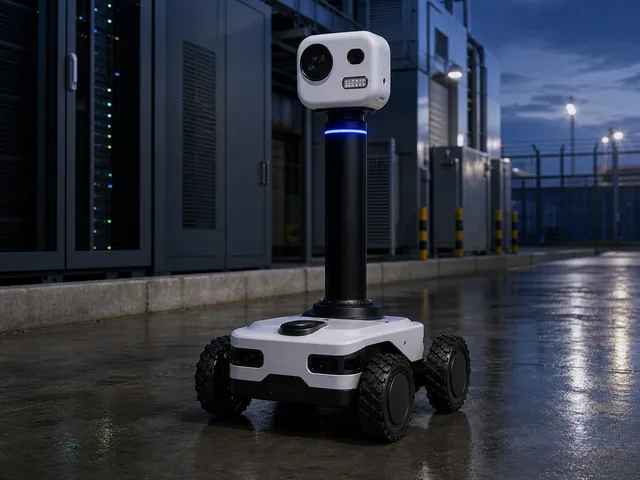
Watchbot 2 is Star Robotics' autonomous security and inspection robot for facilities such as data centers, power infrastructure, industrial sites, and public spaces. Star Robotics' official Watchbot page describes a 100% autonomous surveillance robot with high-resolution cameras, artificial intelligence, thermal sensing, rugged indoor/outdoor mobility, and up to 16 hours of autonomy. The April 2026 Watchbot 2 launch added a redesigned higher-capacity battery system, upgraded low-light lighting, a new 360-degree camera module, clearer audio hardware, GPS-supported outdoor positioning, improved obstacle/drop/stair detection, multimodal mapping, and modular service access for motors and batteries. Star Robotics' May 2026 PTZ update adds pan, tilt, and optical zoom for detailed inspections, improved low-light and night surveillance using active lighting and a higher-sensitivity 360° camera module, plus upgraded microphone and speaker hardware for noisy environments.
Listed price
See pricing details
Enterprise/security-deployment pricing has not been publicly disclosed; contact Star Robotics for commercial deployments.
Release window
Apr 16, 2026
Current status
Active
Star Robotics
Last verified
May 29, 2026
Share this robot
Open a plain share composer on X or Bluesky for this robot profile.
Technical overview
A fast read on the mechanical profile, sensing package, and listed platform details for Watchbot 2.
Height
Not officially disclosed
Weight
Not officially disclosed
Battery Life
up to 16 h
Charging Time
Not officially disclosed
Max Speed
Not officially disclosed
Operational profile
Capabilities
15
Connectivity
1
Key capabilities
Listed platforms & ecosystem
Explore further
Benchmark set
Shortcuts to the closest alternatives in the current ui44 set.
Security & Patrol
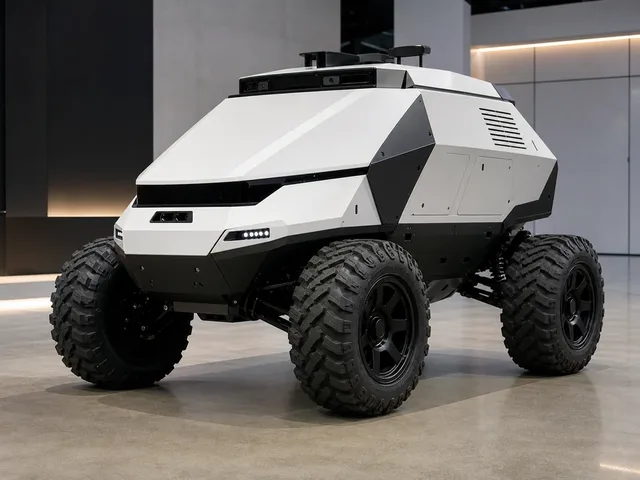
M1.5
Micropolis AI Robotics
See pricing details
Security & Patrol
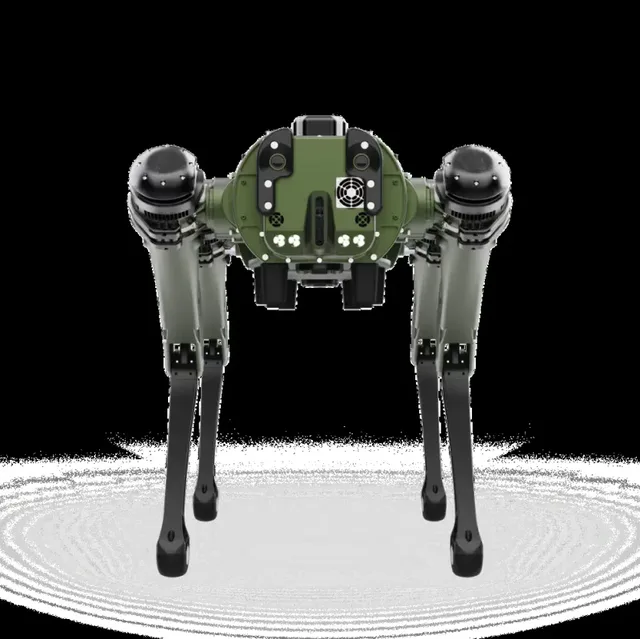
Vision 60
Ghost Robotics
See pricing details
Security & Patrol
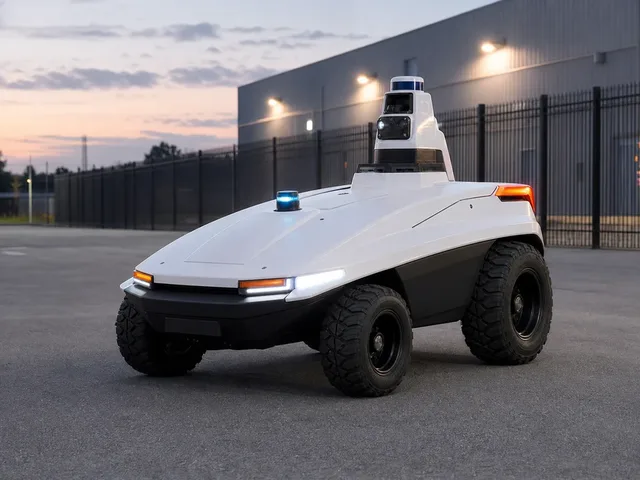
K7 Autonomous Security Robot
Knightscope
See pricing details
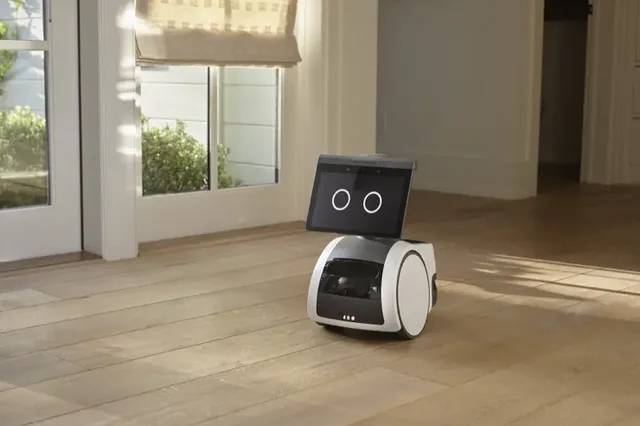
Security & Patrol
Astro
Amazon
$1,599
The Watchbot 2 is a Security & Patrol robot built by Star Robotics. Watchbot 2 is Star Robotics' autonomous security and inspection robot for facilities such as data centers, power infrastructure, industrial sites, and public spaces. Star Robotics' official Watchbot page describes a 100% autonomous surveillance robot with high-resolution cameras, artificial intelligence, thermal sensing, rugged indoor/outdoor mobility, and up to 16 hours of autonomy. The April 2026 Watchbot 2 launch added a redesigned higher-capacity battery system, upgraded low-light lighting, a new 360-degree camera module, clearer audio hardware, GPS-supported outdoor positioning, improved obstacle/drop/stair detection, multimodal mapping, and modular service access for motors and batteries. Star Robotics' May 2026 PTZ update adds pan, tilt, and optical zoom for detailed inspections, improved low-light and night surveillance using active lighting and a higher-sensitivity 360° camera module, plus upgraded microphone and speaker hardware for noisy environments.
Enterprise/security-deployment pricing has not been publicly disclosed; contact Star Robotics for commercial deployments. See all Star Robotics robots on the Star Robotics page.
Detailed specifications for the Watchbot 2
Battery Life
Up to 16 hoursThis is the recorded runtime entry. Test conditions and independent verification are not established by this field. Confirm workload, operating mode and environmental conditions before comparing runtimes.
Read this recorded AI entry alongside the model description and source notes for announcement or deployment context. A platform name alone does not establish implemented features, autonomy, or performance.
The profile lists the sensor descriptions below. These entries do not establish physical sensor counts, sensor fusion, redundancy, or performance.
Consult the linked profile sources for hardware configuration and tested behavior. A technology label alone does not verify an operating capability.
Explore sensor technologies: components glossary · full components directory
Security and patrol robots provide continuous autonomous monitoring of properties, facilities, and perimeters. They augment human security teams by handling routine patrols, detecting anomalies, and alerting operators to potential issues — reducing response times and improving coverage.
The Watchbot 2 record lists 15 capabilities. Keep any announcement or demonstration qualifiers attached to these entries; the count alone does not establish practical performance.
These are the capabilities listed in the profile. Hardware configuration and demonstrated performance should be checked against the linked sources.
These are the platforms, communities, or ecosystem relationships listed in the profile. A listed name or protocol alone does not confirm home-device interoperability or automation support.
15
Capabilities
AI
Watchbot Intelligence…
The Watchbot 2 profile lists the following communication and voice-system descriptions.
The Watchbot 2 by Star Robotics has the following technology descriptions in its profile.
The profile lists High-Resolution Cameras, 30x Zoom Camera, PTZ Pan/Tilt/Optical Zoom Camera, 360-Degree Camera Module, Thermal Camera and Night Vision, 360° LiDAR Sensor, Rain Sensor, Low-Light Lighting, LED / Front and Rear Lights, Obstacle Detection Sensors, Drop and Stair Detection Sensors, GPS Outdoor Positioning. Hardware quantities, integration, and tested behavior require separate source evidence.
The connectivity descriptions listed for the Watchbot 2 are 4G/5G cellular antenna. Specific services and device interoperability require separate documentation.
Security robots are purchased by businesses, campuses, and increasingly by affluent homeowners looking for autonomous perimeter monitoring. The commercial security market is the primary driver, with robots patrolling warehouses, parking lots, and office complexes.
Camera quality (day and night), autonomous patrol route capability, detection accuracy (reducing false alarms), cellular connectivity for remote monitoring, weather resistance (IP rating), and integration with existing security systems are critical. Consider whether the robot needs to operate 24/7 with automated charging.
Listed pricing
The Watchbot 2 is listed as Active. This status alone does not confirm public purchase availability or operational reliability. Contact Star Robotics for current access options and any purchase or participation requirements.
Recorded features and considerations to assess
The Watchbot 2 record lists 15 capabilities. Review their qualifiers and supporting evidence for the tasks you need. The number of entries does not establish workflow coverage, reliability, or the ability to replace other robots.
The battery-life entry is Up to 16 hours. Check the source conditions and operating mode before using this figure to plan a session. It does not establish task completion, area coverage, or continuous-use runtime.
Enterprise/security-deployment pricing has not been publicly disclosed; contact Star Robotics for commercial deployments.
Note: This strengths and trade-offs assessment is based on the Watchbot 2's documented specifications as tracked in the ui44 database. Real-world performance depends on deployment conditions, firmware maturity, and environmental factors. For the most current information, check the Star Robotics manufacturer page or visit the official source. Use the comparison tool to evaluate these trade-offs against competing robots in the same category.
Understanding the engineering behind this category
Security robots combine autonomous mobility with surveillance and detection technology to provide persistent monitoring of properties and facilities. Unlike fixed cameras that cover limited areas with blind spots, security robots can patrol routes, investigate anomalies, and adapt their coverage based on detected threats or changing conditions. The technology stack draws from autonomous vehicles, computer vision, and IoT security systems.
Security robots must navigate reliably in both indoor and outdoor environments, often operating 24/7 in all weather conditions. Indoor models use LiDAR-based SLAM for precise mapping of corridors, rooms, and parking structures. Outdoor models combine GPS, LiDAR, and visual odometry for robust positioning across large areas. Patrol route planning balances systematic coverage with randomization — predictable patterns would allow intruders to learn and avoid the robot's schedule. Advanced systems create time-based heat maps of activity, automatically increasing patrol frequency in areas with unusual activity and reducing coverage of consistently quiet zones.
AI in security robots focuses on anomaly detection, person recognition, and situation assessment. Computer vision models distinguish between normal activity (employees, scheduled visitors) and potential security events (unknown persons, unusual behaviors, out-of-hours access). False alarm reduction is a critical AI challenge — an effective security robot must be sensitive enough to detect real threats while avoiding constant alerts about harmless events like animals, shadows, or weather changes. Advanced systems use multi-modal detection combining visual, thermal, and audio inputs to improve detection accuracy.
Security robots carry extensive sensor suites designed for comprehensive environmental monitoring. High-resolution cameras with optical zoom enable identification at distance. Thermal cameras detect people and vehicles in complete darkness. Microphones with directional capability detect glass breaking, alarms, or unusual sounds. Environmental sensors monitor temperature, smoke, and gas levels. License plate recognition cameras identify vehicles entering or leaving the monitored area. The fusion of these sensor types provides layered detection — a person might be invisible to a standard camera at night but clearly visible on thermal imaging, while a broken window might be detected by acoustic sensors before any visual sign is apparent.
Security applications demand high availability, making power management critical. Most security robots include autonomous docking and charging, with intelligent scheduling that ensures the robot is charged and ready for peak security periods. Some facilities deploy multiple robots to provide overlapping coverage during charging cycles. Battery capacity typically provides several hours of continuous patrol, with rapid-charge capabilities minimizing downtime. Weather-sealed battery compartments protect power systems during outdoor operation. UPS (Uninterruptible Power Supply) features in charging stations ensure the robot can deploy even during power outages.
Security robots must balance assertive presence with safety. They operate around authorized personnel and sometimes the public, requiring reliable human detection and safe proximity behavior. Speed limiting in pedestrian areas, predictable movement patterns, and clear visual indicators (lights, markings) communicate the robot's presence and intent. Cybersecurity is especially important for security robots — a compromised security robot could become a surveillance liability rather than an asset. Encrypted communications, secure boot processes, and regular security updates protect the robot's data and control systems.
Security robots are evolving toward fleet coordination, where multiple robots provide overlapping coverage of large facilities. Integration with building management systems will enable security robots to interface with door locks, elevators, and HVAC systems for coordinated emergency response. Drone-ground robot teams may provide both aerial surveillance and ground-level inspection capabilities. AI improvements will continue to reduce false alarms while improving detection of genuine security events.
These are category-level technology examples; they do not establish the capabilities of the Watchbot 2. For its recorded hardware details, see the sensor analysis and connectivity sections above. Check model-specific documentation from Star Robotics for supported behavior, or use the components glossary to look up terminology.
How this robot compares in the security & patrol landscape
Enterprise/security-deployment pricing has not been publicly disclosed; contact Star Robotics for commercial deployments.
The Watchbot 2 is listed as Active. This status alone does not confirm public purchase availability or operational reliability. Contact Star Robotics for current access options and any purchase or participation requirements.
Side-by-side specs, capability overlap analysis, and key differentiators.
For the full picture of Star Robotics's portfolio and market strategy, visit the Star Robotics manufacturer page.
What the public profile tells you, and what still needs direct vendor confirmation
From a buying and rollout perspective, the Watchbot 2 should be read as a security & patrol platform aimed at sites that need repeatable patrol coverage and incident visibility. ui44 currently tracks 15 capability signals and a last verification date of 2026-05-29. That mix gives buyers a useful first-pass picture, but it is still only the public layer of due diligence, especially when procurement, uptime, and support commitments are decided directly with Star Robotics.
Commercial model
See pricing details
Enterprise/security-deployment pricing has not been publicly disclosed; contact Star Robotics for commercial deployments.
Integration posture
1 connectivity option
The profile lists 4G/5G cellular antenna. These labels do not establish APIs, fleet-management features, or workflow integration. These are the platforms, communities, or ecosystem relationships listed in the profile. A listed name or protocol alone does not confirm home-device interoperability or automation support.Recorded AI description: Watchbot Intelligence perception and navigation stack with six-times more onboard computing capacity than the prior generation
Spec disclosure
1/7 core specs public
ui44 currently has 1 of 7 core physical and operating specs filled in for this model, leaving 6 gaps that matter for deployment planning. Missing runtime, charge, speed, or payload details can materially change staffing and site-readiness assumptions.
The current profile is useful for scouting, but it still leaves meaningful operational unknowns. If this robot is heading toward a pilot or purchase discussion, the next step should be a structured vendor Q&A that fills the remaining runtime, charging, payload, safety, or integration blanks before anyone builds ROI assumptions around it.
If you want a faster apples-to-apples read, compare the Watchbot 2 against nearby alternatives in ui44's compare view, then cross-check the underlying AI, sensor, and subsystem terms in the components glossary. For manufacturer-level context, the Star Robotics profile helps anchor this robot inside the wider product lineup.
Practical guide from day one through years of ownership
Security robot setup involves site assessment, network configuration, patrol route programming, and integration with existing security infrastructure. Begin with a physical walkthrough of the patrol area to identify optimal routes, charging station placement, and any terrain challenges. Configure the robot's network connectivity (Wi-Fi, cellular, or both) and set up the monitoring dashboard. Program patrol routes with waypoints, camera angles, and dwell times at key locations. Integrate with existing cameras, alarms, and access control systems where supported. Establish alert protocols — who gets notified, how, and for what types of events. Test thoroughly during daylight hours before transitioning to nighttime operation.
Security robots operating 24/7 require disciplined maintenance schedules. Daily automated self-checks should verify camera functionality, sensor health, and battery performance. Weekly maintenance includes cleaning camera lenses and sensors (especially important for outdoor robots exposed to dust and weather), checking wheel treads for wear, and verifying communication system reliability. Monthly maintenance should include thorough mechanical inspection, firmware updates, and review of alert logs to calibrate detection sensitivity. Outdoor robots need seasonal weatherproofing checks to ensure seals remain effective.
Security robot updates often focus on improving detection accuracy, reducing false alarms, and enhancing integration with security management systems. AI model updates can dramatically improve the robot's ability to distinguish genuine security events from benign activities. Apply security patches promptly — a security robot with known software vulnerabilities becomes a liability rather than an asset. Coordinate updates with your security team to avoid coverage gaps during the update process.
Security robots in continuous operation face accelerated wear compared to occasional-use consumer robots. Extend operational life by maintaining regular maintenance schedules, addressing mechanical issues immediately, and keeping the robot's operating environment as clean and obstacle-free as practical. For outdoor models, shelter the charging station from direct weather exposure. Replace consumable parts (filters, wheels, seals) proactively rather than waiting for failure. Battery replacement is typically needed every two to three years in continuous-operation scenarios. A comprehensive service agreement ensures minimum downtime and access to manufacturer expertise.
Find product and source links on the Star Robotics page on ui44 or open Star Robotics's official source. Use model-specific manufacturer documentation for setup, cleaning, and service instructions.
The Watchbot 2 record brings together the listed specifications and attributed claims. Consult the model description and source notes to distinguish manufacturer announcements, reported information, and unknowns. A source link or review date does not establish independent testing or manufacturer confirmation of every claim. Record last checked: 2026-05-29. Official source: Star Robotics official source. If you find outdated or incorrect information, please let us know — accuracy is our top priority.
See how the Watchbot 2 stacks up — compare specs, browse the security & patrol category, or search the full database.