But the buyer answer is not "yes, treat it like a laptop." The R1 is a pre-sale humanoid robot with short warranty windows, about one hour of battery life, edition-dependent development access, import responsibilities, and very limited evidence that it can do useful household chores without supervision. It is buyable in a way that matters. It is not yet a normal home product.
The Short Version: Who Should Even Consider Buying R1?
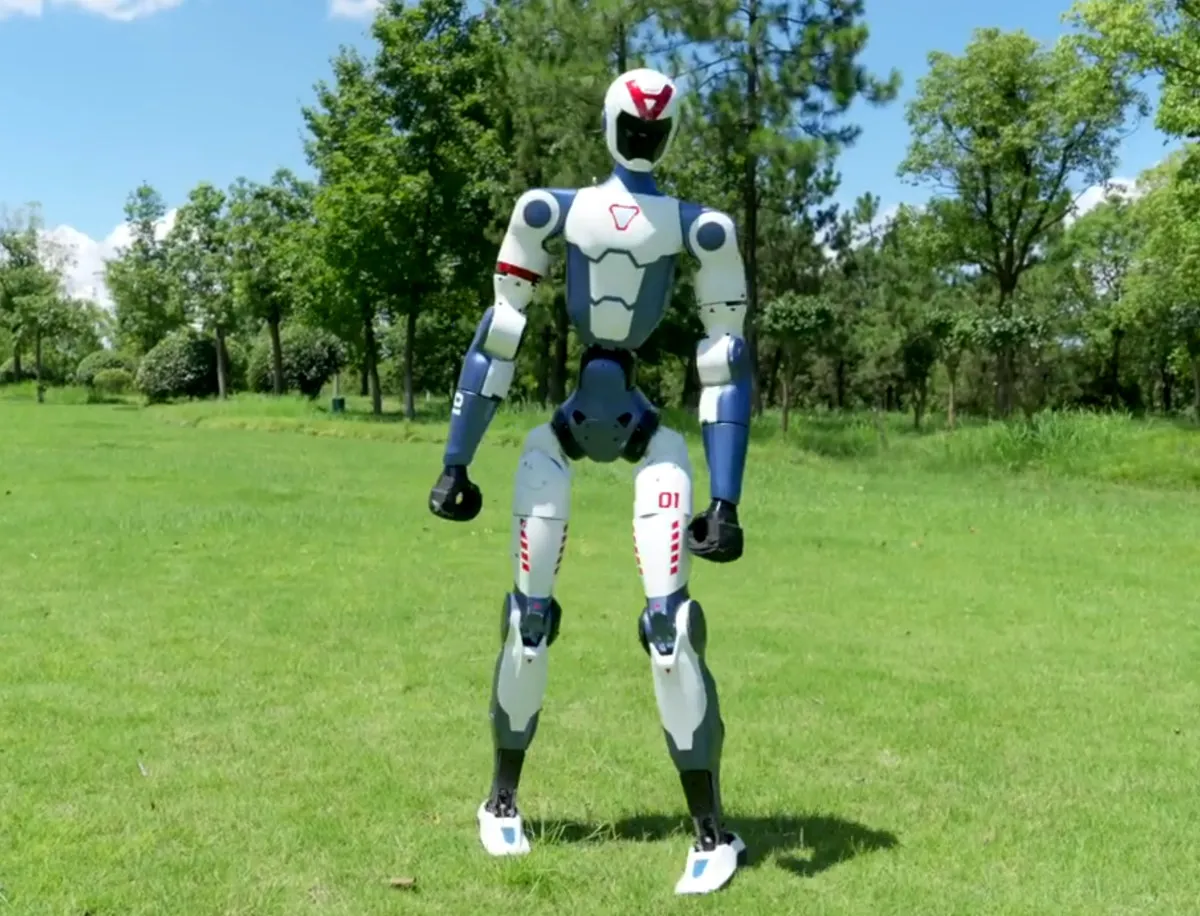
If your goal is to experiment with affordable bipedal hardware, the R1 is one of the most interesting humanoids in the market. Very few bipedal platforms in ui44's database combine this price, size, official retail flow, and recognizable manufacturer support. At 123 cm tall and about 29 kg for the standard model, it is large enough to feel like a real humanoid platform but still much smaller than a full adult-size robot.
The strongest fit is:
- robotics labs that want low-cost bipedal hardware;
- educators building humanoid programming courses;
- developers testing perception, teleoperation, or embodied-AI workflows;
- early adopters who understand that they are buying a platform, not a maid.
The weak fit is almost everyone else. If you want a robot that reliably tidies rooms, loads a dishwasher, folds laundry, or safely works around pets and kids, wait. The R1's official materials emphasize agile motion, multimodal interaction, OTA software updates, and development interfaces. They do not prove autonomous household task competence.
What Changed: Humanoids Are Moving From Sales Calls to Checkout Pages
The interesting part of the R1 story is not that a humanoid robot exists. It is that the purchase path is starting to look familiar. Unitree's official shop lists the R1 as a pre-sale product, shows USD pricing, exposes variants, and says shipments begin in June 2026. Shipping is listed at roughly $300 to $1,200, and Unitree states that customers are responsible for customs duties, taxes, and import clearance.
That is a big shift from the older humanoid market, where pricing often meant "contact sales," a demo contract, or an enterprise procurement process. A motivated buyer can now compare the R1 against other robots in ui44's database, read official specs, and make a rough total-cost estimate before talking to anyone.

The AliExpress angle adds a second lesson: global access often carries a premium and ambiguity. Humanoids Daily reported R1 marketplace listings around $6,801.90 and $8,122.86, with uncertainty about exactly how the marketplace tiers map to Unitree's official Air, standard, and EDU versions. That is useful as a third-party market snapshot, not as an official Unitree price sheet. On R1, the difference between retail and EDU versions can determine whether you get secondary development support.
So if a listing says "Unitree R1" but does not clearly state the exact edition, development access, warranty terms, shipping origin, support channel, and customs process, assume the listing is incomplete until proven otherwise.
R1 Air vs R1 vs R1 EDU: The Edition Split Matters
Unitree's official R1 page lists three tiers: R1 Air, R1, and R1 EDU. The simple price ladder is $4,900 for R1 Air, $5,900 for R1, and contact-sales pricing for R1 EDU. The real split is not just price. It is sensors, degrees of freedom, and whether the robot is meant for deeper development.
Unitree R1 version
R1 Air
- Official price signal
- $4,900
- Weight
- about 27 kg
- Total DoF
- 20
- Camera setup
- monocular camera
- Battery life
- about 1 hour
- Secondary development
- no
- Warranty signal
- 6 months
Unitree R1 version
R1
- Official price signal
- $5,900
- Weight
- about 29 kg
- Total DoF
- 26
- Camera setup
- binocular camera
- Battery life
- about 1 hour
- Secondary development
- no
- Warranty signal
- 8 months
Unitree R1 version
R1 EDU
- Official price signal
- contact sales
- Weight
- about 29 kg
- Total DoF
- 26-40
- Camera setup
- binocular camera
- Battery life
- about 1 hour
- Secondary development
- yes
- Warranty signal
- 12 months
| Unitree R1 version | Official price signal | Weight | Total DoF | Camera setup | Battery life | Secondary development | Warranty signal |
|---|---|---|---|---|---|---|---|
| R1 Air | $4,900 | about 27 kg | 20 | monocular camera | about 1 hour | no | 6 months |
| R1 | $5,900 | about 29 kg | 26 | binocular camera | about 1 hour | no | 8 months |
| R1 EDU | contact sales | about 29 kg | 26-40 | binocular camera | about 1 hour | yes | 12 months |
For a casual buyer, the standard R1 is the tempting middle. It has more degrees of freedom than R1 Air, binocular perception instead of monocular vision, and a still-low official price. For a developer, the most important row may be "secondary development." Unitree's shop page says the retail product does not support secondary development and directs customization needs to the EDU edition.
That means a cheaper checkout listing can be the wrong purchase if your plan is to write custom control software, connect a research stack, or treat the R1 as a serious embodied-AI platform. The EDU model is likely the safer route for labs, even if it means sales contact and a higher total cost. Also verify edition specs directly before ordering: the current official Unitree R1 page lists the Air variant at about 27 kg with battery and the standard R1 at about 29 kg with battery, while marketplace mirrors and product-page snapshots may not present the split as clearly.

Why Is a Reported $6,800 Listing Not the Real Total Cost?
The headline price is useful, but it is not the number that decides whether the purchase makes sense. A realistic R1 buyer should think in landed cost and support risk.
Start with the official reference point. Unitree's own shop lists $4,900 for R1 Air and $5,900 for R1 before tax and shipping. It also says shipping costs between $300 and $1,200. Then add import duties, VAT or sales tax, brokerage fees, possible return freight, and any accessories or spare batteries you actually need. A European buyer, for example, should not mentally anchor on the U.S. sticker price and forget import VAT.
Then compare that with the third-party-reported marketplace range. A roughly $6,800 listing, if available to your region, may be a convenience premium over official pricing, or it may reflect a specific configuration, region, bundled logistics, or seller markup. Because ui44 did not verify a stable direct AliExpress checkout price during this revision, do not treat any reported marketplace number as final until you can see the seller, exact edition, tax, shipping, warranty, and import terms yourself.
The warranty also deserves attention. Unitree's official page lists 6 months for R1 Air, 8 months for R1, and 12 months for R1 EDU. That is short for a machine with actuators, batteries, cameras, microphones, onboard compute, and enough power output that Unitree itself warns users to maintain a safety distance and operate with extreme caution.
There is nothing inherently wrong with buying experimental hardware. The mistake is pricing it like a finished home appliance.
How R1 Compares With Other Affordable Humanoids
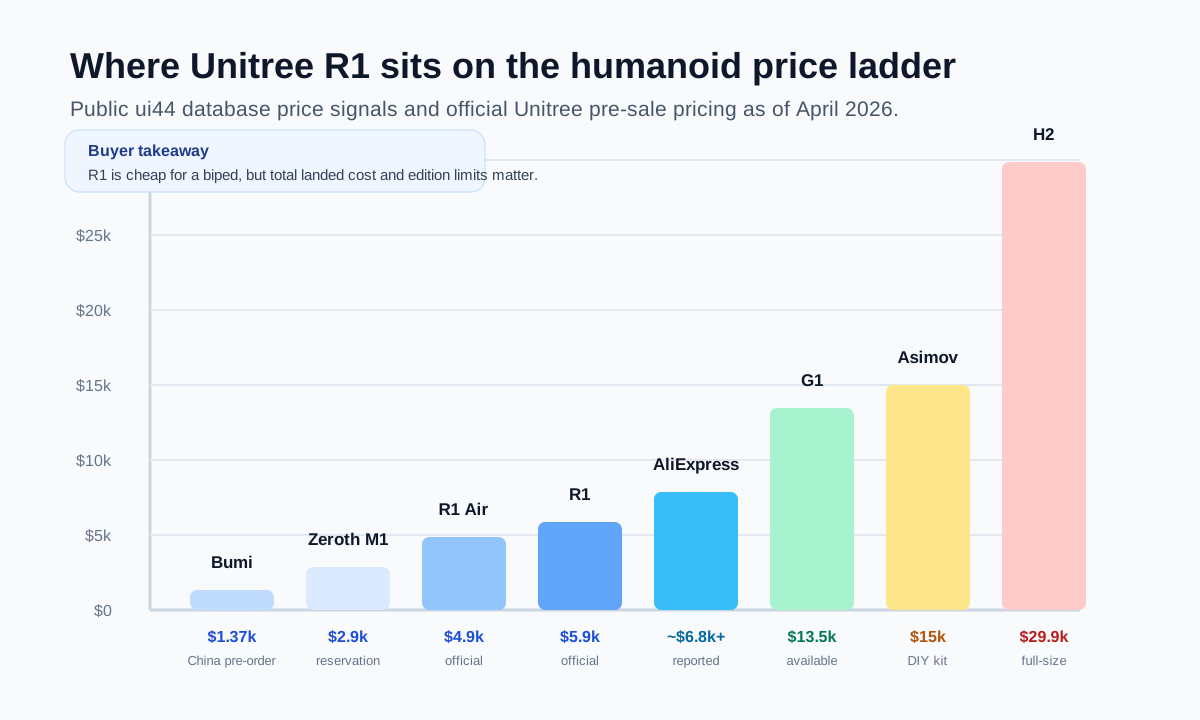
The R1 is not the cheapest humanoid in ui44's database, but it is unusually cheap for a mobile biped from a major robotics manufacturer. The comparison gets clearer when you place it between tiny/education robots and higher-end developer platforms.
Robot
- ui44 price signal
- about $1,370 in China
- Size
- 94 cm, 12 kg
- Battery
- 1-2 hours
- What it is best for
- education, dancing, basic voice interaction
- Why it may beat R1
- far cheaper and lighter
- Why R1 may beat it
- China-first availability and more toy/education than serious platform
Robot
- ui44 price signal
- $2,899 preorder signal
- Size
- 49.4 cm body, about 4.2 kg with base
- Battery
- about 2 hours
- What it is best for
- companion use, following, home monitoring, kid learning
- Why it may beat R1
- more explicitly home/companion-focused
- Why R1 may beat it
- not a full-size bipedal platform; still preorder/reservation
Robot
- ui44 price signal
- $4,900-$5,900 official retail; higher third-party-reported marketplace listings
- Size
- 123 cm, about 27-29 kg by edition
- Battery
- about 1 hour
- What it is best for
- affordable bipedal humanoid experimentation
- Why it may beat R1
- major manufacturer, real humanoid size, official retail flow
- Why R1 may beat it
- short runtime, limited retail development access, unclear chore utility
Robot
- ui44 price signal
- $13,500 starting
- Size
- 132 cm, 35 kg
- Battery
- about 2 hours
- What it is best for
- research and development
- Why it may beat R1
- more mature Unitree humanoid tier
- Why R1 may beat it
- costs more than twice the standard R1
Robot
- ui44 price signal
- $15,000 target, $499 deposit
- Size
- 1.20 m, 35 kg
- Battery
- not disclosed
- What it is best for
- open-source builders
- Why it may beat R1
- repairable, modifiable, builder-owned stack
- Why R1 may beat it
- ships unassembled; much more work
Robot
- ui44 price signal
- not priced yet
- Size
- 1.3 m, 34 kg
- Battery
- not disclosed
- What it is best for
- open-source research baseline
- Why it may beat R1
- credible open-source direction
- Why R1 may beat it
- development-stage, no buyer price yet
| Robot | ui44 price signal | Size | Battery | What it is best for | Why it may beat R1 | Why R1 may beat it |
|---|---|---|---|---|---|---|
| Noetix Bumi | about $1,370 in China | 94 cm, 12 kg | 1-2 hours | education, dancing, basic voice interaction | far cheaper and lighter | China-first availability and more toy/education than serious platform |
| Zeroth M1 | $2,899 preorder signal | 49.4 cm body, about 4.2 kg with base | about 2 hours | companion use, following, home monitoring, kid learning | more explicitly home/companion-focused | not a full-size bipedal platform; still preorder/reservation |
| Unitree R1 | $4,900-$5,900 official retail; higher third-party-reported marketplace listings | 123 cm, about 27-29 kg by edition | about 1 hour | affordable bipedal humanoid experimentation | major manufacturer, real humanoid size, official retail flow | short runtime, limited retail development access, unclear chore utility |
| Unitree G1 | $13,500 starting | 132 cm, 35 kg | about 2 hours | research and development | more mature Unitree humanoid tier | costs more than twice the standard R1 |
| Asimov DIY Kit | $15,000 target, $499 deposit | 1.20 m, 35 kg | not disclosed | open-source builders | repairable, modifiable, builder-owned stack | ships unassembled; much more work |
| ROBOTIS AI Sapiens K0 | not priced yet | 1.3 m, 34 kg | not disclosed | open-source research baseline | credible open-source direction | development-stage, no buyer price yet |
This is why R1 is exciting even with all the caveats. It sits in the awkward but important middle: far more substantial than a small companion robot, far cheaper than most serious humanoid platforms, and much less open than a DIY research kit unless you buy the right edition.
What Can R1 Actually Do at Home?
Unitree markets R1 around movement first: agile bipedal motion, creative exterior customization, voice and image interaction through a multimodal model, Wi-Fi 6, Bluetooth 5.2, a 4-mic array, speakers, and OTA updates. The standard R1 lists 26 degrees of freedom, a 2-DoF head, 2-DoF waist, binocular camera, quick-release battery, and about one hour of battery life.
That is impressive hardware for the price. It does not automatically translate into chores.
The arm-joint load figure is about 2 kg, and Unitree notes that maximum arm load varies significantly by posture. That matters because many household tasks are not just "can the robot lift an object?" They require reaching, grasping, balancing, recognizing fragile items, recovering from errors, and operating safely near furniture and people. A robot that can dance, run, or recover from pushes is not necessarily ready to pick up a cluttered kitchen.
The most realistic home uses in 2026 are narrower:
- learning and demonstrations;
- teleoperation experiments;
- voice-and-vision interaction tests;
- home robotics content creation;
- STEM teaching;
- software development if you buy the correct edition;
- supervised mobility experiments in controlled spaces.
If that sounds fun, R1 is compelling. If it sounds like unpaid QA work, wait for a more finished home robot.
The Due-Diligence Checklist Before You Click Buy
Before buying an R1 from any marketplace, confirm these details in writing or in the official listing text:
- Exact edition: R1 Air, R1, or R1 EDU. Do not accept just "R1" if your use case depends on development access.
- Secondary development: retail versions on the official shop say no secondary development; EDU is the development route.
- Total landed cost: robot price, shipping, taxes, customs duties, brokerage, and return freight.
- Warranty period and service path: 6, 8, or 12 months is not the same risk profile.
- Shipping date: Unitree's official shop says pre-sale shipments begin in June 2026.
- Replacement parts: batteries, chargers, shells, joint modules, and repair process matter more than the first unboxing.
- Software update terms: OTA updates are useful only if support remains active in your region.
- Safety setup: clear operating space, no unsupervised use around children or pets, and a plan for falls or collisions.
- Local rules: import restrictions, radio compliance, workplace/school safety policies, and insurance.
- Return path: a 29 kg humanoid is not a small parcel if something arrives damaged.
The safest buying path is usually the one with the clearest official support, even if the sticker price is higher. A few hundred dollars saved on a marketplace can disappear quickly if customs paperwork, warranty service, or edition mismatch goes wrong.
Should You Buy the Unitree R1 Now?
Buy it now if you are comfortable being an early hardware owner, you have a specific technical use case, and you can afford the total cost without needing chore productivity in return. For that buyer, R1 is genuinely important: it lowers the entry price for real bipedal humanoid hardware and gives developers a more accessible way into the Unitree ecosystem.
Do not buy it now if you mainly want help around the house. The R1 is not competing with a robot vacuum, a dishwasher, or a human helper. It is competing with other robotics platforms, development kits, and early-adopter humanoids. The right mental model is "affordable humanoid robot platform," not "home assistant."
For most home buyers, the better move is to track R1's first shipment wave, watch which edition buyers actually receive, and compare it in /compare against robots like Unitree G1, Noetix Bumi, Zeroth M1, and future lower-cost humanoids. The price barrier is falling fast. The usefulness barrier is falling more slowly.
That gap is the whole R1 story. It is a real step toward online-buyable humanoids, but not yet proof that humanoids are ready to work in ordinary homes.
Written by
ui44 Team
Published April 26, 2026
Share this article
Open a plain share link on X or Bluesky. No embeds, no widgets, no cookie baggage.