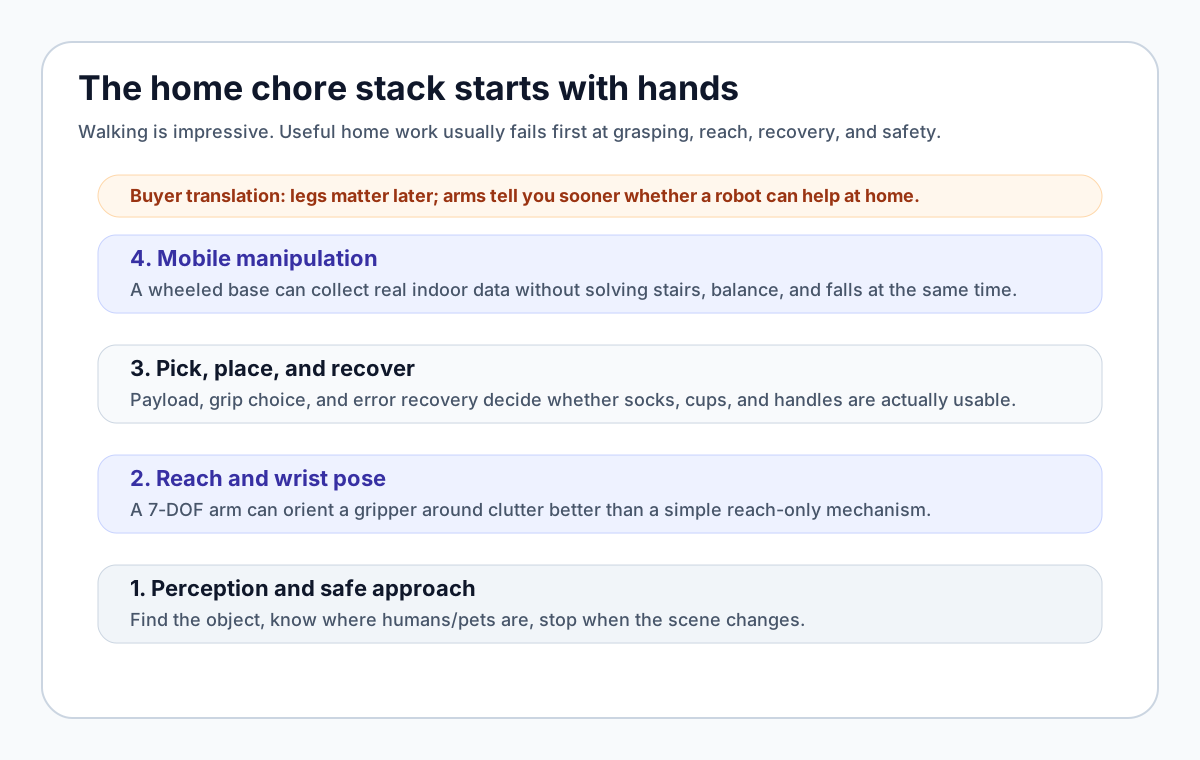
The reason is simple: most useful household jobs are not walking problems first. They are manipulation problems. A robot has to find a cup, reach around a chair, orient a wrist, close a gripper without crushing the object, recover when it slips, and do all of that safely near humans and pets. Legs help with stairs and whole-home coverage, but arms decide whether the robot can do anything once it arrives.
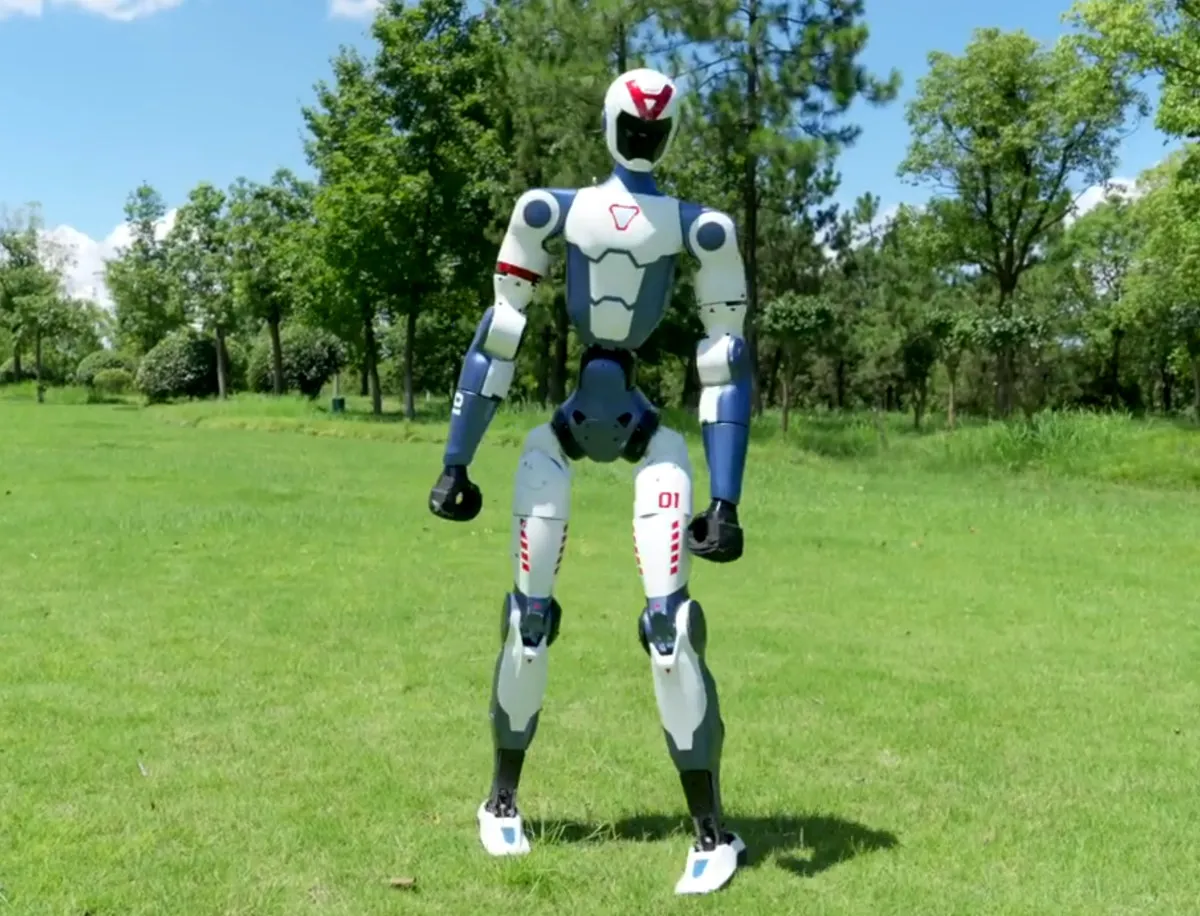
That is why Unitree's lower-cost dual-arm platform deserves a buyer-facing read. The R1-A5, R1-A7, R1-A5-D, and R1-A7-D are not home appliances. They are developer and research hardware. But they point at a path that may matter more than another bipedal demo: build useful arms first, then choose the right base.
What did Unitree actually announce?
Unitree announced the dual-arm R1 family on April 30, 2026 through its official social channel, describing it as a "Dual-Arm Humanoid Robot" starting from $4,290, with high-performance motors and sensors, binocular vision, voice interaction, and compact hardware for smarter task development. Unitree's official R1-D page now organizes the line into four configurations:
Configuration
R1-A5
- Arm design
- 5-DOF arms
- Base type
- Fixed base
- Approx. mass
- ~11 kg
- Power/runtime note
- External power or Li-ion battery; ~1.5 hours on battery
- Best read
- Lowest-complexity bench platform
Configuration
R1-A7
- Arm design
- 7-DOF arms
- Base type
- Fixed base
- Approx. mass
- ~13 kg
- Power/runtime note
- External power or Li-ion battery; ~1.5 hours on battery
- Best read
- Better wrist/orientation experiments
Configuration
R1-A5-D
- Arm design
- 5-DOF arms
- Base type
- Wheeled mobile base with LiDAR
- Approx. mass
- ~30 kg
- Power/runtime note
- External power or Li-ion battery; ~1.5 hours on battery
- Best read
- Mobile manipulation with simpler arms
Configuration
R1-A7-D
- Arm design
- 7-DOF arms
- Base type
- Wheeled mobile base with LiDAR
- Approx. mass
- ~32 kg
- Power/runtime note
- External power or Li-ion battery; ~1.5 hours on battery
- Best read
- Most complete mobile manipulation setup
| Configuration | Arm design | Base type | Approx. mass | Power/runtime note | Best read |
|---|---|---|---|---|---|
| R1-A5 | 5-DOF arms | Fixed base | ~11 kg | External power or Li-ion battery; ~1.5 hours on battery | Lowest-complexity bench platform |
| R1-A7 | 7-DOF arms | Fixed base | ~13 kg | External power or Li-ion battery; ~1.5 hours on battery | Better wrist/orientation experiments |
| R1-A5-D | 5-DOF arms | Wheeled mobile base with LiDAR | ~30 kg | External power or Li-ion battery; ~1.5 hours on battery | Mobile manipulation with simpler arms |
| R1-A7-D | 7-DOF arms | Wheeled mobile base with LiDAR | ~32 kg | External power or Li-ion battery; ~1.5 hours on battery | Most complete mobile manipulation setup |
The shared claims are the interesting part. The family uses 5-DOF or 7-DOF arms, optional grippers or dexterous hands, binocular vision with RGB/depth interfaces, a 4-array microphone, dual speakers, 8-core body and head processors, 10 TOPS head-module compute, and optional NVIDIA Jetson Orin compute in higher configurations. Unitree's official page now lists 2-4 kg maximum arm payload depending on arm posture and a claimed ±0.1 mm end-clamp accuracy, though buyers should treat those as hardware claims to verify in task context, not proof that the robot can fold laundry.
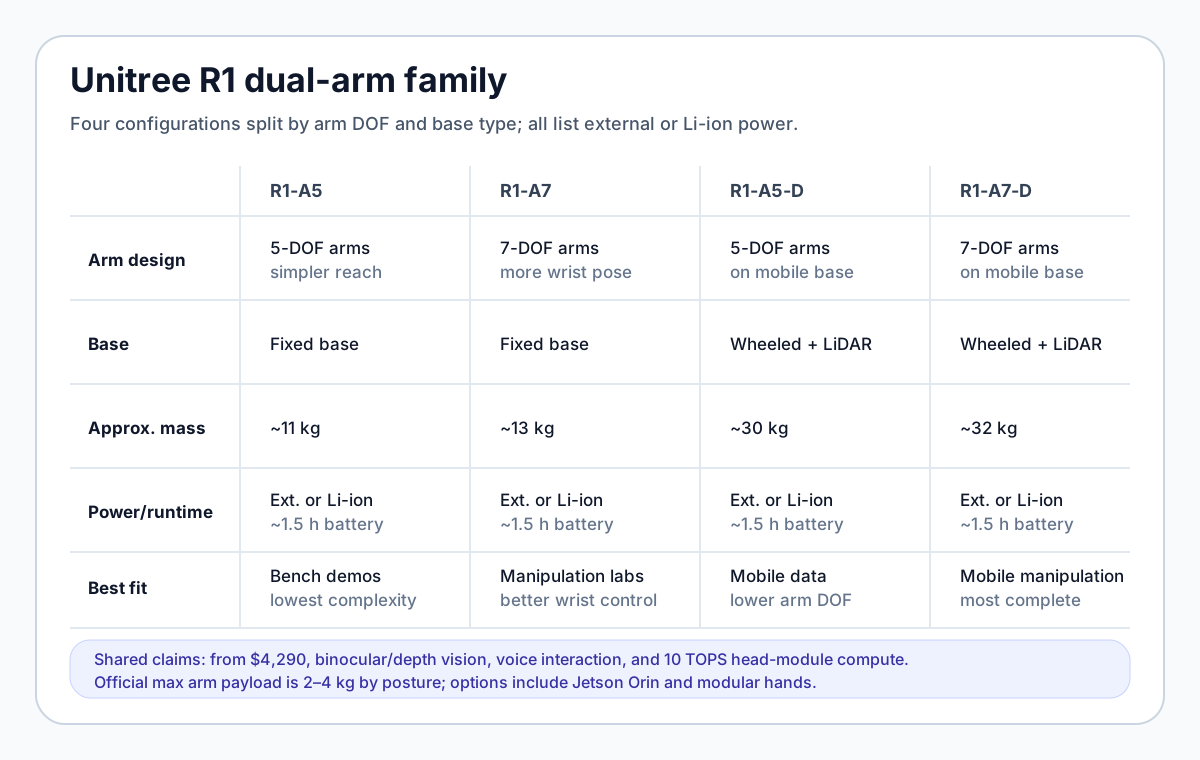
Two caveats matter. First, Unitree says the line starts at $4,290, but the exact price for every configuration is not disclosed. The ui44 database entry for R1-A7-D therefore keeps price as unknown with a note that configuration pricing may require a quotation. Second, this is not a consumer-ready helper. Unitree's official R1-D page says the robot has a complex, powerful structure, asks users to maintain a sufficient safety distance from people, and notes that parameters may vary by configuration and scenario.
What Unitree R1-A5 vs R1-A7 specs matter for home buyers?
The headline difference is arm degrees of freedom. R1-A5 uses 5-DOF arms; R1-A7 uses 7-DOF arms. In plain language, more arm DOF usually means more ways to place the wrist and end-effector while keeping the elbow, shoulder, and robot body out of trouble.
That matters in homes because real homes are not clean factory cells. A robot may need to reach behind a mug handle, approach a drawer pull from the side, pick up a sock from a cluttered floor, or place an object on a shelf without bumping a lamp. A 5-DOF arm can still be useful for simple reach-and-place work. A 7-DOF arm gives the software more options when the scene is awkward.
The second difference is base choice. The non-D models are fixed-base platforms. They make sense for a workbench, a lab station, a kitchen-counter mockup, or any setup where the goal is to train arms without solving navigation. The D models add the wheeled chassis and chassis LiDAR. All four configurations are listed with external power or Li-ion battery support and about 1.5 hours of battery-powered runtime, so the D suffix is about mobility, not simply battery access.
That is the useful buyer translation:
- R1-A5: cheapest path to dual-arm experiments if the robot can stay in one place.
- R1-A7: better if the research question is wrist orientation, grasp pose, and dexterous end-effectors.
- R1-A5-D: mobile base plus lower arm complexity; good for navigation and simple manipulation data.
- R1-A7-D: the strongest signal for future home chores because it combines mobile reach with the more capable arm geometry.
None of those are a normal household purchase today. But if you are tracking which hardware will teach the industry how home chores actually work, R1-A7-D is the one to watch.
Why arms may matter before legs
Humanoid marketing tends to reward locomotion because it looks good on video. Walking up stairs, recovering from a shove, or doing a cartwheel is obvious and shareable. Home usefulness is quieter. It is the robot repeatedly picking up the same dropped toy without wedging its gripper under the sofa.
The Unitree R1 biped illustrates the split. In the ui44 database, R1 starts at $4,900 for R1 Air, with the standard R1 at $5,900. It stands about 123 cm, weighs about 29 kg, offers 20-26 DOF depending on configuration, and gets about 1 hour of mixed activity battery life. It is movement-first: walking, running, push recovery, cartwheels, handstands, voice/image interaction, OTA updates, ROS 2 support, and optional dexterous hands on EDU configurations.
That is exciting hardware. It is also not the same as a chore robot. Unitree's own official R1 page frames movement as the foundation for tasks, not proof that tasks are solved. The dual-arm R1 family flips the emphasis. Instead of asking, "Can this robot walk like a small humanoid?" it asks, "Can this robot reach, grip, perceive, and generate manipulation data cheaply enough to iterate?"
For buyers, this changes the questions worth asking. Do not start with whether a robot looks like a person. Start with whether it can safely perform the first inch of useful work: seeing the object, approaching it, orienting the hand, closing the gripper, lifting within payload limits, and recovering when the object moves.
How R1-A7-D compares with other manipulation-first home robots
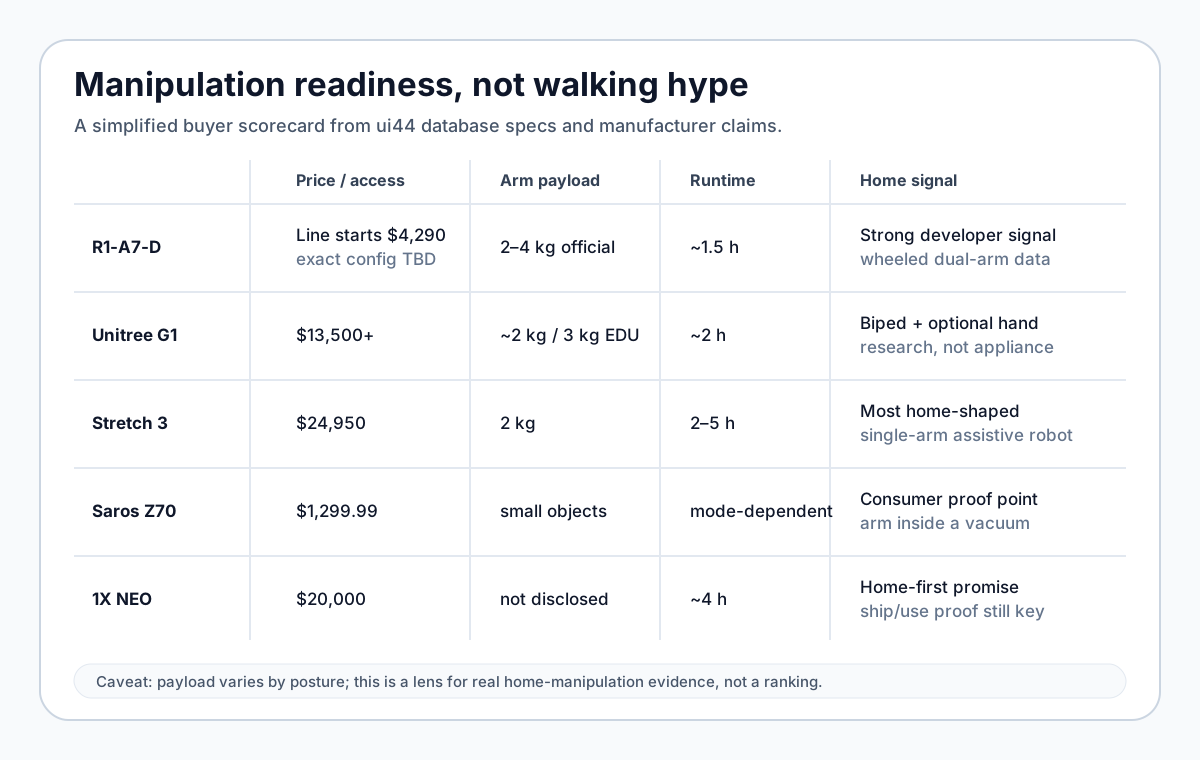
R1-A7-D sits in an interesting middle ground. It is much cheaper than established research mobile manipulators, more manipulation-focused than Unitree's bipedal R1, and far less consumer-proven than a robot vacuum with a small arm.
Here is the ui44-style comparison:
Robot
- Database status
- Development
- Price signal
- Line starts at $4,290; exact config unknown
- Manipulation signal
- 7-DOF dual arms, wheeled base, optional grippers/hands, official 2-4 kg arm payload range
- Home-readiness read
- Strong developer signal, not a buyer appliance
Robot
- Database status
- Available
- Price signal
- From $13,500
- Manipulation signal
- Compact biped, optional Dex3-1 hand on EDU, about 2 kg / 3 kg EDU arm load in ui44 DB
- Home-readiness read
- Better full-body humanoid platform; still research-oriented
Robot
- Database status
- Active
- Price signal
- $24,950
- Manipulation signal
- 7-DOF mobile manipulator, 2 kg payload, 2-5 hour runtime, 33 × 34 cm footprint
- Home-readiness read
- The most home-shaped research platform, but single-arm and expensive
Robot
- Database status
- Available
- Price signal
- $1,299.99 current official price in ui44 DB
- Manipulation signal
- Foldable 5-axis OmniGrip arm for socks, shoes, and small obstacles
- Home-readiness read
- Consumer proof that small arms can ship, but limited to cleaning workflows
Robot
- Database status
- Pre-order
- Price signal
- $20,000 early adopter price
- Manipulation signal
- Home-focused humanoid with soft body and chore ambition; payload not disclosed in ui44 DB
- Home-readiness read
- Strong home promise; delivery, autonomy, and support still decide
| Robot | Database status | Price signal | Manipulation signal | Home-readiness read |
|---|---|---|---|---|
| Unitree R1-A7-D | Development | Line starts at $4,290; exact config unknown | 7-DOF dual arms, wheeled base, optional grippers/hands, official 2-4 kg arm payload range | Strong developer signal, not a buyer appliance |
| Unitree G1 | Available | From $13,500 | Compact biped, optional Dex3-1 hand on EDU, about 2 kg / 3 kg EDU arm load in ui44 DB | Better full-body humanoid platform; still research-oriented |
| Hello Robot Stretch 3 | Active | $24,950 | 7-DOF mobile manipulator, 2 kg payload, 2-5 hour runtime, 33 × 34 cm footprint | The most home-shaped research platform, but single-arm and expensive |
| Roborock Saros Z70 | Available | $1,299.99 current official price in ui44 DB | Foldable 5-axis OmniGrip arm for socks, shoes, and small obstacles | Consumer proof that small arms can ship, but limited to cleaning workflows |
| 1X NEO | Pre-order | $20,000 early adopter price | Home-focused humanoid with soft body and chore ambition; payload not disclosed in ui44 DB | Strong home promise; delivery, autonomy, and support still decide |
The contrast with Stretch 3 is especially useful. Hello Robot Stretch 3 was designed around real homes from the start: 24.5 kg, 33 × 34 cm footprint, 141 cm height, 2 kg payload, 2-5 hour runtime, ROS 2 and Python support, web/gamepad/dexterous teleoperation, and a large indoor mobile manipulation research community. It is not a humanoid, but it has the shape of a practical home manipulator.
R1-A7-D is less proven and less home-tailored, but it is strategically important because it pushes dual-arm hardware into a much lower entry-price band. Even if only labs and developers buy it, the data they collect can shape the next wave of home robots.
The buyer trap: cheap arms are not the same as useful autonomy
The most dangerous reading of R1-A5/R1-A7 is "a $4,290 home robot is here." That is not what the evidence says.
The $4,290 figure is a starting price for the dual-arm line, not confirmed R1-A7-D retail pricing. The mobile models are heavier and more complex, while end-effectors, battery setup, and higher-compute Jetson Orin modules can vary by configuration. Warranty, shipping, service, and software support may differ by market. Most important, a manipulator platform does not automatically include the home autonomy people imagine when they hear "robot butler."
A useful home robot needs at least five layers to work together:
- Hardware reach: Can it reach floor, table, counter, shelf, and handle heights without tipping or pinching?
- End-effector fit: Is the gripper right for fabric, cups, packaging, and cluttered objects, or only demo parts?
- Perception: Can it identify the object and its graspable area under bad lighting and partial occlusion?
- Control: Can it move slowly, safely, and repeatably near people?
- Recovery: When it drops the object, pushes it away, or gets blocked, does it ask for help, retry intelligently, or fail safely?
R1-A7-D is interesting because it can expose those layers to developers at lower cost. It is not interesting because it magically solves them.
What this means for home robot buyers in 2026
If you are shopping for a robot today, R1-A5/R1-A7 should probably not be on your shortlist unless you are a developer, robotics lab, university, integrator, or very technical early adopter. A normal household should look at proven products for specific jobs: a cleaning robot like Saros Z70 if the task is obstacle pickup plus vacuuming, or a mature mobile manipulator like Stretch 3 if the goal is research or assistive experimentation with support.
But if you are trying to understand where home robots are going, Unitree's move matters. It suggests the market is splitting into three practical tracks:
- Movement-first humanoids such as Unitree R1 and G1: exciting full-body platforms, useful for locomotion and whole-body AI work, but not automatically chore-ready.
- Manipulator-first platforms such as R1-A7-D and Stretch 3: less glamorous, but closer to the core problem of useful household work.
- Task-specific consumer robots such as Roborock Saros Z70: narrow, shippable products where the arm is constrained to one workflow.
The likely winner for homes may borrow from all three. A future home robot may need the mobility of a humanoid, the manipulation discipline of Stretch-style research platforms, and the consumer reliability expectations of a robot vacuum. Until then, arms-first robots are the better signal to watch because they attack the hard part directly.
Bottom line
Unitree R1-A5 and R1-A7 are not proof that affordable home humanoids have arrived. They are proof that affordable manipulation hardware is getting more serious.
For buyers, the R1-A7-D is the most relevant configuration because it combines a wheeled base, chassis LiDAR, 7-DOF arms, mobile perception, voice interaction, optional end-effectors, an official 2-4 kg arm-payload range that varies by posture, and an officially listed 1.5-hour battery-powered runtime. That is not enough for unsupervised household chores. It is enough to make developers ask better questions than "can it walk?"
If you want to compare the current evidence yourself, start with the ui44 pages for Unitree R1-A7-D, Unitree R1, Unitree G1, Hello Robot Stretch 3, and Roborock Saros Z70, or use the compare tool. The home robot story is not only about legs. It is about hands that can finally do useful work.
Related in the database
Use this article as a warranty and coverage workflow
Turn the article into a warranty and coverage pass grounded in the robots and manufacturers it actually references.
Unitree R1-A5 vs R1-A7: Arms-First Home Robots already points you toward 6 linked robots, 5 manufacturers, and 3 countries inside the ui44 database. That matters because strong buyer guidance is easier to apply when you can move immediately from a claim or warning into concrete product pages, manufacturer directories, component explainers, and country-level context instead of treating the article as an isolated opinion piece. The fastest next step is to turn the article into a shortlist workflow: open the linked robot pages, verify which specs are actually published for those models, then compare the surrounding manufacturer and component context before you decide whether the underlying claim changes your buying plan.
For this topic, the useful discipline is to separate the editorial lesson from the catalog evidence. The article gives you the framing, but the robot pages tell you what each product actually ships with today: sensor stack, connectivity methods, listed price, release timing, category, and support-relevant compatibility notes. The manufacturer pages then show whether you are looking at a one-off launch, a broader lineup pattern, or a company that spans multiple categories. That layered workflow reduces the risk of buying on a single marketing phrase or a single support FAQ.
The most practical move is to keep warranty language and product context together. Compare the linked robots first, then check whether the manufacturer pages suggest a mature service lane or a more limited lineup. On this article, R1-A7-D, R1, and G1 are the right place to start. If you want a quick working shortlist, open Compare R1-A7-D, R1, and G1 next, then keep this article open as the reasoning layer while you compare structured data side by side.
Practical Takeaway
Every robot, manufacturer, category, component, and country reference below resolves to a real ui44 page, keeping the follow-up path grounded in database records rather than generic advice.
Suggested next steps in ui44
- Compare the listed price, release timing, and category fit of the linked robots before you treat warranty length as a direct value proxy.
- Open Unitree Robotics to see whether the brand has several relevant models in the same lane or whether the article is centered on one flagship product.
- Record what the article proves, what still depends on seller or region rules, and which consumables or battery-related details you still need to verify externally.
- Use Compare R1-A7-D, R1, and G1 before checkout so the warranty conversation stays anchored to a real shortlist.
- Do not treat the article as the final source of truth on coverage terms. Treat it as the framing layer that tells you which documentation you still need to inspect before purchase.
Robot profiles worth opening next
Use the linked product pages as the evidence layer
The linked robot pages are where this article becomes operational. Instead of asking whether the headline is interesting, use the robot entries to inspect the actual mix of sensors, connectivity options, batteries, pricing, release timing, and stated capabilities attached to the products mentioned in the article. That is the easiest way to see whether the warning or opportunity described here affects one product family, a specific design pattern, or an entire buying lane.
R1-A7-D
Unitree Robotics · Humanoid · Active
R1-A7-D is tracked on ui44 as a active humanoid robot from Unitree Robotics. The database currently records a listed price of $100,000, a release date of 2026-04-30, Approx. 1.5 hours (battery-powered; external power also supported) battery life, Not officially disclosed charging time, and a published stack that includes Chassis LiDAR, Binocular camera / depth module, and Optional wrist camera plus Wi-Fi 6 and Bluetooth 5.2.
For warranty and coverage questions, the robot page gives you the operating context that fine print often leaves out. Review the published capability mix, including Mobile Dual-Arm Manipulation, 7-DOF Arms, and Wheeled Mobile Base, and the listed battery and charging profile before deciding whether a coverage term meaningfully reduces your ownership risk or merely sounds reassuring in isolation.
R1
Unitree Robotics · Humanoid · Pre-order
R1 is tracked on ui44 as a pre-order humanoid robot from Unitree Robotics. The database currently records a listed price of $4,900, a release date of 2025, ~1 hour (mixed activity) battery life, Not officially disclosed charging time, and a published stack that includes Monocular camera (R1 Air); binocular camera (R1/R1 EDU), 4-Mic Array, and Dual 6-Axis IMU plus Wi-Fi 6 and Bluetooth 5.2.
For warranty and coverage questions, the robot page gives you the operating context that fine print often leaves out. Review the published capability mix, including Bipedal Walking & Running, Cartwheels & Handstands, and Push Recovery, and the listed battery and charging profile before deciding whether a coverage term meaningfully reduces your ownership risk or merely sounds reassuring in isolation.
G1 is tracked on ui44 as a available humanoid robot from Unitree. The database currently records a listed price of $13,500, a release date of 2024-05-13, ~2 hours battery life, Not disclosed charging time, and a published stack that includes Depth Camera, 3D LiDAR, and 4 Microphone Array plus Wi-Fi 6 and Bluetooth 5.2.
For warranty and coverage questions, the robot page gives you the operating context that fine print often leaves out. Review the published capability mix, including Bipedal Walking, Object Manipulation, and Dexterous Hands (optional Dex3-1), and the listed battery and charging profile before deciding whether a coverage term meaningfully reduces your ownership risk or merely sounds reassuring in isolation.
Stretch 3
Hello Robot · Home Assistants · Active
Stretch 3 is tracked on ui44 as a active home assistants robot from Hello Robot. The database currently records a listed price of $24,950, a release date of 2024, 2–5 hours battery life, Not disclosed charging time, and a published stack that includes Intel D405 RGBD Camera (gripper), Intel D435if RGBD Camera (head), and Wide-Angle RGB Camera (head) plus Wi-Fi 6E and Bluetooth.
For warranty and coverage questions, the robot page gives you the operating context that fine print often leaves out. Review the published capability mix, including Mobile Manipulation, Autonomous Navigation, and Teleoperation (Web / Gamepad / Dexterous), and the listed battery and charging profile before deciding whether a coverage term meaningfully reduces your ownership risk or merely sounds reassuring in isolation.
Saros Z70 is tracked on ui44 as a available cleaning robot from Roborock. The database currently records a listed price of $1,000, a release date of 2025-05, 6,400 mAh Li-ion; official FAQ says about 2h15+ vacuuming/mopping with the arm disabled, or about 2h10+ with the arm enabled while tidying 10 items (Mop Wash Frequency set to 15 minutes). battery life, 2.5-hour fast charging charging time, and a published stack that includes LiDAR (StarSight 2.0), 3D Structured Light, and RGB Camera plus Wi-Fi and Bluetooth.
For warranty and coverage questions, the robot page gives you the operating context that fine print often leaves out. Review the published capability mix, including OmniGrip 5-Axis Mechanical Arm, Object Pickup up to 300 g (socks, sandals, crumpled tissues, towels; more items planned via OTA), and Obstacle Relocation, and the listed battery and charging profile before deciding whether a coverage term meaningfully reduces your ownership risk or merely sounds reassuring in isolation.
Manufacturer context behind the article
Check whether this is one product story or a broader company pattern
Manufacturer pages add the support context that individual product pages cannot show on their own. They help you check whether the article is pointing at one coverage promise or at a company with a broader service footprint and multiple products to maintain.
Unitree Robotics
ui44 currently tracks 9 robots from Unitree Robotics across 3 categorys. The company is grouped under China, and the current catalog footprint on ui44 includes B2, B1, Go2.
That wider brand context matters because support confidence is easier to judge when you can see the company’s overall footprint, not just one warranty phrase attached to one product. A broader tracked lineup can change how you interpret the article’s coverage discussion. The category mix here currently points toward Quadruped, Humanoid, Research as the most useful next route if you want to see whether this article reflects a wider pattern inside the brand.
Unitree
ui44 currently tracks 2 robots from Unitree across 1 category. The company is grouped under China, and the current catalog footprint on ui44 includes H1, G1.
That wider brand context matters because support confidence is easier to judge when you can see the company’s overall footprint, not just one warranty phrase attached to one product. A broader tracked lineup can change how you interpret the article’s coverage discussion. The category mix here currently points toward Humanoid as the most useful next route if you want to see whether this article reflects a wider pattern inside the brand.
Hello Robot
ui44 currently tracks 2 robots from Hello Robot across 1 category. The company is grouped under USA, and the current catalog footprint on ui44 includes Stretch 3, Stretch 4.
That wider brand context matters because support confidence is easier to judge when you can see the company’s overall footprint, not just one warranty phrase attached to one product. A broader tracked lineup can change how you interpret the article’s coverage discussion. The category mix here currently points toward Home Assistants as the most useful next route if you want to see whether this article reflects a wider pattern inside the brand.
Roborock
ui44 currently tracks 6 robots from Roborock across 2 categorys. The company is grouped under China, and the current catalog footprint on ui44 includes Saros Z70, Saros Rover, Saros 20.
That wider brand context matters because support confidence is easier to judge when you can see the company’s overall footprint, not just one warranty phrase attached to one product. A broader tracked lineup can change how you interpret the article’s coverage discussion. The category mix here currently points toward Cleaning, Lawn & Garden as the most useful next route if you want to see whether this article reflects a wider pattern inside the brand.
Broaden the scan without leaving the database
Categories, components, and countries add the wider context
Category framing
Category pages are useful when the article touches a buying pattern that shows up across brands. A category route helps you confirm whether the linked products sit in a narrow niche or whether the same question should be tested across a larger field of alternatives.
Humanoid
The Humanoid category page currently groups 129 tracked robots from 92 manufacturers. ui44 describes this lane as: Full-size bipedal humanoid robots built to work alongside people — from factory floors to household tasks. Compare the cutting edge of humanoid robotics.
That makes the category route a practical follow-up when you want to check whether the products linked in this article are typical for the lane or whether they sit at one edge of the market. Useful starting examples currently include NEO, EVE, Mornine M1.
Home Assistants
The Home Assistants category page currently groups 16 tracked robots from 14 manufacturers. ui44 describes this lane as: Arm-based household helpers — laundry folders, kitchen robots, and mobile manipulators that take on hands-on physical tasks around the home.
That makes the category route a practical follow-up when you want to check whether the products linked in this article are typical for the lane or whether they sit at one edge of the market. Useful starting examples currently include Robody, Futuring 2 (F2), Stretch 3.
Country and ecosystem context
Country pages give extra context when support practices, launch sequencing, regulatory posture, or manufacturer mix matter. They are not a substitute for model-level verification, but they do help you see which ecosystems cluster together and which manufacturers sit in the same regional field when you broaden the search beyond the article headline.
China
The China route currently groups 189 tracked robots from 87 manufacturers in ui44. That gives you a useful regional lens when the article points toward support practices, launch sequencing, or brand clusters that may share similar ecosystem assumptions.
On the current route, manufacturers like AGIBOT, Dreame, Unitree Robotics make the page a good way to broaden the scan without losing the regional context that often shapes availability, documentation style, and adjacent alternatives.
USA
The USA route currently groups 89 tracked robots from 69 manufacturers in ui44. That gives you a useful regional lens when the article points toward support practices, launch sequencing, or brand clusters that may share similar ecosystem assumptions.
On the current route, manufacturers like Faraday Future, iRobot, Boston Dynamics make the page a good way to broaden the scan without losing the regional context that often shapes availability, documentation style, and adjacent alternatives.
Norway
The Norway route currently groups 2 tracked robots from 1 manufacturers in ui44. That gives you a useful regional lens when the article points toward support practices, launch sequencing, or brand clusters that may share similar ecosystem assumptions.
On the current route, manufacturers like 1X Technologies make the page a good way to broaden the scan without losing the regional context that often shapes availability, documentation style, and adjacent alternatives.
Questions to answer before you move from reading to buying
A follow-up FAQ built from the entities already linked in this article
Frequently Asked Questions
Which page should I open first after reading “Unitree R1-A5 vs R1-A7: Arms-First Home Robots”?
Start with R1-A7-D. That gives you a concrete product anchor for the article’s main claim. From there, branch into the manufacturer and component pages so you can tell whether the article is describing one specific model, a repeated brand pattern, or a wider technology issue that affects multiple shortlist options.
How do the manufacturer pages change the buying decision?
Unitree Robotics help you zoom out from one article and one product. On ui44 they show lineup breadth, category spread, and the neighboring robots tied to the same company. That context is useful when you are deciding whether a risk belongs to a single model, whether it shows up across a brand’s portfolio, and whether you should keep looking at alternatives before committing.
When should I switch from reading to side-by-side comparison?
Move into Compare R1-A7-D, R1, and G1 as soon as you understand the article’s main warning or promise. The article explains what to watch for, but the compare view is where you can check whether price, status, battery life, connectivity, sensors, and category fit still make the robot a good match for your own home and budget.
Where to go next in ui44
Keep the research chain inside the database
If you want to keep going, these follow-on pages give you the cleanest expansion path from article to research session. Open the comparison route first if you are deciding between products today. Open the manufacturer, category, and component routes if you still need to understand the broader pattern behind the claim.
Written by
ui44 Team
Published May 7, 2026
Share this article
Open a plain share link on X or Bluesky. No embeds, no widgets, no cookie baggage.