Category intelligence brief

Lawn & Garden robots, scoped for fast market reading.

Autonomous lawn mowers and garden robots that maintain your outdoor spaces without supervision. This route is designed to move from fast inventory scan to deeper technical and buyer guidance without turning the page into a wall of undifferentiated content.

24
Tracked robots

Current lawn & garden coverage in ui44.

17
Market ready

7 still sit in pre-release or inactive states.

15
Manufacturers

Enough supplier breadth to spot concentration quickly.

19/24
Price coverage

Visible range runs $349 to $5.0k.

Market shape

Where this category concentrates right now.

Latest verification
Apr 15, 2026
Recently checked
24 of 24 in the last 120 days

How to use this route

Start with the live inventory to see the shape of the field before reading long-form guidance.
Use the spec and pricing chapters to separate real shortlist candidates from broad category noise.
Jump into compare only after this page gives you a stable set of realistic contenders.

Route map

Jump straight to the part of the lawn & garden brief you need.

Inventory

All Lawn & Garden robots in one scan-first grid.

This is the fastest way to understand catalog breadth before you read the deeper buyer, technical, and market context chapters below.

All Lawn & Garden Robots

Browse the full lawn & garden inventory currently tracked in ui44.

17
Currently active

The strongest signal for real-world shortlist work.

19
With visible pricing

Useful when the first pass needs fast budget framing.

15
Supplier count

A quick read on concentration versus competitive spread.

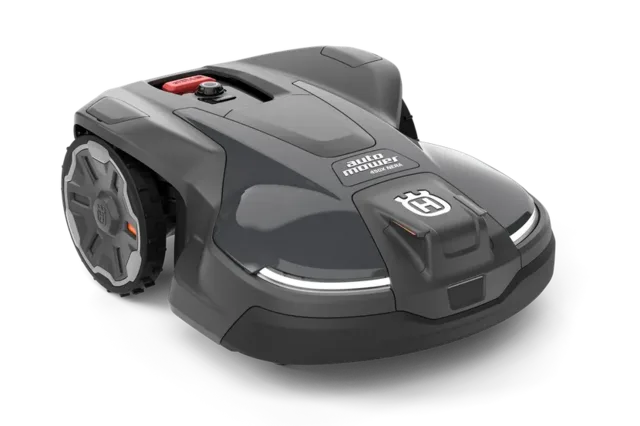
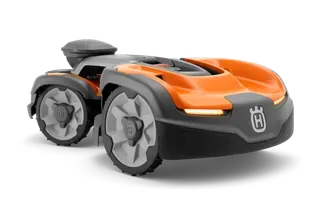
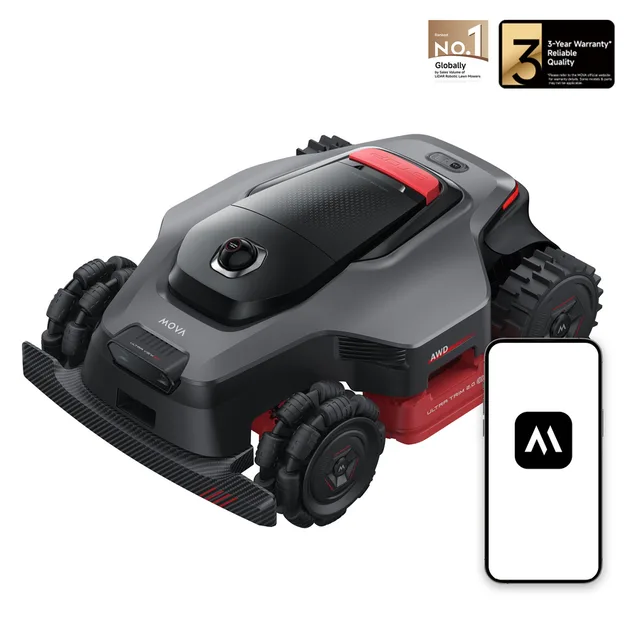
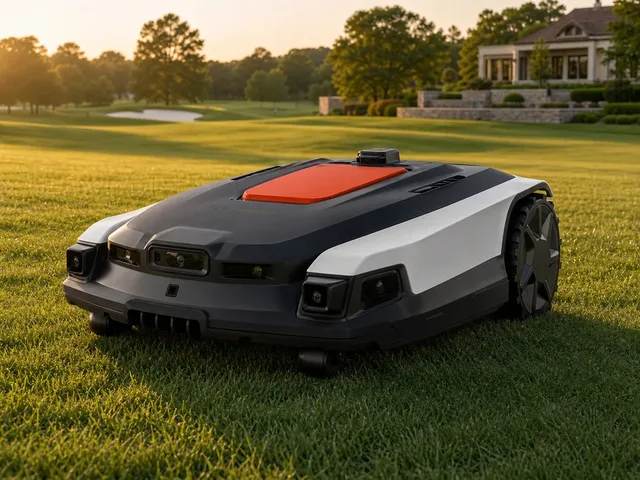
Automower 450X NERA by Husqvarna — Lawn & Garden robot
Available
Lawn & Garden
Husqvarna

Automower 450X NERA

The Husqvarna Automower 450X NERA is a premium robotic lawn mower built for large, complex lawns up to 5,000 m² (about 1.2 acres). It handles slopes up to 50%…

145 min per charge15kg
€4.999 ~€4,999 (EU); US availability TBD View
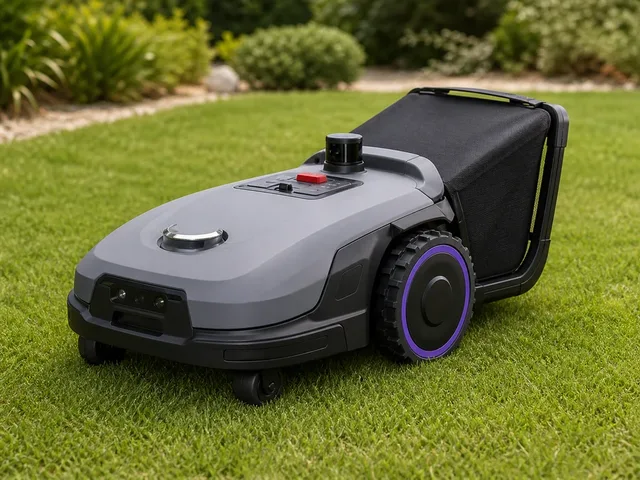
LUBA 2 AWD 5000 by Mammotion — Lawn & Garden robot
Available
Lawn & Garden
Mammotion

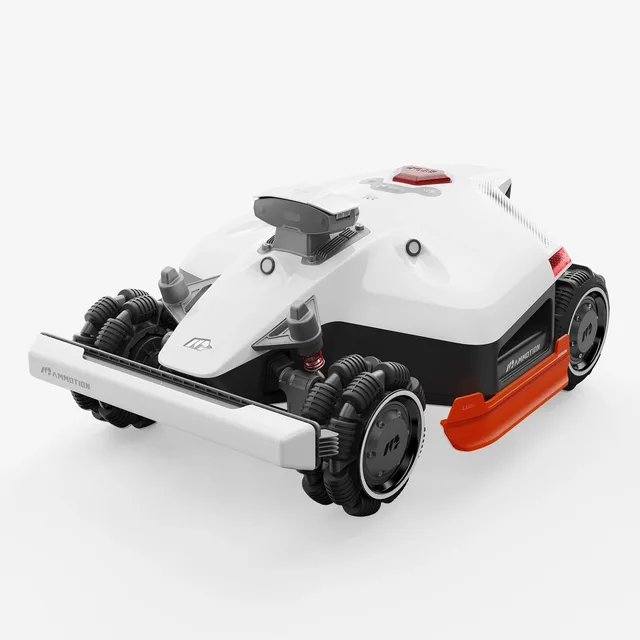
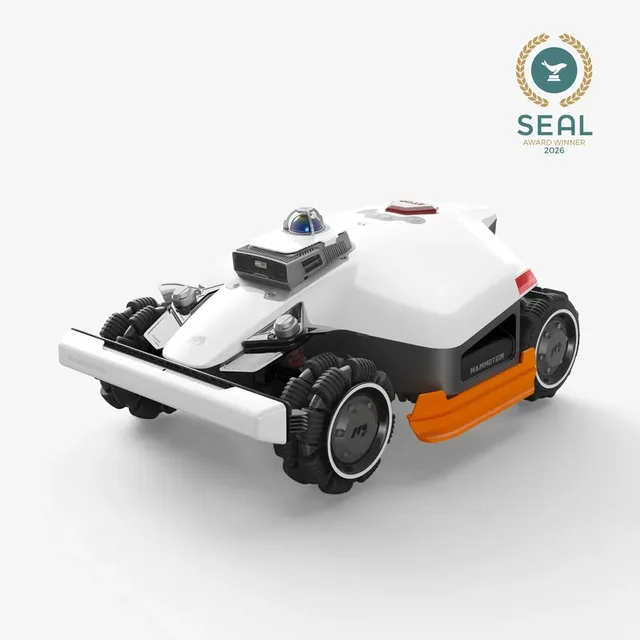
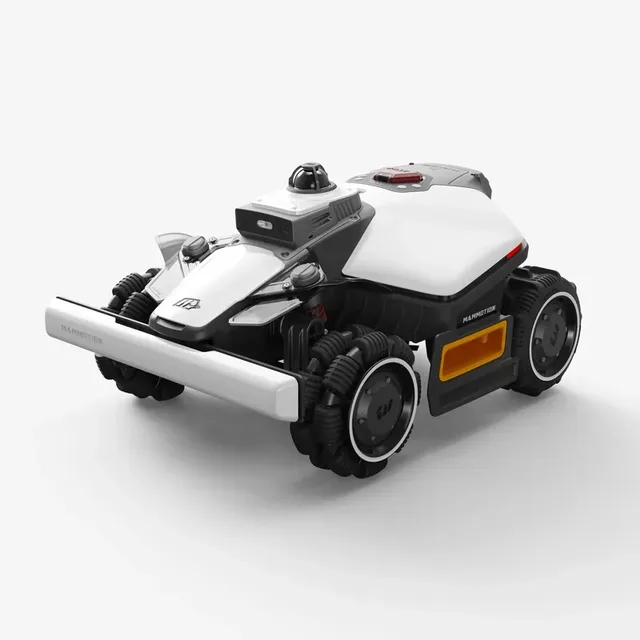
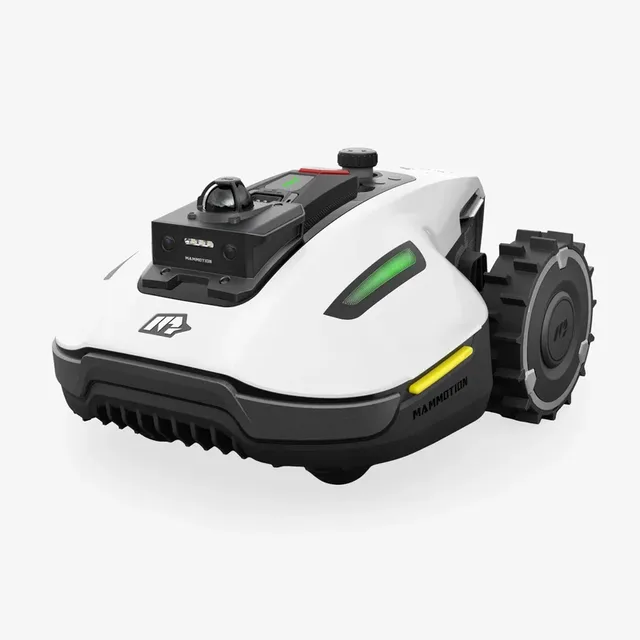
LUBA 2 AWD 5000

The Mammotion LUBA 2 AWD 5000 is a wire-free robotic lawn mower for large yards up to 5,000 m² (about 1.25 acres). It uses RTK satellite positioning combined…

190 min per charge19.1 kg
$2,899 $2,899 USD was the original 5000-model… View
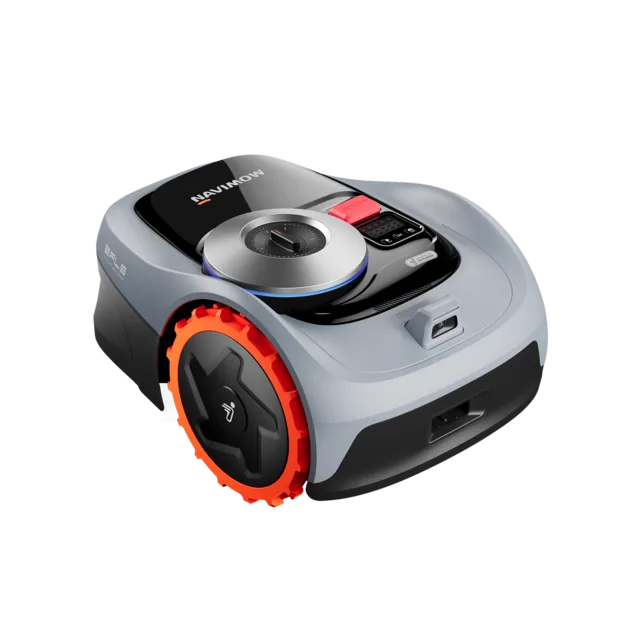
Navimow i105 by Segway Navimow — Lawn & Garden robot
Available
Lawn & Garden
Segway Navimow

Navimow i105

Segway Navimow i105 is a wire-free robotic lawn mower for smaller residential lawns. It uses EFLS 2.0 positioning (RTK + vision) with Visual SLAM for…

Up to 60 minutes…24 lbs (10.9 kg)
$799 $799 current US store price (listed… View
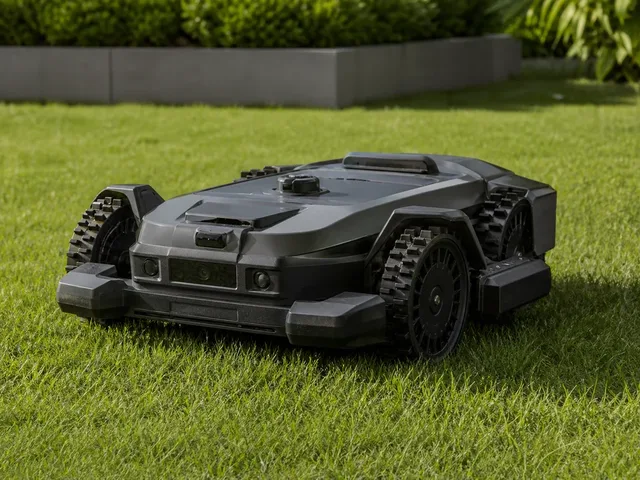
Navimow X350 by Segway Navimow — Lawn & Garden robot
Available
Lawn & Garden
Segway Navimow

Navimow X350

Segway Navimow X350 is a boundary-wire-free robotic mower in the X3 series for large residential lawns. Segway says the X3 launch includes X315/X330/X350/X390…

Up to 200 min full-cha…43.7 lbs
$2,799 Official Navimow US product page… View

Buyer guide

Lawn & Garden buyer brief and category fit guidance.

Use this chapter to orient the page, calibrate expectations, and pressure-test whether the category really matches the workload you have in mind.

What Are Lawn & Garden Robots?

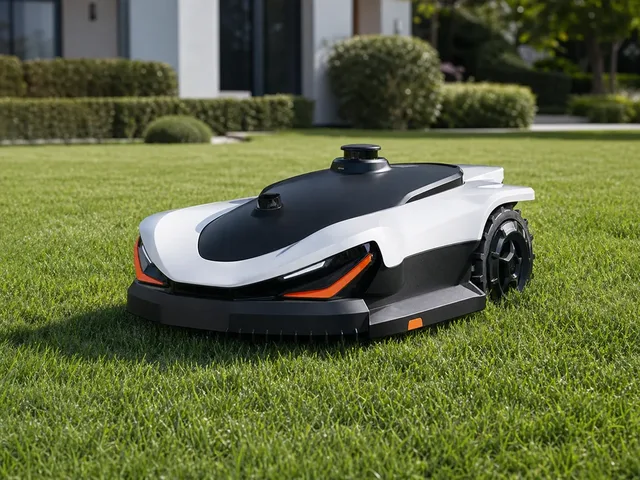
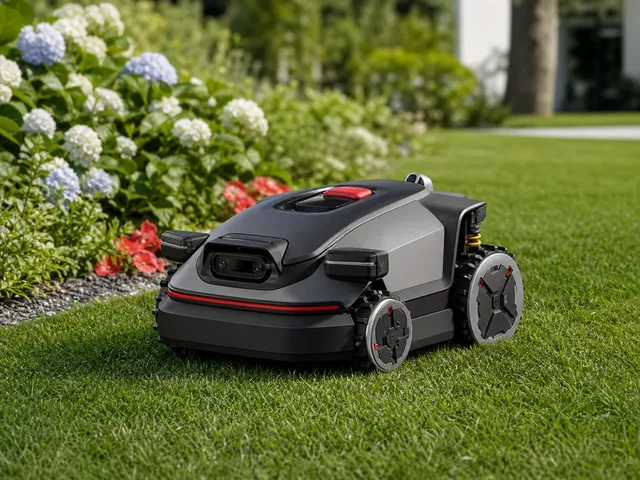
Robotic lawn mowers are transforming yard maintenance from a weekend chore into a hands-off automated task. These autonomous machines use GPS, RTK positioning, or boundary wire systems to navigate and mow your lawn on a scheduled basis, keeping grass at a consistent height without any human intervention.

Unlike traditional mowers, robotic models cut small amounts frequently (often daily), which produces healthier, denser grass and eliminates the need for bagging clippings — the fine cuttings act as natural fertilizer. Market leaders like Husqvarna (Automower), Mammotion, and EcoFlow have driven significant innovation, with newer models eliminating the need for buried boundary wires through satellite-guided navigation.

The category is expanding beyond mowing into general garden maintenance, with emerging products for weeding, watering, and soil monitoring.

Lawn & Garden Robot Buyer's Guide

When choosing a robotic mower, the most important factor is your lawn size and complexity. Entry-level models handle up to 500 m² (roughly 5,400 sq ft), mid-range units cover 1,000–2,000 m², and premium models manage up to 5,000 m² or more.

Key Questions to Ask

  • Terrain matters too: if your lawn has slopes exceeding 25%, check the model's maximum incline rating
  • For homes with multiple lawn zones separated by paths or driveways, look for multi-zone support
  • Finally, consider rain sensors, anti-theft features, and whether the mower can handle your grass type

Boundary technology is the next critical decision: traditional perimeter wire systems are proven but require installation (burying a wire around your lawn's edges), while newer wire-free models use RTK-GPS for boundary definition — much easier to set up but typically more expensive. Terrain matters too: if your lawn has slopes exceeding 25%, check the model's maximum incline rating.

For homes with multiple lawn zones separated by paths or driveways, look for multi-zone support. Finally, consider rain sensors, anti-theft features, and whether the mower can handle your grass type.

How to Choose a Lawn & Garden Robot

Start by measuring your lawn area accurately — this is the primary sizing factor. Next, assess complexity: narrow passages, islands (trees, flower beds), and slopes all affect which models can handle your yard. For simple, flat lawns under 1,000 m², a mid-range wire-free model offers the best balance of convenience and cost.

Decision Framework

1

Start by measuring your lawn area accurately — this is the primary sizing factor

2

Next, assess complexity: narrow passages, islands (trees, flower beds), and slopes all affect which models can handle your yard

3

For simple, flat lawns under 1,000 m², a mid-range wire-free model offers the best balance of convenience and cost

4

For complex yards with multiple zones, slopes, or irregular shapes, invest in a model with RTK-GPS precision and robust obstacle detection

5

Check cutting height range (most offer 20–60 mm adjustment) and cutting width (wider = faster coverage)

6

If security is a concern, look for GPS tracking and PIN protection

Practical tip: If security is a concern, look for GPS tracking and PIN protection.

Specs and pricing

Technical comparisons, use-case framing, and cost range context.

These sections help separate the robots that merely sit in the category from the ones that genuinely fit a deployment or buying brief.

Key Specifications to Compare

When evaluating lawn & garden robots, these are the specifications that matter most for real-world performance and value:

Maximum lawn area coverage (m² or sq ft)

Navigation type

boundary wire, RTK-GPS, or vision-based

Maximum slope angle

critical for hilly yards

Cutting width and height range

Battery life and charging time

Noise level

robotic mowers are significantly quieter than gas

Common Use Cases for Lawn & Garden Robots

The lawn & garden category serves a variety of applications, from consumer households to industrial deployments:

Residential lawn maintenance (daily automated mowing)

Large estate and commercial property groundskeeping

Sports field and golf course maintenance

Slope and hillside lawn management

Allergy-friendly yard care (no manual mowing exposure)

Vacation property maintenance (remote monitoring)

Price Range Overview

Lawn & Garden robots with published pricing range from $349 to $5.0k. 5 models in this category do not have publicly listed pricing. Below is a breakdown by price tier to help you understand what's available at different budget levels.

Under $1,000

4 models
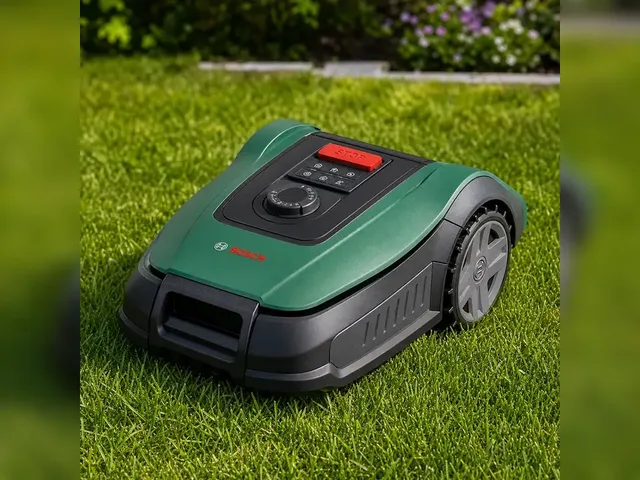
VISIMOW18V-100
$349 Available
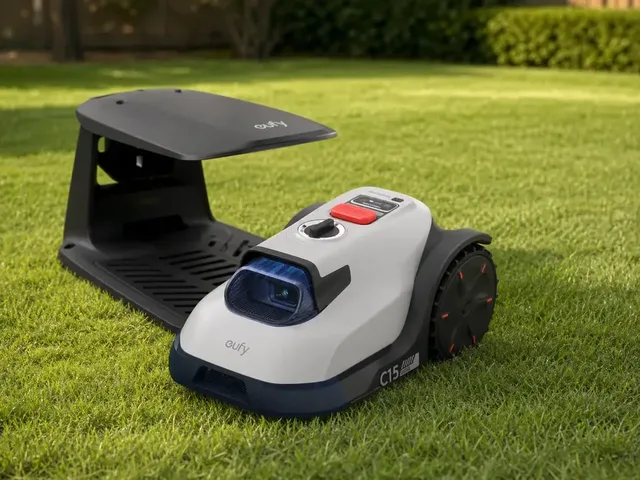
Robot Lawn Mower C15
$899 Pre-order
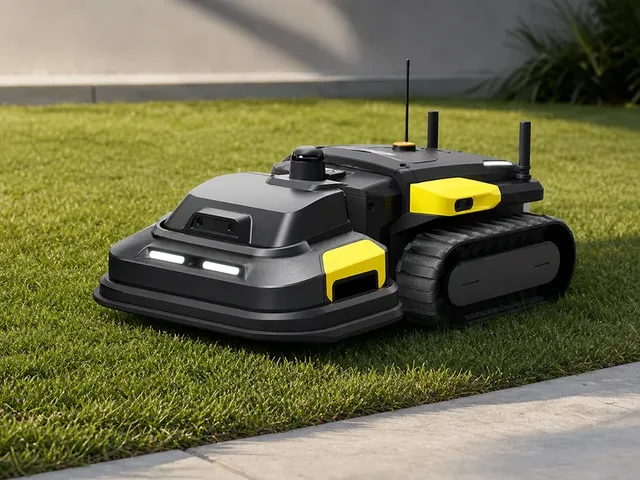
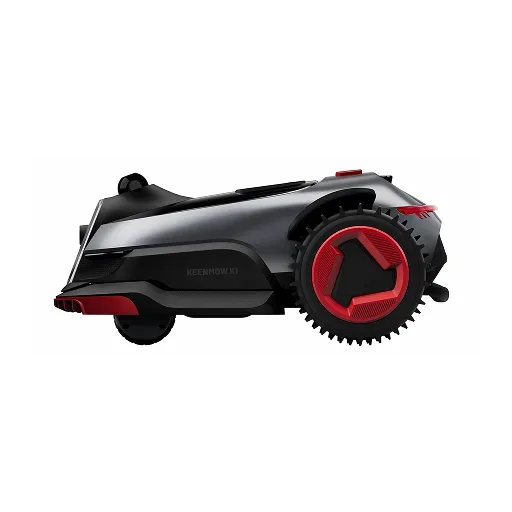
KeenMow K1
$899 Pre-order
Navimow i105
$799 Available

$1,000 – $5,000

15 models
N8 LiDAR
$1.4k Pre-order
A3 AWD Pro
$2.6k Available
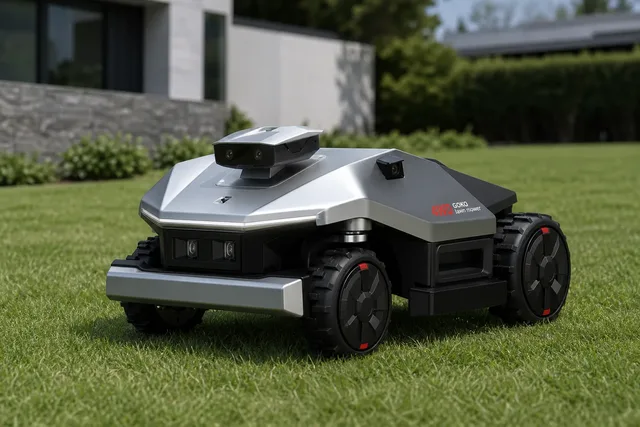
GOAT A3000 LiDAR
$3.0k Available
Automower 450X NERA
$5.0k Available
Lymow One Plus
$2.7k Pre-order
LUBA 2 AWD 5000
$2.9k Available
LUBA 3 AWD 5000
$3.3k Available
LUBA mini 2 AWD 1500
$2.0k Available
YUKA mini 2 1000H
$1.4k Available
LiDAX Ultra 3000 AWD
$2.5k Available
Navimow X350
$2.8k Available
Navimow i2 LiDAR Pro
$1.6k Available
Navimow X430
$2.3k Available
S4
$1.6k Available
Yarbo M
$2.2k Pre-order

Lawn & Garden Robot Specifications Comparison

Compare key specifications across all 24 lawn & garden robots in the database. All data is sourced from manufacturer disclosures and verified against official documentation.

Robot Price Status
Automower 450X NERA $5.0k Available
LUBA 3 AWD 5000 $3.3k Available
GOAT A3000 LiDAR $3.0k Available
LUBA 2 AWD 5000 $2.9k Available
Navimow X350 $2.8k Available
Lymow One Plus $2.7k Pre-order
A3 AWD Pro $2.6k Available
LiDAX Ultra 3000 AWD $2.5k Available
Navimow X430 $2.3k Available
Yarbo M $2.2k Pre-order
LUBA mini 2 AWD 1500 $2.0k Available
Navimow i2 LiDAR Pro $1.6k Available
S4 $1.6k Available
N8 LiDAR $1.4k Pre-order
YUKA mini 2 1000H $1.4k Available
Robot Lawn Mower C15 $899 Pre-order
KeenMow K1 $899 Pre-order
Navimow i105 $799 Available
VISIMOW18V-100 $349 Available
Automower 535 AWD EPOS Active
Automower 540 EPOS Active
RockMow X1 LiDAR Development
Elite X9 Pre-order
Lawn Companion X25 Available

Manufacturer landscape

Company concentration, technology posture, and category structure.

Once the inventory looks promising, this is where you figure out whether the category is broad and competitive or concentrated around a smaller set of serious builders.

Manufacturers in Lawn & Garden

15 companies are building lawn & garden robots tracked in the ui44 database. Here's how the product landscape breaks down by manufacturer.

View all robotics companies in our manufacturers directory.

Technology Landscape

A comprehensive look at the sensors, connectivity, capabilities, and AI platforms used across all 24 lawn & garden robots in the database.

Key Capabilities

Auto-Recharge and Resume 13%
Obstacle detection and avoidance 8%
Automatic charging 8%
Low-Noise Operation (≤60 dB) 8%
Automatic Docking and Charging 8%
No-Go Zone Virtual Boundaries 8%
Wire-free autonomous lawn mowing 8%
OTA Firmware Updates 8%
DropMow one-time unmapped mowing mode 8%
App control 8%

Connectivity Standards

AI Platforms

360° LiDAR plus dual-vision navigation with centimeter-level positioning, autonomous mapping, and AI obstacle detection for 1,000+ obstacle types SmartVision AI for grass detection, boundary recognition, and obstacle avoidance OmniSense 3.0 with binocular AI vision and 3D LiDAR; 300+ obstacle recognition; autonomous route planning Vision FSD camera-based mapping and obstacle detection LELS Pro dual-LiDAR navigation with AIVI 3D obstacle avoidance and Horizon X5-based 10 TOPS object recognition Onboard navigation with systematic mowing patterns EPOS satellite navigation with virtual transport paths and geofence controls Wire-free EPOS navigation with optional AI Vision object identification and night-time IR support AuraVue 3D LiDAR-Vision Fusion; SmartPath AI for systematic path planning; Patch Free adaptive cutting power LySee 2.0 navigation combining RTK, VSLAM, and AI vision obstacle avoidance for wire-free mapping and route planning UltraSense AI Vision with 5 TOPS chip; recognizes 200+ obstacle types; autonomous path optimization Tri-Fusion positioning (360° LiDAR + NetRTK + dual-camera AI vision) with a 10 TOPS AI processor 360° LiDAR and dual-camera AI vision for mapping, path planning, and 300+ obstacle detection 10 TOPS AI platform with LiDAR and vision fusion for automatic mapping, path planning, 300+ obstacle recognition, and smart cliff protection UltraView 3.0 navigation with 360° 3D LiDAR, AI dual vision, AI-assisted auto mapping, obstacle avoidance for 300+ obstacle types, and U-shaped path planning Sentisphere environmental perception with 360° 3D LiDAR, VSLAM, and Vision-LiDAR Fusion obstacle avoidance EFLS 2.0 + Visual SLAM + VisionFence AI obstacle avoidance EFLS 3.0 positioning + VisionFence obstacle avoidance EFLS LiDAR+ triple fusion (LiDAR + NRTK + Vision), 200+ object detection, obstacle avoidance as small as 1 cm EFLS NRTK positioning with panoramic VisionFence obstacle avoidance and GeoSketch real-scene mapping AllSense 3D Fusion (LiDAR + AI Vision), 10 TOPS chip, real-time 3D mapping with 210K+ point clouds/sec AONavi 2.0 navigation with RTK + VSLAM 2.0, 10 TOPS onboard computing, and OmniSight full-scene obstacle and terrain recognition Volta Lawn Intelligence combines computer vision, GNSS, IMU data, a hex-cell lawn model, per-lawn learning, and fleet intelligence for adaptive mowing and lawn-health analysis AI computer vision for obstacle detection (people, pets, walls, curbs) on M20i model; NetRTK autonomous navigation on all models

Operations

Safety, maintenance, and implementation readiness.

This chapter keeps the route useful after the first visual scan, when the real questions become ownership, rollout friction, and operational constraints.

Safety & Regulation for Lawn & Garden Robots

Robotic lawn mowers operate outdoors with spinning blades, making safety a primary design concern. Modern robotic mowers implement multiple safety layers: lift sensors immediately stop the blades when the mower is picked up, tilt sensors cut power if the unit tips beyond a safe angle, and collision sensors detect contact with obstacles.

Physical Safety

Modern robots implement multiple safety layers including force limiting, collision detection, and emergency stops.

Standards & Certifications

Look for ISO, CE, FCC, and category-specific certifications that validate safety compliance.

Privacy & Cybersecurity

Connected robots with cameras and microphones require careful evaluation of data handling and security practices.

The cutting blades on most robotic mowers are intentionally small and designed to retract on impact, significantly reducing injury risk compared to traditional rotary mowers. Most models also feature ultrasonic or camera-based detection to avoid pets and children in the yard.

Privacy Matters

European safety standards (EN 50636-2-107) and IEC 60335-2-107 specifically govern robotic mower safety, covering blade exposure, stopping times, and obstacle detection requirements. Boundary systems (wire or GPS-based) prevent mowers from leaving designated areas.

Maintenance & Ownership Costs

Robotic lawn mowers are remarkably low-maintenance compared to traditional gas or electric mowers. The primary consumable is the cutting blade — most models use small replaceable blades that cost $5–$15 for a set and need replacing every 1–3 months depending on lawn size and conditions.

Regular Upkeep

Most robots need periodic cleaning, software updates, and consumable replacements to maintain peak performance.

Ongoing Costs

Factor in consumables, subscriptions, battery replacements, and potential maintenance contracts when budgeting.

Expected Lifespan

A well-maintained robot's lifespan varies by category — from 4–7 years for cleaning robots to 8–12 years for mowers.

$30–$60

Annual maintenance

3–5 yr

Battery lifespan

8–12 yr

Expected lifespan

Battery replacement is the largest periodic expense, typically needed every 3–5 years at a cost of $100–$300 depending on the model. Keep the charging contacts clean, clear debris from the wheels and chassis monthly, and store the mower indoors during winter months in cold climates.

Cost-Saving Tip

Boundary wire systems occasionally need repair if damaged by gardening tools or rodents — keep spare wire and connectors on hand. The total annual maintenance cost for a robotic mower is typically $30–$60, dramatically less than the fuel, oil, blade sharpening, and maintenance costs of a gas mower.

Getting Started with Lawn & Garden Robots

If you are new to lawn & garden robots, here is a step-by-step approach to finding the right model for your needs. This guide applies whether you are buying your first robot or upgrading from an earlier model.

Planning phase

1

Measure your lawn area accurately (use satellite mapping tools or pace it out) — this is the single most important sizing factor for selecting a model.

2

Assess your terrain: note slopes (measure the steepest grade), narrow passages, garden islands, and any areas separated by paths or driveways.

3

Choose your boundary technology: perimeter wire (proven, lower cost, requires installation) or wire-free RTK-GPS (easier setup, higher price).

Execution phase

4

Check local noise regulations — robotic mowers are much quieter than gas mowers, but some models can run overnight while others may not comply with nighttime noise limits.

5

Plan your installation: wire-based systems need 2–4 hours for a typical lawn; wire-free models can be configured via smartphone app in under an hour.

6

Factor in seasonal storage: most robotic mowers should be stored indoors during winter months in cold climates, with a full battery charge before storage.

Use ui44's comparison tool and individual robot detail pages to evaluate the 24 lawn & garden robots in the database.

Outlook

History, market trajectory, and future pressure points.

The goal here is not trend theater. It is to show whether the category is stabilizing, accelerating, or still too early for confident buyer decisions.

History & Evolution of Lawn & Garden Robots

The concept of robotic lawn mowing dates back to the 1969 MowBot, one of the earliest consumer robots of any kind, though it was a rudimentary bump-and-turn device. The modern era began with Husqvarna's Automower in 1995, the first commercially viable robotic mower using boundary wire navigation.

1969

The concept of robotic lawn mowing dates back to the 1969 MowBot

The concept of robotic lawn mowing dates back to the 1969 MowBot, one of the earliest consumer robots of any kind, though it was a rudimentary bump-and-turn device

1995

The modern era began with Husqvarna's Automower in 1995

The modern era began with Husqvarna's Automower in 1995, the first commercially viable robotic mower using boundary wire navigation

2028

The global robotic lawn mower market is projected to exceed

The global robotic lawn mower market is projected to exceed $3 billion by 2028

Where we are now

For nearly two decades, Husqvarna dominated the market with incremental improvements — better navigation, longer battery life, and rain sensors. The 2010s saw competition heat up with Worx Landroid, Robomow, and Honda's Miimo entering the market, driving down prices and improving features.

The transformative shift came in the early 2020s with wire-free navigation: companies like Mammotion and EcoFlow introduced RTK-GPS guided mowers that eliminated the tedious boundary wire installation process, removing the single biggest barrier to consumer adoption. Vision-based AI navigation followed, with cameras and machine learning enabling mowers to create virtual boundaries and avoid obstacles intelligently.

Today the market is expanding from pure mowing into broader garden automation, with products addressing weeding, soil monitoring, and integrated smart garden ecosystems. The global robotic lawn mower market is projected to exceed $3 billion by 2028.

Lawn & Garden Robots vs. Traditional Alternatives

Robotic lawn mowers compete with three traditional alternatives: manual push mowing, ride-on mowers, and professional lawn care services. Against manual push mowing (the most common approach for lawns under 1,000 m²), robotic mowers eliminate 30–60 minutes of weekly physical labor and deliver arguably better results: frequent light cutting produces healthier, denser grass with natural mulching that reduces fertilizer needs.

The tradeoff is upfront cost ($800–$3,000+ for the robot vs. $200–$500 for a quality push mower) and the limitation that robotic mowers cannot trim edges, clear leaves, or handle overgrown areas — you still need a string trimmer for borders. Against ride-on mowers ($1,500–$5,000+) used for larger properties, robotic mowers offer comparable or lower total cost of ownership: no fuel, no oil changes, no annual service, and no operator time.

The Bottom Line

However, lawn care services typically include edging, leaf blowing, fertilizing, and seasonal treatments that a mower robot does not provide. The practical conclusion: a robotic mower is the most cost-effective option for the mowing task itself, but most homeowners will still need occasional manual or professional help for edging, leaf management, and seasonal yard care tasks that mowing robots do not address.

Wire-free navigation is the defining trend in robotic mowing, with RTK-GPS and visual SLAM systems eliminating the biggest barrier to adoption — boundary wire installation. Vision-based AI is enabling mowers to recognize and avoid garden objects, pets, and children without physical boundaries.

RTK-GPS SLAM autonomous yard Wire-free navigation Vision-based AI Multi-robot

Industry Trends

Multi-robot systems are emerging for large commercial properties, where fleets of mowers coordinate coverage. Integration with broader smart garden ecosystems (automated irrigation, soil sensors, weather-adaptive scheduling) is creating the foundation for fully autonomous yard management.

Solar-powered charging stations and longer-lasting batteries are extending operational windows.

Future Outlook for Lawn & Garden Robots

The robotic lawn mower market is experiencing its most significant transformation since the category's creation, driven by the shift from boundary wire systems to wire-free GPS navigation. This single change removes the biggest adoption barrier — the tedious, sometimes professional-required installation of perimeter wires — and opens the market to millions of homeowners who found wire installation unacceptable.

$2B

Market by 2024

2030

Key milestone year

The robotic lawn mower market is experiencing its most significant transformation since the category's creation, driven by the shift from boundary wire systems to wire-free GPS navigation

Key Uncertainty

For buyers on the fence, the technology is mature enough today for confident purchase — wire-free models work well, and prices are decreasing as competition intensifies.

FAQ and routes

Decision support, trust notes, and adjacent pages worth opening next.

Finish here when you need practical next steps rather than more category theory.

Frequently Asked Questions About Lawn & Garden Robots

General

What are lawn & garden robots?

Autonomous lawn mowers and garden robots that maintain your outdoor spaces without supervision. The ui44 database currently tracks 24 robots in this category from 15 manufacturers.

How many lawn & garden robots are in the ui44 database?

ui44 currently tracks 24 lawn & garden robots from 15 different manufacturers including ANTHBOT, Bosch, Dreame, eufy, Ecovacs, and 10 more. Browse the full robot directory to see all categories.

What can lawn & garden robots do?

Across the 24 robots in this category, 246 distinct capabilities are represented, including: Wire-free 4-in-1 lawn care, Mowing, mulching, clipping collection, and leaf sweeping, 23 L auto-dumping grass bag, LiDAR-based mapping without RTK base station, Automatic and remote-control hybrid mapping, Multi-zone mowing, App-set dumping locations, Obstacle detection for 1,000+ objects, and 238 more. The specific capability set varies by model, price point, and intended application — visit individual robot pages for detailed capability breakdowns.

Which companies make lawn & garden robots?

15 companies make lawn & garden robots tracked in the ui44 database: ANTHBOT, Bosch, Dreame, eufy, Ecovacs, Husqvarna, Keenon Robotics, Lymow, Mammotion, MOVA, Roborock, Segway Navimow, Sunseeker, Volta, Yarbo. Explore all robotics companies on the manufacturers page.

How up-to-date is the lawn & garden robot data?

All robot data on ui44 is periodically verified against manufacturer sources, spec sheets, and press releases. The most recent verification for a robot in the Lawn & Garden category was on 2026-04-15. Each robot page includes a "last verified" date for transparency. If you notice outdated information, please let us know.

Are lawn & garden robots safe to use around people?

Robotic lawn mowers operate outdoors with spinning blades, making safety a primary design concern. Modern robotic mowers implement multiple safety layers: lift sensors immediately stop the blades when the mower is picked up, tilt sensors cut power if the unit tips beyond a safe angle, and collision sensors detect contact with obstacles. The cutting blades on most robotic mowers are intentionally… Read the full safety & regulation section for detailed information on certifications, standards, and precautions for lawn & garden robots.

How have lawn & garden robots evolved over the years?

The concept of robotic lawn mowing dates back to the 1969 MowBot, one of the earliest consumer robots of any kind, though it was a rudimentary bump-and-turn device. The modern era began with Husqvarna's Automower in 1995, the first commercially viable robotic mower using boundary wire navigation. For nearly two decades, Husqvarna dominated the market with incremental improvements — better… Read the full history & evolution section for a detailed timeline of lawn & garden robot development.

Cost & Maintenance

How much do lawn & garden robots cost?

Lawn & Garden robots with published pricing range from $349 to $5.0k. 5 models in this category do not list public pricing. See the price range overview for a detailed breakdown by budget tier.

What does it cost to maintain a lawn & garden robot?

Robotic lawn mowers are remarkably low-maintenance compared to traditional gas or electric mowers. The primary consumable is the cutting blade — most models use small replaceable blades that cost $5–$15 for a set and need replacing every 1–3 months depending on lawn size and conditions. Battery replacement is the largest periodic expense, typically needed every 3–5 years at a cost of $100–$300… See the full maintenance & ownership section for a complete breakdown of ongoing costs, consumables, and expected lifespan for lawn & garden robots.

What is the most affordable lawn & garden robot?

The most affordable lawn & garden robot with published pricing is the VISIMOW18V-100 by Bosch at $349. At the other end of the spectrum, the Automower 450X NERA by Husqvarna is listed at $5.0k. Price is just one factor — compare capabilities, sensors, and support when making your decision. See the price overview for a full tier breakdown.

Technical

What sensors are commonly used in lawn & garden robots?

Lawn & Garden robots in the database use 74 types of sensors. The most common include 360° rotating LiDAR, Dual HDR wide-angle cameras, Bag fullness radar sensor, Rain sensor, SmartVision camera (grass & boundary recognition), Ultrasonic obstacle detection, and 68 more. See the technology landscape section for a complete breakdown, or browse the components directory.

What connectivity options do lawn & garden robots support?

Lawn & Garden robots in the database support 16 types of connectivity. The most common include Optional 4G service, Wi-Fi, Bluetooth, App control, Cellular, 4G, and 10 more. Connectivity determines how the robot communicates with your network, cloud services, companion apps, and other smart devices. Visit the components directory for detailed information on each protocol.

Do lawn & garden robots work with voice assistants?

Some lawn & garden robots integrate with voice assistant platforms including Amazon Alexa, Google Home, Alexa, Google Assistant. Voice integration enables hands-free control, status updates, and interaction with your broader smart home ecosystem. Not all models support voice assistants — check individual robot pages for specific compatibility details.

Buying & Getting Started

Which lawn & garden robots can I buy right now?

17 lawn & garden robots are currently available or actively deployed: VISIMOW18V-100 by Bosch, A3 AWD Pro by Dreame, GOAT A3000 LiDAR by Ecovacs, Automower 450X NERA by Husqvarna, Automower 535 AWD EPOS by Husqvarna, Automower 540 EPOS by Husqvarna, LUBA 2 AWD 5000 by Mammotion, LUBA 3 AWD 5000 by Mammotion, and 9 more. Visit each robot's page for the latest purchasing details and availability.

How do I compare lawn & garden robots on ui44?

ui44 offers a side-by-side comparison tool that lets you compare up to 4 lawn & garden robots at once. Compare specs like battery life, weight, sensors, price, and capabilities across models including N8 LiDAR, VISIMOW18V-100, A3 AWD Pro, Robot Lawn Mower C15, GOAT A3000 LiDAR, and 19 more. You can also check the specifications comparison table above for a quick overview of all models.

How do I get started choosing a lawn & garden robot?

Start by defining your specific requirements and budget. The getting started guide above walks through 6 key steps: Measure your lawn area accurately (use satellite mapping tools or pace it out)…; Assess your terrain: note slopes (measure the steepest grade), narrow passages,…; Choose your boundary technology: perimeter wire (proven, lower cost, requires…. Use ui44's comparison tool and the specs comparison table to narrow down your shortlist.

Data Integrity

All lawn & garden robot data on ui44 is verified against official manufacturer sources, spec sheets, and press releases. Most recent verification: 2026-04-15. If you notice outdated or incorrect data, please let us know — accuracy is our top priority.

Source: ui44 Home Robot Database · 24 models tracked in Lawn & Garden · Browse all robots · All categories

Next move

Turn this category read into a real shortlist.

You now have the inventory view, the buyer guidance, and the spec context. The cleanest next step is to compare a small set of candidates, then validate the strongest manufacturers in detail.

24
Tracked robots
15
Manufacturers
Ready
Compare workflow