The catch is in the small print: the public G1 listing is not the same thing as a full developer platform. Unitree's shop says the product does not support secondary development and directs buyers who need customization to the EDU edition. Unitree's official G1 spec table then shows why the distinction matters: EDU can add more joints, optional NVIDIA Jetson Orin compute, optional Dex3-1 hands, higher knee torque, a higher arm-load rating, secondary development support and a longer warranty.
So the real buyer question is not "Can I buy a Unitree G1?" It is: which G1 are you actually buying, and what are you expecting to build on top of it?
Is Unitree G1 Basic actually a developer robot?
Not in the way most robotics developers mean it.
The $13,500 G1 is still a serious humanoid body. In the ui44 database, Unitree G1 is listed as Available, with a 132 cm standing height, 35 kg weight with battery, roughly 2 hours of battery life, depth camera, 3D LiDAR, four-microphone array, Wi-Fi 6, Bluetooth 5.2, dual joint encoders, SDK/ROS 2 compatibility and optional dexterous hands on the broader G1 line.
That makes it useful for evaluation, demonstrations, controlled lab exploration and teams that want to understand Unitree's hardware without starting at a full-size H1. It does not automatically make the public store model the right platform for custom autonomy, perception research, manipulation stacks or home-app development.
Unitree's official G1 page separates the models clearly:
Official G1 spec area
Price
- G1 public / Basic listing
- US $13.5K before tax and shipping
- G1 EDU
- Contact sales
Official G1 spec area
Total degrees of freedom
- G1 public / Basic listing
- 23
- G1 EDU
- 23-43
Official G1 spec area
Knee-joint maximum torque
- G1 public / Basic listing
- 90 N·m
- G1 EDU
- 120 N·m
Official G1 spec area
Arm maximum load
- G1 public / Basic listing
- About 2 kg
- G1 EDU
- About 3 kg
Official G1 spec area
High-compute module
- G1 public / Basic listing
- Not listed
- G1 EDU
- NVIDIA Jetson Orin
Official G1 spec area
Secondary development
- G1 public / Basic listing
- Not supported on shop listing
- G1 EDU
- Yes
Official G1 spec area
Warranty period
- G1 public / Basic listing
- 8 months
- G1 EDU
- 18 months
| Official G1 spec area | G1 public / Basic listing | G1 EDU |
|---|---|---|
| Price | US $13.5K before tax and shipping | Contact sales |
| Total degrees of freedom | 23 | 23-43 |
| Knee-joint maximum torque | 90 N·m | 120 N·m |
| Arm maximum load | About 2 kg | About 3 kg |
| High-compute module | Not listed | NVIDIA Jetson Orin |
| Secondary development | Not supported on shop listing | Yes |
| Warranty period | 8 months | 18 months |
Those are not cosmetic differences. They change what the robot is for.
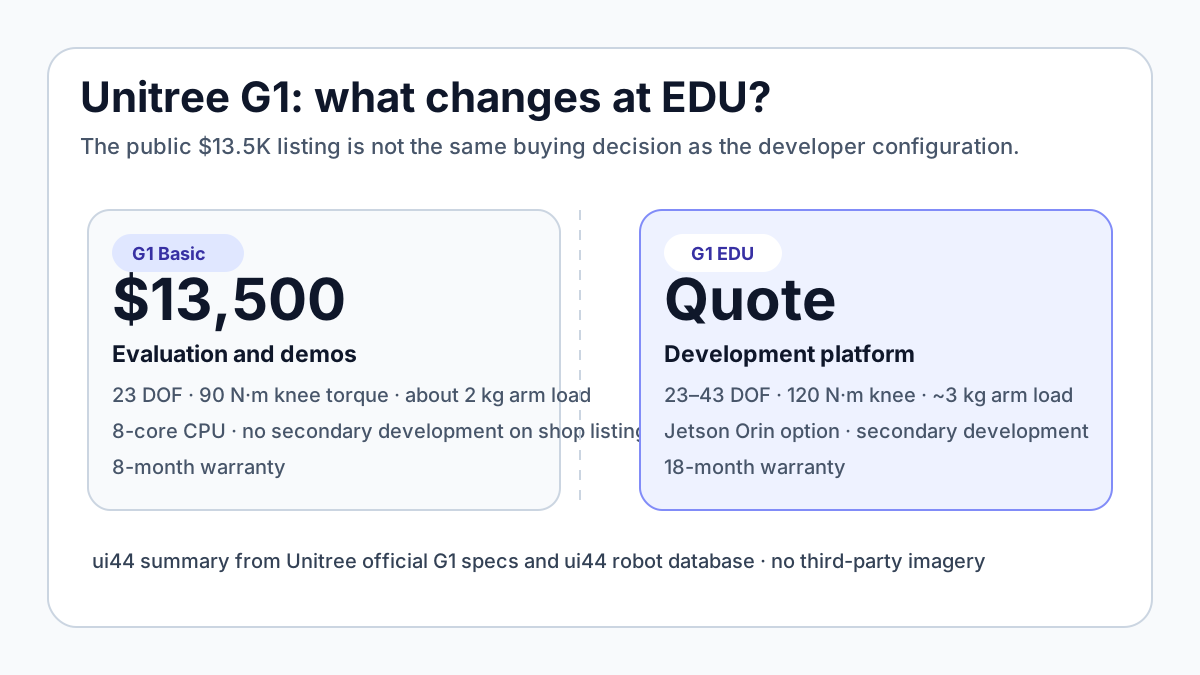
The Basic version is best understood as the purchasable entry point. The EDU version is the route for buyers who want to write software that matters on the robot itself.
What does EDU add beyond the $13,500 listing?
The most important EDU feature is not a single component. It is permission and support for secondary development.
For a humanoid, secondary development usually means more than installing a phone app. It means a buyer expects access to robot state, control interfaces, sensor streams, simulation workflows, SDKs, ROS 2 integration, safety procedures, network setup and a support path for code that can move a heavy machine. Unitree also maintains public SDK and ROS 2 repositories for its robots, built around DDS/CycloneDDS-style communication. That is promising, but it also signals a technical buyer, not a plug-and-play household.
The optional NVIDIA Jetson Orin module matters because a humanoid that only walks on command is very different from a humanoid that can run perception, vision-language-action experiments, object recognition, mapping, grasp planning or local AI workloads. The G1 Basic's 8-core CPU may be enough for built-in behaviors and control. EDU's high-compute path is where custom autonomy becomes more plausible.
The extra mechanical options matter too:
- 23-43 DOF instead of 23 DOF gives labs more joints and end-effectors to work with.
- 120 N·m knee torque instead of 90 N·m gives the EDU configuration more actuator headroom in the largest joint class.
- About 3 kg arm load instead of about 2 kg expands manipulation tests, even though Unitree warns that arm load varies greatly with extension posture.
- Optional Dex3-1 three-fingered hands can add seven active degrees of freedom per hand, plus optional tactile sensor arrays.
- 18 months of warranty instead of 8 months matters because repairs, actuators and downtime are part of the real cost of owning humanoid hardware.
That does not make EDU a home robot appliance. It makes EDU the more honest choice if your plan is development, research, education, simulation-to-real transfer, manipulation experiments or integration with a lab stack.
What is the Basic G1 good for?
The public $13,500 G1 can still make sense. It is just a narrower product than many headlines imply.
Choose the Basic model if your main goal is:
- Hardware evaluation. You want to inspect Unitree's compact humanoid form factor, walking behavior, build quality, charging workflow and shipping process before committing to a larger program.
- Demonstrations. You need controlled demos, investor education, classroom discussion, event presence or internal familiarization.
- Buyer research. You are comparing current humanoid bodies and want a real price, real dimensions and a robot that exists outside a slide deck.
- Non-custom operation. You do not need to modify the robot's autonomy, control stack or perception pipeline beyond whatever Unitree supports for the public model.
Do not choose Basic if your plan depends on writing custom whole-body control, training manipulation policies, adding your own perception pipeline, integrating new end-effectors or using the robot as the centerpiece of a home-robot startup. For that, the public listing itself is telling you to talk to Unitree about EDU.
This distinction is especially important for home buyers. A robot can be "available" and still be a poor household product. G1 is a compact humanoid with serious research value. It is not a dishwasher-loading appliance with a local repair network, child-safe operating envelope and documented chore success rate.
How does G1 compare with Unitree R1?
Unitree R1 makes the buying decision more interesting. In the ui44 database, Unitree R1 starts at $4,900 for R1 Air, with the standard R1 at $5,900 and R1 EDU by quote. It is smaller than G1 at 123 cm standing height and about 29 kg with battery. It has roughly 1 hour of mixed-activity battery life, 20-26 DOF on non-EDU tiers, and an EDU route with optional Jetson Orin and optional dexterous hands.
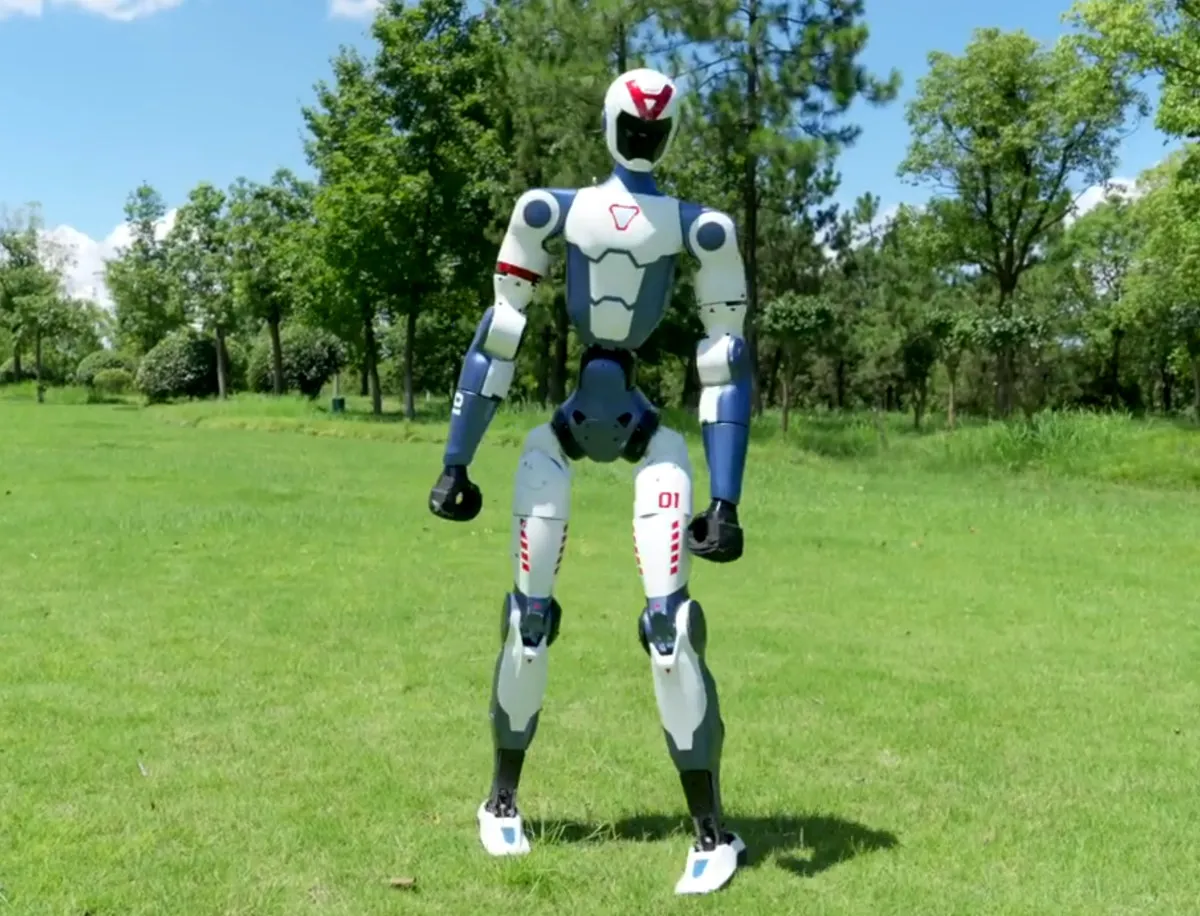
R1 is cheaper, lighter and more clearly locomotion-first. Unitree's own R1 page frames movement as the foundation for tasks, with cartwheels, handstands, recovery and voice/image interaction getting much of the attention. That is exciting if your goal is bipedal control, education or a lower-cost entry into humanoid hardware.
G1 is the stronger candidate if you care about a more substantial humanoid body, G1-specific developer ecosystem, a roughly 2-hour battery claim, LiDAR plus depth sensing, and the EDU path with higher listed torque and arm-load figures. But R1 is a warning against assuming "more affordable" means "more useful at home." The cheaper robot may be the better teaching platform while still being a long way from household chores.
Where does G1 sit beside other developer-friendly robots?
The useful comparison is not only Unitree versus Unitree. It is G1 versus the other robots a serious buyer might consider if they want to build real home robot applications.
Robot
- ui44 database signal
- Available; starts at $13,500; 132 cm; 35 kg; ~2h battery; EDU secondary development
- Why it matters for a G1 buyer
- Best-known low-cost humanoid path, but Basic and EDU are very different decisions
Robot
- ui44 database signal
- Pre-order; from $4,900; 123 cm; ~29 kg; ~1h battery; EDU path
- Why it matters for a G1 buyer
- Cheaper locomotion-first option for education and experimentation
Robot
- ui44 database signal
- Development; wheeled dual-arm format; 2-4 kg arm payload; secondary development
- Why it matters for a G1 buyer
- Less humanoid theater, more manipulation-friendly lab shape if the configuration fits
Robot
- ui44 database signal
- Available; $29,950; mobile manipulator; 8h light-load runtime; ROS 2/Python SDK
- Why it matters for a G1 buyer
- More expensive, but more directly shaped around indoor assistive manipulation
Robot
- ui44 database signal
- Pre-order; €19,999 Standard / €29,999 Pro; 132 cm; 36 kg; ROS 2/Python SDK
- Why it matters for a G1 buyer
- A European compact-humanoid alternative with explicit tiering and safety-positioning
Robot
- ui44 database signal
- Active; 107 cm; 22.7 kg; Jetson AGX Orin 64GB; full SDK access
- Why it matters for a G1 buyer
- Smaller, softer developer humanoid route with stronger social-robot cues
Robot
- ui44 database signal
- Pre-order; $299-$449 desktop companion; Python SDK
- Why it matters for a G1 buyer
- Not a mobile humanoid, but a reminder that software experiments do not always need legs
| Robot | ui44 database signal | Why it matters for a G1 buyer |
|---|---|---|
| Unitree G1 | Available; starts at $13,500; 132 cm; 35 kg; ~2h battery; EDU secondary development | Best-known low-cost humanoid path, but Basic and EDU are very different decisions |
| Unitree R1 | Pre-order; from $4,900; 123 cm; ~29 kg; ~1h battery; EDU path | Cheaper locomotion-first option for education and experimentation |
| Unitree R1-A7-D | Development; wheeled dual-arm format; 2-4 kg arm payload; secondary development | Less humanoid theater, more manipulation-friendly lab shape if the configuration fits |
| Hello Robot Stretch 4 | Available; $29,950; mobile manipulator; 8h light-load runtime; ROS 2/Python SDK | More expensive, but more directly shaped around indoor assistive manipulation |
| NEURA 4NE-1 Mini | Pre-order; €19,999 Standard / €29,999 Pro; 132 cm; 36 kg; ROS 2/Python SDK | A European compact-humanoid alternative with explicit tiering and safety-positioning |
| Fauna Sprout | Active; 107 cm; 22.7 kg; Jetson AGX Orin 64GB; full SDK access | Smaller, softer developer humanoid route with stronger social-robot cues |
| Reachy Mini | Pre-order; $299-$449 desktop companion; Python SDK | Not a mobile humanoid, but a reminder that software experiments do not always need legs |
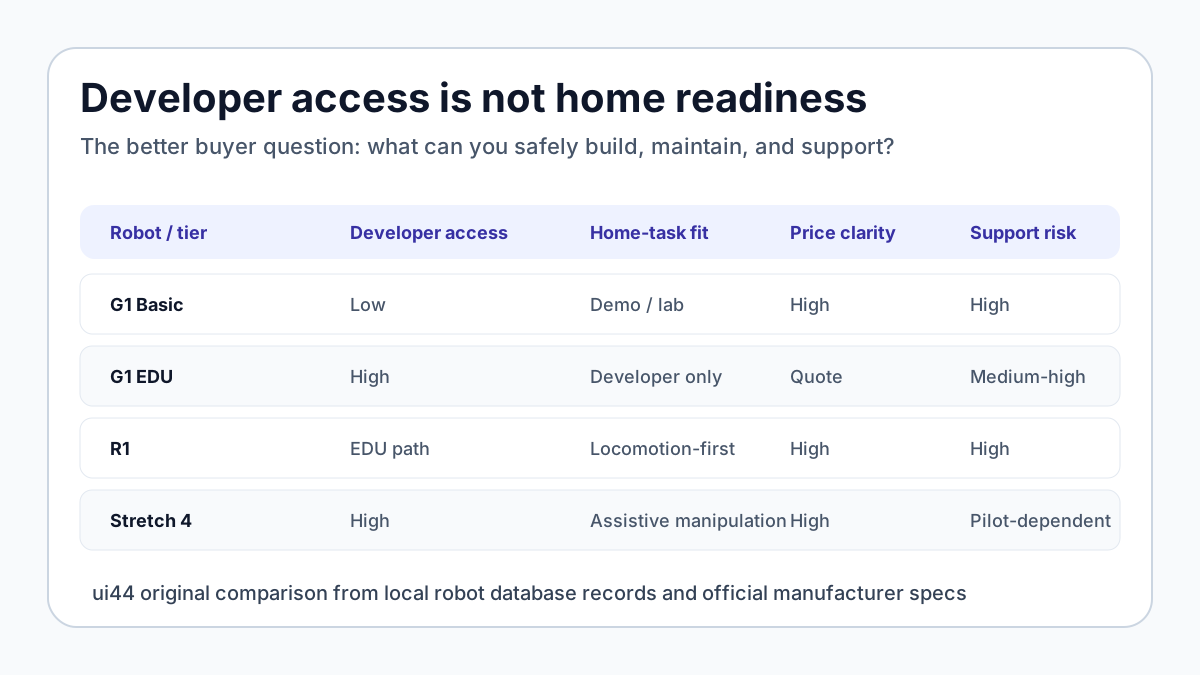
The pattern is clear: the more a robot gives you developer access, the more you inherit developer responsibility. The robot may expose APIs, SDKs, ROS 2 topics, compute modules and optional hands. It usually does not give you a finished home support plan, a verified laundry-folding workflow, local repair coverage or a simple refund path if your experiment fails.
What should a developer ask before buying G1 EDU?
Before requesting a G1 EDU quote, ask practical questions. If the seller cannot answer them clearly, slow down.
1. Which exact configuration is included?\ "G1 EDU" can cover different joint counts, hand choices, compute modules and accessories. Ask whether the quote includes Jetson Orin, Dex3-1 hands, tactile arrays, extra waist or wrist degrees of freedom, spare batteries, charger, manual controller, e-stop and shipping case.
2. What interfaces are documented and supported?\ SDK access is not enough by itself. Ask which APIs are stable, which ROS 2 interfaces are supported, how low-level versus high-level control is separated, what simulation tools are recommended, and what firmware updates can break.
3. What support do you get after delivery?\ The warranty difference is already a clue: official specs list 8 months for G1 and 18 months for G1 EDU. Ask about actuator repair, spare parts, remote diagnostics, regional service, shipping damage, customs delays and what happens after a fall.
4. What safety envelope is expected?\ Unitree's official G1 page warns that humanoid robots have complex structures and powerful output, and tells users to keep a sufficient safety distance. Treat that as a serious buyer requirement, not boilerplate. You need floor space, spotters, e-stop procedures, insurance thinking, and rules for people and pets.
5. What are you actually trying to prove?\ If your goal is voice UI, AI agents, or social interaction, a desktop robot like Reachy Mini may be enough. If your goal is assistive object retrieval, a wheeled mobile manipulator like Stretch 4 may be more relevant. If your goal is bipedal control, G1 EDU or R1 EDU makes more sense. Start with the experiment, not the viral video.
Should home buyers consider Unitree G1?
Only a narrow kind of home buyer should.
A robotics lab, university, well-equipped developer household, assistive-tech research team or startup may reasonably consider G1 EDU. Those buyers understand that the robot is hardware plus a development program. They can allocate space, people, software time, safety procedures and maintenance budget.
A normal household should be much more cautious. The Basic G1 price makes humanoid ownership feel closer, but the home-readiness gaps are still large: service network, task reliability, fall risk, regional support, supervision, repair cost, software maturity and unclear everyday chore value. Unitree itself warns individual users to understand the limitations of humanoid robots before purchase. That is exactly the right framing.
For actual household usefulness, the most credible near-term options may not be bipedal. A mobile manipulator such as Stretch 4 is expensive, but it is designed around indoor reach, sensing, payload and assistive workflows. A smaller social or desktop robot may be a better software playground. A wheeled dual-arm system may outperform a biped for benches, counters and lab automation. Legs are not a shortcut to usefulness.
Bottom line: buy the access level, not the headline price
Unitree G1 is one of the most important humanoid robots in the current buyer landscape because it has a real public starting price, compact dimensions and a clear developer tier. But G1 Basic vs EDU is not a minor upsell. It is the line between buying a low-cost humanoid body and buying into a development platform.
If you want to evaluate the hardware, run controlled demos and learn what a compact humanoid feels like in person, the $13,500 public G1 listing is the starting point to investigate. If you want to build software, connect autonomy stacks, work with optional hands, use higher onboard compute or treat G1 as a serious research platform, ask for EDU and budget for the full program around it.
The honest answer is not that everyone should buy the more expensive version. The honest answer is that the cheaper version should not be mistaken for the developer version. For humanoids, the robot is only part of the purchase. The access, documentation, warranty, support model and safety plan are the rest.
Related in the database
Use this article as a setup-friction workflow
Turn the article into a first-day setup pass grounded in the robots, manufacturers, and countries it actually references.
Unitree G1 Basic vs EDU: Developer Buyer Guide already points you toward 7 linked robots, 6 manufacturers, and 4 countries inside the ui44 database. Treat those links as a first-day setup trail: open the robot pages, check what is actually published about charging, battery life, control method, app or OTA support, and recovery, then use the surrounding manufacturer and country context to judge whether the article describes a low-friction product path or a still-specialist deployment.
For setup topics, the useful discipline is to separate a polished demo from the work required after the box arrives. The article gives you the narrative, but the robot pages show the operational clues: dimensions, weight, battery runtime, charging time, controller support, listed availability, and the capabilities that might need supervision. Manufacturer pages then reveal whether the same setup assumptions repeat across a wider lineup.
Use the robot pages to verify what happens between delivery and the first useful task: size, weight, battery, charger or dock path, controller, app, OTA support, and recovery cues. On this route cluster, G1, R1, and R1-A7-D form the fastest setup-friction reality check. If you want a quick working shortlist, open Compare G1, R1, and R1-A7-D next, then keep this article open while you compare first-day setup evidence side by side.
Practical Takeaway
The links below stay tied to the robots, manufacturers, and countries actually referenced by this setup article, so the checklist remains grounded in published ui44 records rather than generic humanoid advice.
Suggested next steps in ui44
- Open G1 and check the concrete first-day fields: box contents, charger or dock path, battery life, controller, app, OTA support, and recovery options.
- Use Unitree to see whether the company’s broader lineup looks appliance-like, developer-first, or still closer to a pilot deployment.
- Run Compare G1, R1, and R1-A7-D with the article open and compare battery, size, weight, price path, status, and support cues side by side.
- Write down the first realistic task each robot can plausibly attempt on day one, then separate low-friction setup signals from impressive but still lab-style demos.
Robot profiles worth opening next
Use the linked product pages as the evidence layer
The linked robot pages are where this setup article becomes operational. Use the robot entries to inspect the actual mix of size, weight, battery runtime, charging path, control method, pricing, availability, and stated capabilities attached to the products mentioned in the article. That is the easiest way to see whether the first useful task looks appliance-like, developer-led, or still dependent on supervised experimentation.
G1 is tracked on ui44 as a available humanoid robot from Unitree. The database currently records a listed price of $13,500, a release date of 2024-05-13, ~2 hours battery life, Not disclosed charging time, and a published stack that includes Depth Camera, 3D LiDAR, and 4 Microphone Array plus Wi-Fi 6 and Bluetooth 5.2.
For setup-friction reading, this page matters because it shows the physical and support burden behind the demo. Use it to verify whether G1 has a credible day-one path across charging, control, recovery, battery limits, and listed capabilities such as Bipedal Walking, Object Manipulation, and Dexterous Hands (optional Dex3-1).
R1
Unitree Robotics · Humanoid · Pre-order
R1 is tracked on ui44 as a pre-order humanoid robot from Unitree Robotics. The database currently records a listed price of $4,900, a release date of 2025, ~1 hour (mixed activity) battery life, Not officially disclosed charging time, and a published stack that includes Monocular camera (R1 Air); binocular camera (R1/R1 EDU), 4-Mic Array, and Dual 6-Axis IMU plus Wi-Fi 6 and Bluetooth 5.2.
For setup-friction reading, this page matters because it shows the physical and support burden behind the demo. Use it to verify whether R1 has a credible day-one path across charging, control, recovery, battery limits, and listed capabilities such as Bipedal Walking & Running, Cartwheels & Handstands, and Push Recovery, with voice support noted as UnifoLM (voice + image commands).
R1-A7-D
Unitree Robotics · Humanoid · Active
R1-A7-D is tracked on ui44 as a active humanoid robot from Unitree Robotics. The database currently records a listed price of $100,000, a release date of 2026-04-30, Approx. 1.5 hours (battery-powered; external power also supported) battery life, Not officially disclosed charging time, and a published stack that includes Chassis LiDAR, Binocular camera / depth module, and Optional wrist camera plus Wi-Fi 6 and Bluetooth 5.2.
For setup-friction reading, this page matters because it shows the physical and support burden behind the demo. Use it to verify whether R1-A7-D has a credible day-one path across charging, control, recovery, battery limits, and listed capabilities such as Mobile Dual-Arm Manipulation, 7-DOF Arms, and Wheeled Mobile Base, with voice support noted as Voice interaction via 4-mic array and dual speakers.
Stretch 4
Hello Robot · Home Assistants · Available
Stretch 4 is tracked on ui44 as a available home assistants robot from Hello Robot. The database currently records a listed price of $29,950, a release date of 2026-05-12, 8 hours (light CPU load) battery life, Not officially disclosed charging time, and a published stack that includes Wide-FOV depth sensing, High-resolution RGB cameras, and Calibrated RGB + depth perception plus its listed connectivity stack.
For setup-friction reading, this page matters because it shows the physical and support burden behind the demo. Use it to verify whether Stretch 4 has a credible day-one path across charging, control, recovery, battery limits, and listed capabilities such as Mobile Manipulation, Omnidirectional Indoor Mobility, and Autonomous Mapping and Navigation.
4NE-1 Mini
NEURA Robotics · Humanoid · Pre-order
4NE-1 Mini is tracked on ui44 as a pre-order humanoid robot from NEURA Robotics. The database currently records a listed price of €19,999, a release date of 2026-01-05, ~2.5 hours battery life, Not disclosed charging time, and a published stack that includes Multi-camera Array, Force/Torque Sensors, and 3D Vision plus Wi-Fi 6 and Gigabit Ethernet.
For setup-friction reading, this page matters because it shows the physical and support burden behind the demo. Use it to verify whether 4NE-1 Mini has a credible day-one path across charging, control, recovery, battery limits, and listed capabilities such as 25 Degrees of Freedom, Autonomous Navigation, and Object Manipulation (Pro tier: 12-DOF dexterous hands), with voice support noted as Built-in Multi-language Voice Recognition.
Manufacturer context behind the article
Check whether this is one product story or a broader company pattern
Manufacturer pages add the setup context that individual product pages cannot show on their own. They help you check whether a brand repeats the same controller, battery, update, support, and availability patterns across multiple robots, or whether the article is really describing one early product path. That matters for humanoids because first-day friction usually comes from the surrounding ecosystem as much as from the robot itself.
Unitree
ui44 currently tracks 2 robots from Unitree across 1 category. The company is grouped under China, and the current catalog footprint on ui44 includes H1, G1.
That wider brand context matters because setup friction is rarely just a box problem. A manufacturer route helps you see whether the company has repeated controller, battery, support, and update patterns across its lineup, or whether the article is really about one early product story. The category mix here currently points toward Humanoid as the most useful next route if you want to see whether this article reflects a wider pattern inside the brand.
Unitree Robotics
ui44 currently tracks 9 robots from Unitree Robotics across 3 categorys. The company is grouped under China, and the current catalog footprint on ui44 includes B2, B1, Go2.
That wider brand context matters because setup friction is rarely just a box problem. A manufacturer route helps you see whether the company has repeated controller, battery, support, and update patterns across its lineup, or whether the article is really about one early product story. The category mix here currently points toward Quadruped, Humanoid, Research as the most useful next route if you want to see whether this article reflects a wider pattern inside the brand.
Hello Robot
ui44 currently tracks 2 robots from Hello Robot across 1 category. The company is grouped under USA, and the current catalog footprint on ui44 includes Stretch 3, Stretch 4.
That wider brand context matters because setup friction is rarely just a box problem. A manufacturer route helps you see whether the company has repeated controller, battery, support, and update patterns across its lineup, or whether the article is really about one early product story. The category mix here currently points toward Home Assistants as the most useful next route if you want to see whether this article reflects a wider pattern inside the brand.
NEURA Robotics
ui44 currently tracks 4 robots from NEURA Robotics across 3 categorys. The company is grouped under Germany, and the current catalog footprint on ui44 includes 4NE-1, 4NE-1 Mini, MiPA.
That wider brand context matters because setup friction is rarely just a box problem. A manufacturer route helps you see whether the company has repeated controller, battery, support, and update patterns across its lineup, or whether the article is really about one early product story. The category mix here currently points toward Humanoid, Home Assistants, Quadruped as the most useful next route if you want to see whether this article reflects a wider pattern inside the brand.
Broaden the scan without leaving the database
Categories, components, and countries add the wider context
Category framing
Category pages are useful when the article touches a buying pattern that shows up across brands. A category route helps you confirm whether the linked products sit in a narrow niche or whether the same question should be tested across a larger field of alternatives.
Humanoid
The Humanoid category page currently groups 129 tracked robots from 92 manufacturers. ui44 describes this lane as: Full-size bipedal humanoid robots built to work alongside people — from factory floors to household tasks. Compare the cutting edge of humanoid robotics.
That makes the category route a practical follow-up when you want to check whether the products linked in this article are typical for the lane or whether they sit at one edge of the market. Useful starting examples currently include NEO, EVE, Mornine M1.
Home Assistants
The Home Assistants category page currently groups 16 tracked robots from 14 manufacturers. ui44 describes this lane as: Arm-based household helpers — laundry folders, kitchen robots, and mobile manipulators that take on hands-on physical tasks around the home.
That makes the category route a practical follow-up when you want to check whether the products linked in this article are typical for the lane or whether they sit at one edge of the market. Useful starting examples currently include Robody, Futuring 2 (F2), Stretch 3.
Country and ecosystem context
Country pages give extra context when support practices, launch sequencing, regulatory posture, or manufacturer mix matter. They are not a substitute for model-level verification, but they do help you see which ecosystems cluster together and which manufacturers sit in the same regional field when you broaden the search beyond the article headline.
China
The China route currently groups 189 tracked robots from 87 manufacturers in ui44. That gives you a useful regional lens when the article points toward support practices, launch sequencing, or brand clusters that may share similar ecosystem assumptions.
On the current route, manufacturers like AGIBOT, Dreame, Unitree Robotics make the page a good way to broaden the scan without losing the regional context that often shapes availability, documentation style, and adjacent alternatives.
USA
The USA route currently groups 89 tracked robots from 69 manufacturers in ui44. That gives you a useful regional lens when the article points toward support practices, launch sequencing, or brand clusters that may share similar ecosystem assumptions.
On the current route, manufacturers like Faraday Future, iRobot, Boston Dynamics make the page a good way to broaden the scan without losing the regional context that often shapes availability, documentation style, and adjacent alternatives.
Germany
The Germany route currently groups 13 tracked robots from 9 manufacturers in ui44. That gives you a useful regional lens when the article points toward support practices, launch sequencing, or brand clusters that may share similar ecosystem assumptions.
On the current route, manufacturers like NEURA Robotics, Bosch, Agile Robots make the page a good way to broaden the scan without losing the regional context that often shapes availability, documentation style, and adjacent alternatives.
Questions to answer before you move from reading to buying
A follow-up FAQ built from the entities already linked in this article
Frequently Asked Questions
Which page should I open first after reading “Unitree G1 Basic vs EDU: Developer Buyer Guide”?
Start with G1. That gives you a concrete product anchor for the article’s main claim. From there, branch into the manufacturer and component pages so you can tell whether the article is describing one specific model, a repeated brand pattern, or a wider technology issue that affects multiple shortlist options.
How do the manufacturer pages change the buying decision?
Unitree help you zoom out from one article and one product. On ui44 they show lineup breadth, category spread, and the neighboring robots tied to the same company. That context is useful when you are deciding whether a risk belongs to a single model, whether it shows up across a brand’s portfolio, and whether you should keep looking at alternatives before committing.
When should I switch from reading to side-by-side comparison?
Move into Compare G1, R1, and R1-A7-D as soon as you understand the article’s main warning or promise. The article explains what to watch for, but the compare view is where you can check whether price, status, battery life, connectivity, sensors, and category fit still make the robot a good match for your own home and budget.
Where to go next in ui44
Keep the research chain inside the database
If you want to keep going, these follow-on pages give you the cleanest expansion path from article to research session. Open the comparison route first if you are deciding between products today. Open the manufacturer, category, and component routes if you still need to understand the broader pattern behind the claim.
Written by
ui44 Team
Published May 15, 2026
Share this article
Open a plain share link on X or Bluesky. No embeds, no widgets, no cookie baggage.